
Warren Buffett Stepped Down as Berkshire Chairman—So Who Actually Runs the Company Now?
Warren Buffett stepped down as Berkshire Hathaway’s chairman. But didn’t he already hand over the company?
And if his son Howard Buffett is now chairman, does that mean Berkshire has effectively become a family-run company?
Not quite.
Greg Abel has been Berkshire Hathaway’s CEO since January 1, 2026, and Berkshire says major investment and capital-allocation decisions are now his responsibility. Howard Buffett has taken the chairman’s seat, while Warren Buffett remains on the board as chairman emeritus. (Berkshire Hathaway · Berkshire Hathaway Annual Report)
That means Buffett’s succession is not a simple father-to-son transfer.
It is a division of responsibilities among three people.
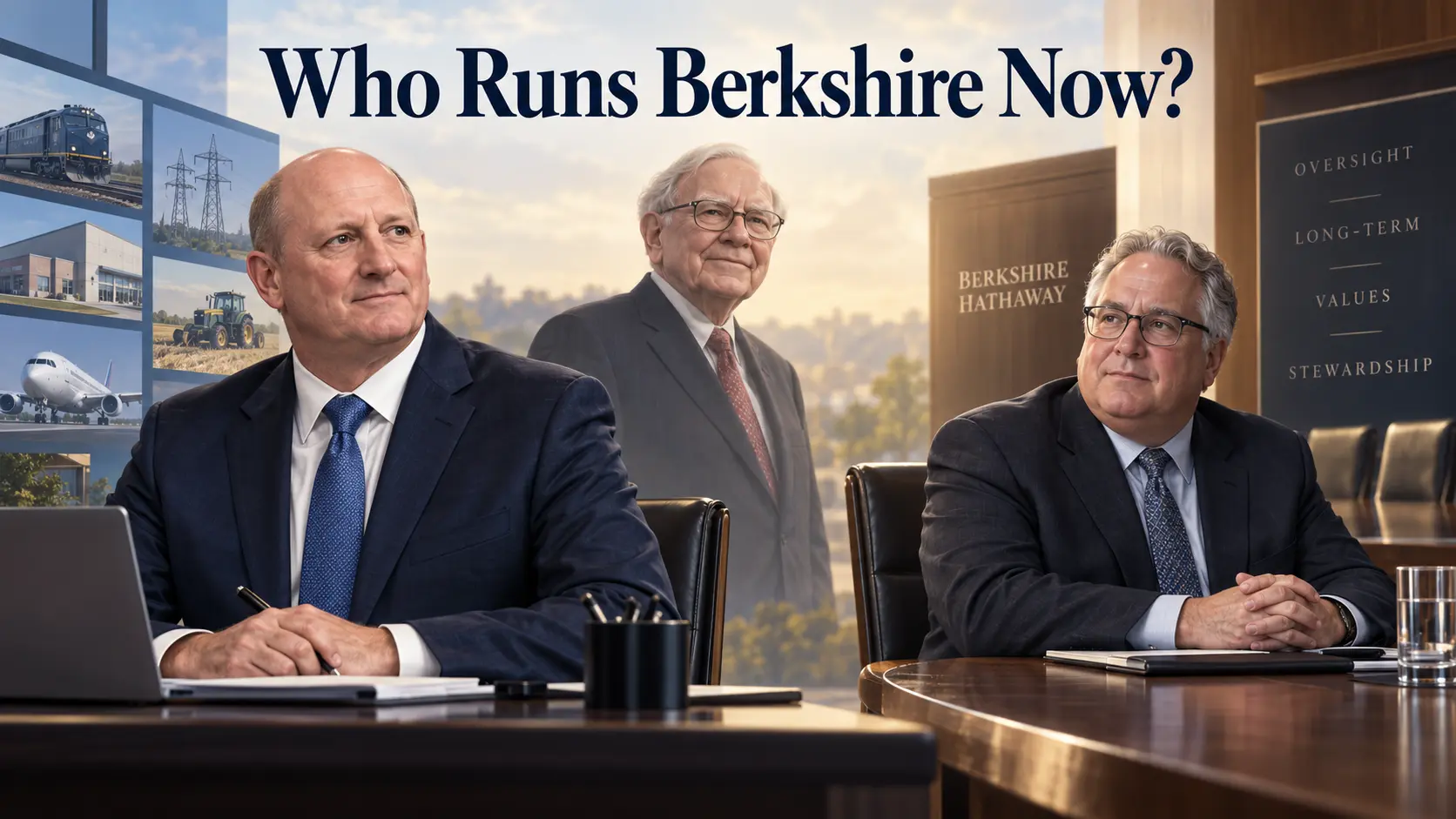
Understanding that split is the easiest way to understand what Berkshire Hathaway looks like after Warren Buffett.
What Actually Changed on September 18?
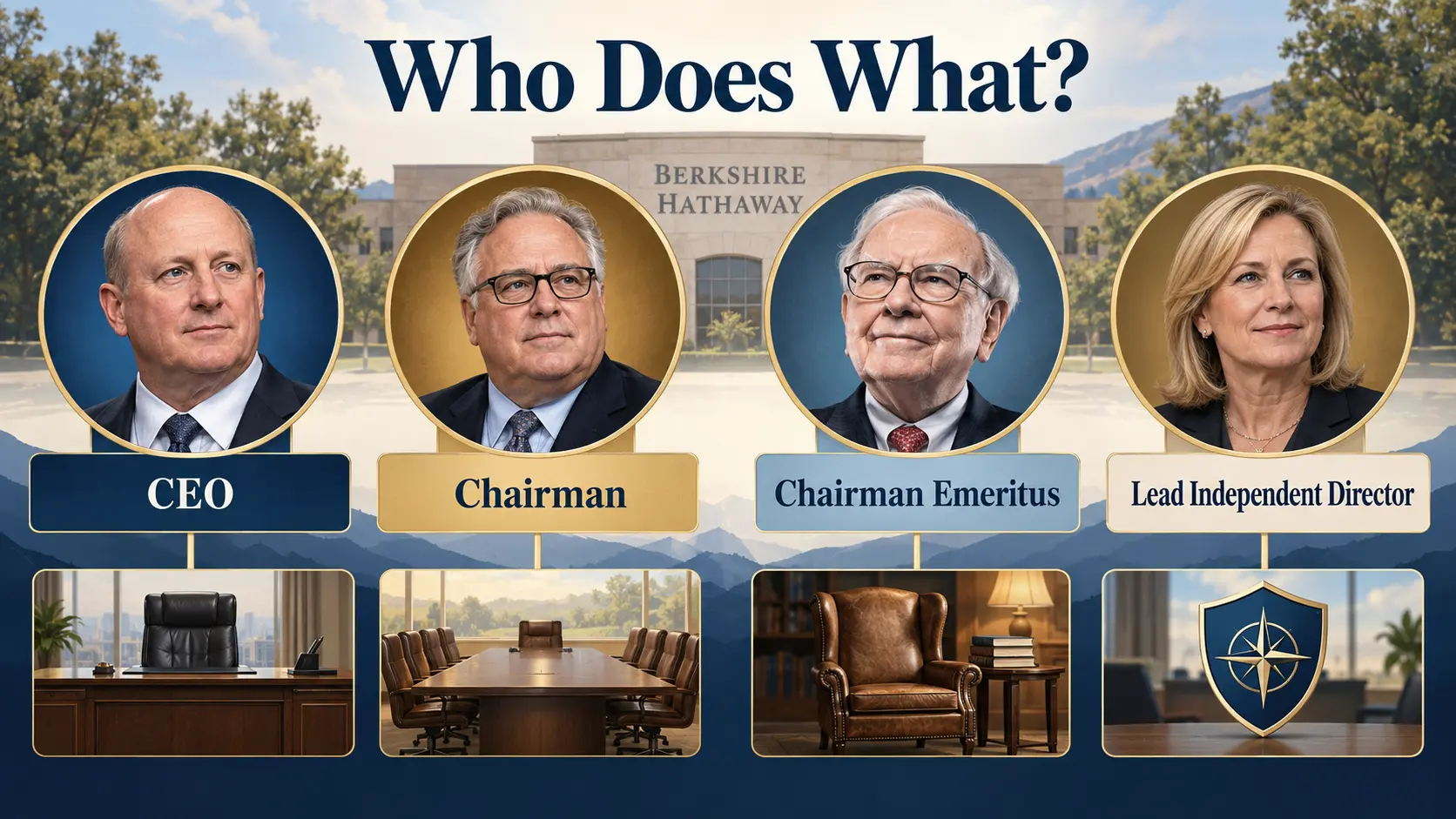
On September 18, Berkshire announced that Warren Buffett, 96, had become chairman emeritus effective immediately. Howard Buffett, his oldest son and a Berkshire director since 1993, was elected chairman of the board. Warren remains a Berkshire director. (Berkshire Hathaway · AP)
Greg Abel did not receive a new job that day because he had already become CEO at the beginning of 2026.
The new structure looks roughly like this:
| Role | Person | Main responsibility |
|---|---|---|
| Chief Executive Officer | Greg Abel | Runs Berkshire and leads major capital-allocation and investment decisions |
| Chairman of the Board | Howard Buffett | Leads the board and helps protect Berkshire’s long-term culture and governance |
| Chairman Emeritus and Director | Warren Buffett | Remains on the board and can continue offering judgment and perspective |
| Lead Independent Director | Susan Decker | Leads key functions involving Berkshire’s independent directors |
Berkshire’s own governance rules say the board oversees management and acts as the company’s ultimate decision-making body except on matters reserved to shareholders. The chairman also sets the agenda for board meetings. (Berkshire Hathaway Corporate Governance Guidelines)
So Howard Buffett’s chairmanship is a real governance position.
It is not the same job Greg Abel has.
If Howard Buffett Is Chairman, Why Isn’t He Running Berkshire?
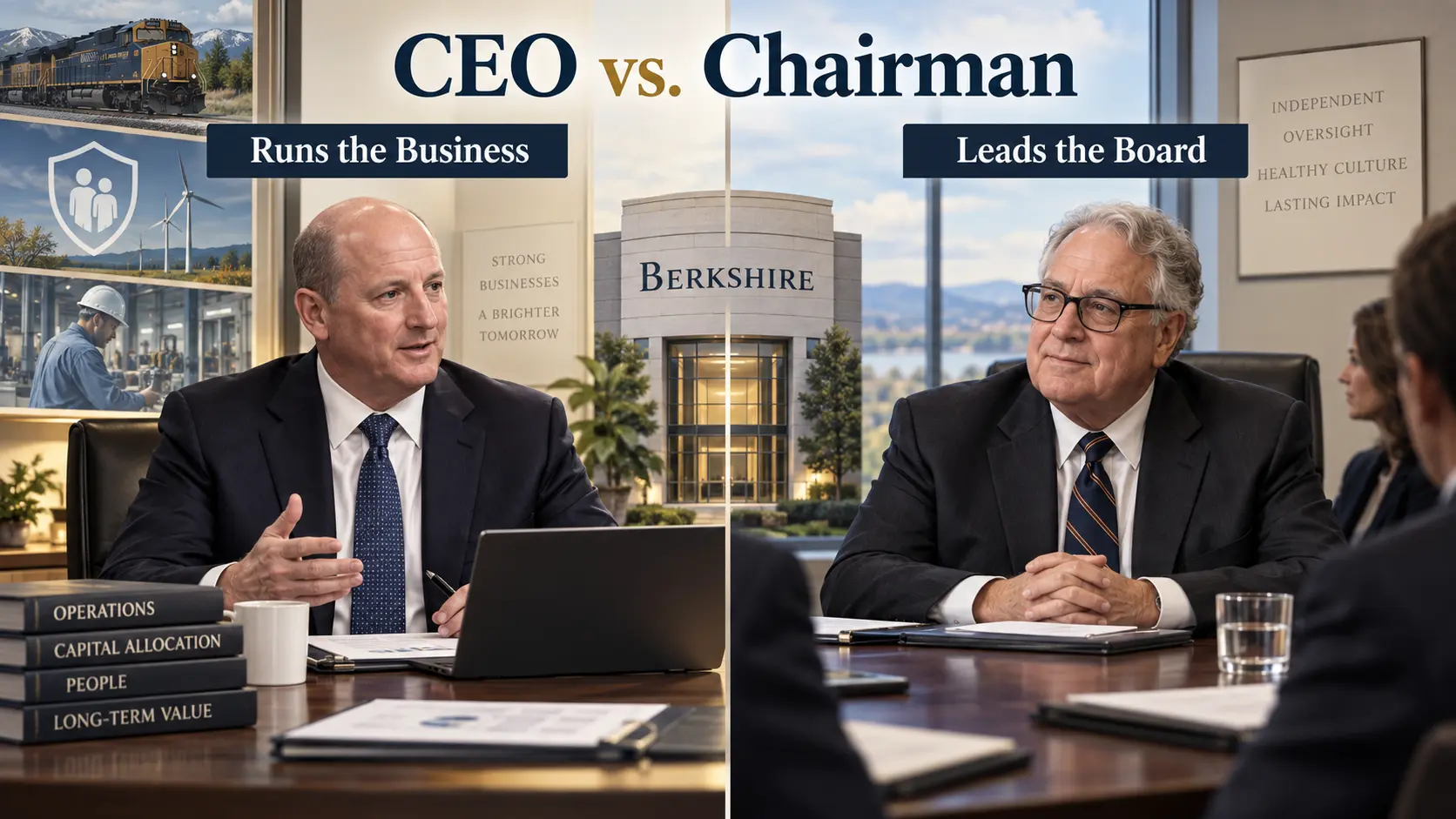
Because chairman and CEO are different jobs.
The CEO is the top executive responsible for managing the company. The board is responsible for overseeing management, and the chairman leads that board structure.
At Berkshire, this distinction matters even more because Warren Buffett used to hold both titles at the same time. For decades, shareholders associated nearly every major Berkshire decision with one person.
That era has ended.
Berkshire’s 2025 annual report says major investment and capital-allocation decisions are now Greg Abel’s responsibility. Abel also oversees senior leaders across Berkshire’s operating businesses. (Berkshire Hathaway Annual Report)
Warren Buffett made the division unusually clear in his September shareholder letter: Abel runs the company, while Howard’s job is to protect Berkshire’s culture and values. (Berkshire Hathaway)
Think of the CEO as the person driving the vehicle.
The chairman and board are responsible for making sure the vehicle is being driven in a direction that protects the owners’ long-term interests.
At Berkshire, those roles used to overlap in Warren Buffett.
Now they do not.
Why Did Warren Buffett Want His Son as Chairman?
Howard Buffett’s appointment can look like a straightforward case of a billionaire giving an important job to his son.
But Berkshire had been describing a version of this structure before the September announcement.
In its March 2026 proxy statement, Berkshire said Warren Buffett believed it would be prudent, after his death, for a Buffett family member representing substantial shareholder interests to serve as non-executive chairman. The document also emphasized that the final decision would belong to Berkshire’s board. (Berkshire Hathaway 2026 Proxy Statement)
Howard had already served on Berkshire’s board since 1993.
His professional background is different from Greg Abel’s. Howard has led the Howard G. Buffett Foundation since 1999 and has served on numerous corporate boards, including at Coca-Cola Enterprises, Archer Daniels Midland and ConAgra Foods. (Berkshire Hathaway)
That difference appears intentional.
Berkshire is not asking Howard to become another Warren Buffett who selects investments, manages subsidiaries and allocates hundreds of billions of dollars.
That is Abel’s job.
Howard’s purpose is closer to institutional continuity: helping the board preserve the unusually decentralized, shareholder-focused culture Warren Buffett spent decades building. Reuters described him as Berkshire’s non-executive chairman, with Abel continuing to lead the business. (Reuters)
Is Warren Buffett Actually Retired Now?
Not completely.
The word “emeritus” can make it sound as though Warren Buffett has simply received an honorary title and left the company.
But Berkshire’s September announcement says he remains a director and will continue offering his judgment and perspective. (Berkshire Hathaway)
That gives him a formal role through his board seat even though he is no longer chairman or CEO.
He also remains a major Berkshire shareholder.
What has changed is who has final day-to-day executive responsibility.
Buffett said Abel had already been making the decisions that matter and that he had no reason to second-guess them. That makes September’s chairman transition less like an abrupt retirement and more like the final major step in a handoff that had already been underway. (Berkshire Hathaway)
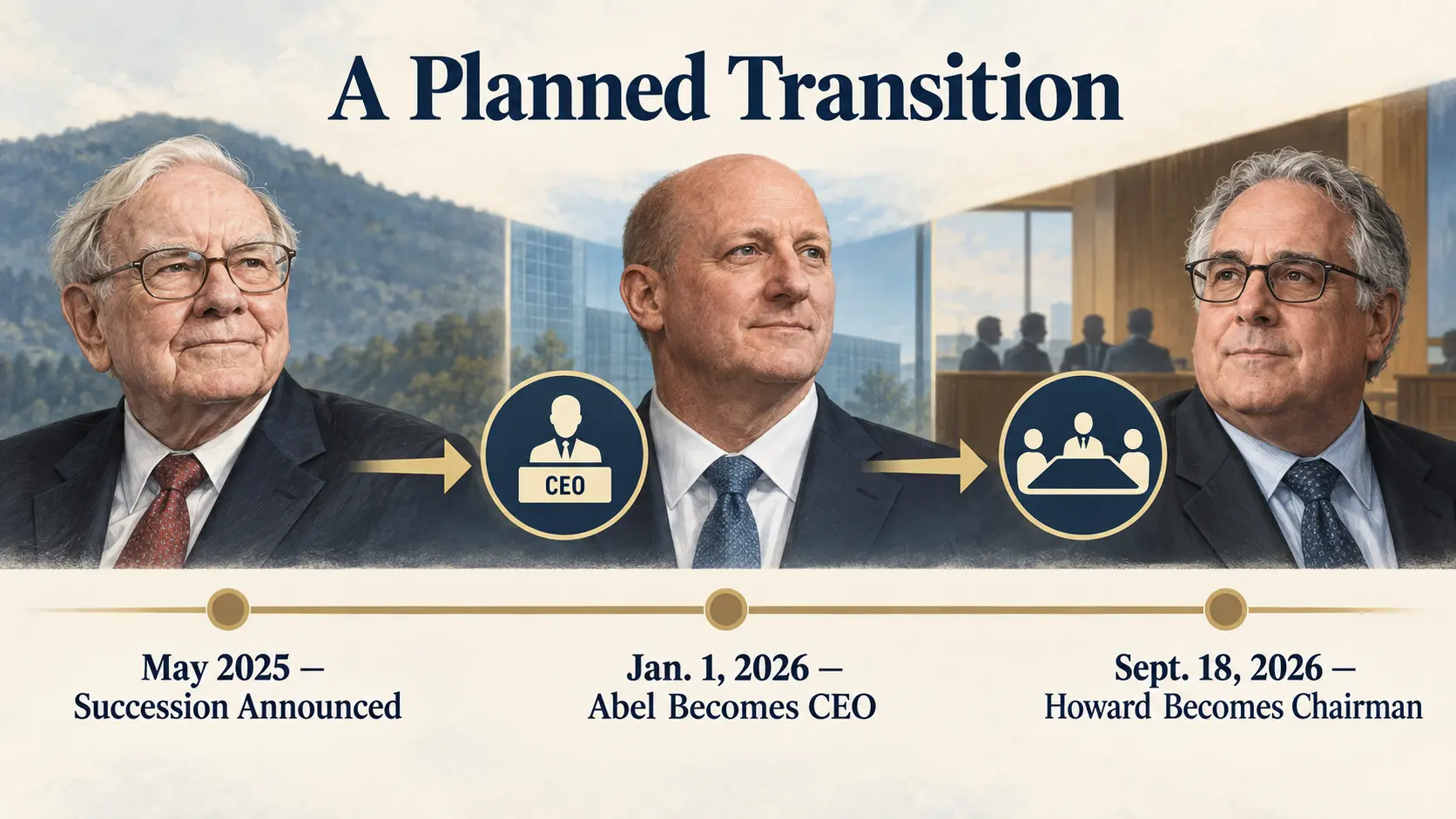
The sequence is easier to see this way:
| Date | What changed |
|---|---|
| May 2025 | Buffett announced plans for Greg Abel to succeed him as CEO |
| January 1, 2026 | Abel became Berkshire’s CEO |
| September 18, 2026 | Buffett became chairman emeritus and Howard Buffett became chairman |
| Now | Abel runs the company, Howard leads the board, and Warren remains a director |
This is why saying “Howard Buffett replaced Warren Buffett” is technically true for the chairman title but incomplete as a description of who now runs Berkshire.
Does Howard Buffett Now Own or Control His Father’s Berkshire Stake?
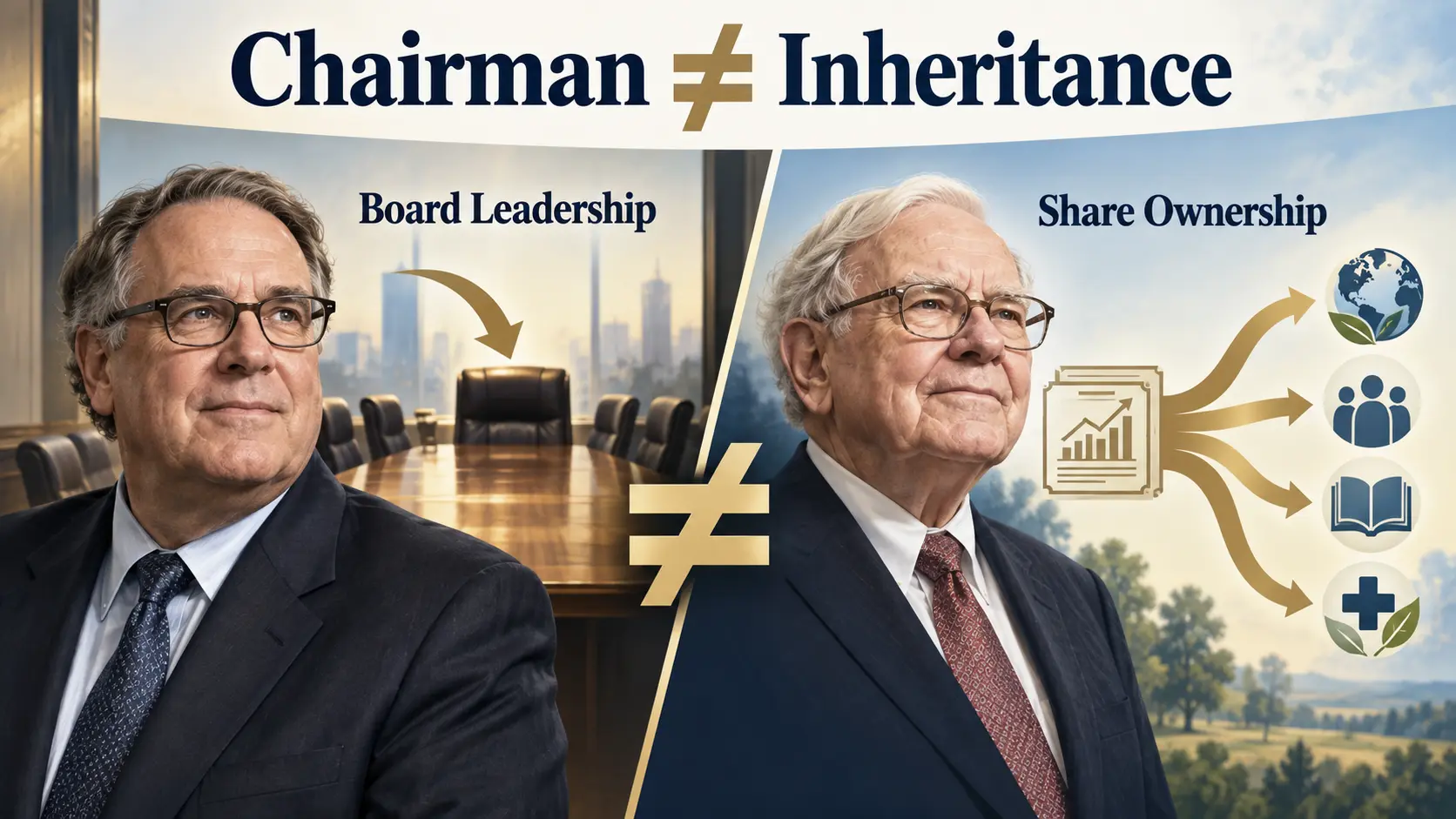
No.
Becoming chairman did not transfer Warren Buffett’s Berkshire shares to Howard.
Berkshire’s March 2026 proxy statement showed just how different the two ownership positions were at that point. Warren Buffett held about 30.2% of Berkshire’s aggregate voting power, while Howard Buffett’s reported beneficial ownership represented less than 0.1%. (Berkshire Hathaway 2026 Proxy Statement)
Warren has continued reducing his holdings through charitable donations. After another donation on July 14, Berkshire said he owned 188,290 Class A shares and 1,162 Class B shares. Buffett also said his goal is for all of his remaining Berkshire shares to be donated to four foundations by December 31, 2034. (Berkshire Hathaway)
So three different things should not be confused:
| Question | Answer |
|---|---|
| Who is Berkshire’s chairman? | Howard Buffett |
| Who runs Berkshire as CEO? | Greg Abel |
| Who owns Warren Buffett’s remaining shares? | Warren Buffett, with plans to donate the remaining holdings to charitable foundations |
This is not a conventional inheritance story in which a founder retires and hands both the company and his ownership stake to a child.
Howard received a board leadership role.
He did not receive Warren’s Berkshire fortune.
What Is Greg Abel Responsible for Now?
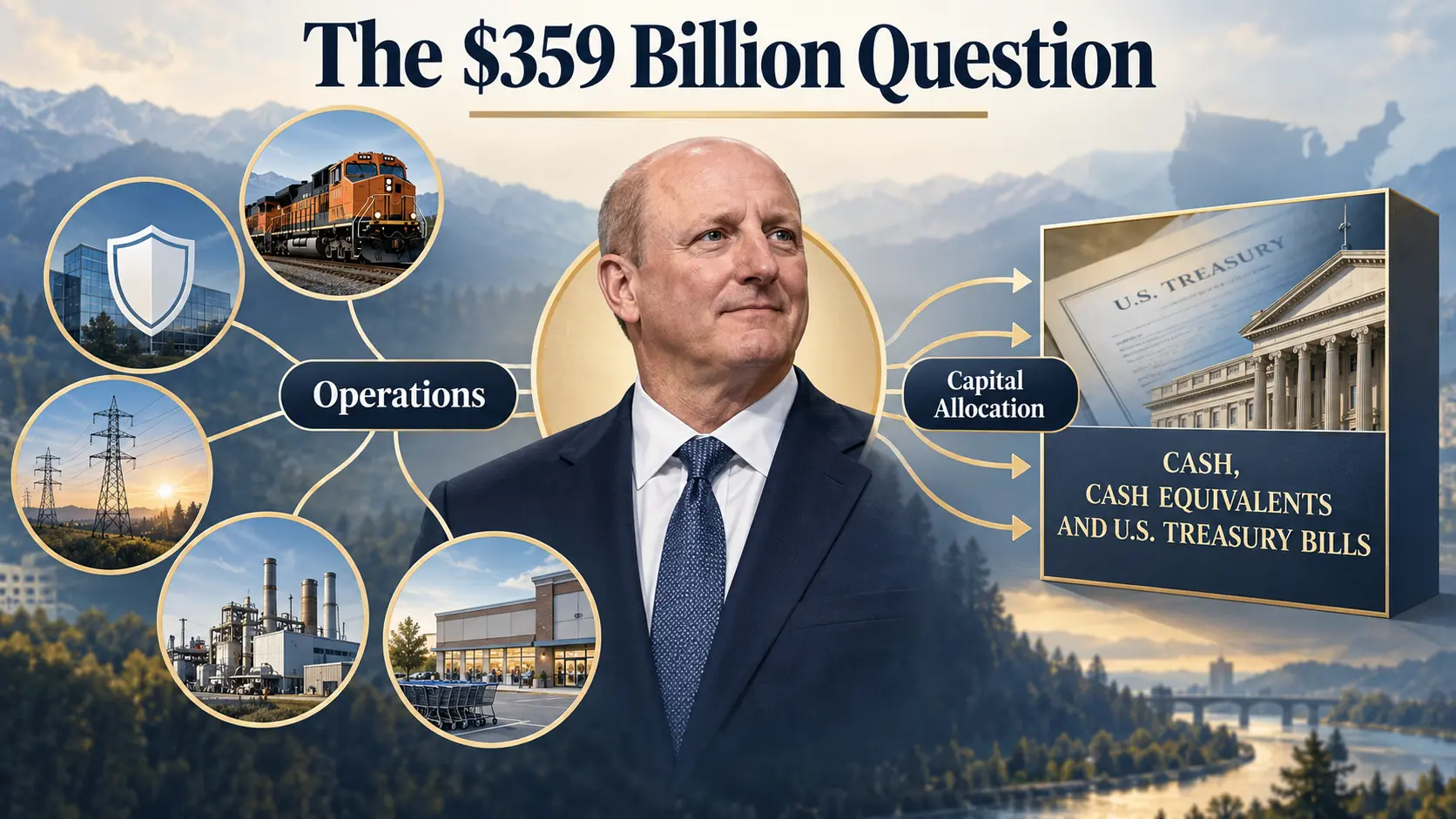
This may be the most important part of the transition for investors.
Berkshire is not simply a collection of stocks. It owns major insurance companies, a freight railroad, energy businesses, manufacturers, retailers and service companies.
Abel is now responsible for the top-level decisions that connect those businesses and Berkshire’s enormous pool of capital.
As of June 30, 2026, Berkshire’s insurance and other businesses held $359.2 billion in cash, cash equivalents and U.S. Treasury bills, net of unsettled purchases. (Berkshire Hathaway Second Quarter Report)
That number matters because capital allocation was one of Warren Buffett’s defining skills.
Should Berkshire buy an entire company?
Should it buy publicly traded stocks?
Should it repurchase Berkshire shares?
Should it keep hundreds of billions of dollars in Treasury bills and wait?
Those choices are now increasingly Greg Abel’s choices.
Berkshire’s annual report makes that responsibility explicit: major investment and capital-allocation decisions are assigned to Abel. (Berkshire Hathaway Annual Report)
That is why investors may ultimately judge Buffett’s succession less by Howard Buffett’s chairmanship than by what Abel does with Berkshire’s capital over the next several years.
What Should Berkshire Shareholders Watch Next?
The first thing to watch is whether Berkshire’s decision-making culture changes without Warren Buffett holding the top titles.
Buffett built a highly decentralized company. Subsidiary managers generally run their own businesses, while Berkshire headquarters historically concentrated on capital allocation, leadership selection and maintaining financial strength.
The second issue is capital deployment.
The company entered the second half of 2026 with hundreds of billions of dollars in cash and Treasury bills. That gives Abel enormous flexibility, but it also creates an enormous benchmark: shareholders spent decades watching Buffett decide when to act and when to wait. (Berkshire Hathaway Second Quarter Report)
The third issue is governance after Warren’s influence declines further.
Howard Buffett can help preserve the culture. Susan Decker remains lead independent director. Berkshire still has a full board with oversight responsibilities.
But no governance structure can perfectly reproduce the unusual combination Warren Buffett represented: CEO, chairman, major shareholder, investor, capital allocator and public face of the company.
Berkshire’s solution is not to find one new Warren Buffett.
It is to divide those responsibilities.
That may be the most important fact in the entire succession story.
Why It Matters in One Sentence
Warren Buffett’s departure from the chairman’s seat does not put Berkshire Hathaway under his son’s day-to-day control: Greg Abel runs the business, Howard Buffett leads the board and guards its culture, and Warren remains a director while gradually giving away his Berkshire shares.
Berkshire Hathaway Succession: Key Questions Explained
Q. Who is running Berkshire Hathaway now?
Greg Abel is Berkshire Hathaway’s CEO and is responsible for running the company. Berkshire’s annual report also assigns major investment and capital-allocation decisions to him.
Q. Why is Howard Buffett chairman if Greg Abel is CEO?
The jobs are different. Abel manages Berkshire, while Howard leads the board and has been assigned a role centered on governance, culture and long-term continuity.
Q. Did Howard Buffett inherit Berkshire Hathaway from Warren Buffett?
No. Howard’s appointment as chairman did not transfer Warren Buffett’s Berkshire shares to him.
Q. Is Warren Buffett completely retired?
No. Warren Buffett is chairman emeritus and remains a member of Berkshire Hathaway’s board of directors.
Q. What does “chairman emeritus” mean for Warren Buffett?
The title recognizes Buffett’s former chairmanship, but his continued board seat is more important operationally because it allows him to remain formally involved in Berkshire’s governance and offer advice.
Q. When did Greg Abel become Berkshire Hathaway’s CEO?
Greg Abel became president and CEO on January 1, 2026, after Berkshire’s board approved the succession in May 2025.
Q. What will happen to Warren Buffett’s Berkshire shares?
Buffett said in July 2026 that his goal is for his remaining Berkshire shares to be donated to four charitable foundations by December 31, 2034.
Q. What is the biggest challenge for Greg Abel?
One of the clearest tests will be capital allocation. Berkshire held $359.2 billion in cash, cash equivalents and U.S. Treasury bills in its insurance and other businesses as of June 30, 2026, giving Abel enormous resources to deploy or preserve.
Did this help make the story clearer? 🙂
WIN keeps unpacking the “why” behind the news—clearly and simply!
Sources
Leadership Transition and New Roles
Berkshire Hathaway — Warren E. Buffett Becomes Chairman Emeritus; Howard G. Buffett Elected Chairman
Associated Press — Warren Buffett Gives Up Chairman Title at Berkshire Hathaway
Reuters — Warren Buffett Steps Down as Berkshire Chairman, Replaced by His Son Howard
Governance, Board Structure and Ownership
Berkshire Hathaway — 2026 Proxy Statement
Berkshire Hathaway — Corporate Governance Guidelines
Reuters — Berkshire Hathaway Looks to Keep Culture Intact as Howard Buffett Ascends
Greg Abel and Berkshire’s Capital
Berkshire Hathaway — 2025 Annual Report
Berkshire Hathaway — Second Quarter 2026 Report
Warren Buffett’s Remaining Shares and Philanthropy
Berkshire Hathaway — July 14, 2026 Charitable Share Donation and Distribution Plan