
Why Did the Fed Raise Rates Again—and What Does It Mean for Mortgages, Credit Cards, and Savings?
Wait—wasn’t the Federal Reserve supposed to be cutting interest rates?
It had been. After the Fed’s last rate increase in July 2023, policymakers eventually moved in the opposite direction, cutting rates several times in 2024 and 2025.
Then, on September 16, 2026, the Federal Open Market Committee reversed course. It voted unanimously to raise its target for the federal funds rate by a quarter percentage point, to 3.75%–4.00%, with the change taking effect the following day. It was the Fed’s first rate increase since 2023. (Federal Reserve · AP)
But that raises a much more practical question.
If the Fed just raised rates by 0.25 percentage point, does your mortgage, credit card or car loan automatically rise by the same amount?
No. Some rates respond almost immediately. Others move for completely different reasons.
And that distinction is the part of the Fed story that matters most to household finances.
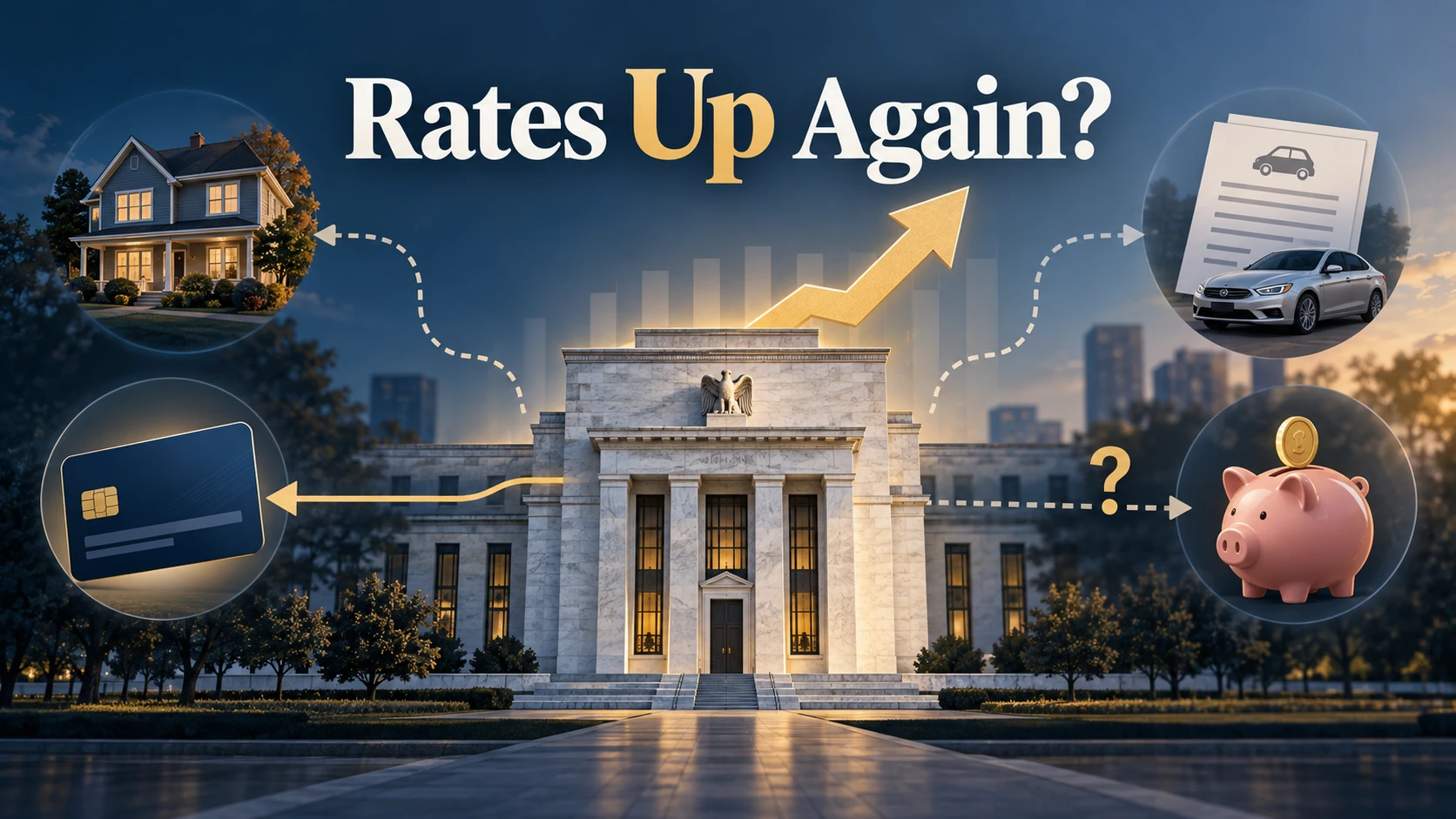
What Exactly Did the Fed Change?
The Fed did not set mortgage rates at 4%, and it did not order banks to charge consumers a particular interest rate.
It raised the target range for the federal funds rate—the rate around which banks lend reserve balances to one another overnight—to 3.75%–4.00%. The Fed uses this short-term rate to influence borrowing, spending and ultimately inflation throughout the economy. (Federal Reserve)
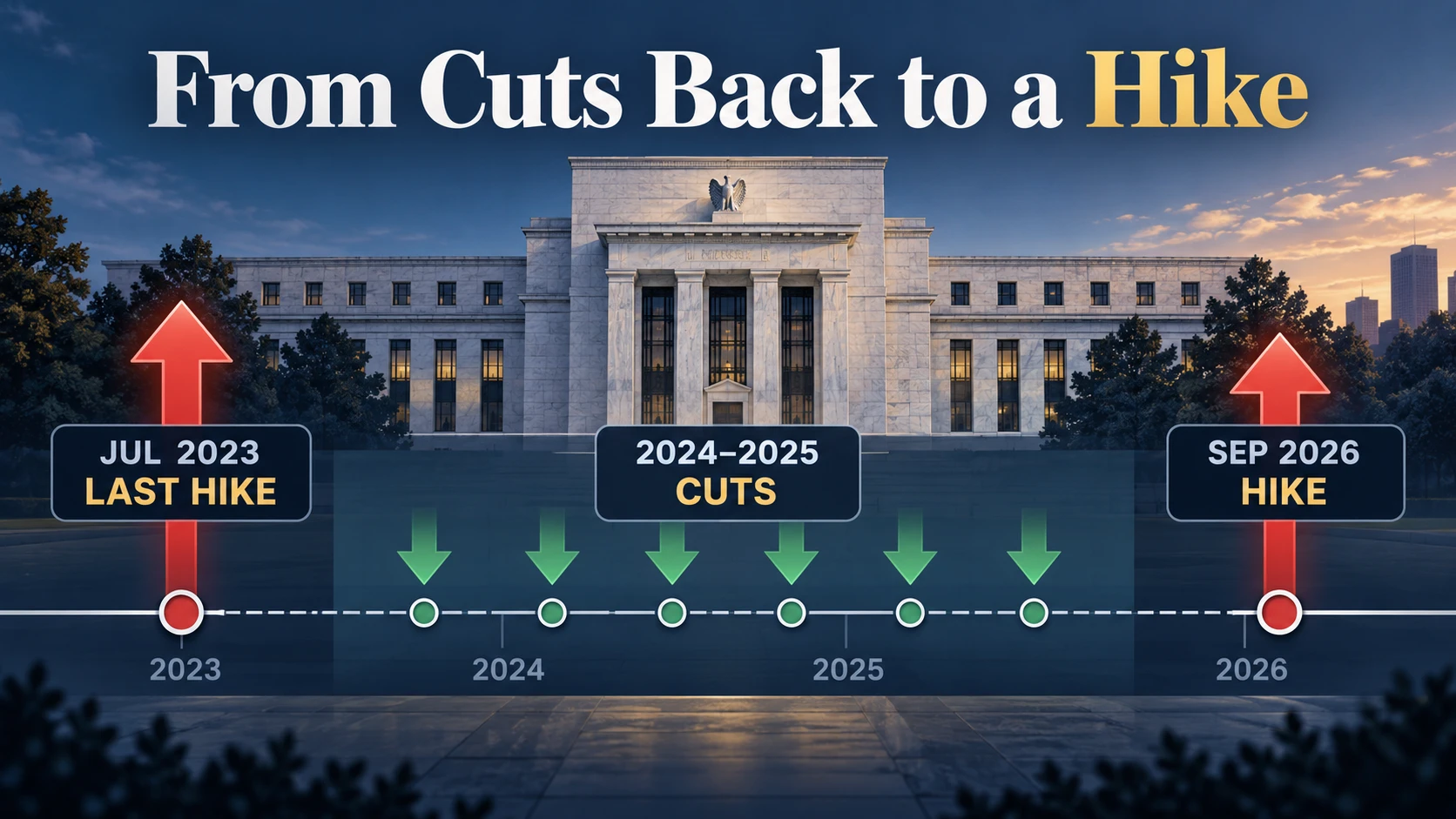
The recent history makes the reversal easier to see:
| Turning point | Fed target range | What happened |
|---|---|---|
| July 2023 | 5.25%–5.50% | The Fed made what became its last rate increase for more than three years |
| September–December 2024 | Fell to 4.25%–4.50% | The Fed began cutting rates |
| September–December 2025 | Fell to 3.50%–3.75% | Another series of cuts lowered the range further |
| September 2026 | 3.75%–4.00% | The Fed raised rates by 0.25 percentage point |
The Fed’s own historical policy table confirms that the September move was the first increase since July 2023. (Federal Reserve)
So this was not a return to the very high rates of 2023. It was a smaller but important signal: policymakers believed inflation had become enough of a problem again to justify moving rates upward.
Why Raise Rates Now?
Because inflation was still running above the Fed’s goal while the economy was showing enough resilience that policymakers believed it could absorb tighter financial conditions.
The Fed aims for 2% inflation over time. Its preferred inflation gauge, the Personal Consumption Expenditures price index, was 3.7% higher in July than a year earlier. Core PCE, which excludes food and energy, was up 3.3%. (Bureau of Economic Analysis)
A separate measure Americans hear about more often, the Consumer Price Index, rose 3.4% over the 12 months ending in August. Gasoline prices rose sharply during the month, while core CPI increased 2.4% from a year earlier. (Bureau of Labor Statistics)
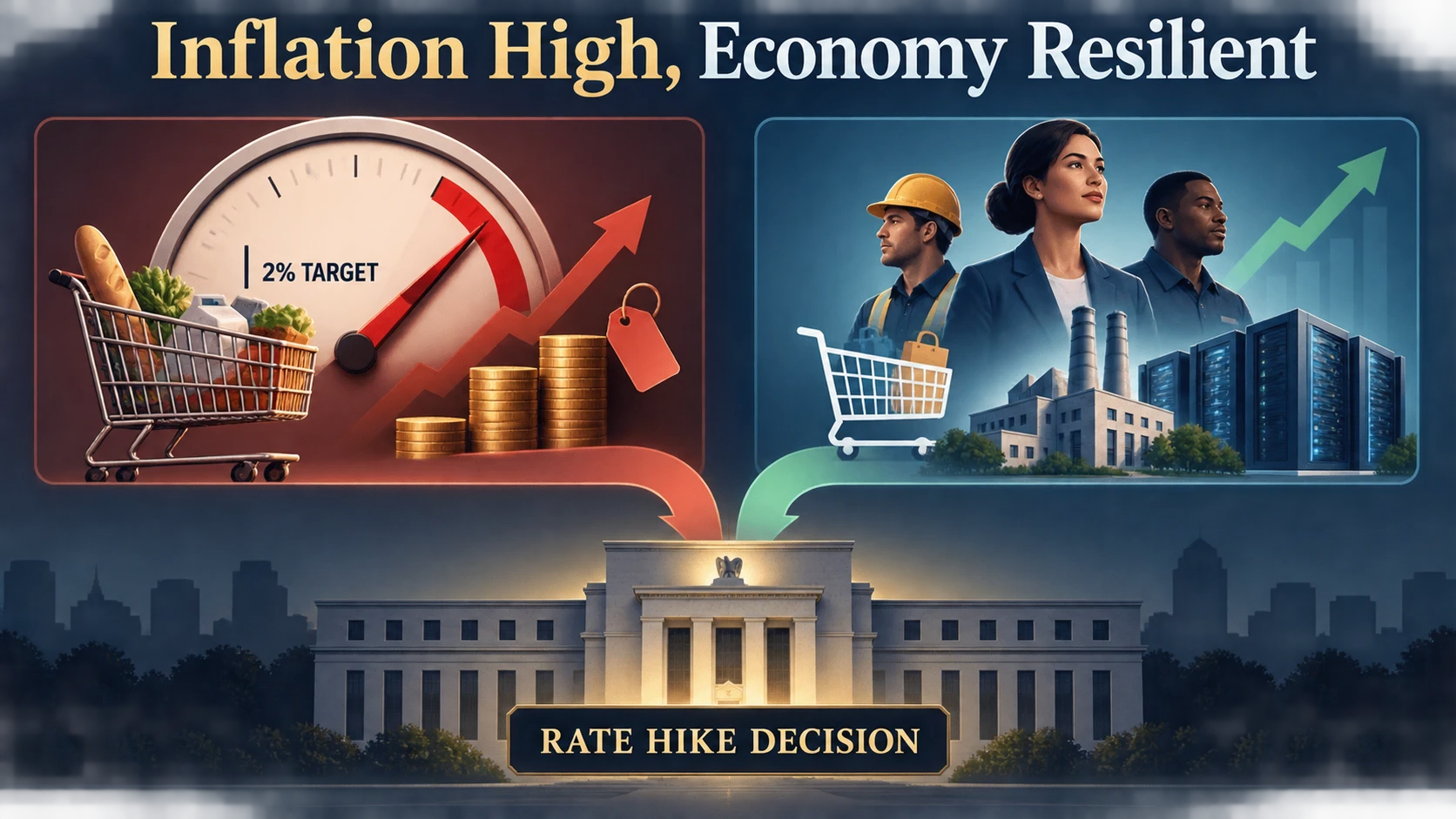
The Fed’s September statement described economic activity as expanding at a “solid pace,” with resilient domestic spending, strong productivity and robust capital investment. It also said inflation remained elevated. (Federal Reserve)
The Fed’s September projections tell the same story. Policymakers’ median forecast called for 2.3% real GDP growth in 2026 and a 4.1% unemployment rate, while projecting PCE inflation at 3.7% for the year. (Federal Reserve)
In other words, the Fed was not looking at an economy that appeared to be collapsing under high rates.
It was looking at inflation that remained too high alongside an economy that appeared strong enough to withstand another dose of tighter credit.
Does a 0.25-Point Fed Hike Mean Your Mortgage Goes Up 0.25 Point?
No.
This is one of the most common misunderstandings about Federal Reserve decisions.
Thirty-year fixed mortgage rates are influenced much more directly by longer-term bond yields, inflation expectations, investor demand for mortgage-backed securities and expectations about where the economy and the Fed are headed over many years.
The Fed matters because it can change those expectations. But there is no rule saying:
Fed +0.25 percentage point = mortgage +0.25 percentage point.
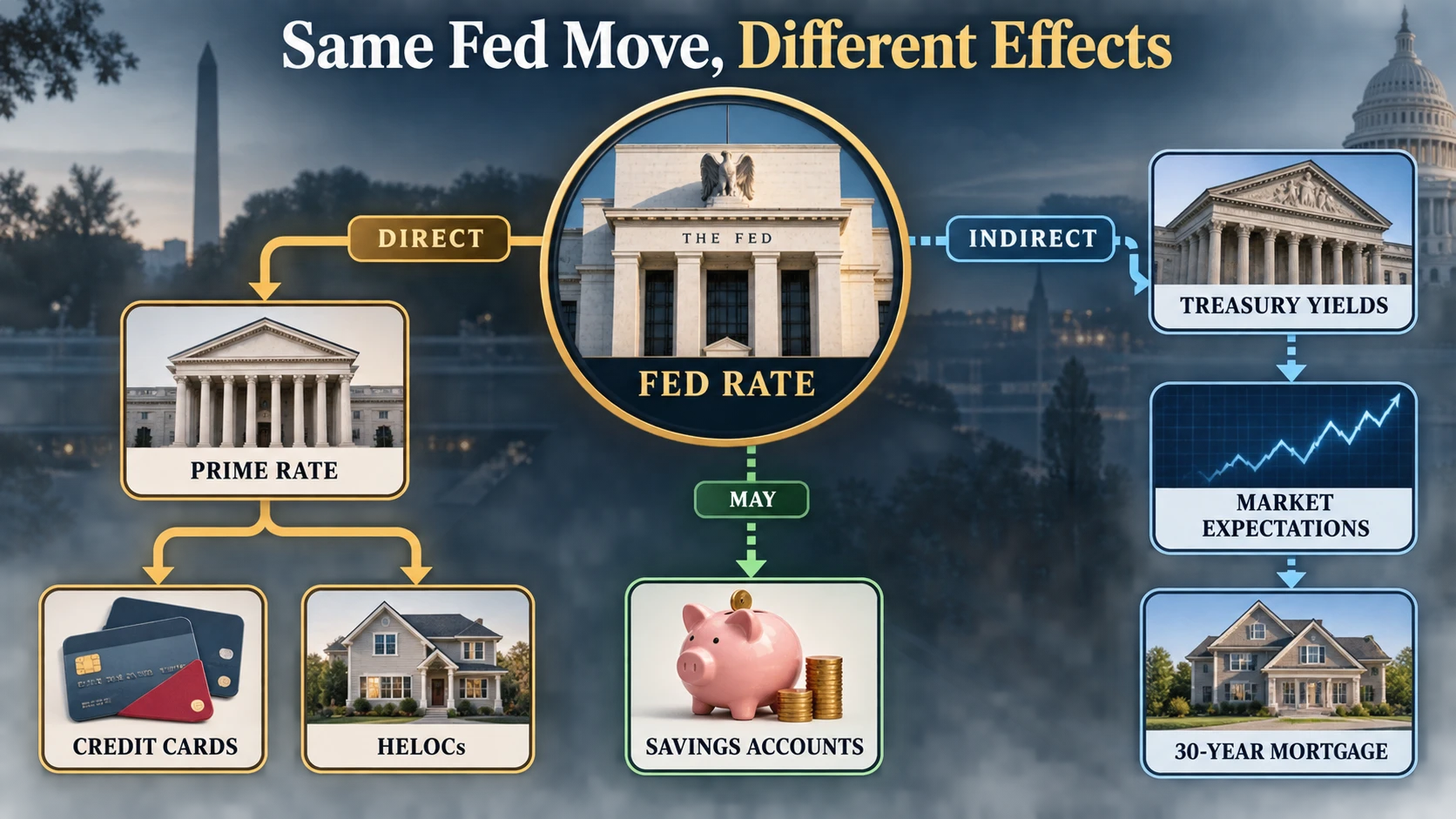
Freddie Mac reported that the average 30-year fixed mortgage rate reached 6.95% on September 17, up from 6.76% a week earlier. The 15-year fixed rate rose from 6.09% to 6.26%. (Freddie Mac)
Those increases occurred around the Fed meeting, but it would be misleading to say the Fed’s quarter-point move alone caused the mortgage increase.
Mortgage markets had already been reacting to inflation, Treasury yields and expectations about future monetary policy before the Fed announced its decision.
For someone borrowing $400,000 on a 30-year fixed mortgage, the difference between 6.76% and 6.95% works out to roughly $51 more per month in principal and interest. That example does not include property taxes, insurance or other costs.
More important, an existing homeowner with a fixed-rate mortgage does not suddenly get a higher rate because the Fed raised rates.
The rate was locked when the loan was made.
An adjustable-rate mortgage is different. Its rate can change when the loan reaches a scheduled reset date, based on the index and margin specified in the mortgage contract.
Why Can Credit Cards React Much Faster?
Because most credit cards use variable interest rates, and many are tied to the bank prime rate.
That creates a much shorter path from the Federal Reserve to a borrower’s monthly statement.
The Federal Reserve’s H.15 interest-rate data show the bank prime loan rate moving from 6.75% on September 16 to 7.00% on September 17, immediately after the Fed’s quarter-point increase took effect. (Federal Reserve)
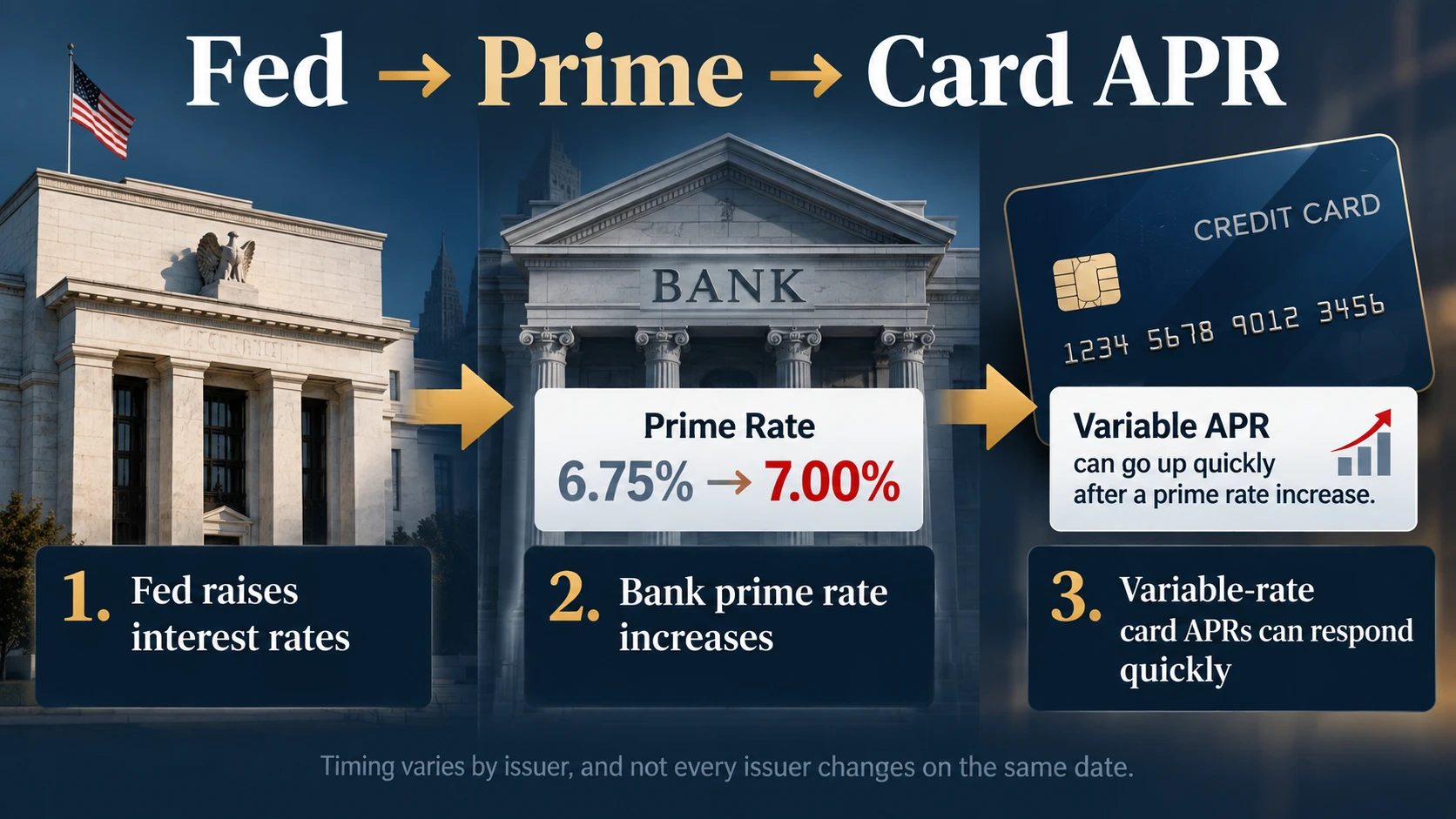
A common credit-card formula looks something like:
Prime rate + issuer margin = variable APR.
That means a quarter-point rise in prime can eventually produce a quarter-point increase in the APR on many variable-rate cards, although the exact timing depends on the card agreement and issuer.
For perspective, a 0.25-percentage-point increase on a constant $5,000 balance amounts to about $12.50 a year in additional interest before considering compounding or changing payments.
One rate hike by itself may not transform a household budget.
Several hikes can.
That is why people carrying revolving balances tend to feel a tightening cycle much more directly than people who pay their card balance in full every month.
What About HELOCs and Auto Loans?
Home-equity lines of credit, or HELOCs, can respond relatively quickly because many use variable rates based on prime.
A homeowner with a HELOC therefore may feel the Fed’s move much sooner than a homeowner with a 30-year fixed mortgage.
Auto loans work differently.
If you already have a fixed-rate auto loan, the lender cannot simply raise your contract rate because the Fed changed policy. But rates offered on new car loans can become more expensive as banks and finance companies face higher funding costs and adjust their pricing.
The same basic rule applies across consumer finance:
| Financial product | What happens after a Fed hike? | How direct is the connection? |
|---|---|---|
| Existing fixed-rate mortgage | Usually no change | Low |
| New fixed-rate mortgage | May rise or fall with longer-term markets | Indirect |
| Variable-rate credit card | APR may rise | Relatively direct |
| HELOC | Rate may rise as prime changes | Relatively direct |
| Existing fixed-rate auto loan | Usually no change | Low |
| New auto loan | New offers may become more expensive | Indirect |
| High-yield savings account | Bank may raise yield | Possible, not guaranteed |
| New CD | New offered rates may improve | Possible |
AP similarly noted that credit cards and other prime-sensitive borrowing costs tend to respond more directly to Fed moves than mortgages. (AP)
Could Savers Actually Benefit From a Rate Hike?
Yes—but there is no guarantee your bank will pass the entire increase on to you.
Higher short-term interest rates can allow banks, online savings providers, money-market funds and issuers of certificates of deposit to offer better yields.
That is the opposite side of higher borrowing costs.

If a bank passed a full 0.25 percentage point increase to a $10,000 savings balance, the difference would amount to about $25 more interest over a year before taxes.
But deposit rates are competitive decisions made by individual institutions. A bank with plenty of deposits may barely change its savings rate. An online bank competing aggressively for deposits may move more quickly.
That makes a Fed hike a useful moment for savers to compare yields rather than assume their current bank automatically offers the best rate.
Why Are Mortgage Rates Near 7% If the Fed Rate Is Below 4%?
Because they are different prices for different kinds of money over very different time periods.
The federal funds rate is an overnight rate.
A 30-year mortgage exposes a lender or investor to decades of inflation risk, interest-rate uncertainty, prepayment behavior and credit-related costs.
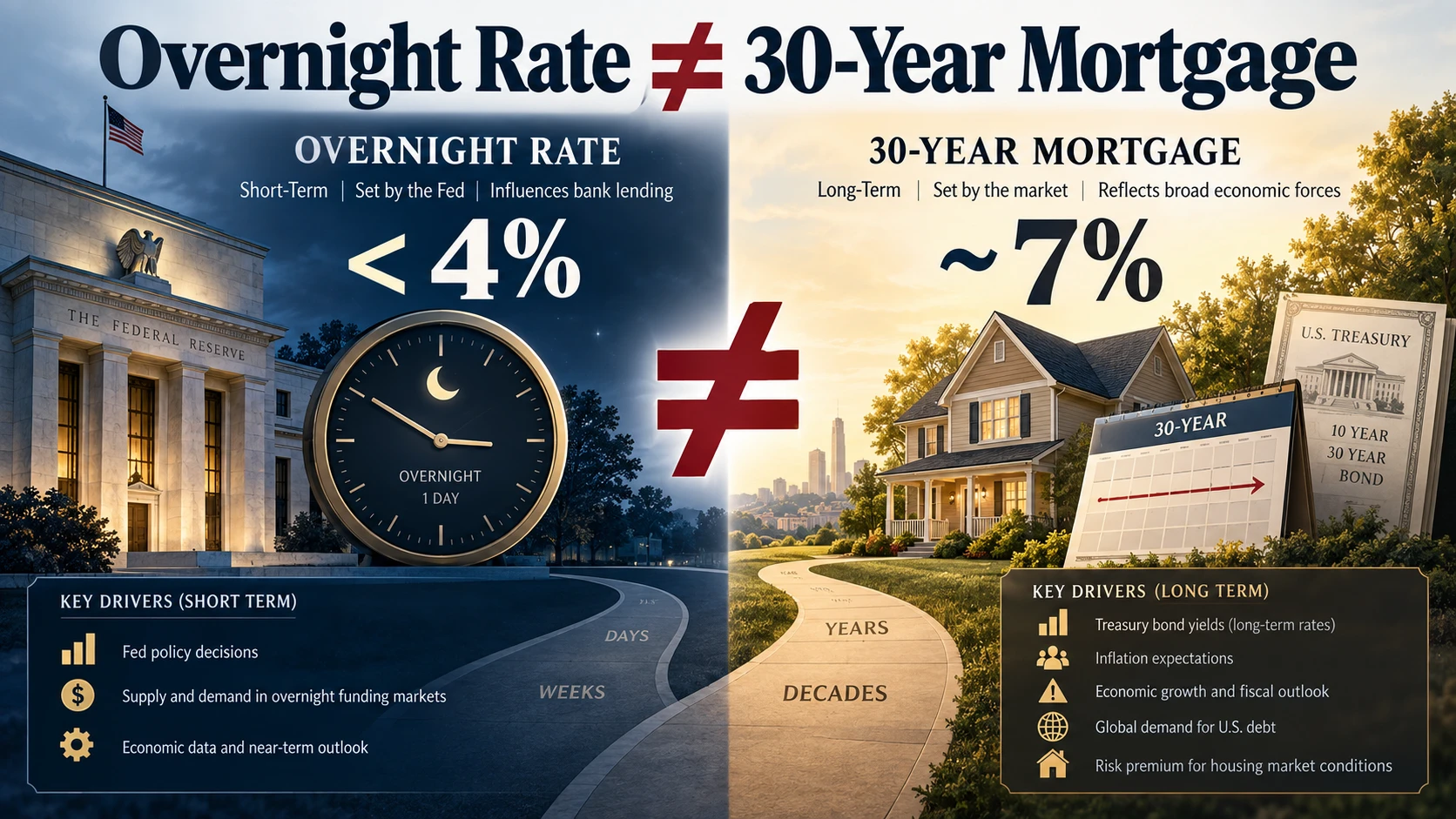
That is why the two rates can move differently.
The Fed can even cut rates while mortgage rates rise if investors become more worried about future inflation or government borrowing. Likewise, mortgage rates can fall before the Fed cuts if bond markets expect lower inflation and future easing.
Freddie Mac’s September 17 survey showed a 30-year average of 6.95%, compared with the Fed’s new 3.75%–4.00% overnight target range. (Freddie Mac · Federal Reserve)
The gap does not mean something is malfunctioning.
It means the products are pricing different risks.
Is Another Fed Rate Hike Coming?
The Fed has not promised another increase, but its September projections suggest many policymakers believe additional tightening may be appropriate.
The median FOMC projection placed the federal funds rate at 4.1% at the end of 2026. The midpoint of the current 3.75%–4.00% range is 3.875%. One additional quarter-point increase would produce a 4.00%–4.25% range, with a midpoint of 4.125%—essentially the 4.1% median projection when rounded. (Federal Reserve)
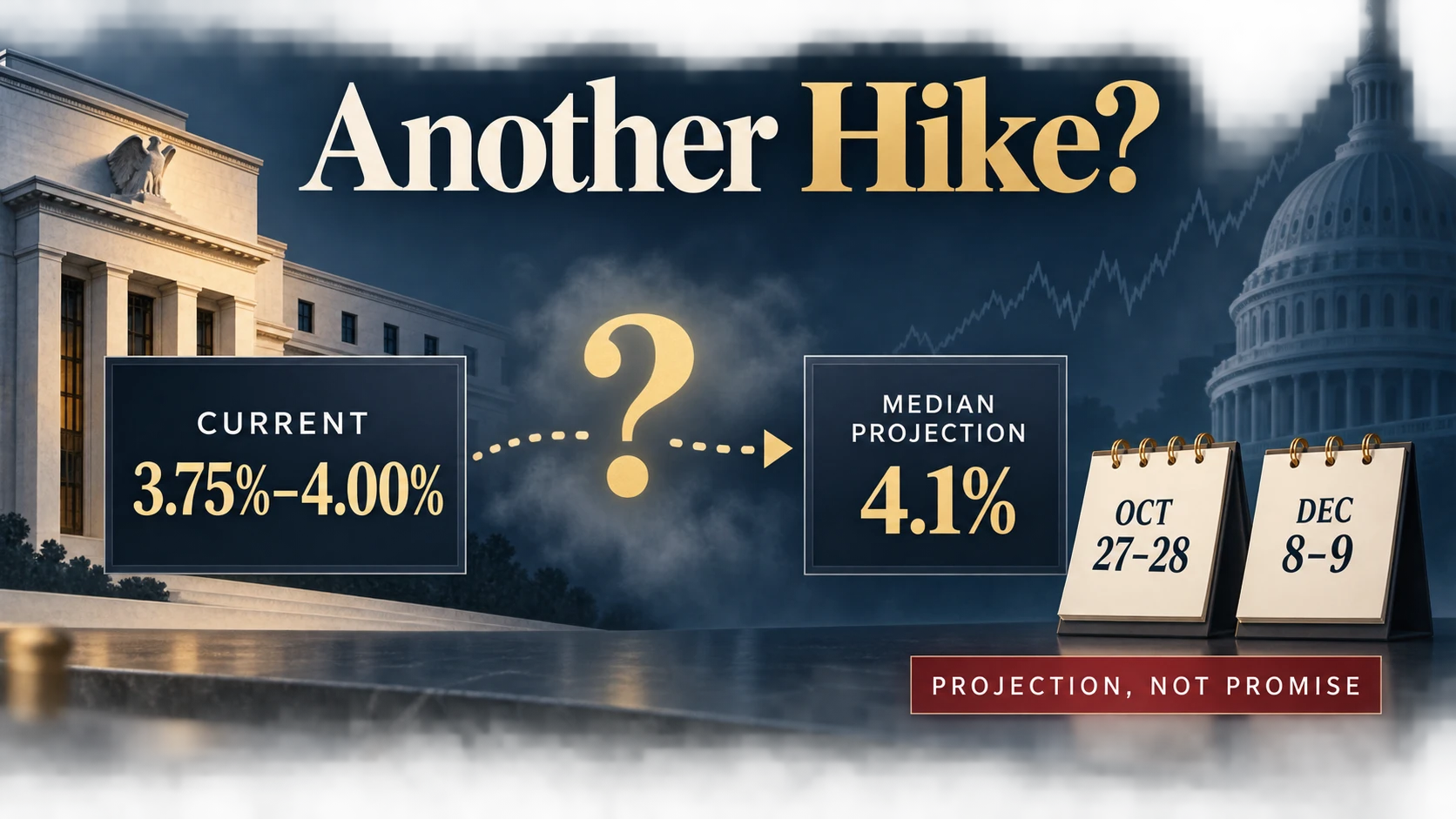
But the so-called dot plot is not a schedule.
Each projection reflects one policymaker’s view of what would be appropriate if the economy develops as expected. New inflation, employment, spending or financial-market data can change those views.
The Fed’s remaining scheduled 2026 policy meetings are October 27–28 and December 8–9. (Federal Reserve)
For households, that means the more important question is not simply whether September produced a quarter-point hike.
It is whether September marks the beginning of a longer series.
Why It Matters in One Sentence
The Fed’s quarter-point hike does not raise every interest rate by a quarter point, but it quickly raises the cost of some variable-rate borrowing, can influence mortgages and new loans through financial markets, and may give savers access to better yields.
Federal Reserve Rate Hike: Key Questions Explained
Q. How much did the Federal Reserve raise interest rates in September 2026?
The Federal Reserve raised its target range for the federal funds rate by 0.25 percentage point, from 3.50%–3.75% to 3.75%–4.00%, effective September 17, 2026. It was the Fed’s first rate increase since 2023.
Q. Why did the Fed raise rates again?
Inflation remained above the Fed’s 2% objective while spending, employment and investment appeared resilient enough for policymakers to tighten monetary policy without expecting an immediate economic downturn.
Q. Does a Fed rate hike automatically raise mortgage rates by the same amount?
No. Fixed mortgage rates are influenced mainly by longer-term bond markets, inflation expectations and investors’ outlook for future Fed policy. A quarter-point Fed hike does not mechanically create a quarter-point mortgage-rate increase.
Q. Will an existing fixed-rate mortgage become more expensive?
No. A standard fixed-rate mortgage keeps the interest rate agreed to when the loan was originated. The Fed’s decision matters more for new borrowers, refinancers and people with adjustable-rate loans.
Q. Why can credit-card rates rise faster than mortgage rates?
Many credit cards have variable APRs tied to the prime rate. The bank prime rate rose from 6.75% to 7.00% after the Fed increase, creating a relatively direct path from Fed policy to card borrowing costs.
Q. Can savings-account rates rise after a Fed hike?
Yes. Higher short-term market rates can encourage banks to offer better savings and CD yields, especially institutions competing for deposits. Banks are not required to pass the entire Fed increase to savers.
Q. Will auto loans and HELOCs become more expensive?
Existing fixed-rate auto loans generally do not change, but rates on new loans can rise. HELOCs often use variable rates linked to prime, so they can respond more directly to Fed increases.
Q. Is another Federal Reserve rate hike likely in 2026?
The Fed has not committed to another hike. However, the September median projection of a 4.1% federal funds rate at year-end is consistent with roughly one additional quarter-point increase if economic conditions develop as policymakers currently expect.
Did this help make the story clearer? 🙂
WIN keeps unpacking the “why” behind the news—clearly and simply!
Sources
Federal Reserve Decision and Rate Outlook
Federal Reserve — September 16, 2026 FOMC Statement
Federal Reserve — September 2026 Economic Projections
Federal Reserve — Historical Federal Funds Rate Changes
Federal Reserve — 2026 FOMC Meeting Calendar
Inflation and Economic Conditions
Bureau of Economic Analysis — Personal Income and Outlays, July 2026
Bureau of Labor Statistics — Consumer Price Index, August 2026
Mortgages and Consumer Interest Rates
Freddie Mac — Primary Mortgage Market Survey
Federal Reserve — H.15 Selected Interest Rates
AP — Fed Rate Hike Means Higher Borrowing Costs but Potentially Better Savings Yields