Why Did the Titans Trade Jeffery Simmons Just Months After Giving Him a Massive Contract?

Didn’t Tennessee just pay Jeffery Simmons to stay?
In June, the Titans announced a lucrative contract extension for their star defensive tackle. By October 29, he was headed to the Chicago Bears—with Tennessee receiving two future first-round draft picks in the deal. It sounds like a stunning reversal, especially when the player is a four-time Pro Bowler and one of the team’s most recognizable leaders. (Tennessee Titans · Chicago Bears)
But the Titans’ decision was less about suddenly doubting Simmons and more about what Chicago was willing to pay to get him. Tennessee sees an opportunity to rebuild through the draft. Chicago sees a chance to make its current team harder to beat.
※ Images in this article are AI-generated illustrations created to help explain the story. They are not actual photographs, and depictions of people, places, or events may differ slightly from reality.
The price, the timing, and the contract explain why this trade is more complicated than an ordinary midseason roster move.
What Did the Bears Actually Give Up for Jeffery Simmons?
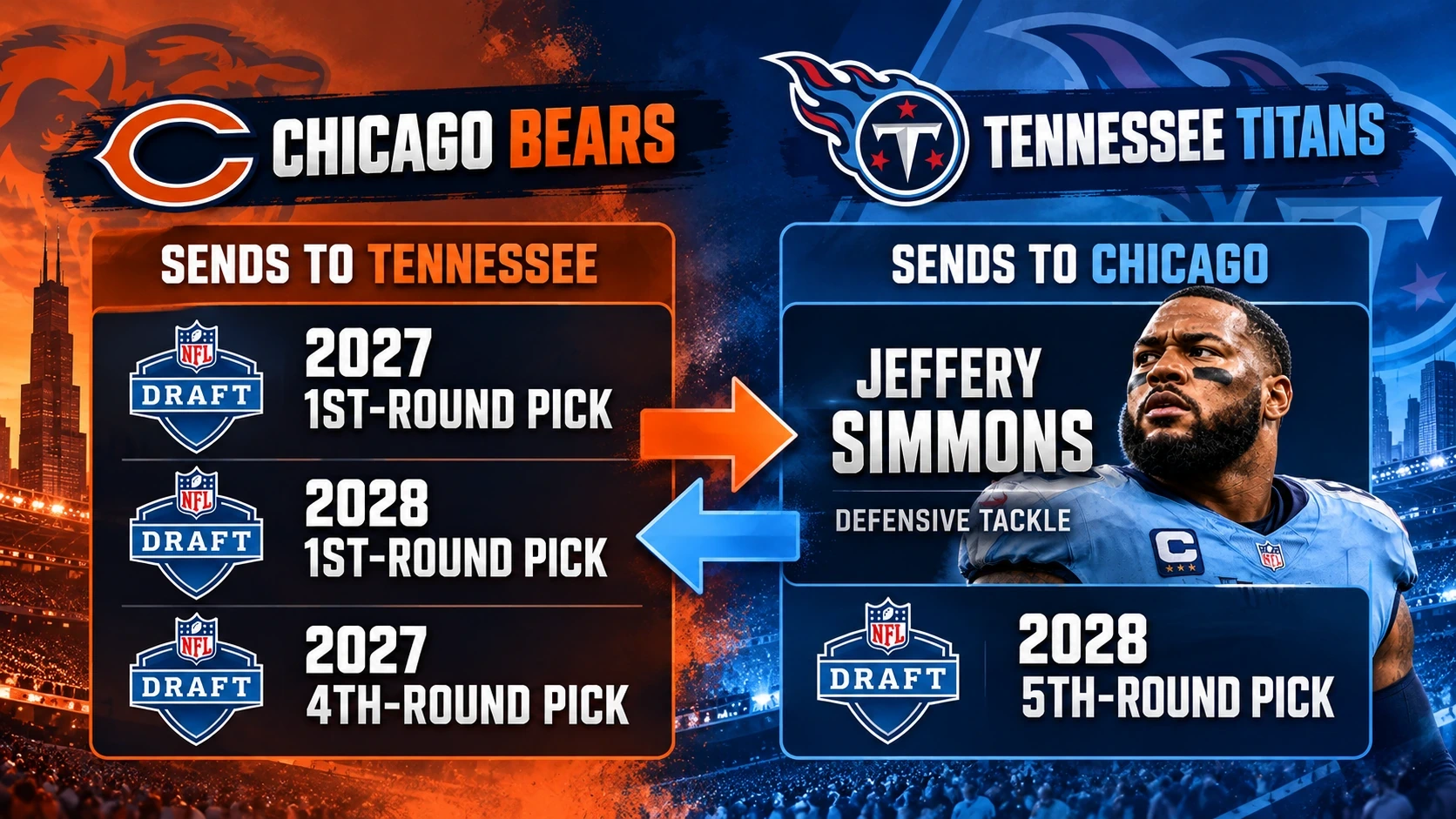
Chicago traded its first-round picks in both 2027 and 2028, plus a 2027 fourth-round pick, to Tennessee. In return, the Bears acquired Simmons and the Titans’ 2028 fifth-round pick. Both clubs announced those terms on October 29. (Chicago Bears · Tennessee Titans)
| Chicago receives | Tennessee receives |
|---|---|
| Defensive tackle Jeffery Simmons | Chicago’s 2027 first-round pick |
| Tennessee’s 2028 fifth-round pick | Chicago’s 2028 first-round pick |
| — | Chicago’s 2027 fourth-round pick |
That is a significant price because first-round picks are valuable opportunities to add young players. They are also uncertain assets: the teams do not yet know exactly where Chicago’s 2027 or 2028 selections will fall in their respective draft orders.
The trade therefore exchanges two different kinds of value: a proven elite defender now versus the chance to build with younger players later.
Why Did Tennessee Trade a Player It Had Just Extended?
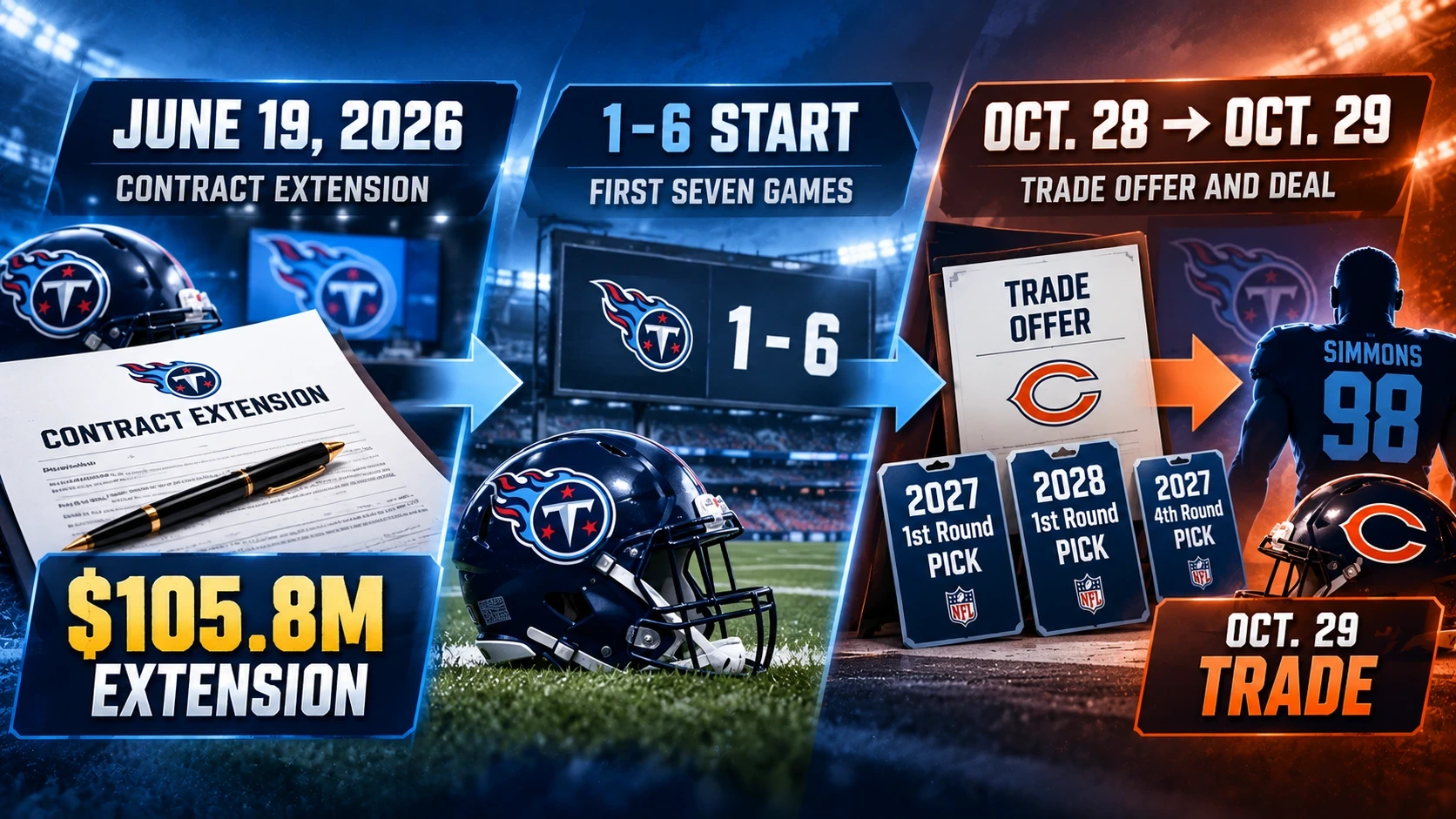
Tennessee did not say Simmons had become a bad player. General manager Mike Borgonzi said the Titans had not been actively trying to move him. According to the team’s account, Chicago GM Ryan Poles called on the night of October 28 with an offer that changed the calculation. Borgonzi consulted coach Robert Saleh and controlling owner Amy Adams Strunk before the deal was agreed to the next morning. (Tennessee Titans)
The surrounding facts matter:
| When | What changed |
|---|---|
| June 19, 2026 | Tennessee announced Simmons’ extension, reported at approximately $105.8 million over three new years. |
| First seven games of 2026 | The Titans began the season 1-6, while Simmons remained a high-level contributor. |
| October 28 | Chicago’s GM contacted Tennessee with a major trade proposal, according to Borgonzi. |
| October 29 | Both teams announced the exchange of Simmons and draft picks. |
In June, Tennessee expected Simmons to anchor its defense for years. Four months later, its record and Chicago’s unusually large offer made a longer-term approach more appealing. The Titans could keep one excellent player, or acquire multiple premium opportunities to reshape the roster. (Tennessee Titans · Tennessee Titans trade explanation)
This is the logic of an NFL rebuild: a team that does not expect to contend immediately can place greater value on future draft selections. Those picks are not guaranteed successes, and losing a respected captain brings a real cost, but the organization gains more ways to improve several positions.
How Can a Team Trade Someone With a $105.8 Million Contract?
A big extension is not automatically a promise that a player can never be traded. Unless a contract contains an enforceable restriction on a trade, a team can generally deal the player and assign his contract to another club. No public announcement in this deal established that Simmons had a no-trade restriction preventing the move.
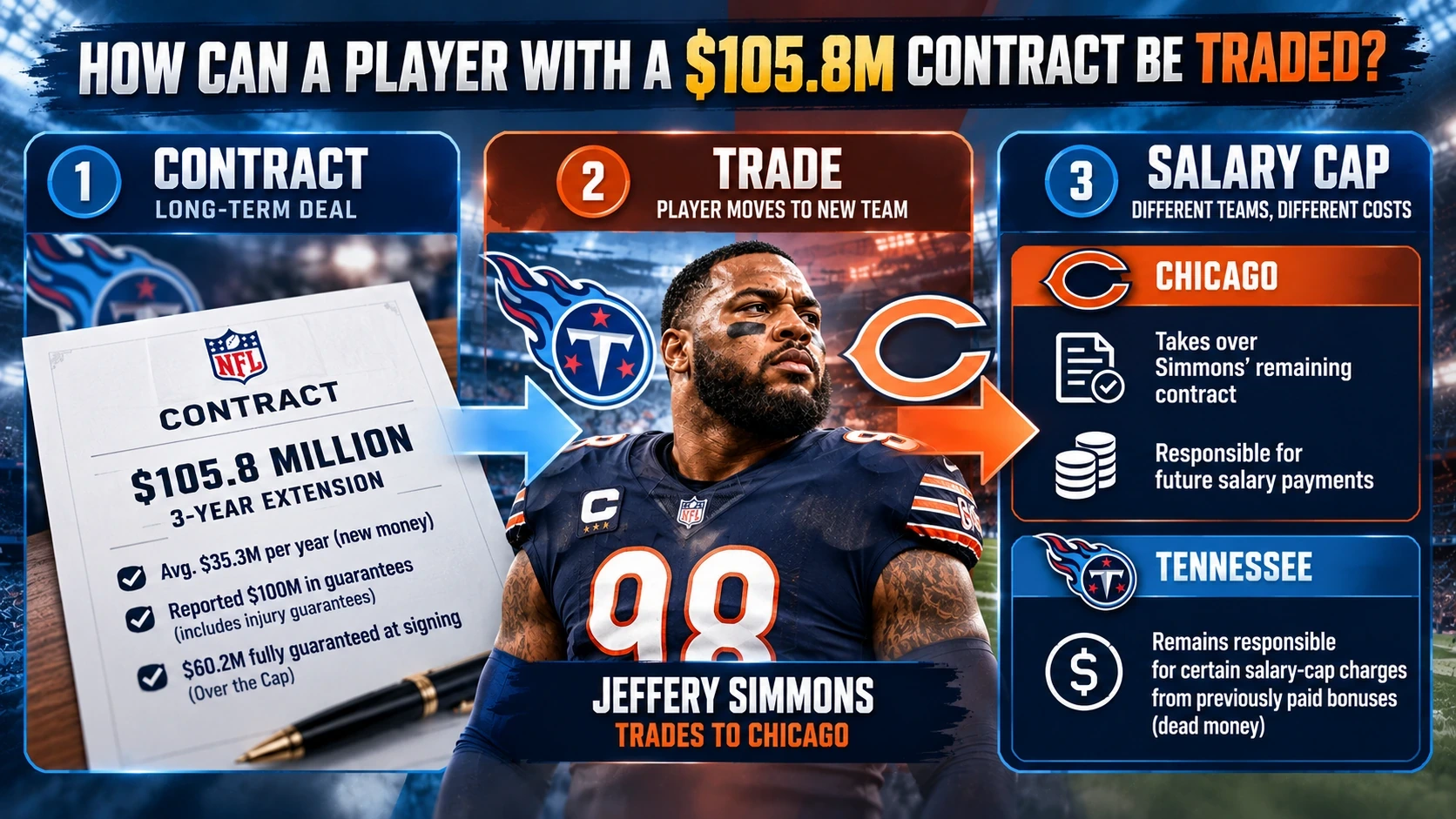
The agreement announced in June added three years valued at approximately $105.8 million in new money, or about $35.3 million per year. Reports described roughly $100 million in guarantees, but that headline needs context. Contract tracker Over the Cap lists $60.2 million fully guaranteed at signing, while describing the larger $100 million figure as injury guarantees. These are not the same category, and the contract’s total value was not a lump-sum payment made in June. (NFL · Over the Cap)
What happens when a player with that kind of deal is traded? Ordinarily, the acquiring club assumes the contract’s future obligations, while the former team remains responsible for certain salary-cap charges associated with bonus money it already paid. The league’s collective bargaining rules distinguish those items; they do not simply make the entire original contract disappear from the former team’s books. (NFL Football Operations · Over the Cap)
Think of the headline contract number as the price and structure of a multiyear commitment—not a receipt proving the entire amount has already been paid, and not a guarantee the player will finish his career with the signing team.
Why Were the Bears Willing to Pay Two First-Round Picks?
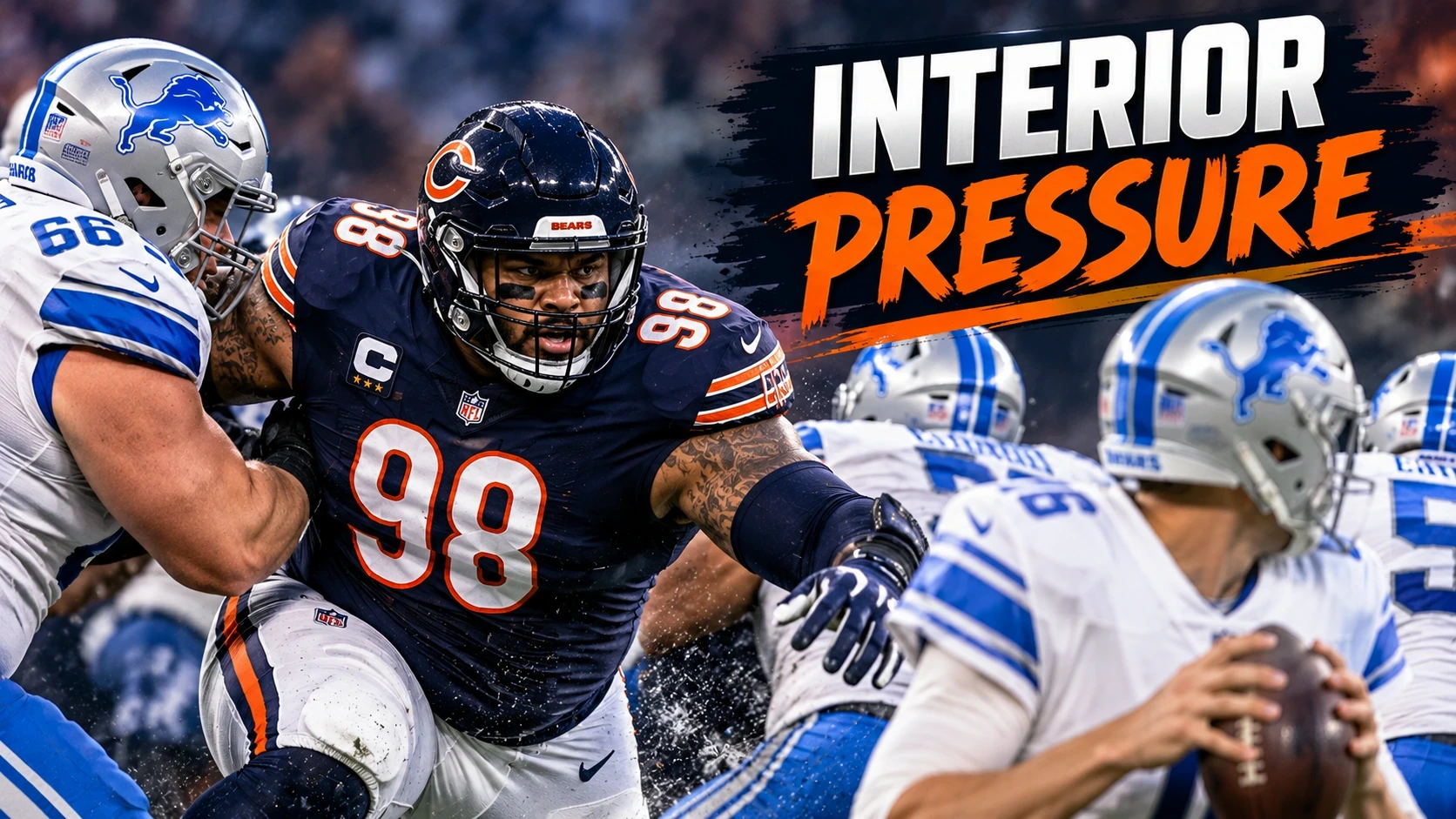
Chicago is buying something it believes is difficult to find: a defensive tackle who can disrupt the game from inside the offensive line. Simmons produced 11 sacks and 17 tackles for loss in 2025, earning first-team All-Pro honors. He had four sacks through seven games in 2026 before the trade. (Chicago Bears · Reuters)
A sack happens when a defender tackles the quarterback behind the line of scrimmage during a passing play. A tackle for loss stops a ball carrier behind that line. Those statistics help explain Simmons’ value, but interior pressure also matters on plays that never become sacks: it can prevent a quarterback from stepping forward or force an offense to change its protection.
The timing tells another part of the story. Chicago entered the trade at 5-2, with Caleb Williams at quarterback and Ben Johnson in his second season as head coach. The Bears were trying to improve an already competitive team, not wait years for drafted players to develop. (AP · NBC Sports)
On October 30, Bears GM Poles described Simmons as both an impact player and a leader who could strengthen the locker room. Simmons, in his first remarks in Chicago, recognized the two first-round picks as a clear signal of how strongly the organization believes it can compete now. (Chicago Bears · NFL)
Which Team Is Taking the Bigger Risk?
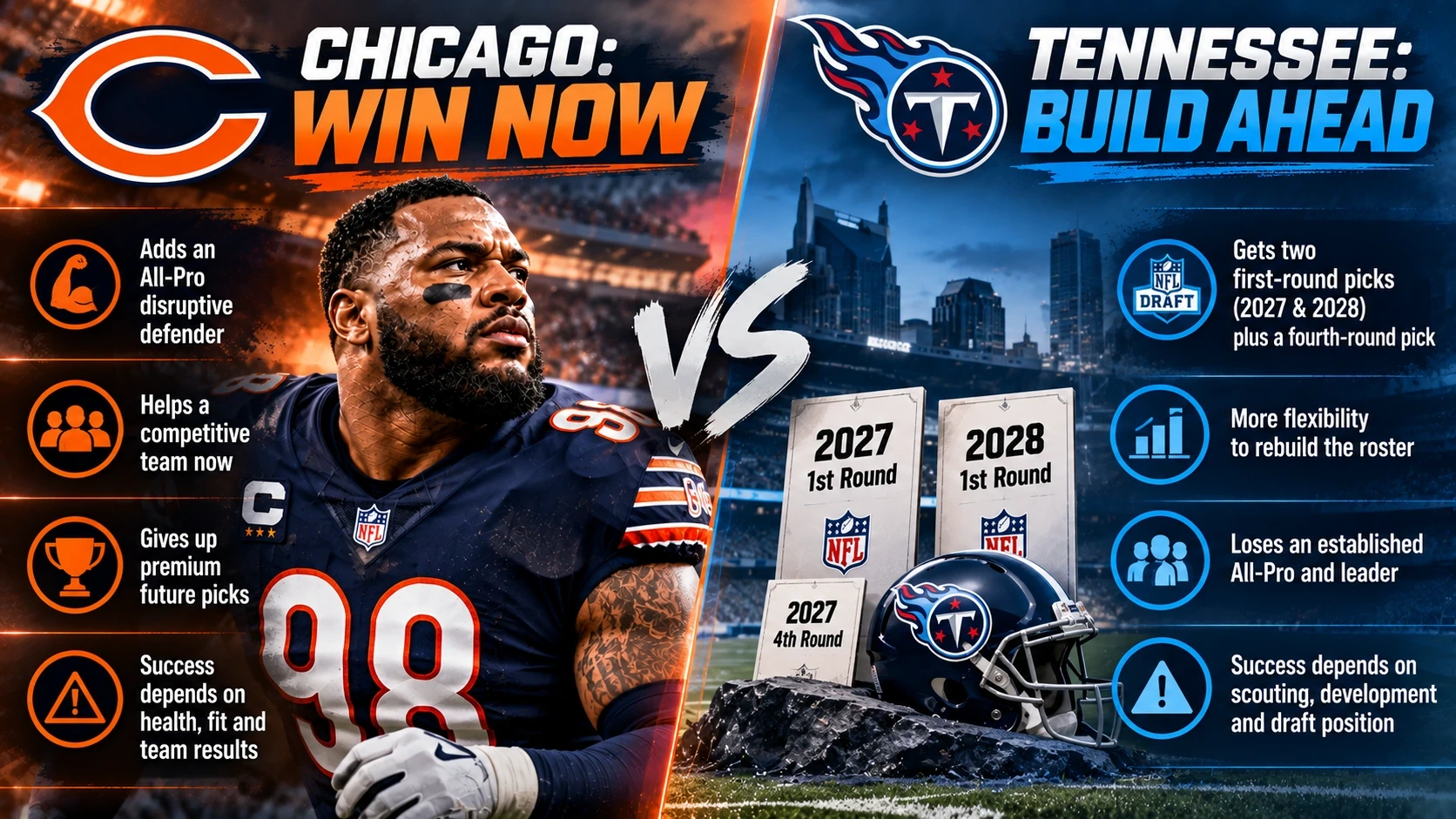
Both teams take meaningful risks, but they are different risks.
| Chicago’s gamble | Tennessee’s gamble |
|---|---|
| Simmons can help immediately. | Two first-rounders could help build a stronger roster. |
| The Bears give up premium future picks. | The Titans lose an established All-Pro defender and leader. |
| Success depends partly on health, fit and team results. | Success depends on scouting, development and draft position. |
Chicago could get several productive seasons from Simmons: the extension he signed with Tennessee runs through 2030. But it is also giving up opportunities to select young, potentially less expensive players. One major acquisition does not guarantee a championship. (NFL)
Tennessee gets more flexibility in future drafts, but flexibility is not the same as proven talent. If its picks fail to develop into contributors, moving a dominant defender could become a costly choice. And the remaining accounting for previously paid bonuses means trading a player does not erase every salary-cap consequence.
The trade’s real outcome may not be clear for years. That is why a simple winner-and-loser verdict on October 29 would be premature.
What Happens Next for Simmons and Both Teams?
Simmons arrived in Chicago and spoke to the media on October 30. The Bears’ next scheduled game was Monday, November 2, at Seattle; Tennessee was scheduled to visit Cincinnati on Sunday, November 1. Whether Simmons could quickly learn his new assignments and contribute in Chicago’s defense was the immediate football question—not something the trade announcement alone could guarantee. (Chicago Bears · NFL · Tennessee Titans)
For Chicago, watch how much pressure the defense generates up the middle and whether that improvement lasts against strong opponents. For Tennessee, the questions stretch further into the future: how it uses the 2027 and 2028 selections and whether the new players become the foundation of a better roster.
Bottom Line: What This Story Really Means
The Titans did not necessarily change their minds about Jeffery Simmons as a player. They changed their assessment of what was more valuable to their team right now after Chicago offered two first-round picks and another draft choice.
The Bears made the opposite calculation. Rather than wait for future rookies, they paid a premium for a proven defender they hope can help a competitive team immediately. The trade illustrates a familiar NFL dividing line: one team is investing in the next few months and seasons; the other is investing in the drafts that follow. Neither outcome is guaranteed.
Jeffery Simmons Trade: Key Questions Explained
Q. When was Jeffery Simmons traded to the Chicago Bears?
Both teams announced the trade on October 29, 2026. Simmons was in Chicago speaking with reporters the following day.
Q. What did the Titans receive in the trade?
Tennessee received Chicago’s first-round picks in 2027 and 2028 plus Chicago’s 2027 fourth-round pick. Chicago received Simmons and Tennessee’s 2028 fifth-round pick.
Q. Why did the Titans trade him after a major extension?
Tennessee’s general manager said the team had not been shopping Simmons but accepted an unusually valuable offer. The club’s 1-6 start also made future roster building a central consideration.
Q. How much was Jeffery Simmons’ 2026 contract extension worth?
The three-year extension was reported at approximately $105.8 million in new money, averaging about $35.3 million per year. Its guarantee categories differ, so the entire amount should not be treated as already paid.
Q. Did his contract prevent a trade?
No publicly established restriction prevented this transaction. A long-term NFL extension does not, by itself, prohibit a team from trading a player.
Q. Does Tennessee still have salary-cap costs after trading Simmons?
Yes, certain accounting charges tied to money already paid can remain with the former team. Chicago generally takes on the future obligations assigned with the contract.
Q. Why did Chicago trade future first-round picks for a defender?
Chicago wanted an established interior defender who could help immediately. Simmons’ All-Pro performance and leadership made him attractive to a team entering the trade at 5-2.
Q. Who won the Jeffery Simmons trade?
It is too early to know. Chicago needs Simmons to justify the high price, while Tennessee needs its future draft selections to produce meaningful long-term value.
Did this help make the story clearer? 🙂 WIN keeps unpacking the “why” behind the news—clearly and simply!
Sources
Trade Announcement and Tennessee’s Decision
Tennessee Titans — Simmons Trade and Draft Compensation
Tennessee Titans — GM Explains Why the Offer Changed His Thinking
Chicago Bears — Official Simmons Acquisition Announcement
Contract and NFL Salary-Cap Rules
Tennessee Titans — June 19 Contract Extension Announcement
Over the Cap — Jeffery Simmons Contract Breakdown
NFL Football Operations — Contract Terminology and Dead Money
Chicago’s Outlook and Simmons’ Response
Chicago Bears — Simmons’ Expected Impact On and Off the Field