Why Does Trump Want to Close East Potomac Golf Course—and What Did a Judge Block?

What happens when the president wants to turn a public golf course into a championship-level destination—but people who use that course believe they could lose much more than a place to play golf?
That’s the fight unfolding at East Potomac Golf Links, a century-old recreational site near the National Mall in Washington, D.C. On October 18, 2026, President Donald Trump announced plans to close the course beginning November 15 for a renovation expected to last about 15 months. He says the rebuilt facility will remain open to the public. But its new layout, its future affordability, and the fate of surrounding public spaces are already subjects of a legal and political dispute. (AP · The Washington Post)
There’s an important distinction behind the headlines: a federal judge has temporarily stopped additional tree removal, not permanently canceled Trump’s entire golf course proposal. Understanding that difference explains why a closure announcement and a court order can exist at the same time.

※ Images in this article are AI-generated illustrations created to help explain the story. They are not actual photographs, and depictions of people, places, or events may differ slightly from reality.
What Did Trump Announce About East Potomac Golf Links?
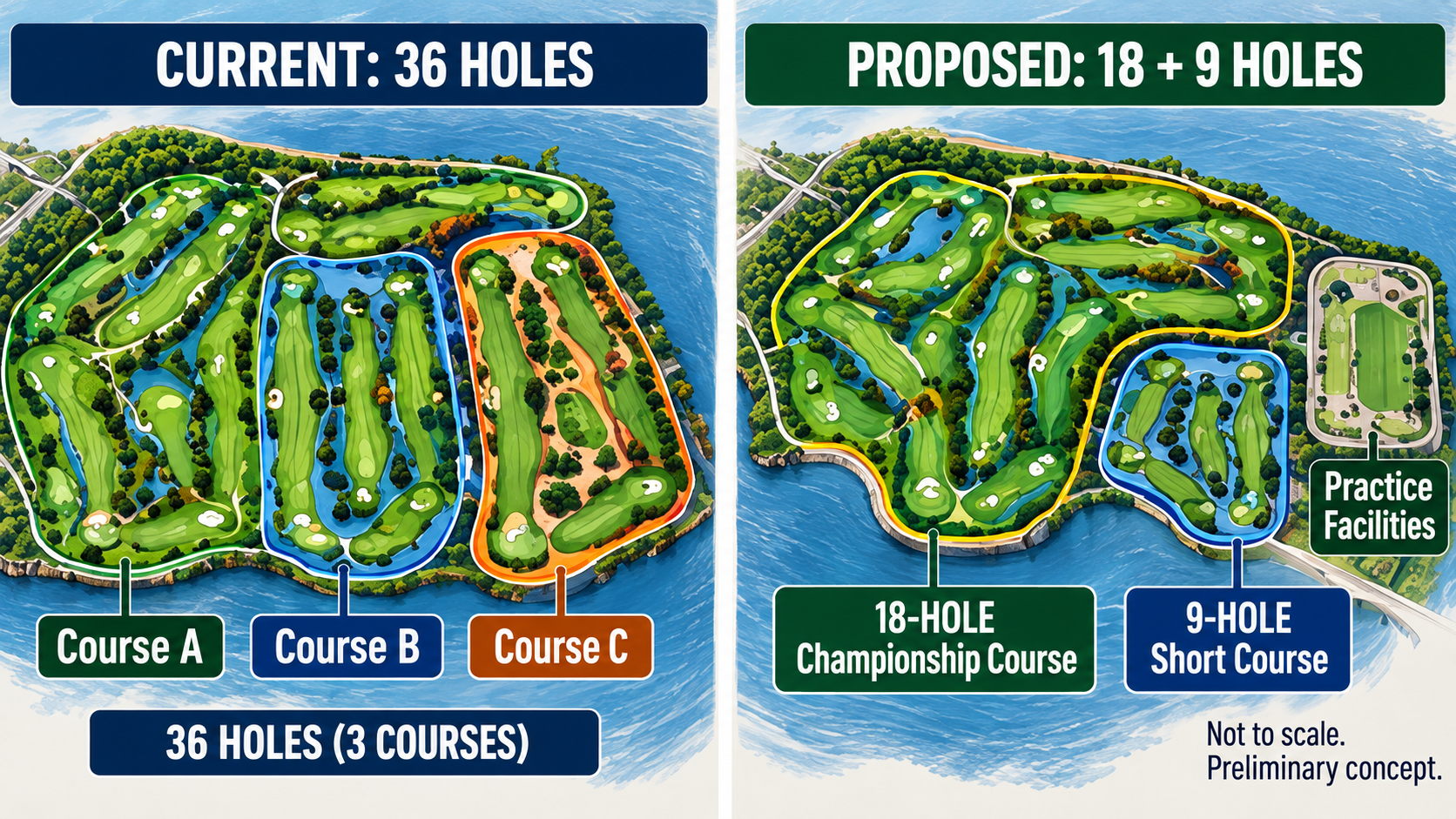
Trump’s October 18 announcement set a proposed shutdown date: November 15, 2026, followed by approximately 15 months of construction. If that schedule holds, the course would reopen around early 2028, although that is a projection rather than a guaranteed opening date. (AP)
The goal is far more ambitious than repairing fairways or upgrading a clubhouse. Trump has promoted a redesign by noted golf architect Tom Fazio that could accommodate elite competitions. The preliminary Fazio plan would replace East Potomac’s existing 36 holes across three courses with an 18-hole championship course plus a separate nine-hole short course, alongside redesigned practice facilities. Hosting an event such as the U.S. Open or Ryder Cup is an aspiration, not an announced tournament booking. (The Washington Post · GOLF.com)
Trump has also said the redesigned course would remain accessible to the public. That promise matters, but public access and affordable access are not automatically the same thing. Specific future fees, the project’s total cost, and its ultimate operating arrangements have not been fully established in the reporting available as of October 18. (Forbes · The Washington Post)
Why Is This Particular Golf Course So Important?
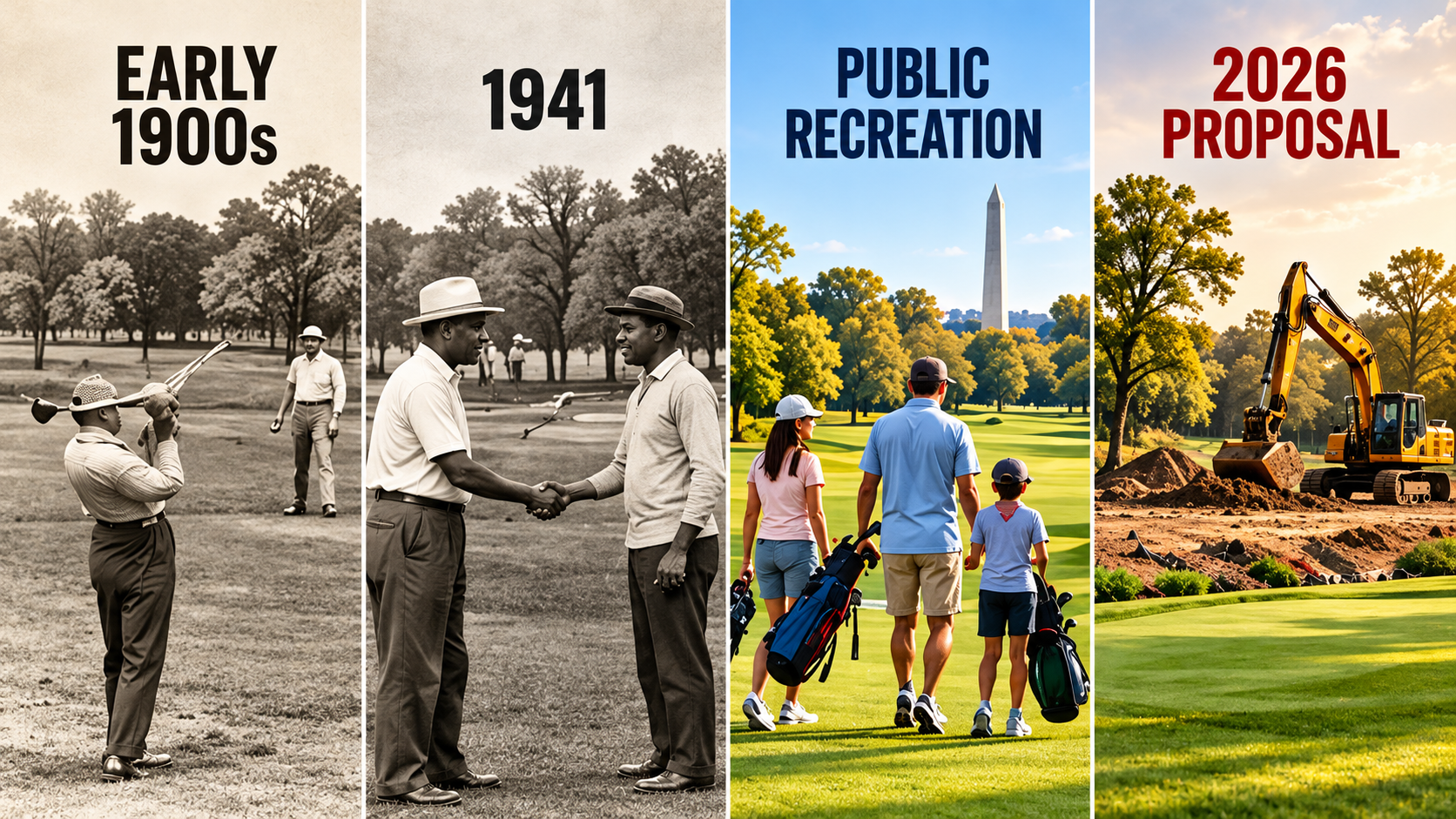
East Potomac is not a private Trump golf club or an ordinary city-owned municipal course. It is a federally managed public recreational property, administered through the National Park Service and located on the peninsula between the Potomac River and Washington Channel.
Its history stretches back more than a century. Washington’s three National Park Service golf facilities were developed between 1918 and 1939. The courses also became part of the city’s civil rights history: protests over access helped bring about the integration of recreational facilities in 1941. Those are among the reasons the Park Service has described the golf properties as historically important community assets. (National Park Service)
For locals, the broader East Potomac area is also more than a set of tees and greens. The peninsula contains riverside recreation, paths, cherry trees, and a historic miniature golf course. Residents worry that a redesign aimed at championship golf could alter or displace activities that have long coexisted there. Preliminary drawings have prompted particular questions about Ohio Drive, the miniature golf facility, and existing green space. Those questions should not be confused with final, approved decisions to eliminate each amenity. (The Washington Post · The Atlantic)
The dispute is therefore not simply about whether a better-maintained golf course would be welcome. It is about who the property is meant to serve, which uses count as public recreation, and how much should change to accommodate a more prestigious course.
How Can the President Change a Public Golf Course in Washington?
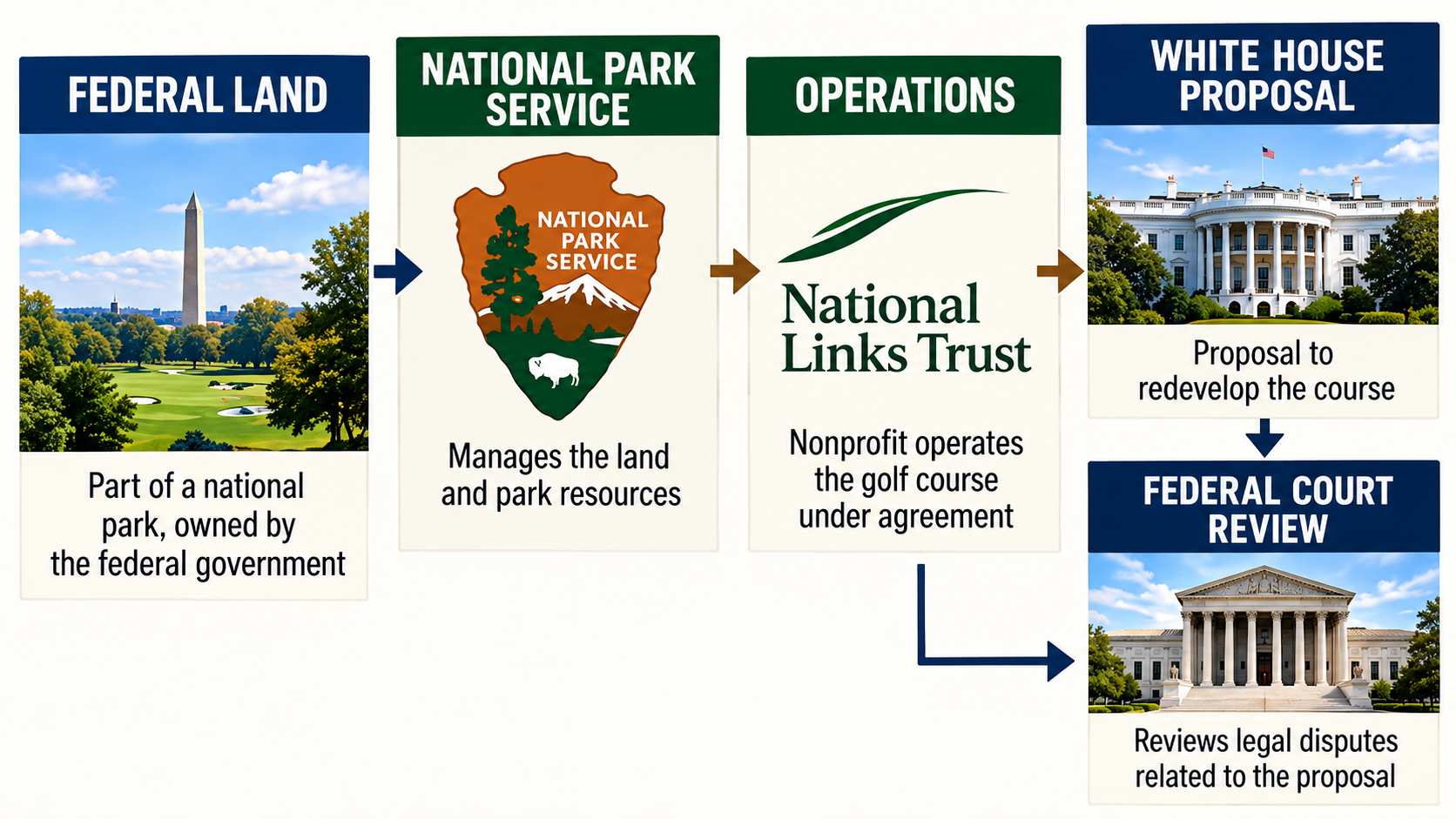
The federal government has substantial authority over East Potomac because the land is administered by the National Park Service. But that does not mean the president can ignore federal environmental review, historic-preservation obligations, or court orders.
The operating arrangements help explain why this story became complicated. In 2020, the Park Service awarded National Links Trust, a nonprofit focused on accessible public golf, a 50-year lease to run and improve East Potomac, Langston, and Rock Creek. That original arrangement included plans to restore historic course features while keeping golf affordable. (National Park Service)
In 2026, the administration moved to take greater control of East Potomac’s redevelopment. A May agreement allowed National Links Trust to continue operating East Potomac on an interim basis while providing a new long-term arrangement for the other two courses. In other words, Langston and Rock Creek are not the same redevelopment project as East Potomac. (WTOP · Reuters)
That leaves two separate questions: whether federal officials have authority to pursue the overhaul and whether they are following the procedures required before making irreversible changes. The lawsuit is focused heavily on the second question.
What Exactly Did the Federal Judge Stop?
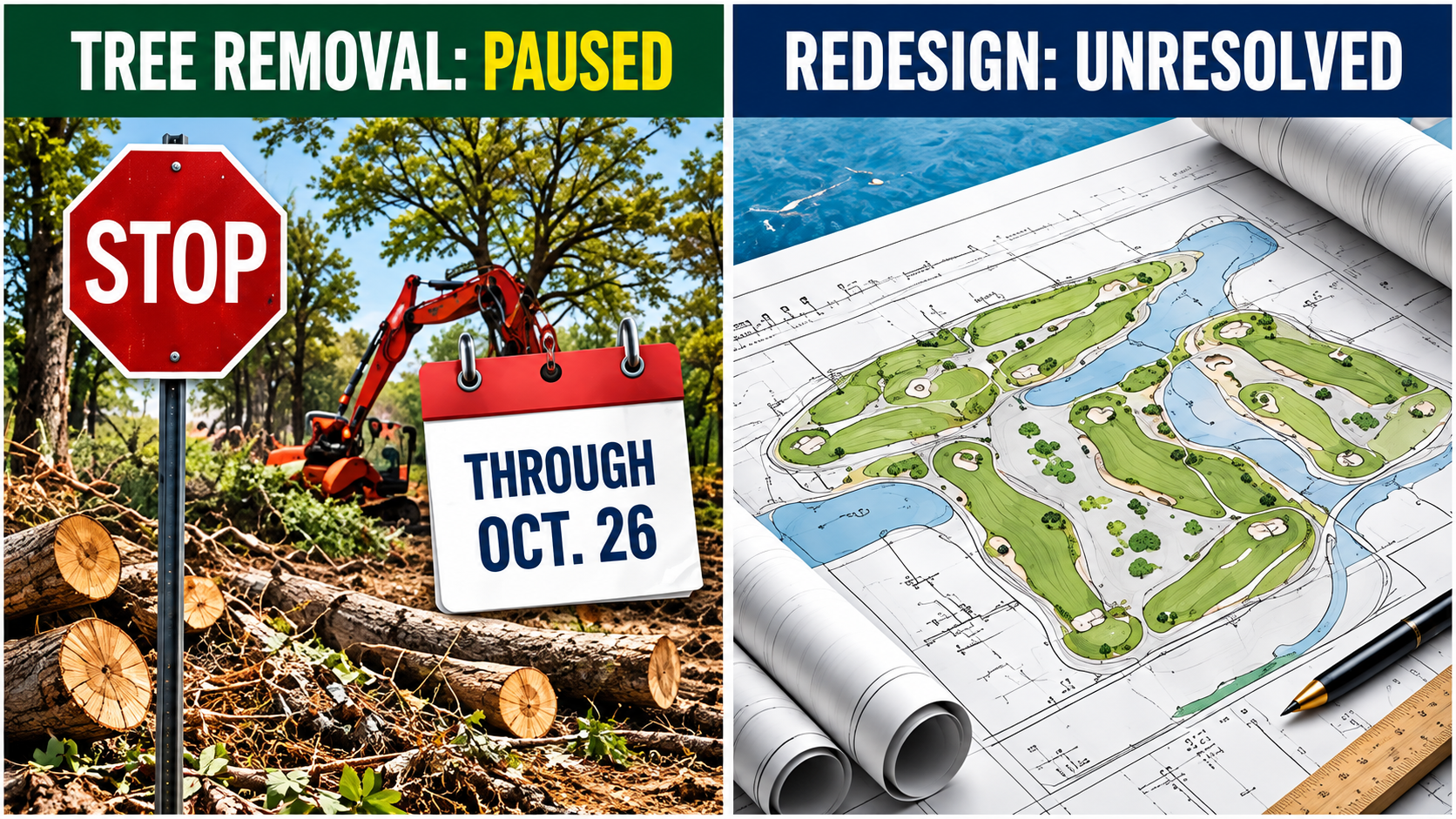
U.S. District Judge Ana C. Reyes temporarily prohibited further tree cutting through October 26, 2026, and required three business days’ advance written notice before other irreversible modifications to permanent features of the course during that period. The order followed a rapid removal of hundreds of trees while the lawsuit was underway. (AP · CBS News)
That is a temporary restraining order, not a final decision about whether a championship course can ever be built. The plaintiffs have sought stronger, longer-lasting relief; the court must separately consider their requests and the underlying legal claims.
Here is the distinction that gets lost in a dramatic headline:
| Question | Status as of October 18 |
|---|---|
| Can crews continue cutting trees covered by the order? | No, not through October 26 under the temporary order. |
| Must officials give notice of other irreversible changes? | Yes, three business days’ written notice during the order’s effective period. |
| Has the court permanently canceled the redesign? | No. The broader proposal remains legally contested. |
| Has the November 15 closure already happened? | No. It is the date Trump announced for the planned shutdown. |
The judge’s concern also involves the government’s handling of the review process. The plaintiffs—the DC Preservation League and two local golfers—argue that federal officials are moving too quickly and separating tree removal from the wider redevelopment to avoid a full examination of its impacts. The administration disputes that characterization. (The Washington Post)
Why Have Hundreds of Trees Become the Center of the Fight?
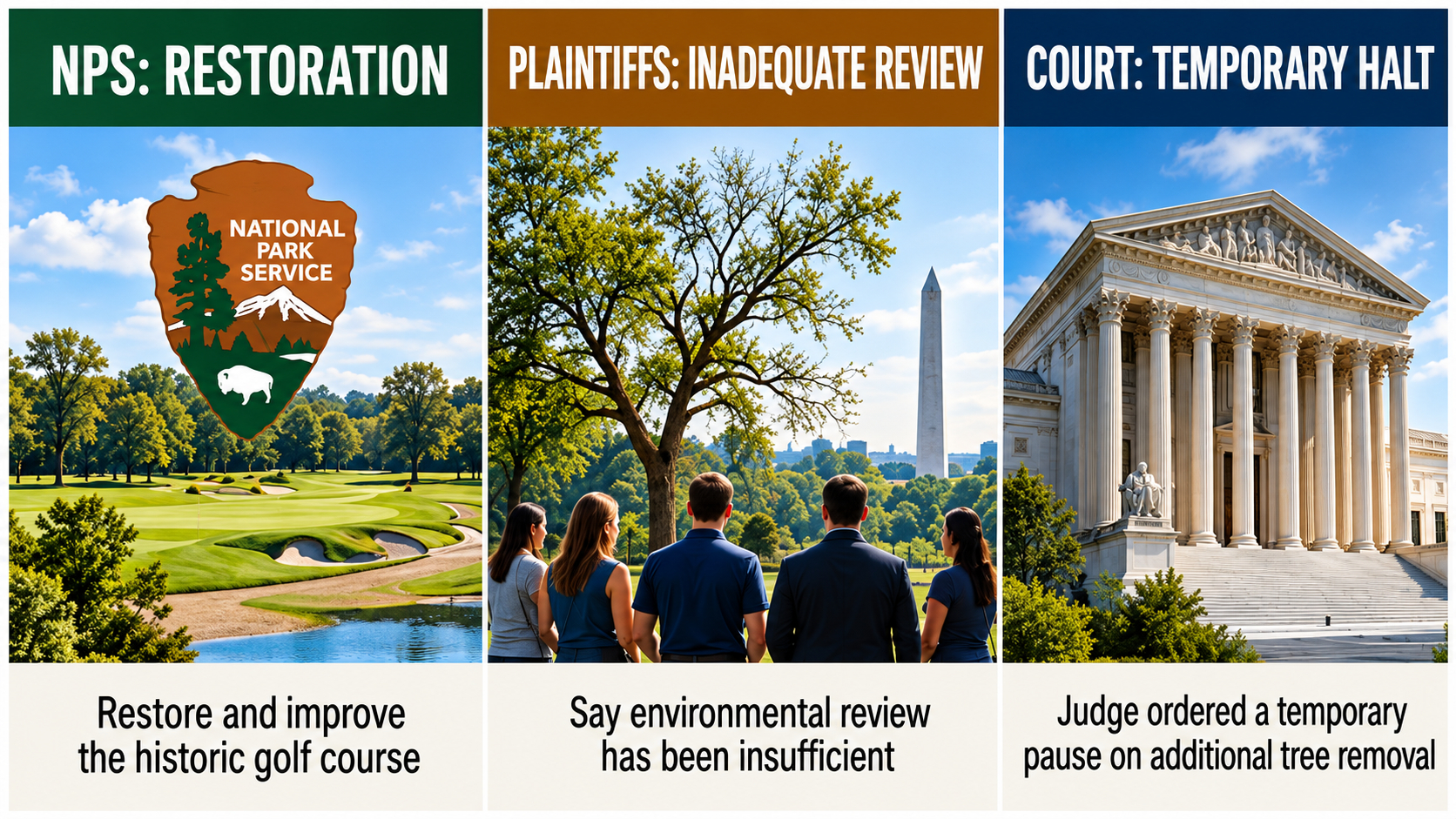
The trees matter because cutting them down is irreversible on the timescale of a lawsuit. A judge can pause a future construction project, but an order issued after mature trees have already been removed cannot instantly restore them.
At an October 12 hearing, government lawyers reported that approximately 430 trees had been removed over the preceding weekend. Officials said more trees were planned for removal. The number 430 is a reported count for that operation, not a verified tally of every tree affected by the broader project. (The Washington Post · Reuters)
The National Park Service says its tree-management work draws from a 2019 cultural landscape study. That study describes East Potomac’s original links-style design—a relatively open golf landscape, rather than one enclosed by dense trees—and recommends removing some vegetation to restore sightlines and historic character. The agency’s published project description presents the work as landscape rehabilitation, separate from constructing a new championship course. (National Park Service)
The plaintiffs see a different picture. They argue the speed and scale of removals fit Trump’s redesign ambitions and that officials must assess environmental and historic consequences before proceeding. Reyes expressed serious doubts about the government’s explanation and, in her interim opinion, found the challengers likely to succeed on a claim involving inadequate environmental review of the tree-removal plan. That preliminary finding is not a final judgment on the entire golf project. (The Washington Post)
The practical disagreement is over whether this is limited restoration of an existing public course or early groundwork for a much larger transformation—and what federal reviews those activities require.
Would the New Course Still Be Affordable and Open to Everyone?
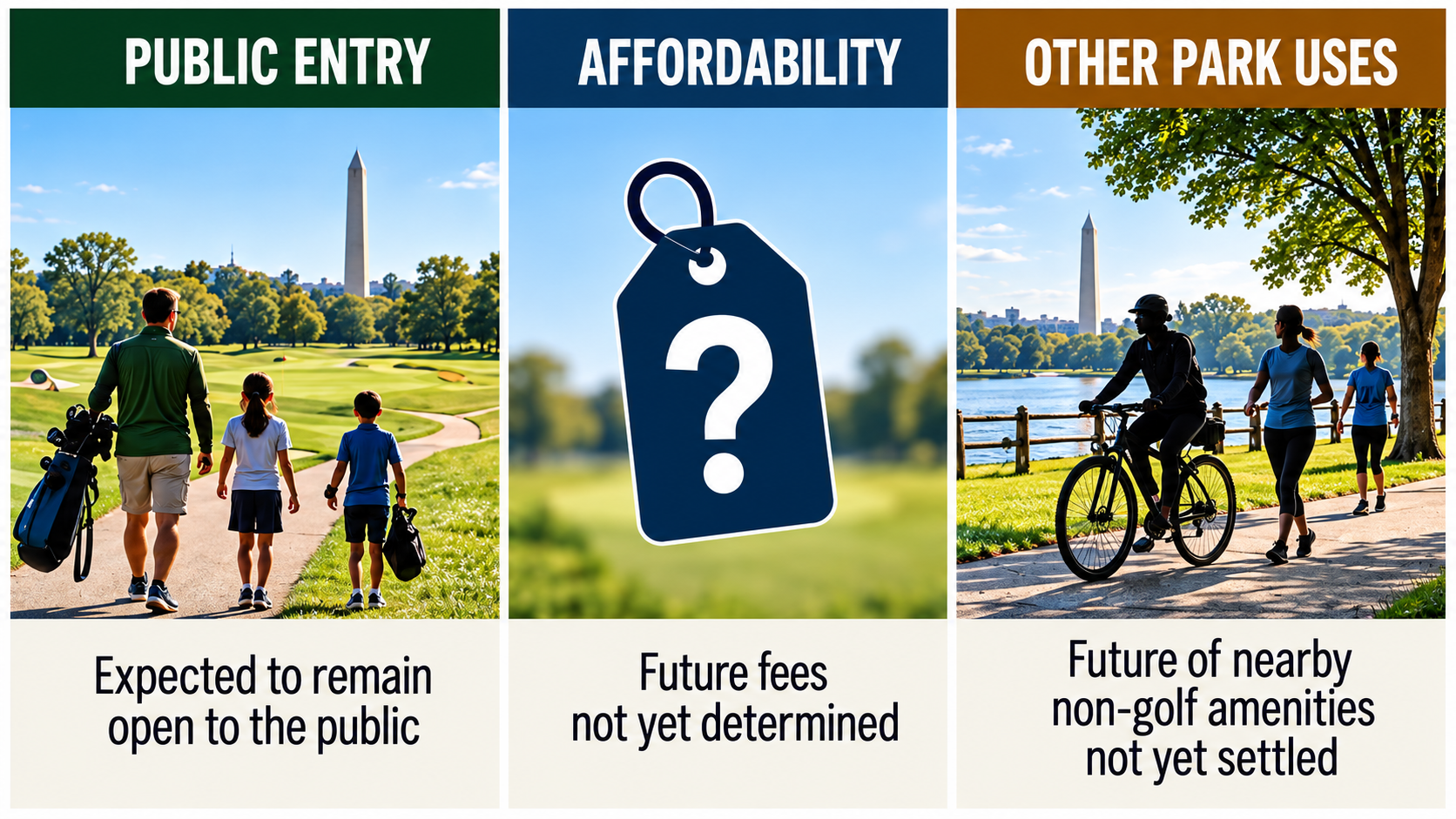
Trump says the course will remain public; whether it stays affordable and compatible with other recreation is a separate, unresolved question. A championship-caliber course can be publicly owned and still charge prices that put it beyond the reach of many casual golfers.
The previous National Park Service agreement with National Links Trust explicitly emphasized affordable golf, youth programs, and opportunities for seniors, veterans, people with disabilities, and newcomers to the sport. That history gives critics a concrete standard against which to assess the redesign. (National Park Service)
Supporters of the overhaul see a chance to turn a deteriorated public facility into a course of national distinction, with better playing conditions and facilities. Opponents fear a high-end redesign could change who can realistically use the course and reduce recreational space for people who do not golf. The final fee structure, taxpayer or private funding arrangements, and precise protections for surrounding amenities will be crucial to judging those competing claims. (GOLF.com · The Washington Post)
There is a useful way to think about the question. A public library can be renovated into a beautiful landmark, but its public mission still depends on whether ordinary residents can comfortably use it. The architectural quality of a public golf course is not, by itself, a measure of public access.
What Happens Next With the Closure and the Lawsuit?
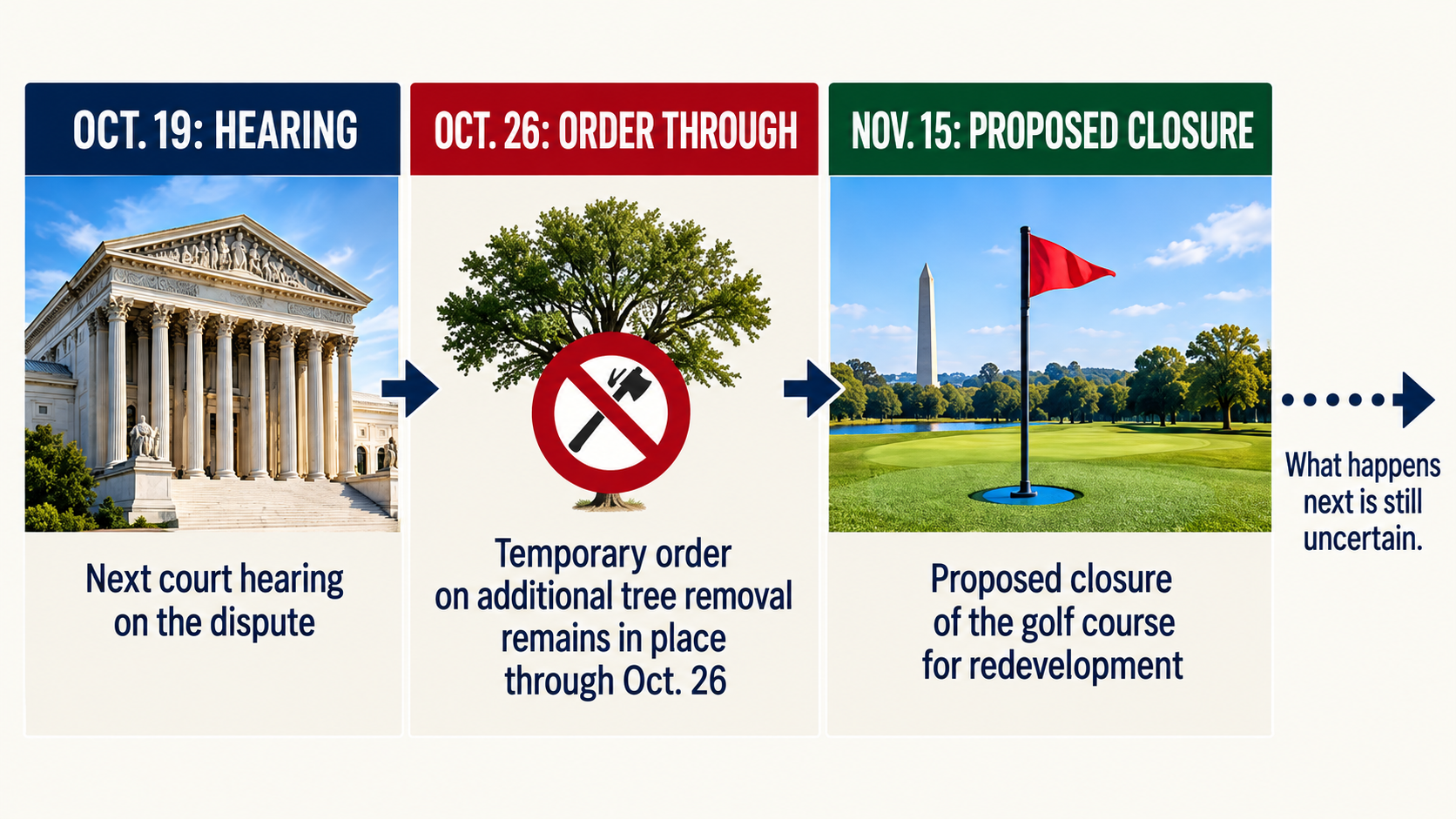
Three dates explain where things stand: October 19 is a scheduled court hearing, October 26 is the current end date for the tree-cutting restriction, and November 15 is Trump’s announced target for closing the existing course. None of those dates by itself guarantees that the entire redevelopment will proceed as planned. (AP · CBS News)
The timeline also shows how the proposal has evolved:
| Date | Development | Why it matters |
|---|---|---|
| 2020 | National Links Trust receives a long-term lease for three federal public golf courses. | Establishes the earlier public-access and restoration framework. |
| May 2026 | A revised operating agreement makes room for federal redevelopment of East Potomac. | Separates East Potomac’s future from Langston and Rock Creek. |
| June 28, 2026 | Trump says redevelopment work will begin September 1. | Shows that the schedule has already shifted. |
| October 10–13, 2026 | Hundreds of trees are removed; the court temporarily stops further cutting. | Raises the stakes for environmental review and judicial oversight. |
| October 18, 2026 | Trump announces a November 15 closure and roughly 15-month renovation. | Provides a new public timetable, not a final court-approved plan. |
The administration has also asked that Judge Reyes be disqualified from the case, alleging bias; that request does not itself erase the existing order. Meanwhile, challengers are seeking a preliminary injunction that could extend restraints while the lawsuit continues. A hearing scheduled for October 19 is expected to address how the tree-removal decisions were made. (The Washington Post · CBS News)
For anyone trying to assess the project’s future, four unresolved matters are worth watching: whether the court extends its restrictions; whether a fuller redesign and environmental review are released; how funding and green fees are structured; and whether access to paths, mini-golf, and other public amenities is preserved.
Bottom Line: What This Story Really Means
Trump wants to transform East Potomac Golf Links from a historic, multi-course public facility into a championship-level destination, and he has announced a 15-month closure beginning November 15, 2026. He says it will remain open to the public after renovations.
But the legal fight is not over whether a president likes golf, or whether a public course could benefit from improvements. It is about the rules that govern irreversible changes to federally managed public land—and whether a more prestigious facility would preserve the public benefits people already have.
The federal judge has halted additional tree cutting temporarily. She has not yet permanently prohibited the entire redesign. What happens in court, and what the administration discloses about the new course’s cost and access, will determine how much of Trump’s vision can move forward.
Trump East Potomac Golf Course: Key Questions Explained
Q. Which Washington, D.C., golf course does Trump want to renovate?
East Potomac Golf Links, a historic public course on federally managed land near the National Mall and the Potomac River.
Q. When is East Potomac Golf Links supposed to close?
Trump announced November 15, 2026, as the proposed closure date, with renovations expected to last approximately 15 months. The timeline could change.
Q. Is East Potomac a private Trump golf club?
No. It is a public recreational property administered by the National Park Service, not a privately owned Trump golf club.
Q. Did a federal judge block the entire renovation?
No. Judge Ana C. Reyes temporarily barred additional tree removal through October 26 and required advance notice of other irreversible changes during that period. The broader redesign remains under legal challenge.
Q. How many trees were removed at East Potomac?
At an October 12 court hearing, government lawyers said approximately 430 trees had been removed over the preceding weekend. That figure should not be treated as a final project-wide total.
Q. Why does the National Park Service say trees needed to be removed?
The agency points to a 2019 landscape study recommending selective vegetation removal to restore the course’s historically open, links-style design. Challengers dispute whether that adequately explains the recent work and its review process.
Q. Will the redesigned golf course still be open to the public?
Trump says yes. But the future fees, management details, and effects on nearby public recreation have not been fully resolved.
Q. Does a championship golf course mean the U.S. Open will be held there?
No. Designing a course to host major competitions does not mean that a tournament organizer has awarded it an event.
Q. What should residents watch for next?
Court decisions on longer-lasting restrictions, fuller project plans and environmental assessments, pricing and funding details, and decisions about adjacent public amenities.
Did this help make the story clearer? 🙂 WIN keeps unpacking the “why” behind the news—clearly and simply!
Sources
October 18 Announcement and Proposed Redesign
Associated Press — Trump Announces a 15-Month Closure of East Potomac
The Washington Post — Trump Shares East Potomac Redesign Plan
GOLF.com — Preliminary East Potomac Championship-Course Design
Court Orders, Tree Removal, and Legal Challenge
Associated Press — Federal Judge Orders Tree-Cutting Halt Through October 26
The Washington Post — Judge Questions the Rationale for Rapid Tree Removal
CBS News — Scope of the Temporary Restrictions
Public Land, Historic Context, and Operations
National Park Service — East Potomac Tree Management and Landscape Rehabilitation Proposal
National Park Service — Original Public Golf Course Lease and Access Goals
WTOP — Revised 2026 Agreement for D.C.’s Public Golf Courses