Why Does the U.S. Support Israel So Strongly? 5 Reasons Behind the Money and Weapons

Whenever fighting intensifies in the Middle East, one question tends to come up in American politics:
Why does the United States go to such lengths to support Israel?
Washington supplies Israel with billions of dollars in military assistance, helps develop missile defense systems, and frequently defends Israel in international diplomatic disputes.
But Israel is not a U.S. state. The two countries do not even have a mutual defense treaty requiring American troops to fight if Israel comes under attack.
And American voters are far from united on the issue.
So why has this relationship remained so strong through Republican and Democratic administrations, regional wars, and increasingly divided public opinion?
The answer involves five overlapping forces: history, Middle East security strategy, the American defense industry, religious beliefs, and domestic politics.
Understanding how those forces work together helps explain something that otherwise seems contradictory: U.S. support for Israel remains deeply institutionalized even as more Americans question it.
※ Images in this article are AI-generated illustrations created to help explain the story. They are not actual photographs, and depictions of people, places, or events may differ slightly from reality.
Recent events have brought that relationship back into focus.
On October 18, 2026, President Donald Trump publicly endorsed Israeli Prime Minister Benjamin Netanyahu ahead of Israel’s October 27 parliamentary election. The following day, Reuters reported that Defense Secretary Pete Hegseth had met with Netanyahu during an unannounced visit, citing an Axios report; Reuters said it could not independently confirm that meeting. (Reuters · Reuters)
Vice President JD Vance, however, declined to endorse Netanyahu, saying he was focused on America’s midterm elections. (AP)
That distinction is worth paying attention to. Supporting Israel’s security, backing a particular Israeli prime minister, and approving of every Israeli military operation are three different things.
Yet they are often treated as though they were interchangeable. To understand why Washington keeps supporting Israel—and where that support could change—it helps to start with how the relationship developed.
1. How Did the U.S. and Israel Become So Close?
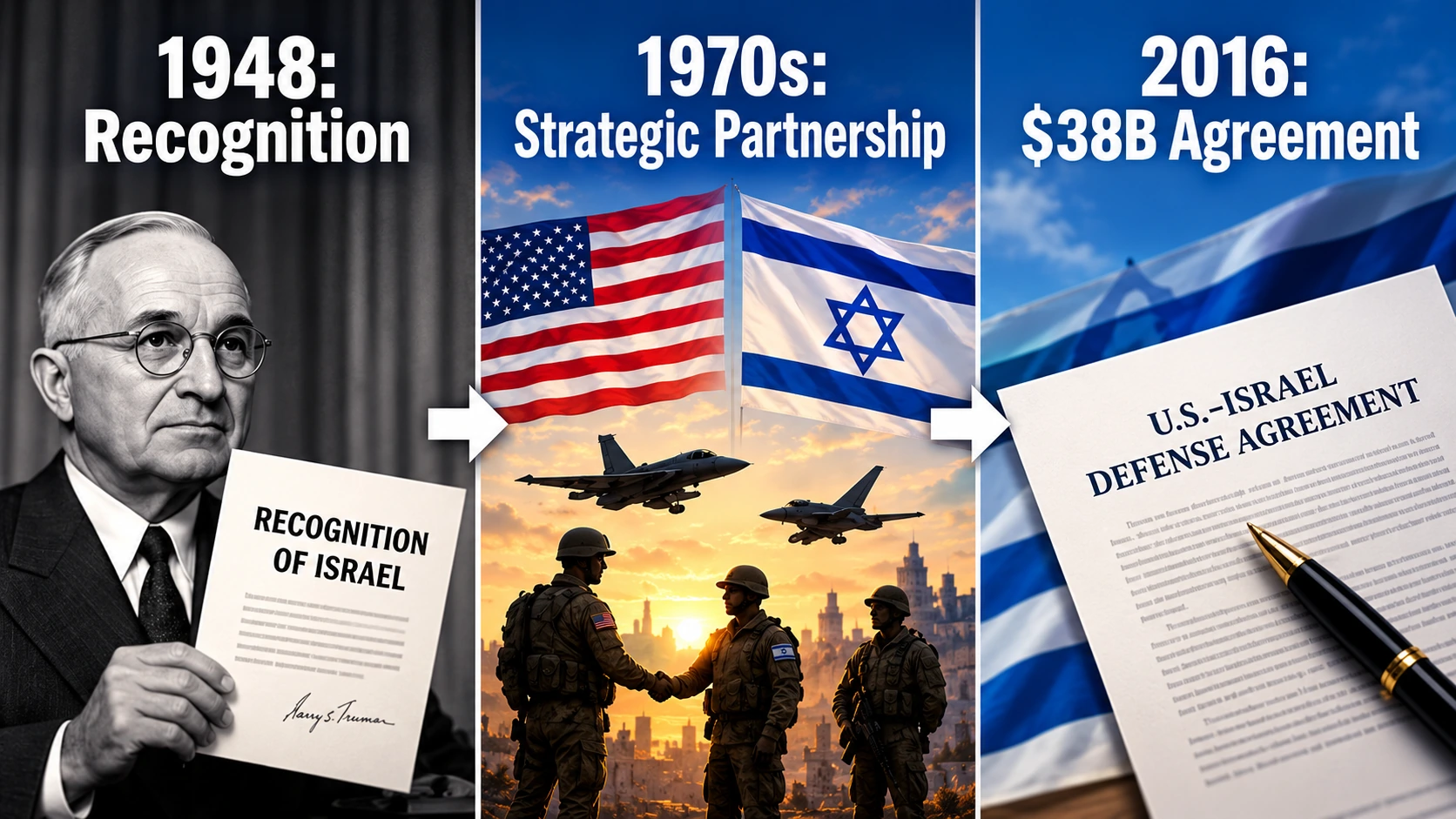
The United States has supported Israel since its founding in 1948. But the relationship did not begin as the massive military partnership Americans recognize today.
It developed over several decades, shaped first by the aftermath of World War II and later by the Cold War.
Why did President Truman recognize Israel in 1948?
On May 14, 1948, Israel declared independence as British rule over Palestine came to an end. President Harry S. Truman recognized Israel’s provisional government that same day.
The United States initially granted de facto recognition, meaning it accepted the provisional government as the authority exercising control. Full diplomatic recognition followed on January 31, 1949. (U.S. National Archives)
The historical circumstances were extraordinary. During the Holocaust, Nazi Germany and its collaborators murdered approximately six million Jews. After World War II, many Jewish survivors were displaced, and support for establishing a Jewish homeland gained urgency.
For Jewish communities seeking national self-determination and security, Israel’s establishment carried profound significance. But the same events had a profoundly different meaning for Palestinians.
In the fighting surrounding Israel’s creation, more than 750,000 Palestinians were uprooted from their homes, many forcibly. Palestinians remember this displacement as the Nakba, an Arabic word meaning catastrophe. The displacement remains central to the unresolved Israeli-Palestinian conflict. (United Nations)
Both histories matter. One centers on Jewish survival, statehood, and security; the other on Palestinian dispossession, national rights, and the loss of homes and communities.
When did American military support become so significant?
The turning point came later, particularly during the Arab-Israeli wars of 1967 and 1973. By then, the United States and the Soviet Union were competing for influence across the Middle East.
The Soviet Union supplied weapons and military assistance to countries including Egypt and Syria. Washington increasingly viewed a militarily capable Israel as a valuable regional partner.
After the 1973 war, American military assistance grew into a central part of the relationship. What began with diplomatic recognition and political support had evolved into a major security partnership. (Congressional Research Service)
That history explains why the relationship became important. But it does not fully explain why Washington continues to invest so heavily in it today. For that, the Middle East’s strategic importance matters.
2. What Does the United States Actually Gain From Supporting Israel?
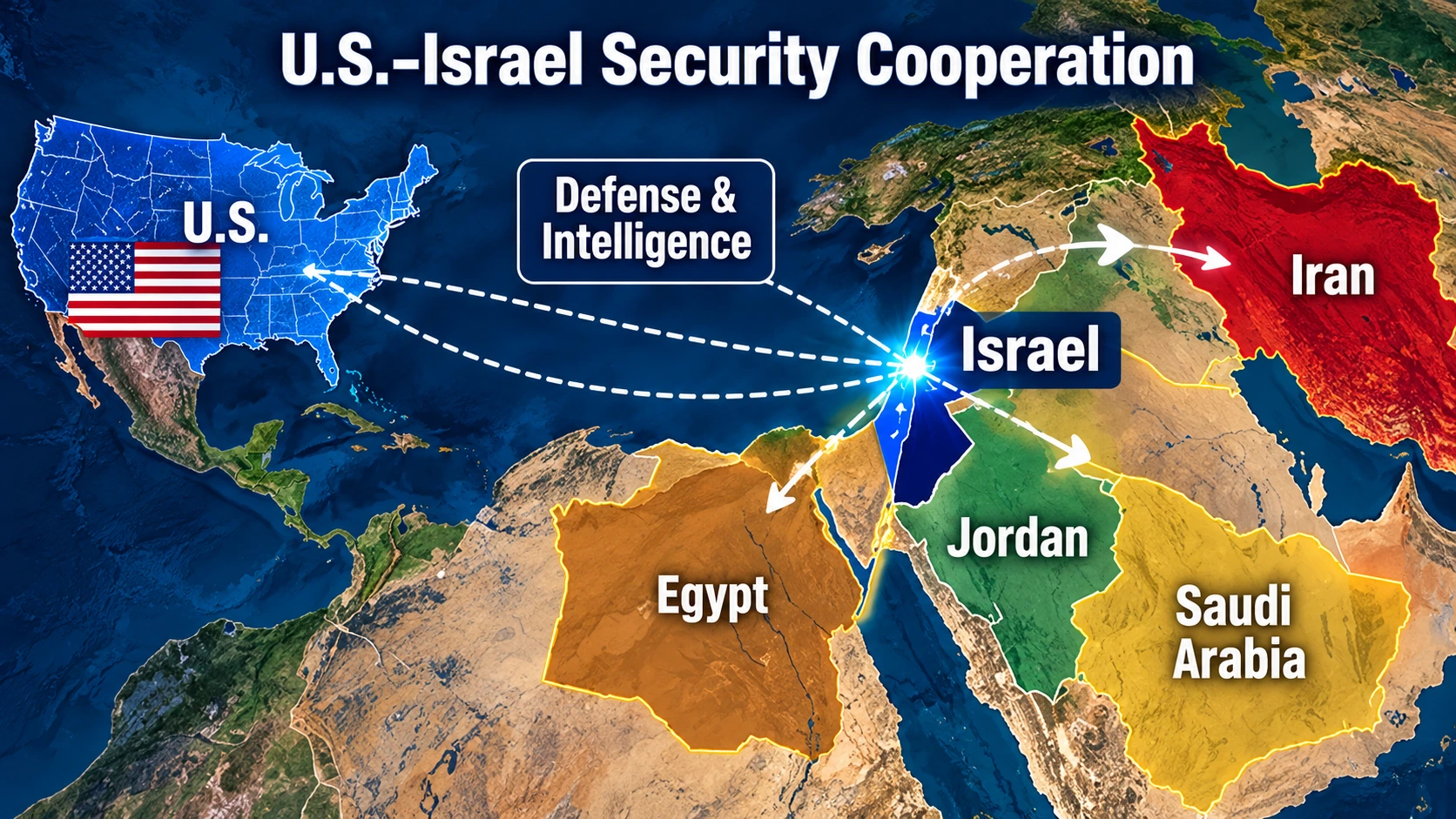
Israel gives the United States a powerful military, intelligence, and technology partner in a region that remains important to American security and the global economy.
The Middle East contains major energy producers and shipping routes that connect international markets. Disruptions in the Persian Gulf or Strait of Hormuz can affect oil supplies and fuel prices far beyond the region—including in the United States.
Washington therefore has interests that extend well beyond Israel’s own borders.
Iran is a major part of the relationship
For years, American and Israeli governments have identified Iran’s nuclear and missile capabilities and its support for armed groups as significant security concerns.
Israel maintains advanced military capabilities, including fighter aircraft, intelligence systems, and sophisticated missile defenses. The two countries conduct military exercises, cooperate on defense technology, and coordinate on regional security threats.
American officials have also emphasized maintaining Israel’s qualitative military edge, meaning its ability to counter major conventional military threats in the region. (U.S. Department of State)
This cooperation gives Washington access to a partner with considerable regional experience and technological capabilities. But there is an important limitation: Israel’s interests and America’s interests are not always identical.
For example, U.S. efforts to negotiate with Iran or manage relations with Arab governments can conflict with Israeli preferences for more aggressive military action.
The Congressional Research Service has examined such differences, including potential disagreements over U.S.–Iran diplomacy. (Congressional Research Service)
So support for Israel can strengthen American regional capabilities while also exposing the United States to diplomatic costs and security risks.
Is Israel actually a formal U.S. military ally?
Israel is designated a Major Non-NATO Ally of the United States. That designation provides certain benefits involving defense trade and military cooperation, but it does not create a NATO-style mutual defense obligation.
Unlike the U.S.–South Korea relationship, the United States and Israel do not have a treaty promising mutual military defense if either country is attacked. (U.S. Department of State)
| Relationship | What it means |
|---|---|
| Major Non-NATO Ally status | Special access to certain U.S. defense cooperation arrangements |
| Mutual defense treaty | A formal treaty establishing specified defense commitments |
| U.S.–Israel relationship | Extensive cooperation without a mutual defense treaty |
That does not mean the United States would refuse to defend Israel. It means American military action is not automatically required by a bilateral mutual defense treaty.
Presidential decisions, congressional authority, U.S. law, and the circumstances of any conflict still matter. This helps explain why Washington can be extremely supportive of Israel without being legally committed to every Israeli military decision.
3. How Much Money Does the U.S. Actually Give Israel?
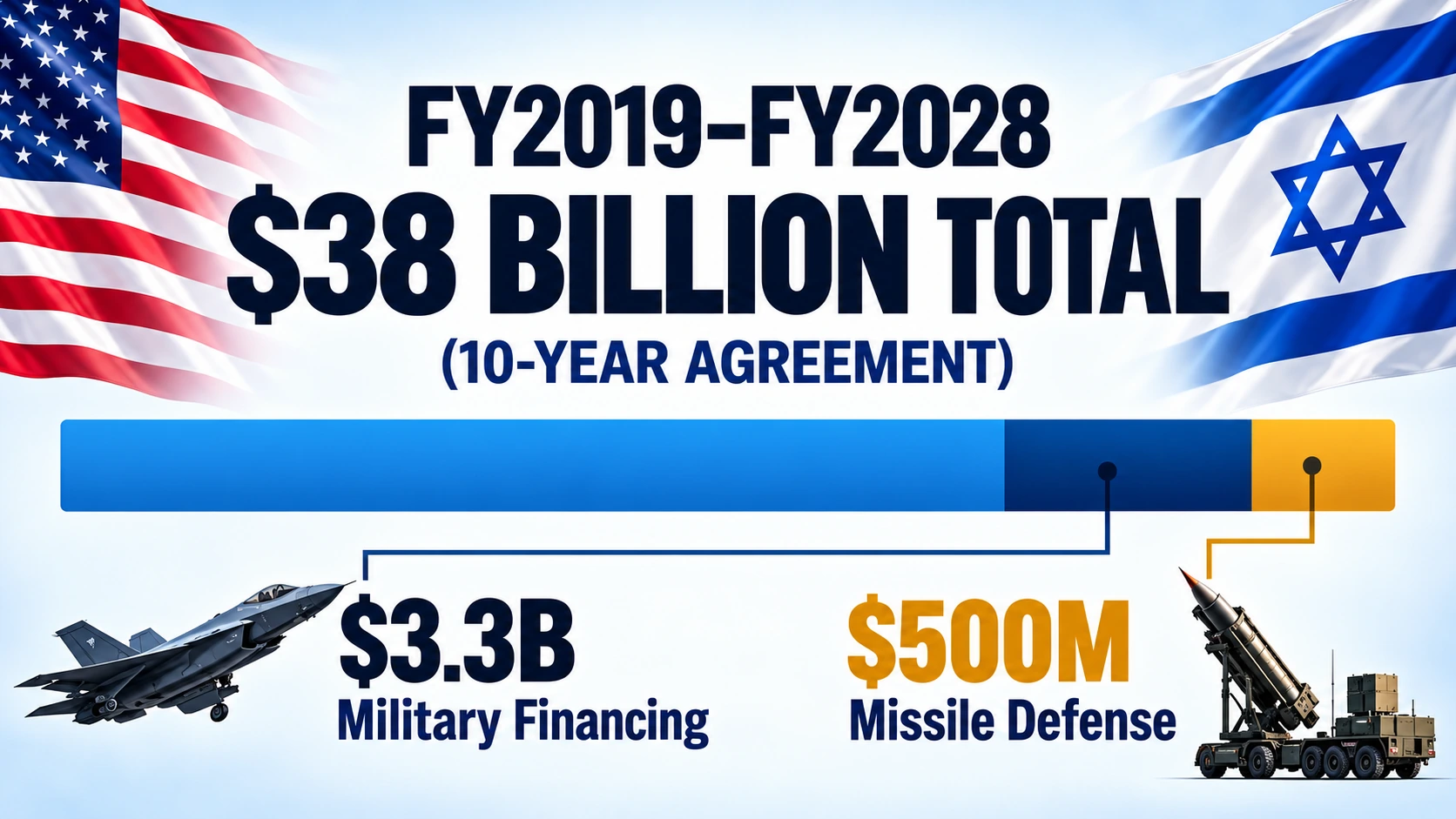
Under a long-term agreement signed in 2016, the United States committed to $38 billion in military assistance to Israel over ten fiscal years, from 2019 through 2028.
That works out to a baseline of $3.8 billion per year. The agreement was negotiated during President Barack Obama’s administration, demonstrating that substantial support for Israel was not limited to Republican presidents. (Obama White House Archives)
| Type of assistance | Annual amount | Purpose |
|---|---|---|
| Foreign Military Financing (FMF) | $3.3 billion | Military equipment and related procurement |
| Missile defense cooperation | $500 million | Joint missile defense programs |
| Annual total | $3.8 billion | Baseline security assistance |
| Ten-year total | $38 billion | FY2019–FY2028 commitment |
These figures describe the agreement’s baseline funding levels, not every dollar the U.S. government has spent in connection with Israel.
First, the memorandum of understanding is a long-term commitment, but the actual funds remain subject to congressional appropriations. Congress retains the authority to approve funding.
Second, additional assistance can be authorized during emergencies or major conflicts. Following the October 7, 2023 Hamas-led attacks on Israel and the subsequent war in Gaza, Congress approved additional assistance beyond the standard annual arrangement. (Congressional Research Service)
Does Israel receive that money as unrestricted cash?
Not in the way many people imagine. The $3.3 billion annual FMF component is military grant assistance that can be used to finance eligible defense purchases and related services.
It is not equivalent to transferring billions into Israel’s general government budget with no restrictions. The remaining $500 million is intended for cooperative missile defense programs, including Iron Dome, David’s Sling, and Arrow.
The specifics of how the money can be spent reveal an often-overlooked part of the relationship: American military assistance can also generate business for American companies.
4. Does U.S. Military Aid to Israel Benefit American Defense Companies?
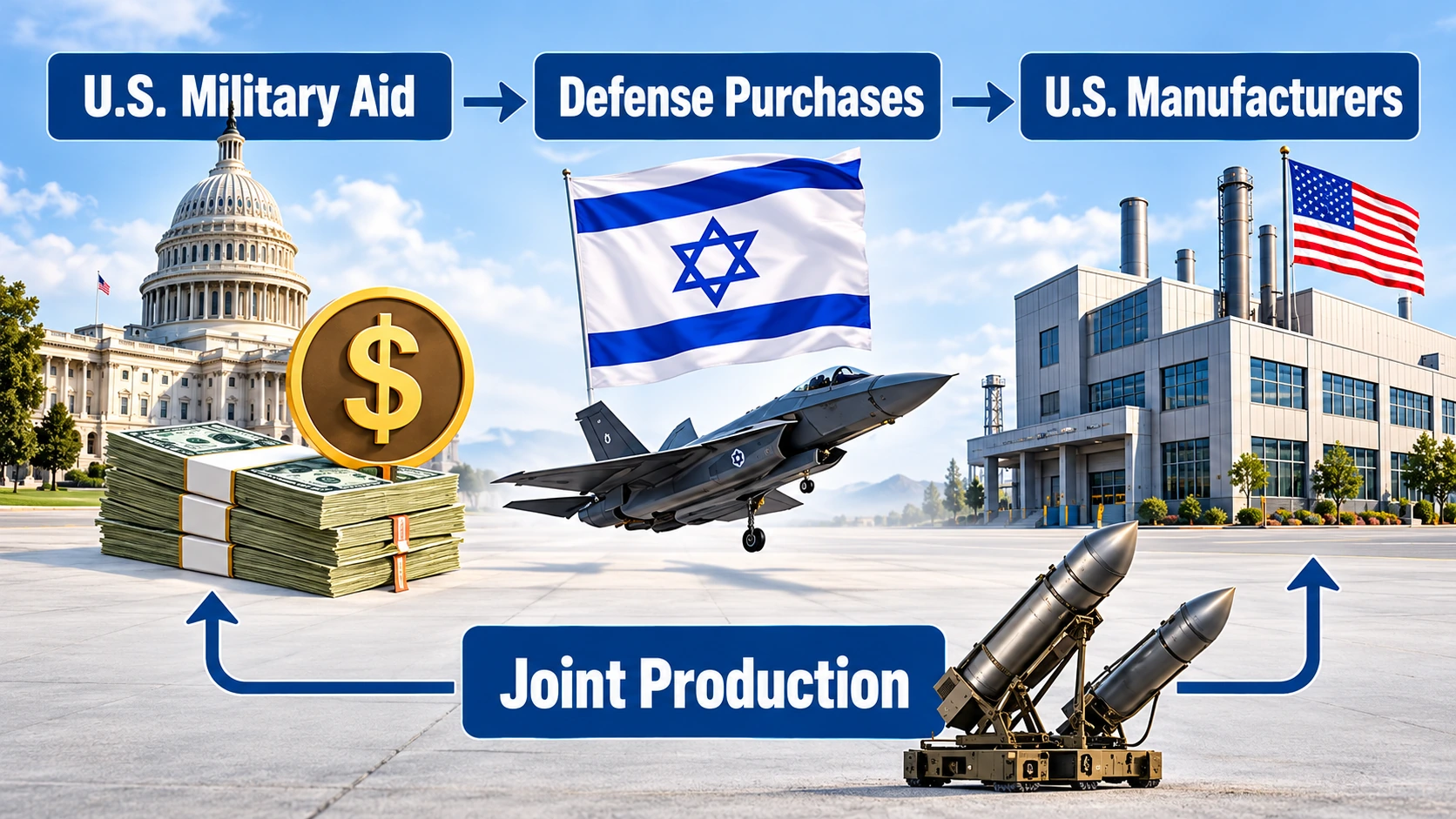
Yes. A significant share of U.S. military assistance supports purchases from American defense manufacturers.
The American government provides eligible military financing. Israel uses that financing to procure defense equipment through approved channels, including purchases involving American manufacturers.
Those orders can support U.S. production facilities, suppliers, and jobs. American-made F-35 fighter jets are among the advanced systems Israel has acquired with U.S. military assistance.
The current aid agreement also phases out a special arrangement allowing some American financing to be used for Israeli-produced military equipment. Under the agreement, that exception is scheduled to disappear by fiscal year 2028. (U.S. Department of State)
Iron Dome shows how the partnership works in practice
Iron Dome is an Israeli-developed system designed to intercept incoming short-range rockets and other threats. Although Israel developed the system, the United States has provided substantial financial and industrial support for its production and improvement.
In October 2026, a Raytheon–Rafael joint venture announced deliveries of its first U.S.-produced Tamir interceptors from a manufacturing facility in Camden, Arkansas. Tamir is the interceptor missile used in the Iron Dome system. (RTX · Israel Ministry of Defense)
This is a concrete example of how U.S.–Israel defense cooperation can support manufacturing inside the United States.
But money spent by the U.S. government is not the same as profit earned by an American company. Contractor sales revenue does not mean the federal government recovers its assistance dollar for dollar.
Military aid remains a public expenditure with opportunity costs. Supporters cite deterrence, manufacturing, and security cooperation; critics question the financial cost and whether extensive aid reduces Washington’s leverage over Israeli policy.
Economics helps explain the partnership’s durability, but it is still only part of the story. Another source of American support comes from religion.
5. Why Do Some American Christians Strongly Support Israel?
Religion is an important part of the American political landscape surrounding Israel, particularly among some evangelical Protestants.
For certain Christians, the existence of the modern State of Israel has theological significance. That is different from simply noting that Judaism and Christianity share ancient religious traditions.
What is Christian Zionism?
Christian Zionism is a movement in which support for Israel is connected to particular interpretations of Christian scripture and beliefs about biblical history or prophecy.
Some believers consequently regard the modern state’s existence and security as especially significant. Zionism itself is a broader historical movement associated with Jewish national self-determination and statehood; Christian Zionism is a distinct religious expression of support for Israel.
These beliefs do not represent all Christians. Many American Christians emphasize Palestinian rights, oppose particular Israeli government policies, or reject the theological interpretations associated with Christian Zionism. Others support Israel primarily for secular reasons.
How much does religion affect public opinion?
A Pew Research Center survey conducted May 4–17, 2026, found striking differences among American religious groups in their views of Israel’s government.
| Religious group | Favorable view of Israeli government |
|---|---|
| White evangelical Protestants | 57% |
| White non-evangelical Protestants | 33% |
| Catholics | 34% |
| Black Protestants | 30% |
These numbers measure views of the Israeli government, not attitudes toward Jewish people or agreement with every Israeli policy. (Pew Research Center)
When politically active religious groups strongly prioritize an issue, elected officials have incentives to pay attention. That brings us to another reason the relationship has endured: American domestic politics.
6. How Much Influence Do Lobbying Groups and Congress Have?
Pro-Israel advocacy organizations can influence U.S. policy through lobbying, political organizing, public campaigns, and campaign contributions. However, no single lobbying organization controls America’s relationship with Israel.
Policy emerges from interactions among the White House, Congress, voters, advocacy groups, security institutions, and wider political interests.
What does AIPAC actually do?
One of the best-known organizations is the American Israel Public Affairs Committee, or AIPAC. It advocates for policies designed to strengthen the U.S.–Israel relationship, particularly in Congress.
Its associated political action committee, AIPAC PAC, registered with the Federal Election Commission in December 2021. The committee reports fundraising and spending through the federal campaign finance system. (Federal Election Commission)
That activity matters because elected officials respond to organized political constituencies, campaign support, and policy advocacy.
AIPAC is not the only participant. Religious organizations, defense industry interests, foreign policy groups, human rights organizations, and voters advocating different approaches to Israel and Palestine also seek to influence Washington.
An explanation that attributes U.S. policy entirely to AIPAC—or to Jewish Americans as a group—ignores these overlapping interests and the diversity of opinion among Jewish Americans.
Why has support survived changes in the White House?
Because the relationship is embedded in both major U.S. political parties and long-standing institutions. The $38 billion military aid memorandum was negotiated under President Obama.
Republican and Democratic administrations have continued cooperation even while disagreeing with Israeli leaders over settlements, Palestinian statehood, military operations, or Iran diplomacy.
Congress plays an especially important role because it controls funding and oversees arms sales. Lawmakers differ over whether American aid should be conditioned on civilian protection and other policy requirements. (Congressional Research Service)
Supporters emphasize a security partnership and deterrence; critics emphasize taxpayer costs, civilian suffering, international humanitarian law, and U.S. diplomatic leverage.
But those political coalitions now face a significant challenge: American public opinion is changing.
7. Are Americans Becoming Less Supportive of Israel?
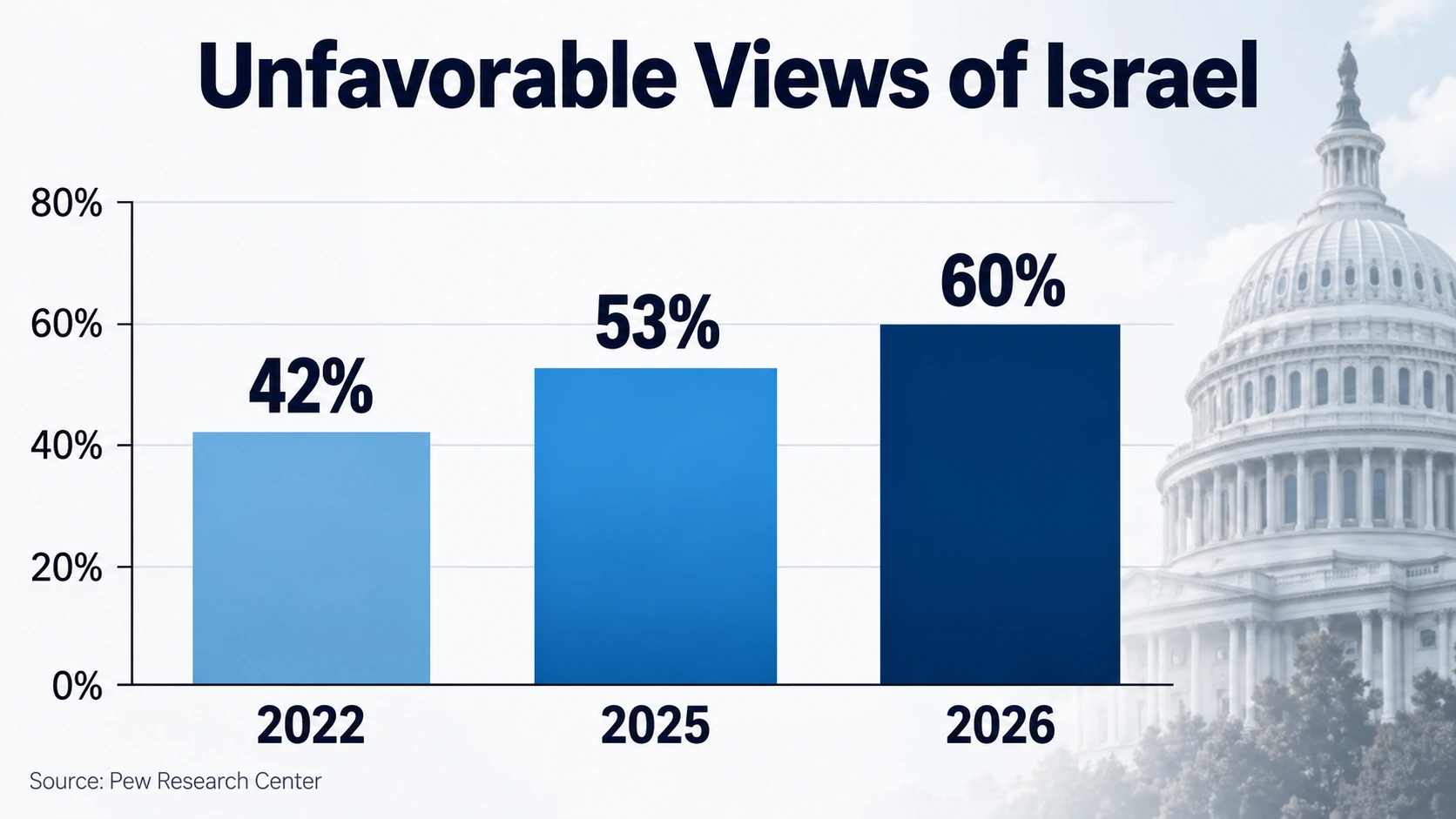
Yes. Americans’ attitudes toward Israel have become notably more negative in recent years.
Pew Research Center reported the following results:
| Survey period | U.S. adults with an unfavorable view of Israel |
|---|---|
| Spring 2022 | 42% |
| Spring 2025 | 53% |
| Spring 2026 | 60% |
The 2026 survey was conducted March 23–29 among 3,507 U.S. adults. (Pew Research Center)
Six in ten American adults surveyed in spring 2026 viewed Israel unfavorably. But the survey measured overall opinion of Israel, not support or opposition to every military assistance program.
Views of a country, its government, and specific U.S. aid programs are related questions—but they are not identical.
Why have attitudes changed?
The war in Gaza has played a significant role in the political debate. Hamas and other Palestinian militants killed approximately 1,200 people and took 251 hostages in the October 7, 2023 attacks on Israel.
Israel’s subsequent military campaign in Gaza caused extensive Palestinian deaths, destruction, displacement, and humanitarian suffering.
Israeli officials have defended military operations as necessary to combat Hamas and protect Israel against further attacks. Critics have questioned civilian protection, the proportionality and legality of particular operations, restrictions affecting humanitarian relief, and America’s role in supplying weapons.
The debate is no longer just whether Israel faces genuine security threats. It is also how governments should respond to threats while meeting obligations to protect civilians. (Congressional Research Service)
What happened when the United States blocked a U.N. ceasefire resolution?
On June 4, 2025, the U.N. Security Council considered a resolution demanding an immediate, unconditional, and permanent ceasefire in Gaza. Fourteen members supported the measure.
The United States was the only member to vote against it, using its veto power to block adoption. American officials argued that the text was unacceptable, including because of concerns about Hamas and Israel’s security. (United Nations)
For critics, the vote illustrated how U.S. diplomatic protection could reduce international pressure over civilian suffering. Supporters of the U.S. position argued that a sustainable ceasefire needed to address Hamas and security conditions.
Is this also a generational divide?
Yes, and the distinction crosses party lines. Pew’s March 2026 survey found that among adults under age 50, negative views of Israel and Netanyahu predominated in both the Democratic and Republican parties. (Pew Research Center)
That does not mean younger Democrats and Republicans necessarily agree about the conflict. It does suggest that the traditional political consensus on Israel may become harder to maintain as generations change.
For U.S. politicians, long-standing security commitments and organized political constituencies now coexist with growing public skepticism.
8. Will the United States Keep Supporting Israel at the Same Level?
The United States and Israel are already discussing how their security relationship might change after the existing military assistance agreement expires. That does not mean the partnership is ending.
It means the two governments may be reconsidering how the relationship should be financed and organized.
The current $38 billion agreement ends in 2028
The 2016 memorandum covers fiscal years 2019 through 2028. On May 6, 2026, Israel’s Ministry of Defense announced that formal discussions had begun on a new security cooperation framework with the United States.
Israel’s stated aim was to move gradually from a relationship centered on military assistance toward expanded joint investment, research, development, and weapons production. (Israel Ministry of Defense)
Such a structure could involve different levels of direct grants and shared production responsibilities. But these are negotiating objectives, not the terms of a completed agreement.
Could direct U.S. military aid eventually decline?
It is possible. In January 2026, Netanyahu publicly discussed wanting to reduce Israel’s dependence on American military aid over the following decade. (Reuters)
Reducing direct grants and reducing military cooperation are not the same thing. The countries could expand joint weapons development while changing how much direct financial assistance Washington provides.
The details would determine whether American taxpayers spend less, whether U.S. manufacturers receive more contracts, and whether Washington retains influence over Israeli military procurement.
Why does Israel’s October 27 election matter?
The upcoming Israeli election introduces another variable. Trump’s October 18 endorsement demonstrated personal support for Netanyahu, while Vice President Vance chose not to endorse him.
Israel’s election could affect approaches to Iran, relations with Palestinians, and negotiations with Washington. But Israel has a parliamentary system in which forming a governing coalition may take time after the vote.
The issues to watch are connected but distinct: Israel’s next government, American domestic politics, and the negotiations over the post-2028 security framework.
Bottom Line: What This Story Really Means
Why does America provide so much support to Israel? There is no single explanation. Five major forces have reinforced one another over decades.
| Main reason | How it influences U.S. support |
|---|---|
| Historical ties | Recognition in 1948 and decades of diplomatic cooperation |
| Middle East strategy | Military and intelligence coordination, particularly concerning Iran |
| Defense industry | American weapons purchases and joint production programs |
| Religion | Strong support among some Christian communities |
| Domestic politics | Congressional decisions, voters, advocacy groups, and bipartisan institutions |
Those factors make the relationship unusually durable. They explain why public opposition to particular Israeli actions does not automatically translate into an immediate reversal of American military policy.
Supporters emphasize deterrence, defense cooperation, regional partnerships, and protection against threats to Israel. Critics point to taxpayer costs, regional escalation, civilian suffering, international law, and questions about American diplomatic leverage.
The decision is not simply between supporting Israel and abandoning it. A central question is what kind of support serves U.S. interests, under what conditions, and with what responsibilities.
The next major milestone comes in 2028, when the current military assistance agreement expires. The shape of a successor arrangement will help reveal how much Washington’s long-standing policy has changed.
U.S. Support for Israel: Key Questions Explained
Q. When did the United States first recognize Israel?
The United States recognized Israel’s provisional government on May 14, 1948, under President Harry Truman. Large-scale American military assistance expanded considerably in later decades, especially after the 1967 and 1973 wars.
Q. Does America have a treaty requiring it to defend Israel?
No. The countries cooperate extensively but have no bilateral mutual defense treaty. Israel is designated a Major Non-NATO Ally, which provides certain benefits without an automatic defense commitment.
Q. How much military aid does Israel receive from the United States each year?
The 2016 agreement established a baseline commitment of $3.8 billion annually from fiscal years 2019 through 2028, subject to congressional appropriations. Additional assistance may be approved separately.
Q. Is the $38 billion aid package a single payment?
No. It covers ten fiscal years: $33 billion in Foreign Military Financing and $5 billion for cooperative missile defense programs.
Q. Can Israel use American military aid to buy U.S.-made weapons?
Yes. Foreign Military Financing supports eligible defense purchases, including U.S.-made weapons and services. A special allowance for buying Israeli-made equipment is scheduled to phase out by fiscal year 2028.
Q. Do American defense contractors benefit from the aid?
Yes. Eligible purchases and joint-production projects can generate business for American manufacturers. But company revenue is not the same as money or profit returned to the federal government.
Q. Why do some evangelical Christians support Israel?
Some connect the modern State of Israel to their interpretations of biblical history or prophecy. The belief is often associated with Christian Zionism, although views vary widely among Christian communities.
Q. How does AIPAC influence American politics?
AIPAC advocates for a strong U.S.–Israel relationship, and its associated political action committee participates in federal campaign finance. It operates alongside many other political interests and institutions.
Q. Do most Americans have a favorable opinion of Israel?
No. In a Pew survey conducted in March 2026, 60% of U.S. adults viewed Israel unfavorably. This is not the same as a measure of opposition to every military aid program.
Q. Could the United States reduce military aid to Israel after 2028?
Yes. The size and structure of future assistance could change. Talks about a framework emphasizing joint investment, research, and production began in 2026, but no final replacement agreement has been established in the cited materials.
Did this help make the story clearer? 🙂
WIN keeps unpacking the “why” behind the news—clearly and simply!
Sources
Recent U.S.–Israel Political Developments
Reuters — Trump Endorses Netanyahu Ahead of Israel’s 2026 Election
Reuters — Hegseth Visit and Reported Netanyahu Meeting
AP — JD Vance Declines to Endorse Netanyahu
Historical Background and Strategic Relationship
U.S. National Archives — U.S. Recognition of Israel
United Nations — 78th Anniversary of the Nakba
Congressional Research Service — Israel: Major Issues and U.S. Relations
U.S. Department of State — Major Non-NATO Ally Status
Military Aid, Defense Production, and Future Agreements
Obama White House Archives — 2016 U.S.–Israel Military Assistance Agreement
Congressional Research Service — U.S. Foreign Aid to Israel
U.S. Department of State — Security Cooperation With Israel
RTX — First U.S.-Produced Tamir Interceptor Deliveries
Israel Ministry of Defense — U.S.-Produced Tamir Interceptor
Israel Ministry of Defense — Talks on a New Security Cooperation Framework
Reuters — Netanyahu Discusses Reducing Dependence on U.S. Aid
Religion, Political Influence, and Public Opinion
Pew Research Center — Americans’ Views of Israel and Netanyahu in 2026
Pew Research Center — Views by Religious Group
Federal Election Commission — AIPAC Political Action Committee