What Was Conan O’Brien Really Saying About Trump in His Harvard Speech?
Conan O’Brien stood in front of Harvard’s graduating class and announced that he, too, was suing Harvard.
Was he serious?
No.
But the joke only works if you know what was happening between Harvard and the Trump administration at the time.
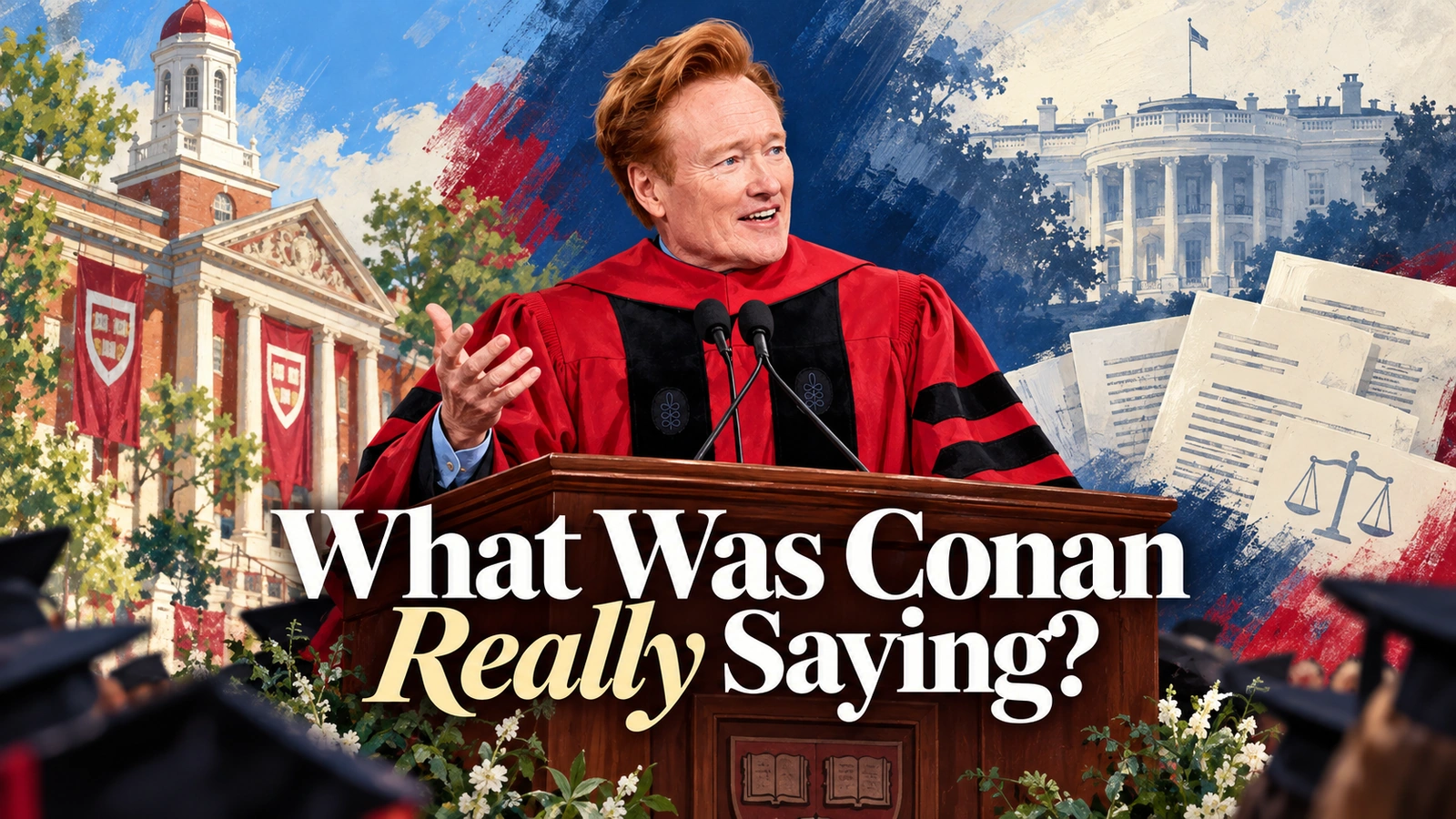
O’Brien delivered the principal address at Harvard’s 375th Commencement on May 28, 2026. He was returning to the university he graduated from in 1985, now as one of America’s best-known comedians—and as Harvard was locked in a much larger fight with the federal government. (Harvard Gazette)
The speech quickly turned political. O’Brien mocked the federal government’s lawsuits against Harvard, defended the value of international students, and later criticized what he described as an era of “extreme narcissism.”
But stopping there misses most of the speech.
His larger argument was not simply about Donald Trump.
It was about what happens when status, prestige, nationalism, politics, and even technology encourage people to see themselves as more important than everyone around them.
And that is why the political jokes and his final advice to Harvard graduates actually belong in the same speech.
Why Was Conan O’Brien Joking About Suing Harvard?

Because Harvard really was facing federal litigation.
O’Brien told the graduates that people might expect him to defend his alma mater. Instead, he joked that he was joining the lawsuits and offered his own grievances: an uncomfortable dorm bed, impossible class scheduling, bad dining-hall food, and other memories from college.
Then came the political punch line: he said his claims had more merit than those brought by the president. (Harvard Crimson)
The audience knew what he was referring to.
In March 2026, the Justice Department sued Harvard, alleging that the university had violated Title VI of the Civil Rights Act by failing to adequately protect Jewish and Israeli students from antisemitic harassment. The government sought court-ordered compliance and the recovery of federal funds. Harvard rejected the allegation that it remained deliberately indifferent, pointing to changes in enforcement, training, and campus programs. (U.S. Department of Justice · Harvard)
So O’Brien’s fake lawsuit was a comedy device.
He placed deliberately absurd complaints from his college years next to a very real legal fight between one of America’s most prominent universities and the federal government.
What Was Actually Happening Between Harvard and the Trump Administration?

The dispute was not one single court case.
It was a collection of overlapping conflicts involving federal research money, university governance, campus antisemitism, and Harvard’s ability to host international students.
The confrontation had escalated in 2025, when the Trump administration froze or canceled billions of dollars in federal research funding after Harvard rejected government demands for changes to university policies and governance. Harvard challenged those actions in court.
A federal judge later ordered the reversal of more than $2.6 billion in cuts, concluding that the funding actions were unlawful. The administration disputed that ruling and appealed. (AP)
There was also a separate battle over international students.
Federal actions in 2025 sought to revoke Harvard’s certification to enroll international students and restrict the entry of certain Harvard students and scholars on F and J visas. Federal courts issued injunctions blocking those measures while the litigation continued. (Harvard International Office)
Then came the March 2026 Justice Department civil-rights lawsuit over antisemitism.
That was the immediate environment surrounding O’Brien when he stepped onto the commencement stage in May.
| Dispute | What happened | Status at the May 28 commencement |
|---|---|---|
| Research funding | The administration froze or canceled more than $2.6 billion in federal research funding; Harvard challenged the actions in court. (AP) | Harvard had won a district-court ruling restoring the grants, and the government was appealing. |
| International students | DHS moved to revoke Harvard’s SEVP certification, and a presidential proclamation separately targeted entry by certain Harvard students and scholars. (Harvard International Office) | Federal injunctions kept the restrictions from taking effect while the government appealed. |
| 2026 Title VI lawsuit | DOJ alleged that Harvard remained in violation of Title VI; Harvard denied ongoing noncompliance and pointed to reforms. (U.S. Department of Justice · Harvard) | The lawsuit was pending; it was later dismissed on August 13 and appealed by DOJ on August 27. |
The important distinction is that these were legal and policy disputes with different procedures and claims, not one giant “Trump vs. Harvard” lawsuit.
Why Did International Students Become Part of the Joke?
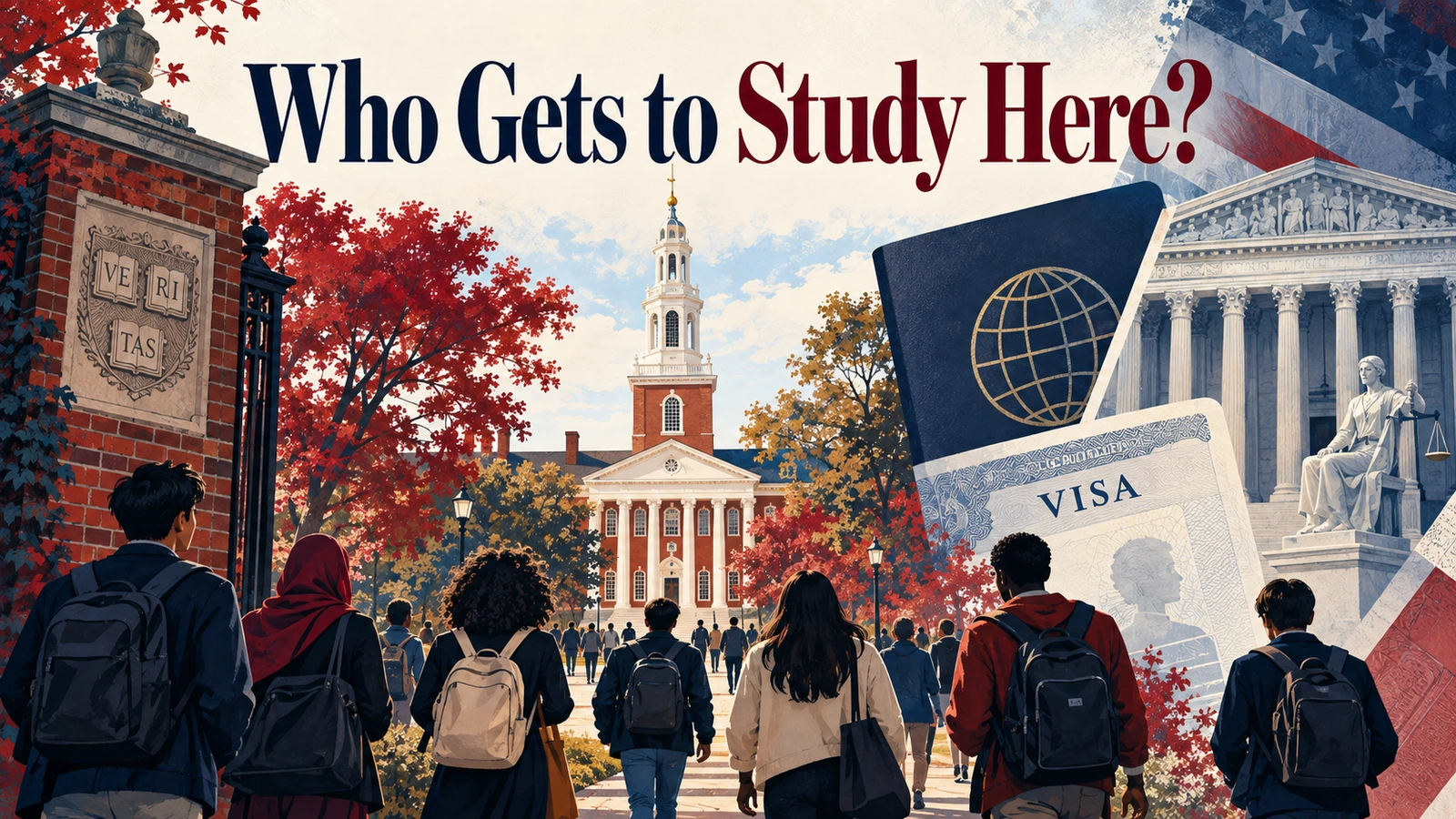
Because foreign students had become one of the most visible parts of the Harvard–administration conflict.
In his speech, O’Brien sarcastically asked what foreigners had ever contributed to American culture, before rattling off fields such as music, literature, art, science, architecture, and food. (Harvard Crimson)
The joke reversed its own premise: his point was that immigration and international exchange are deeply woven into American life.
The political context was concrete.
Federal officials had sought to stop Harvard from enrolling international students by revoking its Student and Exchange Visitor Program, or SEVP, certification, while a separate presidential proclamation targeted the entry of certain Harvard students and scholars. Federal courts blocked the measures while litigation continued. Harvard says international students currently come from 147 countries and make up 27.2% of its student body. (Harvard International Office · Harvard)
Whether the administration had lawful grounds for its actions was the subject of litigation.
O’Brien was not explaining that legal question.
He was using satire to make an argument about what he saw as the contradiction between celebrating American achievement and dismissing the influence of people who came from elsewhere.
Was This Mainly an Anti-Trump Speech?
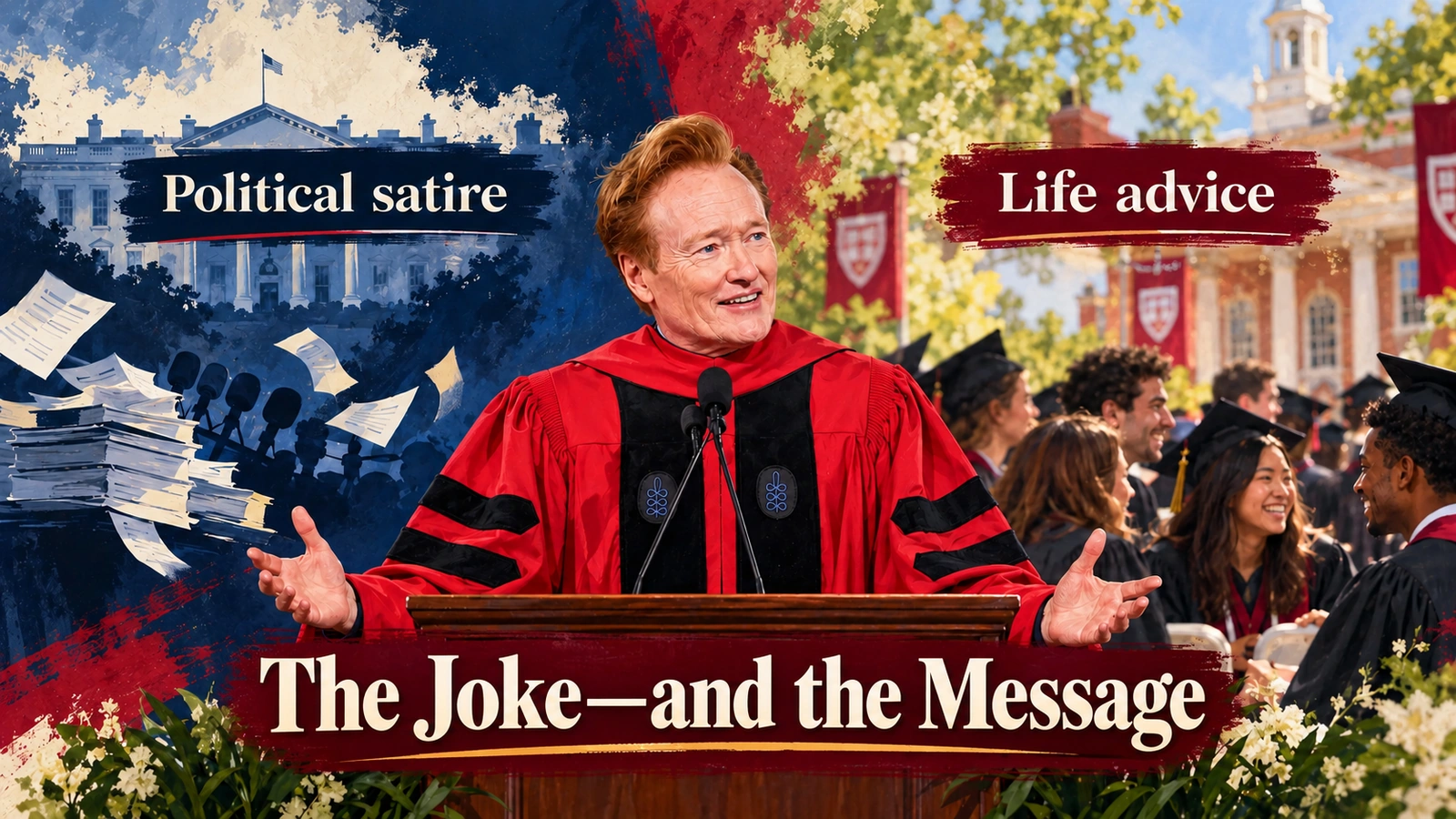
No. The Trump references were among the speech’s most politically pointed moments, but they were not its entire argument.
The second half moved toward something much more personal.
O’Brien talked about his own career, his failures, the importance of luck, and the people who helped him succeed. He warned graduates against assuming that achievement proves individual superiority.
Harvard’s own account of the speech emphasized humility as its central theme. (Harvard Gazette)
That matters because the political material was not separate from the rest of the speech.
O’Brien was linking politics to a broader concern: what happens when people, institutions, or countries become too convinced of their own exceptional importance.
What Did Conan O’Brien Mean by “Extreme Narcissism”?
O’Brien used that phrase himself.
He told the audience that society was living through a period of “extreme narcissism,” then criticized what he described as Washington leadership that treats empathy as weakness. He also turned the criticism toward everyday technology, arguing that phones and recommendation algorithms constantly place each user at the center of a personalized world. (Harvard Crimson)
That is an important part of the speech because his criticism did not stop with politicians.
It also included the graduates—and himself.
A Harvard degree is an extraordinary credential. O’Brien’s argument was that it could become dangerous if graduates treated that credential as proof that they were inherently more important than other people.
He applied the same logic to his own career.
His success, he said, did not come from individual brilliance alone. It depended on collaborators, accidents, failures, opportunities, and luck.
That turns the speech into a much broader argument than “comedian criticizes president.”
The political section was an example of the problem O’Brien wanted to discuss.
The broader subject was ego, status, and the value of humility and connection.
Why Did He Tell Harvard Graduates to Make Harvard the “Least Important” Thing About Them?
Because he was not telling graduates to be ashamed of Harvard.
He explicitly acknowledged the work required to get there and told them they should be proud.
The distinction came afterward.
His wish was that Harvard would eventually become the “least important thing people know about you.” (Harvard Gazette)
That is a very different idea from saying the degree does not matter.
A prestigious school can open doors. A famous employer can open doors. Wealth, awards, titles, and professional status can all matter.
O’Brien’s warning was about allowing one of those things to become the entire definition of a person.
His proposed alternative was not failure or lack of ambition.
It was community, relationships, humor, humility, and the willingness to accept that a successful life is partly built by other people.
That is also why his political comments fit the rest of the speech.
The same person who mocked government efforts against Harvard eventually told Harvard graduates not to worship Harvard itself.
What Happened to the Harvard–Trump Legal Fight After the Speech?

The political background to O’Brien’s joke kept changing after commencement.
On August 13, 2026, U.S. District Judge Richard Stearns dismissed the Justice Department’s Title VI lawsuit. He concluded that the government had not sufficiently alleged that Harvard remained in ongoing violation of the law, describing the incidents identified in the complaint as too isolated and episodic to establish continuing institutional noncompliance. (CBS News)
That did not end the dispute.
On August 27, the Justice Department filed a notice of appeal asking the First Circuit to review the dismissal. The government also had separate appeals pending over Harvard’s research funding and its ability to enroll international students. (Harvard Crimson)
Those cases remain separate legal tracks rather than one consolidated “Harvard vs. Trump” case. Harvard’s federal-litigation hub continues to collect the filings and updates. (Harvard)
So there is an irony in watching the commencement clip months later.
The jokes sound like a snapshot of one political moment.
But the legal argument behind them continued well beyond graduation day.
Bottom Line: What This Story Really Means
Conan O’Brien’s Harvard speech contained unmistakable criticism of the Trump administration, especially its lawsuits against Harvard and its actions involving international students.
But describing it only as a political attack misses the structure of the speech.
O’Brien used Washington, Harvard, smartphones, his own career, and even the prestige of a Harvard degree to make the same broader argument: status becomes dangerous when people start mistaking achievement, power, or identity for proof that they matter more than everyone else.
His alternative was humility—not as self-denial, but as recognition that success is built through luck, relationships, failure, collaboration, and community.
That is why the final message was surprisingly consistent with the jokes that came before it.
He mocked the government for taking itself too seriously.
Then he told Harvard graduates not to take Harvard—or themselves—too seriously either.
Conan O’Brien: Key Questions Explained
Q. When did Conan O’Brien give the Harvard commencement speech?
Conan O’Brien delivered the principal address at Harvard University’s 375th Commencement on May 28, 2026. He graduated from Harvard College in 1985. (Harvard Gazette)
Q. Did Conan O’Brien actually sue Harvard?
No. His announcement that he was joining the lawsuits against Harvard was a comedy routine built around absurd complaints about his undergraduate years.
Q. Which Trump administration lawsuit was O’Brien referring to?
O’Brien was joking about the broader set of federal legal battles with Harvard, not just one case. Those included the Justice Department’s March 2026 Title VI lawsuit, along with government appeals involving research funding and international students. (Harvard Crimson · U.S. Department of Justice)
Q. Did the Trump administration try to stop Harvard from enrolling international students?
Yes. DHS revoked Harvard’s SEVP certification in May 2025, and a separate presidential proclamation targeted entry by certain Harvard students and scholars. Federal courts blocked the measures while litigation proceeded. (Harvard International Office · Harvard)
Q. What did O’Brien mean by “extreme narcissism”?
It was O’Brien’s description of a broader social condition in which political power, personal status, and personalized technology can encourage excessive self-importance. He connected the idea to both Washington politics and smartphone culture. (Harvard Crimson)
Q. Was Conan O’Brien’s Harvard speech mainly about Trump?
No. Trump and the Harvard dispute were prominent targets of his political satire, but the speech’s larger theme centered on humility, community, relationships, luck, and the danger of allowing prestige to define a person. (Harvard Gazette)
Q. What happened to the 2026 Justice Department lawsuit against Harvard?
A federal judge dismissed the case on August 13, 2026, finding that the government had not sufficiently alleged an ongoing Title VI violation. The Justice Department filed its appeal on August 27. (CBS News · Harvard Crimson)
Q. What was O’Brien’s main advice to Harvard graduates?
He urged them to value their achievement without allowing Harvard to become their defining identity. His closing message emphasized humility, relationships, and the experiences that come after graduation. (Harvard Gazette)
Did this help make the story clearer? 🙂
WIN keeps unpacking the “why” behind the news—clearly and simply!
Sources
Commencement Speech and O’Brien’s Remarks
Harvard Gazette — O’Brien’s Word of Wisdom: Humility
Harvard Crimson — O’Brien Satirizes Federal Lawsuits in Commencement Address
Federal Funding and International Students
AP — Judge Reverses Trump Administration’s Harvard Funding Cuts
Harvard — International Students and Scholars Litigation
Title VI Lawsuit and Later Court Developments
U.S. Department of Justice — Justice Department Sues Harvard University for Antisemitism
Harvard — Statement on the March 20 Lawsuit
CBS News — Trump Administration’s Antisemitism Lawsuit Against Harvard Dismissed
Harvard Crimson — Justice Department Appeals Dismissal of Antisemitism Lawsuit