Why Does Trump Say Imported Wind Turbines Are a National Security Threat?

A wind turbine looks like a pretty straightforward machine: the blades spin, a generator produces electricity, and the power goes to the grid. How did importing one become a national security question?
President Donald Trump says the concern goes beyond the blades. Modern wind farms use connected electronics, remote monitoring systems, and components sourced from overseas. His administration argues that those features can create cybersecurity, radar, and supply-chain risks.
But the United States has neither banned foreign wind turbines nor imposed a new wind-turbine tariff. In an October 22, 2026, presidential proclamation, Trump agreed with a Commerce Department national security finding and ordered negotiations with trading partners instead. (White House · Reuters)
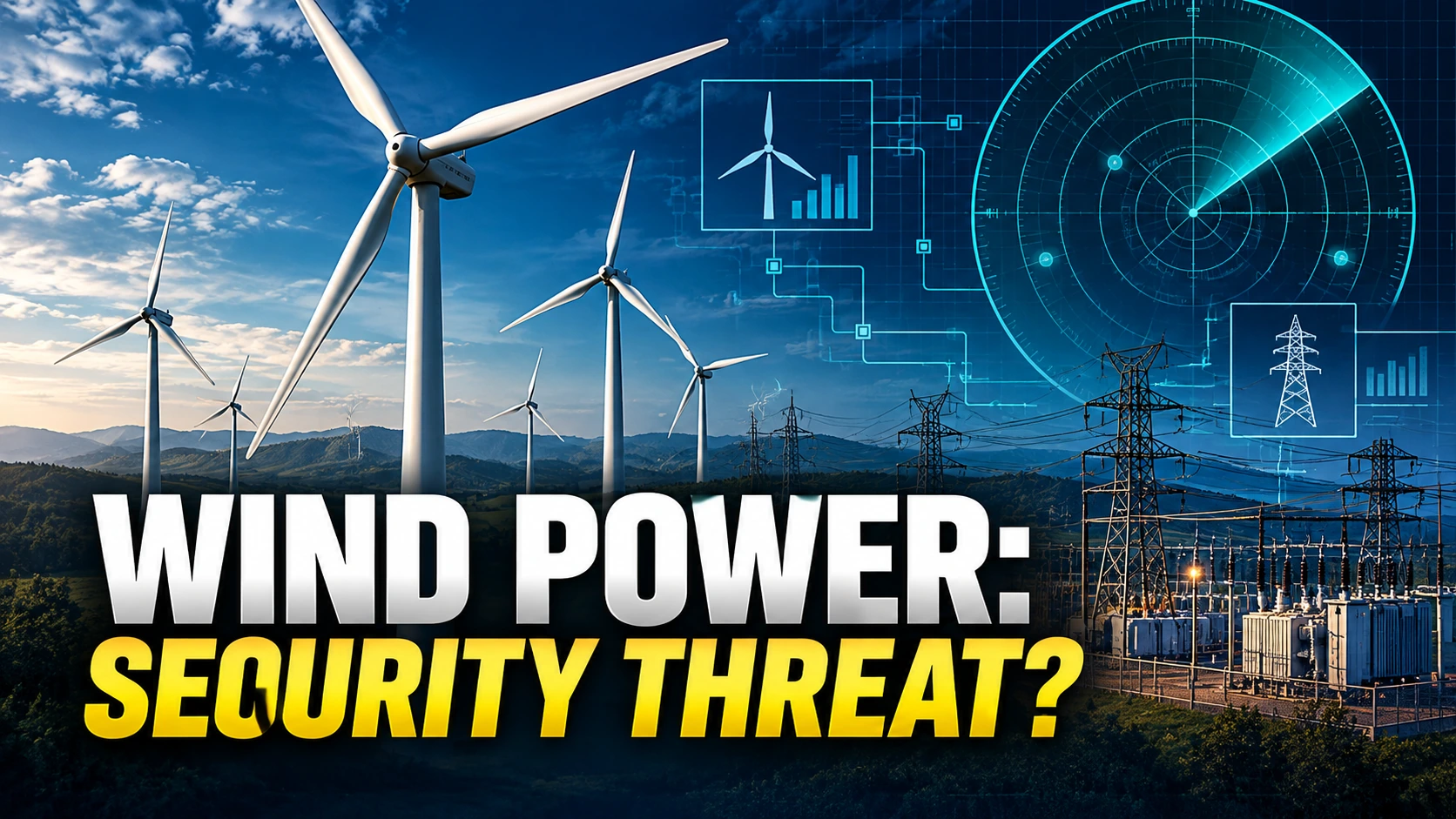
※ Images in this article are AI-generated illustrations created to help explain the story. They are not actual photographs, and depictions of people, places, or events may differ slightly from reality.
That distinction matters. One part of the government’s case involves potential vulnerabilities in networked equipment. Another involves the physical effect of spinning turbine blades on radar. A third is economic: the United States depends on foreign suppliers for important wind-energy components.
Those are different problems, and they do not all point to the same solution.
What Did Trump’s October 22 Proclamation Actually Change?
The proclamation opened a negotiation phase, not a new blanket tariff or import ban. It directs the Commerce Department and the Office of the U.S. Trade Representative to pursue agreements addressing the administration’s national security concerns.
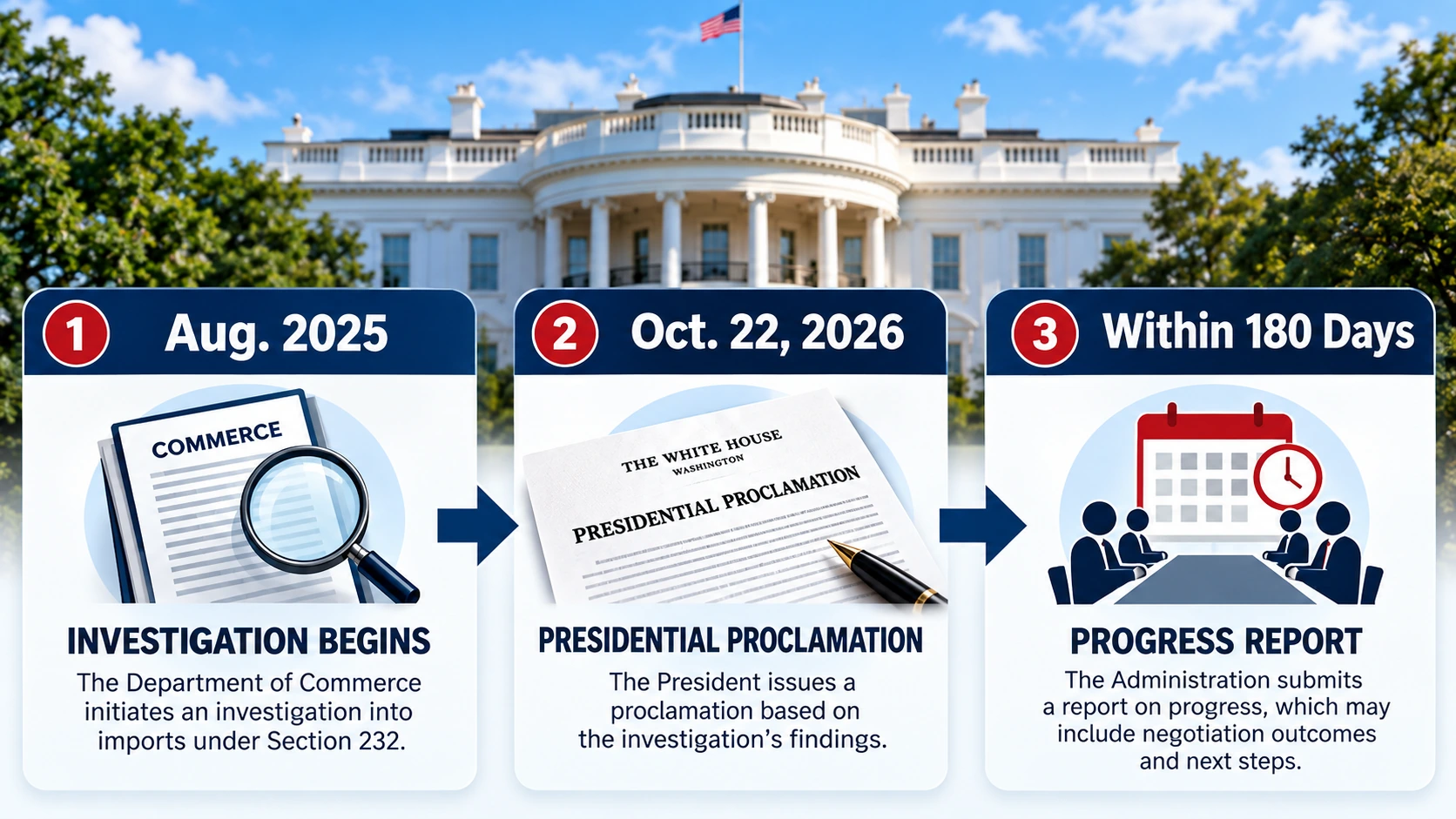
The legal basis is Section 232 of the Trade Expansion Act of 1962. It allows the federal government to investigate whether certain imports threaten to impair U.S. national security and gives the president authority to respond under the statute.
The Commerce Department launched its wind-turbine investigation on August 13, 2025. The October 2026 proclamation says the department subsequently concluded that imported turbines and related parts present national security concerns. (Bureau of Industry and Security · White House)
The sequence is easier to follow when separated into what has happened and what remains possible:
| Stage | What happened or could happen | Status |
|---|---|---|
| August 13, 2025 | Commerce begins a Section 232 investigation of wind turbine imports | Completed |
| October 22, 2026 | Trump concurs with the national security finding and orders trade negotiations | Announced |
| Within 180 days | Commerce and the U.S. trade representative report negotiating progress | Required update |
| Later, depending on developments | The administration may consider tariffs or other remedies | Not yet decided |
The requested update is due within 180 days of October 22—approximately April 20, 2027. That is a reporting window, not an automatic date for new tariffs. The proclamation also leaves existing Section 232 tariffs on certain steel, aluminum, and copper products unchanged. (White House · KPMG)
How Could a Wind Turbine Become a Cybersecurity Risk?
A modern wind turbine is not merely a mechanical structure. Wind farms use industrial control systems to monitor equipment, adjust operation, and communicate with operators—sometimes from distant control centers.
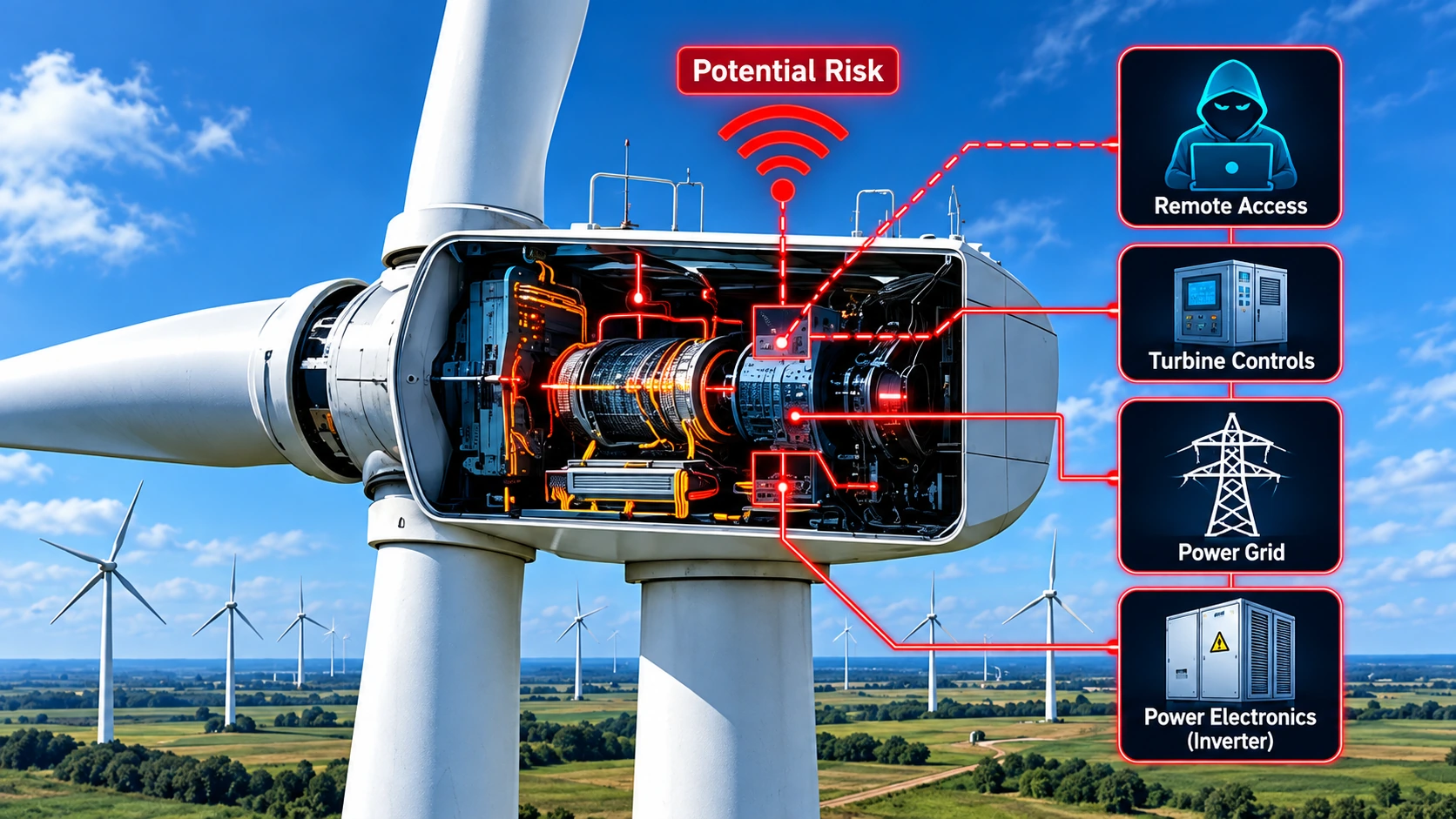
Many turbines also use power-electronic converters and inverters that help deliver electricity in a form compatible with the grid. The administration singles out imported, network-connected equipment as a potential route for unauthorized access. (White House · Department of Energy)
Imagine that a maintenance contractor has permission to connect to equipment at a wind farm. That access can be useful: technicians can diagnose faults and update systems without traveling to every turbine. But stolen credentials, unsafe remote-access configurations, or compromised third-party software can potentially turn a legitimate service connection into an entry point.
The Department of Energy described these kinds of threats in a 2024 report on wind-energy cybersecurity, including malicious remote access, phishing, and risks linked to third-party services. Researchers also outlined defenses such as stronger access controls, network separation, monitoring, and incident-response planning. (Department of Energy)
A successful intrusion could interfere with monitoring, disrupt generation, or damage equipment under some circumstances. But a possible attack path is not proof that every imported turbine contains a backdoor—or that a particular foreign manufacturer has sabotaged the U.S. grid. The October 22 public proclamation does not identify a specific compromised turbine model or document a completed cyberattack attributable to one.
There is a useful broader lesson here: security depends on how equipment is designed, connected, maintained, and protected—not on its country of origin alone. Cybersecurity controls are relevant to domestic equipment, too.
Why Would Wind Turbines Interfere With Military or Weather Radar?
This risk is real, but it has nothing to do with hacking. Large towers and rotating blades can reflect radar signals, creating clutter that makes certain aircraft or weather patterns harder to distinguish.
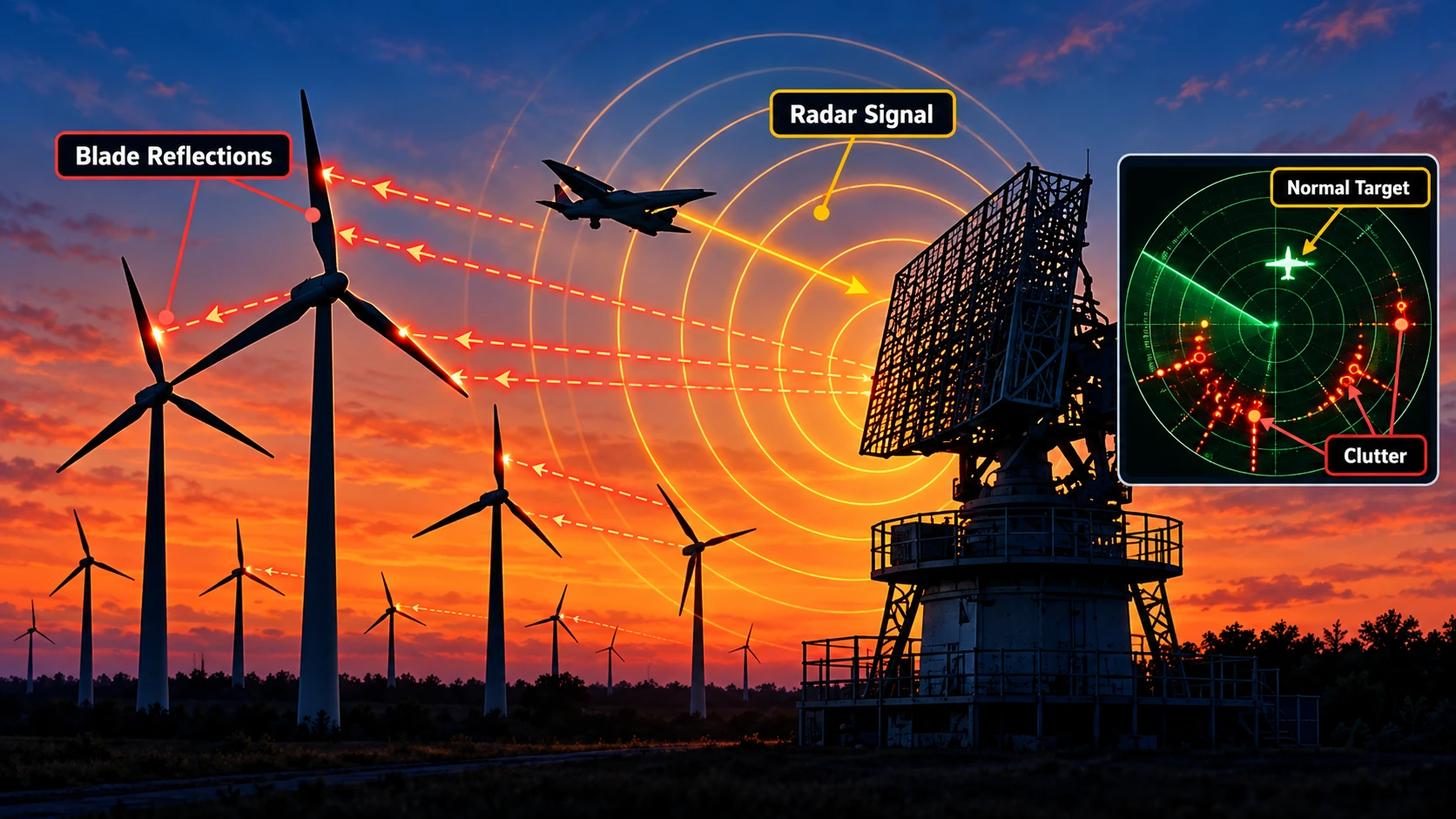
Radar works by sending out radio waves and interpreting the signals that return. A moving turbine blade may reflect those waves in a way that resembles a moving object, or it may make real targets less visible in some conditions.
The problem can affect air traffic control, defense systems, and weather radar. Federal agencies have studied it for years. The Department of Energy says wind projects can often coexist with radar systems through site selection, equipment changes, and other mitigation measures. (Department of Energy)
That produces a distinction the national security argument can blur. Radar interference depends heavily on the location, height, movement, and surroundings of a turbine—not whether it was manufactured in the United States or abroad. Import restrictions might change which equipment is purchased, but they do not by themselves solve a radar siting problem.
Does Wind Power’s Changing Output Make the Grid Less Secure?
Wind output changes with the weather. That makes balancing electricity supply and demand more complicated, but it does not mean wind power is inherently unusable or that a wind farm cannot contribute to a reliable grid.
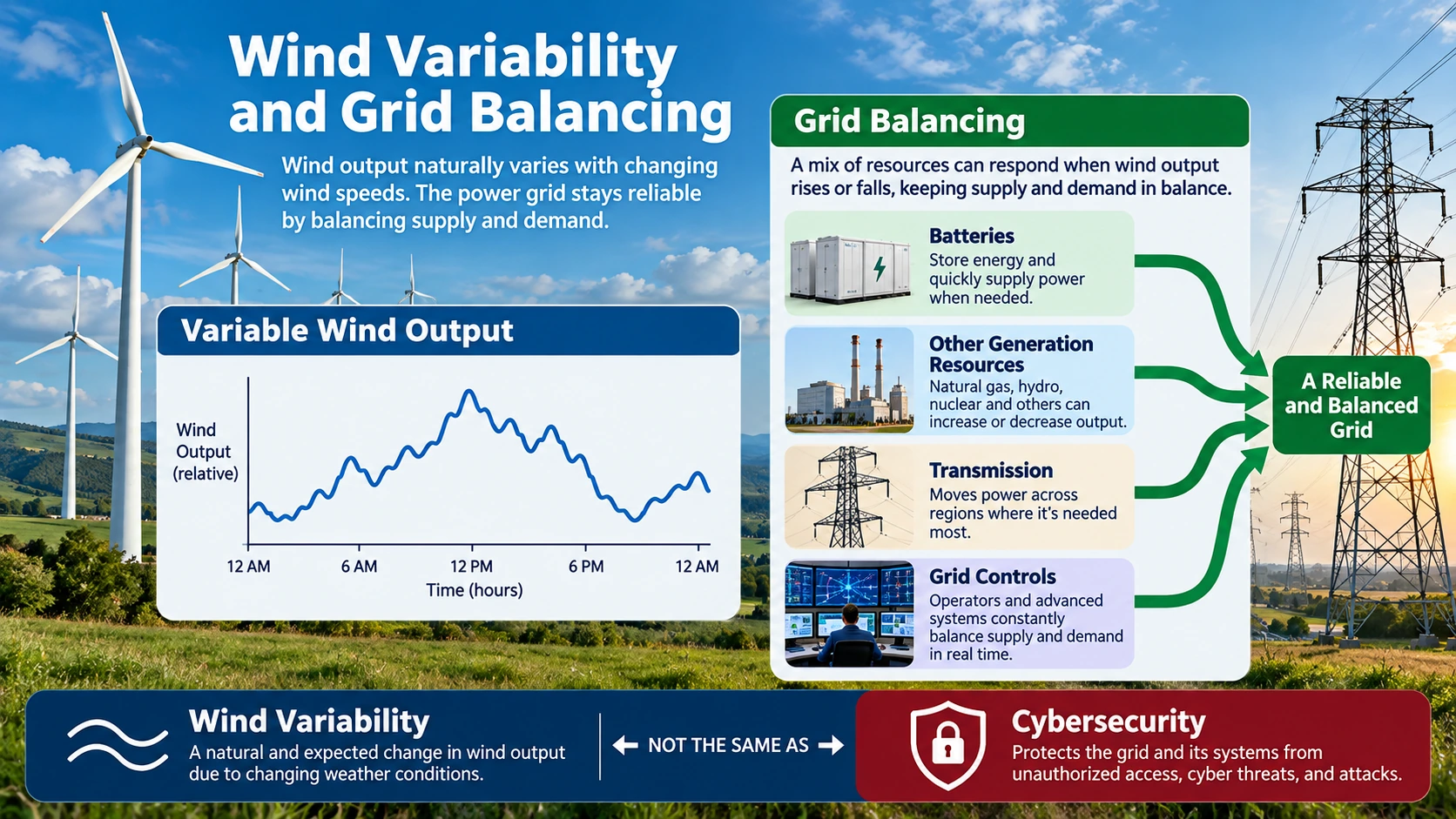
The White House proclamation describes wind as intermittent and argues that accommodating it draws resources away from more dependable power sources. That is the administration’s assessment, not evidence that imported wind turbines are themselves causing widespread blackouts. (White House)
Grid operators have to balance changing electricity demand and supply from many sources. Forecasting, flexible generators, energy storage, transmission connections, and sophisticated controls can help manage variable output. The Department of Energy has also funded projects demonstrating how wind and solar equipment can support grid voltage and frequency stability. (Department of Energy)
And wind is hardly a negligible energy source in the United States. According to the Energy Information Administration, it generated about 464 billion kilowatt-hours in 2025, roughly 11% of U.S. utility-scale electricity generation. Its importance varies considerably by state and region. (EIA)
The practical debate is about how to make an increasingly complex electricity system reliable and secure—not whether a changing wind forecast automatically constitutes a national security emergency.
Why Are Imported Parts at the Center of This Dispute?
Because a wind turbine is a global manufacturing product. A project assembled in the United States may still depend on imported generators, power electronics, blades, bearings, or other specialized components.
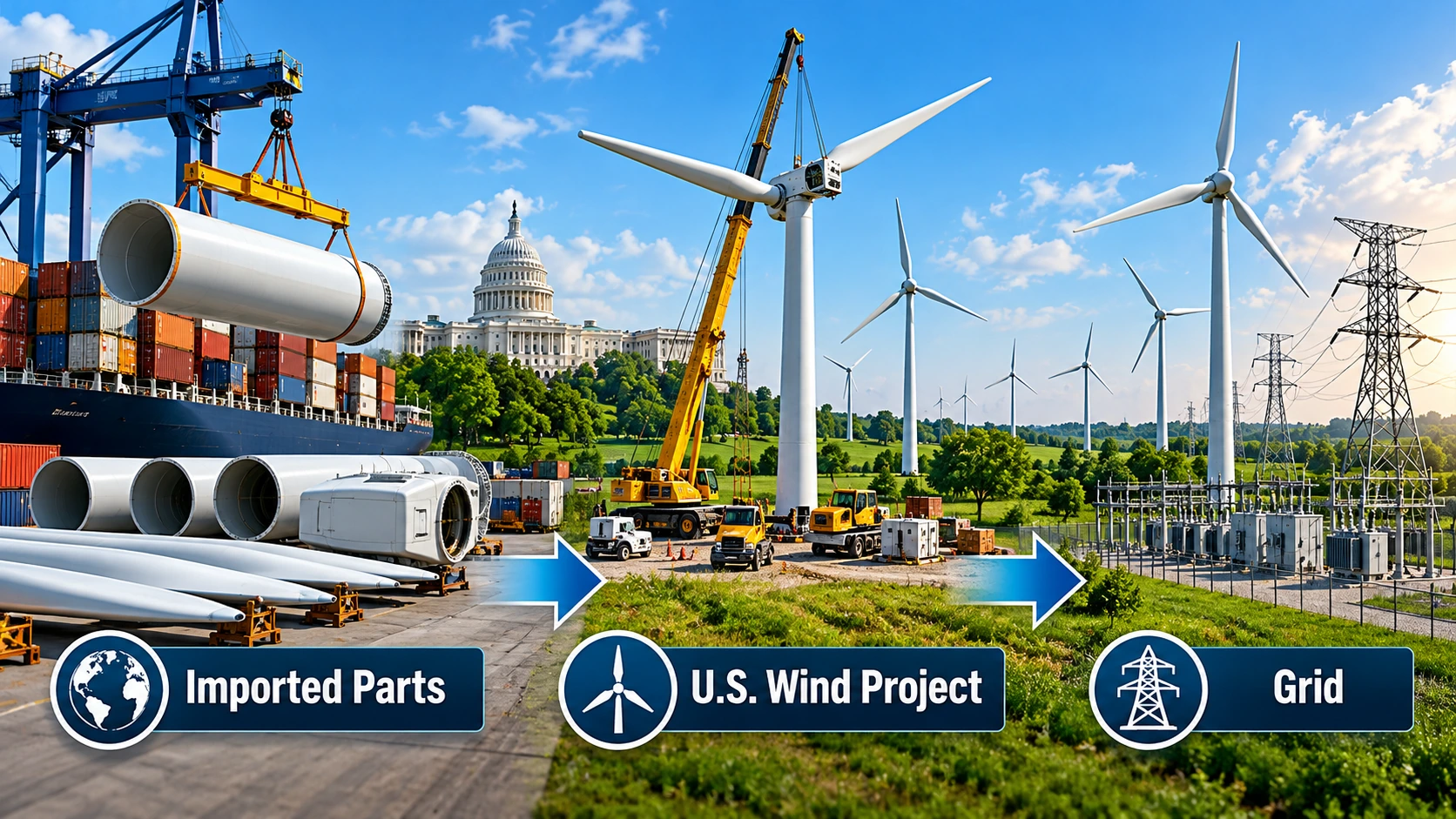
The Commerce Department found that U.S. wind energy relies heavily on foreign-made components and that imports have increased over time. Reuters, citing trade data summarized by the American Action Forum, identified Mexico, France, India, Denmark, and Germany among major supplier countries for turbines and related parts. That is not a list of countries accused of hacking American energy systems. (White House · Reuters)
Import dependence raises a different security question from cyber intrusions: if a critical component is hard to replace domestically, trade disruptions or supply shortages could delay construction and repairs. That is a supply-chain concern even when every imported product functions exactly as intended.
Some turbine parts made with steel, aluminum, or copper can already be affected by tariffs imposed under separate Section 232 actions. The October proclamation explicitly preserves those existing measures; it does not announce a new across-the-board duty specifically on wind turbines. (White House)
Three questions therefore need separate answers:
| Concern | What would address it most directly? | What does not prove it? |
|---|---|---|
| Cybersecurity | Secure remote access, testing, monitoring, and supplier controls | Foreign origin by itself |
| Radar interference | Careful project siting and radar mitigation | A turbine’s import status |
| Supply dependence | Diverse suppliers, resilient inventories, and domestic capacity | Proof of malicious software |
Treating all three as one problem might make for a simple political message. It does not make the technical solutions interchangeable.
Could This Mean Higher Electricity Bills or New Tariffs?
It is too early to say. The October 22 action itself did not set a new tariff rate, prohibit imports, or change household electricity prices. It set negotiations in motion and left the possibility of later trade measures open. (White House · Reuters)
If the administration later imposes additional duties, imported equipment could become more expensive for U.S. project developers. Higher equipment costs might affect the economics of new wind projects, while additional domestic production could change purchasing options over time. Neither outcome is guaranteed by the current proclamation.
Consumers also should not expect a simple one-for-one relationship between turbine import prices and their next utility bill. Retail electricity prices depend on fuel costs, power contracts, regional grid conditions, investment decisions, and state or local regulation, among other factors.
What happens next will depend on the trading partners involved, any agreements the administration negotiates, and whether Trump decides that further import restrictions are necessary. The public negotiating update required within 180 days is the clearest near-term marker. It should not be confused with a deadline at which tariffs automatically begin.
Bottom Line: What This Story Really Means
Trump’s national security case against imported wind turbines combines three different concerns: connected equipment that could be vulnerable to cyberattacks, turbine structures that may interfere with radar, and dependence on foreign supply chains. It also includes the administration’s broader criticism of wind power’s variable output.
Some of those underlying technical challenges are well documented. But the existence of a potential vulnerability does not establish that every foreign-made turbine has been compromised, and radar interference is not inherently an import problem.
For now, the most immediate development is a trade negotiation—not a new wind-turbine ban or tariff. The next meaningful change would be a specific negotiated agreement or a later decision to impose a remedy.
Imported Wind Turbines: Key Questions Explained
Q. Did Trump impose new tariffs on wind turbines in October 2026?
No. The October 22 proclamation directed trade negotiations and did not establish a new wind-turbine tariff rate. Existing tariffs on some materials and products remain a separate issue.
Q. Are imported wind turbines now banned in the United States?
No. The proclamation did not announce a blanket ban on imported wind turbines or their components.
Q. Can someone remotely interfere with a wind farm?
Potentially, if attackers compromise connected controls, credentials, or service access. That is a cybersecurity risk, not evidence that every turbine can be remotely hijacked.
Q. Did the White House identify a specific foreign turbine with a hidden backdoor?
Not in the public October 22 proclamation. It describes a category of potential risks without naming a confirmed backdoor in a particular turbine model.
Q. Does radar interference happen only with foreign-made turbines?
No. Radar interference is a physical siting and signal-reflection issue that can involve turbines regardless of where they were manufactured.
Q. How much of America’s electricity comes from wind?
Wind generated about 464 billion kilowatt-hours in 2025, representing roughly 11% of U.S. utility-scale electricity generation, according to the EIA.
Q. When must trade officials update Trump on negotiations?
They must provide at least one update within 180 days of October 22, 2026—approximately April 20, 2027. That does not mean new tariffs take effect automatically on that date.
Q. Will the proclamation immediately raise electricity bills?
Not automatically. It imposes no new turbine tariff, and any future effect on utility bills would depend on later policy decisions and many regional cost factors.
Did this help make the story clearer? 🙂 WIN keeps unpacking the “why” behind the news—clearly and simply!
Sources
Presidential Decision and Trade Investigation
Reuters — Trump Says Wind Turbine Imports Threaten National Security (October 22, 2026)
KPMG — President Directs Negotiations on Wind Turbine Imports
Cybersecurity and Radar Evidence
U.S. Department of Energy — Protecting Wind Energy Systems From Cyberattacks
U.S. Department of Energy — Radar Interference and Mitigation
Grid Reliability and Electricity Data
U.S. Energy Information Administration — Electricity Generation From Wind