Why Did Obama Bring Up His Birth Certificate at Abdul El-Sayed’s Detroit Rally?

Why would a former president bring up his birth certificate in the closing days of a Senate campaign?
At an October 24, 2026, rally in Detroit, Barack Obama was speaking on behalf of Democratic Senate nominee Abdul El-Sayed when he recalled the false claims about his own American birthplace. The joke drew a reaction from the crowd, but it carried a serious message: Obama believed attacks on El-Sayed’s name, Muslim faith, and patriotism echoed some of the tactics used against him.
There was another unexpected layer. El-Sayed once criticized Obama’s presidency in unusually harsh terms. Now the two were sharing a stage with Michigan Democratic gubernatorial nominee Jocelyn Benson, just ten days before the November 3 midterm elections. (AP · Bridge Michigan)
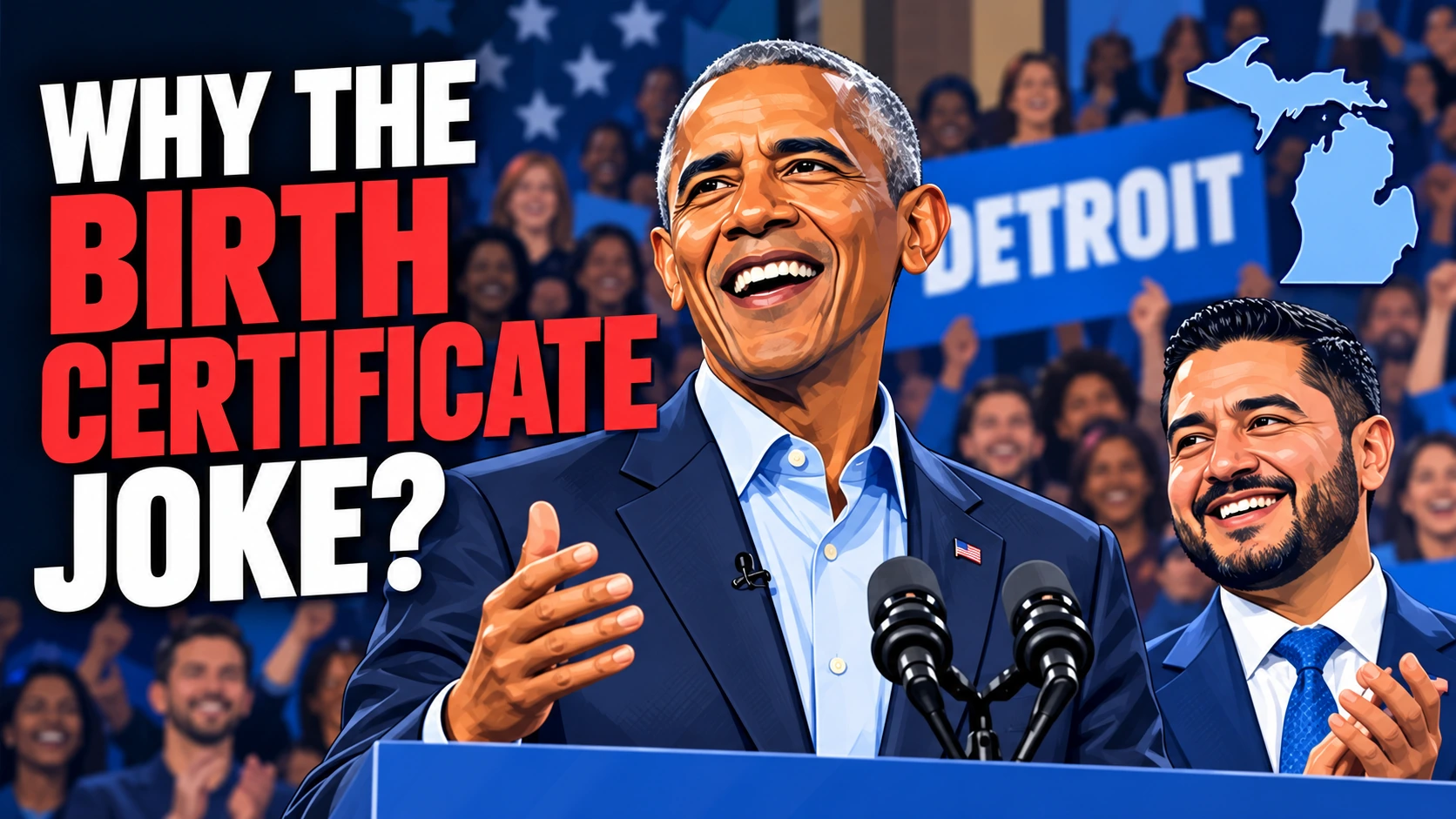
※ Images in this article are AI-generated illustrations created to help explain the story. They are not actual photographs, and depictions of people, places, or events may differ slightly from reality.
The rally made more sense when viewed as three stories happening at once: an effort to bring Democrats together after a bruising primary, a dispute over whether criticism of a candidate has crossed into religious prejudice, and a battle over the policies voters want from Washington.
Why Did Obama Come to Detroit for Abdul El-Sayed?
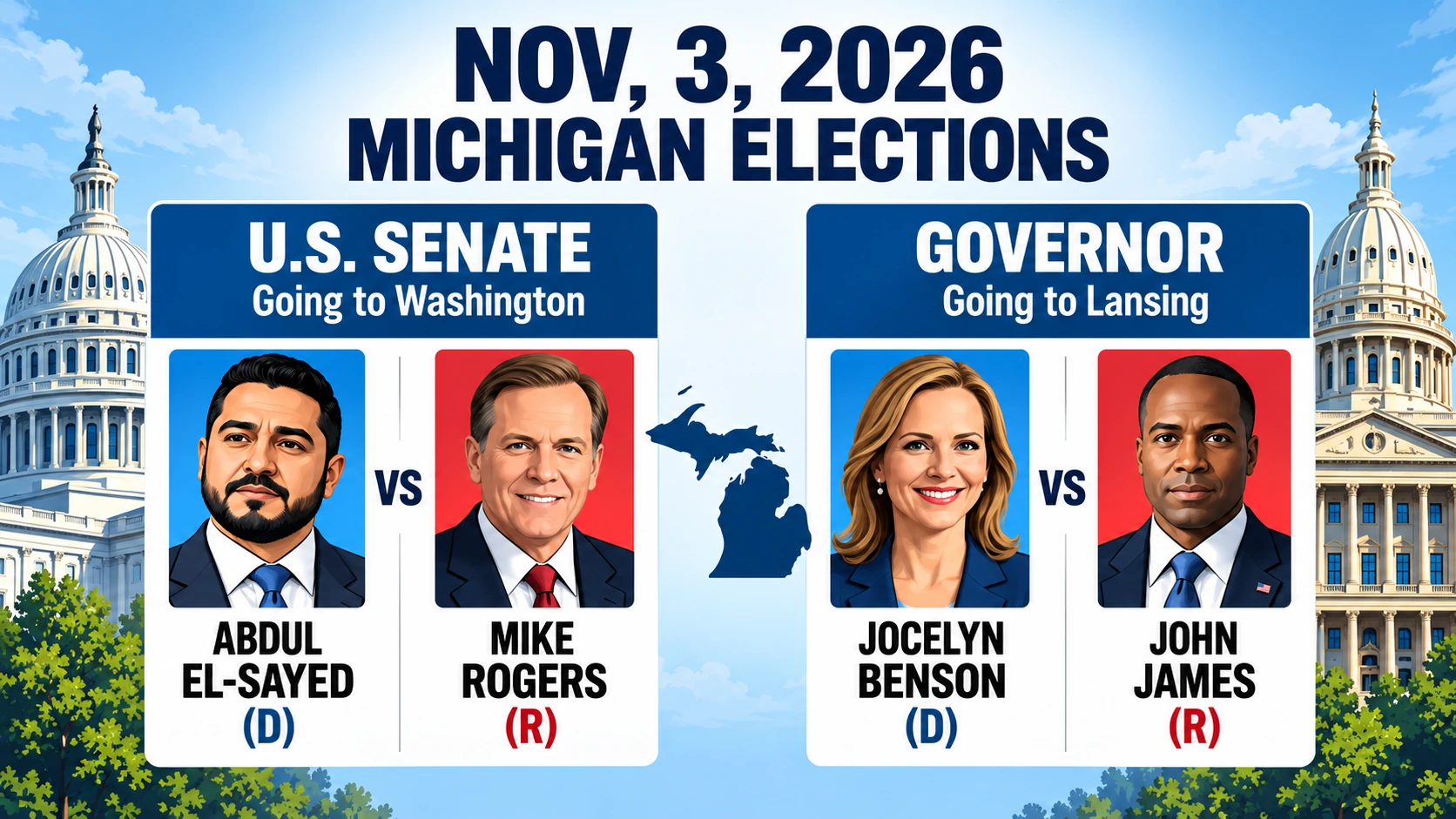
Michigan’s open Senate seat is one of the contests that will help determine the balance of power in Washington. Democratic Sen. Gary Peters is retiring. El-Sayed, a physician and former public health official, won the Democratic nomination in August and is running against former Republican Rep. Mike Rogers. At the same time, Benson faces Republican Rep. John James in the race to succeed term-limited Democratic Gov. Gretchen Whitmer. (AP · Local 4)
Obama’s visit also addressed a problem inside his own party. El-Sayed defeated Rep. Haley Stevens, a more moderate candidate who had significant backing from Democratic leaders. Stevens performed strongly in the Detroit area during the primary, while El-Sayed had to work to consolidate support among voters who had preferred her. (AP · Bridge Michigan)
That made Detroit important for more than its large number of voters. The city has a substantial Black electorate, and the primary revealed gaps in El-Sayed’s support there. Obama’s appearance was an attempt to bring different parts of the Democratic coalition onto the same stage, not proof that every skeptical voter had been persuaded.
The timing mattered, too: October 24 was the first day of Michigan’s statewide early in-person voting period, which runs through November 1 ahead of Election Day on November 3. (Michigan Secretary of State)
What Was Obama Actually Saying With the Birth Certificate Joke?
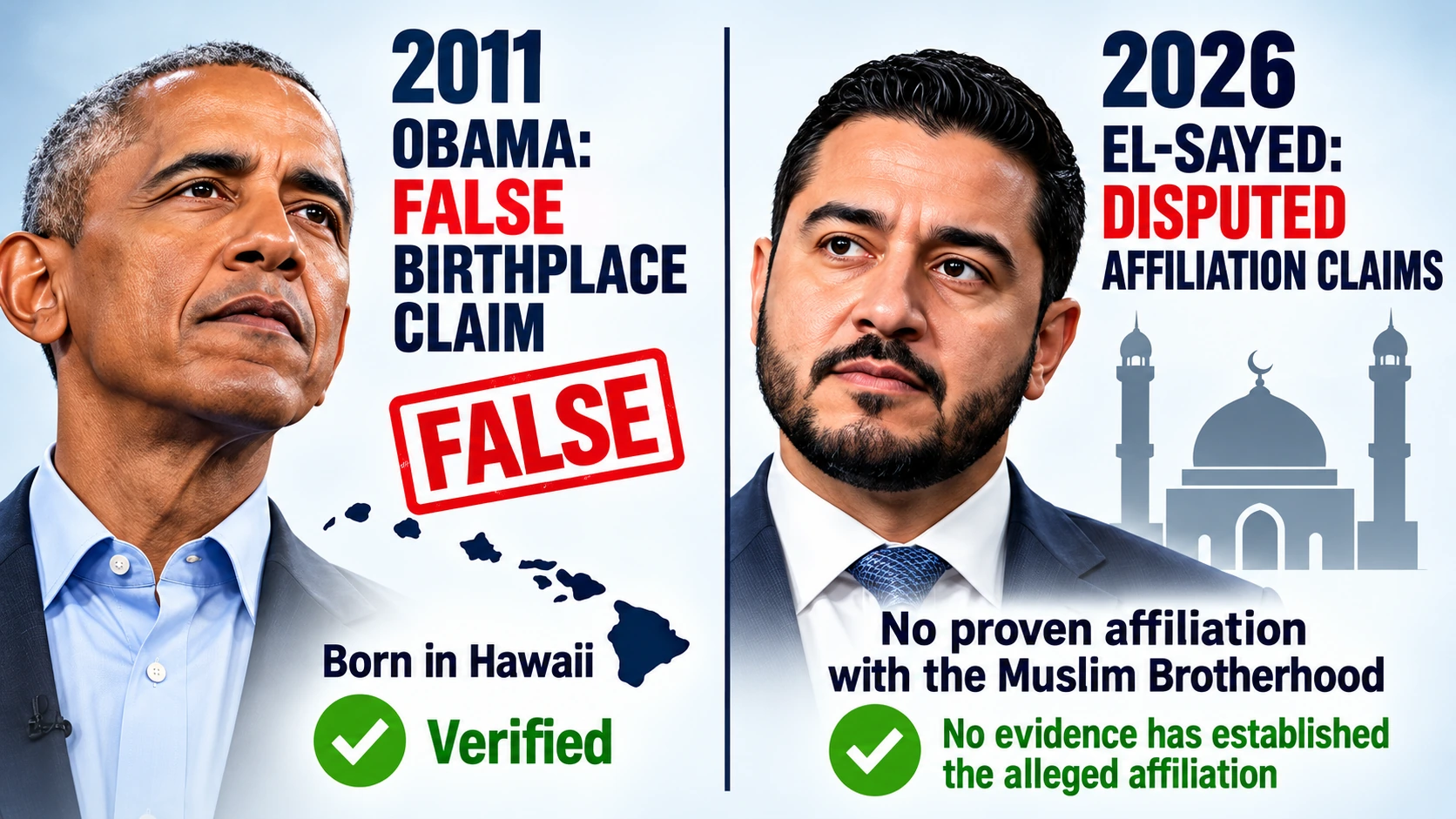
Obama was drawing a parallel between attacks that question whether a political candidate fully belongs in America. During his own presidential campaigns, false conspiracy theories claimed he was not born in the United States and therefore was ineligible to serve. He released a long-form Hawaii birth certificate in April 2011, and Hawaii officials had already confirmed his birth there. (Obama White House Archives)
In Detroit, Obama suggested that El-Sayed was facing a comparable effort to cast doubt on his loyalty because of his name and religion. El-Sayed was born in Michigan to Egyptian immigrant parents and is Muslim. His Republican opponent and other critics have questioned alleged links to the Muslim Brotherhood, but no credible evidence has been presented that El-Sayed belongs to that organization. El-Sayed has denied such ties and publicly disavowed the group. (AP · PolitiFact)
That distinction is important. A candidate’s policy positions, associations, statements, and record are legitimate subjects for scrutiny. An allegation of membership in an extremist organization, however, requires evidence; a candidate’s religion or family background does not establish it.
The controversies are not identical. Obama was responding to a false claim about where he was born. El-Sayed’s campaign involves disputed accusations about political and religious affiliations alongside ordinary disagreements over public policy and past statements. Obama’s comparison was a political argument about how suspicion can be directed at a candidate’s identity—not a claim that every criticism of El-Sayed is illegitimate.
Didn’t Abdul El-Sayed Once Criticize Obama Himself?
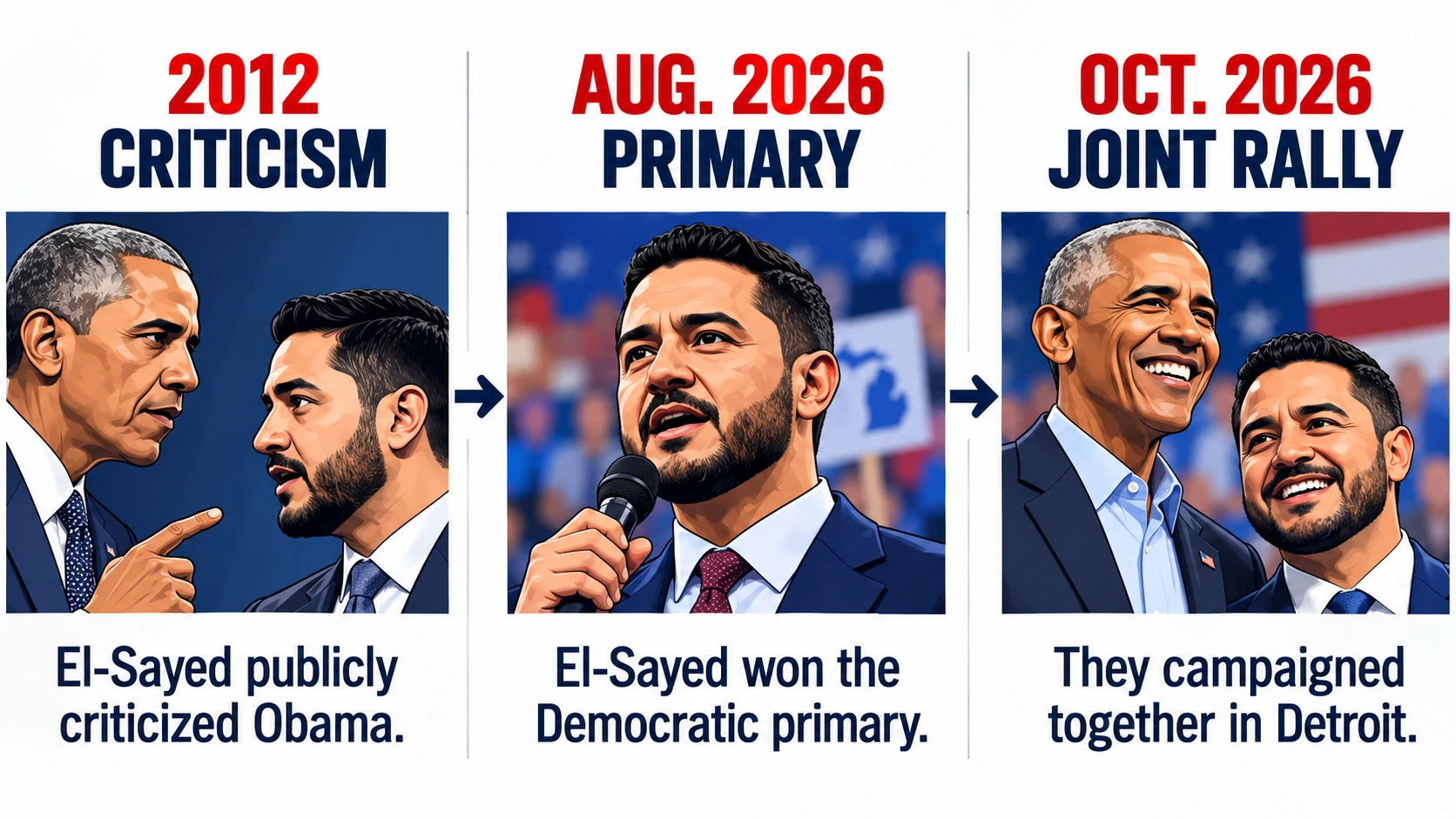
Yes. Their appearance together was striking partly because El-Sayed had publicly challenged Obama’s record. After Obama’s reelection in 2012, El-Sayed wrote an opinion piece criticizing military action, deportations, and civil liberties policies. In an October 2026 interview, he said he had been younger and angrier at the time and had come to appreciate how difficult governing and achieving change can be. (The Washington Post)
Obama did not try to portray the two as political duplicates. At the Detroit rally, he treated differences of opinion as compatible with support for a candidate sharing broader goals. That was significant after a primary that had exposed a divide between Michigan Democrats’ progressive and moderate wings. (Bridge Michigan)
The relationship is easier to follow in sequence:
| When | What happened | Why it matters |
|---|---|---|
| 2012 | El-Sayed publicly criticized Obama’s first-term record. | Their policy differences were real. |
| August 4, 2026 | El-Sayed won Michigan’s Democratic Senate primary. | Party leaders then faced a new nominee and a divided electorate. |
| October 24, 2026 | Obama campaigned with El-Sayed and Jocelyn Benson in Detroit. | Their cooperation became a visible part of the general-election campaign. |
The point was not that El-Sayed had abandoned all his earlier beliefs—or that Obama had adopted every progressive proposal. It was that the two were willing to campaign together despite their disagreements.
What Did Obama Mean by Change on Health Care, War, and Money?
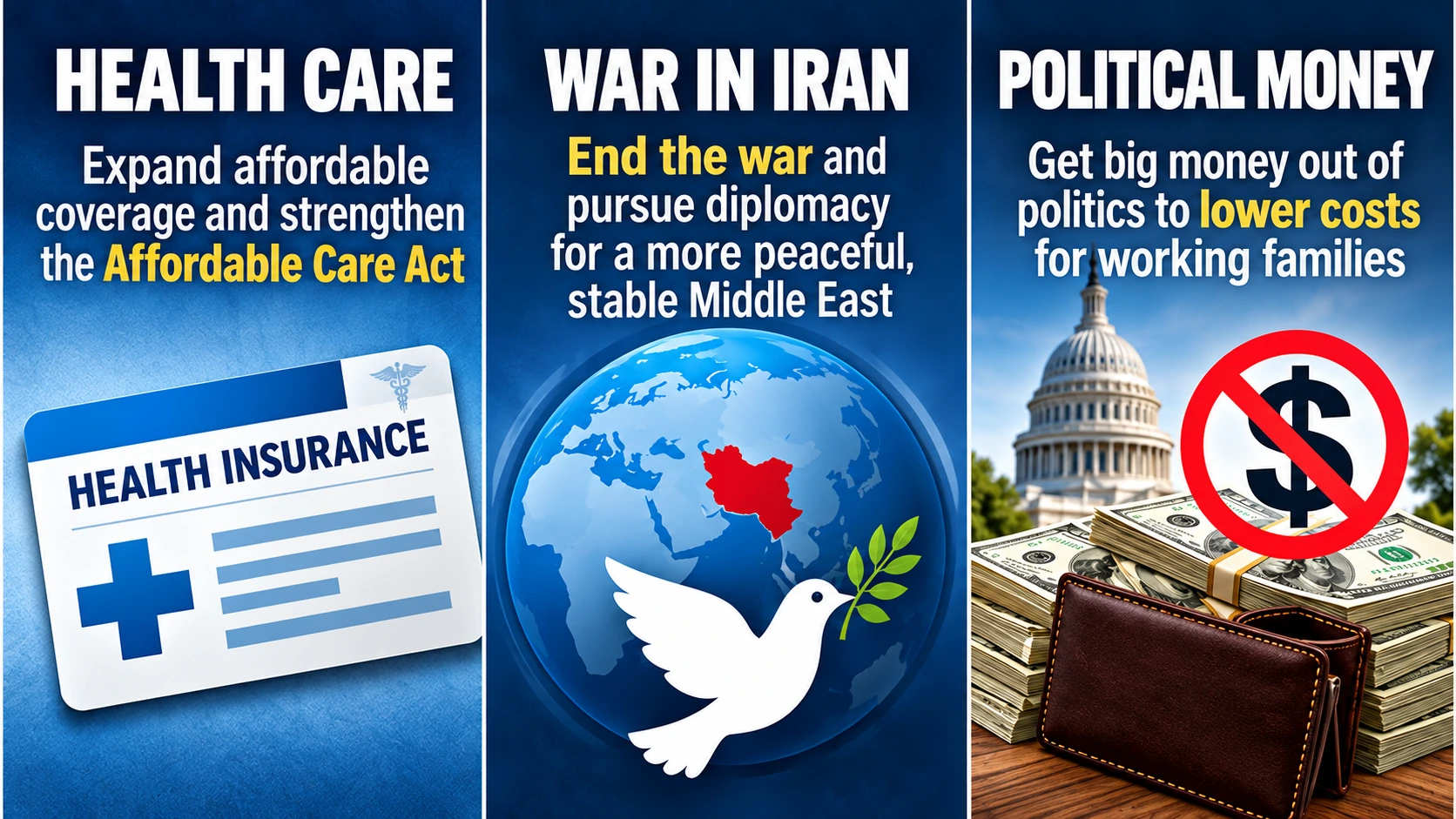
Obama’s message connected three issues that may sound unrelated: ending the war with Iran, reducing the role of money in politics, and extending affordable health coverage. He presented these as reasons he supported El-Sayed, while sharply criticizing President Donald Trump’s administration. (El-Sayed Campaign Statement · Reuters)
On health care, Obama linked El-Sayed’s ambitions to the Affordable Care Act (ACA), the signature health insurance law enacted under his presidency in 2010. The ACA expanded access to coverage but did not establish universal health insurance for all Americans. El-Sayed supports a more sweeping expansion, often described as Medicare for All. That is a political proposal, not a benefit Michigan voters would automatically receive if he won. (AP · Local 4)
On Iran, Obama and El-Sayed opposed the administration’s war and connected it to higher costs. Rogers, by contrast, has argued that confronting Iran is necessary to address a security threat, while questioning the economic and foreign-policy assumptions behind El-Sayed’s approach. These are competing judgments about military risk, economic consequences, and U.S. priorities—not a dispute that a single senator can settle alone. (Local 4)
Obama also accused Trump and his family of using public office for private advantage. Those were Obama’s accusations during a political speech, not findings independently established by the rally itself. Trump has rejected Obama’s broader criticism and attacked the former president in return. (Reuters)
The limits of the promises matter. A U.S. senator can propose bills, vote on legislation, participate in oversight, and influence spending decisions. A senator cannot single-handedly guarantee universal health coverage or end a war. Major changes usually require action by Congress, the executive branch, or both.
How Do Abdul El-Sayed and Mike Rogers Differ on the Issues?
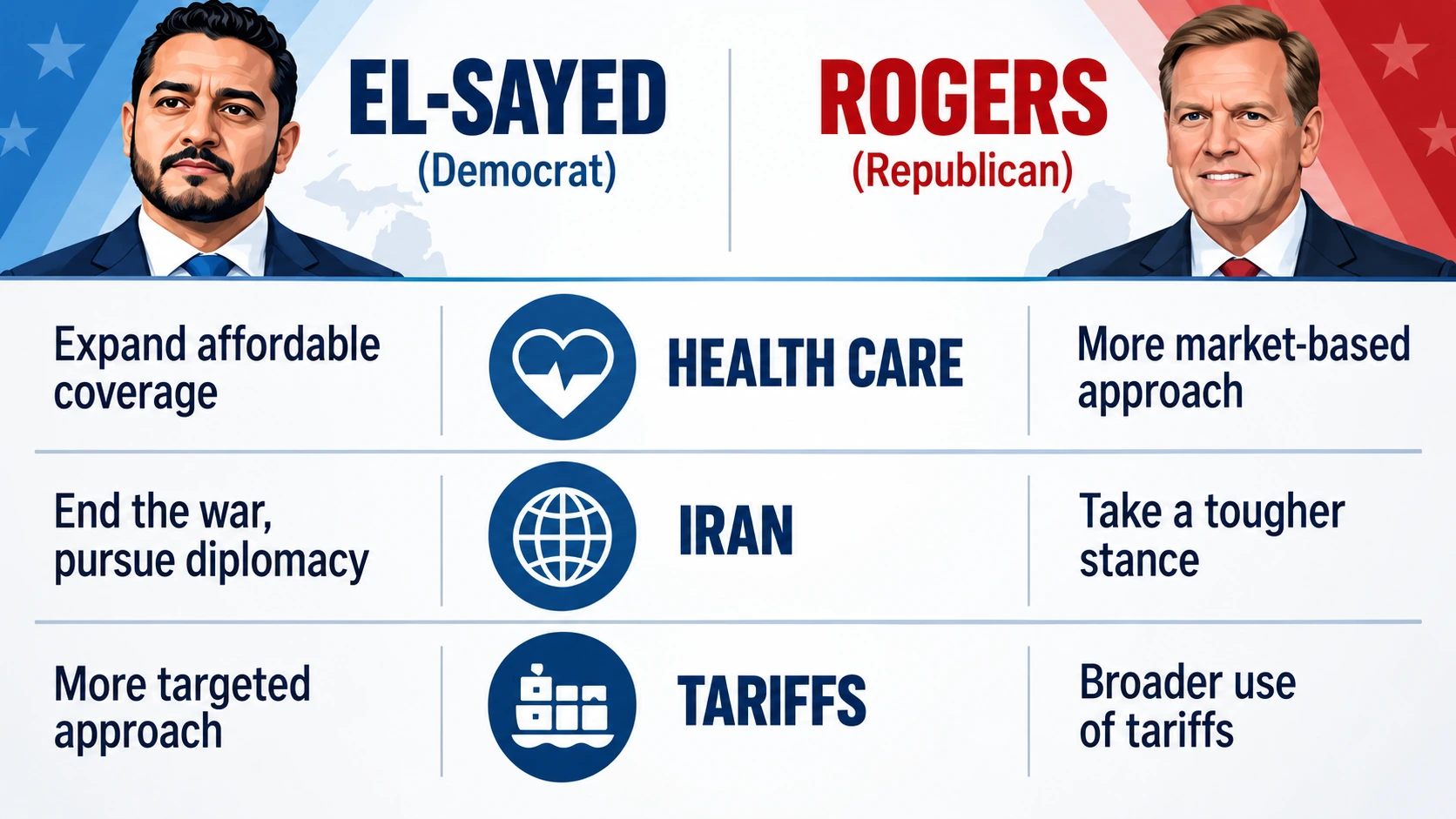
Their October debates showed that the election involves substantial policy differences independent of the identity-based attacks. Both candidates have spoken about Michigan’s high living costs, but they have argued for different answers. (Local 4 · PolitiFact)
| Issue | Abdul El-Sayed, Democrat | Mike Rogers, Republican |
|---|---|---|
| Health care | Supports a broad expansion of government-guaranteed coverage. | Questions the cost of El-Sayed’s proposal and favors a different approach to affordability. |
| Iran war | Opposes the war and says it worsens household costs. | Argues that confronting Iran is important to national security. |
| Tariffs and Michigan industry | Criticizes Trump’s tariffs as harmful to Michigan consumers and businesses. | Sees possible benefits from some tariffs but has raised concerns about the tariff dispute with Canada. |
| Immigration enforcement | Criticizes aggressive federal enforcement tactics. | Defends tougher immigration enforcement as important to public safety. |
This comparison summarizes arguments the candidates made in their debates; it is not a finding that either plan will produce its promised results. Rogers and El-Sayed have also challenged one another over experience, credibility, and past statements. Voters can assess those claims separately from the policy proposals themselves.
What Happened After Obama’s Detroit Speech?
The dispute over El-Sayed’s identity did not end with Obama’s remarks. On October 25, Trump campaigned in Port Huron, Michigan, and intensified his attacks on El-Sayed, invoking the September 11 attacks and accusing the Democratic nominee of extremist affiliations. El-Sayed again rejected those accusations. Reports found no evidence establishing the alleged organizational ties. (AP · Reuters)
There are other contested parts of the campaign. El-Sayed has faced criticism over his comments following an attack on a Michigan synagogue, and he later apologized for language that some people found hurtful. That controversy concerns his own response and can be examined on its merits; it is separate from claims that he belongs to an extremist group. (AP)
Republicans have characterized El-Sayed as too far left for Michigan, while Democrats have presented Rogers as too closely aligned with Trump. Each argument is part of a campaign in which national politics and local concerns are closely intertwined. The factual question is what each candidate has said and done; the electoral judgment belongs to voters.
Why Does Michigan’s Election Matter Beyond Michigan?
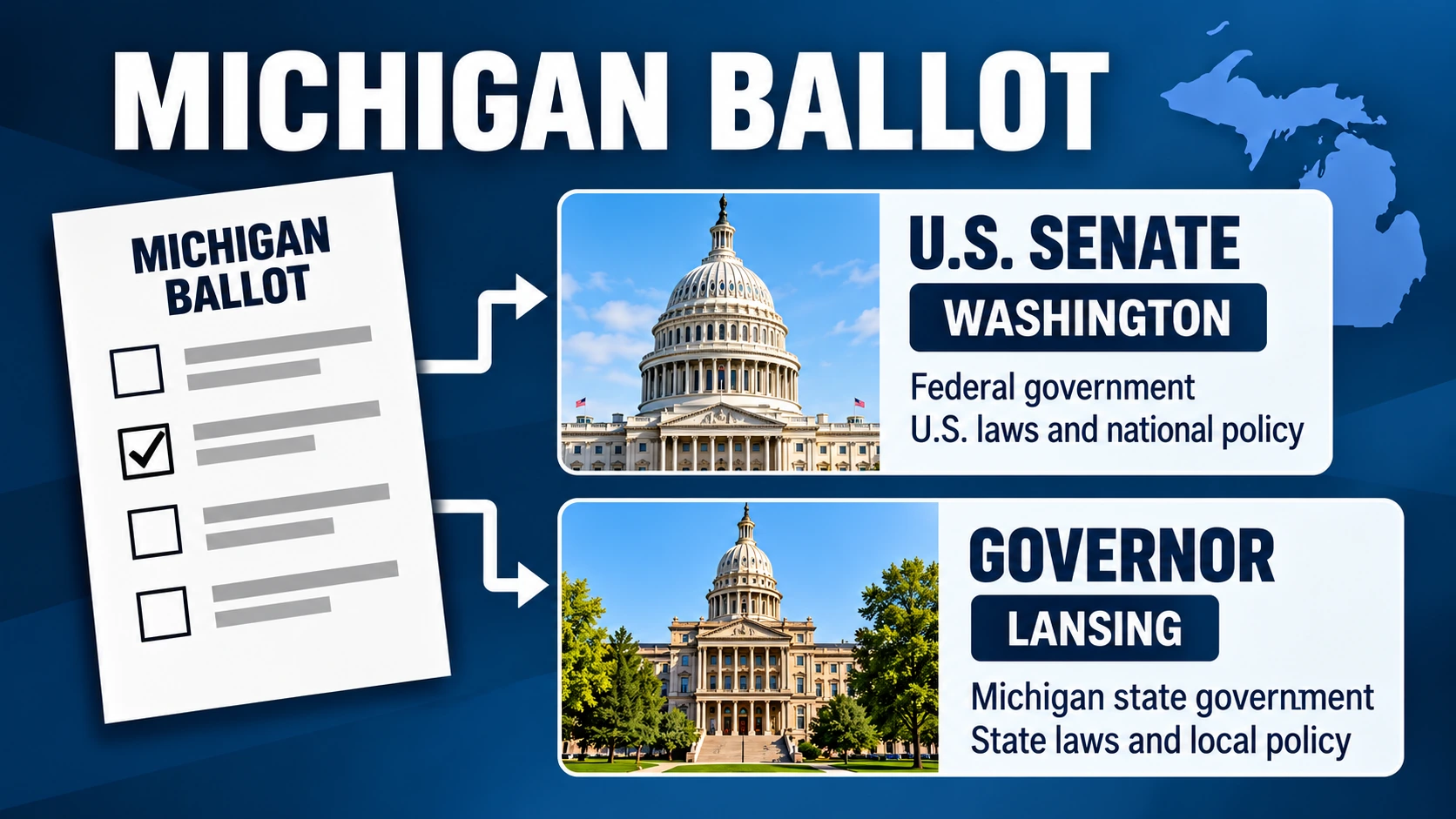
Because the Senate seat now held by retiring Democrat Gary Peters is on the ballot, Michigan is a seat Democrats are trying to retain and Republicans are trying to gain. Its result will be counted alongside other Senate elections around the country in determining which party controls the chamber. That matters for federal legislation, presidential appointments, and congressional oversight. (AP)
The governor’s contest is a different election, despite the candidates appearing on the same stage. Benson and James are competing to lead Michigan’s state government, not for a seat in Congress. The next governor will deal with state-level executive decisions, while the next U.S. senator will serve in Washington. (Local 4)
This helps explain why both Obama and Trump were campaigning in Michigan during the same weekend. The state’s ballot combines national questions about the Trump administration with local debates over the economy, public services, and Michigan’s direction.
What Should Readers Watch Before November 3?
The next meaningful evidence will come from how voters respond—not from applause at a rally. Three developments are especially relevant: whether El-Sayed can broaden his support beyond his primary coalition, whether the candidates’ competing economic and national-security arguments influence the race, and how the Michigan Senate result fits with outcomes in other states.
The October 24 rally showed how Democrats were presenting their coalition and priorities. Trump’s October 25 appearance showed the Republican campaign’s contrasting emphasis. Neither event by itself establishes how the election will finish.
Bottom Line: What This Story Really Means
Obama’s birth certificate remark was more than a joke. He was arguing that a familiar kind of political suspicion—questioning a candidate’s belonging or loyalty through identity—was resurfacing in Michigan’s Senate contest. The historical parallel matters, but it does not erase legitimate disagreements about El-Sayed’s policies and record.
The rally also brought a former president and a candidate who once criticized him onto the same stage, at a moment when Democrats were seeking unity after a divisive primary. Michigan’s election will test both parties’ arguments on health care, the Iran war, living costs, and the role of the federal government. The result will have consequences for representation in Washington and leadership in Lansing.
Obama and Abdul El-Sayed: Key Questions Explained
Q. When did Obama speak at the Detroit rally?
Obama campaigned with Abdul El-Sayed and Jocelyn Benson at Cass Technical High School in Detroit on October 24, 2026, ten days before the November 3 election.
Q. Why did Obama joke about his birth certificate?
He was recalling false claims about his birthplace and drawing a parallel with attacks questioning El-Sayed’s loyalty because of his name and Muslim faith.
Q. Was Obama born outside the United States?
No. Obama was born in Hawaii. His campaign released documentation in 2008, and the White House published his long-form Hawaii birth certificate in 2011.
Q. Is there evidence that Abdul El-Sayed belongs to the Muslim Brotherhood?
No evidence establishing such an affiliation has been produced. El-Sayed has denied the allegation and explicitly disavowed the organization.
Q. Did El-Sayed previously criticize Obama’s presidency?
Yes. He wrote a strongly critical opinion piece in 2012 and later said his understanding of the difficulties of governing had changed.
Q. Who is running for Michigan’s U.S. Senate seat in 2026?
The major-party nominees are Democrat Abdul El-Sayed and Republican Mike Rogers. They are seeking the seat held by retiring Democratic Sen. Gary Peters; additional minor-party candidates are also on the ballot.
Q. Who is running for Michigan governor?
Democrat Jocelyn Benson and Republican John James are the major-party candidates seeking to replace term-limited Gov. Gretchen Whitmer. Other candidates are also running.
Q. Would El-Sayed’s election automatically create universal health coverage?
No. A senator can advocate for and vote on health care legislation, but broad federal changes require more than one senator’s election.
Q. What is the date of the 2026 midterm election?
Election Day is November 3, 2026. Michigan’s statewide early in-person voting period began on October 24 and runs through November 1.
Did this help make the story clearer? 🙂 WIN keeps unpacking the “why” behind the news—clearly and simply!
Sources
Detroit Rally and Candidate Reactions
Associated Press — Obama campaigns in Ohio and Michigan and defends El-Sayed
Reuters — Obama criticizes Trump while campaigning for Democrats
Bridge Michigan — Fact checks and takeaways from the Detroit rally
Associated Press — Trump escalates attacks on El-Sayed at Michigan rally
Candidate Background and Policy Differences
Associated Press — Obama’s appearance and Michigan’s Democratic primary divisions
The Washington Post — El-Sayed addresses his 2012 criticism of Obama
Local 4 — El-Sayed and Rogers debate health care, Iran and immigration
PolitiFact — Fact check of claims about El-Sayed and the Muslim Brotherhood
Historical Context and Election Schedule
Obama White House Archives — President Obama’s long-form birth certificate
Michigan Secretary of State — 2026 statewide early voting schedule
Local 4 — Michigan governor candidates and the term-limited incumbent