Why Are Two Men Named Dan Sullivan at the Center of a Fight Over Alaska’s Senate Election?

Two men named Dan Sullivan are running in the same U.S. Senate election in Alaska.
That sounds like an unusual ballot problem. But it has now become a federal lawsuit that could affect whether the state is allowed to certify its election results.
And here’s what makes the situation especially strange: The election hasn’t even happened yet.
On October 25, 2026, Attorney General Todd Blanche defended a Justice Department lawsuit filed three days earlier. The government argues that voters could mistake one Dan Sullivan for the other, potentially changing the outcome of a closely contested Senate race.
President Donald Trump has publicly acknowledged directing the lawsuit. His administration says it is trying to protect voters from confusion, not overturn their choices.
Critics, including a Republican senator from Alaska, see something very different: an attempt to establish grounds for challenging an election result before anyone knows who won. (AP · CBS News)
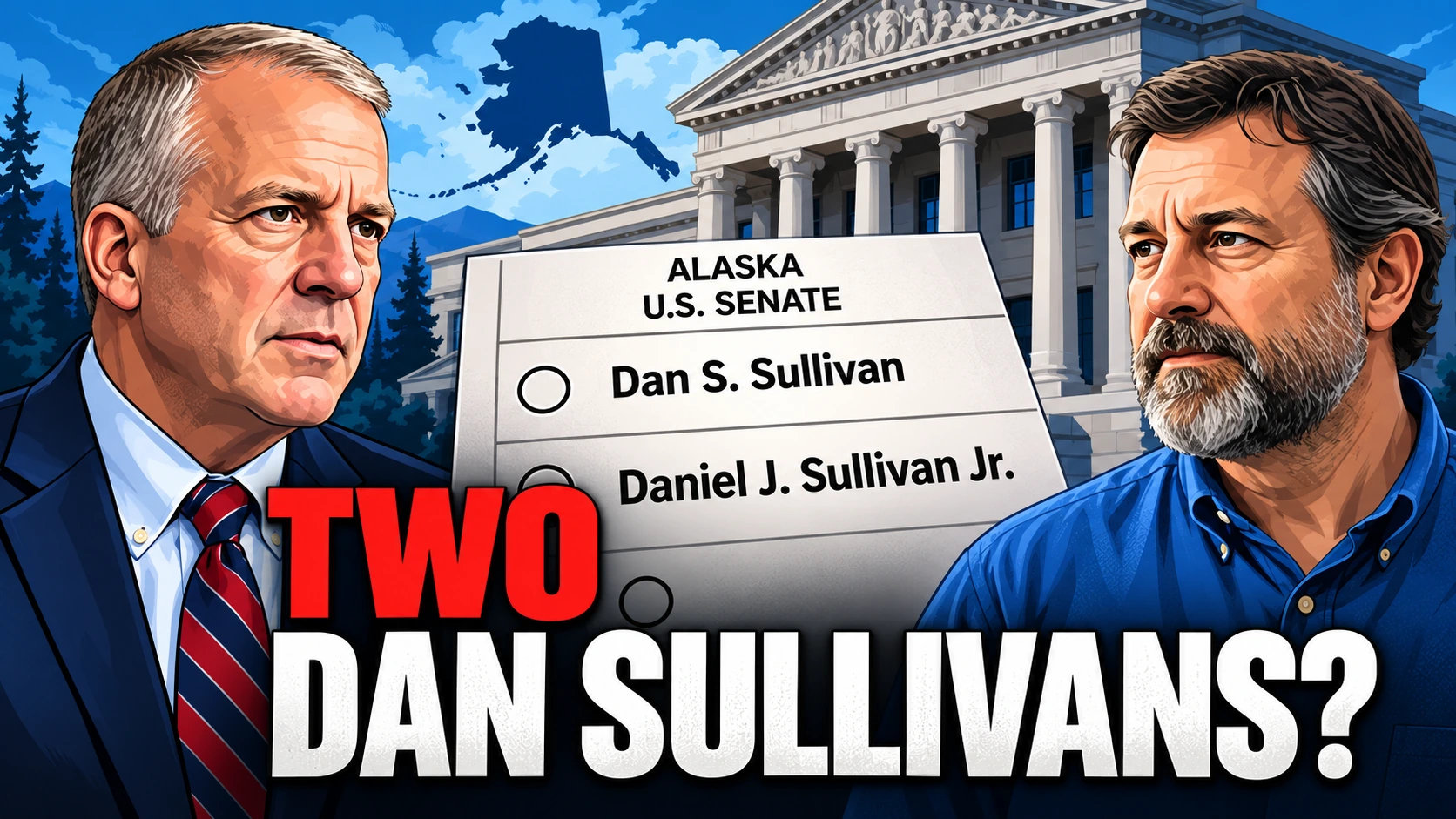
※ Images in this article are AI-generated illustrations created to help explain the story. They are not actual photographs, and depictions of people, places, or events may differ slightly from reality.
The immediate dispute is about two names on a ballot. The larger question is whether the federal government can intervene in a state’s process for declaring an election winner based on confusion that has not yet been proven.
To understand why this matters, start with the two candidates themselves.
Who Are the Two Dan Sullivans—and Who Else Is Running?
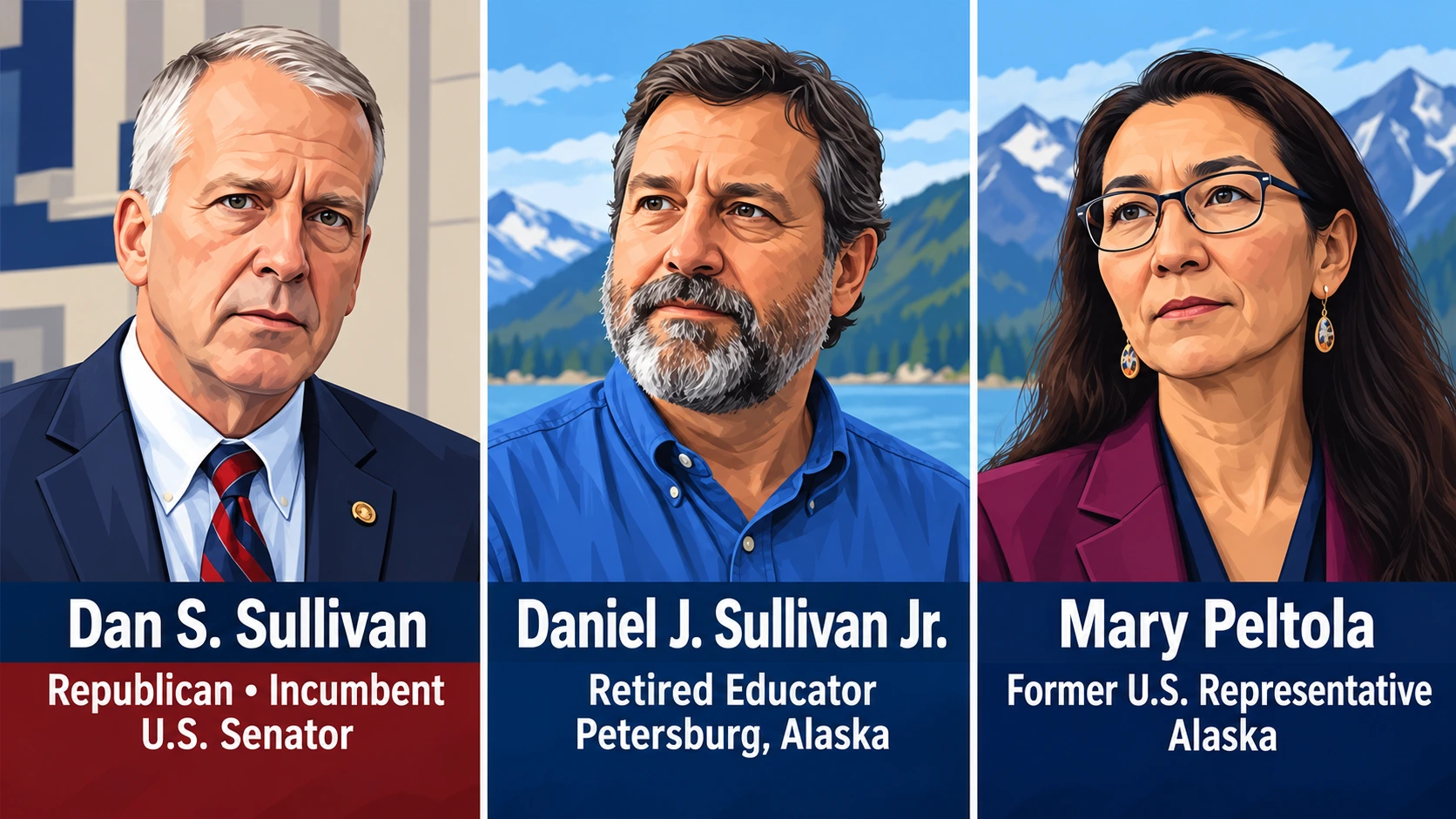
The two men share a first and last name, but they are entirely different candidates.
One is the sitting Republican U.S. senator seeking reelection. The other is a retired educator from the small Alaska community of Petersburg.
Their similar names have become a major complication in what was already expected to be a competitive race between Republican Senator Dan Sullivan and former Democratic Congresswoman Mary Peltola. (NPR)
Here is how the four candidates on Alaska’s November 3 Senate ballot fit into the race.
| Candidate | Political background | Role in the election |
|---|---|---|
| Dan S. Sullivan | Republican incumbent senator | Seeking another term |
| Mary Peltola | Democrat and former U.S. representative | Leading Democratic challenger |
| Daniel J. Sullivan Jr. | Retired educator, registered Republican | Candidate whose similar name sparked the lawsuit |
| Gerald Heikes | Registered Republican | Fourth general-election candidate |
The official Alaska Division of Elections candidate records identify these candidates and their registration information.
Notice something important about Daniel J. Sullivan Jr.
He is registered as a Republican, but his name appears on the general-election ballot without a party designation printed alongside it. That distinction becomes important when assessing whether the ballot already gives voters enough information to tell the candidates apart.
The lawsuit does not allege that the senator and the retired educator are somehow the same person.
The government’s allegation is that enough voters might confuse them to change who wins.
That raises an obvious question: Why was the second Sullivan allowed onto the ballot in the first place?
Why Did Alaska’s Supreme Court Allow Both Names on the Ballot?
Because sharing another candidate’s name is not, by itself, a legal reason to exclude an otherwise qualified candidate.
The dispute began months before the Justice Department became involved.
Alaska election officials initially sought to keep Daniel J. Sullivan Jr. off the ballot, arguing that his candidacy appeared designed to confuse voters.
But the challenger fought that decision in court.
On June 29, 2026, the Alaska Supreme Court upheld a lower-court ruling permitting him to run. The court left election officials to determine how his name should appear on the ballot. (Alaska Public Media · AP)
How the dispute developed
| Date | What happened |
|---|---|
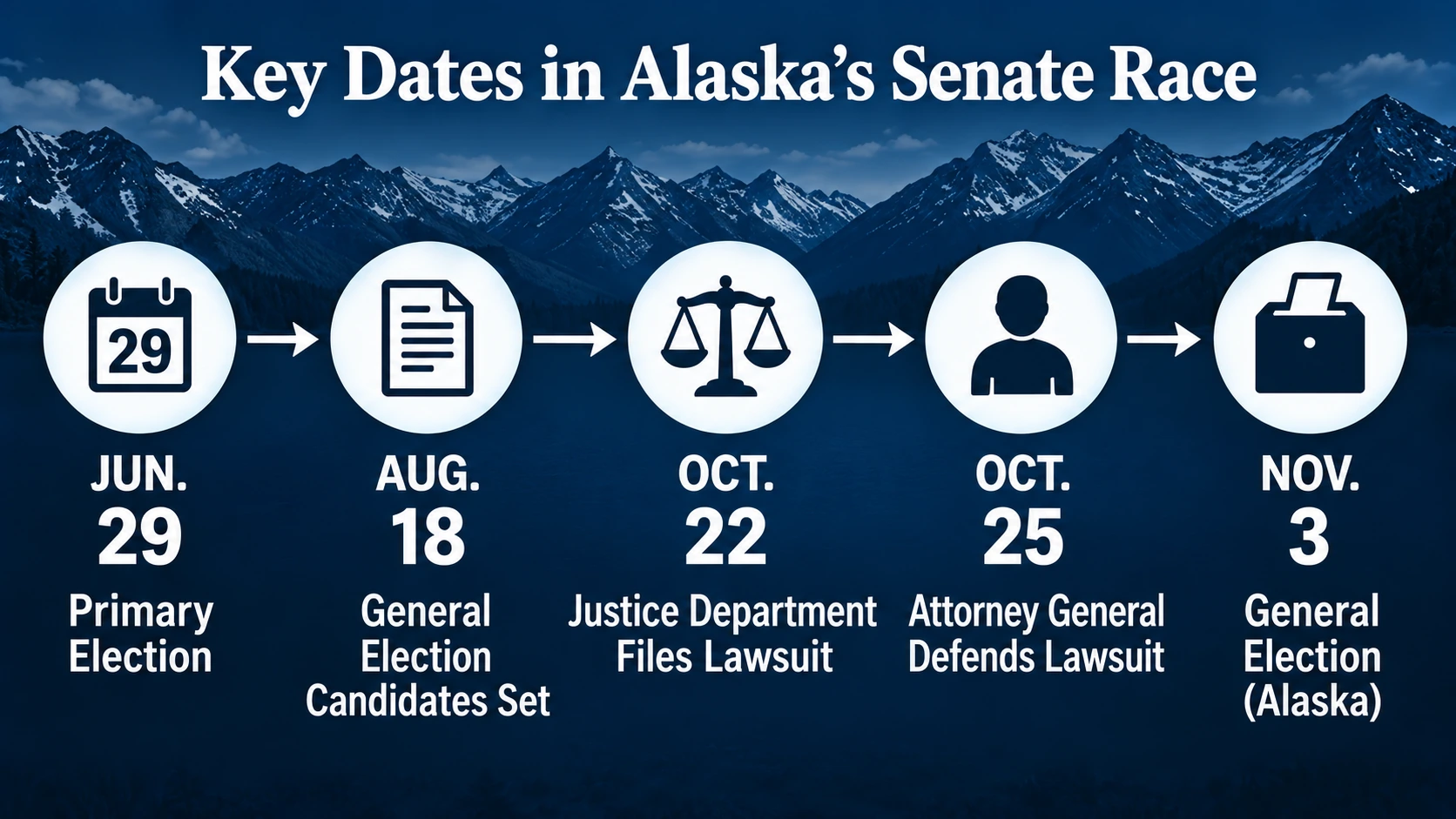
| June 29, 2026 | Alaska Supreme Court allows Daniel J. Sullivan Jr. to remain on the ballot |
| August 18, 2026 | Both Sullivans participate in Alaska’s primary |
| October 22, 2026 | Justice Department files a federal lawsuit against Alaska |
| October 25, 2026 | Attorney General Todd Blanche publicly defends the lawsuit |
| November 3, 2026 | Scheduled general election |
The key legal distinction is between a candidate’s qualifications and the candidate’s possible motivations.
The second Sullivan’s lawyers argued that state officials could not disqualify a qualified candidate simply because they suspected he had entered the race for the wrong reasons.
Republican critics of his candidacy have accused him of trying to draw votes away from the incumbent. Daniel J. Sullivan Jr. has denied that he entered the race to mislead voters, and Democrats have denied involvement in an alleged scheme. (AP · NPR)
The state courts’ decision established that the challenger could appear on the ballot under the state-law dispute before them. It did not determine whether voters would actually become confused or decide the new federal lawsuit.
If Their Names Are So Similar, Can’t Alaska Just Label Them Clearly?
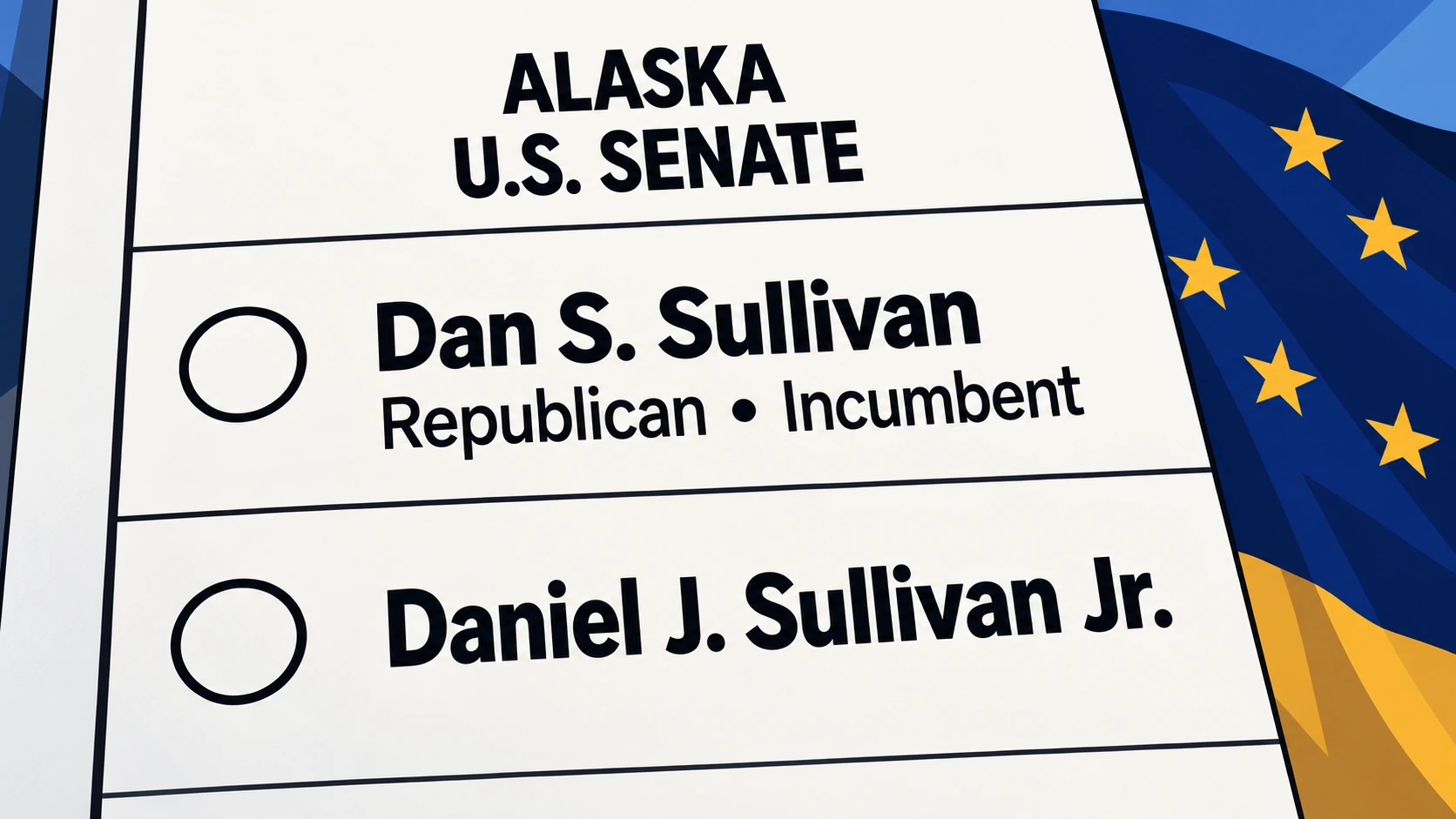
Alaska has already taken steps to distinguish them.
The actual ballot labels include middle initials and an incumbent designation. The difference is more substantial than two identical entries reading simply “Dan Sullivan.”
The distinctions reported from the ballot are:
| Candidate | What distinguishes the entry |
|---|---|
| Dan S. Sullivan | Middle initial S., registered Republican label, and incumbent designation |
| Daniel J. Sullivan Jr. | Middle initial J. and Jr., with no party designation printed alongside the name |
(CBS News · Alaska Division of Elections)
That creates two competing arguments.
The Justice Department contends that these distinctions may not be sufficient to prevent confusion, particularly among voters who recognize the familiar first and last name but overlook the additional information.
Critics respond that the state’s ballot already identifies the incumbent clearly, and that merely sharing a name does not establish that any votes were miscast.
Republican Senator Lisa Murkowski, Alaska’s other U.S. senator, has publicly opposed the federal lawsuit even while supporting her colleague’s reelection. She argues that Alaska has already addressed the ballot distinction adequately. (CBS News)
There’s another unusual feature of Alaska elections that makes the dispute more complicated.
Unlike many states, Alaska does not choose the winner of this race using only a single round of plurality voting.
Doesn’t Alaska’s Ranked-Choice Voting System Reduce the Risk of Split Votes?
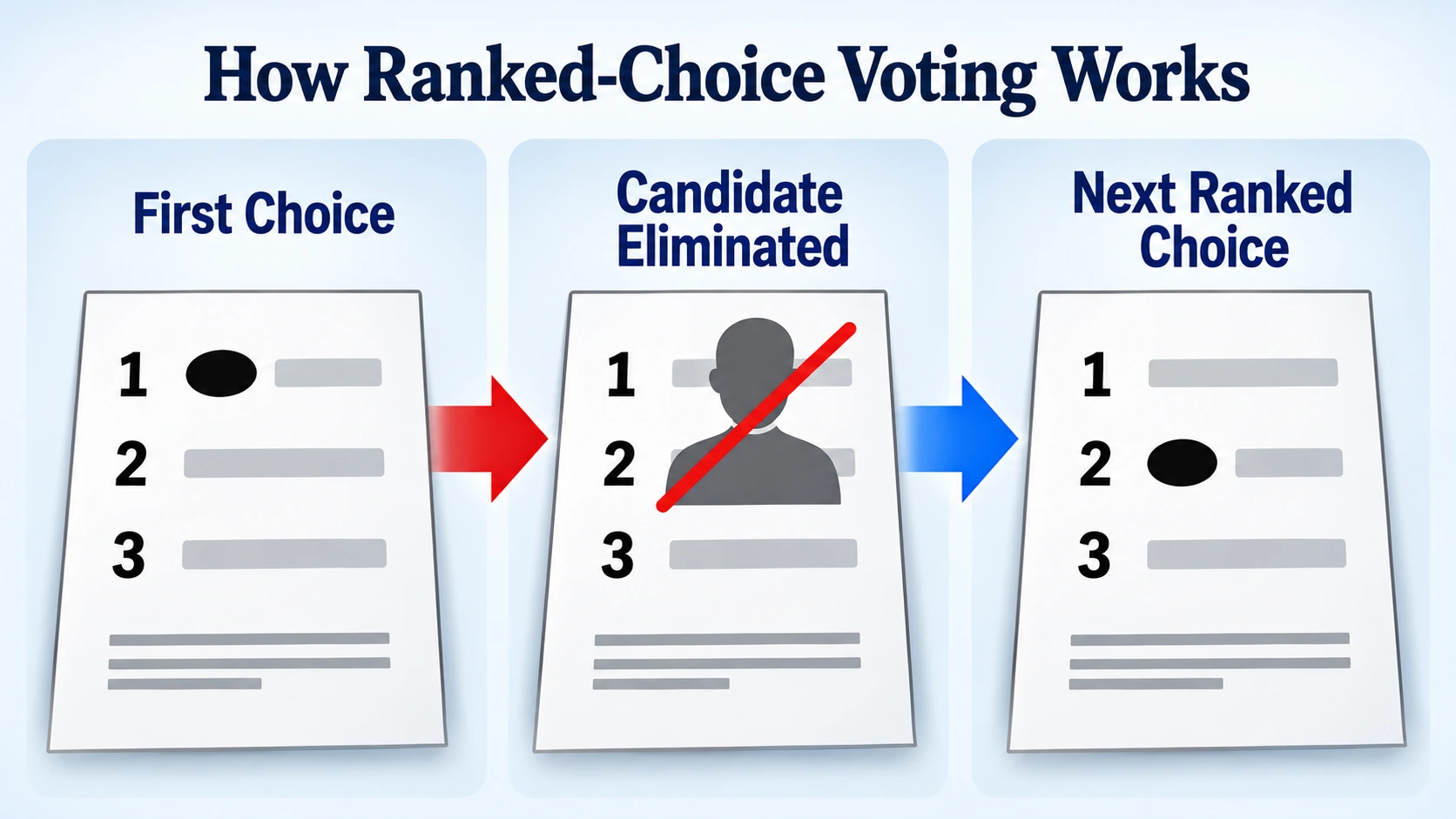
Yes. Ranked-choice voting can reduce the risk that two similar candidates divide support and allow a third candidate to win. But it cannot guarantee that every confused vote will ultimately count for the candidate the voter intended.
Alaska uses a system in which the four leading candidates from a nonpartisan primary advance to the general election, where voters can rank candidates in order of preference.
If no candidate initially receives a majority, the lowest-performing candidate is eliminated and ballots may transfer to the next-ranked candidate still in the running.
The process continues until the race has a winner under the ranked-choice rules. (Alaska Division of Elections)
A simplified example
Imagine a voter ranks Daniel J. Sullivan Jr. first and Senator Dan S. Sullivan second.
If Daniel J. Sullivan Jr. is eliminated and the senator remains in contention, that ballot can transfer to the senator.
Now consider another voter who ranks Daniel J. Sullivan Jr. first but does not rank the incumbent at all.
That ballot cannot simply be assigned to the senator merely because the two candidates have similar names.
The same is true if a voter ranks another candidate ahead of the incumbent.
The ranked-choice system follows the preferences recorded on the ballot, not what election officials believe the voter might have meant.
This produces an important distinction:
Votes for the second Sullivan are not automatically lost votes for the incumbent—and they are not automatically transferable to him, either.
It also raises a difficult question for the Justice Department: How could investigators determine that someone secretly intended to vote for a different candidate?
The secrecy of the ballot makes individual voter intent difficult to reconstruct after a vote has been cast. (NPR)
What Exactly Is the Justice Department Asking the Court to Do?
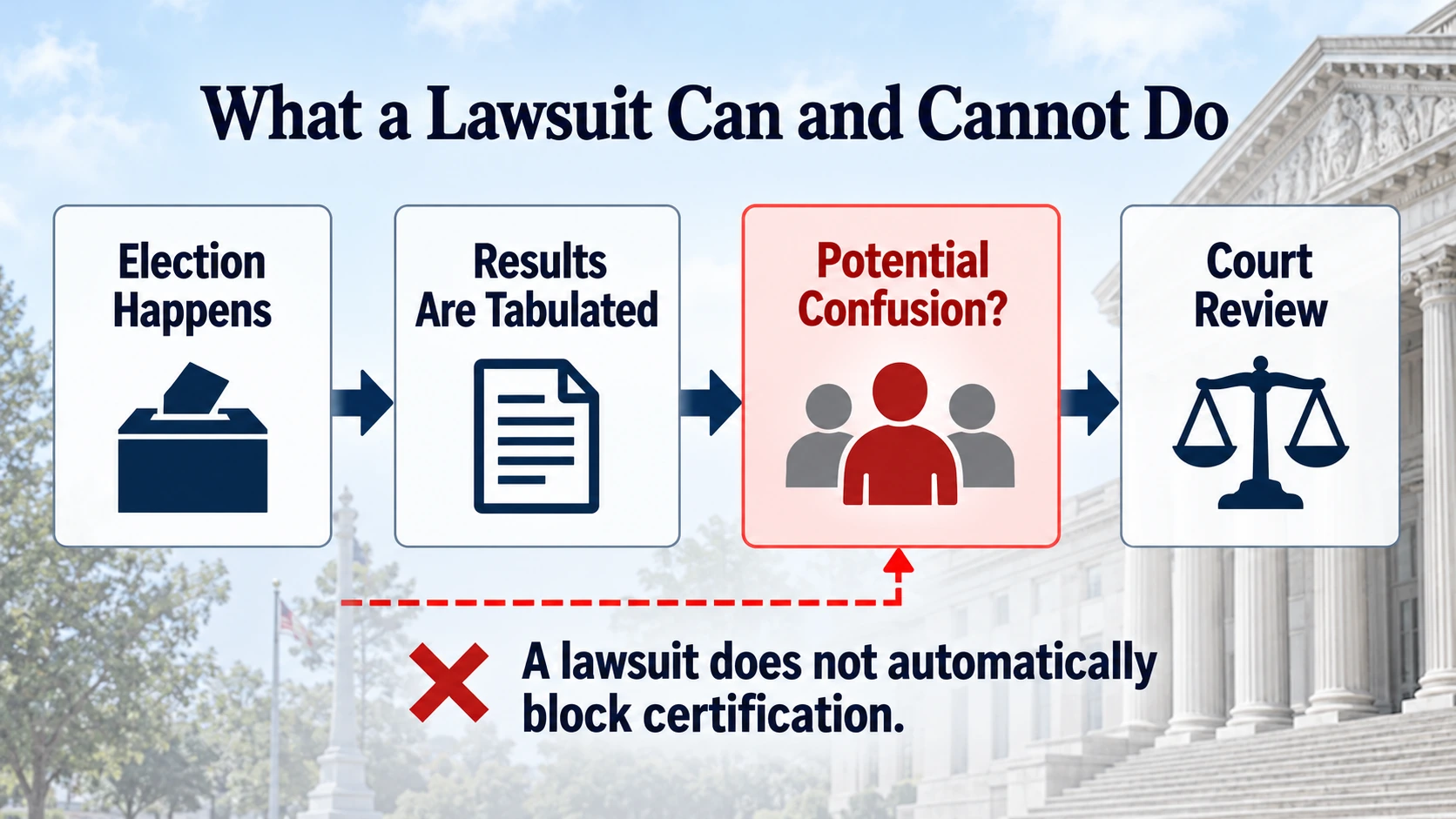
The Justice Department wants a federal court to prevent Alaska from certifying a result that it argues may have been changed by confusion over the two Sullivans, pending further investigation.
It is not asking the court to declare the incumbent senator the winner immediately.
The lawsuit, filed October 22, seeks to establish a legal basis for intervening if the incumbent loses and the votes received by the other Sullivan could potentially affect the outcome.
That makes the requested remedy conditional on what happens after voting. (CBS News · Case documents)
First, what does certification mean?
Certification is the formal government process of confirming the official election result after the required counting and review.
Election-night projections and initial vote totals are not the same as certified results.
Alaska’s election authorities are responsible for reviewing results, completing the relevant counting procedures, and certifying the election under state law.
The Justice Department’s lawsuit targets that final confirmation stage.
Why did the government file before Election Day?
The administration argues that waiting until after the election could make it harder to preserve evidence and address alleged confusion if the race turns out to be close.
Attorney General Todd Blanche described the effort on October 25 as an attempt to put safeguards in place. He denied that President Trump was trying to take control of a state election.
But the timing is also why critics are alarmed.
The federal government has filed a lawsuit over a possible election outcome before there is an actual outcome to challenge.
Whether that gives the government a valid legal claim is now a central question for the federal court. (Reuters · AP)
Can the Federal Government Really Interfere With a State’s Election Certification?
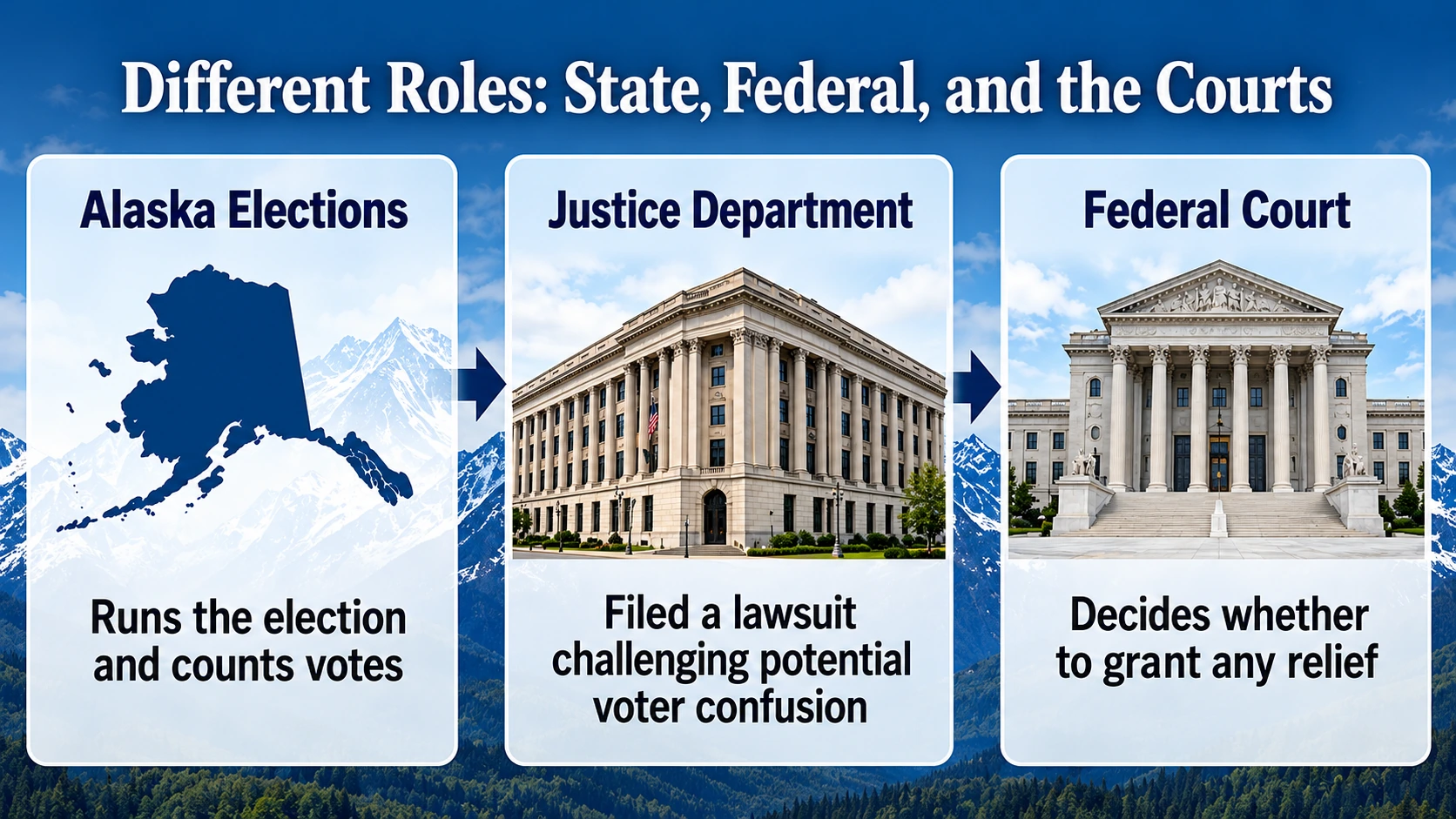
Federal courts can intervene in state elections when a valid federal legal claim supports the requested relief. But the Justice Department does not have unlimited authority to suspend a state’s election certification process simply because it objects to an outcome.
That is why the legal basis of this particular lawsuit matters so much.
The Justice Department has invoked the National Voter Registration Act, commonly called the NVRA.
The statute, enacted in 1993, primarily addresses voter registration for federal elections. Its stated purposes include increasing registration opportunities and protecting the integrity of the electoral process.
The law does not straightforwardly provide a general mechanism for excluding candidates who share names or delaying certification because a candidate might have confused voters. (U.S. Code, 52 U.S.C. § 20501)
Two different legal questions
| Question | What it involves |
|---|---|
| Can Daniel J. Sullivan Jr. appear on the ballot? | Candidate eligibility under the state-law dispute already considered by Alaska courts |
| Can certification be restricted under federal law? | The new federal lawsuit and the legal authority supporting the government’s requested relief |
The distinction matters because winning or losing one question does not automatically resolve the other.
Legal experts have criticized the Justice Department’s reliance on the NVRA, arguing that a statute focused on registration practices provides a weak foundation for the requested certification restrictions. (AP)
Civil-rights groups have also challenged the government’s position and sought to participate in the case. (Case documents)
What do the competing sides say?
| Side | Central position |
|---|---|
| Justice Department | Possible deliberate voter confusion could undermine the legitimacy of the result |
| Daniel J. Sullivan Jr. | Denies entering the race to confuse voters or divert support |
| Mary Peltola’s campaign | Condemns the lawsuit as an attempt to interfere with a lawful election |
| Senator Lisa Murkowski | Says Alaska has already distinguished the candidates and opposes the lawsuit |
| Election-law critics | Argue the federal statute does not authorize the requested interference with certification |
These positions should not be confused with established findings of fact.
The allegations about the challenger’s intentions remain disputed. The federal court has not established that voters were deliberately misled or that the government is entitled to block certification.
Why Has an Alaska Election Become So Important Nationally?
Because this is not simply a strange dispute over names. Alaska’s Senate seat could affect which party controls the U.S. Senate after the 2026 midterms.
Republican incumbent Dan Sullivan is facing Mary Peltola, a former member of the U.S. House who has already demonstrated an ability to win statewide elections in Alaska.
The state voted for Donald Trump in the 2024 presidential election, but that does not automatically make every statewide race an easy Republican victory.
Peltola’s previous electoral success and the increasingly competitive nature of this contest have drawn national attention. (AP · CBS News)
The two Sullivans add uncertainty, but they are not the only reason the race matters.
Voters are also weighing issues including the cost of living, energy policy, fisheries, and Alaska’s economic future.
And control of the Senate affects far more than one state’s representation.
It influences the administration’s ability to secure confirmations, advance legislation, and manage congressional oversight.
That is why a dispute involving a candidate’s middle initial has turned into a national political story.
What Happens Next—and When Could the Lawsuit Matter?
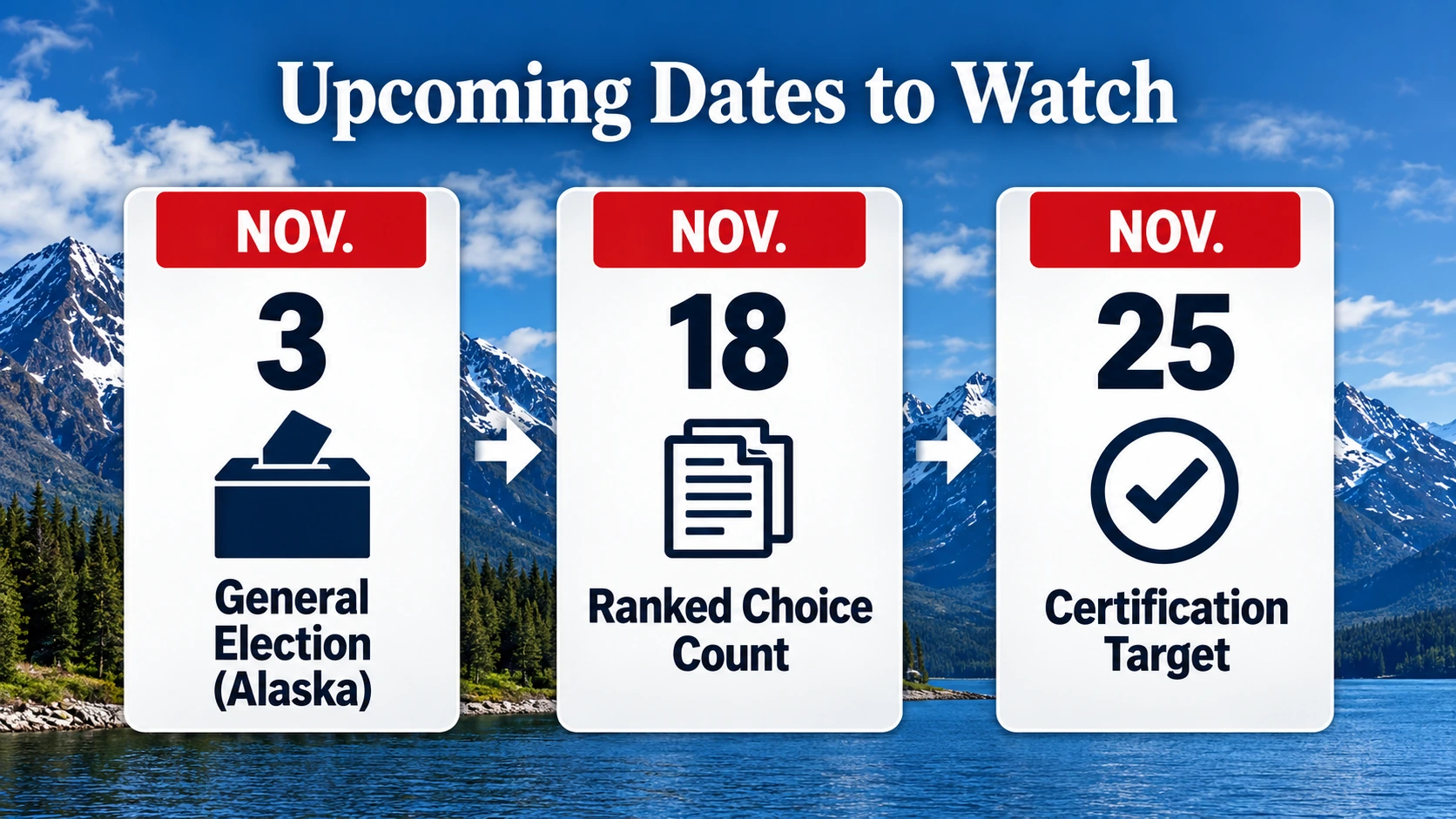
The next major event is the November 3, 2026, general election. The federal lawsuit’s practical consequences will depend on court proceedings and what the election results actually show.
Alaska’s ranked-choice count and certification process also mean that a close election may not produce a definitive answer on election night.
Alaska’s scheduled election milestones
| Date | Expected event |
|---|---|
| November 3, 2026 | General Election Day |
| November 18, 2026 | Scheduled ranked-choice tabulation, if needed |
| November 25, 2026 | State’s target date for certifying general-election results |
These dates reflect Alaska’s published election schedule and may be affected by subsequent official decisions or litigation. (Alaska Public Media)
Three broad possibilities illustrate what is at stake.
If the incumbent wins
The lawsuit’s central concern about a loss potentially caused by confusion would not arise in the same way. The remaining legal issues would depend on the claims and any court rulings.
If the incumbent loses by a substantial margin
The Justice Department would face a greater challenge in showing that votes for the similarly named candidate could have changed the ultimate winner.
If the incumbent loses in a close race
The government could pursue its claim that voter confusion might have affected the outcome. The federal court would still need to determine whether there is a sufficient factual and legal basis for any requested restriction on certification.
A close margin would not itself prove that voters selected the wrong Sullivan.
Nor would it automatically give the Justice Department authority to reassign votes.
The two questions to watch are whether the outcome could plausibly have been affected and whether federal law authorizes the remedy the government seeks.
Bottom Line: What This Story Really Means
Alaska’s Senate controversy began with an unusual coincidence: two candidates sharing the name Dan Sullivan.
But the fight has moved far beyond ballot design.
The Justice Department argues that a potentially confusing candidacy could affect a close election and wants the courts to preserve the ability to intervene before a disputed result is certified.
Opponents argue that Alaska has already distinguished the candidates, that ranked-choice voting helps address vote splitting, and that federal law does not justify the requested interference.
The most consequential question is not whether voters might confuse two names. That possibility alone does not resolve the case.
It is whether possible voter confusion—before any affected result has been established—can legally justify delaying a state’s certification of a U.S. Senate election.
That is what makes the Alaska lawsuit worth watching well beyond November 3.
Alaska Senate Election: Key Questions Explained
Q. Are there really two candidates named Dan Sullivan in Alaska?
Yes. Republican incumbent Senator Dan S. Sullivan and retired educator Daniel J. Sullivan Jr. are both candidates in Alaska’s November 3, 2026, U.S. Senate election.
Q. Is the second Dan Sullivan a Republican?
Alaska’s official candidate records list Daniel J. Sullivan Jr. as a registered Republican. However, his general-election ballot entry does not display a party designation alongside his name.
Q. Why did Alaska’s Supreme Court allow the challenger to run?
The court ruled on June 29, 2026, that he could remain on the ballot after state election officials had tried to exclude him over concerns about voter confusion.
Q. Is Mary Peltola involved in the alleged scheme?
Republicans have alleged that the second Sullivan’s candidacy could help Peltola by diverting support from the incumbent. The challenger and Democrats have denied allegations of a deliberate scheme, and the claim has not been established as fact.
Q. What is ranked-choice voting?
It is an election system that allows voters to rank candidates by preference. If no candidate wins outright in the initial count, ballots may transfer according to the recorded rankings as lower-performing candidates are eliminated.
Q. Does ranked-choice voting eliminate all voter confusion?
No. It can reduce the effect of vote splitting, but it cannot guarantee that a voter who selected the wrong candidate also recorded the intended candidate as a later preference.
Q. Can the Justice Department automatically stop Alaska from certifying its election?
No. Filing a lawsuit does not itself prohibit certification. The government must obtain appropriate judicial relief based on a valid legal claim.
Q. Has a court determined that Alaska voters were intentionally misled?
No. As of October 26, 2026, the central allegations of deliberate voter confusion have not been established by a federal court ruling in this case.
Q. When will Alaska’s Senate results become official?
Alaska’s published schedule targets November 25, 2026, for general-election certification. The timing could change if relevant procedures or court orders affect the process.
Did this help make the story clearer? 🙂
WIN keeps unpacking the “why” behind the news—clearly and simply!
Sources
Federal Lawsuit and October 25 Developments
CBS News — Attorney General Todd Blanche Defends Alaska Senate Election Challenge, October 25, 2026
United States v. Alaska — Federal Lawsuit and Complaint, October 22, 2026
Candidate Eligibility and State Court Background
Alaska Public Media — Alaska Supreme Court Orders Second Dan Sullivan Onto the Ballot, June 29, 2026
Alaska Division of Elections — Official 2026 General-Election Candidate List
CBS News — Justice Department Lawsuit and the Two Sullivan Ballot Entries, October 23, 2026
Ranked-Choice Voting and Election Administration
Alaska Division of Elections — Official Election Information and Ranked-Choice Voting
Alaska Division of Elections — Official 2026 Sample Ballots
Alaska Public Media — Official Election Timeline and Procedures, October 5, 2026
Federal Law and Legal Challenges
U.S. Code — National Voter Registration Act, 52 U.S.C. § 20501
Associated Press — Federal Election-Law Questions in the Alaska Lawsuit, October 23, 2026
Keep Reading
What Happens When the Justice Department Challenges State Election Procedures?
Alaska’s dispute focuses on whether a state can certify a close Senate election. An earlier lawsuit in California raises a related question: what happens when federal officials try to restrict ballots before Election Day?
Why Is the Justice Department Trying to Block Ballots From 20,000 California Voters?