Why Did Brazil’s Stock Market Crash After Lula Won Reelection?

An election victory is supposed to bring celebration for the winner. So why did Brazil’s stock market react as if something had gone terribly wrong?
President Luiz Inácio Lula da Silva won another term in office, but investors responded by selling Brazilian stocks, bonds, and the country’s currency. The selling became so intense that Brazil’s stock exchange temporarily stopped trading.
The explanation isn’t that an election somehow destroyed the value of Brazilian businesses overnight.
Investors had spent weeks betting on a different winner. When Lula won instead, the financial assumptions behind those investments suddenly changed.
That surprise exposed a deeper concern about government spending, public debt, and interest rates in Latin America’s largest economy.
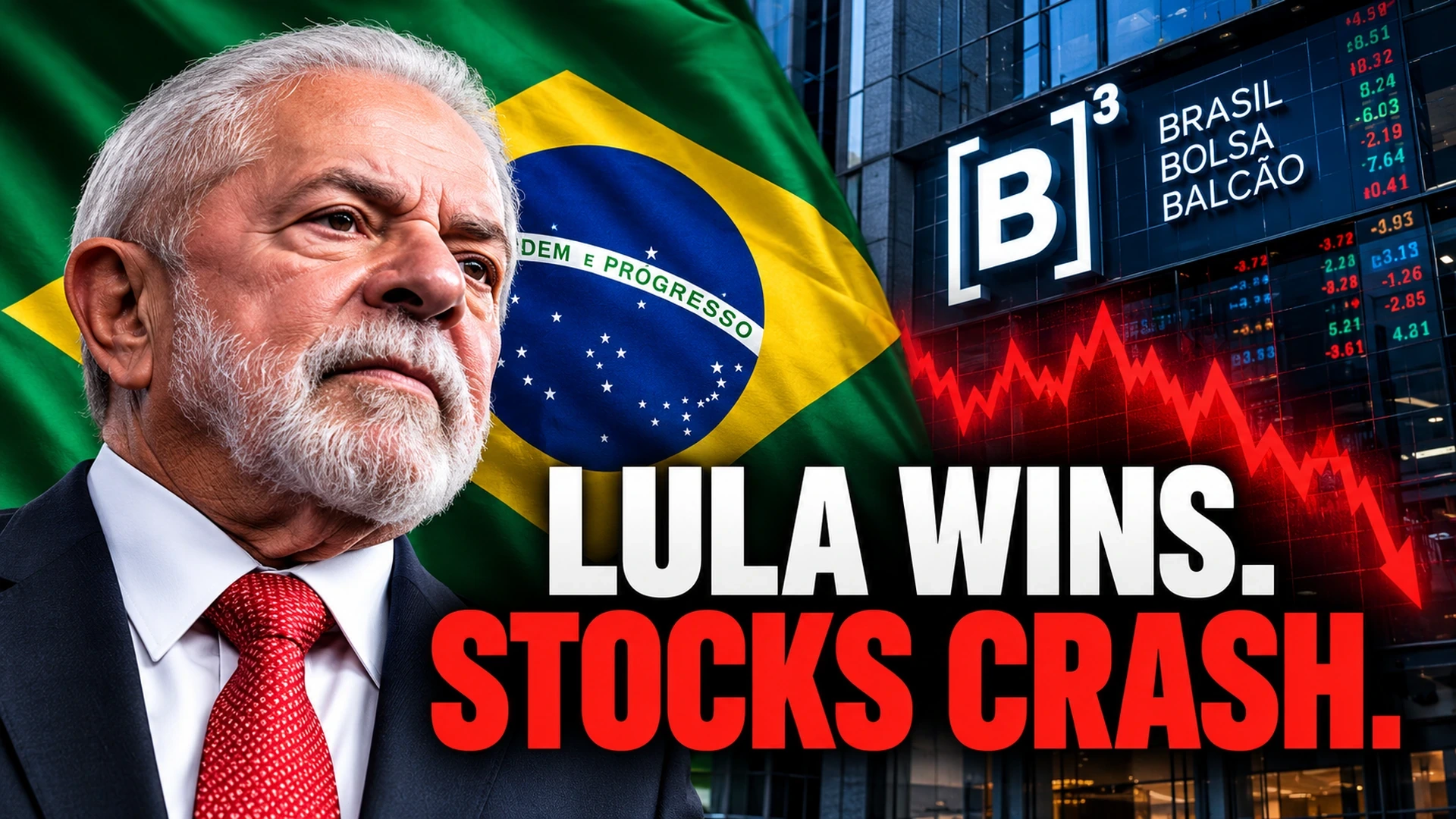
※ Images in this article are AI-generated illustrations created to help explain the story. They are not actual photographs, and depictions of people, places, or events may differ slightly from reality.
What Happened to Brazil’s Stock Market on October 26?
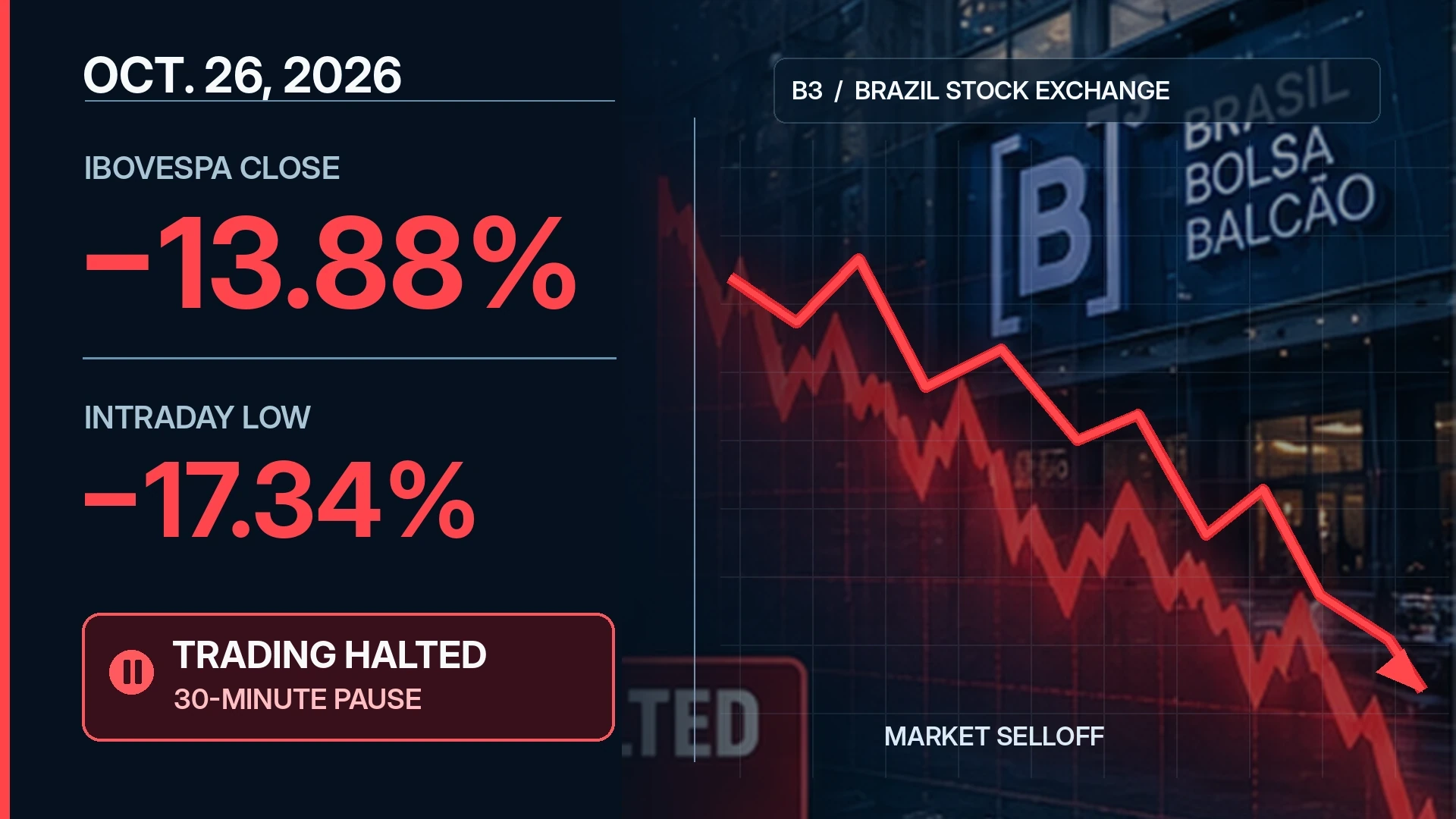
Brazil’s benchmark Ibovespa stock index closed October 26, 2026, down 13.88%, at 176,608.23 points, its worst daily percentage decline since March 2020.
At its lowest point during the session, the index had fallen 17.34%. Brazil’s exchange operator, B3, activated a circuit breaker, temporarily interrupting trading for 30 minutes. (B3 · Reuters)
The decline followed Lula’s October 25 runoff victory over Senator Flávio Bolsonaro, the son of former Brazilian President Jair Bolsonaro.
Brazil’s electoral court confirmed that Lula secured 51.79% of valid votes, compared with Bolsonaro’s 48.21%. The difference was approximately 4.43 million votes. (Brazil’s Superior Electoral Court)
The market’s reaction reached beyond stocks.
Brazil’s currency, the real, weakened sharply against the U.S. dollar, while Brazilian government bond prices fell and expectations for future interest rates increased.
These developments were connected, but the most important question is why investors found the election result so unexpected.
Why Had Investors Expected Flávio Bolsonaro to Win?
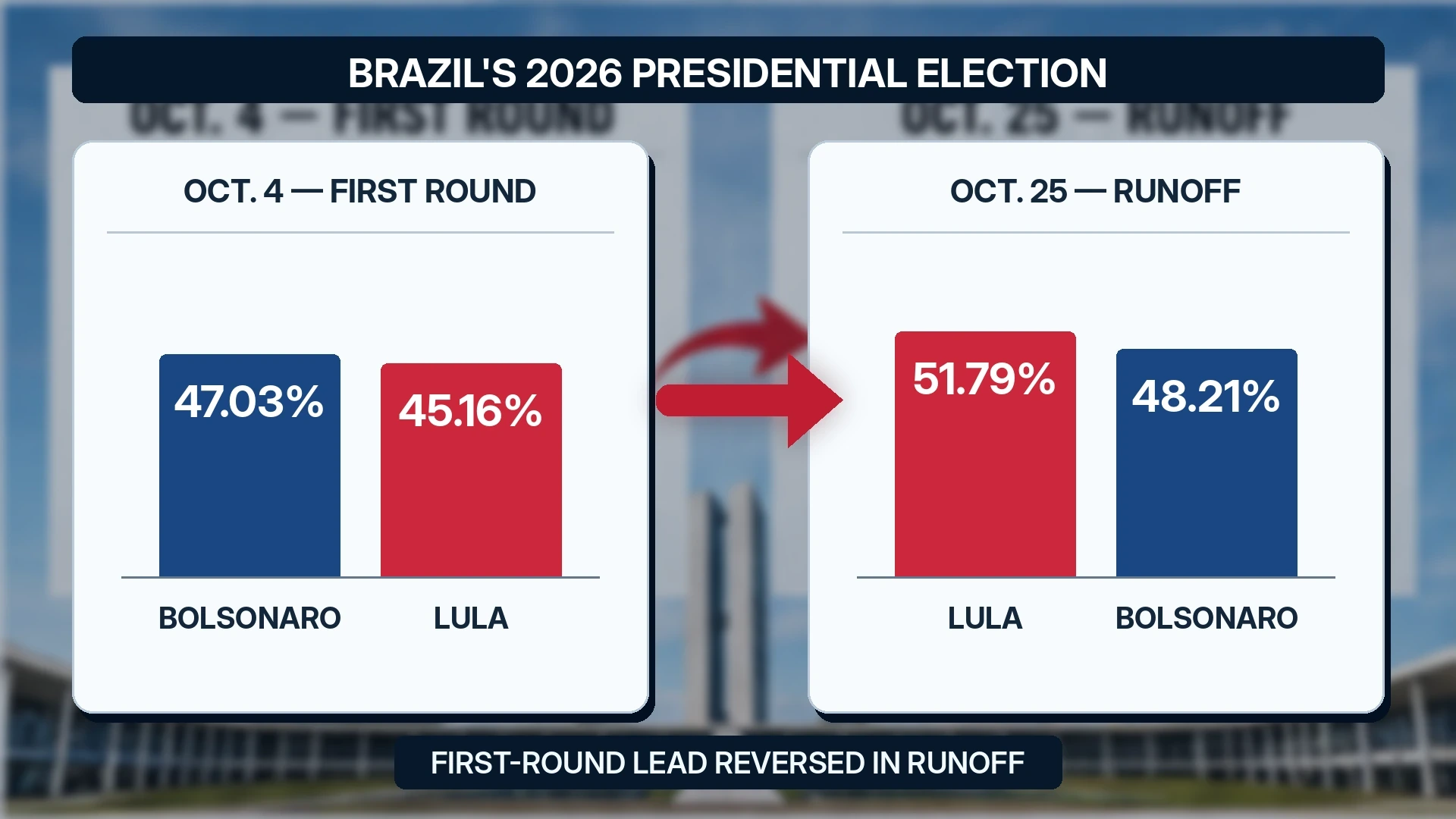
Investors had expected Flávio Bolsonaro to win partly because he finished ahead of Lula in the first round of Brazil’s presidential election.
That result encouraged expectations that Brazil might shift toward policies perceived by many investors as more favorable to private business and tighter government finances.
The reversal becomes easier to understand when the two rounds are compared.
| Election | Flávio Bolsonaro | Lula |
|---|---|---|
| October 4, first round | 47.03% | 45.16% |
| October 25, runoff | 48.21% | 51.79% |
Figures represent the share of valid votes in each round. (Brazil’s Superior Electoral Court — First Round · Brazil’s Superior Electoral Court — Runoff)
A first-round lead does not guarantee a runoff victory. Voters whose preferred candidates are eliminated must choose between the remaining contenders, potentially changing the outcome.
But financial markets do not wait until election night to form expectations.
They constantly adjust prices based on what investors think is likely to happen next.
The Rally Before the Crash
Following the first round, Brazilian stocks had climbed as investors increasingly anticipated a Bolsonaro victory.
By October 23, the Friday before the runoff, the Ibovespa was nearly 7% above its level immediately before the first round. The Brazilian real had also strengthened by almost 5% against the U.S. dollar over that period. (Reuters)
Those gains reflected expectations about future economic policy rather than improvements that had already occurred.
When Lula won, many investors faced the opposite outcome from the one their positions had anticipated.
Some sold shares. Others reduced exposure to Brazilian assets or reassessed currency and bond positions.
The selloff was partly a rapid reversal of earlier market bets, not simply a spontaneous judgment about Lula’s victory.
That distinction helps explain why the reaction was so severe.
How Can an Election Result Make Stock Prices Fall So Quickly?
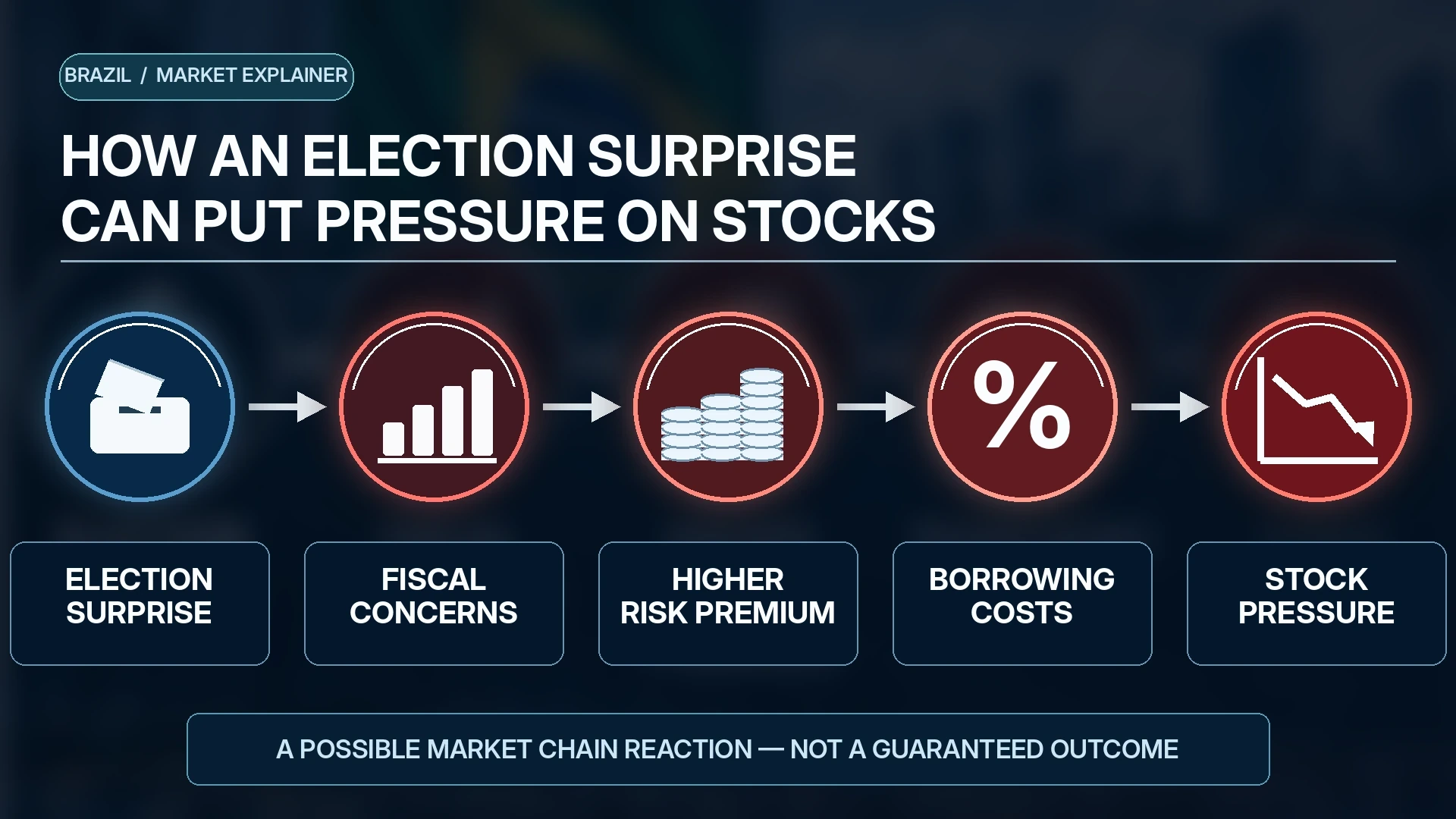
Stock prices are based partly on expectations about the future. When those expectations change suddenly, prices can change even before companies report any difference in sales or profits.
For Brazil, investors were particularly focused on fiscal policy—how the government manages spending, taxes, borrowing, and debt.
Lula has emphasized social programs, public investment, and policies aimed at supporting household incomes and employment.
Those priorities can have economic benefits. Public spending, for example, can support consumer demand, infrastructure, and employment.
But investors also want to know how those commitments will be financed.
If government spending consistently exceeds revenue, additional borrowing may be necessary. If investors become concerned about the sustainability of that borrowing, they may demand higher interest rates to hold government debt.
That can affect the broader economy.
The Chain Reaction Investors Fear
| Potential development | Why markets care |
|---|---|
| Higher expected government borrowing | Investors may demand higher bond yields |
| Higher bond yields | Financing becomes more expensive |
| More expensive corporate credit | Business investment and profits may face pressure |
| Higher expected future interest rates | Some stock valuations become less attractive |
| Growing uncertainty | Investors may demand a greater risk premium |
This is a framework for understanding the market’s reaction, not a prediction that every outcome will occur.
According to Reuters, investors were waiting for Lula’s choice of finance minister and clearer indications of how his administration would address fiscal pressures.
The question was not merely whether Lula would spend more.
It was whether his government could fund its priorities while keeping public debt and borrowing costs on a sustainable path.
Why Interest Rates Matter So Much
Imagine a company planning to borrow money to build a new factory.
If it expects to borrow at a relatively low rate, the investment may look profitable.
If lenders suddenly demand much higher interest, the same project may become less attractive. Its expected future profits could decline, and investors might value the company’s shares less highly.
A similar effect can occur across many companies at once.
That helps explain why worries about government finances can spread rapidly from bond markets into stock prices.
However, a one-day market decline does not prove that the government’s future fiscal policy will fail.
What Is a Circuit Breaker, and Why Did Brazil Stop Trading?
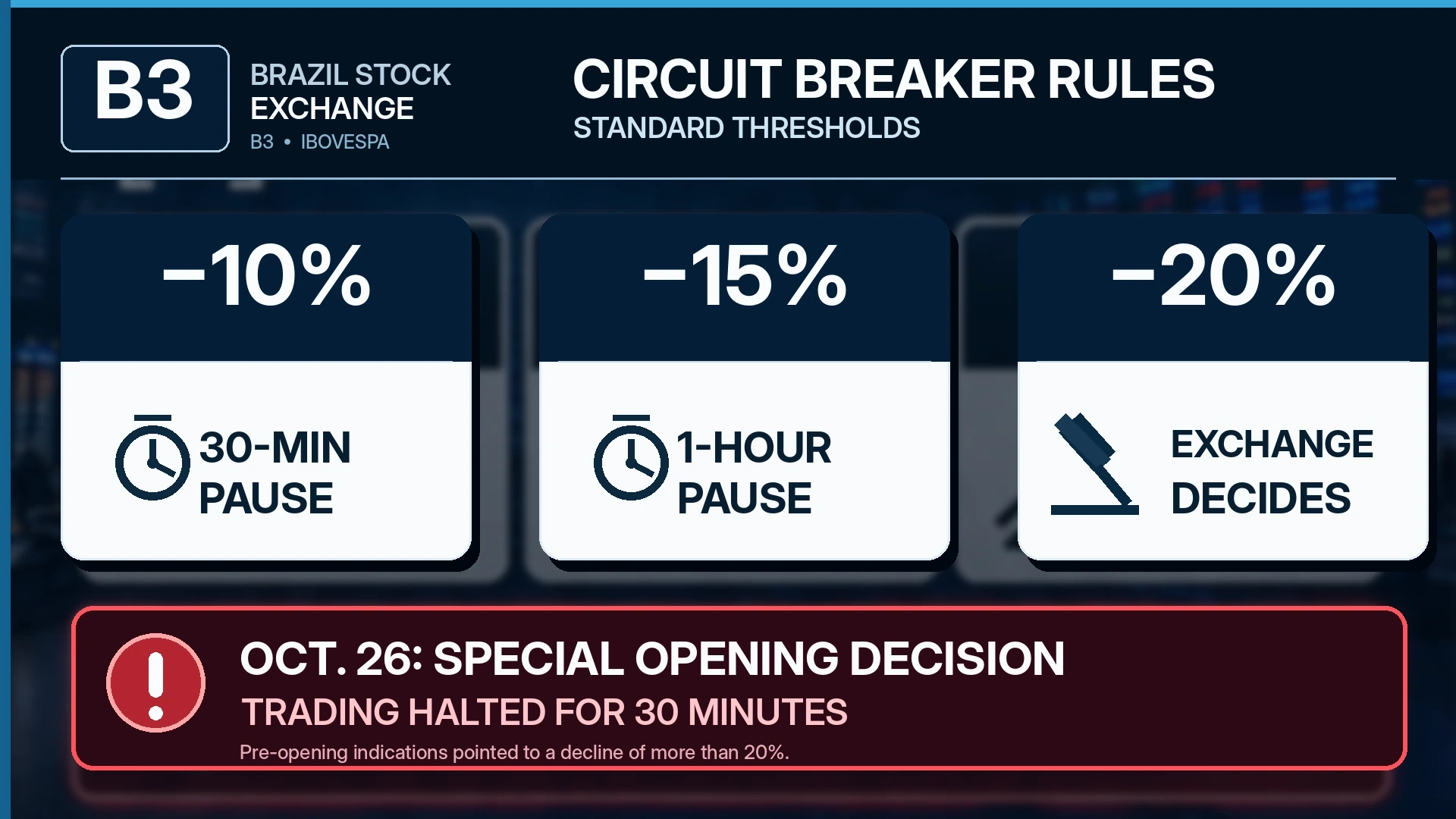
A circuit breaker is an emergency market mechanism that temporarily pauses trading during extreme price movements.
It does not prevent investors from losing money or require stock prices to recover.
Its purpose is to create a short break when market volatility becomes unusually severe.
Brazil’s exchange operator, B3, has established several levels of protection based on declines in the Ibovespa.
| Standard index decline | Trading response |
|---|---|
| 10% | Trading pauses for 30 minutes |
| 15% after reopening | Trading pauses for one hour |
| 20% after reopening | B3 can determine a further suspension period |
These are the exchange’s standard operating rules. (B3 — Circuit Breaker Rules)
Why Was October 26 Different?
The October 26 session involved an unusual decision.
B3 announced a trading halt before the regular cash-equity session opened because indications from the pre-opening auction suggested the Ibovespa could fall by more than 20%.
The exchange then restarted the opening auction after a 30-minute suspension. Even when the index subsequently fell more than 17%, a second trading halt did not occur.
B3 explained that, given the exceptional pre-opening circumstances, another circuit breaker would be triggered if the decline reached 20% compared with the previous session’s closing level. (EXAME · B3)
B3 did not announce that this exceptional treatment would automatically apply to future trading sessions.
The distinction matters because a circuit breaker is sometimes misunderstood as a mechanism that limits how much the market can fall.
It is a temporary pause, not a guaranteed price floor.
Trading can resume at lower prices if investors remain unwilling to buy at previous levels.
Brazil’s October 26 interruption was the first use of the mechanism since the COVID-19 market turmoil of March 2020. (B3)
Why Did Brazil’s Currency and Government Bonds Fall Too?
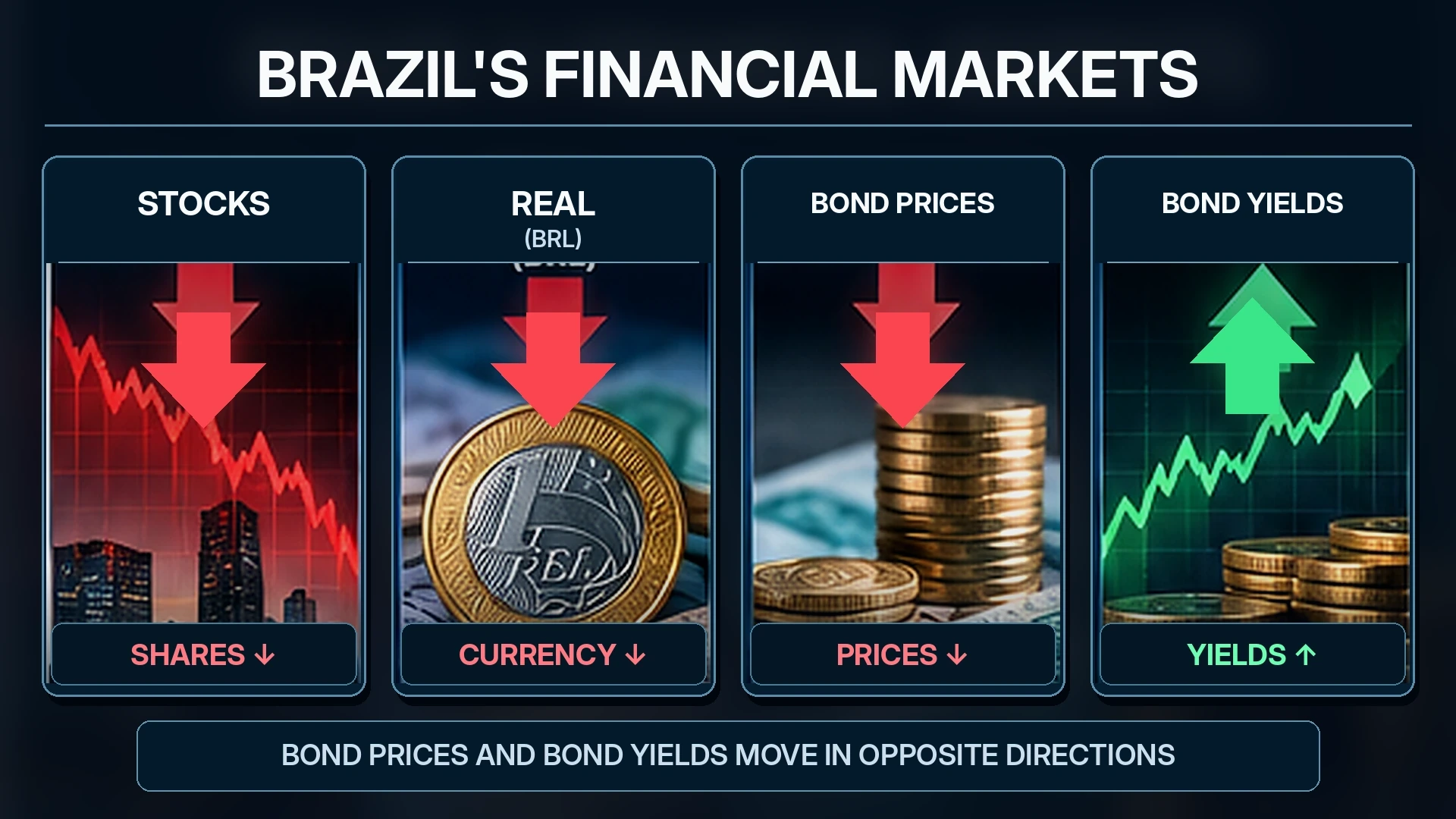
Stocks were only one part of Brazil’s financial selloff.
Investors also reduced exposure to the Brazilian real and government debt, reflecting concerns about fiscal policy and the possibility of higher interest rates.
The real fell 8.1% against the U.S. dollar on October 26, with one dollar costing approximately 5.415 reais at the close. Brazilian sovereign bond prices also declined. (Reuters)
These markets interact, but they do not behave in exactly the same way.
A Weaker Real
When the real loses value, more reais are needed to buy one U.S. dollar.
That can make imported products, foreign machinery, and dollar-denominated obligations more expensive for Brazilian buyers.
It can also benefit some exporting companies. A business earning revenue in dollars may receive more reais when converting that revenue into local currency.
This helps explain why a currency decline can hurt some Brazilian companies while benefiting others.
Higher Bond Yields
Government bonds introduce another important relationship.
When the market price of an existing fixed-rate bond falls, its yield generally rises.
Investors demanding higher yields can increase financing costs for the government and influence borrowing costs throughout the economy.
For borrowers, that may eventually mean more expensive credit.
For businesses, it may discourage investment or weaken expectations for future profits.
For households, the consequences can include changes in lending conditions and the cost of imported products.
Those effects depend on how long market conditions persist and how policymakers respond.
Does Brazil’s Stock Market Crash Matter to Americans?
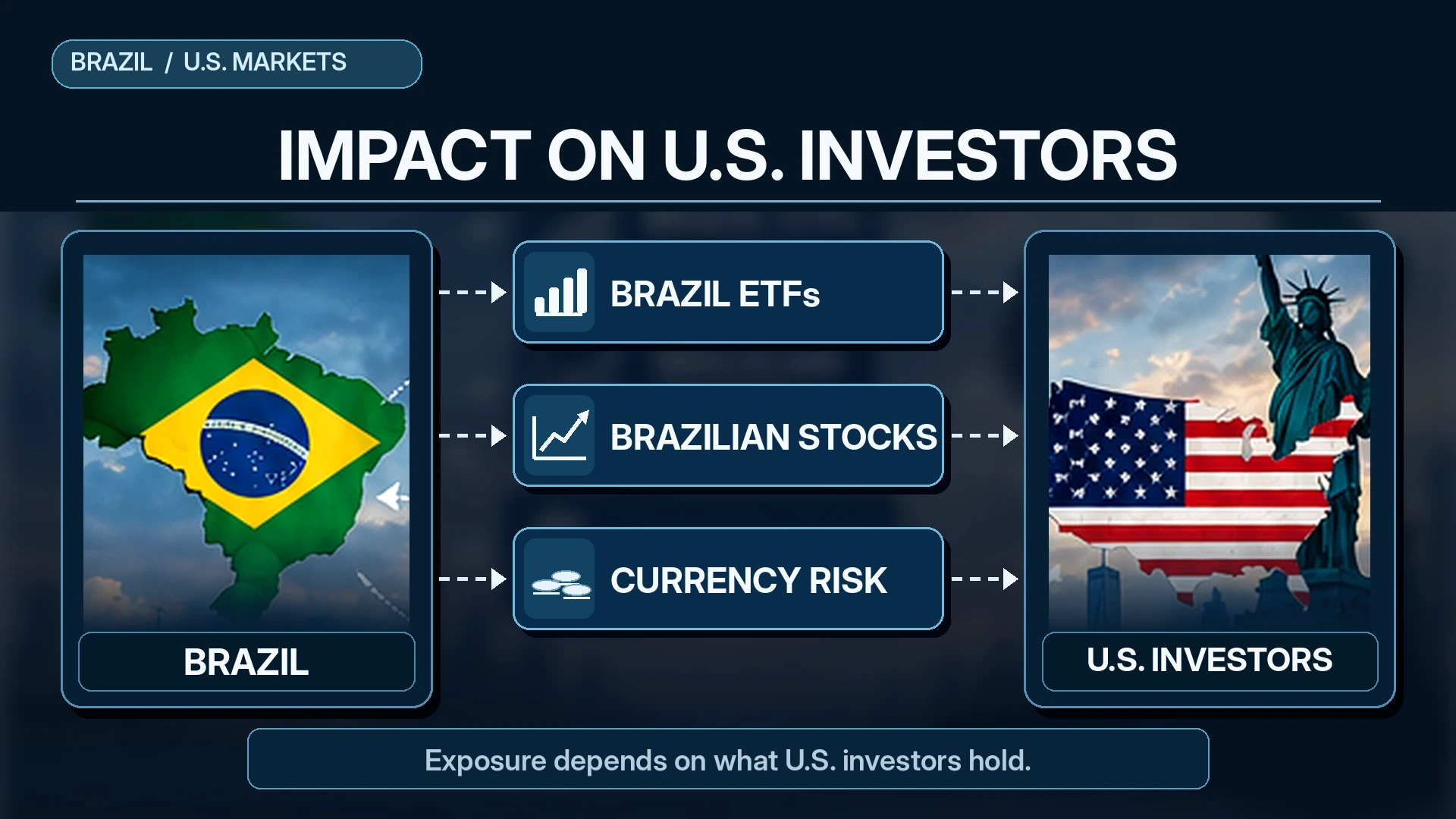
For Americans, the most immediate connection is through investments exposed to Brazilian stocks, bonds, and the real.
Brazilian companies can be accessed through U.S.-listed securities, including American depositary receipts, or ADRs.
An ADR lets investors buy a security representing shares of a foreign company through a U.S. market.
Investors can also gain exposure to Brazil through exchange-traded funds, or ETFs, that hold baskets of Brazilian stocks.
On October 26, U.S.-listed Brazilian assets also experienced sharp selling as investors reassessed the country’s outlook. (Reuters)
Currency Risk Can Magnify Investment Losses
An American investor might own shares of a Brazilian company whose local share price has barely changed.
If the Brazilian real weakens against the dollar, however, the dollar value of that investment can still decline.
That creates two separate sources of risk:
- Changes in the Brazilian share price.
- Changes in the exchange rate between the real and the U.S. dollar.
Funds that track Brazilian markets may reflect both factors.
There are also potential business effects.
Brazil is a major participant in global agricultural, mineral, and energy markets. Significant currency moves can influence the competitiveness of exports and the cost of imports.
But a Brazilian financial-market crash does not automatically mean U.S. gasoline prices, grocery bills, or the broader S&P 500 will move in the same direction.
Those outcomes depend on global supply, demand, trade patterns, and other economic conditions.
What Happens Next for Brazil’s Economy and Stock Market?
The next major test will be whether Lula’s administration can convince investors that its fiscal plans are credible and sustainable.
A sharp selloff reflects investors’ expectations at a particular moment. Those expectations can change as additional information becomes available.
One major signal will be the administration’s economic team, particularly the choice of finance minister and the government’s approach to managing spending and debt.
Investors will also watch negotiations with Congress, future budget proposals, inflation, interest rates, and the exchange rate.
Several developments could influence the market’s direction.
1. A Credible Fiscal Plan
Investors will look for details about the government’s spending commitments, revenue assumptions, and debt trajectory.
Clear, believable fiscal targets could help reduce uncertainty.
Conversely, spending commitments without a convincing financing strategy could keep pressure on bond yields and the currency.
2. The Choice of Economic Policymakers
The finance minister and other senior economic officials can influence market expectations about fiscal discipline.
Their appointments alone do not determine economic outcomes, but they can signal the direction the administration intends to take.
3. The Central Bank’s Response
Currency weakness and higher inflation expectations could complicate monetary policy.
Brazil’s central bank must weigh inflation risks against economic growth when deciding interest rates.
Financial-market volatility does not automatically require an interest-rate increase, but persistent currency and inflation pressures can narrow the central bank’s options.
4. Whether the Selloff Stabilizes
A one-day fall of nearly 14% is extraordinary, but it does not establish what the market will do over the following weeks or months.
Further losses, a partial recovery, or continued volatility are all possible.
Investors will be watching whether the market settles at a new level as uncertainty about the incoming administration’s policies diminishes.
Bottom Line: What This Story Really Means
Brazil’s stock market crashed after Lula’s reelection largely because investors had positioned themselves for a different political outcome.
Flávio Bolsonaro’s first-round lead had encouraged expectations of tighter fiscal policy and a more market-friendly government. Lula’s runoff victory forced investors to rapidly reconsider those assumptions.
The resulting selloff pushed the Ibovespa down 13.88%, weakened the Brazilian real, and triggered an extraordinary temporary trading halt.
But the financial reaction should not be confused with the election result itself.
Brazilian voters chose their president. Financial markets reacted to what investors believed that choice might mean for future government policy, borrowing costs, and business profits.
The market crash demonstrated a sudden loss of investor confidence in earlier expectations—not proof that Brazil’s economy had already collapsed.
What happens next will depend less on the election-night surprise and more on the economic decisions Lula’s administration makes.
Brazil Stock Market Crash: Key Questions Explained
Q. How much did Brazil’s stock market fall after Lula won?
Brazil’s Ibovespa fell 13.88% on October 26, 2026, closing at 176,608.23 points. The index fell as much as 17.34% during the trading session before recovering part of its losses.
Q. Who did Lula defeat in Brazil’s 2026 presidential election?
Lula defeated Senator Flávio Bolsonaro, the son of former President Jair Bolsonaro. Lula received 51.79% of valid votes in the October 25 runoff, compared with Bolsonaro’s 48.21%.
Q. Did investors expect Lula to lose the election?
Many investors had positioned themselves for a Flávio Bolsonaro victory after he led the first voting round. Lula’s runoff victory reversed those expectations and prompted rapid adjustments in Brazilian financial assets.
Q. What is the Ibovespa?
The Ibovespa is Brazil’s main stock market benchmark, tracking a portfolio of major shares traded on the B3 exchange. It serves as an important indicator of Brazilian equity-market performance.
Q. Why did Brazil activate a circuit breaker?
B3 temporarily halted trading because extreme selling pressure created unusually large expected market declines. The exchange used a 30-minute pause on October 26 to help manage the disorderly opening.
Q. Did Brazil permanently stop stock trading?
No. Trading resumed after the temporary interruption. A circuit breaker is designed to pause market activity, not permanently close an exchange or prevent additional losses.
Q. Why did the Brazilian real weaken after the election?
Investors reassessed fiscal risks and demand for Brazilian assets following the unexpected result. That contributed to selling pressure on the real and strengthened the U.S. dollar against Brazil’s currency.
Q. Can Americans lose money when Brazil’s stock market falls?
Yes, if they hold investments exposed to Brazilian stocks, bonds, or currency movements. U.S.-listed Brazilian securities and Brazil-focused ETFs can lose value, although the effect on any specific investment depends on its holdings and currency exposure.
Q. Does a stock market crash mean Brazil is entering a recession?
Not necessarily. A stock market decline reflects changes in asset prices and expectations. A recession is a broader economic contraction that requires evidence about economic activity, not simply one day of falling share prices.
Q. What should investors watch after Lula’s reelection?
Major signals include the government’s fiscal proposals, its economic appointments, developments in Congress, bond yields, inflation expectations, and the exchange rate. These factors will help determine whether the market’s initial reaction becomes a longer-lasting economic problem.
Did this help make the story clearer? 🙂
WIN keeps unpacking the “why” behind the news—clearly and simply!
Sources
Official Election Results and Market Data
Brazil’s Superior Electoral Court — Official 2026 Runoff Results
Brazil’s Superior Electoral Court — October 4 First-Round Election Results
B3 — October 26 Ibovespa Closing Report
Election Surprise and Financial Market Reaction
Reuters — Brazil Stocks and Real Tumble After Lula’s Reelection
Reuters Breakingviews — Brazil’s Ballot Whiplash Reopens Old Playbooks
Trading Halts and Circuit Breaker Rules
B3 — Official Circuit Breaker Rules
B3 — October 26 Trading Suspension Announcement
EXAME — Why B3 Activated the Circuit Breaker Before the Market Opened