Walter Koenig Dies at 90: Why Was Star Trek’s Russian Chekov So Important?

A Russian officer serving alongside Americans on a spacecraft might seem perfectly ordinary in a science-fiction show today.
But imagine watching that same scene in 1967, when the United States and the Soviet Union were competing to dominate space—and preparing for the possibility of nuclear war.
On Star Trek, the Russian wasn’t an enemy. He wasn’t a spy or a suspicious outsider. He was one of the crew, trusted with helping navigate the USS Enterprise through the galaxy.
That character was Ensign Pavel Chekov, played by Walter Koenig.
Koenig’s death at age 90, announced on October 26, 2026, has brought renewed attention to a character who represented something unusually hopeful during the Cold War.
Yet there’s a surprising twist to Chekov’s story.
Despite his reputation as a symbol of peace between rival superpowers, Koenig said the character was originally created largely to attract younger television viewers.
How did a casting decision made for television audiences become one of science fiction’s most recognizable images of international cooperation?
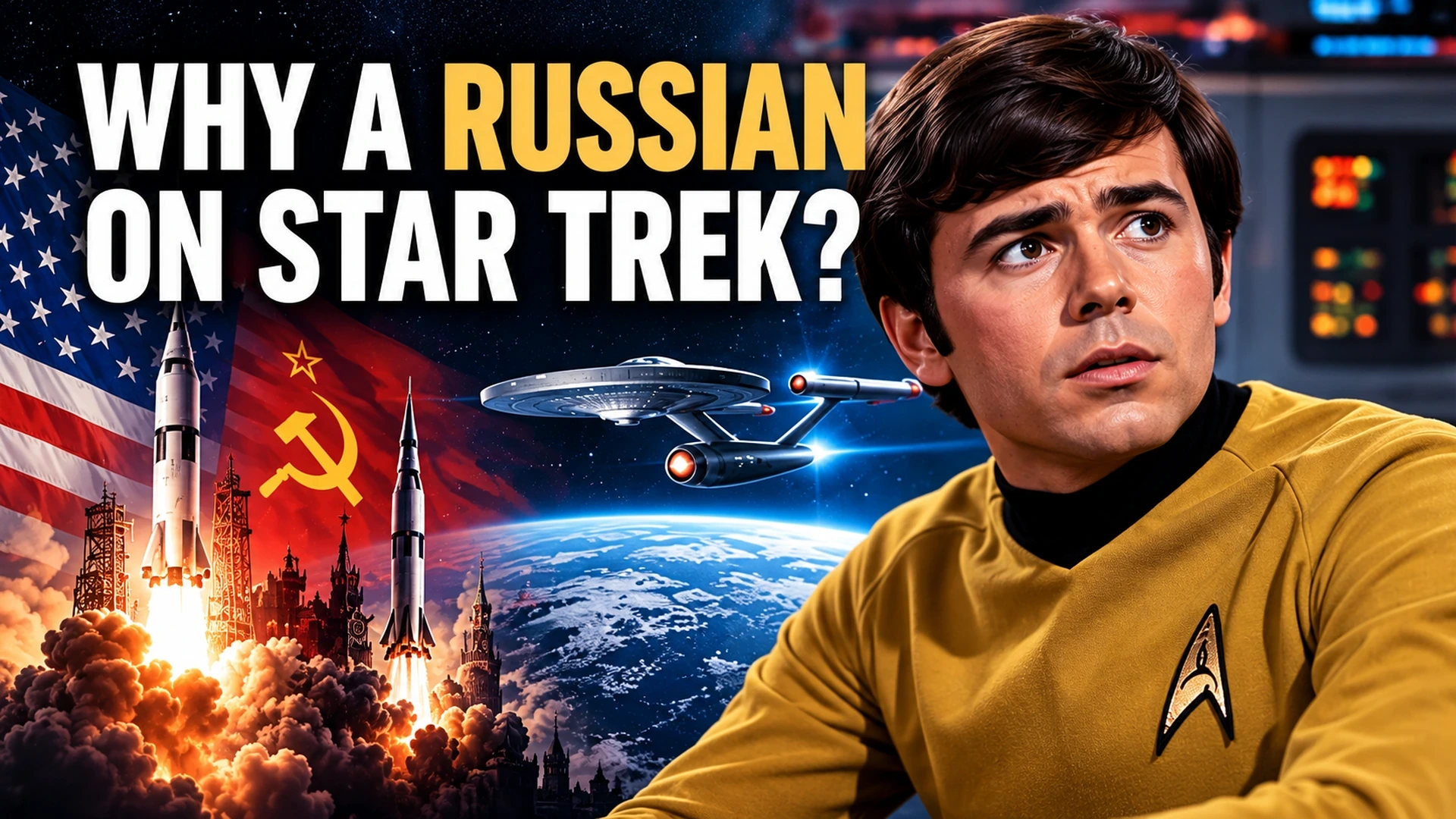
※ Images in this article are AI-generated illustrations created to help explain the story. They are not actual photographs, and depictions of people, places, or events may differ slightly from reality.
What Happened to Walter Koenig?
Walter Koenig, who became famous for portraying Pavel Chekov in the original Star Trek television series and its movies, died at 90 on Sunday, October 25, 2026. His death was publicly confirmed the following day.
His representative said Koenig died at his home in North Hollywood, Los Angeles, surrounded by his daughter and niece. Several outlets, including ABC News, CBS News and the Los Angeles Times, reported the October 25 date, although an initial Associated Press report identified October 26. His representative attributed the death to natural causes or old age; no more specific medical cause was publicly established. (ABC News · CBS News · Associated Press)
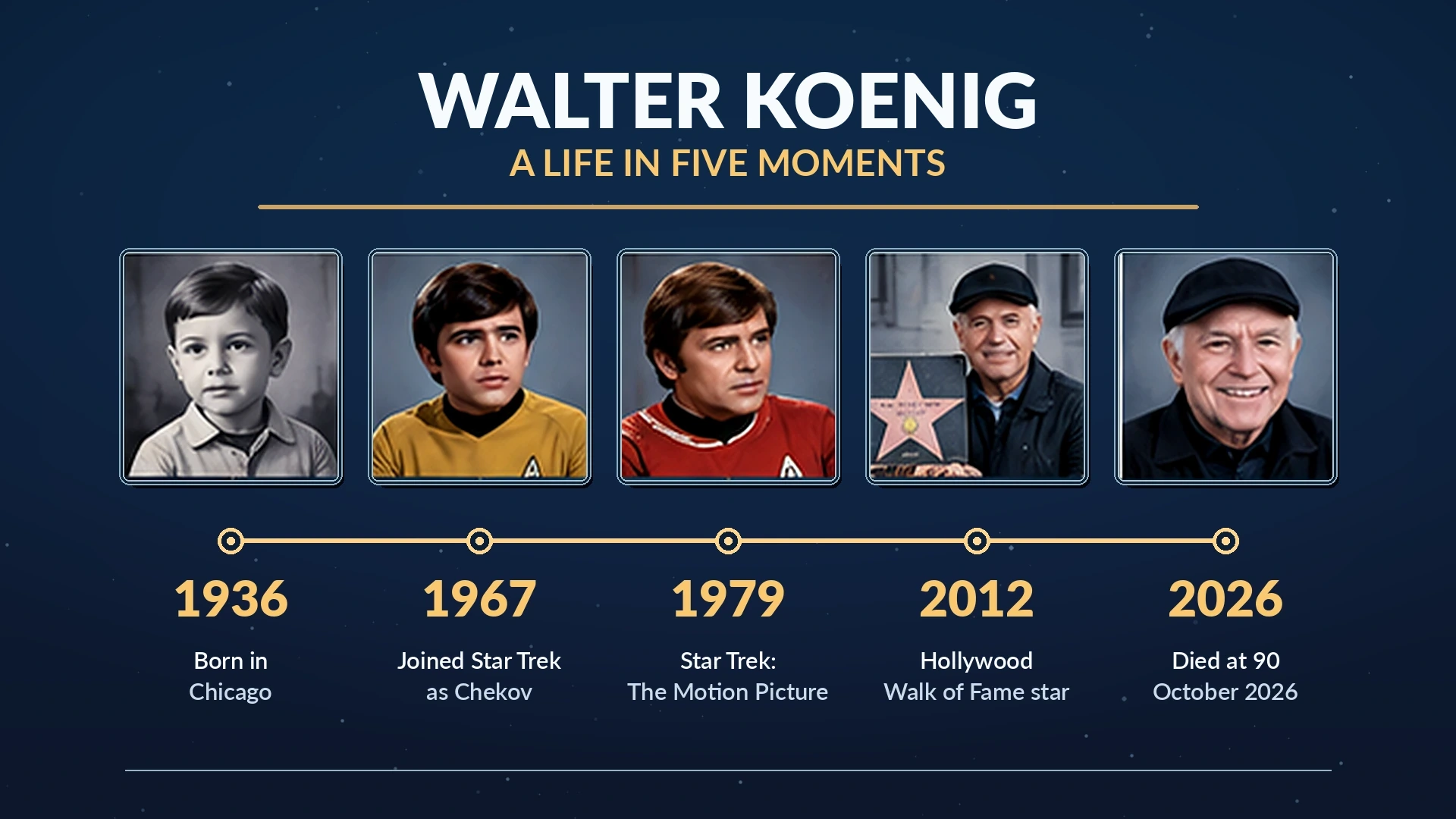
Born on September 14, 1936, Koenig joined Star Trek in 1967, during the show’s second season. The series itself had premiered on NBC in September 1966.
He appeared in 36 episodes of the original series and played Chekov in seven theatrical films, beginning with Star Trek: The Motion Picture in 1979.
Although the original television series lasted only three seasons, it developed a much larger audience through reruns and eventually became a major entertainment franchise. (Reuters · Smithsonian Magazine)
Koenig’s friend and fellow cast member George Takei, who played Hikaru Sulu, shared a particularly personal tribute.
Takei recalled that the two actors met on the Enterprise bridge in the 1960s and remained friends for nearly six decades. Koenig even served as best man when Takei married Brad Altman in 2008.
Takei remembered Koenig as more than an actor: a writer, teacher and loyal friend. (Los Angeles Times)
For fans, the loss is personal. But Chekov’s place in television history also raises a bigger question about the world in which the character first appeared.
Why Was a Russian on the Enterprise So Unusual in 1967?
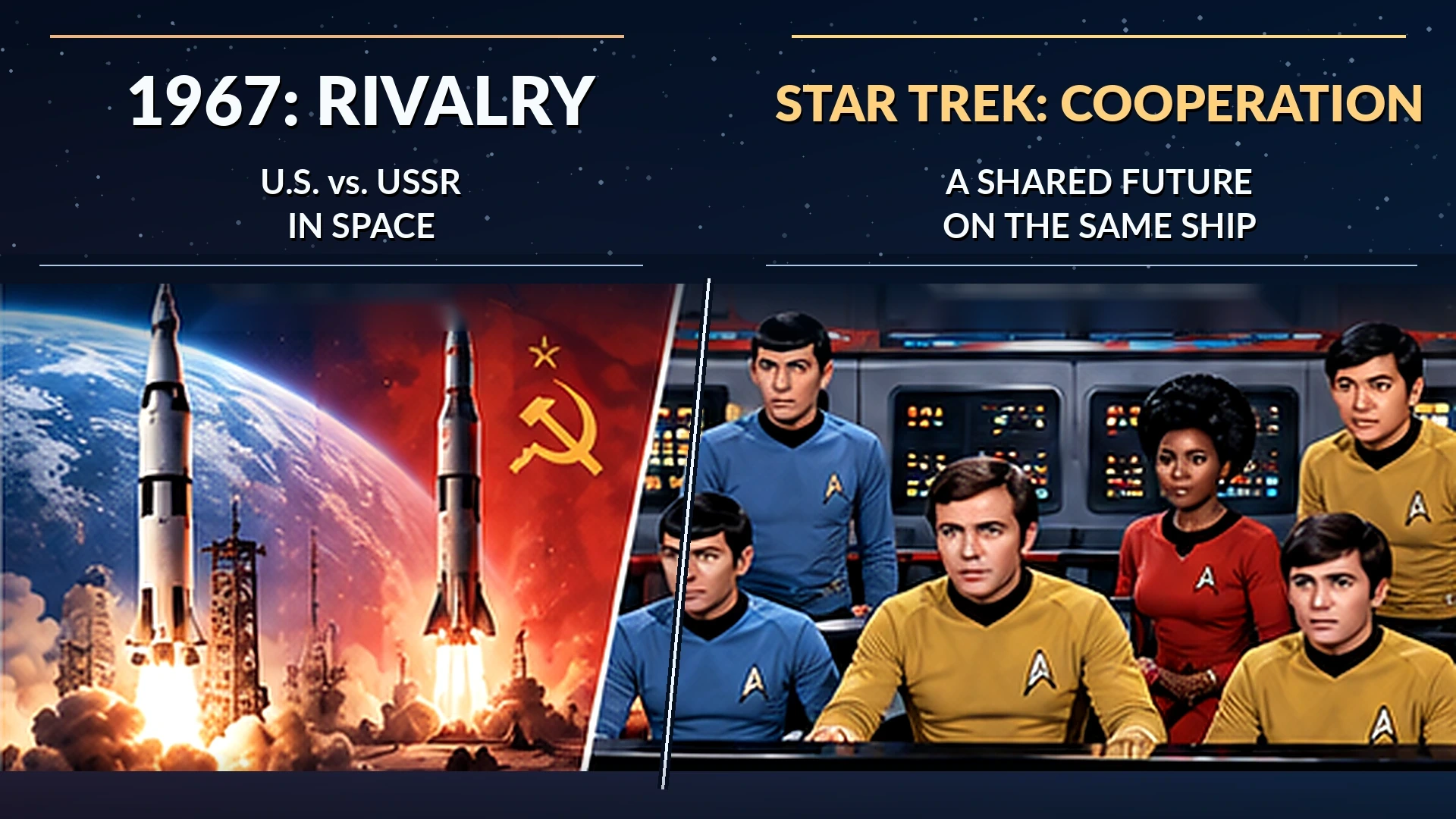
Because Americans were living through the Cold War, while Star Trek imagined a future in which national rivals could work together as trusted colleagues.
To appreciate that contrast, it helps to remember what space exploration meant during the 1960s.
The United States and Soviet Union were not simply trying to achieve scientific breakthroughs. Their competition in space also reflected rival political systems, military capabilities and national prestige.
In 1957, the Soviet Union launched Sputnik 1, the world’s first artificial satellite. In 1961, Soviet cosmonaut Yuri Gagarin became the first human to travel into space.
Those achievements intensified American concerns about falling behind in technology and national security. NASA’s historical accounts describe how the space race helped accelerate American investment in space exploration. (NASA · U.S. Department of State)
Now consider what Americans saw on television.
On the Enterprise, Chekov was not plotting against Captain James T. Kirk. He worked for the same fictional organization as the rest of the crew.
He had a job, responsibilities and colleagues who depended on him.
The difference becomes clearer when the real world and the television world are compared:
| The Real World in 1967 | Star Trek’s Imagined Future |
|---|---|
| Washington and Moscow were geopolitical rivals. | A Russian officer served alongside an American captain. |
| Space achievements were tied to national prestige. | Space exploration was organized around a shared mission. |
| Nuclear competition created fears of confrontation. | Crew members generally treated one another as trusted colleagues. |
| National differences often divided political alliances. | Characters from different backgrounds worked toward common goals. |
Chekov was not portrayed as a Soviet government representative serving on an American spacecraft.
He was a Russian member of Starfleet, an organization belonging to the fictional United Federation of Planets.
The program wasn’t claiming that the United States and Soviet Union had reconciled. It was inviting viewers to imagine a future in which the divisions dominating their own era no longer defined every human relationship.
And unlike an occasional diplomatic speech, that idea appeared in an ordinary weekly adventure series.
A Russian character could simply be one of the good guys.
Did a Soviet Newspaper Really Force Star Trek to Add Chekov?
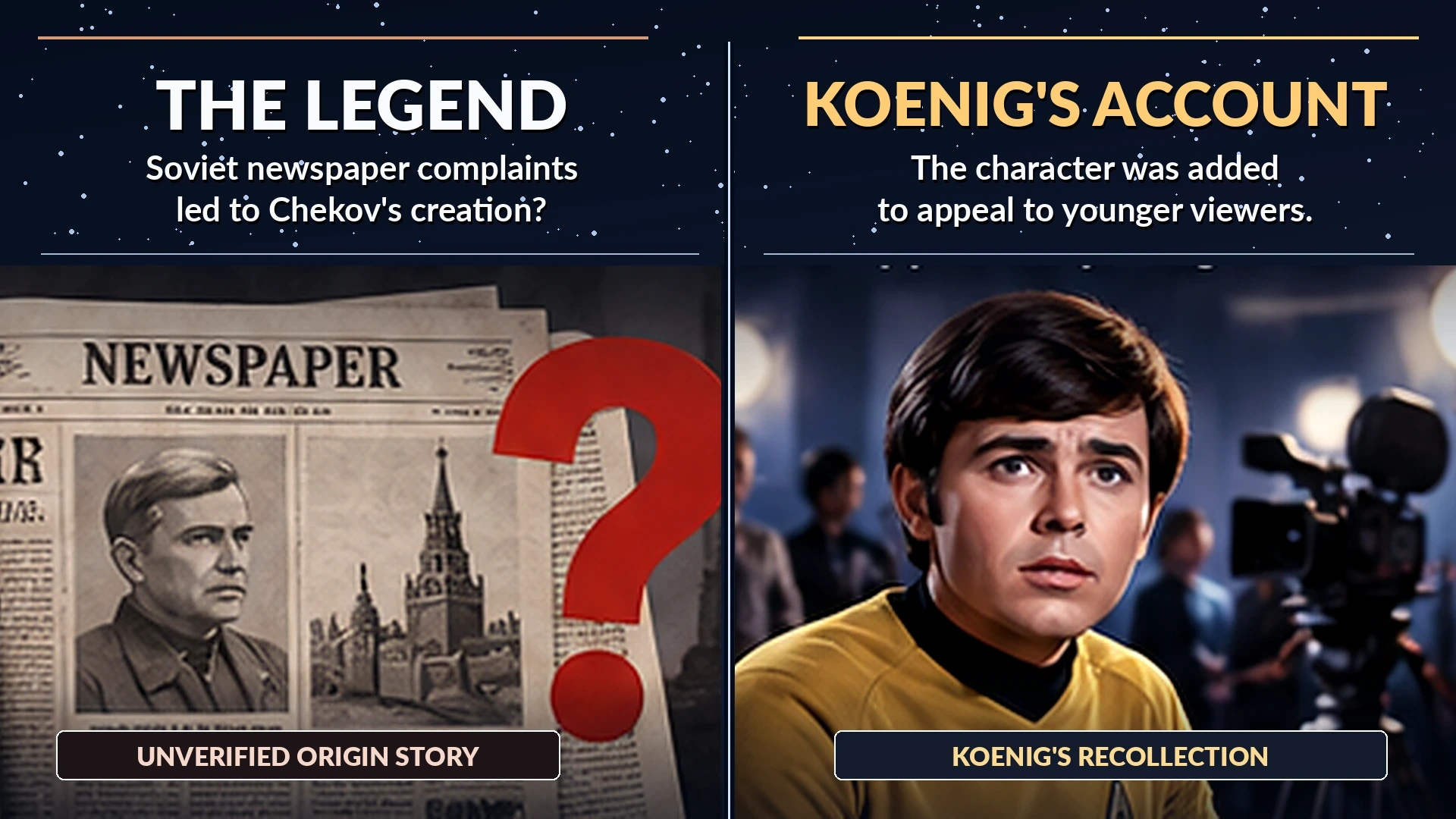
No reliable evidence establishes that a Soviet newspaper complaint forced Star Trek to create Pavel Chekov. In fact, Walter Koenig repeatedly challenged that popular origin story.
According to a frequently repeated account, the Soviet newspaper Pravda criticized the American science-fiction series because it had failed to include a Russian crew member—even though the Soviet Union had achieved some of humanity’s earliest spaceflight milestones.
The story claimed that Star Trek creator Gene Roddenberry responded by introducing Chekov.
There is a complication: Roddenberry himself repeated versions of that account, while Koenig gave a very different explanation.
In a 2011 interview published by the official Star Trek website, Koenig described the newspaper story as a publicity invention.
He said the producers were primarily interested in reaching the teenage audience that had embraced the pop group The Monkees. (StarTrek.com)
The Unexpected Connection to The Monkees
The Monkees were enormously popular with younger television audiences during the 1960s.
One of the group’s most recognizable members was Davy Jones, whose youthful appearance and distinctive hairstyle helped make him a teen idol.
Koenig’s appearance was considered similar enough that producers believed he might appeal to the same demographic.
His character’s distinctive hairstyle was part of that effort.
In a 2024 interview excerpt published by StarTrek.com, Koenig again emphasized that he had been brought in to attract younger viewers. (StarTrek.com)
That explanation changes how we understand Chekov’s creation.
Instead of starting entirely with a grand political message, the character emerged at least partly from a familiar television business decision: finding a new cast member who could expand the audience.
So Which Explanation Is Correct?
The evidence supports a distinction between the character’s casting, his fictional nationality and his eventual cultural meaning.
| Question | What the Evidence Supports |
|---|---|
| Was there a verified Pravda demand? | The supposed editorial remains unverified. |
| Why was Koenig cast? | He said producers wanted to attract younger viewers. |
| Why make the character Russian? | Accounts differ about the precise production motivations. |
| Did Chekov carry Cold War symbolism? | Yes, regardless of the original casting motivation. |
A Smithsonian oral history preserves the contrast particularly well: Roddenberry associated the character with the Soviet newspaper story, while Koenig rejected that account as publicity. (Smithsonian Magazine)
The misconception is assuming that a character must have been created for a political purpose to acquire political meaning.
Popular culture rarely works that neatly.
Chekov could be a character designed to attract teenagers and still represent a hopeful vision of international cooperation to millions of viewers.
What Made Chekov More Than a Cold War Symbol?
Chekov mattered because Star Trek made cooperation feel normal rather than extraordinary.
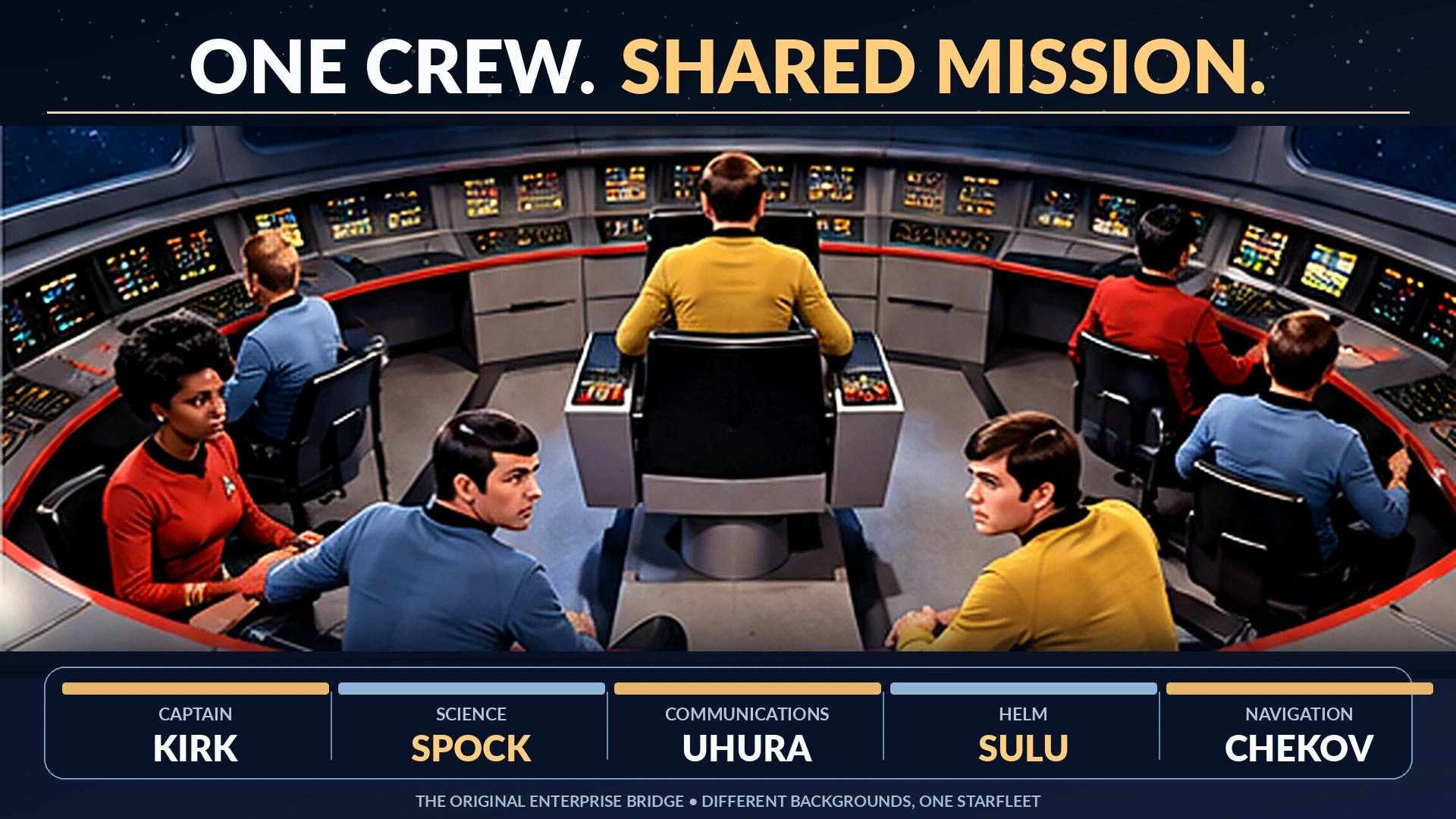
The original Enterprise bridge brought together characters with different backgrounds, personalities and perspectives.
Captain Kirk was the American commander.
Hikaru Sulu, played by George Takei, was a Starfleet officer of Japanese heritage.
Nyota Uhura, played by Nichelle Nichols, was a Black communications officer.
Montgomery Scott was the ship’s Scottish chief engineer.
Spock, famously portrayed by Leonard Nimoy, was a human-Vulcan officer.
And Chekov was the young Russian navigator.
The crew’s diversity helped demonstrate the larger idea behind Roddenberry’s fictional future: exploration and problem-solving could bring together people who might have been separated by political and social divisions in the contemporary world. (Smithsonian Magazine)
Why Was Chekov’s Humor Important?
Chekov wasn’t portrayed as an idealized diplomat who constantly delivered speeches about peace.
He was enthusiastic, occasionally impulsive and sometimes comically proud of Russia.
His habit of claiming that various discoveries or achievements originated in Russia became a recurring joke.
That humor helped make him approachable.
Koenig recalled that his fan mail often came from children between eight and fourteen years old. In a 2011 interview, he said the character’s exaggerated national pride was generally understood as comedy rather than a serious political statement. (StarTrek.com)
There is an important cultural difference between making a rival nation’s people seem threatening and letting audiences laugh affectionately with one of those people.
Chekov was frequently the butt of a joke, but he was also a valued member of the team.
His Russian identity provided part of the humor without becoming a reason to exclude him.
Did Every American Viewer Welcome Him?
Not necessarily.
Koenig remembered that at least one viewer objected to a Russian character appearing on the show during a period of political tension.
But he also recalled receiving considerable fan mail from children who were far more interested in his personality and appearance than Cold War ideology.
This contrast helps explain Chekov’s significance.
Adult audiences could recognize the geopolitical symbolism, while younger fans could simply enjoy his character.
Both readings existed at the same time.
How Did Chekov’s Meaning Survive After the Cold War?
The character remained relevant because Star Trek kept returning to the question of whether former enemies could become partners.
By the time the original cast appeared in Star Trek VI: The Undiscovered Country in 1991, real-world politics had changed dramatically.
The Cold War was approaching its end, and the movie reflected those political transformations through a fictional conflict.
In the story, a devastating disaster pushes the Klingon Empire toward peace negotiations with the United Federation of Planets.
Some characters resist the idea of reconciliation, while others recognize that an old enemy may no longer pose the same kind of threat.
The official Star Trek retrospective explicitly connects the film’s themes with the Cold War and perestroika—the political and economic restructuring associated with the Soviet Union’s final years. (StarTrek.com)
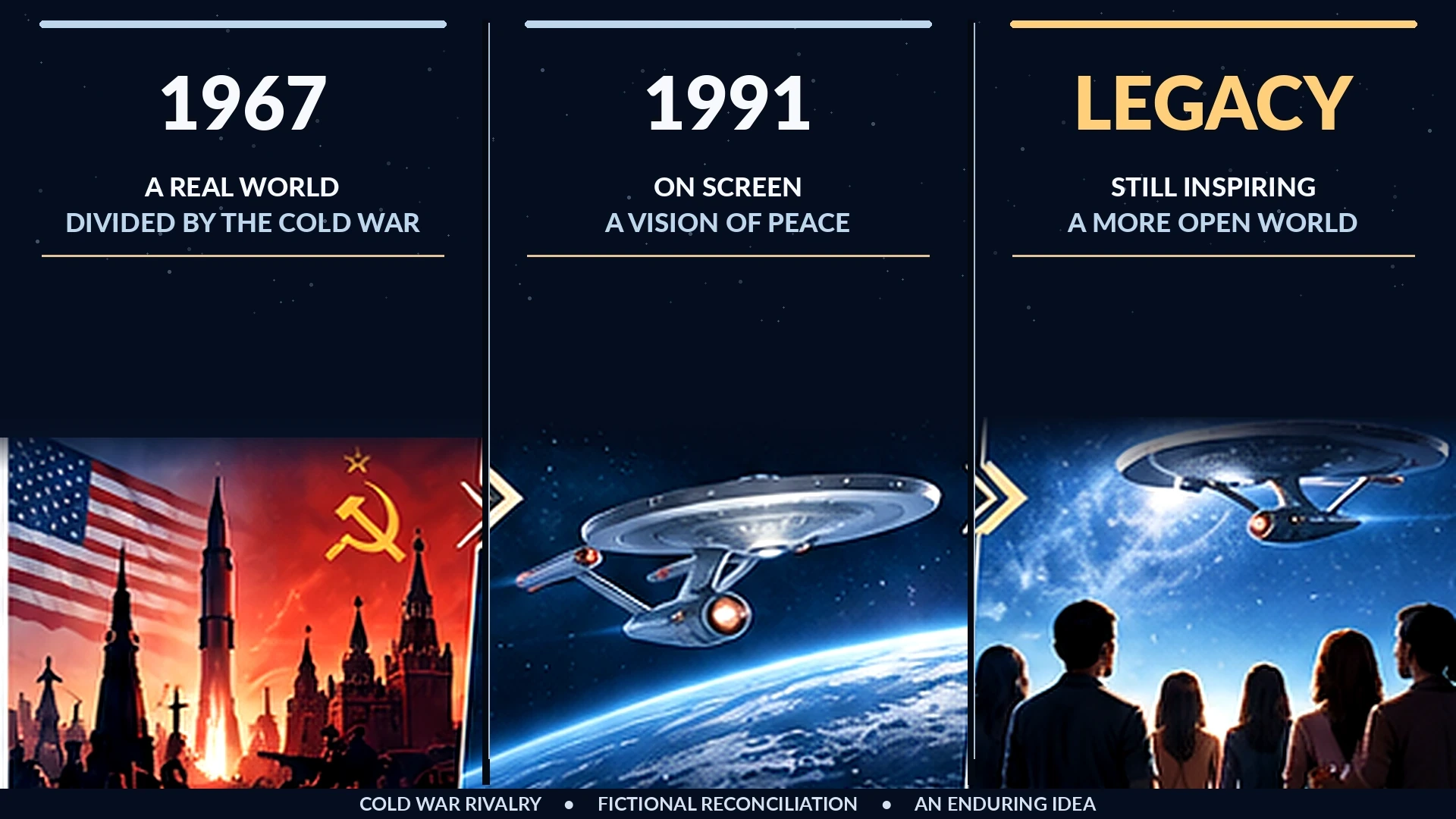
In a sense, the franchise had moved from imagining that old geopolitical divisions might one day disappear to exploring how difficult reconciliation could be.
Chekov was still part of that fictional world.
His character provided continuity between two very different political moments: the tense atmosphere of the 1960s and the collapse of long-standing international divisions in the early 1990s.
The role also continued into the 21st century, though not always through Koenig himself.
Anton Yelchin portrayed a younger version of Pavel Chekov in the rebooted Star Trek films beginning in 2009.
In the 2023 finale of Star Trek: Picard, Koenig returned through a voice performance as Federation President Anton Chekov, presented as Pavel’s son.
It was a small but meaningful connection between generations of the franchise. (TV Guide · StarTrek.com)
The original Chekov had become more than a character from a short-lived 1960s television series.
He was part of an imagined future that new generations of writers and viewers continued to revisit.
Who Was Walter Koenig Beyond Star Trek?
Walter Koenig was also a writer, stage performer and actor whose career extended well beyond the Enterprise.
His best-known role outside Star Trek was Alfred Bester on the science-fiction series Babylon 5.
Bester was very different from Chekov.
Where Chekov was generally friendly and eager to help his shipmates, Bester was a powerful and morally troubling figure associated with the fictional Psi Corps.
Koenig appreciated that contrast.
In an interview with the official Star Trek website, he described Bester as a more challenging acting opportunity because the character offered greater complexity and room for interpretation.
He remained grateful to Star Trek for establishing his career, but he regarded his work on Babylon 5 as especially rewarding. (StarTrek.com)
His work also included television writing, theater, comic books and teaching.
In 2012, he received a star on the Hollywood Walk of Fame, honoring a career that extended far beyond one television character. (StarTrek.com)
There was another side to Koenig’s legacy that cannot be measured by episode counts or awards.
For decades, he attended science-fiction conventions, answered fans’ questions and remained closely connected to the community surrounding Star Trek.
His representatives specifically acknowledged those relationships when announcing his death.
And Takei’s tribute revealed something that viewers could not fully see on screen: the friendship between two actors who played colleagues continued long after their television series ended.
The Enterprise bridge was fictional.
The friendship was real.
What Does Koenig’s Death Mean for Star Trek’s Original Cast?
With Walter Koenig’s death, William Shatner and George Takei are now the only surviving members of the original show’s principal Enterprise cast.
Shatner played Captain James T. Kirk.
Takei played Hikaru Sulu.
Other principal cast members died over the preceding decades, including DeForest Kelley, James Doohan, Leonard Nimoy and Nichelle Nichols. (Associated Press)
That makes the timing especially poignant.
The original Star Trek premiered on September 8, 1966, meaning the franchise marked its 60th anniversary in 2026.
Koenig died just weeks after that milestone.
For longtime viewers, those six decades represent more than a television anniversary.
They connect the optimism and anxieties of the 1960s with generations that grew up in a different world.
The original series did not predict every political development correctly. Nor did it eliminate the prejudices or conflicts it tried to imagine humanity overcoming.
But it gave viewers a striking picture of people with different backgrounds working together on something larger than themselves.
Walter Koenig helped make that future feel believable.
Bottom Line: What This Story Really Means
Walter Koenig’s death closes another chapter in the history of the original Star Trek.
But the significance of Pavel Chekov goes beyond nostalgia for a familiar science-fiction character.
During the Cold War, when Americans were taught to view the Soviet Union as a formidable geopolitical opponent, Star Trek placed a Russian officer among the trusted crew of its most famous spaceship.
The character suggested that political rivalry did not have to define humanity’s future.
The surprising part is that this message was not necessarily the primary reason Chekov was created. Koenig himself repeatedly said producers wanted a younger, more marketable cast member.
And that makes his legacy more interesting, not less.
A practical casting decision became an enduring cultural symbol because of the story it helped tell.
Chekov didn’t need to make speeches about international peace.
He only needed to do his job alongside the rest of the crew.
For a television audience living through the Cold War, that ordinary cooperation could represent an extraordinary possibility.
Walter Koenig and Star Trek: Key Questions Explained
Q. When did Walter Koenig die?
Walter Koenig died on October 25, 2026, according to his representative and multiple major news outlets. An initial Associated Press report instead gave October 26, the day his death was announced.
Q. How old was Walter Koenig when he died?
He was 90 years old. Koenig was born on September 14, 1936.
Q. What was Walter Koenig’s cause of death?
His representatives attributed his death to natural causes or old age. No more specific medical cause was publicly established in the initial announcements.
Q. Which Star Trek character did Walter Koenig play?
He played Ensign Pavel Chekov, the Russian navigator aboard the USS Enterprise in the original Star Trek television series and seven theatrical films.
Q. Was Chekov in Star Trek from the beginning?
No. The television series premiered in 1966, but Koenig joined its cast in 1967 for the second season.
Q. Why was Chekov Russian?
His Russian identity complemented the show’s vision of a cooperative international future. However, Koenig said the main reason he was cast was to attract younger television viewers.
Q. Did Pravda really demand a Russian character on Star Trek?
The frequently repeated story about a complaint from the Soviet newspaper Pravda remains unverified. Koenig rejected the story as publicity, although creator Gene Roddenberry repeated versions of it.
Q. Was Walter Koenig actually Russian?
No. Koenig was an American actor born in Chicago. His family background included Jewish immigrants from Eastern Europe.
Q. Did Walter Koenig appear in Star Trek: Picard?
Yes. In the 2023 series finale, Koenig provided the voice of Federation President Anton Chekov, portrayed as the son of his original character, Pavel Chekov.
Q. Which original Star Trek cast members are still alive?
As of October 27, 2026, William Shatner, who played Captain Kirk, and George Takei, who played Sulu, are the two surviving members of the original show’s principal Enterprise cast.
Did this help make the story clearer? 🙂
WIN keeps unpacking the “why” behind the news—clearly and simply!
Sources
Walter Koenig’s Death and Tributes
ABC News — Star Trek Actor Walter Koenig Dies at 90
Associated Press — Walter Koenig, Ensign Chekov on the Original Star Trek Series, Dies at 90
Los Angeles Times — Walter Koenig, Star Trek Franchise’s Original Chekov, Dies at 90
Reuters — Actor Walter Koenig, Star Trek’s Plucky Chekov, Dies at 90
Chekov’s Origins and the Cold War Context
StarTrek.com — Walter Koenig Answers Your Questions, Part 1
StarTrek.com — Walter Koenig Recalls His Role in Star Trek Explorer
Smithsonian Magazine — An Oral History of Star Trek
U.S. Department of State — Sputnik, 1957
Star Trek’s Later Legacy and Koenig’s Career
StarTrek.com — Star Trek VI at 20: An Appreciation
StarTrek.com — Walter Koenig Answers Your Questions, Part 2
StarTrek.com — Picard Season 3 Finale Recap
StarTrek.com — Walter Koenig Receives His Hollywood Walk of Fame Star