
Why Is Charles Spencer Reopening Princess Diana’s Funeral Story Nearly 30 Years Later?
Why is Princess Diana’s funeral back in the headlines almost three decades later?
The immediate answer is a new memoir from her younger brother, Charles Spencer. Swan Song: Diana, My Sister was released in the United States on September 22, 2026, and Spencer uses it to revisit Diana’s childhood, marriage, death and the week of her funeral from his own point of view. (Penguin Random House · Reuters)
But one part of the book has reopened a particularly painful question: why were Prince William, then 15, and Prince Harry, then 12, asked to walk behind their mother’s coffin through London on September 6, 1997?
Spencer says he objected. He also says that during a heated private call, the man who was then Prince Charles made a remark about Diana being forgotten. Buckingham Palace has pushed back sharply on Spencer’s recollection, suggesting grief can affect memory and judgment. That exchange has turned a 1997 family decision into a 2026 argument over memory, responsibility and who gets to define Diana’s story. (Reuters · AP)
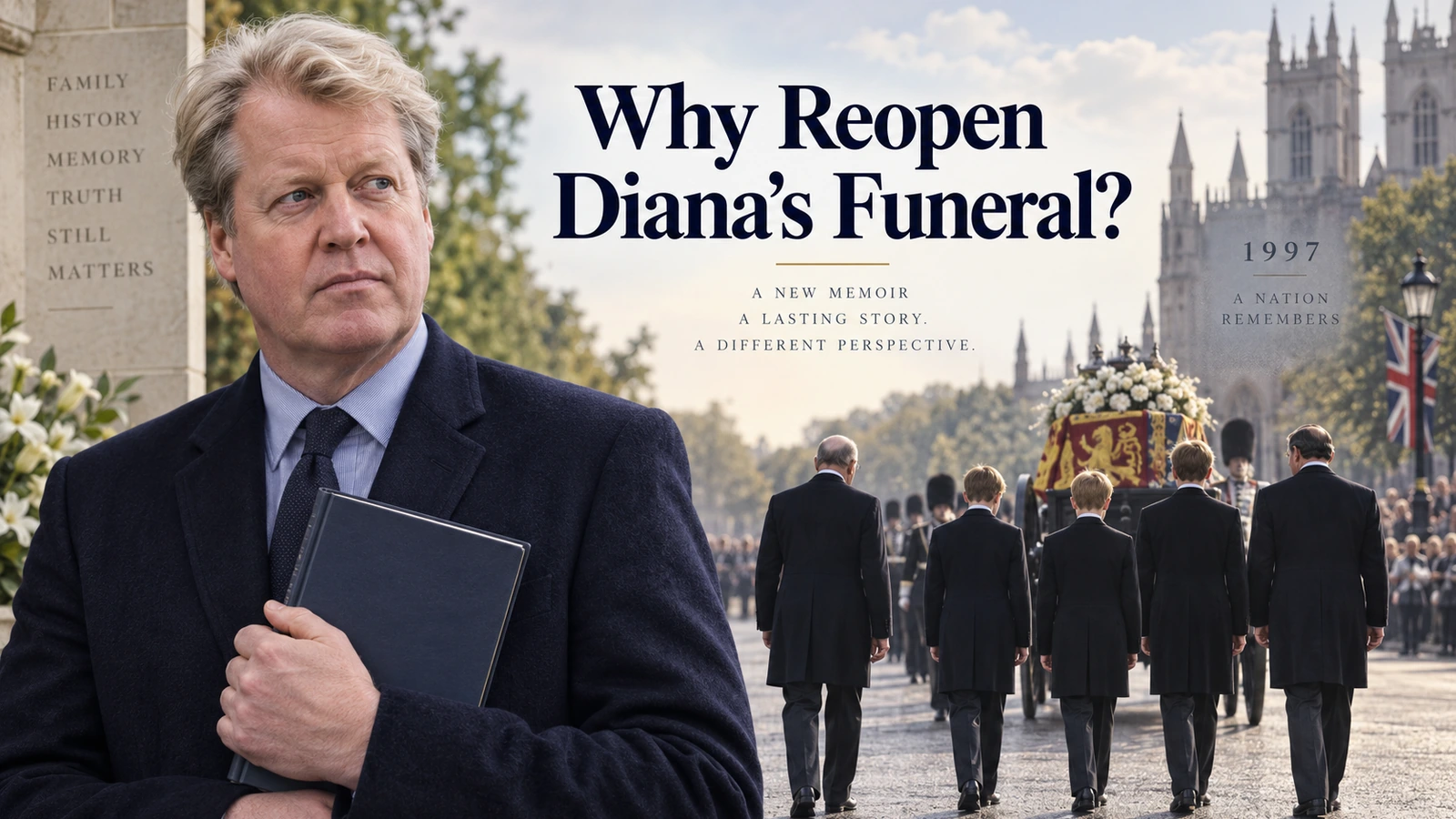
The most important point is that published accounts do not establish a simple version in which one person issued a clear, documented order and everyone else followed. Contemporary and later accounts describe an evolving family discussion. Spencer’s new memoir adds his recollection of a private confrontation, but that recollection is only one part of the wider record.
What Is Charles Spencer Actually Claiming?
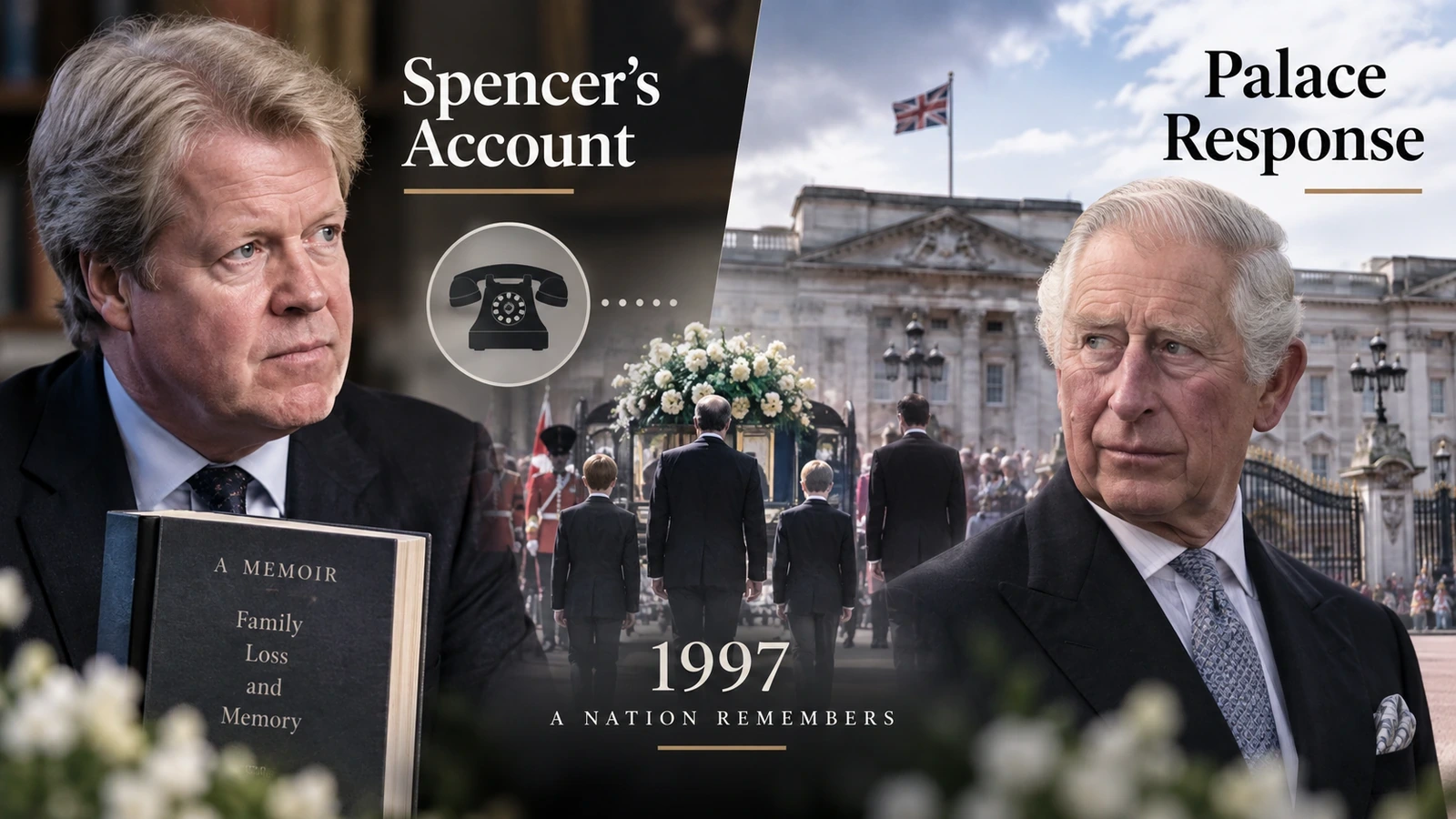
Spencer’s central claim is not simply that he disliked the funeral plan. He says he actively resisted the idea of William and Harry walking behind Diana’s coffin because he believed his sister would not have wanted her sons placed in such a public ordeal.
According to the memoir, that disagreement led to a tense phone conversation with then-Prince Charles. Spencer alleges that Charles told him, “we’ll forget her soon enough,” during the argument. Spencer also writes that Charles had sounded “giddily elated” after Diana’s death. Those are Spencer’s recollections, not independently verified transcripts of the calls. (Reuters · AP)
Buckingham Palace took the unusual step of responding before the book’s release. Rather than publishing its own detailed account of the phone calls, the palace said grief can cloud reason, judgment and memory even years later. Spencer then publicly rejected that explanation and said he stood by what he remembered. (Reuters · ABC News)
That leaves readers with two separate questions. Did Spencer oppose the boys walking? The historical record strongly supports that there was serious disagreement over the procession. Did the private conversation happen exactly as Spencer now remembers it? That remains disputed.
So Who Actually Decided William and Harry Would Walk?
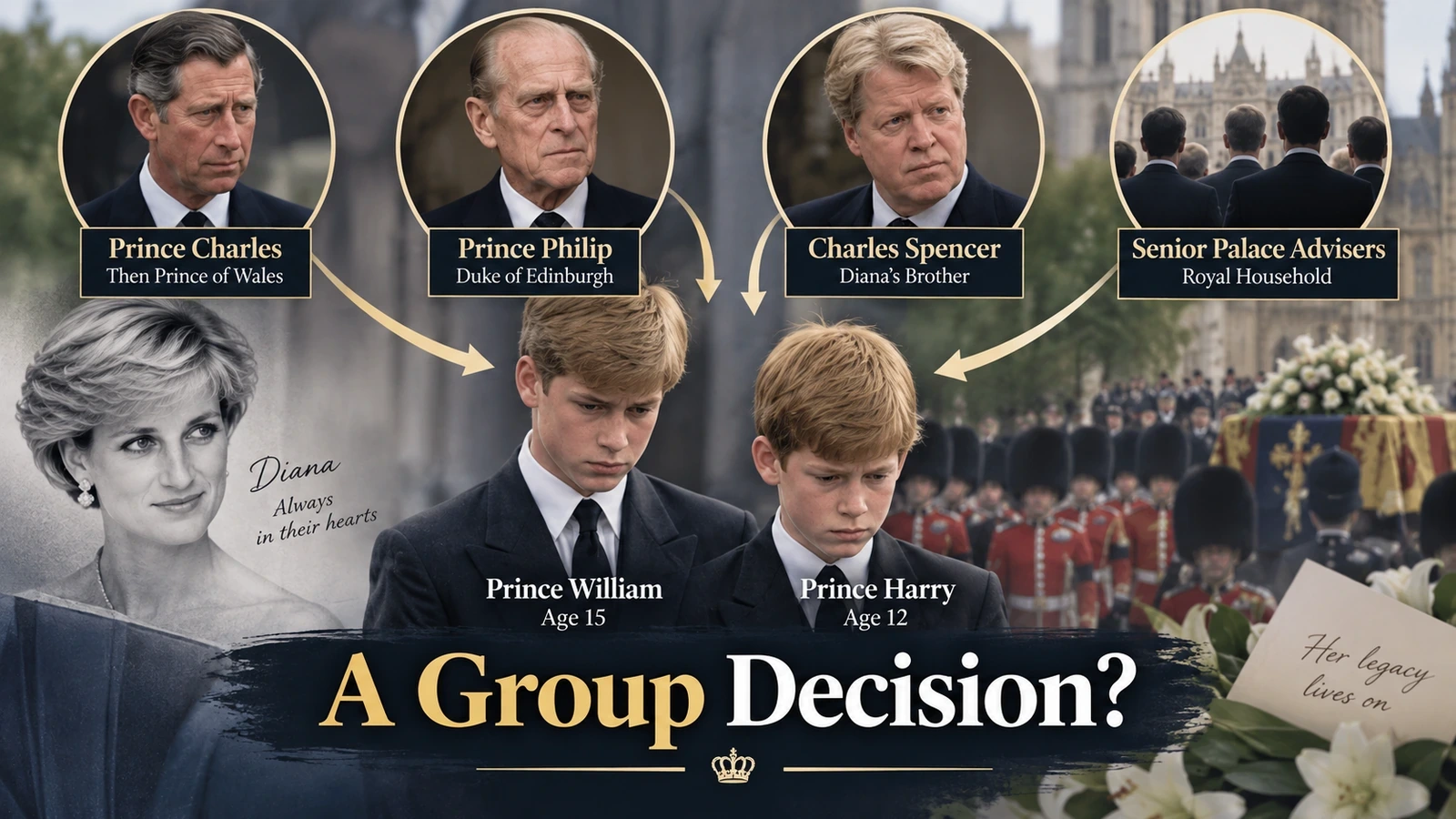
The published record does not identify a single formal order saying one person alone decided that William and Harry would walk. Instead, the available accounts point to a group decision that remained unsettled until late in the week.
Alastair Campbell, who was then Prime Minister Tony Blair’s press secretary, later published diary entries from the week after Diana’s death. They describe palace officials and family members debating whether the boys should walk, whether then-Prince Charles could walk if they did not, and whether the princes should instead travel by car. The entries show uncertainty, not a settled plan dictated from the start. (The Guardian · The Guardian)
William later called it a “collective family decision.” Harry, in a 2017 documentary, similarly described it as a group decision. Both accounts matter because they complicate the current claim that one adult alone can be identified as the sole decision-maker. (The Guardian)
That does not mean Spencer’s new account is irrelevant. His memoir adds detail about what he says happened in one private argument. But a private argument is not the same thing as a complete record of how the final funeral plan was approved.
A useful distinction is that the final procession emerged from a broader family-and-palace decision process, while Spencer’s memoir focuses on one private exchange that he remembers as especially confrontational.
Why Was the Procession Such a Difficult Decision?

Diana died after a car crash in Paris on August 31, 1997. Her funeral took place six days later, on September 6. During that short period, the royal family, the Spencer family, the government and palace staff were responding not only to a private family death but to enormous public mourning and intense media attention. (AP)
That combination matters. A decision that might normally have been made inside a family was also being treated as a national ceremonial question.
The final procession included Prince Philip, Prince William, Charles Spencer, Prince Harry and then-Prince Charles walking behind Diana’s coffin. William was 15. Harry was 12. (AP)
The public symbolism was powerful: Diana’s sons were visibly accompanying their mother on the final route to Westminster Abbey. But the personal cost was also obvious. The boys were grieving in front of crowds and television cameras.
That tension—public duty versus private grief—is the part of the story that still feels unresolved.
What Have William and Harry Said About That Walk?

Their later comments are more complicated than a simple “it was right” or “it was wrong.”
William said in 2017 that walking behind Diana’s coffin was one of the hardest things he had ever done. He also described the decision as collective and said he tried to get through the public walk by keeping his head down. (British GQ · The Guardian)
Harry has expressed both pain and later acceptance. In one interview he said no child should be asked to do what he did. In a later documentary, however, he said he was glad he had been part of the procession and again described the decision as a group one. (Sky News · The Guardian)
Those statements do not settle whether the adults made the best decision in 1997. They do show why it is risky to reduce the story to a single villain, a single victim or a single version of what the brothers themselves think.
The experience could be both something they found deeply painful and something they later understood as part of saying goodbye.
Why Is Spencer Bringing This Up Now?
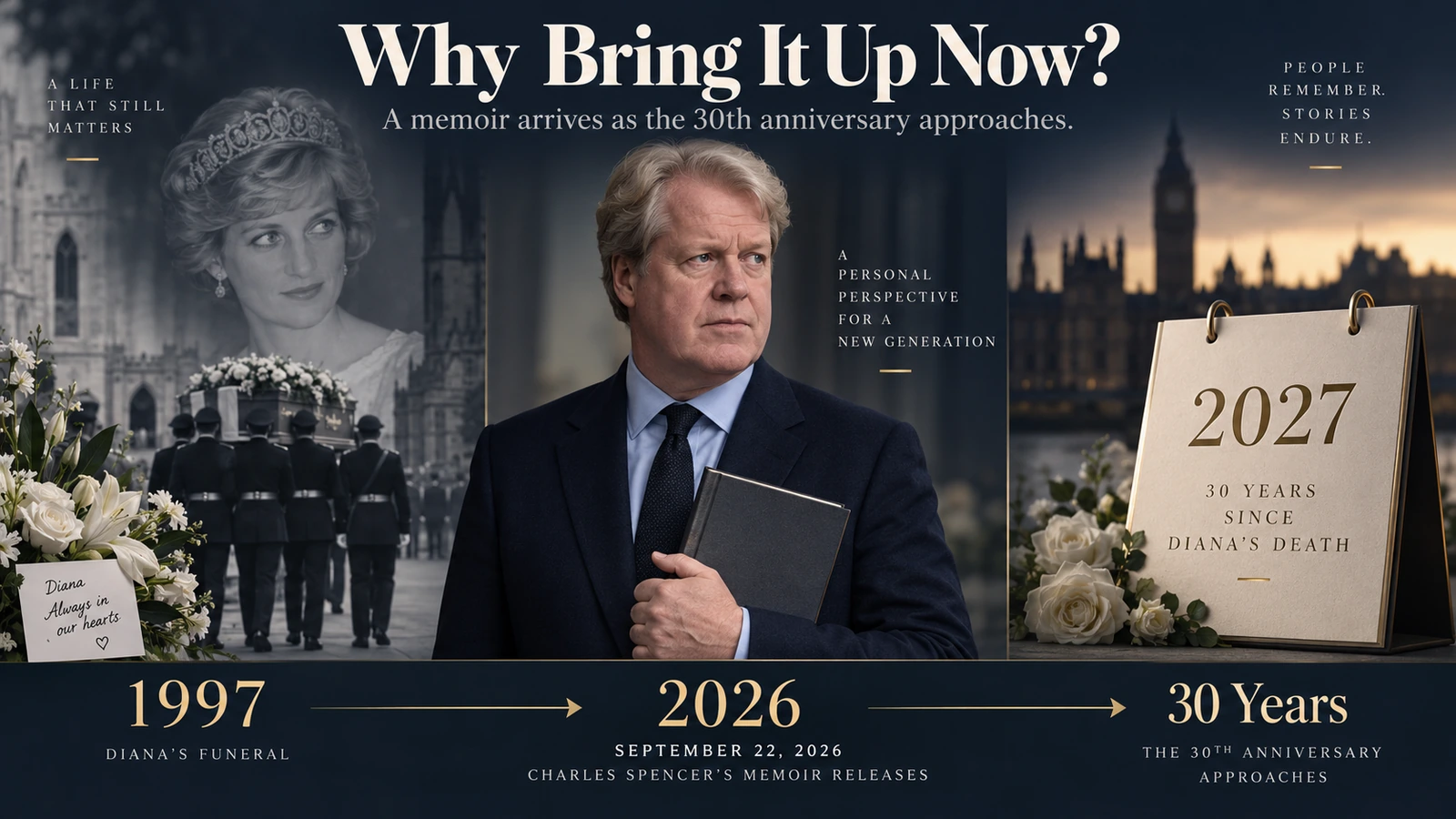
Spencer has said he wanted to record his own memories of Diana with the 30th anniversary of her death approaching in 2027. The publisher presents Swan Song as Diana’s life and death told from her brother’s perspective, not as an official history of the royal family. (Penguin Random House · The Guardian)
That distinction is important. Memoirs are valuable because they preserve a participant’s memory. They are also limited because memory is personal, selective and sometimes disputed.
Spencer is unusually well placed to tell part of this story. He was Diana’s brother, took part in the funeral procession and delivered the eulogy at Westminster Abbey. But those facts do not make every later recollection uncontested. (Penguin Random House)
This is why the new book is generating attention beyond ordinary royal nostalgia. It is asking readers to reconsider a famous public image—the two young princes walking behind their mother’s coffin—through a private family dispute that was mostly invisible at the time.
Does Spencer’s Piers Morgan Apology Change How the Memoir Should Be Read?

Yes—but only in a limited way.
On the same day the book was released, Spencer apologized to Piers Morgan over a separate claim in the memoir. Spencer had made an assumption about Morgan’s role in the publication of intrusive photographs of Diana; after Morgan threatened legal action, Spencer acknowledged that the assumption was incorrect. (The Guardian)
That correction is relevant because Spencer’s representative said, in announcing the apology, that accuracy was important to him as a historian. An acknowledged error gives readers a reason to scrutinize other claims carefully, without assuming that unrelated claims are automatically false. (The Guardian)
But it does not logically prove that his account of the funeral phone call is false. These are separate claims involving different events and different evidence.
The fairest way to read the book is claim by claim: compare Spencer’s recollection with contemporary records, later interviews, official responses and other witnesses rather than accepting or rejecting the entire memoir as one package.
That approach is especially important in a story built around memory.
Why Did Buckingham Palace Respond So Strongly?
Buckingham Palace said in its response that it does not comment on books as a matter of principle. That made its decision to answer this allegation notable. (ABC News)
The statement did not provide a competing transcript of the disputed phone call. Instead, it challenged the reliability of Spencer’s memory by pointing to the effect of grief. Spencer then accused the palace of trying to undermine his account rather than directly answering it. (Reuters · ABC News)
That matters because it shows the argument is not really just about one sentence allegedly spoken in 1997. It is also about who gets believed when family memories collide with an institution’s version of its own history.
For King Charles, the book reopens one of the most scrutinized periods of his life. For Spencer, it is a chance to place his version of Diana’s story on the record before the 30th anniversary of her death.
For readers, the harder task is resisting the temptation to turn an unresolved family dispute into a clean historical fact.
What Can We Say With Confidence—and What Is Still Disputed?
A simple separation helps.
| Question | What the record supports |
|---|---|
| Did William and Harry walk behind Diana’s coffin? | Yes. William was 15 and Harry was 12 during the September 6, 1997 procession. |
| Was there disagreement over whether they should walk? | Yes. Contemporary and later accounts show the issue was debated. |
| Did Spencer object? | Spencer says he objected; separate contemporary planning records also show that the procession plan was debated. |
| Did then-Prince Charles make the exact remark Spencer attributes to him? | Spencer says yes; Buckingham Palace disputes the reliability of his recollection. No public transcript has established the exchange independently. |
| Was the funeral decision made by one person alone? | The public record points more strongly to a collective, evolving decision involving family members and palace officials. |
| Does Spencer’s separate correction involving Piers Morgan prove the funeral claim is false? | No. It is relevant to credibility, but it does not independently resolve the funeral dispute. |
This is the part that can get lost when a memoir becomes headline news. Some elements are documented history. Others are recollections. Others are interpretations of motive.
Putting them in the same category creates a story that sounds clearer than the evidence actually is.
What Happens Next?
The book is now in public circulation, allowing its claims to be compared more closely with archival records, earlier interviews and accounts from people involved in the royal household at the time.
William and Harry have not publicly endorsed their uncle’s version of the disputed conversations. Their own past comments focus mostly on the emotional experience of the funeral itself and on the fact that the procession decision was made by adults around them. (Reuters · People)
The calendar will also keep Diana’s story in view. August 31, 2027 will mark 30 years since her death, an anniversary that is expected to bring renewed attention to her life, her sons and the royal family’s handling of the extraordinary week after she died.
Spencer has chosen to put his version on the record before that moment arrives.
Why It Matters in One Sentence
Charles Spencer’s memoir matters because it does not merely retell Princess Diana’s funeral—it reopens the unresolved question of how a grieving family decided that two teenage boys should mourn in full public view, while reminding readers that the most dramatic parts of the new account are still disputed memories rather than settled historical fact.
Charles Spencer Diana Memoir: Key Questions Explained
Q. When was Charles Spencer’s new Princess Diana memoir released?
Swan Song: Diana, My Sister was released in the United States on September 22, 2026, by Penguin Press. (Penguin Random House)
Q. What does Charles Spencer say about William and Harry walking behind Diana’s coffin?
Spencer says he opposed having the boys walk in the procession and believed Diana would not have wanted them subjected to that public ordeal.
Q. How old were Prince William and Prince Harry at Diana’s funeral?
William was 15 and Harry was 12 when they walked in the September 6, 1997 funeral procession.
Q. Did King Charles personally force William and Harry to walk behind the coffin?
That cannot be established from the public record. Spencer says then-Prince Charles strongly pushed for the plan, while older accounts and comments from William and Harry describe a broader family decision.
Q. What did Buckingham Palace say about Spencer’s account?
The palace challenged the reliability of Spencer’s recollection, saying grief can affect judgment and memory. It did not release a transcript or documentary record settling the alleged private conversation.
Q. What have William and Harry said about the funeral walk?
William has called it one of the hardest things he has ever done. Harry has said no child should be asked to do that, while also later saying he was glad he took part and describing the decision as a group one.
Q. Why is Spencer publishing the memoir now?
Spencer has said he wanted to record his memories of Diana as the 30th anniversary of her death approaches in 2027.
Q. Did Spencer admit any error in the book?
Yes. On September 22, 2026, he apologized to Piers Morgan over a separate claim that Spencer acknowledged was based on an incorrect assumption. (The Guardian)
Q. Does that apology prove Spencer’s claims about King Charles are false?
No. It gives readers a reason to scrutinize the memoir carefully, but it does not independently prove or disprove a different private conversation from 1997.
Did this help make the story clearer? 🙂
WIN keeps unpacking the “why” behind the news—clearly and simply!
Sources
Book Release and Spencer’s New Claims
Penguin Random House — Announcement of Swan Song: Diana, My Sister
Penguin Random House — Swan Song Product Page
Reuters — What Princess Diana’s Brother Charles Spencer Says in New Book
AP — New Book by Princess Diana’s Brother Prompts War of Words With King Charles III
Palace Response and Funeral Dispute
Reuters — King Charles Responds to Criticism From Princess Diana’s Brother
AP — Buckingham Palace Hits Back at Claims in a Book by Princess Diana’s Brother
The Guardian — Alastair Campbell Diaries on Diana’s Funeral Planning
William and Harry’s Later Reflections
British GQ — Prince William on Diana, Princess of Wales
The Guardian — William and Harry Reflect on Diana’s Funeral
Sky News — Prince Harry on Walking Behind His Mother’s Coffin
Release-Day Accuracy Dispute
The Guardian — Earl Spencer Apologises to Piers Morgan Over Incorrect Assumption