Did Texas Roadhouse Serve a $20 Steak Instead of a $30 Filet?

You order a filet mignon for nearly $30, but the steak on your plate looks more like the roughly $20 sirloin on the same menu. Would you know the difference? And if you raised the question, what would the restaurant actually admit?
That is the dispute behind a Texas Roadhouse complaint involving Kenneth Card, a regular customer at the chain’s Forsyth, Illinois, location. Card says he was given a less expensive cut on three visits. Texas Roadhouse acknowledged a steak mix-up that was corrected, but said it could not verify his claim that it happened three times. The distinction matters: an acknowledged order error is not proof of a repeated, intentional practice. (Fox News · People)
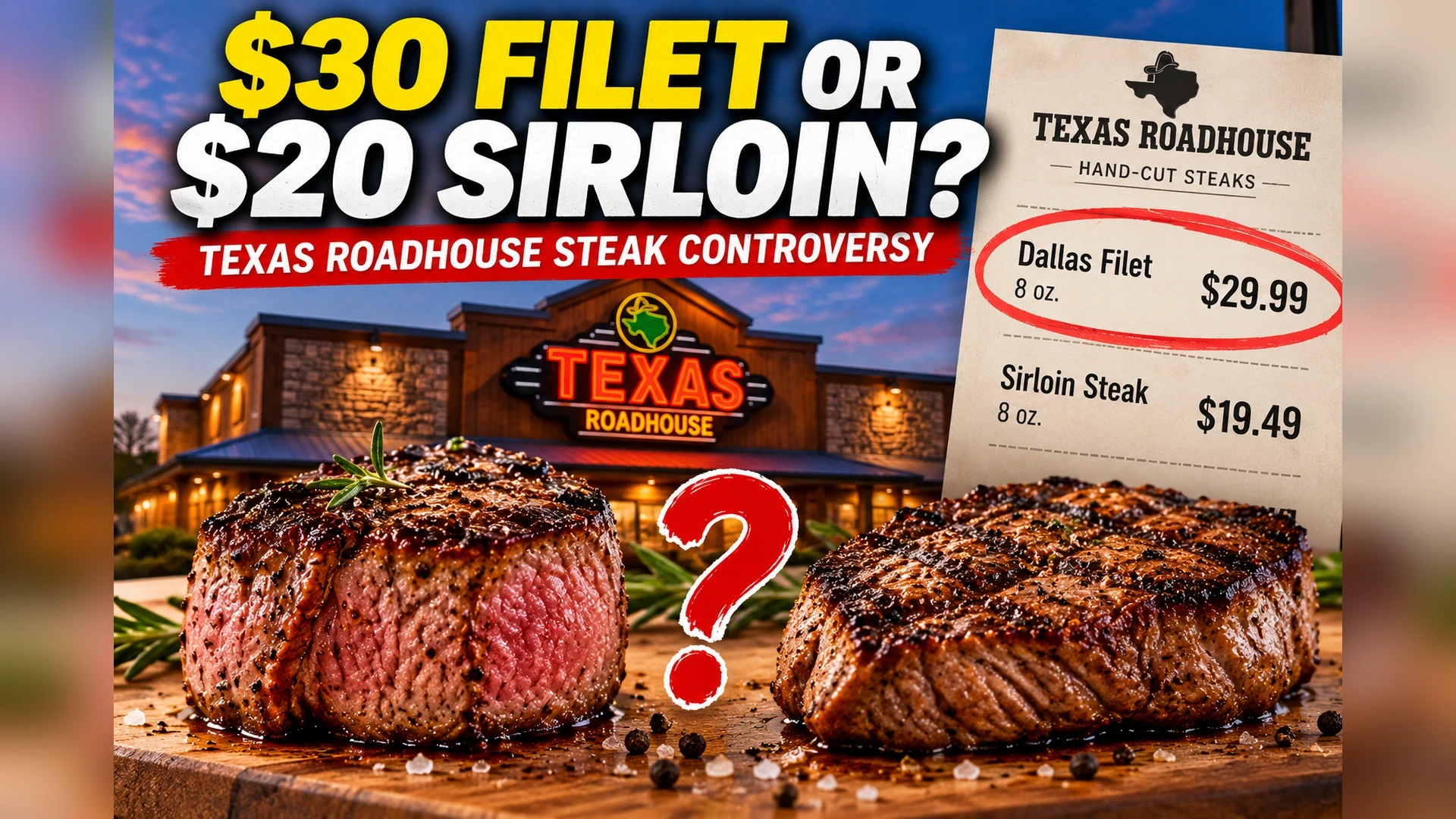
※ Images in this article are AI-generated illustrations created to help explain the story. They are not actual photographs, and depictions of people, places, or events may differ slightly from reality.
The complaint itself began earlier in October. What brought it renewed attention on October 26 was reporting that included Card’s account and the company’s response. It also left a practical question for anyone paying extra for a particular cut: how can you tell if you got what you ordered?
What Happened at the Illinois Texas Roadhouse?
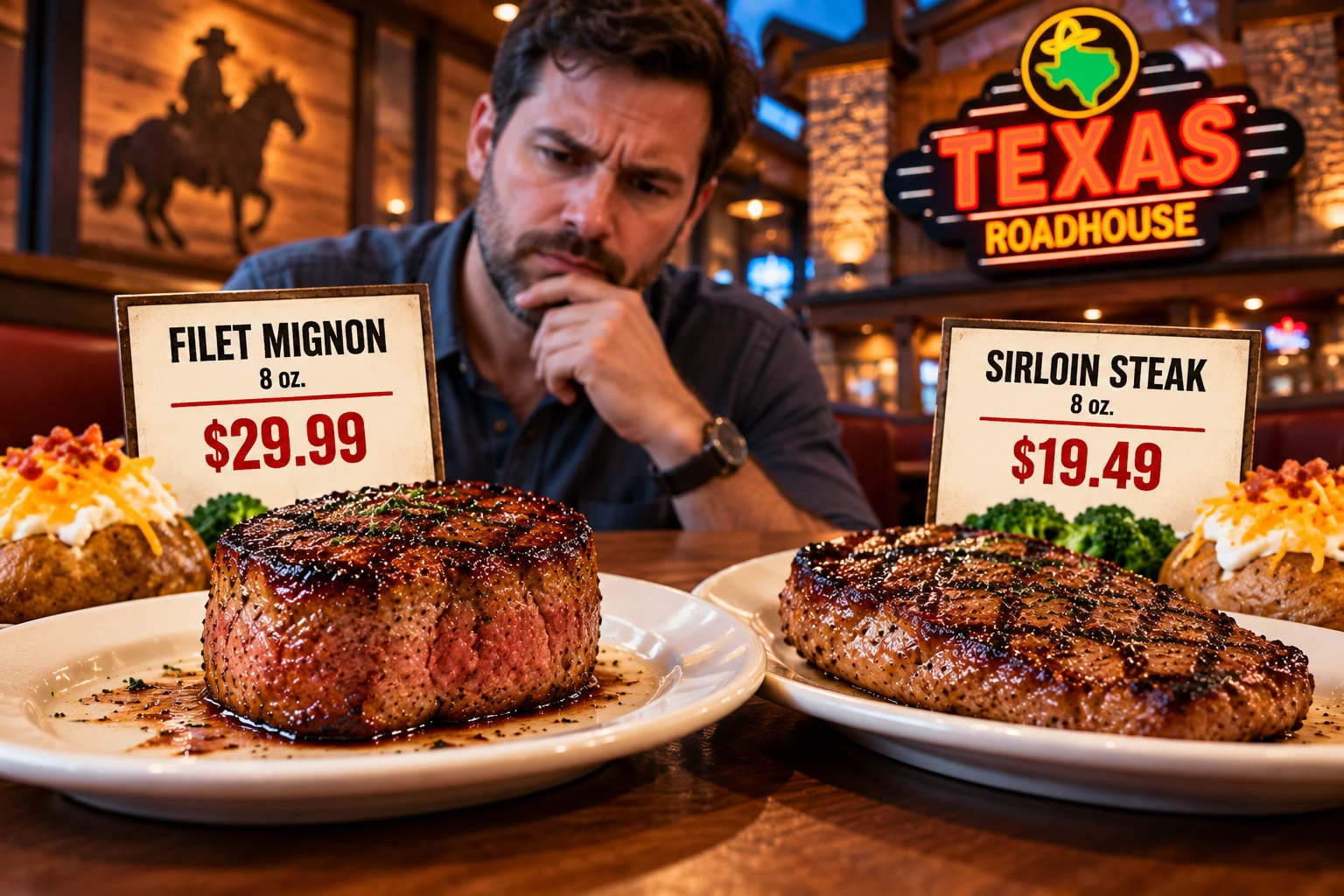
Card says he had been eating at the Forsyth restaurant about once a week for more than a year. He also says his previous work preparing and cutting steaks in restaurant and hotel kitchens helped him recognize when the wrong cut arrived.
According to his account, staff replaced the steak after he questioned the first apparent mix-up. On a second visit, he believed it happened again but did not complain. After a third suspected mix-up, he raised the issue with a manager and says staff checked the steak before providing the filet he had ordered. (Fox News)
Card posted his warning on TikTok on October 5, 2026. By October 26, national coverage had brought both his account and Texas Roadhouse’s response to a broader audience. The dates of the three individual restaurant visits were not independently established in those reports. (People · Fox News)
What Has Texas Roadhouse Actually Confirmed?
The company confirmed that one wrong-steak complaint was corrected at the restaurant. It did not confirm Card’s claim of three separate incidents. A Texas Roadhouse representative told reporters that the team addressed the complaint and described procedures for checking orders before they leave the kitchen. (Fox News · People)
Here is what the available reporting supports:
| Question | Card’s account | Company’s position |
|---|---|---|
| Was a less expensive steak served? | He says it happened on three visits. | It acknowledged one mix-up that was corrected. |
| Did it happen repeatedly? | He says yes. | It could not verify three separate occurrences. |
| Was substitution deliberate? | Card voiced concern about being shortchanged. | The company’s response does not establish deliberate substitution. |
There is an important difference between “we cannot verify three occasions” and “we proved it happened only once.” The company’s statement supports the first conclusion, not the second. Likewise, Card’s personal account does not by itself establish deliberate substitution by a restaurant or the chain as a whole.
Why Does the Difference Between a Filet and Sirloin Matter So Much?
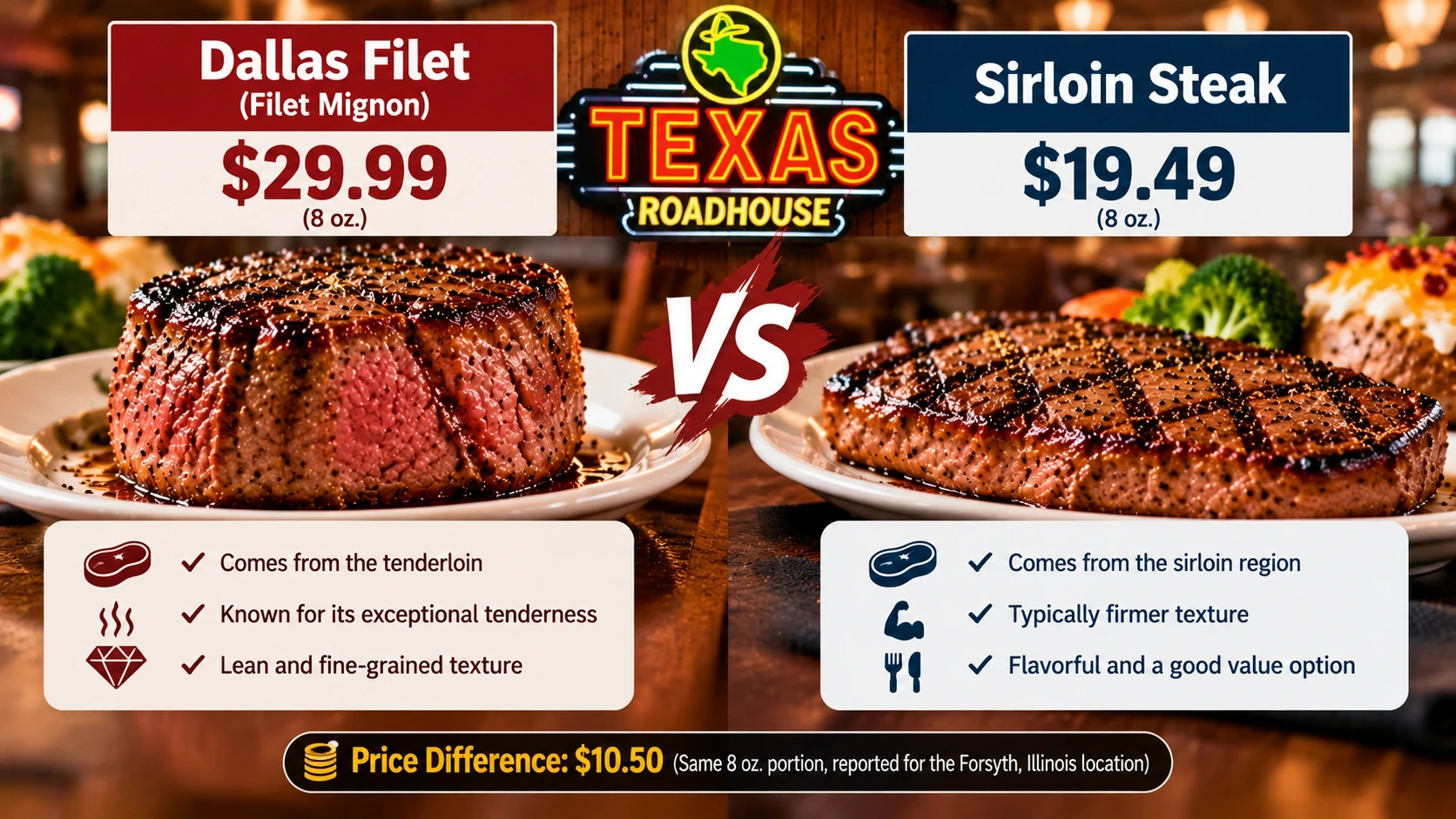
The dispute is not about a slightly different-looking dinner. At the prices cited for the Forsyth restaurant, the two eight-ounce steaks were $10.50 apart. That is why the type of cut matters even when the portion weight is the same. (People)
| Reported menu item | Portion | Reported price |
|---|---|---|
| Dallas Filet | 8 oz. | $29.99 |
| Sirloin | 8 oz. | $19.49 |
| Price difference | Same listed weight | $10.50 |
These are the location-specific prices reported in coverage of the complaint, not a promise that every Texas Roadhouse charges the same amount. The company’s national menu identifies the Dallas Filet as its particularly tender option and the hand-cut sirloin as a good-value steak. (Texas Roadhouse)
Paying more for filet does not automatically mean it tastes better to everyone. Some diners prefer the beefier bite of sirloin. But those preferences do not change the expectation that a restaurant will serve the cut the customer selected and charge for the item actually provided.
Can You Really Tell Filet Mignon From Sirloin on the Plate?
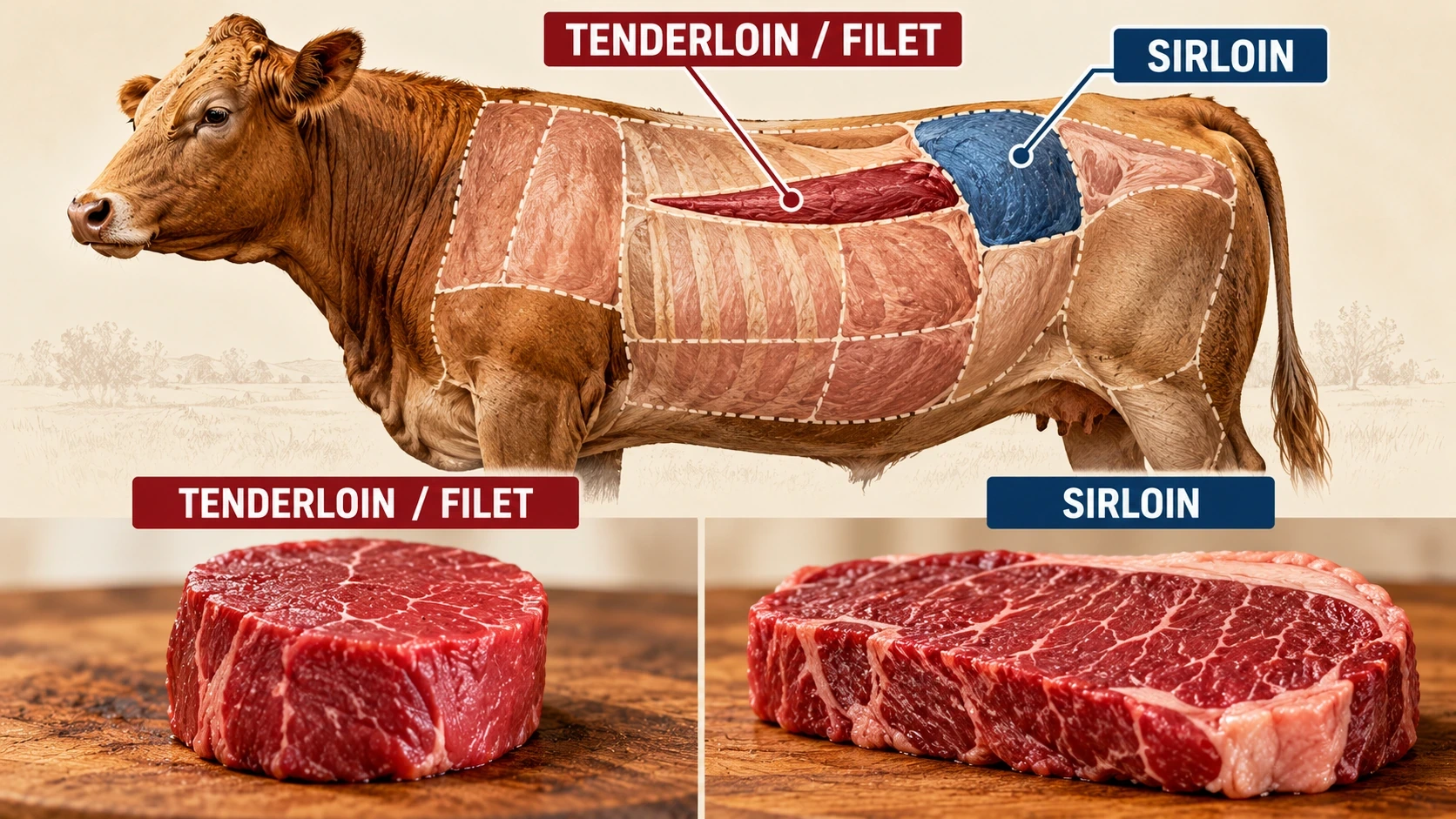
Often, an experienced cook can spot clues—but appearance alone is not a guaranteed way to identify a steak cut.
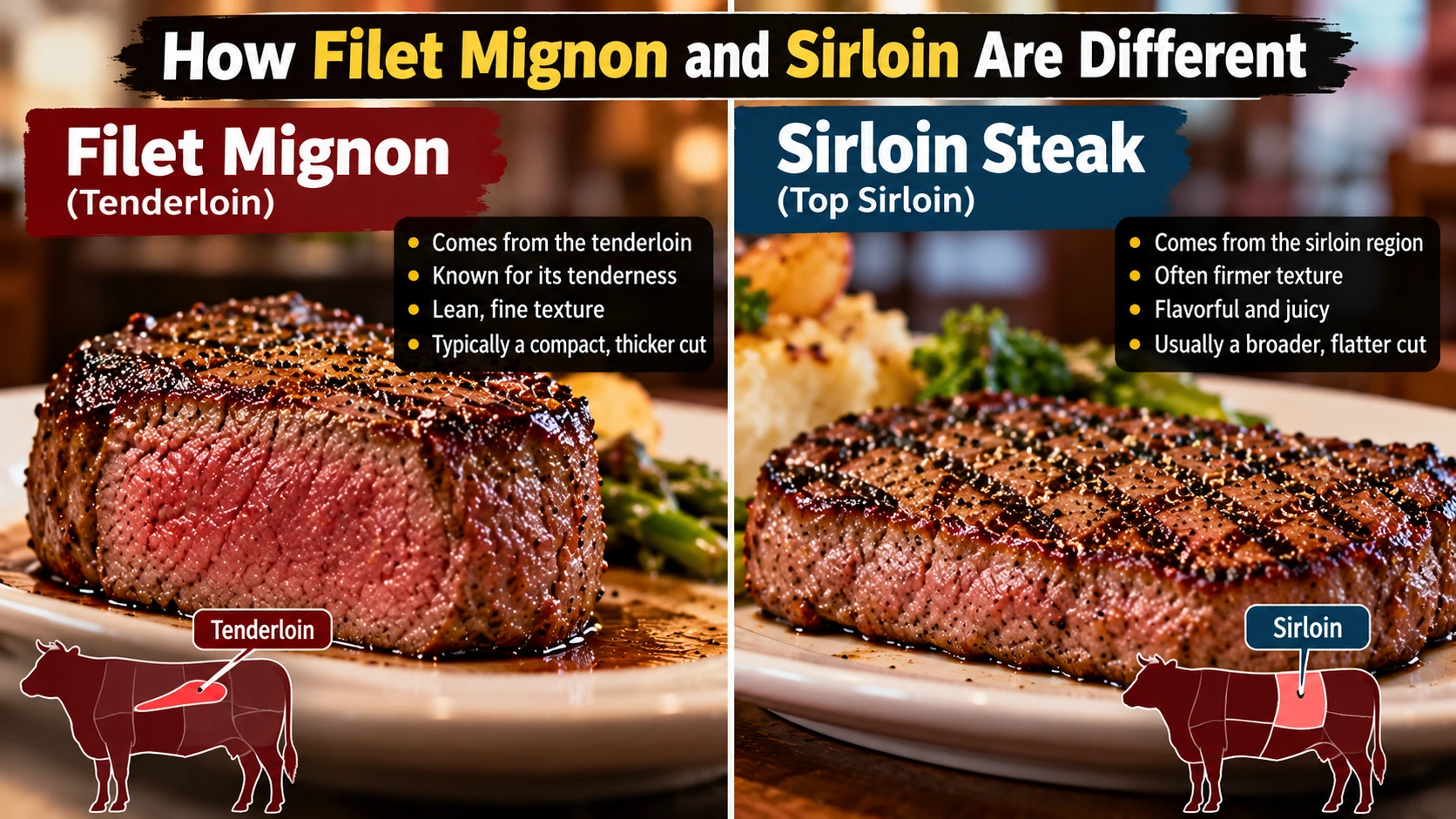
Filet mignon comes from the tenderloin, a muscle that sees relatively little work and produces exceptionally tender meat. Sirloin comes from a different region and is typically firmer, though it can still be flavorful and tender when prepared well. Industry cut guides describe those differences in anatomy and texture. (Beef. It’s What’s For Dinner — Tenderloin · Beef. It’s What’s For Dinner — Sirloin)
A filet is often a compact, thicker piece with a fine-grained texture. A sirloin may have a broader shape and more chew. Those are useful clues, not laboratory tests: a steak’s trimming, thickness, temperature, seasoning, and doneness can make visual comparisons less reliable.
That helps explain both sides of the public reaction. Card says his kitchen background made the difference obvious to him. Other diners may be less confident telling cuts apart, especially after the steaks have been cooked. Neither experience independently proves what was on a particular plate.
What Should You Do if You Think a Restaurant Served the Wrong Steak?
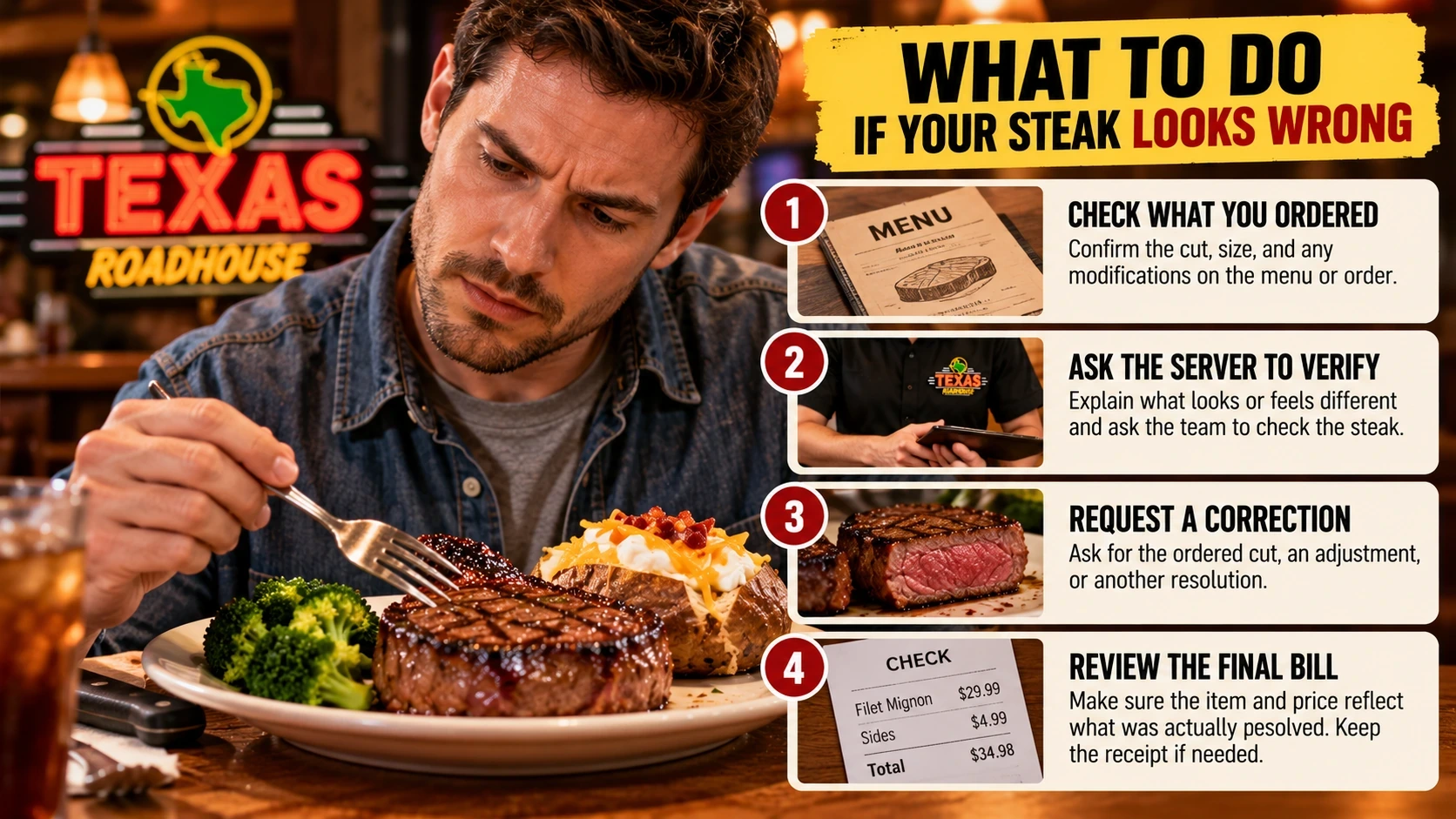
The best time to raise a concern is while the meal and order details can still be checked. Texas Roadhouse specifically encouraged customers who believe they received the wrong item or were charged incorrectly to alert their server so the team can address it. (Fox News)
- Check what you ordered. Confirm the cut, size, and any modifications shown on the menu or order.
- Ask the server to verify the steak. Explain what looks or feels different, without assuming anyone acted deliberately.
- Request a correction. Depending on what the restaurant finds, ask for the ordered cut, an appropriate adjustment, or another resolution.
- Review the final check. Make sure the item and price reflect what was actually resolved; keep the receipt if the concern remains unsettled.
Taking a quick photo before the plate is cleared may help record what arrived, but a photo generally cannot establish the precise cut on its own. The practical goal is to resolve an identifiable order error—not to diagnose fraud from a single dinner.
Does One Confirmed Mistake Mean Customers Are Being Scammed?
No. A confirmed steak mix-up establishes that an order went wrong on at least one occasion. It does not establish that a restaurant knowingly substitutes less expensive meat or that the problem is widespread. Those are separate claims that would require separate evidence.
The pattern Card describes understandably raises questions because he says it happened repeatedly. But the available reporting does not independently verify all three occasions or establish why any mistake happened. The distinction protects both the customer’s ability to raise a legitimate concern and the restaurant’s right not to have an unproven allegation treated as fact.
What makes the case resonate is ordinary consumer trust. Most people do not watch their food being prepared, and they rely on menu descriptions, kitchen checks, and a restaurant’s willingness to correct mistakes. The price gap gives that trust a specific dollar figure.
Where Does the Dispute Stand Now?
As of the October 26–27 coverage, the key points had not converged: Card maintained that there were three incidents, while Texas Roadhouse confirmed a correction but could not substantiate the repeated occurrences. Card told Fox News he did not plan to return to the Forsyth restaurant. (Fox News · NBC/TODAY)
That leaves three unanswered questions: whether the earlier alleged substitutions can be documented, what caused the acknowledged error, and whether there is any evidence of a broader pattern. None of those questions should be answered by assumption. A routine order mistake and deliberate substitution are very different findings.
For diners, the immediate lesson is less dramatic but useful: know which menu item you paid for, speak up promptly if something seems wrong, and check that the final bill matches the resolution.
Bottom Line: What This Story Really Means
The Texas Roadhouse steak complaint has one clear point of agreement: the company acknowledges that a wrong-steak issue was corrected. Kenneth Card says similar substitutions happened three times, but the additional occasions have not been independently confirmed.
The reported $10.50 difference between an eight-ounce Dallas Filet and an eight-ounce sirloin explains why the complaint drew attention. The larger issue is whether customers can trust that the food arriving at the table matches the item on the menu. One confirmed error makes that concern understandable; it does not prove an intentional scheme.
Texas Roadhouse: Key Questions Explained
Q. Who is Kenneth Card?
Kenneth Card is an Illinois customer who says he regularly visited a Texas Roadhouse in Forsyth. He says his previous restaurant and hotel kitchen experience helped him recognize different steak cuts.
Q. Did Texas Roadhouse admit it served the wrong steak?
Yes. The company acknowledged that one steak-order problem was corrected at the restaurant, according to its statements reported by news outlets.
Q. Did the restaurant confirm three incorrect orders?
No. Three incidents are Card’s allegation. Texas Roadhouse said it could not verify that the mix-up occurred on three occasions.
Q. How much was the filet compared with the sirloin?
The reported prices for the Forsyth location were $29.99 for an eight-ounce Dallas Filet and $19.49 for an eight-ounce sirloin, a difference of $10.50.
Q. When did this complaint first appear online?
Card shared his TikTok account on October 5, 2026. The issue drew renewed national coverage on October 26.
Q. What makes filet mignon different from sirloin?
Filet mignon comes from the tenderloin and is prized for its tenderness. Sirloin comes from a different part of the animal and typically has a firmer texture.
Q. Can you identify a filet just by looking at it?
Not with certainty. Shape and texture can provide clues, but trimming and cooking affect appearance; the kitchen is better placed to check the actual cut.
Q. Has intentional steak substitution been proven?
No. The published reporting documents a corrected mix-up and disputed claims of repetition, not proof of deliberate or chain-wide substitution.
Q. What should a diner do if a steak seems incorrect?
Ask the server to check the ordered cut while the dish is still available, request a suitable correction, and review the final bill.
Did this help make the story clearer? 🙂 WIN keeps unpacking the “why” behind the news—clearly and simply!
Sources
Customer Account and Restaurant Response
Fox News — Customer’s steak complaint and Texas Roadhouse’s response, October 26, 2026
People — Customer’s account, reported menu prices, and company statement
NBC/TODAY — Reporting on the customer’s account and restaurant statement
Official Menu Descriptions
Texas Roadhouse — Hand-Cut Steaks and Dallas Filet menu descriptions
Understanding the Beef Cuts
Beef. It’s What’s For Dinner — Tenderloin Steak (Filet Mignon)