Why Are U.S. Pending Home Sales at a Record Low Even as More Sellers Cut Prices?

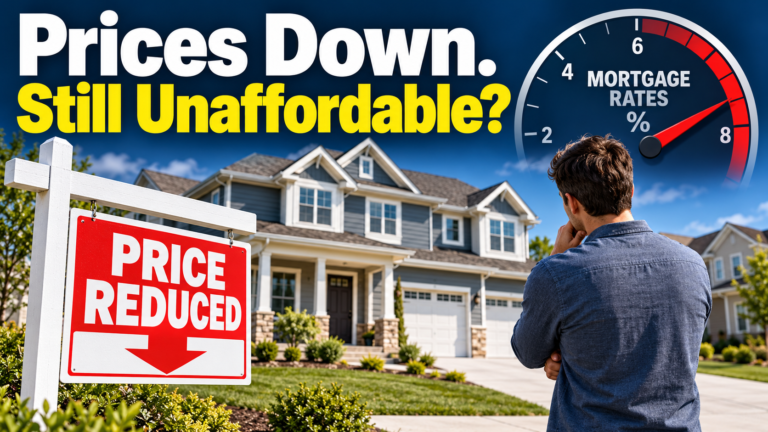
Homebuyers are getting something they’ve wanted for years: more choices, more price reductions, and sellers who are increasingly willing to negotiate.
So why are so few people actually buying?
That’s the strange reality of America’s housing market right now. Homes are sitting longer, asking prices are softening in many markets, and buyers have more negotiating leverage than they did during the pandemic housing boom.
Yet the latest industry data show that home purchase contracts have fallen to their lowest level in at least 25 years.
The problem isn’t simply that houses cost too much.
It’s that even a cheaper house can become more expensive to own when mortgage rates rise fast enough.
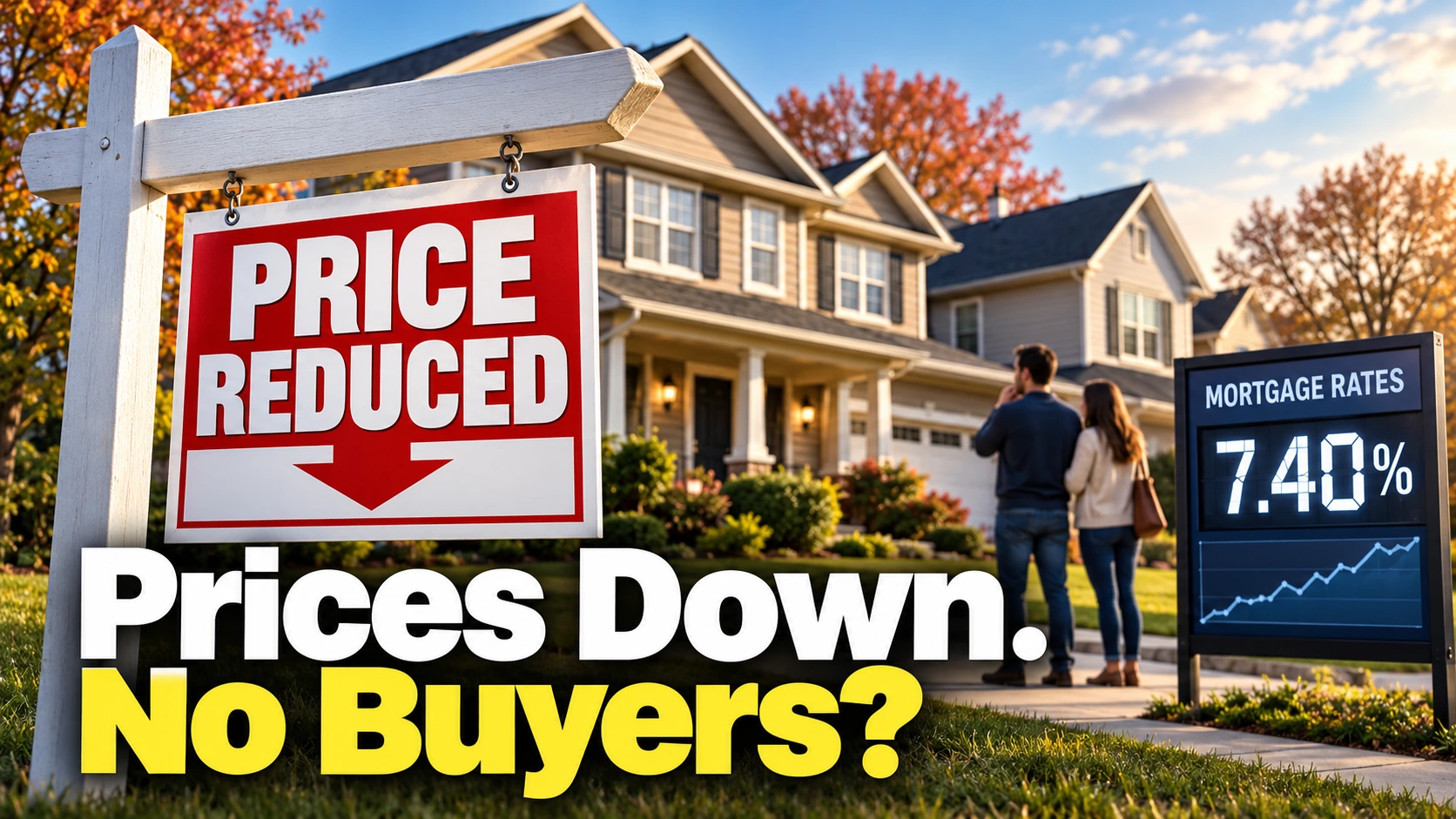
※ Images in this article are AI-generated illustrations created to help explain the story. They are not actual photographs, and depictions of people, places, or events may differ slightly from reality.
The National Association of Realtors reported on October 20, 2026, that pending home sales plunged 7.3% in September. Meanwhile, Freddie Mac’s average 30-year mortgage rate had climbed to 7.40% by mid-October.
Those two numbers help explain why the housing market can simultaneously look better for buyers and feel almost impossible to afford. (NAR · Freddie Mac)
What Actually Happened to U.S. Home Sales?
Contracts to purchase existing homes fell 7.3% in September compared with August. The Pending Home Sales Index dropped to 66.0, its lowest reading since the National Association of Realtors began tracking the series in 2001.
Contracts were also down 11.3% compared with September 2025. Every major U.S. region recorded a decline. (NAR · Reuters)
That sounds alarming, but there’s an important distinction.
Pending Sales Are Not the Same as Completed Sales
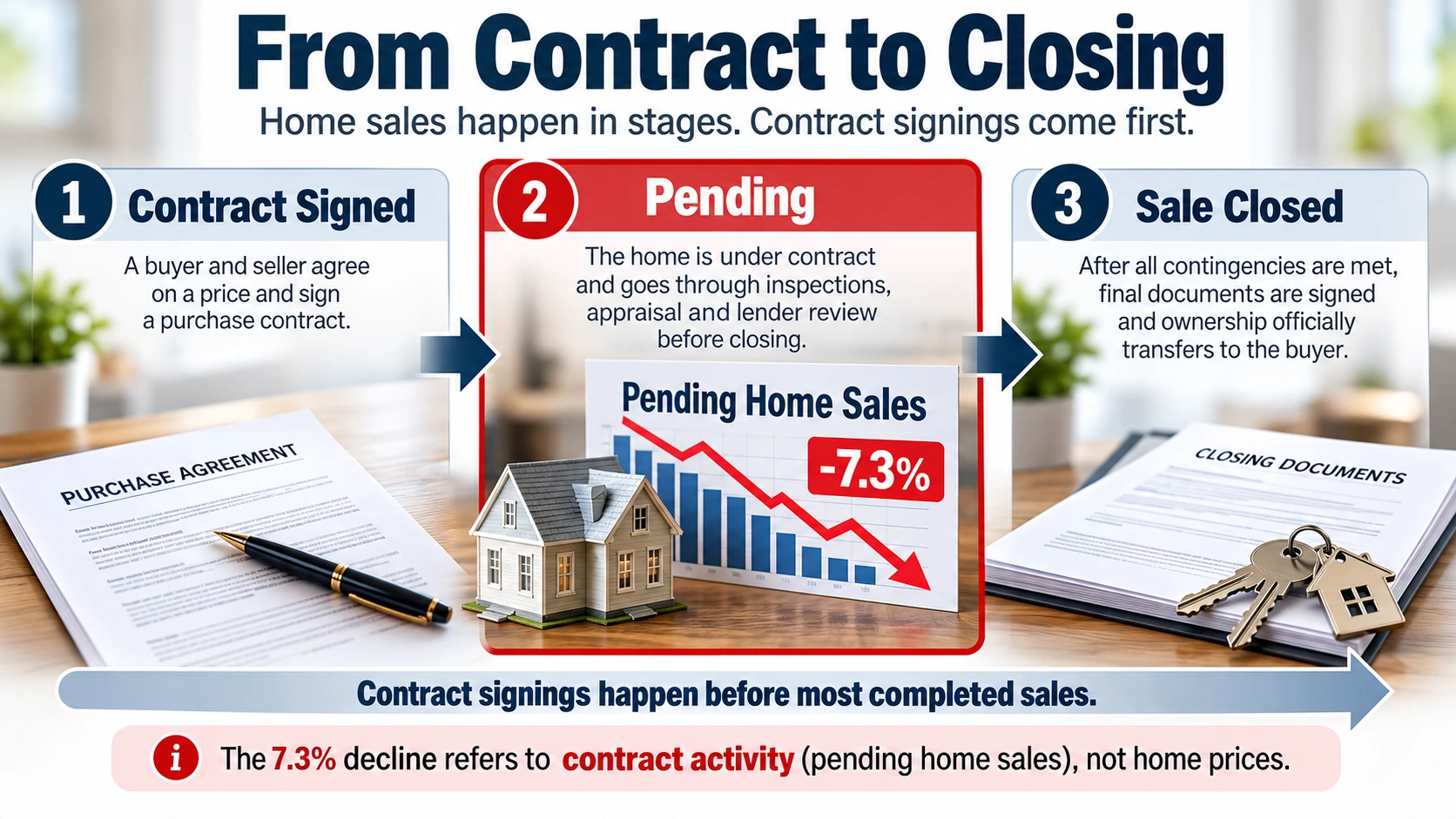
A pending sale occurs when a buyer and seller have signed a purchase contract but the transaction has not yet closed.
The buyer may still need mortgage approval, an appraisal, a home inspection, and other paperwork before ownership changes hands.
Most pending transactions close within approximately one or two months, which makes contract signings an early signal of where completed sales may be heading.
The index reading of 66.0 is not a count of houses sold. It’s a measure of contract activity relative to a 2001 baseline of 100.
There’s another detail worth noticing.
Completed existing-home sales actually increased 1.5% in September from August, according to NAR.
How can completed sales rise while pending contracts plunge?
Because they measure different stages of the buying process.
Many transactions closing in September originated from contracts signed weeks earlier. September’s weaker contract activity is more likely to show up in subsequent closing data. (NAR)
The record low is a warning about future transactions—not proof that every home already on the market has lost value.
Why Are Mortgage Rates Keeping Buyers on the Sidelines?
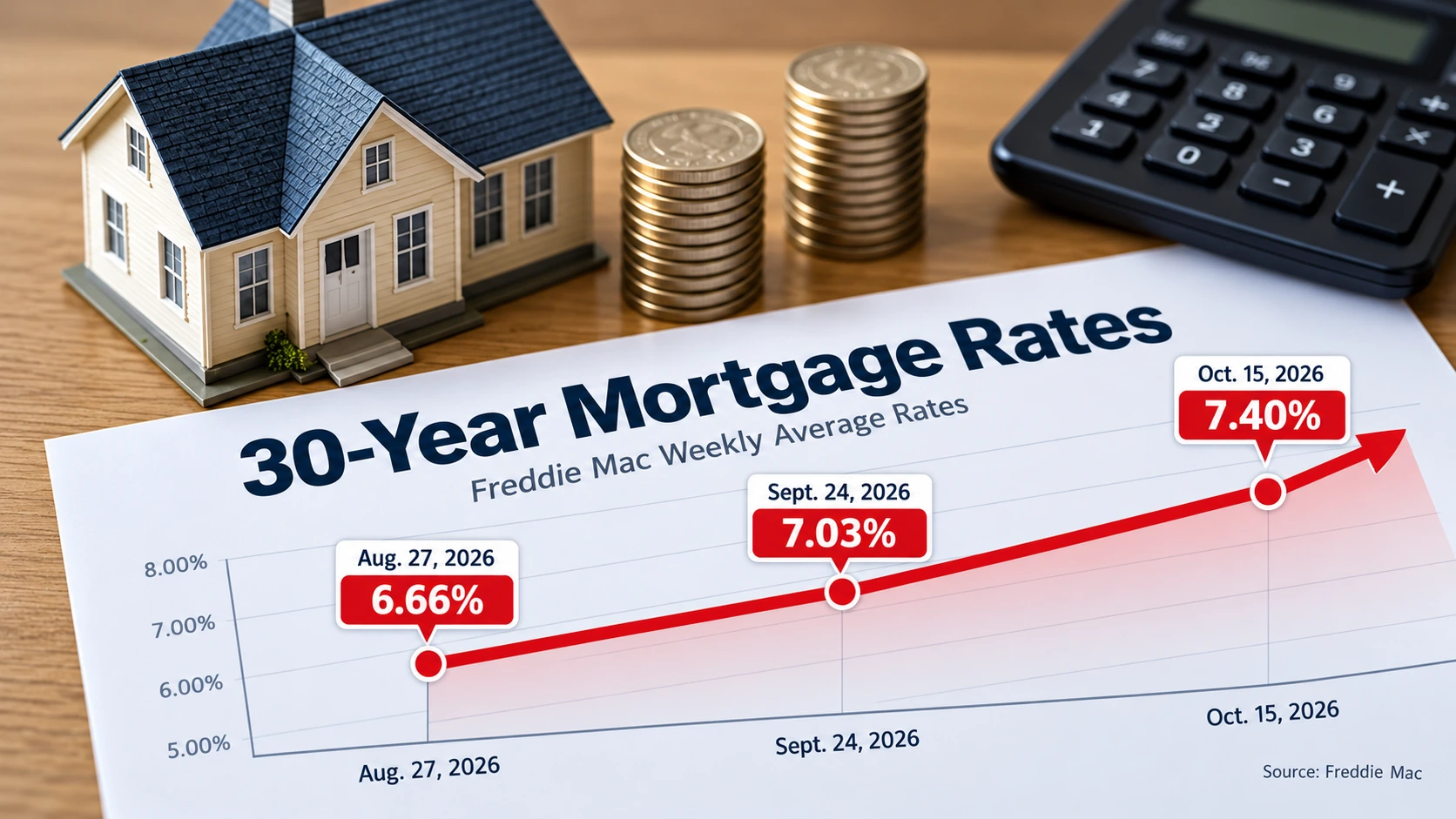
Mortgage rates have risen fast enough to erase much of the financial relief buyers might otherwise receive from modest price reductions.
Freddie Mac’s weekly survey shows how quickly the situation changed.
| Date | Average 30-Year Fixed Mortgage Rate |
|---|---|
| August 27, 2026 | 6.66% |
| September 24, 2026 | 7.03% |
| October 15, 2026 | 7.40% |
That increase matters because most buyers aren’t purchasing a home entirely with cash. They’re borrowing a substantial amount and repaying it over decades.
Higher interest rates mean a larger monthly payment on the same loan balance.
And a higher monthly payment can make the difference between qualifying for a mortgage and being turned down.
Why Did Mortgage Rates Rise So Quickly?
Mortgage rates are closely influenced by the market for long-term U.S. Treasury securities and mortgage-backed bonds.
When investors demand higher yields because of inflation concerns, government borrowing, or economic uncertainty, lenders generally face higher financing costs.
Those costs can translate into more expensive mortgages.
The surge in energy prices and inflation concerns surrounding the U.S.-Israeli conflict with Iran added pressure to bond yields in 2026. That was part of the broader financial backdrop to the mortgage-rate increase. (Reuters)
The Federal Reserve also influences borrowing costs, but it does not directly set the interest rate on a 30-year home loan.
Mortgage rates can therefore rise before the Fed announces a decision, or even when its short-term benchmark remains unchanged.
For a prospective buyer, the distinction matters less than the result: the amount a household can comfortably borrow can shrink very quickly.
If Sellers Are Cutting Prices, Why Aren’t Homes Selling?
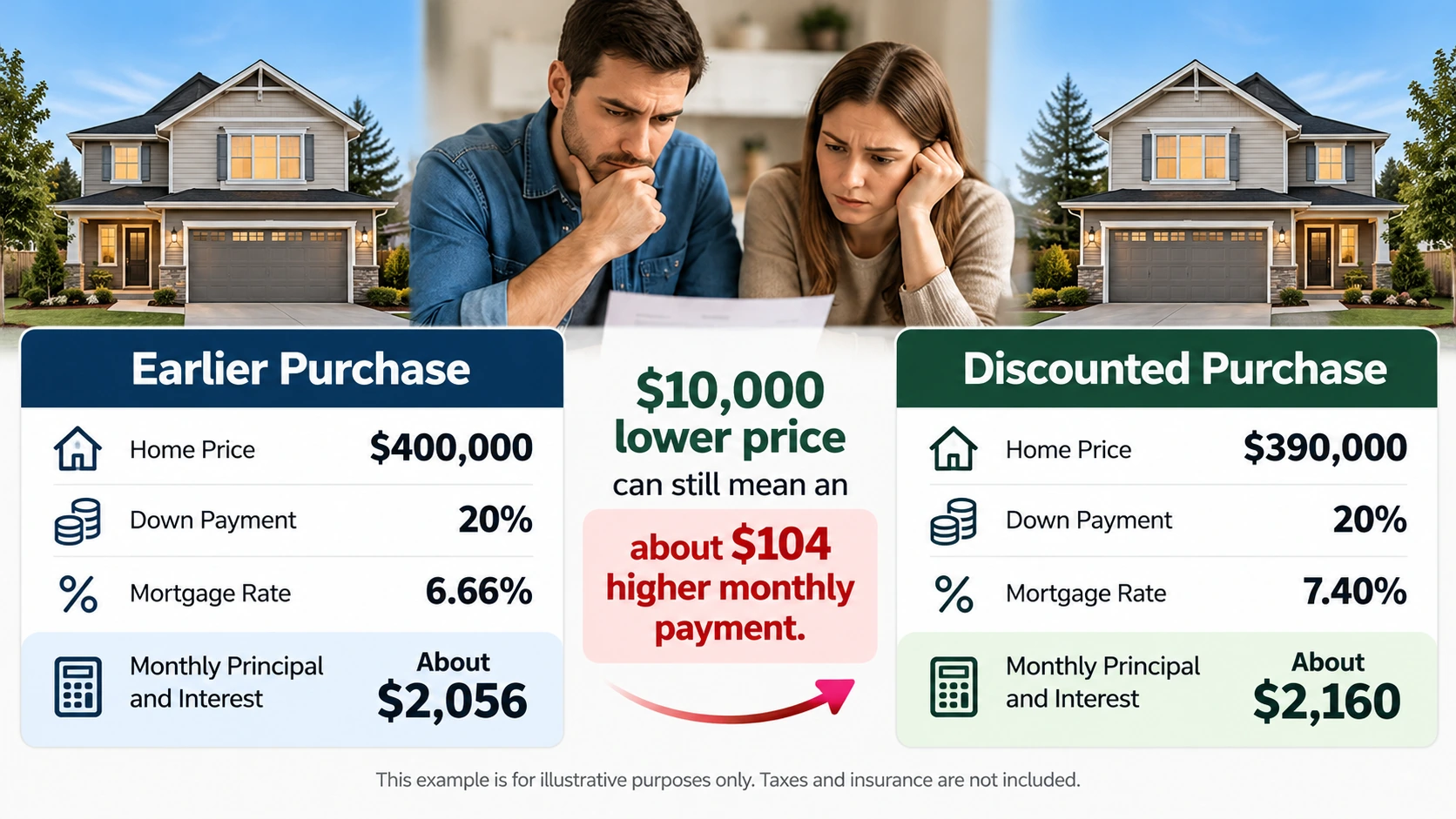
Because buyers don’t just care about the price written on the listing.
They care about what the house will cost them every month.
Consider a simplified example involving the same kind of home and two different mortgage-rate environments.
A house initially costs $400,000, with a buyer making a 20% down payment.
Later, the seller reduces the price by $10,000. But mortgage rates have increased.
Here’s what happens.
| Earlier Purchase | Discounted Purchase | |
|---|---|---|
| Home price | $400,000 | $390,000 |
| Down payment | 20% | 20% |
| Mortgage principal | $320,000 | $312,000 |
| Mortgage rate | 6.66% | 7.40% |
| Monthly principal and interest | About $2,056 | About $2,160 |
Illustrative calculation using a 30-year fixed-rate mortgage. Payments exclude property taxes, insurance, mortgage insurance, homeowners association dues, and other costs.
The seller lowered the price by $10,000.
But the buyer’s monthly mortgage payment still increased by approximately $104.
That is the central contradiction in today’s housing market.
A home can become cheaper to buy on paper while becoming more expensive to finance.
For buyers already stretching their budgets, a modest price cut may not be enough.
Are Price Cuts Really Becoming More Common?
Yes, although they aren’t happening everywhere.
In a report published October 15, Redfin said 22% of U.S. sellers with active listings had reduced their asking prices during the four weeks ending October 11.
That was up from 20.9% a year earlier and represented a record high within Redfin’s weekly data series.
During the same period, the median asking price was down 0.3% from a year earlier, while the median sale price was still up 0.5%. (Redfin)
Those figures measure different aspects of the market, so they shouldn’t be treated as interchangeable.
A price reduction means a seller has lowered an advertised price. It doesn’t automatically mean that the final price of a comparable home has fallen by the same amount.
And it certainly doesn’t guarantee that a buyer’s financing has become affordable.
Why Aren’t Home Prices Crashing If Demand Is So Weak?
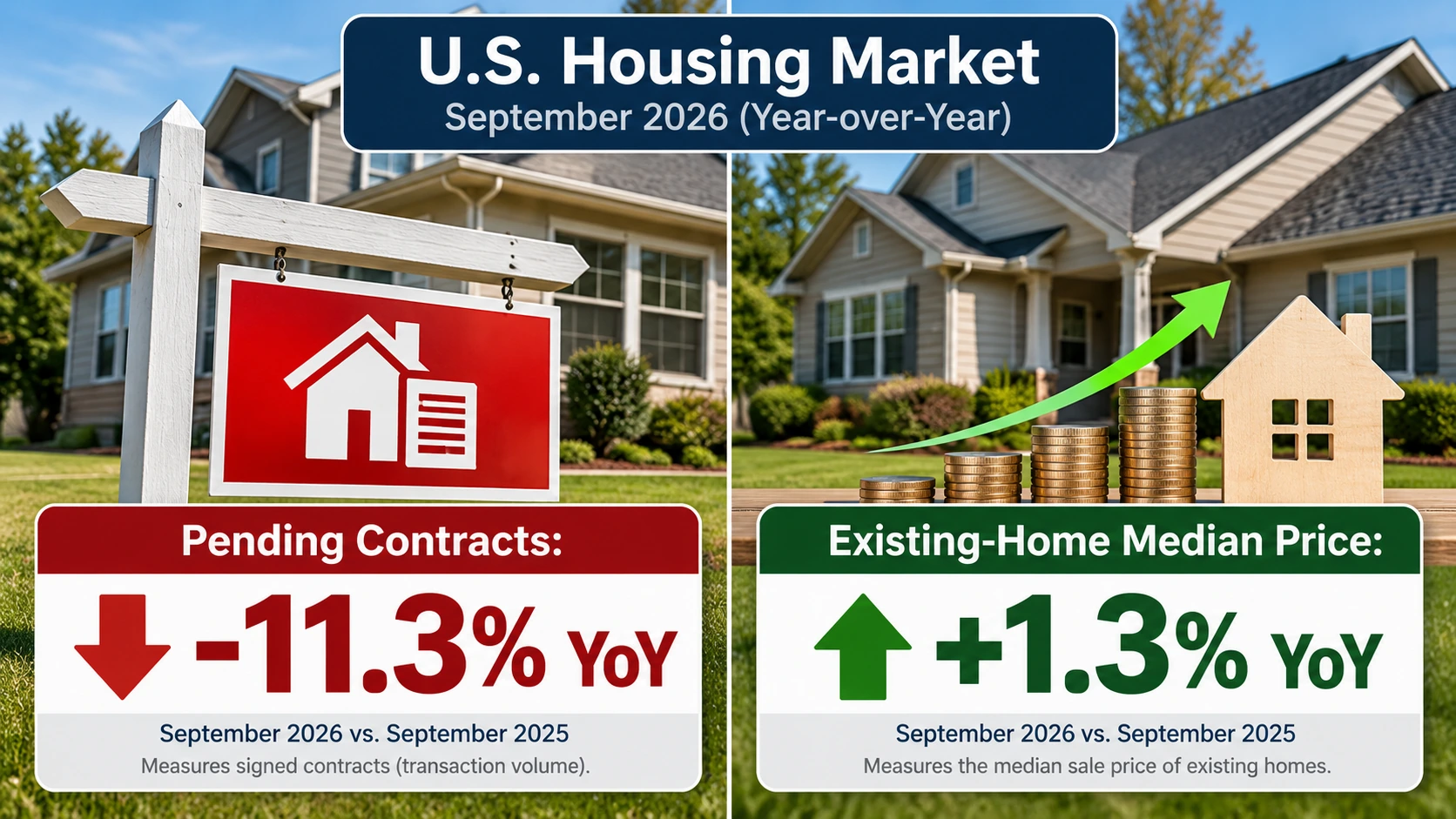
Because a collapse in the number of transactions is not the same thing as a collapse in property values.
There are two sides to a housing market: people willing to buy and people willing to sell.
If high interest rates push buyers away, transaction volume can fall sharply.
But if many owners also decide not to sell, there may still be relatively little pressure to slash prices.
That’s particularly important for homeowners who already have mortgages with much lower rates.
Selling a home with an inexpensive existing mortgage may mean giving up that rate and taking out a substantially more expensive loan on the next property.
For some households, staying put makes more financial sense than moving.
What Does the Latest Price Data Actually Show?
NAR reported that the median existing-home sale price reached $417,500 in September 2026, an increase of 1.3% from a year earlier.
Inventory reached approximately 1.60 million homes, representing 4.8 months of supply at the prevailing sales pace. (NAR)
That combination tells an important story.
Sales activity remains weak, inventory has increased, and buyers are gaining some bargaining power.
But nationwide home prices have not experienced a collapse.
NAR Chief Economist Lawrence Yun also pointed to the limited supply of distressed properties as one reason prices have remained relatively steady. (NAR)
Distressed sales include situations in which owners face serious financial difficulty and may be forced to sell under pressure.
When such forced sales are relatively uncommon, homeowners who dislike the offers they receive may simply postpone selling.
That doesn’t mean prices cannot fall.
It means the housing market can remain stuck with fewer buyers, fewer successful transactions, and prices that adjust only gradually.
Is This Finally a Buyer’s Market?
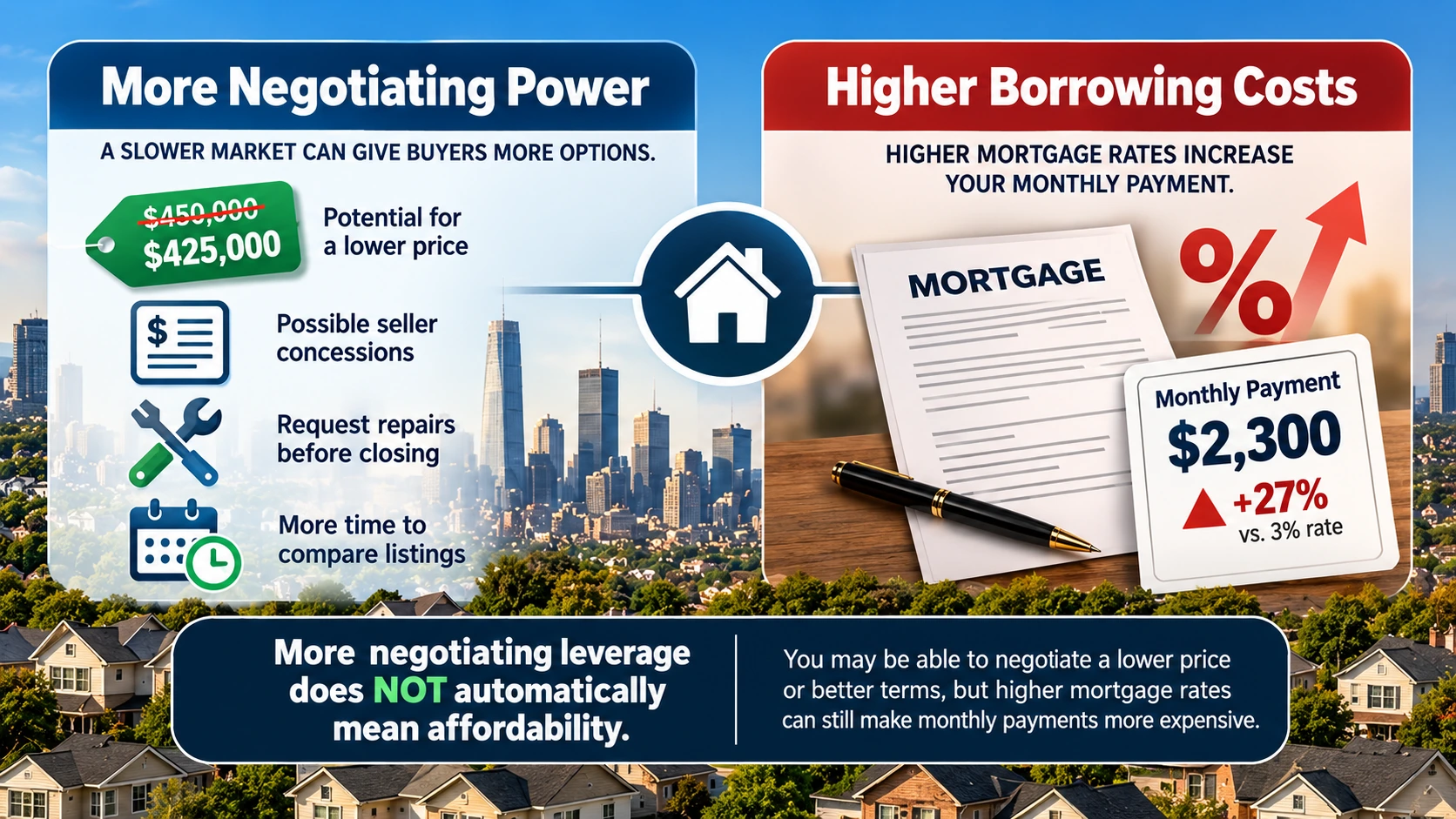
In many local markets, buyers have more negotiating leverage than they did a few years ago.
But having more leverage doesn’t necessarily mean a household can afford the purchase.
That’s the distinction between a buyer-friendly market and an affordable market.
A buyer-friendly market generally offers more room to negotiate because demand is weaker relative to available supply.
An affordable market means the total cost of owning a home fits comfortably within a household’s financial resources.
Those conditions can exist separately.
What Advantages Do Buyers Have Right Now?
Buyers who can qualify for financing may find opportunities that were difficult to secure during the pandemic-era buying frenzy.
These can include:
- Negotiating a lower purchase price.
- Asking the seller to contribute toward closing costs.
- Requesting repairs after a home inspection.
- Comparing multiple available properties without the same urgency.
- Exploring whether a seller or builder can contribute to a mortgage-rate buydown.
A mortgage-rate buydown reduces the borrower’s interest cost under the terms of a financing arrangement, sometimes temporarily and sometimes for the full loan term.
The value depends on who pays for it, how long the reduction lasts, and whether the overall financing package is competitive.
A lower advertised interest rate isn’t automatically the best deal if it comes with a higher purchase price or expensive upfront fees.
Redfin’s October 15 market report showed increasing price reductions and longer selling times, consistent with buyers having more room to negotiate in many areas. (Redfin)
But buyers still need to consider their complete monthly ownership costs.
The right question isn’t just, “How much can I negotiate off the asking price?”
It’s also, “Can I comfortably carry this house at the mortgage rate I’m actually being offered?”
Is the Housing Slowdown Happening Everywhere?
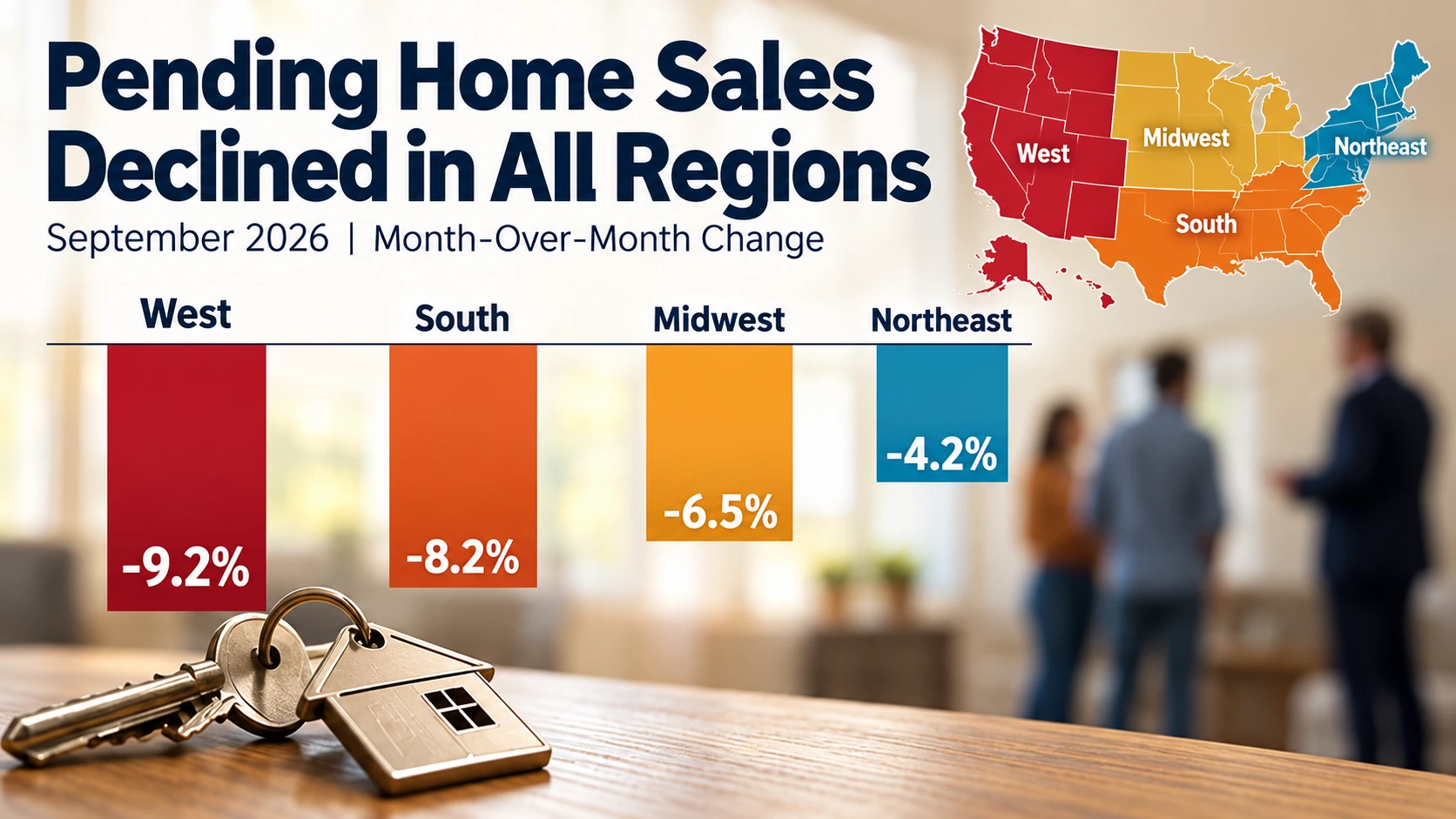
Every major U.S. region experienced weaker contract activity in September, but the decline wasn’t equally severe.
According to NAR’s October 20 report:
| U.S. Region | Monthly Change | Annual Change |
|---|---|---|
| West | -9.2% | -15.0% |
| South | -8.2% | -12.0% |
| Midwest | -6.5% | -8.7% |
| Northeast | -4.2% | -9.4% |
(NAR)
The West experienced the steepest month-over-month decline, followed by the South.
That doesn’t mean every neighborhood in the West became a bargain overnight.
The same regional percentage can hide enormous differences between individual cities, suburbs, and property types.
A market with abundant new construction may behave differently from an established neighborhood with very few homes for sale.
A luxury property market may also respond differently from the market for entry-level homes.
For someone considering a purchase, national data provide the economic backdrop. Local inventory, comparable sale prices, days on market, and lending conditions determine what the actual opportunity looks like.
The national slowdown is real, but the negotiating position of an individual buyer remains local.
What Should Homebuyers and Sellers Watch Next?
The housing market’s next major test is whether mortgage rates ease enough to bring buyers back—or whether weak demand begins to put more pressure on prices.
Three developments deserve particular attention.
1. Mortgage Rates and Long-Term Bond Yields
Freddie Mac’s weekly mortgage survey provides a consistent benchmark for tracking borrowing costs.
A sustained decline could bring some priced-out buyers back into the market.
But a brief decline doesn’t guarantee that rates will remain lower, and an individual borrower’s rate may differ from the national average.
Buyers should compare actual lender quotes, including annual percentage rates, fees, and closing costs, rather than relying on a single national headline figure.
2. Pending Contracts and Completed Sales
NAR’s pending sales figures help show whether buyers are returning to the market before those transactions close.
The association’s published schedule calls for October 2026 existing-home sales data on November 12 and October pending home sales data on November 18.
Those releases will help clarify whether September’s exceptionally weak contract activity continued. (NAR)
One better month would be encouraging. Several improving months would offer stronger evidence of a lasting change.
3. Prices, Inventory, and Seller Concessions
Buyers should watch whether the number of available homes keeps growing, whether listings remain unsold for longer, and whether sellers offer larger concessions.
Sellers, meanwhile, need to understand that an asking price isn’t determined by what a home was worth during a more active market.
A property may be attractive, well-maintained, and competitively located, yet still sit unsold because the financing costs are beyond the reach of potential buyers.
For both sides, the monthly cost of homeownership may be just as important as the sticker price.
Bottom Line: What This Story Really Means
The collapse in U.S. pending home sales isn’t simply a story about people refusing to buy overpriced houses.
It’s a story about how the cost of financing has become powerful enough to overwhelm some of the advantages buyers are finally gaining.
The September 2026 Pending Home Sales Index fell to its lowest level since records began in 2001. That happened even as sellers became more willing to reduce asking prices and negotiate.
Higher mortgage rates explain much of the contradiction.
A $10,000 price reduction may sound attractive, but if the interest rate on the loan has risen enough, the buyer can still face a larger monthly payment than before.
Meanwhile, homeowners who aren’t under financial pressure can decide not to sell, preventing transaction weakness from immediately translating into widespread price collapses.
America’s housing market has become more negotiable without necessarily becoming more affordable.
For buyers, the biggest opportunity may lie in the combination of a realistic purchase price and manageable financing.
For sellers, the challenge is recognizing that a buyer’s willingness to pay and ability to obtain a mortgage are not the same thing.
Until those conditions improve together, more price cuts may not be enough to restore a healthy housing market.
U.S. Pending Home Sales: Key Questions Explained
Q. How much did U.S. pending home sales fall in September 2026?
Pending home sales fell 7.3% from August and 11.3% from September 2025, according to the National Association of Realtors.
Q. Was the September 2026 Pending Home Sales Index really a record low?
Yes. The index fell to 66.0, its lowest level since NAR began the series in 2001. It measures contract-signing activity, not home prices.
Q. Does a 7.3% drop in pending sales mean home prices fell 7.3%?
No. The 7.3% figure measures the decline in signed purchase contracts from the previous month. It does not describe the change in property values.
Q. Why are homes still expensive when fewer people are buying?
Weak demand does not automatically produce large price declines. Some owners delay selling rather than accept lower offers, and the relatively limited number of distressed properties reduces pressure for forced sales.
Q. What was the average 30-year mortgage rate in October 2026?
Freddie Mac reported an average 30-year fixed mortgage rate of 7.40% on October 15, 2026. Individual lender offers vary by borrower and loan characteristics.
Q. Are more U.S. homeowners cutting their asking prices?
Yes. Redfin reported that 22% of sellers with active listings reduced their asking prices during the four weeks ending October 11, up from 20.9% a year earlier.
Q. Can monthly mortgage payments rise even when home prices fall?
Yes. A sufficiently large increase in the mortgage interest rate can outweigh a reduction in the purchase price, producing a higher monthly principal-and-interest payment.
Q. Does a buyer’s market mean homes are affordable?
No. A buyer’s market generally means purchasers have more negotiating leverage. Affordability depends on purchase prices, mortgage rates, income, down payments, and other ownership costs.
Q. Which U.S. region had the biggest pending home sales decline?
The West had the steepest monthly decline in September 2026, at 9.2%, followed by the South at 8.2%. The Midwest declined 6.5%, and the Northeast fell 4.2%.
Q. When will the next major U.S. home sales reports be released?
NAR scheduled October 2026 existing-home sales for November 12 and October pending home sales for November 18. Both reports can help indicate whether housing demand is stabilizing.
Did this help make the story clearer? 🙂
WIN keeps unpacking the “why” behind the news—clearly and simply!
Sources
September 2026 Pending Home Sales and Contract Activity
National Association of Realtors — Pending Home Sales Decreased 7.3% in September, October 20, 2026
Reuters — U.S. Pending Home Sales Tumble to Record Low in September, October 20, 2026
Mortgage Rates and Financing Costs
Freddie Mac — Primary Mortgage Market Survey Historical Archive
Freddie Mac — Understanding Mortgage Rates and Affordability
Home Prices, Seller Price Cuts, and Inventory
Redfin — Asking Prices Fall for the First Time Since March, October 15, 2026
National Association of Realtors — September 2026 Existing-Home Sales and Market Data
Upcoming Housing Market Data
National Association of Realtors — 2026 Statistical News Release Schedule
Keep Reading
Why Do Mortgage Websites Show Different Rates for the Same 30-Year Loan?
National averages can differ because the surveys measure different borrowers, loan products, fees, and time periods. Understanding those differences makes it easier to compare actual financing offers.
Why Are Mortgage Rates Back Above 7%—and Why Does Every Website Show a Different Number?
Why Can Newly Built Homes Sell When Existing-Home Sales Are Struggling?
Builders can offer financing incentives and pricing arrangements that individual homeowners may find harder to match. That helps explain why new construction and existing-home sales sometimes move in different directions.
Mortgage Rates Are High—So Why Did New-Home Sales Jump 6.4%?