
Why Did Stocks Rise After the U.S. Added Just 29,000 Jobs?

Wait—only 29,000 jobs?
So why did stocks go up?
That can sound backward. A weak jobs report would seem like bad news for companies, workers, and the economy. But financial markets were looking at a different question: Would softer hiring make the Federal Reserve less likely to raise interest rates again?
On October 2, the answer appeared to shift toward “yes.” The September employment report came in much weaker than economists had expected, wage growth cooled, and the unemployment rate edged up. Investors responded by reducing expectations for another near-term Fed rate increase, and major stock indexes rose. (Reuters · AP)
That does not mean Wall Street suddenly wanted Americans to lose their jobs.
The market reaction makes more sense once one distinction is clear: weak enough to reduce interest-rate pressure can be good for stocks—as long as the economy does not look weak enough to be falling into a serious downturn.
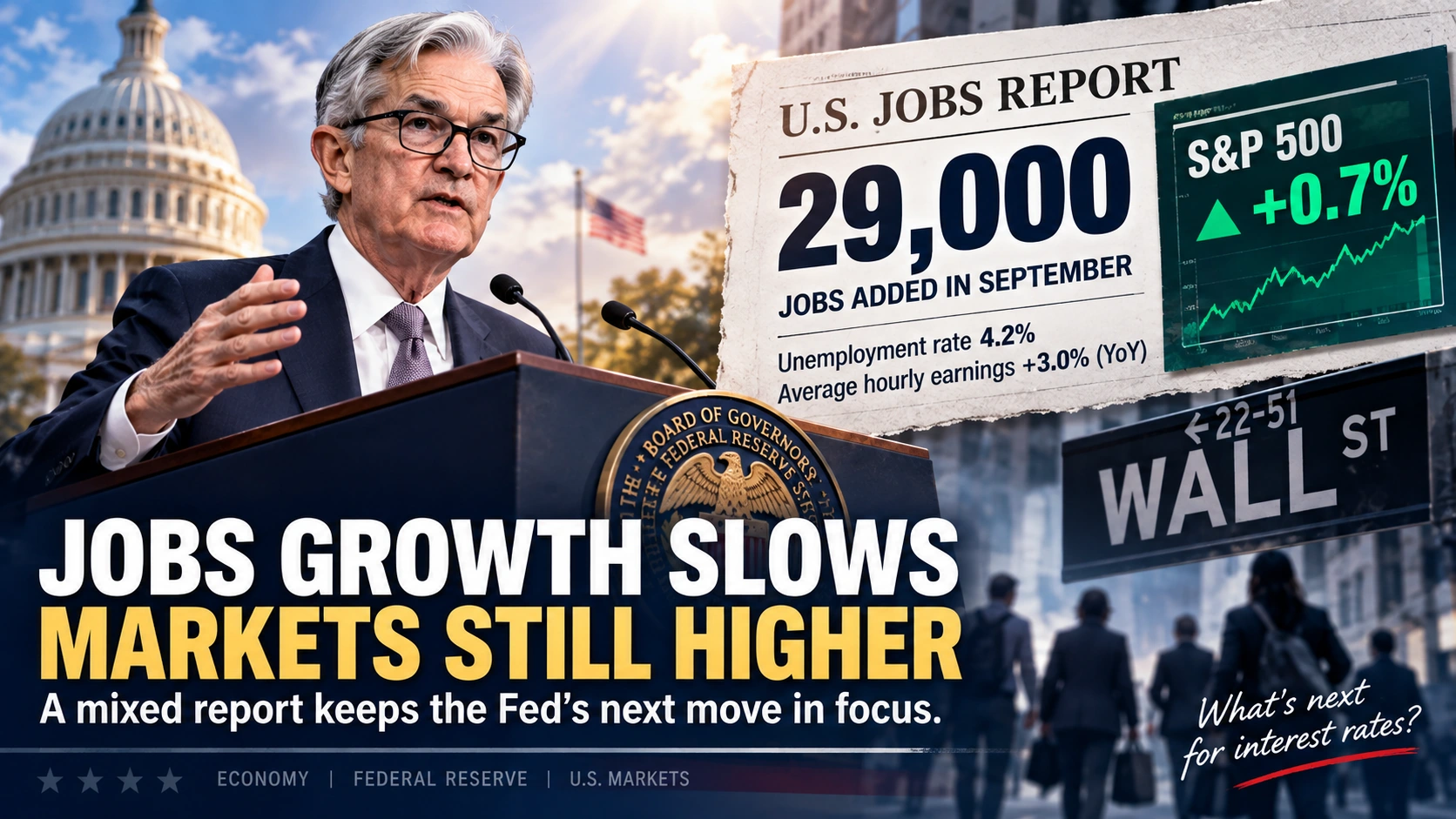
※ Images in this article are AI-generated illustrations created to help explain the story. They are not actual photographs, and depictions of people, places, or events may differ slightly from reality.
And September landed surprisingly close to that uncomfortable middle ground.
What Did the September Jobs Report Actually Say?
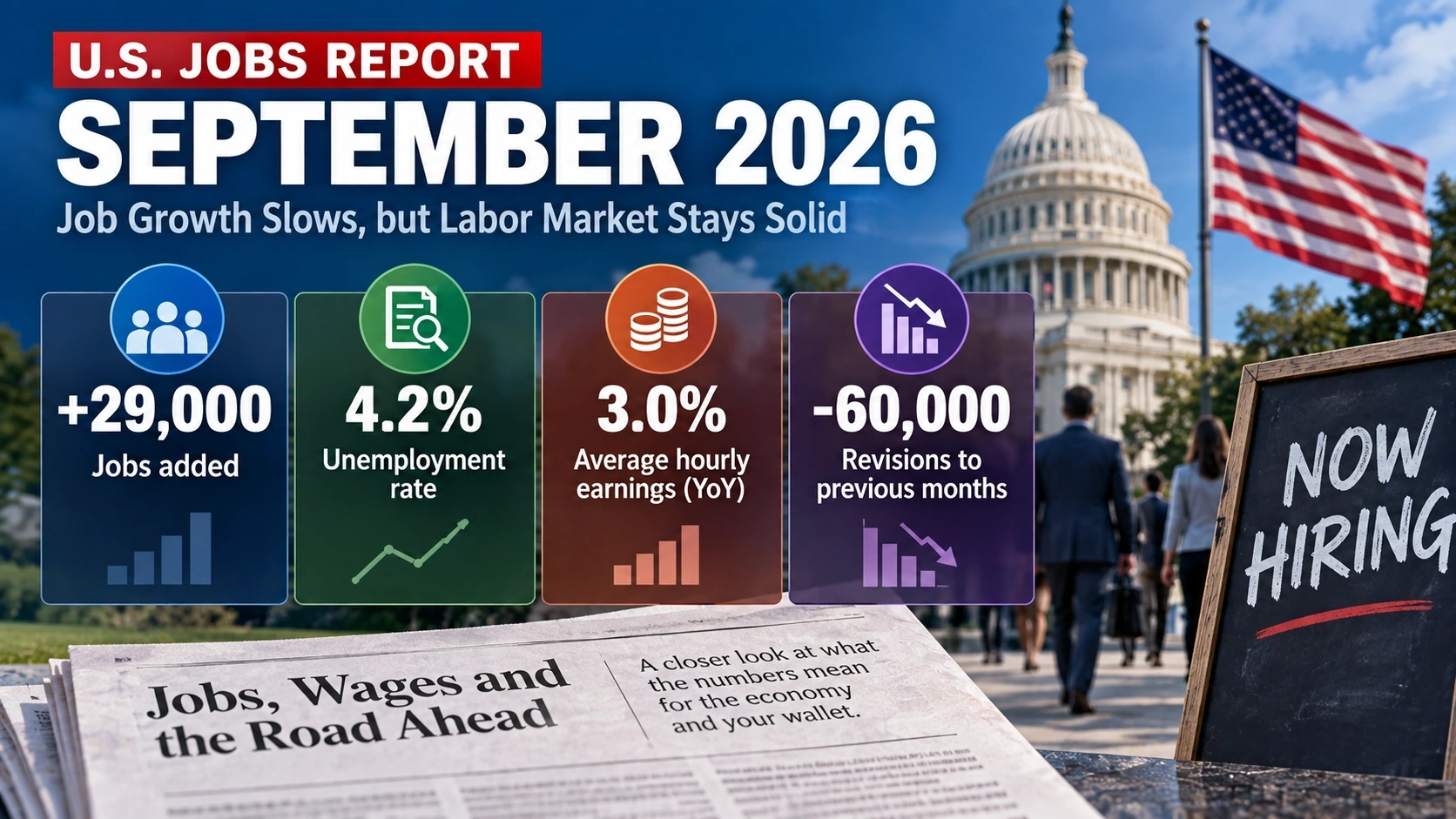
The U.S. economy added 29,000 nonfarm payroll jobs in September 2026, while the unemployment rate moved from 4.1% to 4.2%, according to the Bureau of Labor Statistics. Economists surveyed by Reuters had expected about 90,000 new jobs. (BLS · Reuters)
The headline was not the only weak part.
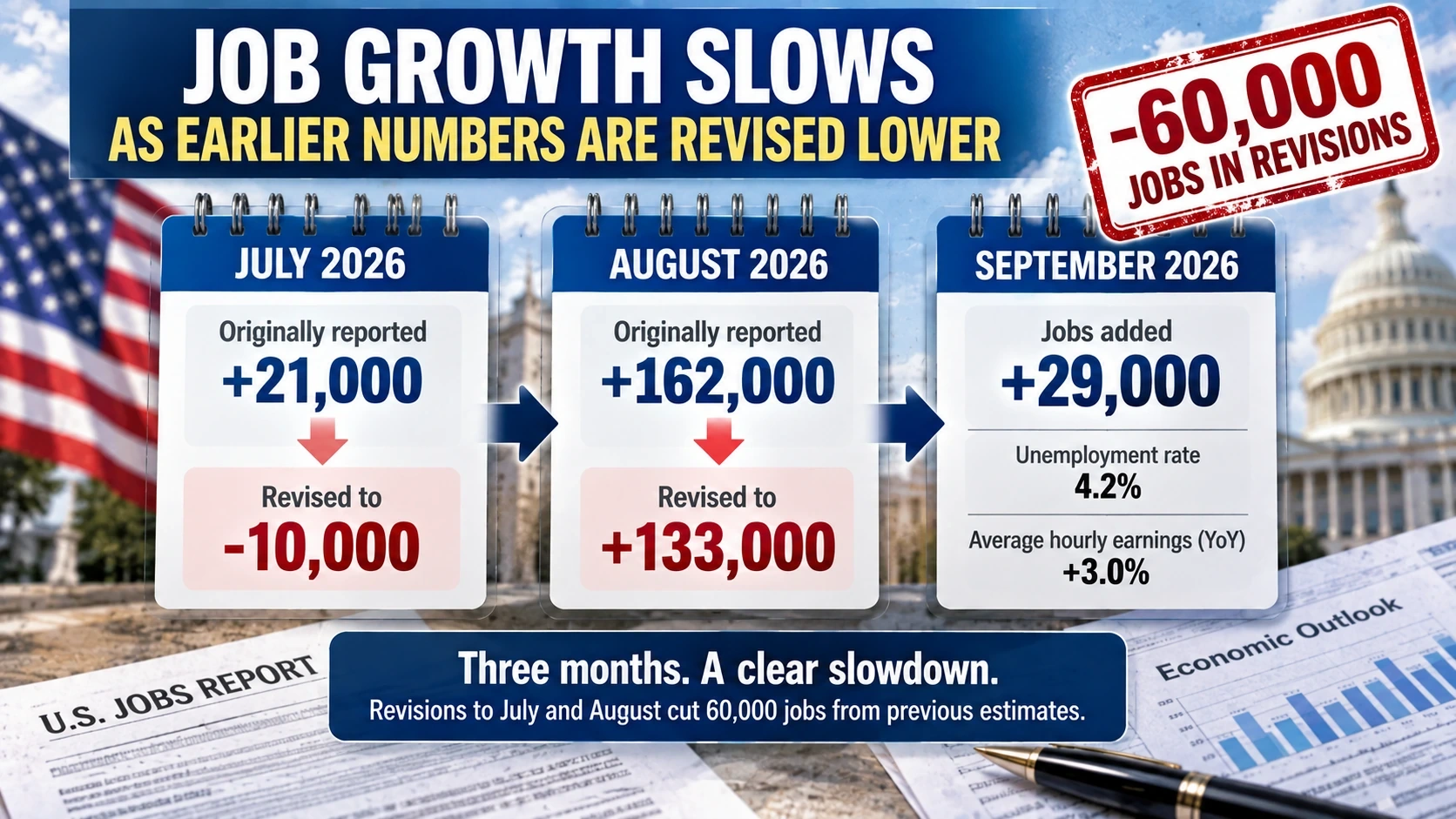
Average hourly earnings rose just 0.1% during September and were 3.0% higher than a year earlier. The government also revised its previous estimates downward: July payroll growth was changed from +21,000 to -10,000, while August was reduced from +162,000 to +133,000. Together, those revisions erased 60,000 jobs from the previous estimates. (BLS)
Here is the report in one view:
| Indicator | September 2026 | Why it matters |
|---|---|---|
| Nonfarm payroll growth | +29,000 | Hiring was much weaker than expected |
| Unemployment rate | 4.2% | Up from 4.1% in August |
| Labor-force participation | 61.8% | More people entered or returned to the labor force |
| Average hourly earnings, 12-month change | +3.0% | Wage pressure continued to cool |
| July-August revision | -60,000 combined | Earlier hiring was weaker than first reported |
BLS said employment changed little across all major industries. Health care continued to add jobs, but even there growth was slower than its recent average. (BLS)
So this was not simply one disappointing number.
Several pieces of the report pointed toward a labor market that is still functioning, but hiring much more cautiously than before.
Why Would Weak Jobs Data Make Stocks Rise?
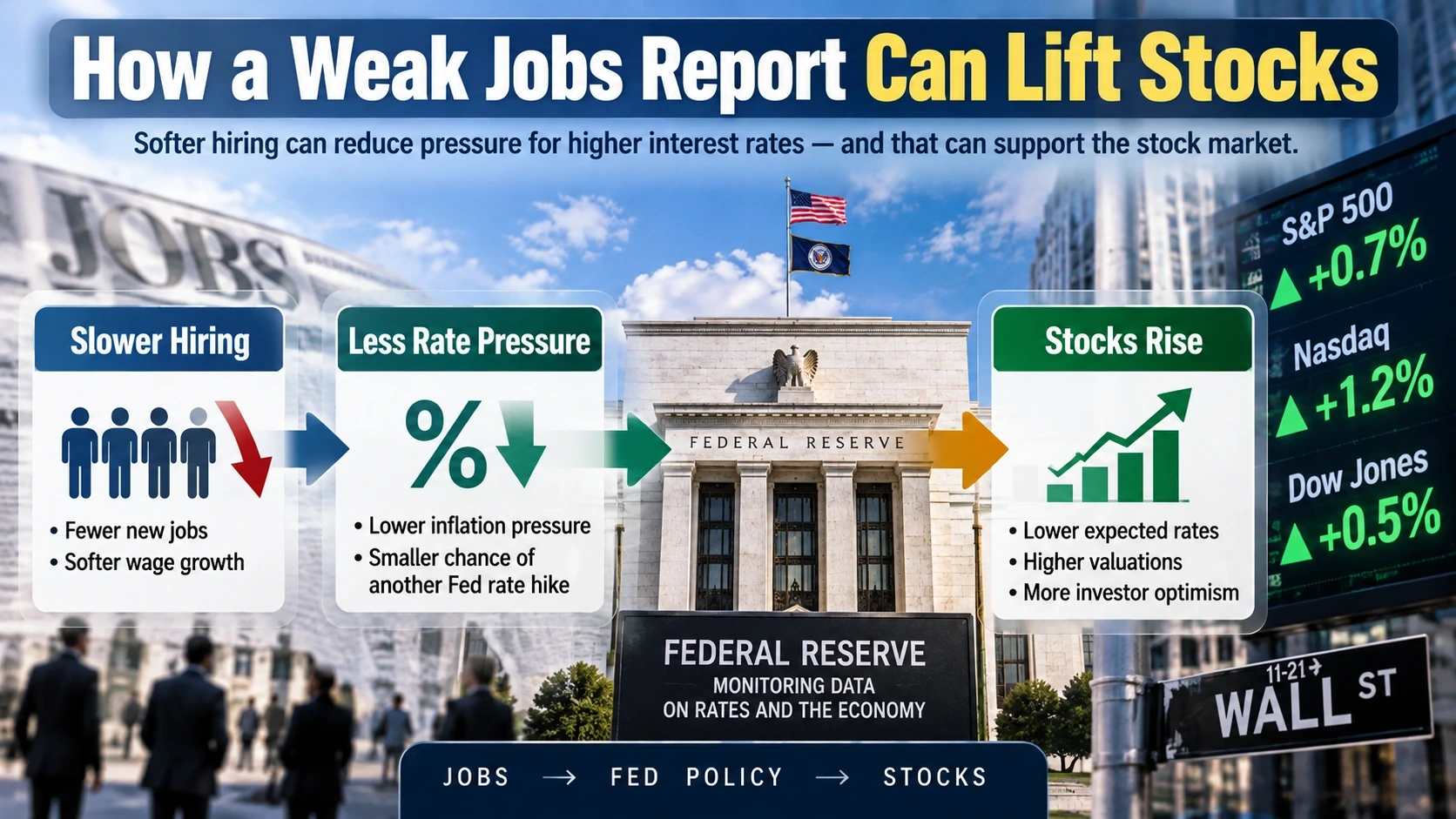
Because stock investors were not judging the jobs report in isolation.
They were judging what it might make the Federal Reserve do next.
The Fed raised its target range for the federal funds rate by 0.25 percentage point on September 16, to 3.75%–4.00%. It said inflation remained elevated and that the increase would support a return toward its 2% goal. (Federal Reserve)
Higher interest rates can weigh on stocks in several ways. They make borrowing more expensive for businesses and consumers, raise the appeal of interest-bearing assets, and can reduce the present value investors place on profits expected far into the future.
Then came the September jobs report.
Slower hiring and softer wage growth suggested that the labor market might be generating less inflation pressure than the Fed feared. That reduced investors’ concern that policymakers would need another immediate increase.
On October 2, the S&P 500 gained 0.7%, the Nasdaq Composite rose 1.2%, and the Dow Jones Industrial Average added 0.5%. (AP)
A useful way to think about the reaction is this:
| Jobs report signal | Normally bad for the economy? | Why stocks might like it |
|---|---|---|
| Slower hiring | Yes, if it becomes severe | Can reduce pressure for higher Fed rates |
| Slower wage growth | Mixed | Can ease concerns about wage-driven inflation |
| Slightly higher unemployment | Negative if persistent | Can make monetary tightening less urgent |
| Mass layoffs or recession | Clearly negative | Eventually overwhelms any benefit from lower rates |
That final row matters.
“Bad news is good news” only works up to a point.
If job losses became severe enough to threaten consumer spending, corporate profits, or a recession, markets could easily react in the opposite direction.
Did Unemployment Rise Because Companies Were Firing Workers?
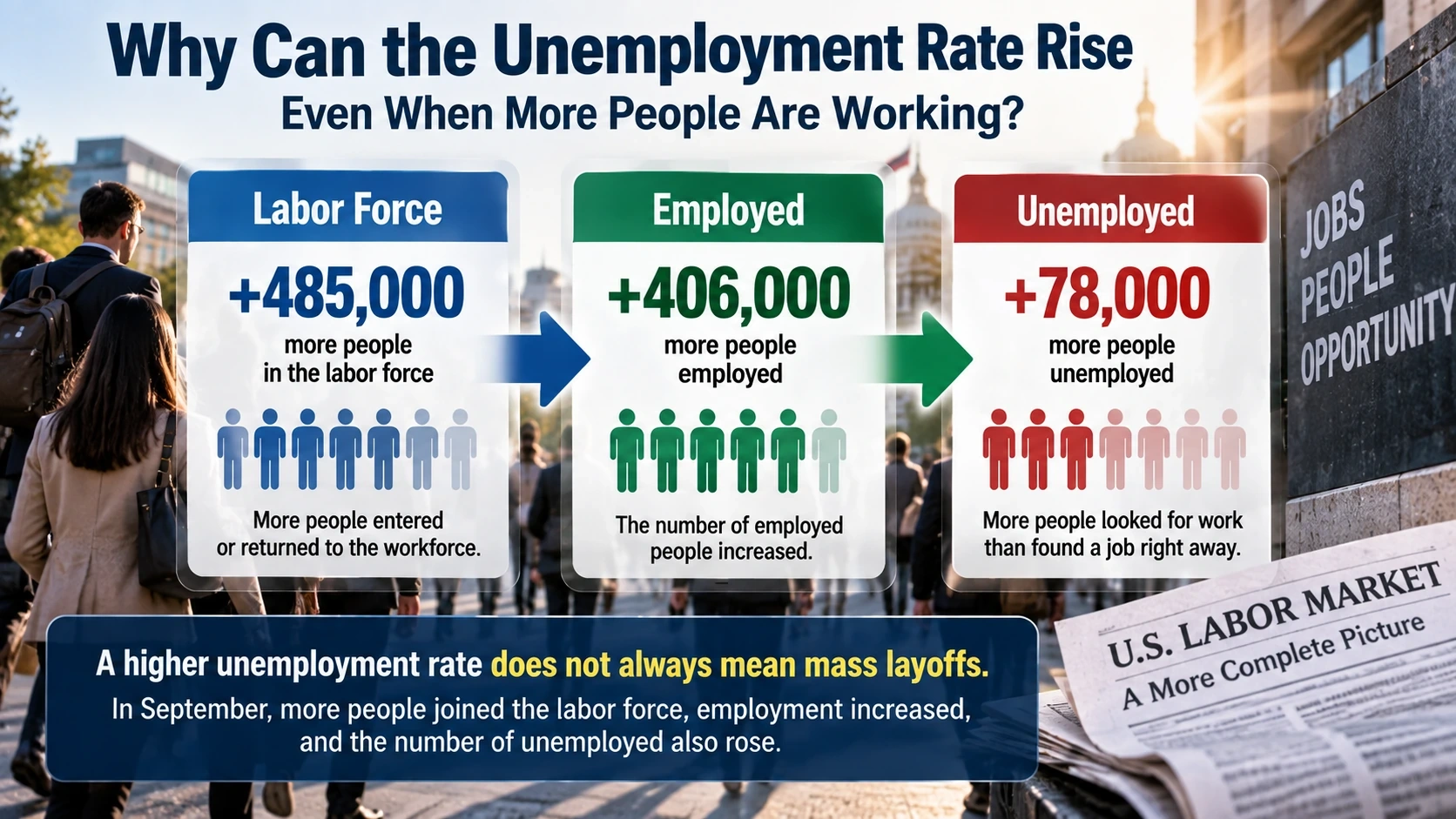
Not necessarily.
This is one of the easiest parts of the monthly jobs report to misunderstand.
The unemployment rate comes from a survey of households, while the headline payroll figure comes from a separate survey of businesses and government agencies. The two measures answer different questions. (BLS)
In September, the civilian labor force increased by about 485,000 people. The number classified as employed increased by about 406,000, while the number classified as unemployed rose by about 78,000. Labor-force participation increased from 61.6% to 61.8%. (BLS)
That can sound contradictory until you picture what the unemployment rate actually measures.
Suppose 100 people are either working or actively looking for work. Four are unemployed.
Then five more people begin looking for jobs. If only four immediately find work, the number of employed people rises—but so does the number of unemployed job seekers.
A rising unemployment rate therefore does not automatically mean employers suddenly fired huge numbers of people.
Other data point in the same direction. The Labor Department reported that layoffs and discharges were essentially unchanged at about 1.6 million in August, while job openings stood at roughly 7.1 million. (BLS JOLTS)
The picture looks less like a wave of firings and more like a market where companies are reluctant to hire aggressively and workers may find it harder to move into new jobs.
Is 29,000 Jobs a Sign That a Recession Has Started?
No. One weak payroll report does not establish that the United States is in a recession.
But the report does give economists another reason to watch the labor market more carefully.
The first concern is the trend. September’s 29,000 gain looks weaker when combined with downward revisions to July and August. BLS says total nonfarm payroll employment has increased by an average of about 45,000 per month over the previous 12 months. (BLS)
The second concern is how broadly employers are hiring. September did not show a large burst of job creation across many industries. Instead, BLS described employment in all major industries as changing little.
At the same time, the unemployment rate has remained in a relatively narrow range rather than surging sharply. The more accurate description is not “recession confirmed.”
It is a slow-hiring labor market with less room for deterioration than investors would like.
That distinction also explains why markets could rally without treating the report as purely good economic news.
Why Does This Report Matter So Much to the Federal Reserve?
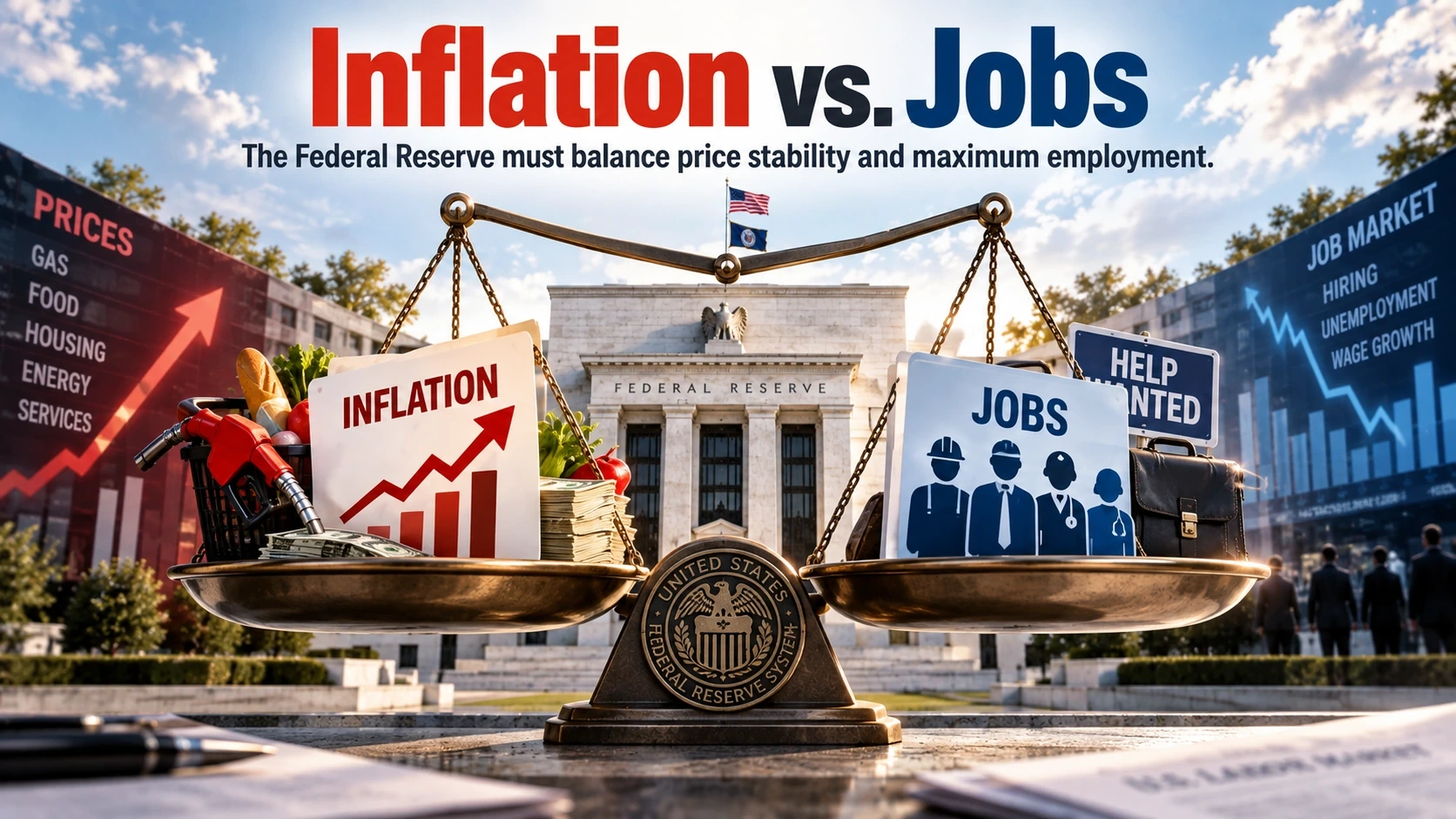
Because the Fed has two major responsibilities: keeping inflation under control and supporting maximum employment.
Those goals can point in different directions.
When inflation is too high, higher interest rates can cool borrowing and spending. But if hiring slows too much, keeping rates high—or raising them further—can add more pressure to the labor market.
On September 16, the Fed concluded inflation was still enough of a concern to justify its first rate increase since 2023. Its policy statement said economic activity was expanding at a solid pace, job gains had kept pace with the workforce, and inflation remained elevated. (Federal Reserve)
Just over two weeks later, the September jobs report gave policymakers new evidence that hiring had cooled.
That does not automatically reverse the September decision.
Cleveland Fed President Beth Hammack said after the jobs report that officials still had time to evaluate additional information before deciding their next move. (Reuters)
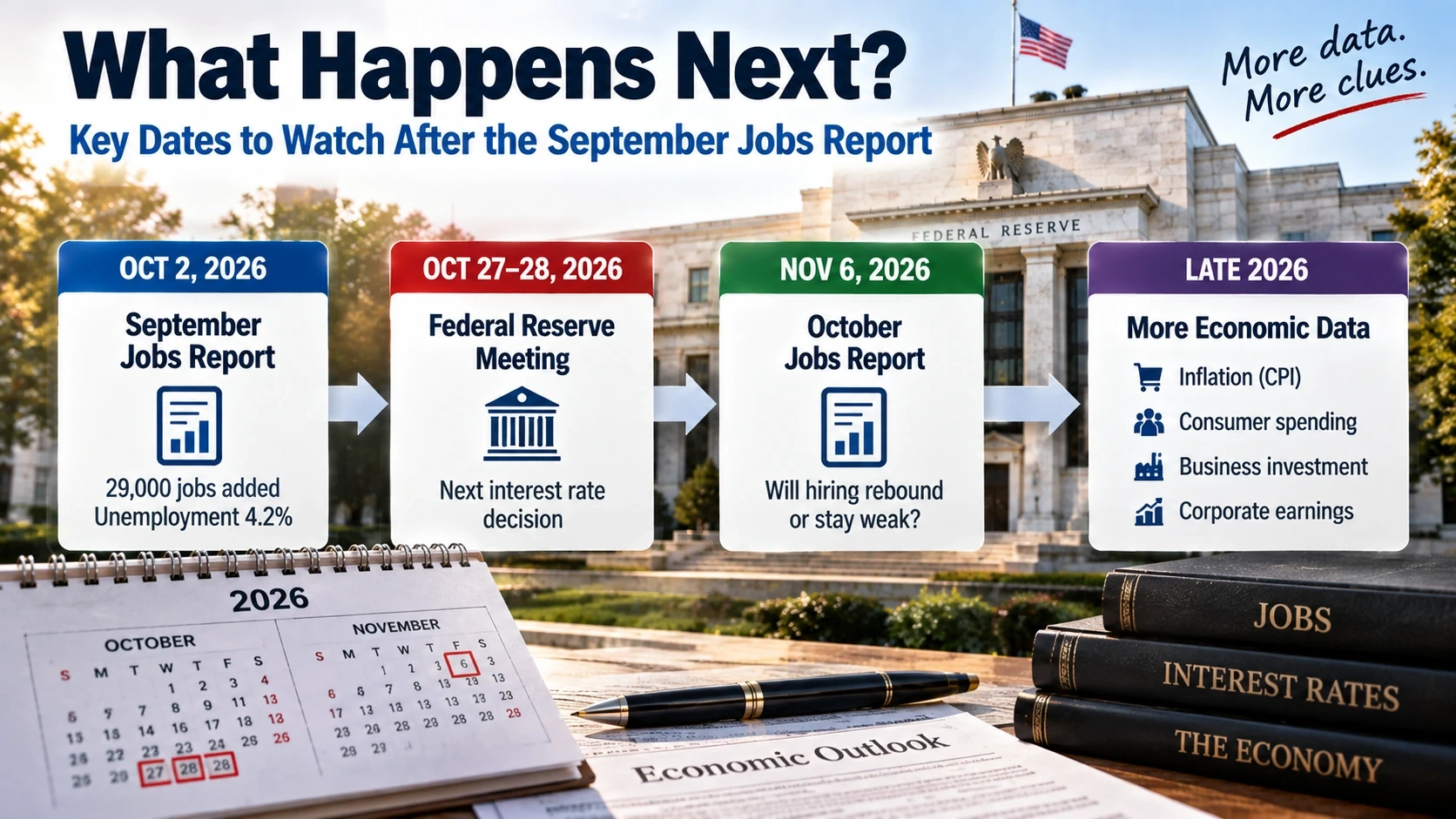
The Fed’s next scheduled policy meeting is October 27–28. (Federal Reserve)
That means September’s employment report is important—but it is not the last piece of evidence policymakers will see.
Does a Softer Jobs Report Mean Your Mortgage or Credit-Card Rate Is About to Fall?
No.
A weaker jobs report can influence interest-rate expectations, but it does not instantly change every rate households pay.
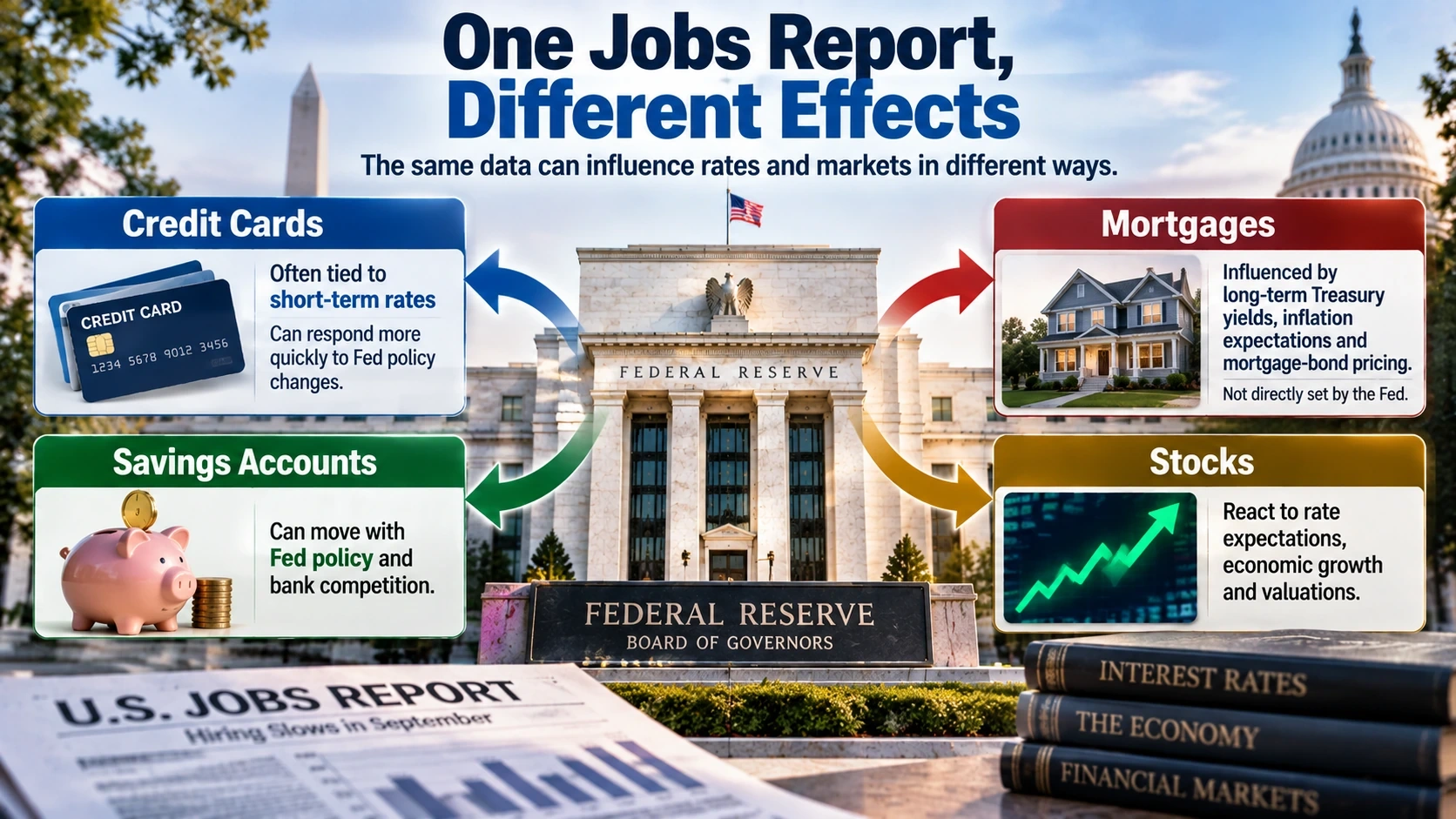
Credit-card rates and some home-equity lines are tied relatively closely to short-term benchmark rates and can respond quickly when Fed policy changes. Fixed mortgage rates work differently: they are heavily influenced by longer-term Treasury yields, inflation expectations, and mortgage-bond pricing.
That means investors can push some market interest rates lower before the Fed changes policy if they believe future rate increases have become less likely.
But the reverse is also possible. If inflation expectations rise, long-term borrowing costs can remain high even while markets expect the Fed to pause.
For borrowers, therefore, the September jobs report is not a promise of cheaper loans.
It is one piece of evidence that can change expectations about where interest rates may go next.
What Should Investors and Workers Watch Next?
Two questions now matter more than the September headline alone.
First, does hiring stay weak?
The October employment report is scheduled for November 6 at 8:30 a.m. ET. If payroll growth strengthens again, September may look like another volatile month in an uneven labor market. If hiring remains weak and earlier months are revised lower again, concerns about a broader slowdown would become harder to dismiss. (BLS)
Second, does inflation cool enough to give the Fed room to stop tightening?
That is the tension markets are trying to price.
| What happens next | Why markets care |
|---|---|
| Hiring rebounds | The Fed has more room to focus on inflation |
| Hiring stays weak | Another rate increase becomes harder to justify |
| Inflation stays high | The Fed may still feel pressure to keep policy tight |
| Inflation cools while hiring weakens | Pressure to stop raising rates becomes stronger |
The October 27–28 Fed meeting will provide the next major policy decision. The following jobs report will then show whether September’s weakness was temporary or part of a more persistent slowdown. (Federal Reserve · BLS)
Bottom Line: What This Story Really Means
The September jobs report looked bad at first glance: only 29,000 new payroll jobs, a slightly higher unemployment rate, slower wage growth, and another round of downward revisions.
Stocks rose because investors saw a second message inside those weak numbers.
A cooling labor market could make the Federal Reserve less willing to raise interest rates again, and lower expected interest rates can make stocks more attractive.
But Wall Street is walking a narrow line. A modest slowdown can reduce inflation and rate pressure. A much deeper slowdown would threaten company profits, household spending, and the economy itself.
So the market was not celebrating weak employment.
It was betting that September may have been weak enough to restrain the Fed, but not weak enough to signal an economic breakdown.
U.S. Jobs Report: Key Questions Explained
Q. How many jobs did the U.S. add in September 2026?
U.S. nonfarm payroll employment increased by 29,000 jobs in September 2026, according to the Bureau of Labor Statistics.
Q. What was the unemployment rate in September 2026?
The unemployment rate was 4.2%, up slightly from 4.1% in August.
Q. Why did stocks rise after a weak jobs report?
Investors interpreted weaker hiring and slower wage growth as reasons the Federal Reserve might be less likely to raise interest rates again soon. Lower expected rates can support stock valuations.
Q. Does a higher unemployment rate mean companies suddenly fired more people?
No. September’s labor force grew by about 485,000 people while employment also increased by about 406,000. More people looking for work can push the unemployment rate higher even without a surge in layoffs.
Q. Were previous jobs numbers revised?
Yes. July was revised from a gain of 21,000 jobs to a loss of 10,000, and August was revised from +162,000 to +133,000. The combined revision removed 60,000 jobs from earlier estimates.
Q. Does 29,000 jobs mean the United States is in a recession?
No. One monthly payroll report cannot establish a recession. The number matters because it adds to evidence that hiring is slow, but other labor-market measures do not show a broad wave of layoffs.
Q. Will the Federal Reserve cut rates because of this jobs report?
Not automatically. The report reduced pressure for another near-term increase, but Fed officials will consider inflation and other economic data before the October 27–28 meeting.
Q. Will mortgage rates fall because hiring was weak?
Not necessarily. Fixed mortgage rates depend heavily on long-term bond yields, inflation expectations, and mortgage-market pricing, so they do not move one-for-one with the federal funds rate.
Q. When is the next U.S. jobs report?
The Bureau of Labor Statistics is scheduled to release the October 2026 employment report on November 6, 2026, at 8:30 a.m. ET.
Did this help make the story clearer? 🙂 WIN keeps unpacking the “why” behind the news—clearly and simply!
Sources
September Jobs Report and Labor-Market Data
Bureau of Labor Statistics — September 2026 Employment Situation
Bureau of Labor Statistics — Current Population Survey Latest Numbers
Bureau of Labor Statistics — August 2026 Job Openings and Labor Turnover Survey
Bureau of Labor Statistics — November 2026 Release Schedule
Market Reaction and Federal Reserve Expectations
Reuters — Soft September Jobs Report Sends Markets Higher
Reuters — U.S. Job Growth Undershoots Expectations in September
AP — U.S. Stocks Rise After the Latest Jobs Report Eases Inflation Worries
Federal Reserve Policy and Next Steps
Federal Reserve — September 16, 2026 FOMC Statement
Federal Reserve — FOMC Meeting Calendar
Reuters — Fed’s Hammack Says There Is Still Time to Weigh the Next Policy Move
Keep Reading
Why Did the Fed Raise Rates If the Job Market Is Now Slowing?
The September jobs report changes the debate over what the Fed may do next. The earlier WIN explainer shows why policymakers raised rates in September and how that decision reaches mortgages, credit cards, and savings.
Why Did the Fed Raise Rates Again—and What Does It Mean for Mortgages, Credit Cards, and Savings?
Why Can Mortgage Rates Stay High Even When Fed Expectations Change?
A softer jobs report can lower expectations for another Fed hike without automatically lowering a 30-year mortgage rate. This explainer shows why mortgage rates follow the bond market through a different path.
Why Are Mortgage Rates Back Above 7%—and Why Does Every Website Show a Different Number?