If Kim Jong Un Died Suddenly, Would His Daughter or Sister Take Power?

The latest rumor about Kim Jong Un’s death turned out to be unsupported. But it brought a much harder question into focus: If North Korea really lost its leader tomorrow, who would take control?
His daughter, widely known as Kim Ju Ae, has been appearing beside him at missile launches, military ceremonies, and state events. His sister, Kim Yo Jong, already holds senior positions and has years of political experience. Yet neither has been publicly installed as the next supreme leader.
That gap matters. North Korea is a nuclear-armed country where authority is concentrated around one ruling family, and the person being prepared to inherit power may not be the person able to exercise it during an unexpected crisis.
※ Images in this article are AI-generated illustrations created to help explain the story. They are not actual photographs, and depictions of people, places, or events may differ slightly from reality.
The October 2026 health scare did not establish that a transition was underway. What it exposed was the difference between having a likely heir and having a tested plan for replacing a leader.
What Did the Latest Kim Jong Un Death Rumors Actually Establish?
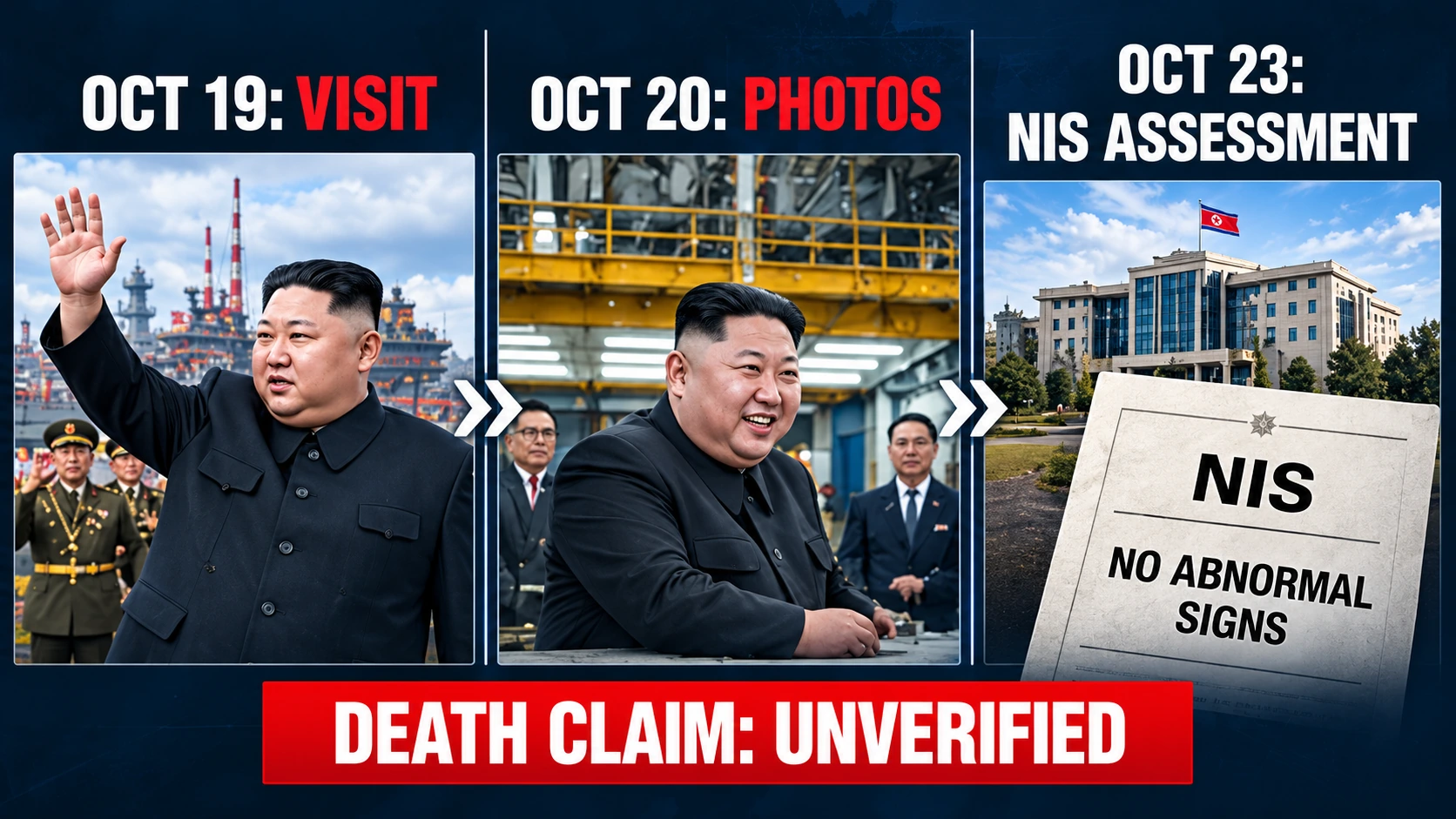
They established no credible evidence that Kim had died. On October 23, 2026, South Korea’s National Intelligence Service (NIS) reportedly told lawmakers in a closed-door meeting that the circulating death claims were false. (Yonhap)
Earlier in the week, social media posts alleged that Kim had suffered a brain hemorrhage, entered a coma, and died after being taken to China. Those accounts did not provide substantiating evidence. North Korean state media, meanwhile, reported that he visited a clothing and footwear exhibition in Pyongyang on October 19 and released photographs the next day showing him with his wife and daughter. (Yonhap)
The photographs were released by a government that tightly controls access to its leader, so they should not be mistaken for independent medical records. Even so, the publicly available evidence does not support the extraordinary claim that he had died.
A similar cycle occurred in 2020. After Kim went about 20 days without a publicly reported appearance, rumors of serious illness or death circulated internationally. North Korean state media then reported that he attended a fertilizer-factory ceremony on May 1. (Associated Press via PBS)
The recurring uncertainty is real. But uncertainty about his health is not evidence of a medical emergency, and it is certainly not proof that someone else has taken power.
Does Kim’s Health Make an Early Succession Likely?

Not on the evidence available. South Korean intelligence has described serious long-term health risks, but it has not reported reliable signs that Kim is presently incapacitated or near death.
On September 30, the NIS assessed that Kim weighed in the 140-kilogram range—roughly 309 pounds—and faced elevated cardiovascular risk because of severe obesity. The agency also said he showed no significant signs of ill health, citing his observed physical activity and close supervision by a dedicated medical team. (KBS World)
Those points can both be true. A person may face an elevated risk of cardiovascular disease without having suffered a stroke. Conversely, a public appearance cannot rule out every hidden medical condition.
The exact condition of North Korea’s leader is not independently established through a transparent medical process. Neither a photograph nor a foreign intelligence estimate can determine how long he will live.
The more useful question is therefore not whether Kim is about to die. It is why North Korea is making his young daughter so visible while he is still in power.
Why Is Kim Ju Ae Being Treated Like a Future Leader?
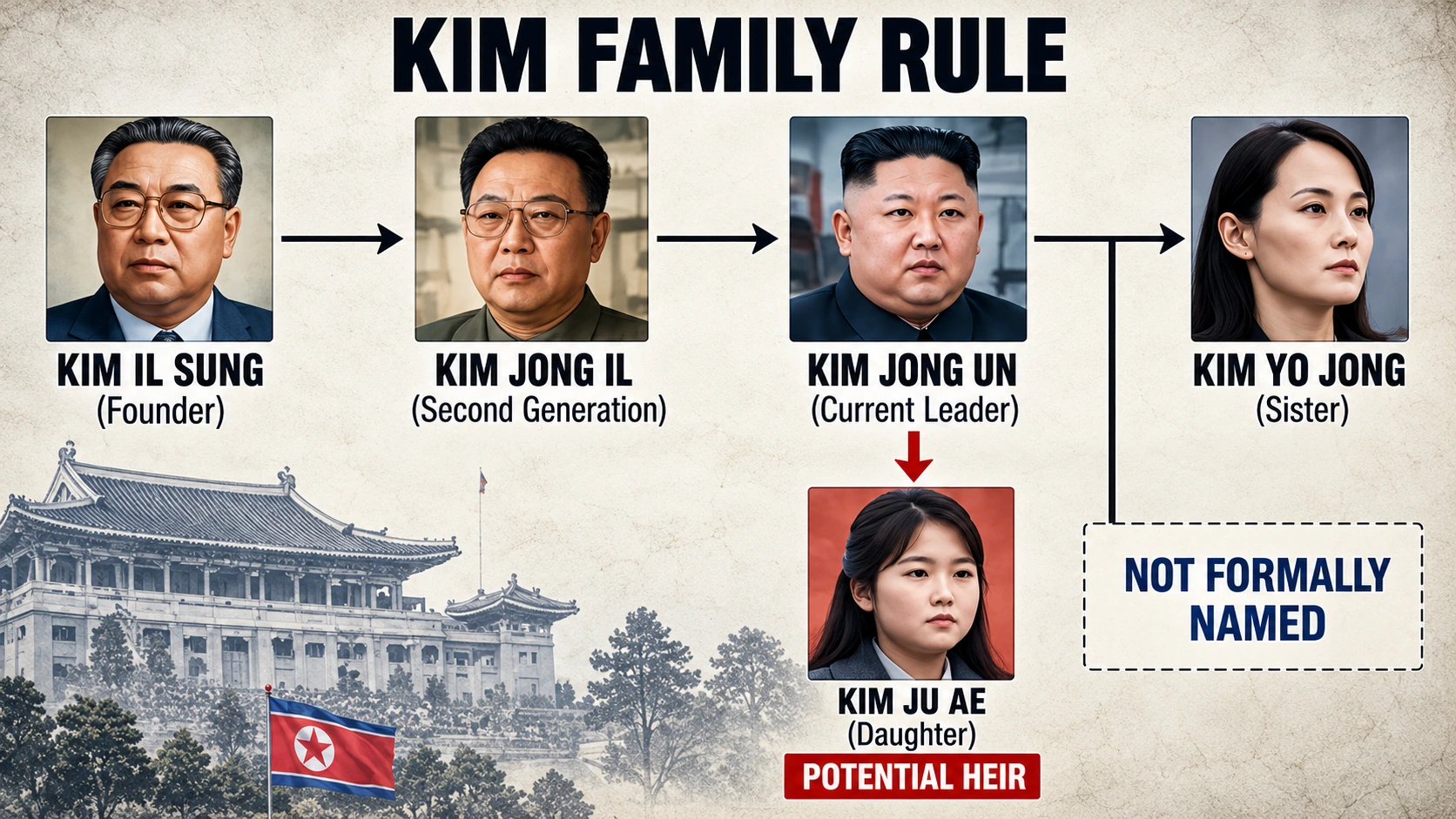
Because her public role looks increasingly deliberate rather than incidental. South Korea’s intelligence agency now considers her the likely successor, although North Korea has not publicly announced her as its next supreme leader.
Ju Ae was first shown to the outside world in November 2022, when she appeared beside her father during a Hwasong-17 intercontinental ballistic missile launch. At an estimated age of about nine or ten, she was introduced to the public alongside a weapon central to the regime’s security strategy. (Yonhap)
Her profile has grown since then. In February 2026, the NIS said North Korea appeared to have entered a stage of selecting her as successor. In April, the agency’s director said its conclusion relied on what he called credible intelligence, not merely photographs. And in September, the NIS told lawmakers her repeated exposure appeared intended to normalize her future leadership. (Yonhap · Reuters · KBS World)
A September 30 assessment counted 30 public appearances by Ju Ae during 2026 up to that point. Her activities had expanded beyond the military into political ceremonies, diplomacy, and public-welfare events. (KBS World)
North Korea’s ruling family draws much of its claimed legitimacy from the so-called Mount Paektu bloodline—the lineage of the country’s founder, Kim Il Sung. The country has already passed power from Kim Il Sung to his son Kim Jong Il and then to his grandson Kim Jong Un. Ju Ae would represent a fourth generation of family rule.
But being introduced as part of a ruling dynasty is not the same as holding authority within the party, military, and security apparatus. That is the gap she would still have to cross.
Could North Korea’s Military Accept a Teenage Female Successor?

It is possible, but far from guaranteed. North Korea’s political and military elites are overwhelmingly male, and a female supreme leader would break the country’s pattern of father-to-son succession.
Kim Ju Ae’s military appearances may be designed partly to overcome that obstacle. State images have shown her with weapons and military vehicles, including a tank. In April, South Korean intelligence interpreted those appearances as part of an effort to strengthen a succession narrative and reduce doubts about a female heir. (Yonhap)
That does not mean the teenager controls troops. In an April 2026 assessment, specialists writing for 38 North noted that she had no formal party, military, or government title. They also emphasized that greater visibility does not necessarily translate into operational power. (38 North)
Why might powerful officials nevertheless accept her? Family legitimacy can help preserve the existing system. A familiar dynastic successor may appear less threatening to officials whose privileges and careers depend on continuity under the Kim family.
But that is a possible incentive, not a guarantee of loyalty. A succession that looks smooth in state television footage would still require support from the officials who run the party, security services, and armed forces.
Even the question of other children remains unresolved. In September, South Korea’s intelligence service said it was still examining whether Kim has an older son and indicated that any such son was not currently positioned to succeed him. That does not justify claims that a son has a disability, has been disqualified for a known reason, or does not exist. (Associated Press)
What Makes Kim Yo Jong a Different Kind of Contender?
Kim Yo Jong is the leader’s younger sister, not his daughter. Unlike Ju Ae, she has already accumulated substantial experience inside North Korea’s ruling party and appears prominently in statements on relations with South Korea and the outside world.
In February 2026, North Korean state media reported her appointment as director of the ruling Workers’ Party’s General Affairs Department. That is a real institutional position. Ju Ae, by contrast, is a publicly prominent teenager without a confirmed senior government or military office. (38 North)
But Kim Yo Jong’s influence should not be confused with a verified designation as heir. There is no confirmed announcement making her the next leader. Claims circulated during the October death rumor that she had already seized power were likewise unsupported.
The contrast is clearer when the two are placed side by side:
| Question | Kim Ju Ae | Kim Yo Jong |
|---|---|---|
| Relationship to Kim Jong Un | Daughter | Younger sister |
| Public succession signal | Increasingly treated as a potential heir | No confirmed designation |
| Current institutional standing | No confirmed formal leadership office | Senior Workers’ Party official |
| Main potential advantage | Direct next-generation dynastic continuity | Political experience and existing networks |
| Main uncertainty | Age and lack of a tested power base | Whether elites would back her as supreme leader |
One plausible scenario is that Kim Yo Jong would help preserve the family’s rule during a transition involving Ju Ae. Another is that she might be considered for a more direct leadership role if an abrupt crisis occurred. Analysts disagree about which arrangement would be most workable because the internal balance of power is not public. (Lowy Institute)
What If Kim Jong Un Died Before His Daughter Was Ready?
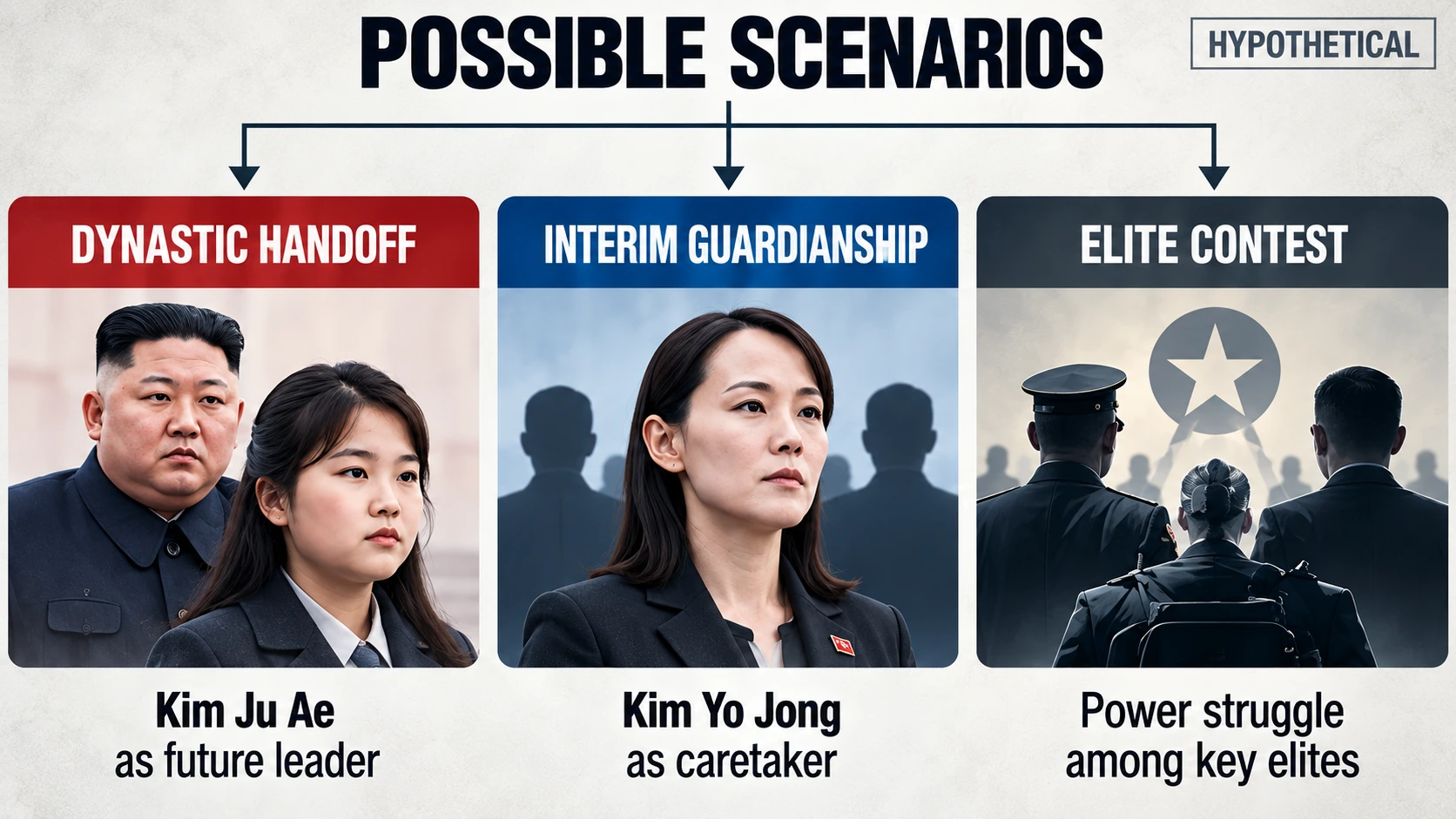
There is no publicly verified, detailed succession plan that settles the question. A sudden vacancy could produce several different outcomes depending on Ju Ae’s age, the decisions of senior officials, and the cohesion of North Korea’s military and security leadership.
Consider three broad possibilities:
| Possible outcome | How it could work | Biggest uncertainty |
|---|---|---|
| Prepared family handoff | Ju Ae eventually inherits a leadership role with elite backing | Whether she gains genuine command authority |
| Interim leadership or guardianship | An experienced relative or senior official helps run the system during a transition | Whether the temporary leadership relinquishes power |
| Contested arrangement | Party, military, and security elites bargain over authority or support rival figures | Whether an agreement can hold |
These are scenarios, not predictions. They should not be mistaken for North Korea’s publicly announced procedures or evidence of an imminent crisis.
There is a historical reason analysts worry about the difference between family prestige and political control. Kim Jong Un inherited leadership following his father’s death in 2011. Two years later, his uncle Jang Song Thaek—once one of the regime’s most powerful figures—was purged and executed. (Yonhap)
That case does not establish that Ju Ae would purge a future guardian or that Kim Yo Jong would seek to control her. It shows only that kinship ties do not erase struggles over real power inside the regime.
A negotiated transition could preserve continuity. A contested one could destabilize the government. An armed internal conflict is conceivable in a worst-case analysis, but there is no reliable evidence that such a conflict is happening now, and civil war should not be presented as a likely automatic result.
Why Would a North Korean Succession Crisis Matter to Americans?
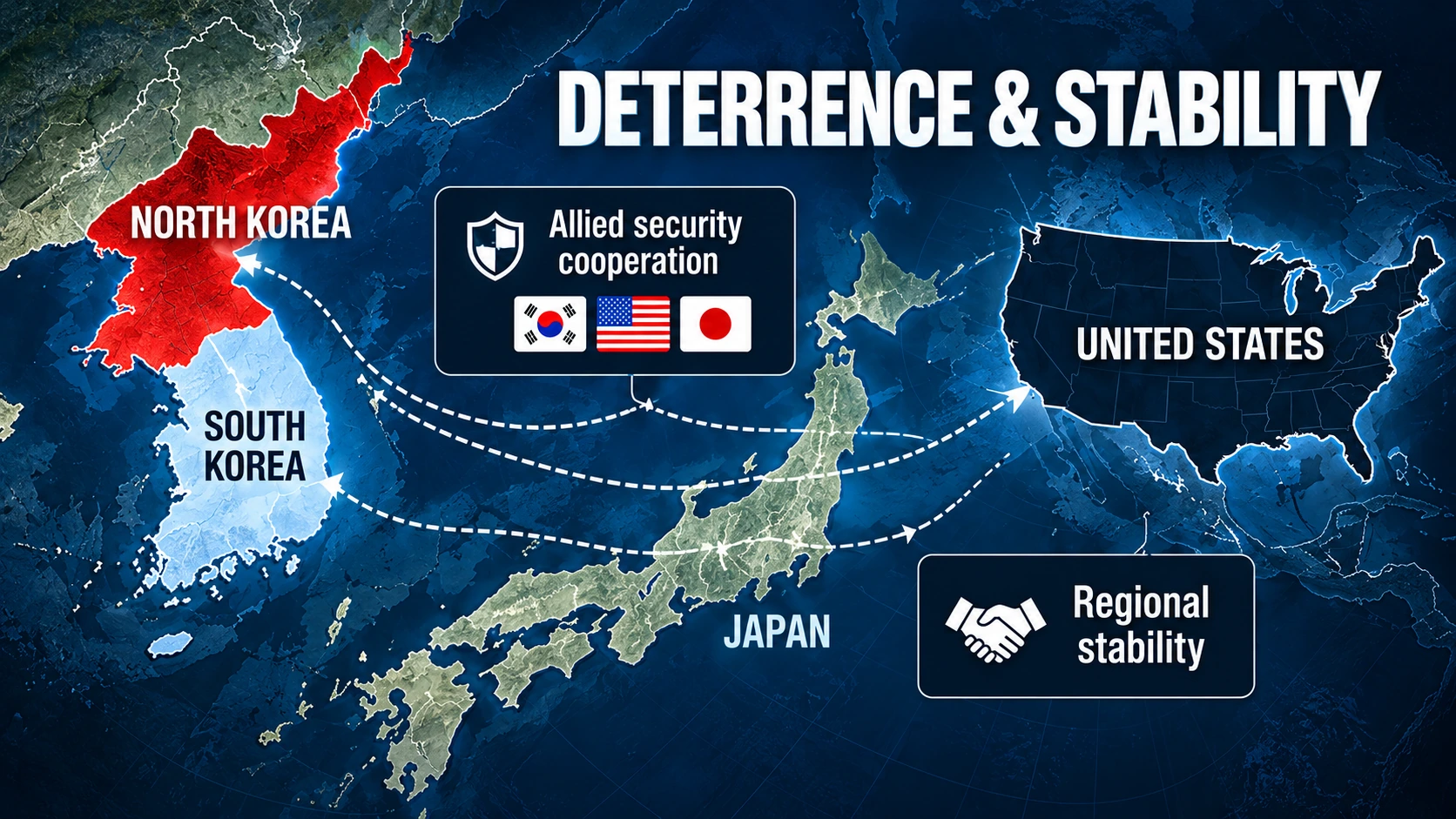
Because the uncertainty would involve more than one country’s leadership. North Korea has nuclear weapons, ballistic missiles, and forces capable of threatening South Korea and Japan, where U.S. military personnel are stationed. U.S. government assessments also describe a growing missile threat to the American homeland.
A Congressional Research Service report updated in October 2026 described expanding North Korean nuclear and missile capabilities. The U.S. intelligence community’s 2026 threat assessment likewise characterized Pyongyang’s strategic weapons programs as a significant threat to the United States and its allies. (Congressional Research Service · Office of the Director of National Intelligence)
In a succession emergency, Washington, Seoul, and Tokyo would want answers about the continuity of military command, the intentions of senior officers, and whether the new leadership could maintain stable communication. Outsiders do not have a verified public account of exactly how all nuclear command decisions would be handled during an unexpected vacancy.
It would also matter for diplomacy. An inexperienced or disputed leadership could make negotiations harder to interpret, while a stable dynastic transition might preserve much of the existing security policy.
A female successor should not automatically be expected to pursue a more conciliatory course. North Korea’s weapons strategy, security institutions, and relations with the United States would not disappear merely because the person at the top changed.
What Would Show That a Real Transfer of Power Is Underway?
A new photograph of Ju Ae in the front row is a signal of status, but it is not proof that authority has changed hands. A more decisive indicator would be a public designation or appointment accompanied by real responsibilities and acceptance by the institutions that govern North Korea.
Analysts would look for a combination of developments: formal party or military titles, consistent state-media language identifying a successor, and visible backing by senior officials. They would also look for corroboration from credible intelligence assessments and other independent evidence rather than viral speculation.
Researchers at the Lowy Institute and 38 North have emphasized the difference between symbolic visibility and institutional control. A September analysis also cautioned that Ju Ae had not been conclusively confirmed as successor through a formal appointment. Given her age, the distinction could remain unresolved for years. (Lowy Institute · 38 North · Seoul Economic Daily)
The October rumors did not reveal a new government. They revealed how little the outside world can independently verify about the mechanisms of succession inside an unusually closed political system.
Bottom Line: What This Story Really Means
South Korean intelligence rejected the October 2026 claims that Kim Jong Un had died. There is no reliable public evidence that he suffered the alleged brain hemorrhage or that an emergency transfer of power occurred.
But the question raised by the rumor has a serious answer. Kim Ju Ae looks increasingly like the favored long-term heir, while Kim Yo Jong has something the teenager does not yet possess: established political experience and an institutional role. Neither has been publicly installed as the next supreme leader.
North Korea’s future will depend not only on which relative carries the Kim family name, but also on who can secure the support of the party, military, and security establishment. If Kim remains in power for years, he may have time to build Ju Ae’s authority. An abrupt vacancy would make the outcome considerably less predictable.
For the United States, the vital concern is how any succession would affect stability, nuclear command, and relations with American allies—not the viral rumor that prompted the discussion.
North Korea Succession: Key Questions Explained
Q. Did South Korean intelligence confirm Kim Jong Un had died in October 2026?
No. On October 23, South Korea’s intelligence agency reportedly told lawmakers that the circulating death claims were false.
Q. Is Kim Ju Ae officially designated as North Korea’s next leader?
No public North Korean announcement has formally installed her as successor. South Korean intelligence nevertheless assesses that she is being positioned for that role.
Q. How old is Kim Jong Un’s daughter?
She is widely believed to be around 13 in 2026. North Korea has not publicly confirmed her exact birth date or even formally identified her by the commonly used name Kim Ju Ae.
Q. Who is Kim Yo Jong in the North Korean leadership?
She is Kim Jong Un’s younger sister and an experienced senior Workers’ Party official. She has not been publicly named his successor.
Q. Could Kim Yo Jong govern temporarily for Kim Ju Ae?
It is one plausible hypothetical arrangement. There is no confirmed public plan naming her as regent or interim leader.
Q. Does North Korea require its leader to be male?
Its modern succession history has followed male members of the Kim family, and the elite system is strongly patriarchal. Analysts nevertheless consider a female heir possible, especially if the ruling family and powerful officials support her.
Q. Is Kim Jong Un’s reported weight evidence of a recent stroke?
No. South Korean intelligence assessed elevated cardiovascular risk related to severe obesity, but it did not establish that he had suffered the reported brain hemorrhage.
Q. What would be the biggest danger of a disputed succession?
Uncertainty over political and military command in a nuclear-armed country. A struggle among elites is possible, but its occurrence, scale, and outcome cannot be predicted from the present evidence.
Q. Would Kim Ju Ae be likely to change North Korea’s nuclear policy?
There is no reliable basis to predict a major change merely because she is young or female. North Korea’s established military and political institutions would continue to shape its decisions.
Did this help make the story clearer? 🙂 WIN keeps unpacking the “why” behind the news—clearly and simply!
Sources
October 2026 Death Rumors and Health Assessments
Oct. 23, 2026 — Yonhap: South Korean intelligence rejects death rumors
Oct. 20, 2026 — Yonhap: Where the unverified death claims came from
Sept. 30, 2026 — KBS World: NIS assessment of Kim Jong Un’s health and daughter’s public role
Ju Ae’s Rise and the Succession Debate
Nov. 22, 2022 — Yonhap: Daughter appears at Hwasong-17 missile launch
Apr. 6, 2026 — Reuters: Intelligence assessment identifies Ju Ae as successor
Apr. 6, 2026 — 38 North: Limits of female leadership in North Korea
Mar. 18, 2026 — Lowy Institute: Is Kim’s daughter the chosen successor?
Sept. 27, 2026 — Seoul Economic Daily: Expert says fourth-generation succession is not settled
Historical Precedent and U.S. Security Interests
Dec. 13, 2013 — Yonhap: Execution of Kim Jong Un’s uncle Jang Song Thaek
2026 — U.S. intelligence community: Annual threat assessment testimony
Keep Reading
What evidence contradicted the latest death claims?
The report about Kim’s recent public appearance explains what state media actually showed—and why photographs cannot answer every medical question.
Is Kim Jong Un Dead? What North Korea’s New Photos Actually Show
Why is his teenage daughter appearing at major military events?
The earlier profile examines the unusual rise of Ju Ae and the clues that have led South Korean intelligence to view her as a possible fourth-generation ruler.
Is Kim Jong Un’s Teenage Daughter Really Being Groomed to Rule North Korea?