Why Did Kim Jong Un Cross a Bridge That Sat Unused for 12 Years?

A modern highway bridge between China and North Korea sat largely unused for nearly 12 years. Then it opened—and just nine days later, Kim Jong Un used it to make a surprise trip across the border.
Why would two neighboring countries leave such an expensive piece of infrastructure unused for so long? And why did North Korea’s leader personally cross it now?
The immediate explanation is surprisingly practical: the bridge was built, but the roads and customs facilities needed to use it on the North Korean side were not ready. Its long delay was also shaped by strained relations, resource constraints, and pandemic-era border closures. The reason Kim’s October 24, 2026, visit matters is that the crossing now carries a diplomatic message as well as traffic.
※ Images in this article are AI-generated illustrations created to help explain the story. They are not actual photographs, and depictions of people, places, or events may differ slightly from reality.
What Actually Happened During Kim Jong Un’s Visit to China?
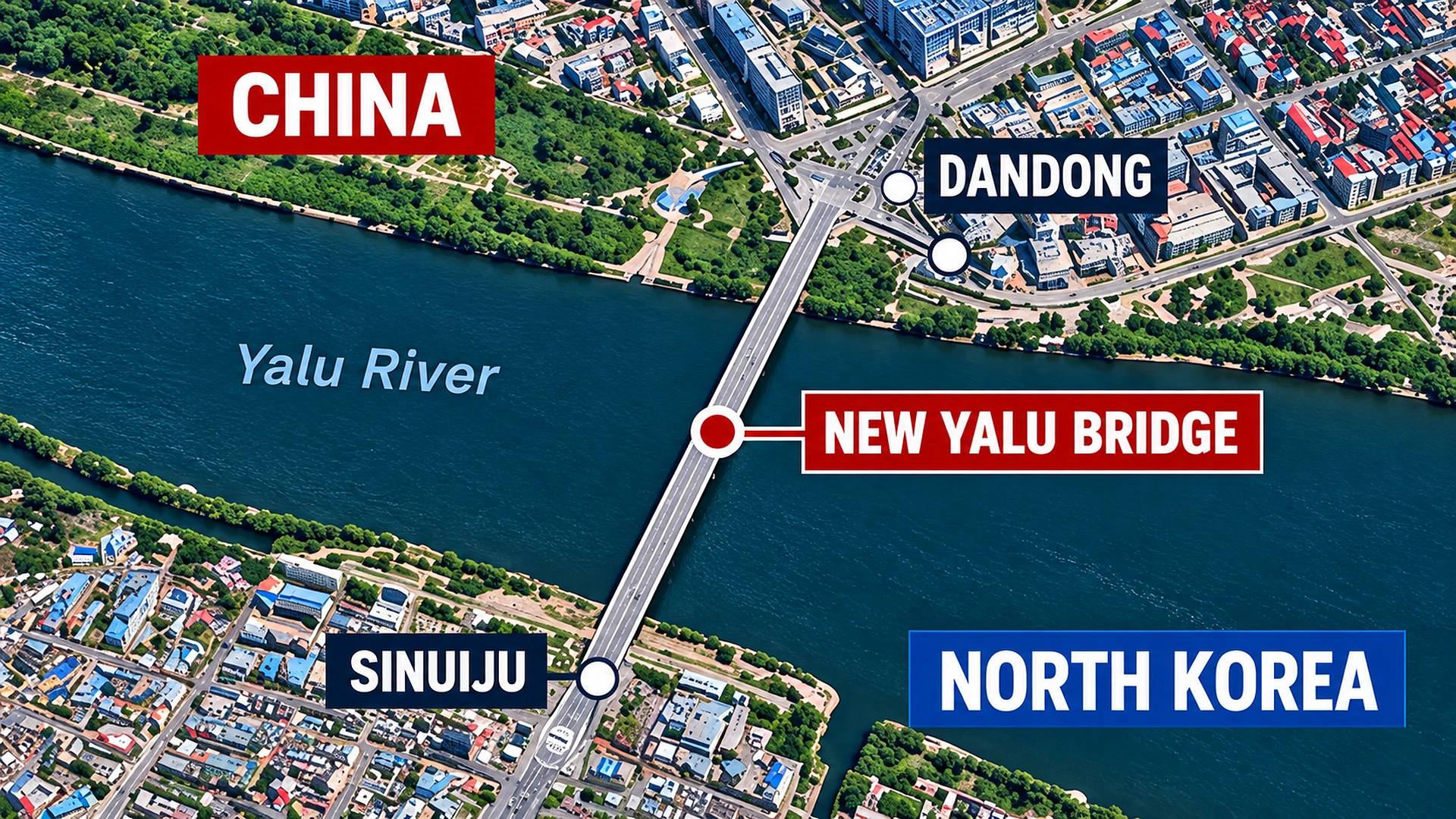
On October 24, Kim crossed the New Yalu River Bridge from Sinuiju, North Korea, into Dandong, a Chinese city just across the Yalu River. He met Wang Huning, one of China’s most senior Communist Party officials, rather than traveling to Beijing for a publicly announced summit with President Xi Jinping. (Reuters · Xinhua)
According to China’s official account, Wang conveyed greetings from Xi and accompanied Kim to a memorial honoring Chinese soldiers who fought in the Korean War. The two also visited a vehicle factory, and Wang saw Kim off at the new bridge. North Korean state media confirmed the visit on October 25 and said Kim had returned home after the one-day trip. (Xinhua · Yonhap)
Some early South Korean reports suggested Kim might also meet Chinese Premier Li Qiang. That meeting was not confirmed in China’s official account, which identified Wang as Kim’s host. Nor was a meeting with Xi announced. These distinctions matter because speculation about a leader’s itinerary is not the same as a confirmed diplomatic meeting. (AFP)
Why Did the New Yalu River Bridge Sit Unused for 12 Years?
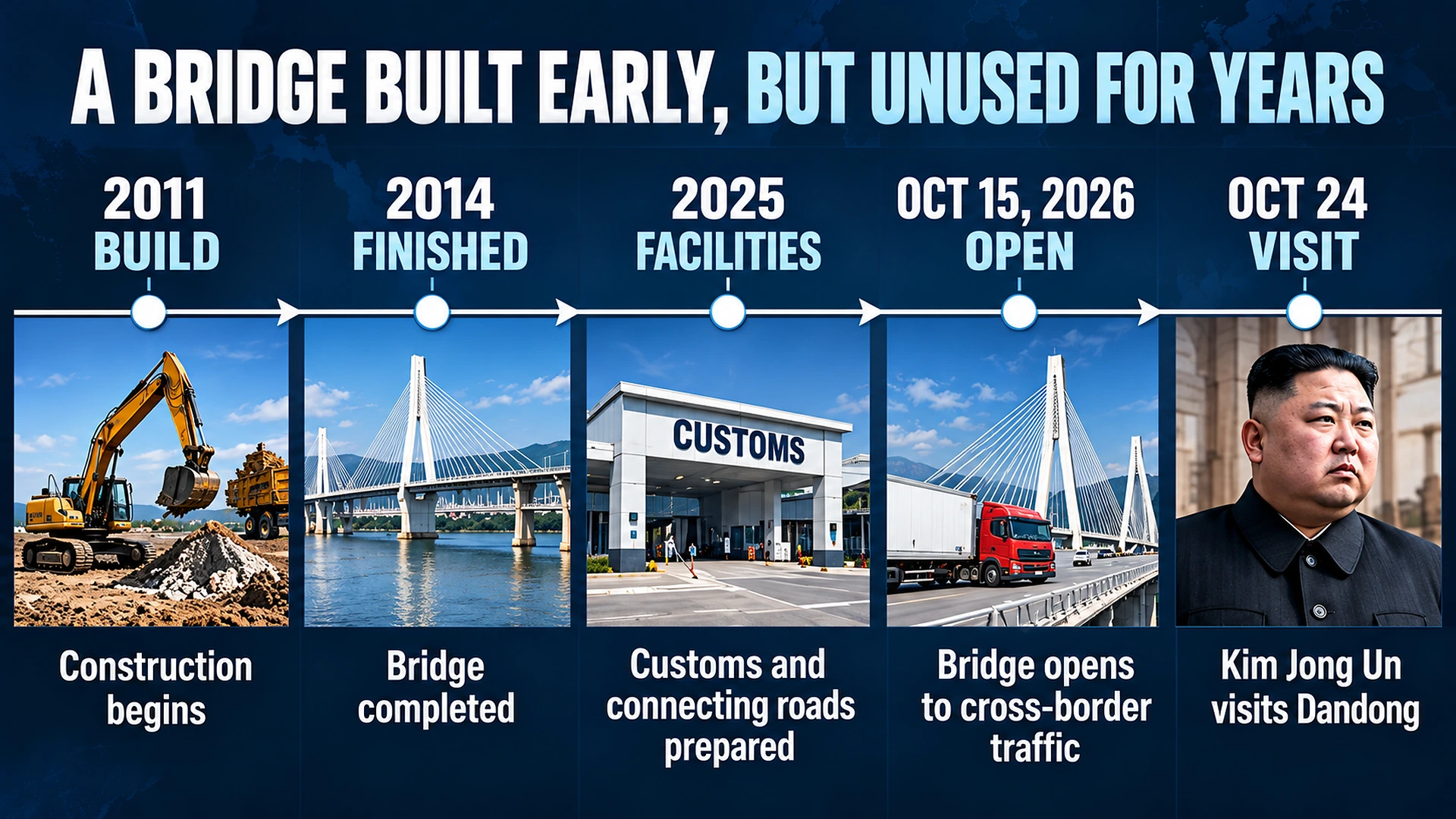
The main bridge was completed in 2014, but a bridge alone does not make a functioning border crossing. Trucks still need approach roads, inspection areas, customs offices, and permission to cross. North Korea was slow to complete key parts of that supporting infrastructure on its side. (CSIS Beyond Parallel · Yonhap)
China financed the project, investing approximately 2.22 billion yuan—roughly $300 million at the time—in a modern highway crossing. Construction began in late 2011, and the main structure was finished in 2014. Yet the opening was postponed because the North Korean approach and border-processing facilities lagged behind. (CSIS Beyond Parallel)
That does not prove Pyongyang had one single hidden motive for keeping it closed. Independent satellite analysis by the Center for Strategic and International Studies identified intermittent construction delays, limits on finances and building resources, and the COVID-19 crisis. Broader political friction and restrictions on cross-border movement added to the difficult environment. (CSIS Beyond Parallel · Reuters)
A 15-year project in five dates
| Date | What changed | Why it mattered |
|---|---|---|
| 2011 | Bridge construction began | China and North Korea planned a more capable road link |
| 2014 | Main bridge completed | The crossing still lacked required infrastructure on the North Korean side |
| 2025 | Satellite imagery showed substantial work on customs facilities | Operational readiness was finally becoming more plausible |
| October 15, 2026 | The new bridge officially opened to traffic | Trucks could begin using the long-delayed crossing |
| October 24, 2026 | Kim used the bridge for a China visit | The new trade route gained a high-profile diplomatic endorsement |
The dates tell the real story: the 12-year wait was the gap between finishing the bridge and actually opening it, not 12 years of continuous work on the span itself. (Xinhua · CSIS Beyond Parallel)
What Can the New Bridge Do That the Old Crossing Could Not?
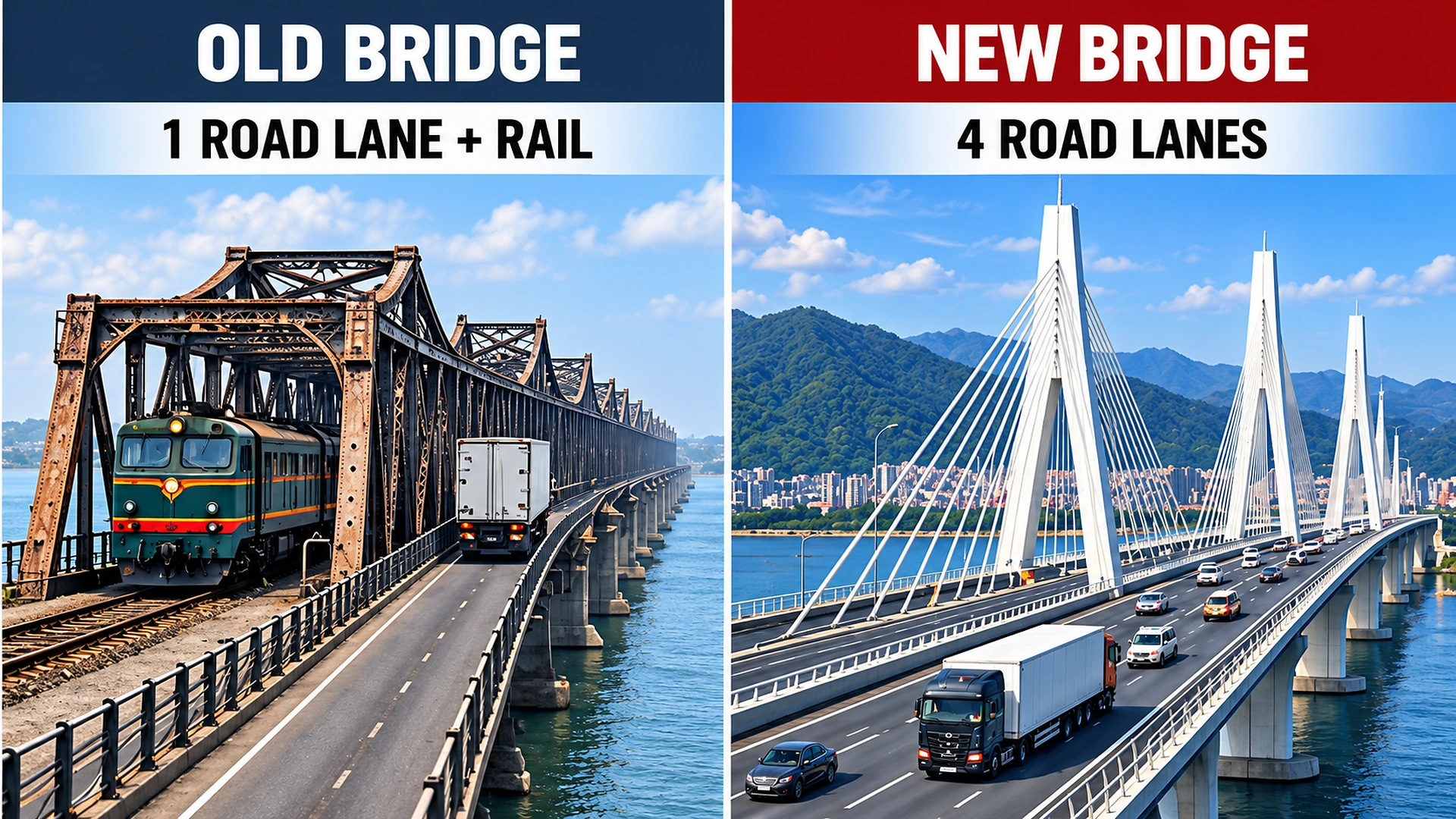
The new bridge gives China and North Korea a modern, four-lane route for road vehicles, easing their dependence on an older crossing that handles both rail and road traffic. The New Yalu River Bridge is 3,026 meters long, or about 1.9 miles. (Xinhua · Yonhap)
The older Sino-Korean Friendship Bridge has served as a crucial connection for decades, but its road portion is narrow and subject to truck-weight restrictions. A newer road-only bridge offers a potentially more efficient way to handle freight while leaving the older crossing with more room to serve rail traffic. That is an infrastructure advantage—not yet a measured increase in actual trade. (Xinhua · CSIS Beyond Parallel)
| Feature | Older Friendship Bridge | New Yalu River Bridge |
|---|---|---|
| Main design | Combined rail and narrow road crossing | Four-lane highway crossing |
| Road traffic | One road lane with restrictions | Two lanes in each direction |
| Practical role | Longstanding rail and road link | Additional route for trucks and other vehicles |
| Economic implication | Limited room for heavy road freight | Greater potential road-freight capacity |
For North Korea, that additional capacity could make importing permitted goods and moving cargo across the Chinese border easier. But capacity is not the same as trade volume: actual gains will depend on border procedures, demand, permitted cargo, and government decisions on both sides.
Does the Bridge Opening Mean North Korea’s Sanctions Are Gone?
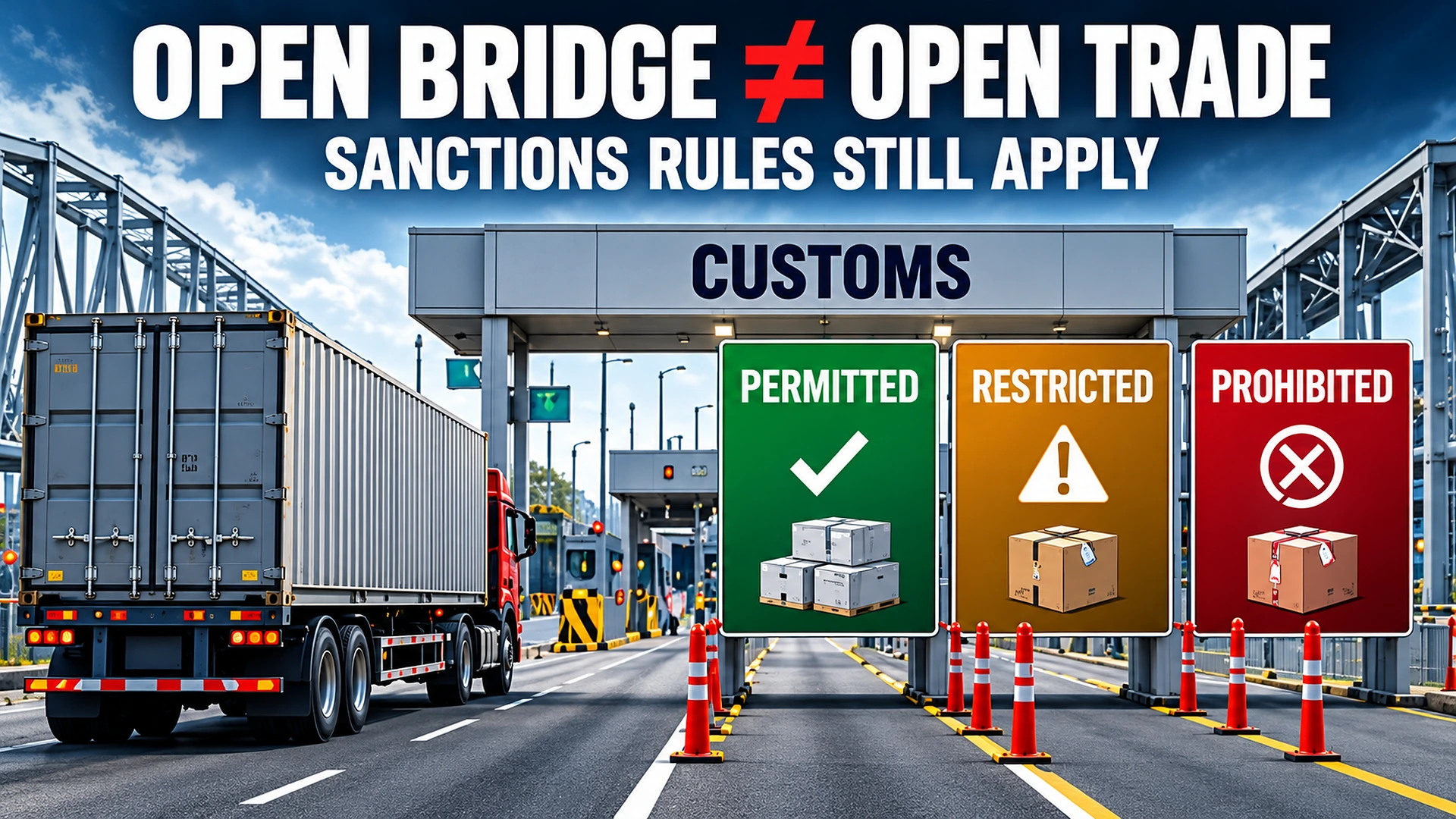
No. Opening a bridge does not repeal United Nations or U.S. sanctions on North Korea. The restrictions apply to specific goods, transactions, parties, and activities; simply having a usable road does not make prohibited trade legal. (UN Security Council)
The UN sanctions framework includes an arms embargo, restrictions on industrial machinery and transportation vehicles supplied to North Korea, limits on petroleum products, and bans affecting important North Korean export categories. It also requires inspection of cargo moving by road and rail as well as by other routes. Humanitarian exemptions can be granted under specific procedures. (UN Security Council · UN Humanitarian Exemptions)
That means there are two separate questions. Can a truck physically cross the river? Now the answer is yes, subject to border controls. Is its cargo allowed under the applicable rules? That depends on what is being carried, by whom, and under which authorizations.
The bridge could therefore expand lawful commerce while also raising questions for governments monitoring possible sanctions evasion. The opening itself is not evidence that a sanctions violation occurred.
Why Did Kim Choose This Particular Weekend?

Kim’s visit came one day before the October 25 anniversary observed by Beijing and Pyongyang to commemorate Chinese forces’ participation in the 1950–1953 Korean War. That made Dandong a fitting place to emphasize their shared history. (Xinhua · Yonhap)
During the war, Chinese forces entered the conflict on North Korea’s side against U.S.-led United Nations forces. The visit to the Dandong memorial was a public reminder of that history. But the same trip also featured the newly operational border crossing and discussions of expanding practical cooperation. (Xinhua)
The choice of location also matters. Kim did not need to travel to China’s capital to underscore the relationship. In Dandong, the memorial represented the alliance’s past, while the bridge and vehicle factory pointed toward the economic ties both governments say they want to strengthen.
One caution: neither the precise reason Kim selected October 24 nor all the private topics discussed were publicly established. The timing and public itinerary strongly support an interpretation centered on history and bilateral cooperation, but they do not disclose every diplomatic calculation.
How Do China, Russia, and the United States Fit Into This Story?
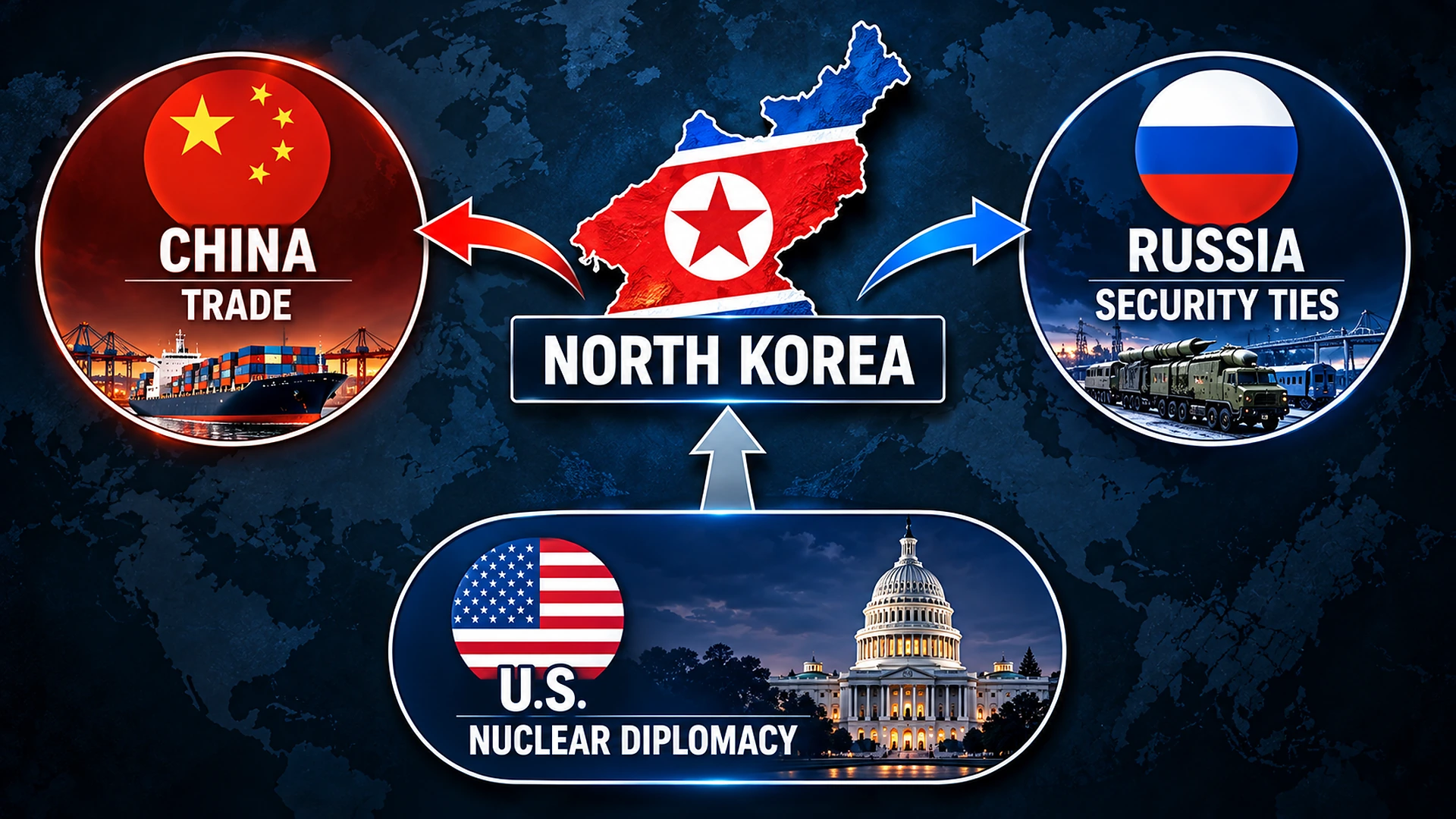
China remains North Korea’s principal economic partner, while Russia has become an increasingly important security partner amid the war in Ukraine. The bridge opening matters partly because it shows Beijing and Pyongyang investing in practical ties at a time when North Korea also has other powerful relationships. (Reuters · AP)
The infrastructure story is strikingly parallel. North Korea and Russia opened a new road bridge over the Tumen River in September 2026, just over a month before the new crossing to China opened. That does not prove the two countries are competing for Kim’s favor, but it does show how cross-border transport has become part of North Korea’s wider diplomatic and economic relationships. (Yonhap · Korea Economic Institute of America)
For Washington, the central issue is North Korea’s nuclear weapons program and the possibility of renewed negotiations. President Donald Trump has expressed interest in talking with Kim again, and China’s upcoming November APEC summit has prompted speculation about diplomacy. No Trump-Kim summit was confirmed by the Dandong visit, and a new border crossing does not itself signal a shift in Pyongyang’s nuclear position. (AP · Yonhap)
What Americans should take from this is not that a bridge immediately changes the military balance. It is that China’s leverage, North Korea’s available trade routes, and the prospects for any future negotiations are connected—even when the day’s headline is about a short journey across a river.
What Would Show That the Bridge Is Making a Real Difference?
A ceremonial opening and a leader’s visit are visible milestones. The more meaningful test will be whether ordinary cross-border trade and travel become sustained, measurable activities.
Watch for regular commercial truck movements, functioning customs procedures, official bilateral trade data, and any new agreements about permissible goods or border travel. These indicators would show whether the crossing has become a working economic artery rather than mainly a symbol.
Sanctions monitoring matters too. An increase in traffic is not by itself proof of illicit trade, just as the ribbon-cutting is not proof of a broad economic revival. Separating infrastructure capacity from actual trade—and separating lawful shipments from prohibited ones—will be essential.
Bottom Line: What This Story Really Means
Kim Jong Un’s trip across the New Yalu River Bridge was possible because the crossing had finally opened—and his highly visible use of it emphasized renewed cooperation with China. The bridge’s main structure was finished in 2014, but unfinished North Korean approach roads and customs facilities helped keep it closed until October 15, 2026.
His October 24 visit combined a Korean War commemoration with a message about trade and the relationship with Beijing. For the United States, the important questions are whether the bridge produces sustained economic activity, how that activity complies with sanctions, and whether stronger China–North Korea ties affect future diplomacy. None of those outcomes was settled by a single day-long trip.
Kim Jong Un and the New Yalu River Bridge: Key Questions Explained
Q. When did the New Yalu River Bridge actually open?
It officially opened to traffic on October 15, 2026, after its main structure had stood completed since 2014.
Q. Where is the bridge located?
It crosses the Yalu River between Sinuiju in North Korea and Dandong in China’s Liaoning Province, not between North Korea and Beijing.
Q. What caused the 12-year delay?
The main problem was unfinished approach roads and customs facilities on the North Korean side. Resource constraints, interruptions to construction, and pandemic border restrictions also contributed to the long wait.
Q. Who met Kim Jong Un in Dandong?
China’s senior political adviser Wang Huning hosted and accompanied him. Chinese official reporting did not confirm a separate meeting with President Xi Jinping or Premier Li Qiang.
Q. Did Kim Jong Un stay in China overnight?
No overnight stay was publicly reported. Chinese and North Korean accounts described the October 24 trip as a short visit followed by his return home.
Q. Does the bridge allow North Korea to import anything it wants?
No. Border access does not cancel sanctions, customs inspections, or restrictions on specific goods and transactions.
Q. Is the older China–North Korea bridge closing?
Not necessarily. The new crossing provides additional road capacity, while the older Friendship Bridge retains an important transportation role, including rail service.
Q. Has a new Trump-Kim meeting been agreed to?
Not on the basis of this visit. Renewed diplomacy has been discussed publicly, but the Dandong trip did not establish a confirmed U.S.–North Korea summit.
Did this help make the story clearer? 🙂 WIN keeps unpacking the “why” behind the news—clearly and simply!
Sources
Kim’s October 24 Visit and Official Accounts
China’s Xinhua: Wang Huning Accompanies Kim Jong Un in Dandong, October 24, 2026
Reuters: Kim Crosses New Bridge Into China as Trade Ties Warm, October 24, 2026
Yonhap: North Korea Confirms Kim’s China Visit, October 25, 2026
AFP: Kim Returns After One-Day Dandong Visit, October 24, 2026
Bridge Construction and October 2026 Opening
Xinhua: New China–North Korea Border Bridge Opens to Traffic, October 15, 2026
CSIS Beyond Parallel: Progress at the Much-Delayed New Yalu River Bridge, December 11, 2025
Sanctions and Wider Regional Context
United Nations Security Council: North Korea Sanctions Measures
United Nations Security Council: Humanitarian Exemption Procedures
Yonhap: North Korea and Russia Open a New Road Bridge, September 8, 2026