Why Are Two Dan Sullivans on Alaska’s Senate Ballot—and Why Is the FBI Investigating?

Imagine looking at a U.S. Senate ballot and finding two candidates with almost exactly the same name.
One is the Republican senator who has represented Alaska for more than a decade. The other is a retired teacher who entered the same race.
Both are named Dan Sullivan.
That might sound like an unusual coincidence. But in Alaska, it has become a federal investigation, a courtroom fight, and a major controversy just days before the November 3 midterm election.
Here’s the surprising part: Alaska’s Supreme Court has already ruled that the second Sullivan can legally appear on the ballot. Yet federal investigators are now examining allegations that political operatives deliberately recruited him to confuse voters.
So is having two candidates with the same name illegal? And can a government investigation change what happens to the election results?
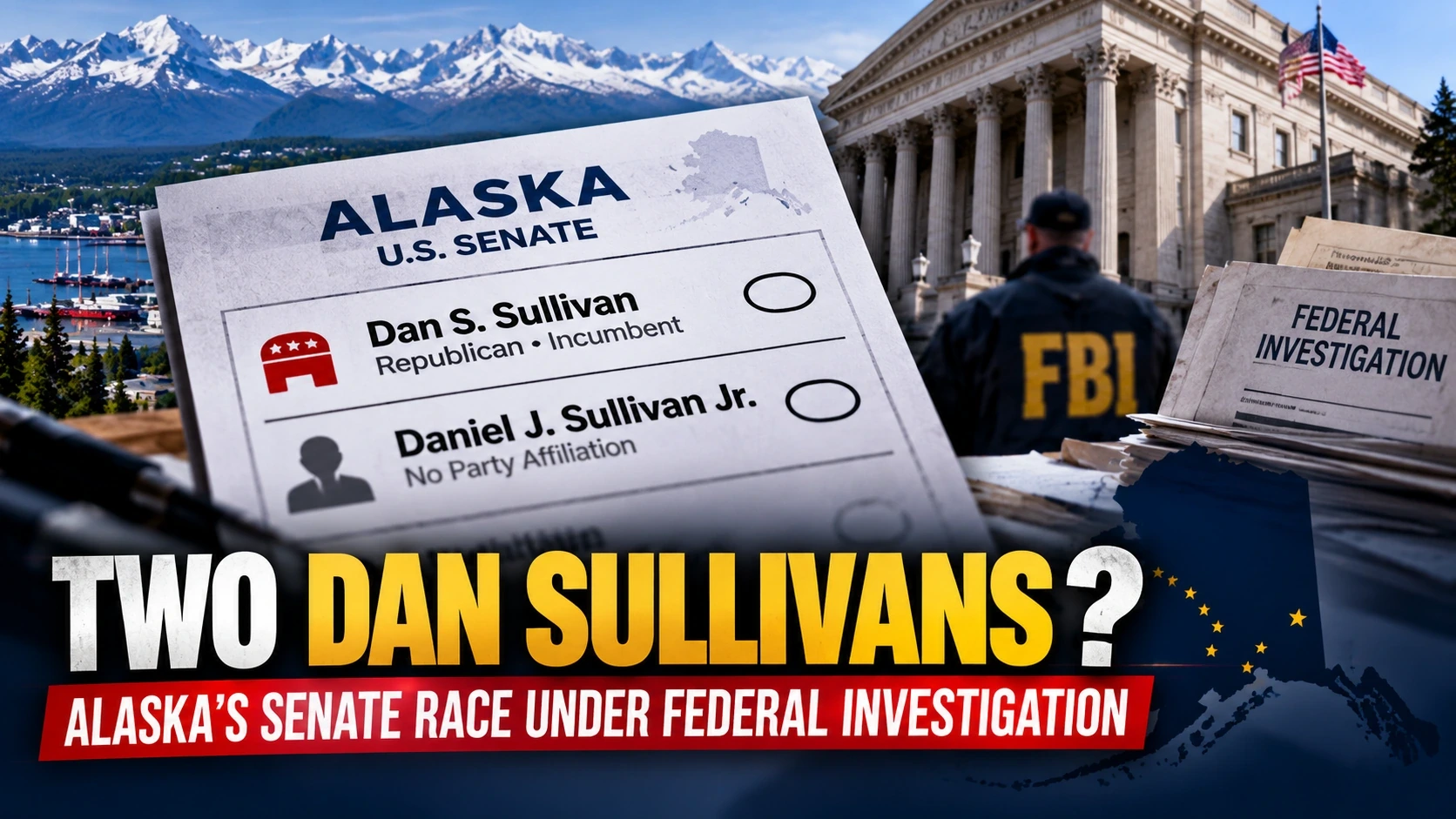
※ Images in this article are AI-generated illustrations created to help explain the story. They are not actual photographs, and depictions of people, places, or events may differ slightly from reality.
The answers involve three separate issues: whether the second candidate was legally eligible to run, whether anyone committed a crime while recruiting candidates, and how election officials should handle ballots if the results are disputed.
Those questions have become intertwined. Legally, however, they are not the same.
Who Are the Two Dan Sullivans on Alaska’s Ballot?
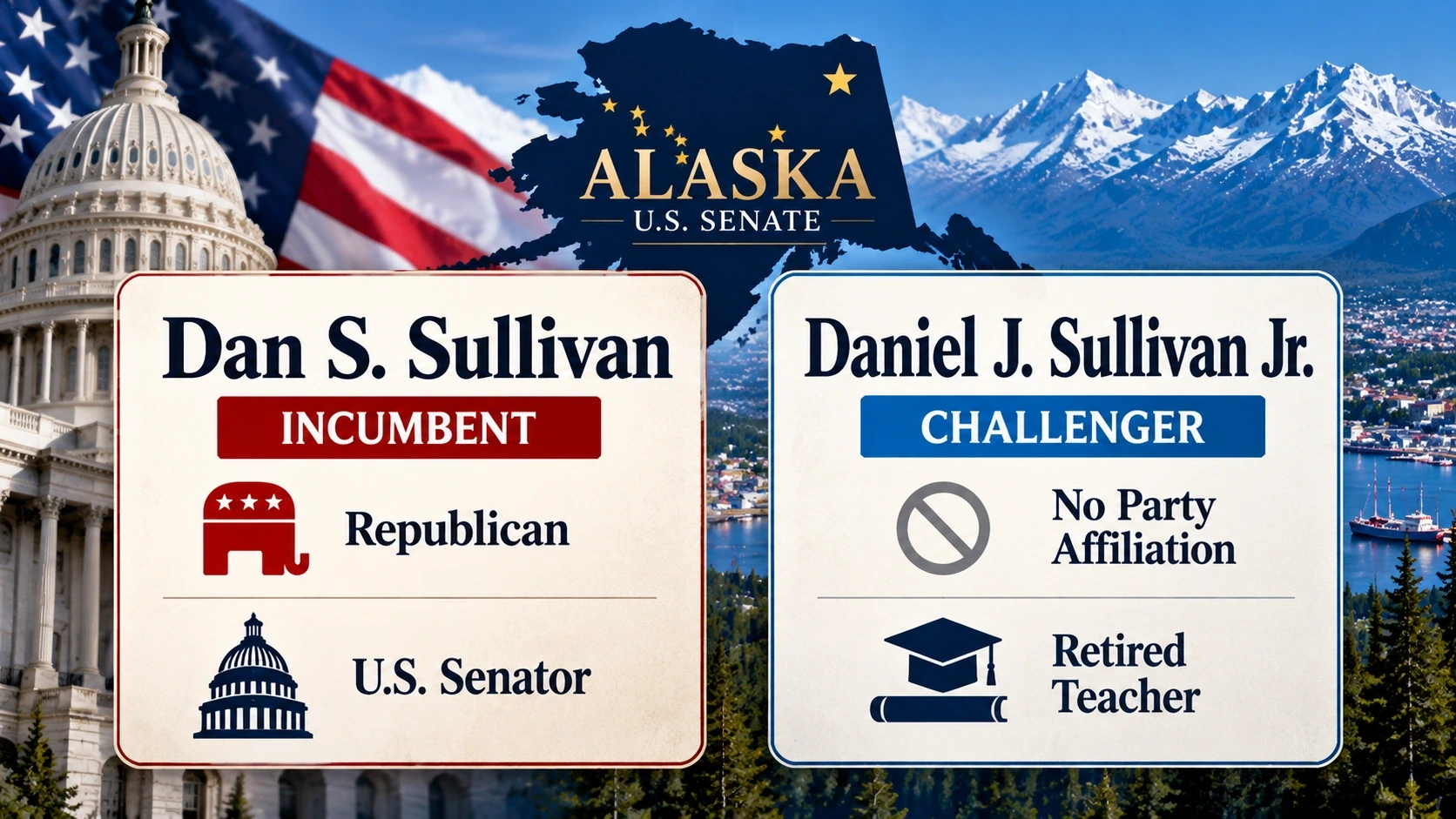
There are two different men named Sullivan in Alaska’s 2026 Senate election, and the official ballot uses additional information to distinguish them.
| Candidate | Who he is | Ballot identification |
|---|---|---|
| Dan S. Sullivan | Two-term Republican U.S. senator seeking reelection | Republican, incumbent |
| Daniel J. Sullivan Jr. | Retired teacher from Petersburg, Alaska | No party affiliation listed |
The incumbent has served in the Senate since January 2015. His principal challenger is Mary Peltola, a Democrat and former U.S. representative.
Daniel J. Sullivan Jr., often called Dan J. Sullivan, is a lesser-known candidate from the coastal community of Petersburg.
He originally sought ballot access under the Republican affiliation but subsequently changed his registration to undeclared.
Alaska’s general election ballot identifies the senator as the incumbent and displays the challenger’s fuller name. State election officials say these distinctions help voters recognize which candidate is which. (AP)
The controversy is not that two people happen to share a name. It concerns allegations that the second candidate’s entry into the race was deliberately arranged to benefit the incumbent’s opponent.
That question about recruitment is separate from whether the second candidate was entitled to a place on the ballot—a question Alaska’s state courts had already considered.
How Did the Second Dan Sullivan Get Onto the Ballot?
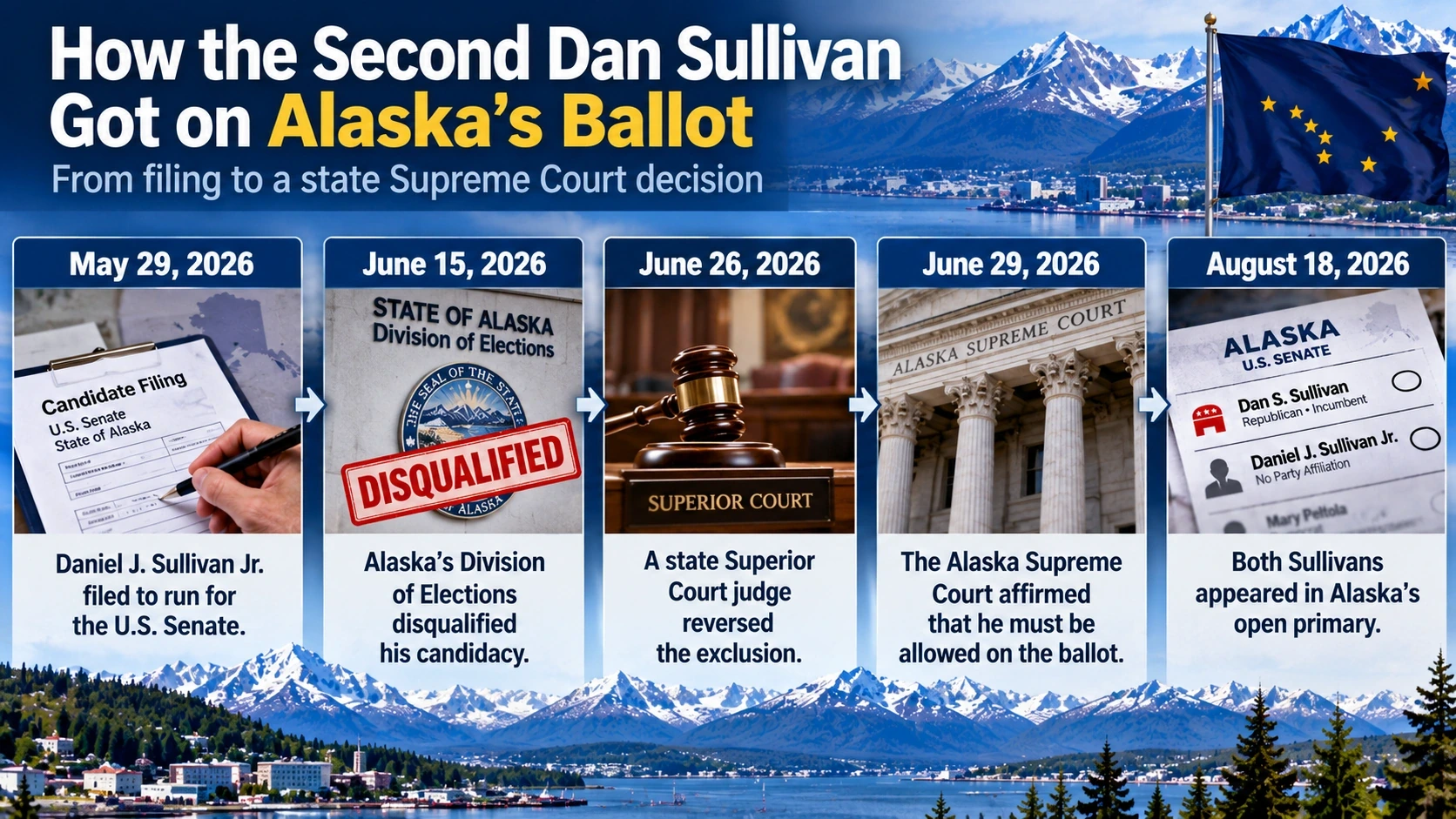
The second Sullivan is on the ballot because Alaska’s courts overturned an earlier decision to exclude him.
The legal dispute began months before the federal investigation became national news.
Alaska election officials initially questioned whether his candidacy was genuine. They argued that he might have entered the race principally to confuse voters rather than to seek office.
The resulting timeline explains why he remains a candidate.
| Date | What happened |
|---|---|
| May 29, 2026 | Daniel J. Sullivan Jr. filed to run for the U.S. Senate |
| June 15 | Alaska’s Division of Elections disqualified his candidacy |
| June 26 | A state Superior Court judge reversed the exclusion |
| June 29 | The Alaska Supreme Court affirmed that he must be allowed on the ballot |
| August 18 | Both Sullivans appeared in Alaska’s open primary |
The state Supreme Court’s decision was particularly important.
It upheld a lower-court ruling that election officials could not disqualify an otherwise eligible candidate by imposing an unsupported requirement that the candidacy be made in good faith.
The court also left election officials responsible for deciding how to identify the similarly named candidates within Alaska’s existing ballot-design laws. (Alaska Public Media · Ballotpedia)
But that ruling has an important limit.
Being legally eligible to run does not necessarily settle whether other people committed an offense while organizing or financing a campaign.
That distinction explains why the controversy continued after the state court decision.
What Did the October 28 Report Reveal About the Campaign?
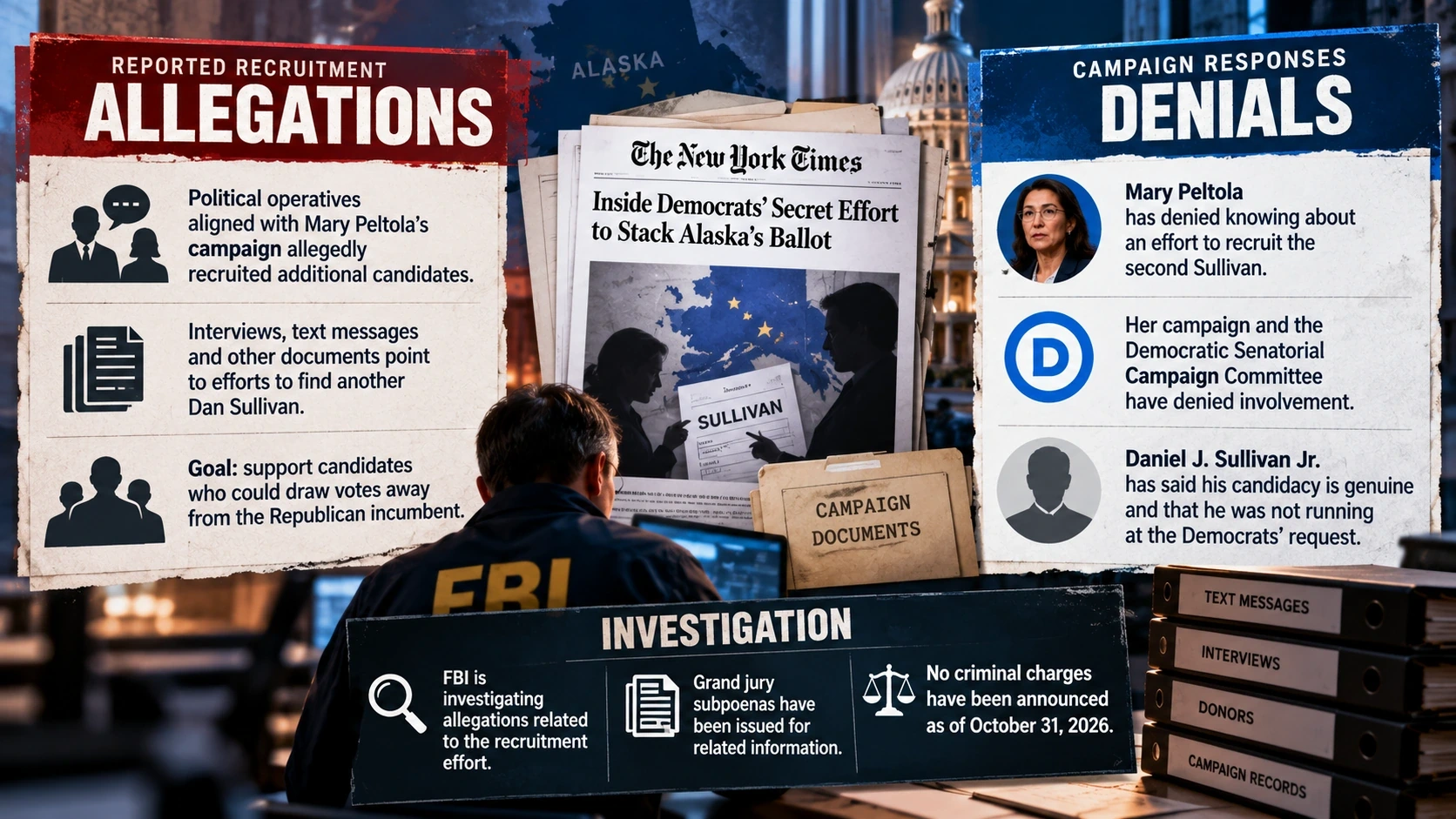
A New York Times investigation published on October 28 brought new attention to allegations about how Dan J. Sullivan entered the race.
The newspaper reported that interviews, text messages, and other documents indicated political operatives aligned with Mary Peltola’s campaign had worked to recruit additional candidates who might draw support away from the Republican incumbent.
According to the report, the broader effort included looking for other people named Dan Sullivan and supporting candidates who could complicate the election.
The strategy is sometimes called ballot stacking or the recruitment of spoiler candidates.
A spoiler candidate is someone whose presence might alter the outcome of a contest by drawing support from another candidate. But that label describes a possible electoral effect, not necessarily an illegal act.
The Times’ reporting added documentary evidence to allegations that Republicans had raised for months. It did not, by itself, establish criminal liability. (FactCheck.org · Reuters)
What Have the People Involved Said?
Peltola has denied knowing about an effort to recruit the second Sullivan.
Her campaign and the Democratic Senatorial Campaign Committee have also denied involvement in recruiting him.
Daniel J. Sullivan Jr. has maintained that his candidacy is genuine and that he was not running at the Democrats’ request.
Those denials are important because the central allegations concern coordination and intent, not simply the existence of another candidate.
Investigators would need evidence establishing the elements of a specific offense. A politically advantageous candidacy is not automatically a crime.
Why Did the FBI Get Involved?
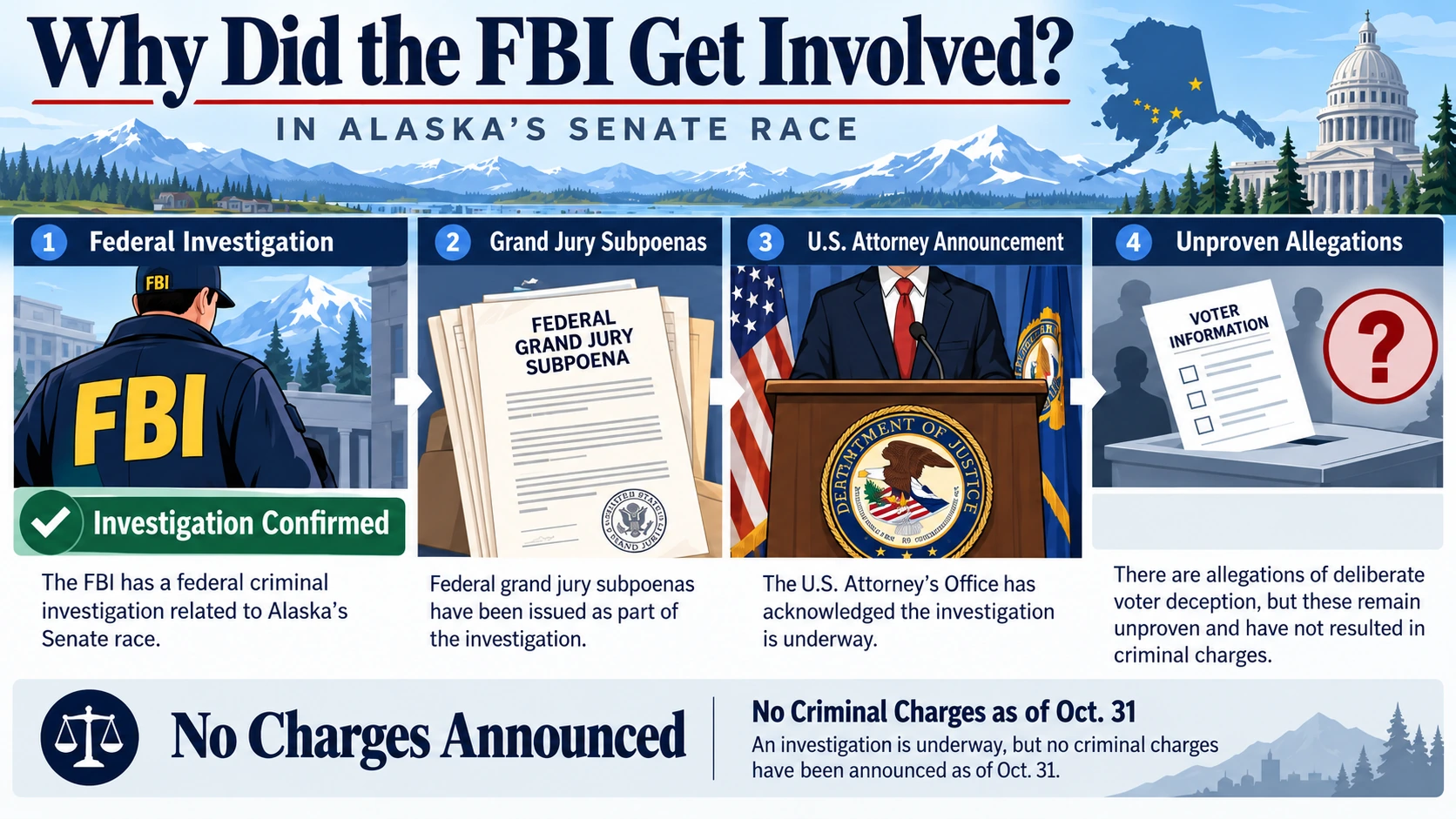
Federal investigators are examining whether the activities surrounding the second Sullivan’s candidacy involved criminal conduct. No criminal charges had been announced as of October 31.
On October 30, Michael Heyman, the U.S. attorney for Alaska, publicly confirmed that a criminal investigation was underway.
He said the investigation had existed for months but had intensified following the new reporting.
Federal authorities also issued grand jury subpoenas seeking information related to the alleged recruitment effort.
The FBI has contacted people associated with the second Sullivan’s campaign, including donors. Some donors interviewed by the Associated Press said they understood which candidate they were supporting and had not been misled.
Heyman did not publicly identify the investigation’s targets or specify which potential crimes investigators were examining. (AP · Alaska Public Media)
Is Recruiting a Spoiler Candidate Illegal?
Not automatically.
Political parties and campaign strategists have sometimes encouraged additional candidates to enter races because they believe those candidacies could affect the electoral outcome.
Such activity can be controversial without necessarily violating criminal law.
Legal experts distinguish between encouraging an eligible person to run and using fraud or unlawful deception to interfere with voters’ rights.
Federal investigators would need to identify an applicable criminal statute and gather evidence sufficient to establish a violation.
The fact that someone entered a race to benefit another candidate would not, by itself, necessarily satisfy that requirement. (Reuters)
The public investigation also raises a separate question about timing.
The Justice Department traditionally exercises caution about publicly discussing investigative activity close to an election because announcements themselves can affect public perceptions.
Federal officials defended their decision to discuss the investigation, while critics questioned its proximity to Election Day.
Neither concern resolves whether an actual crime occurred.
Why Does the Justice Department Want Alaska to Separate Ballots?
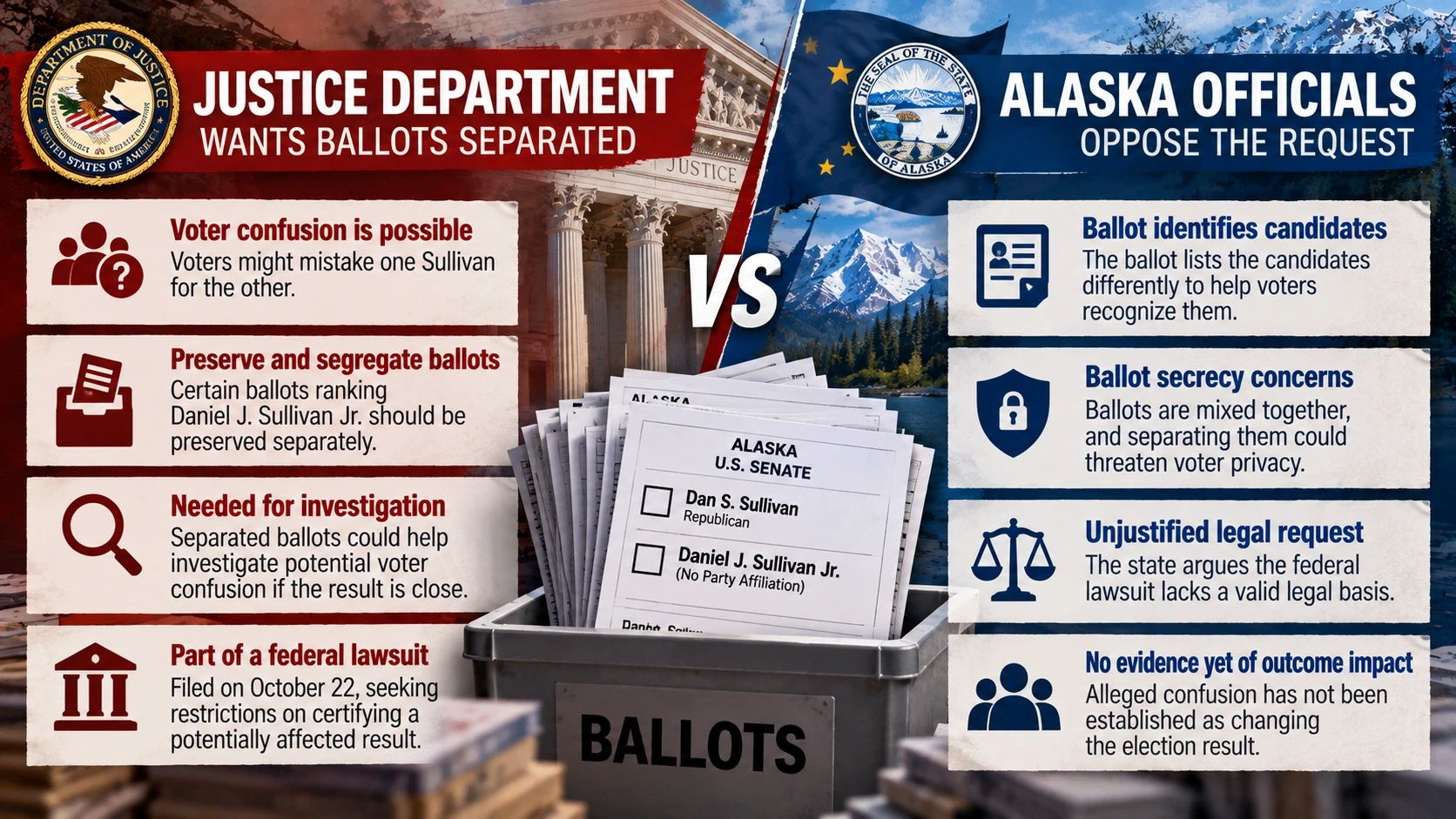
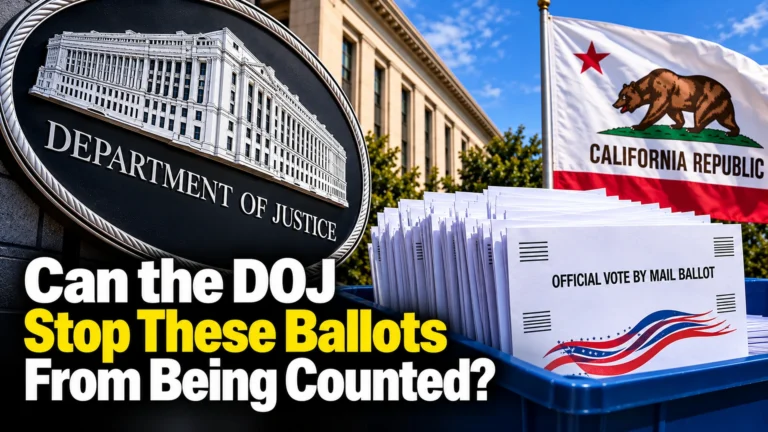
The Justice Department wants the state to preserve and segregate ballots ranking Daniel J. Sullivan Jr. so potential voter confusion could be investigated if it becomes relevant to the result.
That request is part of a civil lawsuit, separate from the criminal investigation.
The department filed its lawsuit on October 22. Among the remedies sought was a restriction on certifying a potentially affected election result if the incumbent lost under circumstances in which the second Sullivan’s vote total could matter.
On October 30, federal attorneys sought urgent relief regarding the preservation and segregation of ballots.
Alaska officials opposed the request, arguing that it was legally unjustified and practically problematic. (AP · Reuters)
Why Does Alaska Object?
| Justice Department’s position | Alaska officials’ response |
|---|---|
| Voters might mistake one Sullivan for the other | The ballot identifies the candidates differently |
| Certain ballots should be preserved and segregated | Ballots are mixed together, and separating them raises secrecy concerns |
| Potential confusion could affect certification | Alleged confusion has not been established as changing a result |
| Additional evidence should be obtained urgently | The state argues the federal lawsuit lacks a valid legal basis |
The state’s objections involve more than administrative inconvenience.
A ballot records a voter’s choice, but it does not establish why that person made the choice.
Someone who ranks Daniel J. Sullivan might have deliberately supported him. Another person might have misunderstood the names.
Simply separating ballots would not reveal which explanation applies.
Alaska also argues that trying to identify and isolate certain voters’ ballots could conflict with protections for ballot secrecy.
The federal request had not resulted in a final judicial determination as of October 31.
Would Alaska’s Ranked-Choice Voting System Prevent Vote Splitting?
Alaska’s ranked-choice voting system can reduce the risk that a minor candidate permanently splits support between candidates with similar voter bases.
But it cannot guarantee that voters correctly identify everyone on the ballot.
Alaska uses an open primary in which the four leading candidates advance to the general election, regardless of party affiliation.
In the general election, voters can rank candidates by preference. If nobody earns a majority of first-choice votes, the lowest-ranked candidate is eliminated, and eligible ballots for that candidate may transfer to the next available preference. (Alaska Division of Elections)
Consider a hypothetical voter who ranks a minor candidate first and the incumbent senator second.
If the minor candidate is eliminated, that ballot can transfer to the incumbent.
In a traditional single-choice election, the initial vote for the minor candidate would not transfer.
However, if someone mistakes the identities of the two Sullivans, ranked-choice voting cannot necessarily correct that misunderstanding.
A voter might rank the wrong person first, omit their intended candidate, or arrange their preferences in a way that does not reflect their actual wishes.
Ranked-choice voting can limit some forms of vote splitting. It does not make voter confusion impossible.
That distinction matters because the Justice Department’s lawsuit concerns alleged confusion, while state officials argue that the ballot’s identifying information and ranked-choice structure provide safeguards.
What Happens Next in Alaska’s Senate Race?
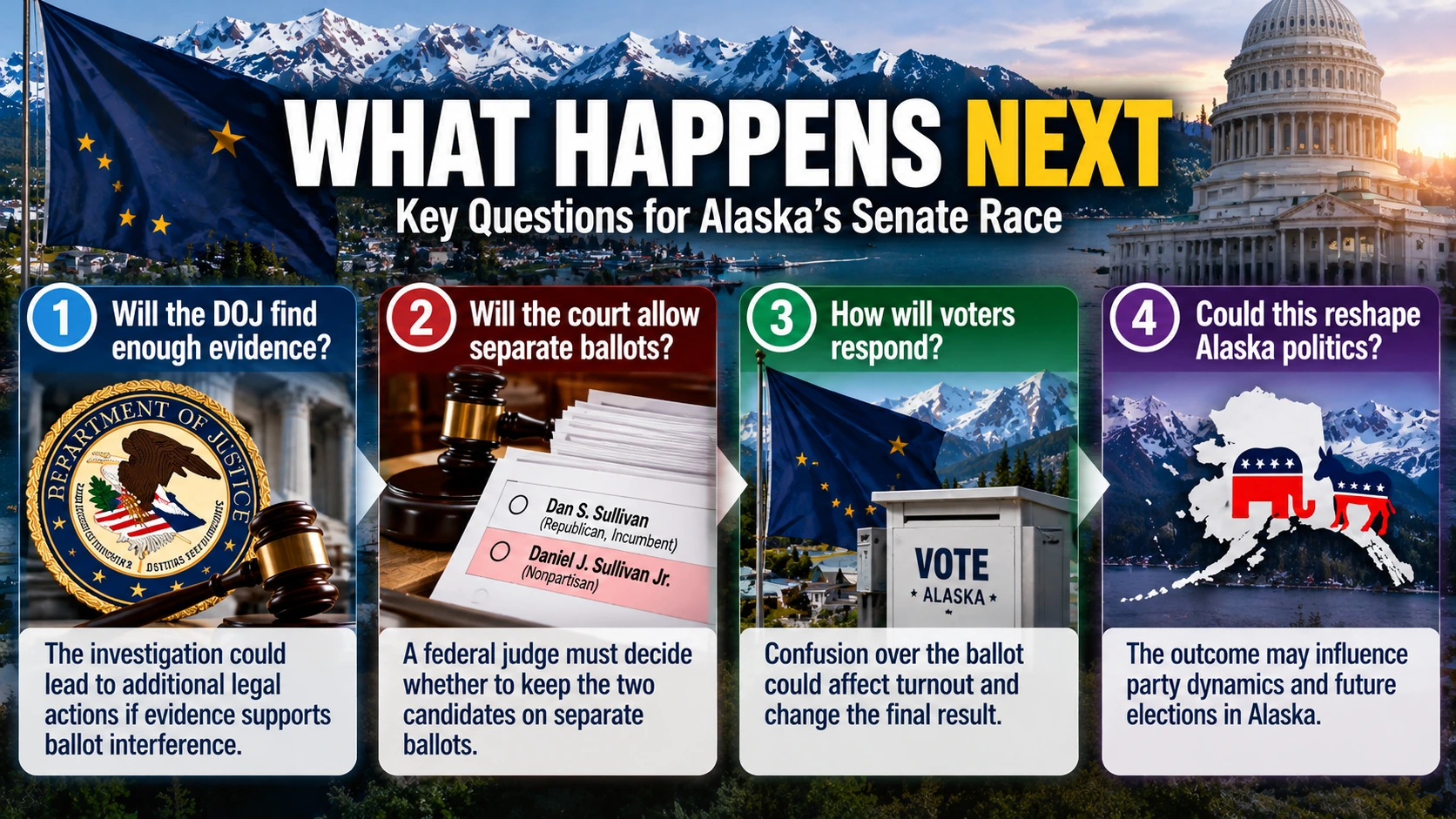
The immediate questions are whether the federal court will grant any emergency relief and whether investigators uncover evidence of unlawful conduct.
As of October 31, the November 3 Senate election remained scheduled to proceed with both Sullivans on the ballot.
The Justice Department requested urgent judicial consideration before Election Day. Alaska and other parties have sought dismissal of the federal lawsuit.
The criminal investigation is a separate process and does not automatically invalidate a candidacy or election result.
Three developments are particularly important:
- The federal court’s decision: Whether it orders any ballot preservation or segregation beyond ordinary election procedures.
- The criminal investigation: Whether investigators identify a specific offense and evidence sufficient to support charges.
- The election results: Whether the second Sullivan’s actual vote total and voters’ subsequent rankings become relevant to a contested outcome.
Alaska’s election system also means that the first numbers released on election night may not provide the final result of a close race. The state has scheduled ranked-choice tabulation results for November 18, after eligible ballots have been reviewed and counted. (Alaska Division of Elections)
There is another important distinction to remember.
Even if the second Sullivan receives more votes than the eventual margin between major candidates, that would not by itself prove that his supporters were confused or that the same voters would otherwise have chosen the incumbent.
A numerical possibility is not proof of what individual voters intended.
Bottom Line: What This Story Really Means
Two men named Dan Sullivan are legally competing in Alaska’s U.S. Senate election.
One is the Republican incumbent. The other is a retired teacher whose candidacy survived a challenge before Alaska’s highest court.
The FBI investigation concerns allegations that political operatives helped arrange the second candidacy to confuse voters and influence the election. Those allegations have not been established as criminal wrongdoing.
Separately, the Justice Department is asking a federal court to intervene in how potentially disputed ballots are handled. Alaska officials argue that such intervention is unjustified and threatens important election protections.
The broader question reaches beyond this one Senate race: When does hardball campaign strategy cross the line into unlawful interference, and who gets to decide how disputed election results are handled?
Those are questions the criminal investigation, federal litigation, and eventual election results may address in different ways.
Alaska Senate Race: Key Questions Explained
Q. Are there really two candidates named Dan Sullivan in Alaska’s Senate election?
Yes. Republican incumbent Dan S. Sullivan and retired teacher Daniel J. Sullivan Jr. are separate candidates on the November 3, 2026 ballot.
Q. Is the second Dan Sullivan a Republican?
He initially sought to run with a Republican affiliation but later changed his registration to undeclared. The general election ballot lists him without a party affiliation.
Q. Did the Alaska Supreme Court approve his candidacy?
Yes. On June 29, 2026, the state Supreme Court affirmed a ruling that restored his eligibility to appear on the ballot. That decision did not resolve every subsequent allegation concerning recruitment activities.
Q. Has Mary Peltola been charged with election fraud?
No criminal charges against Peltola had been announced as of October 31. She has denied knowledge of or participation in the alleged recruitment effort.
Q. What is the FBI investigating?
Federal investigators are examining allegations of possible misconduct connected with the second Sullivan’s candidacy. Prosecutors had not publicly identified the investigation’s targets or specified potential charges as of October 31.
Q. Is recruiting a spoiler candidate automatically illegal?
No. Recruiting an eligible candidate for political advantage is not automatically a criminal offense. Whether specific conduct violates the law depends on the actions involved and the applicable legal requirements.
Q. Why does the Justice Department want certain Alaska ballots separated?
It argues that preserving and segregating ballots ranking Daniel J. Sullivan could help investigate potential voter confusion if the election result makes that issue relevant.
Q. Can ranked-choice voting stop candidates from splitting votes?
It can reduce some vote-splitting effects by transferring eligible votes to a voter’s next ranked preference. It cannot guarantee that voters correctly identify similarly named candidates.
Q. Could the FBI investigation cancel the Senate election?
An investigation alone does not cancel an election. Any change to election administration or certification would require a valid legal basis and appropriate official or judicial action.
Q. When is Alaska expected to release ranked-choice voting results?
The Alaska Division of Elections has scheduled ranked-choice tabulation results for November 18, 2026, after eligible ballots have been reviewed and counted.
Did this help make the story clearer? 🙂 WIN keeps unpacking the “why” behind the news—clearly and simply!
Sources
Federal Investigation and October 30 Developments
Associated Press — Justice Department Seeks to Isolate Alaska Ballots as Criminal Probe Continues
Associated Press — FBI Contacts Donors as Alaska Senate Inquiry Widens
Reuters — Is It Legal to Recruit Spoiler Candidates in U.S. Elections?
Candidate Recruitment Allegations and Responses
FactCheck.org — Explaining the Case of the Two Dan Sullivans on Alaska’s Ballot
CBS News — DOJ Issues New Subpoenas in Alaska Senate Investigation
Ballot Eligibility and Federal Litigation
Alaska Public Media — Alaska Supreme Court Orders Second Dan Sullivan Onto the Ballot
Associated Press — Alaska Challenges Federal Ballot Segregation Request
Ranked-Choice Voting and Election Administration
Alaska Division of Elections — Official Election Information and Ranked-Choice Voting Guide
Alaska Division of Elections — Election Results and Tabulation Schedule