Can the Justice Department Force California Counties to Set Aside Mail Ballots?

What happens if the federal government tells election officials not to count certain ballots—but the state running the election refuses?
That’s the question at the center of an escalating confrontation between the Trump administration and California just days before the November 3, 2026, midterm elections.
The Justice Department says federal investigators identified more than 20,000 people on California’s voter rolls who may not be U.S. citizens. Federal officials want ballots associated with those individuals held separately until their eligibility can be checked.
California officials argue that the federal government’s list contains serious errors and that imposing an emergency verification process could prevent eligible Americans from having their votes counted.
Here’s the important distinction: A federal demand to set aside ballots is not the same as a court order requiring election officials to do it. Whether the Justice Department can compel California to take those steps is now being contested in federal court.
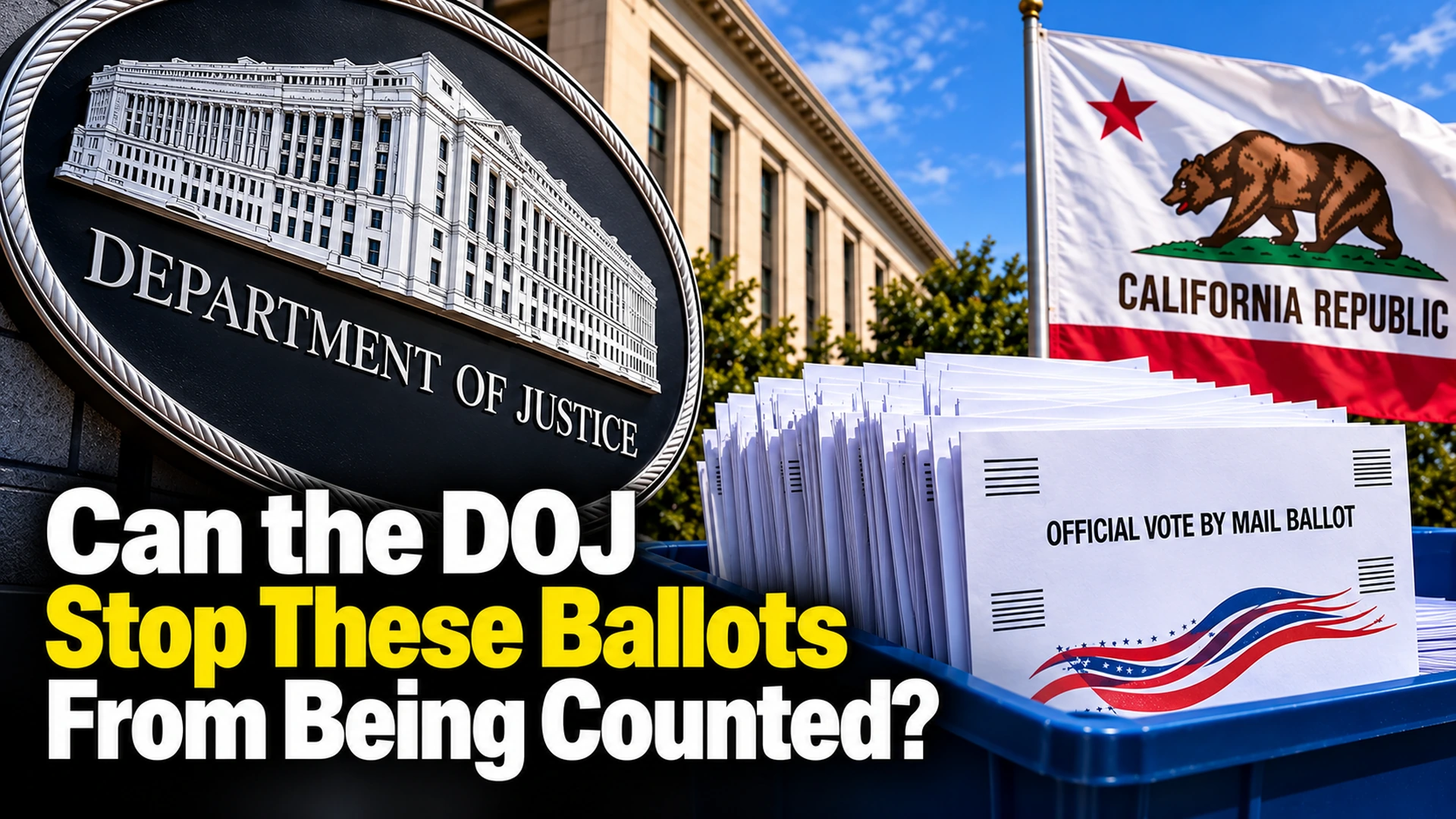
※ Images in this article are AI-generated illustrations created to help explain the story. They are not actual photographs, and depictions of people, places, or events may differ slightly from reality.
And there is another question that may matter even more: Does appearing on a government list of suspected noncitizens actually establish that someone voted illegally?
The answer is no. Understanding that distinction is essential to understanding the entire controversy.
What Exactly Is the Justice Department Demanding?
The Justice Department is asking California election officials to identify voters flagged as possible noncitizens, verify their citizenship, and temporarily separate certain mail ballots from the normal counting process.
On October 23, federal prosecutors sent letters to county election offices across California, expanding an earlier demand directed at state officials and Los Angeles County. At least 18 counties were confirmed to have received letters by the time of the initial reports.
The letters gave local officials 48 hours to cooperate with federal authorities. The government also requested identifying records, including voter-registration documents, identification information, and Social Security numbers where available.
Federal prosecutors warned of potential legal consequences for officials who knowingly process ballots cast by noncitizens. (AP · Reuters)
The federal-state lawsuit was already underway before these additional letters reached county offices. By then, California had challenged the reliability of the federal list, and a district judge had not yet ordered the state to stop counting the disputed ballots.
But the federal government is not simply asking counties to review their records. It wants ballots associated with people whose citizenship cannot immediately be confirmed to be kept out of the regular counting process until verification is complete.
That makes the dispute particularly consequential because California’s election is already underway.
Where Did the List of More Than 20,000 Suspected Voters Come From?
The list came from federal agencies comparing California voter-registration information with immigration-related data.
The Justice Department says the Department of Homeland Security and other federal investigators used multiple methods to identify records that potentially belonged to people who were not U.S. citizens.
On October 15, the Justice Department announced a lawsuit against California, alleging that more than 20,000 likely noncitizens appeared on the state’s voter rolls.
The government argues that allowing ballots from ineligible voters into the count could undermine legitimate election results. However, the department’s characterization is important: The 20,000 figure refers to people identified as potentially ineligible—not 20,000 confirmed illegal votes. (U.S. Department of Justice)
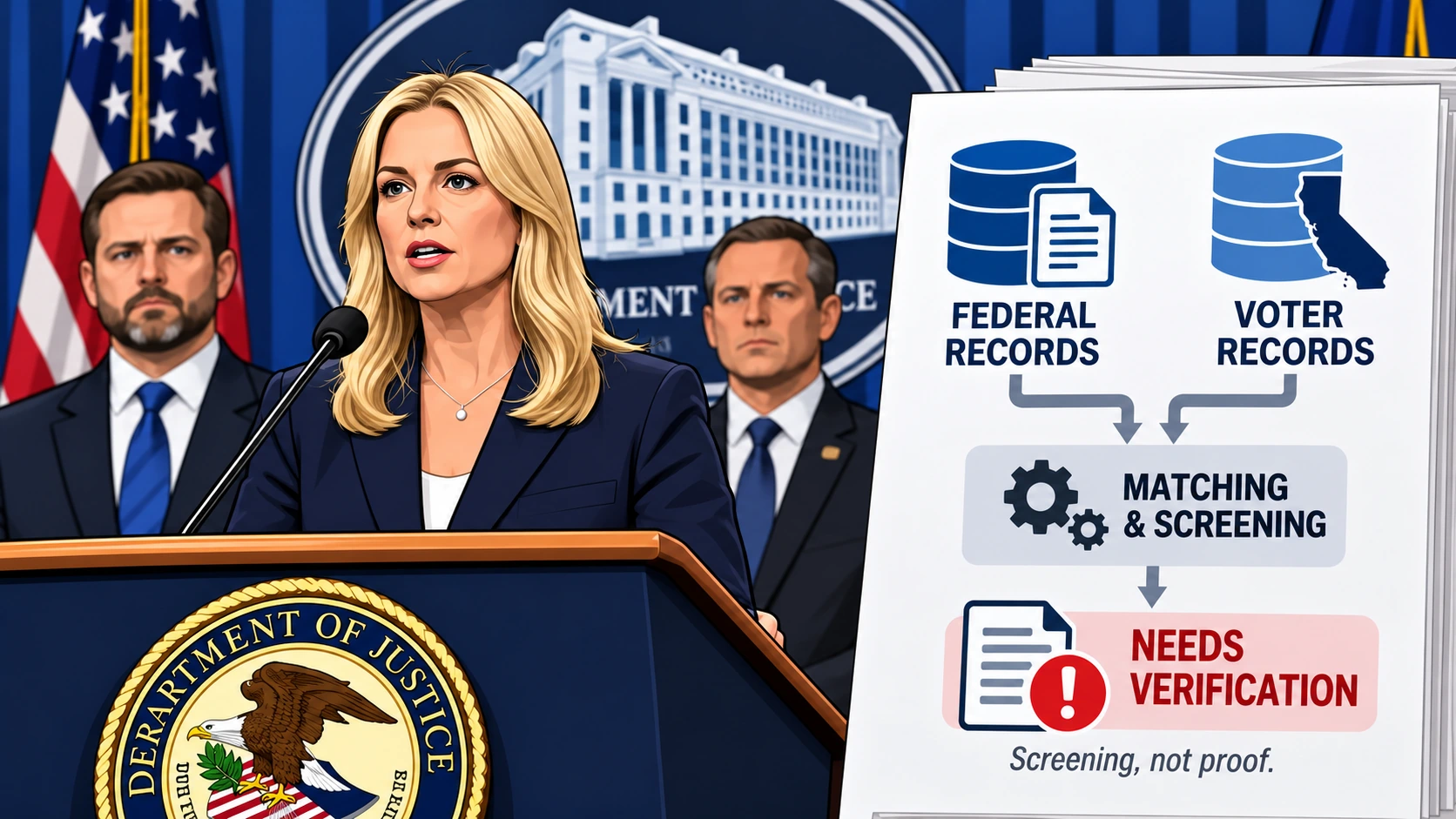
Why does that distinction matter?
A government database can raise a legitimate question about someone’s eligibility without conclusively answering it.
An immigration record might reflect a person’s legal status at an earlier date. Some immigrants subsequently become naturalized U.S. citizens, while different government databases may be updated at different times.
A name or record match therefore needs further verification before it can establish that a particular person is ineligible.
The federal government considers the flagged records serious enough to warrant an immediate investigation. California argues that the evidence is not sufficiently reliable to justify disrupting ballot processing.
Those are two different judgments about the same underlying information.
Does the Justice Department Have Evidence of Actual Illegal Voter Registration?
Yes. Federal prosecutors have brought criminal charges against 28 individuals, but those cases do not establish that every person on the much larger list is ineligible.
On October 19, the Justice Department announced charges against 28 lawful permanent residents, commonly called green card holders.
The department alleged various election-related offenses, including fraudulent voter registration and, in some cases, unlawful voting or false statements associated with naturalization.
Eleven people were arrested as part of the coordinated operation. Federal officials said all 28 defendants appeared on the larger list provided to California. (U.S. Department of Justice)
The charges matter because they demonstrate that federal investigators identified specific cases they believe can be prosecuted. But criminal charges are allegations until proven in court.
And the existence of 28 charged individuals does not establish the citizenship status, registration eligibility, or voting behavior of the remaining people on the government’s list.
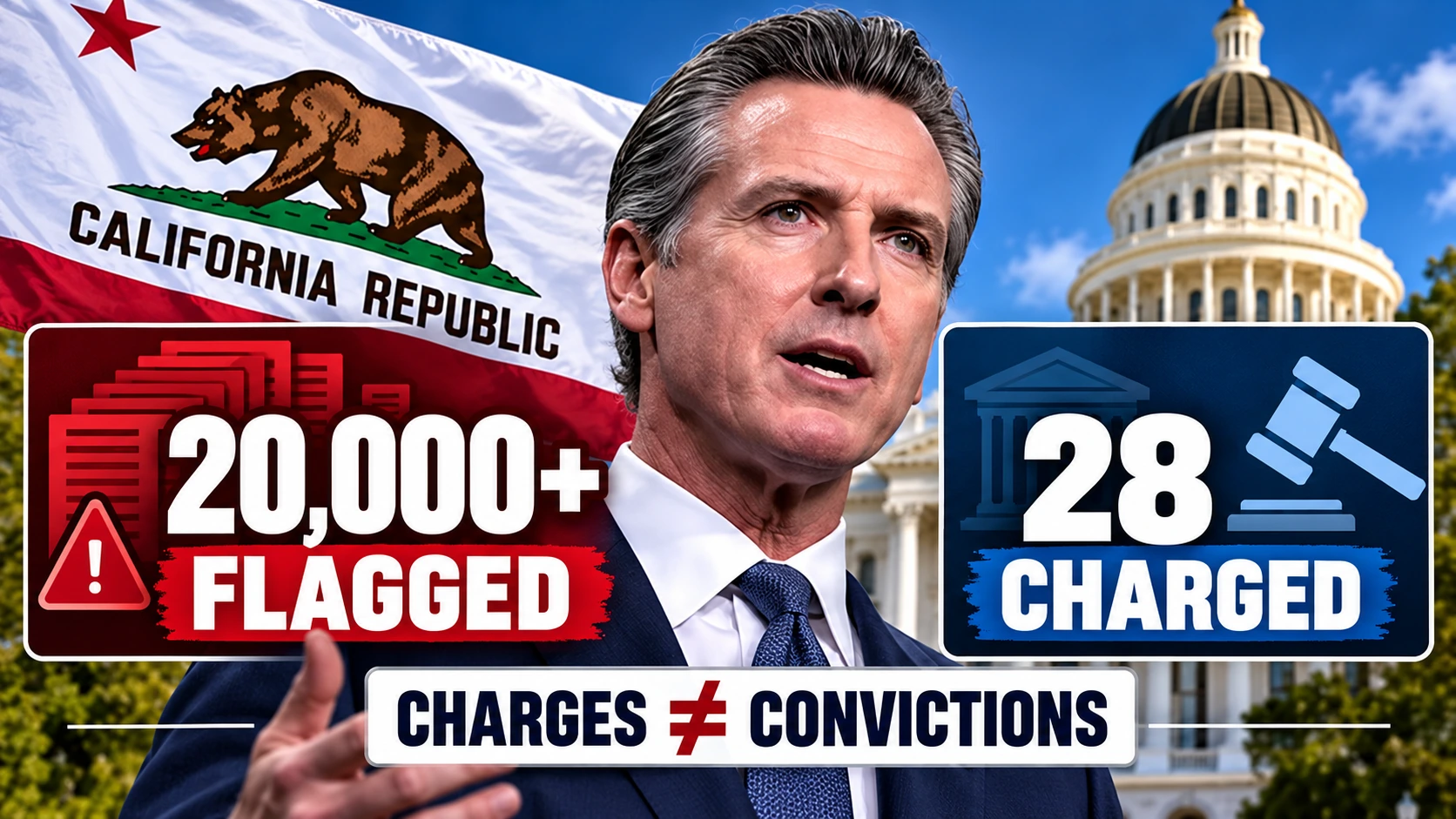
There are several stages that should not be confused:
| Stage | What It Establishes |
|---|---|
| Flagged in a database | Investigators believe a record warrants further examination |
| Citizenship reviewed | Officials examine evidence of a person’s eligibility |
| Criminally charged | Prosecutors formally allege an offense |
| Convicted | A court has determined criminal guilt |
This is why the phrase suspected noncitizen voter needs careful interpretation.
It can refer to an investigative lead, not a legally established finding.
Federal law generally prohibits noncitizens from voting in federal elections, subject to narrow statutory exceptions. That prohibition is not the central legal disagreement here.
The disagreement is over how suspected ineligibility should be established, how quickly officials can act, and what happens to ballots while those questions are unresolved. (18 U.S.C. § 611)
Why Does California Say the Federal Voter List Is Unreliable?
California’s challenge is partly based on what Los Angeles County officials found when they reviewed a small sample of the federal list.
In court filings, county officials described a preliminary examination of 200 records. According to that examination:
- 42.9% had canceled registrations.
- 71.2% showed no voting history.
- Among records with meaningful birthplace information, 38.9% indicated that the individuals were born in the United States.
These categories overlap, so the percentages must not be added together. The findings raised questions about whether the list accurately distinguished ineligible voters from citizens, canceled registrations, and people who had never cast a ballot. (ABC News · ABC7 News)
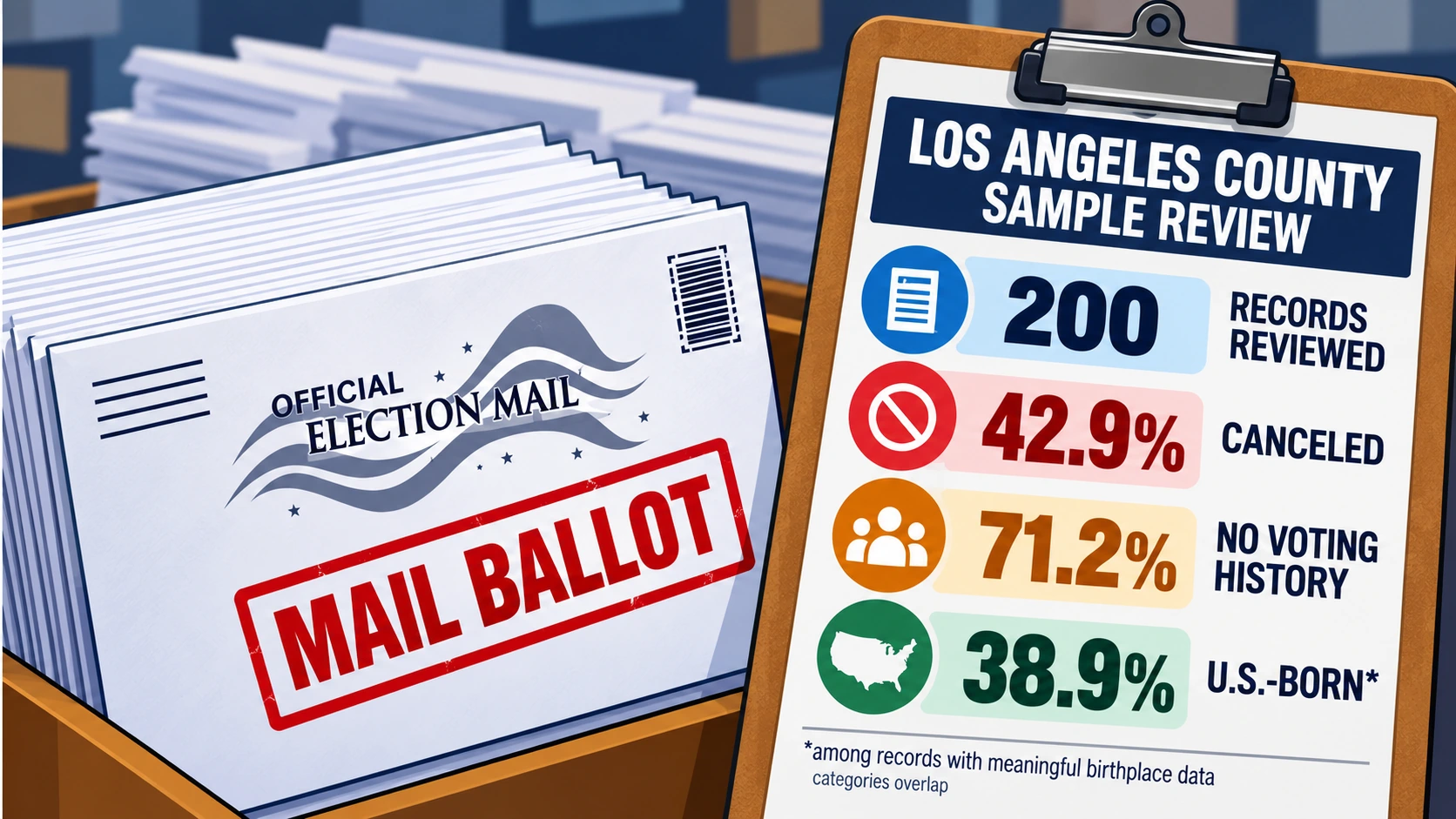
The sample cannot establish the accuracy or inaccuracy of every record in the statewide list. It also cannot prove that none of the flagged people were ineligible.
What it does show is why county officials object to treating a preliminary database match as a final determination.
For example, if a registration has already been canceled, there may be no current ballot to set aside. If someone has never voted, that record cannot by itself establish a history of illegal voting.
A reported U.S. birthplace is strong evidence relevant to citizenship, although individual records may still require verification.
The Justice Department argues that the list warrants investigation. California officials say those same uncertainties make it dangerous to automatically delay ballots.
Both positions focus on election integrity, but they emphasize different risks.
Who Actually Has the Authority to Control California Mail Ballots?
California administers its elections, but federal election laws still apply. The Justice Department can investigate suspected violations and seek court intervention; a prosecutorial demand alone does not settle a disputed ballot-counting procedure.
The U.S. Constitution creates a system in which states play the primary role in administering congressional elections, while Congress has authority to establish or change federal election regulations.
Federal law can therefore place binding requirements on how states conduct elections. But federal prosecutors are not automatically the officials who determine how county ballot-processing systems must operate in every contested situation. (Congress.gov — Elections Clause)
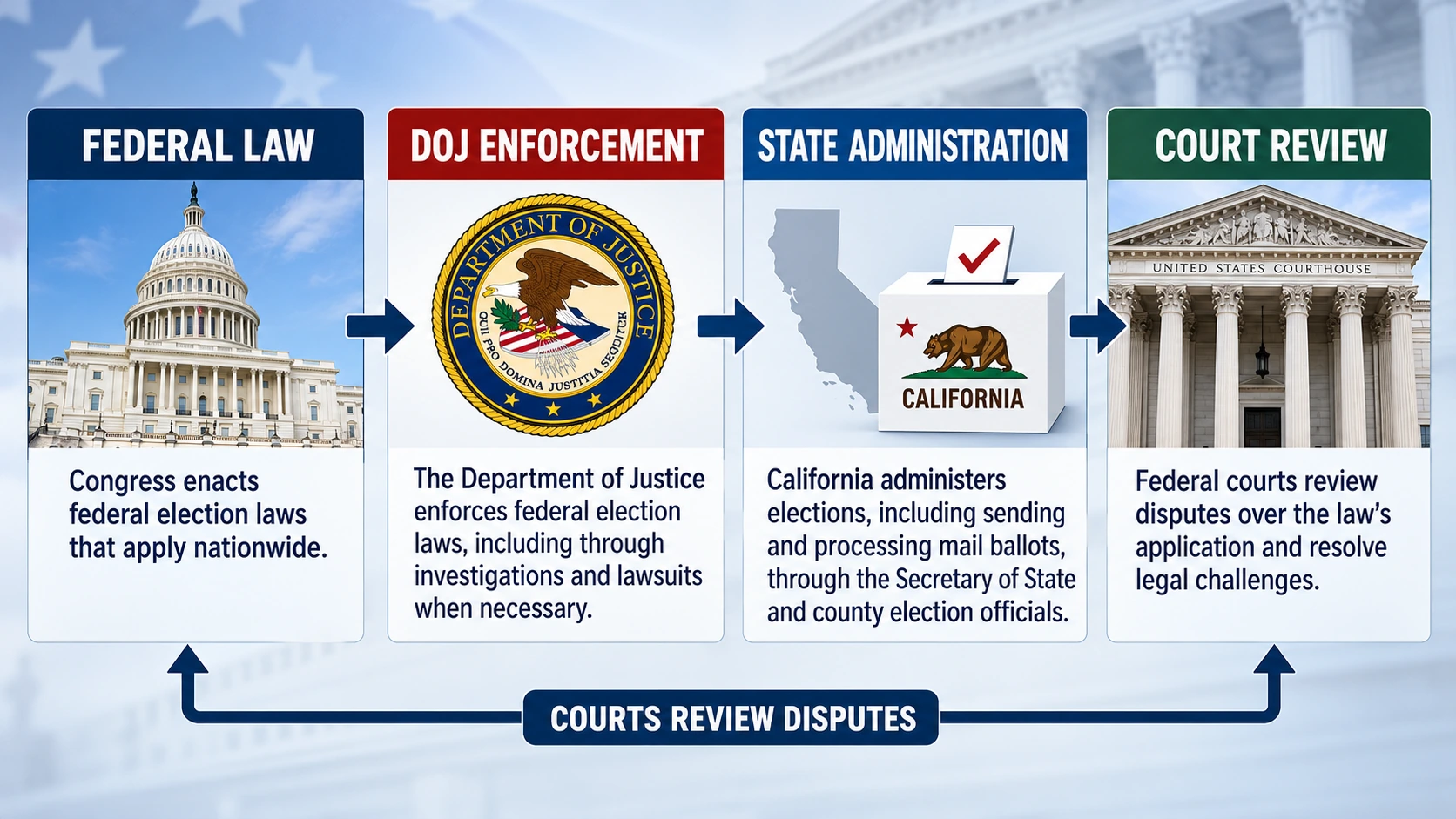
The responsibilities can be separated this way:
| Institution | Principal Role |
|---|---|
| Congress | Establishes federal election rules within its constitutional authority |
| Justice Department | Investigates and enforces applicable federal law |
| California election officials | Administer elections and process ballots under applicable law |
| Federal courts | Resolve legal disputes and determine whether requested judicial relief is justified |
This structure explains why the conflict has gone to court.
The Justice Department believes federal law requires immediate intervention to prevent ineligible ballots from being counted.
California officials dispute the legal and factual basis for that intervention, as well as the feasibility of carrying it out during an active election.
The courts must consider the government’s evidence, the applicable election laws, and the consequences of ordering emergency changes.
Importantly, a court can reject a particular emergency request without ruling that noncitizen voting is legal.
Likewise, enforcing the federal prohibition on illegal voting does not automatically establish that every individual identified by investigators must have a ballot withheld.
Those are separate legal questions.
What Does It Actually Mean to Set a Mail Ballot Aside?
Setting a ballot aside means temporarily separating it from the regular counting process while an eligibility question is investigated.
The Justice Department has repeatedly emphasized the distinction between segregating a ballot and canceling it.
Under its requested approach, ballots associated with people whose citizenship remains unverified would be held separately rather than immediately counted.
If eligibility is established, the question becomes how those ballots would be returned to the lawful counting process.
If a person is determined to be ineligible, the ballot would not be counted as a valid vote. The exact procedures, safeguards, and timing would depend on applicable law and any court order.
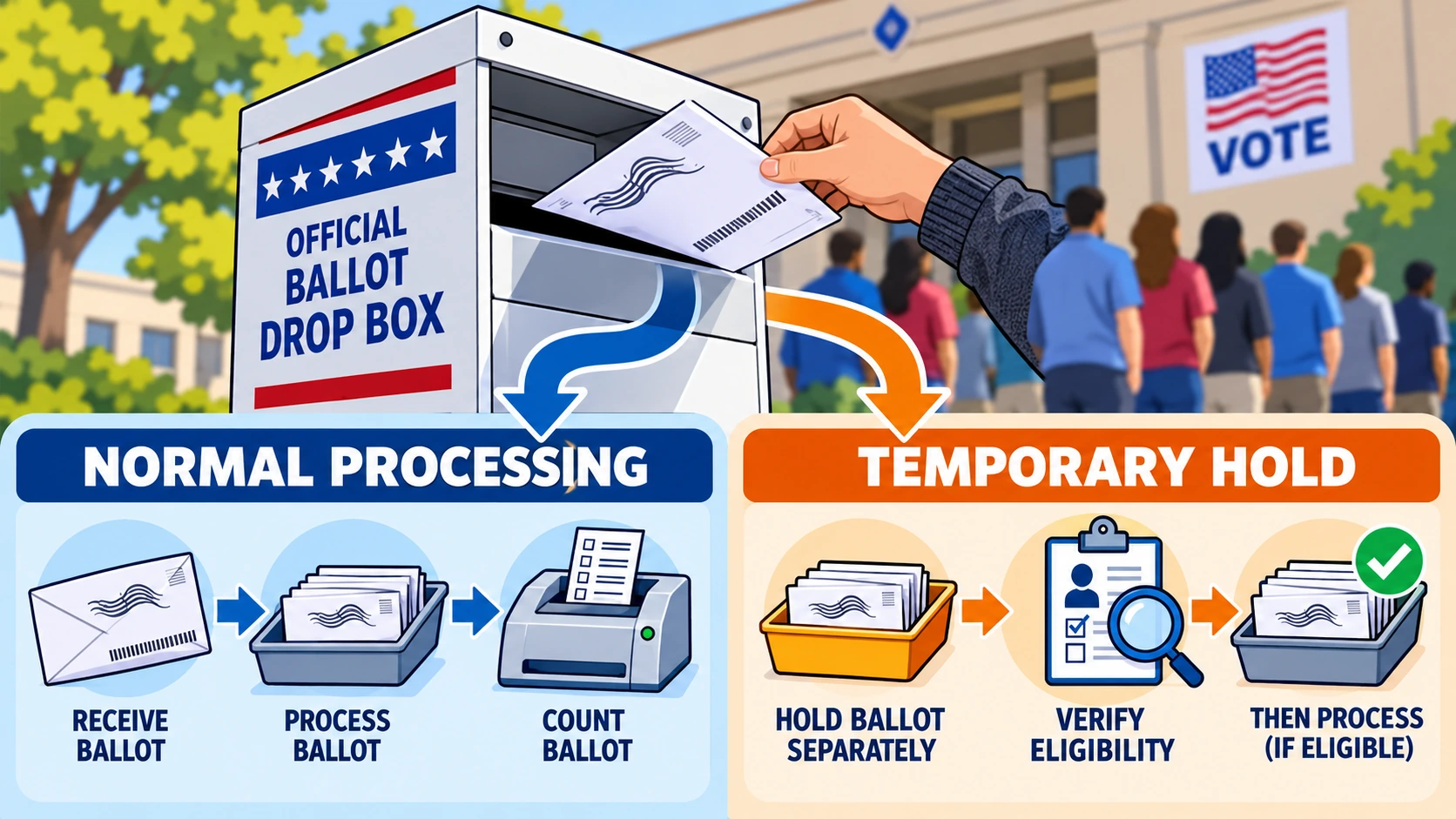
Why do California officials object if the ballots would only be separated temporarily?
Because a temporary hold can still have consequences.
County election offices have established systems for processing and tracking ballots. Introducing new eligibility checks into those systems shortly before Election Day may require changes to staffing, records, and computer procedures.
Los Angeles County officials warned in court filings that implementing the federal demands could disrupt ballot processing and create risks for eligible voters. Those warnings are the county’s assessment, not a judicial finding that such disruption will necessarily occur. (ABC7 News)
The federal government sees a different danger: If an ineligible ballot is counted together with lawful votes, officials may be unable to reverse its inclusion later.
That is the central operational trade-off. One side wants to avoid counting votes cast by ineligible individuals. The other warns that an emergency procedure based on potentially inaccurate records could interfere with eligible voters’ ballots.
A fair resolution requires both accurate eligibility decisions and a legally workable counting process.
Why Has This Become an Emergency Court Battle?
Because the election is approaching, ballots are already being processed, and federal prosecutors want action before the normal court schedule would otherwise resolve the dispute.
The confrontation developed over several days rather than appearing suddenly on October 24.
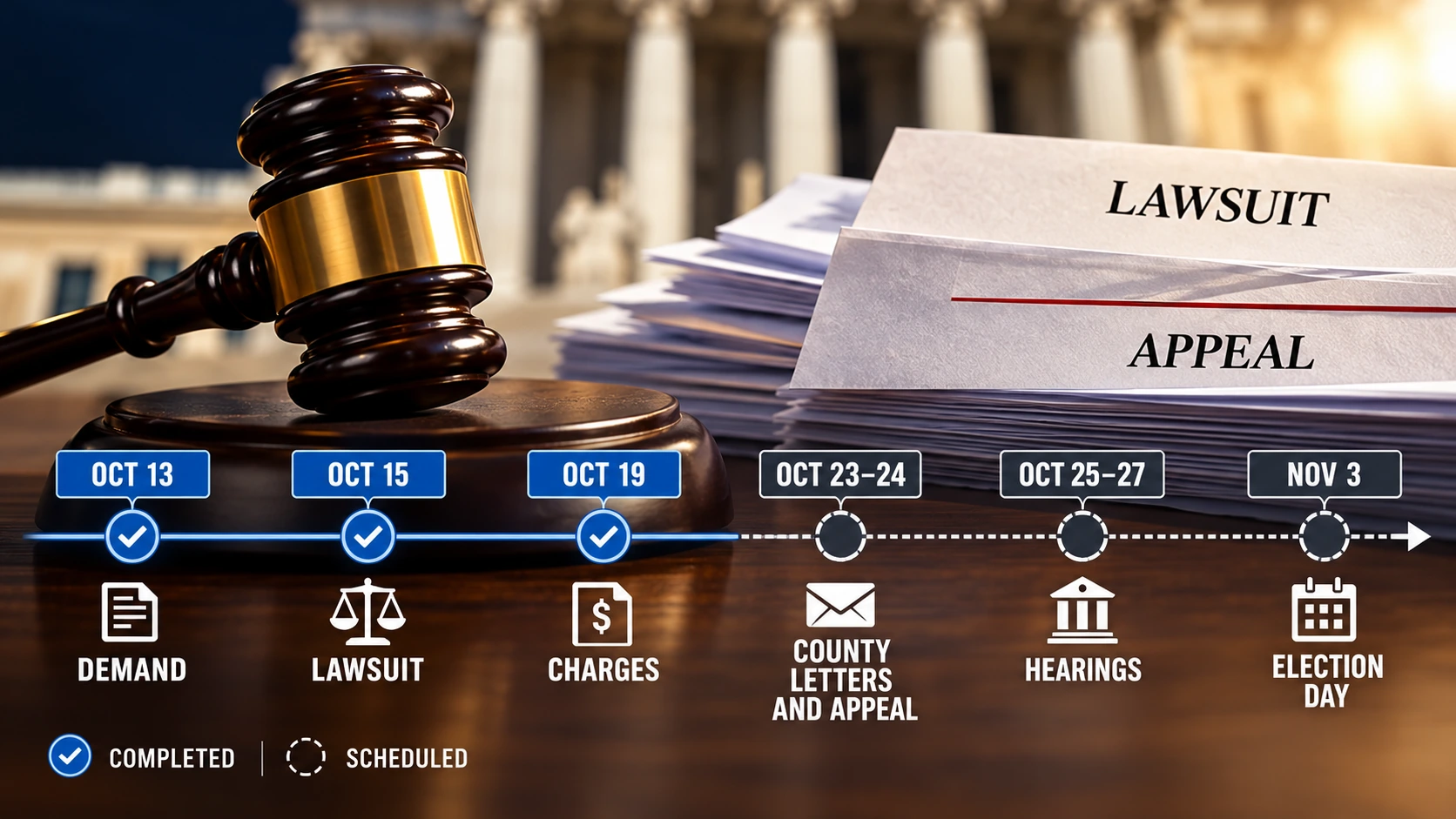
How the Dispute Escalated
| Date | Development |
|---|---|
| October 13 | Federal officials demanded citizenship checks and ballot segregation |
| October 15 | Justice Department filed a lawsuit against California |
| October 19 | Federal prosecutors announced charges against 28 individuals |
| October 23 | Federal prosecutors expanded demands to county election offices |
| October 24 | County objections continued, and the Ninth Circuit scheduled emergency arguments |
| October 25 | Ninth Circuit oral arguments scheduled |
| October 27 | Federal district court hearing scheduled |
| November 3 | Midterm Election Day |
The October 24 developments added another layer to the dispute. The U.S. Court of Appeals for the Ninth Circuit scheduled oral arguments for October 25 concerning the Justice Department’s request for emergency intervention.
The district court had scheduled a hearing for October 27, but federal prosecutors sought appellate action before that hearing. As of the October 24 reports, the government’s requested emergency ballot restrictions had not been established by a final judicial ruling. (Reuters · Democracy Docket)
This matters because courts are generally cautious about last-minute election changes, especially when the changes might affect eligible voters or create administrative uncertainty.
Yet courts also must take seriously properly supported claims that election laws are being violated. Neither consideration automatically resolves this case.
The decision depends on the specific legal claims, evidence, and emergency relief requested.
What Could Happen Before the November 3 Election?
Several possibilities remain, and the court proceedings will determine whether federal officials obtain the emergency restrictions they are seeking.
One possibility is that a federal court orders some form of targeted ballot segregation or eligibility review. Such an order would need to establish what officials must do and to whom the requirements apply.
Another possibility is that the court declines emergency relief, leaving existing procedures in place while the underlying lawsuit continues.
The court could also issue a narrower decision, addressing particular records or legal issues without granting everything the Justice Department has requested.
These are possible procedural outcomes, not predictions.
The important questions to watch are:
- Does the Ninth Circuit grant emergency relief, reject it, or leave the issue for the district court?
- What evidence is presented to establish whether individuals on the federal list are actually ineligible?
- Can any legally authorized review be completed without disrupting the treatment of eligible voters’ ballots?
- Does the dispute result in rules specific to California, or does it help clarify broader limits on federal election enforcement?
The case could carry significance beyond California. States administer federal elections across the country, and the federal government has a responsibility to enforce federal election law.
Disagreements about how those responsibilities overlap are not new.
What makes this confrontation especially sensitive is its timing: It is unfolding while ballots are already being cast and processed.
Bottom Line: What This Story Really Means
The California mail ballot dispute is not simply about whether noncitizens should be allowed to vote in federal elections. Federal law generally prohibits that.
The disagreement is about how the government establishes that someone is ineligible, what evidence is sufficient to interfere with a ballot, and who has authority to impose new procedures while an election is already underway.
The Justice Department says more than 20,000 voter records warrant investigation and has brought charges against 28 individuals.
California officials say preliminary reviews reveal significant problems in the broader list and warn that emergency restrictions could affect eligible voters.
The most important distinction is between suspicion, proof, and legal authority.
A flagged database record is not proof of illegal voting. A criminal charge is not a conviction. And a federal prosecutor’s demand is not automatically a binding judicial order.
The pending court proceedings will test whether the federal government’s evidence and legal arguments justify the emergency changes it seeks.
California Mail Ballots: Key Questions Explained
Q. Has the Justice Department proved that 20,000 noncitizens voted in California?
No. The Justice Department identified more than 20,000 records it believes may involve ineligible registrants. That is different from proving that 20,000 noncitizens actually cast ballots.
Q. Were 28 people convicted of voter fraud?
No. Federal prosecutors announced criminal charges against 28 individuals on October 19, 2026. Charges are allegations, and the defendants are presumed innocent unless proven guilty.
Q. Can noncitizens legally vote in U.S. federal elections?
Federal law generally prohibits noncitizens from voting for federal offices, subject to narrow statutory exceptions. Citizenship eligibility and whether a particular person violated the law are separate questions.
Q. Does receiving a mail ballot prove that someone is eligible to vote?
No. Receiving a ballot does not, by itself, conclusively establish eligibility. But receiving one also does not establish that an ineligible person voted illegally.
Q. What does ballot segregation mean?
It means keeping certain ballots separate from regular processing or counting while an eligibility issue is reviewed. It is different from automatically canceling or destroying the ballots.
Q. Can a Justice Department letter automatically stop ballots from being counted?
A demand letter does not itself resolve a disputed legal question or substitute for a court order. The Justice Department has sought judicial relief requiring California to take particular actions.
Q. Why does Los Angeles County question the federal list?
A preliminary county review found canceled registrations, records with no voting history, and records indicating U.S. birth. County officials argue that these findings raise doubts about the list’s reliability.
Q. What court is handling the dispute?
The case is before a federal district court in California, with emergency appellate proceedings in the U.S. Court of Appeals for the Ninth Circuit. Hearings were scheduled for October 25 and October 27, respectively.
Q. Could this dispute affect voters outside California?
A ruling could inform future disputes over federal and state election authority. Its direct legal effect would depend on the court’s decision and the scope of any order.
Did this help make the story clearer? 🙂
WIN keeps unpacking the “why” behind the news—clearly and simply!
Sources
Federal Allegations and Criminal Charges
U.S. Department of Justice — Justice Department Sues California Over Voter List, October 15, 2026
U.S. Department of Justice — Charges Against 28 Foreign Nationals, October 19, 2026
California’s Response and Voter Record Accuracy
California Secretary of State — Response to Justice Department Demands, October 15, 2026
ABC News — Preliminary Los Angeles County Analysis, October 21, 2026
ABC7 News — California County Record Analysis and Election System Risks, October 23, 2026
October 23–24 Developments and Court Proceedings
Associated Press — Justice Department’s 48-Hour County Demands, October 24, 2026
Reuters — Federal Demands to California County Election Officials, October 24, 2026
California DOJ Voter Roll Interference Challenge — Court Filings and Timeline
Federal Election Authority and Law
Congress.gov — States and the Elections Clause
18 U.S.C. § 611 — Federal Law Governing Voting by Noncitizens
Keep Reading
How Did the California Ballot Lawsuit Begin?
The earlier dispute explains why federal prosecutors first demanded citizenship checks and why California questioned the original list before the requests expanded to county election offices.
Why Is the Justice Department Trying to Block Ballots From 20,000 California Voters?
Why Can Citizenship Database Checks Produce Disputed Results?
The expanded SAVE system shows how federal citizenship data can be used for voter verification—and why a database response is not necessarily a final determination of eligibility.
What Is the SAVE Voter Database—and What Did the Supreme Court Actually Allow?