How Did Melania Trump Bring Russia and Ukraine Together at the White House?

Why were officials from two countries still fighting a war standing together at the White House—with the first lady at the center of it?
On November 5, 2026, Melania Trump hosted Russian and Ukrainian representatives after helping arrange a temporary ceasefire in Oleshky, a Russian-occupied city in southern Ukraine. It was an unusual diplomatic moment. But it was not a peace agreement ending the war. The ceasefire was limited to a humanitarian operation that had already concluded. (White House · AP)
The meeting raises a more interesting question than who attended: How did someone without a formal foreign-policy office become a go-between for Russia and Ukraine—and could a six-day pause in one city lead to anything bigger?

※ Images in this article are AI-generated illustrations created to help explain the story. They are not actual photographs, and depictions of people, places, or events may differ slightly from reality.
Who Was Actually at the White House—and Why?
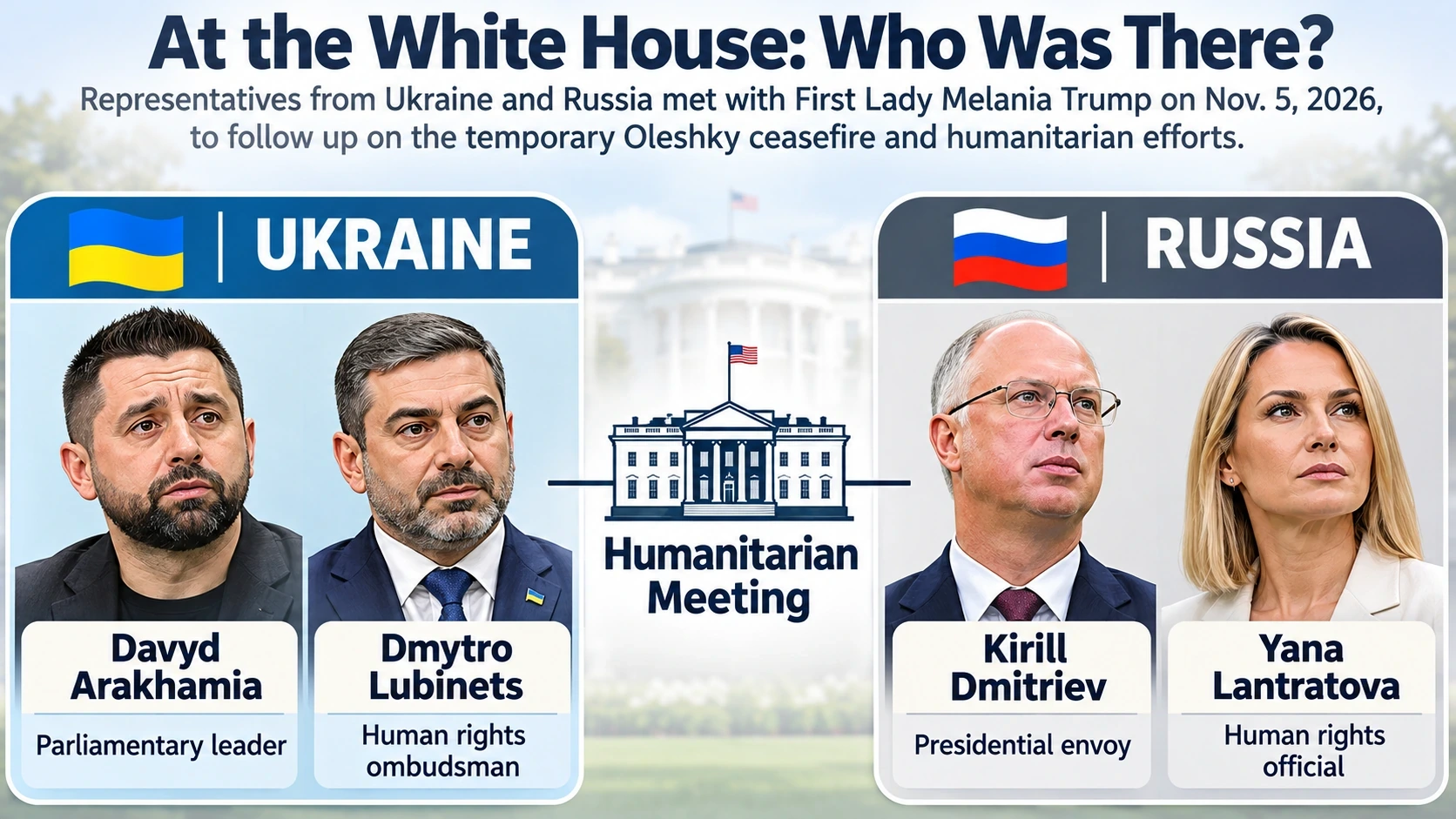
The November 5 gathering brought together people who had worked on the Oleshky operation—not the two presidents negotiating a final settlement.
Ukraine was represented by Davyd Arakhamia, a leader of President Volodymyr Zelenskyy’s parliamentary faction, and human rights ombudsman Dmytro Lubinets. Russia sent Kirill Dmitriev, an envoy of President Vladimir Putin, and Yana Lantratova, a Russian human rights official. Both delegations publicly acknowledged the humanitarian effort. (White House · Kyiv Independent)
Ukrainian officials presented Melania Trump with the Order of Princess Olga, First Class, on behalf of Zelenskyy. She handed the Russian and Ukrainian representatives letters intended for their respective presidents. The ceremony recognized a specific humanitarian arrangement; it did not produce a new nationwide ceasefire. (White House)
Why Did One Ukrainian City Need Its Own Ceasefire?

Oleshky sits across the Dnipro River from the city of Kherson. Russian forces have occupied it since 2022. As the war continued, residents faced shortages of food, drinking water and medicine, alongside damaged infrastructure and dangerous roads.
Before the full-scale invasion, the city had roughly 24,000 residents. The White House estimated that about 1,700 to 2,000 remained by late October 2026, many of them older adults. That is an estimate, not a fresh population count. (White House · AP)
The immediate problem was practical: relief workers could not safely move supplies or evacuate people while fighting continued and roads remained dangerous. A localized ceasefire meant a temporary pause in military activity around the operation, allowing teams to clear hazards, bring in aid and help civilians leave. It did not require the two governments to agree on who should control Oleshky or how the wider war should end. (AP)
How Did Melania Trump Become a Go-Between?
The contact did not start at the November ceremony. According to Melania Trump, she and her representative, Marc Beckman, used communication channels developed through earlier efforts to reunite children separated from their families by the war. When she learned of the worsening situation in Oleshky in September, the same contacts became a way to discuss an emergency humanitarian operation. (White House · Earlier family reunification update)
She described herself as an “exclusive intermediary” for this particular arrangement, saying the role was recorded in written agreements signed by Russia and Ukraine on October 23. That phrase describes the role she says the two sides agreed to in the Oleshky operation. It does not make the first lady the United States’ formally appointed chief negotiator for the entire war. (White House)
| Date | What changed |
|---|---|
| September 2026 | Melania Trump says she began seeking a humanitarian arrangement for Oleshky. |
| October 23 | The two sides signed arrangements for the localized operation, according to the first lady. |
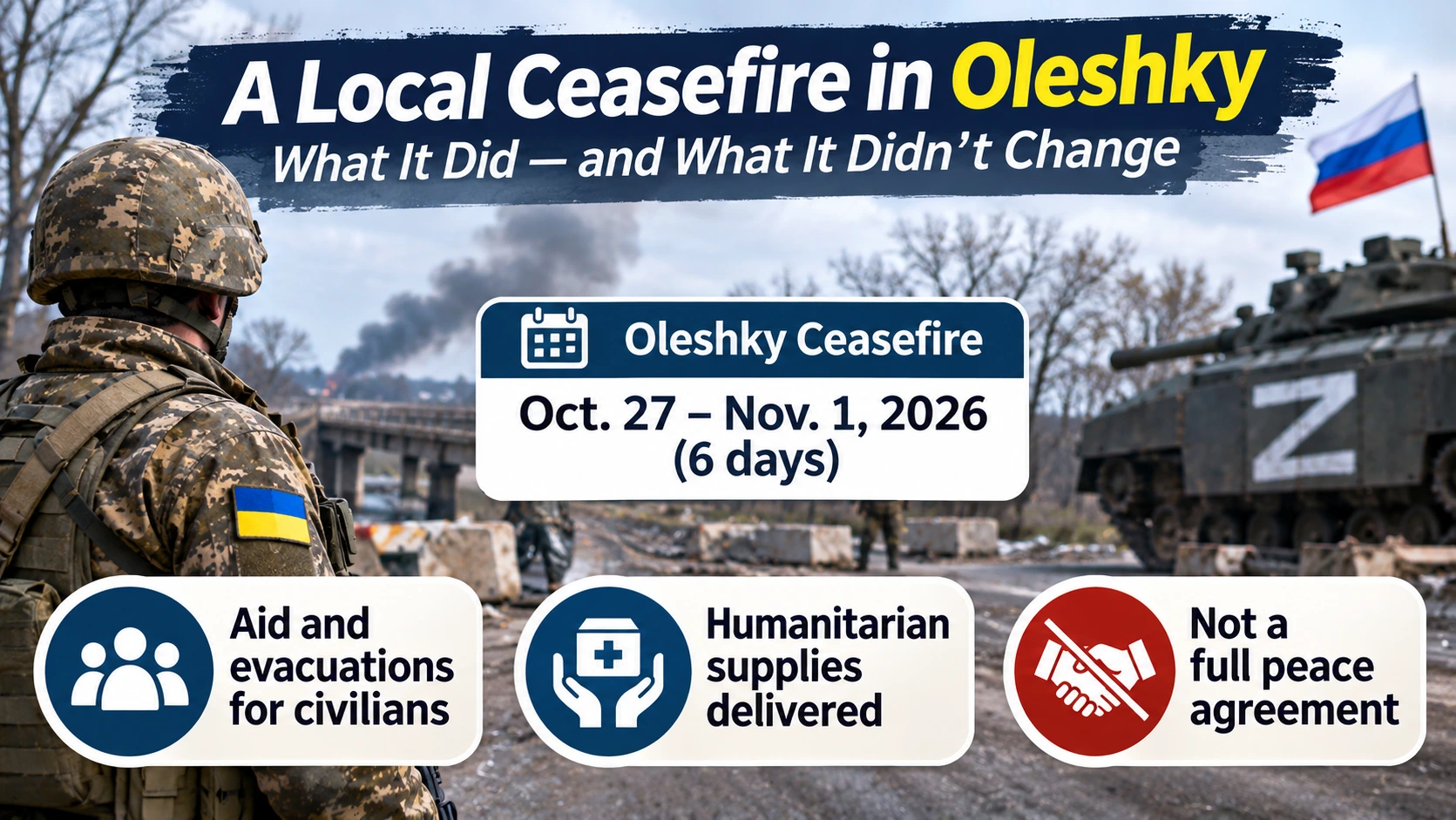
| October 27–November 1 | The six-day ceasefire allowed humanitarian work and evacuations. |
| November 5 | Russian and Ukrainian representatives attended the White House event. |
The White House initially announced an October 29 start, but the pause began two days early, on October 27, after the operation’s timing was moved forward. (White House · RFE/RL)
The timeline matters because the White House gathering followed a completed ceasefire; it was not the moment the two governments first agreed to stop fighting. (White House · AP)
What Did the Six-Day Pause Achieve—and What Is Disputed?
The humanitarian result was meaningful. Melania Trump said nearly 800 people were evacuated and supplies reached Oleshky during the pause. Ukrainian officials also welcomed the operation, and the country’s human rights ombudsman said both sides had upheld their ceasefire commitments during the six-day period. The evacuation total is the first lady’s reported figure, not an independently established count in this article. (White House · Reuters)
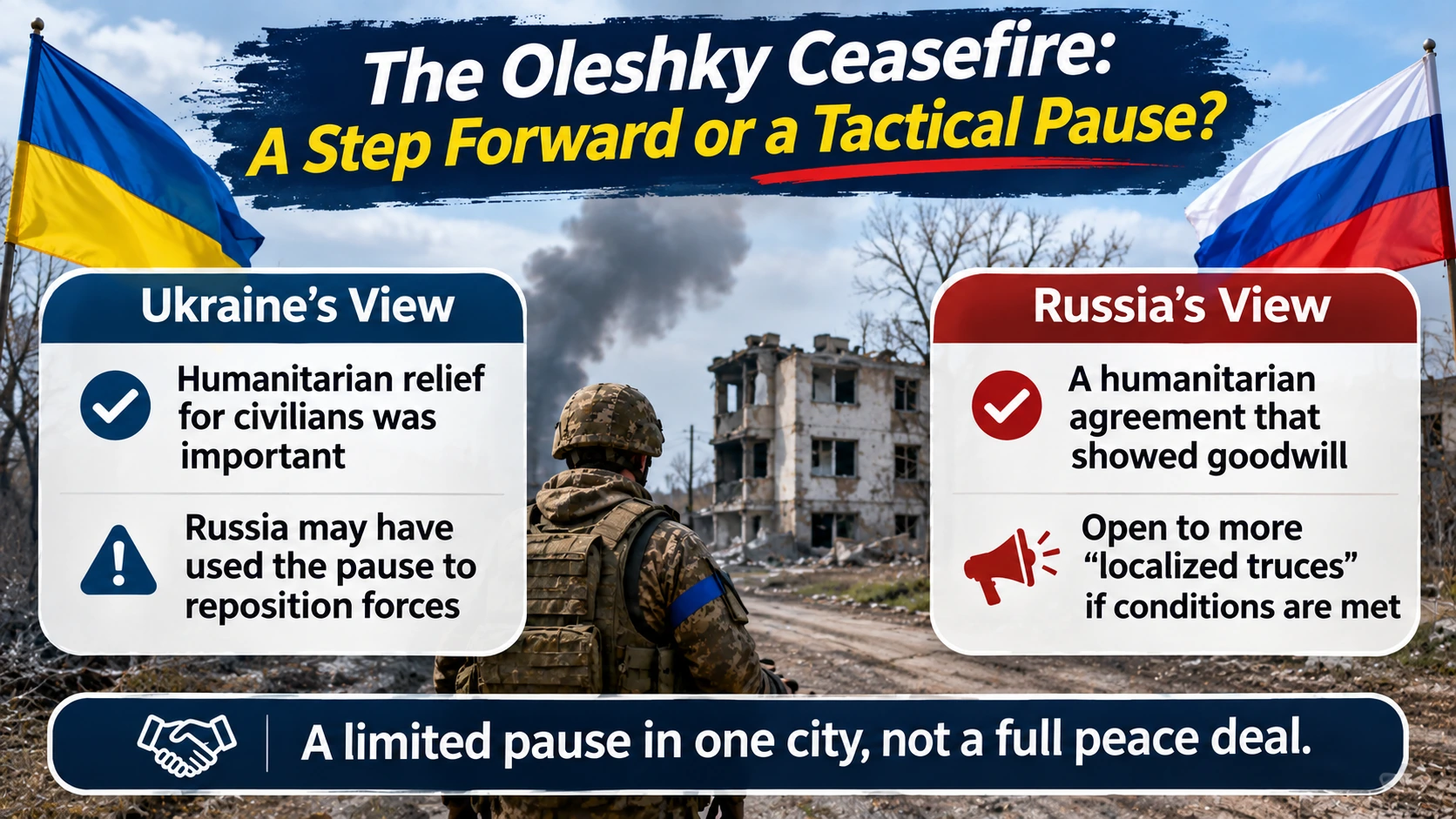
But the humanitarian achievement does not settle every question about the truce. On November 2, Ukraine’s General Staff accused Russian forces of using the pause to rotate personnel and reinforce positions. That is an allegation by Ukraine’s military, not a finding independently established here. Kremlin spokesman Dmitry Peskov said he had no specific information about Russian troop movements and suggested Ukraine might also have used the pause to regroup. Neither claim was independently established here. (Reuters)
At a November 6 news conference, Ukrainian ombudsman Dmytro Lubinets said military vehicles shown in footage were involved in agreed demining work. Davyd Arakhamia said some limited repositioning might have occurred but that there was no indication it significantly damaged Ukrainian military positions. These comments add important context to the earlier accusation without independently resolving it. (RFE/RL)
Two things can therefore be true at once: civilians benefited from a short window for relief and evacuation, while the operation’s wider military consequences remain contested. A ceasefire can be valuable without being a complete diplomatic breakthrough.
Does a First Lady Have the Authority to Negotiate Peace?
The first lady has no constitutionally defined diplomatic duties. The role has evolved through the choices of individual presidential spouses, rather than a fixed legal job description. Melania Trump could use personal access, relationships and a humanitarian mission to help establish contact, but any actual halt in fighting depended on cooperation by the governments and forces involved. (White House Historical Association)
That is why this was different from the administration’s formal effort to negotiate an end to Russia’s invasion. Melania Trump’s work focused on the movement of civilians, humanitarian supplies and a specific geographic area. Broader negotiations must tackle territorial control, security arrangements and other disputes that a six-day local operation cannot decide.
The distinction also matters for what happened at the White House: a meeting of representatives is not the same as a summit between Putin and Zelenskyy. Nor does recognition of a humanitarian operation mean the two countries have reconciled their positions on the war.
Could Oleshky Become a Model for a Wider Ceasefire?
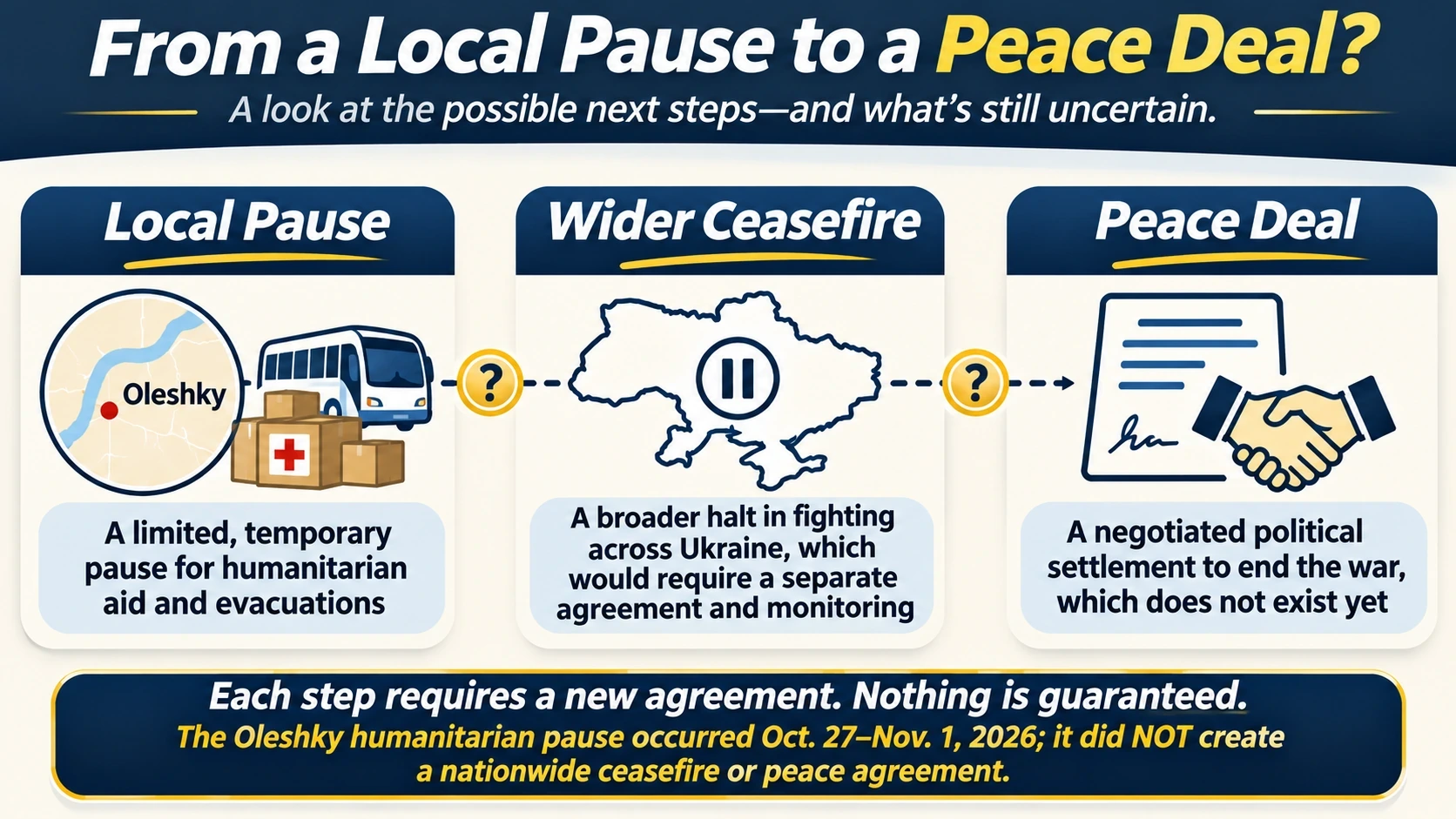
Possibly—but the Oleshky operation is proof of a narrower point: the two governments can coordinate a limited humanitarian task when they agree on a concrete objective. It does not show that they have settled the issues keeping the broader war going.
On November 6, Ukrainian officials said the operation could inform future efforts to monitor a wider truce. That is a proposal about what might be learned from Oleshky, not a newly announced ceasefire. (RFE/RL)
| Arrangement | What it would mean | What Oleshky established |
|---|---|---|
| Local humanitarian pause | Temporary relief or evacuation access in one area | A six-day operation took place. |
| Wider ceasefire | A broader halt in fighting with agreed terms and monitoring | Not established by this event. |
| Peace agreement | A political settlement addressing the war’s underlying disputes | Not reached. |
Separate U.S.-mediated talks involving Russia and Ukraine were planned for November 10–11 in Abu Dhabi. Their results were not known at the time of this report. What matters next is whether either side will accept additional humanitarian operations, whether any new ceasefire can be monitored reliably, and whether formal negotiations can bridge deeper political and security disagreements. (Reuters · AP)
Bottom Line: What This Story Really Means
Melania Trump brought Russian and Ukrainian representatives together at the White House because an existing humanitarian channel had helped produce a limited, six-day ceasefire around Oleshky. The pause reportedly enabled aid and civilian evacuations, even as Ukraine raised concerns about possible Russian military use of the break.
The gathering was unusual and the humanitarian result mattered. But a local pause that helped civilians is not the same as a nationwide ceasefire—or an end to Russia’s war in Ukraine. Its larger significance will depend on whether the two sides can agree to repeat, verify and ultimately expand such arrangements.
Melania Trump: Key Questions Explained
Q. Did Melania Trump negotiate an end to the Russia-Ukraine war?
No. She helped facilitate a temporary humanitarian ceasefire around Oleshky. The wider war continued.
Q. Where is Oleshky?
Oleshky is a Russian-occupied city in southern Ukraine’s Kherson region, across the Dnipro River from Kherson city.
Q. How long did the Oleshky ceasefire last?
Six days, from October 27 through November 1, 2026.
Q. How many people were evacuated?
Melania Trump said nearly 800 people were evacuated. That number should be identified as her reported total rather than an independently confirmed figure here.
Q. Why was the first lady involved?
She said she used contacts established during earlier efforts to reunite children separated by the war, working with her representative Marc Beckman and officials from both countries.
Q. Did Putin and Zelenskyy meet at the White House?
No. Representatives of Russia and Ukraine attended the November 5 event. The presidents did not meet there.
Q. Was the ceasefire entirely uncontroversial?
No. Ukraine’s military accused Russia of using the pause to reinforce positions, and Moscow challenged the allegation. On November 6, Ukrainian humanitarian officials said they had not seen evidence of a significant military disadvantage from any limited repositioning.
Q. What could happen next?
More humanitarian pauses are possible if the parties agree, but broader ceasefire or peace arrangements would require separate negotiations and enforceable commitments.
Did this help make the story clearer? 🙂 WIN keeps unpacking the “why” behind the news—clearly and simply!
Sources
White House Event and Humanitarian Agreement
White House — November 5 Event and First Lady’s Remarks
White House — October 23 Oleshky Ceasefire Announcement
White House — Earlier Ukraine–Russia Family Reunification Work
Independent Reporting and Competing Assessments
AP — Trump Meets Russian Envoy as Ukrainian Officials Visit Washington
Reuters — Ukraine Raises Concerns About Russia’s Use of the Pause
Kyiv Independent — Delegations’ Responses to the White House Event
RFE/RL — Ukraine Discusses Oleshky as a Possible Model
The First Lady’s Role
White House Historical Association — Roles of the First Lady