Why Did Cristiano Ronaldo Walk Out on Portugal—and Could a Six-Month Suspension End His International Career?

Did Cristiano Ronaldo just quit Portugal?
Has he already been given a six-month ban?
And if the Portuguese Football Federation can suspend him for as long as six months, could a disciplinary case effectively bring one of the longest international careers in soccer history to an end?
The first thing to understand is that Ronaldo has left the Portugal camp, but a final one-to-six-month punishment has not been publicly announced.
The 41-year-old left Portugal’s training camp in Copenhagen on September 30 after a tense few days in which he remained an unused substitute against Norway. Head coach Jorge Jesus acknowledged that Ronaldo was angry about not playing but said the issue was “water under the bridge.” Ronaldo later said he had decided to leave after speaking with Portuguese Football Federation president Pedro Proença and promised to explain his reasons later. (Reuters)
What makes the story bigger than an ordinary disagreement between a star and a coach is the rule sitting in the background: Portugal’s disciplinary regulations provide for a suspension of one to six months if a properly called-up player leaves or misses national-team activity without justification. (RTP/Lusa)
Ronaldo had also said in August that the coming year would probably be his final year as a professional player. (Reuters)
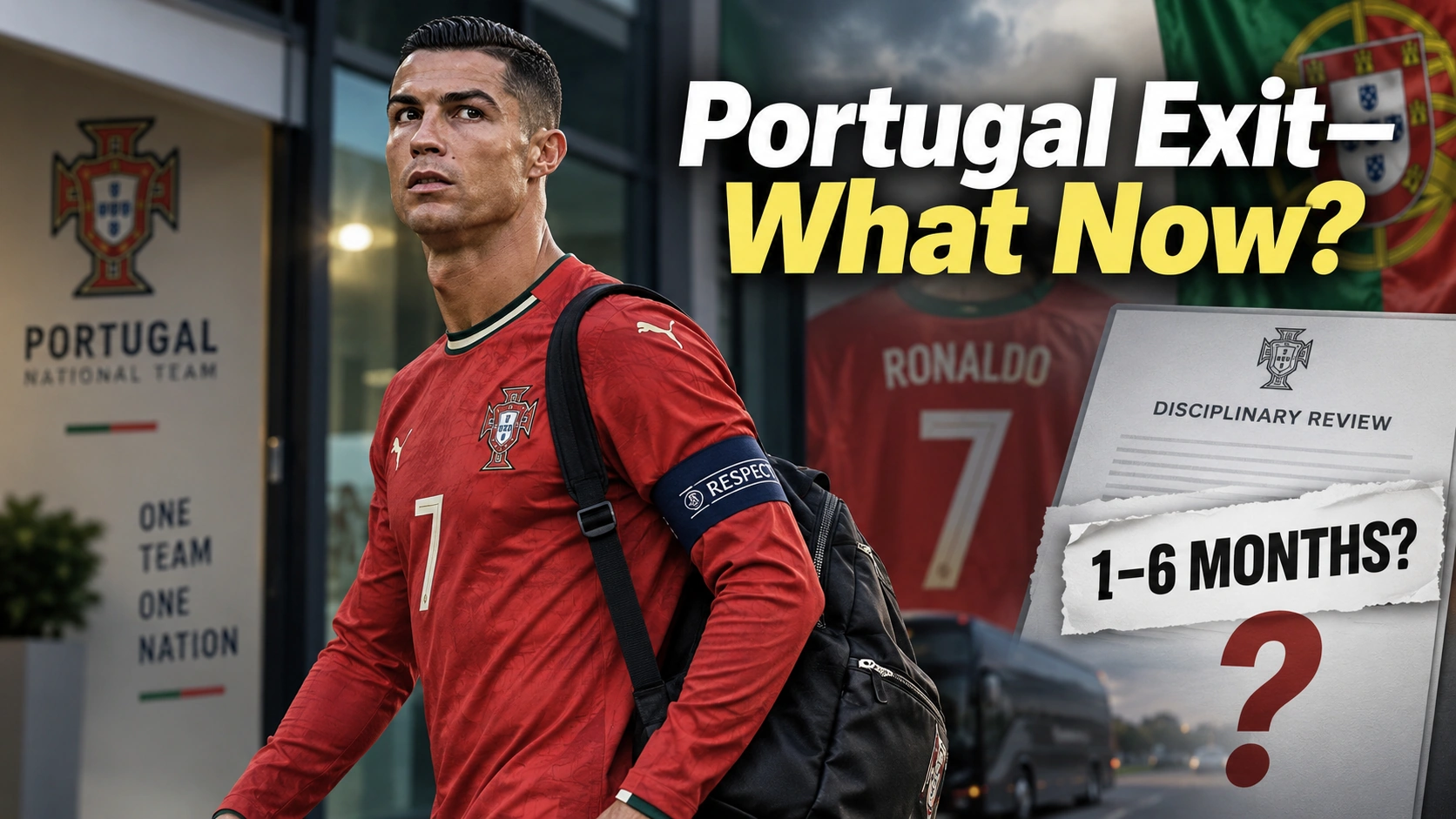
※ Images in this article are AI-generated illustrations created to help explain the story. They are not actual photographs, and depictions of people, places, or events may differ slightly from reality.
That combination is why this is no longer just a story about whether Ronaldo starts the next game.
It has become a question about whether there will even be another Portugal game for Cristiano Ronaldo.
What Actually Happened Between Ronaldo and Portugal?
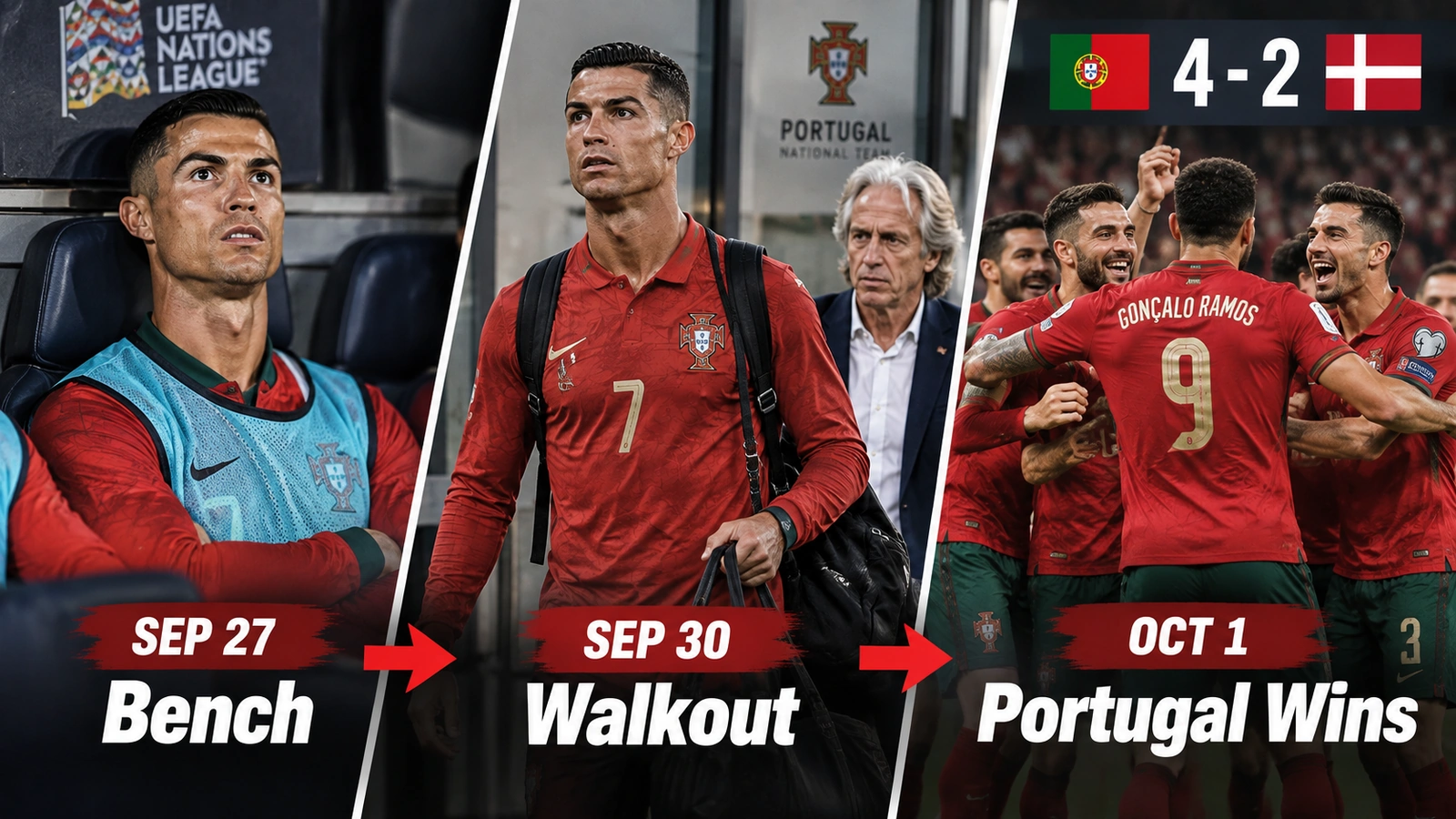
The dispute did not begin with a disciplinary hearing. It began with playing time.
Portugal beat Norway 2–1 on September 27, but Ronaldo never entered the match. Reuters reported that Jesus had considered using him from the bench but ultimately decided against bringing him on. Jesus later acknowledged that Ronaldo was unhappy about the decision. (Reuters)
In the days that followed, Ronaldo worked separately from the squad for part of the camp. Jesus denied reports that Ronaldo had refused to train and insisted there had been no major incident between them. (Reuters)
Then came September 30.
Jesus publicly confirmed that Gonçalo Ramos would remain in the starting lineup against Denmark. Shortly afterward, Ronaldo left the camp and announced his decision publicly. The FPF confirmed that he had departed. (RTP · Reuters)
Ronaldo did not publicly spell out the full reason. He instead said that he would explain the circumstances later.
That distinction matters.
It is fair to say the dispute centered on Ronaldo’s role in the team. It is not yet fair to claim as established fact that he simply abandoned Portugal because he was angry about being benched.
His full account has not yet been given.
Why Did Jorge Jesus Leave Ronaldo on the Bench?
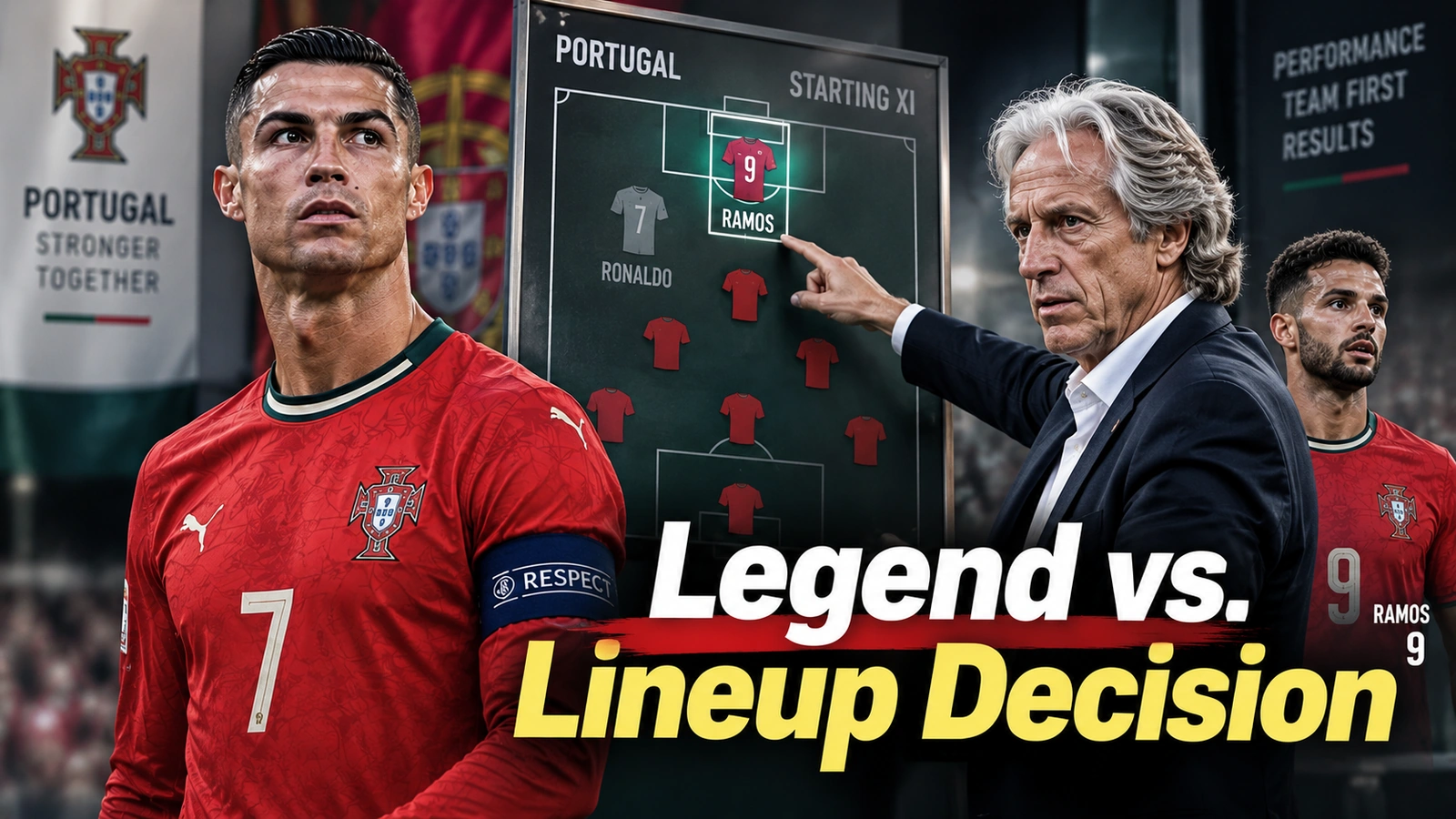
Because Ronaldo’s status no longer guarantees him a starting place.
When Jorge Jesus named his first Portugal squad in September, he said selections would depend on performance and that Ronaldo’s status would not determine his decisions. (Reuters)
That sounds ordinary for almost any player.
For Ronaldo, it represents a major change.
He is not simply another aging forward. He has been the central figure of Portuguese soccer for more than two decades, the team’s captain and the leading scorer in the history of men’s international soccer.
But Portugal now also has other attacking options, including Gonçalo Ramos.
Ramos started in Ronaldo’s place against Denmark and scored in Portugal’s 4–2 victory on October 1. João Cancelo, Vitinha and João Félix also scored as Portugal won its first match after Ronaldo’s departure. (Reuters)
That result does not prove Portugal is “better without Ronaldo.”
It does, however, strengthen the coach’s ability to argue that the national team can function without automatically building its lineup around him.
For a player who has occupied such an extraordinary position within the team for so long, that transition was always going to be delicate.
Can Portugal Really Suspend Ronaldo for Six Months?
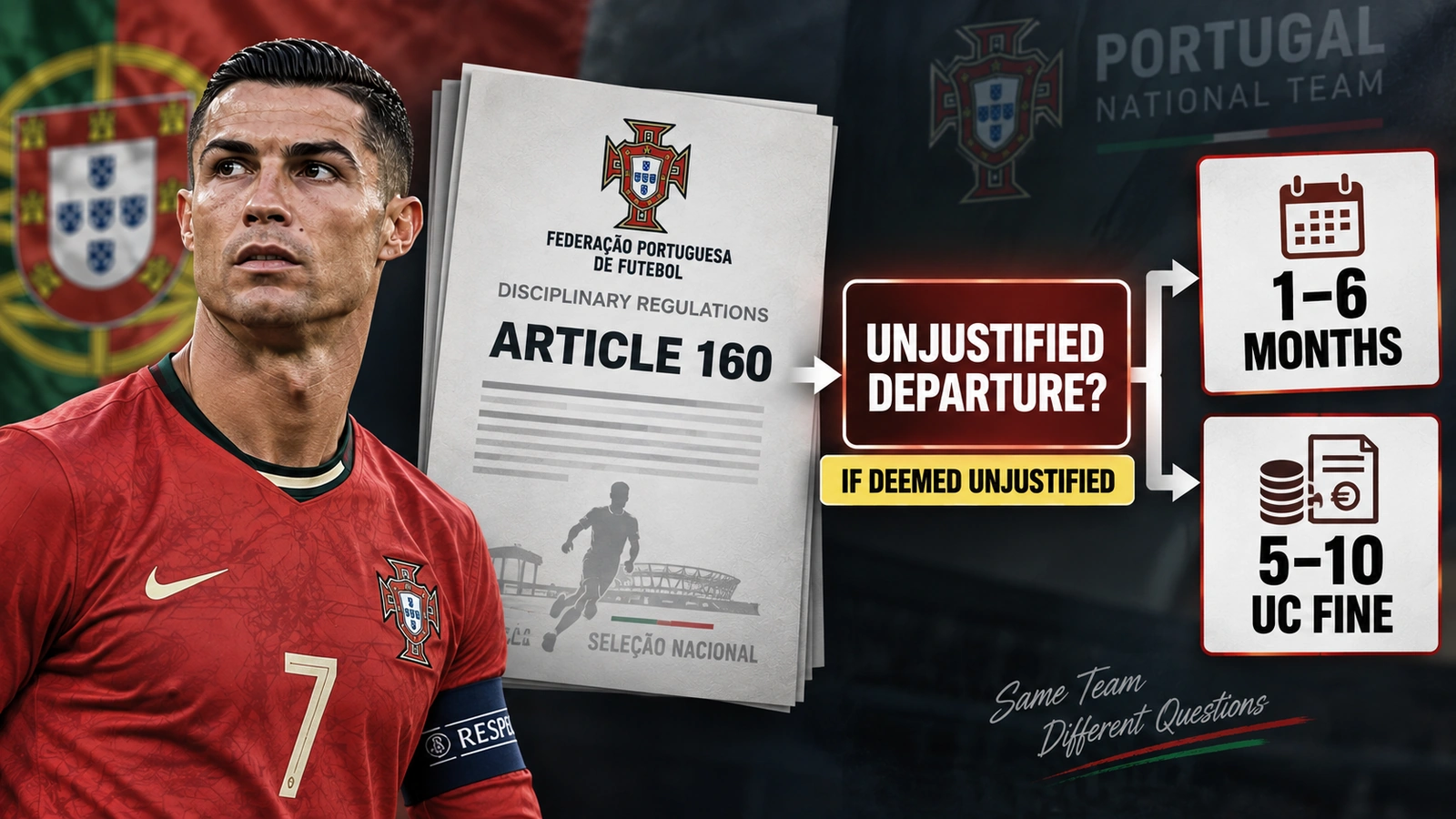
Yes, the rule exists.
But “he could face six months” and “he has received a final six-month ban” are two very different statements.
Article 160 of the Portuguese Football Federation’s disciplinary regulations says a player who has been properly called up and then unjustifiably leaves or fails to appear for a national-team training session, match or other official activity can receive a suspension of one to six months. A professional player can also be fined between five and 10 units of account, or UC. RTP/Lusa reported that one UC is €102, putting the fine at roughly €510 to €1,020. (RTP/Lusa)
| Question | What the rule says |
|---|---|
| Does leaving camp automatically mean a final six-month ban? | No |
| What suspension range is listed? | 1 to 6 months |
| What triggers the sanction? | An unjustified absence or departure from national-team activity |
| Is there also a fine? | Yes, 5 to 10 UC for a professional player |
| Has a final six-month punishment been publicly announced? | No |
The most important word in the rule is “unjustifiably.”
Ronaldo says there are reasons for his departure that he has not yet fully explained.
That means the central disciplinary question is not simply whether he physically left Copenhagen. That part is confirmed.
The question is how the FPF ultimately classifies the departure and whether the one-to-six-month sanction is formally imposed.
As of October 2, Reuters was still describing the penalty as a potential sanction, and the FPF had not publicly announced a final six-month punishment. (Reuters)
Would an FPF Suspension Also Affect Ronaldo’s Al Nassr Career?
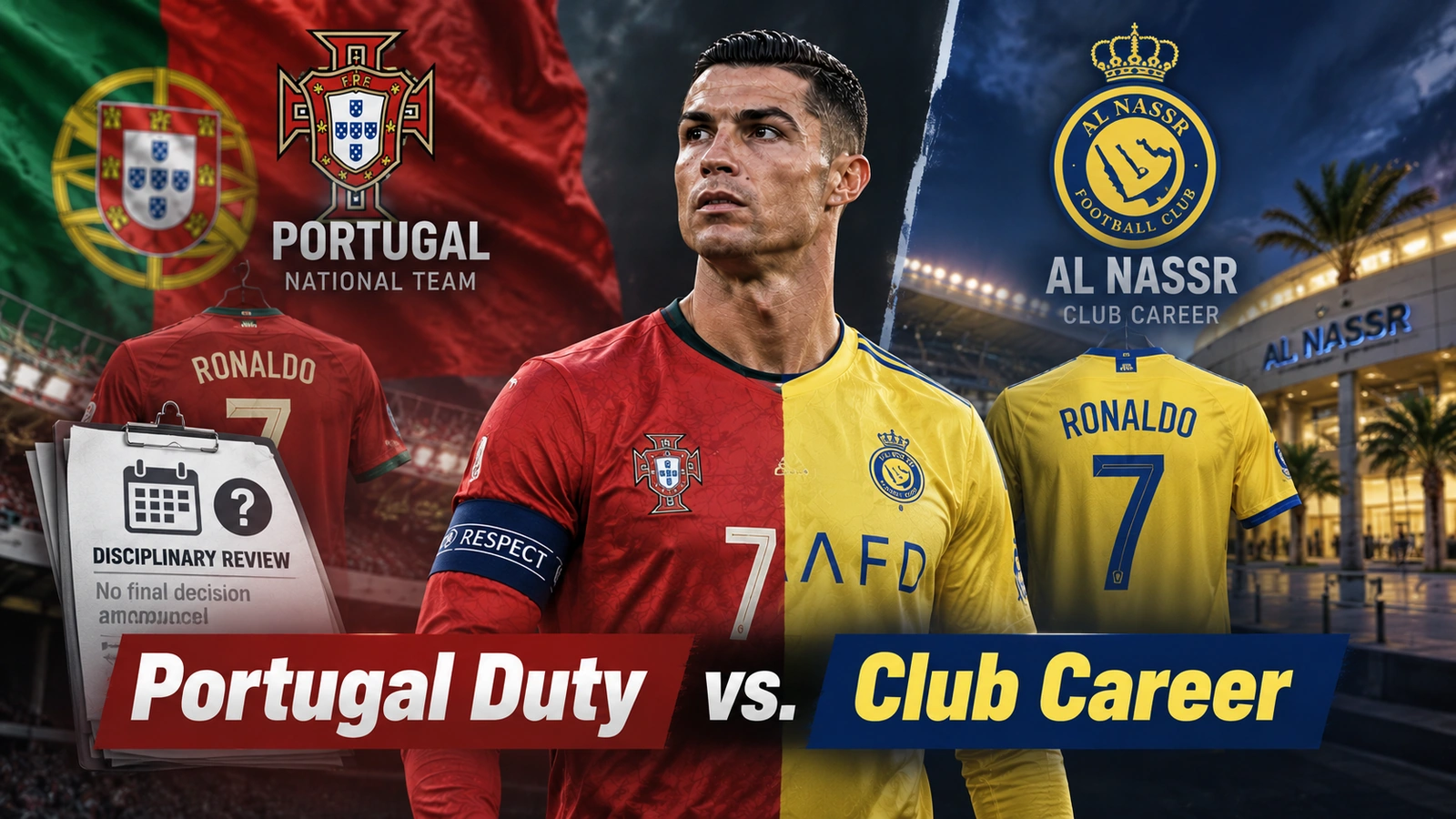
That has not been established.
Public reporting on Article 160 has focused on Ronaldo’s national-team obligations and the possible FPF sanction arising from his departure from Portugal’s camp. No final disciplinary decision has been publicly announced, and there has been no public announcement that Ronaldo is barred from playing for Al Nassr. (Reuters · RTP/Lusa)
The safest distinction is therefore between what is known and what is not.
The known issue is Ronaldo’s departure from Portugal duty and the FPF rule that may apply to it.
The exact sporting effect of any eventual sanction would depend on the federation’s formal decision and the rules governing that decision.
That distinction matters because Ronaldo’s remaining playing time may already be short.
Why Could Even a Temporary Suspension End His Portugal Career?
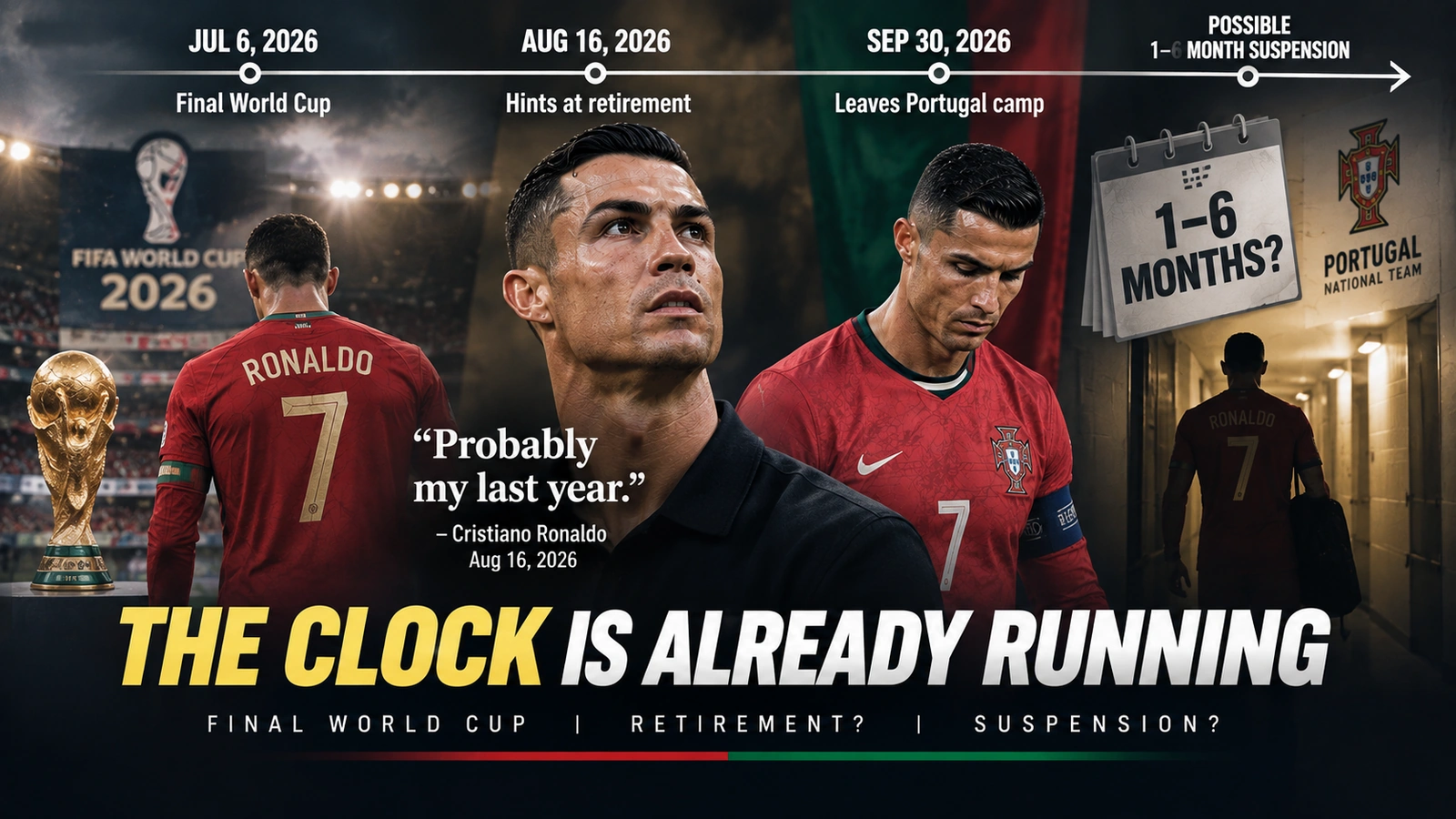
Because this is happening at age 41, after Ronaldo has already begun publicly talking about the end.
On August 16, Ronaldo said the coming year would “probably” be his final year as a professional player. Reuters also reported that he intended to continue playing for Al Nassr while pursuing the milestone of 1,000 career goals. (Reuters)
His World Cup career has already ended.
Portugal was eliminated by Spain 1–0 in the round of 16 on July 6, and Ronaldo confirmed afterward that the 2026 tournament had been his final World Cup. He did not announce an immediate retirement from the Portugal national team at that point. (FIFA)
So consider the timing.
A one-month disciplinary absence would be one thing.
A six-month absence for a 25-year-old would still leave years to return.
A six-month absence for a 41-year-old who has already said his playing career may be nearing its end could consume a substantial part of what remains of his international career.
That is why the disciplinary rule matters far more here than its relatively small fine.
How Big Is Ronaldo’s Portugal Record?
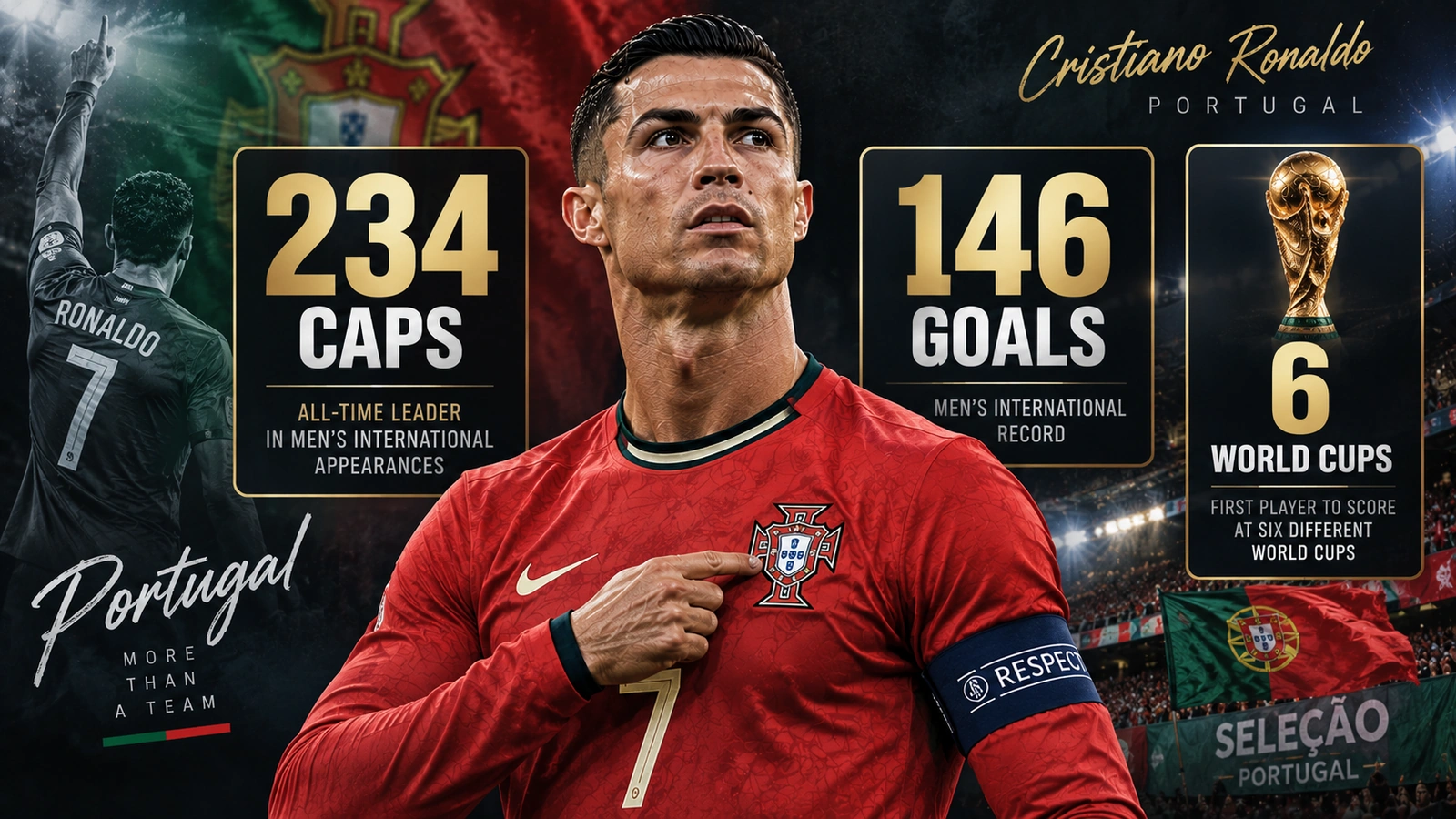
It is historic.
UEFA listed Ronaldo at 234 senior Portugal appearances and 146 goals as of September 29, 2026. Both are world records in men’s international soccer. (UEFA)
He also became the first man to score at six different World Cups. (FIFA)
His Portugal résumé includes:
| Achievement | Record |
|---|---|
| Senior Portugal appearances | 234 |
| Senior international goals | 146 |
| World Cups played | 6 |
| Major Portugal titles | UEFA Euro 2016; Nations League 2019 and 2025 |
Portugal became the first country to win the Nations League twice when it beat Spain on penalties in the 2025 final. (UEFA)
That history explains why this is more complicated than a normal player-coach dispute.
Jesus has to manage the current team.
Ronaldo represents more than two decades of Portuguese soccer history.
And the FPF may now have to decide how its disciplinary rules apply to the most famous player the country has ever produced.
What Happens Next?
There are three separate questions to watch.
First, Ronaldo has promised to explain why he left.
Until that happens, a crucial part of the story remains incomplete.
Second, the Portuguese federation must decide whether the circumstances meet the disciplinary rule’s standard for an unjustified departure—and, if so, what sanction should follow.
Third, Ronaldo himself must decide whether he still wants another national-team call-up.
Those questions became even more interesting after Portugal beat Denmark 4–2 without him on October 1. Gonçalo Ramos, the forward who started instead of Ronaldo, scored. (Reuters)
That does not erase Ronaldo’s records or his influence.
But it means the next chapter may no longer be dictated entirely by what Ronaldo wants.
For the first time in years, Portugal may have both the tactical options and the managerial willingness to prepare for life after No. 7.
Bottom Line: What This Story Really Means
Cristiano Ronaldo has not been publicly given a final six-month ban, and he has not formally announced the end of his Portugal career.
What is confirmed is significant enough on its own: Ronaldo left Portugal’s camp on September 30 after tensions over his role, the FPF confirmed his departure, and Portuguese disciplinary rules allow a one-to-six-month suspension if the departure is ultimately treated as unjustified.
Normally, that would be a disciplinary story.
With Ronaldo, it is also a retirement story.
He is 41. His final World Cup is already over. He said in August that the coming year would probably be his last in professional soccer.
So the real question is no longer simply whether Cristiano Ronaldo will be punished.
It is whether there is enough time—and enough willingness on both sides—for Cristiano Ronaldo to play for Portugal again.
Cristiano Ronaldo: Key Questions Explained
Q. Did Cristiano Ronaldo quit the Portugal national team?
No. Ronaldo confirmed that he left the September training camp, but he has not formally announced his retirement from the Portugal national team.
Q. Why did Ronaldo leave Portugal’s camp?
Ronaldo left after Jorge Jesus publicly discussed his role and after Ronaldo spoke with FPF president Pedro Proença. Ronaldo has said he will explain his full reasons later, so the precise motivation should not yet be treated as fully established.
Q. Was Cristiano Ronaldo already given a six-month suspension?
No final six-month punishment had been publicly announced as of October 2. The six-month figure is the maximum sanction in the relevant FPF rule for an unjustified departure from national-team activity. (Reuters · RTP/Lusa)
Q. What does the FPF rule actually say?
The rule provides for a suspension of one to six months when a properly called-up player unjustifiably leaves or misses national-team activity. A professional player can also face a fine of five to 10 UC. (RTP/Lusa)
Q. How much could Ronaldo be fined?
RTP/Lusa reported that one UC is €102, so five to 10 UC equals approximately €510 to €1,020. (RTP/Lusa)
Q. How many games has Cristiano Ronaldo played for Portugal?
UEFA listed Ronaldo at 234 senior international appearances as of September 29, 2026. (UEFA)
Q. How many international goals has Ronaldo scored?
He has scored a world-record 146 goals for Portugal’s senior national team. (UEFA)
Q. Was the 2026 World Cup Ronaldo’s final World Cup?
Yes. Ronaldo confirmed after Portugal’s July 6 loss to Spain that the 2026 tournament was his final World Cup. That did not amount to an immediate retirement from the national team. (FIFA)
Q. Is Ronaldo retiring after the 2026–27 season?
He has not announced an absolute retirement date, but he said in August that the coming year would probably be his final year of professional soccer. (Reuters)
Q. Why could a six-month suspension effectively end his Portugal career?
Because Ronaldo is already 41 and has said his playing career may be nearing its end. Even a temporary sanction could therefore consume a large part of the limited time he has left to return to Portugal.
Did this help make the story clearer? 🙂
WIN keeps unpacking the “why” behind the news—clearly and simply!
Sources
Portugal Camp Departure and Team Fallout
Reuters — Ronaldo leaves Portugal camp after coach Jesus confirms rift
Reuters — Jesus and FPF chief reportedly tried to stop Ronaldo leaving
Reuters — Portugal beats Denmark 4–2 without Ronaldo
RTP — Ronaldo leaves Portugal camp and says he will explain why
FPF Disciplinary Rule
RTP/Lusa — Ronaldo risks one-to-six-month suspension under FPF rules
Portuguese Football Federation — Statutes and Regulations
Ronaldo’s Records, World Cup Farewell, and Retirement
UEFA — Cristiano Ronaldo: all-time leading scorer in men’s international football
FIFA — Record-setting Ronaldo says goodbye to the World Cup
Reuters — Ronaldo hints at retirement and says the coming year could be his last