Why Did the NFL Choose Paris for Its First Game in France?

American football in Paris?
For decades, the NFL has been closely associated with American cities, Sunday afternoons, and packed stadiums stretching from Pittsburgh to New Orleans. So seeing two NFL teams play a meaningful regular-season game in France raises an obvious question: Why Paris?
On October 25, 2026, the Pittsburgh Steelers defeated the New Orleans Saints 16–10 at Stade de France, just outside Paris. It was the first NFL regular-season game ever held in France.
But the choice of Paris was not simply about finding another famous city to host a football game.
France already had an NFL audience, the Saints had spent several years building relationships there, and the league was looking for its next major international growth market.
The result was more than a historic sporting event. It offered a revealing look at how the NFL hopes to turn international curiosity into lasting fandom.
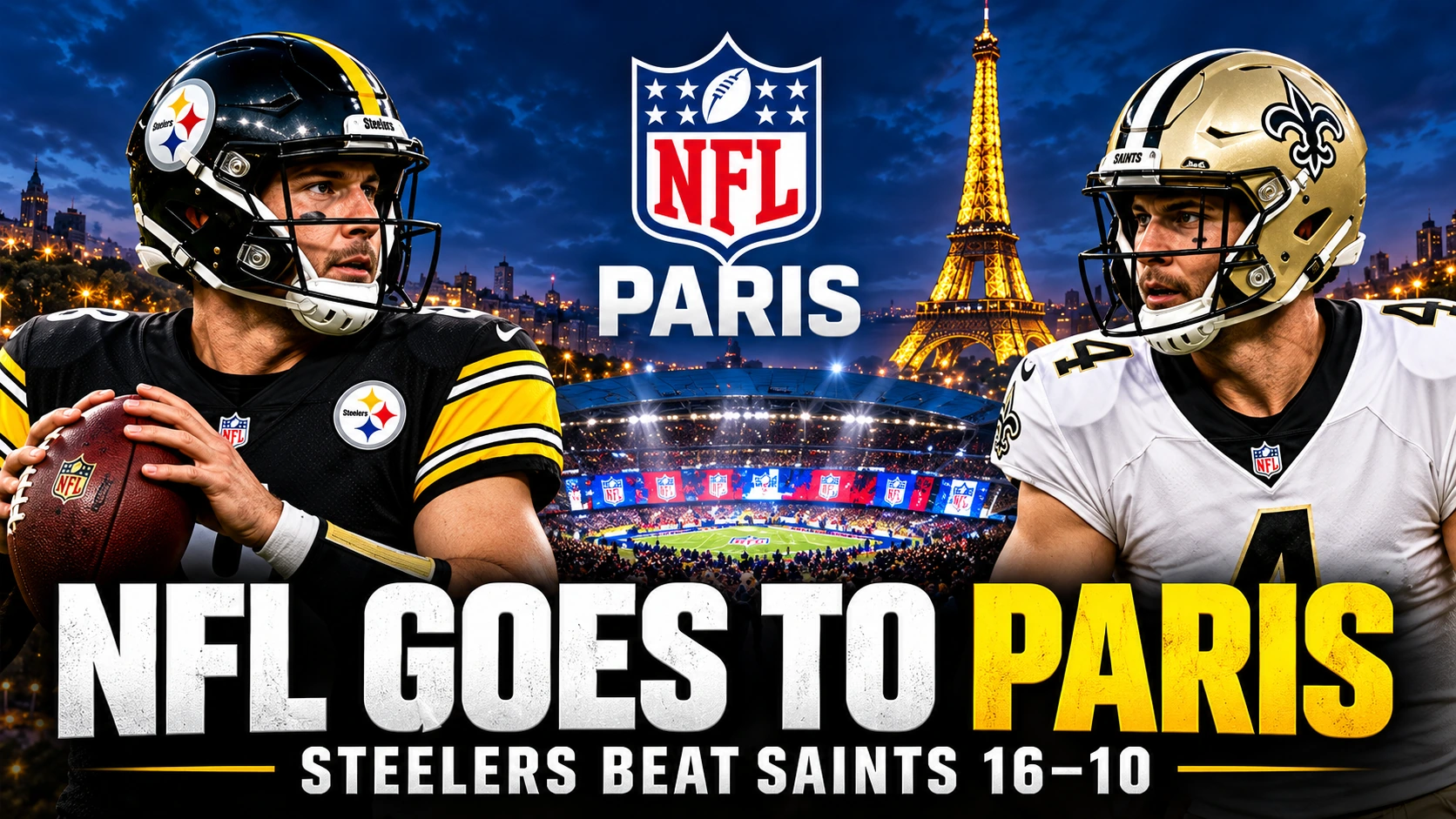
※ Images in this article are AI-generated illustrations created to help explain the story. They are not actual photographs, and depictions of people, places, or events may differ slightly from reality.
What Actually Happened in the NFL’s First Paris Game?
Pittsburgh won 16–10, but the larger milestone was France hosting its first NFL regular-season game.
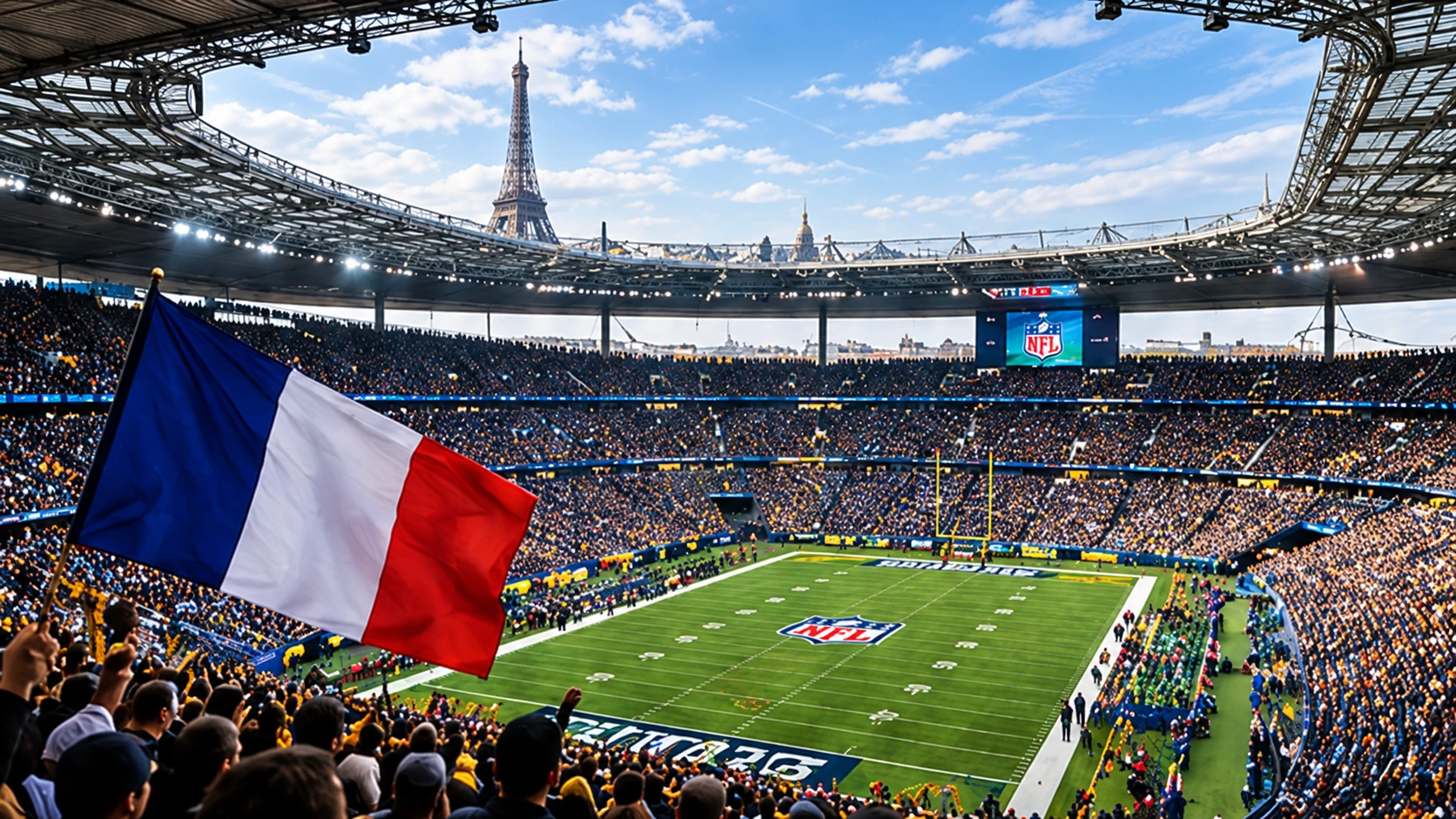
The matchup took place on October 25 at Stade de France in Saint-Denis, immediately north of Paris. The stadium welcomed an announced crowd of 78,488 for the historic occasion.
Steelers quarterback Aaron Rodgers threw a touchdown pass to tight end Darnell Washington, while kicker Chris Boswell made three field goals. Pittsburgh running back Jaylen Warren added 101 rushing yards.
New Orleans remained competitive for much of the afternoon. Quarterback Tyler Shough threw a touchdown pass to Devaughn Vele, but the Saints failed to score in the second half.
A crucial third-quarter interception by Steelers linebacker Payton Wilson stopped a promising New Orleans drive. Pittsburgh’s defense also held the Saints to just 18 rushing yards.
The win improved Pittsburgh’s record to 5–2, while New Orleans fell to 2–5. These were ordinary regular-season results in the standings, even though the teams were playing thousands of miles from home. (New Orleans Saints · AP)
The game itself was competitive and relatively low-scoring. Yet the reason it attracted international attention had much less to do with the final score.
France had become the NFL’s newest destination for a regular-season game.
Why Did the NFL Choose Paris Instead of Another European City?
Paris offered the NFL three things it needed: a substantial potential audience, a stadium capable of hosting a major international event, and an established local partnership.
France is better known for soccer, rugby, cycling, and tennis than American football. But that does not mean the NFL was entering a market with no existing interest.
France already had a significant NFL audience
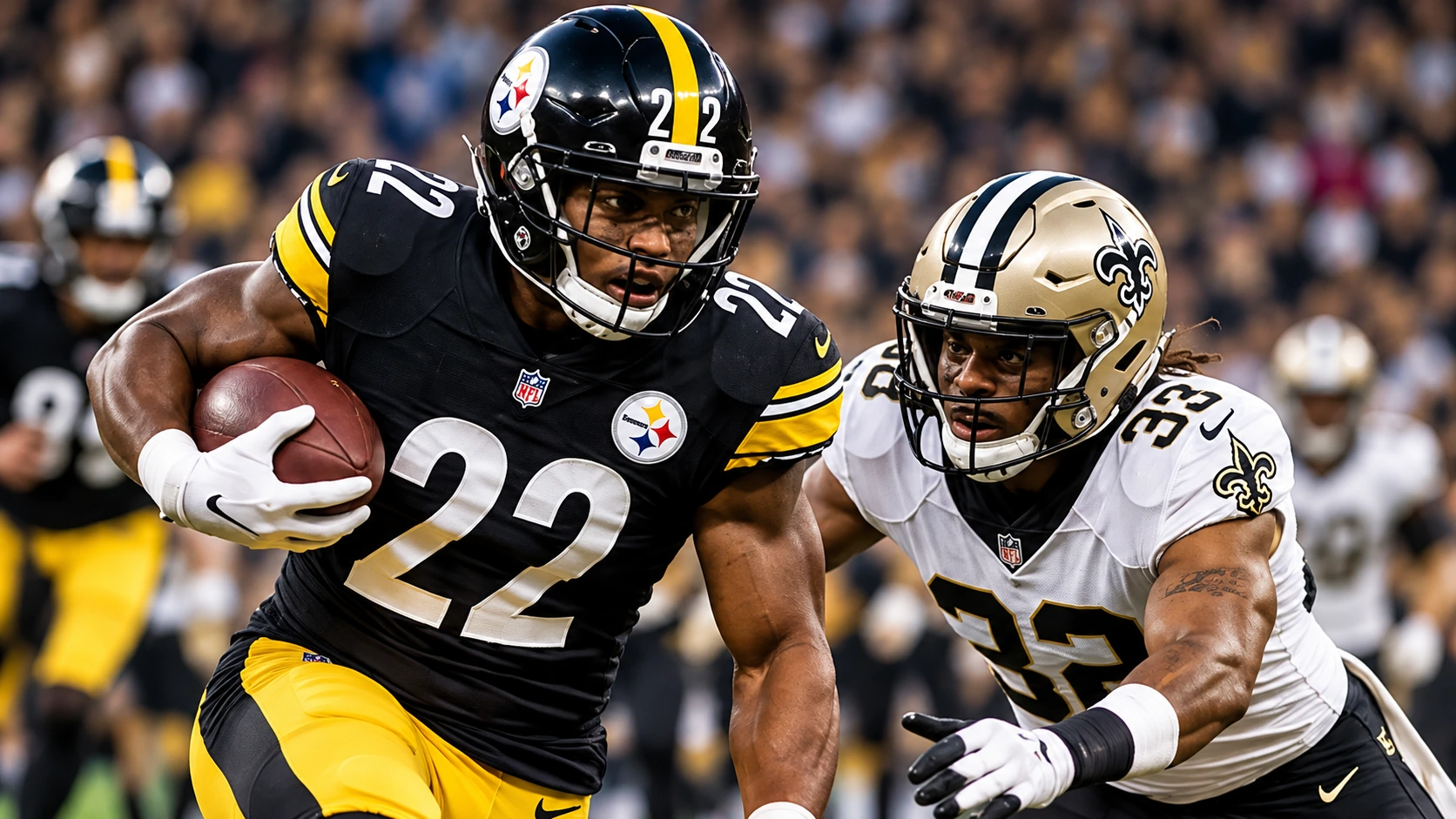
When the NFL announced its Paris plans, the league described France as a market with more than 14 million fans.
That is a league-reported measure of fandom, not a claim that 14 million French residents regularly attend games or purchase NFL subscriptions. Still, it suggests that American football already had a meaningful audience to develop. (NFL)
That distinction matters.
The NFL was not necessarily trying to convince an entire country to discover a completely unfamiliar sport overnight. It was also trying to give people who already followed American football a reason to engage more deeply.
A live regular-season game provides something television highlights and social media clips cannot fully replicate: the experience of following a team through an entire game alongside thousands of other fans.
Paris already knows how to stage enormous sporting events
The Stade de France was another major advantage.
Built for the 1998 FIFA World Cup, the stadium has hosted major soccer and rugby competitions, international entertainment events, and events during the 2024 Paris Olympics.
That experience gave the NFL a venue and a local organizational framework suited to a major international sporting event. (Stade de France)
Hosting an NFL game requires more than installing goalposts. The league must coordinate field conditions, team facilities, equipment transport, security, broadcasting, medical support, and thousands of spectators.
Paris offered both global visibility and experience managing large-scale events.
But the most interesting part of the story may be why New Orleans was involved.
Why Were the New Orleans Saints Chosen to Play in France?
The Saints were a particularly natural choice because of New Orleans’ historical relationship with France and the team’s existing NFL marketing rights in the country.
That connection had been developing well before the October game.
The connection goes back centuries
New Orleans was founded by the French in 1718 and later became part of the United States through the Louisiana Purchase in 1803.
French cultural influence remains visible in Louisiana’s architecture, food, language, and traditions.
Even the Saints’ fleur-de-lis symbol provides a recognizable visual connection to French heritage.
That shared history gives the team an identity that can be especially meaningful in the French market.
Saints owner Gayle Benson emphasized the cultural relationship between Louisiana and France when the team’s participation was announced. (New Orleans Saints)
The Saints had already been building a French following
History alone did not determine the matchup.
In 2023, the NFL awarded the Saints international marketing rights in France through its Global Markets Program.
The team subsequently participated in French fan events, community outreach, and football-related partnerships.
In 2025, Saints representatives visited France, and the team developed a relationship with the Paris Musketeers, an existing European American football organization.
These efforts were designed to create connections beyond a single game. (New Orleans Saints)
The Steelers brought their own established fan following and competitive identity. But the Saints’ French marketing presence made them an especially logical team to represent the NFL’s expansion into the country.
What Is the NFL’s Global Markets Program, and Why Does It Matter?
The Global Markets Program allows NFL teams to develop international fan bases and commercial opportunities in specific countries, even when those teams do not regularly play there.
It is one of the clearest explanations for why an NFL game in Paris matters beyond sports.
Under the program, teams can receive marketing rights in designated international markets. Those rights allow them to pursue local fan engagement, brand development, commercial partnerships, and activities that help grow participation in American football.
The program began in 2022. By March 2026, all 32 NFL teams participated, with rights covering 22 international markets.
The Saints held rights in France and Italy. The Steelers, meanwhile, held rights in Germany, the island of Ireland, and Mexico. (NFL Global Markets Program)
Importantly, these are marketing rights, not ownership of a country’s sports market or exclusive television broadcasting rights.
The difference is easier to understand when the NFL’s international strategy is broken into its parts.
| Part of the strategy | What it does | Why it matters |
|---|---|---|
| International games | Brings live NFL competition to a new audience | Creates visibility and local excitement |
| Team marketing rights | Gives clubs a continuing promotional role | Builds recognizable team identities |
| Local fan engagement | Connects teams with communities | Encourages ongoing participation |
| Commercial development | Creates opportunities for partnerships and merchandise | Supports long-term business growth |
| Youth football | Introduces younger participants to the sport | Develops familiarity across generations |
A game can attract attention for an afternoon. Maintaining that interest for years requires much more work.
That is why NFL expansion involves team partnerships, community events, youth programs, local marketing, and media distribution rather than simply scheduling occasional games abroad.
For the league, Paris is one part of that broader system.
How Big Has the NFL’s International Expansion Become?
The NFL scheduled a record nine international games in 2026, covering seven countries, four continents, and eight stadiums.
The Paris game was one of several milestones in a season designed to reach more international audiences than ever before.
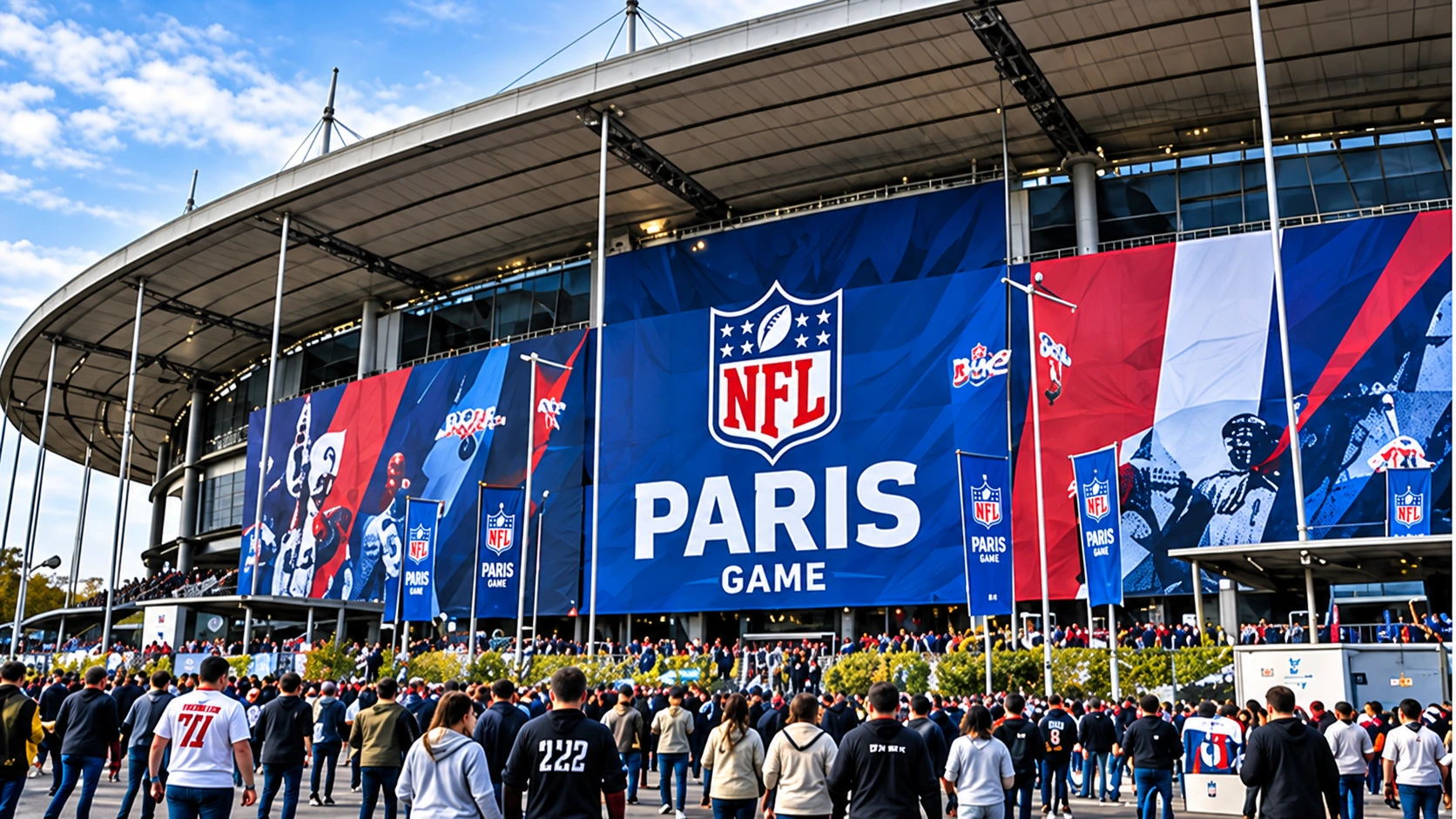
The 2026 international schedule includes:
| Host location | Scheduled games |
|---|---|
| London, United Kingdom | 3 |
| Melbourne, Australia | 1 |
| Rio de Janeiro, Brazil | 1 |
| Paris, France | 1 |
| Madrid, Spain | 1 |
| Munich, Germany | 1 |
| Mexico City, Mexico | 1 |
| Total | 9 |
The expansion is particularly striking because NFL regular-season games were once almost exclusively held in the United States.
Before the 2026 season, 62 NFL regular-season games had already been played outside the United States, according to the league. London’s long-running games helped establish the model, and other destinations gradually followed. (NFL Football Operations)
Now the league is pursuing several international regions at once.
Each market has a different appeal. Some have long-established American football communities, while others offer large populations, strong sporting cultures, commercial partnerships, or room for new fan development.
The challenge is turning those opportunities into repeatable events that attract returning audiences.
Could the NFL eventually play even more games overseas?
Yes, although further expansion is subject to agreements and logistical limits.
In May 2026, NFL owners approved increasing the limit to as many as 10 league-operated international games beginning in 2027, within the existing collective bargaining agreement. That limit is separate from Jacksonville’s long-term Wembley arrangement.
Commissioner Roger Goodell has also discussed the longer-term possibility of 16 international games, but that remains an ambition rather than an approved annual schedule. (NFL)
Those numbers reveal how seriously the league is taking international competition.
But a bigger international schedule also raises a question for American fans: What happens when a home team’s game takes place overseas?
What Does an Overseas NFL Game Mean for American Fans?
An international regular-season game counts in the standings just like one played in the United States. However, it can change the experience for season-ticket holders, traveling fans, and the teams themselves.
The Paris matchup was not a preseason exhibition.
The Saints were the designated home team even though the matchup was held at Stade de France.
That designation matters because the Saints were playing an official home game outside their usual stadium.
For supporters who normally attend games in New Orleans, an international matchup may mean missing the opportunity to watch that particular home-designated contest in person.
The Saints addressed the impact through their ticketing arrangements. The team announced a 10% adjustment to its 2026 season-ticket and parking packages to account for the number of games scheduled at Caesars Superdome. (New Orleans Saints)
Fans watching from the United States also had to adapt to a different schedule. The Paris game kicked off at 9:30 a.m. Eastern Time, earlier than the traditional Sunday afternoon NFL window.
For the players and coaches, international games introduce additional operational demands.
Equipment must travel overseas, teams must adjust to unfamiliar surroundings, and staff must manage time zones, training routines, and logistics.
Those factors do not change the rules or the competitive value of the game, but they make preparation more complicated.
The NFL has decided that the potential benefits of expanding internationally are worth taking on those challenges.
Why Is Flag Football Part of the NFL’s Plan in France?
Flag football gives the NFL a way to introduce American football to young people without requiring the equipment or physical contact associated with tackle football.
It is also part of the league’s strategy for building interest beyond television audiences.
In flag football, a defender stops a ball carrier by pulling a flag attached to the player’s waist rather than tackling the player.
That makes it easier to organize versions of the sport in schools, recreational programs, and community events.
The NFL’s official youth flag football program launched in France in 2023 in partnership with the French Federation of American Football.
By the time the league announced its Paris game in early 2026, the program reported reaching more than 8,000 boys and girls in France. (NFL)
There is another important milestone approaching.
Flag football is scheduled to make its Olympic debut at the Los Angeles Games in 2028.
That creates an additional opportunity for American football to gain recognition among people who might never have followed an NFL team.
It does not mean every young flag football player will become a professional football fan.
But the connection between participation and viewing interest is central to the NFL’s long-term thinking. A sport that people encounter in their own communities may feel more familiar when they see it played professionally.
What Happens After the NFL’s Historic Paris Game?
The next test is whether the NFL can build lasting engagement in France rather than relying on the excitement of a single event.
The October 25 game demonstrated that a large crowd would attend an NFL contest in Paris. It did not, by itself, establish how many spectators will become long-term fans, subscribers, or customers.
The league will have to sustain interest between games.
Several developments will be worth watching.
Will Paris host more NFL games?
The league’s broader international strategy favors returning to established markets, but a recurring annual Paris game should not be treated as guaranteed until future schedules are announced.
The success of future events will depend on logistics, local partnerships, league priorities, and commercial conditions.
Will more French fans follow the Saints?
The Saints have a head start because of their marketing rights and earlier work in France.
Still, an international marketing presence does not automatically translate into exclusive fan loyalty. French viewers can follow any NFL team they choose.
The more meaningful question is whether French fans develop lasting connections with individual clubs and players.
Will international growth produce stronger commercial results?
Live attendance is one useful indicator, but it is not the entire business model.
The NFL is also pursuing potential value from media distribution, sponsorships, merchandise, events, and continued audience engagement.
The league’s growth strategy depends on converting occasional attention into sustained involvement, rather than treating every sold-out event as proof of permanent commercial success.
Paris delivered a historic debut. Whether it becomes a lasting NFL destination is the next chapter.
Bottom Line: What This Story Really Means
The Pittsburgh Steelers’ 16–10 victory over the New Orleans Saints gave the NFL its first regular-season result in France.
But the bigger story is why the league chose Paris.
France already had a sizable potential NFL audience, Paris offered a proven international venue, and the Saints had established marketing and cultural connections to the country.
Those factors made Paris a logical addition to the NFL’s expanding international schedule.
The game also illustrates a broader change in professional American football. The league increasingly views overseas markets not simply as occasional destinations for special events, but as places where it can develop fans, promote teams, build partnerships, and create future commercial opportunities.
For American fans, international games remain real regular-season contests, although they may bring unusual kickoff times and changes to the traditional home-game experience.
For French fans, the Paris matchup was an opportunity to experience the NFL in person without traveling to the United States.
And for the league, the most important result may take years to measure.
The score settled the game. The response of French fans in the years ahead will help determine whether the NFL’s Paris experiment becomes a lasting success.
NFL Paris Game: Key Questions Explained
Q. When was the first NFL regular-season game played in France?
The first NFL regular-season game in France took place on October 25, 2026, at Stade de France in Saint-Denis, just outside Paris.
Q. Who won the first NFL game in Paris?
The Pittsburgh Steelers defeated the New Orleans Saints 16–10. Pittsburgh improved to 5–2, while New Orleans fell to 2–5.
Q. How many people attended the NFL Paris game?
The announced attendance was 78,488 spectators at Stade de France.
Q. Why did the NFL choose Paris?
Paris offered an existing audience for American football, a major international stadium, and established partnerships. The NFL also saw France as a promising market for long-term international growth.
Q. Why were the New Orleans Saints selected for the Paris game?
The Saints have historical and cultural connections to France through Louisiana and New Orleans. They also received NFL marketing rights in France in 2023 and had already developed local promotional activities.
Q. How many international NFL games were scheduled for 2026?
The NFL scheduled nine international games across seven countries and four continents during the 2026 regular season.
Q. Does an NFL game played overseas count in the standings?
Yes. An international regular-season game has the same competitive status as a regular-season game played in the United States. Its result affects the teams’ records and potential playoff positions.
Q. How many NFL fans are there in France?
The NFL reported more than 14 million fans in France when announcing its 2026 Paris plans. That broad fandom estimate should not be confused with the number of regular viewers or paying subscribers.
Q. Will Paris host an NFL game every year?
An annual Paris game has not been guaranteed. The NFL has expressed an interest in maintaining and expanding its international markets, but individual future matchups require official scheduling decisions.
Q. Could the NFL eventually play 16 games internationally?
Commissioner Roger Goodell has discussed 16 international games as a longer-term goal. NFL owners approved up to 10 league-operated international games beginning in 2027 under the existing labor agreement, so 16 should not be described as an approved schedule.
Did this help make the story clearer? 🙂 WIN keeps unpacking the “why” behind the news—clearly and simply!
Sources
Paris Game Result and Attendance
New Orleans Saints — Official Recap of Pittsburgh’s 16–10 Victory
Associated Press — Aaron Rodgers Leads Steelers Past Saints in France Debut
Why Paris and the Saints Were Selected
NFL — Paris to Host Its First Regular-Season Game in 2026
New Orleans Saints — Paris Game Announcement and France Partnership Background
Stade de France — Official 2026 NFL Paris Game Event Information
International Marketing and Growth Strategy
NFL — Global Markets Program and 2026 Team Marketing Rights
NFL Football Operations — 2026 International Games Schedule
NFL — Owners Approve Up to 10 International Games Beyond 2026