Why Did the Cardinals Trade Marvin Harrison Jr.—and What Do the Texans See in Him?

How does a player go from being the fourth overall pick in the NFL Draft to being traded away barely two years later?
That’s the question surrounding Marvin Harrison Jr.
When the Arizona Cardinals selected him in 2024, they were getting one of college football’s most celebrated receivers. He had the talent, the pedigree, and the expectations that usually come with a franchise-changing draft pick.
Now he’s headed to the Houston Texans.
And here’s the surprising part: Houston didn’t have to surrender a first-round pick to get him.
The Cardinals are moving on after Harrison failed to become the centerpiece of their offense. The Texans are betting that a different system—and a quarterback who already knows him—can change that.
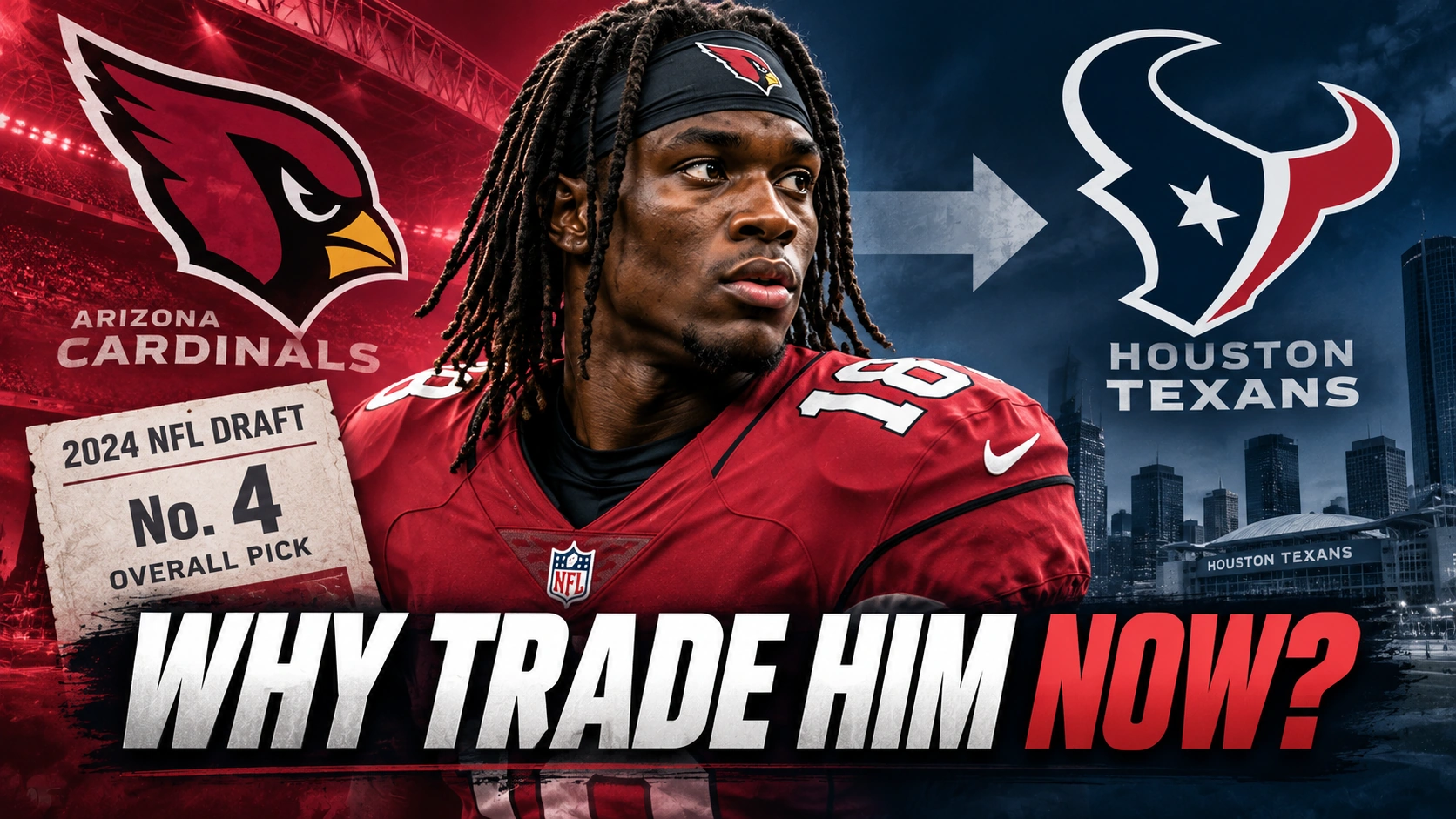
※ Images in this article are AI-generated illustrations created to help explain the story. They are not actual photographs, and depictions of people, places, or events may differ slightly from reality.
The trade raises questions beyond whether Harrison is a good receiver. Why did Arizona stop building around him? What exactly did Houston give up? And why might playing alongside C.J. Stroud make a difference?
To understand the move, start with how quickly the situation changed.
How Did the Marvin Harrison Jr. Trade Happen?
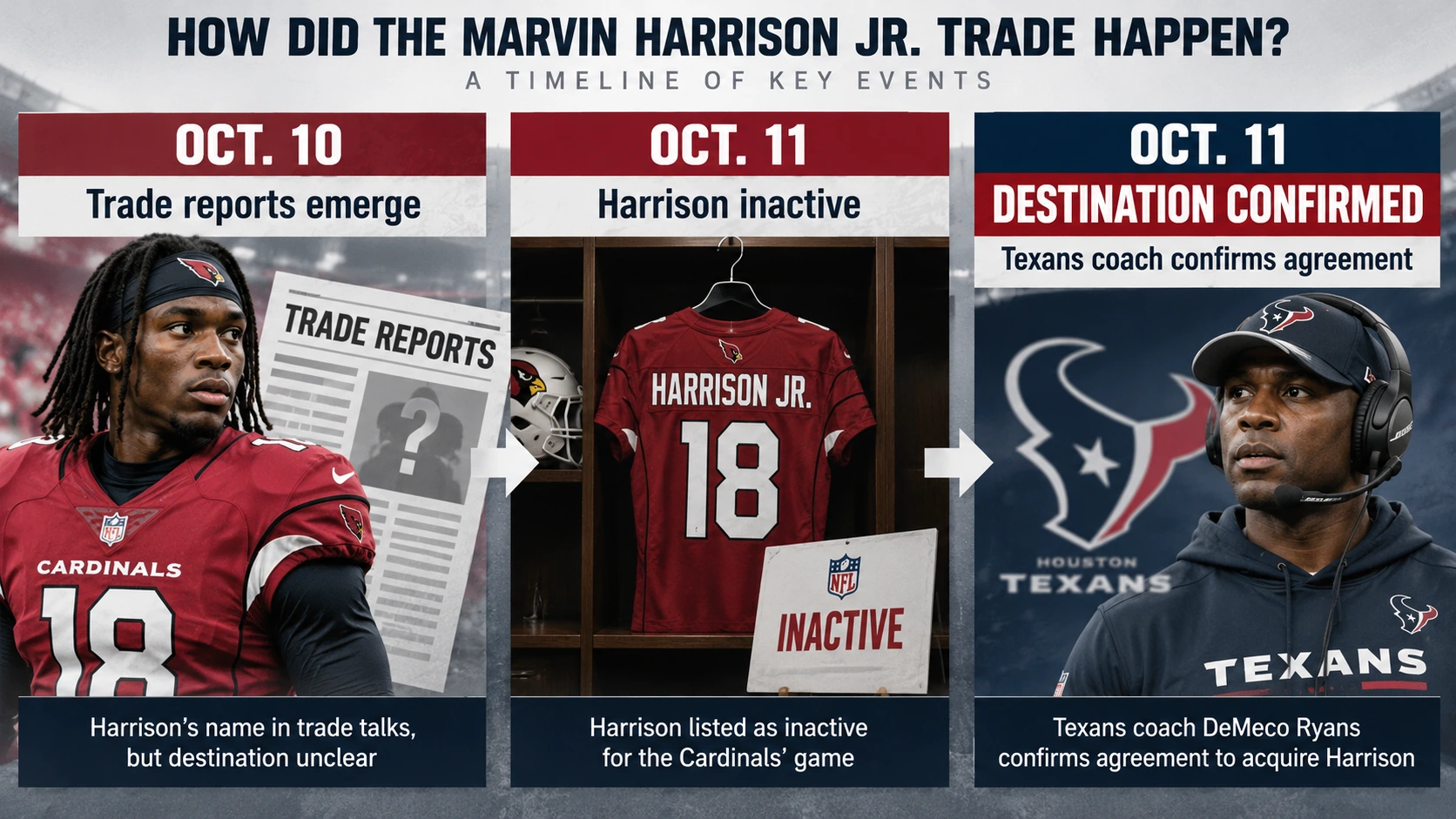
The deal came into focus over one weekend.
On October 10, 2026, reports emerged that the Cardinals were preparing to trade Harrison. At first, his destination had not been publicly confirmed.
Arizona then kept him out of its October 11 game against the Detroit Lions.
That same Sunday, following Houston’s 26–3 win over the Tennessee Titans, Texans head coach DeMeco Ryans confirmed the agreement to acquire Harrison. Arizona’s coach also acknowledged the move. As of the teams’ October 11 coverage, the formal transaction announcement was still pending. (Arizona Cardinals · NFL)
The sequence was straightforward:
| Date | What happened |
|---|---|
| October 10, 2026 | Reports surfaced that Arizona was preparing to trade Harrison. |
| October 11, 2026 | Harrison was inactive for Arizona’s game against Detroit. |
| October 11, 2026 | Houston coach DeMeco Ryans confirmed the agreement to acquire him. |
| October 11, 2026 | Arizona publicly acknowledged the move while noting a formal announcement was pending. |
For a player selected so early in the draft, the speed of the departure was striking.
But the real explanation had been developing for much longer.
Why Did Arizona Give Up on a No. 4 Draft Pick?
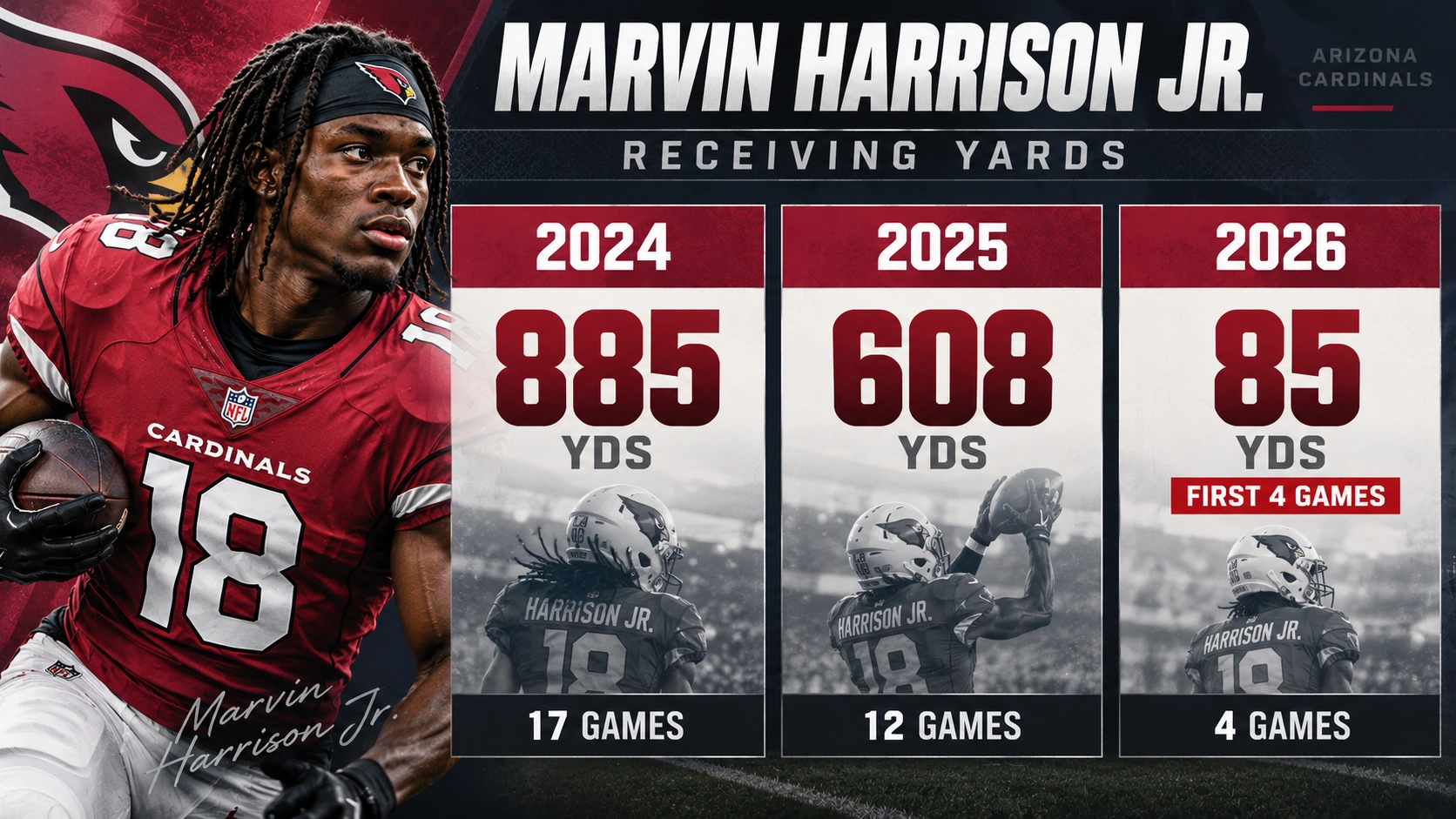
Arizona moved Harrison because his production and role fell far short of what the team expected from a fourth overall pick. The issue was not that he had accomplished nothing. It was that the Cardinals no longer saw him as a central part of their passing game.
Harrison arrived with extraordinary expectations.
At Ohio State, he had been one of the country’s most impressive wide receivers. His father, Marvin Harrison, was a Hall of Fame receiver who spent his NFL career with the Indianapolis Colts.
The Cardinals selected Harrison Jr. fourth overall in the 2024 NFL Draft, ahead of nearly every other player available that year. (NFL)
His rookie season showed promise. He caught 62 passes for 885 yards and eight touchdowns.
But the leap Arizona expected never fully materialized. (NFL)
The numbers tell part of the story
| Season | Games played | Receptions | Receiving yards | Touchdowns |
|---|---|---|---|---|
| 2024 | 17 | 62 | 885 | 8 |
| 2025 | 12 | 41 | 608 | 4 |
| 2026, first four games | 4 | 5 | 85 | 1 |
Source: (Reuters)
The 2025 season was complicated by injuries and missed playing time, so the drop in total yardage cannot be treated entirely as a decline in ability.
The beginning of 2026 was harder to explain away.
Across four games, Harrison caught only five passes. He wasn’t just failing to put up star-level statistics. He was barely involved compared with some of his teammates.
Was Harrison playing poorly because he wasn’t getting enough opportunities, or was he getting fewer opportunities because the offense was finding better options elsewhere?
The available evidence suggests that both production and offensive fit became problems, but it does not establish one simple cause.
How Did Harrison Fall So Far Down Arizona’s Offense?
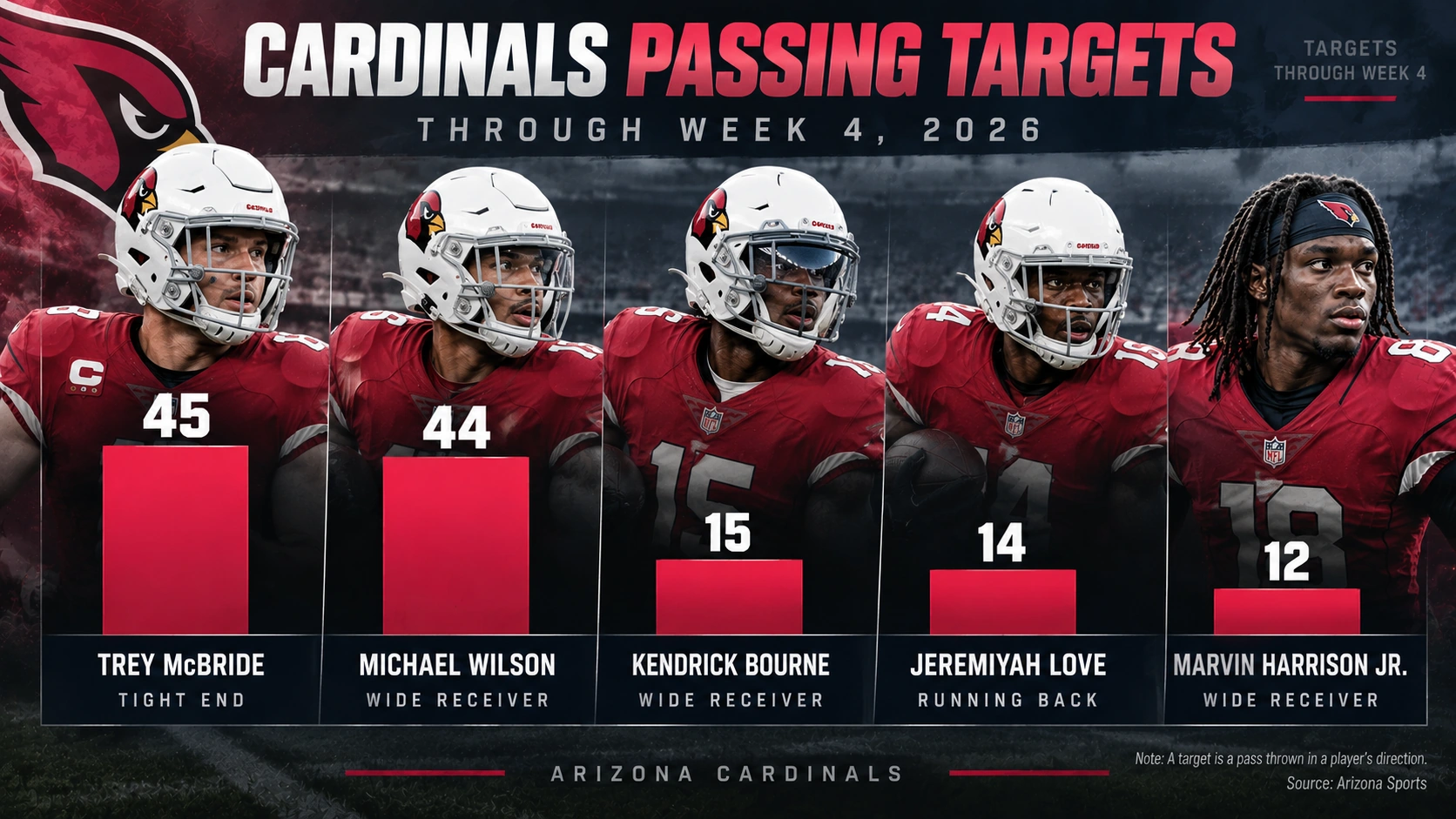
Arizona’s passing game gradually developed around other players.
By early October 2026, tight end Trey McBride and wide receiver Michael Wilson had become much more central to the Cardinals’ offense than Harrison.
Under first-year head coach Mike LaFleur, that difference became especially noticeable.
Through the team’s first four games, Arizona Sports reported the following target totals:
| Player | Targets | Offensive role |
|---|---|---|
| Trey McBride | 45 | Primary tight end and major passing-game target |
| Michael Wilson | 44 | Leading wide receiver option |
| Kendrick Bourne | 15 | Veteran receiving option |
| Jeremiyah Love | 14 | Running back used in the passing game |
| Marvin Harrison Jr. | 12 | Former No. 4 pick with a diminished role |
A target is a pass thrown in a player’s direction. It does not necessarily result in a completed catch.
There is a minor discrepancy in the published totals: the Cardinals’ own coverage and Arizona Sports list 12 targets for Harrison, while NFL.com’s trade coverage lists 13. The comparison above uses the team-reported figure. Either count leaves him well behind the two leading targets. (Arizona Cardinals · NFL)
Why didn’t the Cardinals just throw him the ball more?
An NFL receiver cannot simply demand the ball on every passing play.
Offensive coaches design routes around defensive coverage, quarterback reads, protection, spacing, and the strengths of other players. A play drawn up for one receiver can also break down before the quarterback gets a chance to throw.
LaFleur had said that plays were designed for Harrison, even when the ball did not ultimately reach him. The team also described situations in which pressure or other developments disrupted intended opportunities. (Arizona Cardinals)
Still, the larger pattern was unmistakable.
Harrison was no longer one of the first players Arizona relied on to move the ball.
Wilson’s emergence and McBride’s importance changed the team’s receiving hierarchy. Harrison’s draft position remained impressive, but it did not guarantee him a leading role.
Arizona’s coach described the trade as a move made in the club’s best interest and also accepted coaching responsibility for players failing to reach their potential. That is more measured than attributing the decision to a single flaw in Harrison’s game. (Arizona Cardinals)
What Exactly Did the Cardinals and Texans Exchange?
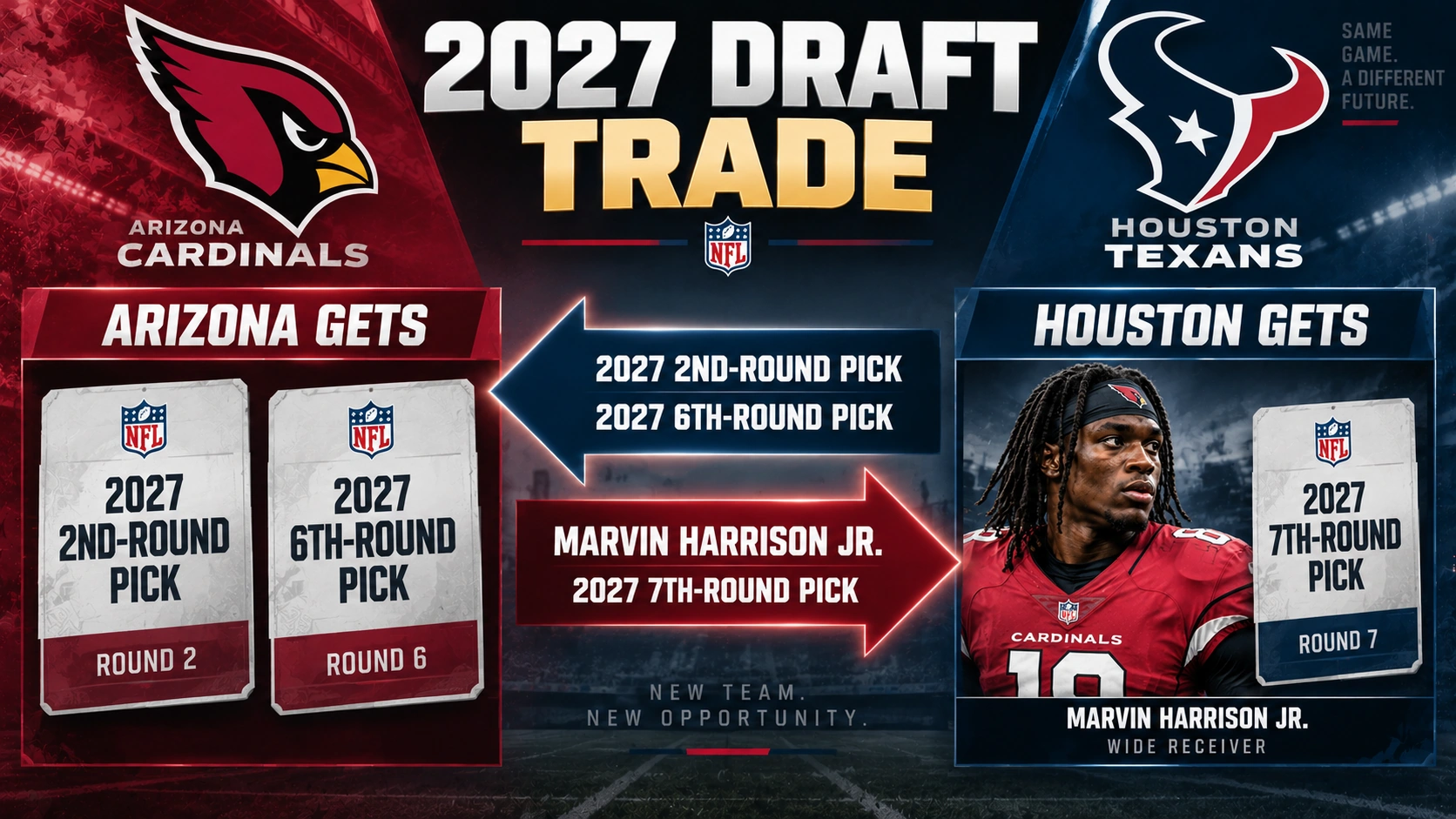
Houston is set to acquire Harrison without surrendering a first-round draft pick.
Under the terms reported by NFL Network and other outlets, the exchange is as follows:
| Arizona Cardinals receive | Houston Texans receive |
|---|---|
| 2027 second-round draft pick | Marvin Harrison Jr. |
| 2027 sixth-round draft pick | 2027 seventh-round draft pick |
(NFL)
The second-round pick is the most valuable draft asset changing hands.
The additional sixth- and seventh-round selections help complete the exchange, but they are generally less valuable because players selected later in the draft have less certainty attached to their NFL potential.
Why is the return so surprising?
Consider what Arizona originally invested.
In 2024, the Cardinals used the fourth overall selection to acquire Harrison. That is a premium draft pick, typically reserved for players expected to become major contributors.
Two years later, the team is accepting a package built around a second-round selection.
But this does not mean Arizona somehow exchanged the fourth overall pick directly for a second-round pick.
Harrison had already played for the Cardinals. The team received his on-field contributions during that time, and the value of the player had changed since he entered the league.
The original draft investment was already made.
In business and economics, this is related to the idea of a sunk cost: something already spent that cannot be recovered simply by refusing to change course.
For an NFL front office, the practical decision becomes: Would keeping Harrison produce more future value than the draft capital another team is willing to offer?
Arizona’s decision suggests it preferred the latter.
Houston, meanwhile, sees an opportunity to acquire a young receiver with a celebrated college background without paying the price normally associated with a top-five draft pick.
That makes the trade a gamble for both sides, but for different reasons.
Why Does Houston Think C.J. Stroud Could Make a Difference?
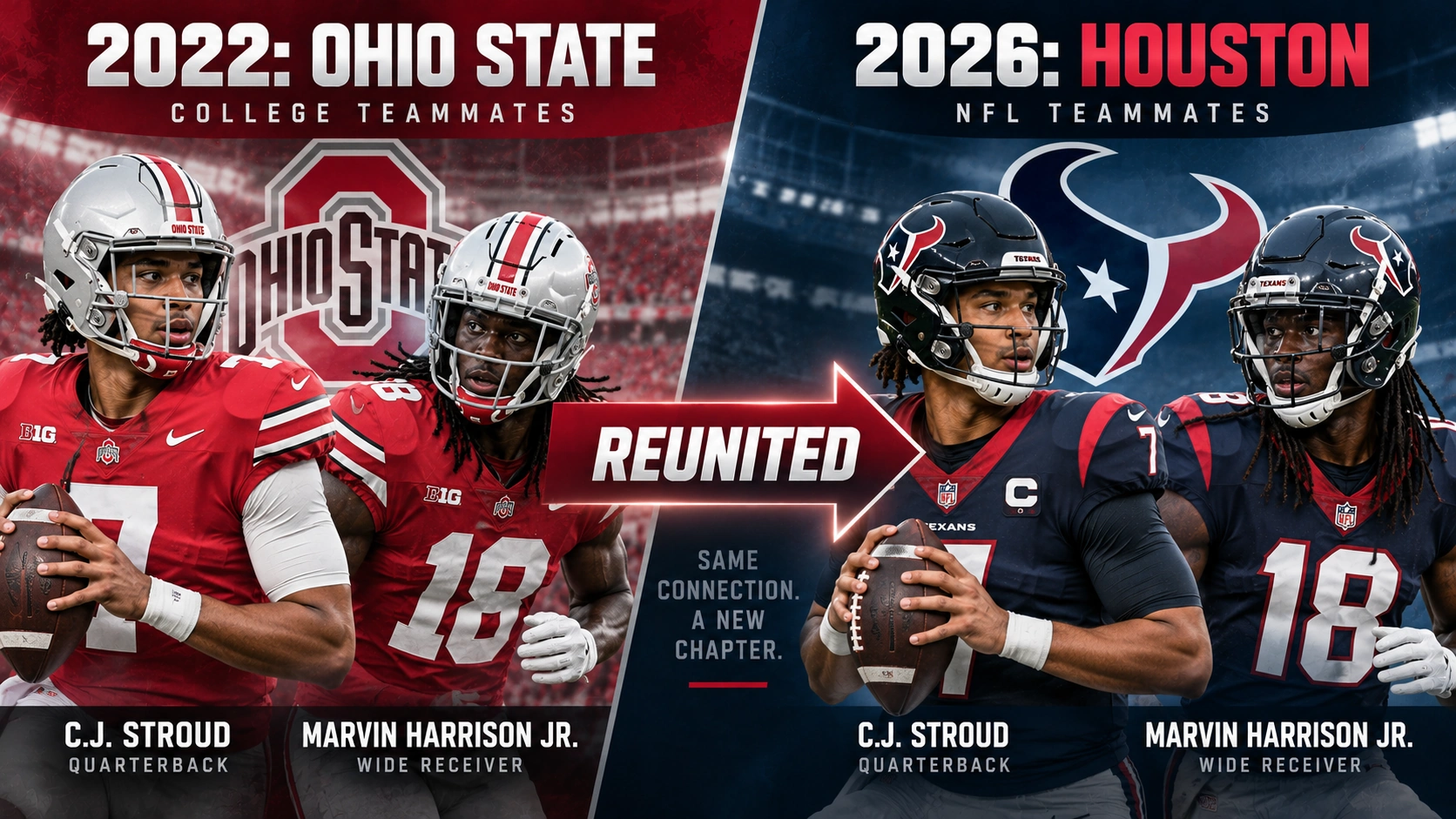
Houston has a reason to believe Harrison might succeed in a different environment: quarterback C.J. Stroud already played with him at Ohio State.
The two were teammates before Stroud entered the NFL as the second overall pick in 2023.
During the 2022 college football season, Harrison caught 77 passes for 1,263 yards and 14 touchdowns while Stroud was Ohio State’s quarterback. (NBC Sports)
That history does not guarantee success in the NFL. College defenses, professional defensive schemes, and the speed of the game are different.
But an established relationship between quarterback and receiver can matter.
Why is quarterback-receiver chemistry so important?
Passing in the NFL is not just about throwing the ball to an open player.
A quarterback and receiver must understand where each expects the ball to go, how routes adjust against different coverages, and when a pass should be delivered.
A fraction of a second can determine whether a play results in a completion, an incompletion, or an interception.
Players who have worked together extensively may already share some of those expectations.
That is part of the appeal of reuniting Harrison and Stroud.
Stroud publicly welcomed the trade and praised Harrison’s route-running, catching ability, and work ethic. He also described the move as a positive fresh start for his former teammate. (NBC Sports)
Why would the Texans make this move at 1–4?
Houston entered its October 11 game against Tennessee without a win in the 2026 season.
The Texans defeated the Titans 26–3, improving to 1–4.
Rather than retreat after the poor start, Houston made a move aimed at strengthening its receiving group.
The team has dealt with injuries at receiver, while Nico Collins remains an important part of the offense and Tank Dell has been working toward a return. (Houston Chronicle · NFL)
Harrison offers another potential target for Stroud.
At 6 feet, 3 inches tall, he brings size and a receiving skill set that Houston can try to incorporate into its existing passing attack.
But the Texans are not acquiring a proven NFL superstar.
They are acquiring a talented player whose professional career has not yet matched his draft reputation.
The opportunity is that Houston might unlock more of his potential. The risk is that the problems seen in Arizona may not disappear simply because he changes teams.
What Happens to Harrison’s Rookie Contract?
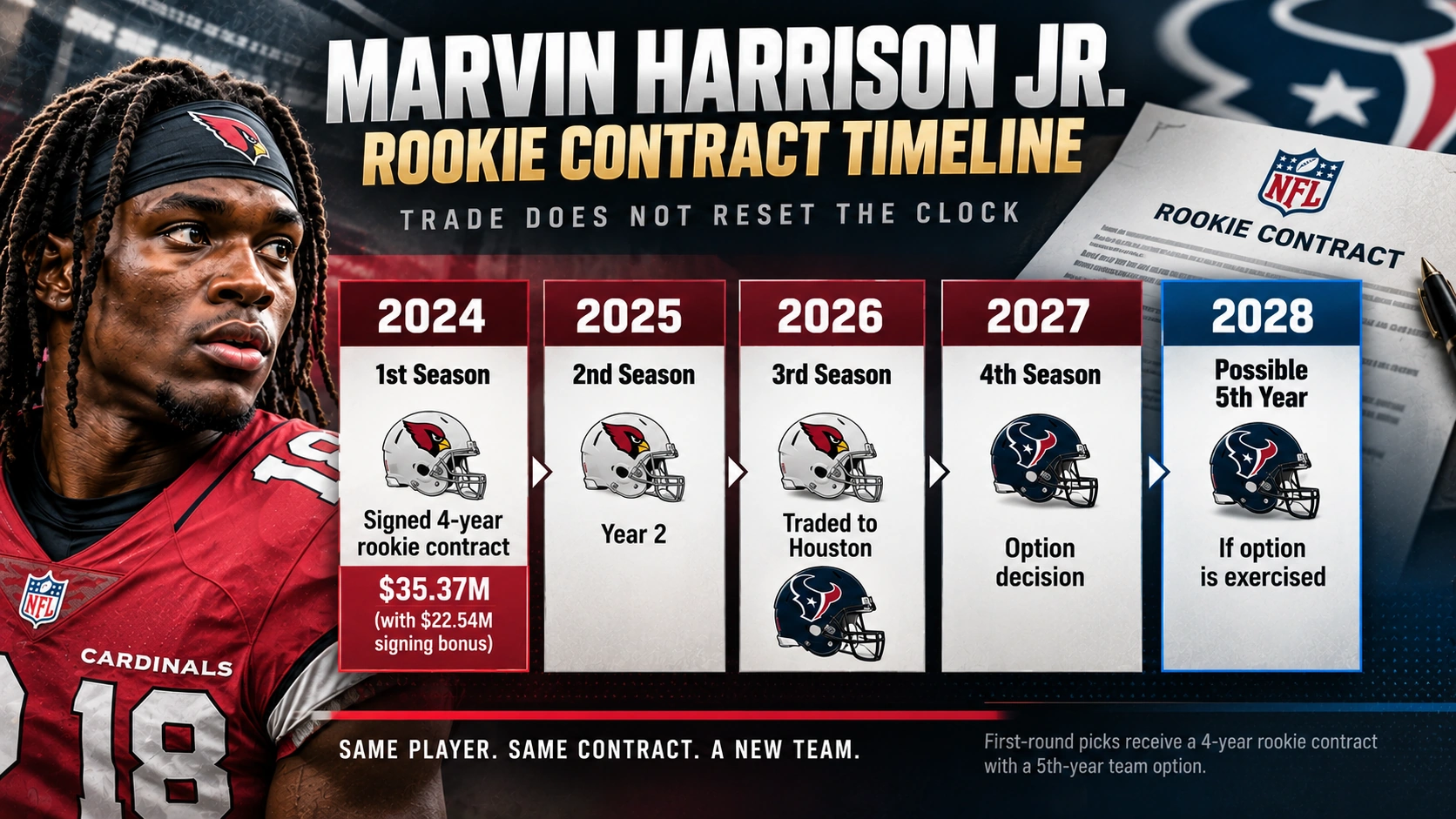
Trading Harrison does not reset his rookie-contract clock.
NFL first-round draft picks receive four-year rookie contracts that include a team option for a fifth season.
Harrison signed a four-year, $35.37 million rookie contract with Arizona in 2024, including a reported $22.54 million signing bonus. (NFL)
The Texans are set to take over the remaining obligations associated with the existing player contract, rather than start a new four-year rookie deal. Previously paid signing bonuses and associated salary-cap accounting are distinct from the compensation still owed under the contract.
Here is the basic timeline:
| Year | Contract significance |
|---|---|
| 2024 | First season of Harrison’s rookie contract |
| 2025 | Second season |
| 2026 | Third season; reported trade to Houston |
| 2027 | Fourth season; fifth-year option decision |
| 2028 | Possible fifth season if the option is exercised |
Under NFL rules, the fifth-year option for a first-round selection must be exercised after the player’s third regular season and before May 1 of the following league year. Once exercised, the option salary is fully guaranteed. (NFL Football Operations)
Why does the contract matter to Houston?
The Texans are not simply acquiring Harrison’s performance in the next game.
They are acquiring the opportunity to evaluate him over the remaining time on his existing deal, with a future contractual decision to make.
If Harrison becomes an important part of the offense, Houston could have a reason to keep him longer.
If he continues to struggle, the team will have to decide whether committing further resources makes sense.
That decision could eventually involve the fifth-year option or a different contract arrangement.
The precise salary-cap consequences of the trade require separating the Cardinals’ past signing-bonus accounting from Houston’s remaining contractual obligations. The reported draft-pick exchange alone does not establish those figures.
Does This Trade Mean Marvin Harrison Jr. Was a Draft Bust?
Not necessarily.
Harrison has not delivered the kind of sustained production teams hope for when they select a receiver fourth overall. That disappointment is real.
But there is a difference between saying a player failed to meet expectations with one team and saying his entire NFL career is a failure.
Harrison is only 24 years old.
He has already demonstrated that he can produce in the NFL, even if the results have been inconsistent.
His first two seasons included injuries, changes in offensive circumstances, and a receiving group in which other players became more prominent.
None of that proves he will succeed in Houston. It simply means his future cannot be determined entirely by his Arizona statistics.
A useful way to understand the trade is to separate three different questions.
| Question | What the evidence supports |
|---|---|
| Did Harrison meet Arizona’s expectations? | Not consistently, particularly in 2026. |
| Did he lose his role in the Cardinals’ offense? | Yes. His opportunities declined sharply. |
| Does that prove he cannot succeed elsewhere? | No. His performance in Houston has yet to be established. |
For Arizona, moving on from Harrison acknowledges that its original draft expectations did not become reality.
For Houston, it is a calculated bet that the same player can produce a different result in a new setting.
And for Harrison, it is an opportunity to change the direction of his career before he reaches the end of his rookie deal.
What Should Cardinals and Texans Fans Watch Next?
There are two different stories to follow after this trade.
For the Cardinals, the question is whether moving on from Harrison actually improves the team’s long-term position.
Arizona receives future draft selections under the reported agreement, but those picks do not immediately replace the production it hoped Harrison would provide. The Cardinals must still develop an effective passing game around their remaining players.
Their receiving hierarchy already features Michael Wilson and Trey McBride. The next test is whether the offense can become more productive without Harrison.
For the Texans, the question is more immediate: how quickly can Harrison become a meaningful part of the offense?
The reunion with Stroud provides a familiar connection, but Houston still needs to integrate him into its plays, establish his responsibilities, and determine where he fits alongside its other receivers.
Fans should pay particular attention to his involvement rather than focusing only on his first touchdown or a single spectacular catch.
Targets, offensive snaps, and consistent contributions over several games will offer a clearer picture of whether his role is genuinely changing.
Houston’s next scheduled game is against the Jacksonville Jaguars at Wembley Stadium in London on October 18, 2026, with kickoff set for 9:30 a.m. Eastern. Whether Harrison is ready to take on a significant role immediately will depend on how quickly he adjusts to the Texans’ offense. (Houston Texans)
One strong performance would be encouraging. A sustained role over several games would tell us much more.
Bottom Line: What This Story Really Means
The Cardinals agreed to trade Marvin Harrison Jr. because the player they drafted fourth overall in 2024 had become a secondary option in their offense.
His declining production, shrinking opportunities, and the emergence of other receivers made a change increasingly understandable.
Arizona chose to recover future draft capital rather than continue waiting for the breakout it had anticipated.
Houston sees the situation differently.
The Texans are acquiring a young former top-five pick without giving up a first-round selection, and they are pairing him with a quarterback who already experienced success throwing to him at Ohio State.
This is a trade between two teams that have reached different conclusions about the same player’s future value.
Arizona decided the opportunity had run its course.
Houston believes there may still be something worth unlocking.
The next several games will begin to show which judgment was closer to the truth.
Marvin Harrison Jr. Trade: Key Questions Explained
Q. Why did the Arizona Cardinals trade Marvin Harrison Jr.?
Arizona moved on after Harrison’s role and production declined, particularly under the team’s new coaching staff in 2026. Trey McBride and Michael Wilson had become more important receiving targets.
Q. Which team is acquiring Marvin Harrison Jr.?
The Houston Texans are acquiring Harrison from the Arizona Cardinals in a trade agreement confirmed by Texans head coach DeMeco Ryans on October 11, 2026. At the time of the teams’ reports that day, a formal transaction announcement was still pending.
Q. What is Houston giving up for Marvin Harrison Jr.?
Under the reported agreement, Houston is sending Arizona a 2027 second-round pick and a 2027 sixth-round pick. The Texans are receiving Harrison and a 2027 seventh-round pick.
Q. Was Marvin Harrison Jr. really the fourth overall pick?
Yes. Arizona selected Harrison fourth overall in the 2024 NFL Draft after his standout college career at Ohio State.
Q. How many receiving yards did Harrison have with Arizona?
Through 33 games, Harrison recorded 1,578 receiving yards, 108 receptions, and 13 receiving touchdowns with the Cardinals.
Q. Did Marvin Harrison Jr. play with C.J. Stroud in college?
Yes. Harrison and Stroud played together at Ohio State, including the 2022 season when Harrison recorded 1,263 receiving yards and 14 touchdowns.
Q. Does the trade mean Harrison will replace Nico Collins?
No such role has been established. Collins remains an important Texans receiver, while Harrison’s responsibilities and place in the offense will be determined as he integrates into the team.
Q. Is Marvin Harrison Jr. still on his rookie contract?
Yes. Harrison entered the league in 2024 on a four-year rookie contract with a fifth-year team option. The original contract timetable does not restart because of the trade.
Q. When can Houston decide on Harrison’s fifth-year option?
The decision window opens after the 2026 regular season and closes before May 1, 2027. Exercising that option would extend the original rookie contract through the 2028 season.
Q. Could Harrison become a successful receiver in Houston?
Yes, it remains possible, but it is not guaranteed. His previous connection with C.J. Stroud is a potential advantage, while his consistency, playing time, and fit in Houston’s offense still need to be demonstrated.
Did this help make the story clearer? 🙂 WIN keeps unpacking the “why” behind the news—clearly and simply!
Sources
Trade Reporting and Team Confirmation
Arizona Cardinals — After Marvin Harrison Jr. Trade to Texans, Cardinals Push Forward
NFL — Cardinals to Trade WR Marvin Harrison Jr. to Texans
Reuters — Texans Acquiring Cardinals WR Marvin Harrison Jr., DeMeco Ryans Says
Arizona’s Offense and Harrison’s Declining Role
Arizona Sports — Why the Cardinals Are Moving On From Marvin Harrison Jr.
Arizona Cardinals — Reports: Cardinals Readying to Trade Marvin Harrison Jr.
Arizona Cardinals — Marvin Harrison Jr. Knows Noise, Expectations, but Sticks to Process
Houston’s Plans and the Stroud Reunion
NBC Sports — C.J. Stroud on Reuniting With Marvin Harrison Jr.
Houston Chronicle — Texans Make Bold Trade for Marvin Harrison Jr.
Houston Texans — 2026 Team Schedule
Rookie Contracts and Fifth-Year Options
NFL — 2024 NFL Draft First-Round Pick Signing Tracker
NFL Football Operations — Contract Language and Rookie Contracts