Why Did the Dodgers Get Swept by the Brewers Despite Ohtani’s Three-Run Homer?

Shohei Ohtani hit a three-run home run. The Los Angeles Dodgers built a four-run lead. For a moment, it looked as though the defending champions might finally have their way back into the series.
So how did their season still end that night?
The answer goes beyond one blown lead—or one superstar having an uneven October.
On October 15, 2026, the Milwaukee Brewers beat Los Angeles 6-4 in Game 4 of the National League Championship Series (NLCS), completing a four-game sweep and ending the Dodgers’ attempt to win a third consecutive World Series title. (MLB · AP)
The most surprising detail wasn’t simply that Los Angeles lost four straight games.
The Dodgers held a lead in every game of the series—and lost every one of them. No team had previously been swept in a best-of-seven MLB postseason series after leading in all four games. (AP)
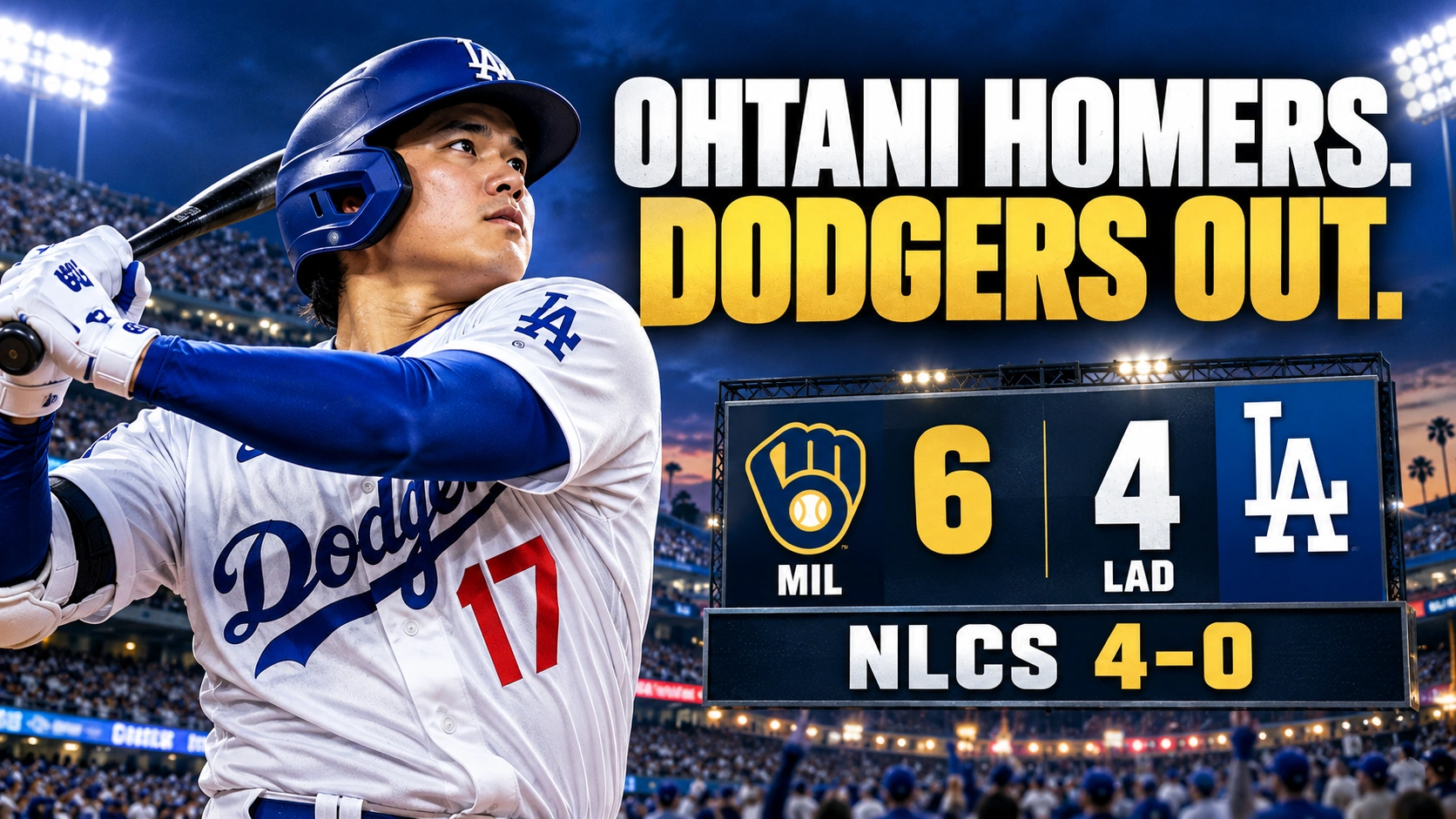
※ Images in this article are AI-generated illustrations created to help explain the story. They are not actual photographs, and depictions of people, places, or events may differ slightly from reality.
For a team that won the World Series in both 2024 and 2025, this was an especially painful way to lose.
But the four games reveal something more useful than a simple story about the Dodgers collapsing. They show how Milwaukee repeatedly turned small opportunities into wins—and how Los Angeles couldn’t do the same.
How Could the Dodgers Lead in Every Game and Still Get Swept?
The Dodgers’ problem was not that they never got ahead. It was that they could not turn those leads into complete victories.
The NLCS is a best-of-seven series: the first team to win four games becomes the National League champion and advances to the World Series.
Los Angeles never reached its first victory.
Here is how the series unfolded, using U.S. game dates:
| Date | Final Score | What Went Wrong for LA |
|---|---|---|
| October 11, Game 1 | Brewers 2, Dodgers 1 | LA’s early lead disappeared in a close, low-scoring loss |
| October 12, Game 2 | Brewers 7, Dodgers 4 | Yamamoto exited early, and Milwaukee’s bullpen shut down the lineup |
| October 14, Game 3 | Brewers 6, Dodgers 2 | Consecutive Milwaukee homers erased LA’s narrow seventh-inning lead |
| October 15, Game 4 | Brewers 6, Dodgers 4 | LA squandered a 4-0 advantage despite Ohtani’s three-run homer |
Across those four games, Milwaukee outscored Los Angeles 21-11.
That difference matters because the Dodgers were not simply being overwhelmed from the opening pitch. They were competitive in stretches, and several games featured moments when one more hit or one clean inning could have changed the result.
Milwaukee consistently won those moments instead.
Why Didn’t Ohtani’s Three-Run Homer Save Game 4?
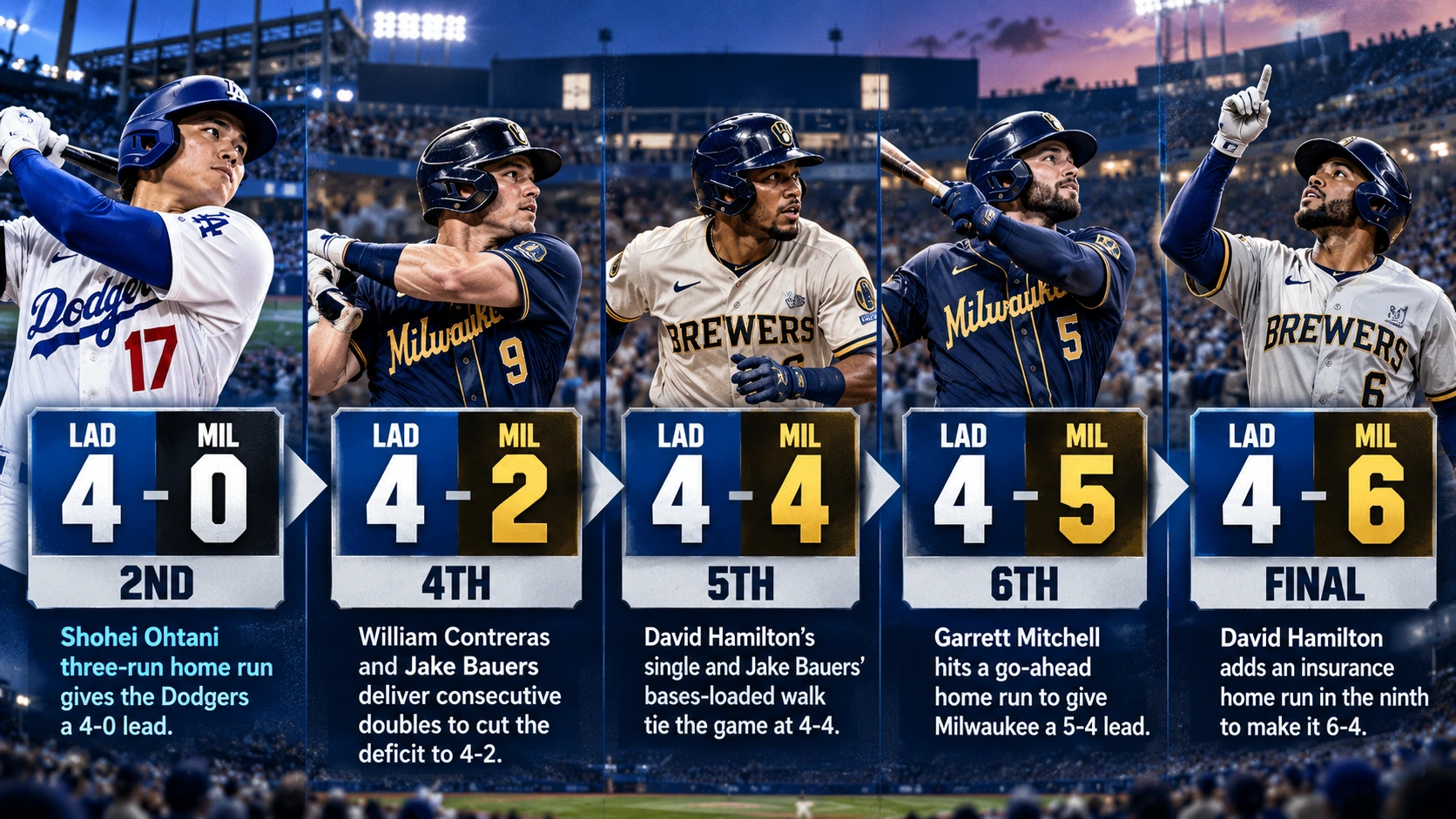
Ohtani gave the Dodgers a genuine opportunity to survive. But Milwaukee kept scoring, and Los Angeles never answered after the second inning.
Ohtani’s three-run blast in the bottom of the second inning was his first home run since August 18. It helped push Los Angeles ahead 4-0, bringing Dodger Stadium to life.
With another game potentially ahead and elite pitchers available for the remainder of the series, there was reason to believe the defending champions could begin a comeback.
Then Milwaukee steadily dismantled the lead.
In the fourth inning, William Contreras and Jake Bauers delivered consecutive doubles that helped cut the deficit to 4-2.
In the fifth, David Hamilton drove in a run with a single, and Bauers drew a bases-loaded walk to tie the score.
In the sixth, Garrett Mitchell hit a go-ahead home run off Dodgers reliever Tanner Scott.
Hamilton added an insurance home run against Edwin Díaz in the ninth, completing Milwaukee’s 6-4 victory. (MLB · Reuters)
The Dodgers still had opportunities.
In the seventh inning, trailing 5-4, Andy Pages doubled and advanced to third on a sacrifice bunt. With the tying run only 90 feet from home, Ohtani struck out, and Mookie Betts grounded out to end the inning. (Baseball-Reference)
That sequence captures the Dodgers’ October frustration.
Ohtani had already delivered one enormous hit. But the team needed additional production throughout the game.
A three-run homer can establish a lead. It cannot protect that lead for the remaining seven innings.
And Ohtani’s performance was only one part of a broader offensive problem.
Why Did a Lineup Full of Stars Struggle to Score?
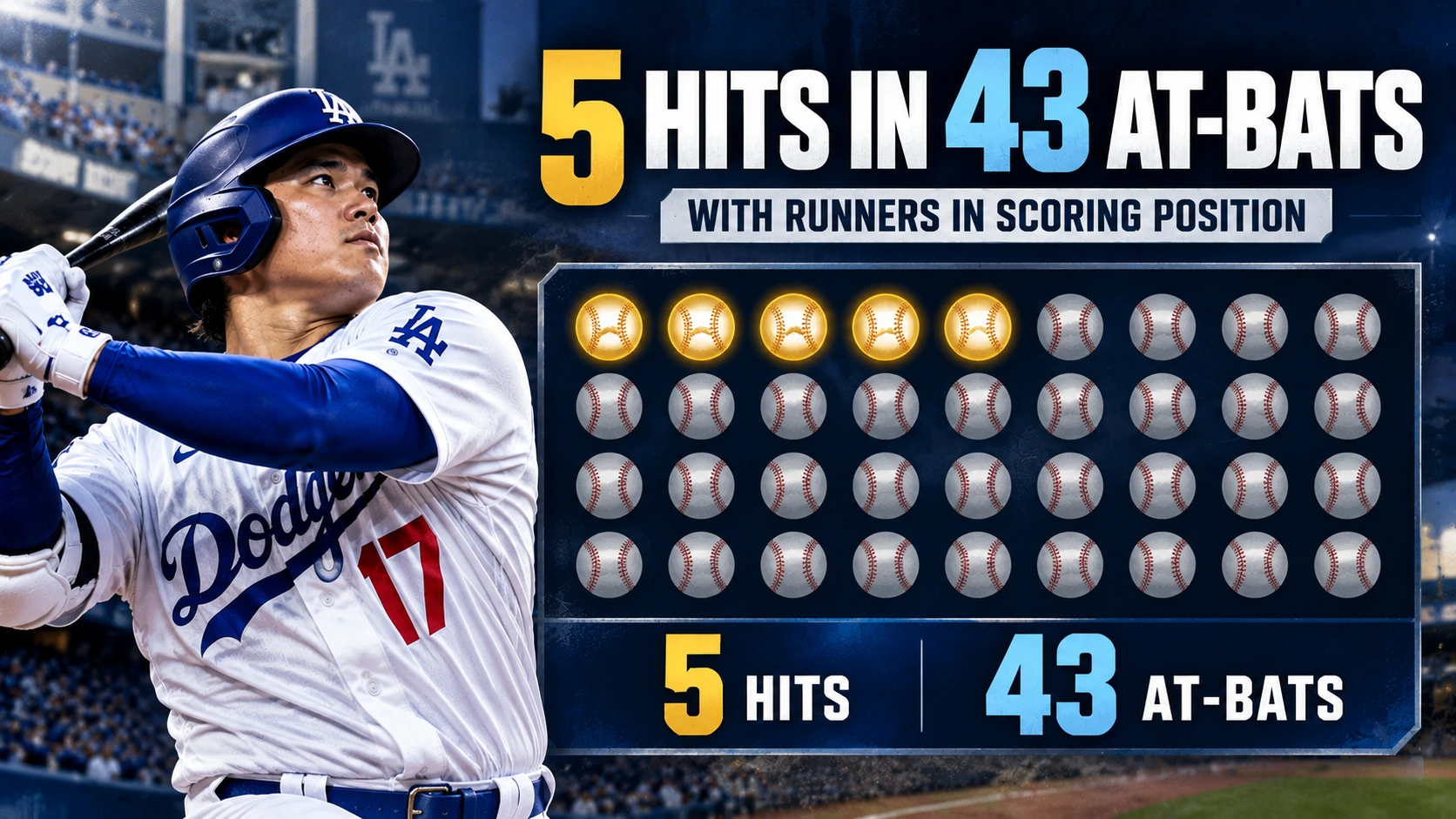
The Dodgers’ offense failed most often when it mattered most: with runners close enough to score on a hit.
Across their 2026 postseason, Los Angeles went just 5-for-43 with runners in scoring position, according to MLB. That’s a .116 batting average in those situations. (MLB)
A runner is in scoring position when standing on second or third base. A single can often bring that runner home, making hits in those situations especially valuable.
Consider Game 2.
The Dodgers scored four runs, but none came directly from a base hit driving in a runner. Sacrifice flies and Milwaukee throwing errors accounted for the scoring.
Once the Brewers turned to their bullpen, Los Angeles went down in order for five consecutive innings. Milwaukee’s relievers retired all 15 batters they faced, preventing the Dodgers from mounting another threat. (MLB)
This is why a lineup with Ohtani, Betts, Freddie Freeman and other established hitters can still lose four straight games.
A dangerous batting order is not guaranteed to produce a run every time someone reaches second base.
The Dodgers also entered October with physical limitations affecting one of their most important players.
Ohtani had been dealing with right biceps and left knee injuries during the season. Those problems limited his pitching availability and affected his preparation. He did not pitch in the 2026 postseason.
His Game 4 home run showed that he remained capable of changing a game with one swing. It did not mean he was fully healthy or that the rest of the offense had recovered. (MLB)
Los Angeles needed repeated contributions throughout the lineup.
Milwaukee made those contributions much harder to produce.
What Happened to the Dodgers’ Starting Pitchers and Bullpen?
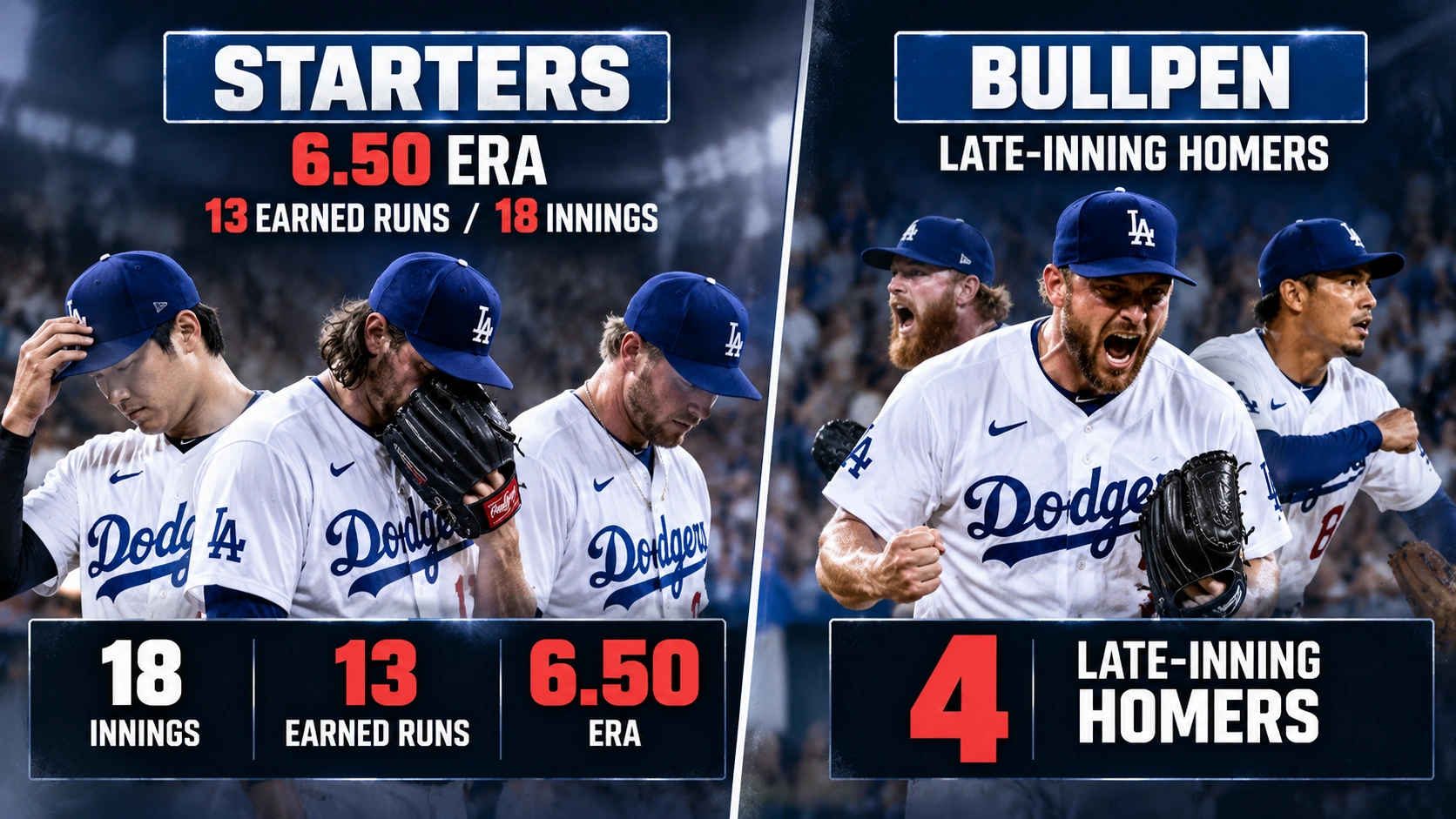
Los Angeles entered the series with an intimidating pitching rotation. But Milwaukee neutralized that advantage.
Across the four NLCS games, Dodgers starters allowed 13 earned runs in 18 innings, producing a combined 6.50 ERA.
ERA, or earned run average, measures how many earned runs a pitcher allows per nine innings. A lower ERA generally indicates more effective run prevention.
Here is how the Dodgers’ starters fared:
| Dodgers Starter | NLCS Game | What Happened |
|---|---|---|
| Tarik Skubal | Game 1 | Allowed two runs over five innings but took the loss |
| Yoshinobu Yamamoto | Game 2 | Lasted only 2⅔ innings |
| Blake Snell | Game 3 | Allowed three home runs after entering with no homers surrendered in his previous 10 starts |
| Tyler Glasnow | Game 4 | Started well, but Milwaukee erased a 4-0 lead |
(MLB)
Not every starter pitched poorly from beginning to end. Skubal, for example, allowed only two runs.
But as a group, the rotation could not consistently control Milwaukee’s offense deep into games.
That put more pressure on the bullpen—the group of relief pitchers responsible for finishing games after the starter leaves.
And the relief pitching did not consistently shut the door.
In Game 4, Scott surrendered Mitchell’s go-ahead homer, while Díaz gave up Hamilton’s insurance homer.
In Game 3, Snell had already lost a late lead when Milwaukee hit consecutive home runs in the seventh inning. (MLB)
The distinction matters.
The Dodgers weren’t eliminated solely because their bullpen failed. Their starting pitchers, relievers and hitters all struggled at different moments.
That allowed Milwaukee to keep applying pressure until something broke.
Why Were the Brewers So Difficult to Beat?
Milwaukee was not an ordinary underdog that suddenly got lucky.
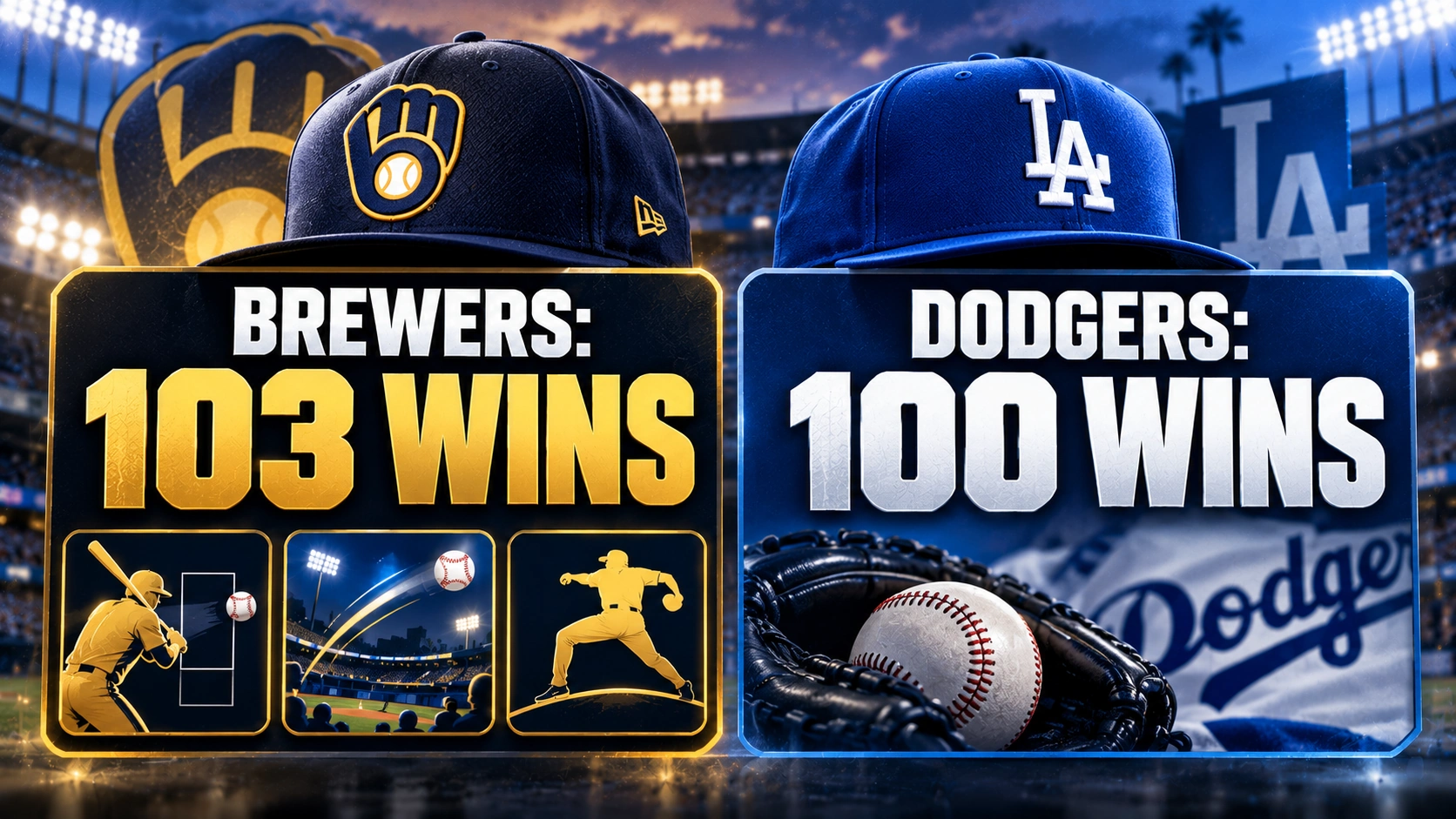
The Brewers finished the 2026 regular season with 103 wins, the best record in Major League Baseball. The Dodgers won 100.
These were the two best regular-season teams in the majors, meeting with a World Series berth at stake. (MLB)
Milwaukee’s success reflected several strengths that became especially visible during the NLCS.
Patient Hitting Changed the Pitching Matchups
The Brewers repeatedly forced Los Angeles pitchers to work through difficult at-bats.
One example came in Game 2, when Jake Bauers battled Yamamoto through a 12-pitch plate appearance that ended in a walk.
The next game, Bauers worked an 11-pitch at-bat before hitting a go-ahead home run off Snell.
Those were not isolated examples of simply swinging harder. Milwaukee’s hitters made the Dodgers throw more pitches, stayed alive against difficult offerings and punished mistakes. (MLB)
Milwaukee’s Bullpen Protected Its Advantages
While Los Angeles struggled to finish games, Milwaukee repeatedly found reliable relief pitching.
Its five perfect relief innings in Game 2 were particularly revealing.
In the decisive Game 4, Aaron Ashby recorded the final nine outs for a three-inning save, preventing the Dodgers from completing a comeback.
Bauers, meanwhile, became the NLCS Most Valuable Player after driving in six runs during the series. (AP · Reuters)
Wasn’t Milwaukee Supposed to Be the Lower-Budget Team?
Yes—and that makes the result more interesting.
Milwaukee ranked 19th in MLB payroll entering the postseason, yet it finished the regular season with more wins than every other club.
A substantial share of that success came from talent developed within the organization, alongside players acquired through trades. (MLB)
The Brewers’ victory does not prove that spending is irrelevant. Over a full season, financial resources can help teams build depth and recover from injuries.
But it reinforces the limits of judging a postseason matchup by payroll alone.
The result also arrives amid a broader debate over whether MLB should adopt a salary cap. Analysts differ over how much this particular series should influence that discussion. (Reuters)
How Did Milwaukee Reverse What Happened in the 2025 NLCS?
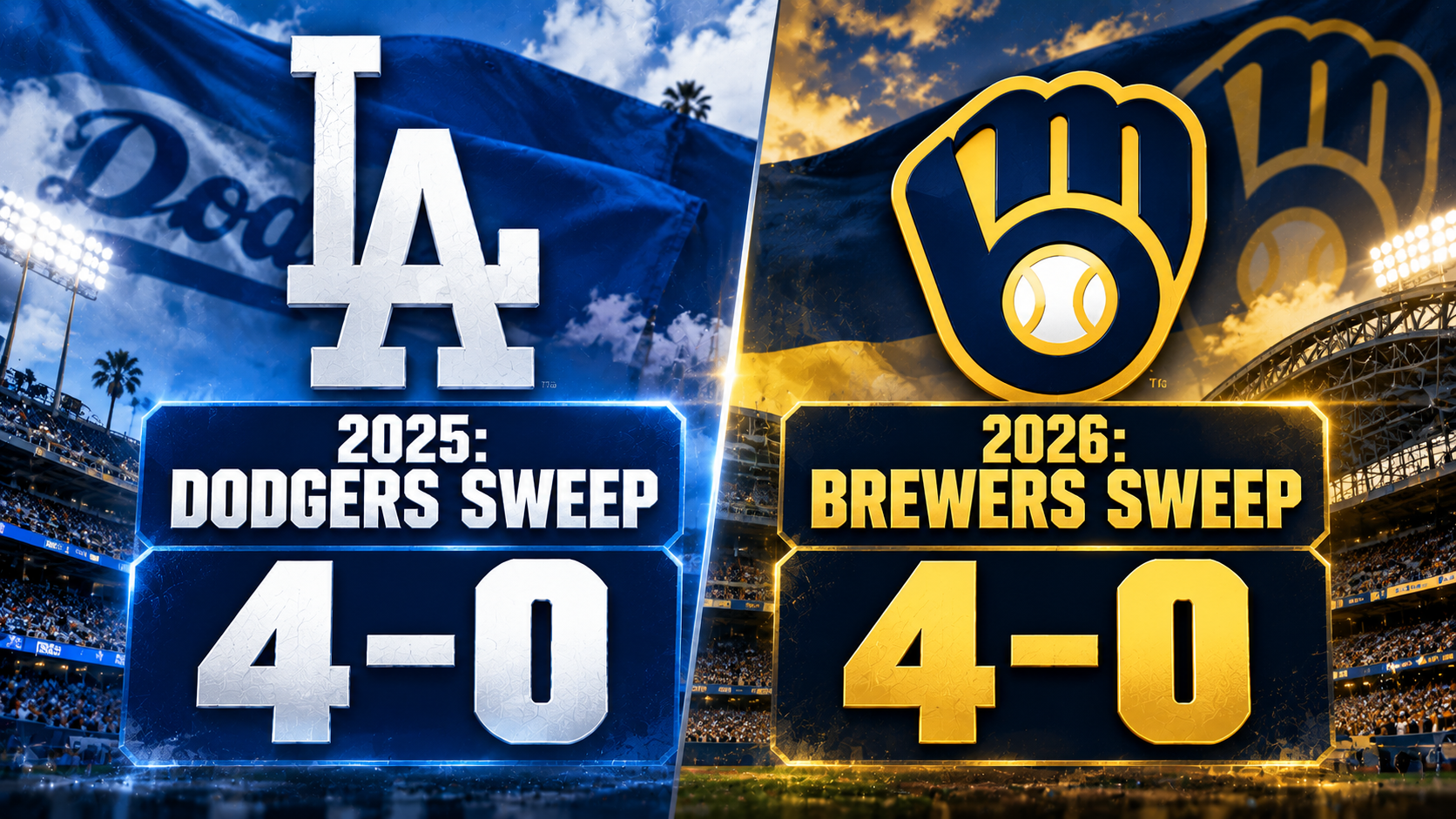
One year earlier, the story had been almost completely reversed.
In the 2025 NLCS, Los Angeles swept Milwaukee in four games.
Ohtani delivered one of the most extraordinary individual performances in postseason history during Game 4: three home runs at the plate and 10 strikeouts on the mound.
The Dodgers advanced to the World Series and eventually captured their second consecutive championship. (MLB)
The contrast is striking.
| 2025 NLCS | 2026 NLCS | |
|---|---|---|
| Series winner | Dodgers | Brewers |
| Series result | Dodgers 4-0 | Brewers 4-0 |
| Ohtani’s Game 4 | Three home runs and 10 pitching strikeouts | One three-run home run; did not pitch |
| Team advancing | Los Angeles | Milwaukee |
Milwaukee became the first team to sweep an opponent in the postseason one year after that same opponent had swept it. (MLB)
This reversal also shows how quickly a postseason advantage can change.
The same opponent that Los Angeles dominated in 2025 returned with a stronger regular-season record, effective bullpen management and an offense that consistently answered when it fell behind.
For the Dodgers, last year’s dominance offered no protection against this year’s problems.
Does the Sweep Mean the Dodgers’ Championship Window Is Closing?
Not necessarily. One postseason defeat does not erase two recent World Series titles or a 100-win regular season.
But the manner of the Dodgers’ elimination raises questions about how long their current roster can sustain its level of success.
Los Angeles had the oldest position-player group in the major leagues in 2026, with an average age of 30.9 years, according to MLB.
Age alone does not establish why the Dodgers lost. However, injuries, physical wear and the difficulty of maintaining elite performance across multiple long seasons are legitimate concerns.
The Dodgers also invested heavily in pitching talent, yet still could not prevent Milwaukee from repeatedly erasing leads. (MLB)
Several questions now matter for 2027.
Can Ohtani Return as a Two-Way Player?
Ohtani said he intends to pitch again next season, but his health and offseason treatment remain important questions.
He last pitched in July 2026 and did not return to the mound during the postseason. His right biceps and left knee problems will require continued attention. (MLB)
His stated intention to pitch in 2027 should not be confused with a confirmed medical clearance.
Can the Dodgers Produce More Consistently in High-Pressure Situations?
The front office faces a different question about the lineup.
Los Angeles does not lack famous players or proven hitters.
The challenge is producing enough offense across the entire roster when elite postseason pitching limits big swings and easy scoring opportunities.
The Dodgers’ 5-for-43 performance with runners in scoring position offers a clear starting point for that evaluation.
Does Los Angeles Need a Different Pitching Strategy?
The Dodgers’ rotation remains talented, but the Milwaukee series exposed how vulnerable even high-profile starters can be when opponents extend at-bats and force early pitching changes.
The club will need to evaluate the health and durability of its pitchers, bullpen reliability and how effectively the two units work together.
None of that guarantees a major roster overhaul. It does mean that simply bringing back the same group cannot be assumed to produce the same results as 2024 and 2025.
What Happens Next for the Brewers?
Milwaukee advances to the World Series for the first time since 1982.
The Brewers will face the American League champion, determined by the championship series between the Cleveland Guardians and Tampa Bay Rays.
Game 1 of the World Series is scheduled for October 23, 2026, at American Family Field in Milwaukee. The Brewers earned home-field advantage through their major league-leading regular-season record. (MLB)
Milwaukee has won the National League pennant. It has not yet won the World Series.
That difference is worth keeping in mind as the Brewers celebrate their remarkable reversal against the Dodgers.
Their next challenge is turning the franchise’s first World Series appearance in 44 years into its first championship.
Bottom Line: What This Story Really Means
Shohei Ohtani’s three-run home run was not enough because the Dodgers’ problems extended well beyond one player or one game.
Los Angeles struggled to hit with runners in scoring position, received uneven performances from its starting rotation and failed to preserve leads against a Milwaukee team that was exceptionally effective in high-pressure situations.
The Brewers were also far more formidable than their lower payroll might suggest. They won 103 games during the regular season and consistently produced the hits, pitching and late-inning execution necessary to win in October.
The most revealing fact about the 2026 NLCS is that the Dodgers were ahead in all four games but could not finish a single one of them with a victory.
That is why Ohtani’s home run could not save the series—and why the Dodgers’ attempt at three consecutive World Series championships ended before they ever returned to the Fall Classic.
Dodgers NLCS Sweep: Key Questions Explained
Q. When did the Dodgers lose the 2026 NLCS?
The Dodgers were eliminated on October 15, 2026, U.S. Pacific Time, when Milwaukee won Game 4 by a 6-4 score. In Japan, the game ended on October 16.
Q. Did Shohei Ohtani hit a three-run home run against the Brewers?
Yes. Ohtani hit a three-run homer in the second inning of Game 4, helping give the Dodgers a 4-0 lead. Milwaukee came back to win 6-4.
Q. What was the final result of the Dodgers-Brewers NLCS?
The Milwaukee Brewers won the series 4-0, sweeping the Los Angeles Dodgers and advancing to the 2026 World Series.
Q. Did the Dodgers lead in all four NLCS games?
Yes. Los Angeles held a lead in each game but lost all four. It was the first time an MLB team had been swept in a best-of-seven postseason series despite leading in every game.
Q. How poorly did the Dodgers hit with runners in scoring position?
Across their 2026 postseason, the Dodgers went 5-for-43 with runners in scoring position, producing a .116 batting average in those situations.
Q. Why didn’t Ohtani pitch in the 2026 postseason?
Ohtani was dealing with right biceps and left knee injuries that limited his pitching availability. He did not return to the mound during the postseason.
Q. Who was the 2026 NLCS MVP?
Milwaukee Brewers first baseman Jake Bauers won the NLCS MVP award after contributing six RBIs during the four-game sweep.
Q. Did the Dodgers sweep the Brewers in 2025?
Yes. The Dodgers swept Milwaukee 4-0 in the 2025 NLCS, when Ohtani delivered a historic three-home-run, 10-strikeout performance in Game 4.
Q. Are the Dodgers’ chances of winning a third consecutive World Series over?
Yes. Because Los Angeles did not win the World Series in 2026, it cannot complete a three-year championship streak covering 2024 through 2026. It can still pursue another championship in a future season.
Q. When does the 2026 World Series begin?
Game 1 is scheduled for October 23, 2026. Milwaukee will host the American League champion.
Did this help make the story clearer? 🙂 WIN keeps unpacking the “why” behind the news—clearly and simply!
Sources
NLCS Results and Game 4 Comeback
MLB — Brewers End Dodgers’ Three-Peat Bid With an NLCS Sweep
Associated Press — Brewers Sweep Dodgers to Reach First World Series Since 1982
Reuters — Brewers Rally Past Dodgers and Clinch World Series Berth
Dodgers’ Offensive and Pitching Problems
MLB — Dodgers Left to Assess Their Core After NLCS Sweep
MLB — Ohtani’s Home Run Not Enough After Injury-Plagued Season
MLB — Dodgers’ Offensive Struggles in NLCS Game 2
MLB — Late-Inning Home Runs Turn NLCS Game 3
Brewers’ Regular-Season Strength and Historical Reversal
MLB — Championship Series Matchups Between MLB’s Top Two Teams
MLB — How the 2026 Playoff Teams Were Built
MLB — Ohtani’s Historic 2025 NLCS Performance Against Milwaukee
World Series Schedule and Broader Implications
MLB — Brewers’ Potential World Series Opponents and Schedule
Reuters — Experts Debate Whether the Dodgers’ Sweep Affects MLB’s Salary-Cap Fight