Why Is DoorDash Buying Instacart for $17 Billion—and Could Grocery Delivery Change?

If you use DoorDash for dinner and Instacart for groceries, the idea of one company owning both sounds convenient. Maybe one membership could cover everything. But there’s another possibility: fewer competing delivery services might eventually mean less pressure to keep fees low.
On October 29, 2026, DoorDash and Instacart announced a deal valued at approximately $17 billion. The companies promise more choice and potential savings. The important catch is that the acquisition has not closed, and nobody can yet say whether a typical grocery order will cost less. (DoorDash · AP)
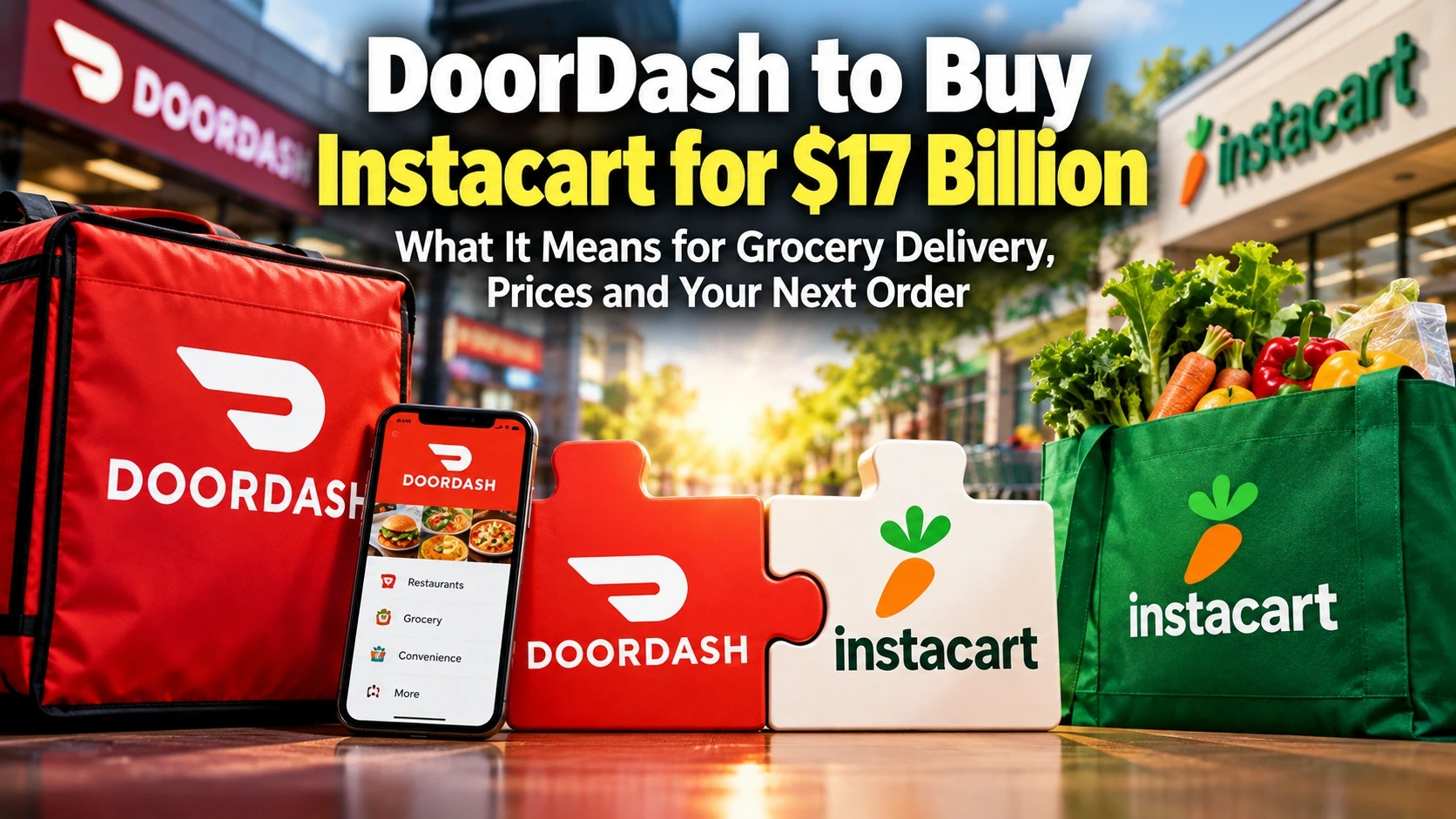
※ Images in this article are AI-generated illustrations created to help explain the story. They are not actual photographs, and depictions of people, places, or events may differ slightly from reality.
The bigger story isn’t simply that two delivery apps want to share an owner. It’s that the companies could combine grocery-store relationships, delivery workers, shopping technology, subscriptions, and customer data. Whether that helps households or reduces their options will be central to what happens next.
What Did DoorDash and Instacart Actually Agree To?
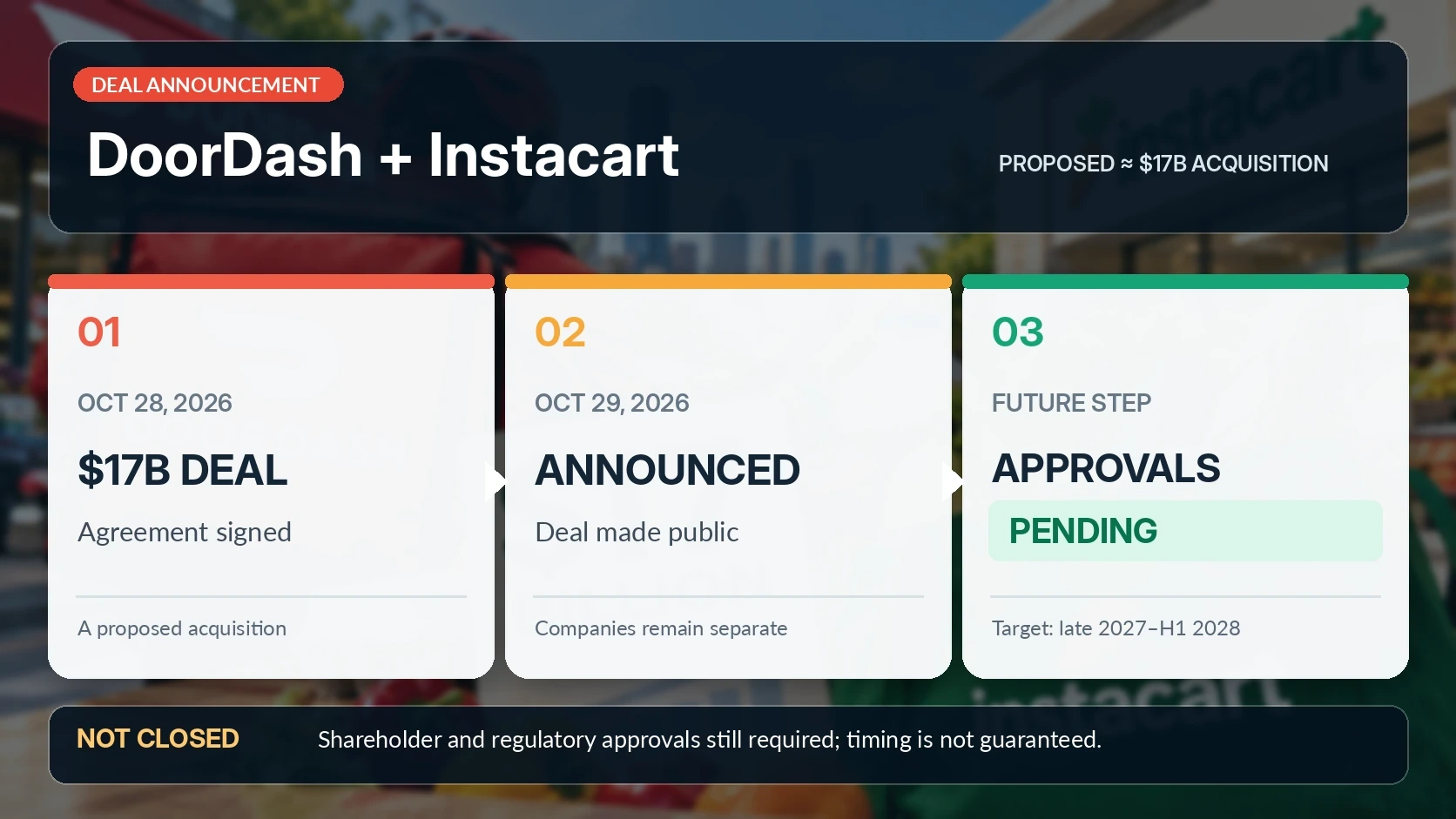
DoorDash agreed to acquire Instacart; it did not acquire the company on announcement day. The offer values Instacart at $65 per share, about 26% above its October 22 closing price, before reports of a possible deal emerged. At least 75% of the transaction’s consideration would be paid in cash, with the remainder potentially in DoorDash stock. (Instacart)
There’s a meaningful difference between signing a deal and completing it. DoorDash’s SEC filing records an agreement dated October 28, followed by the public announcement on October 29. Instacart shareholders and regulators still have roles to play.
Both apps will continue operating independently until closing. The companies say they are aiming for late 2027 or the first half of 2028, not an immediate integration. (DoorDash)
Why Does DoorDash Want Instacart’s Grocery Technology?
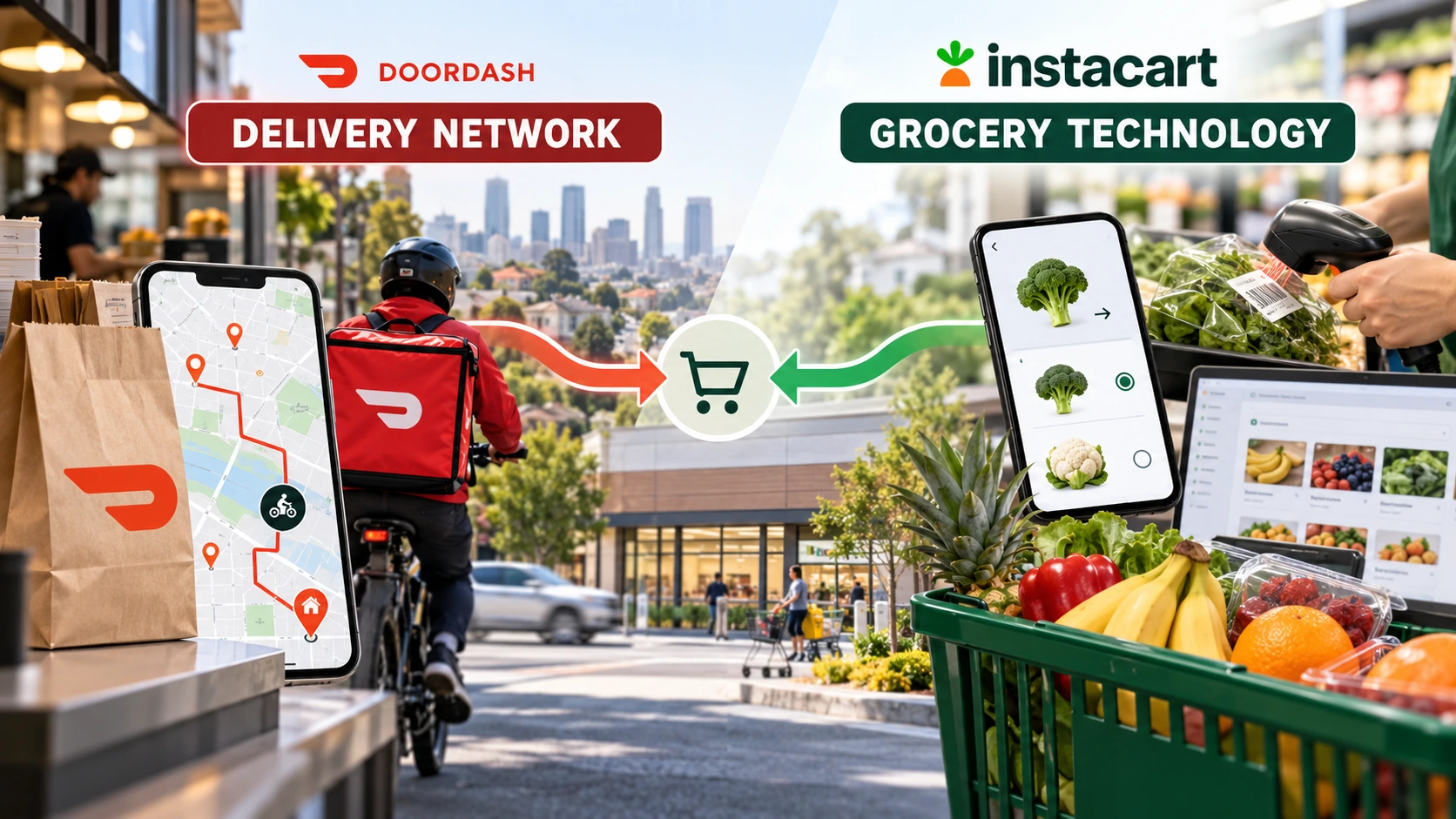
Delivering a hot meal and filling a family’s weekly grocery order are different jobs. DoorDash has built a large network for moving local orders. Instacart specializes in the complicated shopping that happens before groceries reach the doorstep: selecting items, finding substitutions, and helping stores manage online orders.
Instacart also provides technology for retailers’ own websites and advertising businesses. DoorDash would gain those retailer relationships and tools rather than having to develop every part of a grocery-shopping platform itself. That is why this deal goes beyond acquiring another recognizable app. (Reuters · Instacart)
The companies frame their combination as a way to help neighborhood grocers compete with Amazon and Walmart, whose online shopping, logistics, and technology operations are already extensive. That’s a plausible business rationale. Whether the combination also leaves shoppers and grocers with fewer competitive alternatives is a separate question.
Will Grocery Delivery Get Cheaper—or More Expensive?
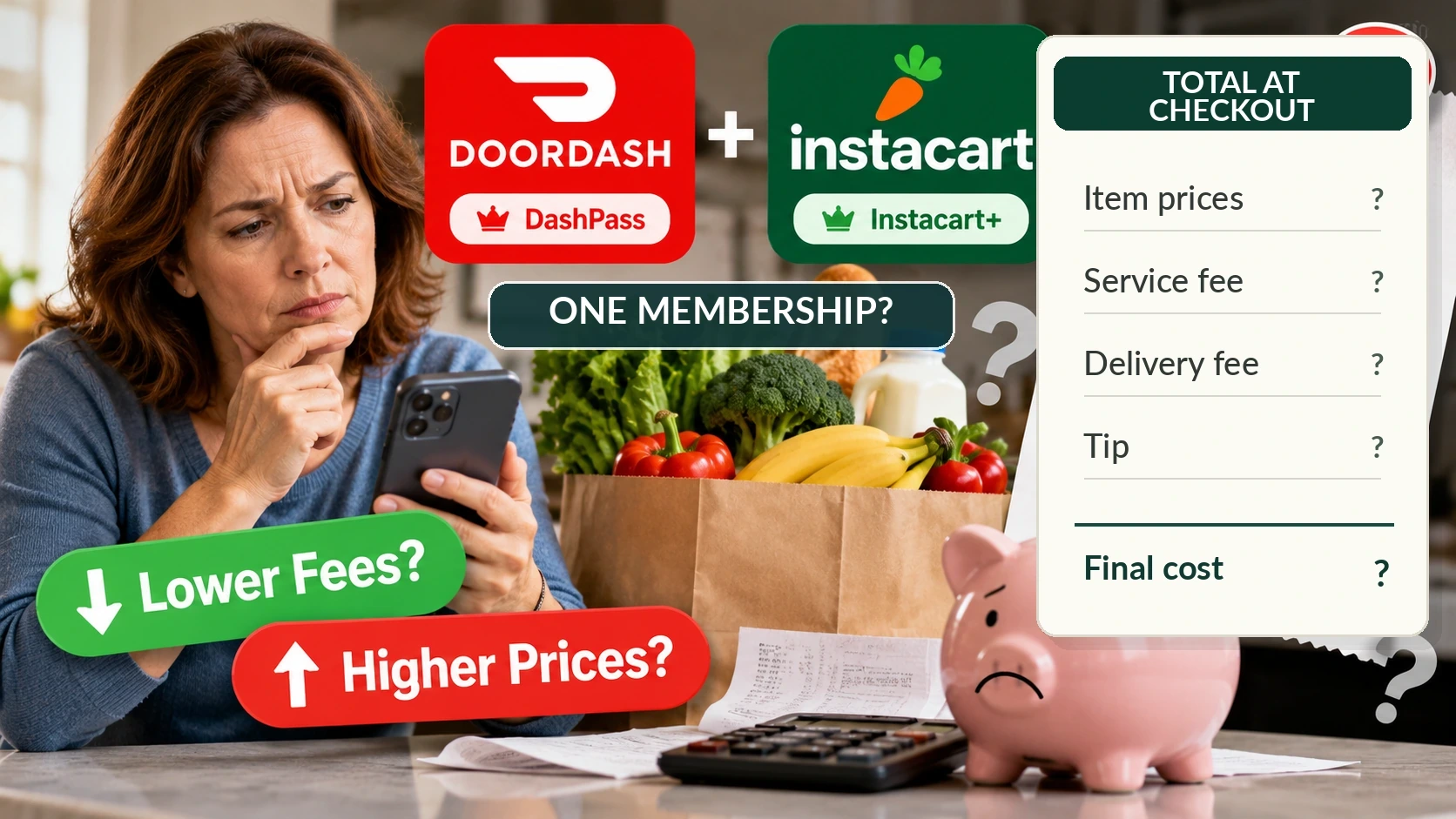
A combined membership might save some customers money, but cheaper grocery delivery is not guaranteed. DoorDash says DashPass and Instacart+ members could eventually pay one subscription fee instead of two, and estimates total membership savings of about $100 million a year. That figure is a company projection, not an independently established benefit. (Instacart)
Delivery costs, however, are more than membership charges. What a customer actually pays may depend on the listed item prices, service fees, delivery charges, tips, and any available promotions.
| Potential benefit | Question still unanswered |
|---|---|
| One membership covering both services | What will the combined plan cost and include? |
| Access to more stores | Will comparable grocery orders cost less overall? |
| A larger delivery network | Will competition still pressure delivery fees? |
The companies say Instacart users could gain access to more than 50,000 additional stores beyond the nearly 100,000 already on its platform. But more stores in an app and lower prices at checkout are not the same thing. The meaningful test will be the total cost of a comparable basket, with all fees included. (DoorDash)
Why Could Regulators Object to the Merger?
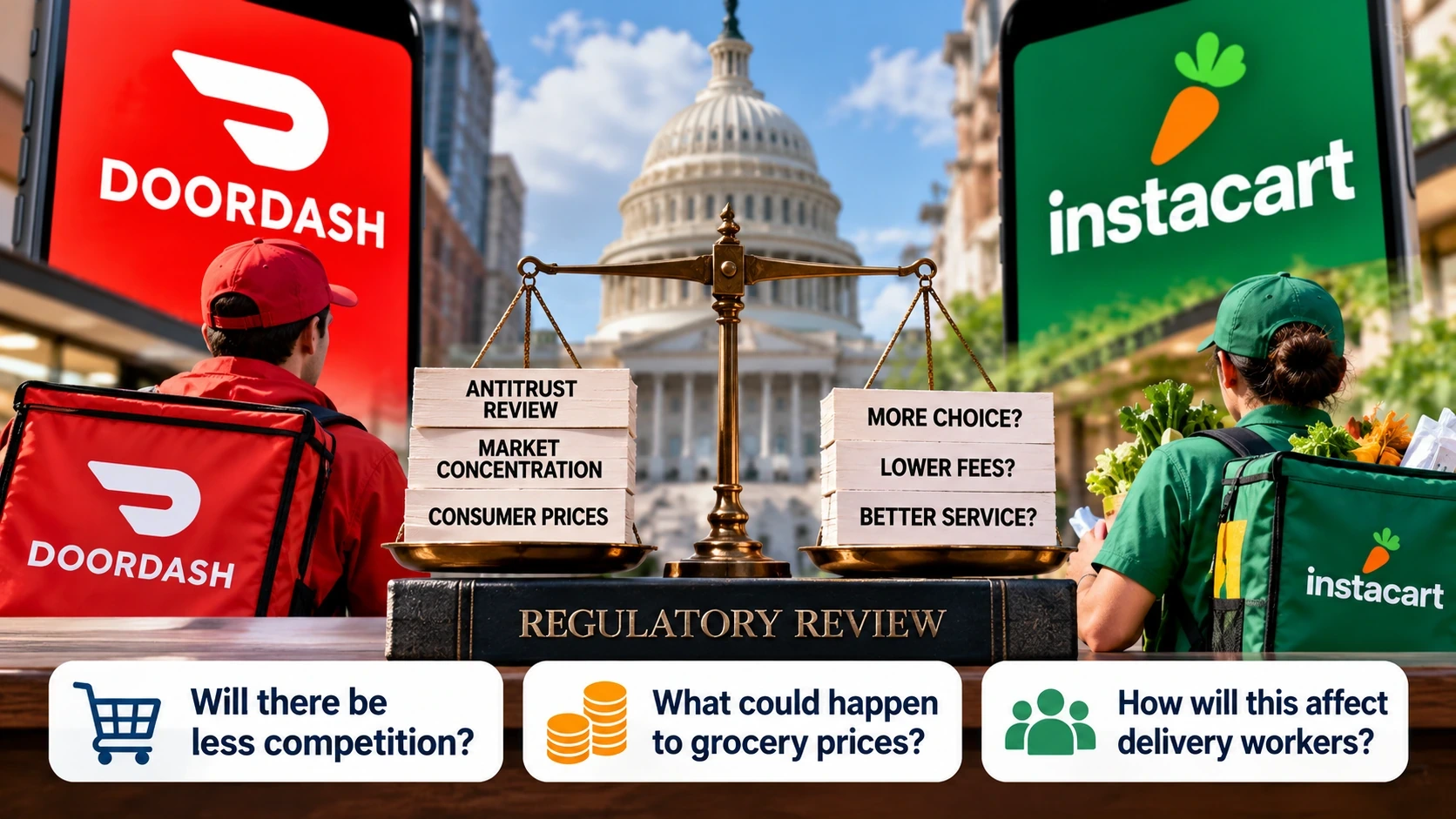
A merger can help businesses operate more efficiently and still make competition weaker. Antitrust authorities will examine whether the proposed DoorDash–Instacart combination could substantially lessen competition, including in grocery delivery. The companies’ promised savings are part of their case for the deal, not an established outcome.
A central question is which competitors count. If the focus is on independent delivery apps, DoorDash and Instacart already compete for grocery orders. If the market also includes Walmart, Amazon, Target, and other companies offering home delivery, the competitive picture looks different. (Reuters)
Data adds another concern. On October 28, the Federal Trade Commission launched an inquiry into how major travel, ride-sharing, and delivery businesses—including DoorDash and Instacart—use personal information in pricing and worker compensation. That inquiry is not a finding that either company violated the law, and it is distinct from a merger decision. But it shows why control over shopping information may draw attention. (FTC)
What Could the Deal Mean for Grocery Stores and Delivery Workers?
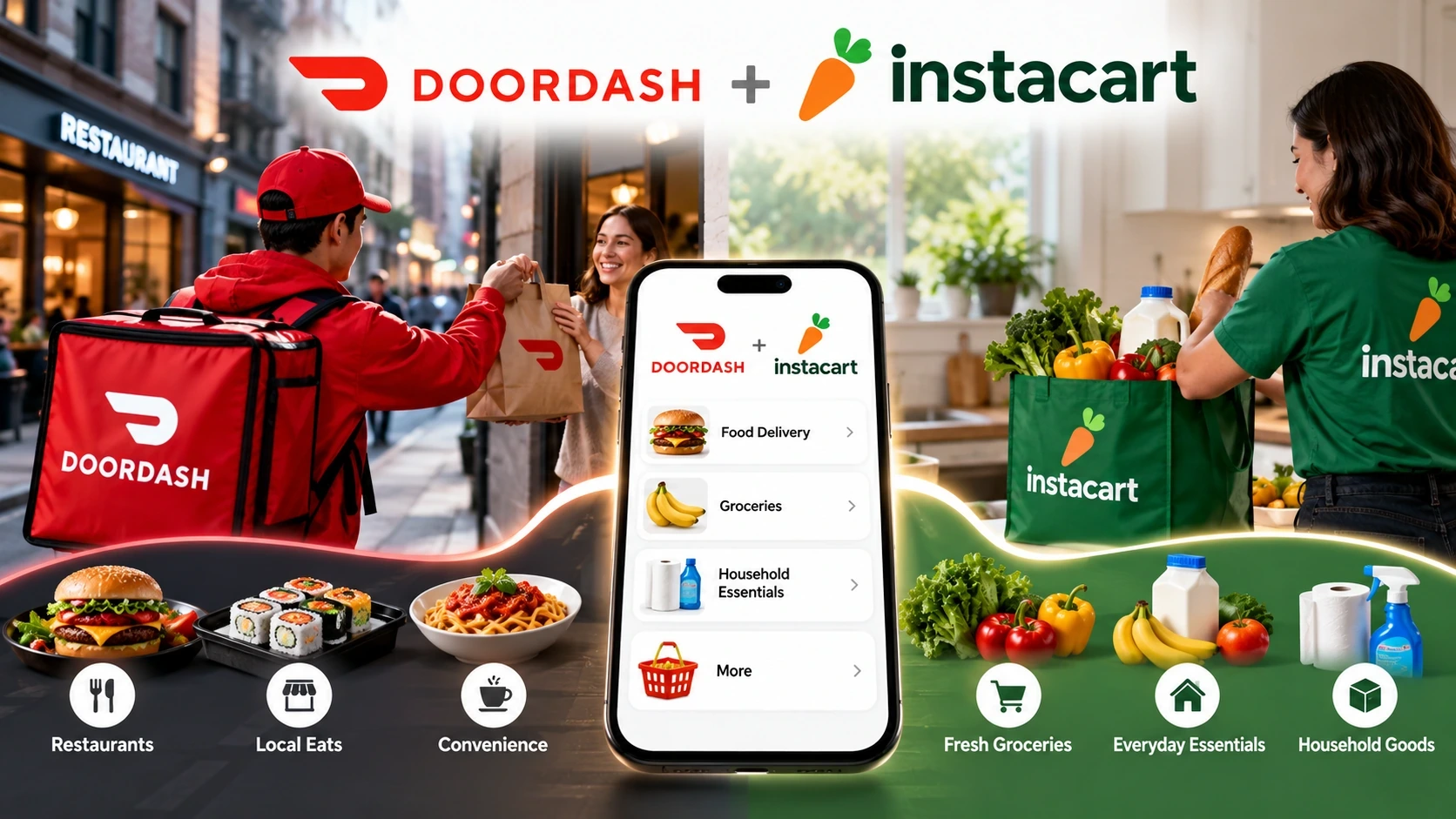
Local grocery stores could gain access to a bigger delivery network, online ordering tools, and advertising services. The companies have also pledged that grocers will remain free to work with other delivery platforms rather than signing exclusive arrangements. (DoorDash)
Yet a store’s ability to choose another platform is only part of its negotiating power. Fees, contract terms, and access to customer relationships would still matter. Critics worry that a larger intermediary could gain greater leverage over retailers, even while offering useful technology. (AP)
For delivery workers, DoorDash says the combination could create more available orders and preserve Instacart shoppers’ flexibility. Instacart has told its shoppers that their current order-acceptance and delivery arrangements are unchanged for now. The long-term effects on earnings and working conditions remain uncertain. (Instacart)
What Needs to Happen Before the Companies Can Combine?
The agreement must clear several hurdles, including Instacart shareholder approval and required antitrust and other regulatory processes in the United States, Canada, and Israel. Authorities will assess the transaction’s competitive effects, while the companies can present evidence of potential efficiencies. The deal could face conditions, delays, a legal challenge, or failure to close. (Instacart)
The sequence is easier to understand as four separate stages:
| Stage | What it means |
|---|---|
| October 28, 2026 | Merger agreement signed, according to DoorDash’s SEC filing |
| October 29, 2026 | Companies publicly announce the proposed $17 billion deal |
| Before closing | Shareholder vote and applicable regulatory reviews |
| Late 2027–first half of 2028 | Companies’ target closing window, not a guaranteed date |
Until the required steps are completed, customers should treat the two platforms as separate businesses. A promised future membership arrangement does not mean subscriptions or order fees have changed today.
What Should Grocery Customers Watch Next?
The most useful signs won’t be press-release promises alone. They’ll be the actual terms customers see if the deal closes: the price of a combined subscription, the stores available in each area, and the complete checkout cost of an ordinary grocery order.
Competition matters here because shoppers can benefit from being able to compare services. Even if the combined business offers faster deliveries or a broader selection, the value of that convenience will depend on whether alternatives remain viable and prices stay competitive.
For now, there is no confirmed across-the-board cut in grocery delivery fees tied to the announcement. The next concrete milestones are the shareholder and regulatory processes, followed—only if the acquisition closes—by any detailed changes to the apps and memberships.
Bottom Line: What This Story Really Means
DoorDash wants Instacart because groceries require more than a driver and a delivery bag. Instacart brings years of grocery-specific technology and retailer relationships, while DoorDash brings a major local delivery network. Together, they could offer more convenience and a simpler subscription.
But a bigger platform can have two very different effects: it can reduce costs through scale, or it can reduce competition that helps keep those costs in check. The $17 billion agreement is real; lower grocery bills are still a promise to be tested.
DoorDash Instacart: Key Questions Explained
Q. Has DoorDash already bought Instacart?
No. The companies announced a signed acquisition agreement on October 29, 2026, but the transaction still requires shareholder and regulatory approvals.
Q. How much is DoorDash offering for Instacart shares?
The agreement values Instacart at $65 per share, representing an approximate $17 billion equity value. Shareholders may elect cash, DoorDash stock, or a permitted combination, subject to the transaction’s limits.
Q. Will the Instacart app disappear?
Not under the companies’ stated current plan. DoorDash expects to retain the Instacart brand and app following closing, although plans can change.
Q. Can customers combine DashPass and Instacart+ right now?
No combined membership has been implemented through this announcement. The companies have described a future one-fee arrangement as a potential benefit after closing.
Q. Does the merger guarantee cheaper groceries?
No. A subscription saving would not necessarily lower item prices, delivery fees, or the full cost of a grocery order.
Q. Will local grocery stores have to use DoorDash exclusively?
The companies say they will not require grocery exclusivity and will allow stores to work with other delivery platforms. How that pledge operates in practice remains important.
Q. Are delivery workers’ jobs or pay changing immediately?
Instacart says its shoppers’ existing arrangements are unchanged while the companies operate independently. Any longer-term effects on earnings or opportunities are not yet established.
Q. When could the acquisition be completed?
The companies are targeting late 2027 or the first half of 2028, if required approvals and other closing conditions are satisfied.
Did this help make the story clearer? 🙂 WIN keeps unpacking the “why” behind the news—clearly and simply!
Sources
Deal Terms and Company Commitments
DoorDash and Instacart — October 29 Acquisition Announcement
DoorDash — SEC Form 8-K on the Merger Agreement
Instacart — Update for Shoppers on What Changes Today
Consumer and Grocery Industry Impact
Associated Press — DoorDash’s $17 Billion Instacart Offer and the Grocery Delivery Market
Reuters — DoorDash’s Grocery Delivery Strategy and the Acquisition
Competition, Pricing, and Regulatory Oversight
Reuters — Potential FTC Scrutiny of the DoorDash–Instacart Deal
Federal Trade Commission — Inquiry Into Personalized Pricing and Compensation