Heidi Overton Says Vaccines Are Safe—What Could an FDA Commissioner Actually Change?

Didn’t Trump’s FDA nominee just tell senators that vaccines are safe and effective?
So if Heidi Overton becomes FDA commissioner, does that mean vaccine policy stays the same?
Not necessarily.
But the reverse is also important: an FDA commissioner cannot simply wake up one morning and personally rewrite every vaccine recommendation or remove an approved drug from pharmacies.
Overton’s September 24 confirmation hearing became a test of that distinction. She told senators that vaccines currently on the U.S. market are safe and effective, including the measles, mumps and rubella vaccine, while lawmakers also pressed her about mifepristone, vaping products and whether scientific decisions at the FDA would remain insulated from political pressure. (Reuters)

※ Images in this article are AI-generated illustrations created to help explain the story. They are not actual photographs, and depictions of people, places, or events may differ slightly from reality.
The bigger question is therefore not simply what Overton believes.
It is how much power an FDA commissioner actually has—and where that power stops.
What Did Heidi Overton Actually Say at the Senate Hearing?
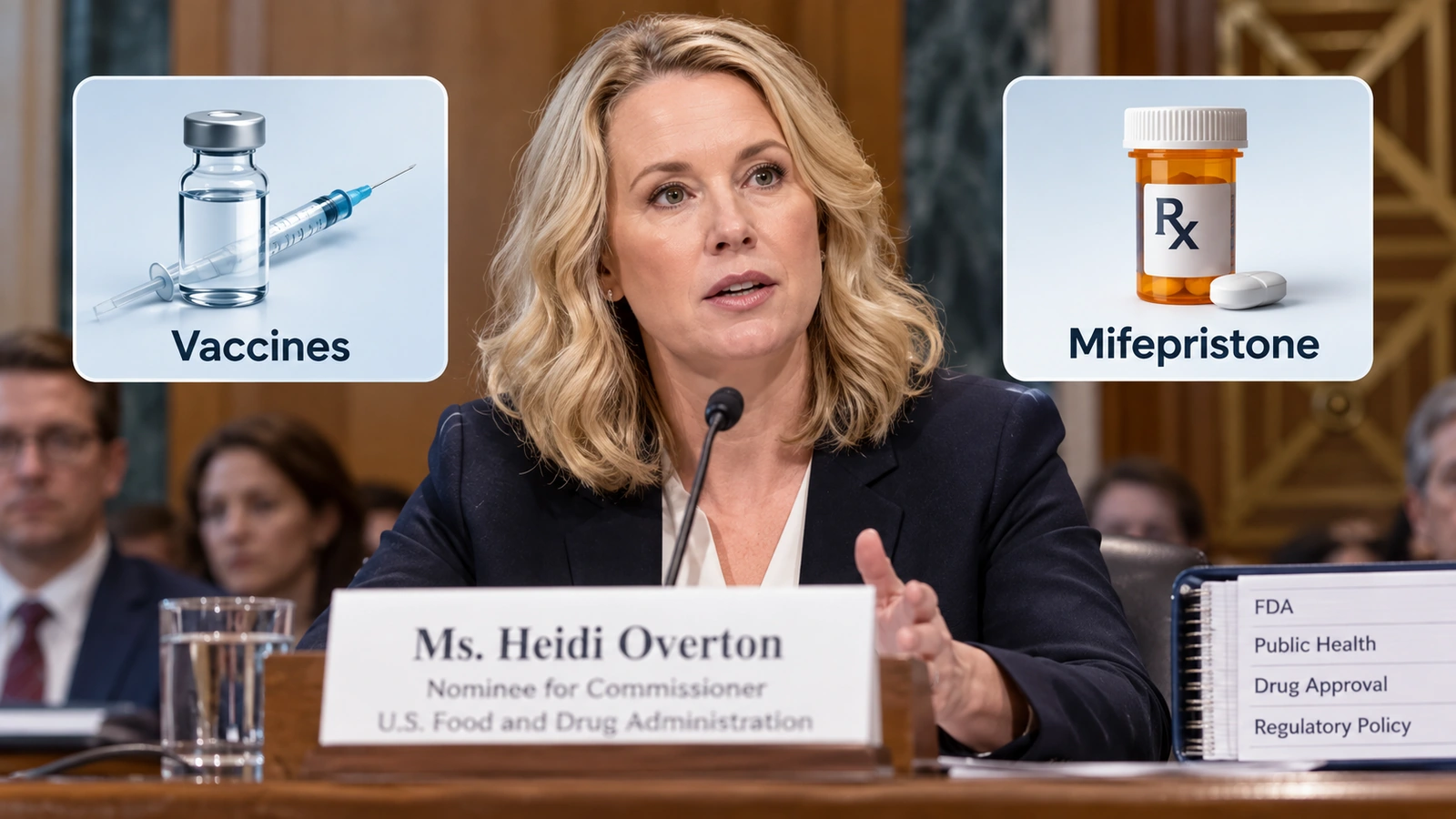
The clearest statement came on vaccines.
Senate HELP Committee Chairman Bill Cassidy, a Louisiana Republican and physician, asked Overton directly about the MMR vaccine after criticizing the administration’s recent approach to childhood immunization policy. Overton responded that vaccines on the U.S. market are safe and effective. (Senate HELP Committee)
That matters because Overton had been present when President Donald Trump signed an August 10 executive order calling for the combined MMR vaccine eventually to be offered as separate single-disease shots and, “to the maximum extent feasible,” for childhood immunizations to be given at separate medical visits. (White House)
Cassidy criticized those ideas during the hearing, saying the order lacked scientific support and could create additional burdens for families. That was Cassidy’s assessment, not a finding issued by the committee. (Senate HELP Committee)
On mifepristone, Overton acknowledged the FDA’s existing conclusion that the drug is safe and effective under its approved conditions, but she did not promise senators that the agency’s current rules would remain unchanged. Reporting on the hearing described her repeatedly emphasizing evidence review and existing statutory processes rather than committing in advance to specific future outcomes. (Roll Call)
That distinction is important.
A confirmation hearing can reveal how a nominee approaches a question. It does not itself change an FDA approval, a vaccine license or a drug-safety requirement.
Why Does the FDA Commissioner Have So Much Influence?
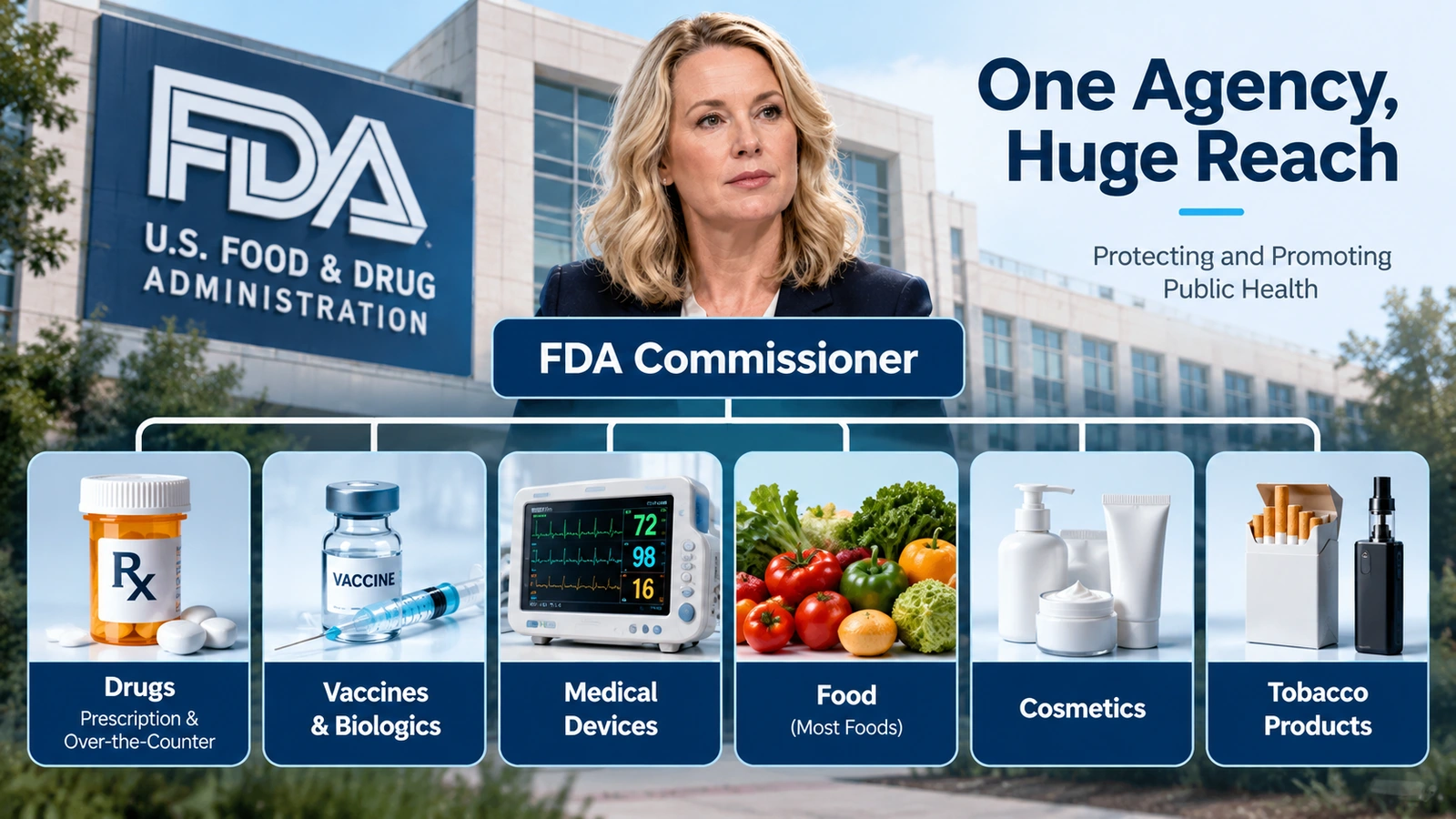
Because the FDA touches far more of everyday life than its name suggests.
The agency regulates prescription and over-the-counter drugs, human vaccines and other biologics, medical devices, much of the food supply, cosmetics and tobacco products, among other categories. (FDA)
Federal law gives the commissioner broad responsibility for directing the FDA, establishing general agency policy and coordinating the agency’s administrative entities. (U.S. Code)
That creates real power.
A commissioner can establish agency priorities, influence how scientific and regulatory questions are elevated, oversee senior officials, shape guidance and rulemaking priorities, and review important decisions moving through the FDA’s chain of command. Federal regulations allow significant policy or unresolved matters to move through FDA’s supervisory-review process, including review at the Office of the Commissioner. (21 CFR § 10.75)
But “powerful” does not mean “unlimited.”
The FDA operates under laws passed by Congress, regulations, administrative procedures and scientific standards. Much of the technical work is conducted by specialized centers and career staff rather than personally by the commissioner.
That is why asking whether an FDA chief can “change vaccine policy” requires another question:
Which part of vaccine policy?
Can an FDA Commissioner Change the Childhood Vaccine Schedule Alone?
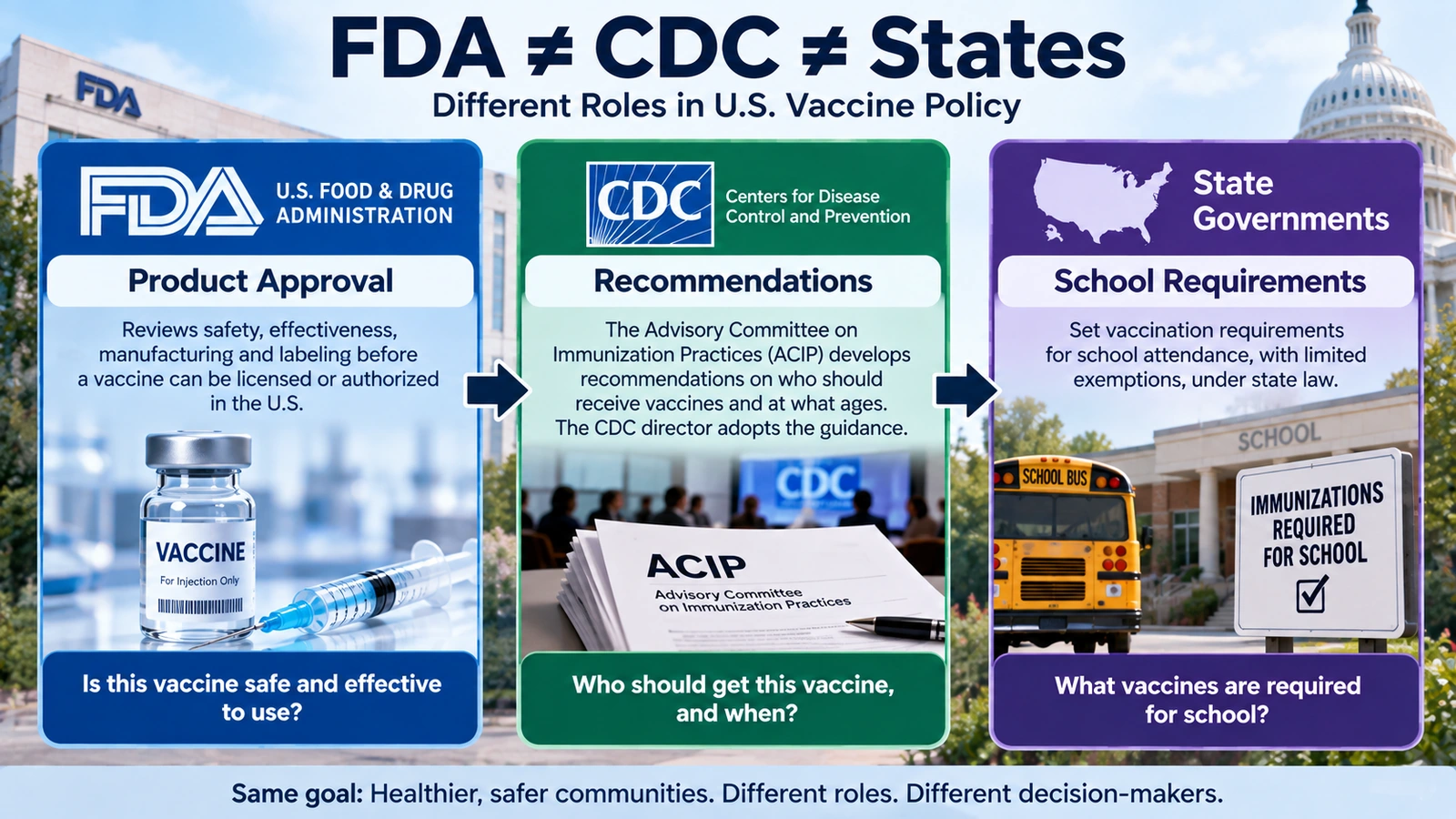
No. The FDA commissioner does not personally set the entire U.S. childhood vaccination schedule.
This is one of the easiest parts of the story to misunderstand.
The FDA regulates vaccines as medical products. It reviews evidence on safety, effectiveness, manufacturing and approved uses before a vaccine can be licensed or authorized. (FDA)
HHS and CDC play different roles from the FDA.
Its Advisory Committee on Immunization Practices, or ACIP, develops recommendations on how vaccines should be used. Those recommendations traditionally become CDC policy when adopted by CDC leadership, but the current federal childhood schedule also reflects broader HHS action: in January 2026, HHS announced a revised schedule adopted by the acting CDC director following a presidential directive, and an August executive order set additional federal vaccine-policy priorities. (CDC · HHS · White House)
And school-entry vaccination requirements are largely set under state law, not personally by the FDA commissioner.
A simple way to separate the jobs is:
| Question | Main Decision-Maker |
|---|---|
| Is this vaccine licensed or authorized for use? | FDA |
| What does the federal childhood schedule recommend? | HHS and CDC, with ACIP serving an advisory role |
| What vaccines are required for school attendance? | Primarily states |
| Can a manufacturer change a vaccine formulation or indication? | FDA reviews the relevant application and evidence |
| Can the FDA commissioner personally rewrite federal vaccine recommendations? | No |
The core distinction remains the same: the FDA decides whether a vaccine product meets federal standards for approval or authorization, while federal recommendations about who should receive vaccines are handled through HHS and CDC processes rather than by the FDA commissioner alone. (FDA · HHS)
That does not mean an FDA commissioner has no influence over vaccine policy.
An FDA decision about what a vaccine is approved for—and for which ages, doses or populations—can shape what options are available when HHS and CDC develop or revise federal recommendations.
But approval and recommendation are different regulatory steps.
Then What Could Overton Actually Change on Vaccines?
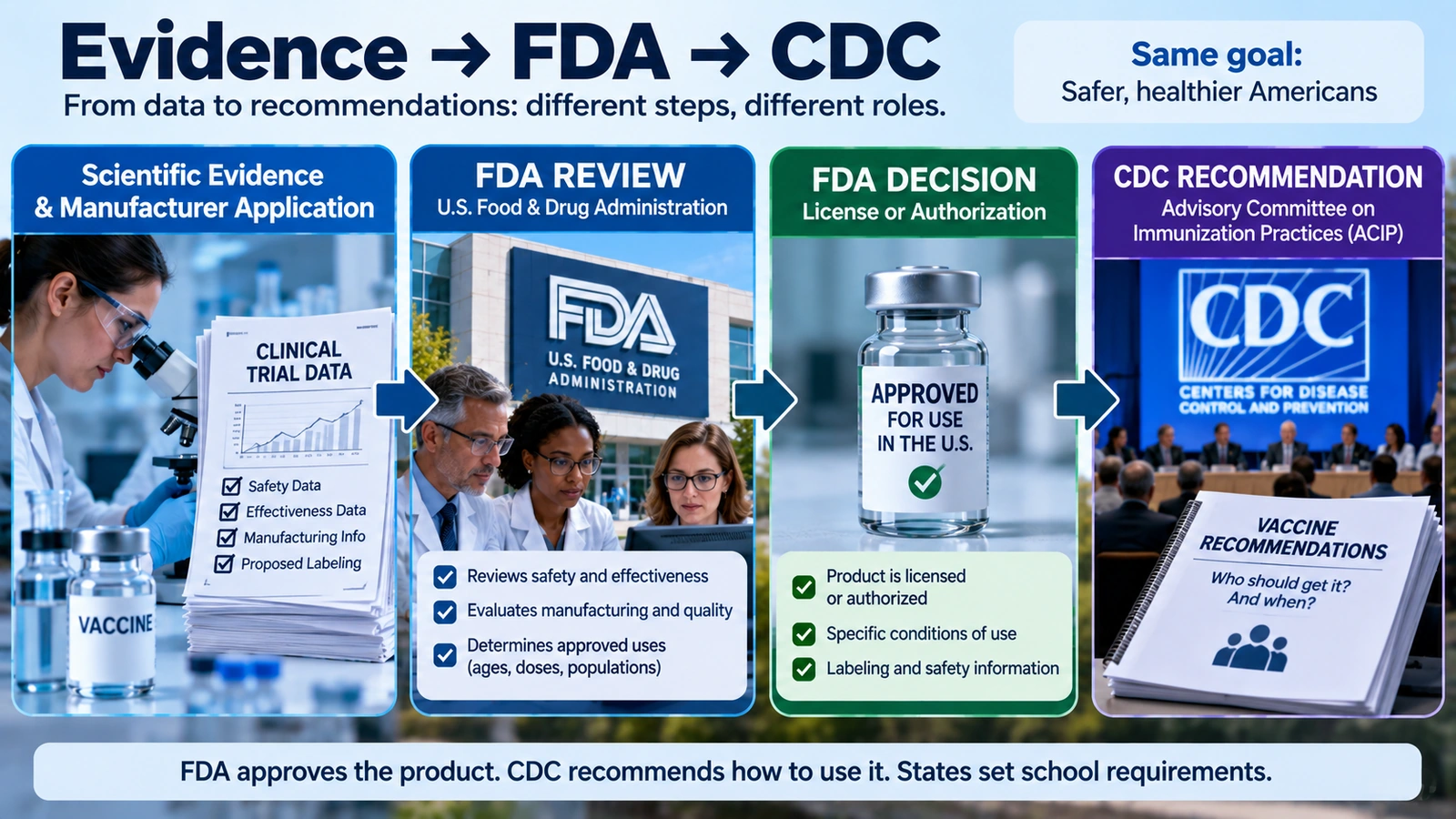
An FDA commissioner could influence vaccine regulation in several consequential ways—while still operating through the agency’s legal and scientific processes.
The commissioner can shape regulatory priorities, direct attention toward particular safety or effectiveness questions and oversee how major disputes inside the agency are resolved. Significant policy or unresolved matters can move through the FDA’s supervisory chain for higher-level review. (21 CFR § 10.75)
But vaccine licenses are still based on evidence.
The FDA’s role includes reviewing clinical data, manufacturing information and safety information. An incoming commissioner cannot simply declare that an approved vaccine is ineffective—or that an unapproved vaccine is effective—without the agency having a regulatory basis for that action. (FDA)
This becomes especially relevant to the Trump administration’s August vaccine order.
That order says the government should work toward making separate measles, mumps and rubella vaccines available domestically while preserving access to combination vaccines. It also calls for reassessment of vaccine timing and sequencing. (White House)
But an executive order does not itself manufacture those vaccines or automatically grant FDA approval to a new product.
If manufacturers seek approval for new or modified products, the FDA still has to apply the relevant legal and scientific standards.
Could an FDA Commissioner Change Mifepristone Access?
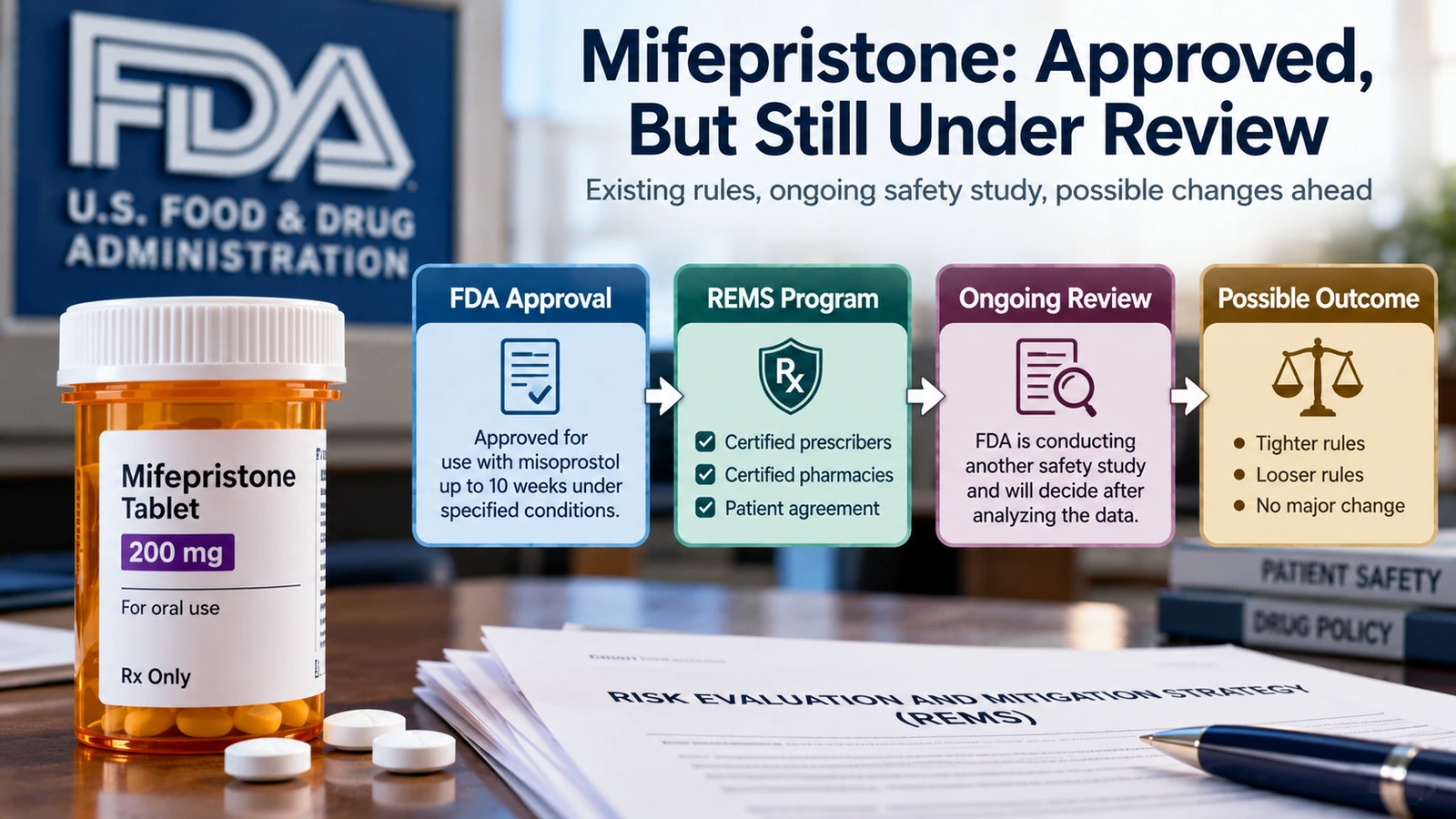
Potentially, yes—but not simply by personal decree.
Mifepristone is currently FDA-approved, in a regimen with misoprostol, for terminating an intrauterine pregnancy through 10 weeks under specified conditions. It is also subject to a Risk Evaluation and Mitigation Strategy, or REMS, which includes requirements for certified prescribers and pharmacies. (FDA)
The current REMS no longer requires the drug to be dispensed in person. FDA approved that modification in January 2023 while retaining other requirements, including prescriber certification and a patient agreement. (FDA)
FDA also says it is conducting another safety study of mifepristone. As of its April 2026 update, the agency said it would decide after completing its analysis whether substantive REMS changes were warranted. (FDA)
So a future commissioner could preside over a process that results in tighter rules, looser rules or no substantive change.
But the sequence matters:
existing approval → evidence review → regulatory findings → applicable administrative process → possible change.
That is different from a commissioner personally announcing that the drug is banned or unrestricted. And even a federal FDA change would not by itself erase separate state laws that may affect whether mifepristone can be prescribed or dispensed in a particular state. (FDA)
Drug approval withdrawals can involve formal procedures, including notice and an opportunity for a hearing. FDA regulations specify grounds and procedures for withdrawing an approved drug, and some disputes can ultimately reach the commissioner for a final agency decision. (FDA)
That explains why Overton’s refusal to promise a particular mifepristone outcome was consequential without being a policy change by itself.
So What Can an FDA Commissioner Do—and What Requires More Than One Person?
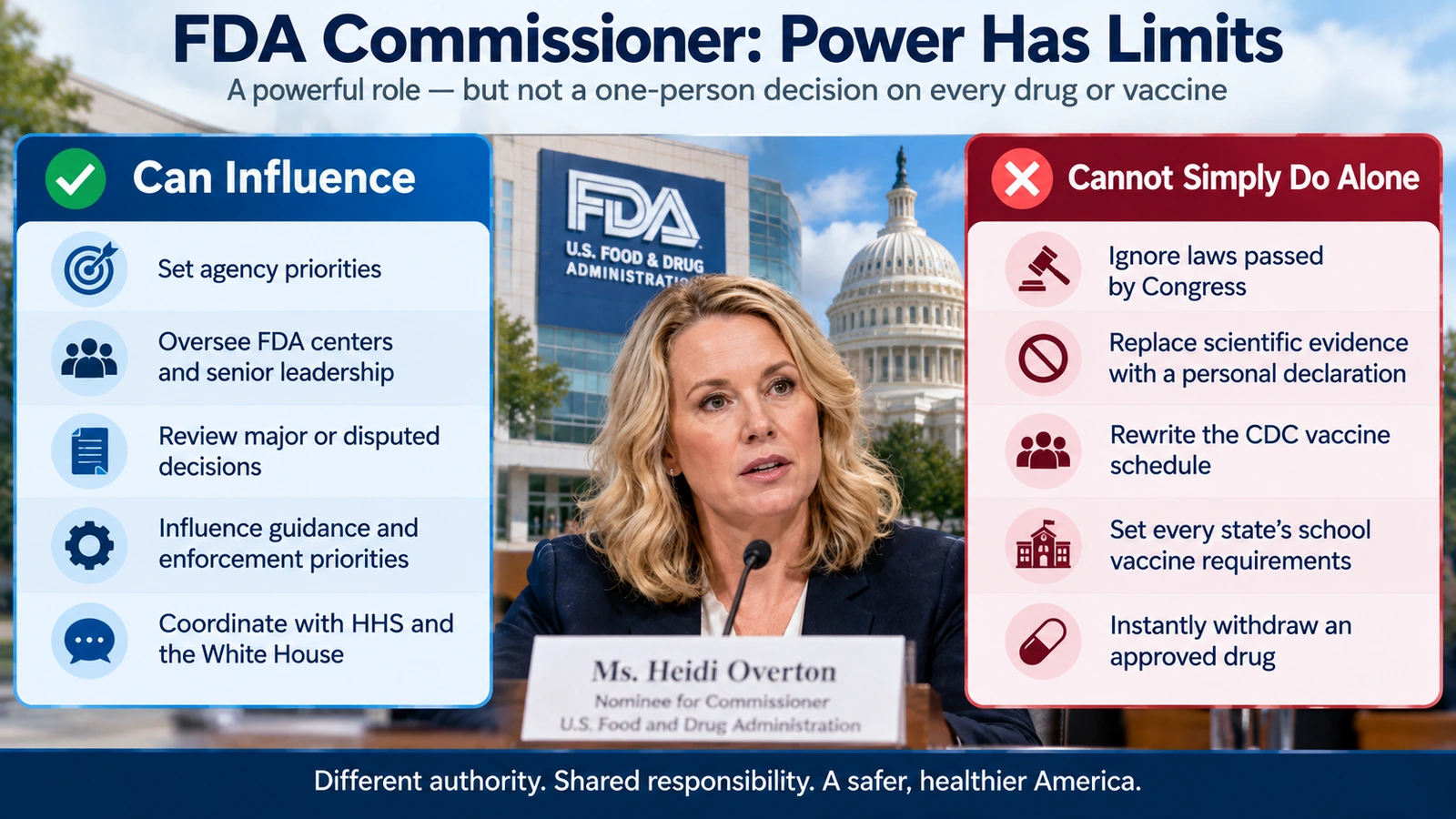
The easiest way to understand the job is to separate leadership power from legal authority over a particular product or policy.
| An FDA Commissioner Can… | But Cannot Simply… |
|---|---|
| Set agency-wide priorities | Ignore laws Congress has enacted |
| Oversee FDA centers and senior leadership | Replace scientific evidence with a personal declaration |
| Review some significant or disputed agency decisions | Personally rewrite the CDC vaccine schedule |
| Influence guidance, enforcement priorities and rulemaking | Set every state’s school-vaccine requirements |
| Direct attention toward post-market safety questions | Instantly withdraw an approved drug without the required basis or process |
| Coordinate FDA policy with HHS and the White House | Turn a political preference into an FDA approval without meeting regulatory standards |
Federal law makes the commissioner responsible for overall FDA direction and policy while the agency’s scientific and regulatory work is carried out through specialized centers and delegated authorities. (U.S. Code)
That structure creates an unusual balance.
The commissioner is powerful enough to affect which issues receive attention, how the agency is managed and how difficult policy disputes are resolved.
But a commissioner also leads a scientific regulatory organization in which decisions are supposed to be supported by administrative records and the legal standards governing each product.
That is why a change in FDA leadership can matter enormously without meaning every rule changes on day one.
Why Did Vaccines and Mifepristone Dominate This Confirmation Hearing?
Because they test the same underlying question from different directions:
How independent should FDA scientific decisions be from the policy goals of the administration that appointed its commissioner?
Cassidy, the Republican committee chairman, explicitly raised concerns about scientific independence while questioning Overton about vaccines. Democratic senators also questioned her on reproductive-health policy and other FDA decisions. (Senate HELP Committee)
The hearing therefore was not simply a debate over whether a particular vaccine or medication is good or bad.
It was also about process.
When a president, HHS secretary, advocacy group, manufacturer, senator or outside organization wants the FDA to change course, what does the commissioner do?
Does the agency reexamine evidence?
Does it initiate rulemaking or modify guidance?
Does a product remain approved while additional data are collected?
Does an existing decision have enough evidence behind it to survive a new review?
Those questions matter because FDA decisions reach far beyond vaccines and mifepristone. The agency oversees thousands of medical products as well as food, tobacco and other products used by Americans every day. (FDA)
What Happens Next for Heidi Overton?
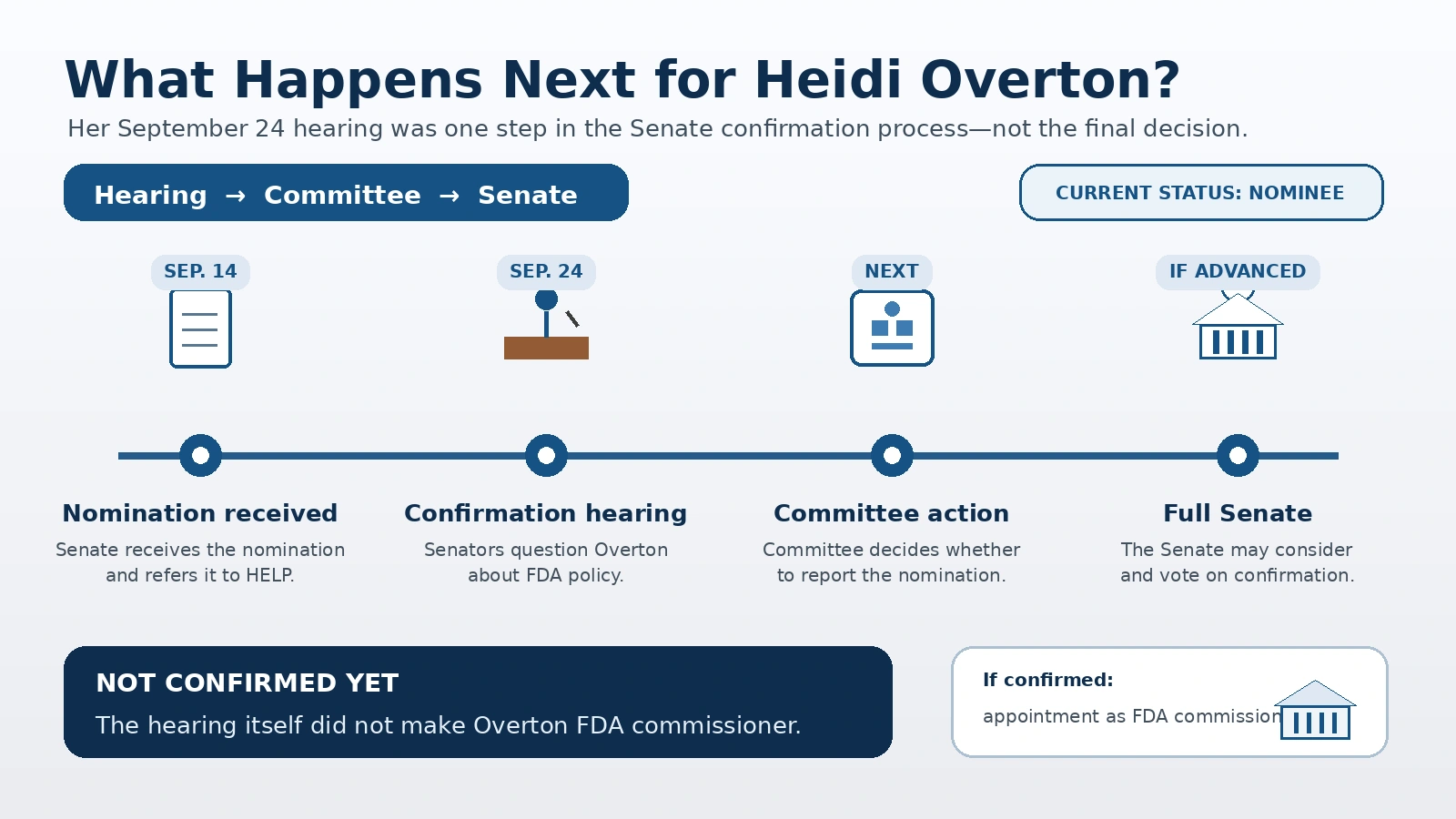
The September 24 hearing did not make Overton FDA commissioner.
The Senate received her formal nomination on September 14 and referred it to the Senate Health, Education, Labor and Pensions Committee. The committee then held her nomination hearing on September 24. (Senate HELP Committee)
The next stages ordinarily involve committee action on whether to report the nomination to the full Senate, followed—if the nomination advances—by consideration in the Senate. Senate committees can report executive nominees favorably, adversely or without recommendation. (U.S. Senate)
Until confirmation and appointment occur, Overton remains the nominee rather than the permanent FDA commissioner.
The FDA is currently led on an acting basis by Kyle Diamantas. (FDA)
If Overton is confirmed, the most revealing developments may not come from one dramatic announcement.
They may come from the ordinary-looking regulatory decisions that follow: how the FDA handles the ongoing mifepristone review, how it approaches vaccine applications and labeling, which scientific questions senior leadership revisits, and how the commissioner responds when White House policy goals and existing agency conclusions do not neatly align.
Why It Matters in One Sentence
Heidi Overton could have substantial influence over FDA priorities and major medical-product decisions if confirmed, but the FDA commissioner does not single-handedly control the CDC vaccine schedule, state vaccine mandates or the legal status of an approved drug—those outcomes depend on different agencies, evidence standards and regulatory processes.
Heidi Overton: Key Questions Explained
Q. Who is Heidi Overton?
Heidi Overton is a physician and White House domestic-policy official nominated by President Donald Trump to serve as FDA commissioner. The Senate formally received her nomination on September 14, 2026. (Senate HELP Committee)
Q. Did Heidi Overton say the MMR vaccine is safe?
Yes. During her September 24 confirmation hearing, Overton affirmed the safety and effectiveness of vaccines on the U.S. market, including MMR. (Reuters)
Q. Can the FDA commissioner decide which vaccines children should routinely receive?
Not alone. FDA determines whether vaccine products meet regulatory standards for approval or authorization, while federal recommendations are handled through HHS and CDC processes. ACIP remains an advisory body, but the 2026 childhood schedule was also revised through HHS and CDC action following a presidential directive. (CDC · HHS)
Q. Can the FDA commissioner change state school-vaccine requirements?
No. School vaccination requirements are primarily established under state law. Federal agencies can influence national vaccine policy, product approval and recommendations, but the FDA commissioner does not personally set each state’s school requirements. (CDC)
Q. Is mifepristone still FDA-approved?
Yes. Mifepristone remains FDA-approved for use in a regimen with misoprostol to terminate an intrauterine pregnancy through 10 weeks under the approved regimen and REMS requirements. (FDA)
Q. Is the FDA reviewing mifepristone again?
Yes. FDA says it is conducting a safety study and will determine after reviewing the data whether substantive changes to the current REMS are warranted. (FDA)
Q. Could a new FDA commissioner simply remove mifepristone from the market?
Not simply by announcement. Withdrawal of an approved drug generally requires a statutory and regulatory basis and can involve formal notice and hearing procedures. (FDA)
Q. Does an FDA commissioner personally approve every drug and vaccine?
No. Specialized FDA centers and scientific review teams conduct much of the underlying review. The commissioner leads the agency and can review or influence significant policy and regulatory matters, but the system is not designed as a one-person product-review process. (FDA)
Q. Was Heidi Overton confirmed at the September 24 hearing?
No. A confirmation hearing is part of the Senate’s advice-and-consent process. Committee action and, if the nomination advances, Senate consideration still follow. (U.S. Senate)
Did this help make the story clearer? 🙂
WIN keeps unpacking the “why” behind the news—clearly and simply!
Sources
Nomination and September 24 Confirmation Hearing
Senate HELP Committee — Nomination of Heidi Overton to be Commissioner of Food and Drugs
Senate HELP Committee — Chairman Bill Cassidy’s Remarks at the September 24 Confirmation Hearing
Reuters — FDA Nominee Overton Says All U.S. Vaccines Are Safe
Associated Press — Senators Question FDA Nominee Overton About Vaccines and Mifepristone
FDA Authority and Confirmation Process
U.S. Code — 21 U.S.C. § 393, FDA Commissioner Powers and Responsibilities
21 CFR § 10.75 — Internal Agency Review of FDA Decisions
U.S. Senate — Executive Nominations Overview
Vaccines and Mifepristone
HHS — Childhood Immunization Schedule by Recommendation Group
CDC — ACIP Vaccine Recommendations
CDC — State Vaccination Requirements
White House — August 10, 2026 Executive Order on Childhood Vaccine Recommendations
FDA — Questions and Answers on Mifepristone Through Ten Weeks Gestation
Keep Reading
What does an FDA review actually look like when the science is still uncertain?
The debate over an FDA commissioner’s power makes more sense when you see how the agency handles a real product review in which safety, effectiveness, labeling and evidence all have to be considered separately.
Can One Blood Test Really Screen for More Than 50 Cancers—and What Is the FDA Still Unsure About?