Why Is the FDA Rethinking Rare-Disease Drug Approvals—and What Changes for Patients?

How do you prove a new medicine works when there are barely enough patients to run a clinical trial?
For most drugs, researchers can recruit large groups of volunteers, compare treatments, and use statistics to determine whether the results are convincing. But imagine developing a treatment for a condition that affects only a few dozen people across the country.
The patients need evidence that the medicine works. The FDA needs that evidence, too. Yet the usual way of collecting it may be almost impossible.
That is the problem behind the FDA’s October 14, 2026, announcement of its Rare Disease Framework Initiative, an effort to rethink how treatments for rare diseases are developed and reviewed.
The important distinction is that the FDA has launched a process to develop a new framework. It has not announced that all rare-disease drugs can now qualify for approval under easier rules. (FDA)
※ Images in this article are AI-generated illustrations created to help explain the story. They are not actual photographs, and depictions of people, places, or events may differ slightly from reality.
What makes the announcement significant is the question the FDA is trying to address more systematically: If a traditional trial is impractical, what other scientifically reliable evidence should count?
And how can the agency make those decisions consistently without compromising patient safety?
What Did the FDA Actually Announce?
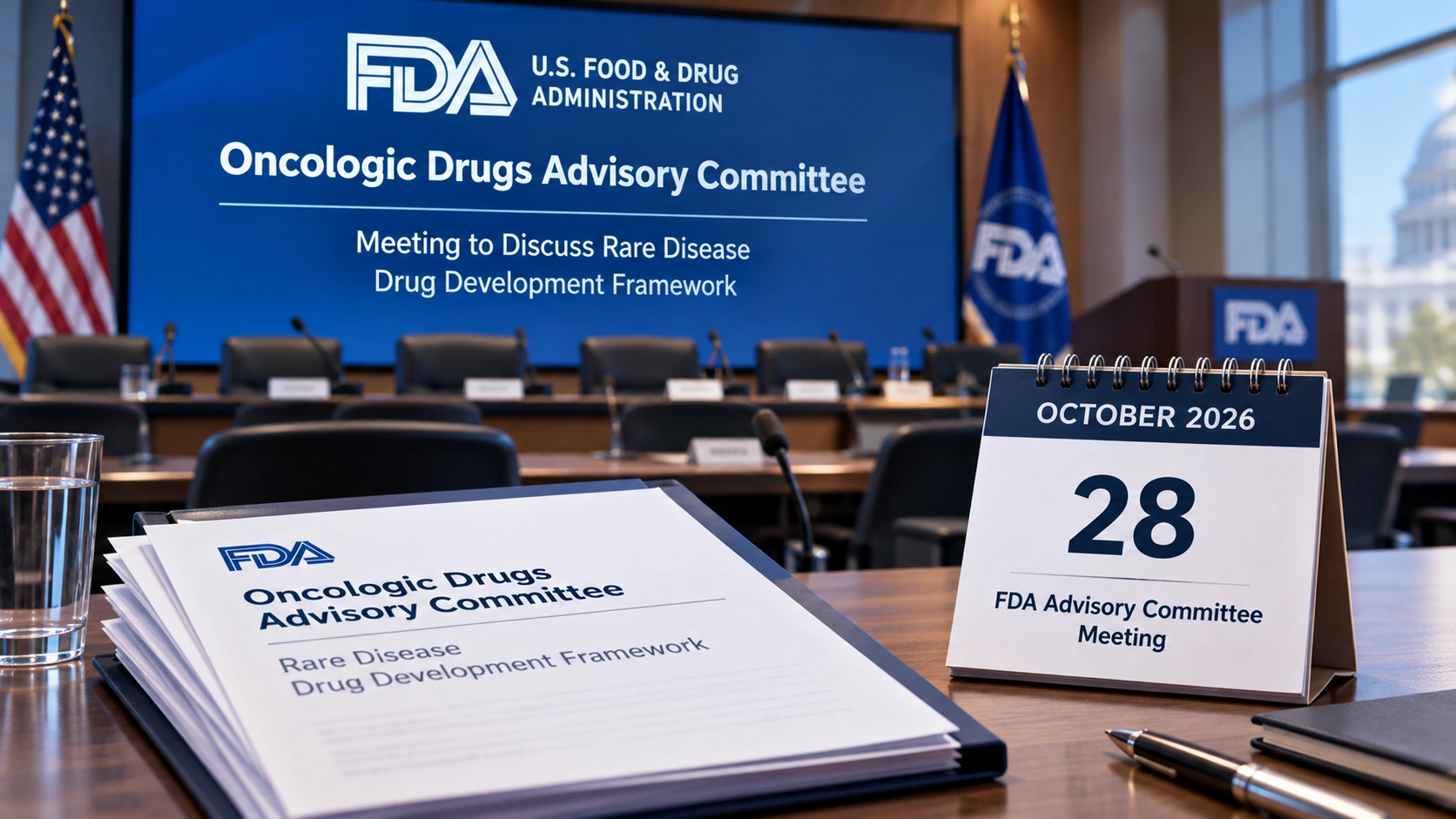
The FDA announced plans to develop a more tailored and predictable approach to reviewing drugs and biological treatments for rare diseases.
Its guiding idea is called fit-for-purpose review. That means the evidence expected for a treatment should reflect the disease being studied, the patients affected, the type of medicine, and the scientific information researchers can realistically collect.
The initiative is being led by the FDA’s Rare Disease Innovation Hub, working with the agency’s drug and biologics review centers and other leadership offices. It begins with a new policy white paper and public engagement, not an immediately effective replacement for existing approval standards. (FDA)
A useful way to understand the announcement is to separate what has happened from what might follow.
| Question | Status as of October 15, 2026 |
|---|---|
| Has the FDA launched the initiative? | Yes, on October 14. |
| Has the agency outlined its broad goals? | Yes, including tailored evidence and more consistent reviews. |
| Is the FDA collecting public feedback? | Yes, with a meeting scheduled for October 28. |
| Have new across-the-board approval requirements taken effect? | No such immediate change was announced. |
| Will every rare-disease drug receive faster approval? | No guarantee has been made. |
The FDA says the framework could eventually lead to revised guidance, regulatory changes, staff training, and changes in internal review processes. Those possibilities are still being developed.
So the announcement is significant because it may change how the agency approaches difficult cases in the future—not because a new treatment became available overnight.
Why Are Traditional Clinical Trials So Difficult for Rare Diseases?
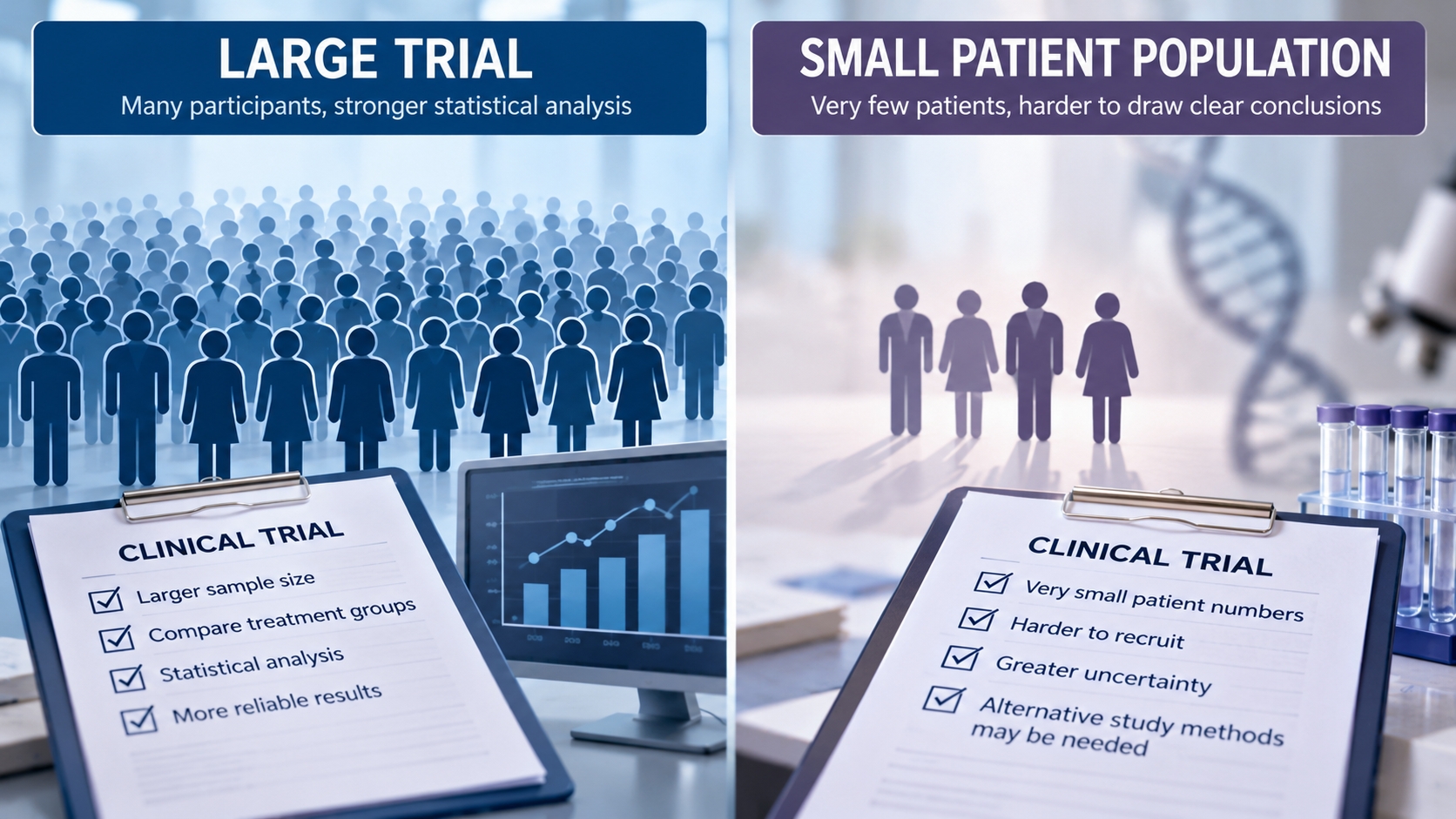
The biggest challenge is that rare-disease researchers may not be able to recruit enough patients for the kinds of studies commonly used to evaluate medicines.
Under the U.S. Orphan Drug Act, a rare disease is generally one affecting fewer than 200,000 people in the United States. Some conditions affect far fewer—sometimes only hundreds or dozens of known patients.
Collectively, however, rare diseases are hardly uncommon. FDA educational materials estimate that approximately 25 million to 30 million Americans live with a rare disease, across more than 10,000 identified conditions. (FDA)
A 2024 report from the U.S. Government Accountability Office estimates that only about 5% of rare diseases have an FDA-approved treatment. That figure describes the proportion of conditions with approved therapies, not the percentage of patients who can access treatment. (U.S. GAO)
Why patient numbers matter
In a conventional randomized controlled trial, participants are assigned to different treatment groups. One may receive the experimental medicine, while another receives an established treatment or a placebo when appropriate.
Researchers compare the outcomes to determine whether a difference is likely to come from the medicine rather than chance, patient differences, or other factors.
That system becomes harder to use when patient numbers are extremely small.
Consider a hypothetical condition with only 40 eligible patients nationwide.
Recruiting hundreds of trial participants would be impossible. Even recruiting all 40 might be unrealistic because patients may live far apart, have different stages of disease, or be medically unable to participate.
Dividing a very small group into multiple trial arms can leave researchers with too little information to draw a dependable conclusion.
And numbers are only one problem.
Rare diseases can also vary substantially from patient to patient. Two people with the same diagnosis may experience different symptoms, complications, or rates of progression.
In many cases, researchers have limited information about the disease’s natural history—how it typically progresses without the experimental treatment.
That makes it harder to answer a basic question:
If a patient improves or remains stable, was that because of the drug, or would the same thing have happened anyway?
The FDA has identified these problems as fundamental obstacles to rare-disease drug development. (FDA)
What Does “Fit-for-Purpose” Evidence Actually Mean?
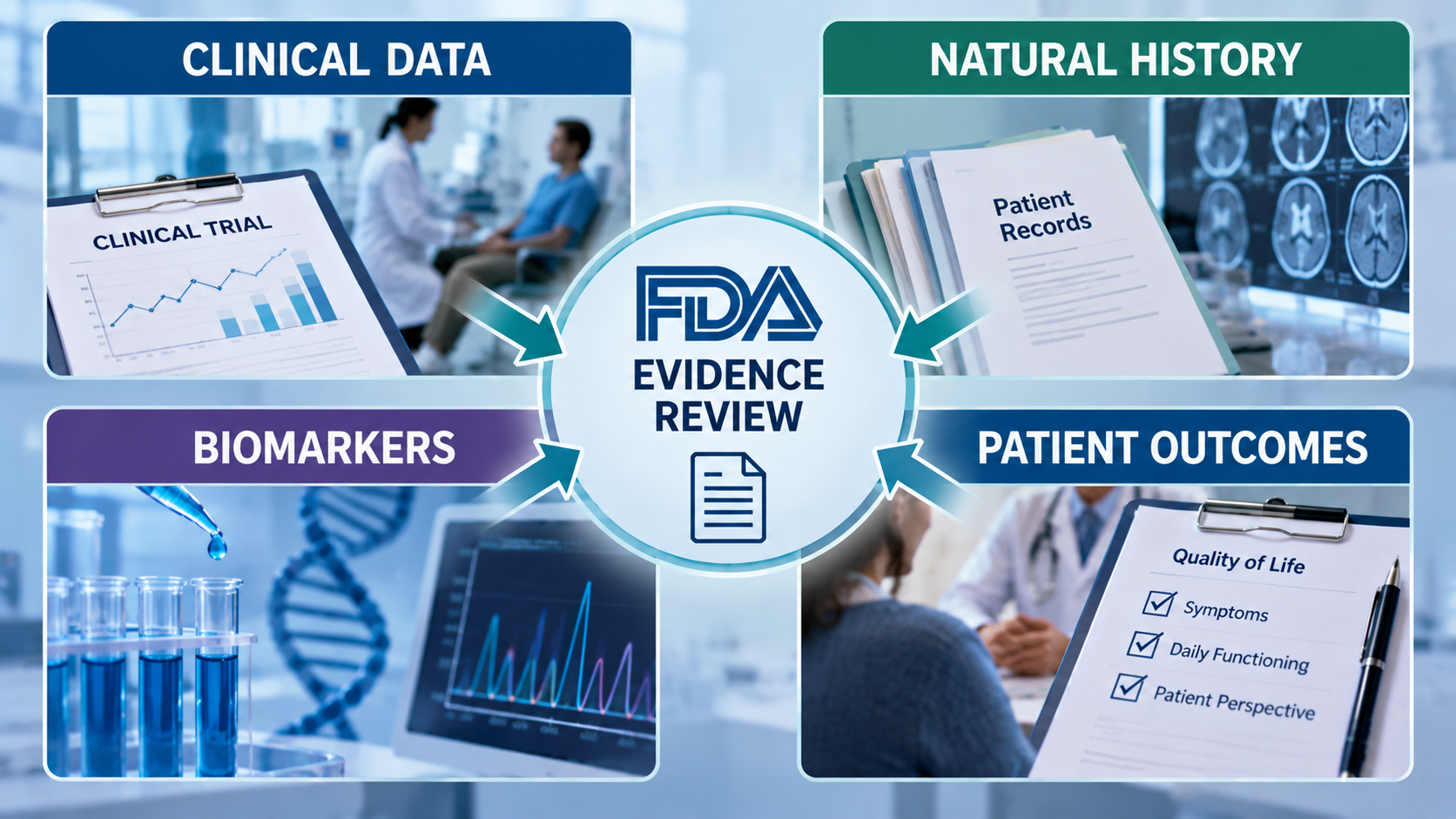
Fit-for-purpose does not mean that any amount of evidence is automatically enough. It means choosing scientifically appropriate ways to establish safety and effectiveness under the circumstances of a particular disease.
The FDA already has tools for evaluating evidence beyond a conventional large trial. Its new initiative aims to make the agency’s expectations clearer, more consistent, and better tailored across different rare-disease programs. (FDA)
Several types of information may be relevant.
| Evidence | What It Can Help Explain |
|---|---|
| Small clinical studies | Whether treated patients experience measurable changes |
| Natural history studies | What typically happens as the disease progresses without the experimental treatment |
| Biomarkers | Whether a treatment changes a measurable biological feature linked to the disease |
| Patient-centered outcomes | Whether symptoms or everyday functioning improve in a meaningful way |
These sources are not interchangeable, and none automatically guarantees approval.
A biomarker, for example, is a measurable biological indicator. It might show whether a drug is affecting a molecular pathway associated with the disease.
That can be scientifically useful. But changing a laboratory result is not necessarily the same as helping someone live longer, move more easily, or experience fewer symptoms.
Similarly, natural history data can help researchers understand how untreated patients typically fare.
In some situations, that information may support comparisons with patients receiving an experimental treatment. But such comparisons must account for differences in disease severity, medical care, and other factors that can distort the results.
The scientific challenge is to determine which combinations of evidence can support a reliable conclusion for a particular treatment.
A simple example
Imagine researchers are studying an inherited disorder that gradually weakens a person’s muscles.
There are too few eligible patients for a large randomized trial, but researchers have detailed records showing how the disease usually progresses.
If patients receiving an experimental drug maintain abilities that would ordinarily decline, that observation could be important.
It would not prove effectiveness by itself.
Researchers would still need to examine whether the comparison is reliable, whether other explanations are possible, how substantial the improvement is, and what safety risks the treatment carries.
The FDA’s proposed direction is to make those scientific expectations better suited to the disease rather than assuming every condition can produce the same kind of data.
Does the New Framework Mean the FDA Is Lowering Safety Standards?
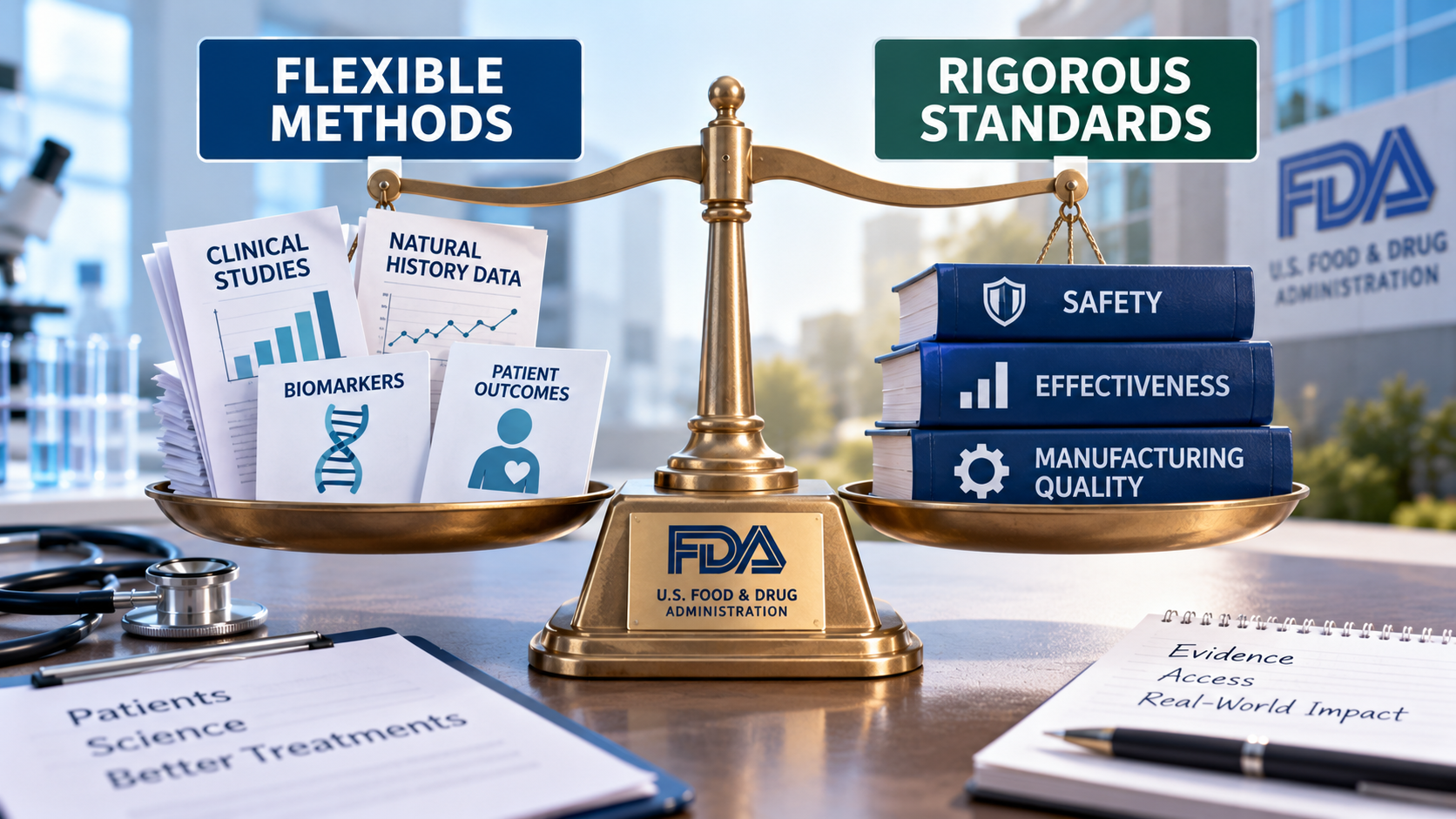
No. The FDA says the Rare Disease Framework Initiative is intended to improve the way evidence is generated and evaluated while maintaining rigorous expectations for safety, effectiveness, and product quality.
That distinction is essential.
A regulator can accept that a traditional large trial is infeasible without accepting unreliable evidence.
The FDA’s challenge is to develop review methods that are both scientifically credible and practical for small patient populations. (FDA)
But there is a genuine trade-off.
Smaller studies often provide less statistical certainty. Rare adverse effects may be harder to detect. And with some genetic or biological treatments, researchers may need years of observation to understand long-term risks.
The FDA cannot eliminate those uncertainties simply by creating a new framework.
A credible review must identify the uncertainties and determine whether the evidence supports the proposed treatment’s benefits and risks.
Manufacturing is part of the issue, too
The initiative also explicitly addresses something less visible than clinical trials: how rare-disease medicines are manufactured and inspected.
The FDA calls this area chemistry, manufacturing, and controls, or CMC.
In everyday terms, regulators need to know that a medicine can be produced with the necessary identity, strength, quality, and consistency.
That can be particularly complicated for highly specialized biological or individualized treatments.
The FDA is considering risk-based approaches to manufacturing review and preapproval inspections, while stating that its quality and safety expectations must be maintained. (FDA)
This is an important reminder that approving a medicine involves more than deciding whether a small clinical study looks promising.
Scientists must also establish that the product being delivered to patients meets appropriate quality requirements.
Haven’t Rare-Disease Drugs Had Special Programs for Decades?
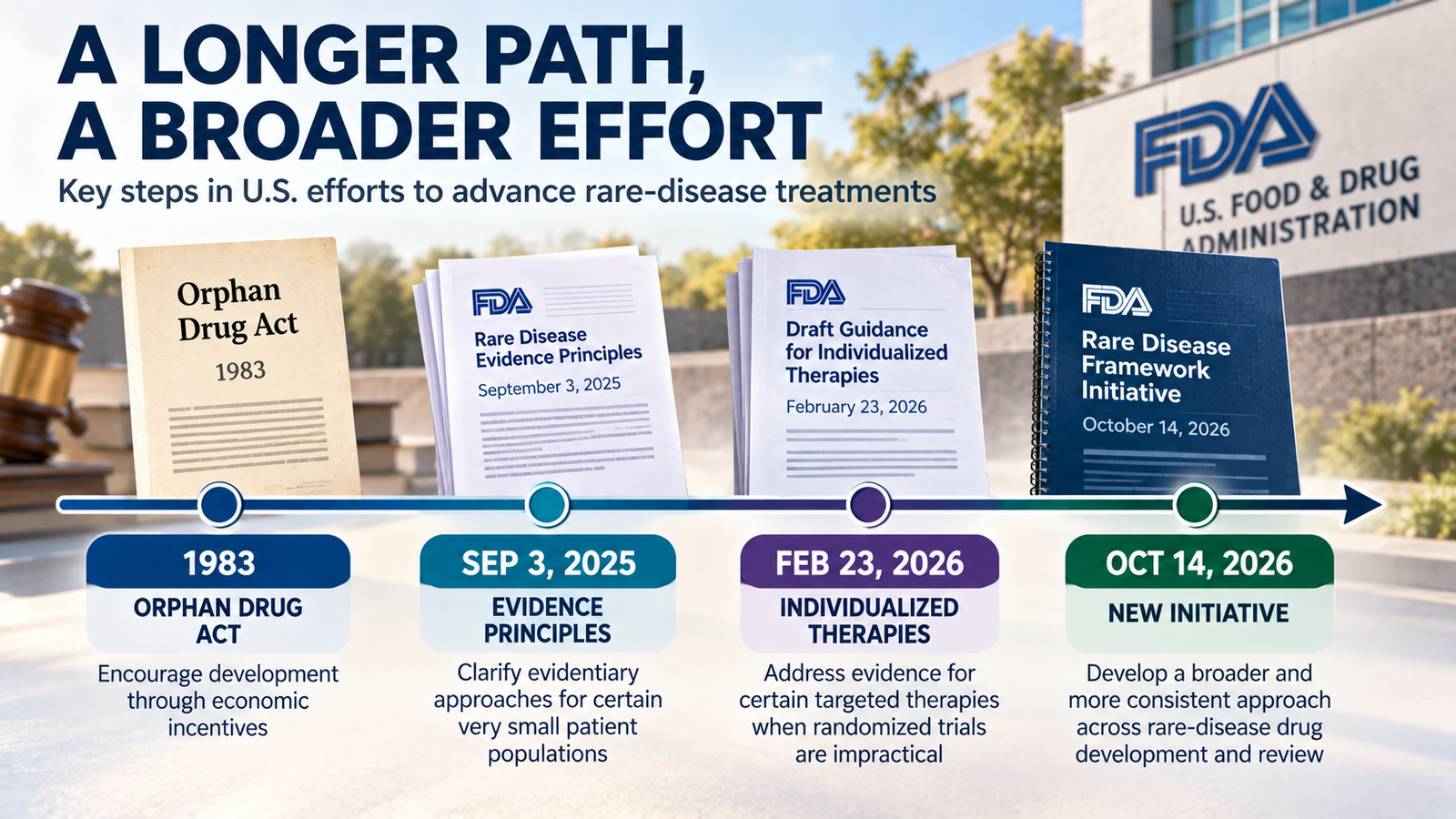
Yes. The United States has been encouraging development of treatments for rare diseases for more than four decades.
The best-known starting point is the Orphan Drug Act of 1983.
The term orphan drug refers to a medicine intended for a rare disease or condition, including diseases that might otherwise attract too little commercial investment.
The law created incentives for companies willing to develop these medicines, including tax credits for qualifying clinical research, certain fee exemptions, and the potential for seven years of market exclusivity following approval.
But there is a difference between encouraging a company to develop a drug and determining whether that drug has been shown to work. Orphan-drug designation is not FDA approval. (FDA)
More recently, the FDA has also been exploring how to evaluate treatments for exceptionally small patient groups.
The timeline helps explain why the October announcement matters.
| Date | FDA Development | Main Purpose |
|---|---|---|
| 1983 | Orphan Drug Act | Encourage development through economic incentives |
| September 3, 2025 | Rare Disease Evidence Principles | Clarify evidentiary approaches for certain very small rare-disease populations |
| February 23, 2026 | Draft guidance for individualized therapies | Address evidence for certain targeted therapies when randomized trials are impractical |
| October 14, 2026 | Rare Disease Framework Initiative | Develop a broader and more consistent approach across rare-disease drug development and review |
The September 2025 Rare Disease Evidence Principles addressed therapies for certain very small patient populations with significant unmet needs and known genetic defects. They discussed how one adequate, well-controlled study plus strong confirmatory evidence might support approval in appropriate cases. (FDA)
The February 2026 draft guidance focused on targeted individualized therapies, including certain genome-editing and RNA-based approaches, when conventional randomized trials are not feasible. It also emphasized the need for convincing evidence of effectiveness and safety. (FDA)
The latest initiative has a wider ambition.
Rather than focusing only on one narrow treatment category or review tool, the FDA wants to build a more coherent approach that can guide different teams and different types of rare-disease development programs.
That does not mean all those earlier pathways will disappear or merge into one new approval system. Their eventual relationship with the proposed framework remains part of what the agency must clarify.
Why Are Patient Organizations Welcoming the Announcement?
Patient organizations see the initiative as an opportunity to make rare-disease drug development more consistent with the realities patients face.
The National Organization for Rare Disorders, or NORD, welcomed the October 14 announcement.
In a statement, NORD President and CEO Pam Gavin emphasized the need to recognize small patient populations, incomplete disease information, and the difficulties of using conventional clinical trial methods.
NORD also stressed that successful reform will depend on sustained leadership, adequate resources, and consistent implementation across FDA review divisions—not merely a new set of broad promises. (NORD)
The Biotechnology Innovation Organization, an industry trade association, also welcomed the initiative while emphasizing rigorous scientific standards and the challenges of developing medicines for very small populations. (BIO)
Why does the patient’s perspective matter scientifically?
Imagine two possible outcomes from a trial for a progressive disease.
One drug changes a laboratory measurement, but researchers are uncertain whether patients feel or function differently.
Another shows a measurable improvement in a specific daily activity that patients and caregivers identify as especially important.
The FDA still needs evidence to determine whether either drug is effective.
But patient input can help researchers identify which outcomes matter most, how those outcomes should be measured, and whether the demands of participating in a study are realistic.
The FDA’s proposed framework calls for patient perspectives to be incorporated early and at clearly defined points throughout development and review.
It also calls for greater involvement from outside disease experts and researchers, particularly when the FDA itself has limited experience with an exceptionally uncommon condition. (FDA)
There are limits, of course.
Patient testimony can illuminate the burden of a disease and the importance of potential benefits. It does not automatically establish that an experimental treatment works.
Similarly, scientific experts may disagree about how much uncertainty is acceptable.
The central challenge is to incorporate those perspectives without confusing a treatment’s urgent medical need with proof of its safety and effectiveness.
Will This Help Patients Get Treatments Sooner?
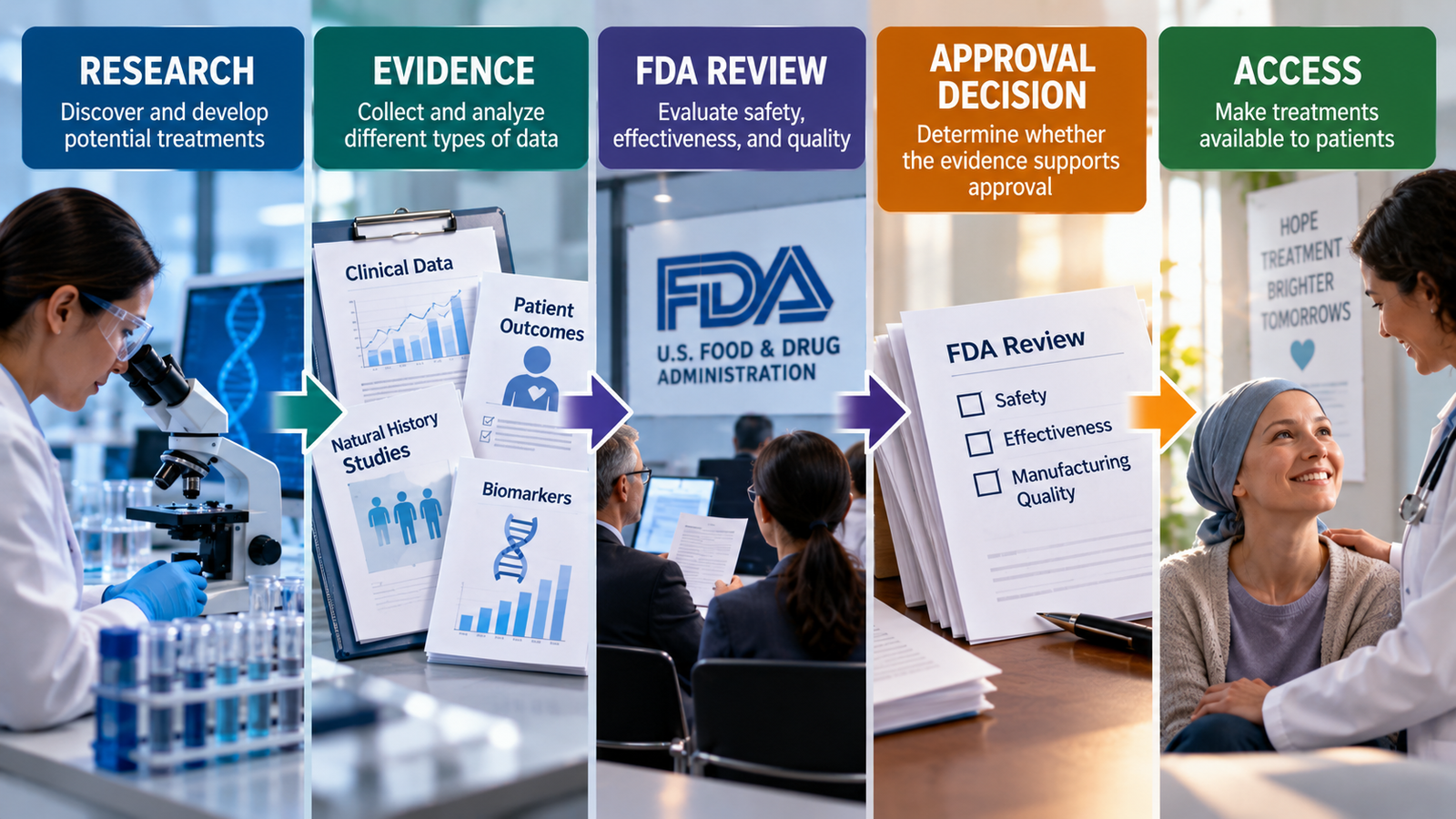
Possibly—but the October 14 announcement does not immediately give patients access to new medicines.
The potential benefit lies earlier in the development process.
If researchers receive clearer guidance about what evidence the FDA will consider acceptable, they may be better able to design practical studies from the beginning.
That could reduce the risk of spending years on a development program only to discover that the evidence collected does not adequately address the agency’s questions.
More consistent reviews might also reduce uncertainty for small biotechnology companies trying to determine whether an innovative treatment can be developed responsibly.
Those are potential benefits, not measured outcomes of the new initiative.
For patients, it is important to separate three stages:
| Stage | What It Means for Patients |
|---|---|
| FDA launches a framework initiative | The agency is exploring improvements; treatment availability does not immediately change |
| A developer uses an improved evidence strategy | A medicine may move through research and review more effectively, but approval is uncertain |
| FDA approves a specific medicine | The medicine has received regulatory authorization for defined uses; practical access may still depend on availability, prescribing, and coverage |
Approval and affordability are also different questions.
Even if a drug eventually receives FDA approval, its manufacturer must be able to supply it, and patients may still face insurance coverage and out-of-pocket cost issues.
The Rare Disease Framework Initiative is primarily concerned with development and regulatory review. It is not, by itself, a new health insurance benefit or a promise to reduce rare-disease treatment prices.
For a family currently searching for a therapy, the announcement is therefore a reason to follow future developments—not a reason to assume that an experimental medicine is newly approved.
What Happens at the October 28 FDA Meeting?
The next publicly scheduled milestone for this initiative is a hybrid meeting on October 28, 2026, from 1:00 p.m. to 5:00 p.m. Eastern Time.
The FDA is organizing it in partnership with the Reagan-Udall Foundation for the FDA, with in-person participation at the agency’s White Oak campus in Silver Spring, Maryland, and online participation available.
The meeting is intended to collect feedback from patients, caregivers, advocacy groups, researchers, medical experts, and drug developers. (FDA)
The discussions are expected to focus on four broad subjects: how to tailor evidentiary expectations, how to make regulatory decisions more consistent, how to incorporate outside expertise, and how to approach manufacturing and quality questions for rare-disease therapies.
People interested in providing public comments can consult the Reagan-Udall Foundation’s registration information. As of October 15, the Foundation lists October 20, 2026, at 5:00 p.m. Eastern Time as the deadline to request a public comment slot. (Reagan-Udall Foundation)
The October 28 gathering is not a meeting to approve particular drugs.
It is an opportunity to help shape the policy framework.
Following the meeting, the FDA says it intends to pursue additional input through focused roundtables, requests for information, and discussions with its own review staff.
That feedback could help determine whether changes are eventually made through agency guidance, revised regulations, organizational procedures, or other measures. No definitive implementation date for the overall framework was announced on October 14. (FDA)
The details worth watching are specific:
- Will the FDA explain when smaller or alternative trial designs can provide adequate evidence?
- Will those expectations become more consistent across review divisions?
- How will the agency evaluate long-term safety when patient numbers are extremely small?
- Will patients and outside specialists have a meaningful role throughout development?
- Will the eventual changes improve regulatory predictability without weakening scientific rigor?
Answers to those questions will show whether this initiative becomes a meaningful change in rare-disease drug development or remains primarily a statement of policy ambitions.
Bottom Line: What This Story Really Means
The FDA’s Rare Disease Framework Initiative is an effort to address a longstanding problem: the usual ways of proving that a drug works do not always fit diseases with very small patient populations.
The FDA wants to make its review approach more consistent and better suited to the scientific realities of rare diseases, while continuing to require credible evidence of safety and effectiveness.
That is different from simply approving medicines after smaller trials or allowing promising laboratory findings to substitute automatically for proof of clinical benefit.
The announcement also builds on earlier rare-disease programs rather than replacing them overnight.
For patients and families, the potential payoff is important. More predictable and appropriately tailored development requirements could help researchers pursue treatments that might otherwise be impractical to study.
But the FDA has not yet completed the framework, and no new treatment is approved solely because the initiative was announced.
The real test will be whether the agency can turn greater flexibility into dependable scientific decisions—and ultimately into more safe and effective treatment options.
FDA Rare Disease Framework: Key Questions Explained
Q. What is the FDA Rare Disease Framework Initiative?
It is an initiative announced on October 14, 2026, to develop a more consistent and tailored approach to reviewing treatments for rare diseases, particularly where conventional study methods are difficult to use.
Q. How many Americans have rare diseases?
FDA educational materials estimate that approximately 25 million to 30 million Americans are affected. Although each condition is uncommon, rare diseases collectively affect a large population.
Q. What qualifies as a rare disease in the United States?
Under the Orphan Drug Act, the general threshold is a condition affecting fewer than 200,000 people in the United States. The law also provides a cost-recovery exception for certain conditions affecting larger populations.
Q. Is it true that only 5% of rare diseases have approved treatments?
The FDA estimates that only about 5% of rare conditions have an approved treatment. This refers to the share of conditions, not the percentage of patients receiving treatment.
Q. Is the FDA eliminating clinical trials for rare-disease treatments?
No. The initiative is not a blanket exemption from clinical evidence requirements. It seeks approaches suited to rare-disease research while retaining rigorous standards for safety and effectiveness.
Q. Can a drug be approved after a very small clinical trial?
Potentially, depending on the disease, the product, the applicable approval pathway, and the strength of the evidence. Small patient numbers alone do not make a treatment eligible for approval.
Q. Is orphan-drug designation the same as FDA approval?
No. Orphan-drug designation provides qualifying development incentives. A drug must still undergo the applicable scientific review before it can receive marketing approval.
Q. Will the new framework make experimental treatments immediately available?
No. The October 14 initiative did not authorize new experimental treatments for general use. Individual products must still follow applicable regulatory pathways.
Q. When is the FDA’s public meeting about the new framework?
The meeting is scheduled for October 28, 2026, from 1:00 p.m. to 5:00 p.m. Eastern Time. In-person and virtual participation are available.
Q. When will the FDA’s new rare-disease framework take effect?
The FDA has not announced a final implementation date. The framework remains in development, with public feedback and additional agency work planned.
Did this help make the story clearer? 🙂 WIN keeps unpacking the “why” behind the news—clearly and simply!
Sources
FDA Announcement and Framework Details
FDA — Launch of the Rare Disease Framework Initiative, October 14, 2026
FDA — Rare Disease Framework Initiative: Goals and Proposed Approach
Rare-Disease Statistics, Scientific Evidence, and Earlier Programs
FDA — Nine Things to Know About Rare-Disease Drug Development
U.S. GAO — Rare Disease Drugs: FDA Coordination and Approval Challenges
FDA — Natural History Studies and Their Role in Drug Development
FDA — Orphan-Drug Designation and Development Incentives
FDA — Rare Disease Evidence Principles, September 3, 2025
FDA — Individualized Therapy Framework, February 23, 2026
Patient and Industry Perspectives
NORD — Statement on the FDA’s New Rare-Disease Regulatory Initiative, October 14, 2026
BIO — Statement on the FDA’s Fit-for-Purpose Rare Disease Framework Initiative
October 28 Public Meeting and Participation
FDA — Rare Disease Framework Initiative Public Meeting, October 28, 2026
Reagan-Udall Foundation — Meeting Registration and Public Comment Information
Keep Reading
How Much Evidence Does the FDA Need Before It Can Approve a Medical Product?
An earlier WIN report on the Galleri multi-cancer blood test shows a related FDA challenge: determining which medical claims the available clinical evidence actually supports. Galleri is a diagnostic test, not a rare-disease drug, but both stories explain why promising results and proven patient benefits are not necessarily the same thing.
Can One Blood Test Really Screen for More Than 50 Cancers—and What Is the FDA Still Unsure About?