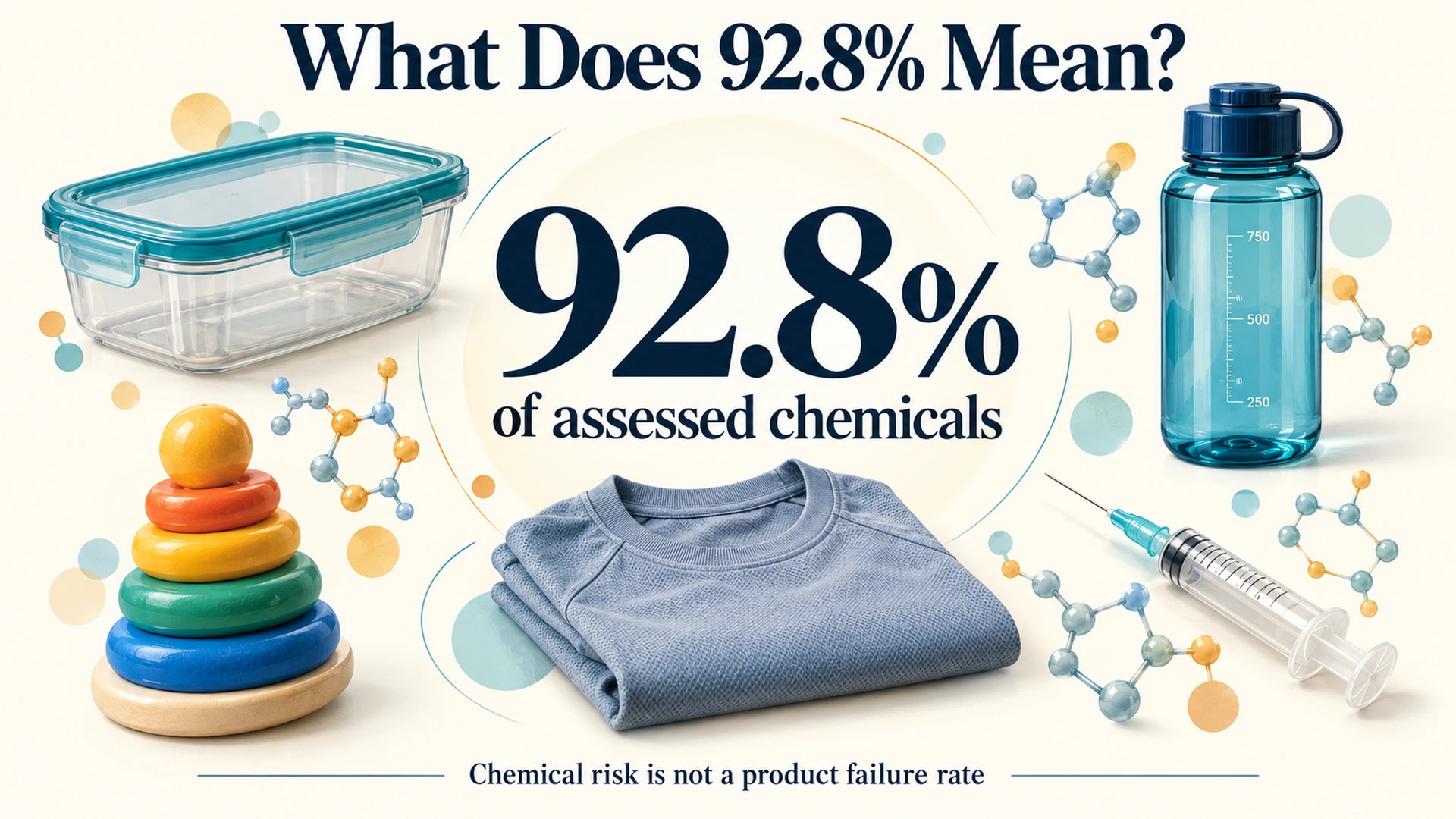
A Report Says 92.8% of Assessed Plastic Chemicals Pose High Health Risk—What Does That Number Actually Mean?

Did a new report really find that almost every plastic product around you is dangerous?
That is an easy conclusion to draw from the number now moving through headlines: 92.8%.
But the number does not mean that 92.8% of all plastic products have been laboratory-tested and found to be toxic. It does not mean that 92.8% of the more than 16,000 chemicals associated with plastics are proven to harm people at ordinary exposure levels, either.
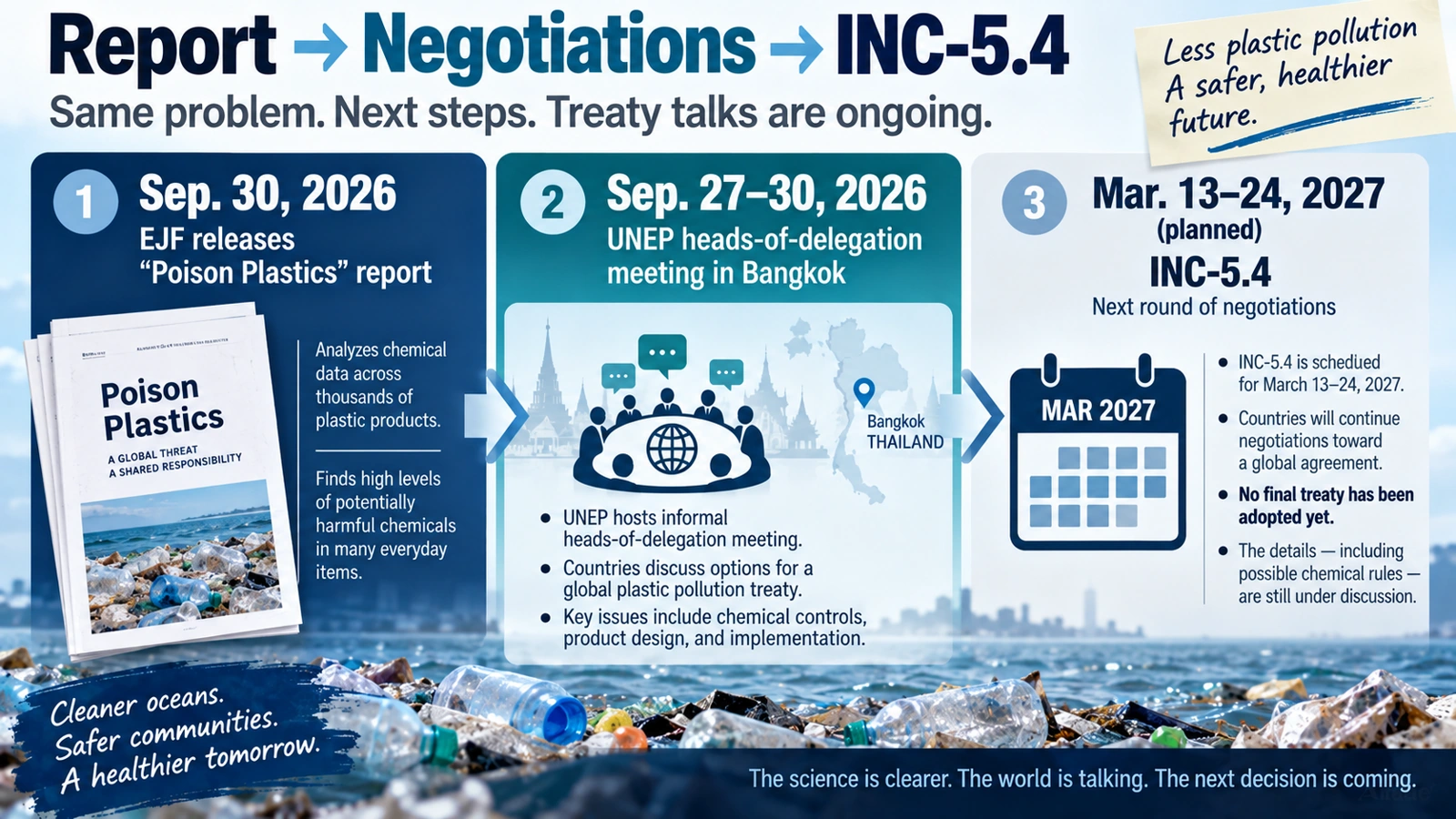
The Environmental Justice Foundation, or EJF, released its Poison Plastics report on September 30, 2026. The group says 92.8% of the plastic-associated chemicals it could assess in commonly used product categories presented a high risk to human health. At the same time, it found a much bigger uncertainty problem: nearly 80% of 3,552 chemicals commonly associated with those categories did not have enough toxicity or exposure information for EJF to determine their risk. (EJF · CNN)
That distinction changes how the headline should be read.
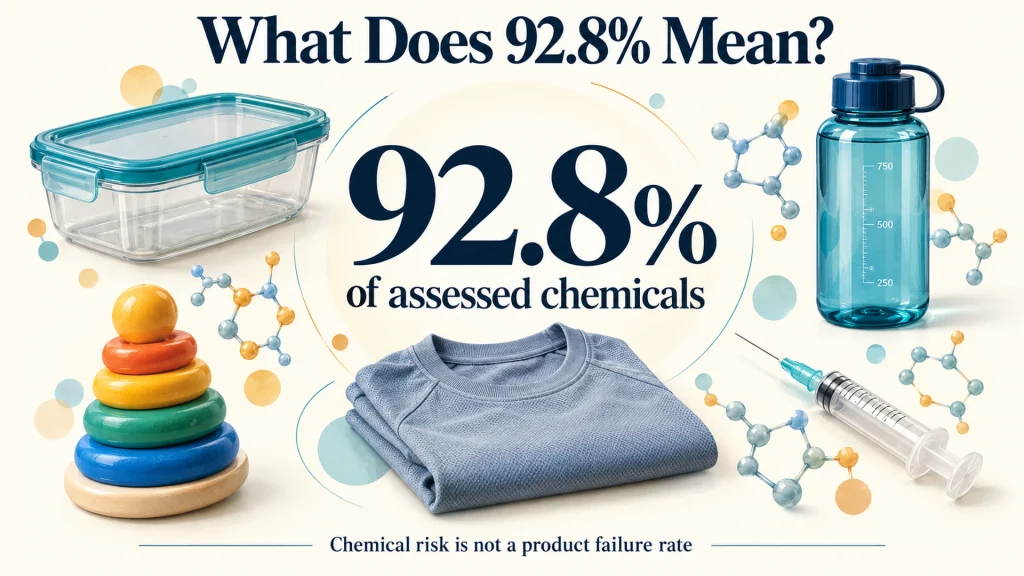
※ Images in this article are AI-generated illustrations created to help explain the story. They are not actual photographs, and depictions of people, places, or events may differ slightly from reality.
The most useful question is not “Are plastics safe or unsafe?” as though there were one answer for every bottle, toy, shirt, food wrapper, and medical device.
It is: What exactly was measured, how much do we know about exposure, and how much is still unknown?
What Did the 92.8% Number Actually Measure?
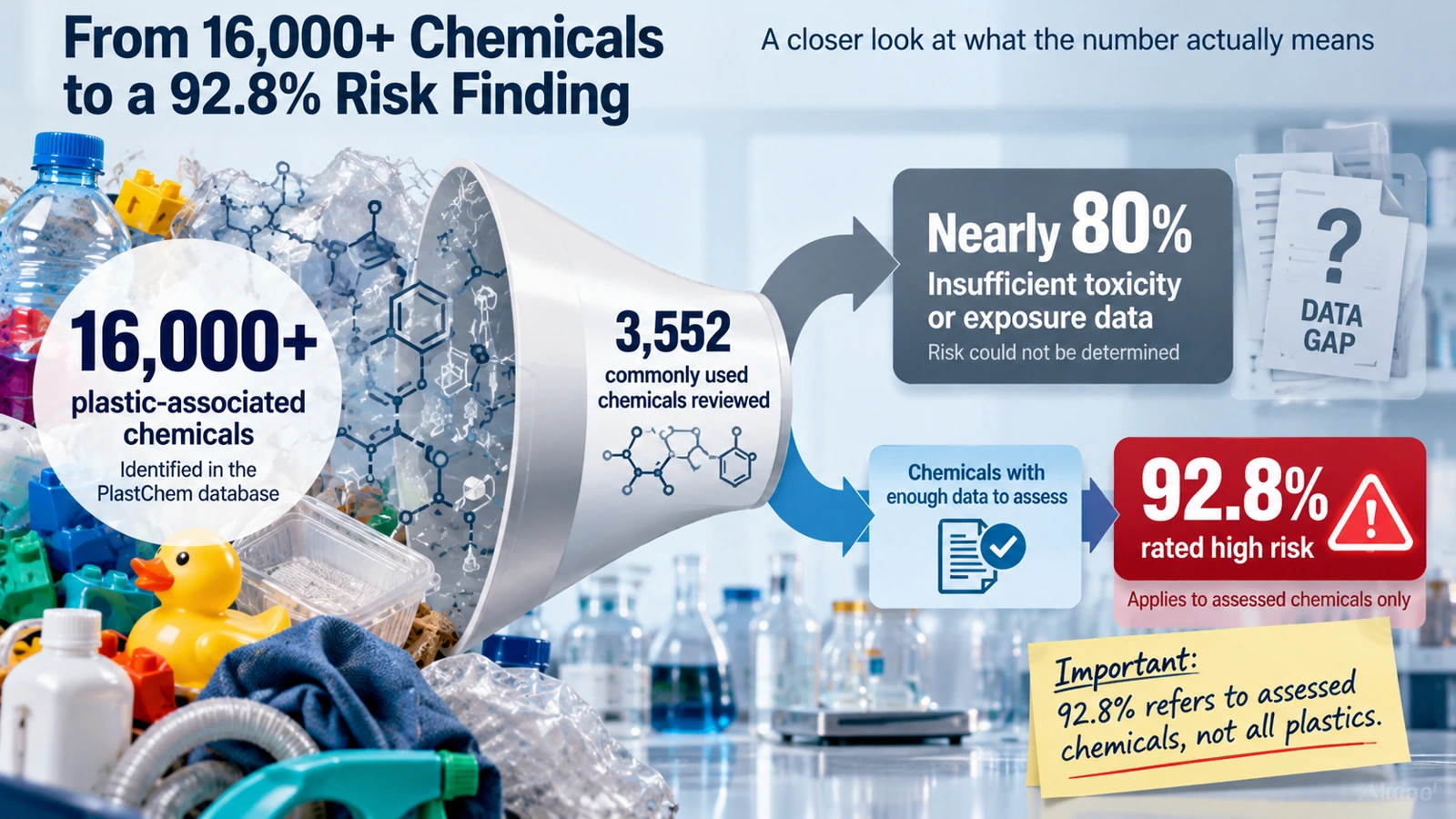
The 92.8% figure comes from a subset of plastic-associated chemicals for which EJF had enough information to evaluate both health effects and exposure.
EJF did not start by buying thousands of water bottles, toys, shirts, and medical devices from stores and testing each physical object in a laboratory. It used existing scientific and regulatory information, especially data assembled in the PlastChem project, and reorganized that information around five categories of products people encounter in everyday life. (EJF report · PlastChem)
That matters because three different numbers are being discussed at the same time:
| Number | What it refers to | What it does not mean |
|---|---|---|
| 16,000+ | Plastic-associated chemicals identified in the PlastChem database | Not 16,000 chemicals proven dangerous |
| 3,552 | Chemicals EJF examined in commonly used product categories | Not 3,552 chemicals with complete risk data |
| 92.8% | Share of the chemicals EJF could assess that it classified as high risk | Not 92.8% of every plastic product on store shelves |
The earlier PlastChem work identified more than 16,000 chemicals that may be used in or present in plastics. It classified at least 4,200—about 26%—as chemicals of concern because of hazardous properties such as toxicity, persistence, bioaccumulation, or mobility. It also found that hazard information was missing for more than 10,000 chemicals. (PlastChem · Nature)
EJF then asked a different question: among chemicals connected to common product categories, what does the available evidence suggest when toxicity and exposure are considered together?
That is where the 92.8% figure comes from.
Why Is the Missing 80% Just as Important as the 92.8%?
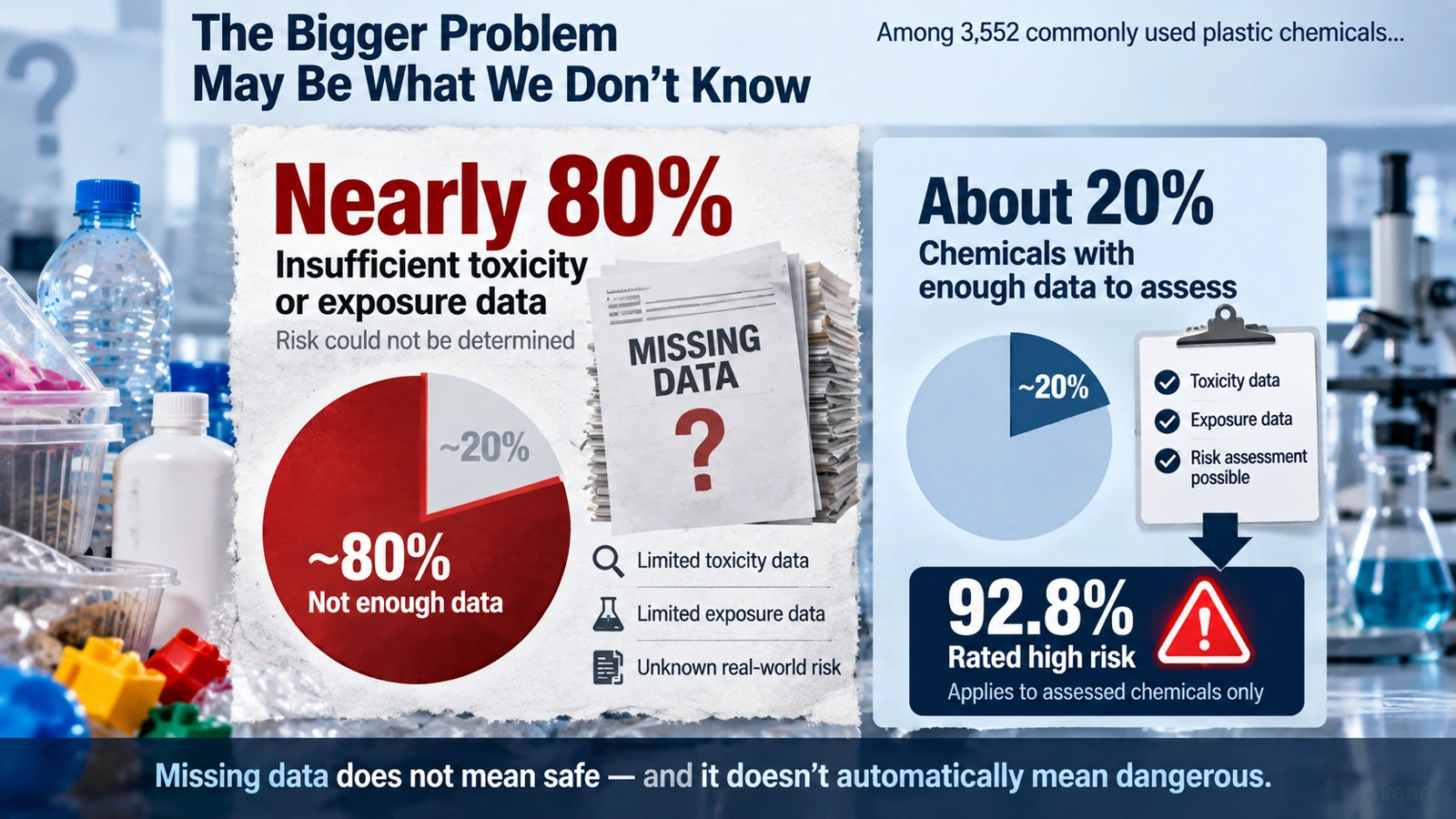
Because “not assessed” is not the same thing as “safe.” It is also not the same thing as “dangerous.”
CNN’s reporting on the EJF analysis says nearly 80% of the 3,552 chemicals in frequently used plastics lacked enough information to determine toxicity or exposure risk. That means the dramatic 92.8% result is based on the portion of chemicals for which the available evidence was strong enough to support a risk classification. (CNN)
This creates a classic data problem.
Imagine 100 chemicals. If only 20 have enough information for a full assessment and 19 of those are rated high risk, the headline could say “95% of assessed chemicals are high risk.” That would be mathematically correct—but it would tell you almost nothing about the other 80 chemicals.
The EJF report is not using that exact 100-chemical example; it is simply an easy way to see why the denominator matters.
The missing information also cuts both ways. Better testing could identify additional hazardous chemicals. It could also show that some chemicals now surrounded by uncertainty present relatively low risk under realistic exposure conditions.
That is why the data gap is not a footnote. It is one of the central findings.
Does This Mean 92.8% of Plastic Products Are Dangerous?
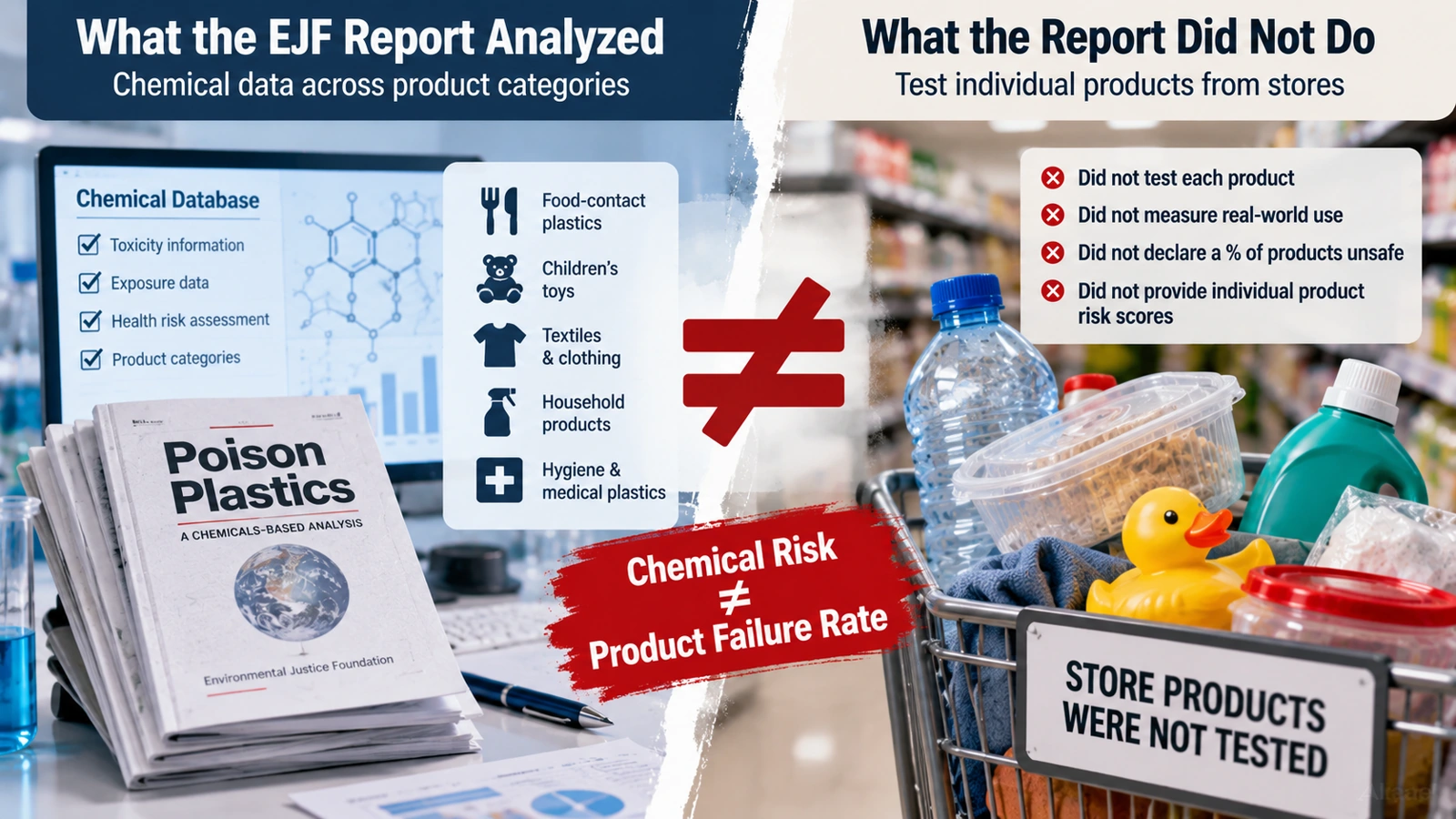
No. The report does not establish that 92.8% of individual plastic products are unsafe to use.
EJF and CNN broke the analysis into five broad categories. The reported shares were roughly 89% to 93% across food-contact plastics, children’s toys, textiles and clothing, household products, and hygiene or medical plastics. (CNN)
| Product category | Reported high-risk share | How to read it carefully |
|---|---|---|
| Food-contact plastics | Almost 92% | Share of assessed chemicals associated with the category, not a pass/fail test of 92% of food packages |
| Children’s toys | Nearly 89% | Does not mean 89% of every toy on sale is proven hazardous |
| Textiles and clothing | About 93% | Refers to chemicals associated with plastic-based materials in the category |
| Common household products | More than 92% | Covers a broad range of product uses and chemical records |
| Hygiene and medical plastics | Nearly 93% | Does not mean every syringe, patch, or dental-floss product carries the same exposure |
The distinction is important because a chemical’s presence, its hazardous properties, the amount that migrates out of a product, how a person is exposed, and the duration of that exposure are different questions.
A substance can be hazardous in principle but present little practical risk at a tiny exposure. Another can become more concerning because it migrates readily into food, accumulates in the body, or is encountered repeatedly during sensitive periods such as pregnancy or childhood.
That is why toxicologists separate hazard from risk.
What Is the Difference Between Hazard and Risk?
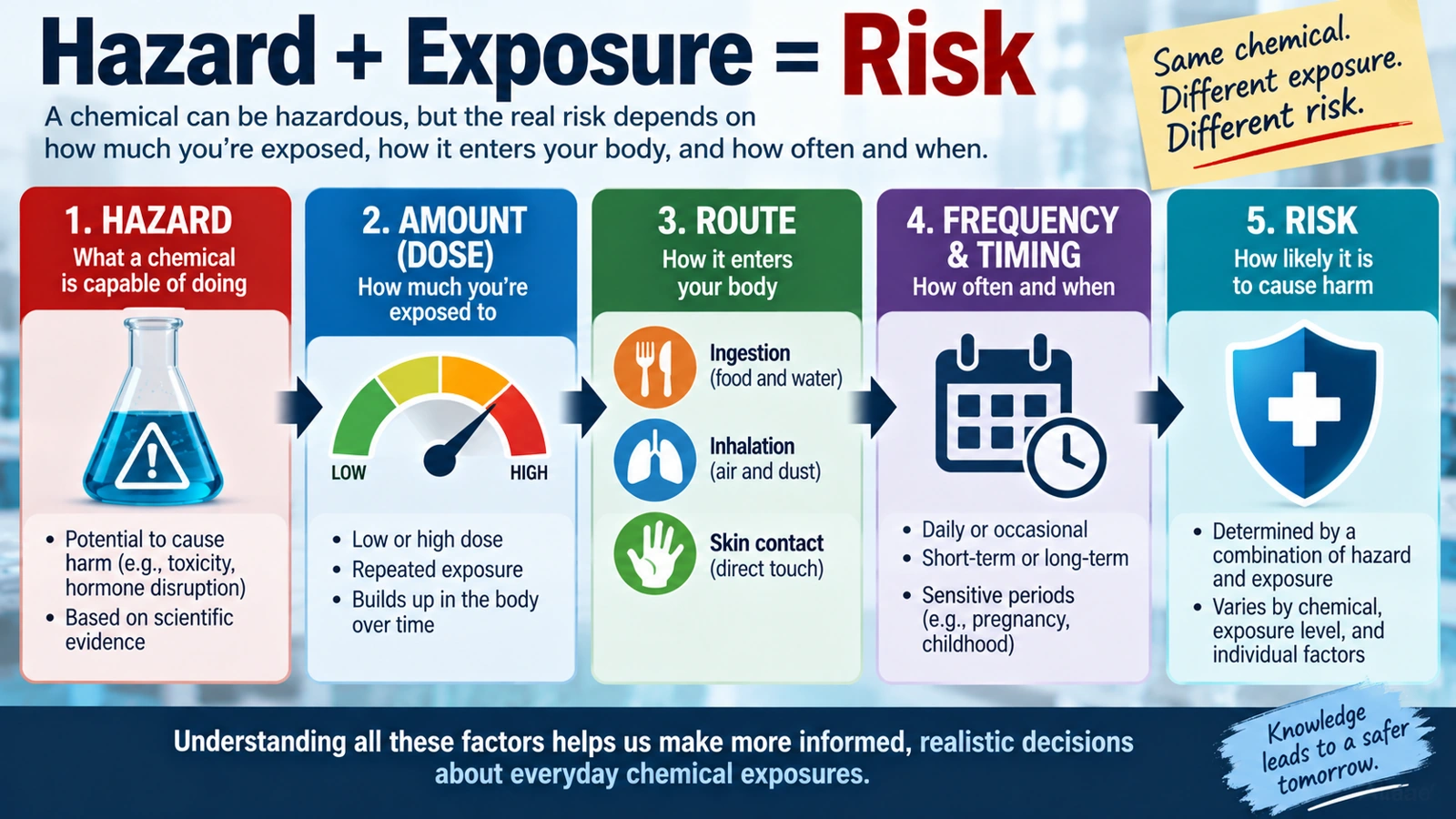
Hazard is what a chemical is capable of doing. Risk asks how likely harm is under actual exposure conditions.
The distinction is familiar in chemical regulation. The U.S. Environmental Protection Agency evaluates existing chemicals under the Toxic Substances Control Act through a process that includes prioritization, risk evaluation, and—when an unreasonable risk is identified—risk management. Exposure is part of that process. (EPA)
EJF says its analysis combined evidence about what a chemical can do to the body with information about exposure levels to classify overall health risk. (CNN)
The underlying PlastChem project, however, began from a broad hazard-focused effort to identify chemicals of concern in plastics. That approach has generated scientific debate. A 2026 paper in Environmental Science & Technology argued that parts of PlastChem’s “Red List” should receive additional plastic-specific, risk-based filtering and more detailed exposure assessment before being used as a basis for regulation. The authors said roughly 30% of entries they reviewed raised questions about inclusion. (Environmental Science & Technology)
That criticism does not prove EJF’s 92.8% figure is wrong. It does show why a single percentage should not be treated as the last word on thousands of different chemicals.
Which Plastic Chemicals Have the Strongest Health Evidence?
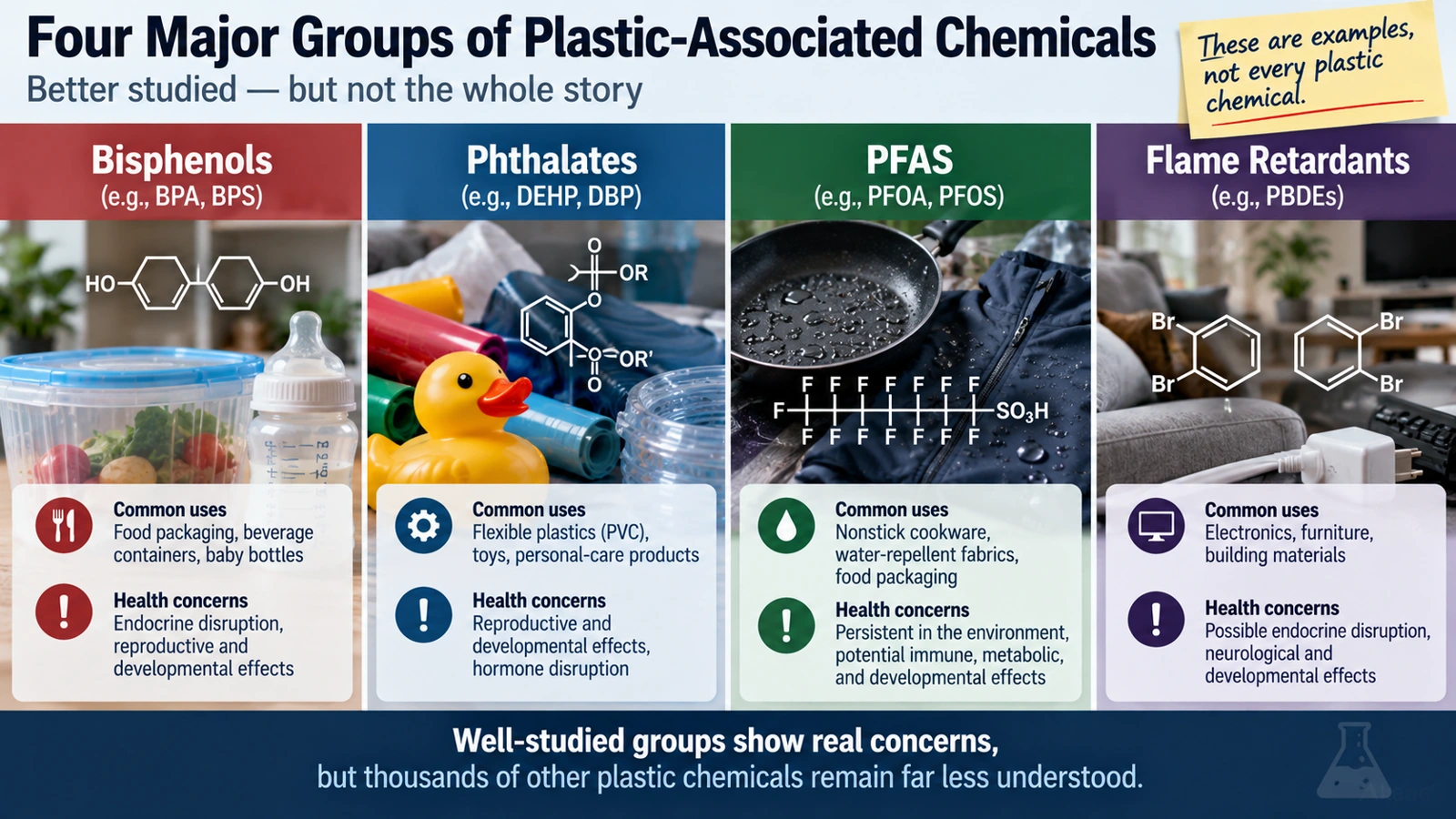
Not every chemical associated with plastic has the same evidence behind it.
Some groups have been studied far more extensively than others, including bisphenols such as BPA, phthalates, certain flame retardants, and PFAS.
The Endocrine Society says endocrine-disrupting chemicals can interfere with hormone action and that evidence from human, animal, and laboratory research has linked various EDC exposures with reproductive, developmental, metabolic, neurological, and other health effects. Many of these chemicals are used in or associated with plastics. (Endocrine Society)
One U.S. analysis published in the Journal of the Endocrine Society estimated that disease burdens attributable to several classes of plastic-associated chemicals—including phthalates, bisphenols, PFAS, and PBDE flame retardants—cost the United States about $249 billion in 2018. That estimate does not apply to every plastic chemical, but it shows that concern about some well-studied groups is not based on the EJF report alone. (Journal of the Endocrine Society)
This is another reason the “93%” headline can be misleading. The evidence base is uneven. A chemical with decades of toxicology and epidemiology behind it should not be treated as though it has the same evidence profile as a poorly characterized compound that appears in one database.
Are These Chemicals Really “Unregulated”?
Some plastic-associated chemicals are regulated, but the real dispute is over how broadly EJF’s “unregulated” finding should be read across different legal systems and uses.
EJF says 54.2% of the high-risk chemicals it identified were regulated neither by the international agreements it reviewed nor in any of four jurisdictions it examined: the European Union, Japan, South Korea, and California. EJF also says 83% of chemicals with available toxicity and exposure data were not regulated under the major international agreements it examined. (EJF)
The American Chemistry Council told CNN the report should be viewed with “considerable caution.” The trade group argued that EJF omitted important industry data and major U.S. and European regulatory databases, and therefore characterized some chemicals as “unregulated” too broadly. (CNN)
That criticism matters because “regulated” is not a simple yes-or-no label.
In the United States, chemicals can fall under different federal laws and agencies depending on how they are used. EPA has authority under TSCA to require information, evaluate risks, and restrict or ban certain chemical uses. Food-contact materials fall into a separate FDA framework. In May 2026, for example, FDA released a scientific evaluation of eight phthalates still authorized as plasticizers for food-contact use and proposed grouping four of them for a future cumulative risk assessment. (EPA · FDA)
So there are at least three different questions:
| Question | Possible answer |
|---|---|
| Is a chemical covered by an international treaty? | Maybe |
| Is it addressed somewhere in U.S. federal or state law? | Maybe |
| Is every use, exposure route, and concentration tightly restricted? | Not necessarily |
A chemical can therefore be “regulated” in one context and still be allowed in another.
The more precise takeaway is not that thousands of plastic chemicals face literally zero oversight everywhere. It is that the regulatory landscape is fragmented, many chemicals have limited public safety data, and large numbers are not comprehensively controlled across the systems EJF reviewed.
Should You Throw Out Everything Made of Plastic?
No. The report does not justify panic, and it does not provide an individual health-risk score for every item in your home.
But it does strengthen a more modest conclusion: when an easy alternative reduces unnecessary exposure, especially around food and heat, using it can be reasonable.
The Endocrine Society notes that BPA can leach from food-contact materials and that leaching can increase with heating, reheating, sunlight, or acidic foods. It also describes common exposure to phthalates through food packaging, personal-care products, and household dust. (Endocrine Society)
That does not mean every plastic container becomes dangerous when warmed, or that one microwaved meal will cause disease. Risk depends on the chemical, the dose, the route, the frequency, and the person being exposed.
A practical way to respond is to focus on avoidable, repeated exposure rather than trying to eliminate plastic from your life overnight. Glass or stainless-steel food storage can reduce reliance on plastic when convenient. Replacing heavily worn food containers and avoiding unnecessary heating of plastic can also reduce opportunities for chemical migration.
The larger problem identified by EJF is not something consumers can solve by shopping perfectly. If thousands of chemical ingredients are poorly characterized or difficult to identify on product labels, individual choice has limits.
What Happens Next?
The EJF report landed at a politically relevant moment.
Negotiations toward a legally binding global agreement on plastic pollution are still continuing. UNEP held an informal heads-of-delegation meeting in Bangkok from September 27 to 30, 2026, and its current schedule points to a fourth part of the fifth negotiating session, INC-5.4, within the March 13–24, 2027 period. (UNEP · UNEP notifications)
One of the unresolved policy questions is whether the eventual agreement should focus mainly on plastic waste—or also control chemicals used in plastics at the design and production stage.
EJF wants governments to go further upstream by restricting hazardous chemical groups, improving ingredient transparency, and reducing plastic production. The American Chemistry Council, by contrast, has argued that chemical risk should be assessed with fuller exposure and regulatory data rather than broad classifications that it says can overstate how “unregulated” some substances are. (EJF · CNN)
That disagreement is already part of the broader debate over how a future plastics agreement should handle chemical controls.
But the strongest argument in the report may be less dramatic than the headline: for thousands of chemicals used around people every day, the public still does not have enough information to answer basic questions about toxicity and exposure with confidence.
Bottom Line: What This Story Really Means
The new Poison Plastics report does not show that 92.8% of all plastic products are toxic or that 92.8% of all known plastic chemicals are proven to cause disease.
It says that among the plastic-associated chemicals EJF could assess using available toxicity and exposure information in common product categories, 92.8% were classified as high risk. At the same time, nearly 80% of the 3,552 commonly used chemicals in its broader analysis lacked enough information for a full risk determination.
That makes the story both more limited and more important than the most alarming headline suggests.
The 92.8% number is not a universal failure rate for plastic. It is a warning about what researchers see in the part of the chemical universe they can evaluate—and about how much of the rest remains poorly understood.
Plastic Chemicals: Key Questions Explained
Q. Did the EJF report find that 92.8% of all plastic chemicals are dangerous?
No. The 92.8% figure applies to the chemicals EJF could assess with sufficient toxicity and exposure information in the commonly used product categories it studied.
Q. Does 92.8% mean that 92.8% of plastic products on store shelves are unsafe?
No. The report analyzed chemical data associated with product categories. It was not a store-by-store laboratory test that declared 92.8% of individual products unsafe.
Q. How many chemicals are associated with plastics?
The PlastChem project identified more than 16,000 chemicals that may be used in or present in plastics. It classified more than 4,200 as chemicals of concern and found major hazard-data gaps for more than 10,000.
Q. What does it mean that nearly 80% of 3,552 chemicals lacked enough data?
It means EJF could not determine their full risk from the available toxicity or exposure information. Unknown does not mean safe, and it does not automatically mean dangerous.
Q. Which plastic-associated chemicals have the strongest health evidence?
Bisphenols, phthalates, PFAS, and certain flame retardants are among the better-studied groups. Evidence links various members of these groups with endocrine, reproductive, developmental, metabolic, and other health effects, but risks differ by chemical and exposure.
Q. Are plastic chemicals unregulated in the United States?
Some are regulated or reviewed under federal and state systems, including EPA’s TSCA program and FDA rules for food-contact substances. EJF’s “unregulated” comparison used a specific set of international agreements and four jurisdictions, while the American Chemistry Council argues that the report omitted other major regulatory frameworks.
Q. Should people stop using all plastic products?
No. The report does not support that conclusion. A more practical response is to reduce avoidable repeated exposure when easy alternatives exist, particularly for food-contact uses involving heat, while recognizing that product-level risk varies widely.
Q. What happens next with global plastic-chemical rules?
International negotiations are continuing. UNEP lists INC-5.4 for a period in March 2027, and chemical controls are among the issues governments will continue debating as they work toward a legally binding plastics agreement.
Did this help make the story clearer? 🙂
WIN keeps unpacking the “why” behind the news—clearly and simply!
Sources
EJF Findings and September 2026 Coverage
Environmental Justice Foundation — Poison Plastics report
Environmental Justice Foundation — Report release and key findings
CNN — Over 90% of common household items contain hazardous plastic chemicals
PlastChem Data and Scientific Debate
PlastChem — State of the Science on Plastic Chemicals
Nature — Mapping the chemical complexity of plastics
Environmental Science & Technology — Revisiting Chemicals of Concern in the PlastChem Report
Health Evidence and U.S. Regulation
Endocrine Society — Endocrine-Disrupting Chemicals
U.S. EPA — Chemicals under the Toxic Substances Control Act
U.S. FDA — Phthalates in Food Packaging and Food Contact Applications
Global Plastics Treaty Process
UNEP — Intergovernmental Negotiating Committee activities leading to INC-5.4