Did Plague Leak From a Russian Lab? What the WHO Has—and Hasn’t—Confirmed

A young laboratory worker dies from a mysterious form of pneumonia. She works at a Russian research institute that studies some of the world’s most dangerous infectious diseases.
Then reports emerge about a supposedly broken test tube containing plague bacteria. Around 200 people are placed under medical observation, and international health officials start asking questions.
Was this really a laboratory leak?
No plague infection or laboratory accident has been confirmed. In its October 10, 2026, report, the World Health Organization (WHO) said it had found no evidence of ongoing transmission linked to the incident.
But there is a complication: the WHO still does not know exactly what killed the worker. And without that answer, it cannot completely rule out a laboratory-related exposure. (WHO)
That distinction explains why a case involving one unexplained death has continued to attract international attention.
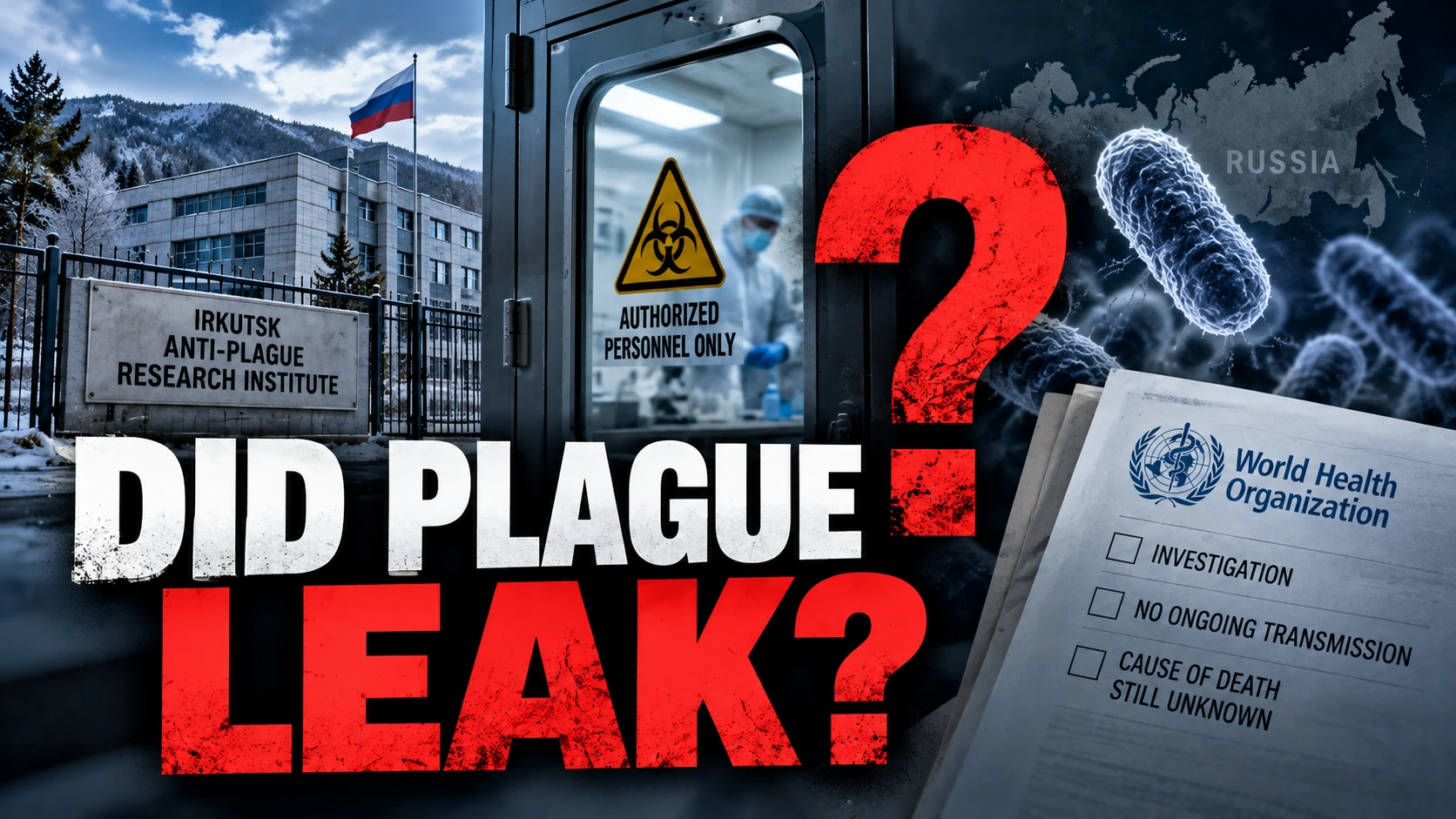
※ Images in this article are AI-generated illustrations created to help explain the story. They are not actual photographs, and depictions of people, places, or events may differ slightly from reality.
The concern is not simply that a dangerous bacterium might have escaped. It is also about how scientists and governments can evaluate a potential health emergency when the most important medical evidence remains incomplete.
What Happened at Russia’s Irkutsk Anti-Plague Institute?
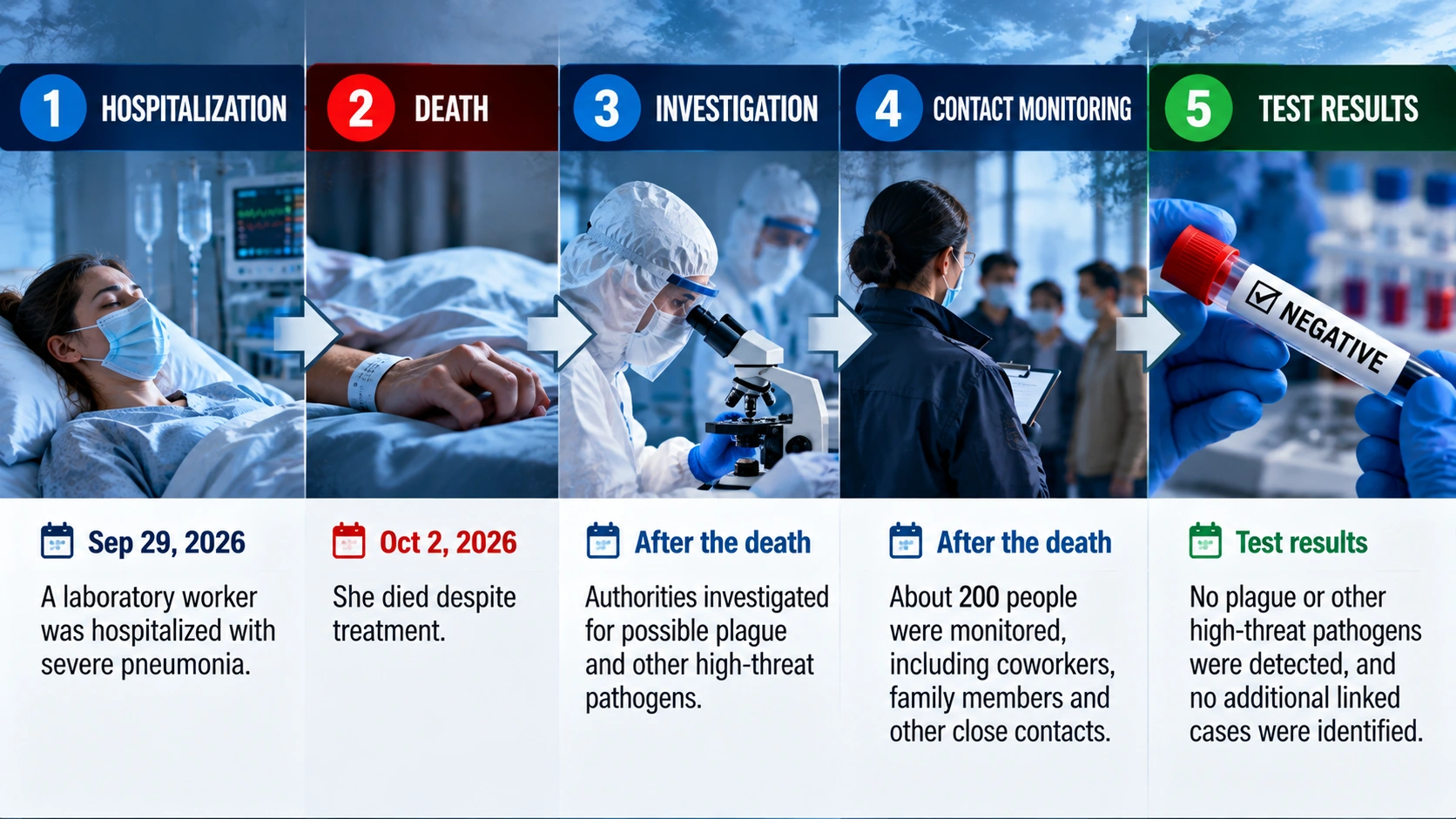
Darya Shipilova, a 28-year-old employee at the Irkutsk Anti-Plague Research Institute of Siberia and the Far East, died on October 2 after being hospitalized with severe pneumonia on September 29.
Russian authorities classified her death as pneumonia of undetermined cause. Because she worked at an institute that handles dangerous pathogens, officials introduced precautionary infection-control measures and began tracing people who had been in contact with her. (Reuters · WHO)
Here is how the situation developed.
| Date | What happened |
|---|---|
| September 29, 2026 | Shipilova was hospitalized with severe pneumonia. |
| October 2 | She died. Russian authorities activated precautionary public health measures. |
| October 6 | Russia responded to the WHO, saying no plague cases had recently been registered in the region. |
| October 9 | According to Russia’s report to the WHO, medical observation of identified contacts had ended without additional linked cases. |
| October 10 | The WHO published a report saying the cause of death was still unknown and it had identified no ongoing transmission. |
The institute’s name is important to understanding the reaction.
An anti-plague institute is not necessarily a facility created because an outbreak is happening. Such institutions study dangerous infectious agents, maintain diagnostic capabilities, conduct surveillance, and support disease prevention.
The Irkutsk facility has a long history of research into diseases including plague, anthrax, and cholera. Its work with dangerous organisms means an unexplained death involving one of its employees deserves careful investigation, but working at a plague laboratory is not evidence that someone died of plague. (Reuters · Nature)
So where did the much more alarming story about a laboratory leak come from?
Why Did Reports Claim That Plague Escaped From the Laboratory?
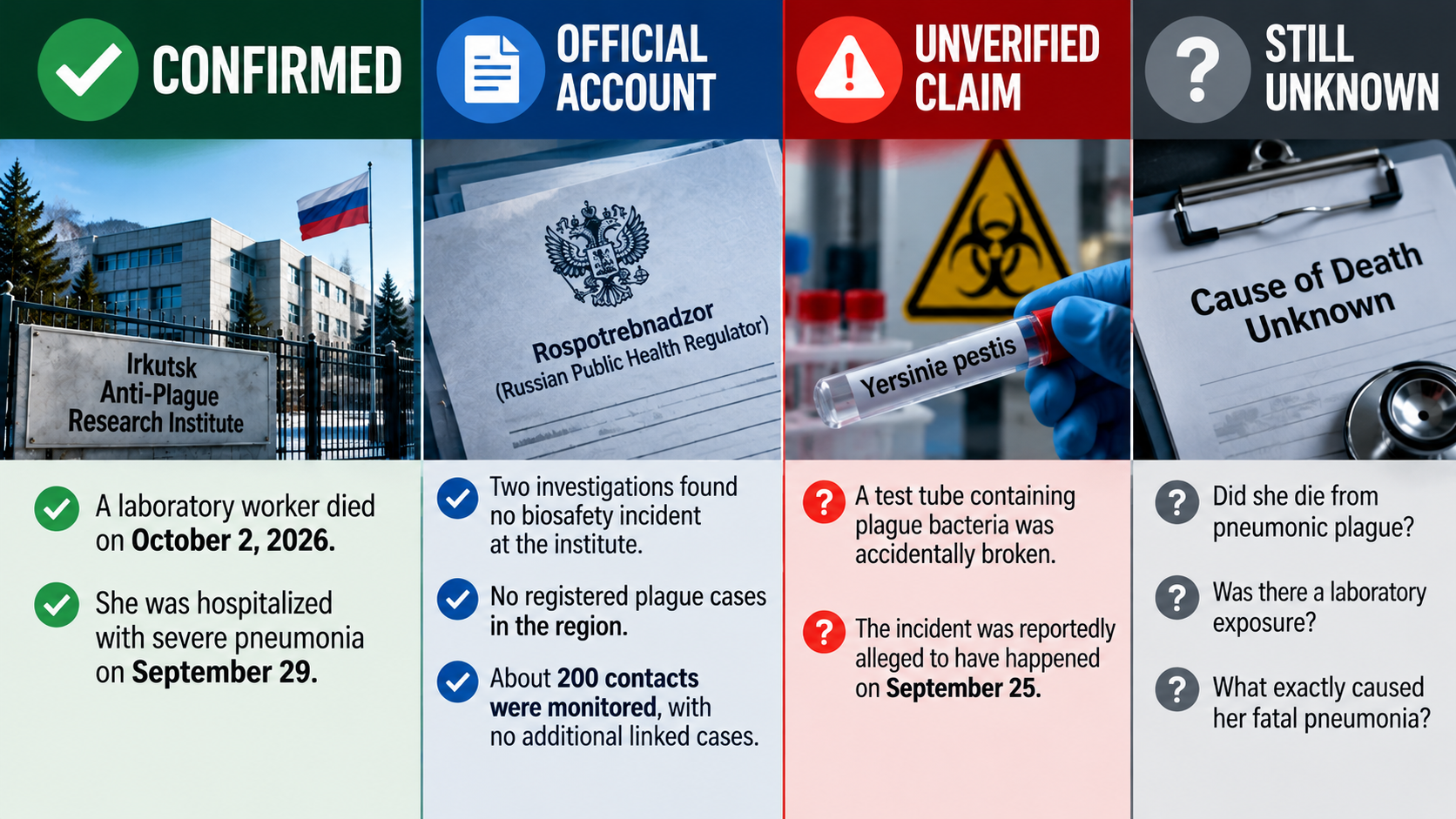
The laboratory leak allegation began with reports suggesting Shipilova had accidentally broken a test tube containing Yersinia pestis, the bacterium that causes plague.
Some accounts claimed the incident happened on September 25, several days before she was hospitalized. But investigators have not independently established that such an accident occurred.
Russia’s public health regulator, Rospotrebnadzor, said two investigations found no biosafety incident at the institute. The WHO acknowledged Russia’s denial while making clear that an occupational exposure could not yet be completely excluded. (DW · WHO)
Confusion grew when Alexey Tsydenov, the governor of the neighboring Buryatia region, initially referred to the worker as having died from plague before changing his statement to indicate that plague was only a possibility. (ABC News)
That changing account, combined with the unusual public health response, helped fuel speculation.
But a story can contain genuinely unanswered questions without its most dramatic explanation being proven.
What Is Confirmed, and What Remains Uncertain?
| Claim or question | What the evidence establishes |
|---|---|
| A laboratory worker died | Confirmed. Shipilova died on October 2. |
| She died from pneumonic plague | Not confirmed. Russia reported negative plague testing; the cause of death remains unknown to the WHO. |
| A test tube containing plague bacteria broke | Unverified. Russian authorities deny a laboratory accident. |
| About 200 people became infected | Unsupported. Approximately 200 contacts were monitored, not diagnosed with plague. |
| A second worker contracted the same disease | No additional linked case has been confirmed. |
| Russia experienced a spreading plague outbreak | No evidence of ongoing transmission has been identified by the WHO. |
These distinctions reflect the WHO’s October 10 report and subsequent coverage by the Associated Press. (WHO · AP)
Reports of a possible second patient deserve particular caution. The WHO sought clarification after such claims circulated, but Russia denied any additional linked severe pneumonia case. The WHO has not confirmed a second case.
Another rumor connected the institute to biological weapons research. Gregory Koblentz, a biosecurity specialist at George Mason University, told Nature that he knew of no historical evidence connecting this particular institute to Russia’s biological weapons program. Researching plague for public health purposes should not automatically be equated with developing biological weapons. (Nature)
The distinction matters because an accident, an intentional release, and an unexplained natural illness are fundamentally different scenarios. None should be treated as established without supporting evidence.
If There Was No Confirmed Plague Case, Why Were So Many People Monitored?
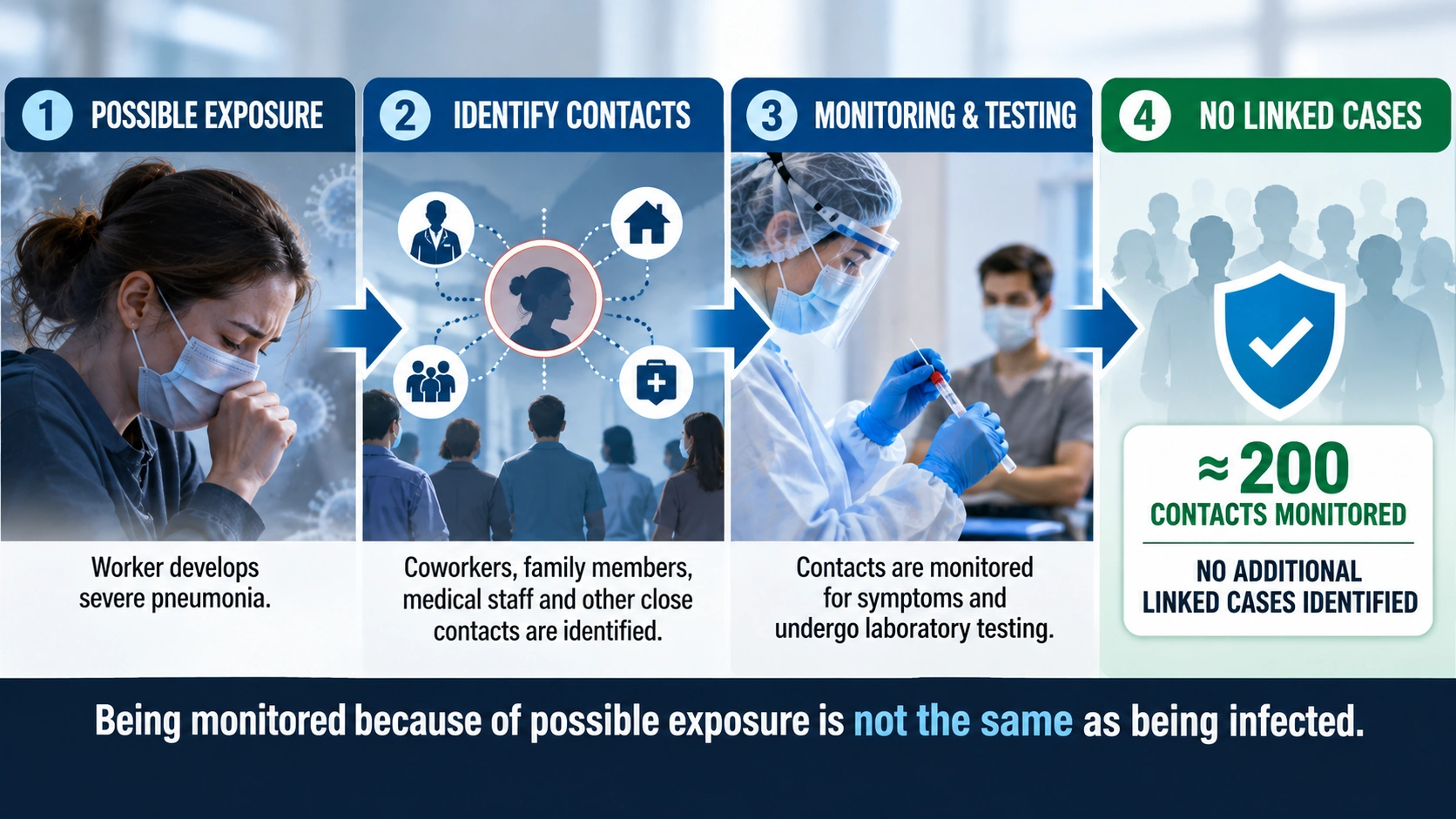
Being monitored because of possible exposure is not the same as being infected.
When doctors encounter a potentially dangerous infectious disease, they do not necessarily wait for a final diagnosis before taking precautions.
Health authorities may identify the patient’s coworkers, household members, medical staff, and other close contacts. They can then monitor symptoms and perform testing while investigating what caused the illness.
That is especially important when a disease could progress rapidly.
Russian authorities initially placed approximately 200 contacts under observation. The WHO’s October 10 report said Russia had conducted more than 5,500 laboratory tests, with no high-threat pathogens detected.
According to information supplied by Russia, all identified contacts remained without symptoms during their monitoring periods, and no additional linked severe pneumonia cases were found. (WHO)
The numbers are easy to misunderstand.
More than 5,500 tests does not mean 5,500 infected people—or even 5,500 different people. A single individual can undergo multiple tests for different pathogens or at different times.
Likewise, the initial figure of approximately 200 people under observation described a precautionary response, not the number of confirmed cases.
The WHO also reported that Russian authorities said only the hospital where Shipilova was treated was placed under quarantine, contrary to earlier claims involving additional hospitals. This is the Russian authorities’ account, not an independent on-site finding by the WHO.
This is one reason responsible outbreak reporting distinguishes between suspected exposure, medical observation, laboratory testing, and confirmed infection.
But why did the possibility of plague provoke such a strong response in the first place?
What Is Pneumonic Plague, and Why Is It More Dangerous Than Bubonic Plague?
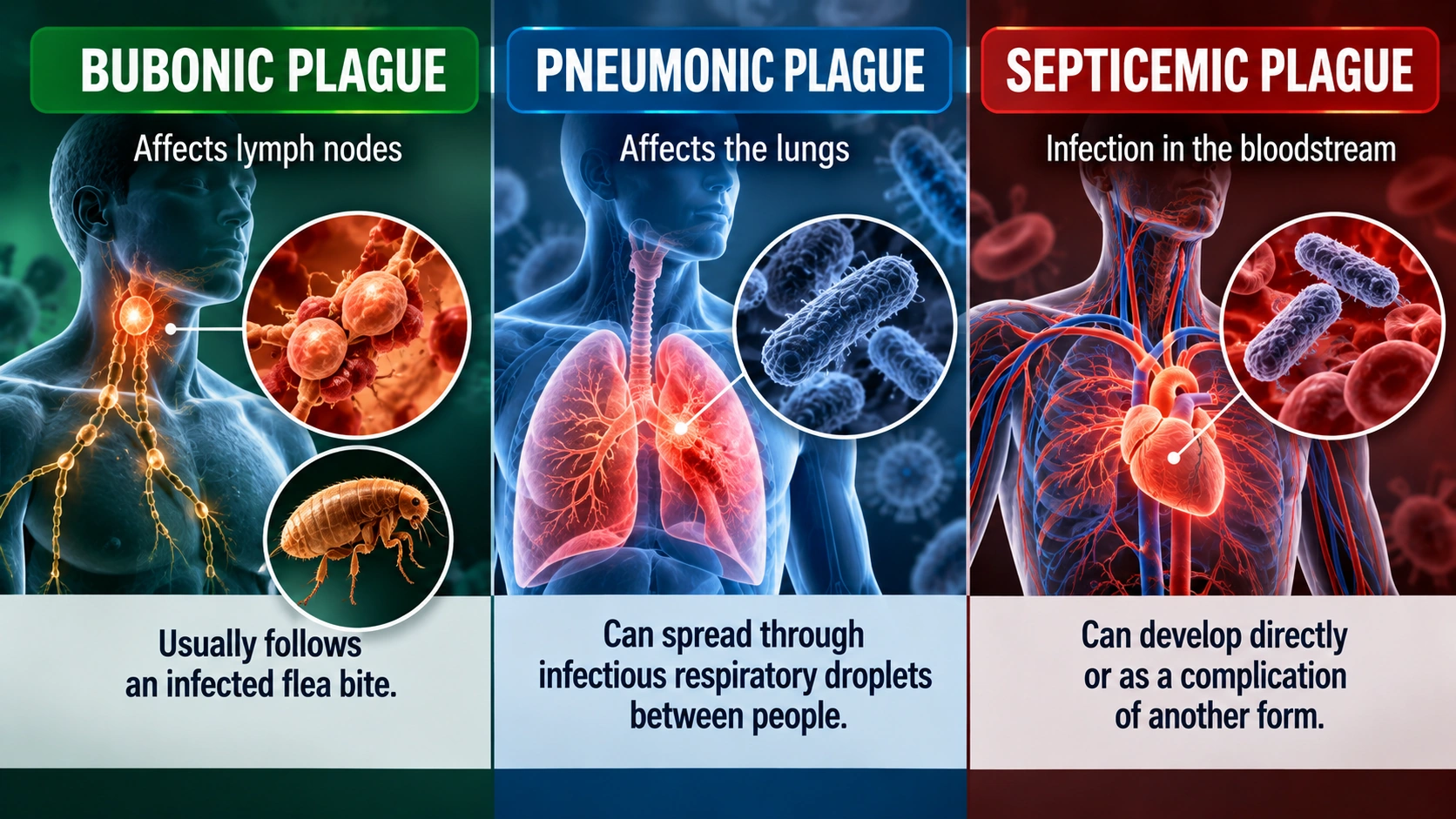
Pneumonic plague is the form of plague that infects the lungs. Unlike the more common bubonic form, it can spread directly between people through infectious respiratory droplets, generally during close contact with someone who is already ill.
All three major forms of plague are caused by the same bacterium, Yersinia pestis. What changes is where the infection develops and how it may spread. (CDC)
| Type | Main effect | Typical route or characteristic |
|---|---|---|
| Bubonic plague | Swollen, painful lymph nodes | Usually follows an infected flea bite |
| Pneumonic plague | Severe lung infection | Can spread through infectious respiratory droplets |
| Septicemic plague | Infection in the bloodstream | Can develop directly or as a complication of another form |
The names sound like different diseases, but they describe different clinical presentations of one bacterial infection.
Pneumonic plague is particularly concerning because symptoms can develop quickly. The illness may cause fever, coughing, breathing difficulties, and rapidly worsening pneumonia.
Without timely treatment, it can be fatal. However, plague is a bacterial disease, not a virus, and effective antibiotic treatments exist. (WHO · CDC)
That makes a crucial difference from the medieval Black Death that most people associate with plague.
In the fourteenth century, plague spread through populations without modern antibiotics, diagnostic testing, intensive care, or contemporary infection-control systems.
Today, early recognition and treatment can dramatically change the outcome.
Can Pneumonic Plague Spread Like COVID-19?
Pneumonic plague can spread from person to person, but it does not have the same transmission pattern as COVID-19.
Public health agencies explain that pneumonic plague transmission typically requires close contact with someone who has symptoms and is releasing infectious respiratory droplets. It should not be treated as though it spreads with the same efficiency or under the same conditions as COVID-19.
The European Centre for Disease Prevention and Control (ECDC) likewise notes that transmission generally requires close, prolonged contact with a symptomatic patient. (CDC · ECDC)
This does not make pneumonic plague harmless. It remains a medical emergency.
But it helps explain why epidemiologists can take the disease seriously without automatically concluding that one suspected case signals an emerging global pandemic.
Why Hasn’t the WHO Ruled Out a Laboratory Exposure?
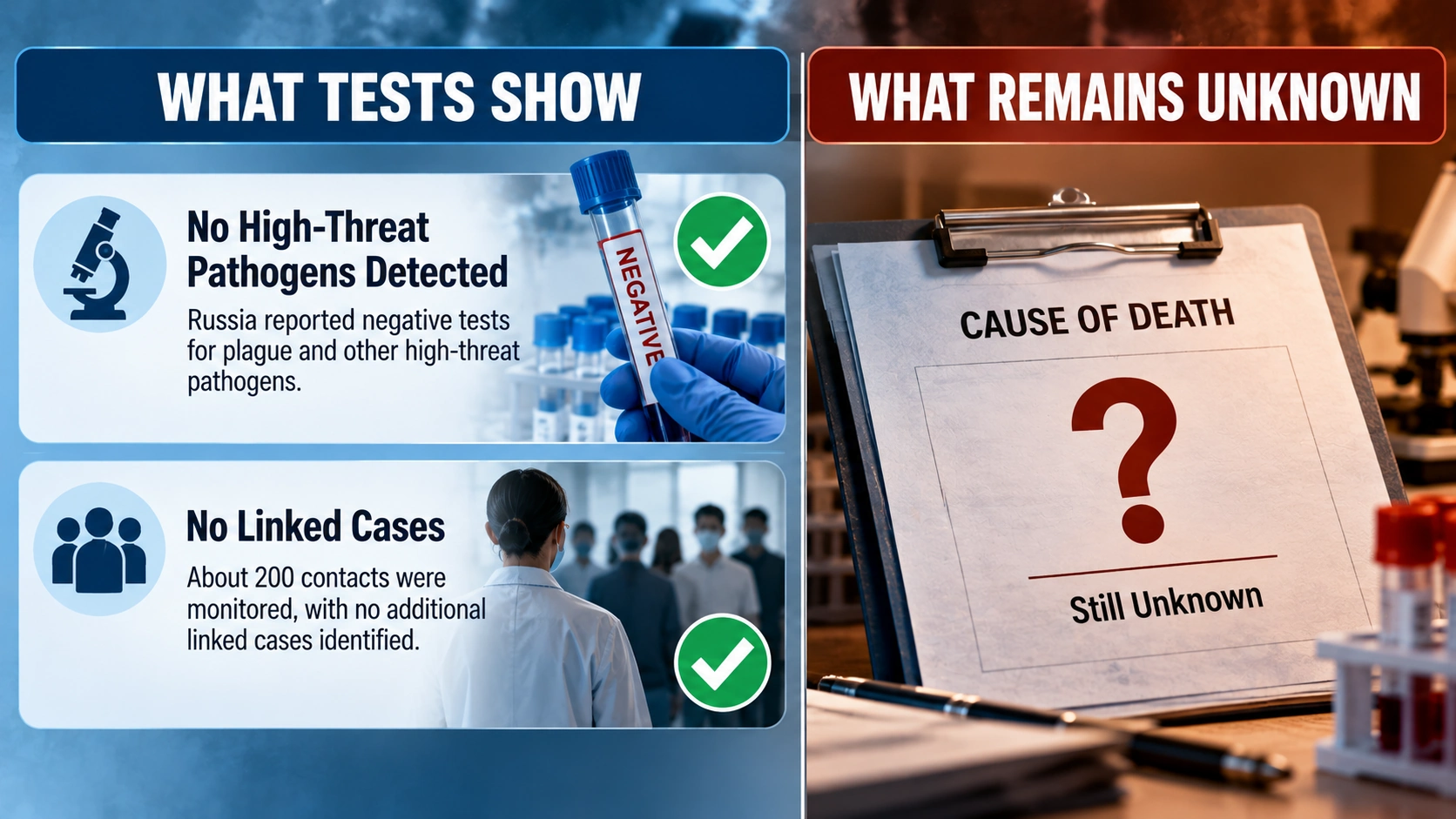
The WHO cannot fully exclude laboratory exposure because the worker’s fatal illness still lacks a confirmed cause.
That does not mean the organization has evidence that plague escaped.
It means the available information has not resolved the central medical question.
In its October 10 report, the WHO explained that Russia had reported negative tests for plague and other high-threat pathogens. It also acknowledged the absence of additional linked cases.
But the organization had not received a definitive diagnosis identifying what caused Shipilova’s fatal pneumonia. (WHO)
There are three separate questions here:
| Question | Status |
|---|---|
| Did testing identify plague or another tested high-threat pathogen? | Russia reported negative results. |
| Is there evidence of continuing transmission to other people? | The WHO identified no such evidence. |
| What caused the worker’s fatal pneumonia? | A definitive diagnosis remains unavailable. |
The first two findings are reassuring. The third prevents investigators from treating the entire matter as fully explained.
There is another important uncertainty.
Russian authorities said contacts were monitored for seven days. But the WHO noted that without knowing the cause of the original illness, it could not independently determine whether the monitoring period was sufficient to exclude every plausible cause. (WHO)
For example, the incubation periods and transmission characteristics of different infectious diseases are not identical.
A monitoring period appropriate for one pathogen may not resolve every question about another unidentified cause.
That is why the WHO called for additional clinical, epidemiological, and laboratory information.
Why Does Transparency Matter So Much?
The WHO needs detailed, timely information from national health authorities to assess potential international health threats.
On October 7, WHO Director-General Tedros Adhanom Ghebreyesus publicly asked Russia for additional details about laboratory testing, contact monitoring, and the circumstances behind the public health response.
The United States also pressed Moscow for more information as concerns spread. (WHO · The Washington Post)
On October 12, the World Medical Association urged Russia to share all available information about the laboratory worker’s death and its infection-control response. That was a call for greater transparency, not a finding that plague had been detected. (World Medical Association)
Russia, for its part, has said it provided information through established procedures and that its investigations found no laboratory accident.
Limited information is not proof of a cover-up. But incomplete information can prevent outside experts from independently resolving a legitimate safety question.
That is the broader problem this incident has exposed.
Could This Plague Scare Become a Pandemic or Affect Americans?
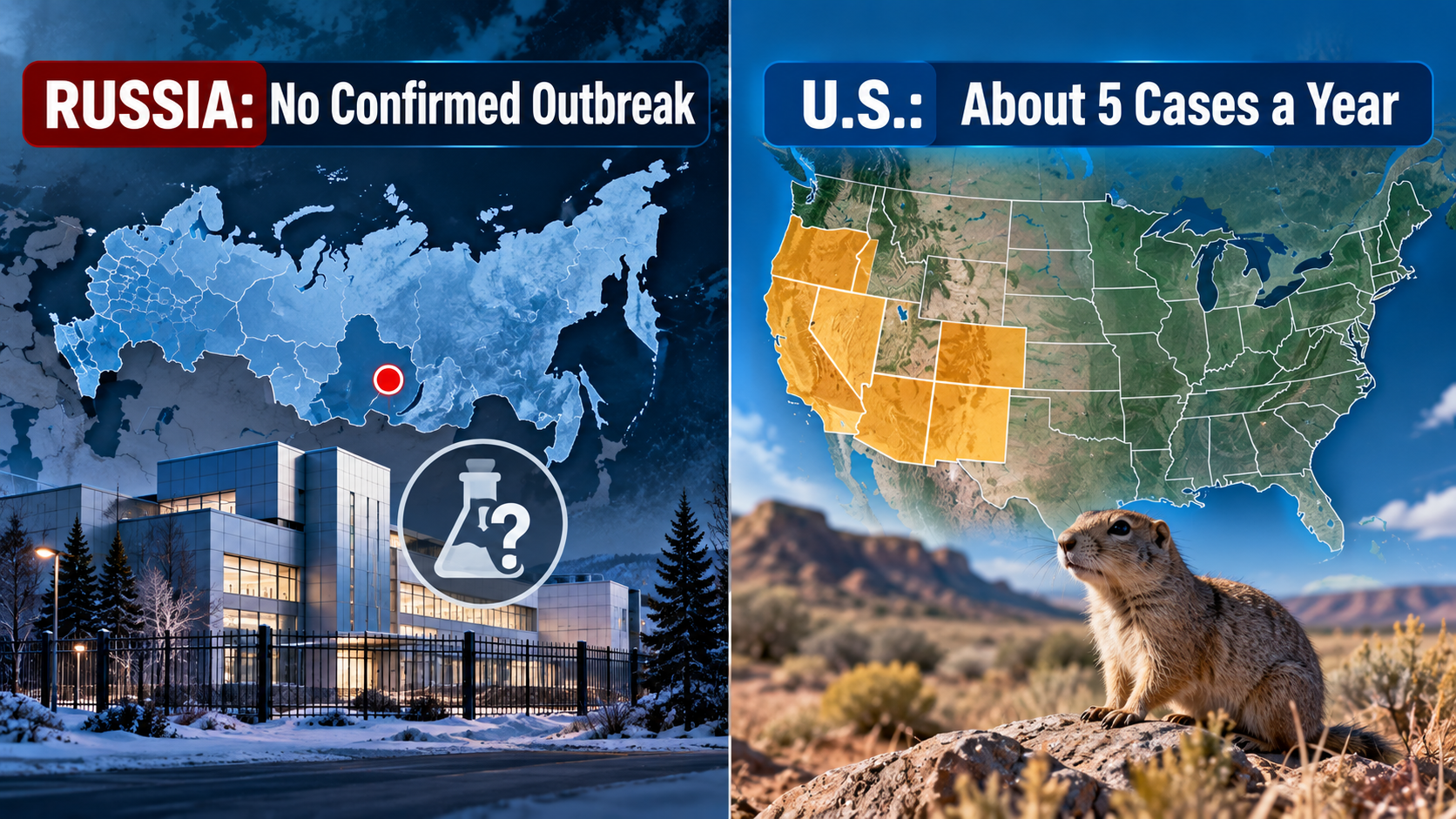
Based on the available evidence, a pandemic originating from this Russian incident appears unlikely. There are no confirmed linked plague cases or signs of sustained transmission.
That assessment is consistent with the WHO’s investigation and the ECDC’s public statement that there was no evidence of secondary cases or sustained human-to-human spread. (WHO · ECDC)
Scientists interviewed by Nature also considered a wider outbreak highly unlikely, pointing to the known biology of plague, available antibiotics, and established infection-control methods. (Nature)
But there is an interesting detail for American readers: plague has never completely disappeared from the United States.
According to the CDC’s statistics updated October 7, 2026, an average of approximately five human plague cases are reported annually in the United States.
Most occur in rural areas of the West, particularly parts of New Mexico, Arizona, Colorado, California, Oregon, and Nevada. These are generally associated with naturally circulating plague bacteria in wildlife and fleas—not international laboratory incidents. (CDC)
For Americans, there are two separate public health issues to understand.
First, the Russian incident raises questions about laboratory safety, disease surveillance, and international information sharing.
Second, plague itself remains a rare but real infectious disease in certain parts of the United States.
Neither fact provides evidence that the Russian incident has caused an outbreak in America.
The practical health message is straightforward: people should follow current public health guidance, avoid unnecessary contact with sick or dead wild animals in plague-endemic areas, and seek prompt medical attention if they develop concerning symptoms following a plausible exposure. (CDC)
What Would Finally Resolve the Russian Laboratory Mystery?
The biggest unanswered question is still the cause of Shipilova’s death.
More specifically, investigators need evidence that connects—or convincingly separates—her illness from the laboratory environment.
Three developments would be particularly important.
1. A Confirmed Medical Diagnosis
A definitive explanation of what caused the pneumonia could substantially narrow the investigation.
If a known pathogen is identified, investigators can evaluate whether the illness could plausibly have been acquired at work or elsewhere.
2. More Complete Laboratory Safety Findings
Russian authorities say investigations found no biosafety incident. Additional documentation about the laboratory’s safety procedures, occupational exposures, and investigative findings could help outside experts assess those conclusions.
The WHO has offered technical support related to high-threat pathogens and laboratory biosafety. (WHO)
3. Any New Cases Linked to the Original Illness
A newly confirmed infection among the worker’s contacts would materially change the public health assessment.
Likewise, convincing evidence that no further cases developed, supported by appropriate surveillance, would strengthen confidence that the incident remained isolated.
For now, the publicly reported results are reassuring: Russia says the contact investigations have concluded without finding additional linked cases, and the WHO has not identified ongoing transmission.
But the absence of a diagnosed cause of death means the underlying investigation is not fully settled.
Bottom Line: What This Story Really Means
The Russian plague laboratory controversy began with an unexplained death at a facility that researches dangerous infectious diseases.
Unverified reports of a broken test tube, an unusual quarantine response, and conflicting early statements fueled speculation about a possible release of plague bacteria.
The strongest available evidence does not establish that plague escaped from the laboratory or that an outbreak occurred.
Russian authorities reported negative testing for dangerous pathogens and no additional linked cases. The WHO has likewise identified no evidence of ongoing transmission.
Yet the worker’s cause of death remains undiagnosed, and the WHO has not completely excluded a possible work-related exposure.
For the general public, the current evidence does not justify fears of a new plague pandemic.
The lasting significance of this incident may be less about the prospect of another Black Death and more about the challenge of investigating dangerous infectious disease events when essential medical information cannot be independently verified.
The next meaningful development will not be another alarming rumor. It will be new, verifiable evidence explaining what happened to the worker—or showing that the investigation has ruled out particular causes.
Russia Plague Lab Leak: Key Questions Explained
Q. Has a plague leak been confirmed at the Russian laboratory?
No. As of the WHO’s October 10, 2026, report, there was no confirmed laboratory release of plague bacteria. Russian authorities denied that a biosafety accident had occurred, while the WHO said occupational exposure could not be completely excluded.
Q. What caused the death of Russian researcher Darya Shipilova?
The confirmed cause remains unknown. Russian authorities classified her death as pneumonia of undetermined cause and reported negative results for the dangerous pathogens tested.
Q. Did Darya Shipilova break a test tube containing plague bacteria?
There have been media and social media reports alleging that she broke a test tube containing Yersinia pestis. However, the incident has not been independently established, and Russian authorities deny that a laboratory accident occurred.
Q. Were approximately 200 people infected with plague in Russia?
No. Approximately 200 people were placed under medical observation because of possible contact with the deceased worker. Being monitored does not mean being infected, and no linked plague cases were identified.
Q. Has a second plague case been confirmed in Irkutsk?
No additional case linked to the worker has been confirmed. Russian authorities rejected reports of another case, and the WHO has not identified evidence of ongoing transmission.
Q. Is pneumonic plague different from bubonic plague?
Yes. Both are caused by the same bacterium, but bubonic plague primarily affects the lymph nodes, while pneumonic plague affects the lungs and can spread from person to person through infectious respiratory droplets.
Q. Can plague still be treated with antibiotics?
Yes. Modern antibiotics can successfully treat plague, especially when treatment begins promptly. Pneumonic plague can progress rapidly, so suspected infections require urgent medical assessment and treatment.
Q. Does plague still occur in the United States?
Yes. The CDC reports an average of about five human plague cases annually, mostly in rural western states. These cases are generally associated with natural animal and flea reservoirs.
Q. Does the WHO believe another pandemic is beginning?
The WHO has identified no evidence of ongoing transmission related to the Russian incident. Its assessment remains limited by the absence of a confirmed diagnosis explaining the laboratory worker’s death.
Q. What information is the WHO still seeking?
The WHO has requested additional clinical, epidemiological, and laboratory details, particularly a confirmed diagnosis and information sufficient to assess the possible source of the worker’s fatal illness.
Did this help make the story clearer? 🙂 WIN keeps unpacking the “why” behind the news—clearly and simply!
Sources
Official Investigation and International Health Response
WHO Director-General’s Remarks on the Irkutsk Incident, October 7, 2026
Laboratory Incident, Disputed Claims, and Reporting
Reuters — What We Know About the Death of a Worker at Russia’s Plague Institute
Associated Press — Mystery Surrounds Young Worker’s Death at Russian Laboratory
DW Fact Check — Misleading Claims Spark Plague Fears in Russia
ABC News — Death of Russian Laboratory Worker Being Monitored by U.S. and European Officials
Nature — Plague Scare: What Scientists Know, and What Russia Won’t Say
The Washington Post — U.S. Raises Pressure on Russia for Information on Plague Death
Plague Transmission, Treatment, and U.S. Epidemiology
World Health Organization — Plague Fact Sheet
U.S. Centers for Disease Control and Prevention — Plague Signs and Symptoms
U.S. Centers for Disease Control and Prevention — Clinical Care and Treatment of Plague
Keep Reading
Could Future Biological Threats Look Different From an Accidental Lab Exposure?
The Irkutsk case concerns an unconfirmed occupational exposure. A separate concern is whether powerful AI tools could make deliberate biological misuse easier. Bill Gates’ warning examines that broader biosecurity question without suggesting that AI or intentional misuse played any role in the Russian incident.
Bill Gates Says AI Could Help Cause a Billion Deaths—What Does He Actually Mean?