Can the FDA’s New Jemperli Approval Help Some Rectal Cancer Patients Avoid Surgery?

Could someone diagnosed with rectal cancer really avoid surgery, chemotherapy, and radiation—and still have no detectable signs of cancer?
For years, that would have sounded like an extraordinary possibility. Rectal cancer treatment has often involved months of chemotherapy and radiation, sometimes followed by major surgery. Even when those treatments work, patients can face lasting changes to their daily lives.
Now, a new FDA approval is bringing a different approach into mainstream cancer care.
On October 19, 2026, the U.S. Food and Drug Administration granted accelerated approval for Jemperli (dostarlimab), an immunotherapy that may allow some patients with locally advanced rectal cancer to avoid conventional treatments.
But the approval comes with an important limitation: It applies to a small, genetically defined group of patients—not everyone diagnosed with rectal cancer. And avoiding surgery today does not necessarily mean a patient will never need it.

※ Images in this article are AI-generated illustrations created to help explain the story. They are not actual photographs, and depictions of people, places, or events may differ slightly from reality.
The promise is significant. So is the need to understand what the clinical trials actually showed, who qualifies, and why patients still need careful monitoring afterward. (FDA)
Who Can Actually Receive Jemperli for Rectal Cancer?
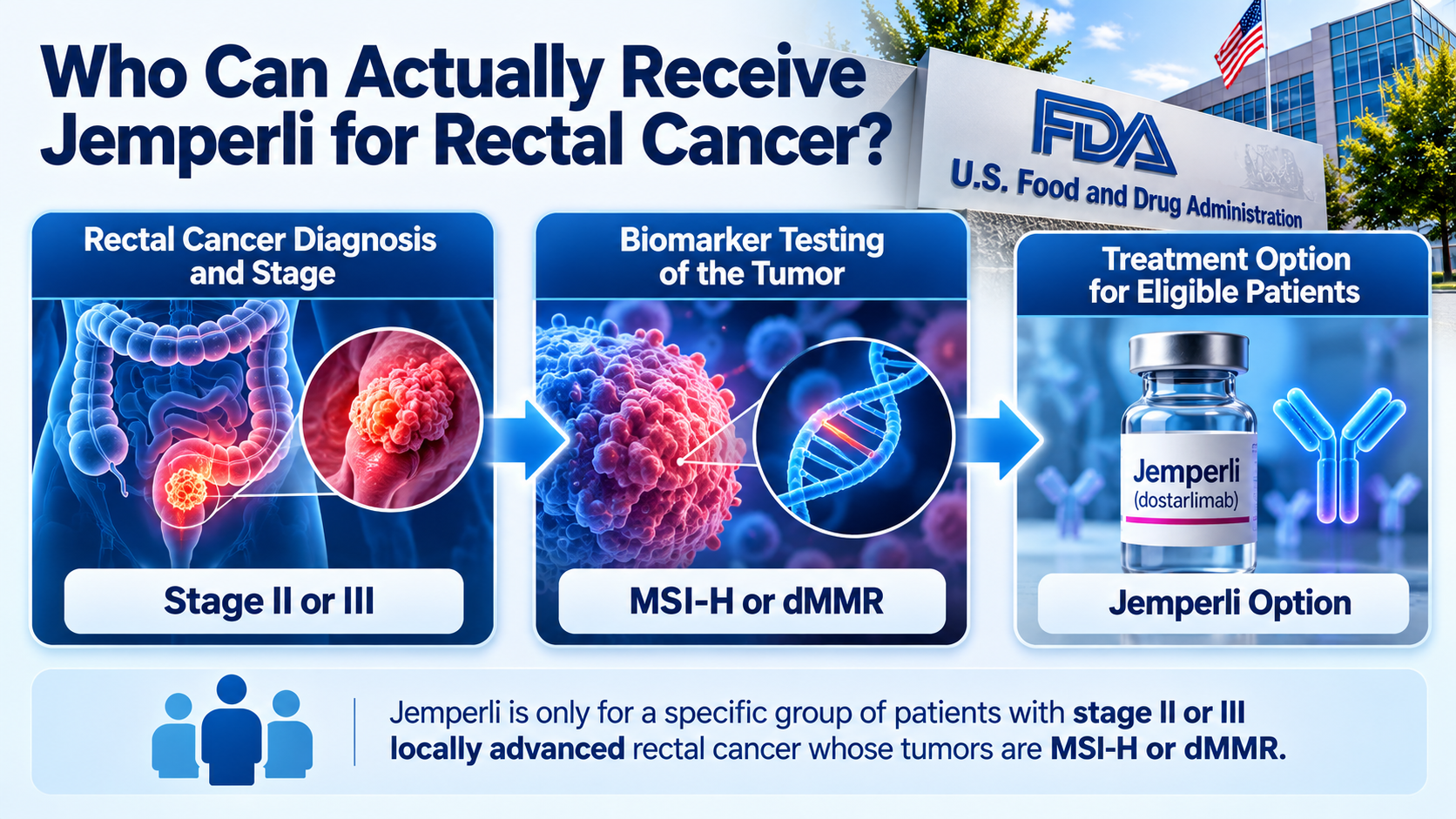
The new FDA approval covers adults with stage II or stage III locally advanced rectal cancer whose tumors have a specific biological characteristic known as dMMR or MSI-H.
Rectal cancer develops in the rectum, the final part of the large intestine before the anus.
Stage II generally means the cancer has grown through the rectal wall and may extend into nearby tissue without spreading to regional lymph nodes. Stage III means nearby lymph nodes are involved. Neither stage necessarily means the cancer has spread to distant organs.
But having stage II or III rectal cancer is not enough to qualify for this particular immunotherapy.
The tumor also must test positive for at least one of two closely related characteristics:
- dMMR (mismatch repair deficient): The cancer cells have a defective system for repairing certain DNA errors.
- MSI-H (microsatellite instability-high): The tumor shows substantial instability in repeated DNA sequences, typically reflecting problems with DNA repair.
These characteristics help identify tumors that may respond especially well to certain immunotherapies.
The FDA says published estimates suggest approximately 3% of locally advanced rectal cancers have these features. That makes the newly approved treatment highly relevant to eligible patients but unsuitable as a general replacement for surgery across the broader rectal cancer population. (FDA)
The approval is also for Jemperli used on its own, rather than as part of a chemotherapy combination.
The clinical trials supporting this new use enrolled patients whose locally advanced rectal cancer had not previously been treated. A patient’s complete medical history, test results, and treatment options still need to be reviewed by their cancer care team.
Why Does This Particular Genetic Feature Make Immunotherapy Work?
The unusual sensitivity of some rectal cancers to Jemperli begins with a problem inside the cancer cells themselves: their DNA repair machinery does not work properly.
Every time a cell divides, it copies its DNA. That copying process can introduce small mistakes.
Healthy cells normally have systems that catch and repair many of those mistakes. One is called the mismatch repair system.
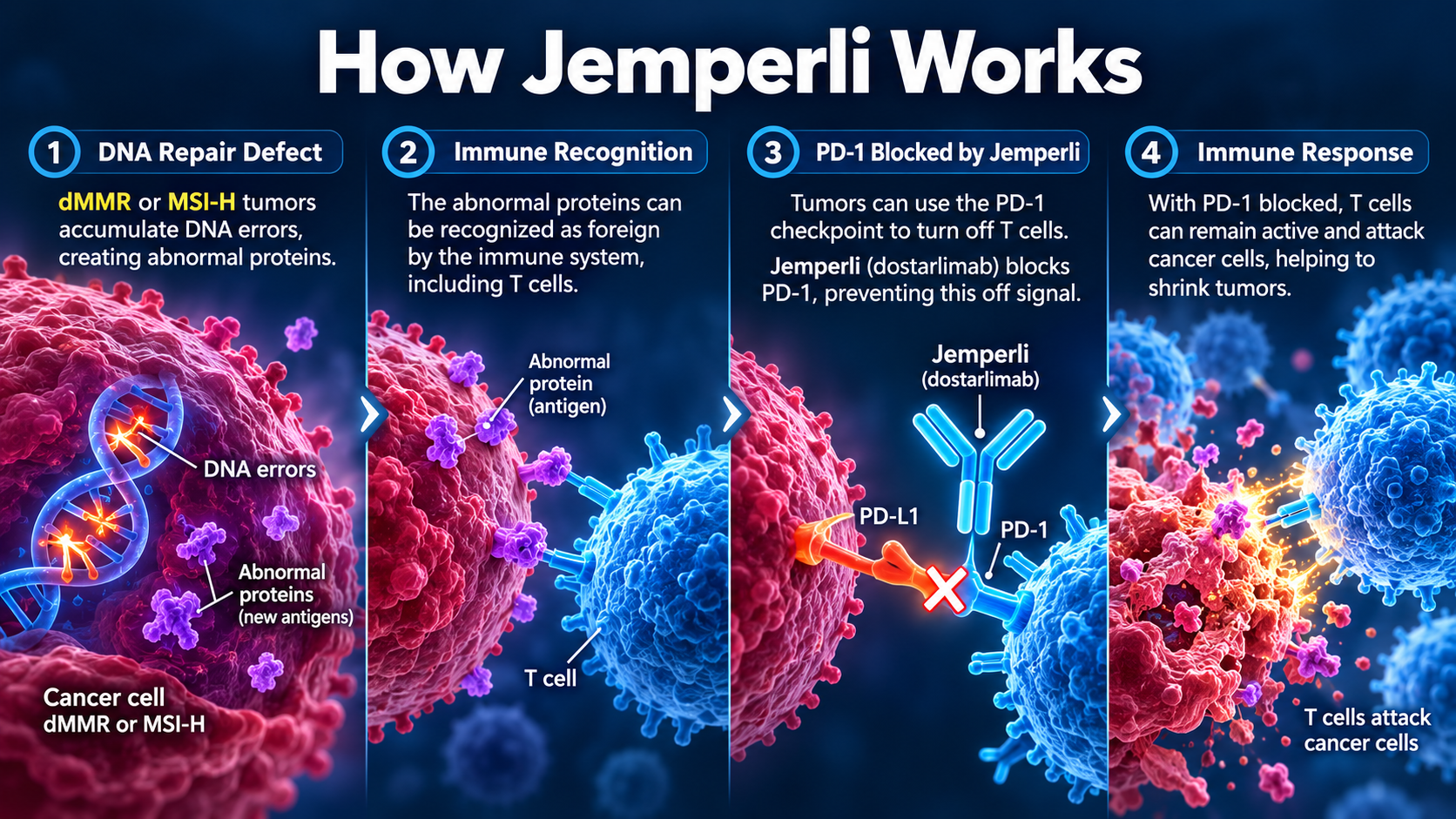
When that system fails, errors can accumulate. Some of these changes produce abnormal proteins that the immune system may recognize as foreign.
That can make certain cancer cells more vulnerable to immune attack.
Yet cancers have ways to protect themselves. One involves an immune checkpoint called PD-1.
How Jemperli removes an immune-system brake
PD-1 is a protein found on immune cells, including T cells. It helps regulate their activity so they do not attack healthy tissues indiscriminately.
Some tumors exploit this signaling pathway to weaken immune responses against them.
Jemperli is a PD-1 checkpoint inhibitor. By blocking PD-1, it can restore the ability of immune cells to attack susceptible cancer cells.
The treatment does not repair defective DNA. It changes how the immune system responds to the tumor.
This distinction matters because immunotherapy is not automatically effective against every type of cancer. The underlying biology helps determine who is most likely to benefit. (FDA)
There is another genetic question worth understanding.
Some dMMR or MSI-H colorectal cancers are associated with Lynch syndrome, an inherited condition that increases the risk of certain cancers. Others arise from changes that occur only within the tumor.
A positive tumor biomarker test does not automatically mean someone has Lynch syndrome. Depending on the findings, a physician may recommend additional genetic evaluation. (National Cancer Institute)
What Did the Clinical Trials Actually Show?
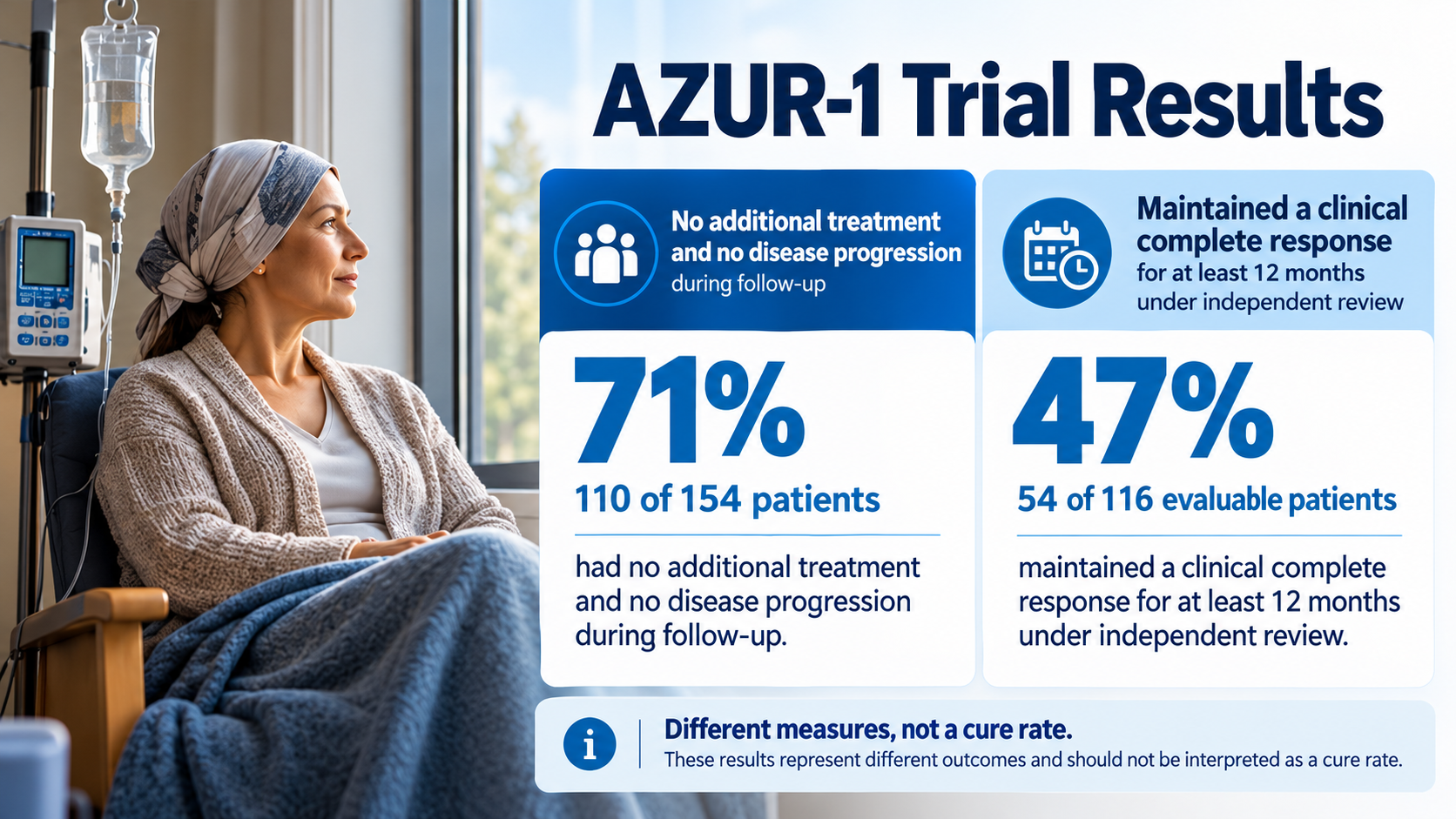
The largest study supporting the FDA’s new approval found that 71% of participants received Jemperli without needing another cancer treatment or experiencing disease progression during the reported follow-up.
That is encouraging. But it is not the same as saying 71% were permanently cured.
The pivotal study, called AZUR-1, enrolled 154 patients with previously untreated stage II or III dMMR/MSI-H locally advanced rectal cancer.
Participants received an intravenous infusion of Jemperli every three weeks, for up to nine treatment cycles over approximately six months.
Doctors assessed the tumors using endoscopy, MRI, and CT imaging.
The FDA’s October 19 approval announcement reported several important outcomes:
| Clinical measure | Reported result | What it tells us |
|---|---|---|
| No additional treatment and no progression | 110 of 154 patients (71%) | These patients received Jemperli alone and had no reported disease progression during follow-up |
| Surgery after treatment | 26 of 154 patients (17%) | Some patients still required surgery |
| Sustained clinical complete response for 12 months, independent review | 54 of 116 evaluable patients (47%) | No detectable cancer was maintained for at least 12 months under this assessment |
| Sustained clinical complete response for 12 months, investigator review | 68% of 144 evaluable patients | Treating investigators reported a higher rate using their own assessments |
The distinction between these outcomes is essential.
The 71% figure is not a cure rate. It describes patients who had not needed additional treatment and had not experienced disease progression at the time of the analysis.
The 47% figure comes from an independently reviewed measure requiring a sustained clinical complete response over a specific period. Some other patients had already achieved a complete response but had not yet been followed long enough to meet that 12-month endpoint.
The investigators’ own assessments produced a higher rate, which is another reason not to treat a single percentage as the entire story.
The AZUR-1 median follow-up was 26.3 months. Among patients classified by independent review as having a complete, sustained complete, or near-complete response, no disease progression had been reported at that cutoff. Longer observation remains important. (FDA · The ASCO Post)
What about the earlier study where every patient’s cancer disappeared?
The excitement around dostarlimab did not begin with the October 2026 approval.
Researchers at Memorial Sloan Kettering Cancer Center had previously reported remarkable results in a smaller study.
The FDA’s review included data from 50 patients with the relevant rectal cancer subtype. All had no detectable signs of cancer after treatment, and approximately 93% maintained a clinical complete response for at least 12 months.
Of 27 patients followed for at least three years, one experienced a local recurrence. None underwent rectal cancer surgery or chemoradiation as part of their initial treatment in that study.
These findings helped establish why the larger AZUR-1 trial and subsequent FDA decision attracted such attention. (FDA · Memorial Sloan Kettering Cancer Center)
But the earlier trial was small, and both studies lacked a randomized comparison group receiving conventional treatment.
That limits how confidently researchers can compare long-term outcomes between the approaches.
Does No Detectable Cancer Mean the Patient Is Cured?
Not necessarily. A clinical complete response means doctors cannot detect signs of the tumor using their clinical assessments. It does not prove that every cancer cell has been eliminated.
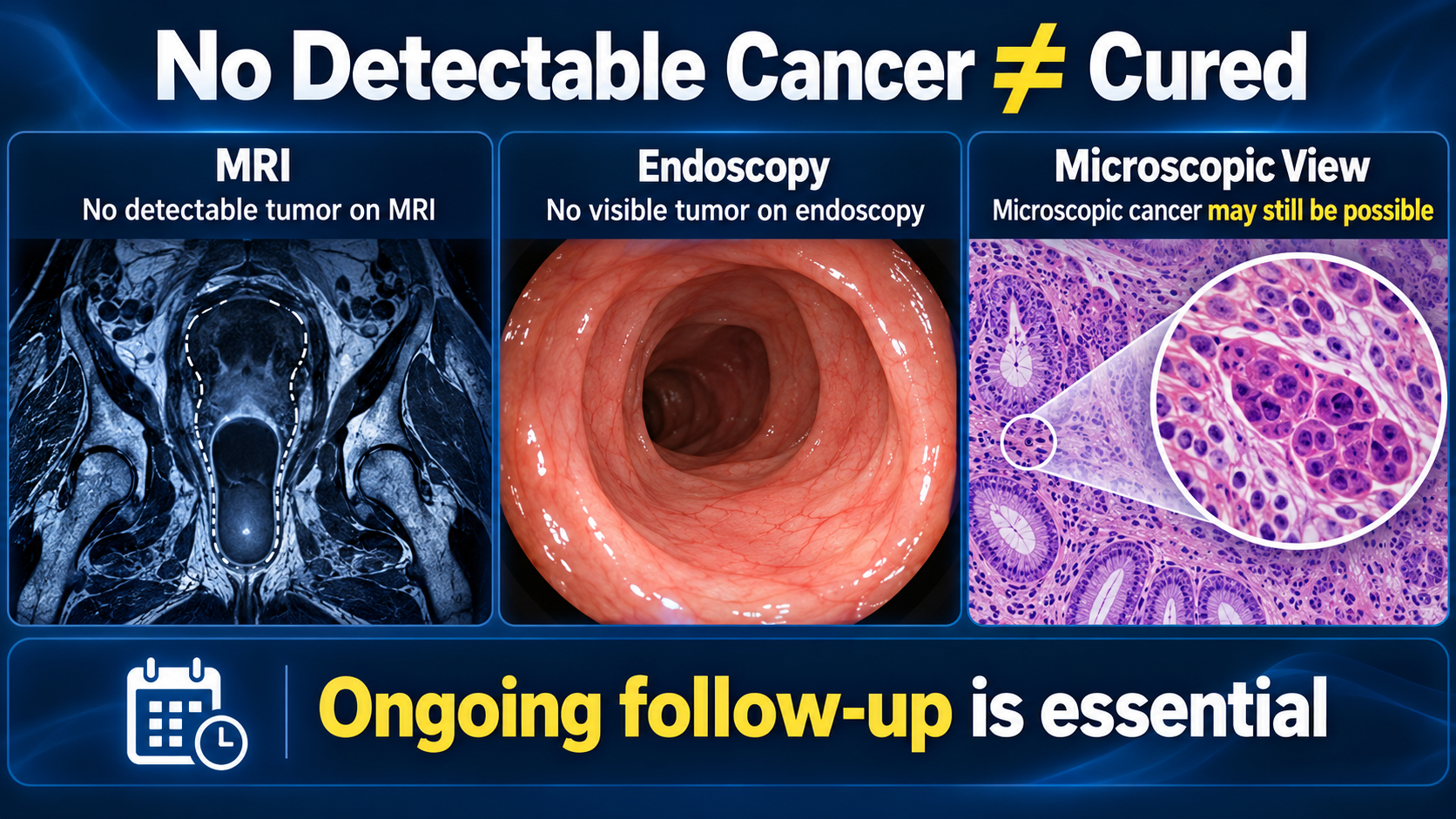
Cancer treatment has several terms that sound similar but describe different things.
| Term | Meaning |
|---|---|
| Clinical complete response | No cancer is detectable through the specified examinations |
| Pathological complete response | No cancer is found in examined surgical tissue |
| Recurrence | Cancer returns after treatment or a period without detectable disease |
| Cure | Cancer has been successfully eliminated, with no future recurrence; this cannot be guaranteed solely by an early response |
These distinctions become particularly important when surgery is omitted.
When a tumor is removed, pathologists can examine the tissue. When doctors preserve the rectum instead, they rely on careful clinical assessment and ongoing follow-up.
The broader rectal cancer field already uses an approach called watch and wait for selected patients who achieve a complete response after treatment.
That means close medical surveillance rather than immediate surgery. It is an established management strategy in selected circumstances, but it requires consistent follow-up. (National Cancer Institute)
The new Jemperli approval adds another potential route to that strategy: eligible patients may achieve a response with immunotherapy alone.
Still, if cancer returns or remains detectable, additional treatment may become necessary.
If Patients Avoid Surgery, What Happens Instead?
Avoiding immediate surgery does not mean avoiding medical care. Patients who respond to Jemperli require regular examinations designed to detect a recurrence or a change in the tumor.
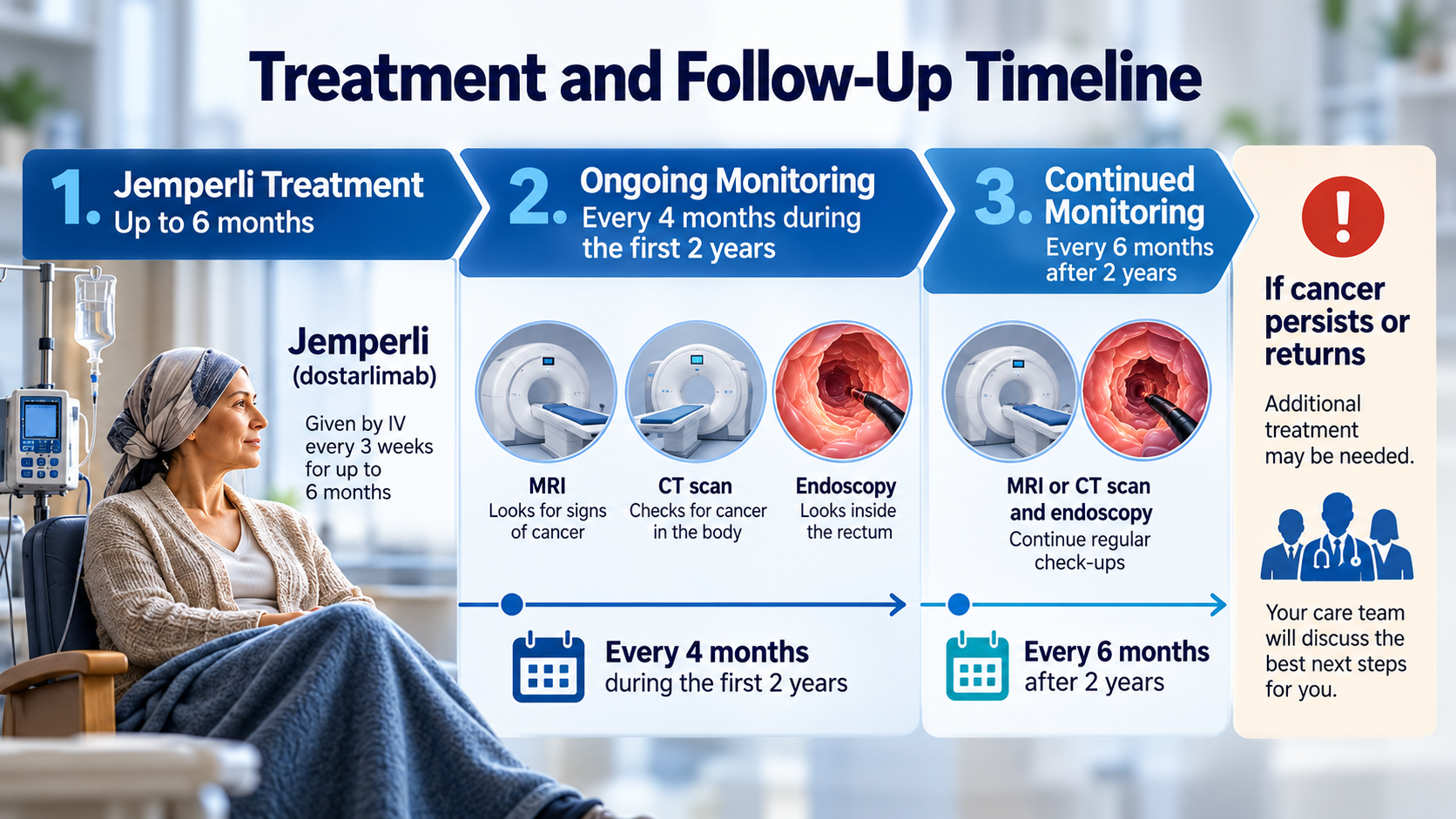
In AZUR-1, patients who met the clinical response criteria entered a nonoperative management period.
Their surveillance included regular imaging and other examinations:
- During the first two years, assessments were scheduled every four months.
- After that, assessments were scheduled every six months.
- If cancer persisted, progressed, or returned, doctors evaluated additional standard treatment options.
The exact monitoring plan outside a clinical trial must be individualized by the treating team. (AZUR-1 study design)
This is a significant trade-off.
A patient may avoid the immediate physical consequences of major rectal surgery, but accepts years of surveillance and the possibility that surgery or another treatment could still be needed.
Why avoiding rectal surgery can matter so much
The benefits extend beyond avoiding an operation.
Conventional treatment can affect bowel control, urinary function, sexual function, and fertility. Depending on the tumor and procedure, some patients require a colostomy, which diverts stool through an opening in the abdomen into a collection bag.
Not every rectal cancer operation requires a permanent colostomy, and surgical outcomes vary considerably.
Still, preserving the rectum and its function can be a major quality-of-life benefit for appropriately selected patients. (American Cancer Society)
That helps explain why even a treatment applicable to a small minority of patients can represent a meaningful advance.
Is Jemperli Safer Than Chemotherapy or Surgery?
Jemperli may help eligible patients avoid some serious complications associated with conventional rectal cancer treatment, but it is not a risk-free treatment.
Because immunotherapy stimulates immune activity, it can sometimes cause the immune system to attack healthy organs.
Potential complications include inflammation affecting the lungs, intestines, liver, hormone-producing glands, kidneys, and other tissues.
These reactions can occasionally be severe or life-threatening.
GSK reported that serious adverse reactions occurred in 20% of patients in AZUR-1. The commonly reported side effects included:
| Side effect | Reported frequency |
|---|---|
| Fatigue | 32% |
| Rash | 22% |
| Diarrhea | 18% |
| Itching | 17% |
These figures describe the trial population and do not predict what any individual patient will experience. (GSK)
Patients receiving immunotherapy must be evaluated and monitored for potential side effects. Some complications may require medications, treatment interruptions, or permanent discontinuation of Jemperli.
The clinical decision is therefore not simply a choice between a dangerous operation and a harmless drug.
It is a comparison of treatment effectiveness, side effects, long-term risks, and what matters most to the individual patient.
Why Did the FDA Grant Accelerated Approval Instead of Waiting for More Data?
The FDA granted accelerated approval because early clinical evidence was promising enough to permit use of Jemperli for this indication while longer-term benefits continue to be verified.
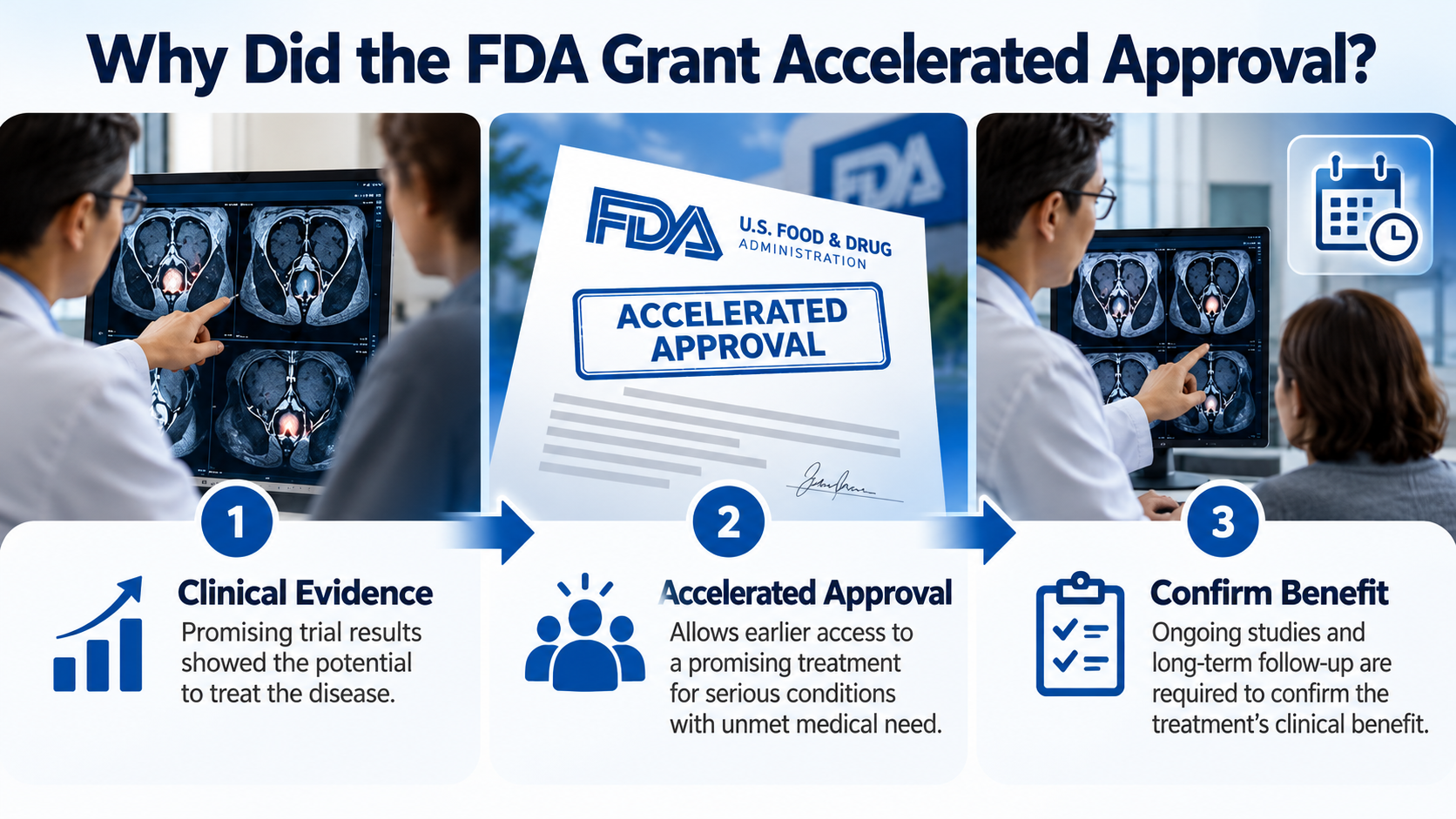
Normally, understanding whether a cancer treatment improves long-term survival or provides a durable benefit can take years.
The FDA’s accelerated approval program allows earlier access to certain treatments for serious conditions when a measure reasonably likely to predict clinical benefit supports approval.
For this rectal cancer indication, the FDA relied on sustained clinical complete response.
That is a meaningful result, particularly when treatment might preserve an organ and avoid serious long-term complications. But it does not answer every question about future recurrence or survival.
What happens after accelerated approval?
| Regulatory stage | What it means |
|---|---|
| Accelerated approval | The drug can be used for its approved indication while important long-term questions remain |
| Confirmatory evidence | Further studies and follow-up seek to verify the anticipated clinical benefit |
| Traditional approval | May follow when the required clinical benefit is verified |
| Withdrawal or change | May occur if subsequent evidence does not confirm sufficient benefit |
An accelerated approval is a real FDA approval, not merely permission to conduct a clinical trial.
But continued approval for this indication may depend on confirming that the promising early outcomes translate into durable clinical benefit. (FDA)
The FDA completed its review nearly four months ahead of its original target date.
Jemperli was not an entirely new medicine introduced in October 2026; it had already received approvals for other cancer indications. What changed was the authorization for this particular group of patients with locally advanced rectal cancer. (FDA · GSK)
The larger question is how reliably patients can maintain their response over many years.
What Should Rectal Cancer Patients Ask Their Doctors Now?
For someone newly diagnosed with rectal cancer, the most useful first question may not be whether Jemperli can eliminate the need for surgery.
It may be: Has my tumor been tested for dMMR or MSI-H?
The American Cancer Society explains that MSI and mismatch repair testing help doctors determine whether certain immunotherapies could be suitable for colorectal cancer. Those findings may also indicate whether additional evaluation for Lynch syndrome is appropriate. (American Cancer Society)
Patients discussing treatment options with their cancer team can raise several practical questions:
- What stage is my rectal cancer, and has it spread beyond the nearby area?
- Has my tumor undergone MSI or mismatch repair testing?
- If the tumor is dMMR or MSI-H, is Jemperli an appropriate option in my situation?
- What benefits and risks should I weigh against conventional treatment?
- What testing and follow-up would be required if I achieve a complete clinical response?
- What treatment would be recommended if the cancer does not respond or later returns?
The goal is not to encourage patients to reject established cancer treatment.
For many patients, chemotherapy, radiation, surgery, or a combination remains necessary and effective.
The significance of the October 19 approval is that some patients now have another FDA-approved treatment pathway to discuss with their physicians.
Bottom Line: What This Story Really Means
The FDA’s new approval of Jemperli represents a potentially life-changing advance for a specific group of adults with locally advanced rectal cancer.
For patients with stage II or III tumors that are dMMR or MSI-H, immunotherapy may make it possible to avoid chemotherapy, radiation, and major surgery.
The clinical results are encouraging. In the 154-patient AZUR-1 trial, 71% received Jemperli alone without additional treatment or disease progression during the reported follow-up.
But avoiding additional treatment is not the same as proving a permanent cure. Long-term follow-up remains essential, and some patients still require conventional therapy.
This story is ultimately about a change in how cancer treatment can be personalized.
Rather than treating every tumor according to its location alone, doctors can increasingly use its biological characteristics to identify a different treatment strategy.
For the patients whose tumors qualify, that distinction could profoundly affect both cancer care and everyday life.
Jemperli Rectal Cancer Treatment: Key Questions Explained
Q. Is Jemperli a newly discovered cancer drug?
No. Jemperli, also called dostarlimab, had already been approved for other cancer indications. The FDA’s October 19, 2026, decision authorized a new use for certain stage II and III rectal cancers.
Q. Can all rectal cancer patients now avoid surgery?
No. The new approval covers a specific group of adults whose stage II or III locally advanced rectal tumors are MSI-H or dMMR. Even among eligible patients, some may still need surgery or other treatment.
Q. How common is the type of rectal cancer eligible for this treatment?
The FDA cited published estimates suggesting that approximately 3% of locally advanced rectal cancers are dMMR or MSI-H.
Q. How is Jemperli administered?
In AZUR-1, participants received 500 mg of Jemperli through an intravenous infusion every three weeks, for up to nine cycles over approximately six months.
Q. Does the 71% result mean Jemperli cured 71% of patients?
No. The 71% figure refers to patients who received no additional treatment and had no disease progression during the reported follow-up. It is not a proven lifetime cure rate.
Q. What does clinical complete response mean?
It means no cancer is detectable through the specified clinical examinations, such as endoscopy and imaging. It does not guarantee that microscopic cancer is absent or that the cancer will never return.
Q. Can Jemperli cause serious side effects?
Yes. Jemperli can trigger immune reactions affecting healthy organs. Serious adverse reactions occurred in 20% of AZUR-1 participants according to GSK.
Q. Does an MSI-H or dMMR tumor automatically mean someone has Lynch syndrome?
No. Those tumor findings can be associated with Lynch syndrome, but they can also result from changes limited to the tumor. Additional genetic evaluation may be appropriate.
Q. Why is the FDA approval called accelerated?
The FDA allowed this new use based on promising clinical response evidence while requiring continued verification of long-term benefit. The indication is approved, but confirmatory evidence remains important.
Q. What happens if rectal cancer returns after Jemperli?
Doctors reassess the disease and determine whether surgery, chemotherapy, radiation, or another appropriate treatment is needed. Avoiding immediate surgery does not eliminate the possibility of future treatment.
Did this help make the story clearer? 🙂 WIN keeps unpacking the “why” behind the news—clearly and simply!
Sources
FDA Approval and Clinical Trial Findings
FDA — Accelerated Approval of Dostarlimab for Locally Advanced Rectal Cancer, October 19, 2026
The ASCO Post — FDA Approval and AZUR-1 Trial Results, October 19, 2026
Drug Manufacturer and Supporting Research
GSK — Jemperli Approved in the United States for MSI-H/dMMR Locally Advanced Rectal Cancer
Memorial Sloan Kettering Cancer Center — 2025 Immunotherapy Research Findings
ClinicalTrials.gov — AZUR-1 Study, NCT05723562
Treatment Standards, Biomarker Testing, and FDA Policy
American Cancer Society — Treatment of Rectal Cancer by Stage
American Cancer Society — Genetic and Biomarker Testing for Colorectal Cancer
National Cancer Institute — Rectal Cancer Treatment and Nonoperative Management