Can One Blood Test Really Screen for More Than 50 Cancers—and What Is the FDA Still Unsure About?

Update — October 1, 2026: This article has been updated to include the September 23 advisory committee votes. A favorable advisory recommendation is separate from the FDA’s final approval decision.
Can a single blood draw really tell you whether you have one of more than 50 cancers?
And if the test comes back negative, does that mean you can stop worrying about cancer—or skip the mammogram, colonoscopy, or lung scan your doctor already recommends?
Those are not quite the same question.
Galleri, made by GRAIL, looks for molecular patterns in DNA fragments circulating in the blood. It is designed to flag a possible cancer signal and suggest where that signal may have originated. It does not, by itself, diagnose cancer. (FDA)
One of the central questions in the FDA review is not simply whether the technology can find cancer signals.
It is whether the evidence is strong enough to support the proposed “early detection” claim.
That distinction was a focus of the September 23, 2026 FDA advisory committee review of Galleri’s proposed use in adults age 50 and older. According to GRAIL’s report of the meeting, the panel voted unanimously in favor of safety, 6–4 in favor of effectiveness, and 7–2 with one abstention that the benefits outweigh the risks. These advisory votes are not FDA approval. (GRAIL, September 23)
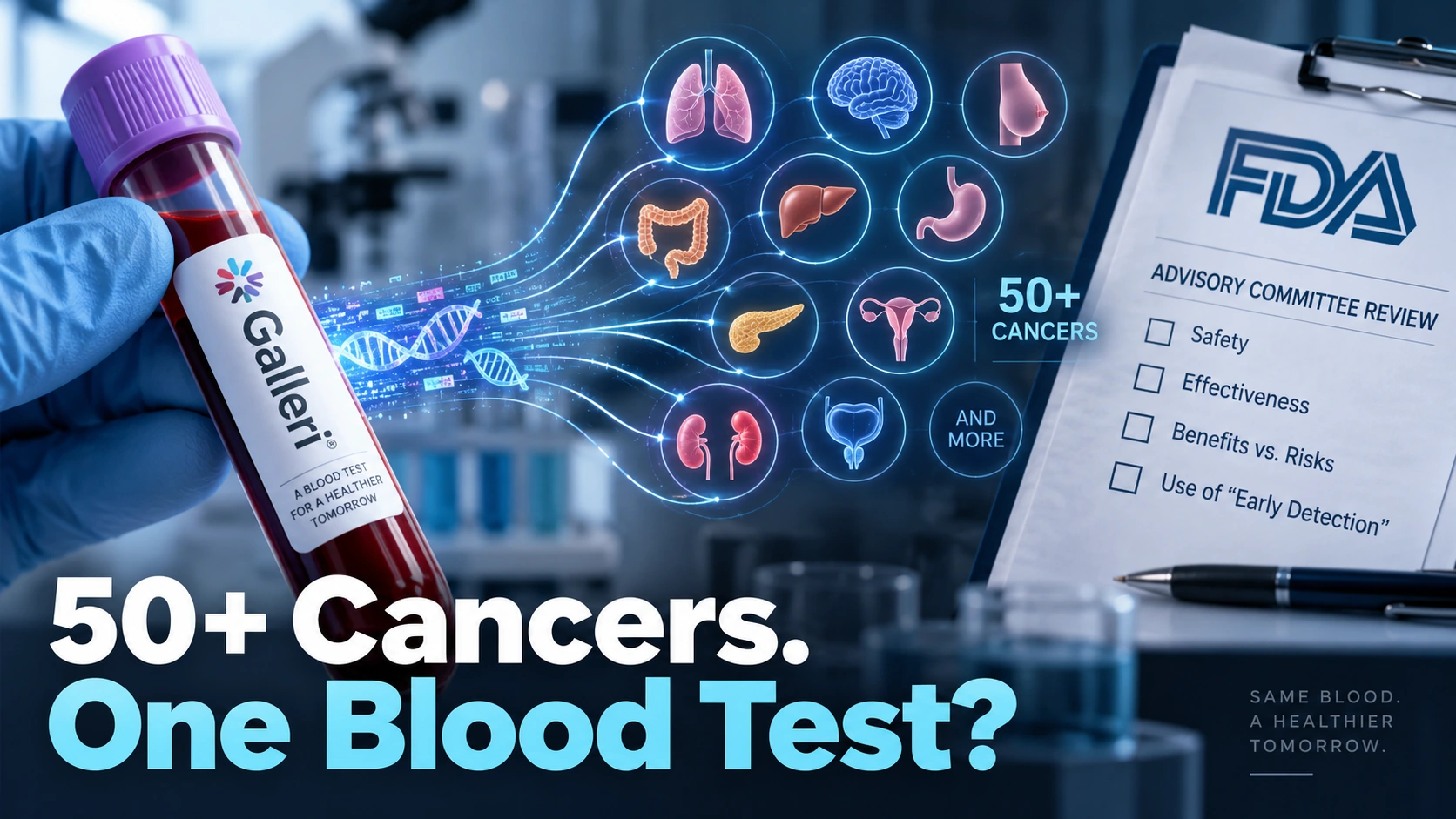
※ Images in this article are AI-generated illustrations created to help explain the story. They are not actual photographs, and depictions of people, places, or events may differ slightly from reality.
The FDA briefing materials released ahead of the meeting did not identify major unresolved issues with several aspects of the application, including analytical performance and primary safety. But that is not the same thing as FDA approval—and it does not settle the harder question of how well the test finds cancers when they are actually early. (Reuters)
What Does Galleri Actually Look For in Your Blood?
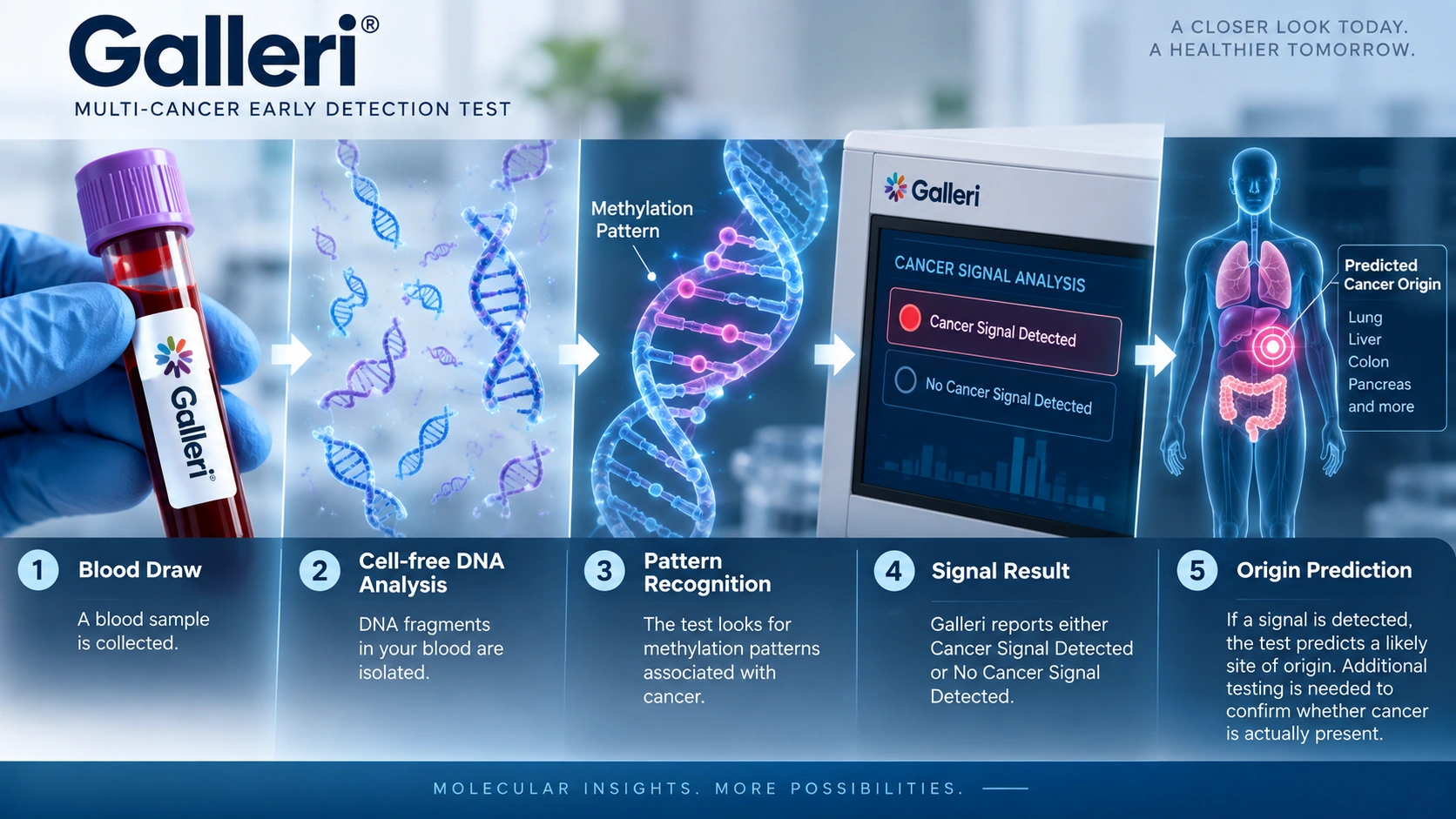
Galleri does not search the bloodstream for whole cancer cells. It analyzes cell-free DNA—small fragments of genetic material circulating in the blood—and looks for cancer-associated methylation patterns.
Methylation is a chemical tagging pattern on DNA. Cancer cells can produce patterns that differ from those found in normal cells, and Galleri uses next-generation sequencing and machine-learning classifiers to analyze those patterns. (FDA)
The basic pathway looks like this:
| Step | What Happens |
|---|---|
| 1. Blood draw | A blood sample is collected |
| 2. Cell-free DNA analysis | DNA fragments circulating in plasma are isolated |
| 3. Pattern recognition | The test looks for methylation patterns associated with cancer |
| 4. Signal result | Galleri reports either Cancer Signal Detected or No Cancer Signal Detected |
| 5. Origin prediction | If a signal is detected, the test predicts a likely site of origin |
| 6. Diagnostic workup | Imaging, biopsy, or other testing may be needed to determine whether cancer is actually present |
That last step is essential.
Galleri is a screening test. The FDA’s proposed labeling explicitly says that a positive cancer signal must be followed by diagnostic evaluation. It also says that a negative result does not rule out cancer. (FDA)
If Galleri Is Not FDA-Approved, How Can People Already Get It?
Galleri is already commercially available in the United States as a laboratory-developed test, even though it has not received FDA premarket approval.
That is why these two statements can both be true:
| Galleri Today | FDA Application |
|---|---|
| Doctors can already order it | FDA has not yet approved the PMA |
| It is performed by GRAIL’s laboratory | FDA is now reviewing a broader regulated indication |
| Patients can obtain it with a prescription | Availability does not mean FDA has endorsed its benefits and risks |
| Most health insurance plans do not cover it | FDA approval could matter for broader adoption and coverage |
The American Cancer Society notes that no multi-cancer detection test has yet received FDA approval, although tests including Galleri are available as laboratory-developed tests. It also stresses that these tests are not replacements for established cancer screening. (American Cancer Society)
Galleri’s current list price is $949, although discounted pricing or other coverage arrangements may be available; the company says most health insurance plans do not currently cover the test. (Galleri)
That helps explain why FDA approval matters even for a product people can already obtain. Approval could support broader distribution, clinical-guideline adoption, and future insurance coverage. (Reuters)
What Do the FDA Numbers Actually Say About Galleri?
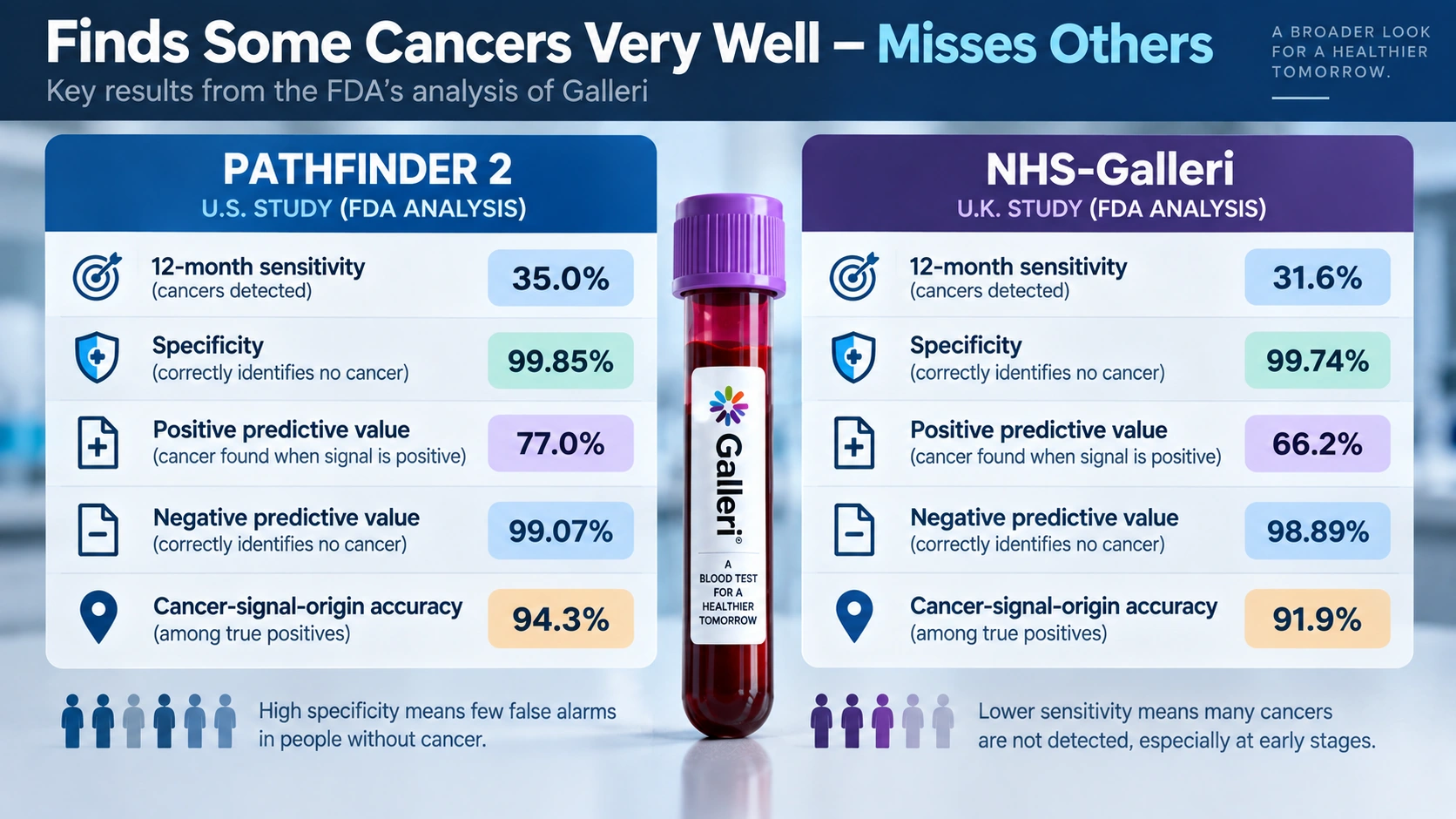
This is where a headline like “99% accurate” can become badly misleading.
In the FDA’s analysis, Galleri showed very high specificity in both major clinical datasets. That means people without cancer were usually classified correctly.
But sensitivity—the proportion of cancers detected—was much lower.
| FDA-Reviewed Measure | PATHFINDER 2 | NHS-Galleri |
|---|---|---|
| 12-month sensitivity | 35.0% | 31.6% |
| Specificity | 99.85% | 99.74% |
| Positive predictive value | 77.0% | 66.2% |
| Negative predictive value | 99.07% | 98.89% |
| Cancer-signal-origin accuracy among true positives | 94.3% | 91.9% |
(FDA)
Those percentages measure different things.
Specificity asks: among people without cancer, how often does the test avoid falsely signaling cancer?
Sensitivity asks: among people who actually have cancer, how often does the test detect it?
Positive predictive value asks: when the test does signal cancer, how often is cancer subsequently found?
Those are very different questions.
Galleri’s high specificity is important because false alarms in a cancer-screening program can trigger scans, biopsies, anxiety, and expense. But high specificity alone does not mean the test finds nearly every cancer.
In the NHS-Galleri analysis used by the FDA, the overall 12-month sensitivity was 31.6%. (FDA)
Why Is the FDA So Focused on the Words “Early Detection”?
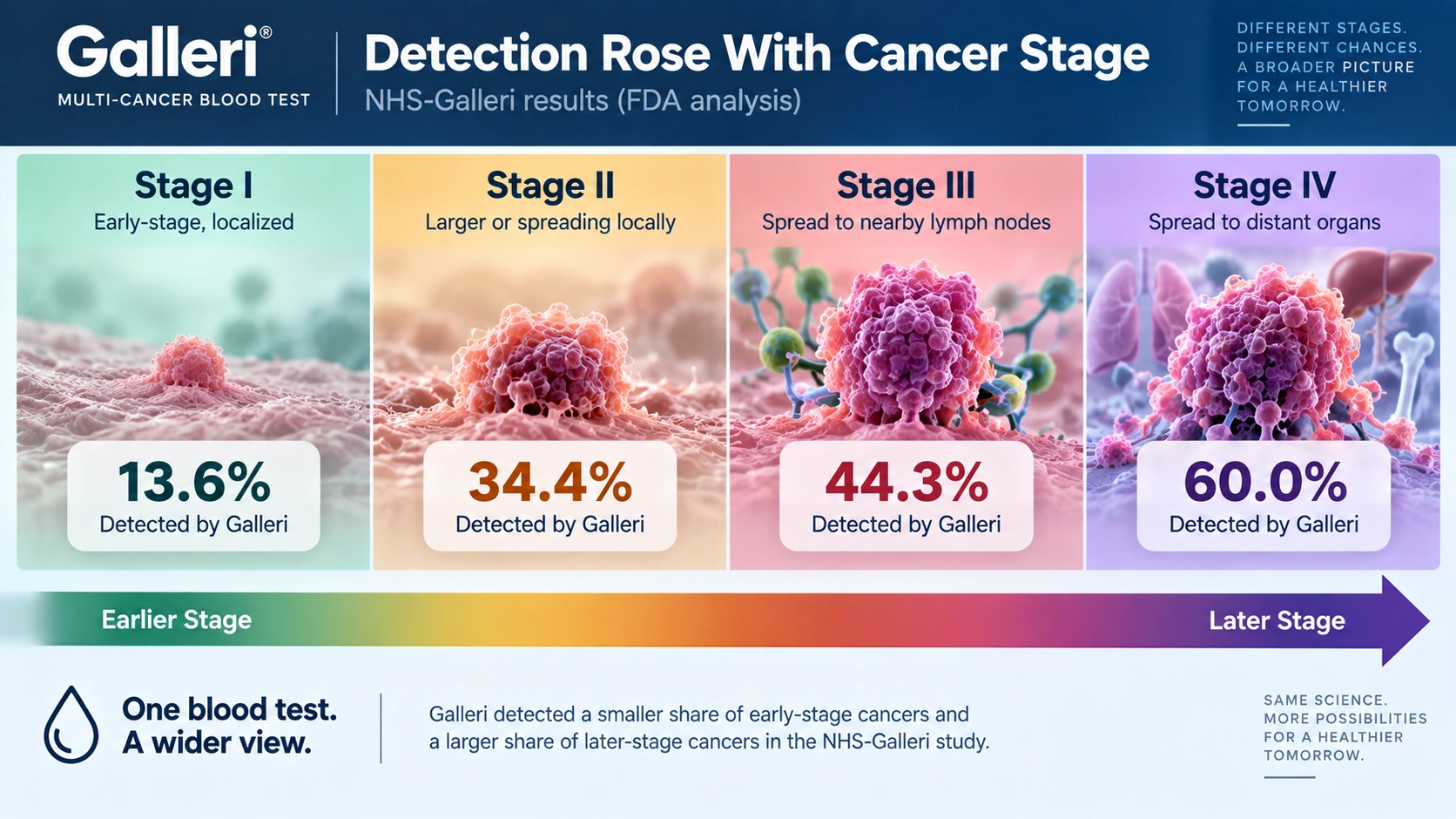
Because “detects cancer” and “detects cancer early” are not automatically the same claim.
The FDA’s NHS-Galleri analysis illustrates why.
Among cancers diagnosed during the 12-month assessment period, Galleri’s sensitivity increased sharply as cancers became more advanced:
| Cancer Stage | Galleri Sensitivity in NHS-Galleri |
|---|---|
| Stage I | 13.6% |
| Stage II | 34.4% |
| Stage III | 44.3% |
| Stage IV | 60.0% |
| Stage I–II combined | 20.5% |
| Stage III–IV combined | 50.2% |
(FDA)
That does not mean Galleri never finds early cancer. It did.
The FDA analysis says 97 of the 474 stage I or II cancers in that dataset were detected by Galleri. But it also shows that the test was substantially more likely to detect cancers at later stages than at stage I. (FDA)
That is why the FDA asked its advisers whether the proposed phrase “early detection” is supported by the stage-by-stage performance—or whether the indication should instead refer more generally to detecting multiple cancers without using the word “early.” (FDA)
Two words on a medical label can therefore carry a very large scientific meaning.
Does Galleri Work Equally Well for Every Cancer?
No. Performance varies substantially by cancer type.
That is another reason the phrase “more than 50 cancers” needs context.
In NHS-Galleri, FDA reviewers reported sensitivity of about 80% for liver and intrahepatic bile-duct cancers and 75% for ovarian or fallopian-tube cancers. For lung cancer it was about 64% and colorectal cancer about 53%.
But sensitivity was about 19% for breast cancer and about 11% for prostate cancer. Some cancer categories had too few cases to provide reliable estimates. (FDA)
That variation matters because the practical value of a multi-cancer test depends not merely on how many cancer names can appear on a list, but on how reliably the test detects each one—and at what stage.
The FDA has specifically asked the advisory panel to consider performance separately for cancers that already have recommended screening and cancers that do not. (FDA)
That is especially important because one of Galleri’s most attractive ideas is the possibility of finding cancers for which Americans currently have no routine population-screening program.
What Happens If Galleri Says “Cancer Signal Detected”?
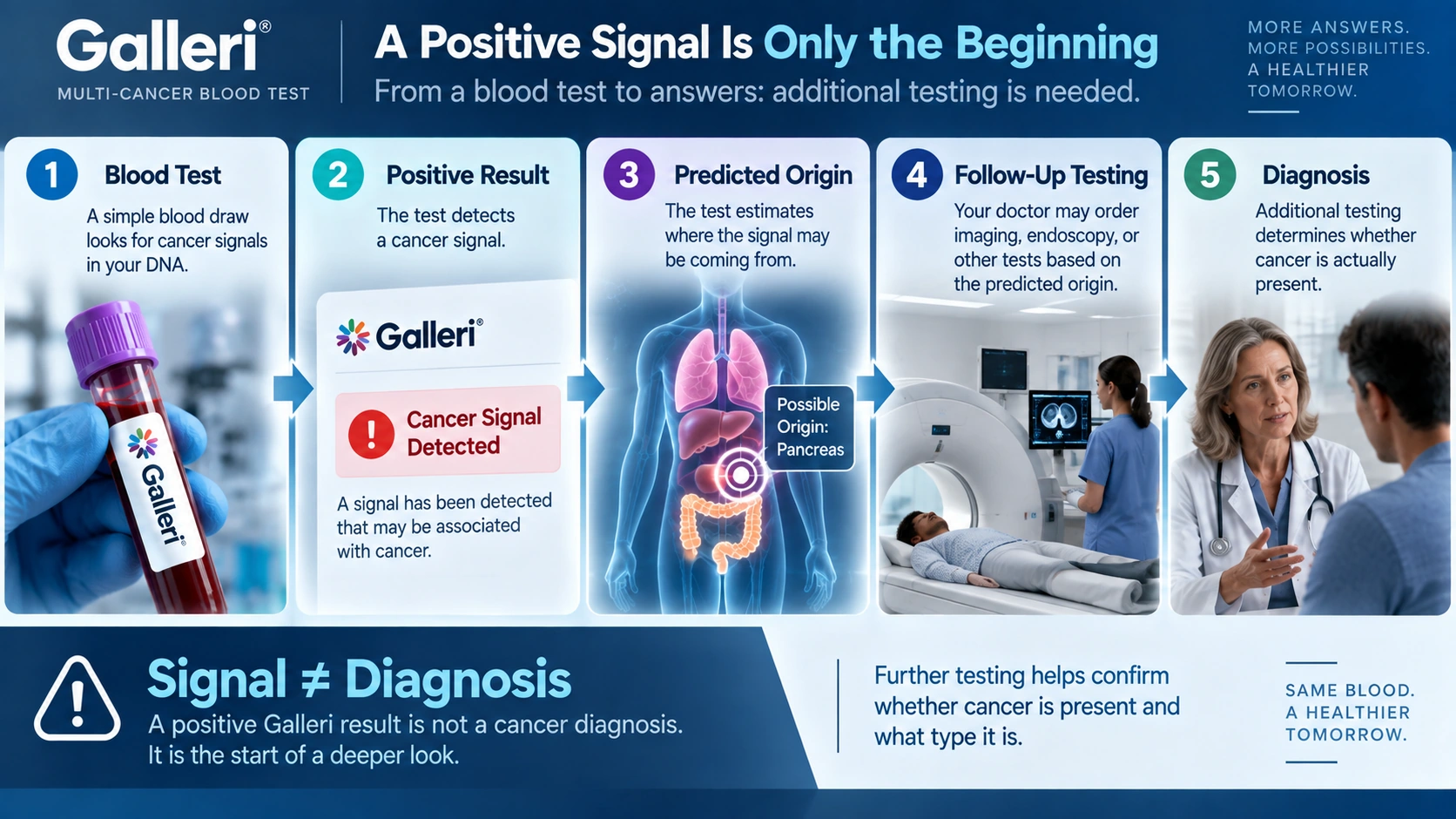
You do not receive a final cancer diagnosis from Galleri.
A positive result means the test detected a molecular pattern associated with cancer. Galleri then provides a predicted cancer signal origin—essentially its best estimate of where in the body the signal came from.
The next step may involve imaging, specialist evaluation, endoscopy, biopsy, or another diagnostic procedure depending on the predicted origin and the patient’s circumstances.
This distinction is one reason positive predictive value matters.
In PATHFINDER 2, 106 of 138 positive results included in the FDA analysis were associated with a cancer diagnosis within the follow-up period, producing a PPV of 77.0%. In NHS-Galleri, the corresponding figure was 259 of 391, or 66.2%. (FDA)
In other words, a positive Galleri result can be meaningful, but it is not the end of the diagnostic process.
It is the beginning of one.
If Galleri Is Negative, Can You Skip a Mammogram or Colonoscopy?
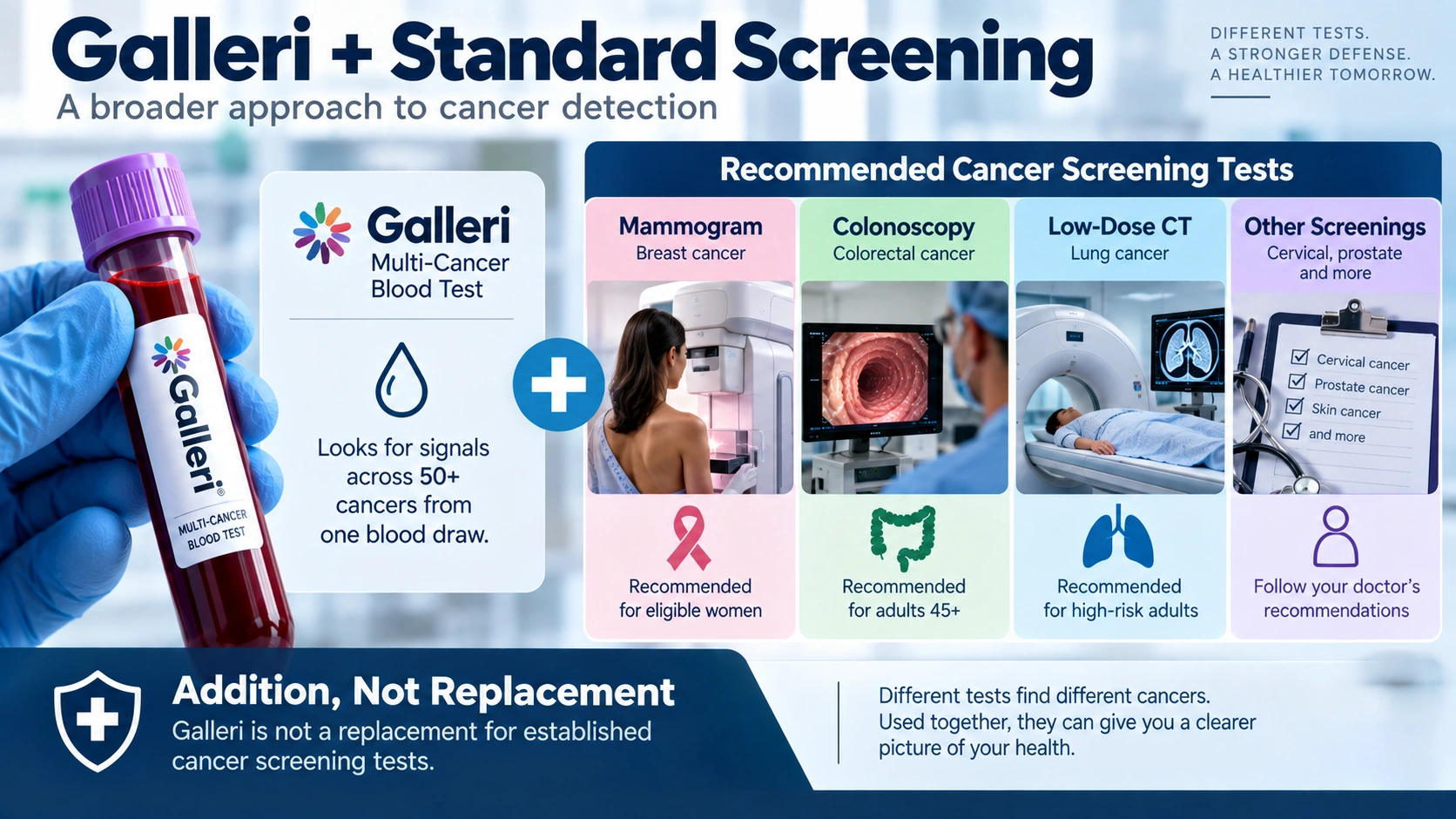
No.
This may be the most important practical point in the entire FDA review.
The proposed Galleri labeling states that a “No Cancer Signal Detected” result does not rule out cancer and that people should continue guideline-recommended single-cancer screening. It also states that Galleri is not a replacement for established screening or diagnostic procedures. (FDA)
The reason becomes clearer when you look at cancer-specific sensitivity.
In the NHS-Galleri data reviewed by the FDA, Galleri detected only about 19% of breast cancers and about 11% of prostate cancers diagnosed during the 12-month assessment period. (FDA)
A negative Galleri result therefore should not be interpreted as a universal cancer all-clear.
The National Cancer Institute lists false negatives and false reassurance among the major potential harms of multi-cancer detection testing, particularly if someone uses a negative result as a reason to skip established screening or ignore symptoms. (National Cancer Institute)
Didn’t a Huge UK Trial Raise Questions About Galleri Earlier This Year?
Yes—and this is one of the reasons the current FDA review is more complicated than the latest stock-market reaction might suggest.
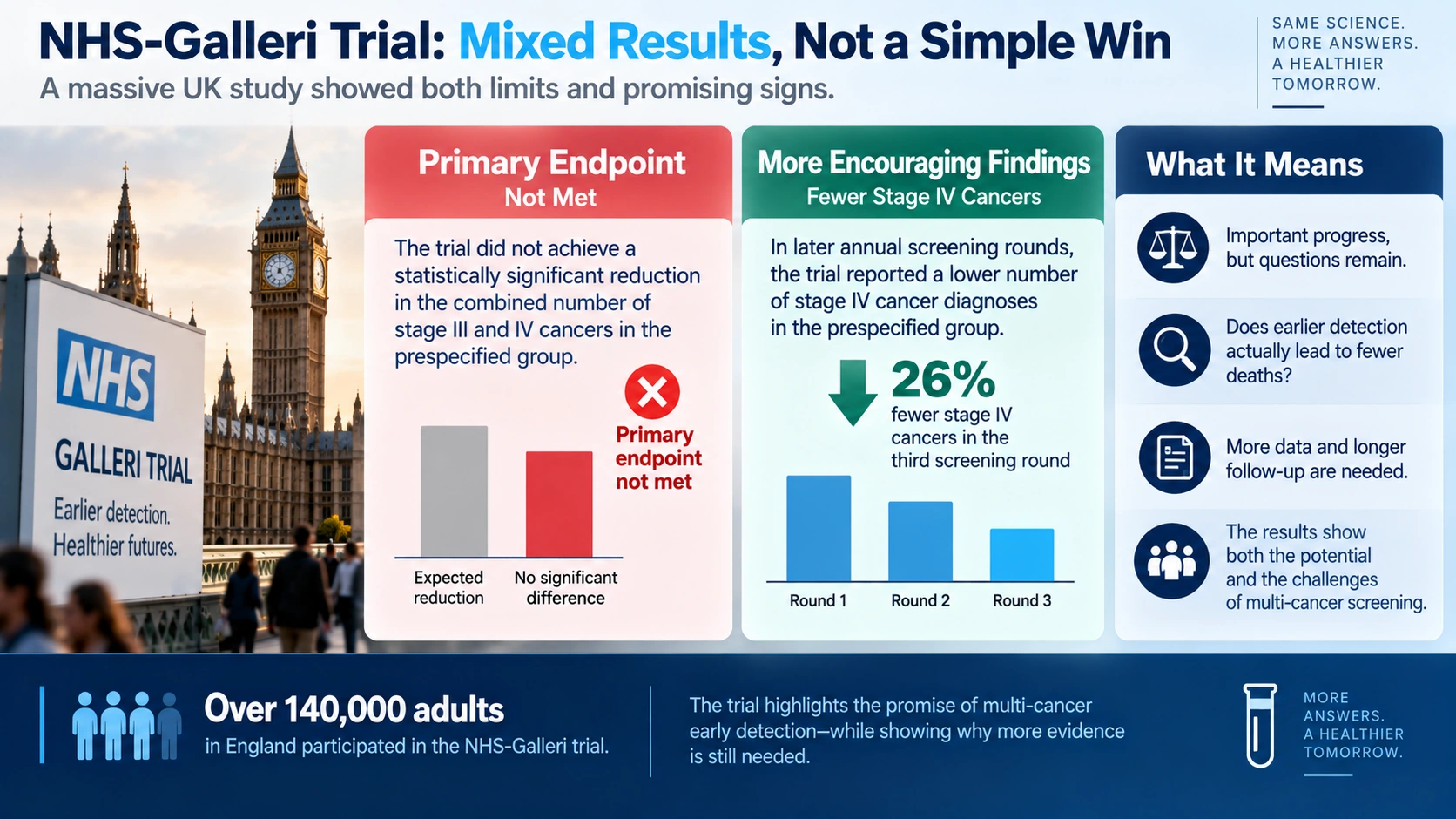
The NHS-Galleri trial enrolled more than 140,000 adults in England and tested whether adding Galleri to standard screening could reduce diagnoses of late-stage cancer.
Its primary endpoint—a statistically significant reduction in the combined number of stage III and stage IV cancers in a prespecified group—was not met. (Reuters)
But the study also produced findings GRAIL argues are encouraging.
The company reported reductions in stage IV diagnoses for the prespecified group of cancers in later annual screening rounds, including a 26% reduction in the third round, and said adding Galleri increased the number of cancers detected through screening. (GRAIL)
Those findings are not the same as proving that Galleri reduces cancer deaths.
The National Cancer Institute notes that definitive evidence showing that multi-cancer screening reduces cancer mortality remains an important unanswered question. Screening can only improve outcomes if finding a cancer earlier ultimately changes treatment and outcomes enough to outweigh harms such as false positives, unnecessary procedures, overdiagnosis, and false reassurance. (National Cancer Institute)
That is why “Can the test detect cancer?” is only the first question.
The harder question is: “Does using the test make people healthier in the long run?”
Why Did GRAIL’s Stock Jump If the FDA Still Has Questions?
Because investors were reacting to what was not in the FDA briefing documents.
Reuters reported that GRAIL shares jumped about 35% after FDA staff reviewers did not flag major unresolved concerns with the test’s analytical accuracy, study design, or primary safety ahead of the advisory meeting. (Reuters)
But an FDA staff briefing document is not an approval decision.
For the September 23 meeting, the FDA asked its outside advisers to consider three fundamental questions:
- Is there reasonable assurance that Galleri is safe for the proposed use?
- Is there reasonable assurance that it is effective?
- Do the benefits outweigh the risks?
(FDA)
The agency also asked whether the words “early detection” are supported by the data and whether warnings or limitations may be needed for cancer types where performance is uncertain. (FDA)
So the market’s reaction and the FDA’s scientific question are not contradictory.
Investors saw fewer regulatory problems than they feared.
The FDA still has to decide what claims the evidence actually supports.
What Happened at the September 23 FDA Meeting?
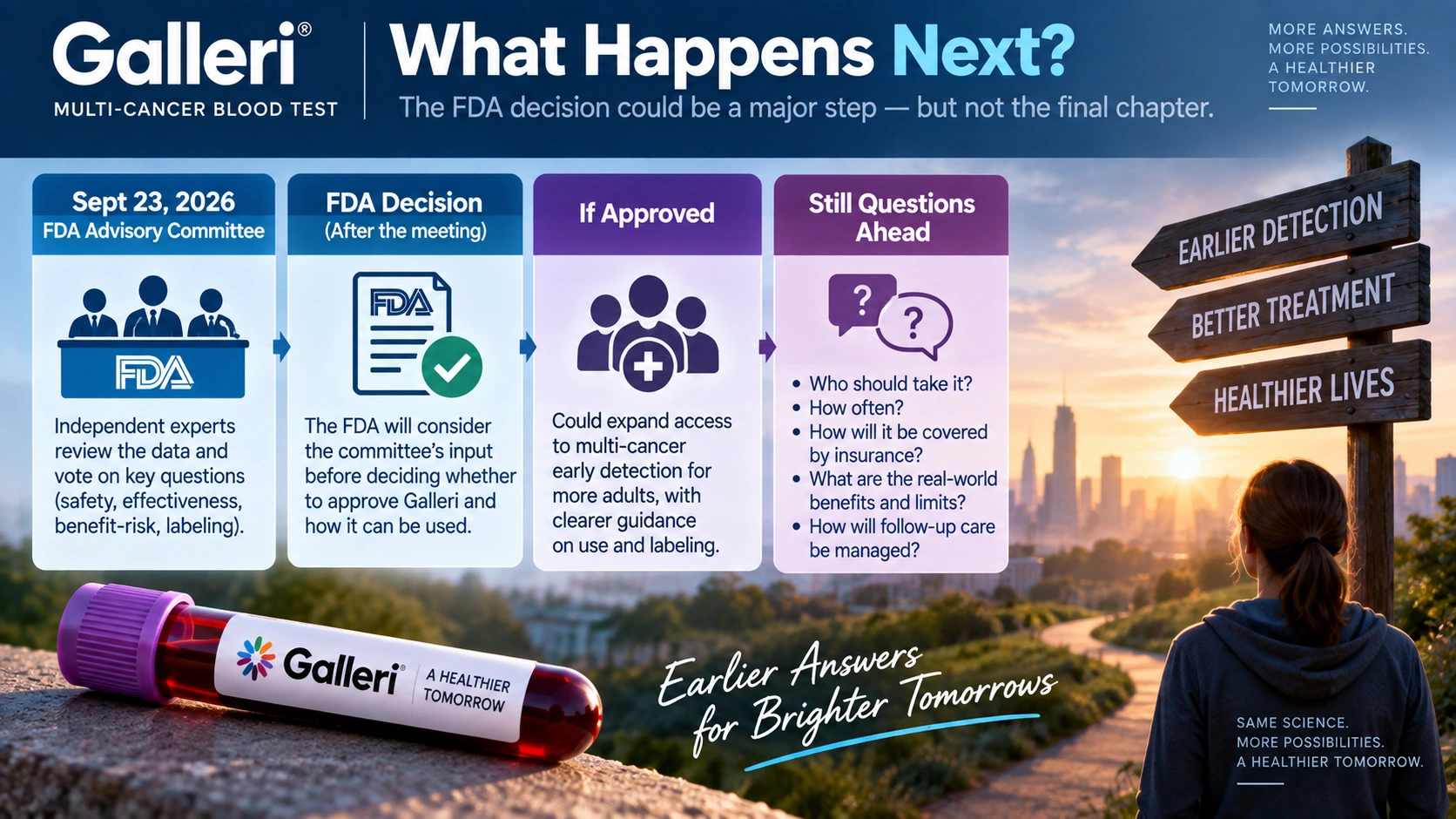
The FDA’s Molecular and Clinical Genetics Panel met on September 23, 2026 to review GRAIL’s premarket approval application.
The meeting agenda covered Galleri’s performance across different cancer types and stages, its benefits and risks, how patients should be warned about its limitations, and whether the proposed “early detection” wording is justified. (FDA)
GRAIL reported three favorable votes: unanimous support for safety, 6–4 for effectiveness, and 7–2 with one abstention for benefit versus risk. The split votes on effectiveness and benefit-risk are worth distinguishing from the unanimous safety vote. (GRAIL)
The advisory committee does not itself grant final approval. It makes recommendations to the FDA, which makes the regulatory decision.
The favorable votes are an important regulatory step—but they do not mean Galleri suddenly becomes a replacement for mammography, colonoscopy, low-dose CT, or other established cancer screening.
The proposed labeling itself says the opposite. (FDA)
The most consequential outcome may therefore be more subtle than a simple “approved” or “rejected.”
Watch the wording.
Does the FDA ultimately allow Galleri to be marketed as a test for “early detection” of multiple cancers?
Does it narrow the claim?
Does it require stronger warnings for particular cancers?
And what additional post-approval evidence might the agency require?
Those details would tell doctors and patients much more about Galleri’s real place in cancer screening than the phrase “50+ cancers from one blood draw” ever could.
Why It Matters in One Sentence
Galleri shows that one blood draw may identify cancer signals across many cancer types, but the FDA review is testing a harder claim: whether the evidence—especially the lower sensitivity for stage I disease—supports calling it an “early detection” test while safety, effectiveness, and overall benefit versus risk are also weighed.
Galleri FDA Review: Key Questions Explained
Q. Is Galleri FDA-approved right now?
No. Galleri is commercially available in the United States as a laboratory-developed test, but its premarket approval application is still under FDA review. (American Cancer Society)
Q. Can Galleri diagnose cancer from a blood test?
No. Galleri detects a possible cancer-associated molecular signal. A positive result requires additional diagnostic testing to determine whether cancer is actually present. (FDA)
Q. Does Galleri really screen for more than 50 cancers?
GRAIL describes Galleri as capable of detecting signals associated with more than 50 cancer types, but detection performance is not equal across those cancers. FDA data show substantial differences in sensitivity by cancer type and cancer stage. (Reuters)
Q. Why is the FDA questioning the term “early detection”?
Because Galleri detected a much smaller share of stage I cancers than later-stage cancers in the NHS-Galleri data. FDA advisers were asked directly whether that performance supports using “early” in the test’s approved indication. (FDA)
Q. What does Galleri’s 99% specificity mean?
It means Galleri rarely produced a positive cancer signal among people who did not have a cancer diagnosis during the study assessment period. It does not mean Galleri detects 99% of cancers.
Q. What was Galleri’s overall sensitivity in the FDA-reviewed studies?
The FDA reported 12-month sensitivity of 35.0% in PATHFINDER 2 and 31.6% in NHS-Galleri. Performance varied considerably by cancer type and stage. (FDA)
Q. Can a negative Galleri result replace normal cancer screening?
No. FDA materials explicitly say a negative Galleri result does not rule out cancer and that patients should continue guideline-recommended single-cancer screening. (FDA)
Q. Did the NHS-Galleri trial prove the test prevents late-stage cancer?
Not in the way its primary endpoint was designed to show. The trial did not achieve a statistically significant reduction in its combined stage III and IV primary endpoint, although later screening rounds produced more favorable stage IV findings. (GRAIL)
Q. Has Galleri been proven to reduce cancer deaths?
Definitive evidence that multi-cancer detection screening reduces cancer mortality has not yet been established. That remains one of the major long-term questions for this new class of screening tests. (National Cancer Institute)
Q. What should people watch for after the September 23 FDA panel?
The panel has now voted favorably on safety, effectiveness, and benefit versus risk. The next issue is the FDA’s own decision, including any authorized indication, labeling limitations, or additional evidence requirements. GRAIL’s September 23 announcement said FDA review was continuing; the advisory recommendation itself does not grant approval. (GRAIL)
Did this help make the story clearer? 🙂
WIN keeps unpacking the “why” behind the news—clearly and simply!
Sources
FDA Review and September 23 Advisory Meeting
FDA — September 23, 2026 Molecular and Clinical Genetics Panel Meeting
FDA — Galleri Executive Summary for the Advisory Committee
FDA — Questions to the Galleri Advisory Panel
FDA — Galleri Advisory Committee Voting Questions
Galleri Performance and Clinical Evidence
GRAIL — NHS-Galleri Trial Results Presented at ASCO 2026
GRAIL — PATHFINDER 2 Results Presented at ASCO 2026
Reuters — FDA Staff Review of Galleri Ahead of the Advisory Meeting
Multi-Cancer Screening Benefits, Limits, and Current Availability
National Cancer Institute — Questions and Answers About Multi-Cancer Detection Tests