Why Did Trump Call China a World War II Ally—and Why Did Japan Respond So Quickly?
Wait—weren’t the United States and Japan allies?
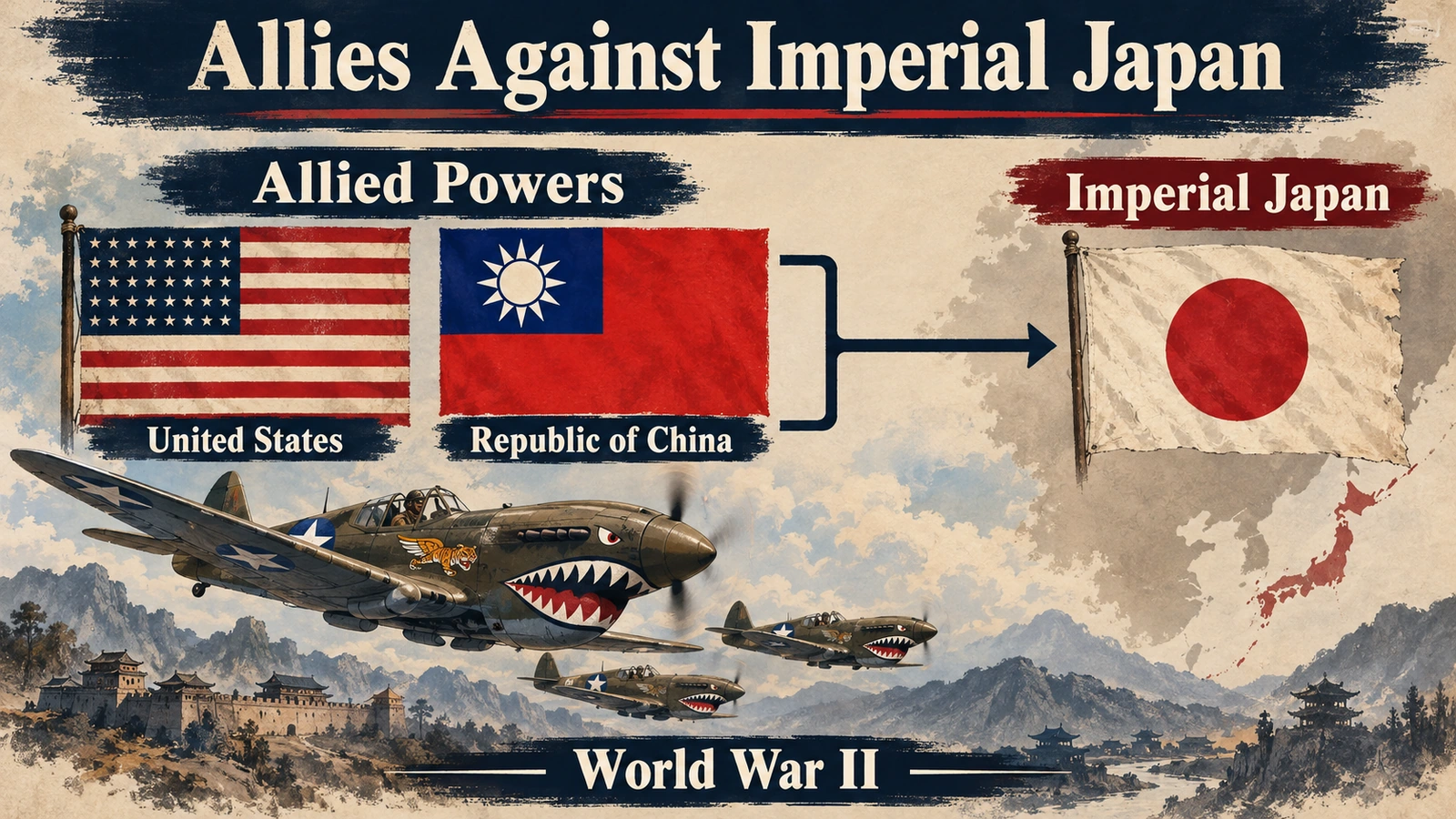
Today, yes. During World War II, they were enemies. China, meanwhile, was one of the Allied powers fighting Japan. U.S. wartime documents list China among the countries in the January 1942 Declaration by United Nations. (U.S. State Department Office of the Historian)
But that answer creates another question.
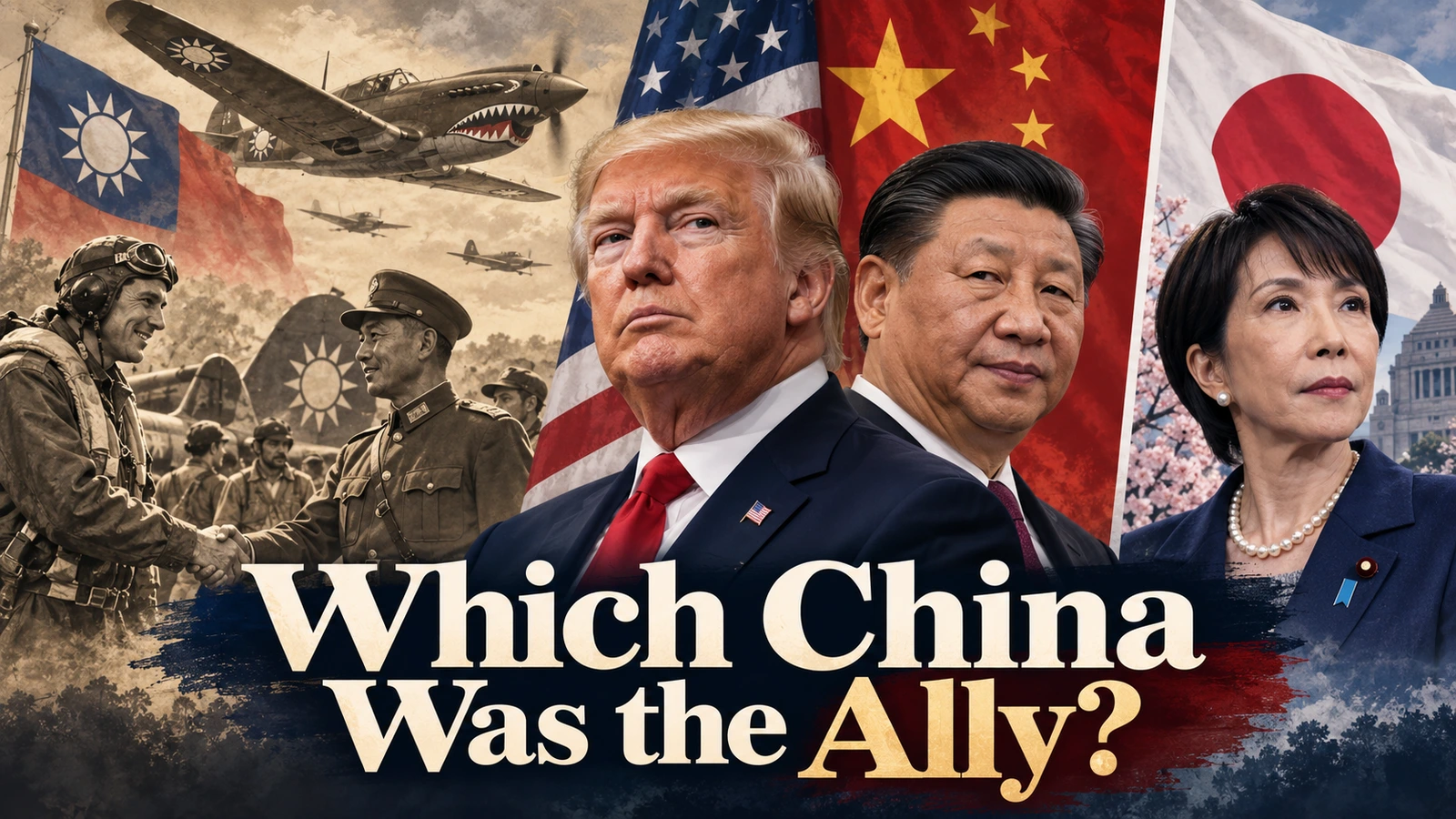
When President Donald Trump and Chinese President Xi Jinping talked about the United States and China fighting together during World War II, which China were they talking about?
Not the People’s Republic of China, or PRC, as it exists today. The PRC was not established until October 1, 1949. During World War II, the government internationally representing China was the Republic of China, or ROC, led by Chiang Kai-shek’s Nationalist government. (U.S. State Department Office of the Historian)
That historical distinction suddenly became current news after Trump and Xi met at the White House on September 24.
The White House later said the two leaders had recalled that the United States and China “were allies in World War II and fought side by side to win the war.” Xi went further at the state dinner, describing Chinese and American cooperation against “Japanese militarist aggressors.” (White House)
Then, on September 26, Trump called Japanese Prime Minister Sanae Takaichi.
After the roughly 20-minute call, Takaichi told reporters that Trump had given her a detailed explanation of the U.S.-China summit. When asked specifically about the World War II language, she did not disclose the private diplomatic exchange—but said she had told Trump that Japan and the United States had now become “each other’s most trusted allies.” (Prime Minister’s Office of Japan)
So this story is not simply about an old history lesson.
It is about how the same word—ally—can describe one relationship in 1942 and a very different one in 2026.
What Happened Between the Trump-Xi Summit and Takaichi’s Call?

The key developments happened within just a few days.
| Date | What happened | Why it matters |
|---|---|---|
| September 22 | Takaichi met Trump in New York. They discussed China and agreed on close coordination ahead of the U.S.-China summit. (Japan Ministry of Foreign Affairs) | Japan had already made China-related coordination part of its conversations with Washington. |
| September 24 | Trump hosted Xi at the White House. Xi also urged Washington to oppose “Taiwan independence.” (Chinese Foreign Ministry) | The summit covered current strategic disputes as well as historical symbolism. |
| September 25 | The White House published a fact sheet saying the United States and China had been World War II allies. (White House) | The wording became part of the administration’s official summary, not merely an isolated remark. |
| September 26 | Trump called Takaichi, briefed her on the summit, and discussed China-related economic and security issues. (Prime Minister’s Office of Japan) | Japan received a direct post-summit briefing at the leader level. |
The sequence matters because Tokyo had not been standing on the sidelines waiting to see what happened.
Just two days before Trump met Xi, Takaichi and Trump had agreed that their governments would coordinate closely on China. Japan’s Foreign Ministry said their September 22 meeting covered economic security, AI, semiconductors, critical minerals and regional security. (Japan Ministry of Foreign Affairs)
That makes the September 26 call easier to understand: it was part of an existing consultation process, even though the World War II language created an additional point of attention.
Were the United States and China Really Allies in World War II?
Yes—but the word “China” needs historical context.
The United States and China were on the Allied side during World War II. The January 1, 1942 Declaration by United Nations included both the United States and China among the governments committed to the common war effort against the Axis powers. U.S. diplomatic records from the period refer specifically to cooperation between the U.S. government and the Government of the Republic of China. (U.S. State Department Office of the Historian)
There was real military cooperation as well.
One of the most recognizable examples was the Flying Tigers, the American Volunteer Group associated with Claire Chennault. American pilots were assisting China even before the United States formally entered the war against Japan; the Flying Tigers first saw combat in December 1941 and were later absorbed into the U.S. military structure in China. (U.S. National Archives)
National Archives photographs still show American P-40 fighters with the distinctive shark-mouth markings operating in China during that period. (U.S. National Archives)
So Trump and Xi were not inventing a wartime connection.
The confusing part is what happened to China itself after the war.
Which “China” Was America’s World War II Ally?

The government representing China as a major Allied power was the Republic of China, led by Chiang Kai-shek’s Nationalist government.
The political reality inside China was more complicated. Nationalist and Communist forces had fought each other before the war, temporarily cooperated against Japan and remained rivals. U.S. State Department historical material notes that Communist forces also fought Japanese invaders, while the Nationalist government represented the Republic of China internationally. (U.S. State Department Office of the Historian)
Then the Chinese civil war resumed after Japan’s defeat.
Mao Zedong proclaimed the People’s Republic of China on October 1, 1949. Chiang Kai-shek and the Nationalist government retreated to Taiwan. The United States did not establish diplomatic relations with the PRC at that time and continued recognizing the Taiwan-based Republic of China as China’s government for more than two decades. (U.S. State Department Office of the Historian)
That produces the distinction at the center of today’s headline:
| Question | Answer |
|---|---|
| Which government represented China among the Allies? | The Republic of China |
| Did the PRC exist during World War II? | No. It was established in 1949. |
| Did Chinese Communist forces fight Japan? | Yes. China’s wartime resistance included competing Nationalist and Communist forces. |
| What happened after the war? | The Chinese civil war resumed, the PRC was established on the mainland, and the ROC government retreated to Taiwan. |
So when modern officials say “the United States and China were allies in World War II,” they are using “China” as a country-level historical shorthand.
That shorthand is understandable—but it can blur one of the most consequential political transformations of the 20th century.
Why Did the World War II Language Land Differently in Japan?

Because in the World War II story Trump and Xi were invoking, Imperial Japan was the common enemy.
Xi made that connection explicit at the September 24 state dinner. He described Chinese and American people standing together against “Japanese militarist aggressors” and referred to the wartime air route over the Himalayas and Chinese efforts to rescue American pilots. (Chinese Foreign Ministry)
That historical description and today’s alliance system are not the same thing.
Japan and the United States reconciled after the war and eventually built a formal security alliance. Under the current Treaty of Mutual Cooperation and Security, each country recognizes that an armed attack against either party in territories under Japan’s administration would endanger its own peace and safety, with action governed by each country’s constitutional processes. (Japan Ministry of Foreign Affairs)
And just before the Trump-Xi summit, the two governments were publicly reinforcing that modern relationship.
On September 22, Takaichi and Trump agreed to make the alliance more robust, strengthen deterrence and response capabilities, and coordinate closely on China. (Japan Ministry of Foreign Affairs)
That is why the September 24 wording does not, by itself, show that Washington switched alliances.
It does, however, place two very different historical relationships next to each other:
1940s: the United States and China fought Imperial Japan.
2026: the United States and Japan are treaty allies, while Washington and Beijing remain competitors that are also trying to manage their relationship.
Jiji Press, in a report published by Nippon.com, said the remark caused confusion within the Japanese government and that Tokyo was seeking clarity after the summit. That is evidence of reported concern in Japan—not evidence that Washington announced a new alliance with China. (Nippon.com)
Did Takaichi Protest Trump’s Remark?
The public record does not show Takaichi announcing a formal protest over the World War II language.
That distinction matters.
After the September 26 call, an NHK reporter directly asked Takaichi whether Trump had explained the statement and whether she had raised it with him.
Takaichi declined to reveal specific details of the diplomatic conversation. She instead said she told Trump that Japan and the United States had become each other’s most trusted allies and that the two countries would work together for regional and global peace and stability. (Prime Minister’s Office of Japan)
She also said Trump had explained the U.S.-China summit in considerable detail and that they discussed China-related economic, economic-security and security issues. (Prime Minister’s Office of Japan)
So there are three different things that should not be collapsed into one headline:
| What is confirmed? | What is not confirmed publicly? |
|---|---|
| Trump briefed Takaichi after Xi’s visit. (Prime Minister’s Office of Japan) | The exact private explanation Trump gave about the WWII wording |
| The World War II statement was explicitly raised by a reporter. (Prime Minister’s Office of Japan) | Whether Takaichi lodged a private diplomatic protest |
| Takaichi publicly emphasized the current U.S.-Japan alliance. (Prime Minister’s Office of Japan) | Any claim that Japan viewed the alliance as having been abandoned |
Calling the episode a Japanese response is supported.
Calling it a confirmed rupture or betrayal would go beyond what the governments have publicly said.
Is Taiwan Part of This Story?
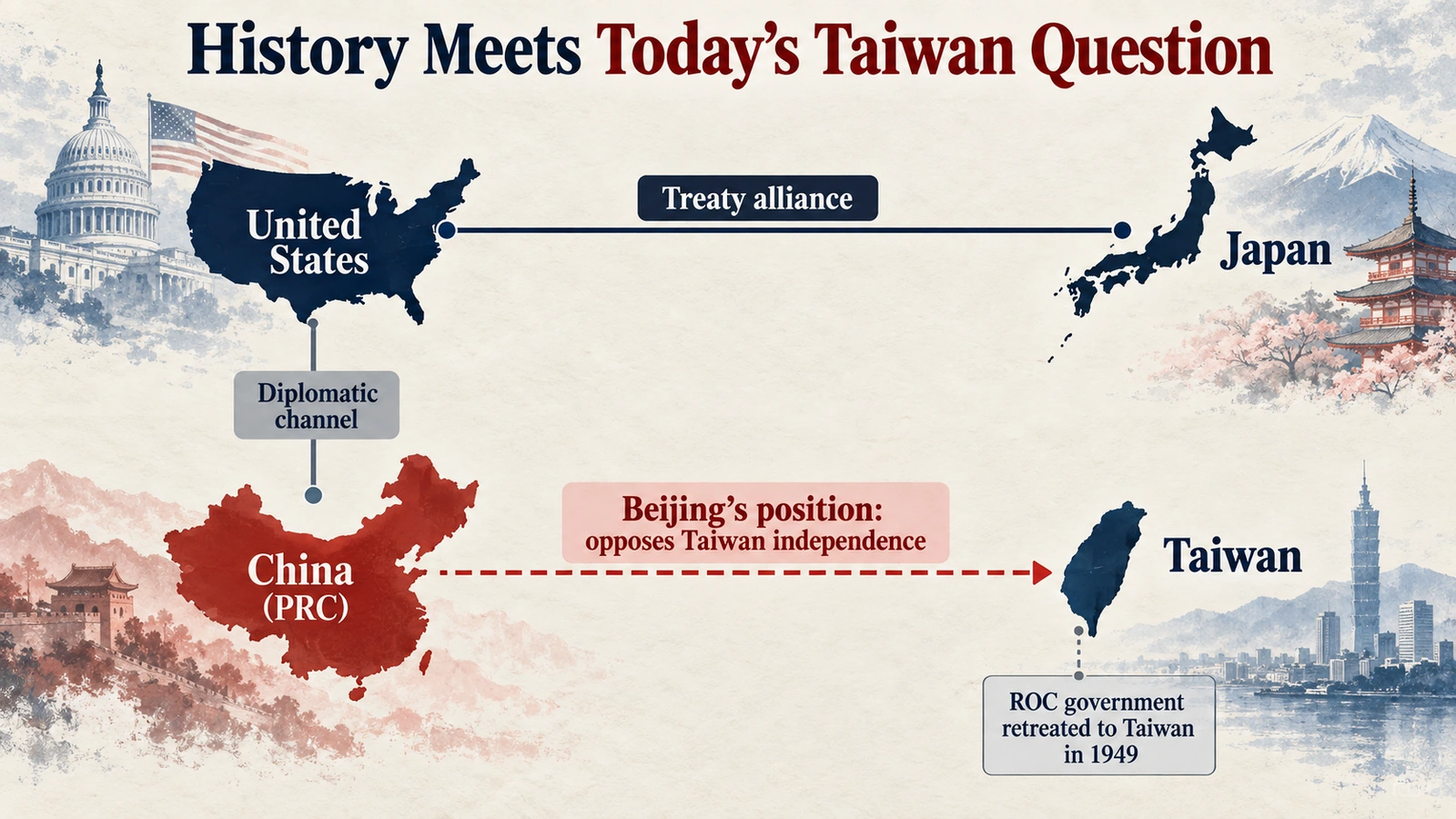
Yes, but the World War II wording is not itself a change in U.S. Taiwan policy.
Taiwan matters because the question “Which China?” did not disappear in 1949.
The Nationalist government that had represented the Republic of China during the war retreated to Taiwan after losing the mainland to Mao’s Communist forces. The United States continued recognizing that ROC government for decades before establishing diplomatic relations with the PRC. (U.S. State Department Office of the Historian)
That history is one reason a seemingly simple World War II reference can overlap with modern arguments about political continuity, sovereignty and representation.
Taiwan was also a current issue at the September 24 summit itself.
According to China’s official account, Xi told Trump that Beijing wanted the United States to adopt what China calls the position of opposing “Taiwan independence.” That is Beijing’s stated position; the Chinese readout does not establish that Washington accepted the request. (Chinese Foreign Ministry)
Before the summit, Reuters reported that the United States had again stressed its defense commitments to Japan and South Korea and emphasized peace and stability across the Taiwan Strait. (Reuters)
The safest way to separate the issues is this:
World War II history explains why the language is symbolically powerful. Current treaties and official policy statements tell us whether anything has actually changed.
So far, the published statements show continued U.S.-Japan coordination alongside an effort by Washington and Beijing to stabilize their own relationship. (Japan Ministry of Foreign Affairs)
Does Calling China a Former Ally Mean the U.S. and China Are Allies Again?
No. A reference to a World War II alliance is not the same as creating a modern alliance.
The White House’s own summit fact sheet illustrates the difference.
It described Trump and Xi recalling wartime cooperation, but the same document also discussed ongoing strategic issues including arms control, critical minerals, trade, North Korea, Iran and advanced artificial intelligence. The two governments described their goal as building a relationship of “strategic stability,” not a military alliance. (White House)
China’s account similarly presented the relationship as one in which cooperation, competition and disagreements would all continue. (Chinese Foreign Ministry)
Meanwhile, Japan and the United States continue to operate under an actual security treaty. (Japan Ministry of Foreign Affairs)
That gives us a useful distinction:
Historical ally describes what two countries did together in a particular war.
Treaty ally describes a current legal and security relationship.
Those two meanings happened to collide in the same week.
What Should You Watch Next?
The most useful signals will be specific government actions and official language, rather than interpreting one historical reference as a complete change in strategy.
First, watch whether Washington and Tokyo continue the close China-related consultations they publicly reaffirmed on September 22 and September 26. (Japan Ministry of Foreign Affairs)
Second, watch how Beijing uses the World War II narrative in future statements involving Japan and Taiwan. Xi’s state-dinner remarks explicitly connected wartime U.S.-China cooperation with resistance to Imperial Japan, while his summit remarks separately pressed Washington over Taiwan. (Chinese Foreign Ministry)
Third, distinguish symbolism from policy.
A reference to Flying Tigers or World War II history is diplomatic messaging. Changes to military commitments, treaty interpretations, Taiwan policy, force deployments or formal government agreements would be much more concrete evidence of a strategic shift.
As of the published statements following the summit and Trump’s call with Takaichi, no such replacement of the U.S.-Japan alliance has been announced. (Prime Minister’s Office of Japan)
Bottom Line: What This Story Really Means
Trump and Xi’s statement that the United States and China were World War II allies is historically grounded—but easy to misunderstand without one crucial detail.
The China that formally stood among the Allied powers was the Republic of China, not the People’s Republic of China established in 1949. The wartime Chinese resistance itself included both Nationalist and Communist forces, but the ROC government represented China in Allied diplomacy. (U.S. State Department Office of the Historian)
The phrase is sensitive in Japan because that wartime partnership was directed against Imperial Japan, and Xi explicitly invoked that history during his Washington visit. (Chinese Foreign Ministry)
But history and current alliances are different things.
Takaichi’s public response after speaking with Trump was not an announcement that the U.S.-Japan alliance had broken down. She emphasized the opposite: Japan and the United States are now close allies and had again confirmed coordination on regional security. (Prime Minister’s Office of Japan)
The real story, then, is not that America suddenly “chose China over Japan.”
It is that Washington, Beijing and Tokyo are using relationships created in completely different eras—and the language of one era can carry real diplomatic weight in another.
WWII Allies: Key Questions Explained
Q. Were the United States and China allies during World War II?
Yes. China was one of the Allied powers fighting the Axis, and U.S. diplomatic records describe wartime cooperation with the Republic of China. (U.S. State Department Office of the Historian)
Q. Was the People’s Republic of China America’s World War II ally?
No. The People’s Republic of China did not exist until 1949. The government representing China among the Allies was the Republic of China. (U.S. State Department Office of the Historian)
Q. Did Chinese Communist forces also fight Japan?
Yes. China’s wartime politics were divided, and Communist forces participated in resistance against Japan even though Chiang Kai-shek’s Republic of China government represented China internationally. (U.S. State Department Office of the Historian)
Q. What were the Flying Tigers?
The Flying Tigers were the American Volunteer Group organized with Claire Chennault to assist China against Japan. They entered combat in December 1941 and later transitioned into the U.S. military structure in China. (U.S. National Archives)
Q. Why did Japan pay attention to Trump’s World War II reference?
The historical partnership Trump and Xi invoked was a partnership against Imperial Japan, and Xi explicitly referred to fighting “Japanese militarist aggressors.” Japanese reporting subsequently described concern and confusion in Tokyo over the summit language. (Chinese Foreign Ministry)
Q. Did Prime Minister Sanae Takaichi formally protest to Trump?
No public statement confirms a formal protest. Takaichi declined to disclose the details of the diplomatic exchange and instead said she reminded Trump that Japan and the United States are now highly trusted allies. (Prime Minister’s Office of Japan)
Q. Does the World War II reference mean the U.S.-Japan alliance has changed?
The published statements do not announce such a change. Japan and the United States remain connected by their security treaty and reaffirmed close coordination immediately before and after the Trump-Xi summit. (Japan Ministry of Foreign Affairs)
Q. Why does Taiwan matter to the “Which China?” question?
The Republic of China government retreated to Taiwan after Mao Zedong established the PRC on the mainland in 1949. That history is part of the background to today’s competing political claims and cross-Strait dispute. (U.S. State Department Office of the Historian)
Q. Did Trump agree to China’s position on Taiwan at the summit?
China’s official account says Xi urged the United States to oppose “Taiwan independence,” but that readout does not say Trump accepted that request. Concerns about a policy shift should therefore be distinguished from a confirmed U.S. policy change. (Chinese Foreign Ministry)
Did this help make the story clearer? 🙂
WIN keeps unpacking the “why” behind the news—clearly and simply!
Sources
The Trump-Xi Summit and Japan’s Response
White House — Fact Sheet on the September 2026 China State Visit
Prime Minister’s Office of Japan — Takaichi’s September 26 Remarks After Her Call With Trump
Japan Ministry of Foreign Affairs — September 22 Japan-U.S. Summit Meeting
China’s Statements and the Taiwan Issue
Chinese Foreign Ministry — Xi Jinping’s September 24 Talks With Trump
Chinese Foreign Ministry — Xi Jinping’s State Dinner Remarks on World War II Cooperation
World War II and the Republic of China
U.S. State Department Office of the Historian — Declaration by United Nations, January 1942
U.S. State Department Office of the Historian — The Chinese Revolution of 1949
U.S. National Archives — The Flying Tigers in China
The Modern U.S.-Japan Alliance
Keep Reading
What Else Did Trump and Xi Actually Discuss in Washington?
The World War II reference was only one part of a much broader summit involving trade, critical minerals, AI, fentanyl, Taiwan and global security. The earlier WIN explainer lays out those issues before the latest Japan-related reaction.
Trump and Xi Meet in Washington—What Is Actually on the Table?