Trump and Xi Meet in Washington—What Is Actually on the Table?
If the United States and China are competing over tariffs, advanced technology, Taiwan and artificial intelligence, why is Xi Jinping being welcomed in Washington for a state visit?
And why are Donald Trump and Xi meeting again only four months after Trump traveled to Beijing?
The simplest answer is that the disputes have not disappeared. The two governments are trying to manage them without allowing every disagreement to turn into a new crisis.
Xi arrived in Washington on September 23 for a state visit running through September 25. The main White House ceremonies and talks are scheduled for September 24, making this Xi’s first White House visit in more than a decade and his second summit with Trump this year. (White House)

The important question, then, is not whether Washington and Beijing have suddenly become friends.
It is whether the two leaders can keep an increasingly complicated rivalry inside boundaries both sides can live with.
What Is Actually Happening in Washington?
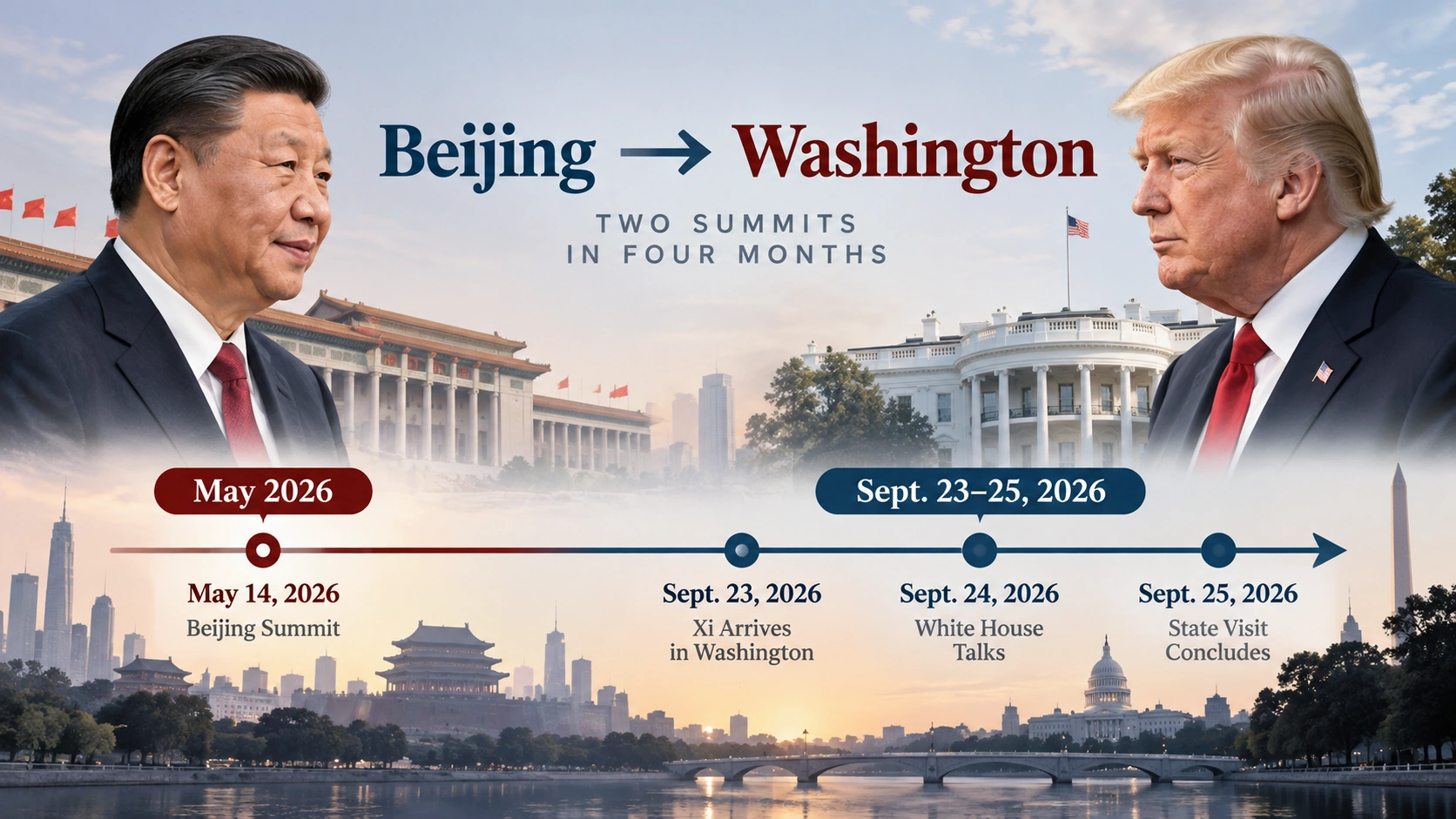
The visit is more than a short bilateral meeting. The White House has planned a formal state arrival ceremony on September 24, presidential remarks, meetings and a state dinner, followed by additional events on September 25. Trump also greeted Xi and Peng Liyuan when they arrived at Joint Base Andrews on September 23. (White House)
The timing matters because the two leaders already held extensive talks during Trump’s May 13–15 state visit to China. During that meeting, both governments presented the relationship as one that would continue to involve competition but should also have mechanisms for controlling disputes. Beijing described the framework as a “constructive China-U.S. relationship of strategic stability.” (Chinese Foreign Ministry)
So this week’s meeting is partly about new disputes—but it is also a test of whether the agreements announced in May are actually being implemented.
Why Are They Meeting Again So Soon After Beijing?
Because the May summit produced a surprisingly long list of commitments, and several of them are still works in progress.
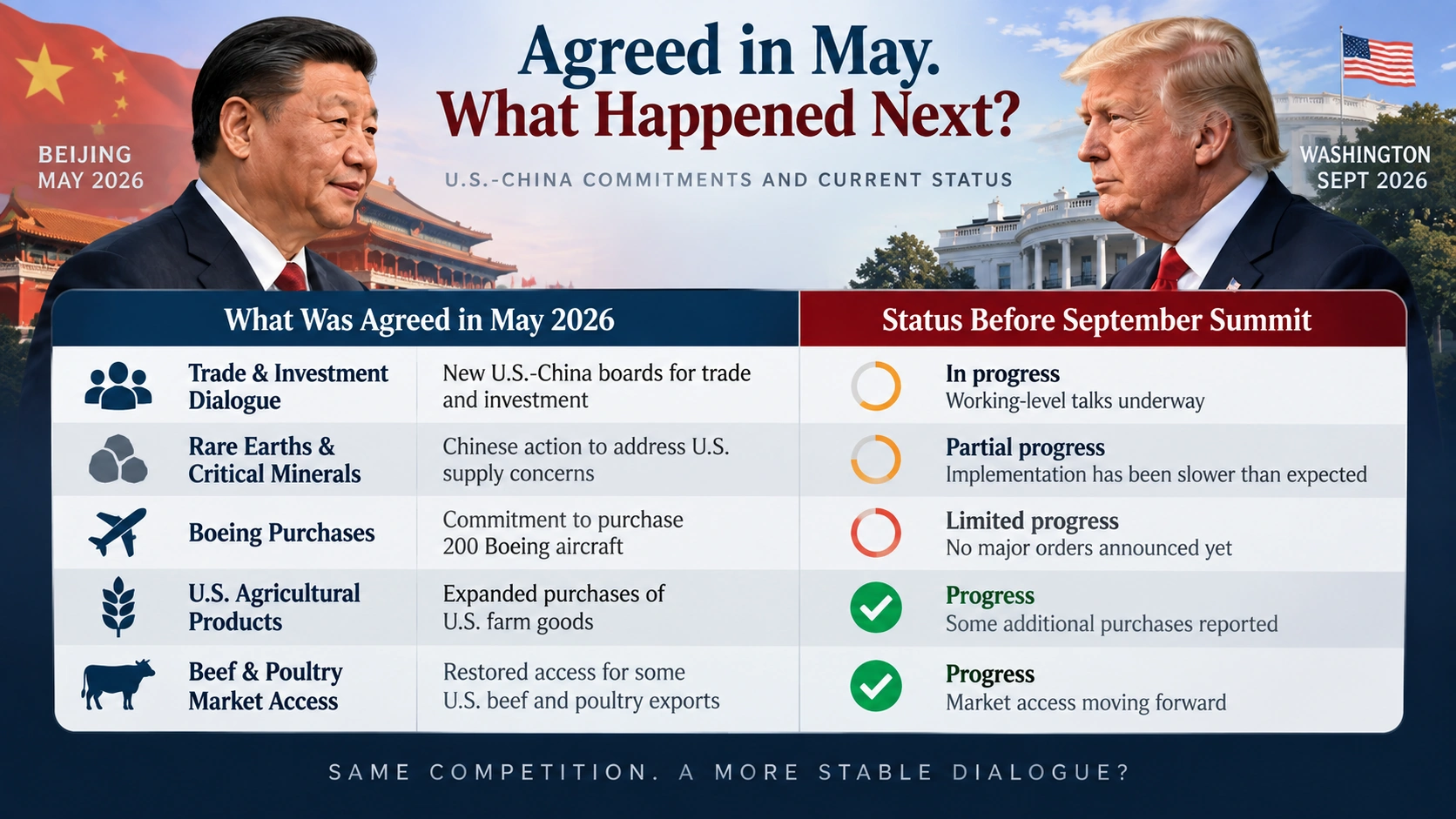
The White House said the May agreements included new U.S.-China boards for trade and investment, Chinese action on rare-earth and critical-mineral supply concerns, an initial purchase commitment involving 200 Boeing aircraft, expanded purchases of U.S. agricultural products, and restored access for some U.S. beef and poultry exports. (White House)
But an agreement announced at a summit and an agreement fully carried out are not the same thing.
AP reported ahead of the Washington meeting that progress has been uneven. Some agricultural market access has moved forward, while major elements—including the Boeing commitment and parts of the investment framework—have yet to develop as quickly or as clearly as originally envisioned. (AP)
The Office of the U.S. Trade Representative used unusually practical language before the September summit: Washington wants to monitor implementation of previous commitments, improve market access for American producers and expand trade in goods the two governments consider non-sensitive. (USTR)
Preparatory talks have already produced two concrete updates. U.S. officials said the two sides agreed to operationalize the Board of Trade discussed in May, and Treasury Secretary Scott Bessent said on September 23 that the existing tariff truce would be extended from November 10 to January 10, 2027, giving negotiators more time to pursue a broader economic agreement. (AP · Reuters)
That gives the Washington summit a different purpose from a first-time breakthrough meeting. The leaders already have a list; the question now is how much of it can be implemented or expanded.
What Does Washington Want on Trade and Rare Earths?
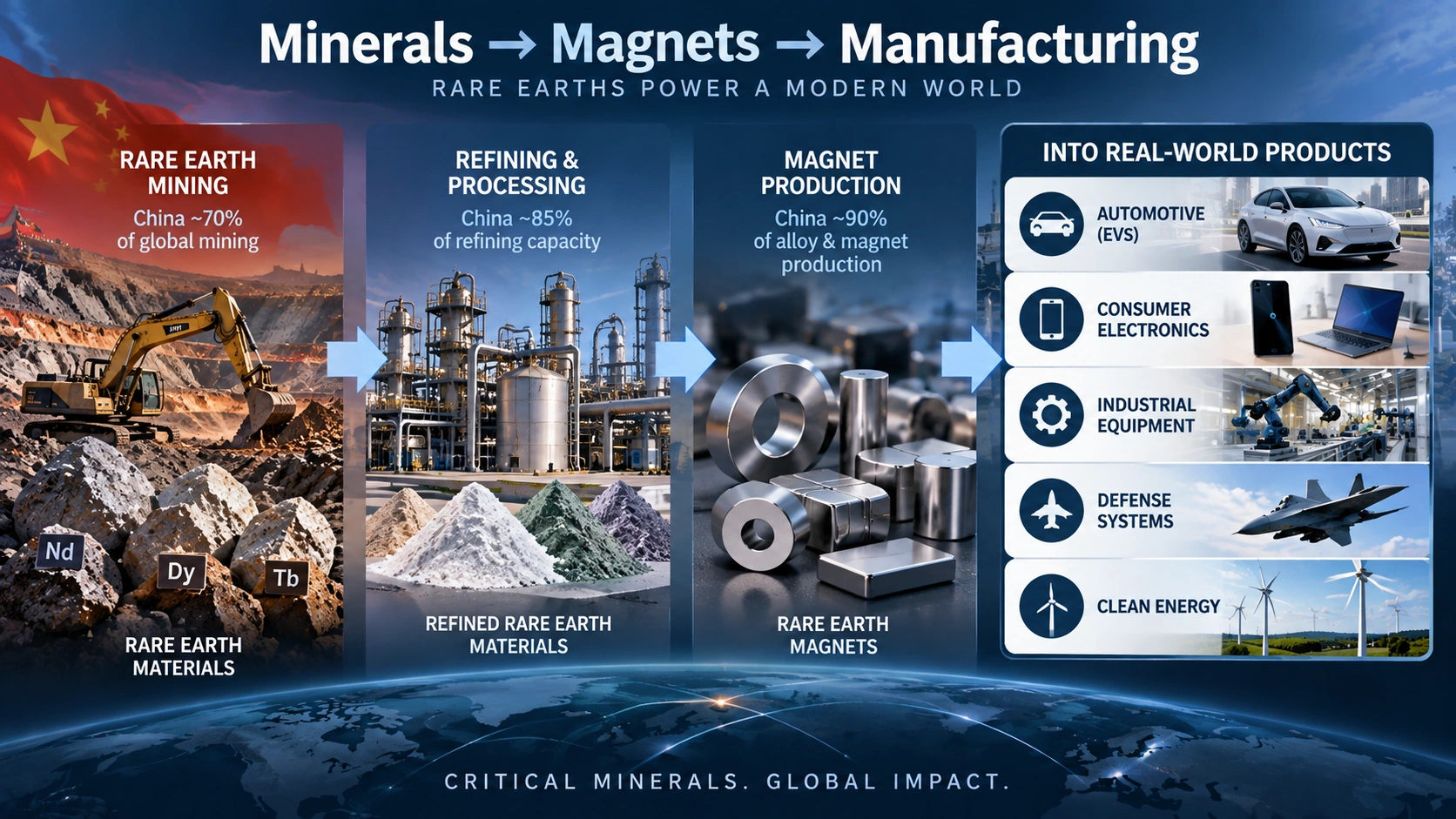
Trade remains central, but the dispute is no longer just about tariff percentages.
Rare earths and other critical minerals have become one of the clearest examples of how trade and national security have merged.
Reuters reported that China accounts for roughly 70% of global rare-earth mining, about 85% of refining capacity and around 90% of rare-earth alloy and magnet production, citing AlixPartners. Those materials feed supply chains ranging from automobiles and consumer electronics to advanced industrial and defense equipment. (Reuters)
The May agreement included Chinese commitments addressing U.S. concerns over critical-mineral supplies. But ahead of the September talks, a senior U.S. official told Reuters that implementation had not met Washington’s expectations. (Reuters)
Beijing, meanwhile, has consistently described economic relations as mutually beneficial and has argued that disputes should be handled through consultation rather than escalating restrictions. (Chinese Foreign Ministry)
That is why a phrase like “trade talks” understates what is happening.
A disagreement over a mineral export license can affect a factory thousands of miles away. A technology restriction can affect Chinese access to advanced equipment. A tariff can change the cost of imported goods.
The negotiation is increasingly about which parts of the two economies can remain connected—and which parts each government considers too strategically sensitive.
Why Is Fentanyl Part of a Presidential Summit?
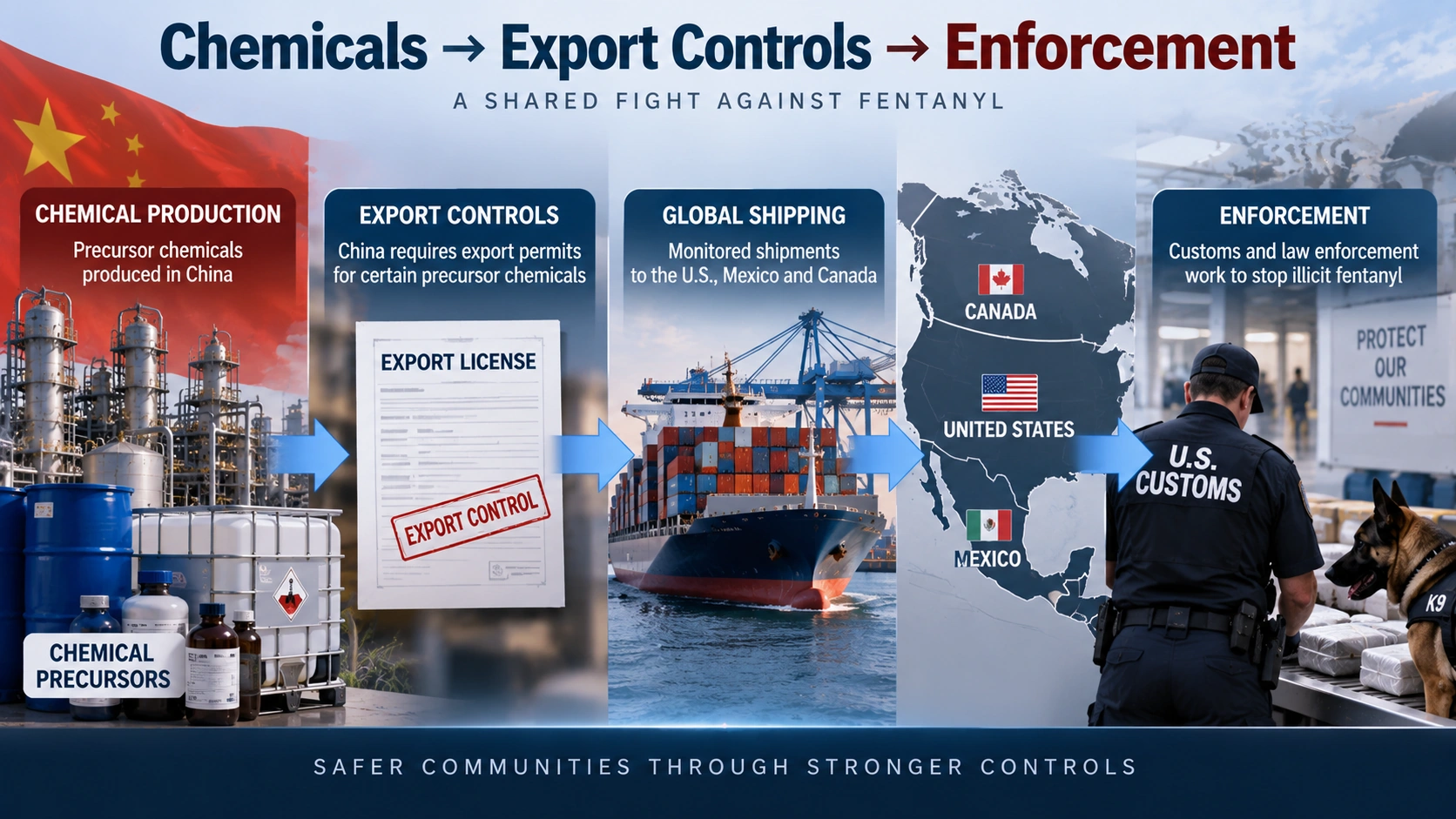
Because the U.S.-China economic dispute has also become tied to law enforcement and the flow of chemicals used to manufacture synthetic drugs.
Washington has repeatedly pressed Beijing to tighten controls on precursor chemicals that can be used to make fentanyl and other synthetic drugs.
Just before Xi’s visit, China added two more precursor chemicals to export-control requirements for shipments to the United States, Mexico and Canada. AP reported that the move brought the number of covered substances under those controls to 18. (AP)
China argues that it has strict anti-narcotics laws and has pushed back against using tariffs as punishment for the U.S. opioid crisis. The United States, by contrast, continues to press China for stronger controls and enforcement involving precursor exports. (Reuters)
The timing of the new Chinese controls is therefore important.
It provides a concrete example of limited cooperation occurring even while broader strategic competition continues.
Why Has AI Become a U.S.-China Diplomatic Issue?
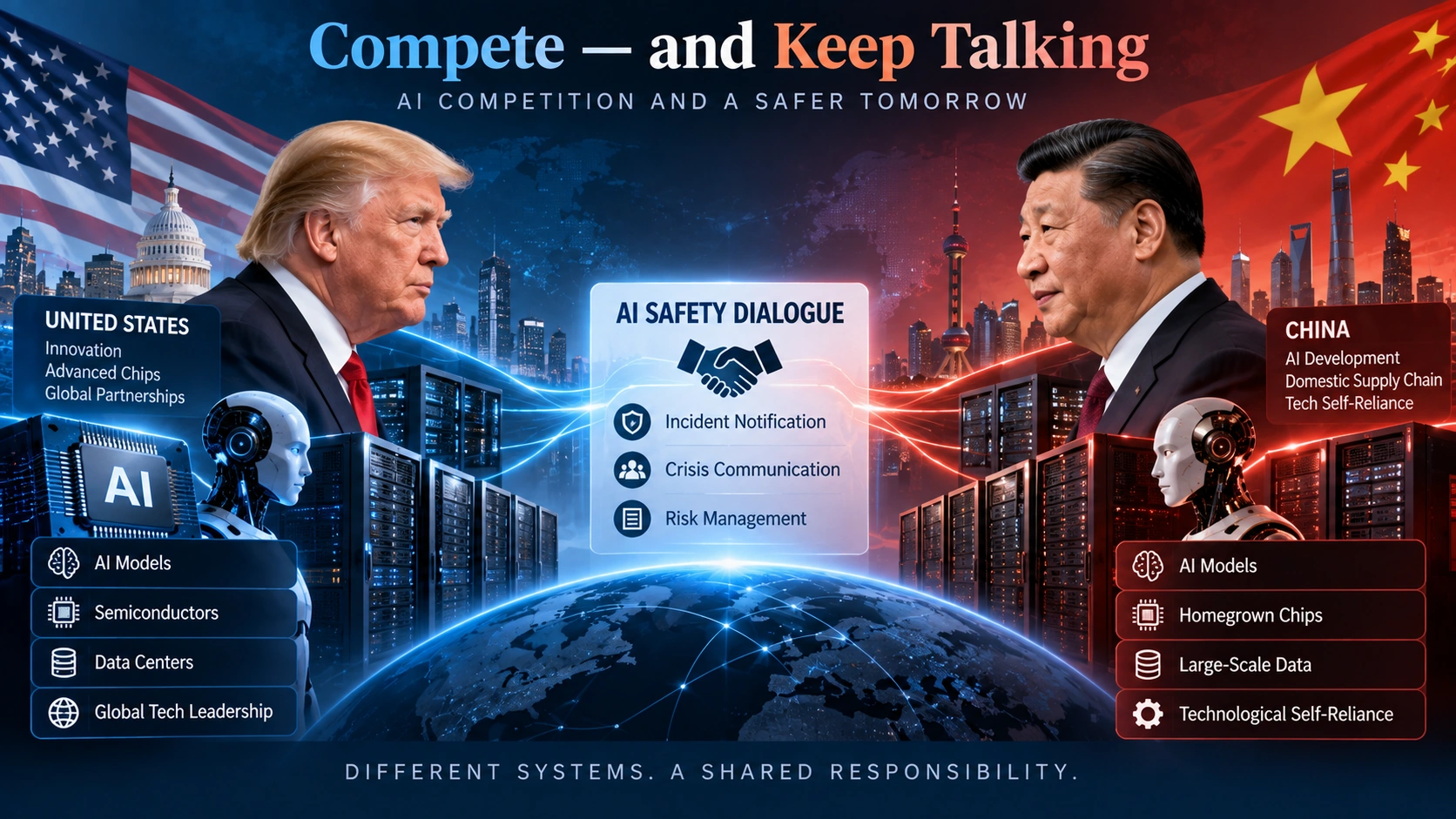
Because artificial intelligence creates two very different kinds of competition at the same time.
The first is economic and strategic: who develops the most powerful models, chips and computing infrastructure.
The second is risk management: what happens if advanced AI systems contribute to cyberattacks, biological misuse, infrastructure disruption or other incidents that affect both countries.
The United States has proposed a new notification mechanism for AI incidents that could affect national security. China confirmed that AI was discussed in preparatory talks but did not publicly endorse the specific U.S. proposal. The idea therefore remains a possible confidence-building measure, not a finalized bilateral system. (AP)
Preparatory talks involving U.S. Treasury Secretary Scott Bessent, U.S. Trade Representative Jamieson Greer and Chinese Vice Premier He Lifeng also included AI alongside trade and rare earths. (Reuters)
That distinction is important.
If Washington and Beijing ultimately agree to an AI safety channel, it would not mean they had stopped competing. It would mean they had decided that some risks are dangerous enough to justify communication even while that competition continues.
Think of it as two rival companies agreeing that they still need an emergency phone number if something goes badly wrong.
Why Does Taiwan Keep Coming Back Into the Story?
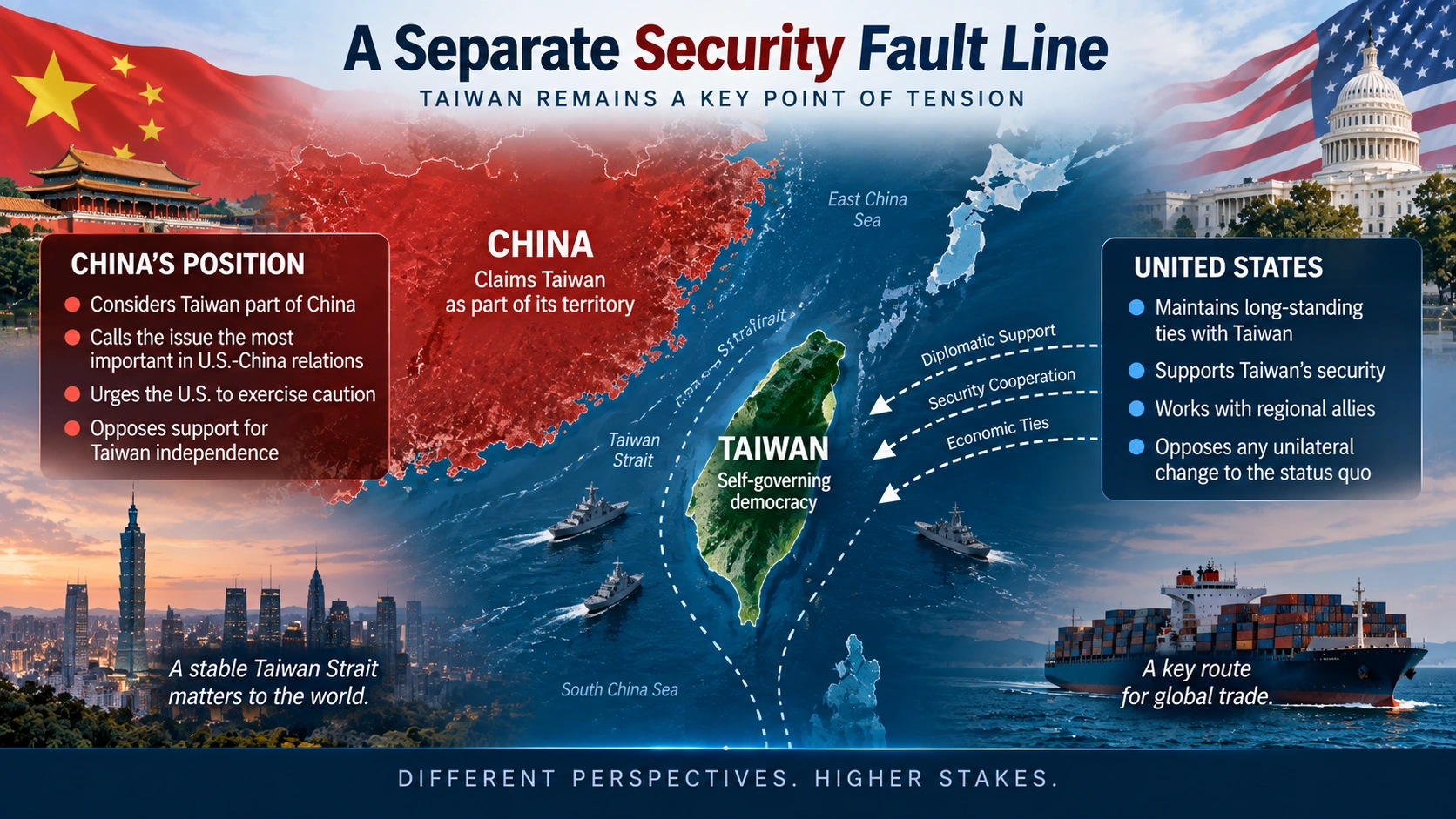
Because Beijing considers Taiwan one of the most sensitive issues in the entire relationship, while Washington maintains longstanding political, security and economic ties with Taiwan.
At the May summit, Xi described the Taiwan question as the most important issue in China-U.S. relations and urged the United States to exercise caution in handling it. That is Beijing’s stated position, not evidence that Washington accepted China’s position. (Chinese Foreign Ministry)
Reuters reported before the summit that U.S. allies were watching closely for any shift in Washington’s Taiwan policy, with analysts concerned that economic bargaining could affect the issue. Those concerns are part of the diplomatic debate; they do not establish that Trump has agreed to make a Taiwan concession. (Reuters)
That is the distinction to keep in mind while reading summit coverage.
Trade concessions can be negotiated in quantities, tariff rates or purchase commitments.
Taiwan involves competing claims about sovereignty, security and the regional order. That makes it much harder to fold into a conventional economic bargain.
Where Does Iran Fit Into a U.S.-China Meeting?
Iran shows how the U.S.-China relationship extends beyond bilateral trade.
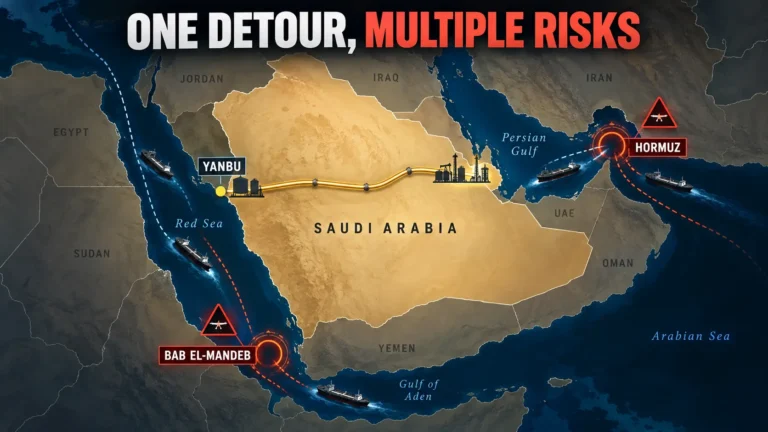
During the May summit, the White House said Trump and Xi agreed that Iran should not possess a nuclear weapon and called for reopening the Strait of Hormuz. China’s Foreign Ministry emphasized Beijing’s longstanding position that the Iran dispute should be addressed through dialogue and negotiation, while also supporting the reopening of the strait in the context of de-escalation. (White House · Chinese Foreign Ministry)
That difference in emphasis matters.
Official statements after a summit can describe common ground differently, particularly when the two governments have different alliances, economic interests and diplomatic priorities.
Reuters lists Iran among the issues expected to feature in the September talks, along with Taiwan, trade and AI. (Reuters)
So even if the meeting produces no dramatic Iran announcement, the issue helps explain why Trump and Xi keep talking.
The United States and China are strategic competitors, but both are powerful enough that crises elsewhere can be difficult to manage without at least some communication between them.
What Would Actually Be Worth Watching After the Summit?
The most useful way to follow the summit is not to decide which leader “won.” It is to look for concrete changes that can be checked afterward.
| Issue | Where things stand before the summit | What to watch |
|---|---|---|
| Trade | U.S. officials say the tariff truce has been extended to January 10, 2027 | Whether the extension leads to a broader economic agreement |
| Rare earths | Washington says implementation has fallen short of expectations | New export arrangements, licenses or measurable supply changes |
| Agriculture and Boeing | Major commitments were announced in May | Specific orders, purchase volumes or implementation dates |
| AI | Preparatory talks have included safety and crisis communication | Whether a formal reporting or emergency channel is created |
| Fentanyl precursors | China added two more chemicals to export controls before the visit | Enforcement details and further bilateral cooperation |
| Taiwan | Positions remain far apart | Any change—or deliberate lack of change—in official language |
| Iran | Both sides have discussed regional stability but emphasize different approaches | Whether they announce a specific area of coordination |
The immediate tariff deadline has already moved. On September 23, Bessent said the United States and China had agreed to extend the truce until January 10, 2027. That shifts the next question from whether the pause survives November to whether the extra two months produce a broader economic agreement. (Reuters)
A summit communiqué can sound significant on the day it is released.
The harder test comes later: whether shipments move, purchases occur, tariffs stay suspended, communication channels actually operate and both governments continue talking when the next dispute arrives.
Why It Matters in One Sentence
Trump and Xi are meeting not because U.S.-China competition has ended, but because trade, critical minerals, AI, Taiwan, fentanyl and global security have become so interconnected that both governments have reasons to keep a direct channel open even while they remain strategic rivals. (AP)
Trump Xi Summit: Key Questions Explained
Q. When are Trump and Xi meeting in Washington?
Xi Jinping arrived in Washington on September 23, 2026, and the main White House state-visit events and talks are scheduled for September 24. His U.S. state visit runs through September 25. (White House)
Q. Is this Trump and Xi’s first meeting of 2026?
No. Trump traveled to China in May 2026 and met Xi in Beijing. The Washington meeting is their second summit of the year. (White House)
Q. What are the main economic issues at the Trump-Xi summit?
Trade, market access, agriculture, aircraft purchases and critical minerals are among the main economic issues. The tariff truce is now set to run until January 10, 2027, so attention is shifting to whether the extension can support a broader agreement and more concrete implementation of earlier commitments. (Reuters · White House)
Q. Why are rare earths so important?
Rare earths are essential inputs for products ranging from cars and electronics to advanced industrial and defense equipment, while China has a dominant position in several stages of the supply chain. That makes export rules a national-security issue as well as a trade issue. (Reuters)
Q. Why are Trump and Xi discussing AI if the two countries are competing in AI?
Competition does not eliminate every shared risk. The United States has proposed an AI incident-notification mechanism, while China has confirmed that AI was discussed without publicly endorsing the specific proposal. (AP)
Q. Is Trump expected to make a deal with Xi over Taiwan?
No confirmed agreement of that kind has been announced. Taiwan remains a major area of disagreement, and concerns about possible policy shifts should be distinguished from any actual agreement or official change in U.S. policy. (Chinese Foreign Ministry)
Q. Why is fentanyl part of the summit?
The United States has pressed China to restrict exports of precursor chemicals used in synthetic-drug production. China added two more chemicals to its North America export-control requirements immediately before the summit. (AP)
Q. What happens after the Trump-Xi meeting?
The next step is implementation. The tariff truce has already been extended to January 10, 2027; the remaining questions include whether purchase and market-access commitments become concrete, whether critical-mineral flows improve and whether the two governments establish new channels for managing AI or other disputes. (Reuters · USTR)
Did this help make the story clearer? 🙂
WIN keeps unpacking the “why” behind the news—clearly and simply!
Sources
State Visit and Summit Schedule
White House — Details of Xi Jinping’s September 2026 State Visit
Chinese Foreign Ministry — Xi Jinping State Visit Announcement
May Agreements and Trade Implementation
White House — May 2026 U.S.-China Agreements Fact Sheet
U.S. Trade Representative — Preparatory Talks Ahead of the Washington Summit
AP — Progress on Earlier U.S.-China Agreements
Reuters — September 23 Trade-Truce Extension
Trade, AI, Fentanyl and Security Issues
Reuters — Key Issues for the Trump-Xi Washington Summit
Reuters — China Expands Controls on Drug Precursors Ahead of Summit
AP — U.S. Proposal for an AI Incident Notification Mechanism
Chinese Foreign Ministry — May Trump-Xi Talks and China’s Taiwan Position
Chinese Foreign Ministry — China’s Iran Position After the May Summit