Lula Wins Brazil’s 2026 Election After Trailing Bolsonaro’s Son—How Did He Turn It Around?

A presidential candidate finishes second in the first round, then wins the runoff three weeks later. That alone is a dramatic election story. But in Brazil, the reversal also brought one political family back to the center of a familiar dispute over whether the result should be accepted.
President Luiz Inácio Lula da Silva won reelection on October 25, 2026, defeating Senator Flávio Bolsonaro—the son of former President Jair Bolsonaro. Lula won 51.79% of valid votes to Flávio Bolsonaro’s 48.21%, according to Brazil’s Superior Electoral Court (TSE). Flávio said he would seek to annul the election after an unusual last-minute extension of voting hours. (TSE · AP)
So how did Lula reverse the result, why is Bolsonaro challenging it, and why should Americans care who governs Brazil?
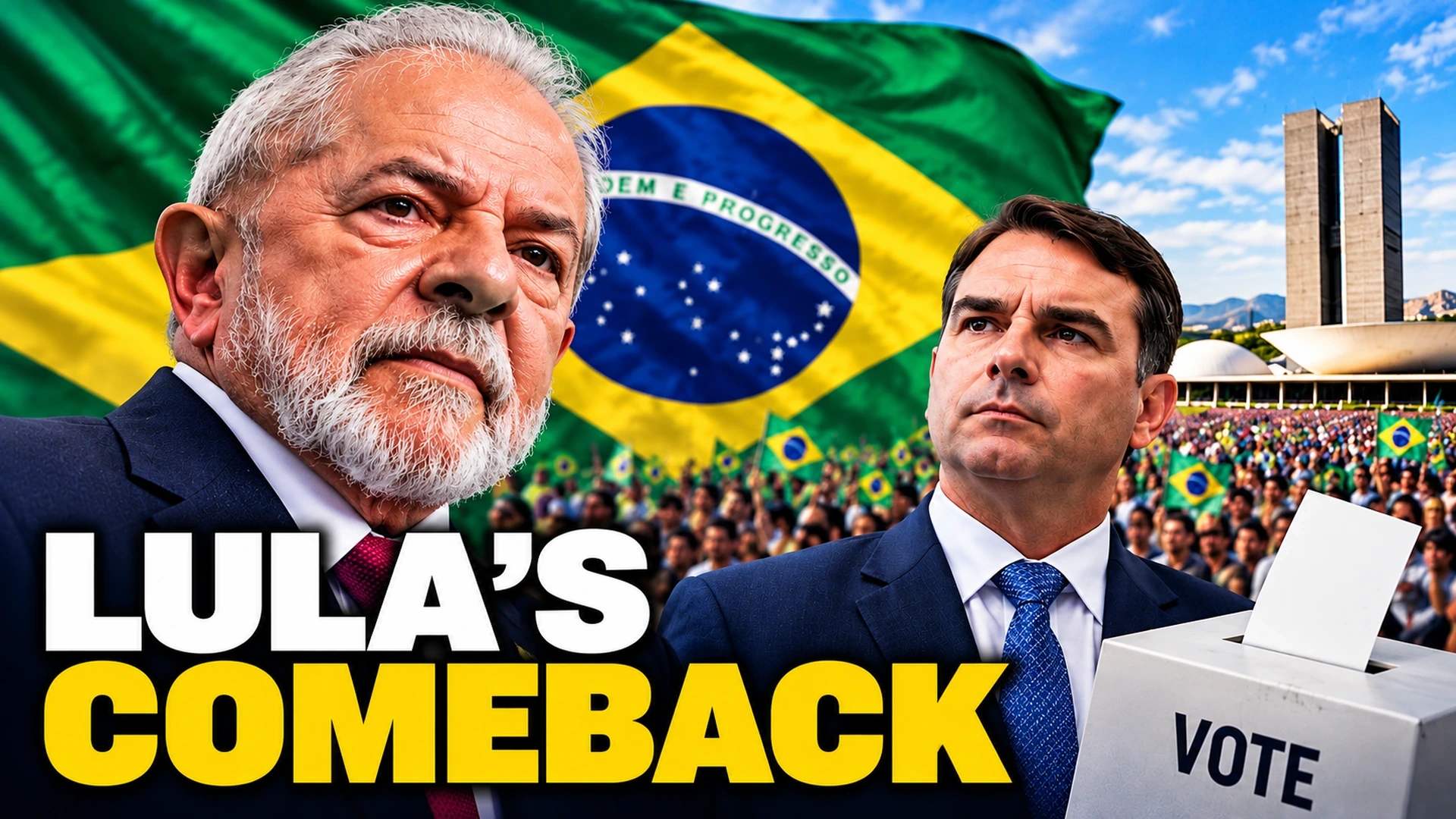
※ Images in this article are AI-generated illustrations created to help explain the story. They are not actual photographs, and depictions of people, places, or events may differ slightly from reality.
How Did Brazil’s First-Round Loser Become the Runoff Winner?
Lula won because the second round was a new contest between just two candidates—not a recount of the first. Brazil requires a runoff if no presidential candidate receives more than half of valid votes in the opening round. Voters then choose between the top two finishers.
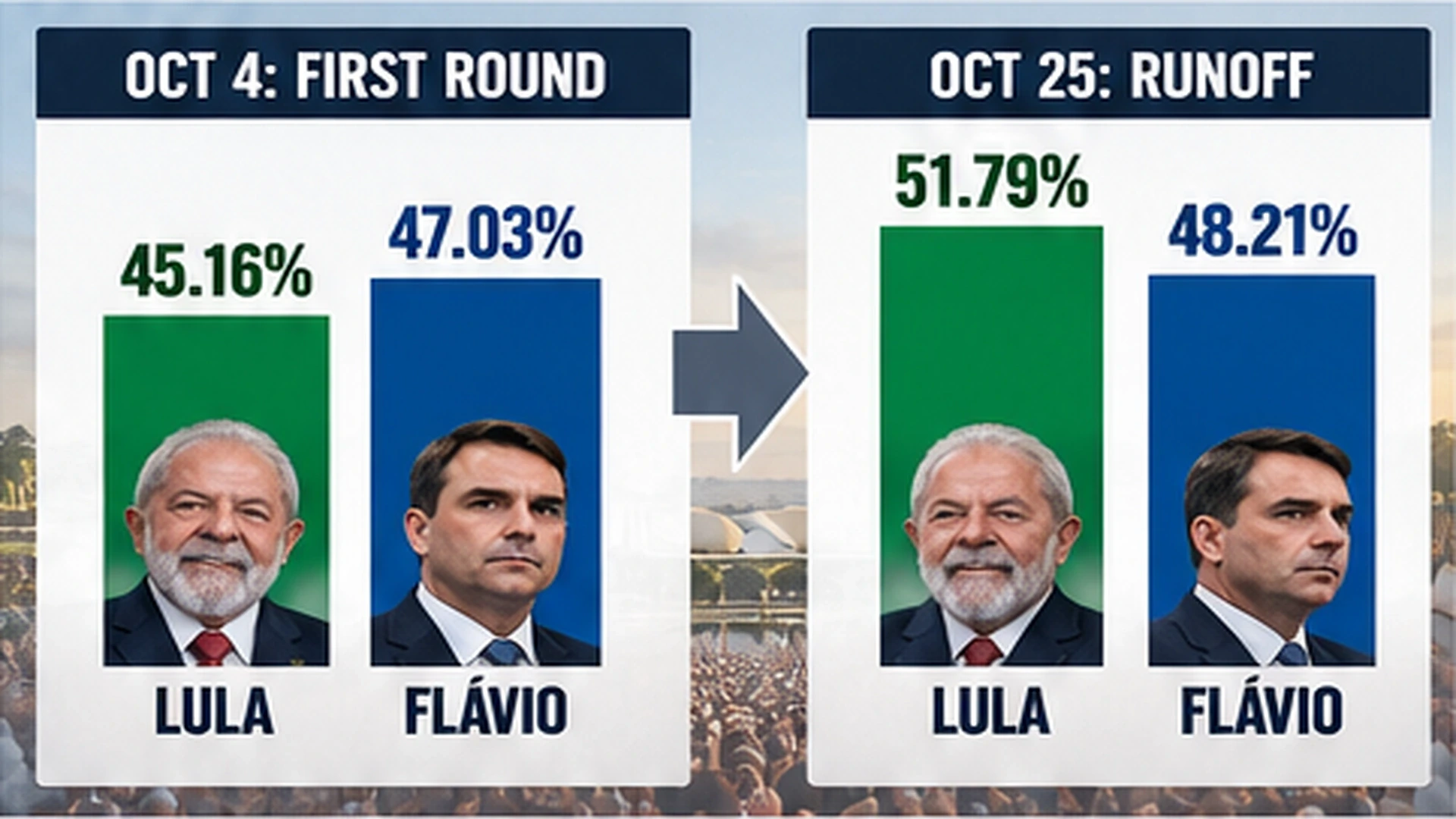
Here is the official result of each vote:
| Candidate | Oct. 4 first round | Oct. 25 runoff |
|---|---|---|
| Lula (Workers’ Party) | 45.16% | 51.79% |
| Flávio Bolsonaro (Liberal Party) | 47.03% | 48.21% |
| Other candidates | 7.81% combined, based on rounded shares | Not on the ballot |
The TSE’s reports show that Bolsonaro led by about 1.87 percentage points in the opening round, while Lula finished the runoff roughly 3.6 points ahead on the court’s rounded figures. The official final vote totals were 64,256,232 for Lula and 59,826,041 for Flávio—a margin of 4,430,191 votes. (TSE first-round results · TSE runoff results)
That does not mean every voter who backed another candidate in the first round switched to Lula. Turnout and voter choices can change between rounds. The nationwide totals tell us who prevailed, not precisely how every individual voted twice.
Why Did Lula’s Campaign Recover in Three Weeks?
Lula’s recovery came amid a sharper runoff campaign, stronger online mobilization, and a renewed appeal to voters concerned about social assistance, everyday expenses, and democracy. Those factors help explain the change, although the vote totals alone cannot establish which one was decisive.
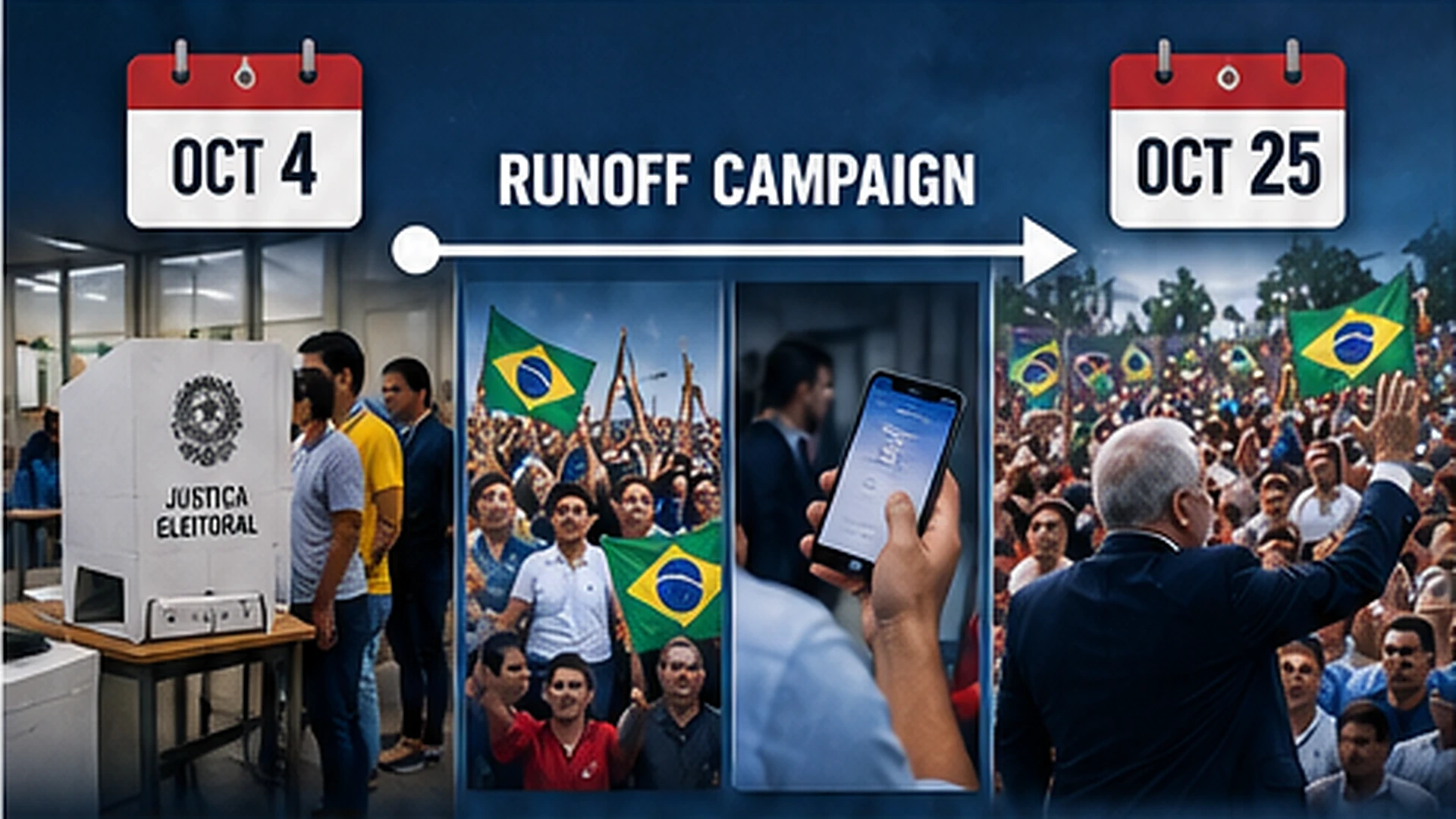
Brazil’s public news agency reported that Lula adjusted his online approach, used less formal direct-to-camera videos, and benefited from a larger digital organizing push. The runoff also intensified face-to-face campaigning. These are documented campaign changes, not proof that a particular social-media tactic delivered a specific number of votes. (Agência Brasil)
The election also came down to competing concerns. Lula’s campaign defended social programs and highlighted the political risks of a Bolsonaro-family return. Flávio appealed to voters unhappy about living costs, crime, and the direction of the country. The second-round outcome shows that Lula assembled the larger coalition on election day, even though his opponent had led on October 4. (AP · Reuters)
There is a historical twist, too. Reporting on the race described Lula as the first Brazilian presidential candidate since the current two-round system began in 1989 to win the runoff after finishing behind in the first round. (Reuters)
Which Bolsonaro Did Lula Beat—and Why Does the Family Name Matter?
Lula defeated Flávio Bolsonaro, a senator and the eldest son of former President Jair Bolsonaro. This was not a repeat contest against Jair himself, even though the former president’s movement and political legacy were central to his son’s campaign.
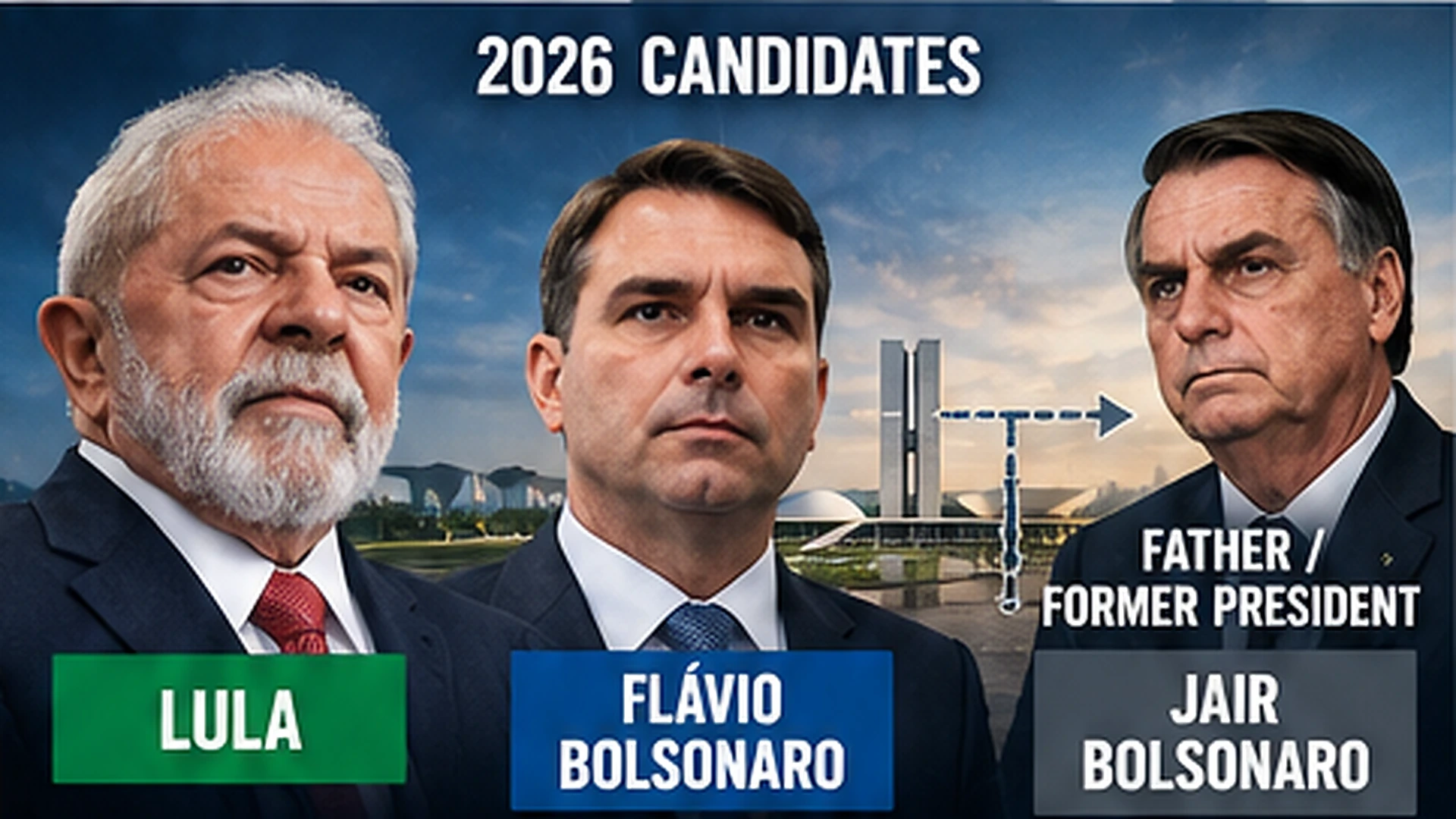
Jair Bolsonaro lost the 2022 presidential election to Lula. He was later convicted over a plot to overturn that defeat and barred from running, leaving Flávio to carry the family’s presidential bid in 2026. Flávio’s own candidacy and election challenge should not be confused with his father’s conviction. (Reuters)
Lula’s career also spans several eras of Brazilian politics. A former union leader who helped found the Workers’ Party, he served as president from 2003 through 2010, returned to office in January 2023, and has now been elected for a fourth, nonconsecutive term. That makes the new mandate unusual: Brazil is not choosing a new political figure, but extending the career of one who has shaped its politics for decades. (Brazilian Senate · Reuters)
Why Is Flávio Bolsonaro Refusing to Accept the Result?
Flávio says a late decision extending voting hours created an unfair election process. His refusal to concede is a political objection and an announced legal challenge, not an official reversal of Lula’s victory. Brazil’s electoral authority has declared Lula the winner.
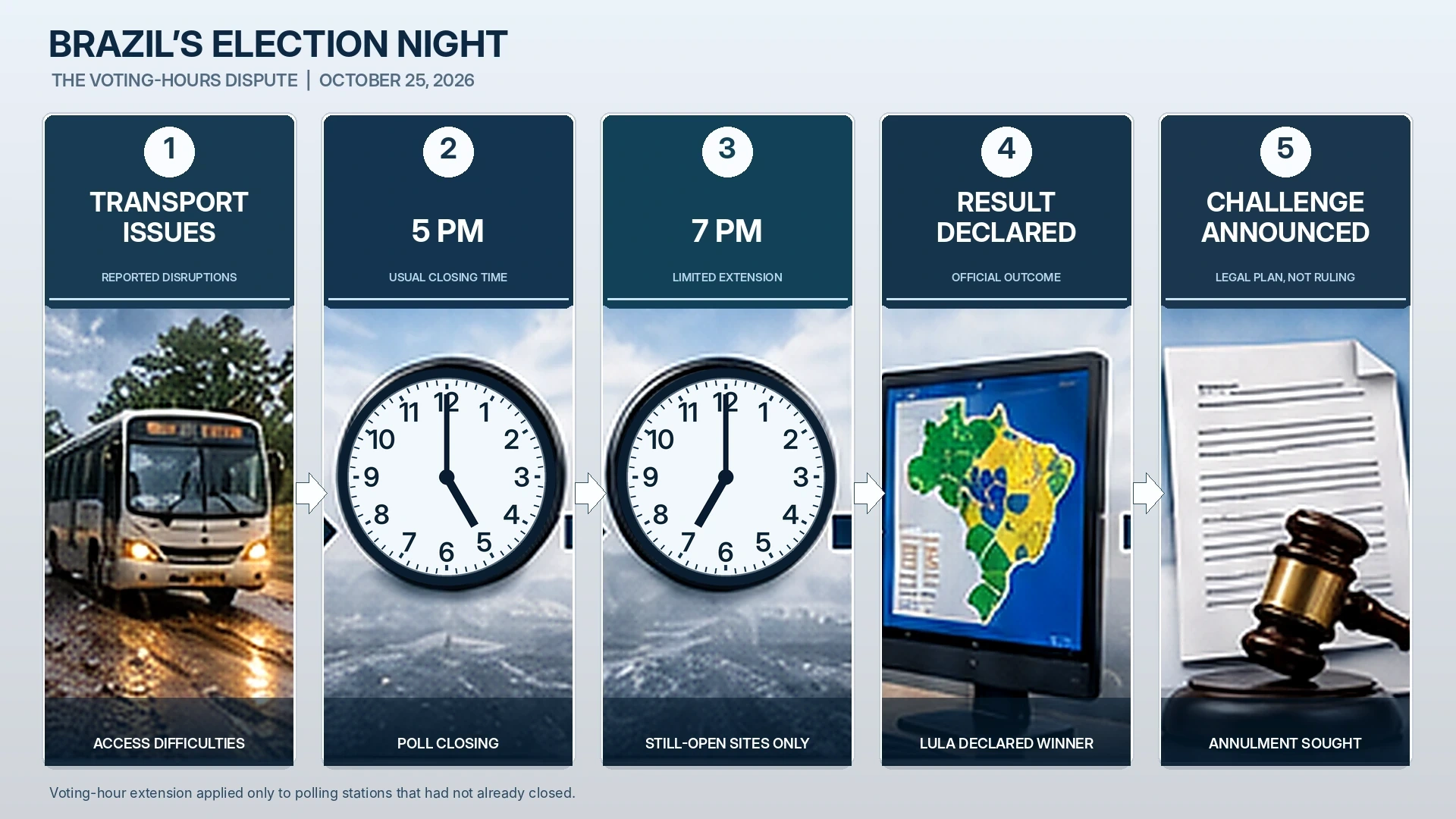
On October 25, serious weather and reported public-transport problems affected access to polling locations. Both campaigns sought voting-hour extensions in different locations. Supreme Federal Court Justice Cristiano Zanin initially ordered voting to continue until 7 p.m. instead of 5 p.m. He later clarified that the extension applied only to polling stations that had not already closed. The TSE paused publication of results during the extension. (Agência Brasil · TSE)
Flávio argued that changing the rules so close to closing time compromised equal treatment of voters. He announced plans to seek annulment of the election. The fact that his campaign also requested additional voting time in some places is relevant context, but does not by itself resolve whether the nationwide handling of the order was legally proper. (Agência Brasil)
Legal specialists quoted by AP said that successfully overturning the election would require more than pointing to an unusual procedural decision; a challenge would need a substantiated legal basis involving the integrity of the vote. Other Brazilian legal commentators raised questions about the timing and unequal practical implementation. The dispute therefore concerns how the late order was applied—not a demonstrated finding that the published national vote totals were fraudulent. (AP · Folha de S.Paulo)
Why Does Lula’s Victory Matter to the United States?
It matters because Brazil is a major trade and diplomatic partner that does not automatically follow Washington’s foreign-policy preferences. Lula’s victory means U.S. President Donald Trump will continue dealing with a Brazilian leader who emphasizes national sovereignty and independent ties with countries including China.
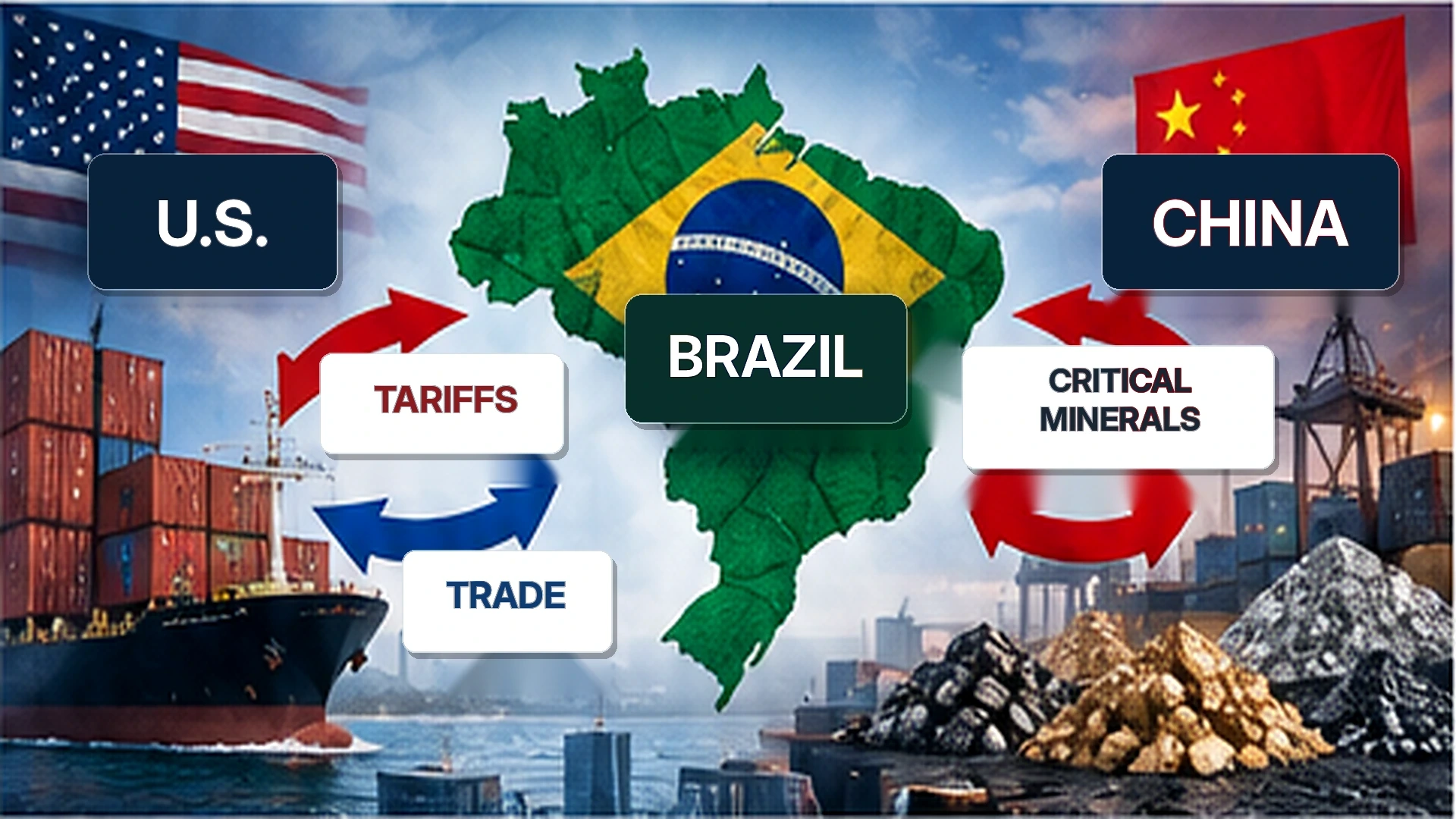
The two countries already have disagreements over U.S. tariffs and how Brazil should handle its former president’s legal case. They also have reasons to negotiate: American companies and policymakers have an interest in Brazilian critical minerals, and Brazilian exporters want better access to the U.S. market. Reuters reported earlier in October that the two governments had established a working group for tariff and wider trade talks, with rare earths among the sensitive issues. (Reuters)
Flávio Bolsonaro had signaled a friendlier relationship with Trump. Lula instead presents independence from outside pressure as a central principle of Brazilian policy. Neither position means trade negotiations are automatically finished or that every policy disagreement will lead to retaliation. (AP)
For Americans, the most tangible points to watch are:
| Issue | Why the U.S. has a stake |
|---|---|
| Tariffs and market access | Negotiations can affect exporters, importers, and business costs. |
| Critical minerals | Washington wants diversified supplies for advanced manufacturing and strategic industries. |
| China and BRICS | Brazil maintains relationships that do not always align with U.S. preferences. |
| Regional diplomacy | Brazil’s positions can shape cooperation on security and other Western Hemisphere issues. |
Those are channels through which policy may matter, not a claim that Lula’s reelection immediately changes prices for American households.
What Problems Will Lula Face in His Fourth Term?
Lula won another term, but the victory does not give him unrestricted power. A conservative-leaning Congress and Brazil’s economic pressures will shape how much of his agenda becomes law and how quickly the government can act.
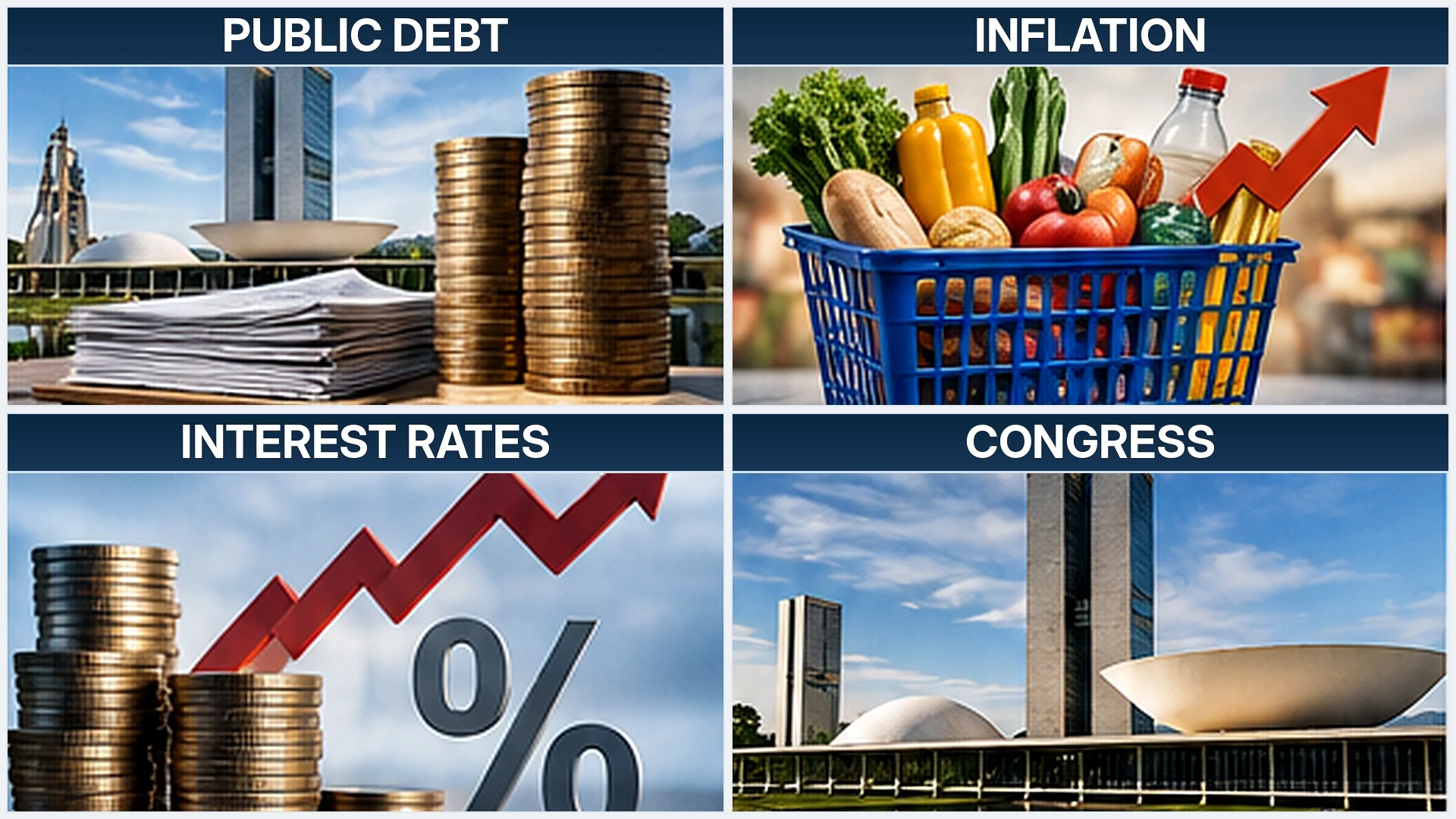
Reuters identified several challenges awaiting Lula: public debt above 82% of gross domestic product, inflation of about 4.6%, a 13.75% benchmark interest rate, household indebtedness, and politically difficult budget decisions. His campaign promises on wages and social support must be weighed against pressure to control spending and borrowing costs. (Reuters)
His legislative position matters just as much. Congress is expected to be heavily influenced by conservative parties, including Bolsonaro allies. That creates a basic distinction between winning the presidency and having the votes to enact a program. Even proposals with popular appeal may require bargaining, amendments, or compromises. (Reuters)
Brazilian financial markets are also watching the administration’s fiscal plans and choice of economic officials. Investor concerns over future spending do not establish that Lula’s policies will fail; they reflect uncertainties the new government will have to address. (Reuters)
What Happens Between the Election and January 2027?
Lula is the declared winner and remains the sitting president. His next four-year term is scheduled to begin January 5, 2027, under Brazil’s revised presidential inauguration calendar—not January 1, the old inauguration date. (Brazilian Senate)
The election process still includes formal certification of elected candidates. TSE rules provide for certification by December 18, 2026. A legal challenge, if filed, must be assessed through the relevant procedures; announcing one does not itself change the declared result. (TSE)
Three developments now deserve attention: whether Flávio files a substantiated case and how the courts respond; whom Lula chooses for important economic roles and what spending priorities he sets; and whether Washington and Brasília make progress on tariffs and mineral negotiations.
The election settled who received the most votes. It has not settled all the political and economic disputes that will shape Brazil’s next four years.
Bottom Line: What This Story Really Means
Lula won Brazil’s 2026 presidential election by more than 4.4 million votes after finishing second in the first round. The comeback was made possible by Brazil’s two-round system and a new, harder-fought contest between two finalists. The precise reasons individual voters changed or maintained their choices cannot be read from national totals alone.
Flávio Bolsonaro has challenged the legitimacy of the process because of a last-minute voting-hours order. That dispute deserves a careful legal examination, but a candidate’s refusal to concede is not the same as an election being annulled.
For the United States, Lula’s fourth term means continued negotiations with a large, independent-minded Latin American power—especially over tariffs, critical minerals, and regional priorities. Whether he can meet Brazil’s domestic economic expectations will depend heavily on the budget, Congress, and the decisions still ahead.
Lula Brazil Election 2026: Key Questions Explained
Q. Did Lula win Brazil’s 2026 presidential election?
Yes. Brazil’s Superior Electoral Court declared Lula the winner of the October 25 runoff with 51.79% of valid votes and 64,256,232 votes in total.
Q. Who did Lula defeat in the runoff?
Lula defeated Senator Flávio Bolsonaro, the son of former President Jair Bolsonaro. Jair was not the 2026 presidential candidate.
Q. How many votes separated Lula and Flávio Bolsonaro?
Lula received 4,430,191 more votes than Flávio Bolsonaro in the final official tally reported by the TSE.
Q. Did Flávio Bolsonaro win the first round?
Yes. He led October 4 voting with 47.03% of valid votes, compared with Lula’s 45.16%. Neither secured a first-round majority, so a runoff followed.
Q. Was Brazil’s election overturned after the voting-hours dispute?
No. The electoral authority declared Lula the winner. Flávio announced plans to challenge the result, but an announced challenge does not itself annul an election.
Q. Why did Brazilian polling stations remain open longer?
A Supreme Federal Court justice ordered an extension after reports of transport problems and severe weather. The order was clarified to apply to stations that had not already closed at the regular deadline.
Q. Is this Lula’s fourth consecutive presidential term?
No. It is his fourth nonconsecutive term. He previously served from 2003 through 2010 and returned to the presidency in 2023.
Q. When does Lula’s next term begin?
January 5, 2027. Brazil changed its inauguration date for the 2026 election cycle.
Q. Why does the result matter to Americans?
Brazil and the United States have ongoing interests and disagreements involving tariffs, critical minerals, China, and regional diplomacy. Lula’s reelection affects who negotiates Brazil’s position, not the immediate price of every product Americans buy.
Did this help make the story clearer? 🙂 WIN keeps unpacking the “why” behind the news—clearly and simply!
Sources
Official Election Results and Runoff Rules
Superior Electoral Court — Official October 25, 2026 Runoff Results
Superior Electoral Court — October 4 First-Round Vote
Brazilian Senate — Presidential Inauguration Moves to January 5, 2027
Runoff Campaign and Voting-Hours Dispute
Agência Brasil — Lula Wins Reelection After a Campaign Turnaround
Superior Electoral Court — Clarification of Extended Voting Hours
Agência Brasil — Flávio Bolsonaro Announces Challenge to Result
Associated Press — Lula Declared Winner as Bolsonaro Rejects Results
U.S. Relations and Economic Challenges
Reuters — Brazil Election Puts U.S. Trade, Tariffs, and Minerals at Stake
Associated Press — Lula’s Victory and Its Meaning for U.S.–Brazil Relations
Reuters — Five Economic Challenges Facing Lula
Keep Reading
Why Has Lula Resisted Washington’s Pressure Before?
This election follows months of tension over U.S. tariffs and Brazil’s independence in foreign policy. An earlier WIN explainer looks at the language Lula and Trump used at the United Nations and the real disagreements behind it.
Did Trump Threaten Macron and Lula? What Their U.N. Speeches Actually Said