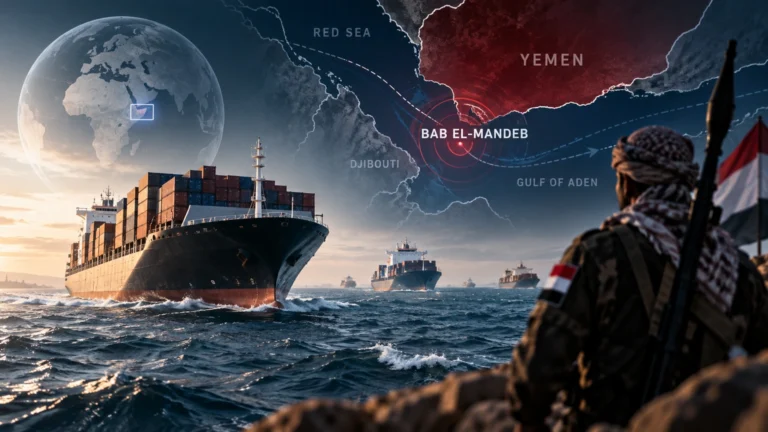
Did Trump Threaten Macron and Lula? What Their U.N. Speeches Actually Said

Did Donald Trump actually threaten French President Emmanuel Macron and Brazilian President Luiz Inácio Lula da Silva at the United Nations?
Not directly by name. But his speech did include a broader warning that the United States could use military force in the Western Hemisphere if it considered that necessary to protect vital U.S. interests. That distinction matters. (White House)
Trump’s most explicit country-specific threat in his September 22 address was directed at Iran, not at France or Brazil. He defended the use of American power, argued that he acts where others only talk, and warned that Iran could face devastating consequences if diplomacy fails. (Reuters)
What made the day striking was how differently the three leaders described power, rules and sovereignty.
Macron later stood at the same U.N. gathering and warned against a world governed by the “law of the jungle.” (UN News) Lula had spoken earlier—before Trump—and told the General Assembly that Brazil would not accept being treated as anyone’s backyard. (Agência Brasil)
That chronology is important: Lula’s line was not a real-time rebuttal to Trump’s speech that day. It reflected existing U.S.-Brazil tensions and a broader argument over outside influence in Latin America.
So the real story is more interesting than a simple confrontation.
The three leaders were not having a direct argument from the podium. They were revealing three different answers to a much bigger question:
When countries disagree, how much should power decide—and how much should international rules restrain it?

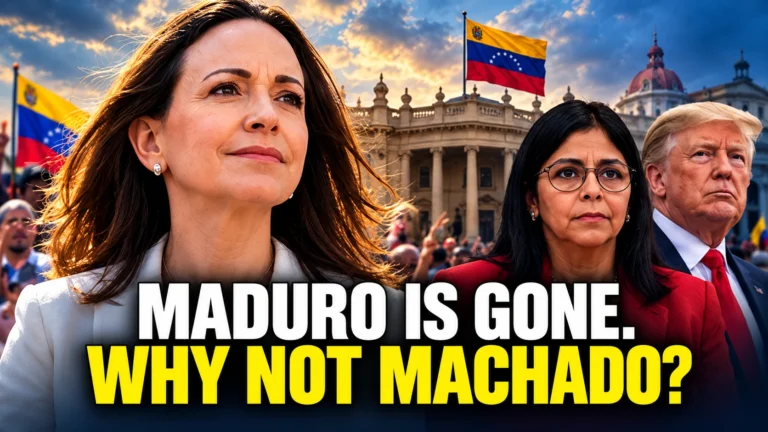
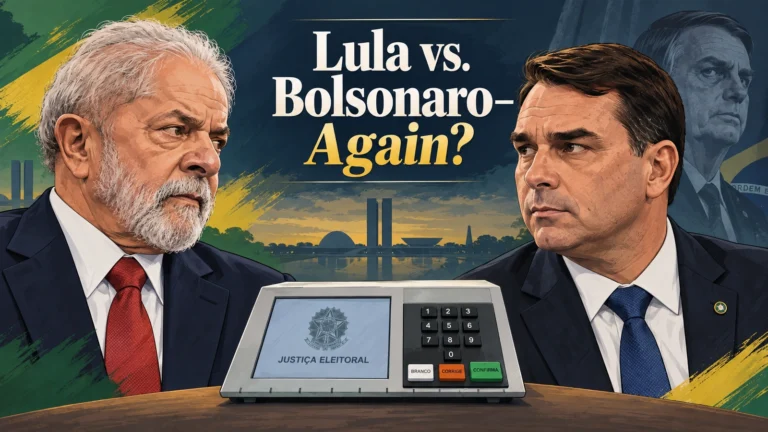
※ Images in this article are AI-generated illustrations created to help explain the story. They are not actual photographs, and depictions of people, places, or events may differ slightly from reality.
First, Did Trump Actually Threaten Macron or Lula?
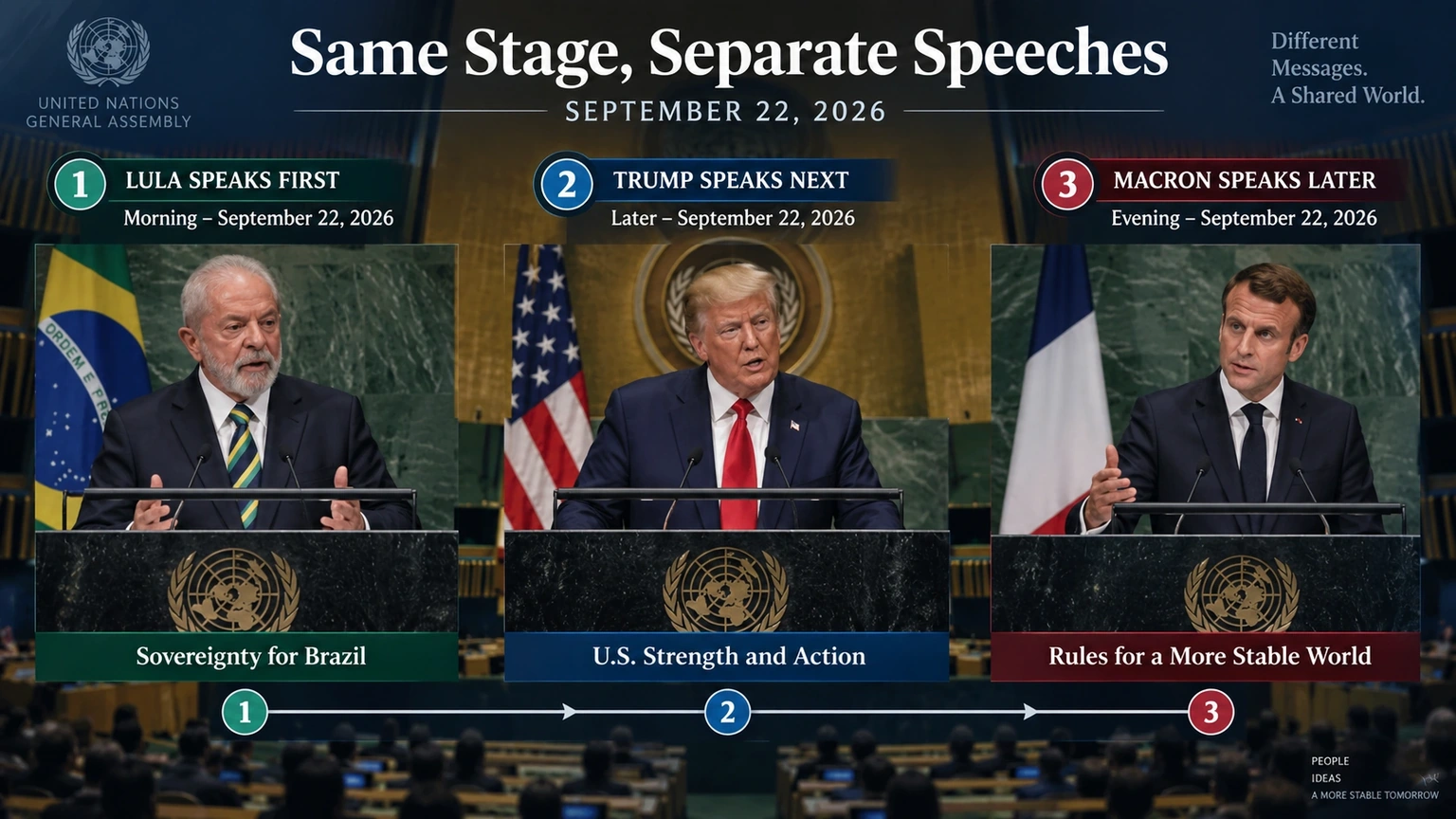
There was no direct Trump threat against Macron or Lula by name in these speeches. But Trump did make a broader regional warning: he said the United States would use its military power if necessary to secure vital U.S. interests in the Western Hemisphere. (White House)
His sharpest country-specific threat concerned Iran. Reuters reported that Trump warned Iran could be “annihilated” if a peace agreement was not reached, while also defending forceful U.S. actions elsewhere and criticizing international institutions he sees as constraining American power. (Reuters)
The U.N. General Debate had opened that day in New York, with leaders speaking one after another rather than debating each other directly. Brazil traditionally speaks first, followed by the United States as host country. Lula therefore spoke before Trump; Macron spoke later. (United Nations · United Nations)
That distinction matters.
A video that places their strongest lines next to one another can look like a three-way confrontation. In reality, their speeches were separate, and Lula’s speech was not a response to Trump’s speech from the same day—but the contrast between their positions was genuine.
What Was Trump Actually Saying About American Power?
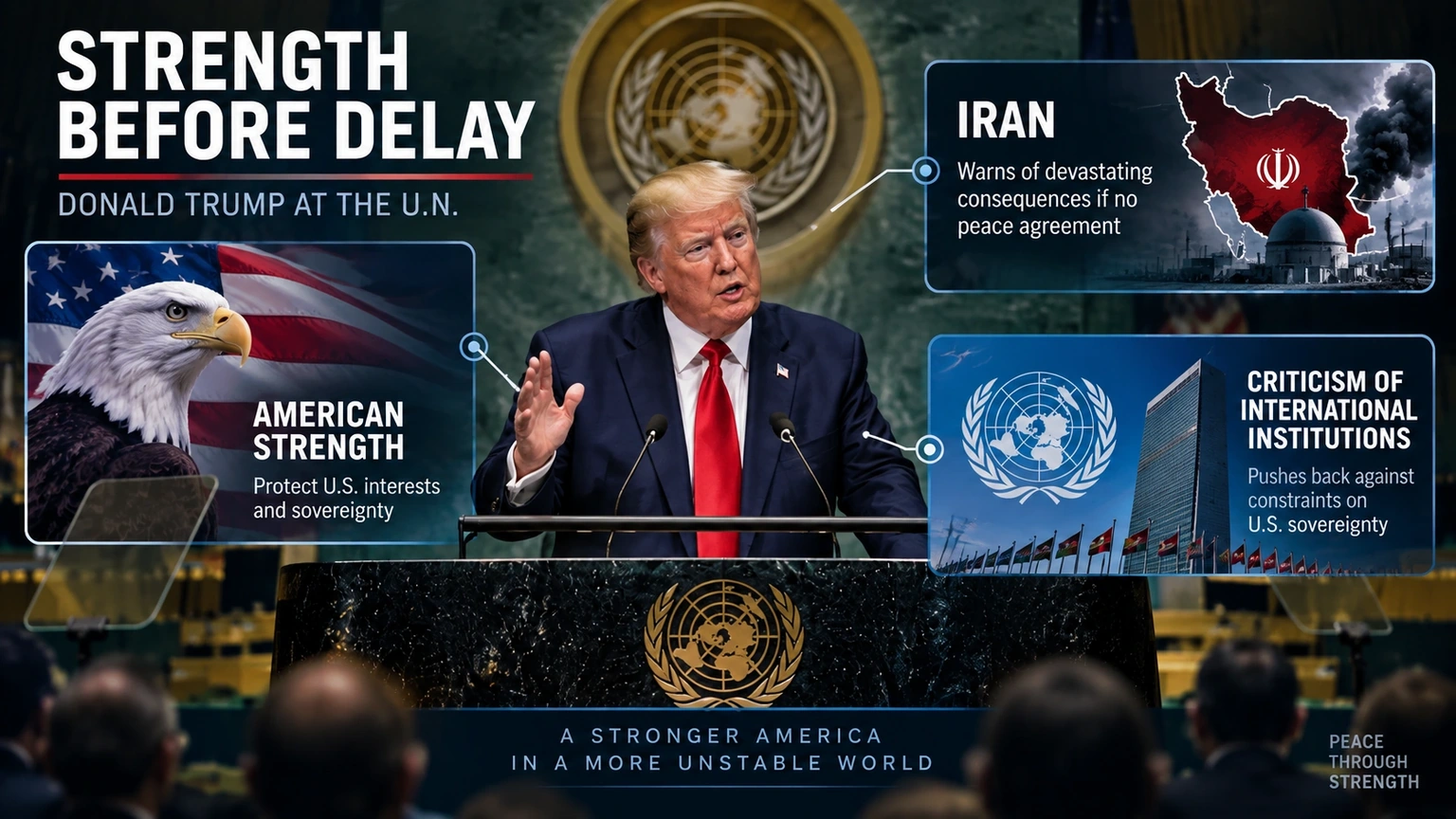
Trump’s argument was broader than Iran.
The White House summarized his message around the idea that the United States should confront threats before they grow and that American strength should be used to protect U.S. interests and sovereignty. Trump contrasted action with what he portrayed as years of ineffective international discussion. He also said the United States would use military power if necessary to protect its vital interests in the Western Hemisphere. (White House)
That helps explain why his Iran language sounded so severe.
Trump was presenting military and economic pressure not merely as tools of last resort but as evidence that credible power can force adversaries toward negotiation. Reuters also reported criticism of the International Criminal Court and broader skepticism toward international institutions Trump believes can interfere with U.S. sovereignty. (Reuters)
A useful shorthand for Trump’s message is therefore:
Sovereignty is protected by having enough power—and being willing to use it.
That is an analytical summary, not an official Trump doctrine. But it explains why his speech sounded so different from Macron’s.
Why Did Macron Warn About a “Law of the Jungle”?
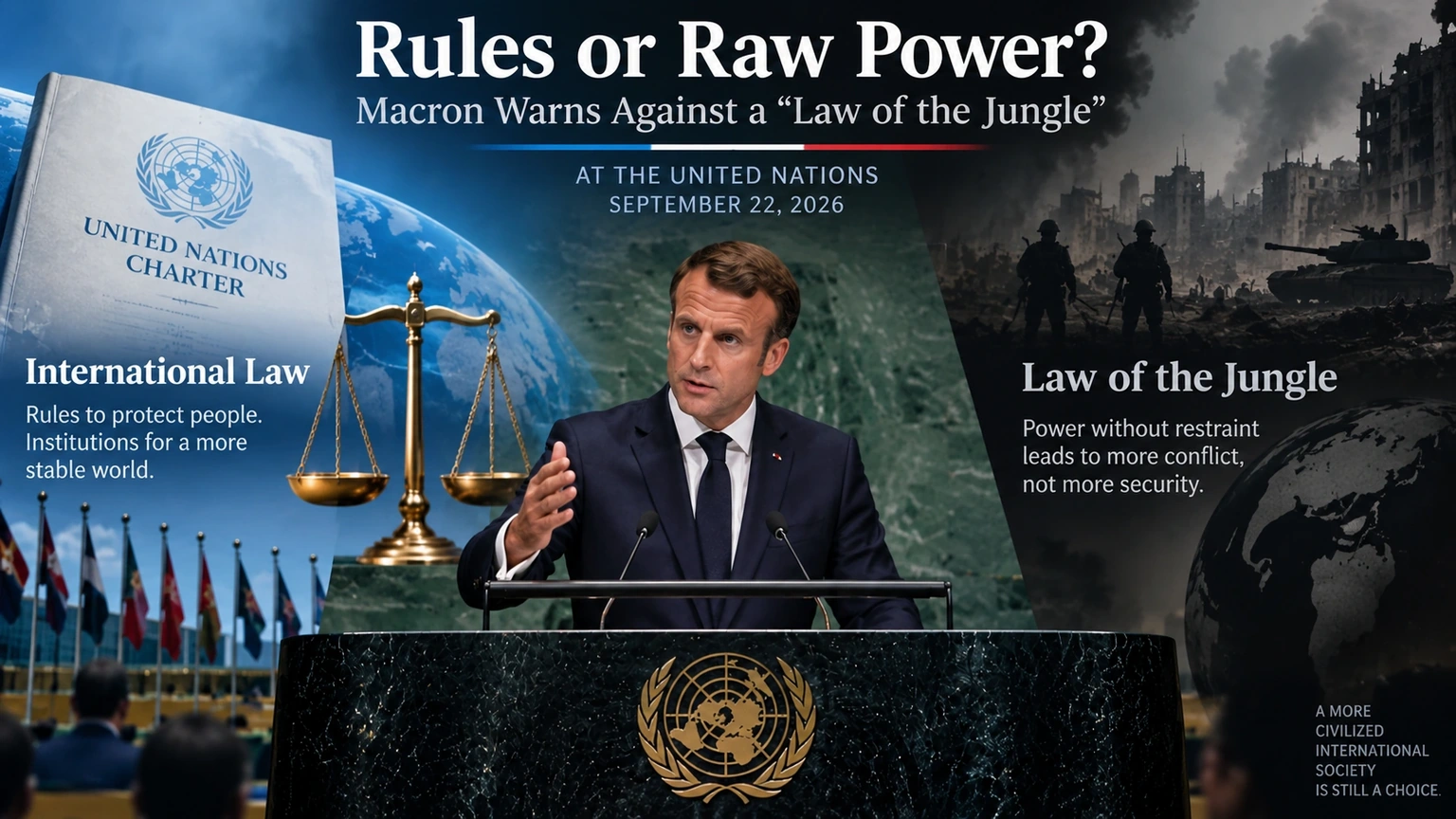
Macron’s argument began from almost the opposite concern: what happens when powerful countries decide that force and national interest outweigh common rules?
In what Reuters described as his final annual U.N. address before leaving office next year, Macron warned against a return to the “law of the jungle” and argued that countries faced a choice between rule by coercion and a “civilized international society.” He also sharply challenged Trump’s portrayal of the Gaza situation as a diplomatic success. (UN News · Reuters)
The French presidency described Macron’s broader U.N. agenda as an effort to build effective multilateral responses to crises, particularly in Ukraine and the Middle East. (Élysée)
But this is where the story becomes more complicated.
Macron was not simply declaring himself Trump’s adversary.
Around the same U.N. gathering, Macron and Trump also discussed Ukraine and Middle East issues. France said the two leaders agreed to work together to reduce pressure on energy markets and pursue a moratorium on attacks against Ukrainian energy and civilian infrastructure. (Élysée · Reuters)
In other words, Macron can disagree with Trump’s view of international order while still cooperating with him on specific security problems.
Why Did Lula Say Brazil Is “Nobody’s Backyard”?
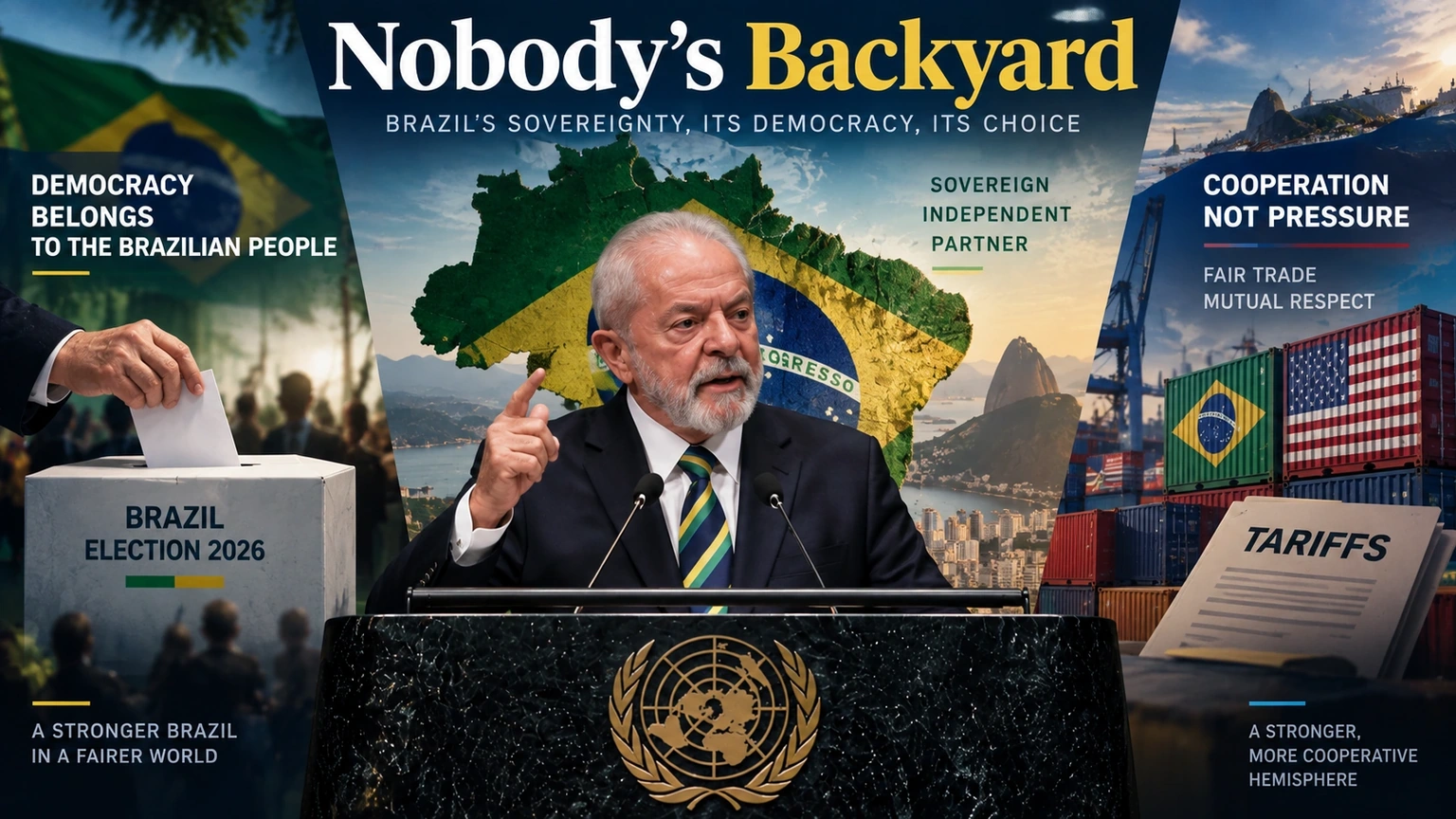
Lula’s message was different from both Trump’s and Macron’s.
He was focused heavily on what smaller and middle powers fear when major powers talk about spheres of influence.
During his U.N. address, Lula said that Latin America lives next to the world’s most powerful military country and warned against renewed “hegemonic temptations.” His conclusion was blunt: Brazil does not belong in anyone else’s backyard. (Agência Brasil · Reuters)
The timing was important.
Brazil is approaching an October presidential election, and Lula used the speech to warn against both domestic and foreign interference in Brazil’s democratic process. The remarks came amid broader strains in U.S.-Brazil relations involving tariffs, organized-crime policy and Brazilian concerns about outside political pressure. (Reuters)
Trade is part of that story.
The Trump administration imposed a 25% Section 301 tariff on certain Brazilian goods in July. Reuters also reported a separate 12.5% tariff affecting goods from dozens of countries, including Brazil, tied to U.S. concerns about forced-labor enforcement. Brazil began preparing possible reciprocal measures, although Lula said on September 21 that he would hold off while negotiations with Washington continue. (USTR · Reuters)
So Lula’s argument can be summarized this way:
A country can cooperate with the United States without accepting that Washington gets to decide its political or strategic choices.
Were Trump, Macron and Lula Really Presenting Three Opposing Worldviews?
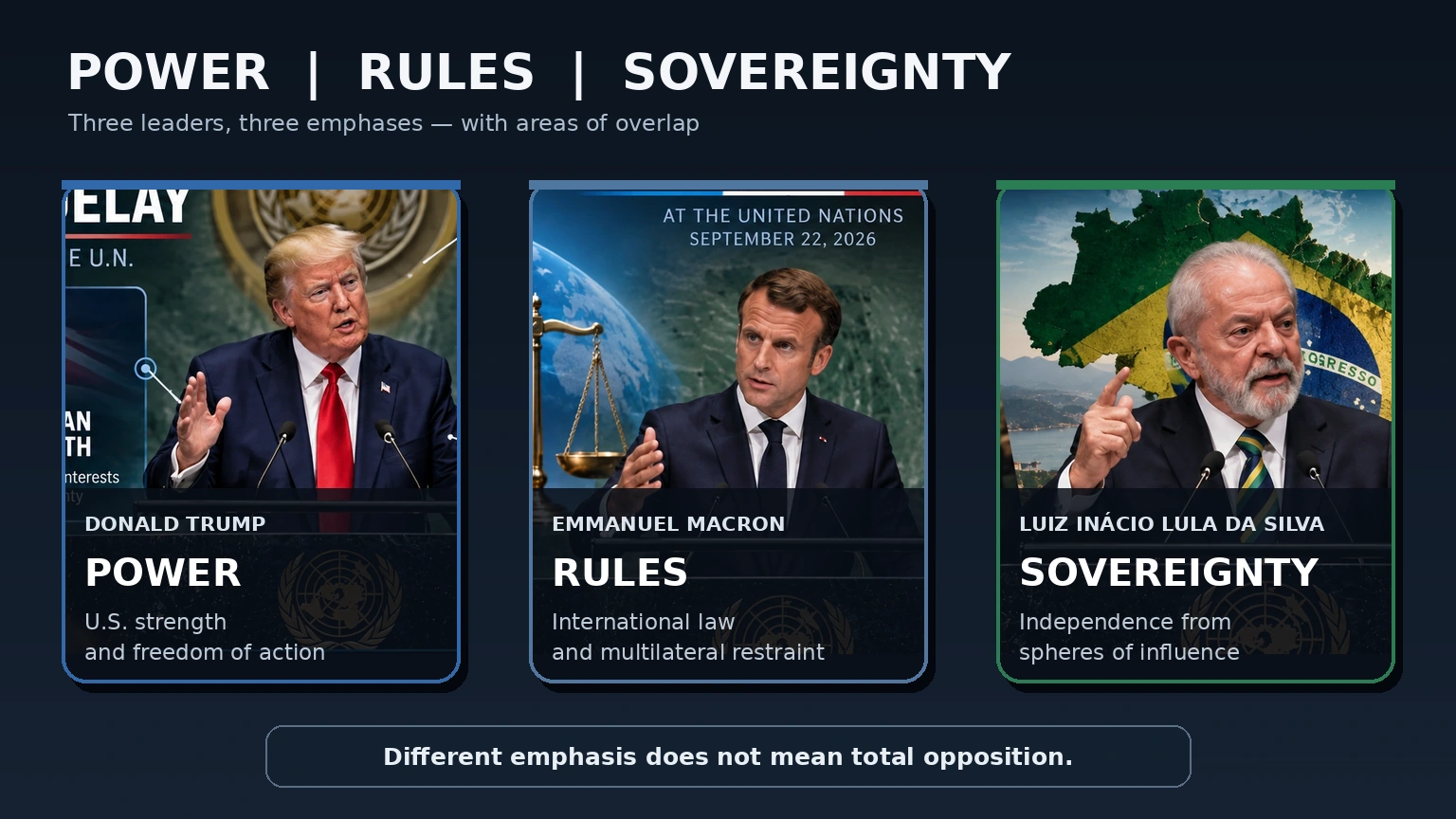
Not completely.
The easiest mistake is to turn the speeches into a simple political triangle: Trump versus Macron versus Lula.
The reality is less tidy.
| Leader | Strongest emphasis in the speech | What that means in practice |
|---|---|---|
| Donald Trump | U.S. strength and freedom of action | Threats should be confronted with credible American military and economic power |
| Emmanuel Macron | International law and multilateral institutions | Even powerful countries need rules that limit coercion and protect collective interests |
| Luiz Inácio Lula da Silva | Sovereignty and resistance to spheres of influence | Cooperation should not allow major powers to dominate another country’s elections or foreign policy |
These are WIN’s analytical shorthand, not formal doctrines announced by the three governments.
And there is substantial overlap.
Trump talks constantly about national sovereignty. Lula does too.
Macron wants international institutions to constrain unilateral power, but France remains a nuclear power and a major military actor.
Lula defends multilateral institutions, yet his central complaint is also about protecting Brazil’s freedom to make its own decisions.
The sharper disagreement is therefore not over whether sovereignty matters.
It is over what happens when the sovereignty of one powerful country collides with the sovereignty of another—and who gets to set the rules.
Why Should Americans Care About a Philosophical Fight at the U.N.?
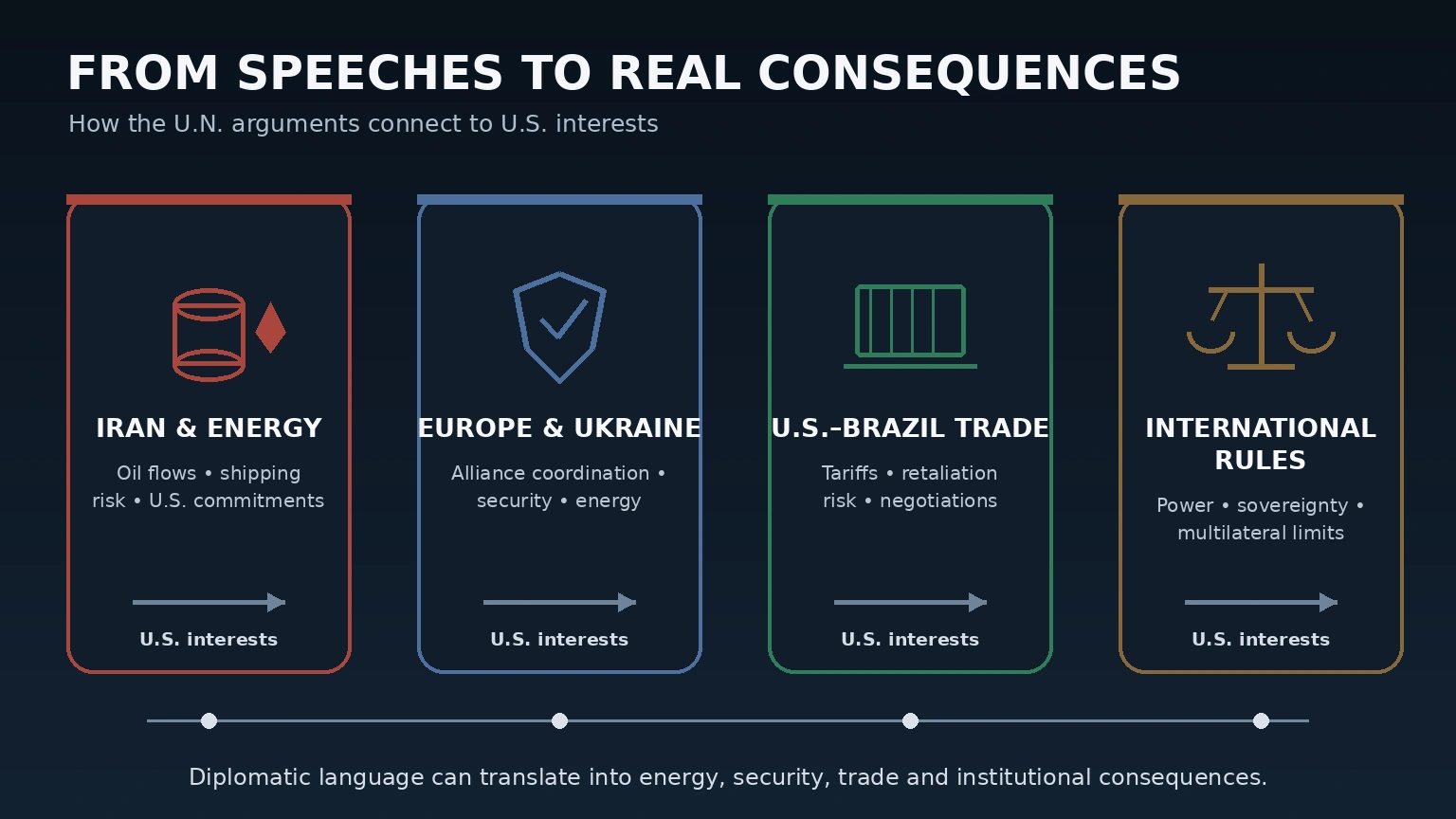
Because these arguments do not stay inside the U.N. chamber.
Iran and energy: Trump’s warning to Iran matters because further escalation in the Middle East can affect oil flows, shipping risks and U.S. military commitments. Energy-market concerns were prominent enough that Trump and Macron were simultaneously discussing ways to reduce pressure on energy markets. (Reuters)
Europe and Ukraine: Macron’s criticism of unilateral power does not prevent France and the United States from working together on Ukraine. That distinction matters for Americans trying to understand whether political disagreements with European allies automatically mean the alliance itself is breaking down. The September 22 discussions show that disagreement and cooperation can occur at the same time. (Reuters)
Brazil and trade: Brazil is a major economy, and the current U.S.-Brazil dispute already involves tariffs and the possibility of retaliation. Lula’s sovereignty language is therefore tied to an actual economic negotiation, not just diplomatic rhetoric. (Reuters)
The future of international rules: Trump’s preference for freedom of action, Macron’s defense of multilateral restraint and Lula’s resistance to major-power influence are different responses to the same problem: the international system is becoming more contested, and countries disagree about how much authority global institutions should have.
What Happened Next—and What Should You Watch Now?
The speeches did not settle these disputes, but the Iran track moved almost immediately.
After his September 22 address, Trump said the United States and Iran had been talking that day and that he believed a settlement would eventually be reached. By September 23, reporting from New York described mediated contacts between U.S. and Iranian representatives, even as major disagreements remained. (Reuters · CBS News)
So the question is no longer simply whether diplomacy will begin. It is whether the talks can produce a durable agreement while military pressure, shipping risks and the nuclear dispute remain unresolved.
A second issue is Trump’s relationship with European allies. Macron’s speech showed how sharply a close ally can criticize aspects of Trump’s worldview while still working with Washington on Ukraine, energy and security.
A third is Brazil’s October 4 election and the tariff negotiations. Lula has warned against external influence while simultaneously keeping trade negotiations with the United States open. Brazil has so far refrained from imposing reciprocal measures while those talks continue. (Reuters)
None of those relationships can be reduced to “friend” or “enemy.”
That may be the most useful way to understand what happened at the U.N.
Why It Matters in One Sentence
Trump did not directly threaten Macron or Lula by name, but his broader warning about U.S. military power—and the three leaders’ contrasting speeches—revealed a real argument over how power, international rules and national sovereignty should interact.
UN Speeches: Key Questions Explained
Q. Did Donald Trump threaten Emmanuel Macron at the U.N.?
No direct threat against Macron by name appeared in Trump’s September 22 speech. Trump’s strongest country-specific warning concerned Iran, while Macron later criticized a broader international environment in which power can override legal restraints.
Q. Did Trump threaten Brazilian President Lula?
No direct threat against Lula by name appeared in the U.N. address. Trump did, however, warn more broadly that the United States could use military force to protect vital interests in the Western Hemisphere. Lula had spoken before Trump, so his sovereignty warning was not a direct response to that same-day remark. (White House)
Q. Who was the target of Trump’s strongest warning?
Iran. Trump warned of devastating consequences if a peace agreement was not reached while continuing to argue that American strength and pressure can produce diplomatic results. (Reuters)
Q. What did Macron mean by the “law of the jungle”?
Macron was warning about an international system in which stronger states can use power or coercion without meaningful legal restraints. He argued instead for international law and multilateral institutions.
Q. What did Lula mean when he said Brazil is “nobody’s backyard”?
He was rejecting the idea that Latin American countries should fall automatically within another major power’s sphere of influence. His speech connected that principle to Brazilian sovereignty and concerns about foreign interference. (Agência Brasil)
Q. Are Macron and Trump now diplomatic enemies?
No. They publicly disagree on important issues, but they also continue to cooperate. During the U.N. gathering they discussed Ukraine, the Middle East and energy-market stability. (Élysée)
Q. Why are U.S.-Brazil relations tense?
Tariffs are one major source of friction. Brazil also objects to what it views as outside political pressure and disagreements over how organized crime in Brazil should be handled. At the same time, both governments continue to negotiate. (Reuters)
Q. What should Americans watch next?
Watch whether the U.S.-Iran contacts produce a durable agreement, how Washington and European allies coordinate on Ukraine and energy, and how U.S.-Brazil trade relations develop as Brazil approaches its October 4 election. Those developments will show how the competing ideas heard at the U.N. translate into policy.
Did this help make the story clearer? 🙂
WIN keeps unpacking the “why” behind the news—clearly and simply!
Sources
Trump’s U.N. Address and U.S. Position
White House — President Trump at the United Nations: “While Others Have Talked, I Have Acted”
Reuters — Trump at UN: Threats, diplomacy and ‘super intelligence’
Macron’s U.N. Message and U.S.-France Cooperation
Élysée — 81st Session of the United Nations General Assembly in New York: Day Two
UN News — Choose international order over ‘law of the jungle’, urges Macron
Reuters — In UN farewell, Macron denounces Trump’s Gaza diplomacy as spectacle of shame
Élysée — 81st Session of the United Nations General Assembly in New York: Day One
Reuters — Macron says he discussed Ukraine-Russia energy truce ideas with Trump
Lula, Brazilian Sovereignty and U.S.-Brazil Relations
Reuters — At the UN, Brazil’s Lula warns against foreign interference in upcoming election
Agência Brasil — “O Brasil não cabe no quintal de ninguém,” diz Lula na ONU
Reuters — Brazil to withhold reciprocity against U.S. while trade talks continue
USTR — Section 301 Action on Brazil’s Unreasonable Acts, Policies, and Practices
United Nations Context and Immediate Follow-Up
United Nations — General Debate of the Eighty-First Session of the General Assembly
Reuters — Trump says talks with Iran continue and he thinks settlement will be reached
CBS News — Iran war updates after Trump’s U.N. speech and renewed talks
Keep Reading
Why Would Trump Talk About Meeting Iran While Threatening It at the Same Time?
Trump’s U.N. warning makes more sense when seen alongside the diplomatic track that was already developing. This earlier WIN explainer connects possible U.S.-Iran talks with Iranian warnings, Houthi attacks on Saudi Arabia and the wider risk of regional escalation.
If Trump Is Open to Talks With Iran, Why Are Both Sides Threatening a Bigger War?
How Could This Conflict Reach Oil Markets and U.S. Gas Prices?
The diplomatic argument at the U.N. is only one part of the story. Saudi Arabia’s alternative oil route shows how tensions involving Iran, the Houthis, Hormuz and the Red Sea can turn geopolitical pressure into a real energy-supply problem.
Saudi Arabia Built a Pipeline to Bypass Hormuz—So Why Is Its Oil Route Still at Risk?