If Netanyahu Loses Israel’s Election, Could He Go to Prison?

What happens to a prime minister who loses an election while facing criminal charges?
For Benjamin Netanyahu, that question is becoming especially important as Israelis prepare to vote on October 27, 2026.
The Israeli prime minister is facing a difficult political contest. His opponents are challenging his handling of national security, the wars that followed Hamas’s October 7, 2023, attack, and the economic pressures facing Israeli households.
Meanwhile, U.S. President Donald Trump has stepped directly into the campaign by publicly endorsing Netanyahu.
But another issue makes this election unusually complicated: Netanyahu is already on trial in Israel and is also the subject of an International Criminal Court arrest warrant.
Does losing his job mean he could immediately be arrested?
Not automatically. An election cannot replace a criminal verdict, and the international arrest warrant operates under an entirely different legal system.
Understanding those differences is essential to understanding what is actually at stake.
※ Images in this article are AI-generated illustrations created to help explain the story. They are not actual photographs, and depictions of people, places, or events may differ slightly from reality.
The election will determine the composition of Israel’s next parliament. A subsequent process will determine who can form a government.
Netanyahu’s legal proceedings, however, will not simply disappear—or suddenly produce a prison sentence—because of the vote.
What Are the Latest Polls Saying About Netanyahu?
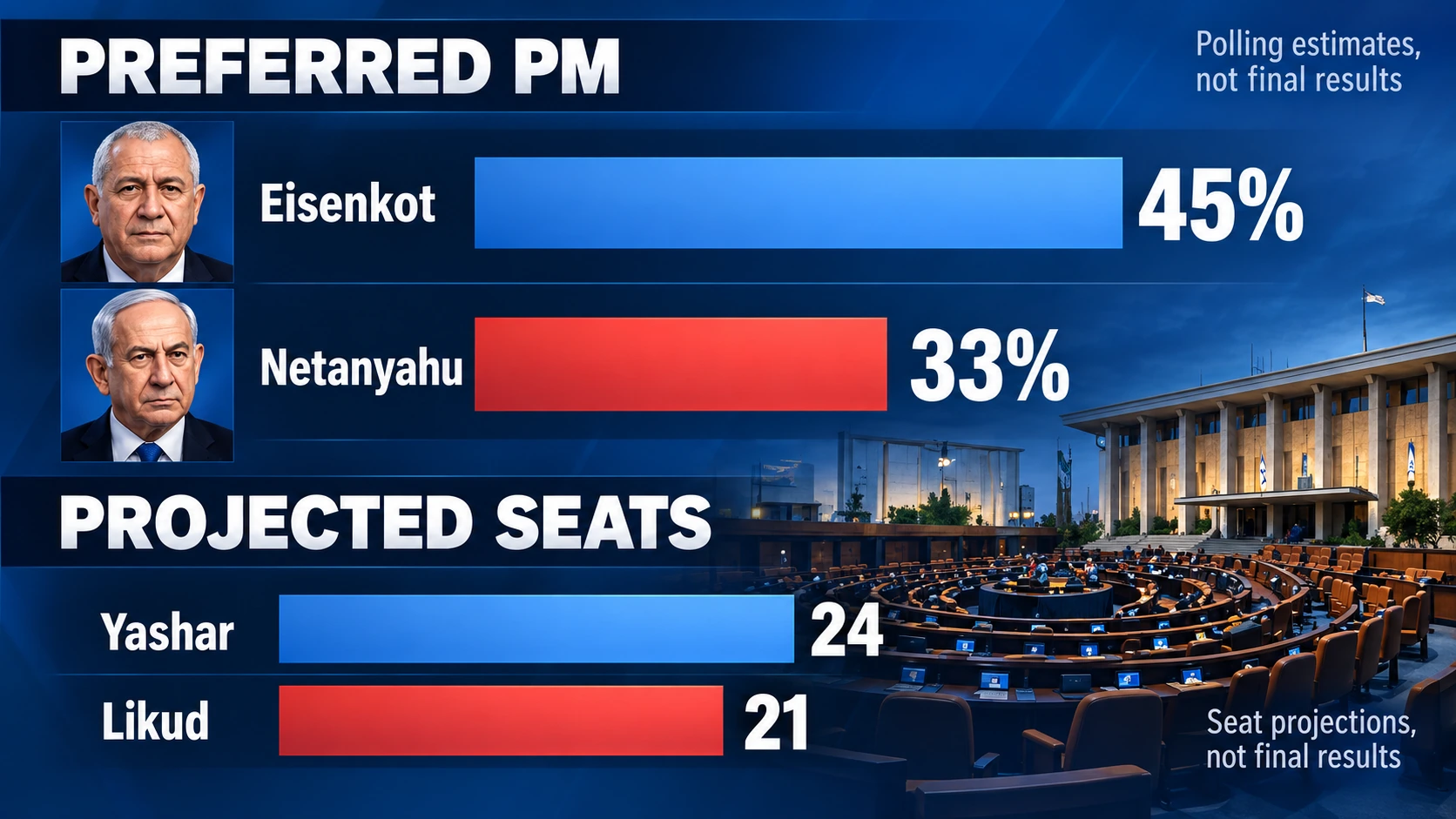
A recent Israeli television poll shows former military chief Gadi Eisenkot ahead of Netanyahu when respondents are asked which politician is better suited to serve as prime minister.
According to a Channel 12 poll conducted on October 19 and reported on October 20, Eisenkot received 45% support on that question, compared with 33% for Netanyahu.
The same survey projected 24 seats for Eisenkot’s Yashar party and 21 for Netanyahu’s Likud party in Israel’s 120-seat parliament, the Knesset. It surveyed 507 respondents, with a reported margin of error of 4.4 percentage points. (The Times of Israel)
Those numbers are politically significant, but they require an important distinction.
The 45% and 33% figures are not election vote shares. They measure respondents’ preferences between two potential prime ministers.
Israeli voters do not directly elect their prime minister. They vote for political parties, which receive parliamentary seats based on their share of the national vote.
And winning the largest number of seats does not necessarily guarantee control of the government.
Other polling has illustrated how complicated the picture is. Surveys show considerable fragmentation among political parties, with coalition arithmetic—not just individual popularity—remaining central to the outcome. (Reuters)
The election is therefore not simply a head-to-head contest between Netanyahu and Eisenkot.
It is a contest over which group of parties can ultimately govern.
Why Is Trump Backing Netanyahu So Publicly?
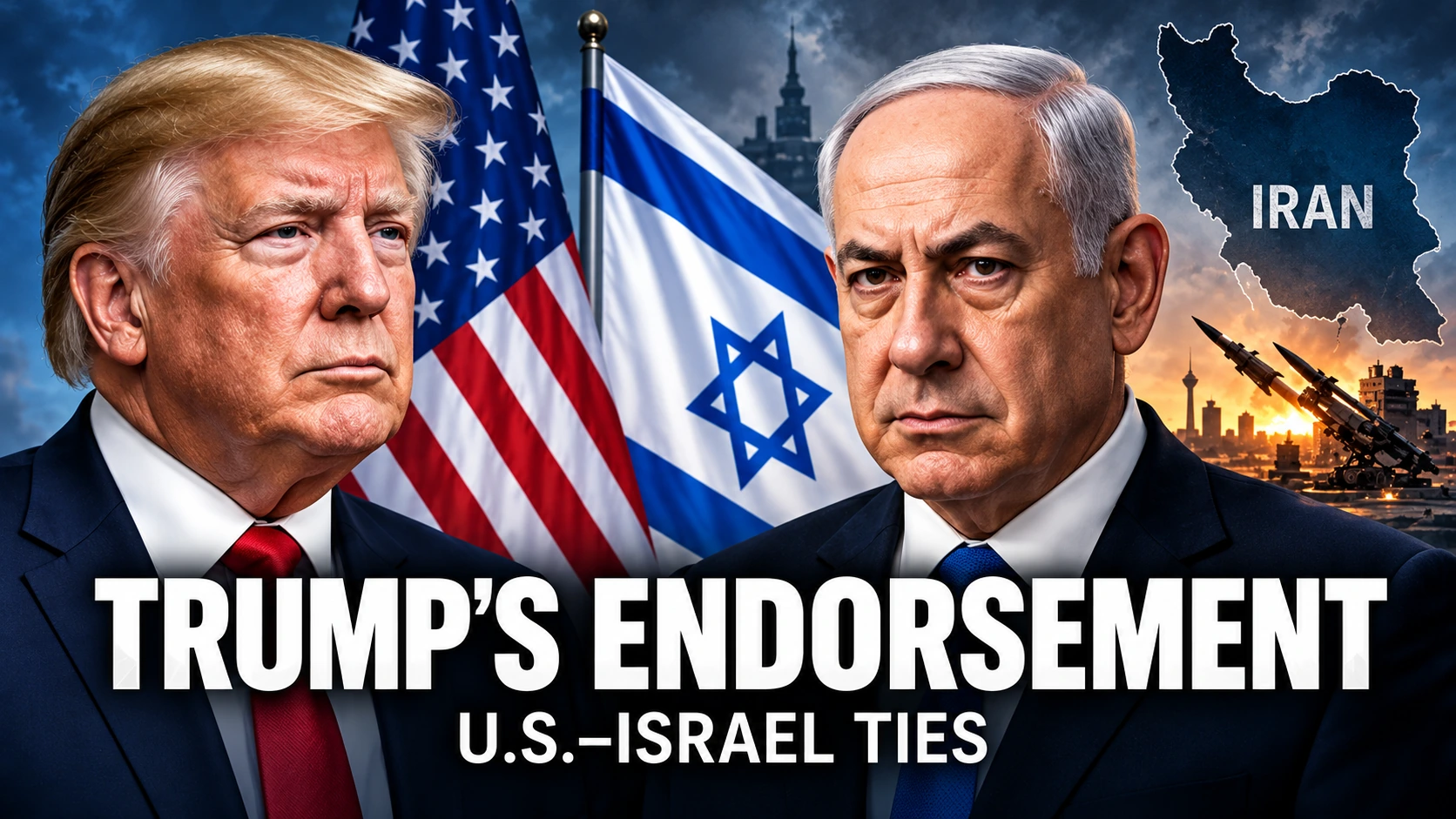
Trump’s endorsement is valuable to Netanyahu because his campaign has long emphasized the importance of his personal relationship with Washington.
On October 18, Trump publicly backed the Israeli prime minister, praising him as a strong partner in confronting Iran and describing him as a “Great Warrior Prime Minister.” (Associated Press)
The following day, Netanyahu published a video of a telephone conversation between the two leaders.
In the call, Netanyahu thanked Trump for the endorsement and referred to unfinished business involving Iran and the Abraham Accords, the diplomatic agreements that normalized Israel’s relations with several Arab countries.
Trump responded with further praise and expressed confidence in Netanyahu’s leadership. (The Times of Israel)
Why does this relationship matter politically?
Netanyahu has portrayed his access to American presidents—particularly Trump—as an important strategic advantage for Israel.
His argument is that maintaining close relations with Washington helps Israel confront threats from Iran and other regional adversaries.
That relationship carries practical weight. The United States provides Israel with major military assistance, diplomatic support, and security cooperation.
There was another development on October 19.
U.S. Defense Secretary Pete Hegseth made an unannounced visit to Israel and met Netanyahu, according to Israeli officials cited by Reuters. The meeting involved security discussions concerning Iran. (Reuters)
Hegseth is the U.S. defense secretary, not the deputy defense secretary.
The timing attracted attention because the visit occurred just eight days before the Israeli election.
Still, a high-level military meeting does not, by itself, establish that the Pentagon was conducting an election campaign operation.
The confirmed event was a meeting between senior officials amid continuing regional security tensions.
The political significance of that timing is a separate matter of interpretation.
Netanyahu has also publicly said he does not intend to initiate another attack on Iran before the election, while maintaining that Israel would respond to threats. (Reuters)
For voters, Trump’s endorsement offers a visible reminder of Netanyahu’s international relationships.
But it does not resolve the domestic questions driving the campaign.
Why Has Netanyahu’s Security Record Become Such a Major Election Issue?
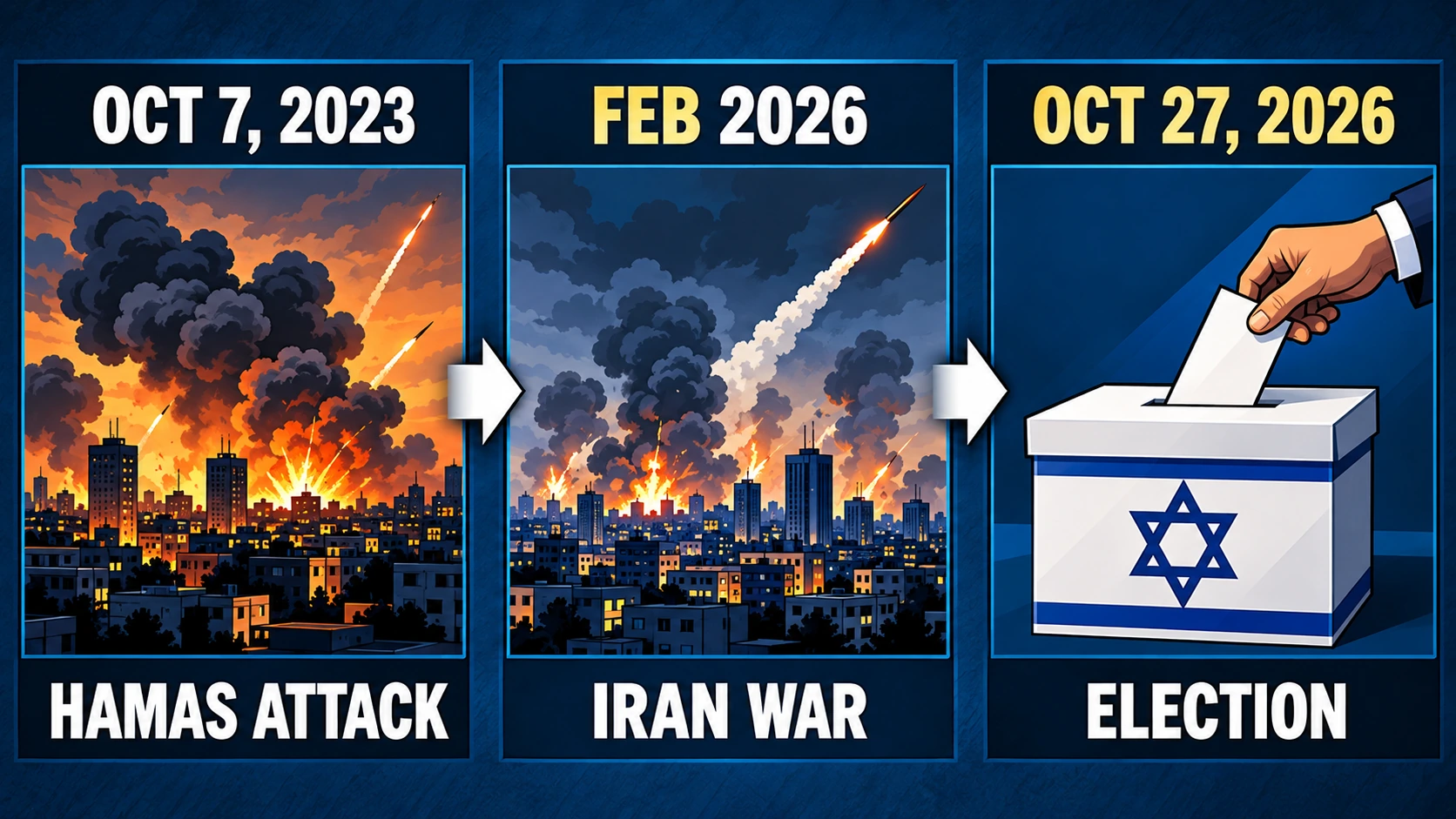
The October 27 election will be Israel’s first national vote since the October 7, 2023, Hamas-led attack.
That attack killed approximately 1,200 people in Israel and resulted in the abduction of roughly 250 hostages, triggering the Gaza war and a wider period of regional conflict.
For Netanyahu, who has long emphasized his experience in protecting Israel, the attack raised difficult questions about how such a major security failure occurred under his government.
His critics argue that his administration failed to recognize warning signs and prevent the assault.
Netanyahu and his supporters emphasize Israel’s subsequent military operations against Hamas and other adversaries, arguing that forceful action has been necessary to defend the country. (Associated Press)
The dispute has only grown more complicated.
In February 2026, the United States and Israel launched strikes on Iran, beginning another major phase of regional conflict.
Those operations were followed by Iranian retaliation, further military confrontation, and continuing uncertainty over the region’s security and energy infrastructure.
Supporters of the Israeli government emphasize military achievements and the importance of confronting Iran’s capabilities.
Critics question whether the conflict has improved Israel’s long-term security or brought sufficient diplomatic results. (Reuters)
The economy has become part of the security debate
Wars are also expensive.
Military spending, disruptions to businesses, pressure on public finances, and uncertainty about future investment affect the broader economy.
Israel’s technology sector has shown resilience, but economists have raised concerns about the country’s long-term fiscal challenges, military costs, and the economic consequences of political instability. (Reuters)
That means voters are weighing more than Netanyahu’s military record.
The election also involves debates over the cost of living, the military service obligations of ultra-Orthodox Jewish men, relations between religious and secular Israelis, and the future of Israel’s democratic institutions.
These concerns help explain why support from an American president, however prominent, cannot settle the election’s domestic arguments.
How Does Israel Actually Choose Its Next Prime Minister?
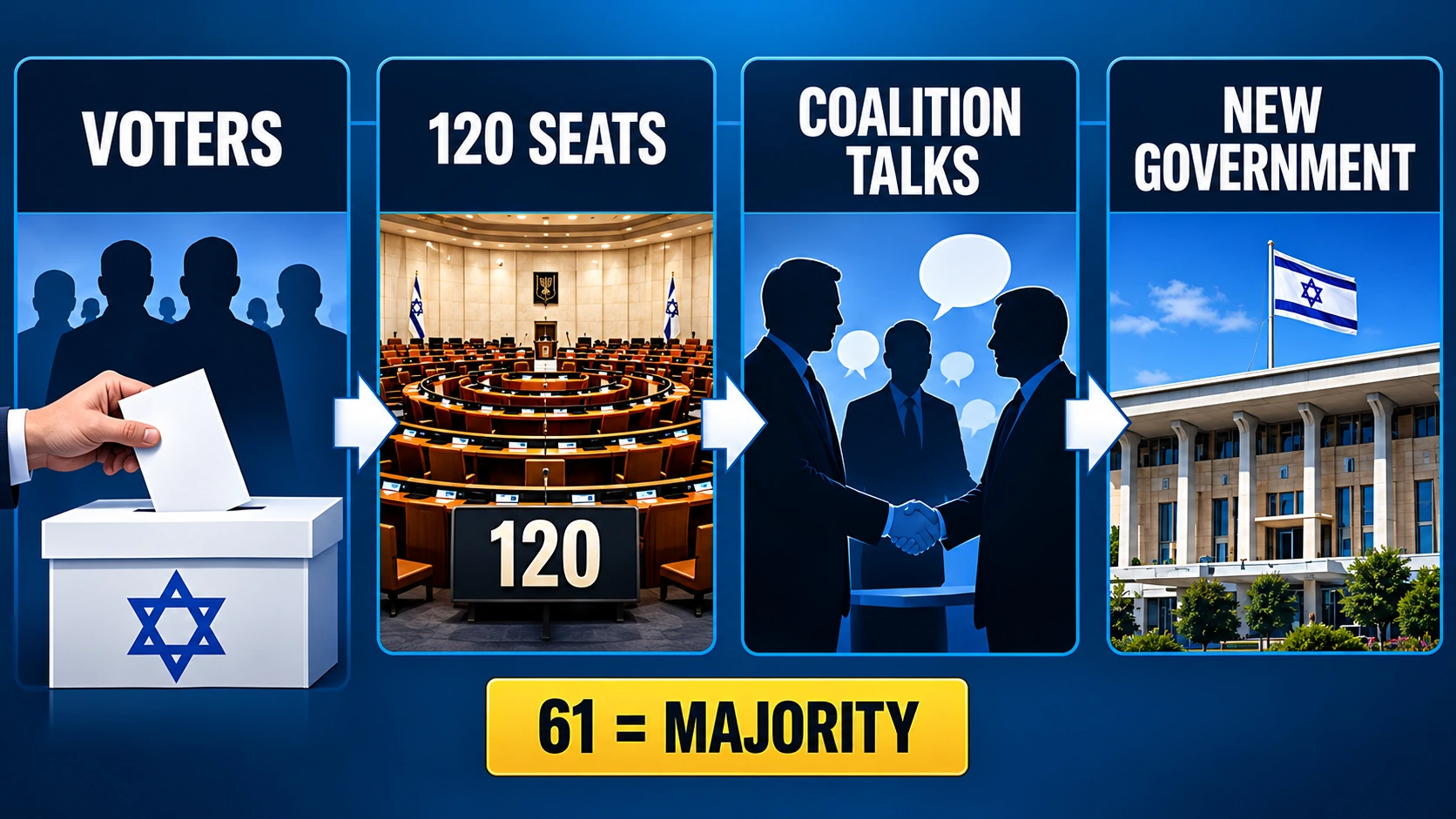
Israel’s election system is fundamentally different from the American presidential system.
Americans vote for presidential candidates through a process involving the Electoral College.
Israelis vote for party lists to fill the 120 seats of the Knesset.
The prime minister emerges through negotiations over who can command parliamentary support.
In practice, that commonly means assembling a coalition of multiple parties. (Israel Democracy Institute)
The process works like this:
| Stage | What happens |
|---|---|
| Election | Citizens vote for political party lists. |
| Seat allocation | Qualifying parties receive shares of the Knesset’s 120 seats. |
| Coalition negotiations | Party leaders negotiate over a proposed government. |
| Government formation | The Knesset votes on whether to give the proposed government its confidence. |
A party must win at least 3.25% of valid national votes to qualify for parliamentary seats. (Israel Democracy Institute)
A majority of the 120-member parliament is 61 seats, making that the central benchmark in coalition calculations.
However, the formal confidence vote does not always require 61 affirmative votes; what matters legally is that the proposed government receives the Knesset’s confidence.
Could Netanyahu remain prime minister without winning the most seats?
Yes.
If Netanyahu can assemble sufficient parliamentary support, having a smaller party than a rival would not automatically disqualify him from forming a government.
Likewise, Eisenkot’s party winning the most seats would not automatically make him prime minister.
Israel’s president consults the elected parties and assigns someone the task of forming a government.
Coalition negotiations then determine whether that person can assemble a viable administration.
The talks can take weeks or longer. An outgoing government also continues serving until a new one formally takes office. (Israel Democracy Institute)
This makes one distinction particularly important:
Election Day determines who sits in parliament. It does not necessarily determine who becomes prime minister that night.
The 45%–33% leadership-preference poll and the projected number of parliamentary seats should therefore be understood as two different measures.
Neither is an official election result.
Could Netanyahu Really Go to Prison if He Loses?
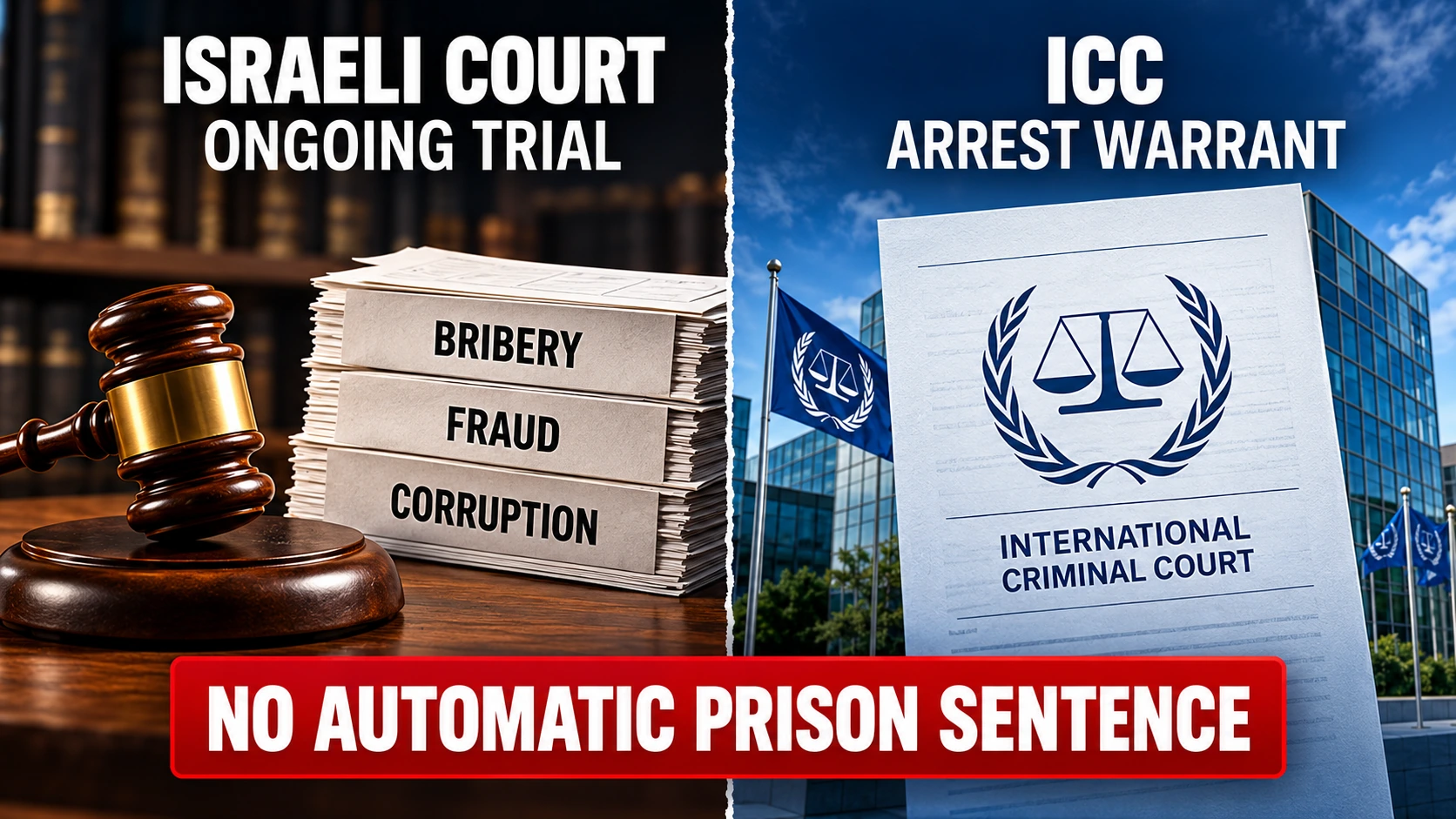
No. Losing the election would not automatically send Netanyahu to prison.
The reason is that his political career and his legal cases operate under different rules.
There are two separate legal issues: a long-running corruption trial in Israel and an arrest warrant issued by the International Criminal Court.
They involve different allegations, different courts, and different legal procedures.
1. The Israeli corruption trial
Netanyahu was indicted in 2019 over allegations involving bribery, fraud, and breach of trust.
His trial began in 2020 and has continued while he has served as prime minister.
The accusations arise from three separate cases, commonly known as Cases 1000, 2000, and 4000.
| Case | Main allegations |
|---|---|
| Case 1000 | Receiving valuable gifts from wealthy businessmen in connection with alleged official favors |
| Case 2000 | Discussions with a newspaper publisher about favorable coverage and possible action against a competing publication |
| Case 4000 | Alleged regulatory favors involving a telecommunications company in exchange for favorable media treatment |
Netanyahu has denied wrongdoing in the cases.
The bribery allegation is particularly significant in Case 4000, although judges have raised doubts about prosecutors’ ability to prove that charge. (The Times of Israel)
The prosecution involves three cases, but they are being handled within an ongoing criminal trial—not three entirely separate trials suddenly beginning after an election.
Netanyahu completed his own lengthy testimony in June 2026, and the case continued into its defense-witness phase.
In October, the Jerusalem District Court moved proceedings to a five-day-a-week schedule in an effort to accelerate the trial. (The Jerusalem Post)
The former Israeli attorney general who authorized the prosecution, Avichai Mandelblit, was subsequently called as a witness by Netanyahu’s defense team. His appearance illustrates that the case continues independently of the election campaign. (The Jerusalem Post)
This is crucial because the criminal trial is already underway while Netanyahu holds office.
His status as prime minister has not prevented it from taking place.
Losing office could change the political circumstances surrounding the case, but an election defeat would not itself establish guilt.
For Netanyahu to receive a prison sentence through the ordinary criminal process, there would need to be further legal proceedings and a relevant court judgment, subject to applicable appeals and other legal remedies.
His election result would not substitute for those steps.
2. The International Criminal Court arrest warrant
The other legal issue comes from the International Criminal Court, or ICC, based in The Hague, Netherlands.
On November 21, 2024, the ICC issued arrest warrants for Netanyahu and former Israeli Defense Minister Yoav Gallant.
The court alleged responsibility for war crimes and crimes against humanity associated with the Gaza conflict, including allegations concerning the use of starvation as a method of warfare and attacks on civilians. (International Criminal Court)
An ICC arrest warrant is a serious legal action, but it is not a criminal conviction.
Israel has rejected the ICC’s jurisdiction in this matter and disputes the court’s allegations.
Netanyahu’s government maintains that Israel has acted to defend itself against Hamas and other armed threats.
The court, meanwhile, maintains its own legal position concerning the alleged crimes and its jurisdiction over the Palestinian territories.
Why doesn’t the ICC warrant mean immediate arrest?
The ICC does not have its own police force capable of entering Israel and arresting Netanyahu.
It generally depends on cooperation from national governments to carry out its arrest warrants.
Israel is not a party to the Rome Statute, the treaty establishing the ICC, and does not recognize the court’s jurisdiction over Netanyahu.
That creates a major practical obstacle to enforcement inside Israel.
The situation could be different when Netanyahu travels internationally. Countries that are parties to the ICC treaty generally have obligations to cooperate with the court, although disputes concerning immunity and enforcement can complicate particular cases.
The United States is also not an ICC member and does not have an ordinary legal obligation to enforce the warrant. (Reuters)
Losing the premiership could affect legal and diplomatic arguments concerning his status, particularly when traveling abroad.
But it would not automatically put him in ICC custody.
What would actually change after an election defeat?
The answer depends on what happens after the votes are counted.
| Situation | Immediate consequence |
|---|---|
| Netanyahu’s party loses seats | He does not automatically lose office before a new government takes over. |
| Another coalition forms a government | Netanyahu leaves the premiership when the new government takes office. |
| His Israeli criminal trial continues | The court proceedings continue according to judicial procedures, not the election result. |
| The ICC warrant remains active | International legal exposure continues; enforcement depends on jurisdiction and cooperation. |
| A criminal conviction occurs later | Sentencing and appeals are determined through the courts, not by voters. |
The difference between a political defeat and a criminal sentence is not a technicality.
It changes the meaning of the entire story.
Why Does Israel’s Election Matter to the United States?
The October 27 election matters to Americans because the Israeli government is a central partner in U.S. policy toward the Middle East.
Washington’s relationship with Israel affects military planning, diplomacy, regional security, and debates over Iran.
The ongoing confrontation involving Iran has also created risks for energy supplies and international shipping.
For American households and businesses, instability in major oil-producing and shipping regions can influence gasoline costs, transportation expenses, and wider inflation pressures.
The economic consequences are not determined by one country’s election alone, but future Israeli decisions could affect the larger regional situation.
There is also a domestic American political dimension.
The United States is approaching its November 3, 2026, midterm elections. Trump’s handling of the Middle East conflict is therefore being assessed by American voters at nearly the same time Israelis are choosing their next parliament.
Recent reporting indicates that tensions over Iran, sanctions, negotiations, and possible military action remain major issues for Washington and Tehran. (Reuters)
A change of government in Israel could alter diplomatic priorities or negotiating positions.
But it would not automatically end the conflict with Iran or fundamentally reverse every Israeli security policy.
Different Israeli parties disagree over leadership, governance, and domestic policy while sharing some significant national-security concerns.
The precise policies of a future Israeli government would depend on which parties actually join it.
What should people watch after October 27?
Three developments will be especially important:
- The parliamentary results: How many seats does each party receive, and which parties clear the electoral threshold?
- Coalition negotiations: Who can assemble sufficient support to establish a government, and what compromises will that require?
- The legal proceedings: How does Netanyahu’s corruption trial progress, and do any new judicial or international legal decisions change his position?
The election will answer some questions immediately.
Others may remain unresolved for weeks or months.
Bottom Line: What This Story Really Means
Israel’s October 27 election is a major political test for Benjamin Netanyahu after years of security crises, war, economic strain, and controversy over his leadership.
Recent polling shows substantial support for opposition figure Gadi Eisenkot, while Netanyahu has received a highly visible endorsement from U.S. President Donald Trump.
But Israeli elections are decided through parliamentary seats and coalition formation—not a direct national vote for prime minister.
And even if Netanyahu leaves office, that would not automatically send him to prison.
His domestic corruption trial is already in progress, and the ICC arrest warrant is a separate international legal matter.
Neither process produces an automatic prison sentence because of an election result.
The more important question is how Israel’s next government will be formed, how Netanyahu’s legal cases will proceed, and whether a change in political leadership will alter the country’s approach to regional security.
The election and the courts are two separate sources of uncertainty. Understanding that distinction makes the stakes clearer without treating an uncertain political or legal outcome as inevitable.
Netanyahu Israel Election 2026: Key Questions Explained
Q. When is Israel’s 2026 general election?
Israel’s parliamentary election is scheduled for October 27, 2026. Voters will elect members of the 120-seat Knesset.
Q. Is Netanyahu running directly against Gadi Eisenkot for prime minister?
No. Israeli voters choose political party lists, not a prime minister directly. Netanyahu and Eisenkot lead rival parties, and the next prime minister will emerge from the parliamentary government-formation process.
Q. What does the 45% versus 33% poll actually measure?
A Channel 12 survey conducted on October 19, 2026, found 45% of respondents preferred Eisenkot as prime minister compared with 33% for Netanyahu. Those figures measure leadership preference, not the parties’ actual election vote shares.
Q. Why did Donald Trump endorse Netanyahu?
Trump publicly praised Netanyahu’s leadership and cooperation with the United States, particularly regarding Iran. The endorsement came shortly before the Israeli election and after periods of disagreement between the two leaders.
Q. Is Netanyahu currently on trial for corruption?
Yes. Netanyahu’s criminal trial began in 2020 and involves three corruption cases covering allegations of bribery, fraud, and breach of trust. He denies wrongdoing.
Q. Would Netanyahu go to prison immediately if he lost the election?
No. Losing an election does not establish criminal guilt or automatically trigger imprisonment. Any punishment in the domestic corruption case would require the applicable judicial process.
Q. Does Netanyahu already have an ICC arrest warrant?
Yes. The International Criminal Court issued an arrest warrant for Netanyahu on November 21, 2024, relating to alleged war crimes and crimes against humanity. An arrest warrant is not a conviction.
Q. Can the ICC arrest Netanyahu inside Israel?
The ICC has no independent police force to arrest him there. Israel is not a party to the ICC treaty and rejects the court’s jurisdiction in the case. Enforcement would depend on cooperation and applicable legal obligations.
Q. Does the largest party automatically form Israel’s next government?
No. The process depends on parliamentary support and coalition negotiations. The leader of the largest party is not automatically entitled to become prime minister.
Q. Why should Americans pay attention to this election?
Israel is a major U.S. security partner, and its next government’s decisions could affect policy toward Iran, regional military cooperation, diplomacy, and broader Middle Eastern stability.
Did this help make the story clearer? 🙂
WIN keeps unpacking the “why” behind the news—clearly and simply!
Sources
Election Date, Polling, and Political Parties
Associated Press — A Look at Key Parties in Israel’s October 27 Election
The Times of Israel — October 19 Channel 12 Election Poll
Israel Democracy Institute — How Votes Become Knesset Seats
Israel Democracy Institute — Forming a Government After Elections
Trump Endorsement and Regional Security
Associated Press — Trump Endorses Netanyahu for Reelection
The Times of Israel — Netanyahu and Trump Discuss Iran and the Abraham Accords
Reuters — Hegseth Discusses Iran With Netanyahu
Reuters — Netanyahu Says He Does Not Seek a Pre-Election Attack on Iran
Reuters — Israel’s Election Has High Economic Stakes
Domestic Criminal Proceedings
The Jerusalem Post — Netanyahu Trial Moves to a Five-Day Weekly Schedule
The Jerusalem Post — Mandelblit Testifies in Netanyahu’s Trial
The Times of Israel — Judges Raise Concerns Over the Bribery Charge
International Criminal Court and Arrest Warrant
International Criminal Court — November 2024 Arrest Warrant Announcement
Reuters — Why the ICC Warrant Cannot Simply Be Enforced in the United States
Keep Reading
Why Did Netanyahu Call the Official Who Authorized His Prosecution to Testify for the Defense?
The election will not end Netanyahu’s corruption case. A recent courtroom development shows how the defense is challenging the conduct of the original investigation and why the proceedings are still unfolding.
Why Did Netanyahu Call the Man Who Indicted Him as a Defense Witness?