Why Is American Airlines Losing Money Even as Ticket Prices Keep Rising?

Airline tickets have become more expensive. Planes are still carrying plenty of travelers. So how can a major airline bring in billions of dollars and still expect to lose money?
That is the puzzle behind American Airlines’ latest earnings announcement.
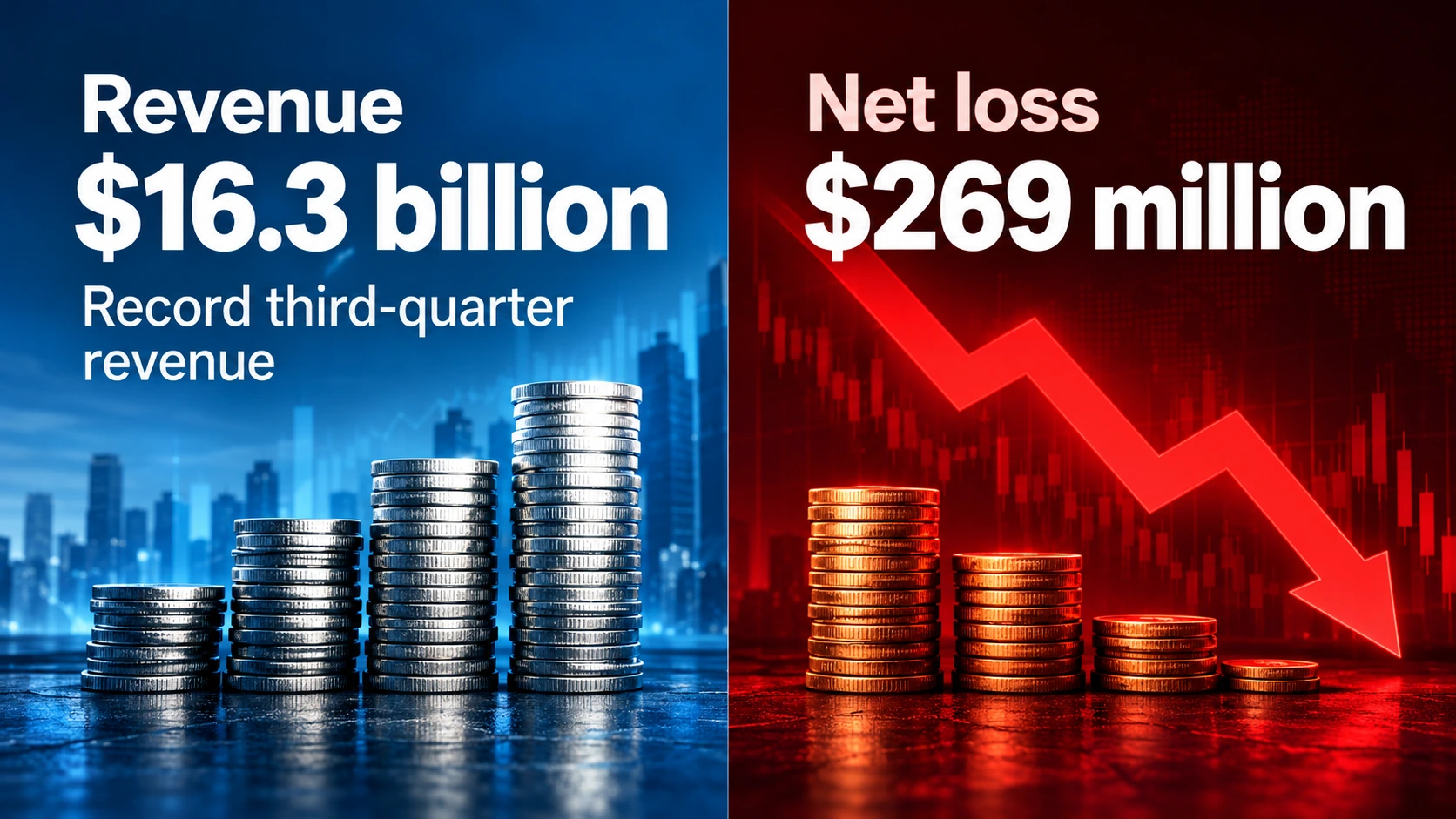
On October 22, 2026, American reported a record third-quarter revenue total of $16.3 billion. Yet it also posted a quarterly net loss and changed its full-year outlook to an expected adjusted loss. The explanation is not that passengers suddenly stopped flying. Fuel costs have risen so sharply that higher revenue has not translated into profits. (American Airlines · Reuters)
※ Images in this article are AI-generated illustrations created to help explain the story. They are not actual photographs, and depictions of people, places, or events may differ slightly from reality.
There are two very different numbers in this story: how much money customers pay the airline, and how much the airline spends to keep its flights operating. The distance between those numbers is what decides whether the business makes a profit.
How Can American Airlines Earn $16.3 Billion and Still Lose Money?
Revenue is what a company collects; profit is what remains after expenses. American’s third-quarter results show why that difference matters.
Compared with the third quarter of 2025, revenue grew by about $2.6 billion. But the fuel bill alone increased by roughly $1.9 billion. That consumed much of the additional revenue before accounting for changes in wages, aircraft-related expenses, airport costs, and other operating expenses. (American Airlines)
| Third-quarter measure | 2025 | 2026 |
|---|---|---|
| Total revenue | $13.7 billion | $16.3 billion |
| Fuel expense | About $2.7 billion | About $4.6 billion |
| GAAP net result | $114 million loss | $269 million loss |
Figures are rounded. GAAP means the standard U.S. accounting rules used for reported financial statements.
Put another way, the airline collected roughly $2.6 billion more, but spent about $1.9 billion more on fuel alone. The roughly $700 million difference is not profit: all of the other year-over-year cost changes still have to be taken into account.
American’s reported net loss of $269 million was larger than its $114 million loss a year earlier. Its adjusted third-quarter loss, which excludes specified special items, was $182 million. Those two loss figures measure the same quarter using different accounting presentations; they are not separate losses to add together. (American Airlines · Reuters)
One clarification also matters: $16.3 billion was a third-quarter revenue record, not the highest revenue in any quarter of the airline’s history. American reported $16.7 billion in the second quarter of 2026. (American Airlines)
Why Did Jet Fuel Become Such a Big Problem?
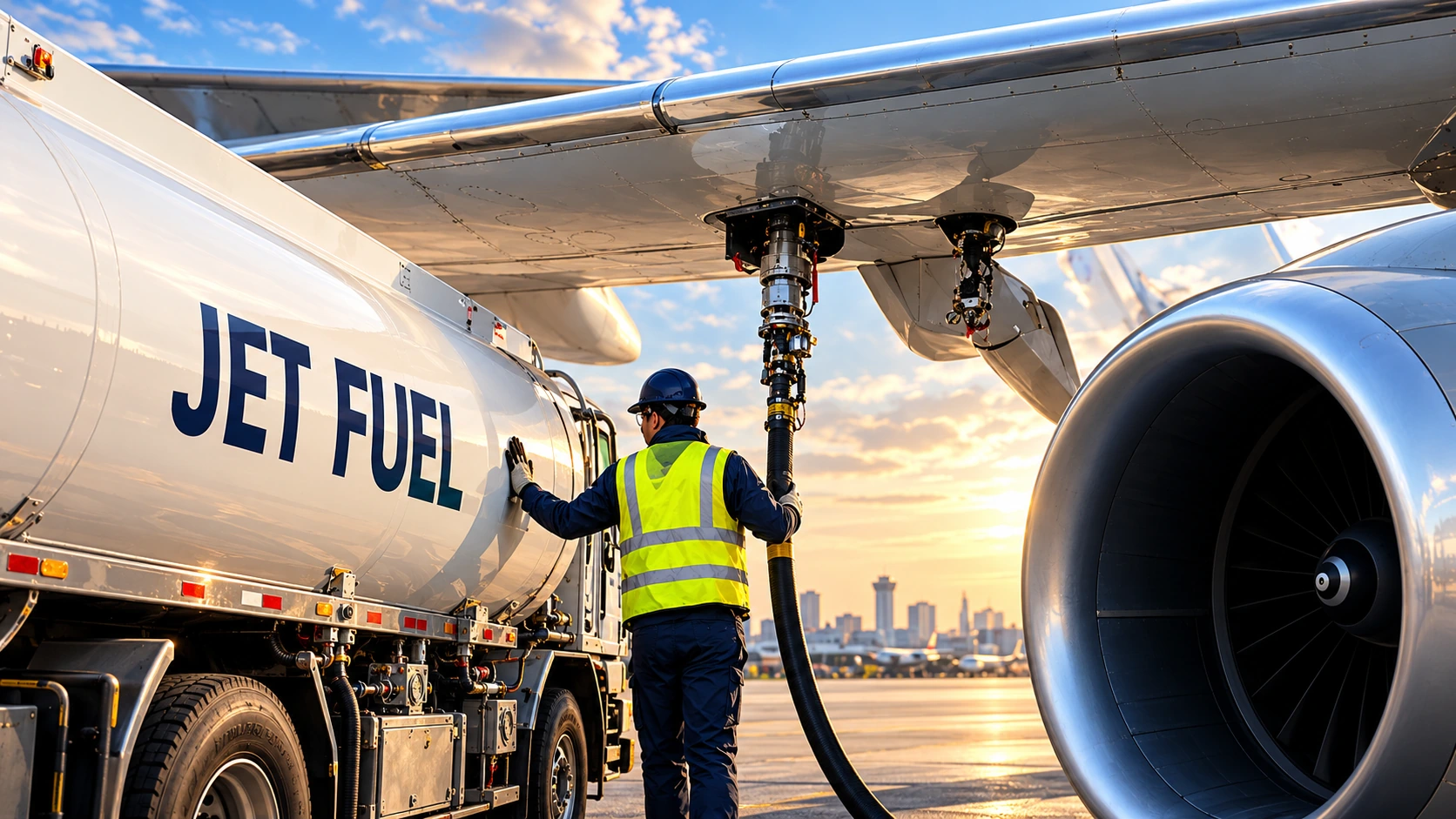
An airline cannot easily reduce the amount of fuel a flight needs just because the price has gone up. That makes a sudden fuel-price spike especially painful.
The conflict involving Iran has disrupted energy markets and pushed up jet fuel costs. Airlines have responded by charging more for flights, but higher fares have not consistently kept pace with the new fuel bill. (Reuters)
American paid an average of $3.85 per gallon for aircraft fuel in the third quarter of 2026. A year earlier, it paid approximately $2.37 per gallon, according to its quarterly regulatory filing. Fuel consumption also increased as the airline operated more capacity. The combined result was a 67.5% jump in total fuel expense. (American Airlines)
A flight has to cover much more than fuel: flight crews, maintenance, leased or financed aircraft, airport charges, and the rest of the airline’s network all cost money. Higher fuel prices are particularly disruptive because they arrive on top of those other expenses.
Airlines can make operational adjustments, but they cannot instantly redesign their fleets, cancel every unprofitable flight, or pass every extra dollar directly to customers without consequences.
What Changed in American Airlines’ 2026 Loss Forecast?
The October 22 announcement removed the possibility of an adjusted full-year profit from American’s published guidance. It is a forecast, not a final annual result.
In July, American’s guidance ranged from a 65-cent adjusted loss per share to a 65-cent adjusted profit. By October, it expected a full-year adjusted loss of $1.00 to $1.60 per share. (American Airlines, July results · American Airlines, October results)
| Outlook issued | Full-year 2026 adjusted EPS guidance |
|---|---|
| July 2026 | Loss of $0.65 to profit of $0.65 |
| October 22, 2026 | Loss of $1.60 to loss of $1.00 |
EPS means earnings per share. A projected adjusted loss per share is not a forecast of the company’s total dollar loss under standard GAAP accounting.
The fourth-quarter assumptions explain the deterioration. Based on fuel-market prices as of October 19, American estimated fourth-quarter jet fuel at approximately $4.70 per gallon, almost twice its year-earlier fourth-quarter price. At that level, the company expected its fourth-quarter fuel expense to be approximately $2.8 billion higher than a year earlier. (American Airlines)
Those figures are projections. Actual fuel costs and financial results can change before the quarter ends.
Why Can’t American Airlines Just Raise Every Ticket Price Again?
Airlines can raise fares, but they still have to find customers willing to pay them. That is why an increase in fuel costs does not translate neatly into an equally large increase in every ticket price.
Airfares vary by route, travel date, departure time, remaining seats, and competition. Airlines use changing prices to balance available seats with demand. A busy nonstop route with strong business demand may support higher fares, while a leisure route with multiple competing airlines may offer travelers more alternatives. (Yale School of Management)
American has had genuine sales momentum. Its third-quarter premium revenue rose 22.9% year over year, Main Cabin revenue increased 19.5%, and revenue from managed corporate travel climbed 27.6%. Those figures help explain its stronger revenue performance, but they do not mean that every individual airfare rose by those percentages. (American Airlines)
Another common misunderstanding is that airlines can simply add an unexpected fuel charge to tickets customers have already purchased. The U.S. Department of Transportation generally prohibits increasing a fully purchased ticket’s price afterward, except under the specified government-tax circumstances disclosed to and accepted by the consumer. (U.S. Department of Transportation)
For tickets that have not yet been purchased, however, airlines can adjust prices as market conditions change. This is why the higher-fuel-cost problem shows up most directly when travelers search for their next flight.
Will American Airlines Flights Cost More in 2027?
Higher fares are a possibility, not a guaranteed price increase on every route. American says it expects its network to grow more slowly in 2027 than it did in 2026 because of elevated fuel costs. That is not the same as announcing that its entire schedule will shrink. (American Airlines)
The difference matters. If airlines add fewer seats while travelers continue booking heavily, some flights may face more upward price pressure. But if demand softens or competing carriers offer more capacity, the effect could be different.
Other large U.S. airlines have also been reconsidering capacity growth as they try to recover higher fuel costs. This is an industry-wide pressure, though each airline’s finances, route network, and pricing decisions differ. (Reuters)
For a traveler, there is no single 2027 airfare increase to apply to a family vacation budget. The route, travel dates, flexibility, and number of competing flights will still matter.
What Should Travelers Watch Before Booking?
The most useful signals are actual airfares on the routes you need, American’s updated fuel assumptions, and whether airlines continue adding seats. None of those alone determines what an individual trip will cost.
When comparing flights, check more than the first advertised number. The Transportation Department requires displayed ticket prices to include mandatory taxes and carrier-imposed surcharges, but optional expenses such as checked bags and seat selection can still change the total cost of a trip. (U.S. Department of Transportation)
Flexibility can also help. Different departure dates, nearby airports, connections, and fare types can produce different final prices. A nonrefundable basic-economy ticket and a more flexible fare are not necessarily interchangeable, even when their initial prices look attractive.
For anyone following American’s financial recovery, the next questions are equally practical: Does the final fourth-quarter fuel price resemble the projected $4.70 per gallon? Can revenue growth keep offsetting higher operating costs? And how much will American actually expand its network in 2027?
Those answers will say more about future travel costs than one earnings headline alone.
Bottom Line: What This Story Really Means
American Airlines is not forecasting an adjusted 2026 loss because passengers have abandoned its planes. Its revenue has grown strongly, including a record third quarter, while jet fuel costs have surged even faster than its ability to turn those sales into profit.
The airline’s October 22 outlook is a warning about profit margins, not evidence that every ticket is overpriced or that every flight will get more expensive. Higher fares can lift airline revenue while a much larger fuel bill still leaves the company losing money.
For travelers, the next chapter is about two things that often move together: how expensive it becomes for airlines to operate flights and how many seats they choose to offer.
American Airlines Losses: Key Questions Explained
Q. Did American Airlines report its highest quarterly revenue ever?
No. Its $16.3 billion revenue was a record for a third quarter. It reported a higher $16.7 billion in the second quarter of 2026.
Q. Was American Airlines profitable in the third quarter of 2026?
No. It reported a $269 million GAAP net loss for the quarter, despite strong revenue growth.
Q. Is the airline’s 2026 full-year loss already final?
No. On October 22, American projected a full-year adjusted loss of $1.00 to $1.60 per share. Final results and any GAAP net result had not yet been reported.
Q. How much did American’s jet fuel bill rise in the third quarter?
Its third-quarter fuel expense increased by approximately $1.9 billion, or 67.5%, compared with the same quarter of 2025.
Q. Did every American Airlines ticket get 19.3% more expensive?
No. The 19.3% figure measures the airline’s total year-over-year revenue growth for the quarter, not a uniform increase in ticket prices.
Q. Why do ticket prices differ so much between flights?
Airlines adjust fares in response to demand, seat availability, booking timing, and competing travel options. Two flights on the same route may have very different prices.
Q. Has American Airlines announced that it will cancel flights in 2027?
Its October earnings announcement forecast slower network growth, not a systemwide reduction in flights or a specific list of route cancellations.
Q. Can an airline charge more after I have fully purchased a ticket?
Generally no. Federal consumer rules restrict post-purchase price increases, with narrow conditions related to disclosed and accepted changes in government-imposed taxes or fees.
Q. What matters most for American’s next earnings report?
Watch the actual fuel bill, the difference between revenue growth and total cost growth, and any updated 2027 capacity plans.
Did this help make the story clearer? 🙂 WIN keeps unpacking the “why” behind the news—clearly and simply!
Sources
Third-Quarter Earnings and Financial Outlook
American Airlines — Third-Quarter 2026 Results and Updated Guidance, October 22, 2026
American Airlines — Quarterly Regulatory Filing for the Period Ended September 30, 2026
American Airlines — Second-Quarter 2026 Results and Earlier Full-Year Guidance
Fuel Pressure and Airline Industry Context
Reuters — American Airlines Forecasts 2026 Loss as Fuel Costs Outpace Fare Gains, October 22, 2026
Ticket Pricing and Passenger Rights
Yale School of Management — Is Dynamic Airline Pricing Costing Us?
U.S. Department of Transportation — Buying a Ticket
Keep Reading
Why Can a Shipping Crisis in the Strait of Hormuz Affect U.S. Fuel Prices?
American’s fuel bill is easier to understand once you see how risks to oil shipments can ripple through global energy markets. The earlier Hormuz explainer distinguishes unverified tanker-mine claims from the broader disruption to shipping and fuel prices.
Did Two Oil Tankers Hit Mines in the Strait of Hormuz—and Why Does It Matter?