Why Would Elon Musk Merge Tesla and SpaceX—and What Would Happen to Shareholders?

What would happen if the company that makes Tesla cars joined forces with the company that launches SpaceX rockets?
It sounds like an unusual combination. One business sells electric vehicles and batteries. The other launches spacecraft, operates Starlink satellites, and builds increasingly powerful AI infrastructure.
Yet Elon Musk thinks bringing the two companies together could make sense.
On October 20, 2026, Musk confirmed that Tesla and SpaceX had established independent board committees to explore a possible merger. That moved the idea beyond speculation—but it did not mean the companies had agreed to merge. (Reuters)
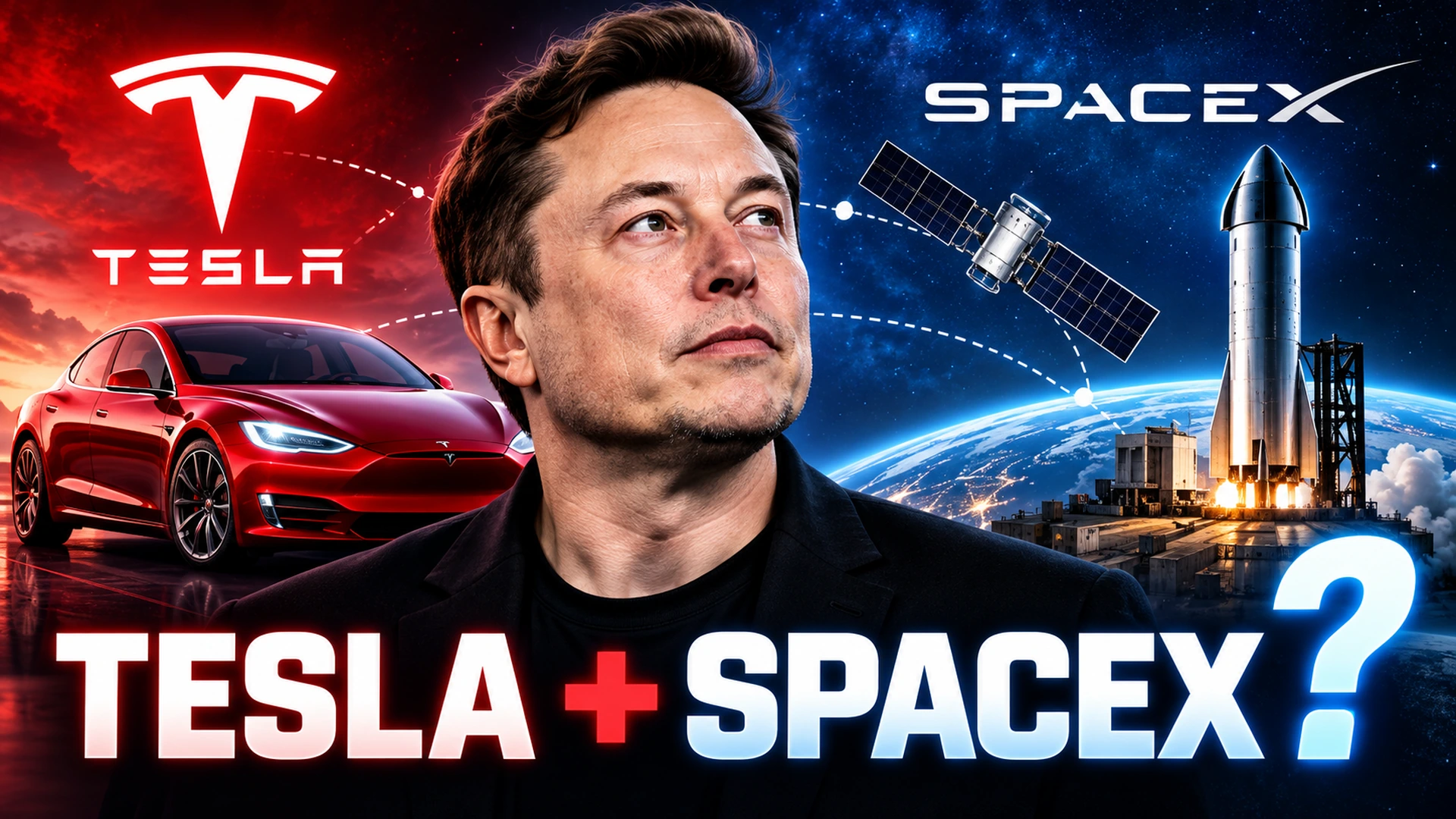
※ Images in this article are AI-generated illustrations created to help explain the story. They are not actual photographs, and depictions of people, places, or events may differ slightly from reality.
For investors, the most immediate question is not whether rockets and electric cars belong under the same roof.
It’s what happens to the shares they already own.
A merger could potentially turn Tesla shareholders into investors in a much broader company. But how much of that company they would own, what they would receive for their existing shares, and whether the transaction would benefit them financially are all unresolved.
What Did Elon Musk Actually Announce About the Tesla-SpaceX Merger?
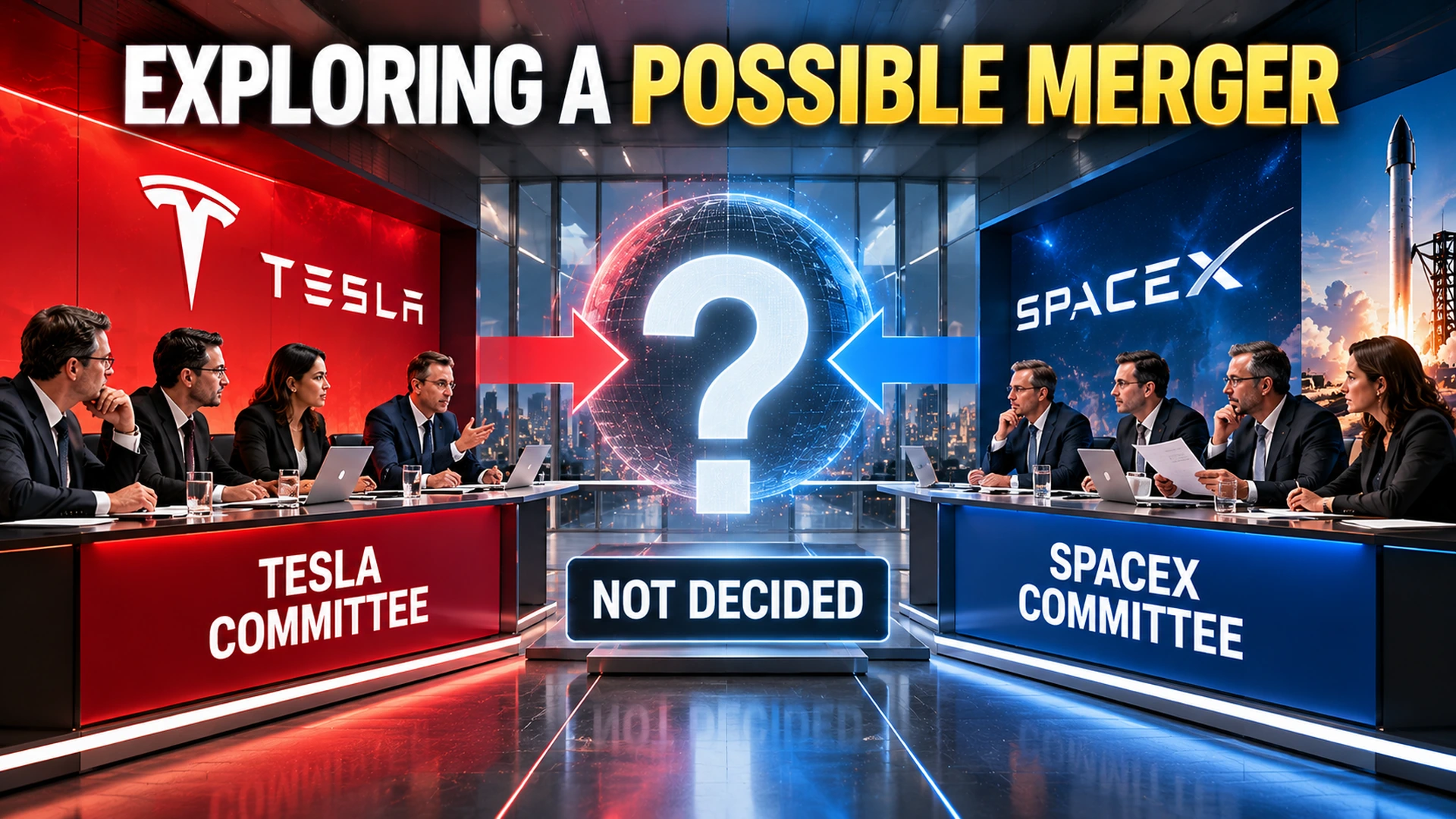
On October 20, Musk said that both Tesla and SpaceX had formed special committees made up of independent directors to consider a possible combination.
The announcement came during SpaceX’s third-quarter earnings call. It confirmed that a formal review had begun, not that shareholders were being asked to approve a completed deal.
Musk expressed support for the idea but acknowledged that his financial interests in both companies create a conflict of interest. He said he could not participate directly in the committees’ negotiations. (TechCrunch · Reuters)
That distinction matters because an independent committee is not the same thing as a merger agreement.
The committees must first determine whether combining the businesses would make financial and strategic sense, what the transaction should look like, and whether the terms would be fair to their respective shareholders.
What Is Confirmed—and What Is Still Unknown?
| Question | Status as of October 21, 2026 |
|---|---|
| Are Tesla and SpaceX discussing a merger? | Yes, through special committees |
| Does Musk support combining them? | Yes |
| Have the companies agreed on terms? | No |
| Has a final share-exchange ratio been announced? | No |
| Has a Tesla merger vote been scheduled? | No publicly announced merger vote |
| Is the merger guaranteed? | No |
Musk himself warned against treating the deal as inevitable. The committees had not agreed on transaction terms, and he said there was no guarantee they would. (Reuters)
So this is a real development, but it is still an early-stage corporate decision.
Why Would Tesla and SpaceX Want to Merge in the First Place?
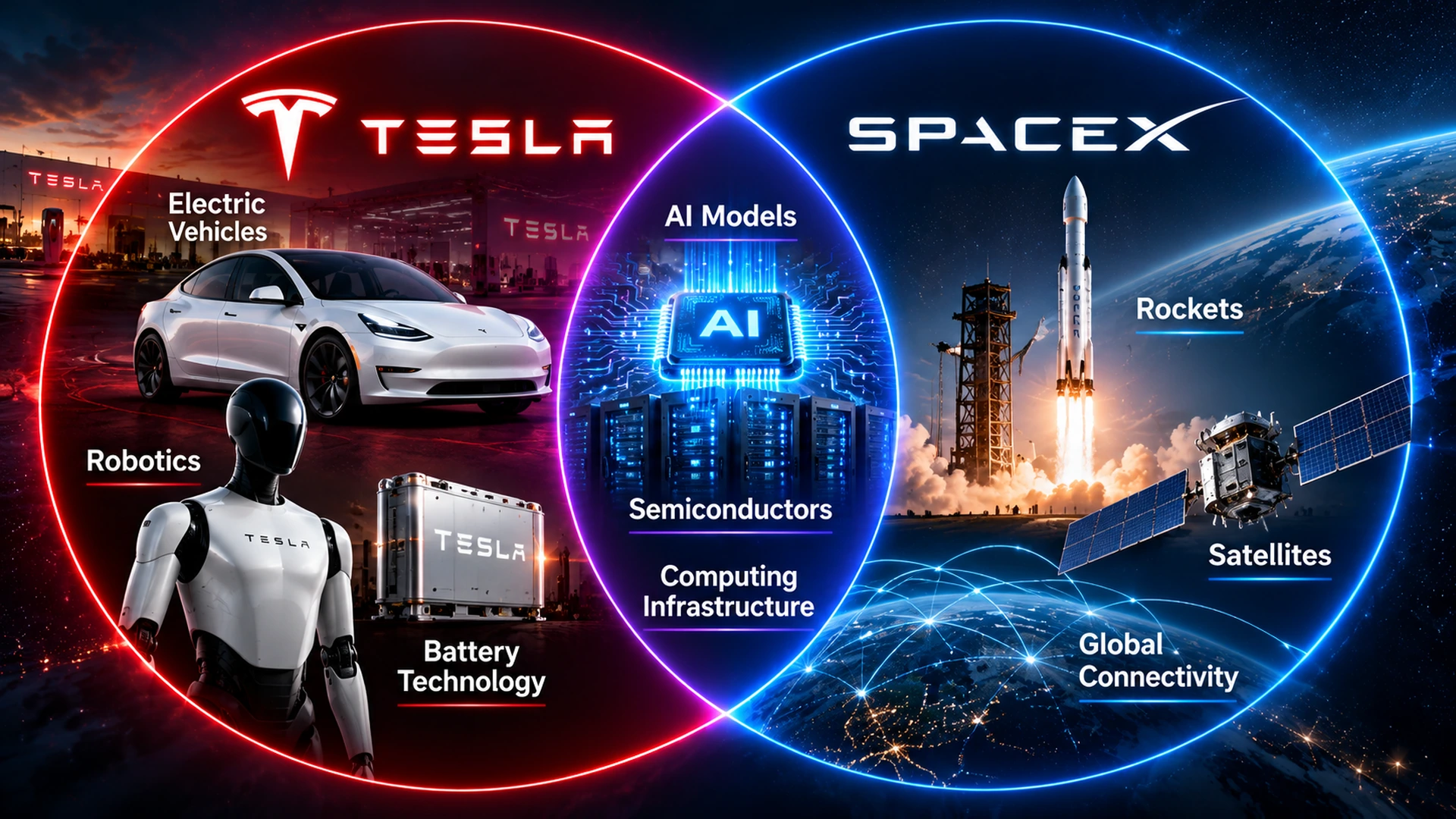
The strongest argument for a Tesla-SpaceX merger is that both companies are becoming increasingly dependent on many of the same technologies.
For years, Tesla was primarily associated with electric vehicles, while SpaceX focused on rockets and satellite communications.
Their business models are still different. But the technology required to pursue their ambitions increasingly overlaps.
Tesla needs advanced computing systems to develop autonomous driving, robotics, and more sophisticated manufacturing.
SpaceX needs enormous computing resources, satellite connectivity, specialized chips, and advanced engineering systems for its expanding operations.
Musk argues that these areas offer opportunities to cooperate more closely. (Reuters)
The Shared Technology Behind the Merger Idea
| Technology | Tesla’s Interest | SpaceX’s Interest |
|---|---|---|
| Artificial intelligence | Autonomous vehicles and robotics | AI models and computing services |
| Semiconductors | Chips for vehicles and autonomous systems | Chips and infrastructure for large-scale computing |
| Energy storage | Batteries and energy products | Power systems for facilities and infrastructure |
| Connectivity | Connected vehicles and data services | Starlink satellite internet |
| Advanced manufacturing | Vehicles, robots and batteries | Rockets, satellites and computing hardware |
These connections do not automatically create a strong financial case for a merger.
Companies can share technology through contracts, joint ventures, and other partnerships without combining their ownership.
But operating under one corporate structure might make some investment and engineering decisions easier to coordinate.
That is the potential advantage Musk wants investors to consider.
What Is Terafab, and Why Does It Matter?
One of the clearest examples is Terafab, the semiconductor project involving Tesla and SpaceX.
The companies are already working together on the project, which aims to develop major chip-manufacturing capabilities to support their long-term technology needs.
During the October 20 earnings call, Musk said the project was targeting its first functional test chip around May or June 2027 and volume production in the third quarter of 2028. He emphasized that these are aggressive targets, not guaranteed milestones. (Reuters)
The logic is straightforward: if both companies expect to need enormous amounts of specialized computing power, sharing the investment could be attractive.
Whether they need to merge to achieve that goal is a different question.
Is SpaceX Really Just a Rocket Company Anymore?
Not anymore—and this is one of the most revealing parts of the merger story.
SpaceX remains a major rocket and satellite company, but its rapidly expanding AI business has changed the financial picture.
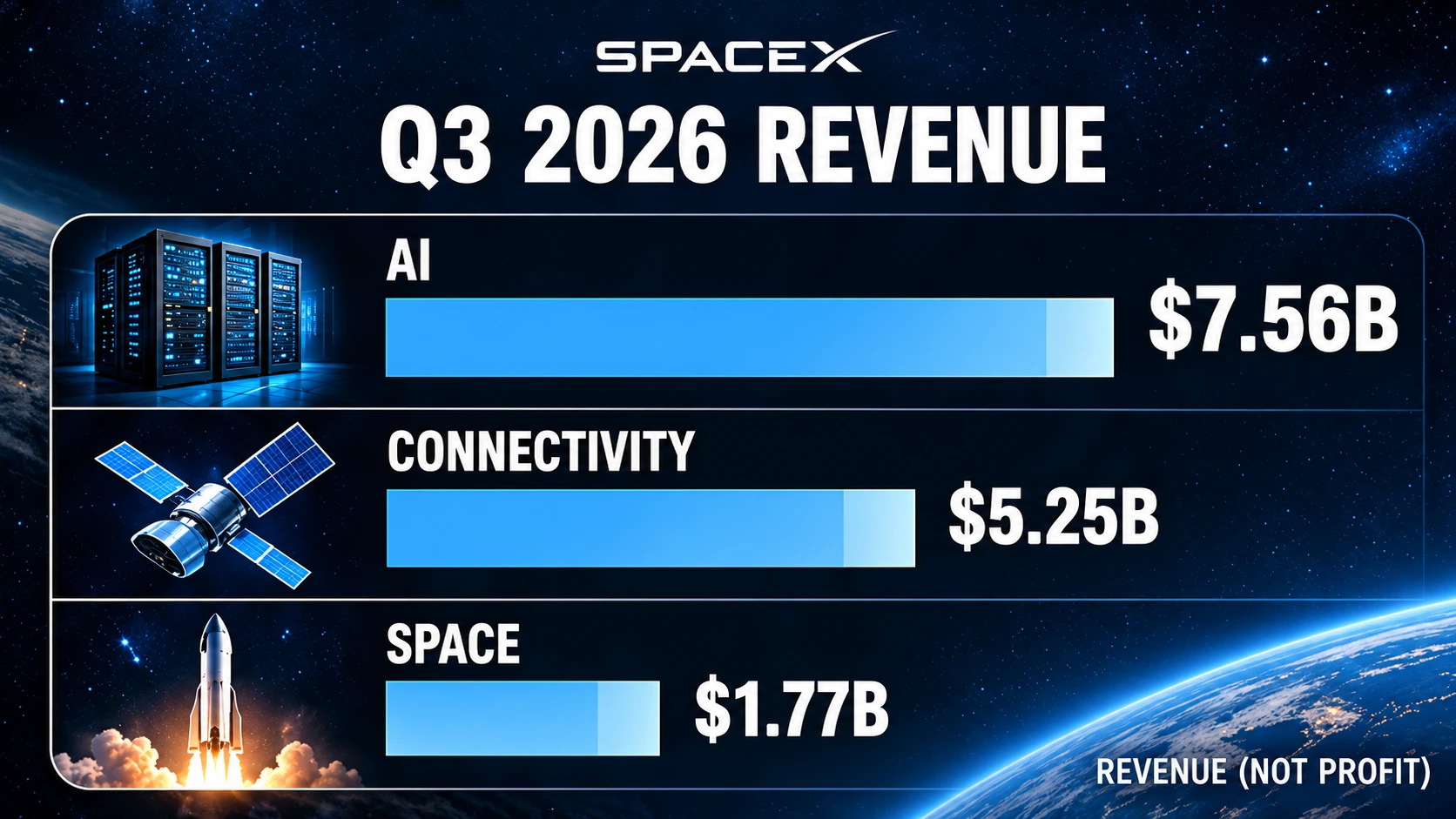
On October 20, SpaceX reported third-quarter revenue of approximately $14.6 billion, a 161% increase from the same quarter a year earlier.
Its Super Intelligence segment generated approximately $7.56 billion in revenue, making it the company’s largest reported business by quarterly sales. (SpaceX SEC Filing)
Where SpaceX’s Revenue Came From
| SpaceX Segment | Q3 2026 Revenue | What It Includes |
|---|---|---|
| Super Intelligence | $7.56 billion | AI models, software and computing infrastructure |
| Connectivity | $5.25 billion | Starlink and related communications services |
| Space | $1.77 billion | Launch services and space operations |
| Total | $14.58 billion | All three segments |
Figures are rounded from SpaceX’s third-quarter financial disclosure.
That means AI accounted for just over half of SpaceX’s quarterly revenue.
Much of this growth came from providing computing infrastructure and data-center capacity, rather than simply selling its own AI applications.
SpaceX also reported approximately $4.4 billion in net income for the quarter, although its aggressive infrastructure investments remain a major financial consideration. (Reuters)
Tesla, meanwhile, reported approximately $28.05 billion in quarterly revenue on October 21, along with net income of about $787 million.
Its results highlighted a different financial profile: a much larger existing automotive and energy business, but substantial spending requirements as it expands its AI and robotics ambitions. (Tesla Investor Relations · AP)
The two companies are not identical businesses. But their future investment plans increasingly revolve around computing infrastructure, automation, and technology development.
A merger could unite those ambitions under a single corporate umbrella.
It could also concentrate their financial risks.
What Would Happen to Tesla Stock if the Merger Goes Through?
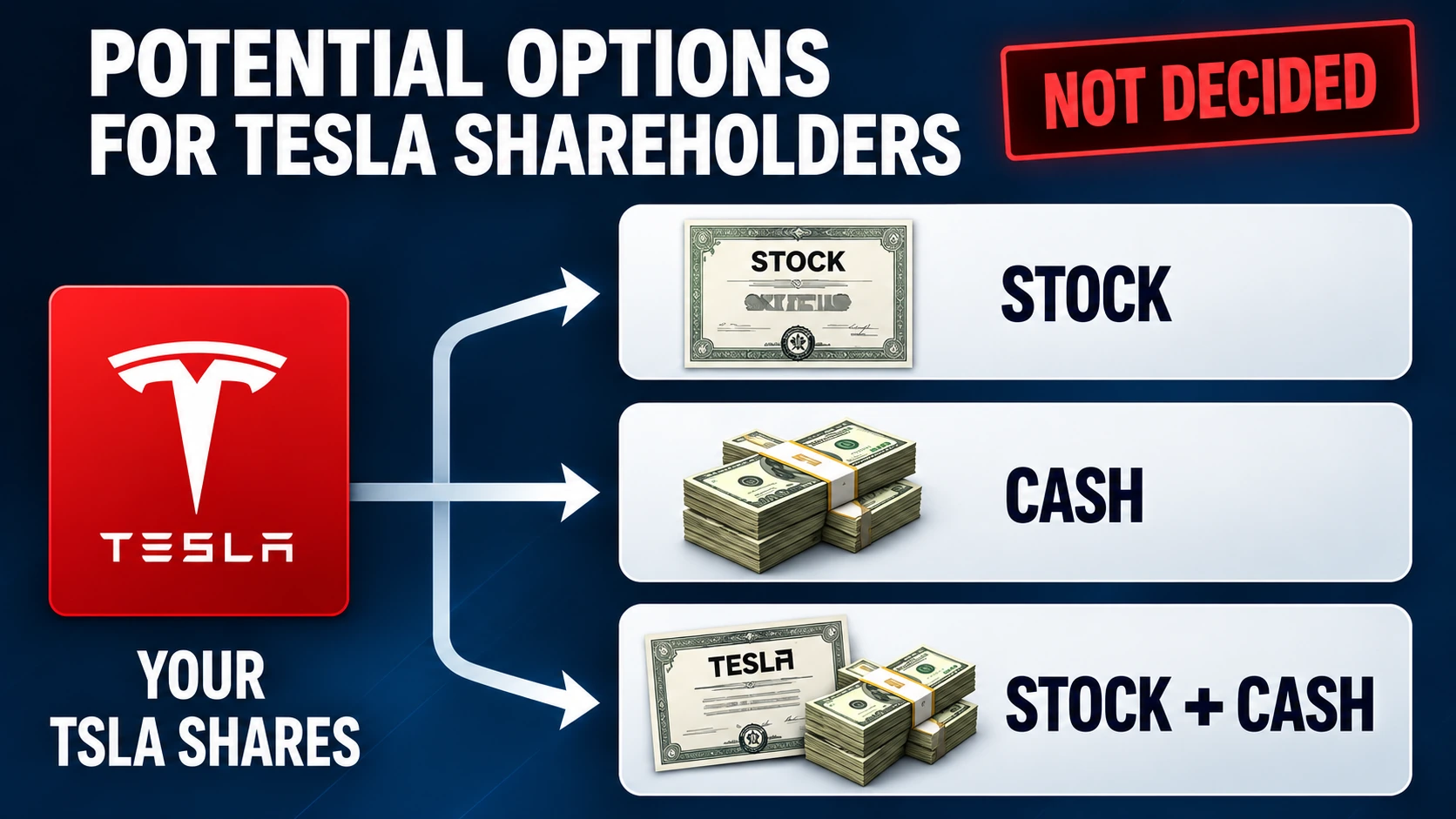
Tesla shareholders would not necessarily lose the economic value of their investment if the companies merged. But their existing shares could be exchanged, converted, or paid for under the terms of a future agreement.
The exact treatment would depend on the structure negotiated by the companies.
No final consideration or share-exchange ratio has been announced.
Three general possibilities help explain how such a transaction could work.
Three Possible Ways Shareholders Could Be Compensated
| Merger Structure | What a Tesla Shareholder Could Receive |
|---|---|
| All-stock transaction | Shares in the acquiring or combined company |
| Cash transaction | Cash in exchange for existing Tesla shares |
| Mixed transaction | A combination of cash and shares |
These are illustrative merger structures, not offers currently on the table.
For example, in an all-stock transaction, a Tesla investor who currently owns 10 Tesla shares might receive a specified number of shares in a combined company.
That number would depend on the negotiated exchange ratio.
The investor’s ownership percentage in the combined company would also depend on the total shares issued, the relative valuations, and the transaction structure.
Would Tesla Shareholders Automatically Get a Premium?
Not necessarily.
A merger premium is the amount an acquirer offers above a company’s reference market value to persuade shareholders to accept a transaction.
But there is no universal requirement that every merger deliver a particular premium.
In this case, Wall Street analysts have offered sharply different views.
Some have suggested Tesla shareholders could seek premiums of 20% to 35%, while others have questioned whether a substantial premium would make economic sense.
Those are analyst scenarios—not negotiated terms or guaranteed returns. (Reuters)
For shareholders, that creates a fundamental question.
Would they receive a fair price for giving up their direct ownership in Tesla as an independent company?
And if they receive shares in a combined business, would those shares offer a better long-term investment than Tesla stock alone?
The answers depend on details investors do not yet have.
Why Can’t Elon Musk Simply Merge the Companies Himself?
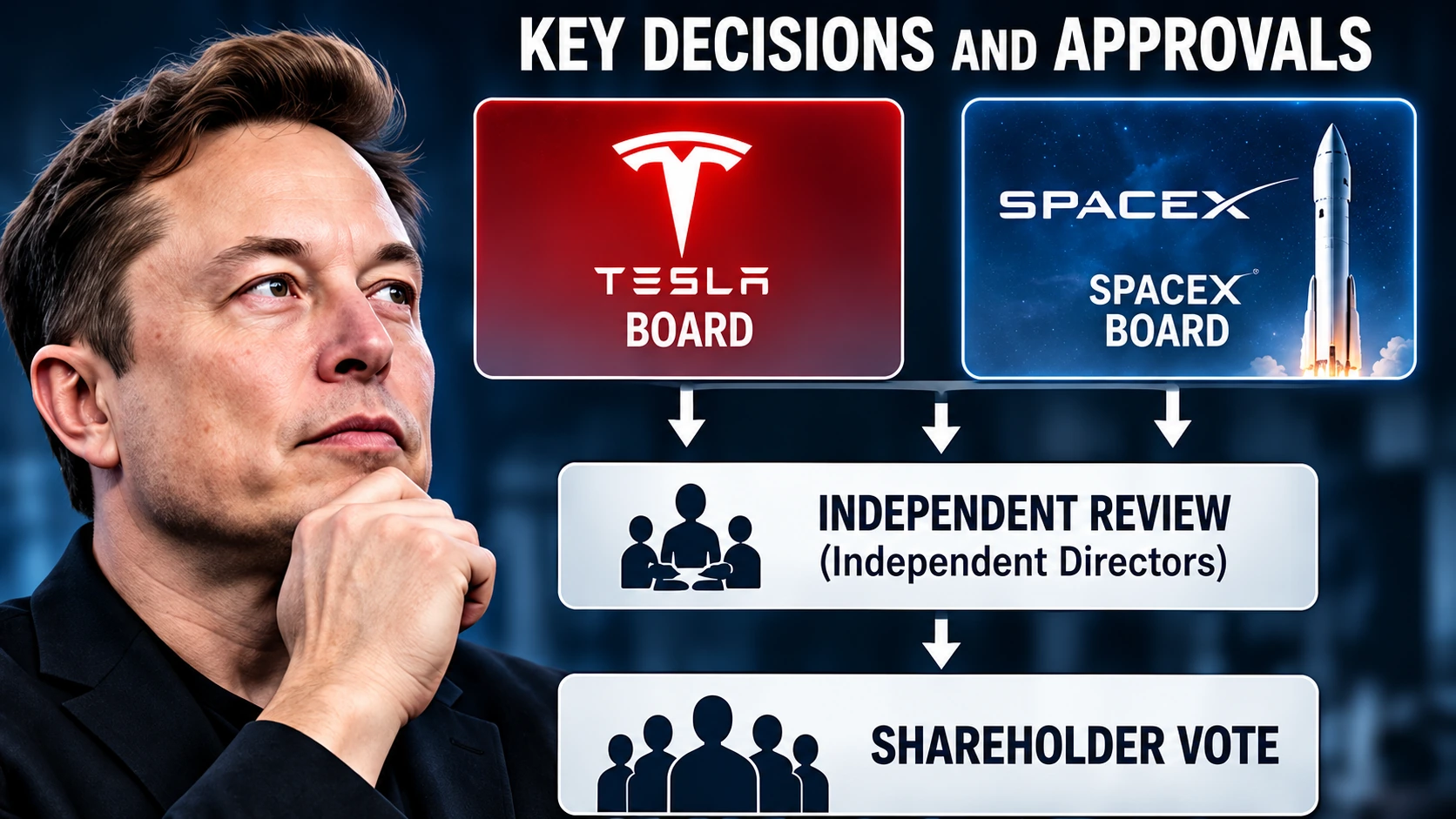
Because Musk is not the sole owner of either company—and he has financial interests on both sides of the potential transaction.
Imagine owning a significant stake in two businesses and proposing that one should buy the other.
You could benefit from the transaction, but you would also have an incentive to favor terms that increase the value of one of your holdings over the other.
That is why independent oversight matters.
Musk owns substantial equity in Tesla and SpaceX, but his voting power is very different between them.
According to Reuters, he controls roughly 85% of SpaceX’s voting power, compared with approximately 20% at Tesla. (Reuters)
This makes Tesla shareholder approval particularly important.
Why the 50% Voting Requirement Is Such a Big Deal
Musk said a merger would require affirmative votes representing at least half of all Tesla shares—not merely a majority of the shares that happen to participate in a vote.
That distinction can make a major difference.
Consider a simplified example involving 100 outstanding shares.
If only 60 shares participate and 45 vote in favor, the proposal would have 75% support among participating shares.
But it would have support from only 45% of all outstanding shares.
Under the voting threshold Musk described, that would not be enough.
A shareholder who does not vote could therefore make approval more difficult, even without actively opposing the merger.
Tesla also launched a Voluntary Retail Voting Program in October 2026 to encourage greater participation in future shareholder decisions. The standing instructions apply to future meetings, not the 2026 annual meeting; shareholders can choose whether their standing instructions cover major merger votes. (Tesla Investor Relations)
However, Tesla’s scheduled December 3, 2026 annual shareholder meeting should not be confused with an already announced vote on a merger.
No finalized merger proposal or dedicated merger vote had been announced as of October 21.
What Could Stop a $3.5 Trillion Tesla-SpaceX Merger?
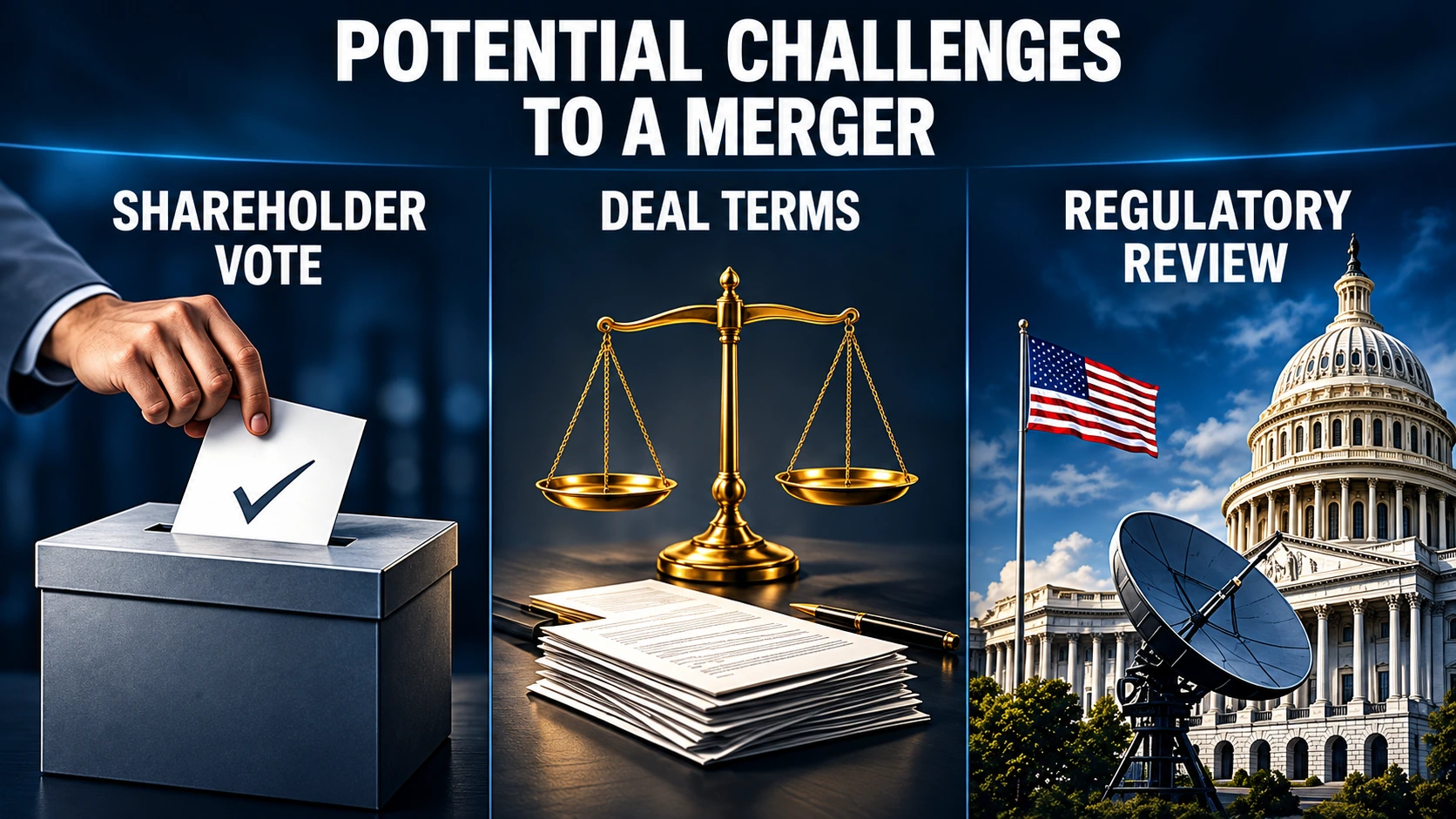
The size of the proposed combination is remarkable, but that is also part of the problem.
In October 2026, Tesla’s market value was around $1.5 trillion, while SpaceX was valued near $2 trillion.
Adding those approximate market capitalizations produces a combined figure of roughly $3.5 trillion. That is an indication of scale, not an agreed merger price or a forecast of what the combined company would be worth. (Axios)
Several obstacles remain.
1. The Companies Must Agree on a Fair Valuation
The two sides would need to decide how much each business is worth and what existing shareholders should receive.
Even with Musk leading both companies, their investors do not necessarily have identical interests.
A favorable exchange ratio for one company’s investors could be unattractive to the other’s.
2. Tesla’s China Operations Create a Sensitive Issue
Tesla operates a major manufacturing business in China.
SpaceX, by contrast, works closely with the U.S. government and provides technology and services connected to national-security activities.
Combining the companies could raise questions about access to sensitive technology, foreign operations, and government contracts.
That does not mean a merger would automatically be prohibited. Nor does it mean Tesla has agreed to sell or separate its China business.
It means the corporate structure could become an important issue for regulators, government customers, and investors. (Reuters · AP)
3. The Financial Burden Could Be Enormous
Both companies are investing heavily in future technologies.
SpaceX reported approximately $19.6 billion in capital expenditures during the third quarter of 2026, much of it related to its AI infrastructure.
Its management also projected substantial additional capital spending in the following quarter. (SpaceX SEC Filing)
A combined company might have more options for funding large projects.
But investors would also become exposed to the spending requirements and business risks of a wider collection of operations.
A merger can simplify coordination without necessarily reducing the total amount of money required.
That is one reason a transaction that appears strategically attractive could still be financially controversial.
What Happens Next for Tesla and SpaceX?
The next major development would be an actual merger proposal, not another expression of support from Musk.
Independent committees would need to settle the commercial terms before a formal agreement could be presented for the necessary corporate approvals.
A useful way to understand the process is to separate what has happened from what could follow.
| Stage | Meaning | Current Position |
|---|---|---|
| Independent review | Directors evaluate whether a merger makes sense | Confirmed |
| Negotiated terms | Companies settle value and transaction structure | Not agreed |
| Formal merger agreement | Boards approve a proposed transaction | Not announced |
| Shareholder approvals | Required shareholders vote on the deal | Not scheduled |
| Regulatory review and closing | Required reviews and closing conditions are completed | Not reached |
The sequence is illustrative. Actual legal steps and timing would depend on the transaction structure.
For investors, the most useful developments to watch are a formal transaction announcement, the proposed exchange ratio or cash consideration, the independent committees’ recommendations, and the shareholder voting requirements.
A company filing with the Securities and Exchange Commission would also be an important source of legally significant information.
Until those details emerge, there is no reliable way to calculate what an individual Tesla shareholder would receive from a merger.
Market prices can move in anticipation of a deal, but anticipation is not the same as approval.
Bottom Line: What This Story Really Means
Elon Musk’s interest in merging Tesla and SpaceX reflects a major change in how he sees the two businesses.
Tesla is no longer simply an electric-car manufacturer. SpaceX is no longer simply a rocket company.
Both are investing in AI, advanced computing, chips, and infrastructure that could potentially support each other’s ambitions.
That provides a strategic reason to consider a merger.
But the shareholder question is more complicated.
Tesla investors are not being offered a finalized transaction, a guaranteed premium, or a fixed number of SpaceX shares.
Independent committees must still decide whether a combination makes sense and whether acceptable terms can be reached.
Shareholder approval and potential regulatory issues would remain even if the companies announced an agreement.
For now, Tesla and SpaceX are exploring a possible corporate combination—not completing one.
The next meaningful news will come when investors can finally examine the actual terms.
Tesla SpaceX Merger: Key Questions Explained
Q. Have Tesla and SpaceX officially agreed to merge?
No. Both companies have formed independent committees to evaluate a possible merger, but no definitive transaction has been agreed upon.
Q. Is SpaceX already a publicly traded company?
Yes. SpaceX went public in June 2026 and trades on Nasdaq under the ticker symbol SPCX. Tesla trades under TSLA.
Q. Would my Tesla shares automatically become SpaceX shares?
Not necessarily. A merger could involve a stock exchange, cash payment, or a combination. The companies have not announced which structure they would use.
Q. Is the Tesla-SpaceX merger valued at $3.5 trillion?
That figure approximately combines the two companies’ market valuations around the announcement. It is not a finalized acquisition price.
Q. How much of the merged company would Tesla shareholders own?
That has not been determined. Their ownership would depend on the eventual merger structure, relative valuations, and agreed exchange ratio.
Q. Would Tesla shareholders receive a 20% or 35% premium?
No premium has been agreed upon. Those percentages have appeared in analyst scenarios and should not be treated as actual transaction terms.
Q. Does Elon Musk control the merger decision?
No. Musk has significant ownership interests in both companies, but independent committees are examining the transaction, and the required corporate and shareholder approvals would still matter.
Q. Why is Tesla shareholder participation especially important?
Musk has said approval would require affirmative votes representing at least half of all outstanding Tesla shares, rather than just a majority of the shares participating in a vote.
Q. Could the U.S. government block or complicate the merger?
Regulatory and national-security reviews could complicate a transaction, particularly because of SpaceX’s government relationships and Tesla’s operations in China. No final regulatory outcome has been determined.
Q. When will the Tesla-SpaceX merger happen?
There is no confirmed closing date. The companies have not announced finalized merger terms or a timetable for completion.
Did this help make the story clearer? 🙂 WIN keeps unpacking the “why” behind the news—clearly and simply!
Sources
Merger Announcement and Official Statements
TechCrunch — SpaceX and Tesla Boards Form Special Committees to Review Merger, October 20, 2026
Axios — SpaceX and Tesla Exploring Merger, CEO Elon Musk Says, October 20, 2026
Financial Results and Corporate Disclosures
SpaceX — Third Quarter 2026 Results, SEC Exhibit 99.1
Tesla Investor Relations — Third Quarter 2026 Financial Results, October 21, 2026
Reuters — SpaceX and Tesla Terafab Chip Production Timeline, October 20, 2026
Associated Press — Tesla’s Third-Quarter Results and Possible SpaceX Merger, October 21, 2026
Shareholder Impact and Transaction Risks
Reuters — Wall Street Sees Tesla-SpaceX Merger as Inevitable but Is Split on Price, October 21, 2026
Reuters — Why Would Musk Merge SpaceX and Tesla?, October 21, 2026
Tesla Investor Relations — Voluntary Retail Voting Program
Associated Press — How a SpaceX-Tesla Megamerger Could Affect the Companies and Investors