Could Two Ebola Patients Have Crossed Paths at Uganda’s Airport—and Why Does It Matter?

Two people later diagnosed with Ebola traveled through the same international airport in Uganda on the same day.
Does that mean one infected the other?
Not necessarily. In fact, sharing an airport is very different from having the kind of contact needed to transmit Ebola.
But the timing has given disease investigators an important lead.
On October 22, 2026, African health officials said they were investigating whether the first confirmed Ebola patients in Nigeria and Kenya had interacted at Entebbe International Airport in Uganda on October 3.
The discovery raises a question that goes far beyond two travelers: How can health officials reconstruct a possible infection when patients have already crossed international borders? (AP)
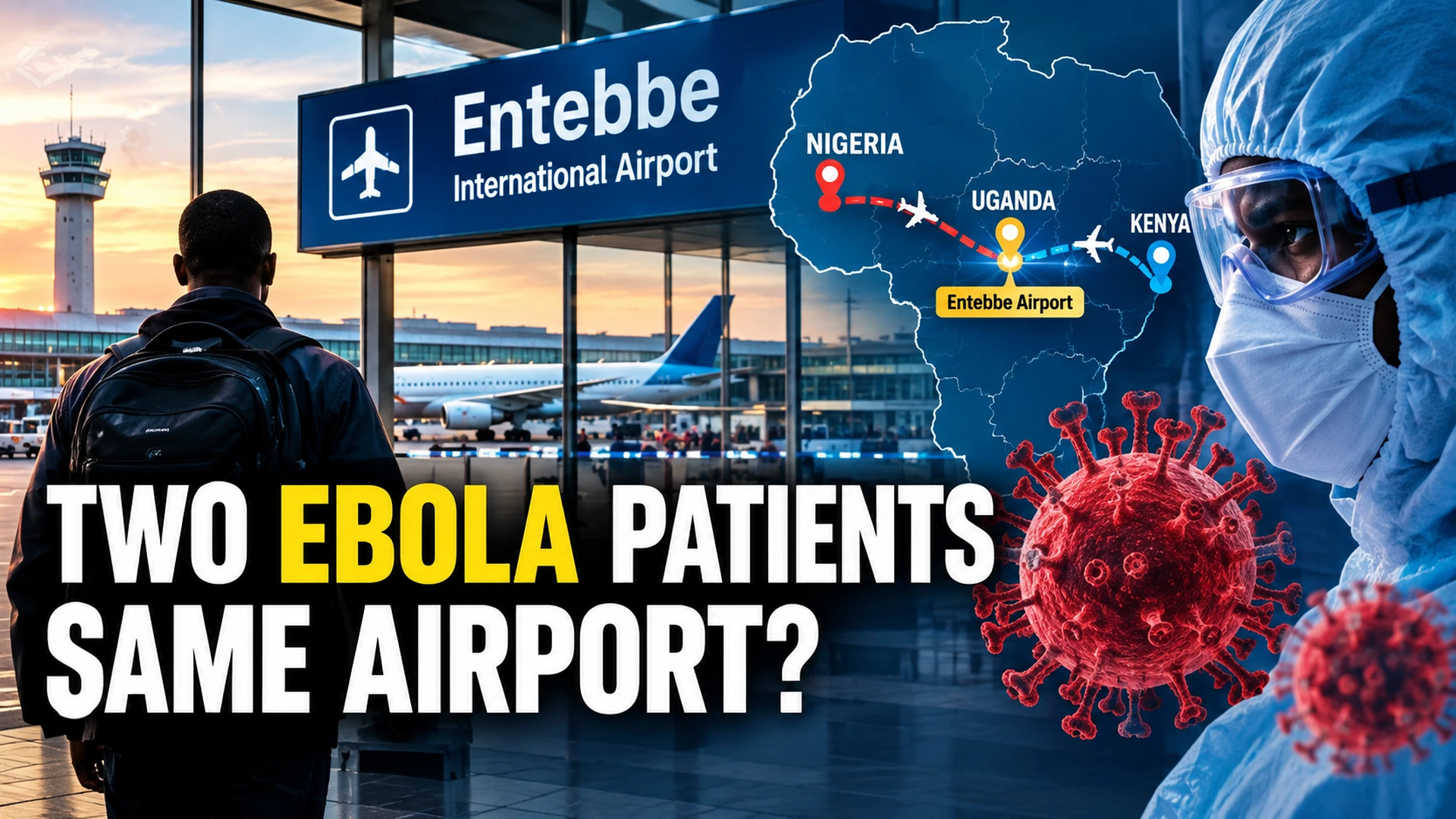
※ Images in this article are AI-generated illustrations created to help explain the story. They are not actual photographs, and depictions of people, places, or events may differ slightly from reality.
The airport investigation is taking place during a much larger Ebola outbreak that began in the Democratic Republic of the Congo in May 2026. The outbreak has since affected other countries, including Uganda, Kenya, and Nigeria.
Understanding why officials are examining a single airport visit requires separating three things: where patients traveled, where they may have been exposed, and whether anyone actually transmitted the virus to someone else.
What Did Health Officials Actually Discover at Entebbe Airport?
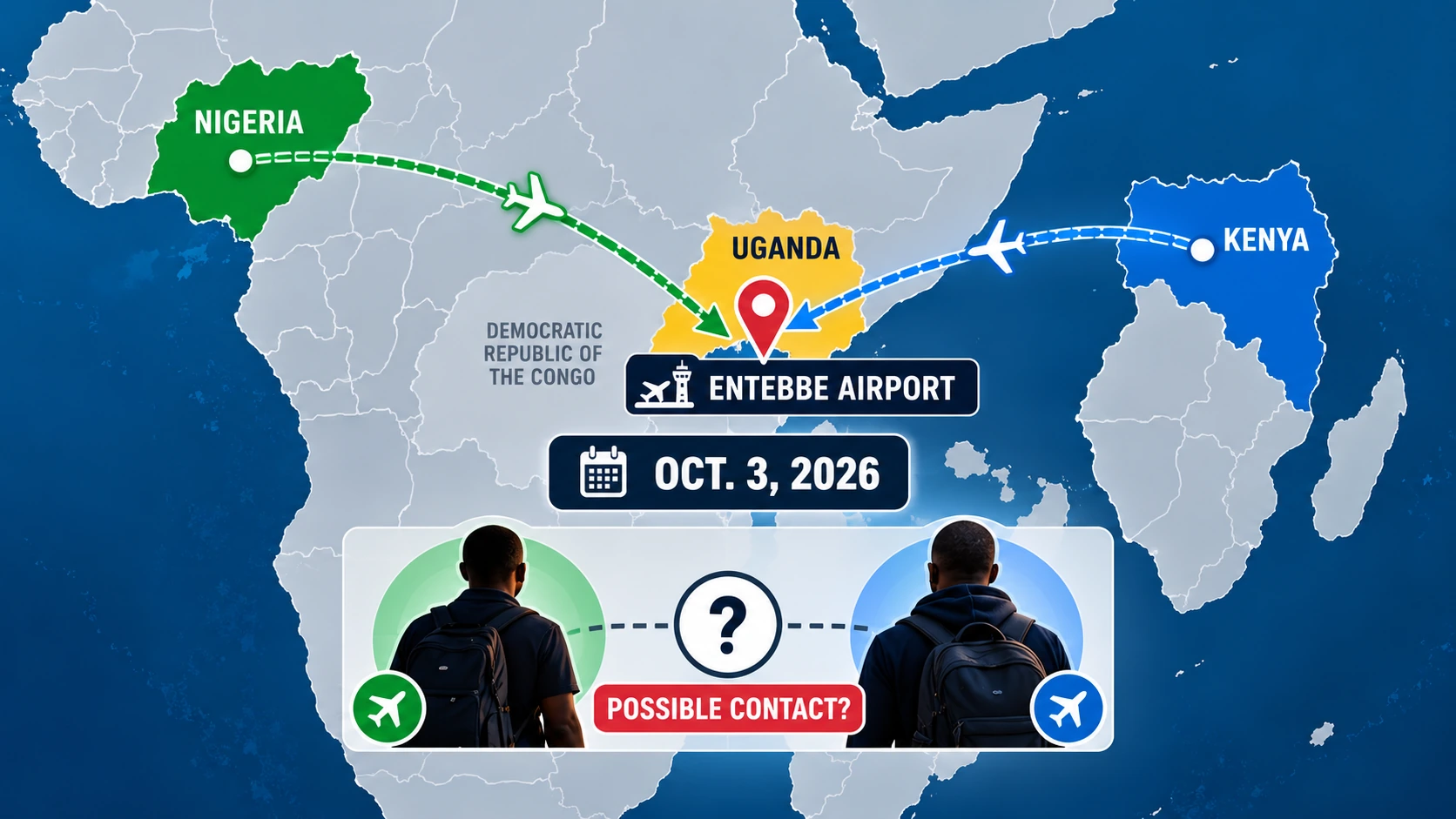
The confirmed connection is their travel history—not an established encounter or transmission event.
Dr. Wessam Mankoula, an emergency preparedness and response official at the Africa Centres for Disease Control and Prevention (Africa CDC), said on October 22 that the two patients had passed through Entebbe International Airport on October 3.
Investigators were examining whether some form of interaction occurred between them.
That possibility emerged as public health agencies tried to determine how Ebola reached Nigeria and Kenya, two countries that had not previously been the main centers of the ongoing outbreak. (AP)
Two Different Patients, Two Separate Investigations
The Nigerian patient is a woman who had recently visited Uganda before returning to Abuja, Nigeria’s capital.
She developed symptoms on October 7, sought medical care on October 11, and tested positive for Bundibugyo virus on October 20.
The Kenyan patient was a man who had been living in the Democratic Republic of the Congo. He traveled to Kenya through Uganda and later died. Kenya confirmed its first Ebola case on October 6. (WHO · ECDC)
The shared October 3 airport date gives investigators a location and a period to examine.
It does not establish that the patients met, traveled together, or infected one another.
That distinction is particularly important because Ebola does not spread as easily as respiratory viruses such as influenza or COVID-19.
Does Sharing an Airport Mean One Ebola Patient Infected the Other?
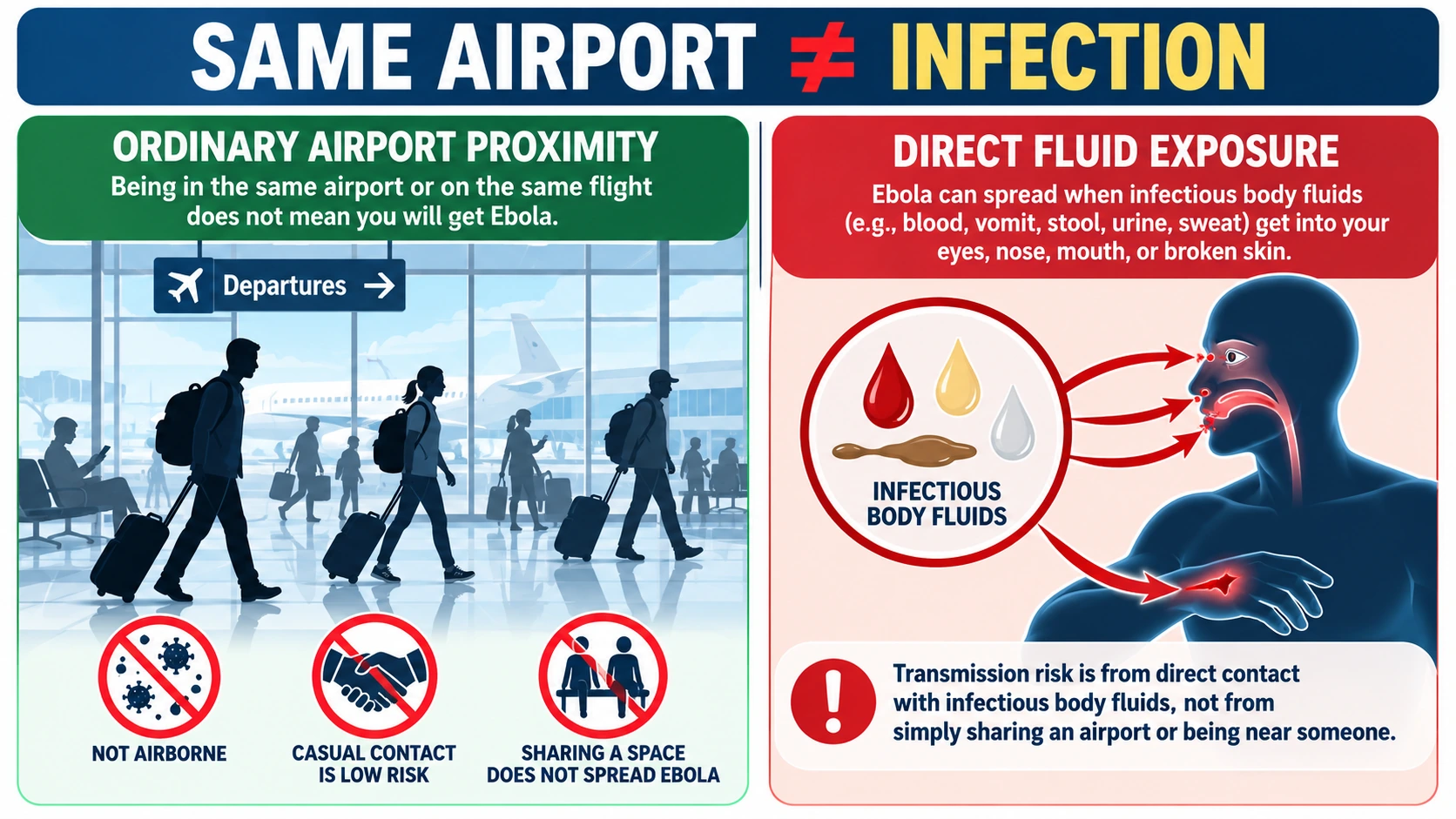
No. Ebola is primarily transmitted through direct contact with the body fluids of a person who is sick with the disease or has died from it, or through objects contaminated with those fluids.
It does not normally spread through the air the way flu or COVID-19 can.
Being in the same terminal, waiting near another traveler, or walking through the same airport does not, by itself, establish an exposure capable of transmitting Ebola. (CDC)
The Timing of Symptoms Matters
There is another important detail in the Nigerian patient’s timeline.
According to Nigerian authorities and the World Health Organization, her symptoms began on October 7.
That was four days after the October 3 airport visit.
People infected with Ebola are not considered contagious before they develop symptoms.
This means the reported timeline does not support the idea that the Nigerian patient was spreading Ebola at the airport on October 3 while she was still asymptomatic.
It does not settle whether she could have been exposed to an infectious person at that airport, however. Investigators would need more information about the Kenyan patient’s condition, any possible contact, and other exposure opportunities. (WHO · CDC)
What About Ebola’s Incubation Period?
The incubation period is the time between infection and the first symptoms.
For Ebola, symptoms can begin anywhere from 2 to 21 days after exposure, with an average of about 8 to 10 days.
That broad window makes investigating a patient’s travel history complicated.
Someone who becomes ill several days after a flight may have been infected before boarding, during an earlier visit to another location, or through a separate exposure. The symptom date alone cannot reveal exactly where infection occurred. (CDC)
How Did an October 3 Airport Visit Become an International Investigation?
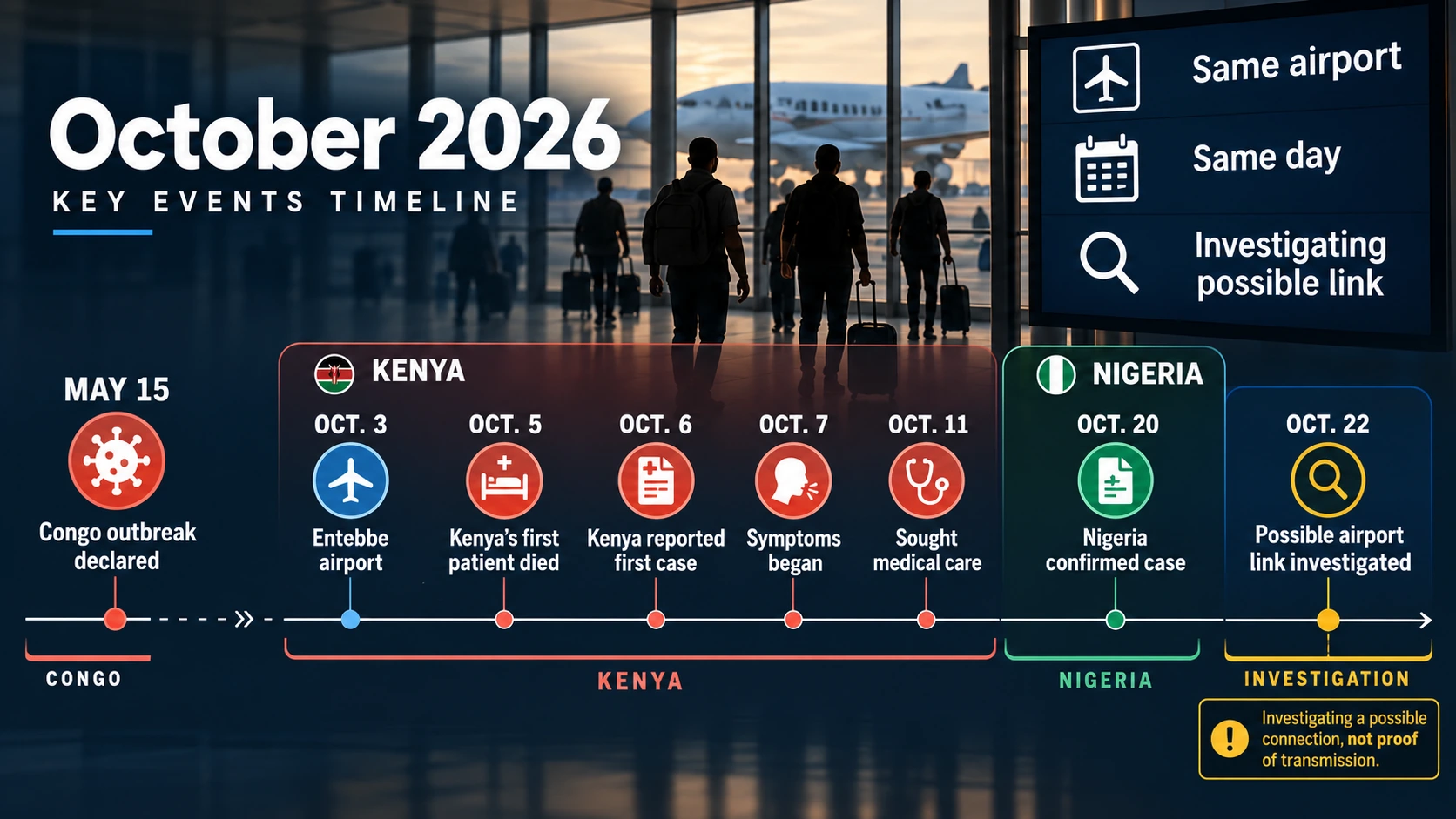
The airport connection became public on October 22, nearly three weeks after the travelers passed through Entebbe.
By then, Kenya had reported additional cases linked to its first patient, while Nigeria was investigating the travel and exposure history of its newly confirmed case.
The major developments are easier to understand when placed in chronological order.
| Date | Event | Why it matters |
|---|---|---|
| May 15, 2026 | Congo declared the Ebola outbreak | Beginning of the current outbreak response |
| October 3 | The two travelers passed through Entebbe Airport | Possible shared location under investigation |
| October 5 | Kenya’s first patient died, according to WHO | Severe outcome before official case reporting |
| October 6 | Kenya reported its first Ebola case | Initial recognized imported case |
| October 7 | Nigeria’s patient developed symptoms | Helps investigators assess possible exposure dates |
| October 11 | The Nigerian patient sought medical care | Important point in identifying potential healthcare contacts |
| October 20 | Nigeria confirmed its Ebola case | Triggered further investigation and monitoring |
| October 22 | Africa CDC discussed the possible airport interaction | A new lead, not proof of transmission |
Sources: WHO’s Nigeria announcement, WHO’s report on Kenya’s first case, ECDC’s October 22 outbreak update, and AP’s October 22 report.
Why Is Uganda Central to the Investigation?
Uganda sits along important travel routes connecting parts of Central and East Africa.
Entebbe International Airport is a major international gateway, so two infected travelers passing through it on the same day immediately creates a question about their movements.
But there is also a dispute about the Nigerian patient’s earlier travel.
Ugandan officials said she had visited the Democratic Republic of the Congo, where the outbreak began. WHO and Africa CDC officials said on October 22 that they did not have confirmed information establishing such a visit.
Uganda also rejected the assumption that traveling through its territory proved the woman became infected there. (Reuters)
This leaves investigators with several possible explanations rather than one confirmed infection route.
| Question | What is established? |
|---|---|
| Did both travelers pass through Entebbe on October 3? | Yes, according to Africa CDC |
| Did they meet or physically interact? | Under investigation |
| Did one transmit Ebola to the other? | Not established |
| Where was Nigeria’s patient infected? | Still under investigation |
| Was her reported visit to Congo confirmed? | WHO and Africa CDC said no confirmation had been received |
The investigation therefore needs to establish the patients’ actual movements and exposure histories, not merely identify a shared point on a map.
How Can Health Officials Trace a Possible Ebola Exposure Across Countries?
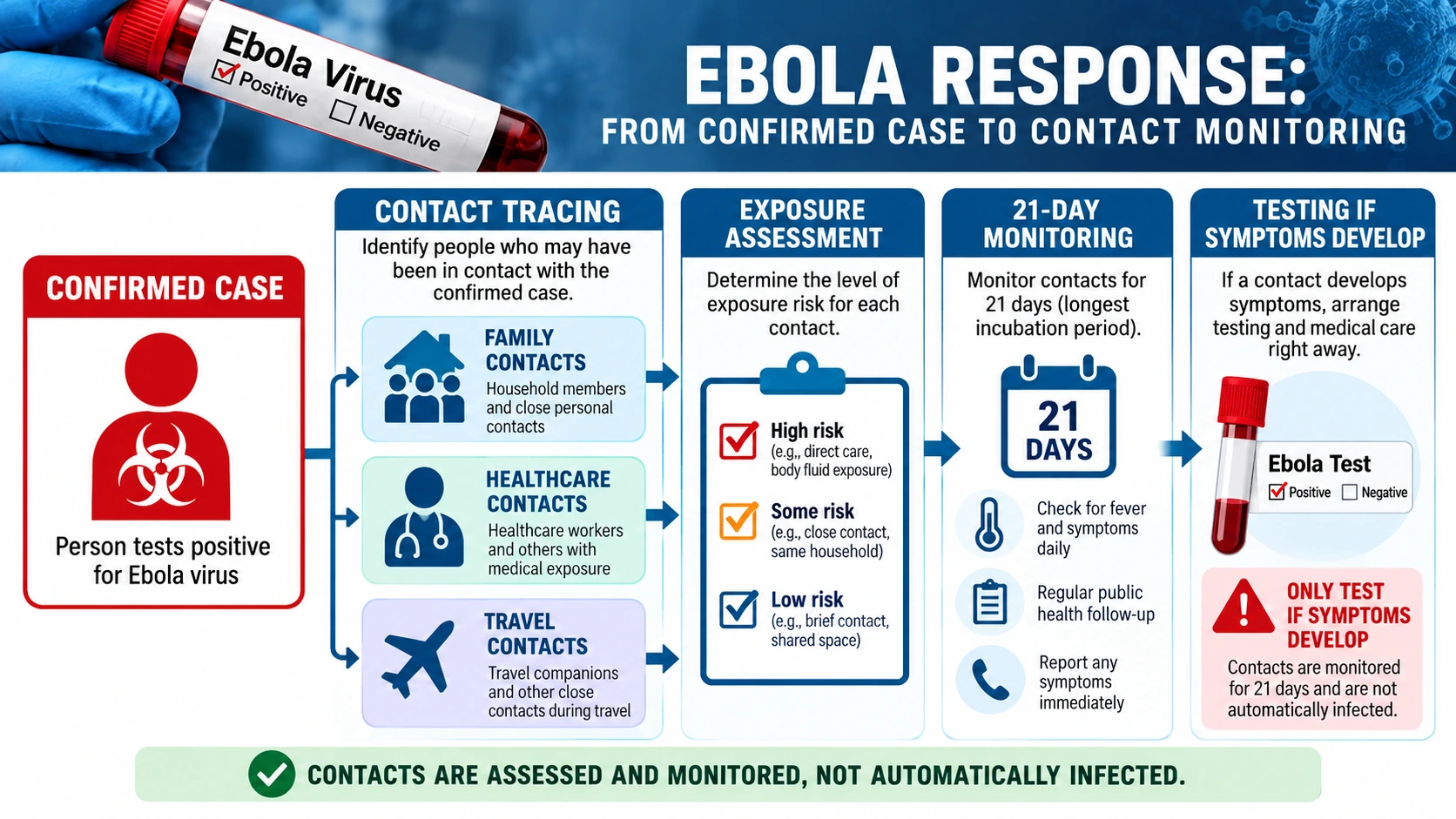
The process is called contact tracing. Investigators identify people who may have been exposed to an infected person during the period when transmission was possible.
For Ebola, this means paying particular attention to direct physical contact, exposure to infectious body fluids, and interactions with contaminated materials.
Simply being in the same building is not enough to classify every nearby person as having had a meaningful exposure.
What Would Investigators Need to Establish?
For the airport lead, health officials can examine several kinds of evidence:
- Travel timelines: When each traveler arrived, departed, and passed through different locations.
- Possible interactions: Whether the patients were near each other and whether any actual physical contact occurred.
- Symptoms: Whether either person was already sick and potentially infectious.
- Exposure histories: Whether either patient had earlier contact with infected people or contaminated materials.
- Laboratory findings: Whether confirmed infections fit a possible shared transmission chain.
These are the questions investigators would need to resolve. Public reporting has not established that all such records or evidence have been obtained.
Why Do Officials Monitor Contacts for 21 Days?
Because Ebola symptoms can take up to 21 days to appear after exposure.
Monitoring allows health authorities to identify symptoms quickly, arrange medical evaluation and testing, and isolate patients when necessary.
But there is an important distinction: a contact is not the same as a confirmed case.
Nigeria initially identified 44 contacts associated with its patient, according to WHO’s October 20 update. As of October 22, the ECDC reported that 134 of 135 identified contacts of the Kenyan cases were under quarantine. The remaining person’s quarantine status was not established in that update. (WHO · ECDC)
Those numbers describe contact-tracing work, not 44 or 135 additional infections.
In cross-border investigations, the difficult part is often finding people who have already traveled elsewhere.
A passenger may leave an airport, take another flight, or cross a land border before public health officials realize that exposure is possible.
That is why communication between national health agencies matters as much as screening at the airport itself.
Why Did Nigeria’s Ebola Diagnosis Raise Additional Concerns?
Nigeria’s newly confirmed patient reportedly experienced symptoms for nearly two weeks before the disease was identified.
According to WHO and Nigerian authorities, symptoms began on October 7, medical care was sought on October 11, and the infection was confirmed on October 20.
That is a 13-day interval between reported symptom onset and laboratory confirmation.
During that period, the patient had visited healthcare facilities, creating a need to assess possible exposures among people who interacted with her. (WHO)
Why Can Ebola Initially Look Like Malaria?
Early Ebola symptoms are not unique to the disease.
Fever, headache, fatigue, muscle pain, and weakness can resemble malaria or other common infections.
Reuters reported that Nigeria’s patient was initially thought to have malaria before Ebola testing established the diagnosis. (Reuters)
Without the relevant travel and exposure history, healthcare workers may not immediately recognize the need for specialized Ebola testing.
As the illness progresses, symptoms can include vomiting, diarrhea, abdominal pain, and sometimes bleeding. But bleeding is not required for someone to have Ebola. (CDC)
The concern about a delayed diagnosis is therefore not simply how long testing took.
It is whether potentially exposed people can be identified quickly enough to prevent additional transmission.
At the same time, Nigerian officials said on October 22 that the case remained isolated and that they had not identified evidence of community transmission. (Reuters)
Why Is the 2026 Ebola Outbreak So Difficult to Control?
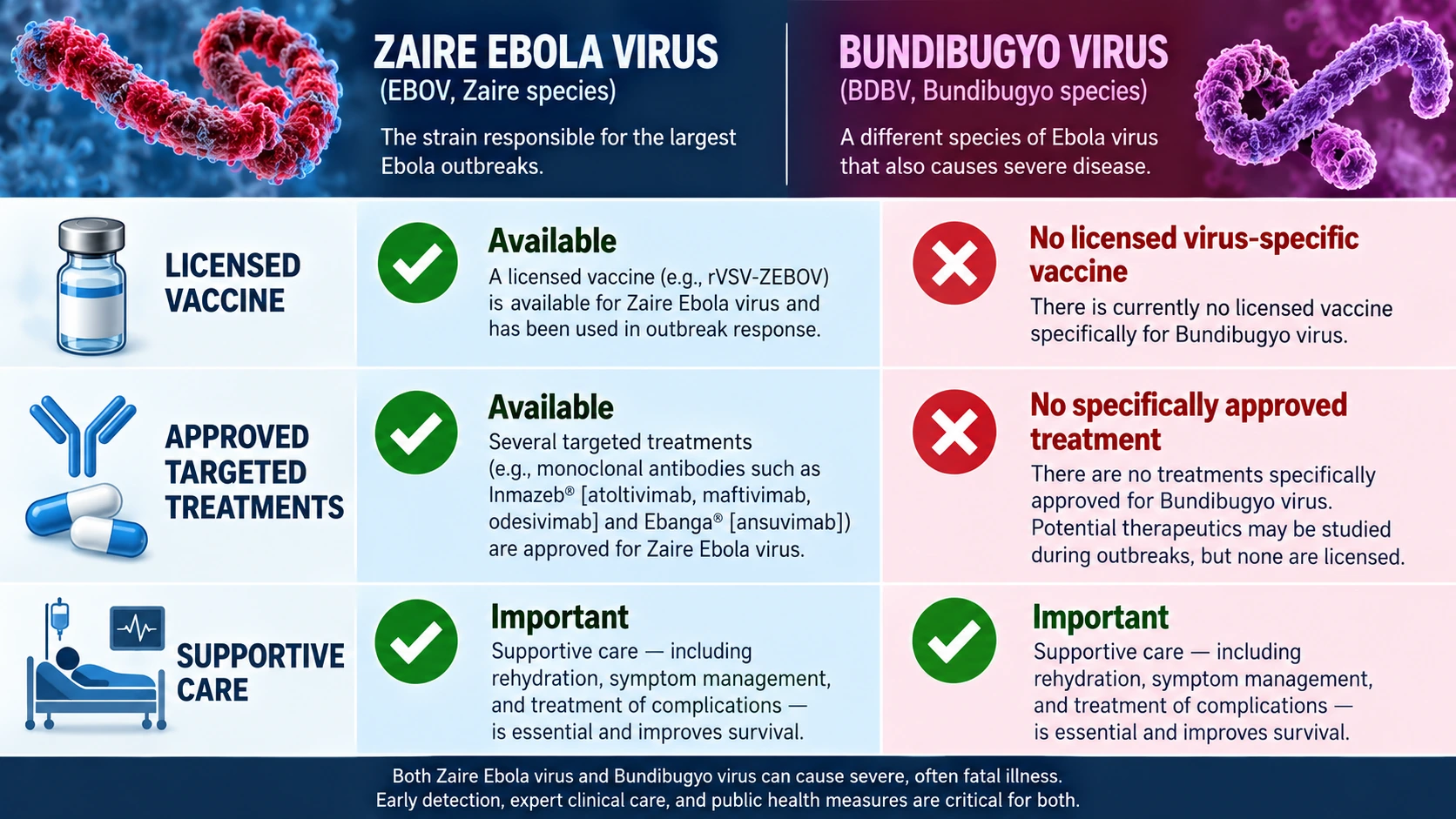
One challenge is that the current outbreak is caused by Bundibugyo virus, a type of virus that causes Ebola disease.
Not all Ebola viruses are identical.
A vaccine exists for disease caused by the better-known Zaire Ebola virus, but that does not mean the same vaccine has been established as effective against every virus in the Ebola group.
Doesn’t Ebola Already Have a Vaccine?
Yes—but there is a crucial limitation.
The licensed Ervebo vaccine is intended for disease caused by Zaire Ebola virus. There is no licensed vaccine specifically approved for Bundibugyo virus disease.
There are also no specifically approved antiviral treatments for Bundibugyo virus disease, although researchers are evaluating potential therapies and vaccines. (WHO vaccine guidance · WHO research update)
| Medical issue | Zaire Ebola virus disease | Bundibugyo virus disease |
|---|---|---|
| Licensed vaccine | Ervebo available | No licensed virus-specific vaccine |
| Approved targeted treatments | Approved antibody treatments exist | No specifically approved treatment |
| Supportive medical care | Important | Important |
| Outbreak control | Vaccination plus public health measures | Early detection, isolation, contact tracing, and infection control |
A lack of an approved virus-specific medicine does not mean treatment is useless.
Supportive medical care—including fluids, electrolyte management, treatment of complications, and careful monitoring—can improve survival.
In addition, identifying patients quickly and preventing exposure to infectious body fluids remain essential.
How Large Is the Outbreak?
According to the ECDC’s October 22 update, the Democratic Republic of the Congo had reported 9,704 confirmed cases and 4,687 deaths, using data available through October 20.
Kenya had reported nine confirmed cases, including one death, by October 22. Nigeria had confirmed one case. Earlier cases associated with the outbreak had also been recorded in Uganda and France.
Figures are updated as new cases are confirmed and surveillance records are reconciled. (ECDC)
The outbreak began in northeastern Congo, where conflict, displacement, limited access to healthcare, and movement across borders have made disease surveillance difficult.
Even effective contact tracing in one country cannot fully compensate for undetected transmission elsewhere.
Does the Airport Investigation Mean Ebola Could Reach the United States?
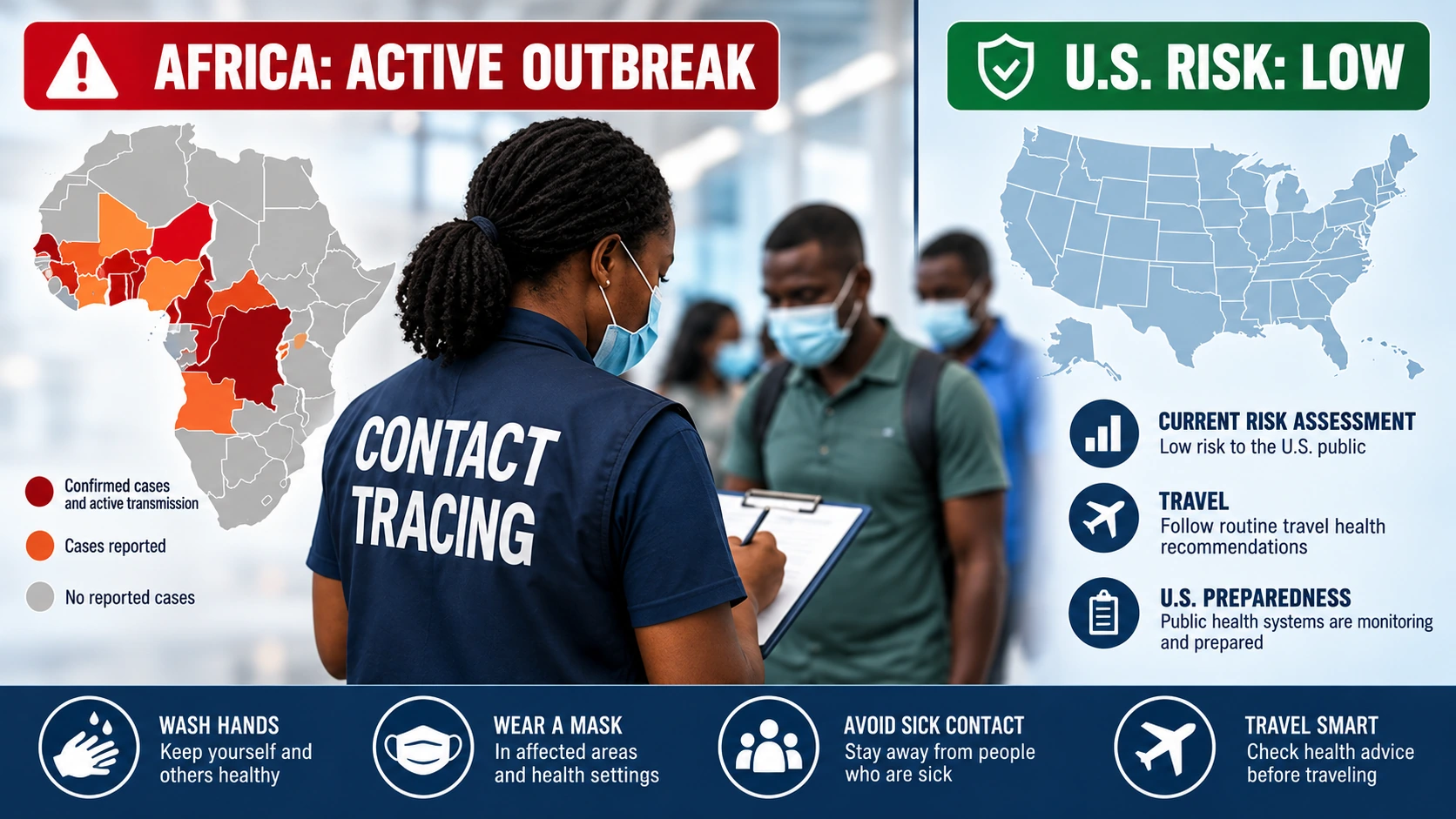
The airport investigation does not establish that Ebola is spreading toward the United States.
The U.S. Centers for Disease Control and Prevention has reported no confirmed U.S. cases associated with this outbreak.
The agency assesses the overall risk to the American public as low, and the likelihood of the virus spreading to the United States as very low. (CDC)
That assessment can change as the outbreak develops, but it provides important context for Americans reading reports about Ebola and international airports.
Does Flying Internationally Make Ebola Easy to Spread?
No. Commercial aviation can move an infected person between countries before symptoms develop, but air travel itself does not change how Ebola is transmitted.
Unlike airborne respiratory infections, Ebola generally requires contact with infectious body fluids or contaminated materials.
Someone sitting on a plane with an infected traveler is not automatically infected.
The risk depends on whether there was an actual exposure, whether the infected person was symptomatic, and the circumstances of the interaction. (CDC)
Should Americans Change Travel Plans?
For most Americans who are not traveling to affected areas, the CDC has not recommended changing everyday activities because of this outbreak.
Travelers visiting affected countries should follow current CDC travel health guidance and any applicable entry or departure requirements.
Anyone who develops symptoms after possible exposure in an affected area should seek medical guidance promptly and explain their travel and exposure history before arriving at a healthcare facility.
For the broader public, the important distinction is between a serious outbreak that requires international action and an immediate threat to everyday life in the United States.
Those are not the same thing. (CDC)
What Will Investigators Need to Establish Next?
The most important unanswered question is whether the October 3 airport overlap had anything to do with either patient’s infection.
Health authorities will need to determine whether the two travelers actually interacted and whether the timing and nature of any interaction would make transmission biologically plausible.
Three developments are especially important.
1. Whether the Possible Airport Contact Is Supported by Evidence
A confirmed interaction would provide investigators with useful information.
But an encounter would still not prove transmission unless the medical and exposure evidence supported that conclusion.
2. Whether Nigeria’s Patient’s Earlier Movements Can Be Established
WHO and Africa CDC had not confirmed the reported visit to Congo as of October 22.
Determining where the patient traveled before returning to Nigeria could help identify other possible sources of exposure.
3. Whether Additional Infections Are Detected Among Monitored Contacts
Nigeria’s initial contact list may expand as investigators reconstruct the patient’s movements.
Kenya’s authorities have already reported additional cases linked to their first patient, underscoring why early identification and monitoring matter.
For health officials, success will be measured less by finding a dramatic connection between two travelers than by identifying every meaningful exposure and preventing further infections.
Bottom Line: What This Story Really Means
Two people later diagnosed with Ebola passed through Uganda’s Entebbe International Airport on October 3, 2026.
On October 22, Africa CDC said it was investigating whether they had interacted.
The shared airport visit is confirmed, but direct contact and transmission between the two patients have not been established.
The Nigerian patient’s reported symptom onset on October 7 is an especially important detail because Ebola is not considered contagious before symptoms develop.
The wider concern is that a serious Ebola outbreak has spread beyond its original center in Congo, while health authorities must reconstruct exposure histories across international borders.
For Americans, the CDC’s risk assessment remains low.
The story illustrates a central challenge of infectious-disease control: an infected person can cross borders before anyone knows they are sick, leaving investigators to work backward to identify where exposure occurred and who else may need monitoring.
Ebola Airport Investigation: Key Questions Explained
Q. Did two Ebola patients actually meet at Entebbe Airport?
That has not been confirmed. Africa CDC said both travelers passed through the airport on October 3, but whether they interacted remains under investigation.
Q. Did one patient infect the other at the airport?
There is no confirmed evidence that transmission occurred between them. Investigators are examining a possible connection, not reporting a proven transmission event.
Q. Were the two patients on the same airplane?
Available reporting established that they passed through the same airport on the same date. It did not establish that they traveled on the same flight.
Q. Can someone spread Ebola before developing symptoms?
No. According to the CDC, people infected with Ebola are not contagious before symptoms begin.
Q. Why does the Nigerian patient’s October 7 symptom date matter?
She reportedly became ill four days after passing through Entebbe. That timing does not support the idea that she was infectious at the airport on October 3, although investigators must still examine where she may have been exposed.
Q. How long can Ebola take to cause symptoms?
Symptoms can begin 2 to 21 days after exposure, most commonly around 8 to 10 days afterward.
Q. How many Ebola cases had Kenya confirmed?
As of October 22, 2026, Kenya had reported nine confirmed cases, including one death.
Q. Does the current Ebola outbreak have an approved vaccine?
There is no licensed vaccine specifically approved for Bundibugyo virus disease, the type responsible for this outbreak. A licensed vaccine exists for a different Ebola virus type.
Q. Has the 2026 Ebola outbreak reached the United States?
No outbreak-related U.S. cases had been confirmed in the CDC’s available reporting. The agency assessed the risk to the general U.S. public as low.
Did this help make the story clearer? 🙂
WIN keeps unpacking the “why” behind the news—clearly and simply!
Sources
Airport Investigation and Disputed Travel History
Country Cases, Diagnosis, and Outbreak Updates
World Health Organization — Ebola Disease Caused by Bundibugyo Virus, October 8, 2026
Reuters — Late Detection in Nigeria Raises Alarm as Ebola Spreads Across Africa, October 22, 2026
Reuters — Nigeria Says Ebola Case Remains Isolated, Urges Calm, October 22, 2026
Medical Transmission, Vaccines, and U.S. Risk
U.S. Centers for Disease Control and Prevention — Ebola Disease Basics
U.S. Centers for Disease Control and Prevention — Ebola Signs and Symptoms
U.S. Centers for Disease Control and Prevention — Current Ebola Outbreak and U.S. Risk Assessment
World Health Organization — Ebola Vaccines and Their Limitations
World Health Organization — Candidate Treatments and Vaccines for Bundibugyo Virus Disease