If Iran Wants a Deal, Why Is It Threatening U.S. Warships?

How can a country call for peace talks and threaten another country’s warships on the same day?
That is exactly the question raised by two statements from Iran on October 24, 2026.
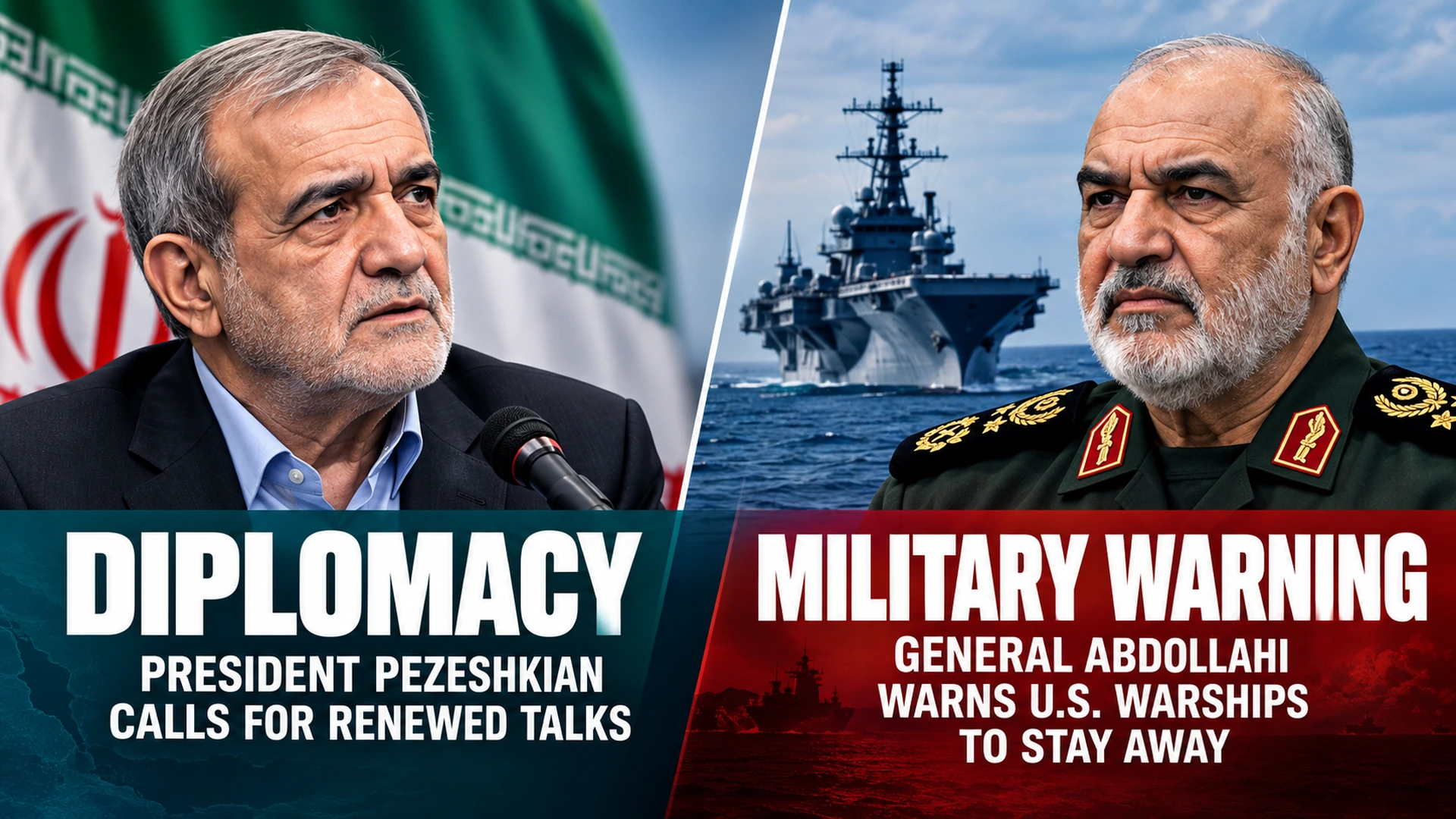
Iranian President Masoud Pezeshkian said he still believed Tehran and Washington should try again to reach an agreement, even while accusing the United States of disrupting earlier negotiations.
But Iran’s top military command delivered a very different-sounding message: American warships would not be permitted to enter the Persian Gulf.
At first glance, those positions seem impossible to reconcile.
Yet negotiations and military threats can be two parts of the same strategy. Iran wants relief from American pressure without appearing to surrender its ability to resist. Washington, meanwhile, is using military and economic pressure to seek concessions of its own.
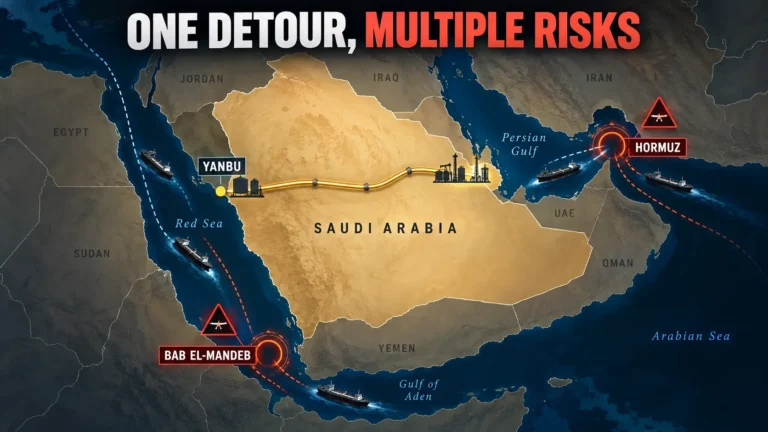
The disagreement is especially dangerous because both countries are contesting access to the Strait of Hormuz, one of the world’s most important energy shipping routes.
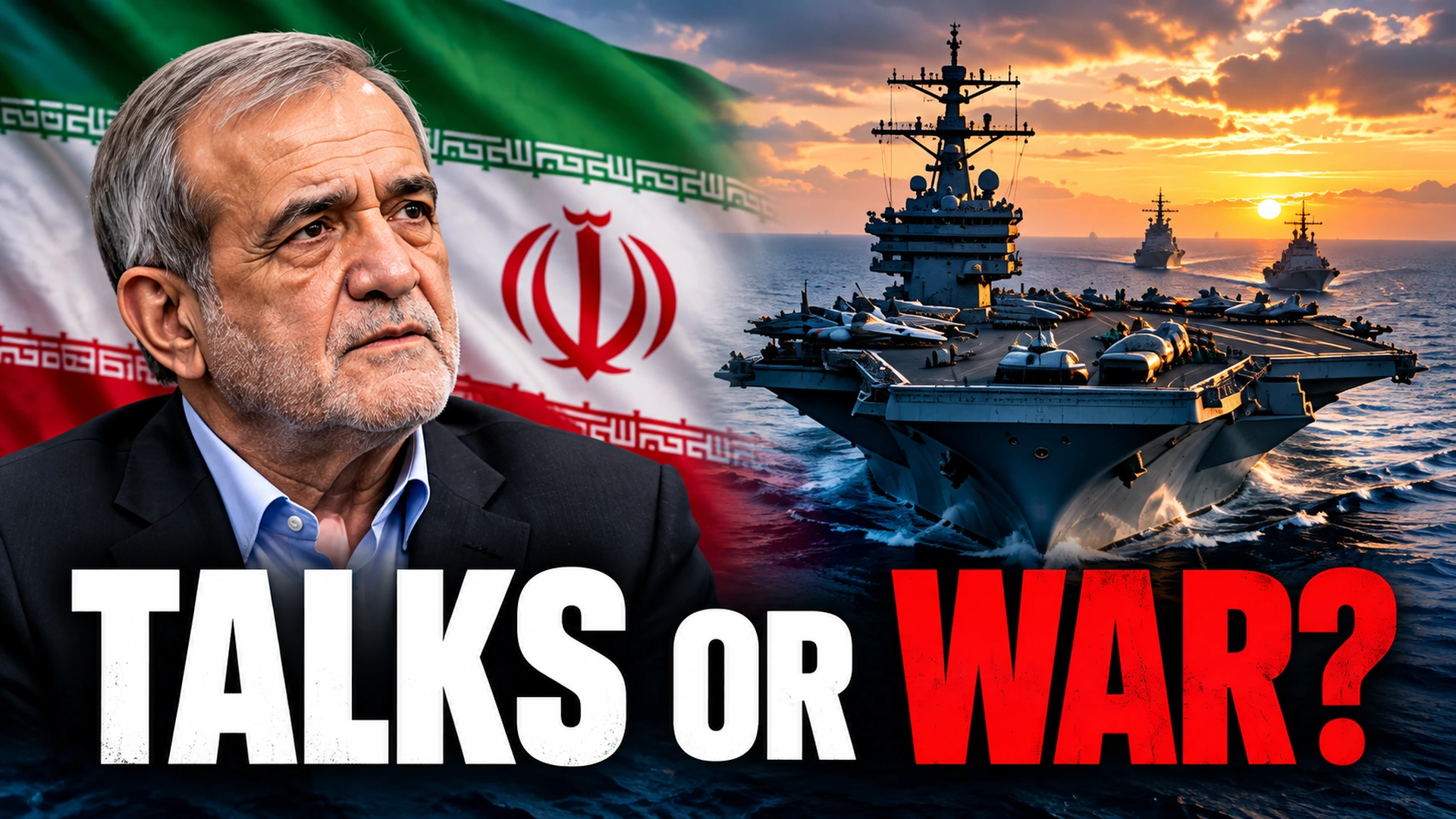
※ Images in this article are AI-generated illustrations created to help explain the story. They are not actual photographs, and depictions of people, places, or events may differ slightly from reality.
The two messages become easier to understand when we separate three questions: who controls Iran’s decisions, what each side wants from a deal, and why a narrow stretch of water has become so important.
What Did Iran’s President and Military Actually Say?
On October 24, Iran’s president supported another attempt at negotiations, while its armed forces chief warned against the return of U.S. warships to the Persian Gulf.
Both statements were reported that Saturday, but they addressed different parts of the confrontation.
The president’s message: Try to negotiate again
Pezeshkian, speaking in remarks broadcast on Iranian state television, blamed Washington for the failure of negotiations over an interim agreement.
Despite that criticism, he said another attempt should be made to reach a deal.
That was not an announcement that the two governments had reached an agreement or even scheduled a new round of formal negotiations. It was an expression of continued support for diplomacy from Iran’s president. (Reuters)
The military’s message: Keep American warships away
On the same day, Gen. Ali Abdollahi, chief of staff of Iran’s armed forces, declared that U.S. military ships would not be allowed into the Persian Gulf.
His statement, carried by Iranian state television, came amid warnings from American and Israeli officials about the possibility of renewed strikes against Iran.
Abdollahi also challenged Washington’s claims about the damage inflicted on Iran’s military capabilities, arguing that American naval vessels were unwilling to approach Iranian waters. That assessment was his claim, not independently established proof of Iran’s ability to exclude U.S. forces. (The Straits Times · Tasnim)
These statements are not necessarily orders pulling Iranian policy in opposite directions.
One addressed the possibility of a negotiated settlement. The other sought to deter military intervention.
And the distinction matters because Iran’s president does not have the same independent authority over the armed forces that an American president does.
Who Really Controls Iran’s Military and Foreign Policy?
Iran’s president participates in diplomacy, but the country’s supreme leader holds constitutional authority over the armed forces and overarching state policy. Powerful military and security institutions also shape decisions, particularly during wartime.
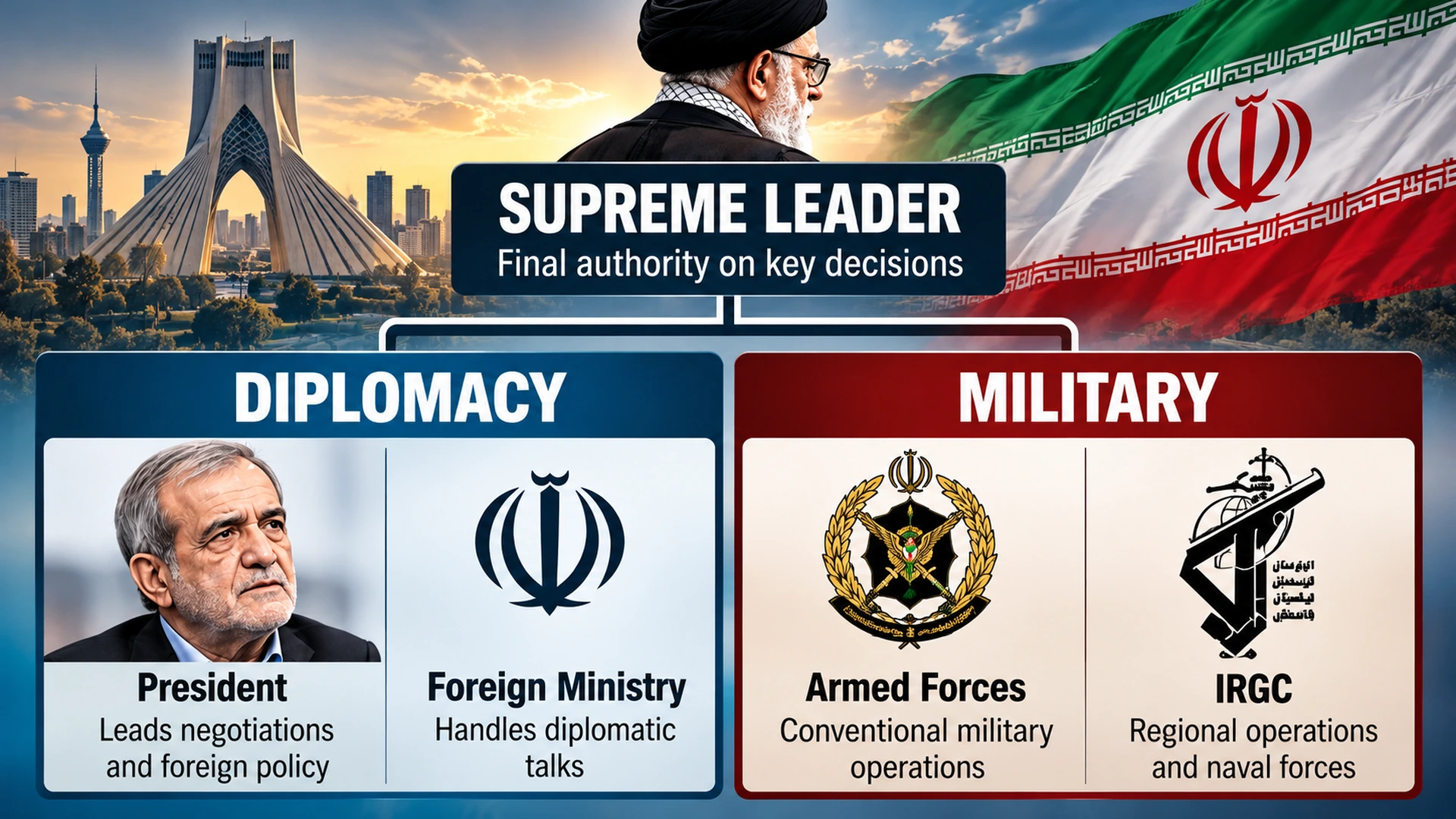
Iran’s president is not its commander in chief
In the United States, the president is both head of the executive branch and commander in chief of the armed forces.
Iran’s political system works differently.
Article 110 of Iran’s constitution places supreme command of the armed forces, the authority to declare war and peace, and the appointment of senior military commanders under the supreme leader.
The president heads the executive branch and has a role in diplomacy, but operates within that broader political structure. (Iranian Constitution · Council on Foreign Relations)
Why the Revolutionary Guard matters
Iran also has the Islamic Revolutionary Guard Corps, commonly known as the IRGC.
The IRGC is not simply another branch of the conventional military. It is a powerful security organization with responsibilities extending into military operations, internal security and regional activities.
Its influence has become particularly significant during the war.
Reuters reported in April 2026 that authority over wartime decisions had increasingly shifted toward a network of Revolutionary Guard commanders, senior security officials and institutions connected to the supreme leader.
That development complicated the negotiating process because diplomatic representatives were not necessarily the only people whose agreement mattered. (Reuters)
This does not establish that Pezeshkian and Abdollahi were publicly disagreeing on October 24.
Instead, their statements illustrate how Iran can communicate through different institutions at the same time.
The president can emphasize the value of negotiations while military leaders emphasize what Iran says it is prepared to defend.
What Does Iran Actually Want From a Deal With the United States?
Iran’s proposal focuses on easing American economic and military pressure in exchange for restoring passage through the Strait of Hormuz. Washington wants Iran’s nuclear program addressed as part of the process, not left until later.
That difference in sequencing is one of the biggest obstacles to an agreement.
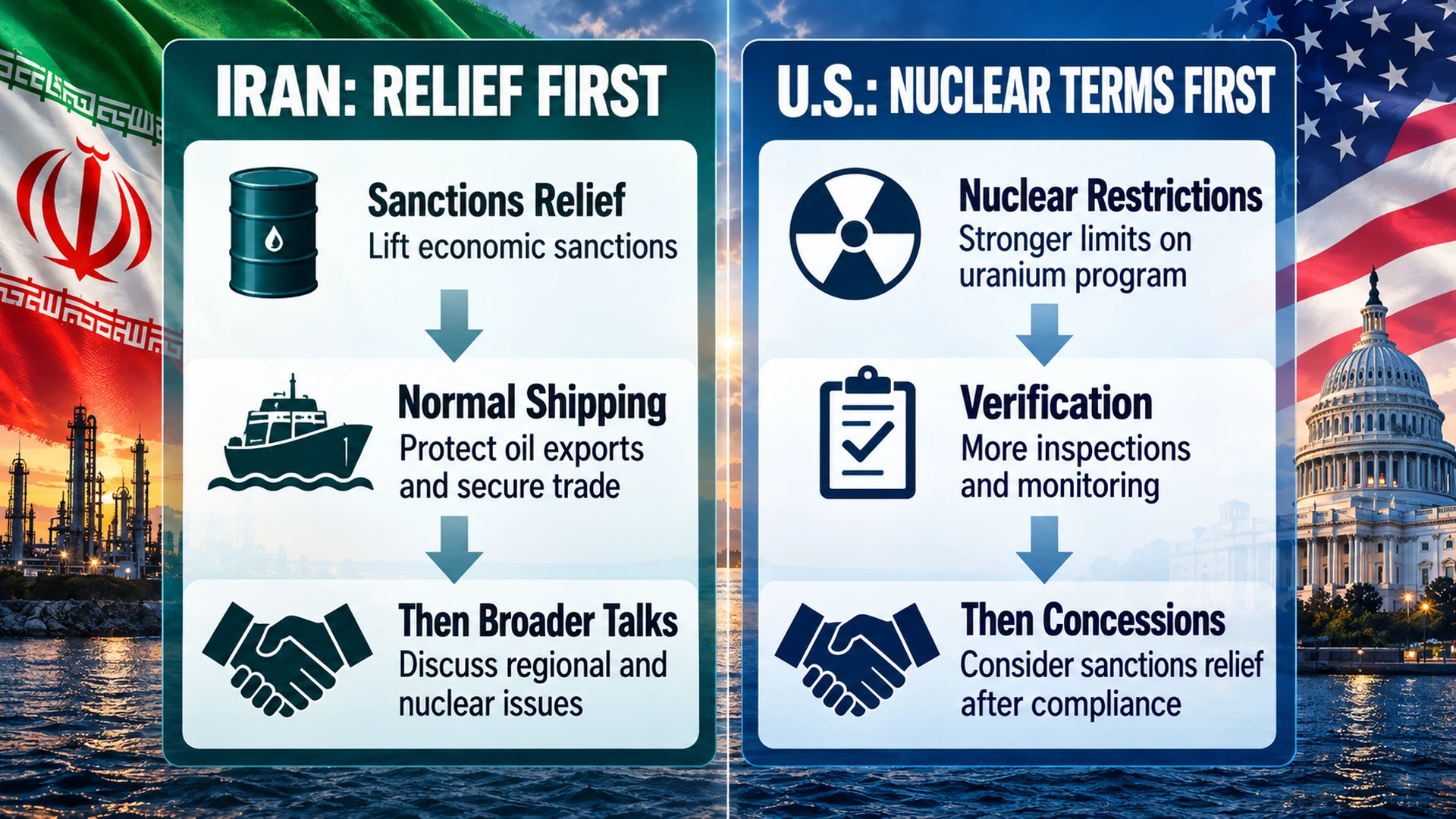
The dispute is partly about who moves first
Iran’s foreign minister, Abbas Araghchi, said on October 18 that a proposal to reopen the Strait of Hormuz within seven days remained available.
Iran presented its initiative in mid-September after an interim ceasefire collapsed.
Under Tehran’s proposal, the United States would take steps including lifting its blockade of Iranian ports, easing restrictions on Iranian oil exports and ending hostilities across regional fronts.
Iran would then move toward reopening the strait, with broader negotiations following.
Washington, however, has insisted that Iran’s nuclear program must be addressed from the outset. U.S. Vice President JD Vance said Iran would need to make meaningful reductions in uranium enrichment capacity to satisfy American demands, while Iran says it will not surrender its claimed enrichment rights. (Reuters · Reuters)
Here is how their publicly stated positions differ:
| Issue | Iran’s position | U.S. position |
|---|---|---|
| First steps | Relief from blockade and economic pressure | Meaningful nuclear commitments |
| Strait of Hormuz | Reopening tied to U.S. concessions | Safe passage is a central objective |
| Oil restrictions | Wants sanctions and blockade relief | Uses restrictions as negotiating pressure |
| Nuclear program | Prefers broader talks after initial steps | Wants nuclear terms addressed early |
| Military pressure | Demands an end to attacks and credible guarantees | Maintains the option of further force |
These positions describe the negotiating dispute, not an agreed framework.
Why neither side wants to move first
Think of two parties in a dispute who both say they are willing to compromise, but each demands a guarantee before offering anything substantial.
Iran argues that lifting pressure first would demonstrate that Washington is serious about negotiations.
Washington fears that removing pressure without sufficient commitments could reduce its ability to obtain the nuclear restrictions it seeks.
The result is a familiar diplomatic problem: Each side wants reassurance before surrendering the leverage that could secure that reassurance.
And their distrust is not hypothetical.
How did the conflict reach this point?
The confrontation has gone through several attempts at de-escalation since the United States and Israel began strikes against Iran on February 28, 2026.
| Date | Development |
|---|---|
| February 28, 2026 | U.S. and Israeli attacks begin the current war with Iran |
| June 2026 | An interim U.S.-Iran arrangement creates a basis for de-escalation, but does not hold |
| September 2026 | Iran presents a new proposal for reopening Hormuz and resuming negotiations |
| October 18, 2026 | Iran’s foreign minister says its seven-day proposal remains available |
| October 24, 2026 | Iran’s president backs another attempt at a deal while its military warns U.S. warships away |
The sequence explains why another statement favoring diplomacy does not automatically represent a breakthrough.
The countries have already explored possible arrangements. They remain divided over implementation and guarantees, as well as the nuclear issue. (AP · CBS News)
Why Is the Strait of Hormuz So Important to Both Countries?
The Strait of Hormuz is Iran’s most powerful geographic bargaining asset because it connects major Persian Gulf oil and gas exporters with international shipping routes.
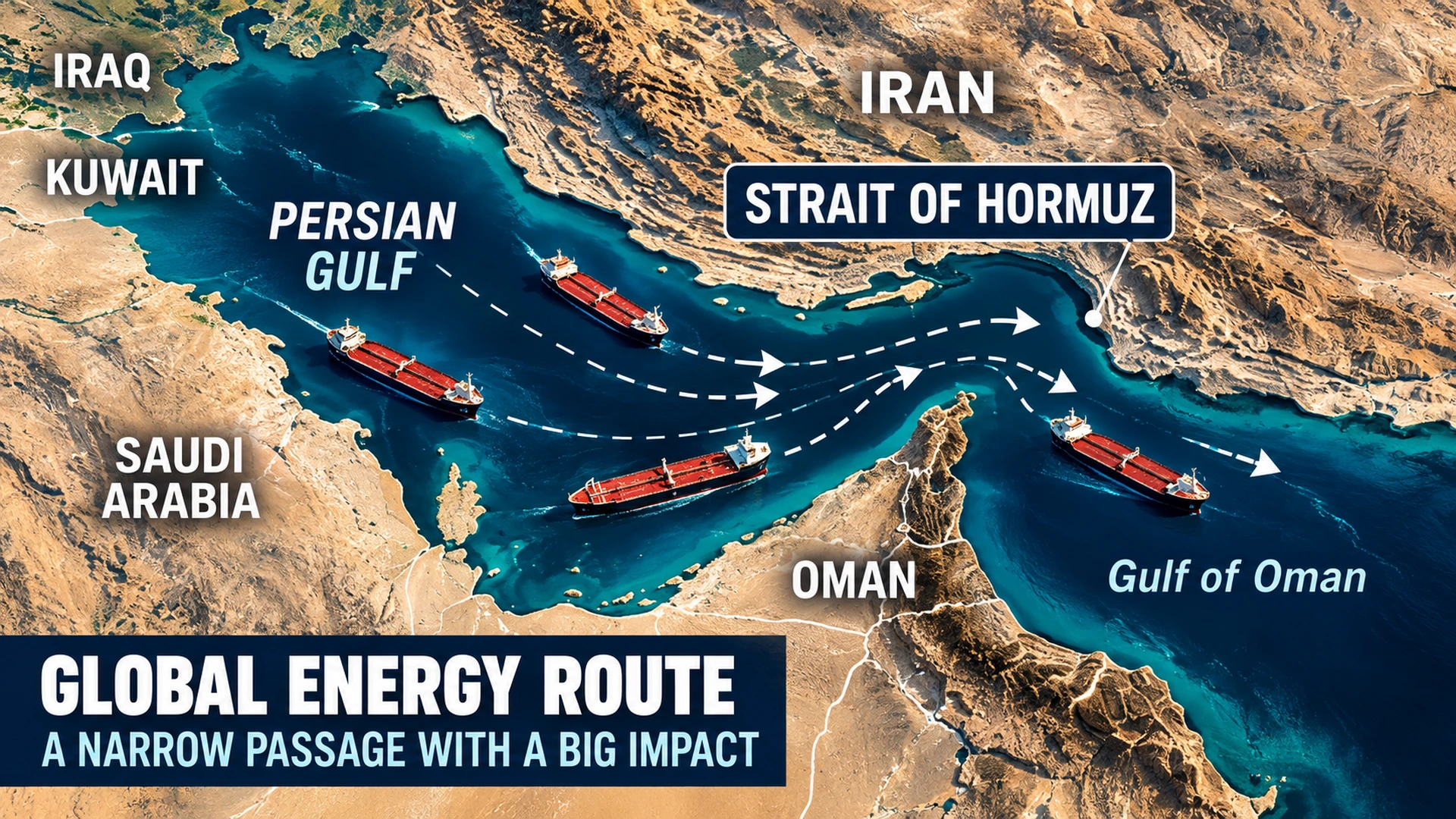
The Persian Gulf is bordered by several major energy-producing countries, including Saudi Arabia, Iran, Iraq, Kuwait, Qatar and the United Arab Emirates.
Ships leaving much of the Gulf must pass through the Strait of Hormuz, the narrow waterway between Iran and Oman, before reaching the Gulf of Oman and the Arabian Sea.
That geography gives disruptions in the strait consequences far beyond the two countries now fighting.
How much oil normally travels through Hormuz?
According to the U.S. Energy Information Administration’s August 2026 estimates, oil and petroleum liquids moving through the strait averaged approximately 21.6 million barrels per day in the fourth quarter of 2025, before the current war.
By the second quarter of 2026, the agency estimated that flow had fallen to approximately 4.9 million barrels per day.
Those figures describe two historical periods, not the current daily flow in October. Shipments have since partially recovered through alternative operating arrangements, but attacks and uncertainty continue to make transportation more expensive and risky. (U.S. Energy Information Administration · AP)
How does Iran use the strait as leverage?
Iran’s military position near the strait allows it to threaten shipping with missiles, drones, mines and other naval capabilities.
Even when some tankers continue operating, the possibility of an attack can lead shipping companies and insurers to reconsider routes, security arrangements and costs.
Meanwhile, the United States has imposed its own maritime blockade targeting Iranian ports and trade.
The two countries therefore possess different forms of leverage.
Iran can threaten movement through an international energy corridor.
The United States can use naval forces and sanctions to restrict Iran’s ability to earn revenue from oil exports.
Both are trying to make continued confrontation more costly for the other side than accepting a negotiated agreement.
Can Iran Actually Ban American Warships From the Persian Gulf?
Iran’s military declaration does not mean it has an internationally accepted right to exclude every U.S. warship from the entire Persian Gulf—or that it can necessarily enforce such a ban.
There is an important distinction between threatening to stop a naval force and possessing recognized legal authority over the waters that force might use.
The Persian Gulf is bordered by multiple countries. It is not an Iranian national lake.
Iran has sovereignty over its own territorial waters, but that does not amount to ownership of the entire gulf.
International maritime law also recognizes navigation rights in waters used for international passage. The United Nations Convention on the Law of the Sea describes transit passage rights through qualifying international straits, although Iran and the United States are not parties to the convention and disagree over aspects of its application. (United Nations)
Wartime naval operations raise additional legal and military questions beyond ordinary commercial transit.
Nor should Iran’s claim that it can prevent American vessels from entering be mistaken for independent verification that it has achieved such control.
Why make the threat anyway?
Military warnings can serve several purposes without being immediately carried out.
They can discourage an adversary from approaching, reassure domestic audiences that a government remains capable of resistance, and increase perceived risks during negotiations.
But strong threats can also create dangerous expectations.
If one side believes its warning has established a boundary and the other does not recognize that boundary, a future encounter at sea could trigger a confrontation neither government intended to escalate.
That is why military communications remain important even when diplomatic talks have stalled.
Why Should Americans Care About Another Confrontation in the Persian Gulf?
For Americans, the immediate concern is that threats to shipping and energy infrastructure can raise fuel and transportation costs even without a new round of major military strikes.
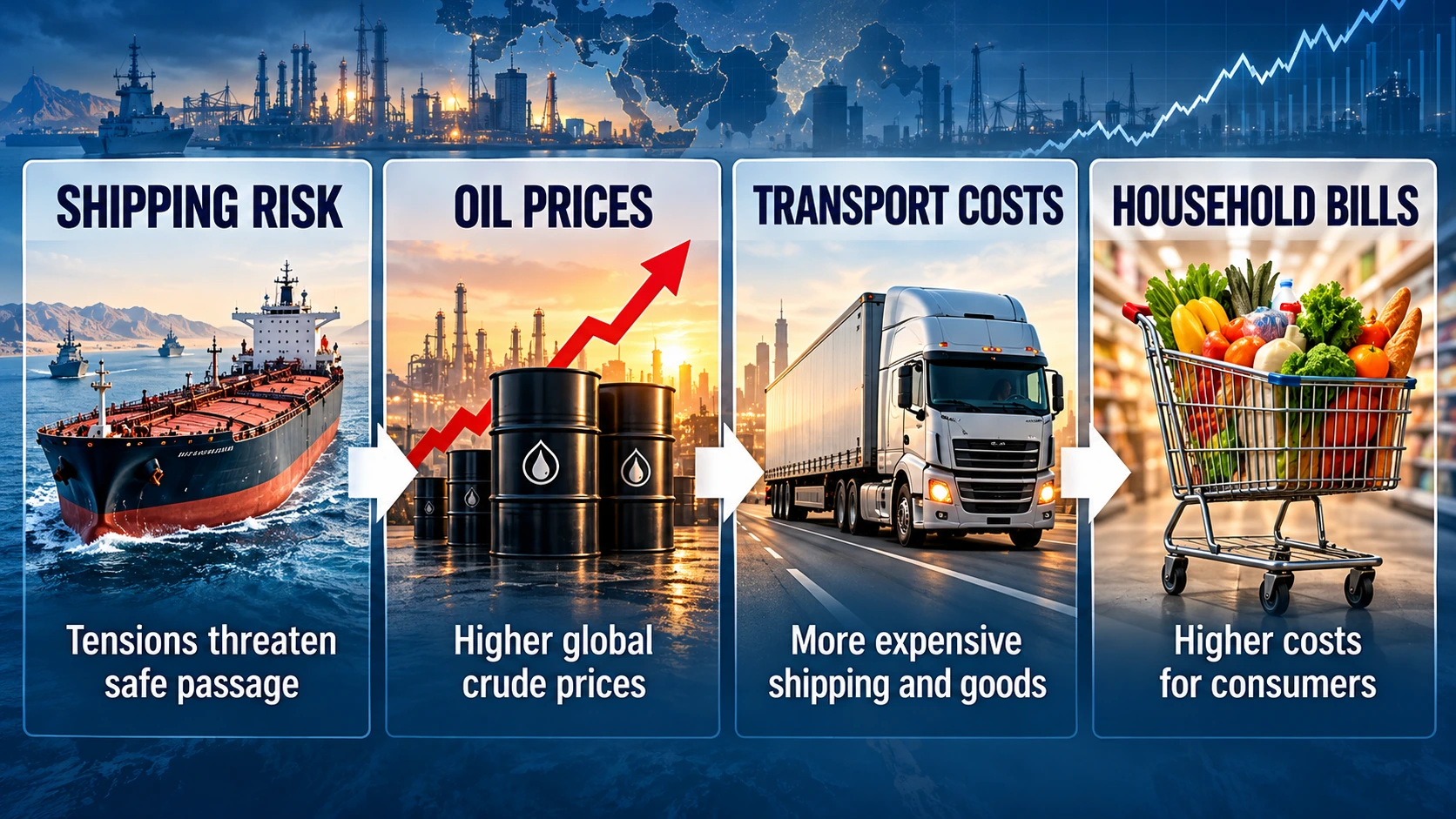
Why American oil production does not eliminate the risk
The United States produces large amounts of oil, but crude oil is traded in an interconnected global market.
If supply becomes less reliable in one major producing region, buyers elsewhere may compete for alternative barrels.
That can push up international prices, affecting American refiners and consumers even when the United States is not directly importing the disrupted shipments.
Rising fuel costs can eventually spread through the economy.
Truck operators pay more for diesel. Airlines face greater fuel expenses. Businesses that transport food and other goods may pass some of those costs along.
Prices do not move in a perfectly predictable chain, but the exposure is real.
What were oil markets signaling?
On October 23, Brent crude futures settled at $116.72 a barrel, according to Reuters, reaching their highest settlement since late April.
The increase reflected concerns about Middle Eastern supply disruptions, including attacks connected to the conflict and heightened risks to regional energy infrastructure.
The price does not prove that Iran’s October 24 naval warning caused a specific market movement. It shows how sensitive energy markets had already become to the regional confrontation. (Reuters)
Another concern is the safety of Americans serving or working in the Middle East.
U.S. intelligence officials warned that Iranian efforts to target American personnel abroad had intensified. The State Department also reduced staffing at several regional diplomatic missions amid security concerns.
These measures reflect the risks of the continuing conflict, not confirmation that a new American military offensive has begun. (AP · Reuters)
What Could Bring the United States and Iran Back to Serious Negotiations?
A meaningful breakthrough would require agreement on the order of concessions, a credible way to verify compliance, and security arrangements that reduce the risk of renewed attacks.
The immediate difficulty is not a complete absence of proposals. Both sides have described conditions under which negotiations could move forward.
The problem is that the conditions are different.
Iran wants Washington to reduce pressure before Tehran relinquishes key bargaining tools.
The United States wants confidence that Iran will make substantial commitments, particularly on its nuclear program, before Washington gives up its own leverage.
Regional mediators, including Pakistan and Qatar, have attempted to bridge that gap.
Foreign ministers from several Middle Eastern and European countries also met in Istanbul on October 23 to discuss the conflict, even though neither Iran nor the United States participated in that meeting. (Al Jazeera)
Three developments worth watching
The next phase is likely to turn on three practical questions.
| Development | Why it matters |
|---|---|
| Negotiating terms | Whether Washington and Tehran agree on what must happen first |
| Shipping security | Whether vessels can transit Hormuz without attacks or unacceptable risks |
| Military decisions | Whether either side orders operations that undermine ongoing diplomatic contacts |
A temporary improvement in shipping security would not necessarily resolve the nuclear dispute.
Similarly, an agreement to resume talks would not automatically end the war or lift sanctions.
The most consequential signal would be verifiable actions by both governments, rather than another statement expressing willingness to negotiate.
Bottom Line: What This Story Really Means
Iran’s calls for negotiations and its threats against American warships are not necessarily contradictory.
The two messages serve different purposes.
President Masoud Pezeshkian is signaling that Iran still sees value in a diplomatic agreement. Military leaders are signaling that Tehran intends to resist American pressure and preserve its bargaining position.
Iran’s political structure also means that the president’s support for negotiations does not, by itself, settle the decisions of the country’s military and security leadership.
The greatest obstacle remains the sequence of concessions.
Iran wants the United States to ease pressure first. Washington wants meaningful nuclear commitments and secure shipping arrangements before making major concessions.
That leaves both governments trying to negotiate while retaining the means to hurt the other if diplomacy fails.
For American households, the most immediate consequences are the risks to energy costs, regional security and U.S. personnel.
The real test is not whether Iran says it wants peace or whether its generals issue another warning. It is whether Washington and Tehran can agree on concrete steps that make another round of fighting less likely.
Iran-U.S. Tensions: Key Questions Explained
Q. Did Iran officially offer to resume negotiations on October 24, 2026?
Iranian President Masoud Pezeshkian publicly supported another attempt to conclude an agreement. His remarks did not establish that new formal negotiations had been scheduled or that a deal had been reached.
Q. Who was the Iranian general who threatened U.S. warships?
Gen. Ali Abdollahi, Iran’s armed forces chief of staff, warned on October 24 that American military vessels would not be allowed into the Persian Gulf.
Q. Does Iran’s president control the country’s military?
No. Under Iran’s constitution, supreme command of the armed forces belongs to the supreme leader, while the president heads the executive branch and participates in diplomacy.
Q. What is Iran’s seven-day proposal for the Strait of Hormuz?
Iran has proposed a sequence under which U.S. concessions, including blockade relief, would lead to reopening the strait and resuming broader negotiations within approximately seven days. The proposal has not become a completed agreement.
Q. Why does Washington insist on discussing Iran’s nuclear program?
The United States wants meaningful commitments concerning Iran’s uranium enrichment capabilities and has made nuclear restrictions a central part of its demands for ending the conflict.
Q. Can Iran legally claim the entire Persian Gulf as its own waters?
No. Iran has territorial waters, but the Persian Gulf borders multiple countries and includes international navigation rights. The legal rules governing particular naval operations and passage through the Strait of Hormuz are more complicated.
Q. How much oil normally passes through the Strait of Hormuz?
Before the current war, roughly 20 million to 22 million barrels of oil and petroleum liquids passed through the strait daily, depending on the reporting period. War-related disruption has significantly altered shipping patterns since then.
Q. Could the Iran conflict affect gasoline prices in the United States?
Yes. Disruptions to global oil supplies and shipping can increase international crude prices and transportation costs, which may contribute to higher gasoline and other consumer prices.
Q. Does Iran’s willingness to negotiate mean the war is ending?
No. A willingness to talk is different from an agreed ceasefire or a permanent settlement. The two governments remain divided over sanctions, shipping security, military pressure and nuclear commitments.
Did this help make the story clearer? 🙂
WIN keeps unpacking the “why” behind the news—clearly and simply!
Sources
October 24 Statements and Military Warnings
Reuters — Iran’s Pezeshkian Blames U.S. for Interim Deal Failure, Urges New Try
AFP via The Straits Times — Iran Says U.S. Military Not Allowed to Enter Gulf
Tasnim — Top Iranian Commander Says U.S. Forces Barred From Persian Gulf
Negotiations and the Iranian Political System
AP — Mediators Work to Broker U.S.-Iran Deal
Reuters — Iran Urges U.S. to Accept Hormuz Reopening Proposal
Reuters — Iran Will Make No Nuclear Concessions, Official Says
Reuters — Iran’s Guards Seize Wartime Power, Weakening Supreme Leader’s Role
Iranian Constitution — Article 110 and Government Powers
Maritime Security and Economic Consequences
U.S. Energy Information Administration — Global Energy Security Data
United Nations — Convention on the Law of the Sea, Part III
Reuters — Oil Prices Rise on Middle East Supply Disruption Concerns
U.S. Security Concerns and Diplomatic Developments
AP — U.S. Reduces Staffing at Middle East Embassies Amid Iran Threats
Reuters — Iran Has Ramped Up Efforts to Target U.S. Personnel
Al Jazeera — Iran Warns U.S. Warships as Trump Weighs New Attacks
Keep Reading
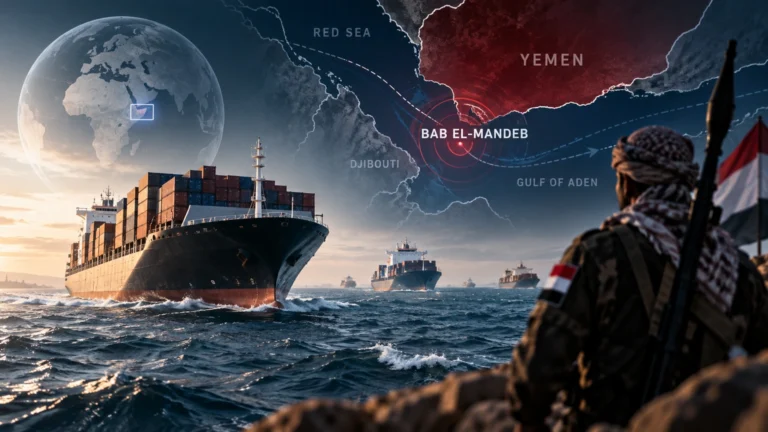
How did the danger to oil tankers in Hormuz escalate before these new warnings?
Iran’s latest warning followed weeks of uncertainty over commercial shipping. An earlier report explains what Iran claimed happened to two tankers and why those claims require careful verification.
Did Two Oil Tankers Hit Mines in the Strait of Hormuz—and Why Does It Matter?