Why Are Houthi Missiles Threatening Saudi Oil Facilities Again?

A missile aimed at an oil pipeline can matter to drivers thousands of miles away—even if it never hits.
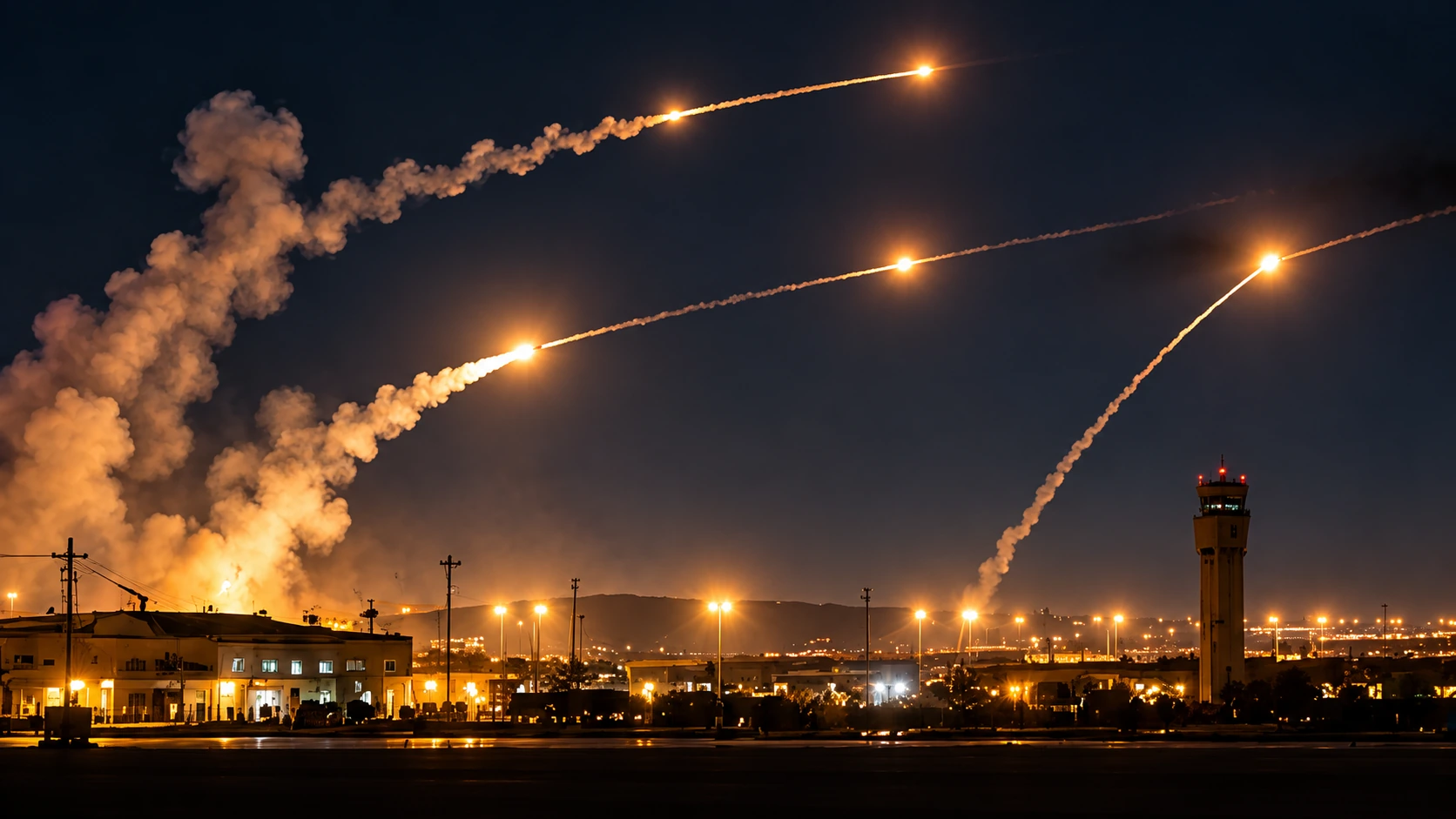
That is the uncomfortable question behind Yemen’s latest escalation. On October 24, 2026, the Houthi movement said it had attacked Saudi Arabian oil facilities, airports, and military sites. Saudi-led forces reported intercepting missiles, but Saudi authorities did not confirm that the oil facilities named by the Houthis had been struck. (Reuters · Al Jazeera)
So why threaten refineries and a cross-country pipeline in the first place? Because Saudi Arabia’s oil export network has become one of the region’s crucial alternatives to shipping through the dangerous Strait of Hormuz. A credible threat to that network can unsettle energy markets even before damage is established.
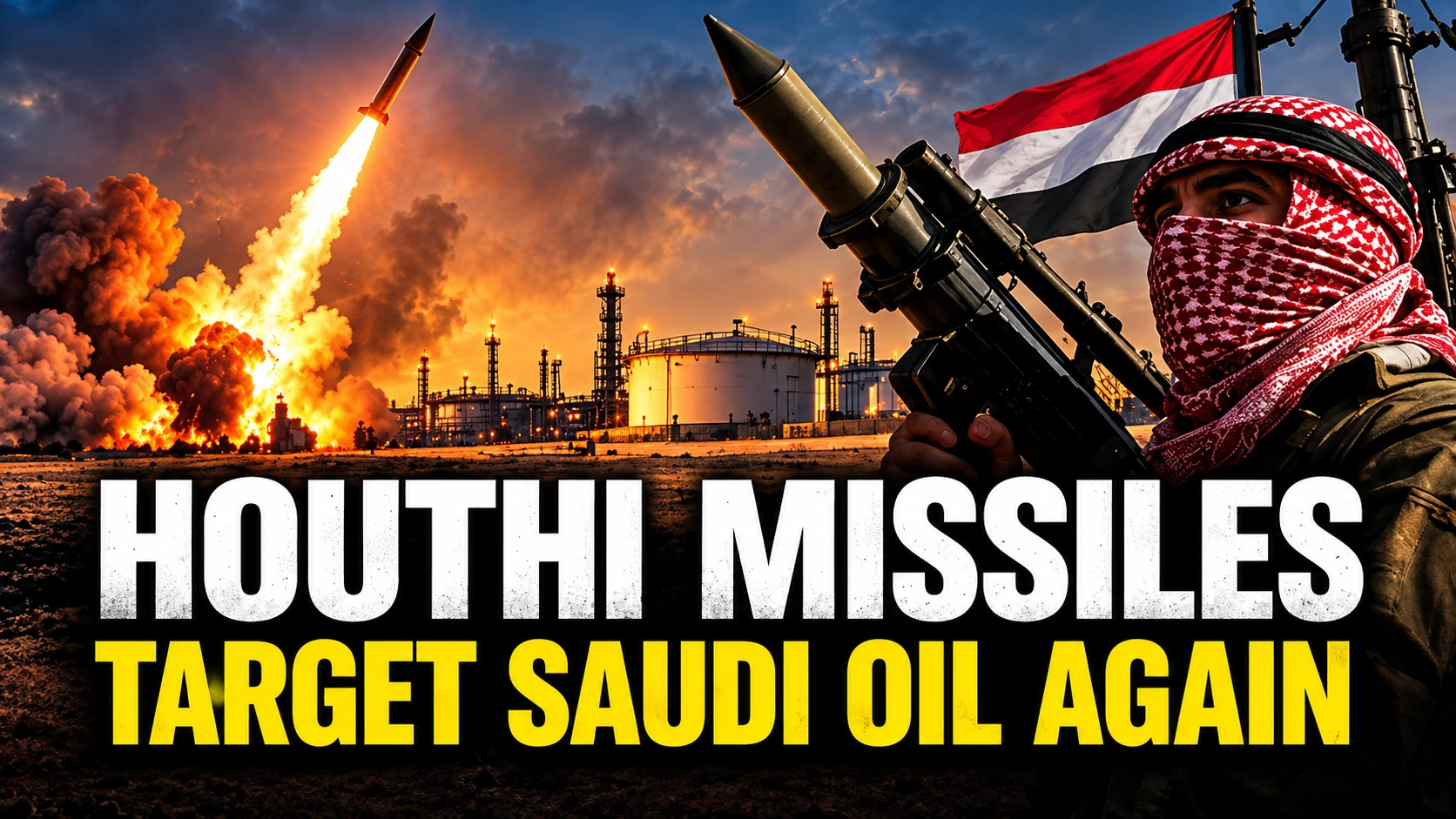
※ Images in this article are AI-generated illustrations created to help explain the story. They are not actual photographs, and depictions of people, places, or events may differ slightly from reality.
The key is to separate what the Houthis claimed, what Saudi authorities reported, and what remains unknown.
What Actually Happened on October 24?
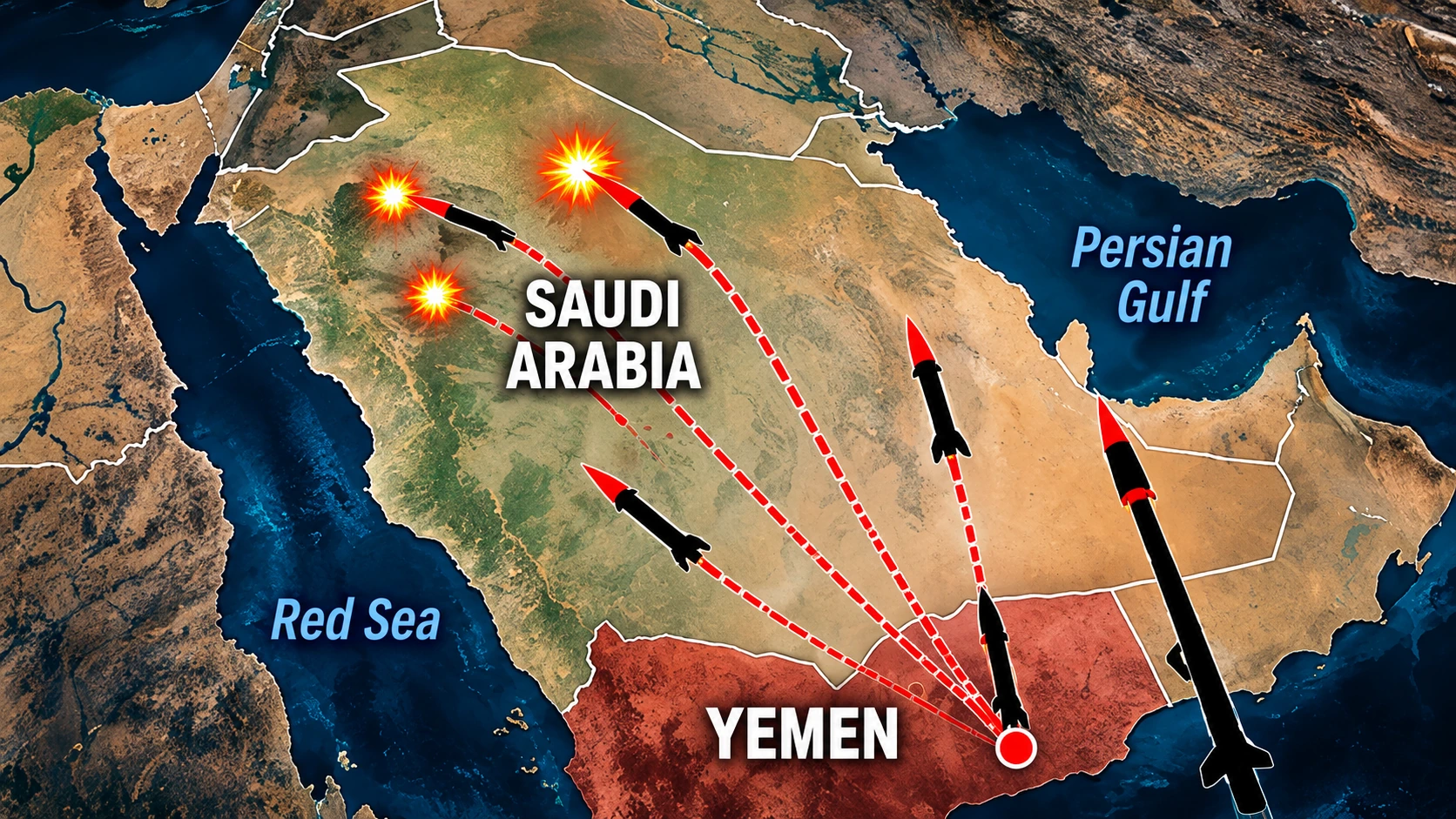
The confirmed news is an escalation in reported attacks and missile interceptions—not proof that every target the Houthis named was hit. Houthi military spokesperson Yahya Saree announced operations against several locations across Saudi Arabia on Saturday, October 24. Saudi-led forces said they had intercepted two ballistic missiles aimed toward Yanbu and Taif. (Reuters)
The targets listed by the Houthis included an Aramco facility in Yanbu, the Rabigh refinery, oil pumping stations, the East-West Pipeline, Riyadh’s King Khalid International Airport, Dammam’s King Fahd International Airport, Najran airport, and the Khamis Mushait air base. The group’s claims of successful strikes were not independently established. (Anadolu Agency · Reuters)
| What was reported | What can be established | What remains uncertain |
|---|---|---|
| Attacks on Saudi oil sites | Houthis publicly claimed the operations | Whether the named oil facilities were struck on October 24 |
| Missiles toward Yanbu and Taif | Saudi-led coalition reported intercepting two missiles | Whether other claimed attacks reached their targets |
| Falling missile debris | Saudi civil defense reported debris in several areas | Debris alone does not establish a hit on an oil facility |
| Attacks in Aden, Yemen | The internationally recognized Yemeni government reported missiles hitting coast guard buildings | The full scope of other competing target claims |
One detail shows why attribution matters: Saudi statements described threats to areas around the holy cities of Mecca and Medina, while the Houthis denied targeting those cities. These are competing accounts of intended targets, not a settled finding about the missiles’ destinations. (Al Jazeera)
Why Would the Houthis Target an Oil Pipeline?
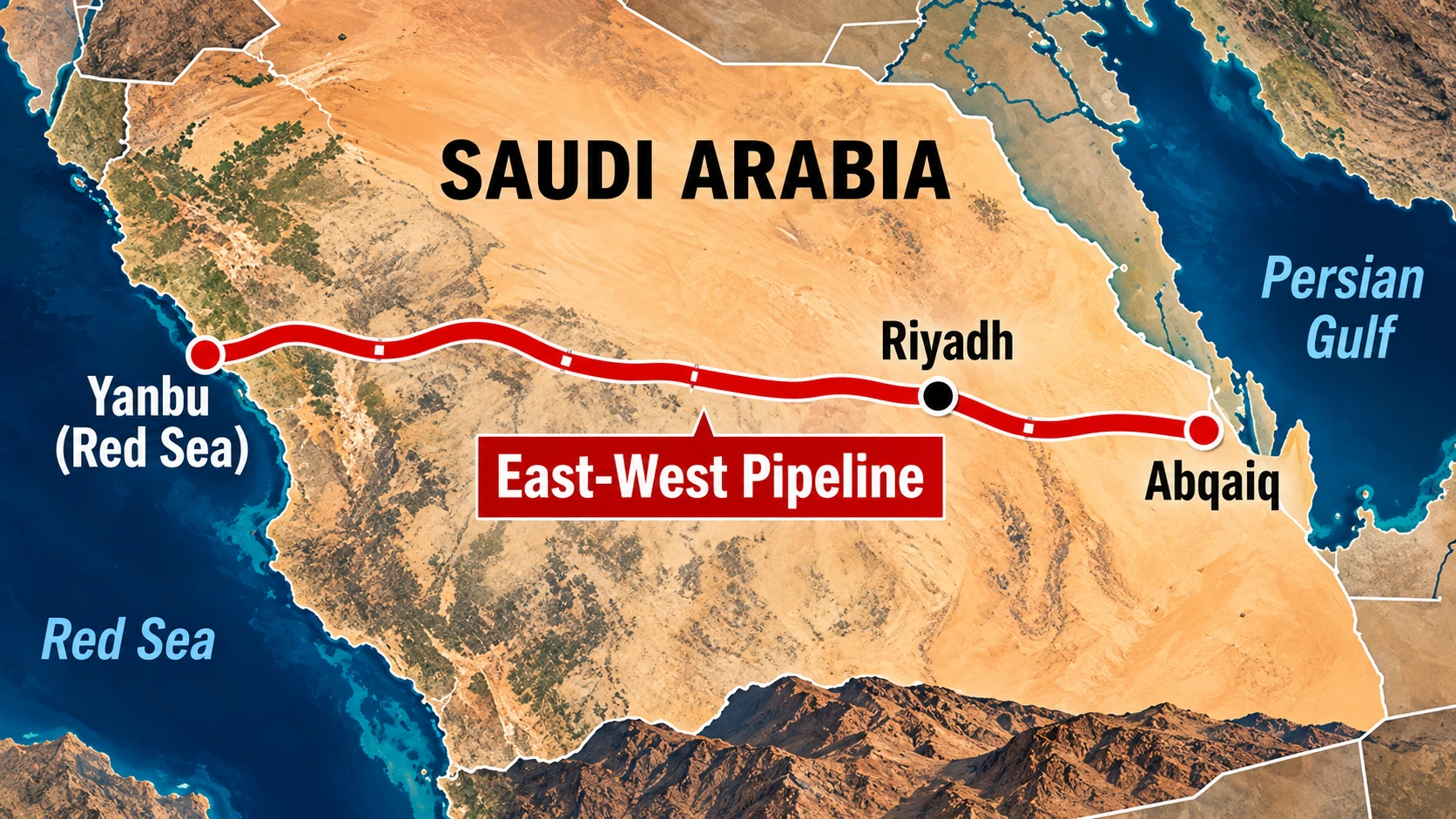
The pipeline matters because it lets Saudi Arabia move crude oil from its eastern producing region to the Red Sea without sending that oil through the Strait of Hormuz.
The East-West Pipeline, also called Petroline, runs across Saudi Arabia toward Yanbu, where crude can be loaded for export. Hormuz lies between Iran and Oman and normally serves as a critical exit from the Persian Gulf. Moving crude westward gives Saudi Arabia another route when Gulf shipping is restricted. (U.S. Energy Information Administration)
Think of a city with one crowded bridge. If that bridge becomes unsafe, a road around the city becomes extremely valuable. Saudi Arabia’s pipeline is that alternative road. But once it carries more of the traffic, a threat against the road becomes more consequential.
There is a second geographic complication. Yanbu is on the Red Sea, while the Bab el-Mandeb Strait lies farther south between Yemen and the Horn of Africa. The southern passage has also faced attacks and shipping disruption. A pipeline can bypass one maritime bottleneck without eliminating every danger along the broader export journey. (U.S. Energy Information Administration)
This is why the reported Yanbu and pipeline threats draw attention beyond the immediate fighting in Yemen. They touch the network Saudi Arabia uses to keep crude exports moving during the wider regional crisis.
Why Is Saudi Arabia Fighting the Houthis Again?
The fighting has returned because the political conflict inside Yemen was never fully resolved. A UN-brokered truce in 2022 sharply reduced large-scale violence, but it did not produce a lasting settlement between the Houthis and the internationally recognized Yemeni government backed by Saudi Arabia. By 2026, the conflict had expanded again. (United Nations)
A short timeline helps explain the long gap between these events:
| Period | What changed | Why it matters now |
|---|---|---|
| 2014 | Houthis took control of Sana’a, Yemen’s capital | Yemen’s rival centers of power became entrenched |
| 2015 | Saudi Arabia began leading a military intervention against the Houthis | The Yemeni civil war became a regional confrontation |
| 2022 | A UN-mediated truce reduced cross-border fighting | Relative calm did not resolve the underlying dispute |
| July–October 2026 | Fighting and cross-border attacks intensified again | Saudi infrastructure and Yemeni cities faced renewed threats |
The Houthis, also known as Ansar Allah, control Sana’a and substantial territory in northwestern Yemen. The internationally recognized government is based in Aden in the south and receives Saudi backing. Neither side controls the entire country. (United Nations · Reuters)
In October, UN special envoy Hans Grundberg warned that Yemen had returned to full-scale war across multiple fronts. The current Saudi-Houthi confrontation is therefore part of a deeper conflict over Yemen’s territory, political authority, and foreign military involvement—not merely an isolated dispute over oil facilities. (United Nations)
Why Was Aden Also Attacked?

Aden is the seat of Yemen’s internationally recognized government. The Houthis regard the Saudi-backed forces operating there as part of the same conflict they are fighting across the border.
On October 24, Yemeni government officials said three Houthi ballistic missiles struck coast guard facilities in Aden, damaging a headquarters and another building. The Houthis said their intended targets were Saudi-backed military gatherings and a naval base. The differing descriptions do not establish that all of those military targets were hit as claimed. (Reuters)
Separately, Yemen’s Transport Ministry accused the Houthis of targeting Aden International Airport with two ballistic missiles and said it was the fourth such airport attack that month. These reports come from different accounts and should not be added together into a single confirmed missile total without further verification. (Al Jazeera)
The distinction matters for civilians. An airport can serve as vital transport infrastructure even when armed groups allege nearby military use. Damage, flight suspensions, and danger to passengers must be established separately from a claim that a military target was intended.
How Does the U.S.–Iran War Connect to Yemen’s Escalation?

The U.S.–Iran war has made Yemen’s unresolved conflict more dangerous by adding pressure across the region. But an Iran-aligned group is not the same thing as a force proven to be acting under Tehran’s direct orders in every operation.
U.S. and Israeli military strikes against Iran began on February 28, 2026, according to the UN secretary-general. The Houthis subsequently entered the wider confrontation, while the Saudi-Houthi conflict intensified during the summer. (UN Secretary-General · UN Special Envoy for Yemen)
For Washington, the risks overlap: military confrontation with Iran, threats to shipping through Hormuz and the Red Sea, and renewed attacks on Saudi energy infrastructure. The conflict inside Yemen has its own history and local actors, even as events elsewhere make escalation more likely.
The Houthis say their current Saudi attacks are retaliation for Saudi military action in Yemen. Saudi Arabia and the Yemeni government describe Houthi strikes as threats to security and infrastructure. Both positions should be understood as the parties’ stated accounts; they do not independently resolve responsibility for each alleged strike. (Anadolu Agency · Al Jazeera)
Could These Attacks Raise U.S. Gasoline Prices?
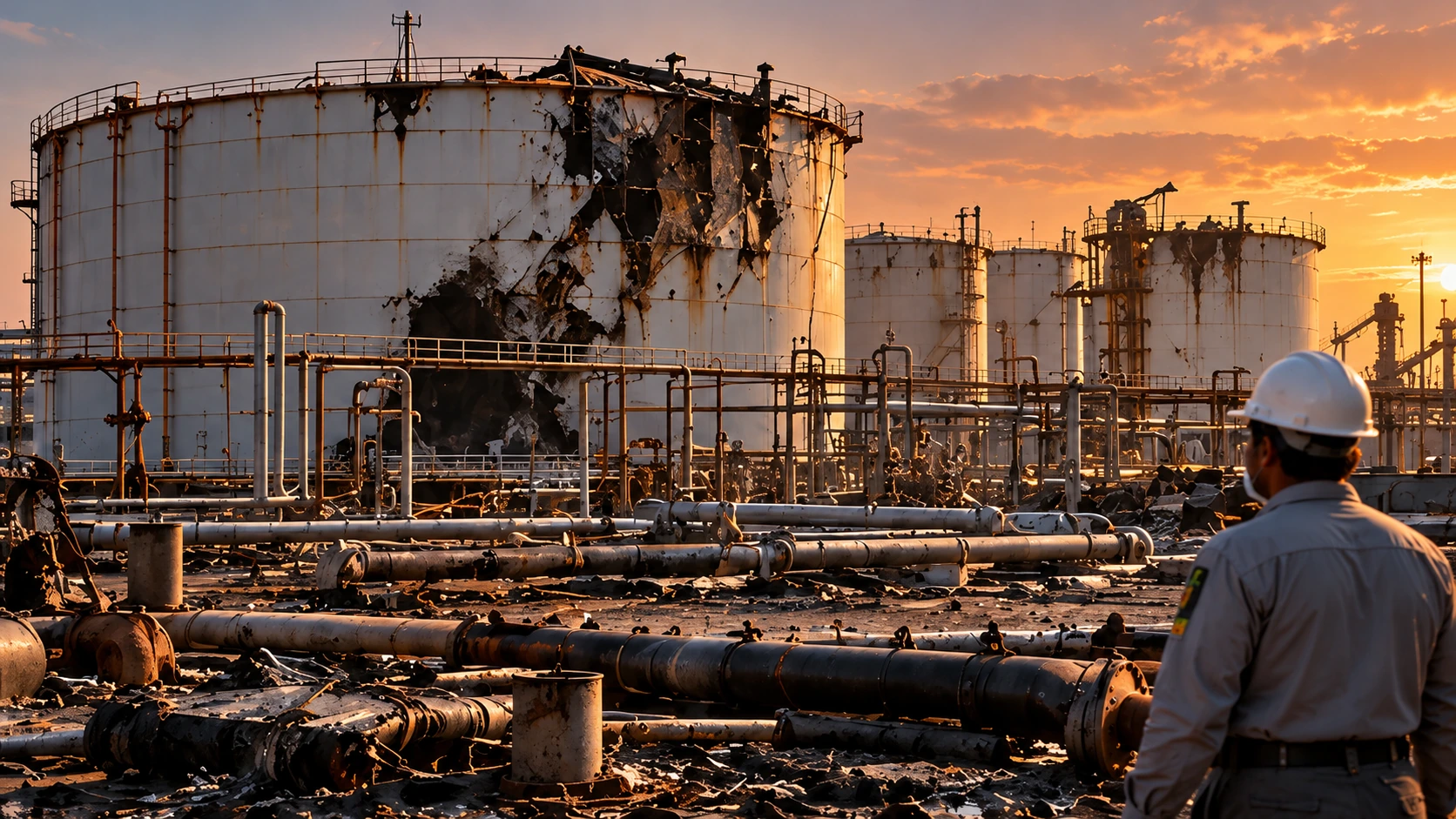
Yes, a sustained disruption to Saudi oil exports could affect U.S. gasoline prices. But the October 24 claims alone do not show that a new supply interruption occurred or that U.S. pump prices rose because of them.
The underlying connection is straightforward: crude oil trades in an interconnected international market, and crude is the largest component of the typical U.S. retail gasoline price. Supply disruptions, refinery costs, taxes, and local conditions all affect what drivers eventually pay. (U.S. Energy Information Administration)
There is a recent real-world example. In its October 6 outlook, the U.S. Energy Information Administration said earlier attacks on the East-West Pipeline in September temporarily interrupted a key export route. Before those attacks, the agency estimated that more than 5 million barrels per day of crude were moving through the route for export via Yanbu. Brent crude reached as high as $131 per barrel on September 15 as buyers sought replacement supplies. The agency reported that the pipeline had partially resumed flows by September 22. (U.S. Energy Information Administration)
Those are September events, not confirmed effects of the October 24 attack claims. They explain why the newest threats can be taken seriously even before physical damage is verified.
There are several ways the costs could spread if attacks persist:
- A refinery or pipeline outage could reduce available crude or refined product supplies.
- Tankers might face higher insurance premiums, longer routes, or delays even without a successful strike.
- Those costs could increase the delivered price of oil, with some effects eventually reaching gasoline and diesel markets.
The EIA’s October outlook specifically pointed to higher tanker costs, insurance expenses, and shipping detours as pressures on oil prices. None of this provides a reliable dollar-per-gallon estimate for the October 24 incidents alone. (U.S. Energy Information Administration)
What Would Show That the Threat Has Become a Wider Oil Crisis?
The first question is whether independent evidence confirms damage or a sustained shutdown at the sites identified on October 24. A statement that an attack was launched is not equivalent to a verified loss of oil production or exports.
Beyond that, several developments would change the assessment: official Saudi Aramco operating updates; credible reports on crude movements through Yanbu; shipping disruptions in the Red Sea; and additional missile interceptions or strikes affecting infrastructure.
Diplomacy also matters. On October 21, UN special envoy Hans Grundberg emphasized that a negotiated, Yemeni-led settlement remained vital. Renewed cross-border fighting and continuing regional war would make that effort harder. (UN Special Envoy for Yemen)
For American drivers, an immediate reaction to a headline is less informative than evidence of how much oil actually stops moving, how long the disruption lasts, and whether other routes can compensate.
Bottom Line: What This Story Really Means
The Houthis claimed new attacks against Saudi oil infrastructure and airports on October 24, 2026. Saudi-led forces reported intercepting missiles, and Yemen’s internationally recognized government reported additional missile attacks in Aden. The key uncertainty is whether the Saudi oil facilities named in the Houthi claims were actually hit.
The oil facilities matter because Saudi Arabia’s East-West Pipeline and its Red Sea export terminals provide an alternative to the Strait of Hormuz during a dangerous regional conflict. September’s documented pipeline disruption showed how much global markets can react when that route is interrupted.
The latest reports therefore present two different stories: the military escalation that has already been reported, and an energy-supply disruption that has not yet been established for October 24. Keeping them separate is essential to understanding whether this will become a bigger economic problem.
Houthi Attacks on Saudi Oil Facilities: Key Questions Explained
Q. Did the Houthis actually hit Saudi oil facilities on October 24, 2026?
That was not confirmed in the initial reporting. The Houthis claimed attacks on several facilities, while Saudi-led forces reported missile interceptions and authorities did not verify the claimed oil-site hits.
Q. Which Saudi oil locations did the Houthis say they targeted?
They named an Aramco facility at Yanbu, the Rabigh refinery, crude pumping stations, and the East-West Pipeline, along with airports and military sites.
Q. What is the East-West Pipeline used for?
It carries Saudi crude across the country toward the Red Sea port of Yanbu, helping exports bypass the Strait of Hormuz.
Q. Did the October 24 reports prove the East-West Pipeline was shut down again?
No. An earlier interruption in September was documented by the EIA, but a new October 24 shutdown had not been established by the available reporting.
Q. Who are the Houthis, and which part of Yemen do they control?
The Houthis, also called Ansar Allah, are an Iran-aligned Yemeni movement that controls Sana’a and much of northwestern Yemen. The internationally recognized government operates from Aden.
Q. Why does the Bab el-Mandeb Strait matter to Saudi oil exports?
It is the southern gateway between the Red Sea and the Gulf of Aden. Threats to shipping there can complicate some Red Sea voyages even when oil has bypassed Hormuz by pipeline.
Q. Is Iran known to have ordered the October 24 Houthi attacks?
The reporting cited here does not establish that. The Houthis are aligned with Iran, but alignment is not proof of direct Iranian command over a specific operation.
Q. Will American gasoline prices immediately rise because of these reports?
Not necessarily. A lasting export disruption or higher transport costs could add price pressure, but a claimed attack alone does not prove a supply loss or establish a pump-price effect.
Did this help make the story clearer? 🙂 WIN keeps unpacking the “why” behind the news—clearly and simply!
Sources
October 24 Claims, Interceptions, and Aden Reports
Reuters — Houthis say they targeted Saudi oil sites; attacks reported in Aden (October 24, 2026)
Al Jazeera — Houthis launch attacks on Saudi Arabia and Yemen’s Aden (October 24, 2026)
Anadolu Agency — Houthis claim attacks on Saudi airports and oil facilities (October 24, 2026)
Yemen’s War and Regional Escalation
United Nations — Yemen has returned to full-scale war, special envoy warns (October 9, 2026)
UN Secretary-General — February 28 remarks on U.S. and Israeli strikes against Iran
UN Special Envoy for Yemen — Diplomatic meetings on de-escalation (October 21, 2026)
Oil Export Routes and U.S. Fuel Prices
U.S. EIA — October 6, 2026 Short-Term Energy Outlook: Global Oil Markets
U.S. EIA — Saudi Arabia country analysis: East-West Pipeline and export routes
U.S. EIA — World Oil Transit Chokepoints
U.S. EIA — Factors Affecting Gasoline Prices
Keep Reading
Why Was Saudi Arabia’s Oil Export Backup Already Under Pressure?
The October 24 threats involve a pipeline that had faced an earlier, documented disruption. The previous episode explains how the bypass works and why identifying the attacker matters.
Saudi Arabia Built a Pipeline to Bypass Hormuz—So Why Is Its Oil Route Still at Risk?
Why Has Aden Become a Repeated Target in Yemen’s War?
The latest reports from Aden follow an earlier missile attack on the city’s presidential complex. That episode helps explain the dispute over military and political targets in the government’s southern stronghold.
Why Did the Houthis Attack Yemen’s Presidential Palace—and Why Is Saudi Arabia Involved?