Why Did Trump Endorse Netanyahu Now—and Could It Change Israel’s Election?

Wasn’t Donald Trump reluctant to back Benjamin Netanyahu just a few days ago?
He was. For months, the U.S. president had avoided giving Israel’s prime minister the one political favor Netanyahu clearly wanted: a public endorsement before a closely contested election.
Then Trump changed course.
On October 18, 2026, just nine days before Israelis head to the polls, Trump publicly endorsed Netanyahu and praised him as a wartime leader and American partner against Iran. (Reuters · AP)
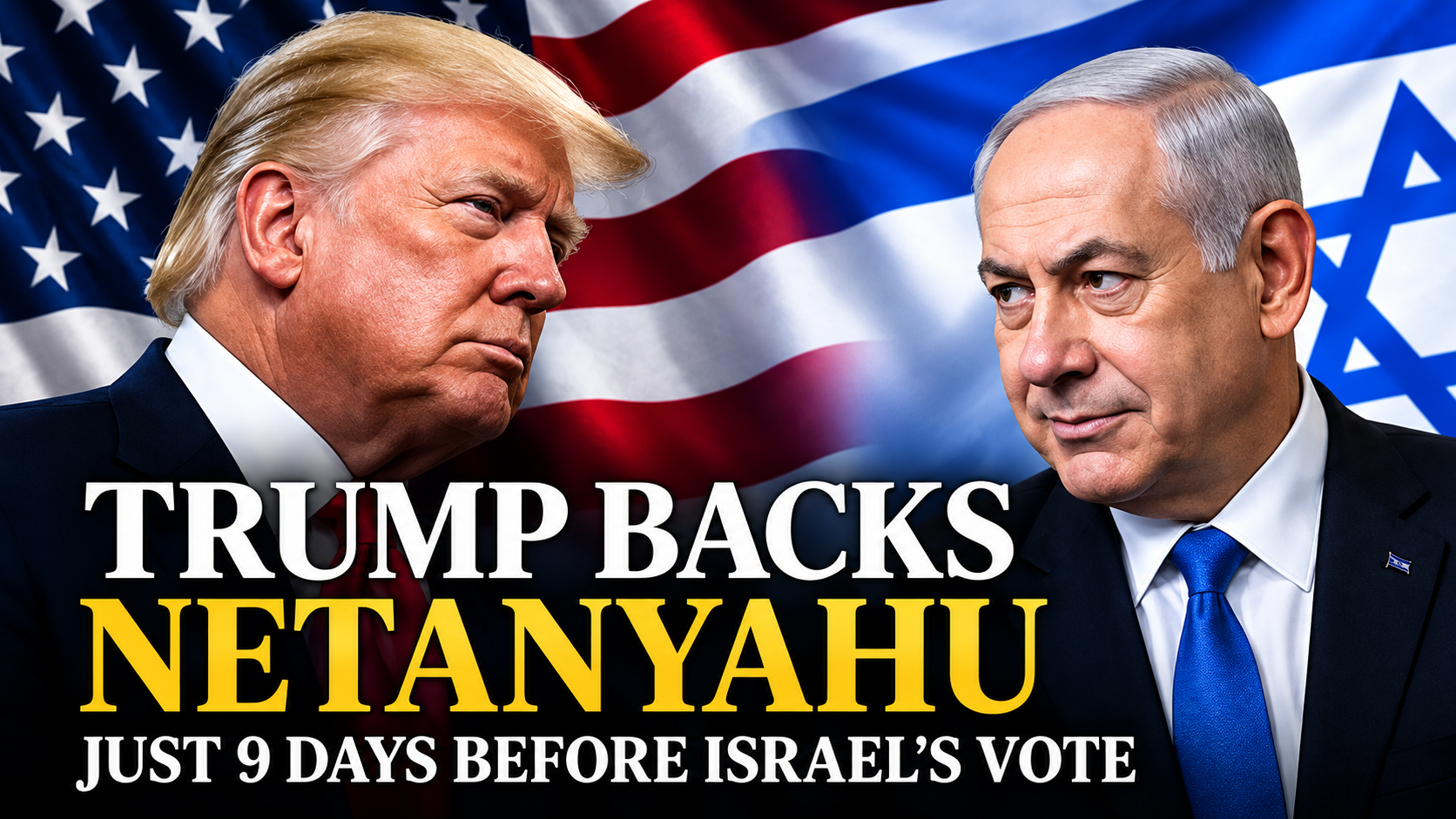
※ Images in this article are AI-generated illustrations created to help explain the story. They are not actual photographs, and depictions of people, places, or events may differ slightly from reality.
That sounds like a straightforward endorsement between two longtime allies.
But it comes after disagreements over the war with Iran, questions about Netanyahu’s political future, and weeks in which Trump seemed unwilling to commit himself.
There is another complication: Israelis do not directly elect their prime minister. Their votes determine the makeup of parliament, and the next government depends on which parties can work together.
That means Trump’s endorsement may help Netanyahu politically without giving him the parliamentary support he needs to remain in office.
What Did Trump Actually Announce on October 18?
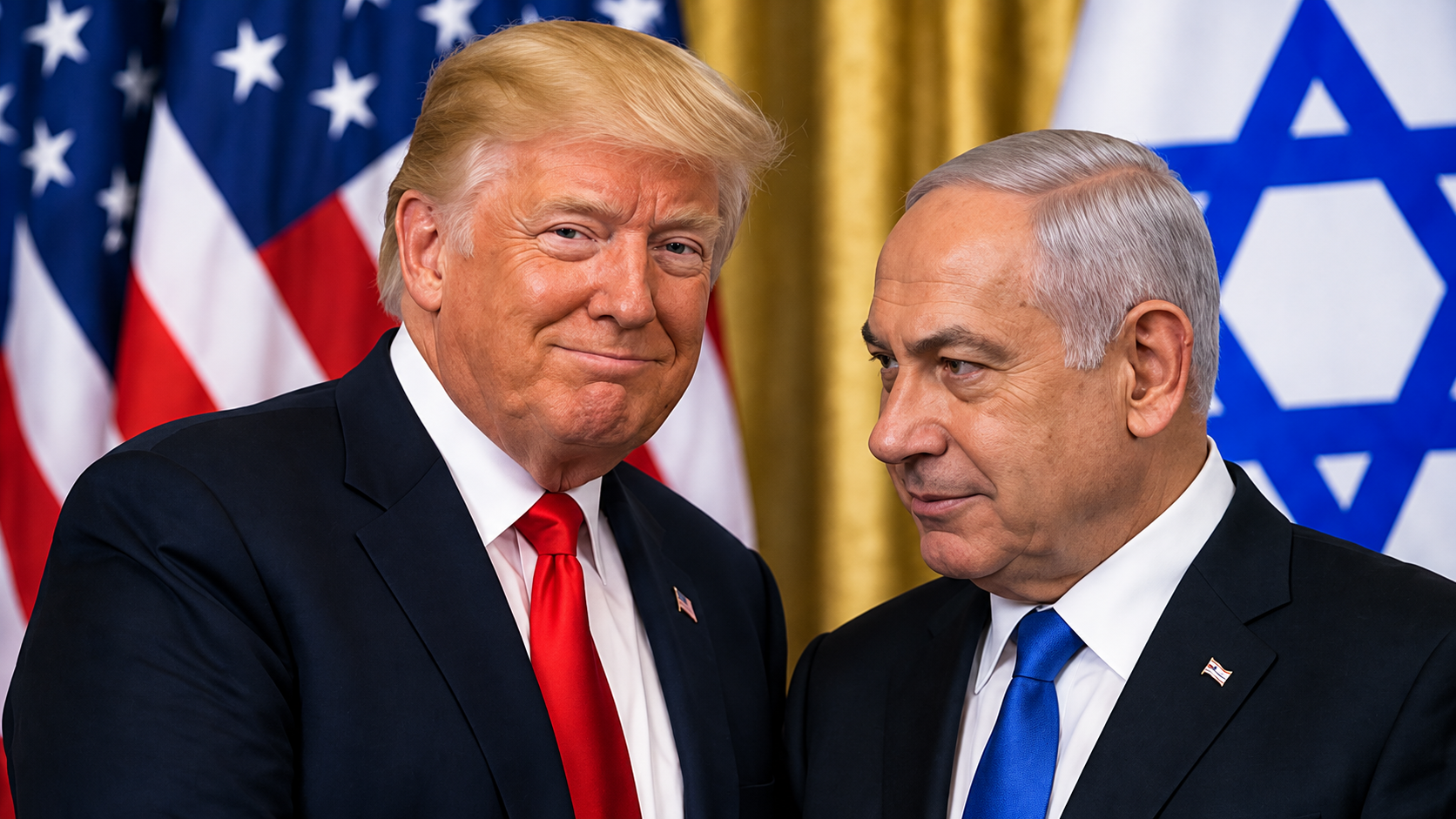
Trump explicitly endorsed Netanyahu’s reelection campaign in a statement posted on Truth Social. He did more than praise the Israeli leader or describe their friendship.
Trump called Netanyahu a strong and capable leader, emphasized their cooperation against Iran, and offered his “Complete and Total Endorsement.”
He also suggested that Israel choosing a different leader could leave the United States carrying more of the burden of confronting Iran. That was Trump’s political argument—not an independently established prediction about what a new Israeli government would do. (Reuters · AP)
The wording was striking because of what had happened immediately before it.
| Date | Trump’s public position | Why it matters |
|---|---|---|
| October 1 | Avoided directly endorsing Netanyahu in an interview | Showed that support was not automatic |
| October 13 | Said he might endorse someone but made no commitment | Kept his options open |
| October 18 | Explicitly endorsed Netanyahu | Gave Netanyahu the public backing he had wanted |
| October 27 | Scheduled Israeli parliamentary election | Voters and later coalition negotiations determine the outcome |
The earlier hesitation was documented by AP’s October 1 reporting and The Jerusalem Post’s October 13 account.
What changed on October 18 was Trump’s public political commitment.
It did not establish that every disagreement between Washington and Netanyahu had been resolved, and it did not constitute a formal change in U.S. policy.
So why had Trump withheld that commitment for so long?
Why Did Trump Wait Until Nine Days Before the Election?
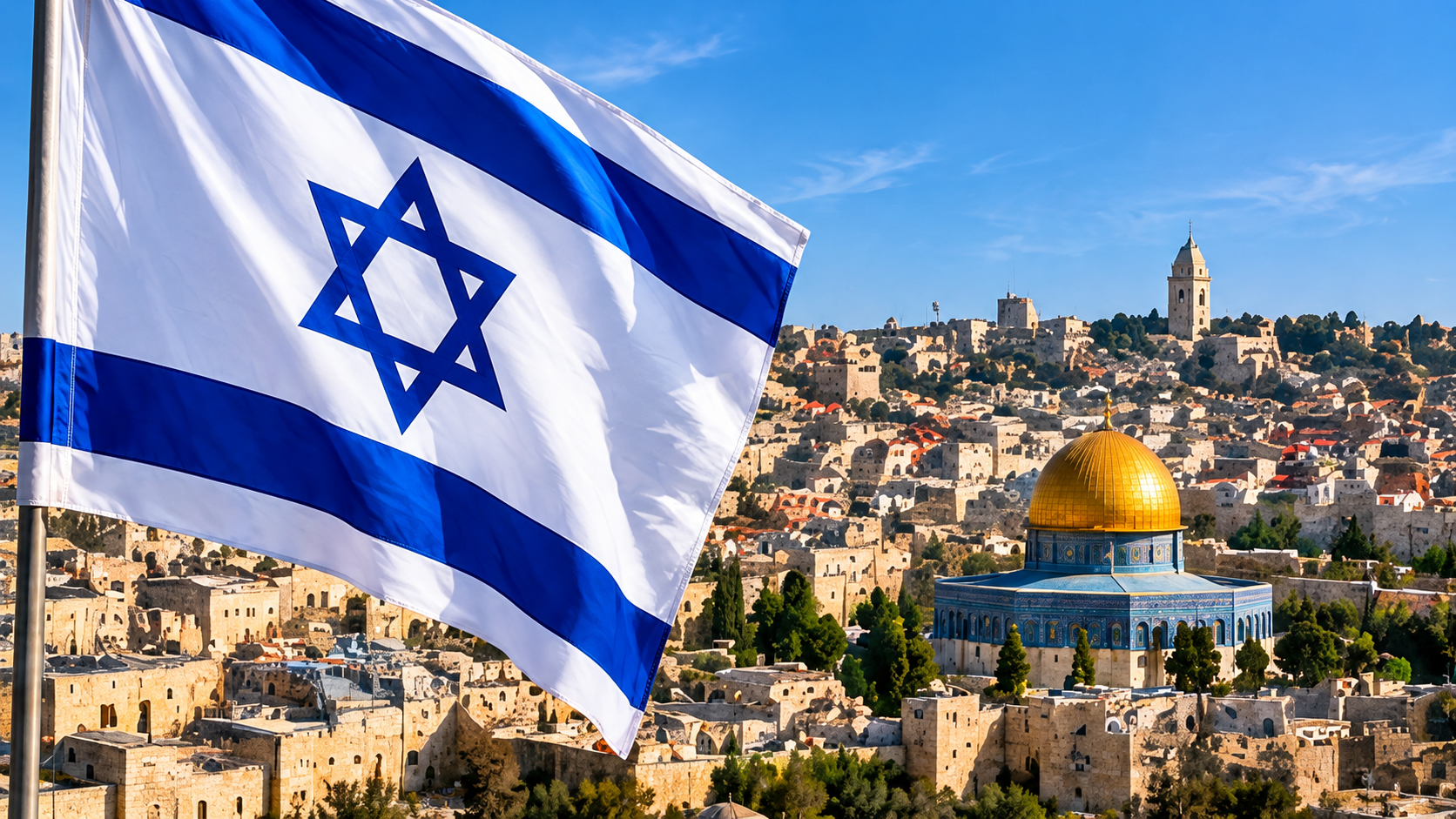
The delay reflected a relationship that remained strategically close but had become politically and militarily complicated.
Trump and Netanyahu have been closely associated for years. Netanyahu has repeatedly presented his access to Trump as an important asset for Israel.
Their partnership became even more consequential after U.S. and Israeli forces launched major military operations against Iran on February 28, 2026.
Yet cooperating in a war did not mean the two leaders agreed on how that war should continue or end.
AP reported that Trump had withheld his endorsement for months while their approaches to the Middle East diverged. Their disagreements included Iran and broader regional negotiations involving Gaza and Hezbollah. (AP)
Earlier reporting also suggested that Trump’s hesitation was connected to Netanyahu’s electoral difficulties.
In August, Axios reported that Trump had been reluctant to endorse Netanyahu while the Israeli prime minister faced a difficult campaign and disagreements with Washington. (Axios)
Those factors help explain why the endorsement was not automatic.
But there is an important limit to what can be concluded.
Trump has not publicly established a single definitive reason for choosing October 18. It would therefore be misleading to claim that a secret deal, a particular opinion poll, or one private conversation caused his decision.
What is clear is that the endorsement arrived when Netanyahu had very little time left to use it.
For Netanyahu, receiving Trump’s backing with nine days remaining was better than entering the election without it.
For Trump, the decision turned his previously ambiguous relationship with Netanyahu’s reelection campaign into an unmistakable public commitment.
Why Does Iran Matter So Much to This Endorsement?
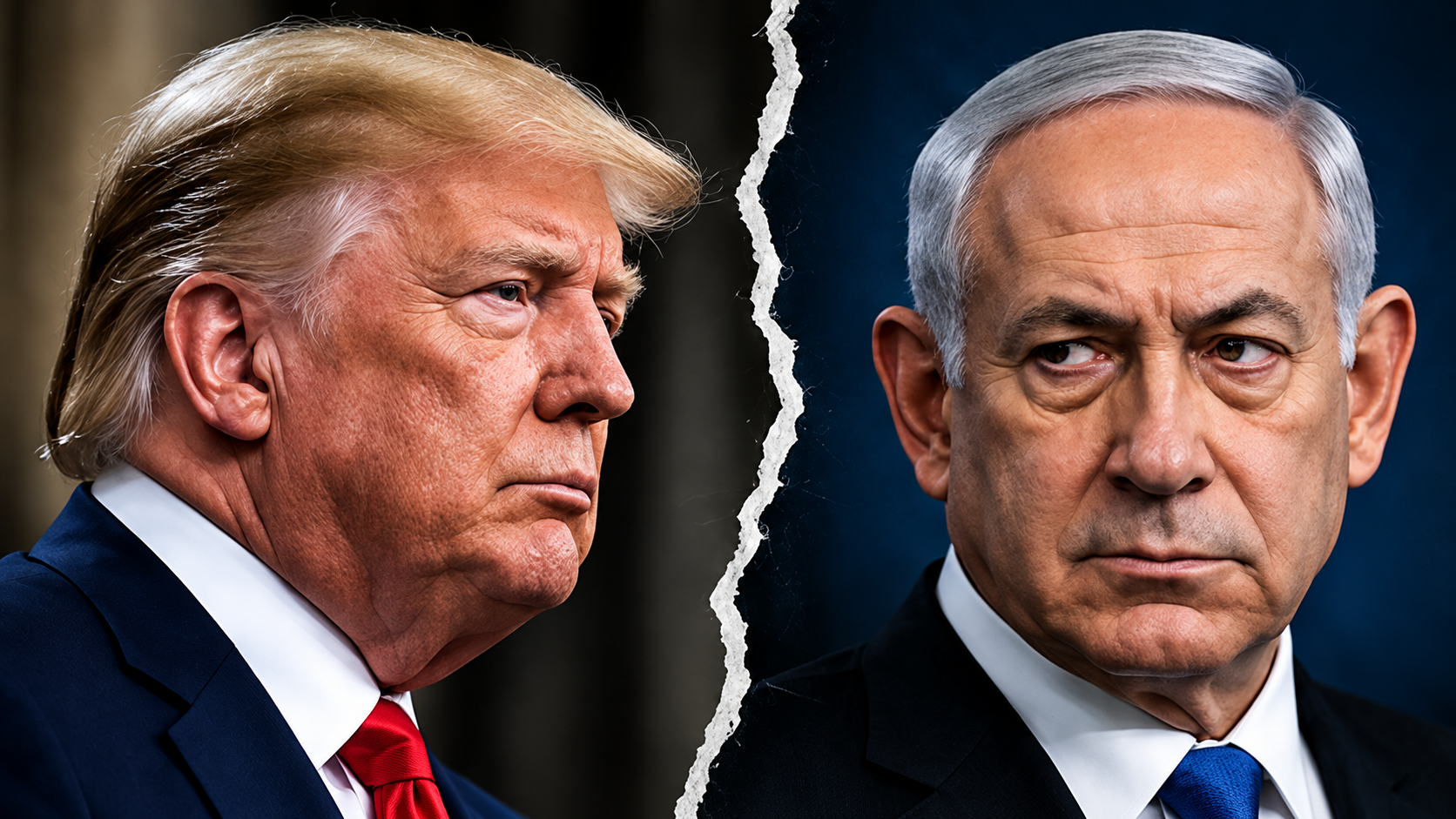
Iran is central because Trump framed Netanyahu’s leadership as important to America’s own security interests.
The U.S.-Israeli campaign against Iran began in February 2026 and has had major regional consequences, including disruptions to energy markets and prolonged military tensions.
Trump praised Netanyahu’s role in that confrontation when he endorsed him. (Reuters)
But the shared objective of constraining Iran has not eliminated differences over what should happen next.
On October 13, Axios reported that the two leaders had discussed the possibility of renewed major military operations against Iran before the Israeli and American elections.
The report cited officials and other sources familiar with the discussions. A White House official disputed the account that Trump and Netanyahu had discussed restarting the war, while Netanyahu’s office declined to discuss the content of their conversations. (Axios)
The disagreement over that reporting matters.
It shows why a political endorsement cannot be treated as proof that a military decision has been reached.
There are three separate questions:
| Question | What is established? |
|---|---|
| Does Trump support Netanyahu politically? | Yes. He explicitly endorsed him on October 18. |
| Do Washington and Netanyahu share concerns about Iran? | Yes. Their governments have cooperated militarily against Iran. |
| Does the endorsement authorize a new military operation? | No. The endorsement itself announces no such authorization. |
This distinction matters for Americans as well as Israelis.
A further escalation could affect U.S. military personnel, regional security, oil shipping and energy prices. Diplomatic negotiations, by contrast, would depend on decisions that extend far beyond an Israeli election endorsement.
Trump’s statement shows whom he wants leading Israel.
It does not settle what Washington will do next about Iran.
Could Netanyahu Win the Election but Still Lose the Prime Minister’s Office?
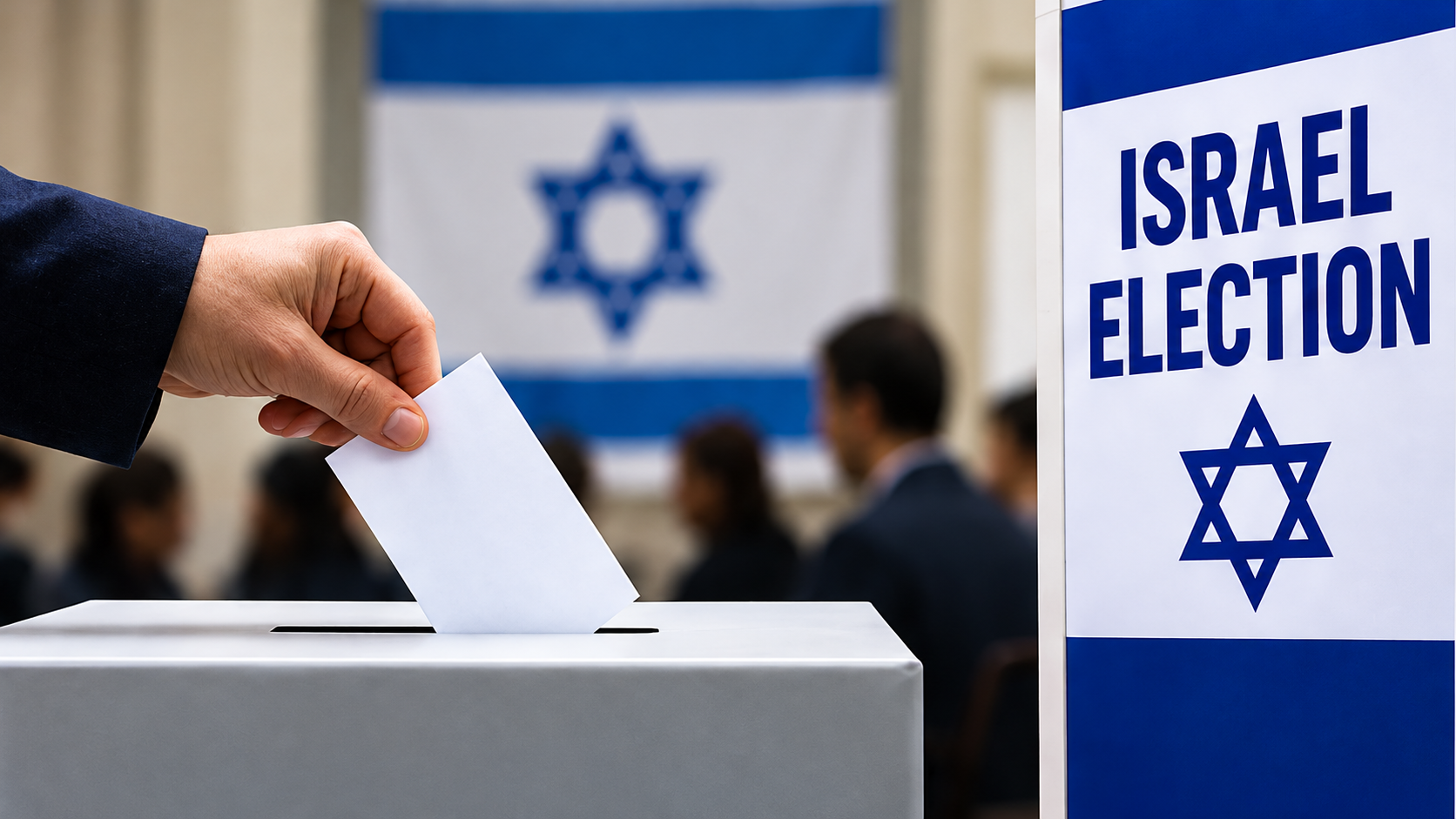
Yes. A party can win more seats than any other party and still be unable to form a government.
That is one of the most important differences between Israeli and American elections.
In a U.S. presidential election, voters choose presidential electors through state elections, and the Electoral College determines who becomes president.
Israel operates differently.
Voters choose political party lists for the 120-seat Knesset, Israel’s parliament. The prime minister emerges through the parliamentary government-formation process rather than a separate nationwide vote for that office.
The country’s Basic Law establishes that the government serves through the confidence of the Knesset. (Knesset)
Why does everyone talk about 61 seats?
Because 61 is a majority of the 120-member Knesset.
After the election, parties usually negotiate alliances and seek enough parliamentary support to form a viable government.
Consider a simplified example.
Suppose Party A wins 25 seats, more than any other party.
If other parties refuse to join or support its government, being the largest party may not be enough.
Meanwhile, Party B might win only 22 seats but assemble a broader coalition with other parties. Its leader could then become prime minister.
These numbers are hypothetical examples, not predictions for October 27.
Technically, an Israeli government obtains office through a Knesset confidence vote, and a minority government can be possible under certain voting circumstances. But 61 seats remains the clearest benchmark for a dependable parliamentary majority.
Another factor is the electoral threshold.
A party generally must win at least 3.25% of the valid vote to qualify for representation in parliament. A small party that narrowly fails to qualify can therefore change how seats are distributed among larger parties. (Knesset)
This is why election-night headlines about the largest party may not tell Americans who will actually govern Israel.
Netanyahu needs parliamentary partners, not just Trump’s approval.
Who Is Netanyahu Facing—and What Are Israelis Really Voting About?
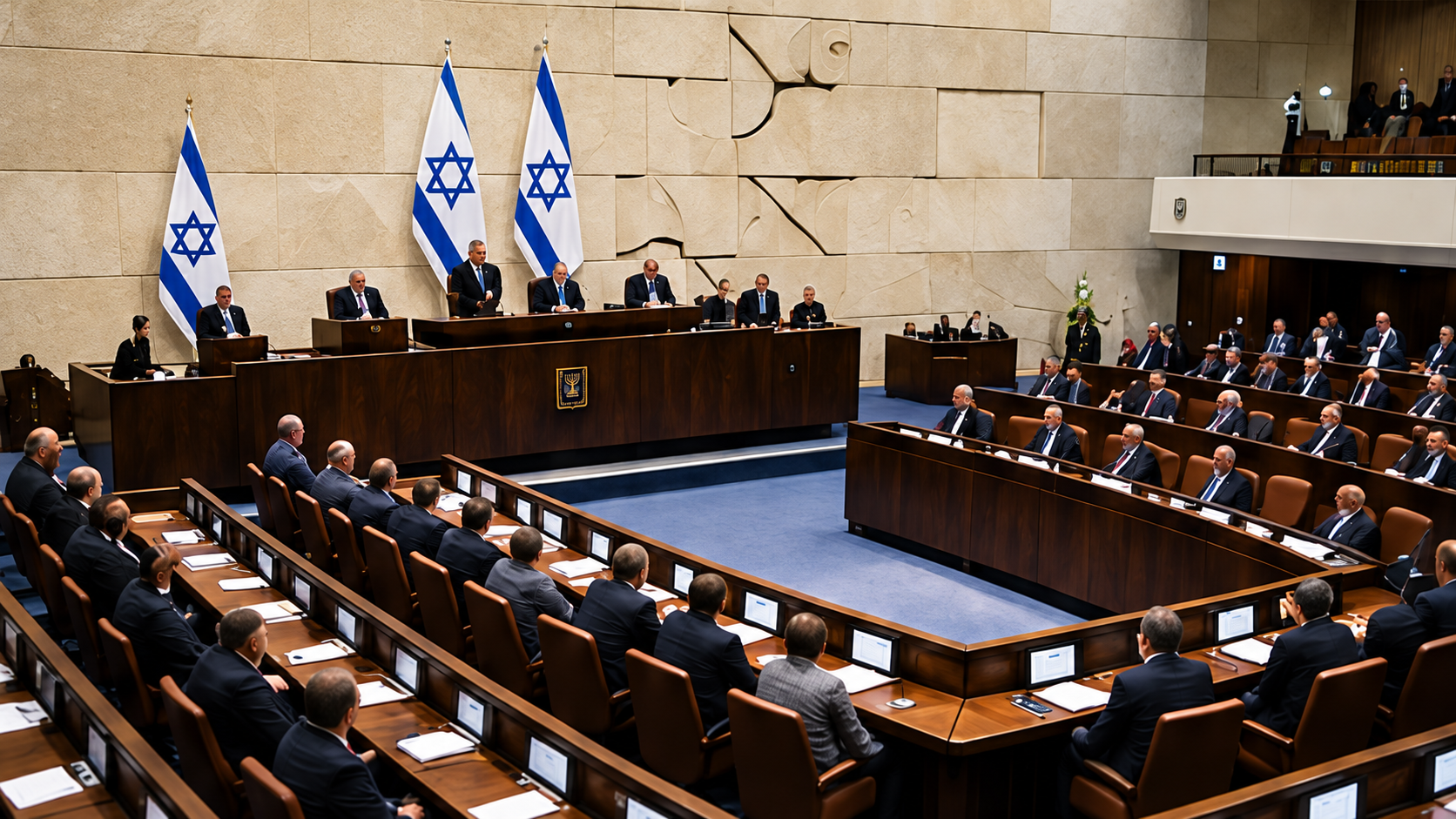
This is not simply a referendum on whether Israelis like Donald Trump.
The October 27 election is also a judgment on Netanyahu’s leadership after the October 7, 2023 Hamas-led attack and the wars that followed.
Netanyahu’s central argument is that his government has confronted severe security threats and that he remains a strong leader capable of protecting Israel.
His opponents argue that the government should be held accountable for the failures preceding the October 7 attack and for decisions made afterward.
AP reported that the attack has become a central campaign issue for both sides, with sharply different accounts of responsibility, military achievements and national recovery. (AP)
Who is Gadi Eisenkot?
One of Netanyahu’s most prominent rivals is Gadi Eisenkot, a former Israeli military chief of staff who leads the Yashar party.
Eisenkot served in a wartime government formed after the October 2023 attack but later left it, criticizing Netanyahu’s strategy.
His campaign emphasizes government accountability, institutional repair and security leadership. Former Prime Minister Naftali Bennett and other opposition figures are also competing for parliamentary seats and influence over the next government. (The Guardian)
What are the central campaign issues?
Several disputes are intertwined.
| Issue | Netanyahu’s political argument | Opposition concerns |
|---|---|---|
| National security | His leadership has strengthened Israel against regional threats | The government must answer for security failures and wartime decisions |
| October 7 accountability | Netanyahu disputes claims that responsibility rests primarily with him | An independent inquiry and greater accountability are needed |
| Government stability | Experienced leadership and existing alliances offer continuity | A different coalition could change how Israel is governed |
| Military service | The coalition has faced disputes over exemptions for ultra-Orthodox men | Several rivals seek broader military service obligations |
The parties are not identical within either camp, and views vary significantly on security, religion, Palestinian issues and institutional reform. (AP)
Netanyahu also remains a defendant in a long-running domestic corruption trial. He denies wrongdoing, and the case had not reached a verdict at the time of Trump’s endorsement. The election does not automatically terminate that judicial process. (The Times of Israel)
Why could smaller parties matter so much?
Recent polling has shown a highly fragmented contest.
On October 18, The Jerusalem Post reported that four recent polls placed Eisenkot’s Yashar party ahead of Netanyahu’s Likud, while the main competing political blocs remained close and neither approached a 61-seat majority on its own. These were pre-election estimates, not results. (The Jerusalem Post)
Arab-led parties may also have enough seats to influence the parliamentary balance.
Yet political barriers are substantial. AP reported that Netanyahu and leading opposition figures had ruled out governing partnerships with Arab-led parties, raising the possibility of a prolonged coalition stalemate. (AP)
This produces an unusual situation.
Trump may help Netanyahu make his case to voters while doing relatively little to resolve the arithmetic of the next government.
Can Trump’s Endorsement Actually Change the Election?
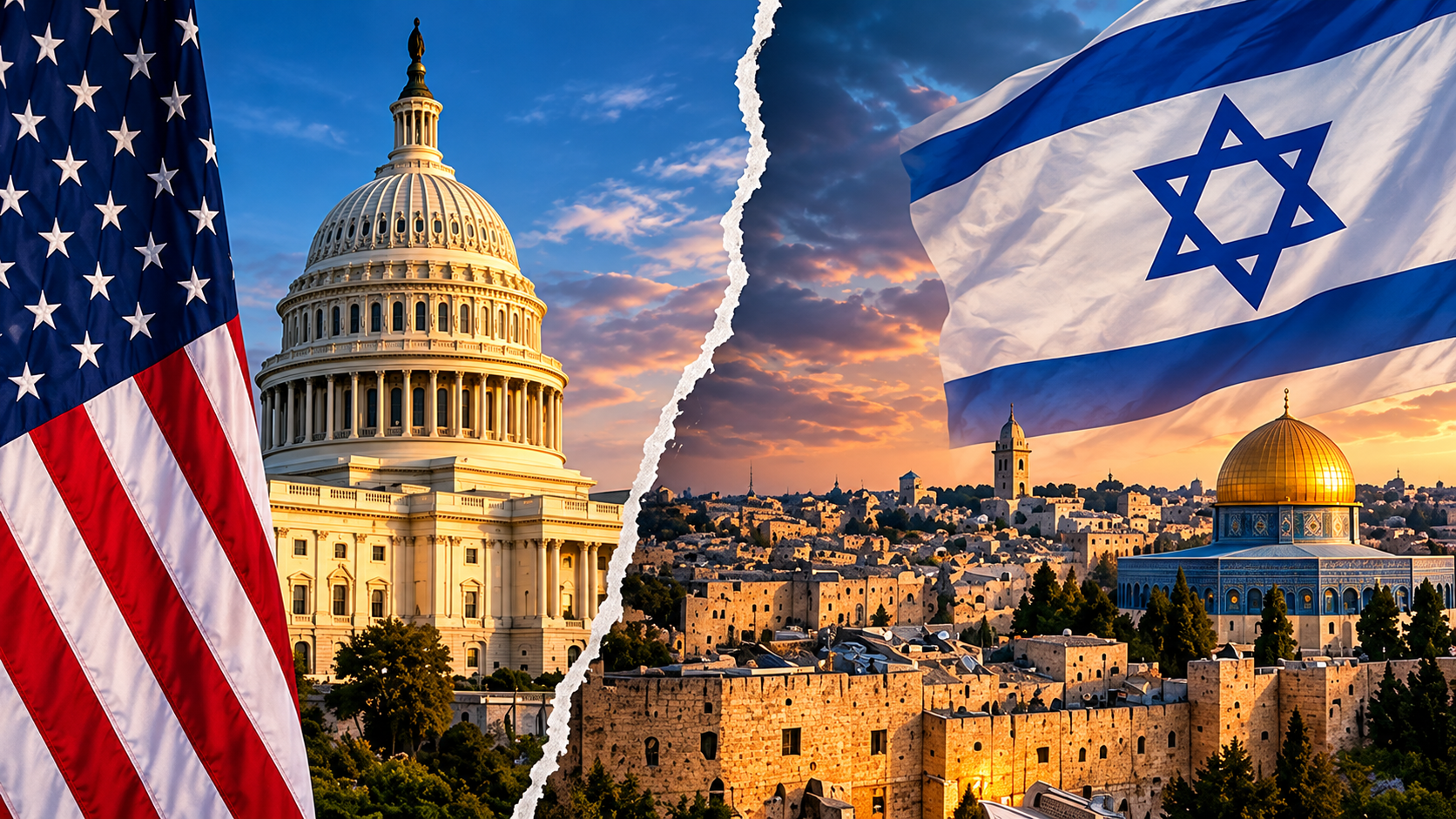
Possibly. But there is no reliable basis, immediately after the announcement, to say that Trump’s endorsement has already swung the race.
An endorsement can matter for several reasons.
First, it can strengthen a candidate’s credibility with voters who value a foreign leader’s approval.
Netanyahu has frequently promoted his relationship with Trump as evidence that he can manage Israel’s most important international partnership.
Second, it can give a struggling campaign a new argument.
Instead of defending only his record at home, Netanyahu can tell voters that the American president specifically wants to continue working with him.
Third, it may influence voters deciding whether Netanyahu’s experience or his opponents’ promises offer a better route through the region’s security crises.
There is a counterargument, however.
Trump’s popularity among Israelis is not uniform. Reuters reported that his standing with some Israeli voters has weakened amid disagreements over the Iran war and the direction of U.S. policy. (Reuters)
A voter who objects to Netanyahu’s record on October 7, his coalition partners or his legal controversies may not change their mind because Trump supports him.
Some voters may also view a foreign president’s attempt to influence their election unfavorably.
The endorsement therefore has three plausible effects:
- Positive: It reinforces Netanyahu’s claim that he has a uniquely valuable relationship with Washington.
- Limited: It changes few votes because most Israelis have already chosen sides.
- Negative among some voters: It strengthens concerns that Israeli decisions could become too dependent on an American president’s preferences.
These are possible political responses, not measured effects of the October 18 announcement.
And even if Netanyahu gains seats, he still needs sufficient parliamentary support to form a government.
That is why a headline declaring that Trump’s endorsement has saved Netanyahu would go further than the evidence supports.
Is It Unusual for a U.S. President to Endorse a Foreign Leader?
Yes. An explicit endorsement in another country’s election goes beyond the usual expressions of diplomatic cooperation.
American presidents routinely meet foreign leaders, praise allies and emphasize the importance of maintaining strong bilateral relationships.
Those statements do not necessarily mean Washington is taking sides in an ally’s domestic election.
Trump’s October 18 statement was different because it openly supported Netanyahu’s reelection.
It also framed Netanyahu’s continued leadership as desirable for the United States, particularly in the confrontation with Iran. (AP)
There are two ways to view that decision.
Supporters of the endorsement may regard it as a legitimate statement of preference for a proven security partner. In that view, Trump is being transparent about which Israeli leader he believes can work most effectively with his administration.
Critics may see it as an inappropriate intrusion into another democracy’s political process, especially when the U.S. president implies that American security cooperation would be less desirable under a different leader.
The central distinction is between expressing a preference and possessing the authority to decide.
Trump can publicly favor Netanyahu.
He cannot cast votes in Israel’s election or decide which parliamentary coalition receives the Knesset’s confidence.
Nor does endorsing Netanyahu mean that every Israeli voter, or every American, shares Trump’s view.
What Would Netanyahu’s Reelection—or Defeat—Mean for the United States?
The main consequences would concern the U.S.-Israel relationship, regional security policy and the decisions both governments make about Iran, Gaza and neighboring countries.
If Netanyahu remains prime minister, Washington would continue dealing with a familiar leader who has maintained a close relationship with Trump, despite their disagreements.
That could make some high-level communication easier.
It would not guarantee agreement over the timing of military operations, ceasefire arrangements or diplomatic negotiations.
If another leader forms the next government, the relationship would enter a new political phase.
But a change of Israeli prime minister would not automatically mean the end of U.S.-Israeli security cooperation or a reversal of every major Israeli policy.
Several opposition leaders also hold hawkish views on regional security, and their differences with Netanyahu often concern leadership, institutional accountability and strategy as much as broad national-security objectives. (The Guardian)
The broader stakes extend beyond the personal relationship between Trump and Netanyahu.
For American readers, four developments are worth following:
- Iran: Whether Washington and Israel move toward further military action, sustained pressure or negotiations.
- Gaza and the West Bank: Whether the next Israeli government alters its approach to security operations, settlements, humanitarian access and diplomacy.
- Regional energy: Whether military escalation or diplomatic progress affects oil shipping, fuel costs and economic uncertainty.
- U.S. politics: Whether the Middle East continues to influence debate over military commitments and living costs ahead of America’s November 3 midterm elections.
The Iran conflict has already affected international energy markets. Reuters has described how prolonged instability and shipping risks have complicated efforts to contain oil prices. (Reuters)
That is why the Israeli election matters to Americans even if they have no particular preference between Netanyahu and his opponents.
The next government will make decisions in a region where the United States is already deeply involved.
What should we watch after October 27?
Three questions will be more revealing than the endorsement itself.
Who wins the seats? The first test is how the parties perform and whether smaller parties clear the electoral threshold.
Who can form a government? Coalition negotiations will show whether Netanyahu has enough partners to remain in power or whether a rival can assemble broader support.
What changes in U.S.-Israeli discussions? Only subsequent diplomatic and policy decisions can reveal whether the endorsement translates into stronger alignment on Iran and other regional conflicts.
If neither side can assemble sufficient support, Israel could face extended negotiations and political uncertainty even after the votes are counted.
Trump’s endorsement may affect the campaign.
The parliamentary arithmetic will determine whether Netanyahu can govern.
Bottom Line: What This Story Really Means
Donald Trump’s October 18 endorsement of Benjamin Netanyahu is significant because it came after months of hesitation and just nine days before a closely contested Israeli election.
It publicly restores Trump’s political backing for a longtime ally at a moment when Netanyahu is defending his security record, facing prominent rivals and struggling to build a clear path to parliamentary control.
The endorsement also ties Netanyahu’s reelection argument to American interests, especially the confrontation with Iran.
But three things must remain separate.
Trump’s preference is not Israel’s election result.
An election result is not the same as the formation of a government.
Political support does not automatically resolve disagreements over military or diplomatic policy.
Whether the endorsement ultimately helps Netanyahu remain prime minister will depend on Israeli voters and the alliances formed after October 27.
The most consequential decisions may come after the campaign ends.
Trump Netanyahu Endorsement: Key Questions Explained
Q. When did Trump endorse Netanyahu for reelection?
Trump publicly endorsed Benjamin Netanyahu on October 18, 2026, nine days before Israel’s scheduled October 27 parliamentary election.
Q. Why did Trump wait so long to endorse Netanyahu?
Trump had avoided endorsing Netanyahu amid political uncertainty and disagreements over regional strategy, particularly Iran. The precise reason he chose October 18 has not been definitively established.
Q. What did Trump say about Netanyahu?
Trump praised Netanyahu as a strong wartime leader and American partner against Iran, then gave him an explicit endorsement for reelection.
Q. Who is Netanyahu’s main challenger?
Gadi Eisenkot, a former Israeli military chief and leader of the Yashar party, is among Netanyahu’s leading rivals. Former Prime Minister Naftali Bennett and other opposition leaders also play important roles in the multiparty contest.
Q. Does Israel directly elect its prime minister?
No. Israelis elect party lists to the 120-seat Knesset. The prime minister is determined through the subsequent process of forming a government that can win parliamentary confidence.
Q. How many seats are needed for a majority in Israel?
A majority of the 120-seat Knesset is 61 seats. Parties generally seek a coalition reaching that figure, although government formation legally depends on a confidence vote and minority arrangements can sometimes be possible.
Q. Can the largest party fail to form a government?
Yes. Winning the most seats does not automatically give a party leader enough parliamentary support to become prime minister.
Q. Would Netanyahu’s reelection end his corruption trial?
No. Parliamentary elections and criminal proceedings are separate processes. Netanyahu’s ongoing domestic corruption case does not automatically disappear if he remains prime minister.
Q. Does Trump’s endorsement mean the United States has approved new attacks on Iran?
No. A political endorsement is not a military authorization. Any further U.S. military action would require separate decisions.
Q. When will Americans know whether the endorsement mattered?
The first indication will come from the October 27 election results. A fuller answer will depend on whether Netanyahu can form a government and how U.S.-Israeli relations develop afterward.
Did this help make the story clearer? 🙂
WIN keeps unpacking the “why” behind the news—clearly and simply!
Sources
October 18 Endorsement and Trump’s Public Position
Reuters — Trump Endorses Netanyahu in Israeli Election, October 18, 2026
Associated Press — Trump Endorses Netanyahu for Reelection, October 18, 2026
The Jerusalem Post — Trump Stops Short of Endorsement on October 13
U.S.-Israel Relations and Election Background
Axios — Trump’s Earlier Reluctance to Endorse Netanyahu
Axios — Trump, Netanyahu and the Debate Over Renewed Iran Operations
Associated Press — How October 7 Shaped Israel’s Election
Associated Press — Arab-Led Parties and the Coalition Dilemma
The Jerusalem Post — October 18 Election Polling and Coalition Estimates
Israeli Electoral Rules and Government Formation
Knesset — Basic Laws of the State of Israel
Knesset — Distribution of Parliamentary Seats
Keep Reading
What Happens to Netanyahu’s Corruption Trial if He Remains in Power?
The Israeli election determines political leadership, but it does not automatically resolve Netanyahu’s criminal proceedings. The testimony of the former attorney general who brought the charges helps explain why the trial remains politically significant.
Why Did Netanyahu Call the Man Who Indicted Him as a Defense Witness?
Why Has Netanyahu Faced Such Strong International Opposition?
Trump’s endorsement highlights support from Washington, but Netanyahu’s international standing is more complicated. A coordinated diplomatic walkout at the United Nations illustrates the criticism surrounding Israeli actions in Gaza and the wider region.
Why Did U.N. Delegates Walk Out on Netanyahu—and What Did the Protest Actually Mean?