Why Did María Corina Machado Return to Venezuela While Trump’s Preferred Interim Leader Remains in Power?

Nicolás Maduro is no longer running Venezuela. The opposition leader who spent years trying to remove him has finally returned home. So why isn’t she the country’s president?
That is the striking question surrounding María Corina Machado’s return to Venezuela on October 25, 2026.
Machado, the 2025 Nobel Peace Prize winner and one of the country’s most prominent opposition figures, spent more than ten months abroad. She came back to cheering supporters—but to a government still led by Delcy Rodríguez, Maduro’s former vice president.
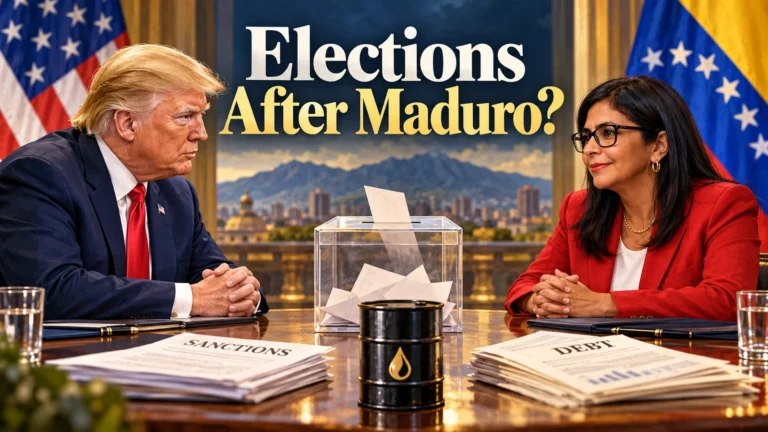
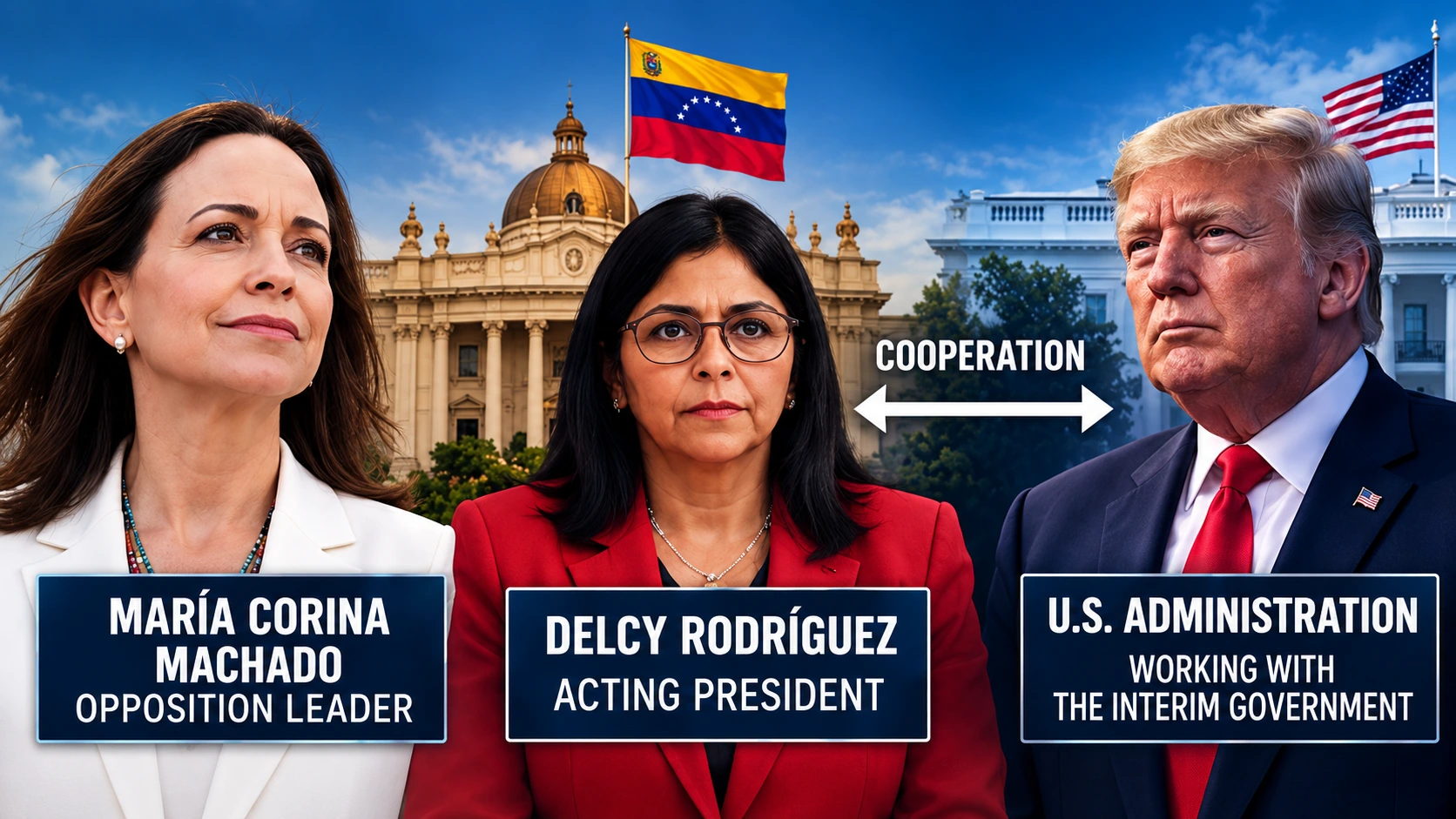
And here’s the surprising part: President Donald Trump’s administration has been working with Rodríguez, not Machado, to manage Venezuela’s political transition.
Removing Maduro changed who occupied the presidency. It did not automatically transfer power to the opposition or produce a new election.
Machado’s return brings that unresolved question back into the spotlight: who should lead Venezuela, and who gets to decide?
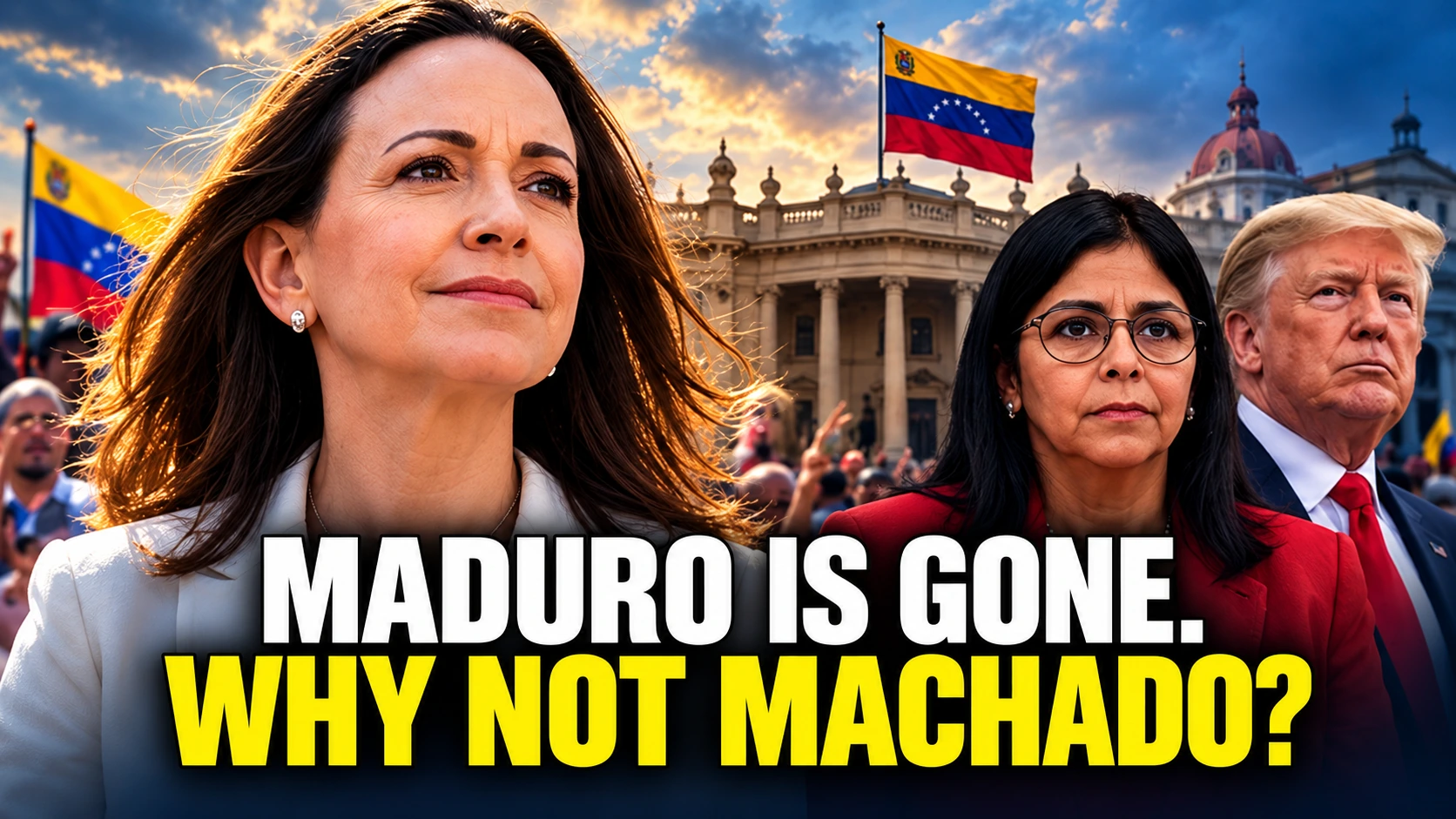
※ Images in this article are AI-generated illustrations created to help explain the story. They are not actual photographs, and depictions of people, places, or events may differ slightly from reality.
What Actually Happened When Machado Returned on October 25?
Machado returned to Venezuela after nearly a year abroad, but her arrival did not change the country’s government. It marked her physical return to domestic politics rather than a formal transfer of power.
On Sunday, October 25, Machado announced her return on social media with a short message: “I’m here. With you all.”
Images released by her team showed her at a church in Venezuela’s western Lara state. Supporters gathered around her, and a Reuters witness reported hearing people sing the national anthem and shout for liberty.
Her team said she planned to travel toward Caracas, the capital. Earlier attempts to reenter Venezuela had failed, and U.S. officials had reportedly asked her to delay returning because of safety and transition concerns. (Reuters · AP)
The opposition’s former presidential candidate, Edmundo González Urrutia, who has been living in exile in Spain, also welcomed her return and said he hoped to join her soon.
Machado’s adviser David Smolansky told Reuters that she intended to meet earthquake victims, families of political prisoners, and democratic movement leaders. He said she would press for a date for free and fair elections. (Reuters)
There is a distinction worth keeping in mind. Returning home gives Machado the opportunity to organize, speak and mobilize supporters inside Venezuela. It does not give her authority over the military, courts, electoral agencies or presidency. Those powers remain with the existing institutions.
Why Didn’t Maduro’s Removal Put Machado in Power?
Because removing a president and establishing a new democratically elected government are two different events.
On January 3, 2026, U.S. forces captured Nicolás Maduro in Venezuela and took him to the United States, where he faced criminal charges. His removal ended his direct control of the presidency, but it did not dismantle the political institutions that had supported his government.
Venezuela’s Supreme Tribunal of Justice ordered then-Vice President Delcy Rodríguez to assume presidential duties to maintain government continuity. (Reuters)
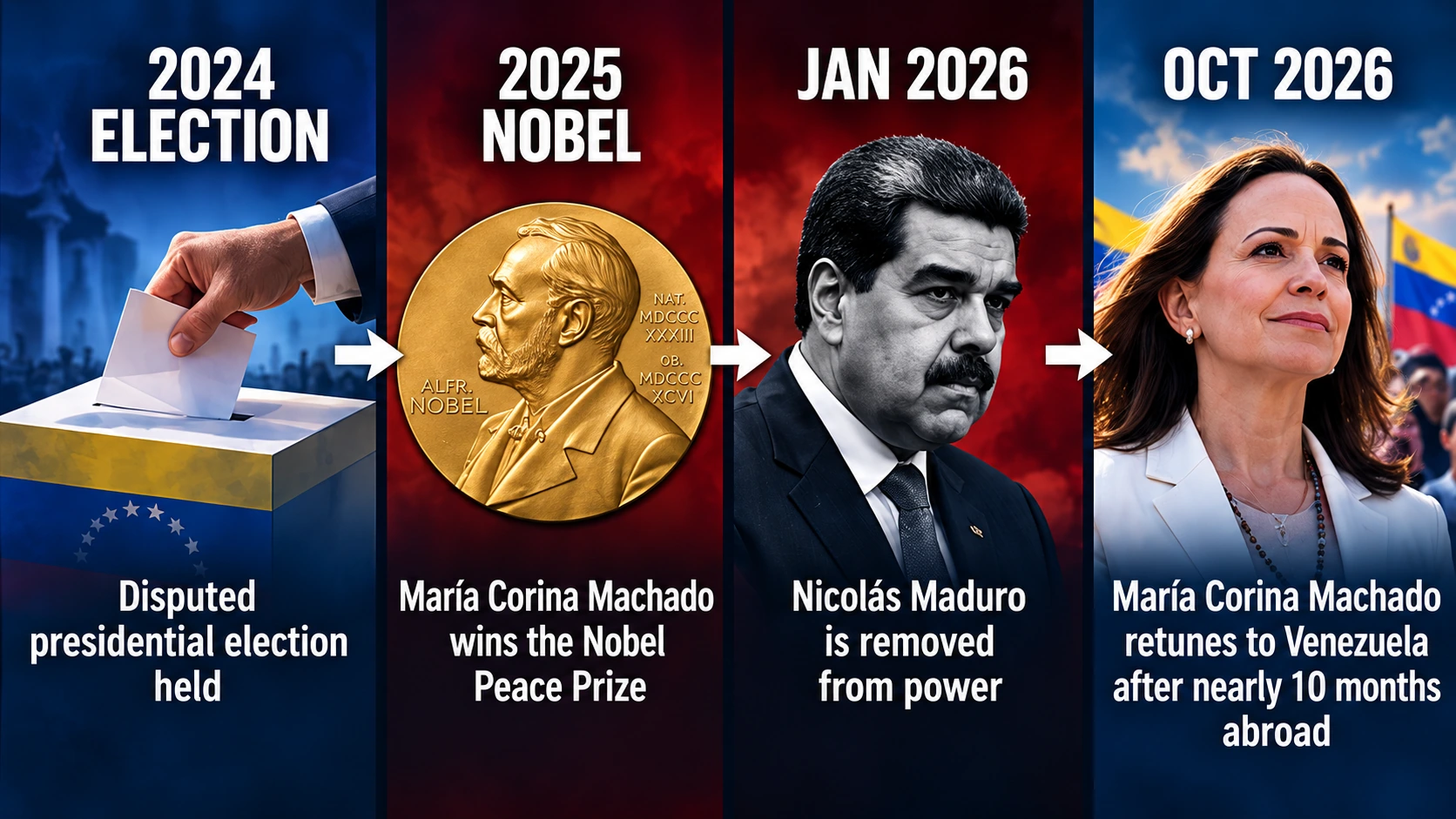
How the political crisis unfolded
| Date | What happened |
|---|---|
| July 28, 2024 | Venezuela held a disputed presidential election. |
| October 10, 2025 | Machado was awarded the Nobel Peace Prize. |
| December 2025 | Machado left Venezuela for Nobel-related events and remained abroad. |
| January 3, 2026 | U.S. forces captured Maduro; Rodríguez assumed acting presidential duties shortly afterward. |
| September 23, 2026 | Rodríguez promised elections at the United Nations but gave no date. |
| October 22, 2026 | Opposition supporters demonstrated for a presidential election. |
| October 25, 2026 | Machado returned to Venezuela. |
The sequence reveals why the political situation remains unresolved. Maduro’s departure was a dramatic change at the top of government. But Rodríguez had already been part of his administration, and many established institutions remained in place.
Washington decided to work with the interim administration rather than immediately transfer authority to Machado or another opposition leader. That approach helped maintain a functioning government, but it also left unresolved the question of democratic legitimacy.
Is Rodríguez’s presidency supposed to be temporary?
Yes. The legal basis for her continuing tenure has been controversial.
The original court arrangement treated Maduro’s absence as temporary and allowed Rodríguez to exercise presidential duties for an initial 90-day period, with a possible further 90 days under the constitutional framework. The ruling party-controlled National Assembly did not publicly vote to extend that initial term, according to AP. (AP)
By October she was still governing, and no new presidential election had been scheduled. That does not mean a court has conclusively ruled her current administration illegitimate. It means the temporary arrangement has become prolonged and politically contested.
Why Does Venezuela’s 2024 Election Still Matter?
The opposition argues that Venezuelans already voted for political change in 2024—and that the result was never honored.
This is the central reason Machado and her allies reject the idea that Maduro’s removal alone settled the country’s political crisis. Machado had emerged as a leading opposition presidential contender, but Venezuelan authorities barred her from running. The opposition then backed former diplomat Edmundo González Urrutia as its presidential candidate.
After the July 28, 2024, election, Venezuela’s electoral authorities declared Maduro the winner. They did not publish the detailed polling-station results necessary for independent verification. The opposition collected voting-machine tally sheets, known in Spanish as actas, that showed González winning by a substantial margin.
The Carter Center, which observed the election, concluded that the process failed to meet international standards of electoral integrity. Its analysis found strong evidence supporting González’s victory. (The Carter Center)
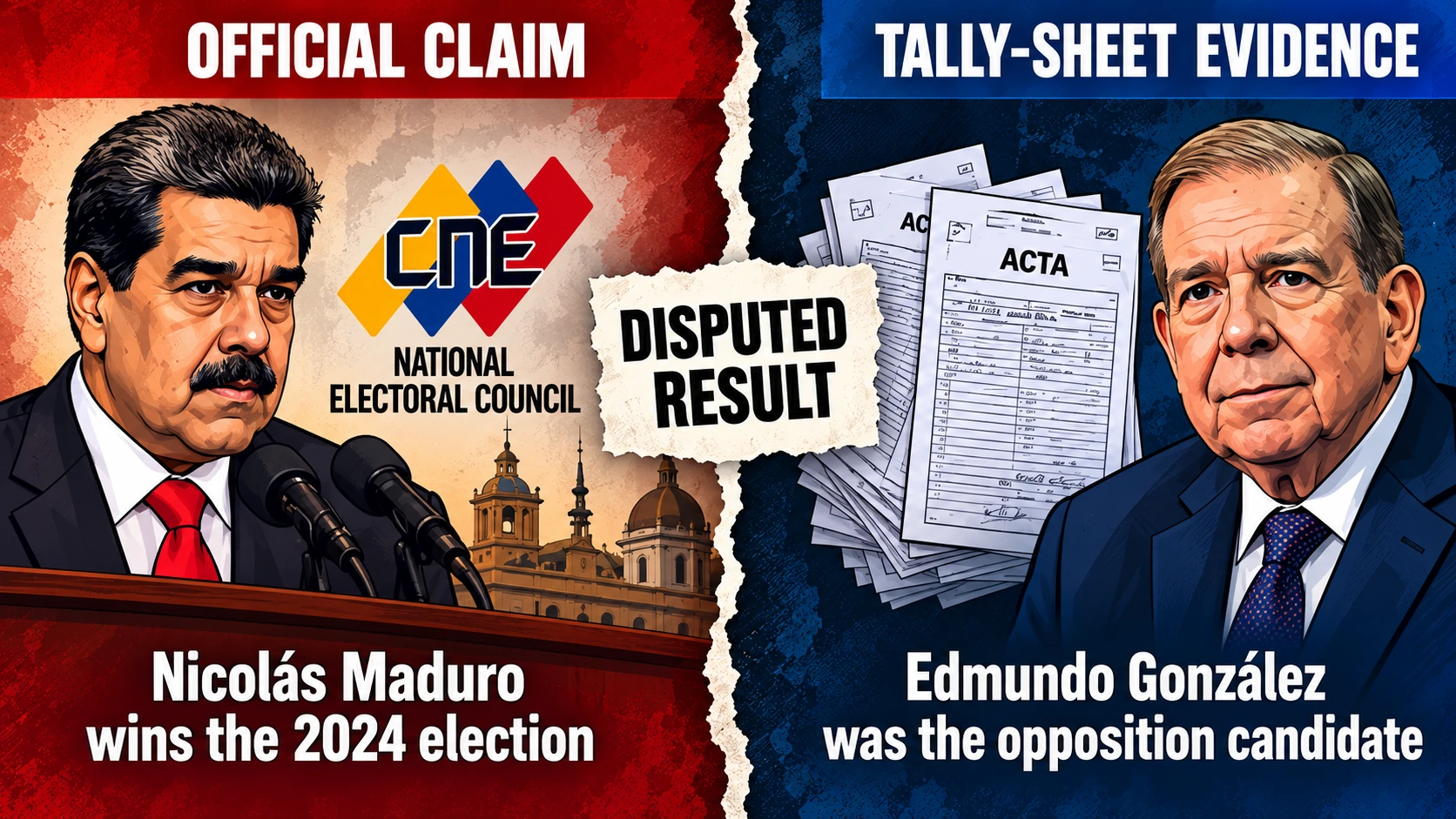
What did the voting records show?
The Carter Center examined opposition-published records covering approximately 81.7% of polling stations. Those records showed González receiving about 67.1% of the votes recorded in the available tally sheets, compared with about 30.4% for Maduro.
That evidence was inconsistent with the government’s declared result. The Carter Center found that the remaining unreported polling stations could not plausibly reverse González’s lead, even under an extreme hypothetical voting scenario.
The finding supported the opposition’s position, although it did not itself produce an enforceable transfer of power.
For Machado’s supporters, the issue is therefore larger than simply choosing a new president. They believe the democratic choice made in 2024 must be recognized.
But wasn’t Machado herself the winning candidate?
No. Machado led the opposition movement, but González was the candidate whose name appeared on the 2024 presidential ballot.
Machado’s political popularity and her role in building the opposition campaign do not mean she personally won that election. The dispute concerns González’s apparent electoral victory and the governing party’s continued hold on power.
Why Is Trump Working With Delcy Rodríguez Instead of Machado?
The Trump administration has emphasized near-term stability, economic recovery and institutional restructuring before a new presidential election.
Rodríguez, as Maduro’s former vice president, had connections to the existing government and the institutions that continued functioning after his capture. Machado, by contrast, represented a more fundamental political break with the old ruling establishment.
For Washington, the concern has been how to manage the transition without destabilizing the state. For Machado’s movement, the concern is whether a transition that preserves the old leadership can deliver genuine democracy. These are different priorities, and they do not always align. (Reuters · AP)
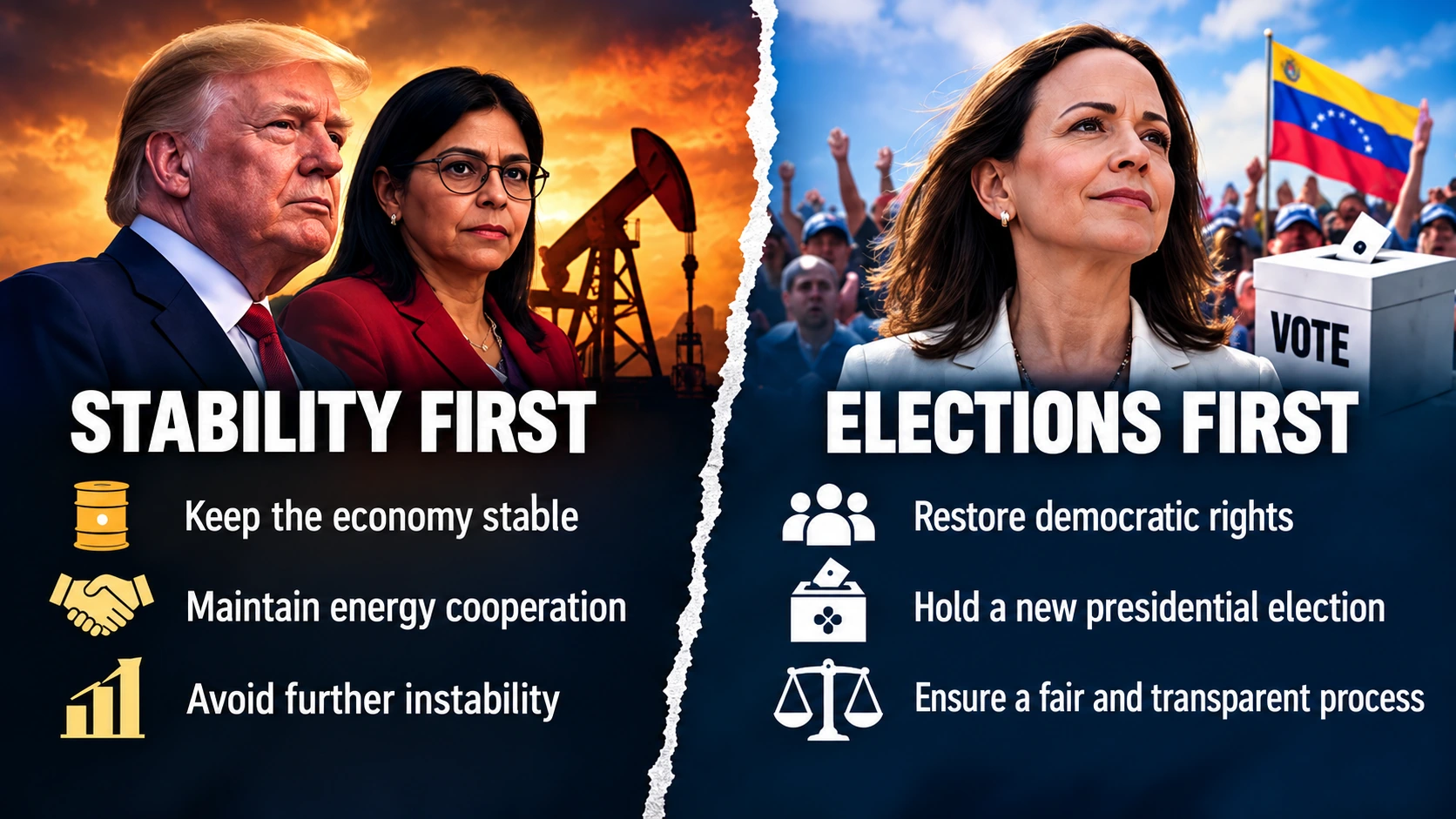
Two different priorities for Venezuela’s transition
| Issue | Trump administration’s approach | Machado’s position |
|---|---|---|
| Immediate priority | Government stability and economic recovery | Democratic legitimacy and political participation |
| Current leadership | Cooperation with Rodríguez’s interim government | A transition that ends the ruling party’s entrenched control |
| Elections | Institutional reforms before voting | A clear, accelerated electoral timetable |
| Economic future | Investment, oil production and rebuilding | Long-term stability through democratic institutions |
These are broad descriptions of publicly reported positions, not formal negotiated agreements between the two sides.
The administration has praised economic cooperation with Rodríguez, including opportunities for U.S. companies in Venezuela’s oil sector. Rodríguez has also promised elections and presented reforms as steps toward a more stable political system.
Critics argue, however, that economic cooperation risks taking precedence over democratic accountability. Supporters of a gradual transition argue that elections held before courts, electoral authorities and other institutions are reformed could repeat earlier problems.
Didn’t Machado try to win Trump over?
Yes, including through an unusual gesture involving her Nobel Peace Prize. Machado received the 2025 Nobel Peace Prize for her campaign for democratic rights in Venezuela.
In January 2026, she met Trump at the White House and presented him with her Nobel medal. The gesture was intended as an expression of appreciation for the U.S. role in removing Maduro.
But giving away the physical medal did not transfer the Nobel Peace Prize itself. The Norwegian Nobel Committee has made clear that a Nobel laureate’s status cannot be transferred. (Norwegian Nobel Committee)
The gesture also did not result in Trump replacing Rodríguez with Machado. When asked about Machado’s return on October 25, Trump said he had not known about it, described her favorably, and expressed hope for her safety. Secretary of State Marco Rubio credited U.S.-supported reconciliation talks with helping create conditions for her return. (AP)
Those statements suggest that the administration’s relationship with Machado remains more complicated than a simple alliance or rejection.
Why Has Venezuela Still Not Scheduled a Presidential Election?
Because political leaders have not agreed on when and under what conditions a credible election should take place.
Rodríguez told the United Nations General Assembly on September 23, 2026, that Venezuela would hold elections as part of a transition to democracy. But she did not announce a date.
Her government has participated in U.S.-supported talks with some opposition representatives over reforms to political institutions, including the electoral authorities and judiciary. Machado’s own movement has not been included in those negotiations. (Reuters)
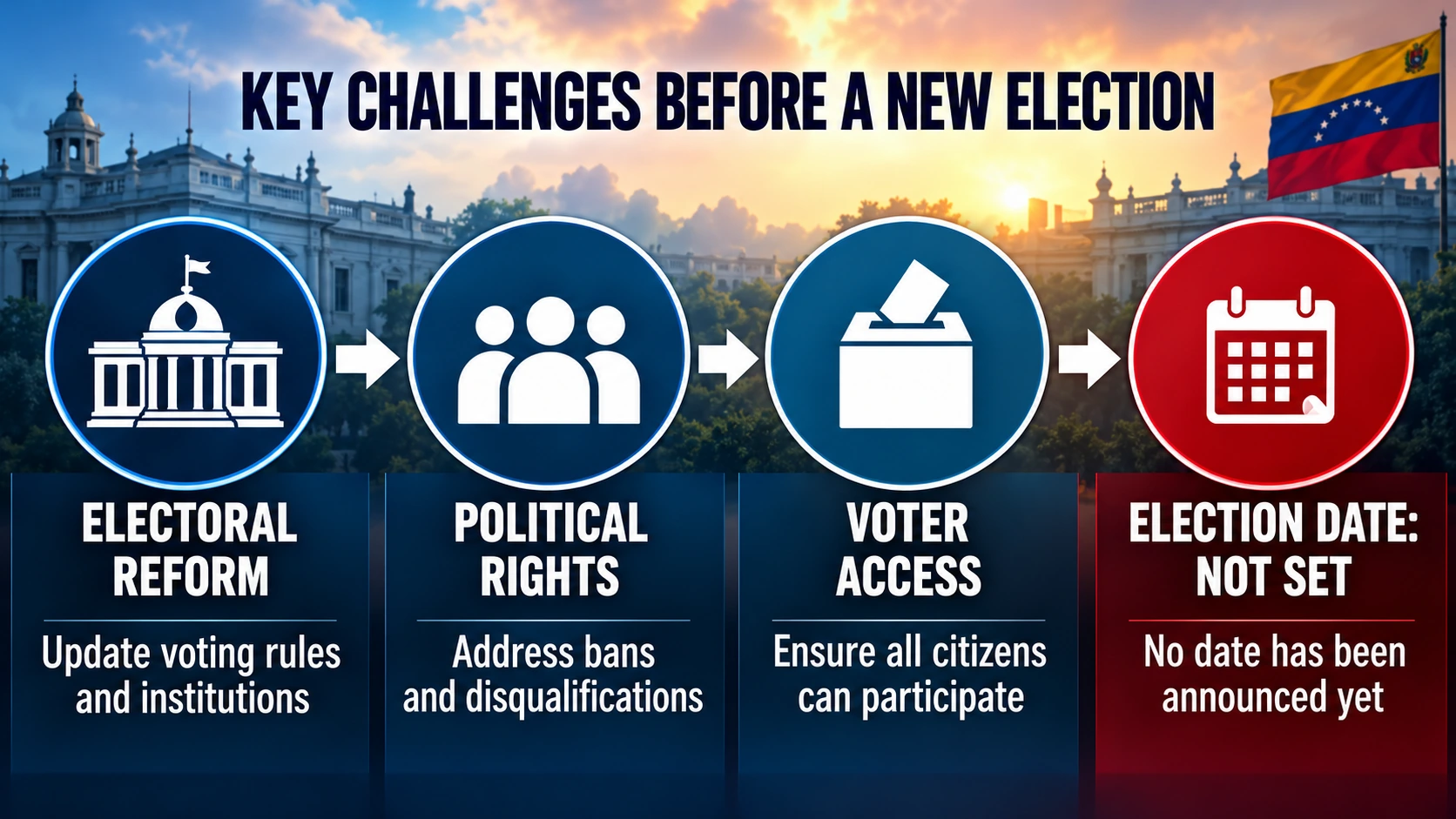
Why can’t Venezuela just hold an election immediately?
An election requires more than a date and a supply of ballots.
Citizens must be able to register and vote. Opposition parties need to campaign without intimidation. Electoral officials must be trusted to count and publish the results. Courts must be capable of resolving disputes fairly.
The 2024 controversy showed how an election can take place while the credibility and acceptance of the result remain deeply contested. That is why the current negotiations include institutional reforms rather than merely announcing another vote.
Yet the argument can also run in the opposite direction. If the government can continually postpone elections until it decides the country is ready, the transition could remain temporary in name but indefinite in practice. This is the danger Machado and other critics have been emphasizing.
What election timetable does Machado want?
Machado has called for a presidential election by July 2027.
Reuters reported on October 23 that significant institutional obstacles remained and that an election could be delayed for a year or longer. The report described preparations by Machado’s Vente Venezuela movement for an app to collect information from Venezuelans living abroad, with the hope of eventually sharing it with a reformed electoral council. The app is not an official voter-registration system. (Reuters)
The distinction matters because Venezuelans abroad have previously faced serious barriers to voting. A future election will not be judged only by who wins. It will also be judged by who was allowed to participate and whether the results can be independently verified.
What Could Machado’s Return Actually Change?
Machado’s return could change the political pressure facing Rodríguez’s government, even if it does not immediately change who holds office.
For months, Machado’s efforts to influence events depended heavily on communications from abroad, public statements, and the organization of supporters inside Venezuela. Now she can potentially participate more directly in political mobilization and reconnect with opposition groups on the ground.
But physical presence alone is not a guarantee of political freedom. Her ability to operate safely, assemble supporters and participate in public life will be an important test of the government’s willingness to permit genuine opposition activity.
Three developments worth watching
1. Can Machado campaign and organize without interference?
Her return is meaningful only if she can exercise political rights beyond simply being permitted to enter the country. A peaceful homecoming does not by itself establish that restrictions on opposition activity have disappeared.
2. Will opposition groups be included in negotiations?
Some opposition representatives have participated in talks with Rodríguez’s government, but Machado’s movement has been outside that process. Whether those discussions become more inclusive could shape the legitimacy of any future political agreement.
3. Will Venezuela announce a credible election timetable?
A date without trustworthy electoral rules would be insufficient. But reforms without a clear election commitment may also fail to satisfy Venezuelans demanding a return to democratic government. Machado’s return puts additional pressure on both sides of that argument.
Why Does This Matter to the United States?
Venezuela’s political future is directly connected to several U.S. interests, including energy, migration, regional security and relations with Latin America.
The country possesses enormous oil resources, and its economic recovery could create opportunities for international investment. But rebuilding an oil industry and establishing a legitimate political system are not the same project.
A government can attract investment while still facing serious questions about democratic accountability. Conversely, holding an election will not automatically resolve the country’s damaged infrastructure, institutional weaknesses or economic problems.
The Trump administration has emphasized stabilization and investment, while Machado has argued that lasting economic confidence requires legitimate democratic institutions. These priorities are not necessarily incompatible. The dispute is over sequencing, leadership and guarantees.
For American readers, the central issue is not simply whether Washington prefers one Venezuelan politician over another. It is whether U.S. cooperation with the current government will eventually produce a credible democratic transition—or leave the country’s longstanding political conflict unresolved.
The events of October 25 do not settle that question. They make it more difficult to ignore.
Bottom Line: What This Story Really Means
María Corina Machado’s return to Venezuela is a major political development, but it is not a change of government.
The United States removed Nicolás Maduro in January 2026. His former vice president, Delcy Rodríguez, subsequently assumed acting presidential duties and has continued governing with the Trump administration’s cooperation.
Machado represents an opposition movement that argues the disputed 2024 election demonstrated Venezuelans’ desire for political change. Her return now places that demand back inside Venezuela, where the country’s future remains contested.
The real question is whether Venezuela’s transition will lead to an election that citizens can trust—or whether temporary leadership will continue without a firm democratic timetable.
A returning opposition leader can influence that outcome. She cannot determine it on her own.
María Corina Machado’s Return: Key Questions Explained
Q. When did María Corina Machado return to Venezuela?
She returned on October 25, 2026, after more than ten months abroad. She appeared in Lara state, where supporters welcomed her.
Q. Why was Machado outside Venezuela?
She left in December 2025 for Nobel Peace Prize-related events after spending an extended period in hiding amid political repression. She remained abroad and made several unsuccessful attempts to return.
Q. Who is currently governing Venezuela?
Delcy Rodríguez, Nicolás Maduro’s former vice president, continues to serve as acting president. She assumed those duties after U.S. forces captured Maduro in January 2026.
Q. Why didn’t Machado become president when Maduro was removed?
Maduro’s removal did not automatically transfer authority to the opposition. Venezuela’s existing institutions placed Rodríguez in charge of presidential duties, and no new election has been held.
Q. Did María Corina Machado win Venezuela’s 2024 presidential election?
No. Machado was barred from running. Edmundo González Urrutia was the opposition’s candidate, and independent analysis of polling-station records strongly supported his victory over Maduro.
Q. Why does Trump support Delcy Rodríguez?
The Trump administration has worked with Rodríguez to prioritize government stability, economic recovery and institutional reforms. That cooperation has drawn criticism from opponents who want a faster democratic transition.
Q. Did Machado give her Nobel Peace Prize to Trump?
She presented Trump with her physical Nobel Peace Prize medal in January 2026. The award itself remains hers because Nobel laureate status cannot be transferred.
Q. Has Venezuela announced a new presidential election date?
No. As of October 25, 2026, no new presidential election date had been announced. Rodríguez has promised elections, while Machado has pressed for a vote by July 2027.
Q. What happens next after Machado’s return?
The main developments to watch are whether she can organize freely, whether negotiations become more inclusive and whether Venezuela announces a credible election timetable. None of those outcomes was guaranteed by her return.
Did this help make the story clearer? 🙂
WIN keeps unpacking the “why” behind the news—clearly and simply!
Sources
Machado’s October 25 Return and Political Reaction
Reuters — Venezuela Opposition Leader Machado Returns Home After Fraught Year Away
Associated Press — Venezuela’s Opposition Leader Machado Returns After Months in Exile
CBS News — María Corina Machado Returns to Venezuela After 10-Month Exile
The Disputed 2024 Election and Machado’s Nobel Prize
The Carter Center — Final Report on Venezuela’s 2024 Presidential Election
The Norwegian Nobel Committee — A Nobel Prize Cannot Be Revoked, Shared or Transferred
Interim Government and U.S. Policy
Reuters — Venezuela’s Supreme Court Orders Delcy Rodríguez to Become Interim President
Reuters — Machado Weighs Return Home Amid U.S. Reticence
Electoral Preparations and the Next Phase
Reuters — Awaiting Machado’s Return, Venezuela Opposition Looks Ahead to Elections
Keep Reading
Why has Washington been negotiating with Maduro’s former vice president?
The earlier talks explain why the United States is working with Rodríguez on elections, oil and institutional reforms, even as Machado’s supporters demand a faster transition.
Why Is the U.S. Talking Elections With Delcy Rodríguez After Capturing Maduro?