Why Are Food Lion and Stop & Shop Websites Down—and Is Customer Data at Risk?

You try to check the weekly specials at Food Lion, but the website won’t load. Maybe you’re trying to place a Stop & Shop grocery order or check something on Giant Food’s website.
Then you see the news: the company behind those supermarkets is dealing with a cybersecurity incident.
Does that mean the stores are closed?
Not necessarily. In fact, the company says its stores remain open.
But there’s a more unsettling question. If a security problem is serious enough to shut down major grocery websites, does that mean someone has stolen customers’ credit card numbers or personal information?
The answer is that a website outage and a data breach are not the same thing.
On October 12, 2026, Ahold Delhaize, the international grocery company behind Food Lion, Stop & Shop, Giant Food, Hannaford and other retailers, confirmed a security issue within its network. It said it was taking some systems offline to protect them while investigating the problem. (Ahold Delhaize)

※ Images in this article are AI-generated illustrations created to help explain the story. They are not actual photographs, and depictions of people, places, or events may differ slightly from reality.
The announcement established that a security problem was affecting the company’s operations. It did not establish that customers’ personal information had been stolen.
To understand what this means for grocery shoppers, it helps to separate three things that often get lumped together: a store being open, its online services working, and the security of the information it holds.
What Exactly Happened to Food Lion, Stop & Shop, Giant, and Hannaford?
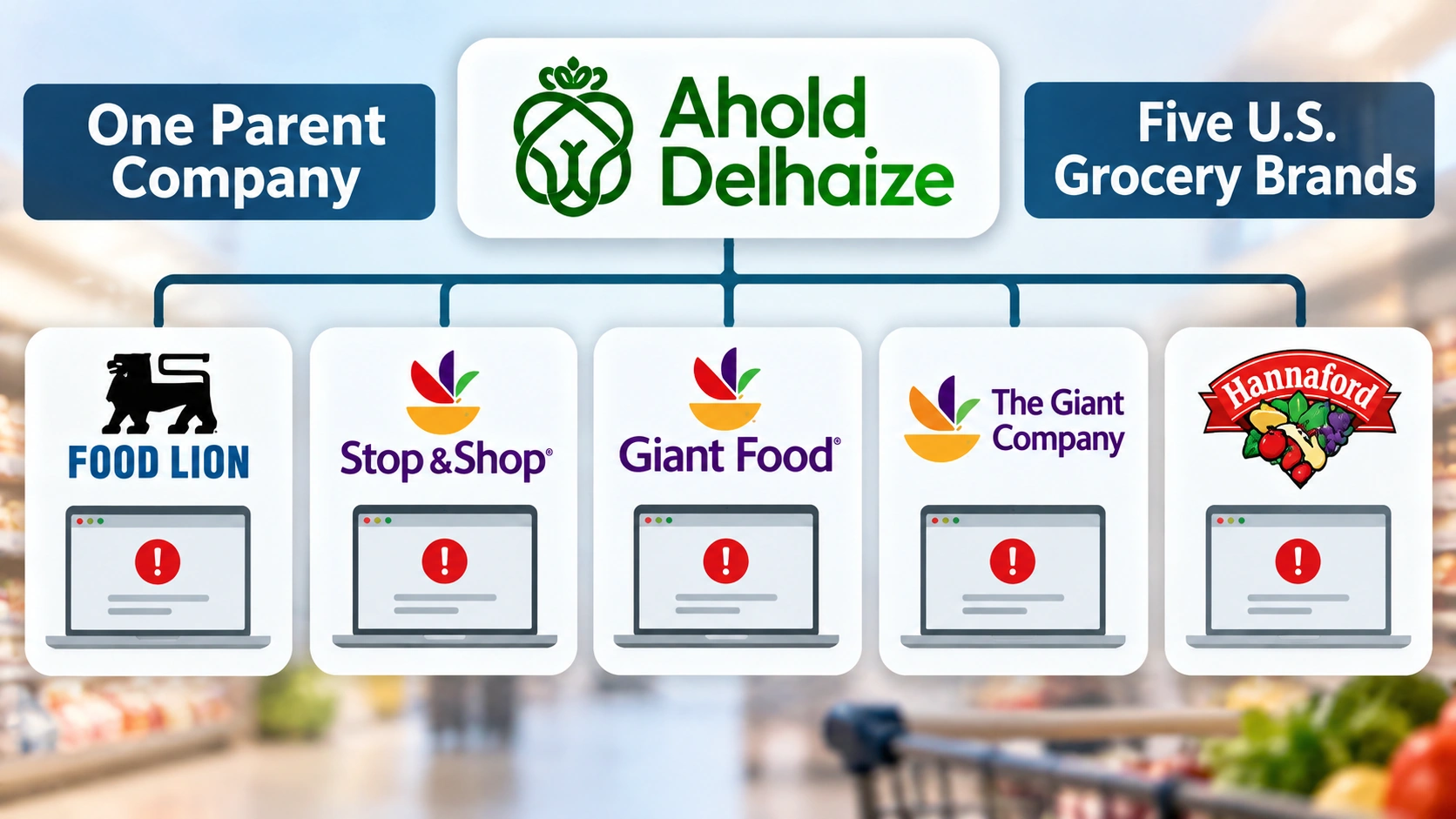
On Monday, October 12, websites belonging to five major U.S. grocery brands under Ahold Delhaize were unavailable. The affected websites included Food Lion, Stop & Shop, Giant Food, The Giant Company and Hannaford. (Grocery Dive)
That is a wider disruption than a single supermarket website going down.
Although these grocery chains have different names and operate in different regions, they share the same corporate parent. That relationship explains why a network security issue at the parent-company level could affect services across multiple brands.
The five U.S. brands identified in the outage reports were:
| Grocery brand | What was reported on October 12 |
|---|---|
| Food Lion | Website unavailable |
| Stop & Shop | Website unavailable |
| Giant Food | Website unavailable |
| The Giant Company | Website unavailable |
| Hannaford | Website unavailable |
Industry reporting also described interruptions to online grocery ordering and deliveries. That made the disruption more than a matter of shoppers being unable to read store information online. (Supermarket News)
The problem was not confined to the United States. Some Ahold Delhaize brands in Europe also experienced digital-service disruptions, including the Dutch supermarket chain Albert Heijn. Its own announcement described unavailable websites, apps and customer service, as well as suspended online grocery deliveries. (Albert Heijn)
The precise impact on individual stores and services could vary. A website being unavailable does not establish that every store’s checkout, pharmacy or internal systems had stopped working.
And that leads to the next question.
How Can a Grocery Store Stay Open If Its Website Is Shut Down?
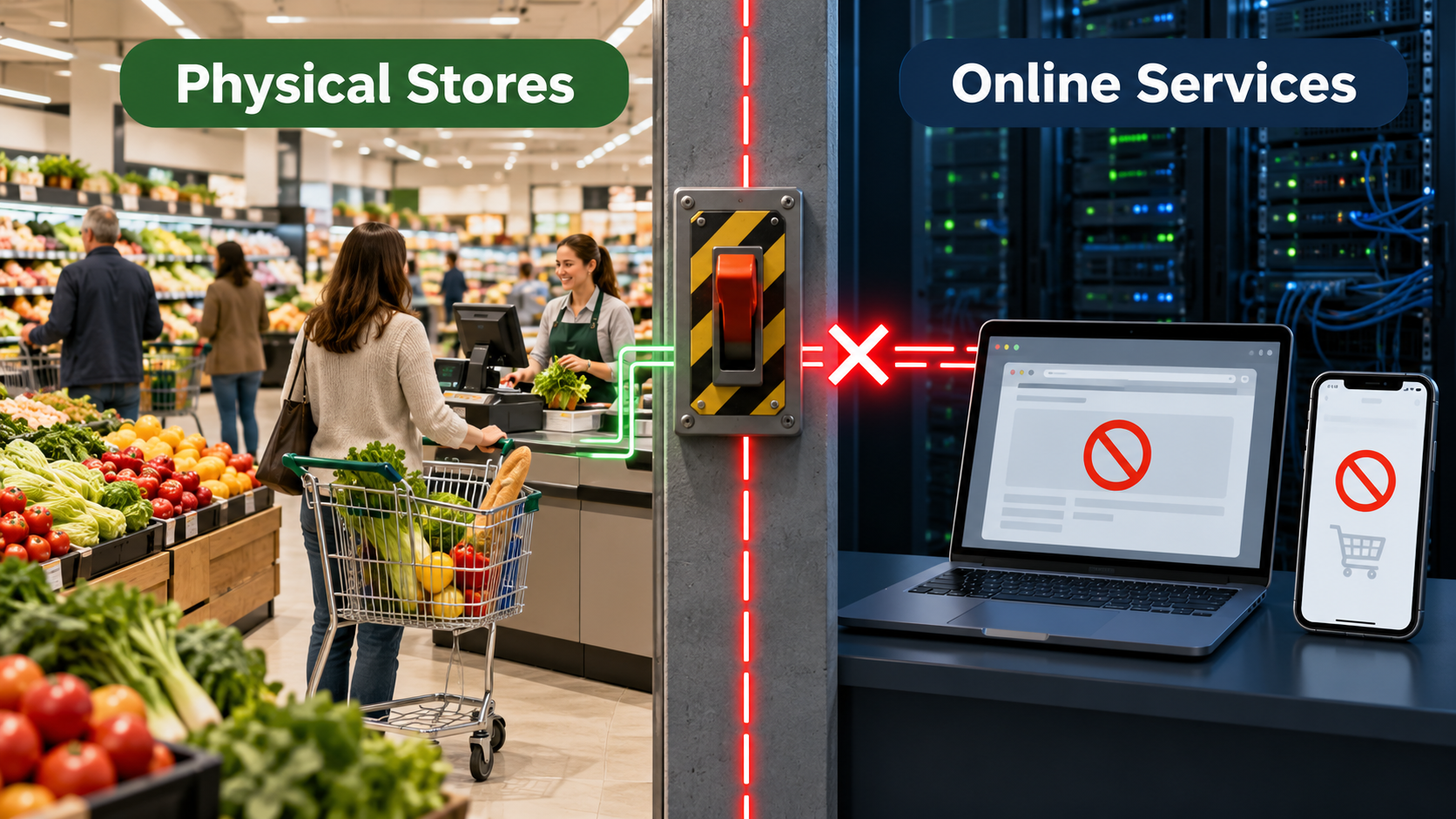
Because the physical store and its online shopping services do not necessarily depend on exactly the same systems.
Ahold Delhaize’s October 12 statement said its stores remained open and serving customers, even as the company took some systems offline to address the security issue. (Ahold Delhaize)
For a modern grocery chain, several digital systems can work together without performing the same job.
A store’s checkout system processes purchases. Its website lets customers browse information or shop online. Separate systems may handle delivery schedules, employee operations, loyalty programs and inventory.
Those services can be connected, but they are not automatically identical.
Think about a building with separate electrical circuits. Turning off power to a damaged section does not necessarily require shutting down the entire building.
A company can use a similar principle during a cybersecurity incident: disconnect some systems to reduce the chance that a security problem will spread.
That is one reason businesses sometimes take online services offline voluntarily, even when customers would prefer those services to remain available.
The important distinction is what the public information actually confirms.
| Service | What is known | What is not established |
|---|---|---|
| Physical grocery stores | Ahold Delhaize said its stores were open | Every individual service at every location was operating normally |
| U.S. grocery websites | All five major U.S. brand websites were reported unavailable on October 12 | The exact restoration time for every website |
| Online grocery services | Ordering and delivery disruptions were reported | That every service was affected equally |
| Customer payments and pharmacies | No comprehensive U.S. status was established in the October 12 corporate statement | That all payment or pharmacy systems were either compromised or unaffected |
The company had not provided a restoration timetable when Grocery Dive sought additional information on October 12. (Grocery Dive)
So shoppers should not interpret the phrase “stores remain open” as a guarantee that every digital service is available.
Still, inconvenience is only one part of a cybersecurity story.
What people really want to know is whether their information is safe.
Does a Cybersecurity Incident Mean Customer Credit Card Information Was Stolen?
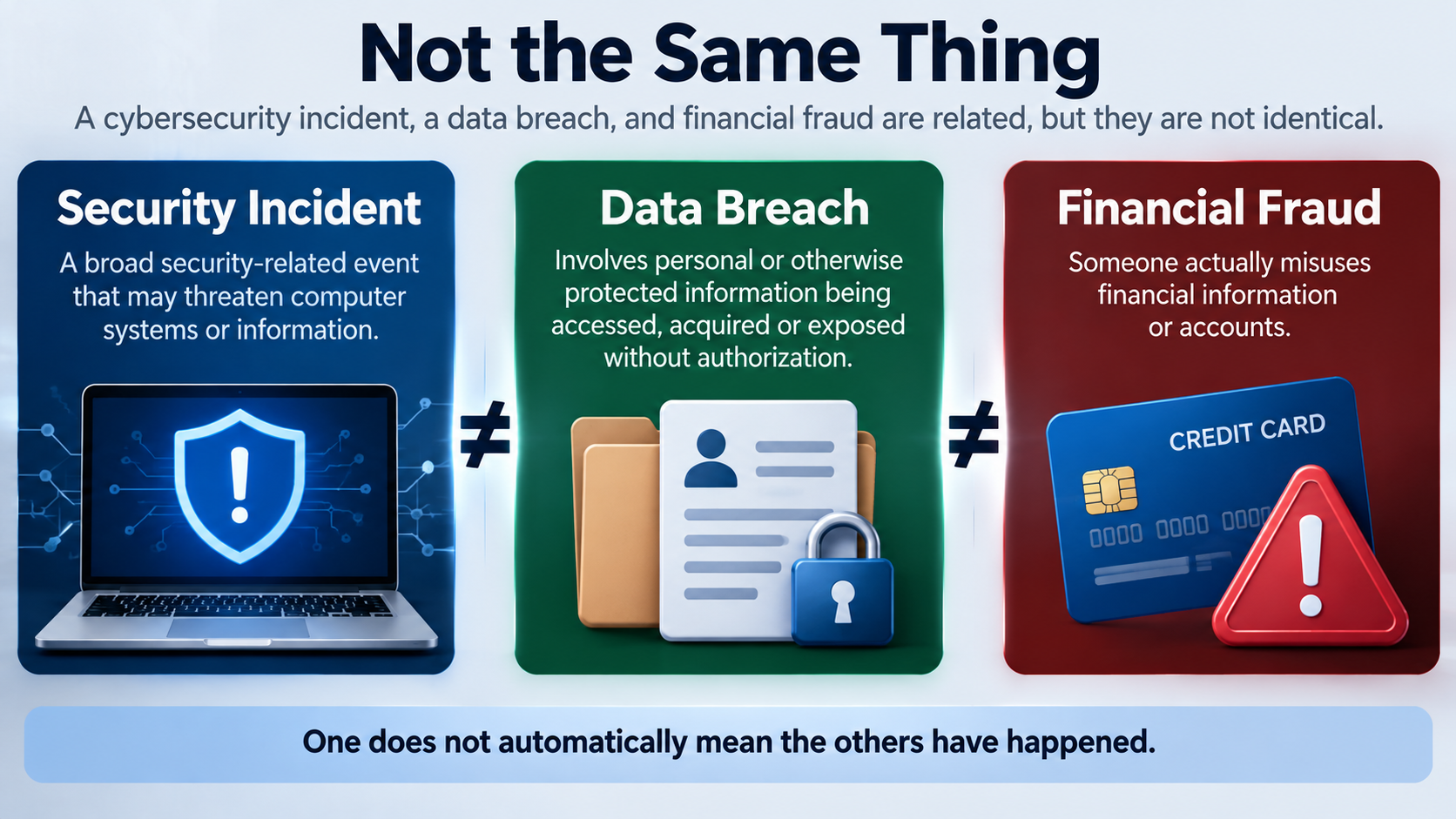
No. A cybersecurity incident does not automatically mean that hackers obtained customers’ credit card numbers or other personal information.
A security incident is a broad term. It can describe suspicious activity, unauthorized access, malware, a compromised system or another problem threatening the confidentiality, integrity or availability of computer services.
A data breach is more specific. It involves personal or otherwise protected information being accessed, acquired or exposed without authorization.
Financial fraud is another matter: someone actually misuses financial information or accounts.
These events can be connected, but they are not interchangeable.
For example, a company might discover suspicious activity and disconnect a server before investigators determine whether someone accessed sensitive information. The resulting shutdown can disrupt online services even if investigators later find that no customer data was exposed.
Alternatively, an investigation might eventually establish that information was compromised.
Both possibilities explain why an early corporate statement can be brief.
In Ahold Delhaize’s October 12 announcement, the company confirmed a network security issue and precautionary system shutdowns. It did not publicly establish the cause, identify a responsible attacker, or report that customer payment data had been stolen. (Ahold Delhaize)
The statement also did not establish that no data was exposed.
| Claim | What the October 12 announcement supports |
|---|---|
| Ahold Delhaize experienced a network security issue | Confirmed |
| The company took some systems offline | Confirmed |
| Customer credit card information was stolen | Not established |
| No customer information was exposed | Not established |
| Ransomware caused the incident | Not established |
An investigation may ultimately resolve some of those questions, but it would be misleading to label this a confirmed customer credit card breach based on the initial disclosure alone.
And there is another reason some shoppers may be especially concerned: Ahold Delhaize has dealt with a serious cybersecurity incident before.
Didn’t Ahold Delhaize Have a Data Breach in 2024?
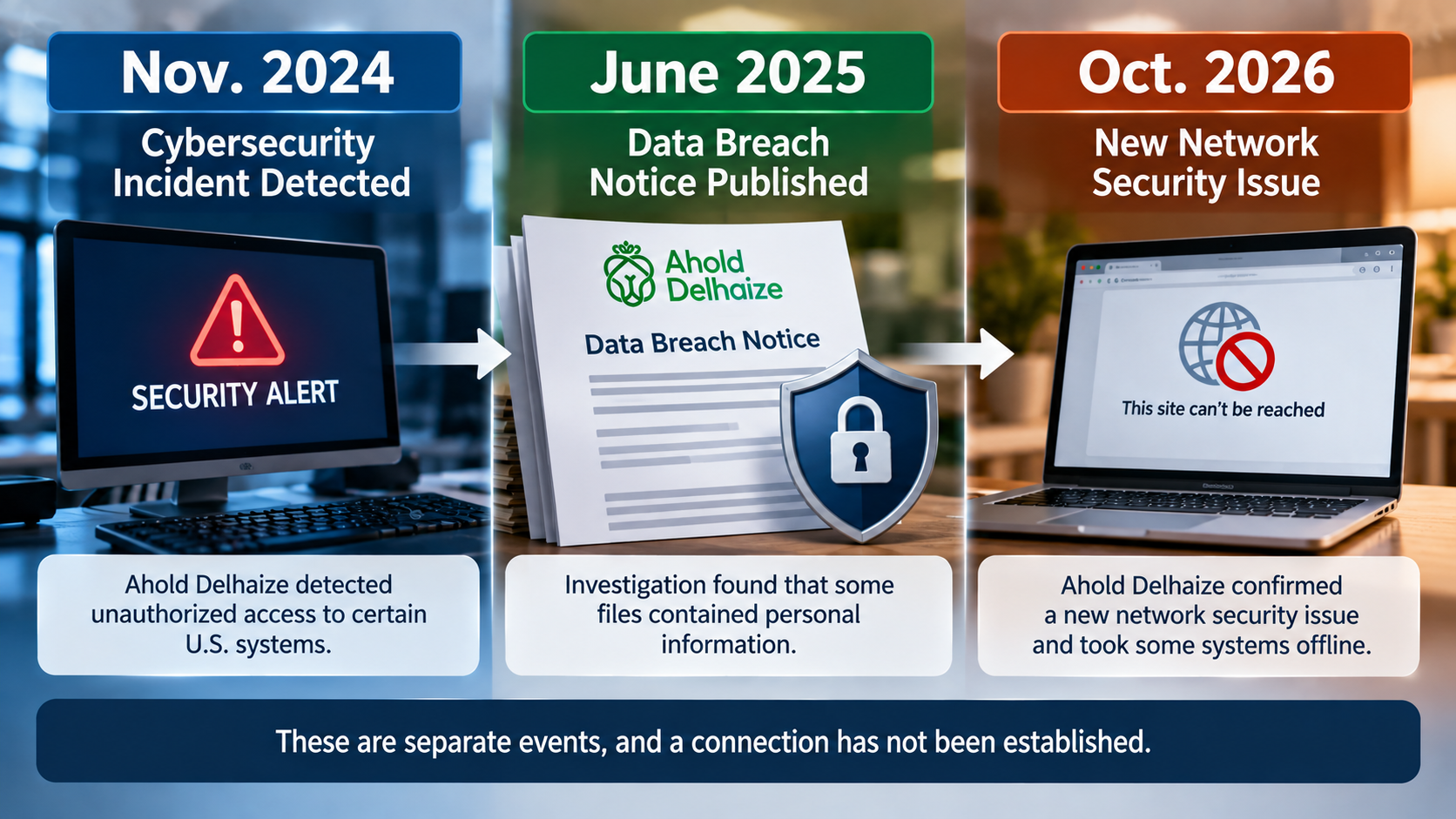
Yes. Ahold Delhaize disclosed a cybersecurity incident involving its U.S. operations in November 2024. Its later investigation found that an unauthorized third party had obtained files that might contain personal information.
But that earlier breach and the October 2026 security incident should not be treated as the same event without evidence connecting them.
The earlier case is important because it shows what investigators can learn after a company initially detects suspicious activity.
Ahold Delhaize USA Services said it detected unauthorized access involving certain internal U.S. business systems on November 6, 2024. Its investigation later found that an unauthorized third party obtained files from an internal repository between November 5 and November 6, 2024. (Ahold Delhaize USA Services)
On June 26, 2025, the company published an updated breach notice explaining that some of those files may have contained personal information. The affected individuals included certain current and former employees, dependents, beneficiaries and others whose information appeared in the relevant business files.
Depending on the individual, the information could include names, contact details, dates of birth, government-issued identification numbers, financial account information, employment records and certain health information.
The company said the vast majority of affected individuals were current or former employees and their dependents or beneficiaries. It also stated that it had no indication customer payment or pharmacy systems were compromised in connection with that earlier incident. (Ahold Delhaize USA Services)
The timeline matters:
| Date | Development | What it established |
|---|---|---|
| November 5–6, 2024 | Files were obtained from an internal U.S. repository | Unauthorized file acquisition was later identified |
| November 8, 2024 | Ahold Delhaize disclosed a U.S. network security issue | The investigation and containment response were underway |
| June 26, 2025 | Detailed data breach notice published | Files may have contained personal information |
| October 12, 2026 | A new network security issue was publicly disclosed | Protective shutdowns were underway; data exposure had not been established |
The November 2024 disclosure is preserved in the company’s earlier official statement.
The lesson from this timeline is not that the same attackers have returned. There is no verified basis for making that claim.
It is that cybersecurity investigations often have two different timelines: the initial operational disruption and the later determination of whether information was accessed or exposed.
That distinction helps explain why an announcement about offline websites cannot settle questions about personal information on the same day.
What Should Food Lion, Giant, and Stop & Shop Customers Do Right Now?
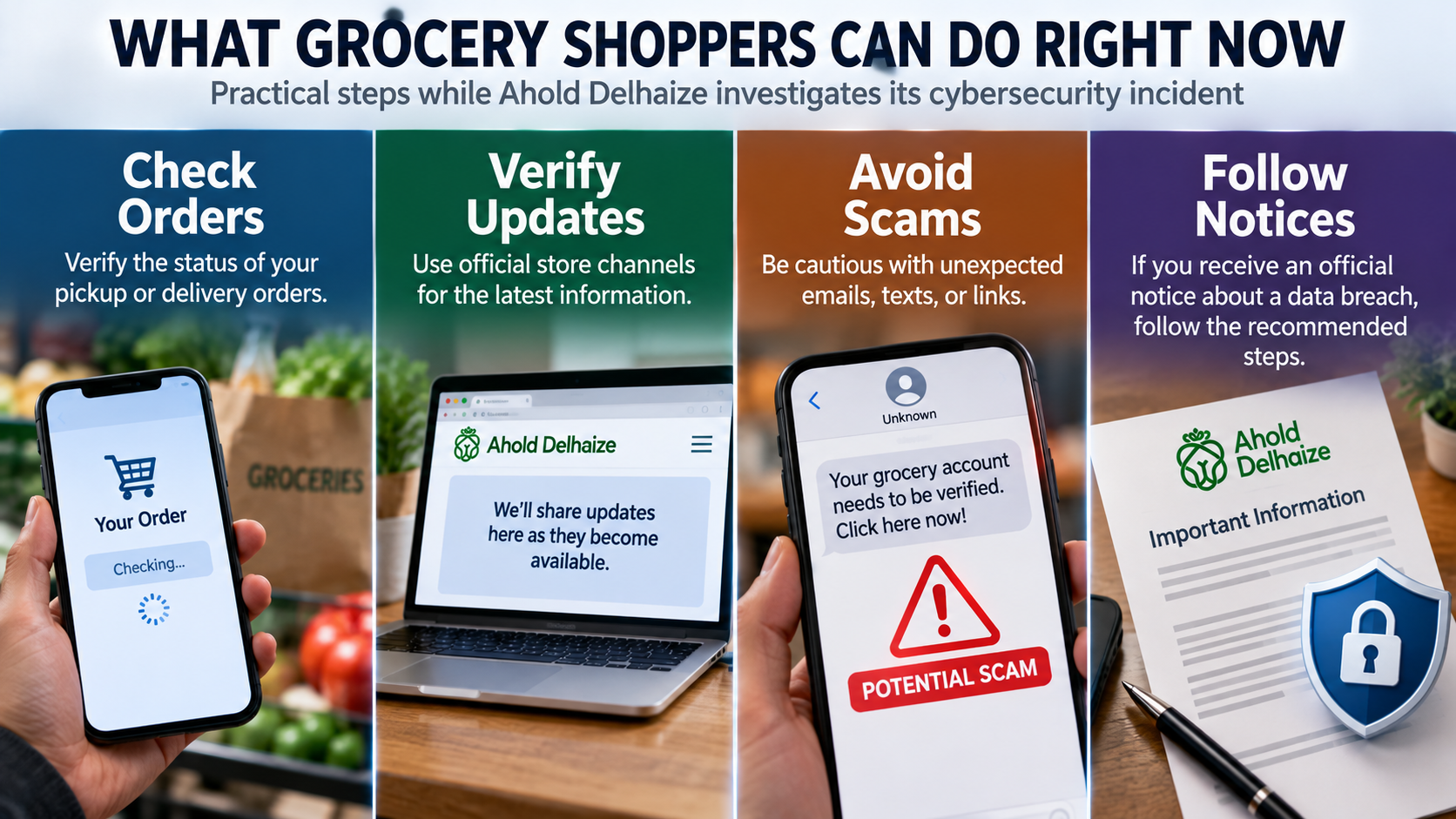
For most shoppers, the immediate concern is making sure their grocery plans are not disrupted. There is no verified basis in the October 12 disclosure for assuming every customer needs to cancel a credit card or freeze their credit.
A practical response has four parts.
- Check online orders before relying on them. If you have a pickup or delivery order, verify its status through the retailer’s established customer service channels when available. Do not assume an earlier order will be fulfilled on schedule if the retailer’s ordering systems are unavailable.
- Use established contact information. Look for official updates through the retailer’s normal channels. If a website is unavailable, a store’s previously known phone number may be a more reliable way to check local availability than an unfamiliar link shared online.
- Be cautious about unexpected account messages. A security incident can create an opportunity for unrelated scammers to send messages claiming that customers must urgently reset passwords or verify payments. This is a general phishing risk, not evidence that scammers have obtained Ahold Delhaize customer information. The FTC recommends contacting businesses through known, legitimate channels rather than following suspicious links. (FTC)
- Respond to a verified breach notice if one arrives. If a company confirms that your sensitive information was exposed, the appropriate steps depend on what was involved. A compromised password may call for a password change, while exposure of a Social Security number may justify reviewing credit reports and considering a credit freeze. The FTC provides guidance based on the type of information affected. (FTC)
If you reuse your grocery account password on other websites, changing to unique passwords and enabling multifactor authentication where offered are sensible security practices regardless of this particular incident.
There is no need to treat those precautions as proof that your account was hacked.
The distinction between a precaution and a response to confirmed exposure is important. Customers should be informed without being pushed into unnecessary panic.
What Happens Next—and How Will We Know How Serious the Incident Was?
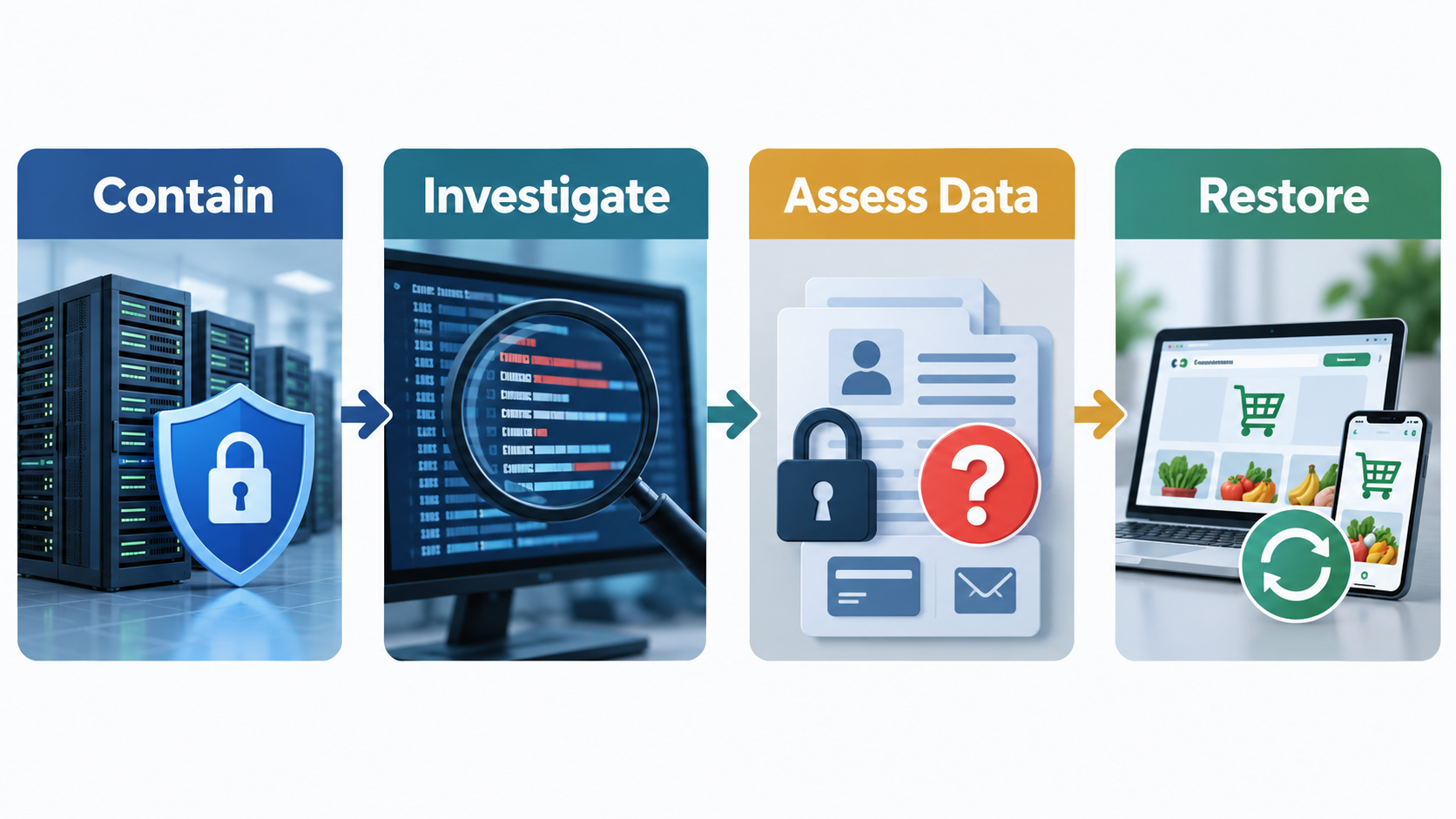
The next important developments will be the company’s findings about the affected systems, whether personal information was exposed, and when disrupted services can be safely restored.
Those are three related but separate questions.
1. Which systems were actually affected?
The first question is about scope.
Ahold Delhaize has disclosed a network security problem and protective system shutdowns. Further information could clarify how much of the disruption resulted directly from the security issue and how much resulted from the company’s decision to isolate systems as a precaution.
That distinction matters for both the duration of the outage and the work needed to restore services.
2. Was any personal information accessed or exposed?
This is the question most relevant to customer privacy.
An investigation could find that sensitive information was compromised, or it could find no evidence of such exposure. The October 12 announcement did not establish either outcome.
If a breach involving personal information is confirmed, the company may have notification obligations under applicable laws. Those requirements depend on factors such as the location of affected individuals, the nature of the information and the circumstances of the breach.
The FTC explains that businesses responding to data breaches must assess legal notification requirements and communicate what is known about the information involved. (FTC)
3. When will normal online services return?
Restoring systems is not always as simple as switching them back on.
During a security response, a business may need to determine which systems are trustworthy, address vulnerabilities, verify data integrity and bring services back in a controlled way.
An extended outage would not, by itself, prove that customer information was stolen. Conversely, a website coming back online would not necessarily mean an investigation into possible data exposure had ended.
The outcomes are related, but they measure different things.
For consumers, the clearest signals to watch are official updates about restored ordering services, notices describing affected data, and any confirmed findings about the cause of the incident.
Those developments will provide a firmer basis for judging the seriousness of the October 2026 event than the initial website shutdown alone.
Bottom Line: What This Story Really Means
Ahold Delhaize’s cybersecurity incident matters because one company’s network problem disrupted digital services across several grocery brands that millions of American shoppers recognize.
On October 12, the company confirmed it was taking some systems offline while assessing a security issue. Websites for major U.S. chains, including Food Lion, Stop & Shop, Giant Food, The Giant Company and Hannaford, were reported unavailable, while the company said its stores remained open.
What has been established is a security-related operational disruption—not a confirmed theft of customer credit card information.
The company’s earlier 2024 breach provides useful background, but it does not prove that the 2026 event involved the same attackers, vulnerabilities or affected data.
For now, shoppers should verify important online orders, follow official service updates and be cautious about suspicious messages.
The developments that will matter most are the restoration of online services and any verified findings about whether personal information was compromised.
Ahold Delhaize Cybersecurity Incident: Key Questions Explained
Q. Why were Food Lion and Stop & Shop websites down on October 12, 2026?
Their parent company, Ahold Delhaize, disclosed a network security issue and said it had taken some systems offline as a protective measure. Websites across its U.S. grocery brands were reported unavailable.
Q. Which U.S. grocery chains were affected by the website outages?
Reports on October 12 identified Food Lion, Stop & Shop, Giant Food, The Giant Company and Hannaford. These brands share Ahold Delhaize as their corporate parent.
Q. Were Ahold Delhaize grocery stores closed because of the cybersecurity incident?
No general store closure was announced. Ahold Delhaize said its stores remained open, although that did not guarantee every digital service at every location was functioning normally.
Q. Did hackers steal Food Lion or Stop & Shop customer credit card information?
The October 12 announcement did not establish that customer credit card information had been stolen. A network security issue does not automatically mean a data breach occurred.
Q. Was the October 2026 incident related to Ahold Delhaize’s 2024 data breach?
No connection had been publicly established in the information available from the initial October 2026 announcement. The 2024 incident involved unauthorized acquisition of files from an internal U.S. repository.
Q. Can I still shop in person at Giant Food or Hannaford?
Ahold Delhaize said its stores were open and serving customers. Customers who depend on specific services should check with their local store because the corporate announcement did not provide a detailed status for every individual operation.
Q. Should I change my grocery account password or cancel my credit card?
The October 12 announcement did not establish a reason for every customer to cancel a card. Unique passwords, multifactor authentication where available and attention to suspicious account activity remain sensible precautions.
Q. What is the difference between a cybersecurity incident and a data breach?
A cybersecurity incident is a broad security-related event that may threaten systems or information. A data breach involves unauthorized access, acquisition or exposure of protected information. One does not automatically establish the other.
Q. When will Ahold Delhaize’s websites and online ordering return?
No definitive restoration timetable was available in the company’s initial October 12 disclosure and contemporaneous industry reporting. Recovery depends on the affected systems and the security checks needed before services can safely resume.
Q. What should customers watch for next?
The most useful updates will identify restored shopping services, the actual scope and cause of the incident, and whether investigators confirm any exposure of personal information.
Did this help make the story clearer? 🙂 WIN keeps unpacking the “why” behind the news—clearly and simply!
Sources
October 2026 Cybersecurity Incident and Grocery Service Disruptions
Ahold Delhaize — Official Cybersecurity Incident Statement, October 12, 2026
Grocery Dive — Ahold Delhaize Experiencing Cybersecurity Issue, October 12, 2026
Supermarket News — Ahold Delhaize Shuts Down Websites After Cybersecurity Issue, October 12, 2026
Albert Heijn — Official IT Incident Statement, October 12, 2026
Previous Ahold Delhaize Security Incident and Data Exposure
Ahold Delhaize — Official Statement on the November 2024 U.S. Cybersecurity Issue
Ahold Delhaize USA Services — June 26, 2025 Cybersecurity Update
Ahold Delhaize USA Services — June 26, 2025 Data Breach Notice and Frequently Asked Questions
Consumer Protection and Data Breach Response
Federal Trade Commission — How to Recognize and Avoid Phishing Scams
Federal Trade Commission — What to Do After a Data Breach
Federal Trade Commission — Data Breach Response: A Guide for Business
Keep Reading
How Can Companies Find Security Weaknesses Before Attackers Do?
The grocery disruption raises a broader question about how organizations test their defenses before an incident occurs. An earlier WIN explainer examines how cybersecurity teams are using authorized AI-powered security testing to identify and validate vulnerabilities—and why that approach still has limits.
Why Is Palo Alto Networks Using Frontier AI to Attack Its Customers’ Own Systems?