Why Must Trump Testify Under Oath in His Own $10 Billion Lawsuit Against the BBC?

If Donald Trump is the one suing the BBC, why is he being ordered to answer the BBC’s questions under oath?
It sounds backward at first. Trump accused the British broadcaster of damaging his reputation and demanded billions of dollars. Now a federal judge has ordered him to participate in questioning by the very organization he sued.
But there is a legal reason for this: When someone files a civil lawsuit, the other side generally has the right to question that person about the claims they are making.
Being president does not automatically eliminate that obligation.
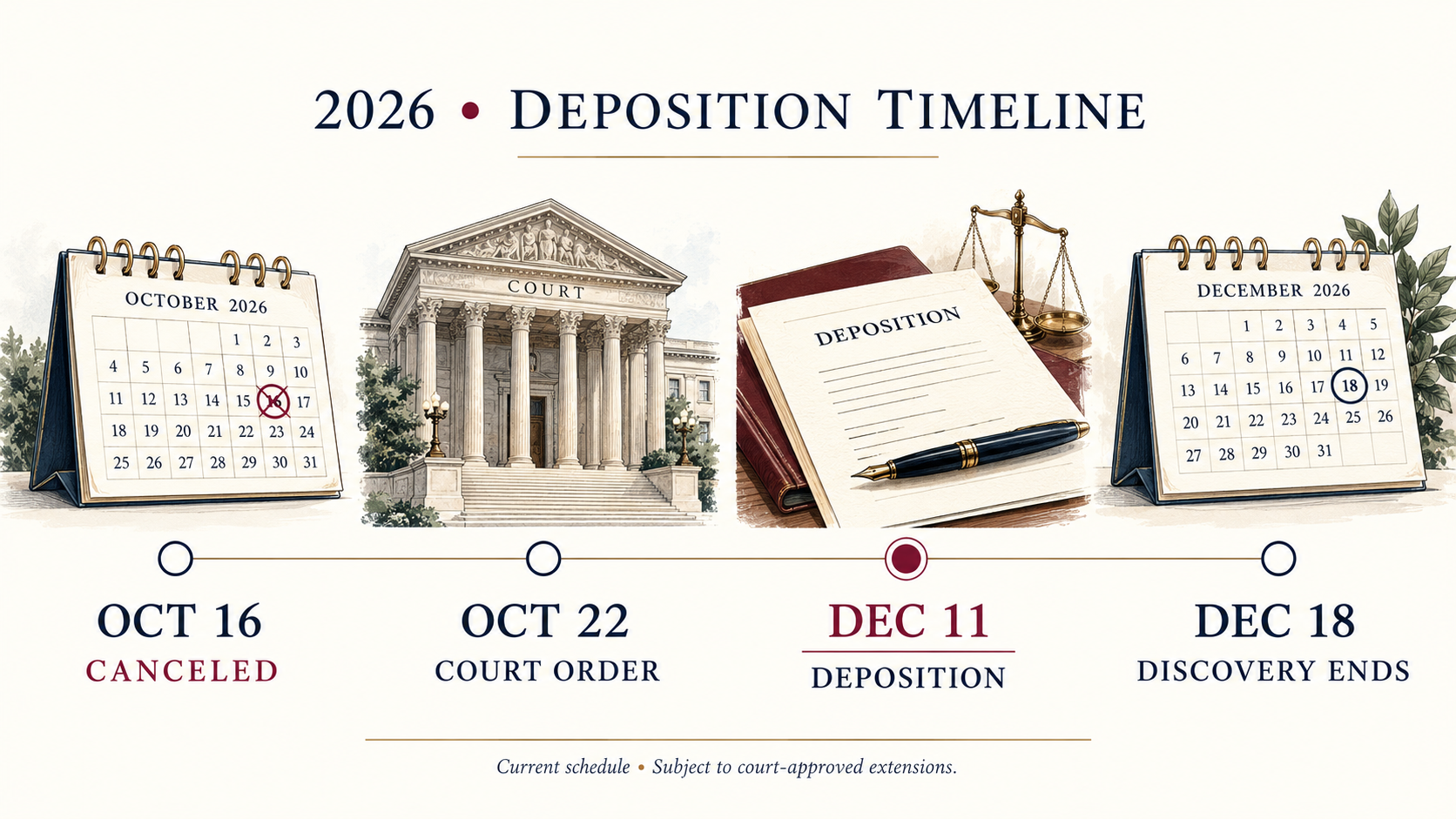
On October 22, 2026, a federal magistrate judge in Miami ordered Trump to sit for a deposition by December 11. The order followed a dispute over a previously scheduled session that Trump canceled.
The court also warned that continued failure to cooperate could lead to sanctions, potentially including dismissal of his own lawsuit. (AP · Reuters)
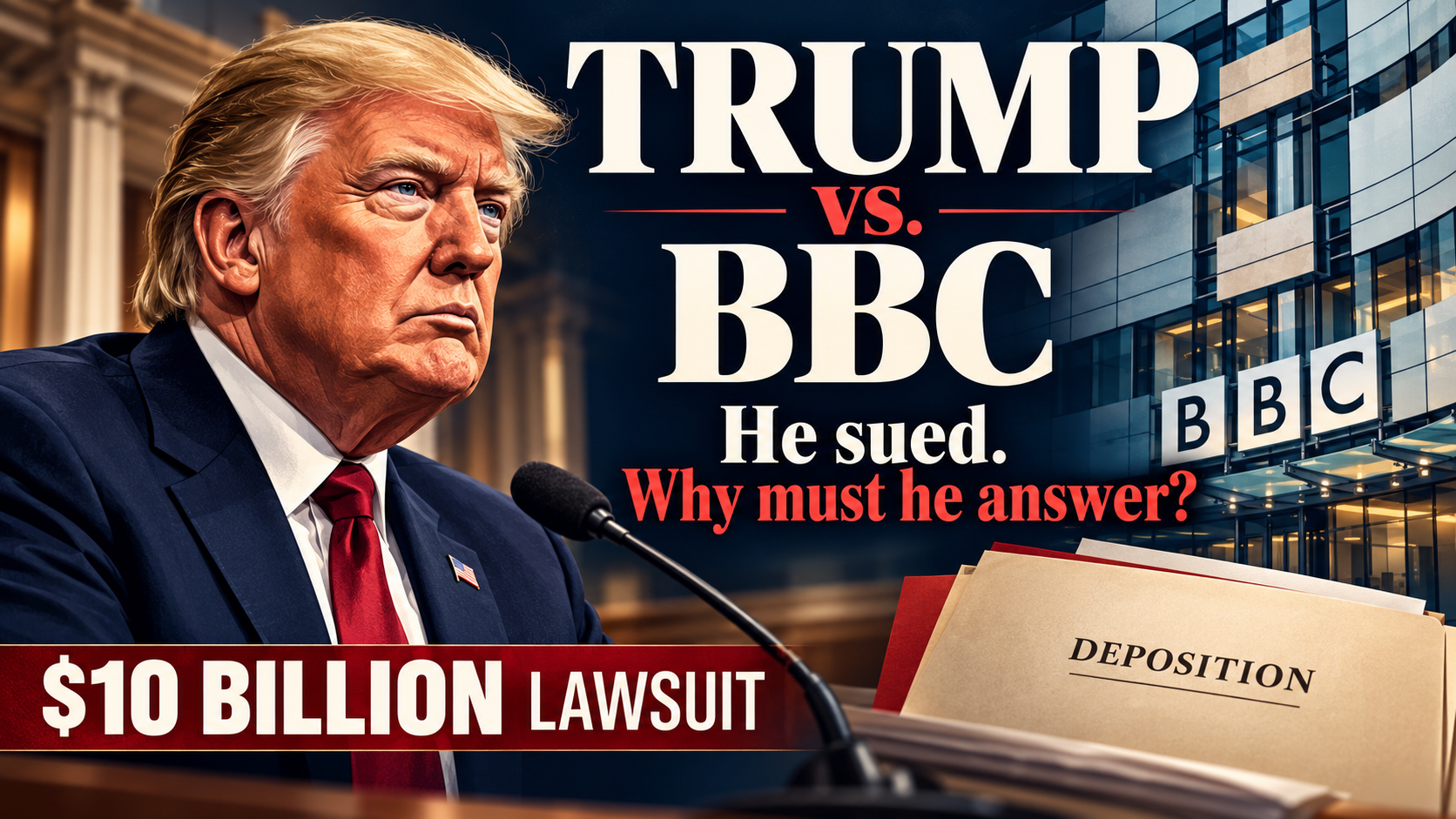
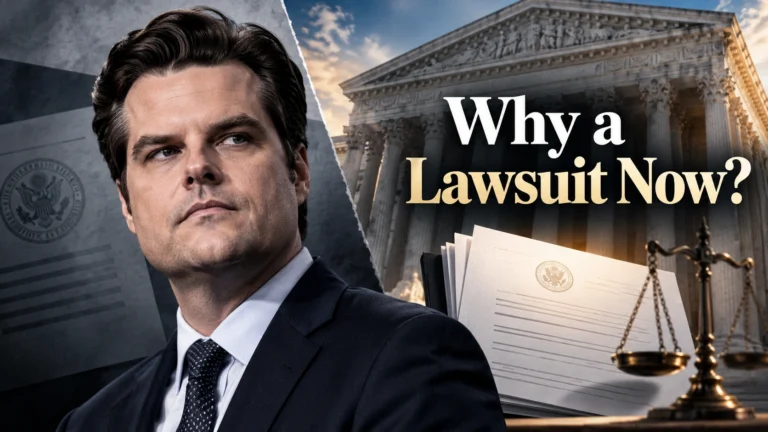
※ Images in this article are AI-generated illustrations created to help explain the story. They are not actual photographs, and depictions of people, places, or events may differ slightly from reality.
The dispute began with the BBC’s editing of Trump’s January 6, 2021, speech, but the latest development raises a broader question about American civil litigation.
How much access to a president’s testimony should a defendant receive when the president himself chose to bring the case?
What Exactly Did the Judge Order Trump to Do?
U.S. Magistrate Judge Enjoliqué Lett ordered Trump to undergo questioning under oath by December 11, 2026. The ruling concerns evidence gathering, not whether Trump wins or loses his defamation claim.
The BBC’s lawyers had requested court intervention because they said Trump repeatedly postponed making himself available for questioning.
According to court filings described by the Associated Press, the BBC initially sought deposition dates in July 2026. The two sides eventually agreed on October 16.
But on September 28, Trump’s lawyers informed the BBC that the president could no longer attend because of other matters they described as being of national importance.
The BBC’s attorney, Charles Tobin, argued that Trump instead participated in a political campaign event in Georgia on the scheduled day.
Trump’s legal team cited presidential scheduling conflicts. The parties subsequently disagreed over whether questioning should be postponed until January 2027.
That created a problem for the BBC: the evidence-gathering phase of the lawsuit was scheduled to close on December 18.
Judge Lett’s October 22 ruling gave Trump a deadline one week before that cutoff. The judge warned of possible sanctions, including dismissal, unless the discovery schedule is extended. (AP)
The order does not mean Trump must testify in a public courtroom on December 11. It means he must participate in a formal deposition by that date under the current schedule.
To understand why this matters, it helps to see how the dispute reached a federal court in Florida.
How Did a January 6 Speech Become a $10 Billion Lawsuit?
The lawsuit centers on a BBC Panorama documentary broadcast in Britain on October 28, 2024, titled Trump: A Second Chance?
The documentary included an edited section of Trump’s January 6, 2021, speech, delivered before his supporters attacked the U.S. Capitol.
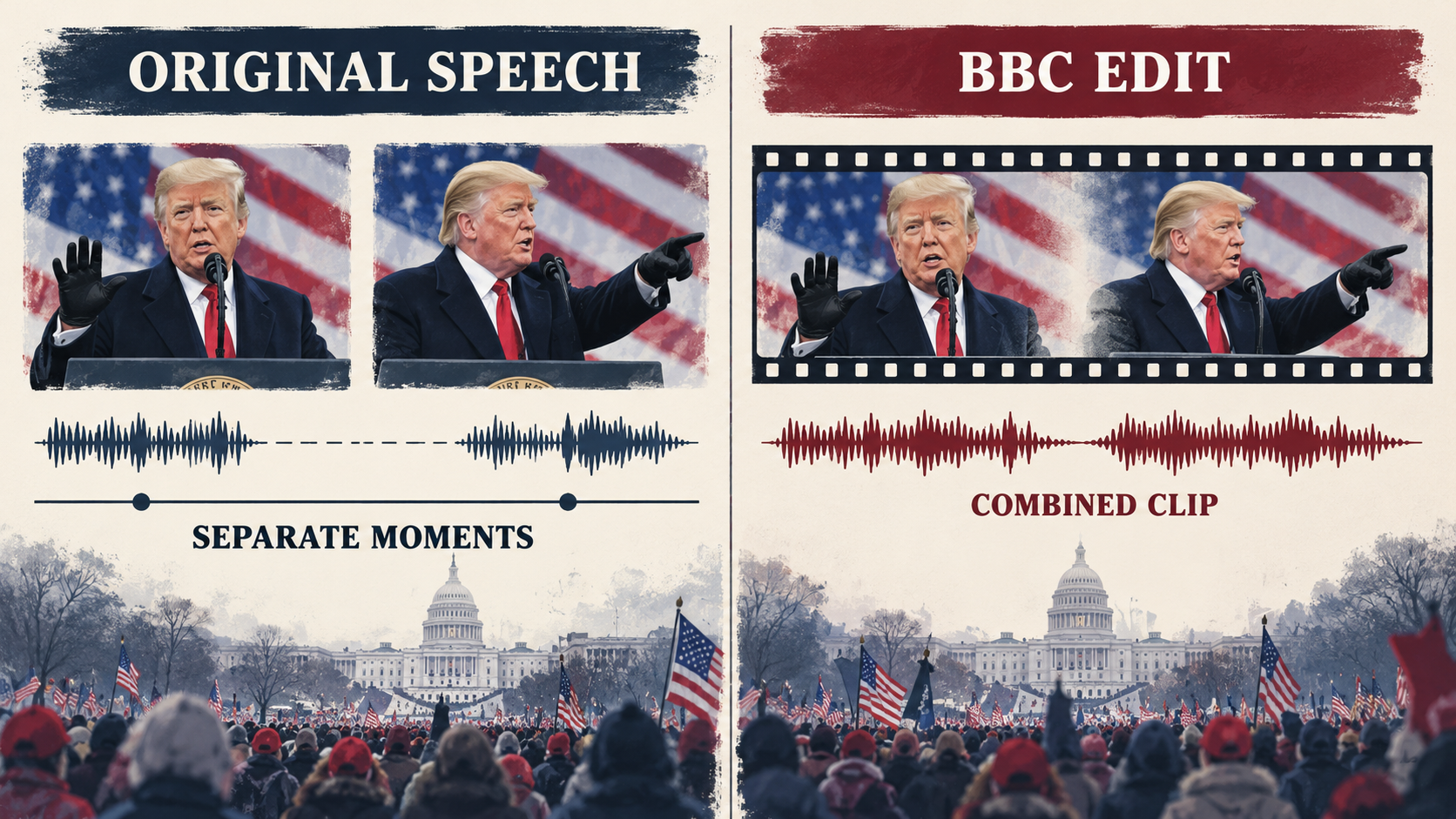
In the original speech, Trump told supporters they would walk toward the Capitol. In a separate portion of the address, much later, he urged supporters to fight forcefully for their cause.
The documentary joined sections of the speech in a way that made those statements appear more directly connected.
It also omitted a portion in which Trump encouraged supporters to make their voices heard peacefully and patriotically.
The resulting edit appeared to present a more direct call for violent action than the original sequence supported. The BBC later acknowledged that its editing created a misleading impression. (Reuters)
Why did that edit become such a serious controversy?
A viewer watching a documentary naturally assumes that an apparently continuous quotation reflects what a person said in that sequence.
Combining statements made at different moments can change how an audience understands the speaker’s meaning, even if the individual words were genuinely spoken.
Trump’s lawyers argue that the BBC’s edit falsely portrayed him as directly encouraging the Capitol violence and harmed his reputation.
The BBC acknowledges the editorial error but disputes whether it legally defamed him.
Those are two different questions: Was the editing misleading? And did it meet the legal requirements for defamation?
The first question has already prompted an apology. The second remains contested in court.
If the BBC Apologized, Why Hasn’t the Lawsuit Ended?
The BBC apologized in November 2025 and said it would not rebroadcast the documentary. But it explicitly rejected the argument that its mistake created a valid defamation claim.
An apology can acknowledge an editorial failure without accepting legal liability.
The BBC’s chairman, Samir Shah, sent Trump a personal apology. The controversy also preceded the resignations of the broadcaster’s director-general and its top news executive.
The broadcaster maintained that its edit was a mistake rather than an intentional attempt to defame Trump. (Reuters)
Trump was not satisfied with the apology alone. On December 15, 2025, he filed suit in the U.S. District Court for the Southern District of Florida.
His complaint alleged defamation and a violation of Florida’s Deceptive and Unfair Trade Practices Act.
The difference between the two sides is easier to understand when their positions are placed next to each other.
| Issue | Trump’s Position | BBC’s Position |
|---|---|---|
| Speech editing | The edit falsely portrayed him as encouraging violence | The edit was misleading and warranted an apology |
| Legal responsibility | The presentation amounted to actionable defamation | An editorial error does not automatically establish defamation |
| Intent | The editing was deliberate and malicious, according to his lawyers | The broadcaster denies acting with the legally required malice |
| Harm | His reputation and professional interests were damaged | The BBC disputes that legally actionable harm was established |
| U.S. jurisdiction | Trump brought the case in a Florida federal court | The BBC argues the relevant documentary was not distributed in the United States |
These are litigation positions, not findings that either side’s claims have been proved. (BBC Motion to Dismiss · Reuters)
The dispute therefore did not disappear when the BBC acknowledged its mistake.
For Trump, the apology did not resolve his claim that he was legally harmed. For the BBC, admitting a mistake did not mean accepting the financial consequences Trump sought.
And once that disagreement became a lawsuit, both sides acquired procedural rights to seek evidence.
Can a Sitting President Really Be Required to Answer Questions Under Oath?
Yes. A sitting U.S. president is not automatically exempt from civil litigation involving unofficial conduct. Courts must respect presidential responsibilities, but the presidency does not provide unlimited protection from ordinary civil proceedings.
The central precedent is Clinton v. Jones, a 1997 Supreme Court decision.
That case involved a civil lawsuit against President Bill Clinton over alleged conduct before he became president.
The Supreme Court unanimously rejected the argument that the Constitution required the lawsuit to be postponed until Clinton left office.
The decision did not eliminate every possible accommodation for a president’s responsibilities. Courts retain discretion to manage scheduling and protect legitimate executive interests. (U.S. Supreme Court — Clinton v. Jones)
Trump’s case is different in one important respect: he is the person who voluntarily filed the lawsuit.
That makes the BBC’s request to question him especially relevant to the ordinary rules of civil discovery.
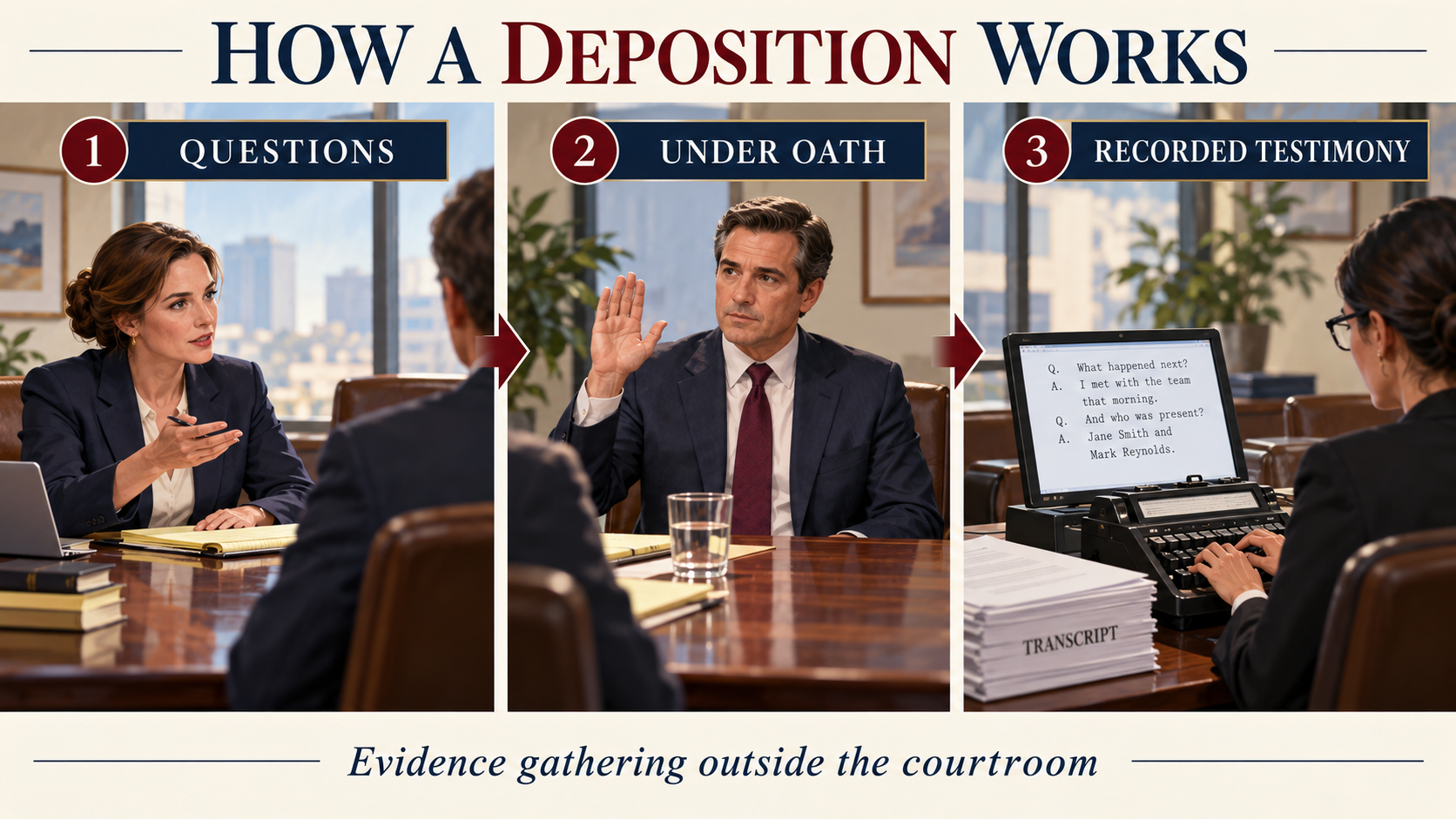
What is a deposition?
A deposition is a formal interview conducted under oath, usually outside a courtroom.
During a deposition, attorneys question a witness or a party about matters relevant to the lawsuit. The answers are recorded and may later be used in court proceedings, subject to applicable evidence rules.
Under Rule 30 of the Federal Rules of Civil Procedure, parties generally can question relevant witnesses through depositions, with limits and protections governing the process. (Federal Rules of Civil Procedure — Rule 30)
For example, the BBC’s lawyers could seek answers about why Trump believes the documentary harmed him, what evidence supports his claimed losses, and other relevant issues within the permitted scope of discovery.
That does not mean lawyers can demand answers to every imaginable question. Relevance, privilege, court orders, and other legal protections still matter.
Most importantly, a deposition is not a criminal interrogation and is not itself a finding of wrongdoing.
It is part of the process of allowing both sides to prepare their cases.
What Would Trump Actually Have to Prove to Win $10 Billion?
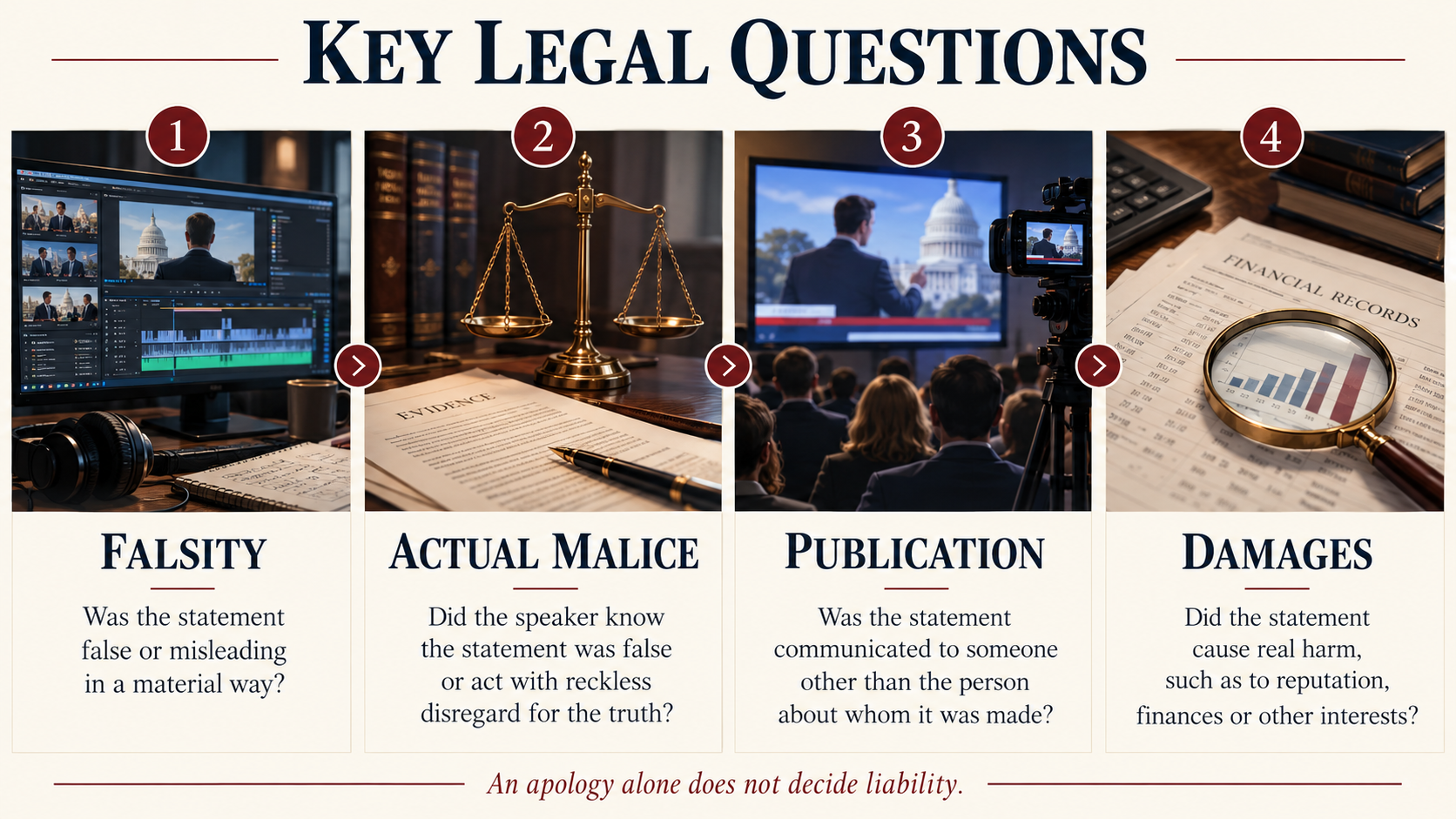
The $10 billion is an amount Trump requested, not money a court has awarded him.
His original complaint sought at least $5 billion on its defamation count and at least another $5 billion on its Florida deceptive-trade-practices count. Those are separate legal claims with different requirements. (Reuters)
One major obstacle in the defamation claim is the constitutional protection given to speech about public officials.
Under the Supreme Court’s 1964 decision in New York Times Co. v. Sullivan, public officials must satisfy a demanding legal standard to recover damages for defamatory falsehoods about their official conduct.
They generally must prove actual malice with clear and convincing evidence.
Despite its name, actual malice does not simply mean that a publisher disliked someone or wanted to criticize them.
In this context, it means publishing a defamatory falsehood while knowing it was false or acting with reckless disregard for whether it was true. (Cornell Law School — New York Times v. Sullivan)
That distinction matters here.
A broadcaster can admit that an edit was misleading while still arguing that the evidence does not establish the mental state required for defamation liability.
Trump’s lawyers argue that the editing was deliberate and defamatory. The BBC denies that it acted with actual malice.
Why does the documentary’s audience matter?
There is also a dispute over where the documentary was distributed.
The BBC has argued that the relevant Panorama episode aired in Britain and was not distributed through its American channels.
In a motion seeking dismissal, it contested the Florida court’s jurisdiction over the British defendants and challenged the sufficiency of Trump’s claims. (BBC Motion to Dismiss)
This is not merely a technical argument about streaming platforms.
If the BBC successfully establishes that the Florida court lacks jurisdiction, the case could face dismissal without a trial deciding the underlying defamation allegations.
The precise extent and legal significance of any distribution in the United States are contested issues.
Why does the claimed financial harm matter?
A large damages request also raises questions about evidence.
Trump’s lawyers allege harm to his reputation and professional interests. The BBC disputes whether the documentary caused the kind of injury required to support the claims.
The amount requested in a complaint does not, by itself, establish the amount of harm.
That is one reason discovery can become unusually personal in a major defamation lawsuit: the parties may seek information about the plaintiff’s reputation, financial interests, and the effects of the allegedly defamatory material.
Why Is the BBC Interested in Jack Smith and Mar-a-Lago Records?
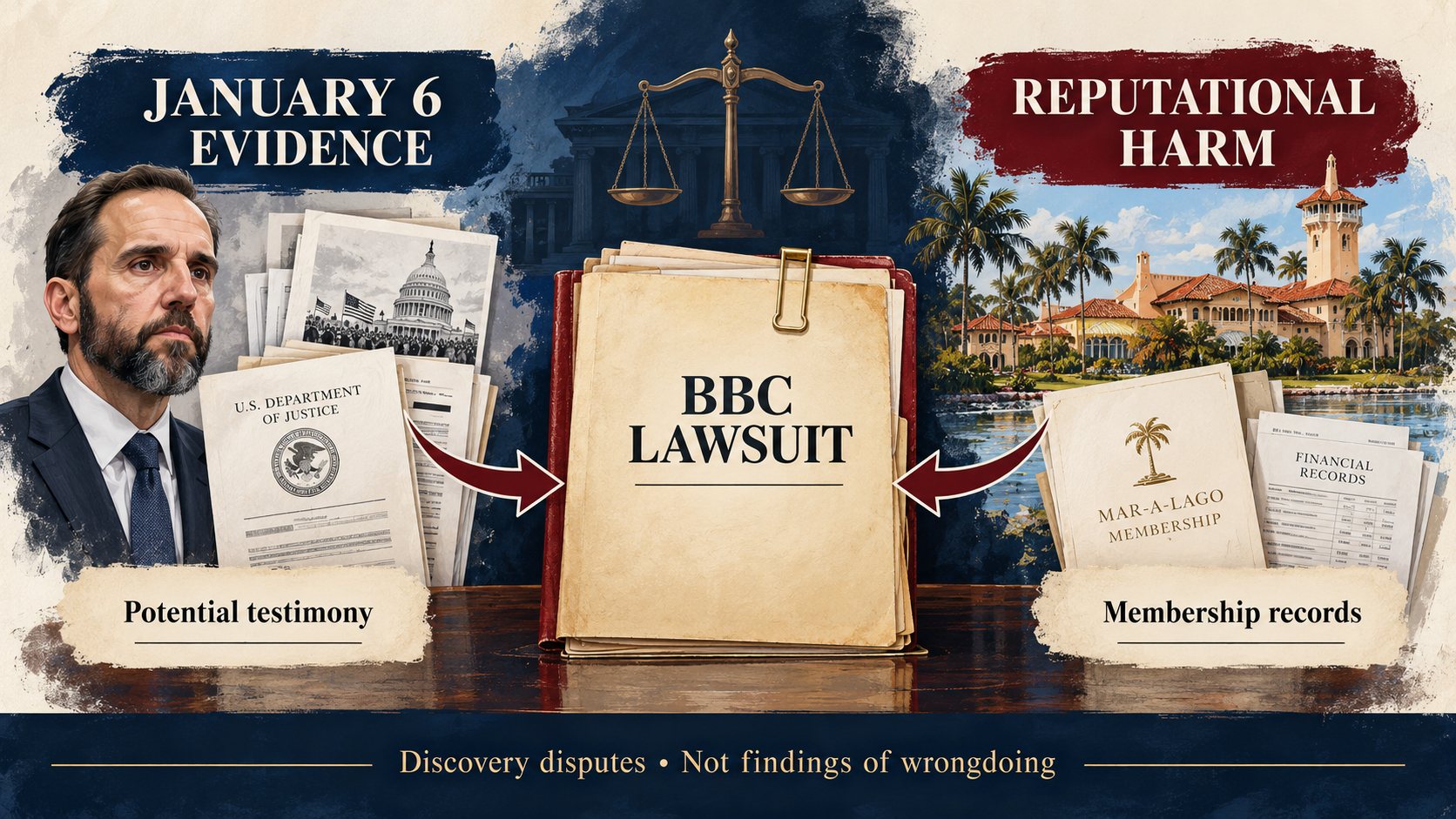
The BBC is pursuing two broad categories of evidence: information connected to January 6 and information that might help test Trump’s claimed reputational harm.
Both connect to questions raised by his lawsuit, but they serve different purposes.
Why does former special counsel Jack Smith matter?
Smith previously led federal investigations involving Trump, including the investigation connected to January 6.
The BBC has sought to question Smith as part of its defense, arguing that his extensive investigation may help identify relevant evidence.
Trump’s lawyers oppose the effort.
They argue that Smith was not present when Trump delivered the speech, did not help prepare it, and lacks firsthand knowledge of Trump’s state of mind at that moment.
The BBC counters that Smith’s investigative experience makes his knowledge potentially relevant.
At the October 22 hearing, questions surrounding Smith’s potential testimony remained under consideration. The judge directed the Justice Department to respond by November 2 to Smith’s request concerning permission to testify. (AP)
Smith is not prosecuting Trump in this BBC lawsuit. This is a private civil dispute, and the broadcaster is seeking potential evidence for its defense.
What do Mar-a-Lago membership records have to do with a documentary?
The BBC has also sought membership-related information from Trump’s Mar-a-Lago resort in Florida.
Its argument is that the club’s popularity and membership activity could provide information relevant to Trump’s claimed reputation and alleged losses.
Trump’s lawyer challenged the relevance of those records, arguing that Trump does not personally operate Mar-a-Lago and that the club’s business performance should not be equated with his reputation.
The October 22 proceedings included a dispute over access to membership applications and fee information. The judge allowed the BBC to obtain specified membership information, subject to the scope of the order. Such discovery questions are separate from whether Trump ultimately proves damages. (AP)
The broader lesson is that a plaintiff who claims substantial reputational or financial injury may face scrutiny of evidence related to those allegations.
Filing a lawsuit gives a person an opportunity to seek compensation, but it also opens the door to the opposing side’s legally permitted examination of the claim.
What Happens if Trump Does Not Testify by December 11?
Failure to comply with the deposition order could expose Trump to court-imposed sanctions, potentially including dismissal of his lawsuit.
But dismissal is a possible consequence, not an automatic result already decided by the court.
Federal courts have several tools for addressing failures to comply with discovery orders. Depending on the circumstances, Rule 37 allows sanctions that can range from narrower evidentiary consequences to dismissal in appropriate cases. (Federal Rules of Civil Procedure)
In this case, Judge Lett specifically warned about possible dismissal if the deposition does not take place within the court’s deadline and the discovery schedule is not extended.
The timing explains why the order matters.
| Date | Event or Deadline | Significance |
|---|---|---|
| October 16, 2026 | Previously agreed deposition date | Trump canceled the scheduled appearance |
| October 22, 2026 | Federal court order | Judge required a deposition by December 11 |
| December 11, 2026 | Deposition deadline | Trump must comply under the current order |
| December 18, 2026 | Scheduled close of discovery | Evidence gathering is set to end unless extended |
The judge overseeing the case’s overall schedule can consider changes to the timetable. A properly granted extension could therefore affect the deposition deadline. (AP)
The lawsuit itself has not been resolved by the October 22 ruling.
Trump has not been awarded $10 billion, and the court has not concluded that the BBC committed actionable defamation.
The immediate question is procedural: Will the deposition occur as ordered, will the schedule change, or will further court intervention be required?
Bottom Line: What This Story Really Means
Donald Trump filed a $10 billion lawsuit against the BBC because he says a misleading documentary edit damaged his reputation.
The BBC has apologized for its editing but denies that it is legally liable for defamation.
Now the case has reached a stage where Trump, as the plaintiff, must make himself available for questioning about his claims.
The October 22, 2026, order does not determine who is right about the documentary. It concerns a different principle: A person who brings a civil lawsuit generally cannot prevent the opposing party from obtaining relevant evidence merely because answering questions is inconvenient.
Presidential duties may justify reasonable scheduling accommodations, but they do not automatically halt private civil litigation.
The next significant deadline is December 11.
What happens around that date could determine whether the parties continue gathering evidence on schedule or face another dispute over compliance.
Trump BBC Lawsuit: Key Questions Explained
Q. Is Trump required to testify in the BBC lawsuit?
Yes. A federal magistrate judge ordered Trump to participate in a deposition by December 11, 2026, under the current discovery schedule. That deadline could be affected by a court-approved scheduling extension.
Q. Why is Trump being questioned if he is the one who filed the lawsuit?
Because the BBC is entitled to seek relevant evidence to defend itself against his claims. The plaintiff’s decision to sue does not exempt him from ordinary civil discovery obligations.
Q. Is Trump being questioned in a criminal case?
No. The BBC litigation is a civil lawsuit concerning alleged defamation and deceptive or unfair trade practices. The deposition is part of civil evidence gathering.
Q. Did the BBC admit it defamed Trump?
No. The BBC acknowledged that its documentary contained a misleading edit and apologized, but it disputes that the mistake satisfies the legal requirements for defamation.
Q. Why is Trump demanding $10 billion?
His original complaint sought at least $5 billion on each of two claims: defamation and alleged violations of Florida’s deceptive-trade-practices law. Those are requested damages, not a court award.
Q. What does actual malice mean in a defamation lawsuit?
For public-official and public-figure defamation claims, actual malice generally means publishing a false statement with knowledge of its falsity or reckless disregard for the truth. It is not simply personal hostility toward the plaintiff.
Q. Can a sitting U.S. president be involved in a civil lawsuit?
Yes. The Supreme Court’s decision in Clinton v. Jones rejected blanket temporary immunity from civil litigation involving unofficial conduct. Courts may still account for legitimate presidential duties when managing proceedings.
Q. Why does the BBC want to question Jack Smith?
The BBC argues that Smith’s investigation into January 6 may help identify relevant evidence. Trump’s lawyers argue that Smith lacks firsthand knowledge of the speech’s preparation or Trump’s intentions.
Q. Can the judge dismiss Trump’s lawsuit if he refuses the deposition?
Potentially. The judge warned that noncompliance could lead to sanctions, including dismissal. Whether any sanction is imposed would depend on subsequent events and court decisions.
Q. Has the court decided whether the BBC legally defamed Trump?
No. The October 22 ruling concerns the discovery process. It does not establish defamation liability or decide the amount of damages.
Did this help make the story clearer? 🙂
WIN keeps unpacking the “why” behind the news—clearly and simply!
Sources
October 22 Deposition Order and Court Proceedings
Associated Press — Judge Orders Trump to Sit for a Deposition in BBC Lawsuit by December 11
Reuters — Trump Ordered to Sit for Deposition in His $10 Billion BBC Lawsuit
The Guardian — BBC Asks Judge to Compel Trump’s Deposition
Documentary Editing, Apology, and Legal Claims
Reuters — Trump Sues BBC for $10 Billion Over January 6 Speech Edit
Reuters — BBC Apologizes Over Speech Edit but Rejects Defamation Claim
BBC Defendants’ March 2026 Motion to Dismiss — U.S. District Court, Southern District of Florida
Presidential Civil Litigation and Defamation Law
U.S. Supreme Court — Clinton v. Jones (1997)
Cornell Law School — New York Times Co. v. Sullivan and the Actual Malice Standard