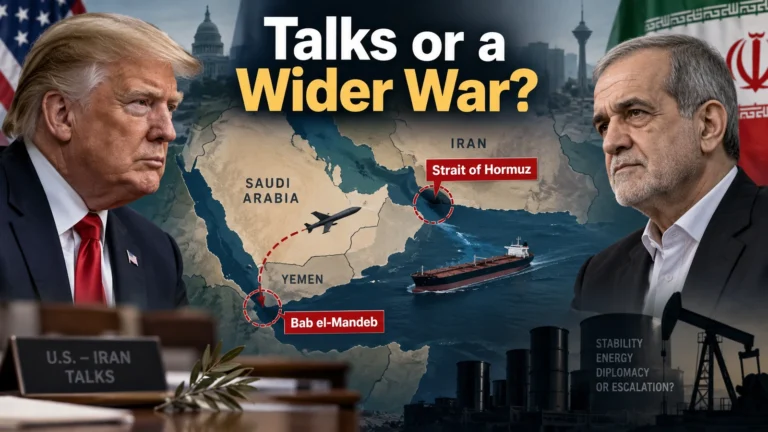
Iran Offered to Reopen Hormuz in Seven Days. Did Trump Reject the Deal—and What Does “Trump Strait” Mean?
Wasn’t Iran the country restricting traffic through the Strait of Hormuz?
So why is Tehran now saying it could restore normal passage in just seven days?
And if President Donald Trump really rejected that proposal, why did his next highly visible response appear to be a map calling the waterway “Trump Strait”?
There is an important distinction at the center of this story: Iran publicly laid out a seven-day plan, while the claim that Trump rejected it came from a Wall Street Journal report citing unnamed U.S. officials. Reuters reported that Iran was still waiting for an official U.S. response and that an American official had described mediated contacts with Iran as “positive and constructive.” (Reuters)
Then came the map.
Trump posted an image on Truth Social showing the Strait of Hormuz labeled “TRUMP STRAIT.” AP reported that the post appeared shortly after Iran put forward its proposal. (AP)
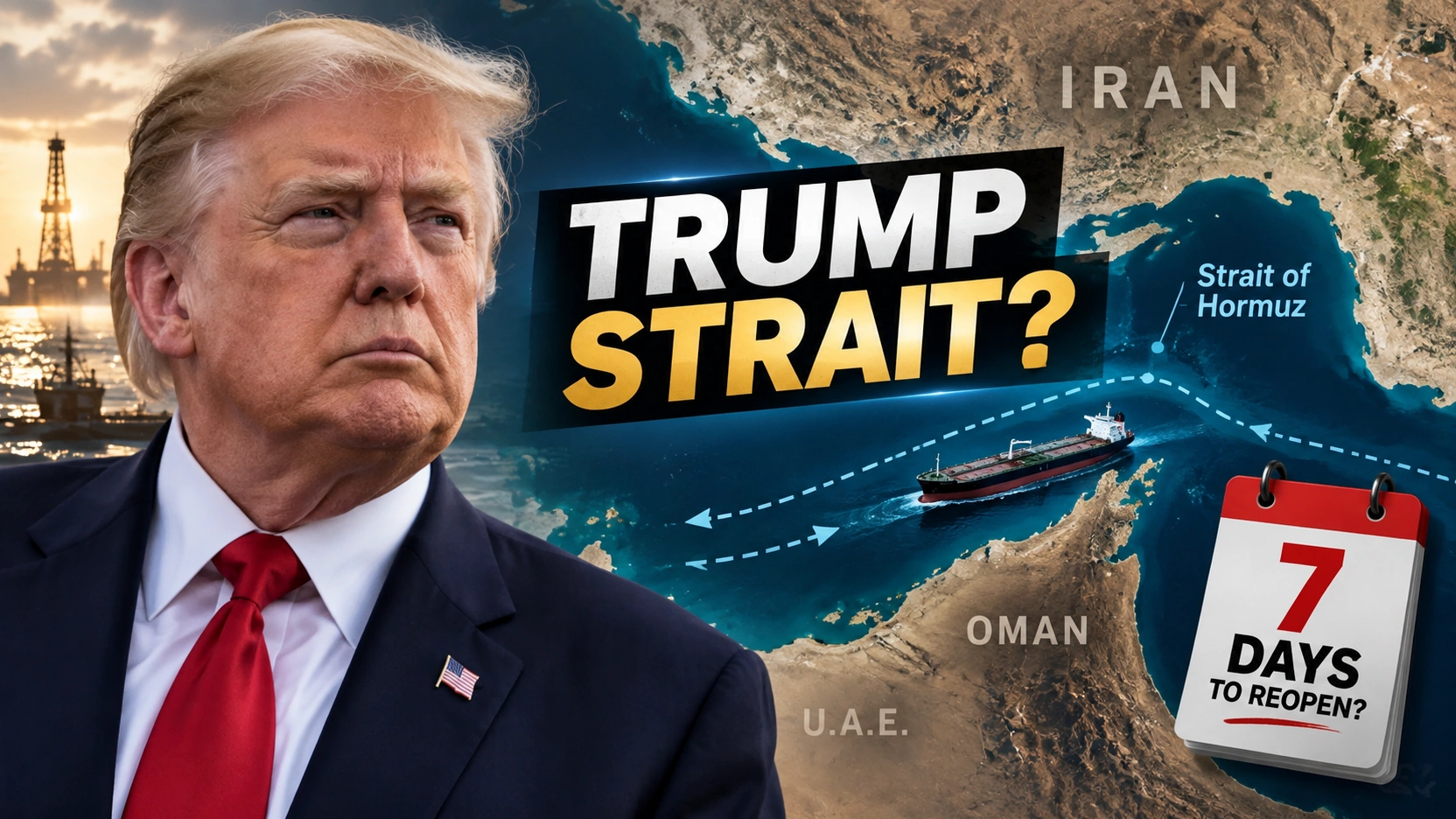
That makes this more than an unusual map-labeling story.
It is really a dispute about who has leverage over one of the world’s most important energy routes, what each side would have to give up to reopen it, and whether the newest diplomatic opening can produce an agreement.
What Exactly Is Iran Offering?
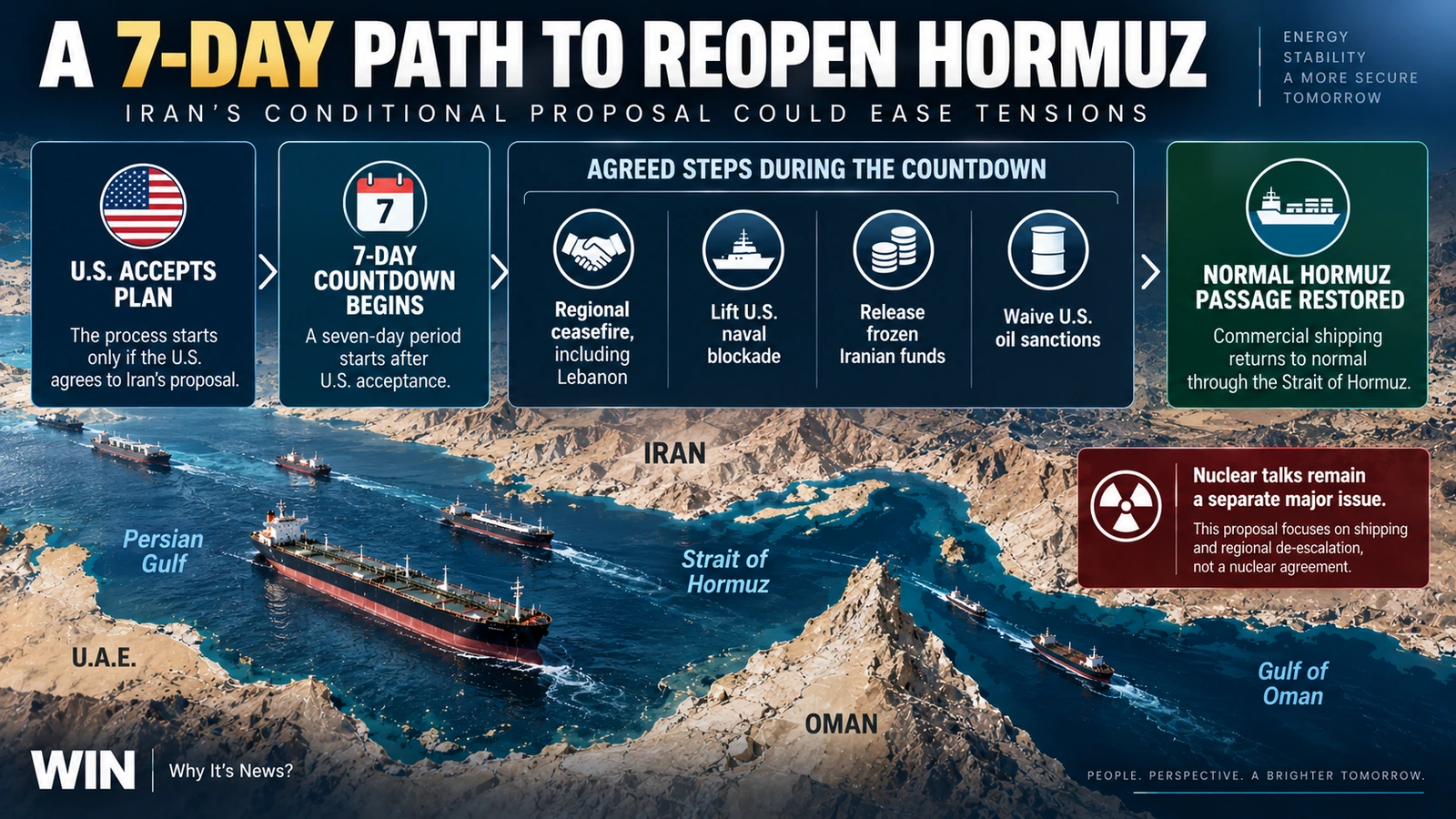
Iranian Foreign Minister Abbas Araqchi said on September 25 that Tehran had given the United States a “concrete” seven-day plan and that, if the required conditions were met, normal maritime passage through Hormuz could be restored within that period. (Reuters)
But “Iran will reopen Hormuz in seven days” leaves out the most important part.
The seven days would begin only after Washington accepted the required steps.
Reuters reported that Iran’s proposal included ending hostilities across the region, including in Lebanon, lifting the U.S. naval blockade on Iranian ports, releasing frozen Iranian funds and granting relief from oil sanctions. AP separately reported that the seven-day countdown would begin only after U.S. acceptance and that the initial implementation steps were expected to take several days. A senior Iranian official also said Tehran would not make nuclear concessions simply in exchange for reopening the waterway. (Reuters · AP)
A simplified version looks like this:
| Issue | Iran’s stated position | What would have to change |
|---|---|---|
| Strait of Hormuz | Normal passage could return within seven days | Washington must accept the package first |
| U.S. naval blockade | Iran wants it lifted | U.S. military restrictions on Iranian ports would ease |
| Regional fighting | Iran proposes an end to hostilities on multiple fronts | A broader ceasefire would have to hold |
| Iranian oil | Tehran wants sanctions relief | Washington would grant oil-related waivers or relief |
| Frozen funds | Iran wants access restored | U.S.-linked financial restrictions would change |
| Nuclear issue | Iran says it will not concede its core position as part of this opening step | Nuclear negotiations would remain a separate major dispute |
That is why describing the proposal simply as a “ceasefire offer” can be misleading.
It is closer to a sequenced bargain in which each side gives up some leverage before a broader negotiation resumes.
Reuters reported on September 24 that U.S. and Iranian negotiators were already exploring a phased formula because neither side wanted to surrender its strongest bargaining tool first. (Reuters)
Did Trump Actually Reject the Seven-Day Plan?
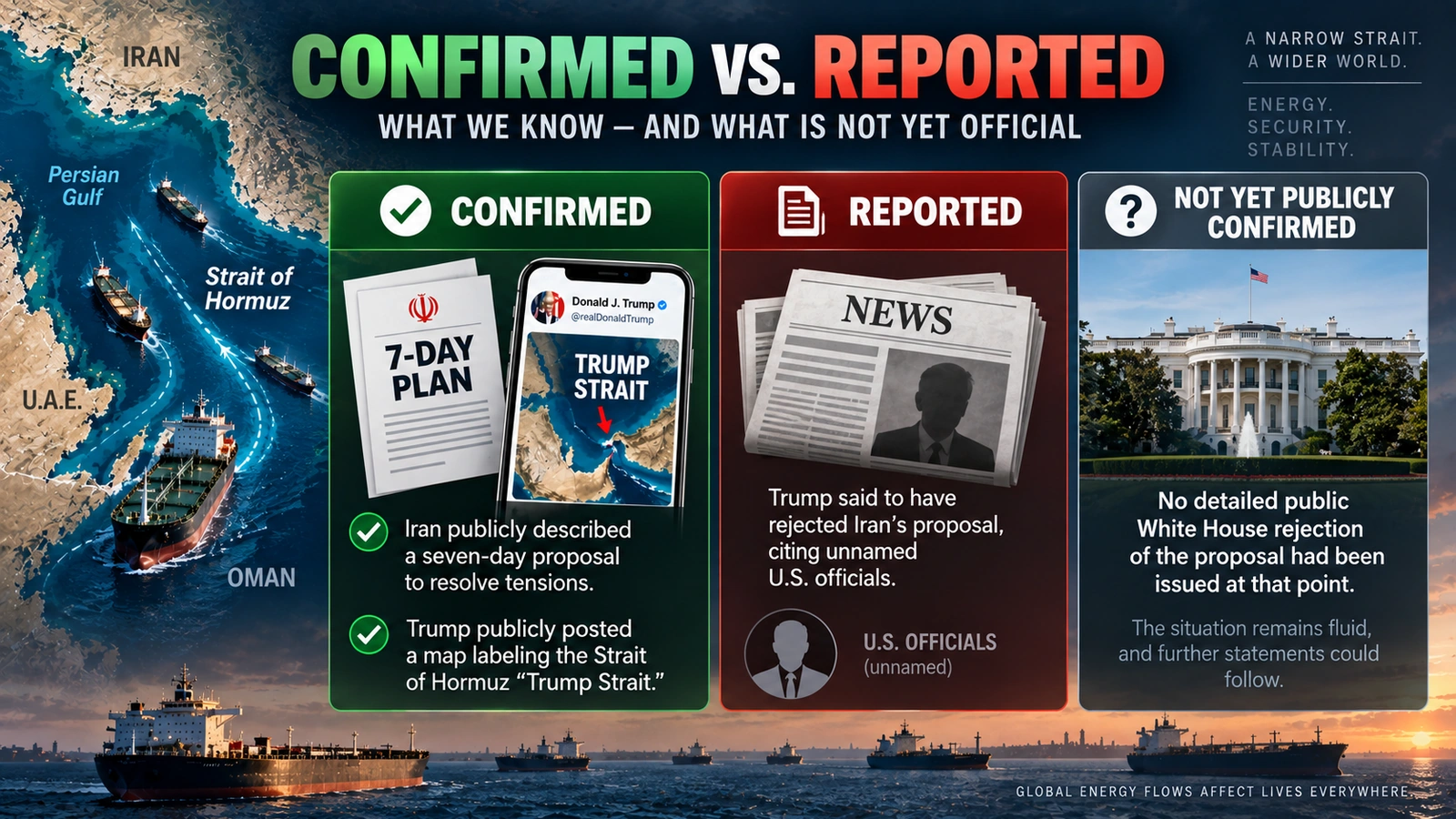
It has been reported that Trump rejected the proposal, but that is not the same thing as Trump publicly announcing a rejection.
Reuters reported on September 26 that the Wall Street Journal, citing unnamed U.S. officials, said Trump had rejected Iran’s proposal and privately believed another bombing campaign could become likely after the November midterm elections. Reuters also reported that Iran was still waiting for a formal U.S. response. (Reuters)
At the same time, a U.S. official had characterized indirect discussions through mediators as “positive and constructive.” (Reuters)
Those statements can coexist.
One describes what officials reportedly believe Trump has decided privately. The other describes an ongoing diplomatic channel.
Later that evening, Trump posted the map labeling the waterway “Trump Strait.” AP described the post as coming shortly after Iran’s proposal. (AP)
It is tempting to treat the map as Trump’s answer to Tehran.
But the post itself did not spell out whether the United States accepted or rejected each element of Iran’s seven-day proposal.
That distinction matters because a provocative map is a confirmed public act; the reported rejection is based on officials speaking through news organizations.
Why Is Everyone Fighting Over “Control” of the Strait?
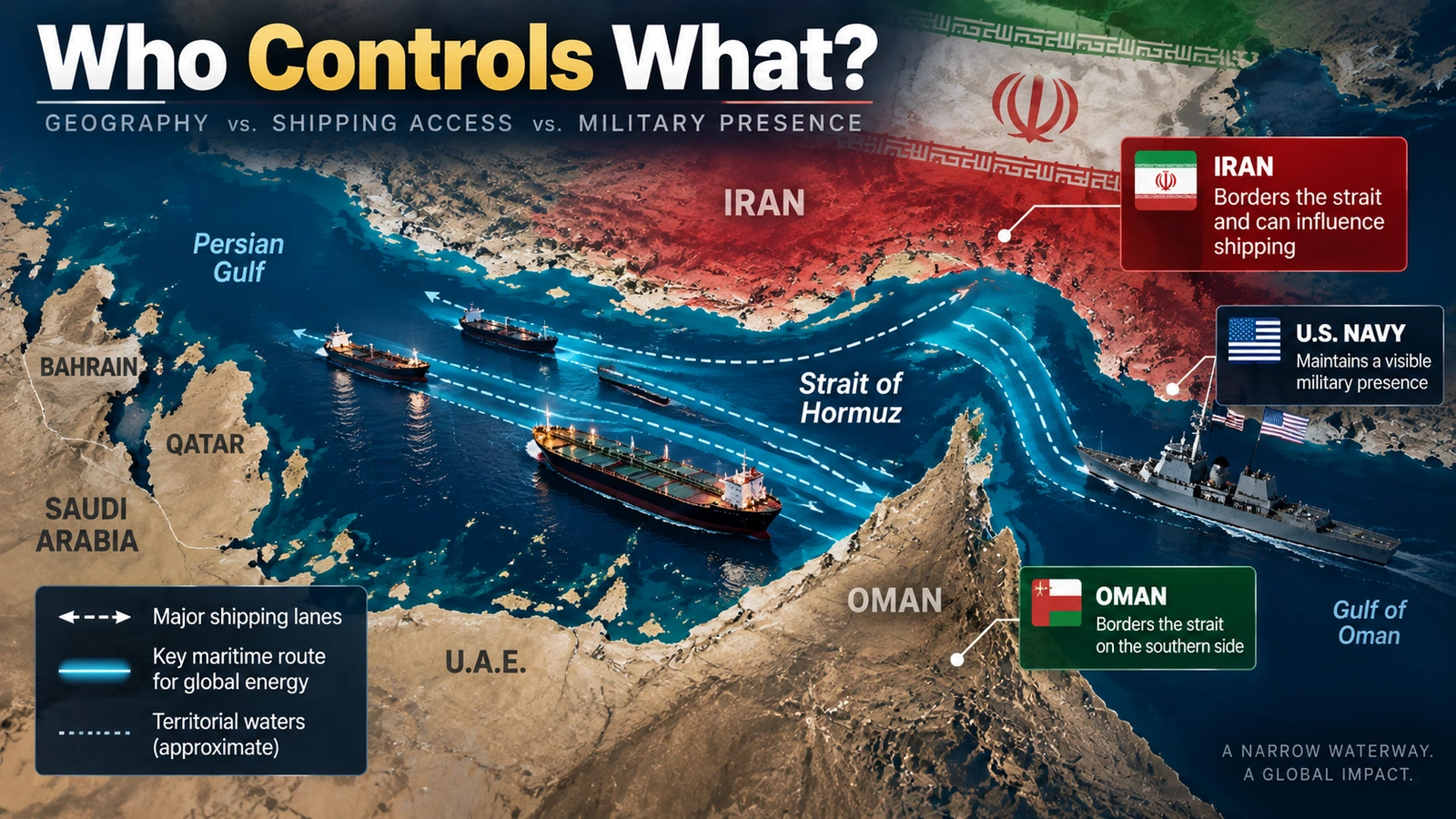
This is where the word “control” becomes slippery.
The Strait of Hormuz lies between Iran and Oman and connects the Persian Gulf to the Gulf of Oman and the Arabian Sea. It is a major international shipping route. (EIA)
The Trump administration has publicly claimed that the United States has operational control of the strait. In an August 28 White House statement, the administration said U.S. forces had cleared Iranian mines, escorted commercial shipping and prevented Iranian vessels from breaking the U.S. blockade. (White House)
Trump had made a similar argument himself in July, saying the U.S. Navy controlled which ships could pass its blockade. (White House)
Iran plainly disputes the practical meaning of that claim.
Tehran continues to say normal passage will not resume until its conditions are met, and U.S. and Iranian negotiators are bargaining over precisely that issue. (Reuters)
So three different ideas are being mixed together:
| Question | What it means |
|---|---|
| Who borders the strait? | Iran and Oman |
| Who can currently influence whether ships pass safely? | Iran, U.S. forces and other military actors can all affect access and risk |
| Does military power make the strait U.S. territory? | No such territorial transfer has been established by the social-media posts or the administration’s control claim |
When the White House describes the United States as controlling Hormuz, it is referring to military and operational power over shipping access. That claim is not the same thing as a recognized transfer of territorial sovereignty.
So Is “Trump Strait” an Official New Name?
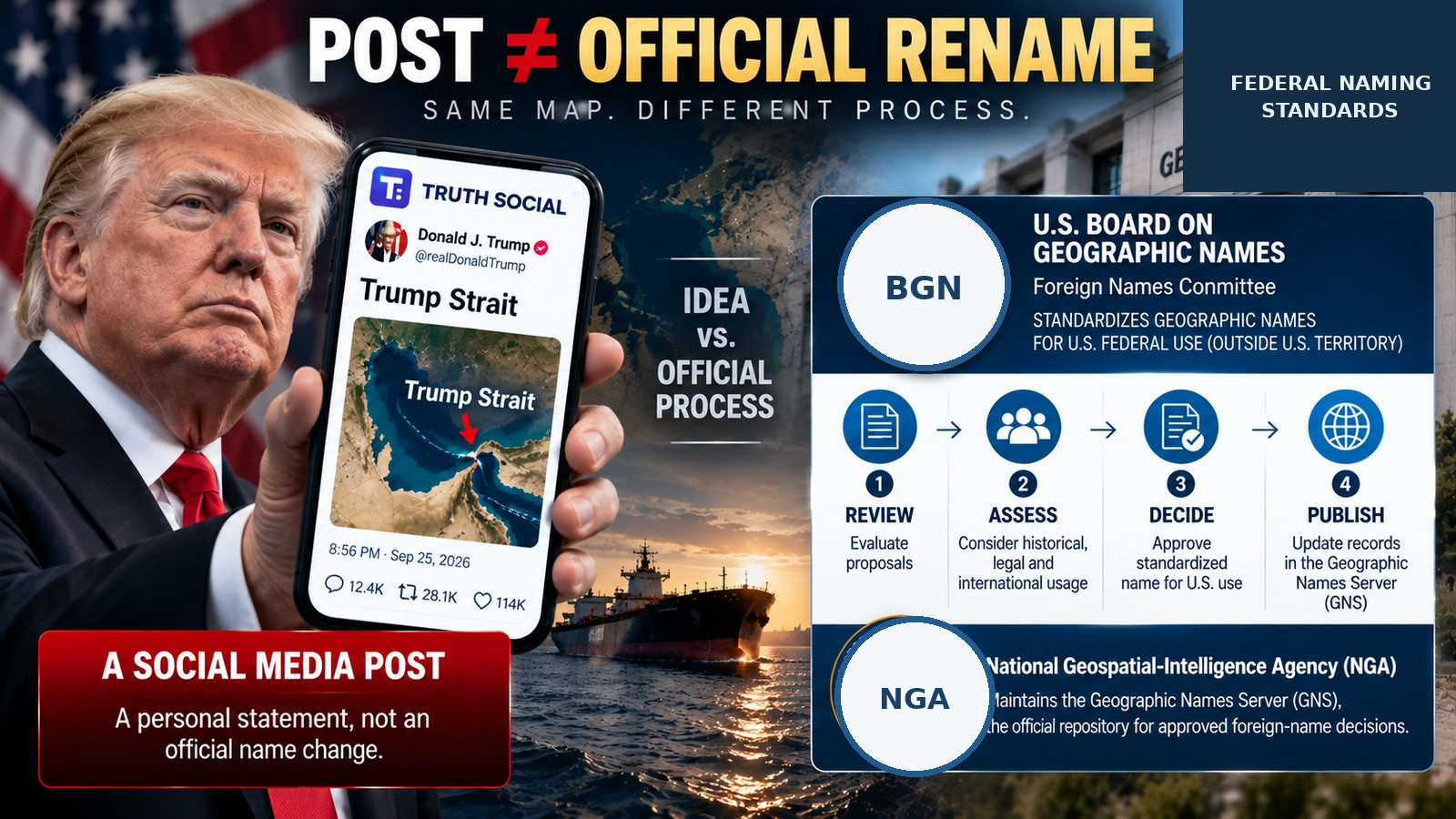
The map post itself does not amount to a formal geographic-name decision.
The U.S. Board on Geographic Names exists to standardize geographic names used by the federal government. For geographic features outside U.S. territory, its Foreign Names Committee handles federal naming standards, while the National Geospatial-Intelligence Agency maintains the official Geographic Names Server for approved foreign-name decisions. (USGS)
That is a real government process.
Trump’s Truth Social post is something different.
He had already floated the phrase on September 2, writing that because he considered the strait under U.S. control, perhaps it should be renamed “TRUMP STRAIT.” (American Presidency Project)
But even a formal U.S. federal naming decision would primarily determine how U.S. federal agencies refer to a geographic feature. It would not, by itself, require Iran, Oman, international organizations, shipping companies or foreign governments to use the same terminology.
That is why the safest description right now is straightforward:
“Trump Strait” is a name Trump has promoted and displayed on a map. The internationally familiar geographic name remains the Strait of Hormuz.
Why Does One Narrow Waterway Matter So Much?
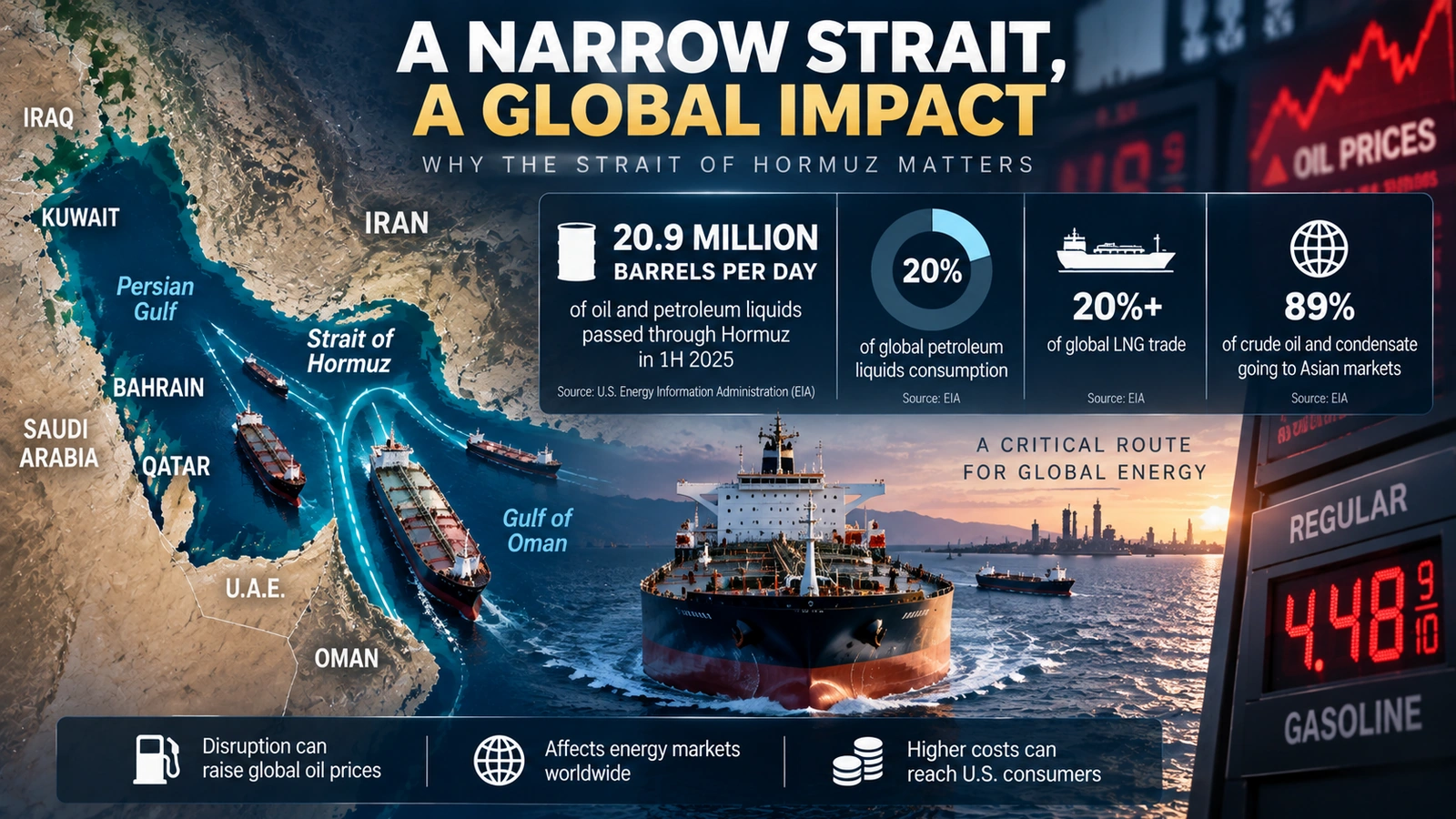
Because under normal conditions, an extraordinary amount of the world’s energy passes through it.
The U.S. Energy Information Administration calculated that 20.9 million barrels per day of oil and petroleum liquids passed through Hormuz in the first half of 2025. That was about 20% of global petroleum-liquids consumption and one-quarter of globally traded maritime oil. More than 20% of global LNG trade also passed through the strait. (EIA)
Most of that oil was headed to Asia, not the United States.
EIA estimated that 89% of the crude oil and condensate moving through Hormuz went to Asian markets in the first half of 2025. Direct U.S. imports through the strait were about 400,000 barrels per day, equal to roughly 2% of U.S. petroleum-liquids consumption. (EIA)
That can make Americans wonder: if the United States buys relatively little oil through Hormuz, why should U.S. drivers care?
Because oil is globally priced.
A disruption can remove or delay barrels available to buyers around the world. Refineries and traders then compete for remaining supplies, shipping becomes more expensive, and global crude prices can rise even in countries that produce large amounts of their own oil.
The current market has already demonstrated that sensitivity.
On September 25, oil fell as traders became more optimistic about U.S.-Iran diplomacy. Brent crude settled at $104.32 a barrel, down 2.1%, while West Texas Intermediate settled at $92.41, down 2.3%. (Reuters)
At American gas stations, AAA reported a national average of about $4.48 a gallon on September 24 and specifically cited high crude prices and continuing volatility around Hormuz as important drivers. (AAA)
So a diplomatic headline in New York can quickly become an oil-market headline—and eventually a household-budget story.
Why Can’t Washington and Tehran Just Take the Deal?
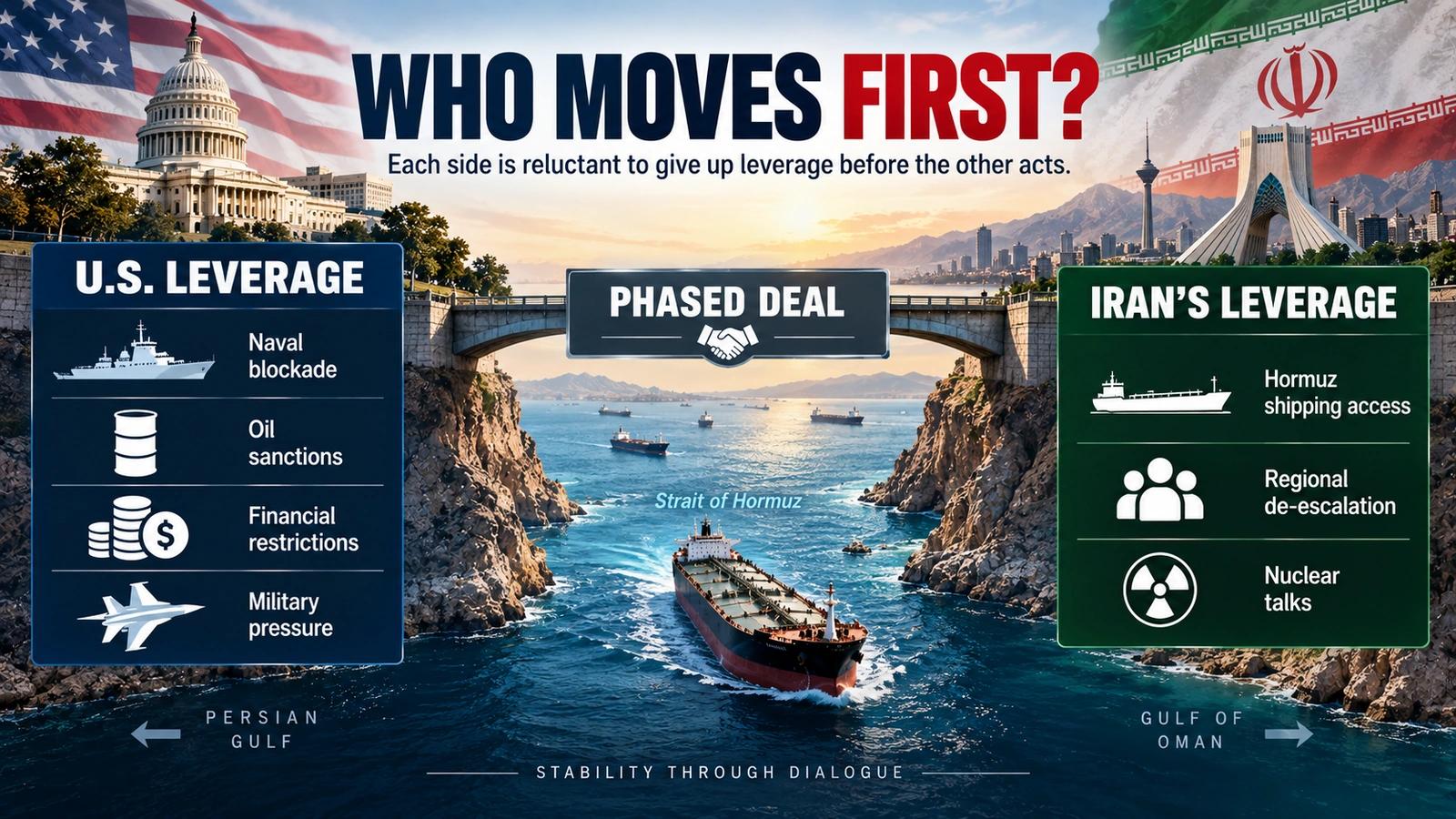
Because the argument is not only about whether Hormuz should reopen. It is about what happens first.
Reuters reported that the phased negotiations were designed around a basic problem: neither Washington nor Tehran wanted to surrender its most valuable leverage before the other side acted. (Reuters)
Iran’s leverage is the disruption of normal shipping through Hormuz.
Washington’s leverage includes military pressure, its naval blockade, sanctions and restrictions on Iranian oil and financial assets.
| Washington wants | Tehran wants |
|---|---|
| Normal shipping through Hormuz | U.S. blockade lifted |
| A durable end to Iranian restrictions on navigation | Oil-sanctions relief |
| Iran’s nuclear program addressed in broader talks | Access to frozen funds |
| A durable agreement after the June MOU broke down | An end to hostilities across the region |
There is also a recent history of failure.
The United States and Iran signed a memorandum of understanding in June that created a framework for ending hostilities and reopening Hormuz. By September, negotiators were again trying to build a phased path out of the conflict, showing that the June framework had not produced a durable settlement. The White House had described the June agreement at the time as a major breakthrough. (White House · Reuters)
That history makes sequencing harder now.
Imagine two people holding each other’s collateral and saying, “You give mine back first.”
That is essentially the problem the phased plan is trying to solve.
What Should You Watch Next?
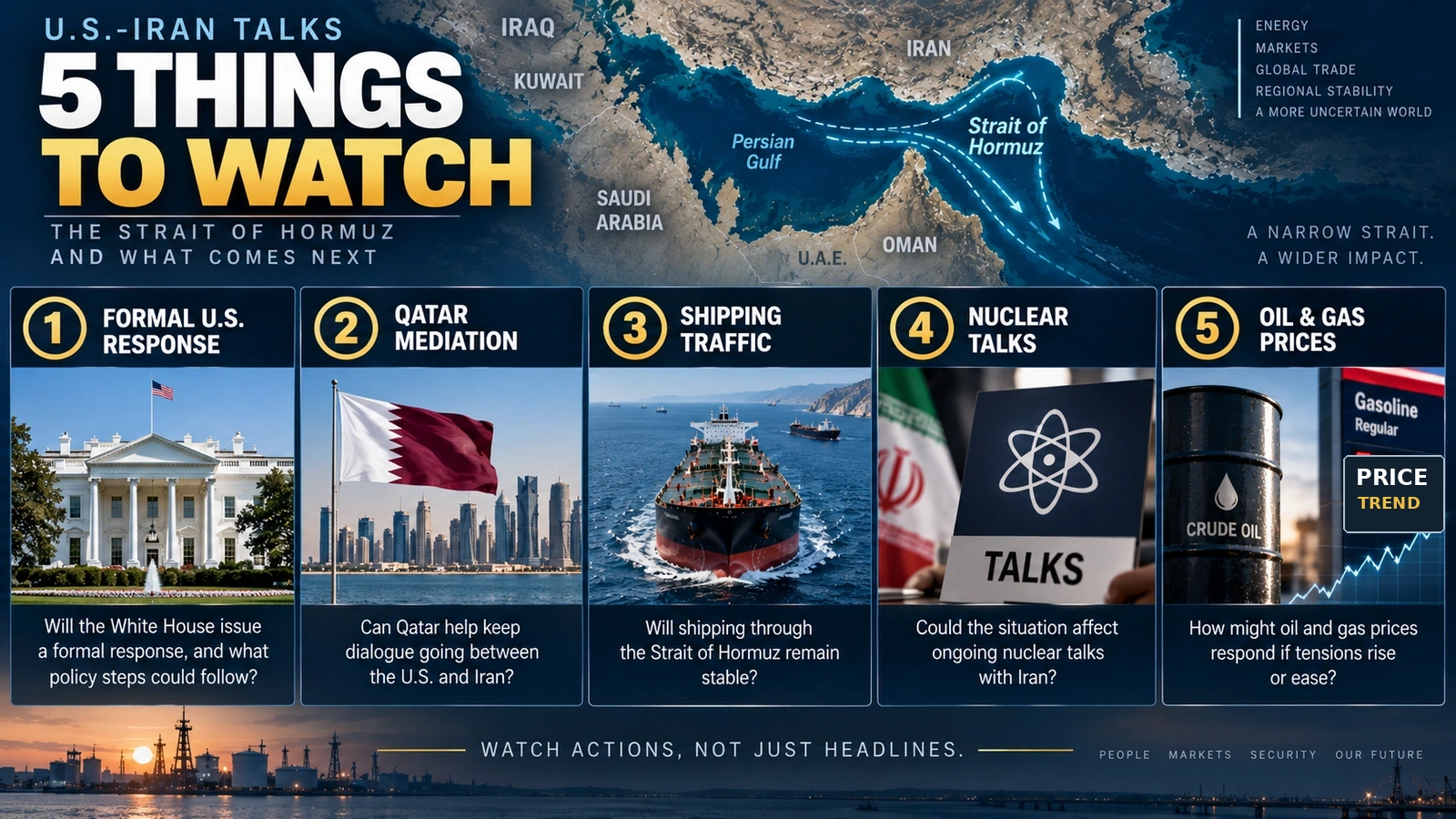
The next headline that matters most may not be another social-media post.
It will be whether Washington publicly accepts, rejects or proposes changes to Iran’s seven-day framework.
Five developments will help show where the confrontation is actually going:
- A formal U.S. response. Iran says the decision is now Washington’s; reporting says Trump has already rejected the proposal privately, but a detailed public U.S. response would remove much of that ambiguity. (Reuters)
- Qatari and other mediation. Iran says its proposal reached Washington through intermediaries, making those channels central if direct negotiations remain limited. (Reuters)
- Actual ship traffic through Hormuz. More normal tanker movement would be stronger evidence of de-escalation than rhetoric alone.
- Whether nuclear negotiations restart. Iran has separated reopening Hormuz from making immediate nuclear concessions, so reopening the waterway would not automatically resolve the nuclear dispute. (Reuters)
- Oil and U.S. gasoline prices. Markets were already moving sharply on small changes in diplomatic expectations. (Reuters)
The reported possibility of renewed U.S. strikes after the November midterms should also be treated as reported planning or expectation, not an announced military decision. Reuters attributed that information to the Wall Street Journal’s unnamed U.S. officials. (Reuters)
That distinction could become crucial if negotiations continue.
Why It Matters in One Sentence
Iran’s seven-day Hormuz proposal is not simply an offer to reopen a shipping lane: it links the reopening of a vital global energy route to changes in U.S. military, financial and sanctions pressure, while Trump’s “Trump Strait” map adds a symbolic dispute over control without resolving the harder question of whether the two sides can agree on who moves first.
Trump Strait: Key Questions Explained
Q. Did Iran really say it could reopen the Strait of Hormuz in seven days?
Yes, but conditionally. Foreign Minister Abbas Araqchi said normal passage could be restored within seven days once the United States accepted the required steps in Iran’s proposal. (Reuters)
Q. Did Trump officially reject Iran’s seven-day proposal?
A Wall Street Journal report cited unnamed U.S. officials saying Trump rejected it, and Reuters subsequently reported that account. But Iran said it was still awaiting a formal U.S. response, while another U.S. official described mediated talks as positive and constructive. (Reuters)
Q. What did Trump actually post?
Trump posted a map on Truth Social labeling the Strait of Hormuz “TRUMP STRAIT.” AP reported the post shortly after Iran announced its proposal. (AP)
Q. Is “Trump Strait” now the official name of the Strait of Hormuz?
The social-media post itself does not constitute a formal U.S. geographic-name decision. Foreign geographic names used by the federal government are standardized through the U.S. Board on Geographic Names and its Foreign Names Committee. (USGS)
Q. Does the United States own the Strait of Hormuz?
The Trump administration has claimed operational control of shipping access through U.S. military power, but the strait lies between Iran and Oman. A military-control claim is not the same thing as territorial ownership. (White House)
Q. How much oil normally passes through Hormuz?
EIA data show about 20.9 million barrels per day of oil and petroleum liquids passed through the strait in the first half of 2025—about 20% of global petroleum-liquids consumption. (EIA)
Q. Why does Hormuz matter to U.S. gas prices if America produces so much oil?
Because crude oil is globally traded and priced. A disruption to a route handling such a large share of global supply can raise crude, transportation and insurance costs even when the United States imports relatively little oil directly through Hormuz. AAA has linked current elevated U.S. gasoline prices in part to Hormuz volatility. (EIA · AAA)
Q. Would reopening Hormuz end the U.S.-Iran conflict?
Not automatically. The proposal also involves regional hostilities, the U.S. blockade, sanctions, frozen Iranian funds and the nuclear dispute, so reopening shipping would address one major part of a much wider confrontation. (Reuters)
Did this help make the story clearer? 🙂
WIN keeps unpacking the “why” behind the news—clearly and simply!
Sources
Iran’s Seven-Day Proposal and U.S. Response
Reuters — Iran’s Araqchi Says It Is Now Up to the U.S. to Accept the Seven-Day Plan
Reuters — Iran Awaits U.S. Move After Report Trump Rejected the Peace Plan
Reuters — U.S. and Iran Discuss a Phased Deal to Reopen Hormuz
“Trump Strait” and U.S. Control Claims
Associated Press — Trump Posts Map Showing “Trump Strait” Off Iran
White House — Administration Statement Claiming U.S. Control of the Strait of Hormuz
U.S. Geological Survey — U.S. Board on Geographic Names: Foreign Names
Hormuz Energy Flows and U.S. Fuel Prices
U.S. Energy Information Administration — World Oil Transit Chokepoints and Strait of Hormuz Data
AAA — National Average Climbs Nearly Five Cents as Hormuz Volatility Continues
Keep Reading
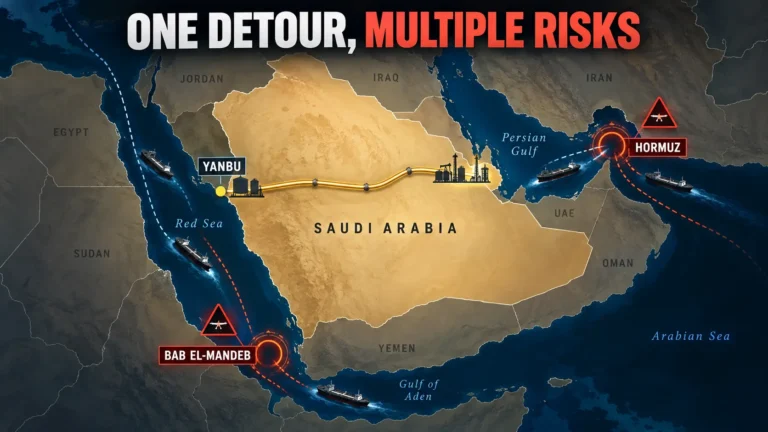
If Hormuz Is So Vulnerable, Can Saudi Arabia Simply Route Its Oil Somewhere Else?
Saudi Arabia built an enormous pipeline specifically to reduce its dependence on Hormuz. The latest conflict shows why having an alternative route does not necessarily remove the risk—it can simply move the pressure to another part of the system.
Saudi Arabia Built a Pipeline to Bypass Hormuz—So Why Is Its Oil Route Still at Risk?