Did Russia Interfere in Brexit—and Did It Change the Result?

What if one of the biggest political decisions in modern British history was targeted by a foreign government?
And what if Britain’s own prime minister now says it happened—10 years after the vote?
On October 11, 2026, British Prime Minister Andy Burnham said Russia had interfered in the 2016 Brexit referendum. He said he asked about Moscow’s involvement after taking office in July and received a clear answer confirming interference. (Reuters · AP)
But his announcement leaves a crucial question unanswered.
Evidence that Russia tried to influence British voters is not the same as proof that Russia changed how the referendum ended.
That distinction matters because Britain did not merely elect a different government in 2016. It voted to leave the European Union, reshaping its economy, international relationships, and political identity.
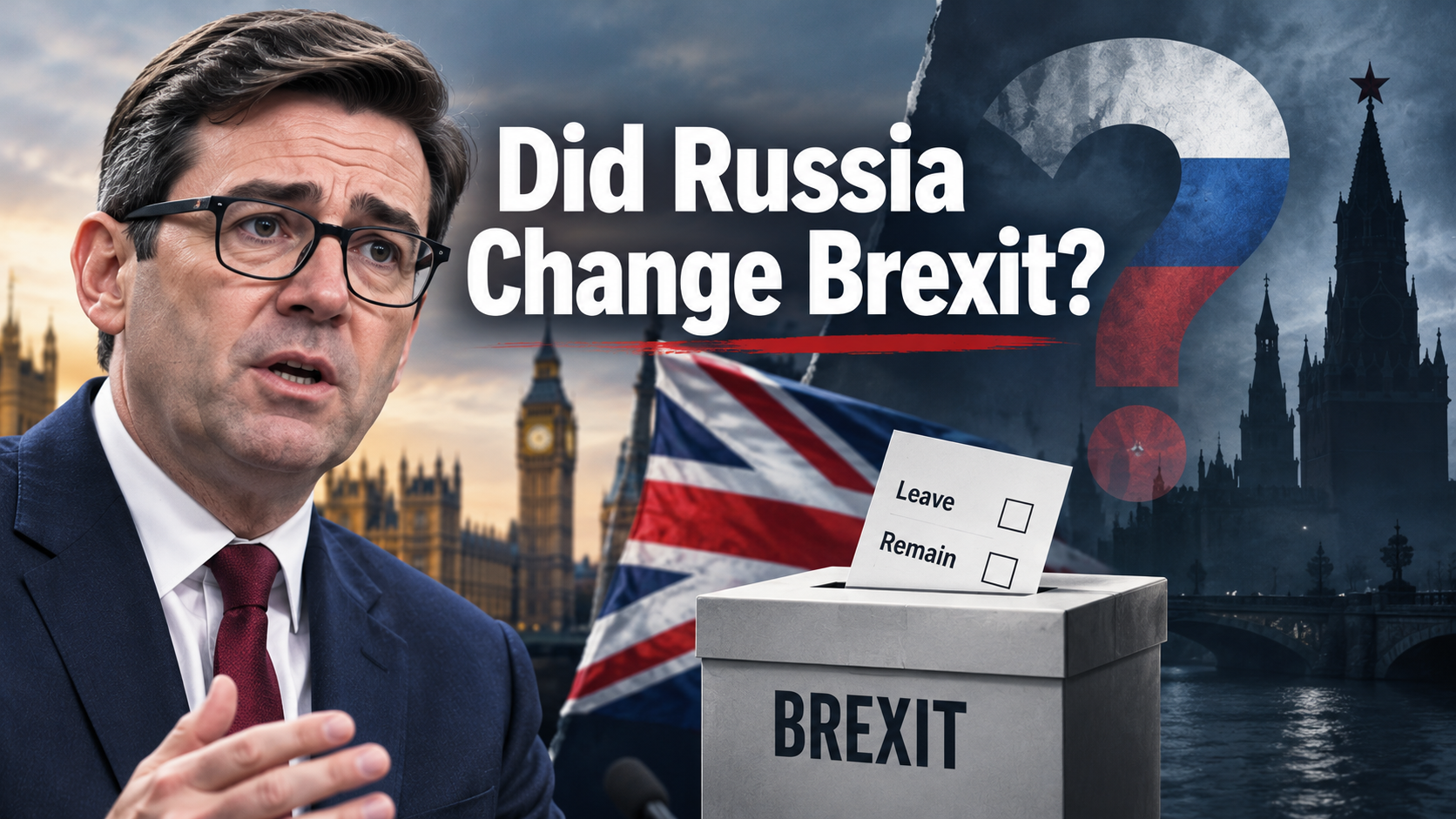
※ Images in this article are AI-generated illustrations created to help explain the story. They are not actual photographs, and depictions of people, places, or events may differ slightly from reality.
Burnham’s statement has reopened a debate that British intelligence officials, lawmakers, and researchers have struggled with for years.
To understand what changed, it helps to start with what Britain already knew—and what Parliament said had not been properly assessed.
Why Is Russia’s Role in Brexit Back in the News Now?
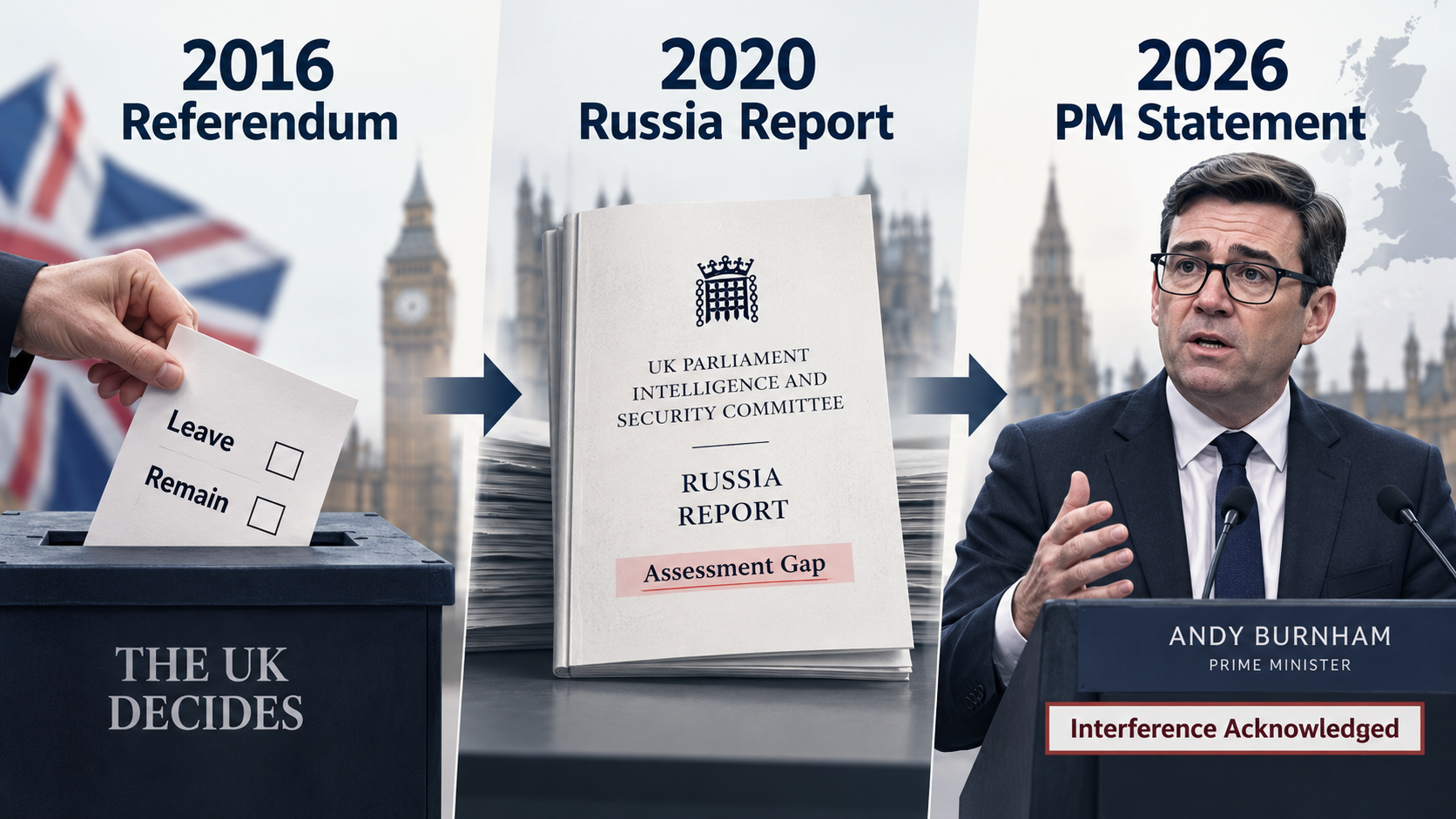
The immediate reason is a change in the British government’s public position.
In remarks made public on October 11, Burnham said he had asked whether Russia interfered with the Brexit referendum after becoming prime minister on July 20, 2026. The UK government’s official biography confirms that date. (UK Government)
He told The Rest Is Politics podcast that he received confirmation. His exact words were: “I’ve had the clear answer that yes, there was.” (ITV News)
The significance lies in who said it. Burnham is believed to be the first serving British prime minister to publicly acknowledge Russian interference in the Brexit vote.
Previous Conservative governments emphasized the absence of evidence establishing successful Russian interference. Burnham’s statement moves beyond that earlier public position, although he has not disclosed the intelligence behind it. (AP)
How did Britain reach this point?
| Date | What happened | Why it matters |
|---|---|---|
| June 23, 2016 | Britain voted to leave the EU. | The referendum created the decision at the center of the dispute. |
| November 2017–November 2019 | Parliament’s Intelligence and Security Committee conducted its Russia inquiry. | The inquiry examined threats to UK democracy, including the Brexit referendum. |
| July 21, 2020 | The committee published its Russia report. | It criticized the lack of a post-referendum intelligence assessment. |
| July 20, 2026 | Andy Burnham became prime minister. | A new government gained access to official security briefings. |
| October 11, 2026 | Burnham publicly acknowledged Russian interference. | The government position became more explicit, but supporting evidence was not released. |
The difference between 2020 and 2026 is especially important.
The earlier parliamentary report exposed gaps in the government’s examination of the issue. Burnham now says he has received a more definite answer.
That raises an obvious question: If Parliament examined Russian interference years ago, why was the answer still unresolved?
What Did Britain’s 2020 Russia Report Actually Find?
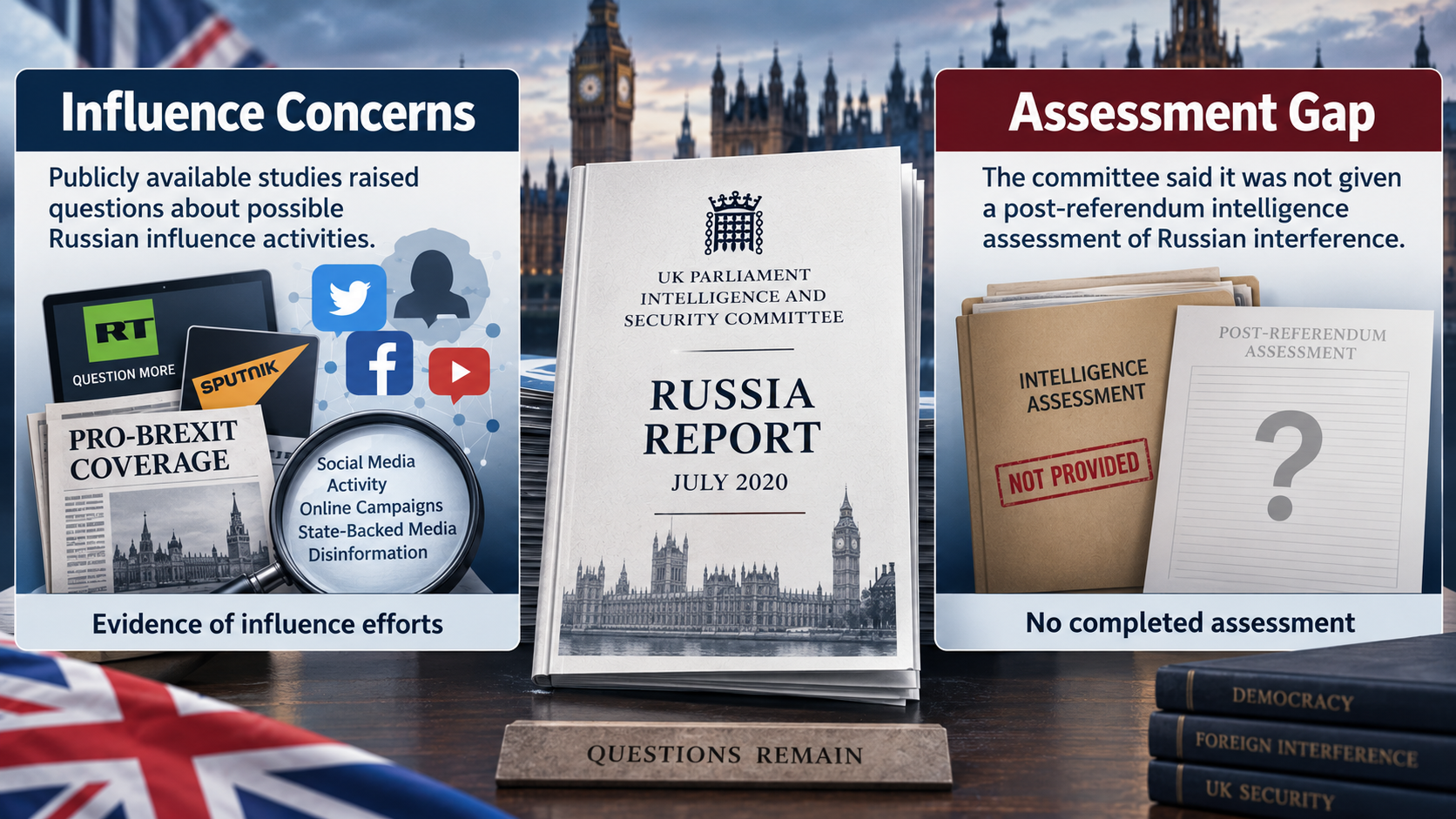
The 2020 parliamentary report did not establish that Russia changed the referendum result.
Instead, it criticized the lack of a systematic intelligence assessment of possible Russian interference. More precisely, the committee said it had not been provided with any post-referendum assessment of Russian attempts at interference. (ISC Russia Report)
The report came from Parliament’s Intelligence and Security Committee, an oversight body responsible for examining the work of Britain’s intelligence and security agencies.
Its findings were striking for two reasons.
First, publicly available studies had already raised concerns about Russian influence operations. The committee discussed pro-Brexit and anti-EU coverage on Russian state-backed outlets RT and Sputnik, along with reports of bots and online trolls. It treated these as reasons for further investigation, not as proof of a changed result.
Second, the committee criticized how little attention British intelligence agencies had devoted to examining those concerns.
In the published report, the committee said MI5 initially provided just six lines of written material in response to its request for evidence on the referendum.
The committee also explicitly said that determining the impact of any attempted interference would be difficult, if not impossible, and that it had not tried to measure such an impact. (ISC Russia Report)
Was the government saying Russia did nothing?
Not exactly.
There is a major difference between finding no evidence after a comprehensive investigation and not carrying out, or supplying, a sufficiently comprehensive assessment in the first place.
The committee questioned the government’s approach, arguing that protecting elections from foreign interference was a national security responsibility.
The government rejected the call for a new retrospective assessment in its published response, maintaining that it had taken the threat seriously and that security agencies continued their work. (UK Government)
So the unresolved issue was not simply whether Russian-linked political messaging existed.
It was whether the British state had properly established the extent, methods, and potential consequences of any coordinated interference.
Burnham’s 2026 statement suggests his government now has a more definite assessment of Russian involvement.
But the public still cannot independently evaluate that assessment without knowing what evidence supports it.
Does Russian Interference Mean Russia Changed the Brexit Result?
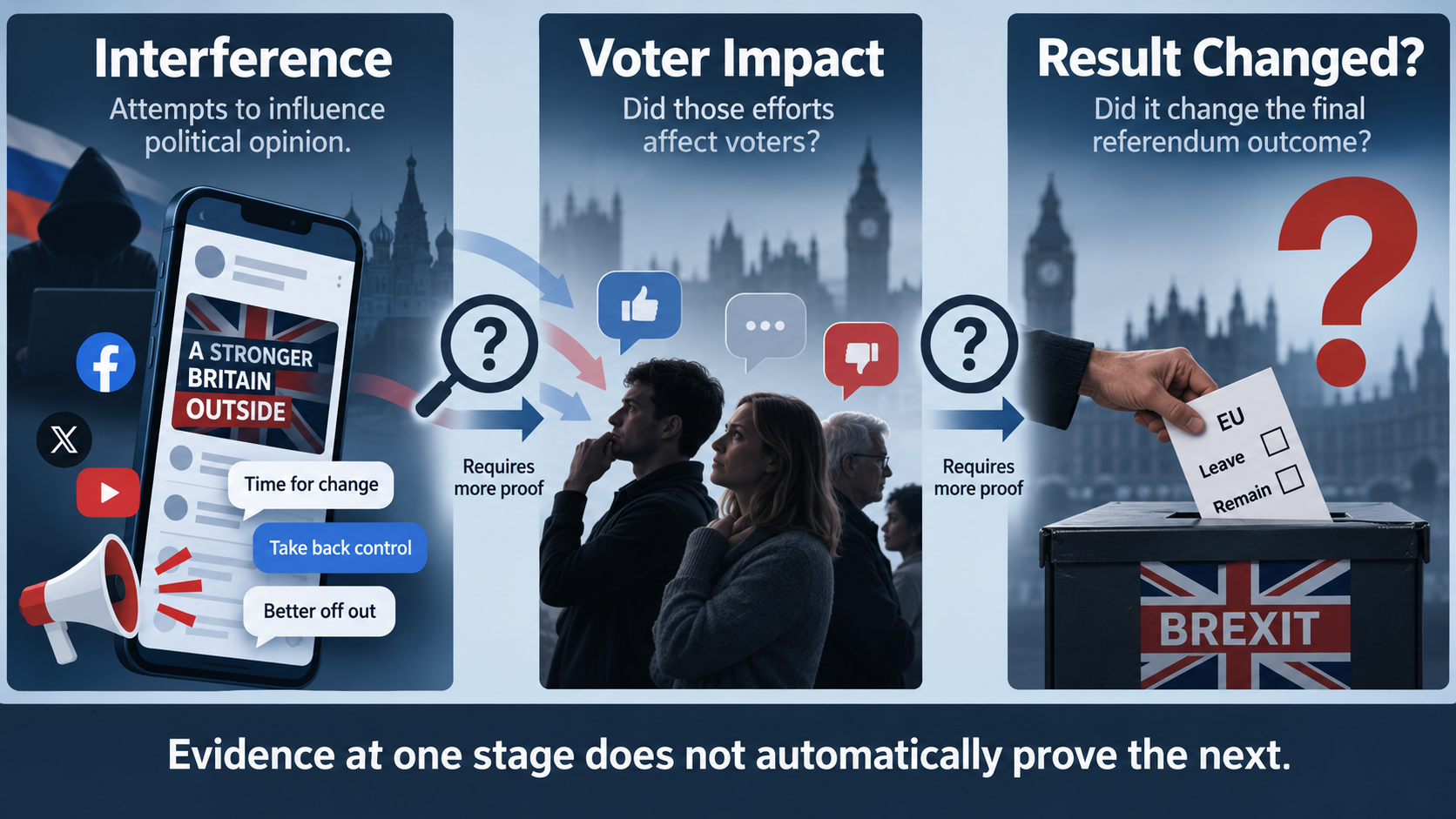
No. Evidence of interference does not, by itself, prove that Russia changed the outcome of the 2016 Brexit referendum.
An outside government can attempt to influence an election without achieving its intended goal.
And even if misleading information reaches voters, determining how many people changed their minds because of it is a much harder task.
Consider three separate questions.
| Question | What would need to be established? | What is publicly established? |
|---|---|---|
| Did Russia attempt to interfere? | Evidence linking activities to Russian state interests or operators | Burnham says interference occurred; earlier public research raised concerns. |
| Did those activities influence voters? | Credible evidence showing an effect on attitudes or voting behavior | The scale and effect have not been publicly established by Burnham’s statement. |
| Did interference change the result? | Evidence connecting the activities to a decisive change in the vote | No such causal conclusion has been publicly established. |
This is the central distinction in the story.
Imagine an online influence campaign reaching thousands of voters during a close election.
Some might believe its claims. Others might ignore them. Some might already agree with the message before encountering it.
Even reliable evidence showing that the campaign reached people would not automatically reveal how they would have voted without it.
Establishing a changed election outcome requires answering a much harder hypothetical question: What would have happened if the interference had never occurred?
How close was the Brexit vote?
The June 23, 2016, referendum produced the following official result:
| Outcome | Votes | Share |
|---|---|---|
| Leave the European Union | 17,410,742 | 51.9% |
| Remain in the European Union | 16,141,241 | 48.1% |
| Difference | 1,269,501 | About 3.8 percentage points |
Turnout was 72.2%, according to Britain’s independent Electoral Commission. (Electoral Commission)
The difference was politically consequential, but the margin alone is not evidence that foreign interference determined the outcome.
It is possible to establish an attempt to influence voters without proving that the attempt changed the result.
That distinction protects two important principles at once: taking foreign interference seriously and avoiding unsupported claims that voters’ decisions were invalid.
Was the Brexit Vote Hacked—or Was This About Political Influence?
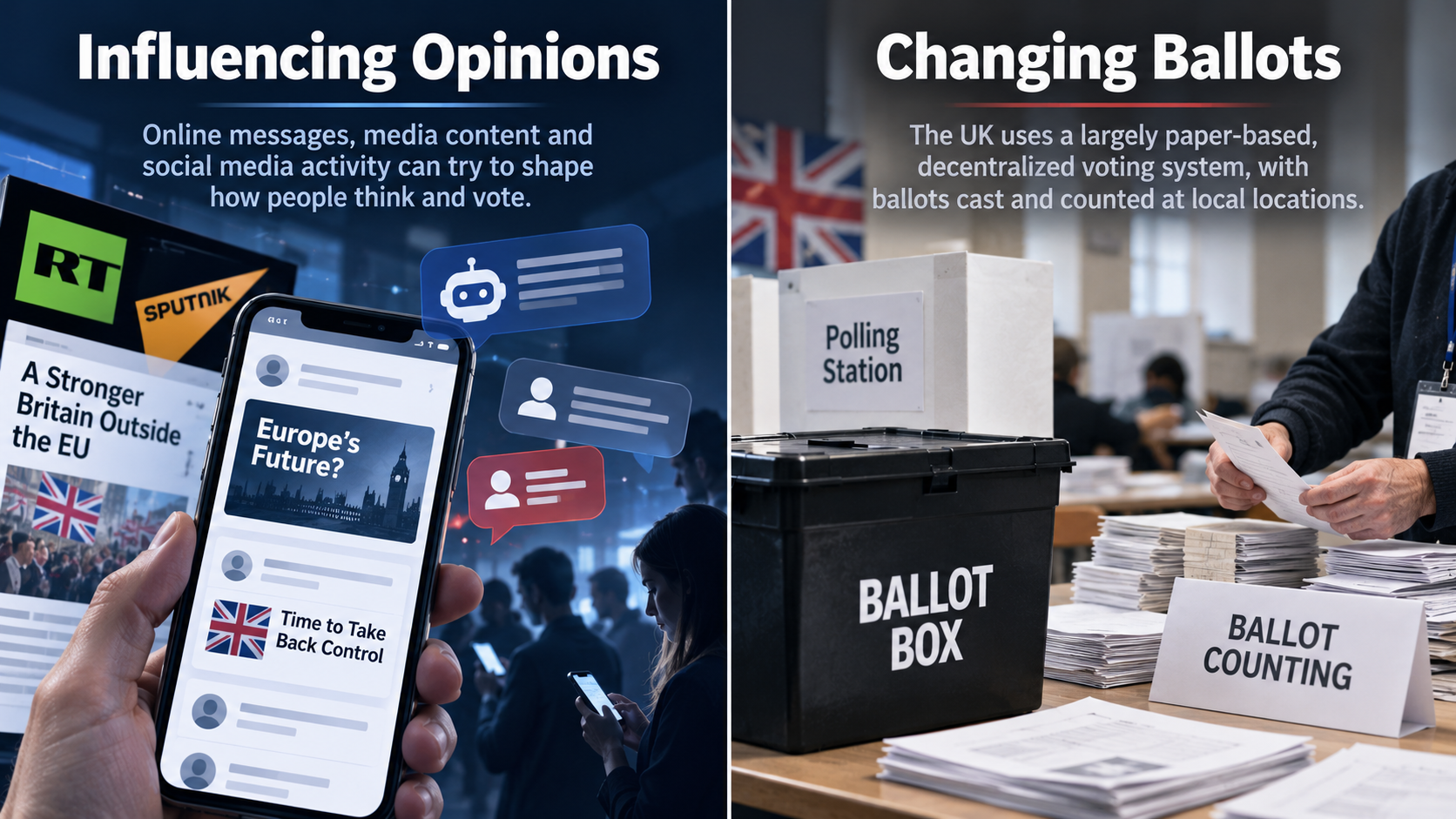
The controversy primarily concerns attempts to influence political opinion, not proven manipulation of ballot totals.
These are very different forms of election interference.
An influence operation might involve distributing misleading information, amplifying divisive political messages, or operating social media accounts that disguise their origins.
Actual vote manipulation would involve interfering with the registration, casting, counting, or reporting of votes.
The 2020 parliamentary report explained that Britain’s largely paper-based and decentralized voting system made significant interference with the mechanics of an election difficult. It nevertheless warned about the risks of hostile political influence. (ISC Russia Report)
How could an influence campaign work?
A foreign influence operation does not necessarily require a computer hacker changing official results.
It can try to shape the environment in which people make political decisions.
For example, an operation might use automated accounts to amplify selected stories, circulate misleading claims through apparently independent voices, or promote arguments designed to intensify existing political divisions.
That last point is especially important.
Foreign interference does not have to invent an entirely new controversy. It can exploit disagreements that already exist.
Brexit was a deeply contested issue involving immigration, economic policy, national sovereignty, and Britain’s relationship with Europe.
Those disagreements were genuine domestic political questions. Foreign actors attempting to exploit them would not mean that every person who supported Brexit was manipulated or that their political concerns were manufactured overseas.
Russia has denied interfering in other countries’ elections and referendums. (Reuters)
The unanswered factual questions concern what activities occurred, who directed them, how extensive they were, and whether their effects can be reliably measured.
Could This Revelation Undo Brexit or Bring Britain Back Into the EU?
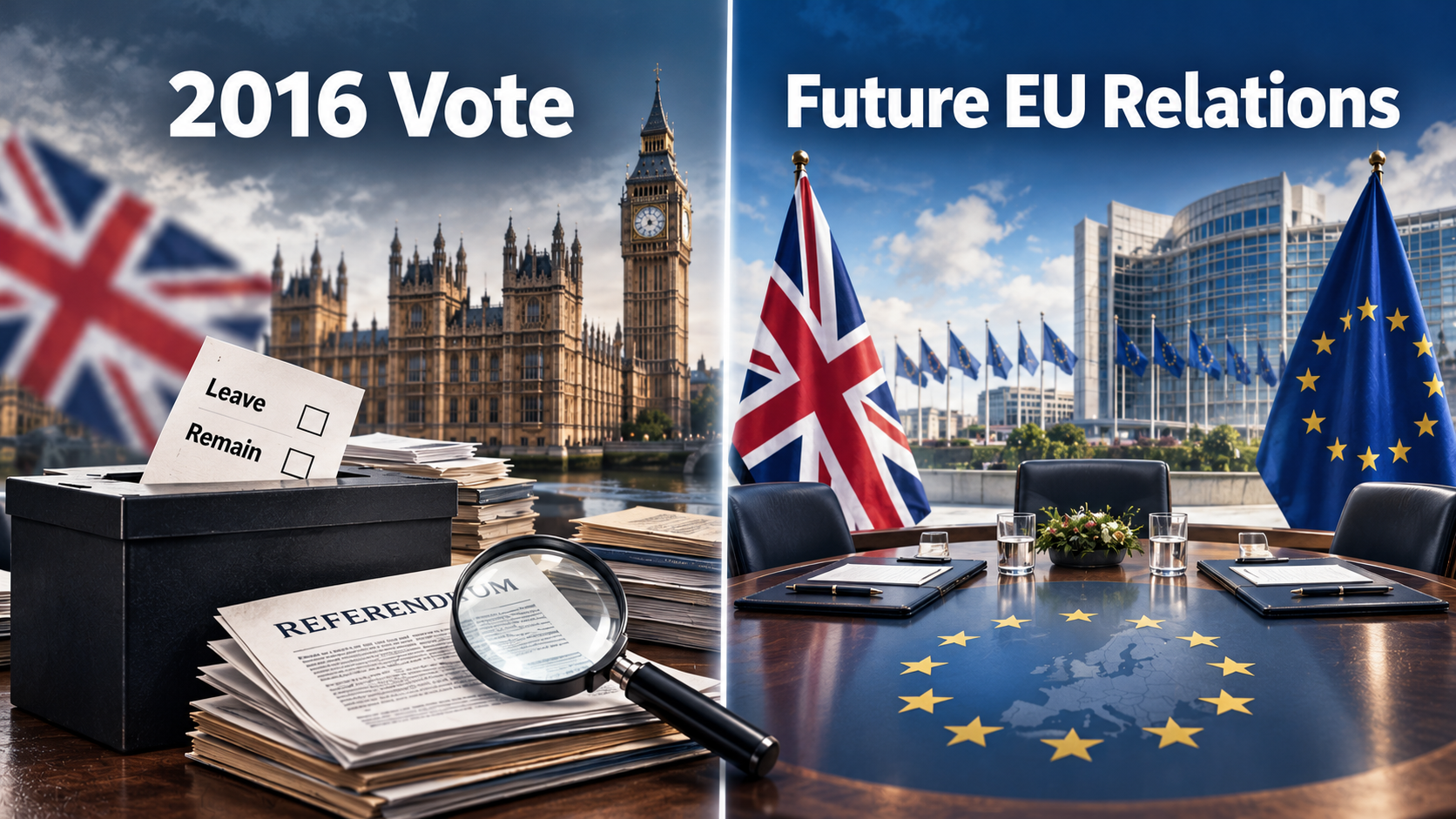
No. Burnham’s statement does not automatically cancel the referendum or return Britain to the European Union.
The UK formally left the EU on January 31, 2020, after several years of negotiations and the ratification of a withdrawal agreement. That process created a new legal relationship between Britain and the EU. (Council of the European Union)
Rejoining would involve new political decisions and an accession process.
Under Article 49 of the Treaty on European Union, an applicant country must meet membership requirements, gain the unanimous approval of EU member states in the Council, secure the consent of the European Parliament, and complete the necessary ratifications. (EUR-Lex)
The Russian interference question does not bypass those steps.
So why are the two debates happening together?
Because Burnham has also reopened discussion of Britain’s future relationship with the European Union.
He has indicated that his government should consider closer ties with Europe and has left open the possibility of eventual EU membership. (Reuters)
That represents a departure from the previous government’s more cautious approach toward reopening the Brexit debate.
On October 12, Burnham was scheduled to address Parliament about the future of UK–EU relations. His planned remarks were separately reported from the October 11 interference comments; a scheduled speech should not be treated as a completed decision.
The timing creates an obvious political connection, but the two questions must remain separate.
One asks whether a foreign government tried to influence Britain’s 2016 decision.
The other asks what relationship Britain should choose with Europe today.
Evidence of interference could strengthen demands for transparency or further investigation. It would not, on its own, establish that a different referendum result should be assumed or that Brexit must be reversed.
Why Should Americans Care About a British Vote From 2016?
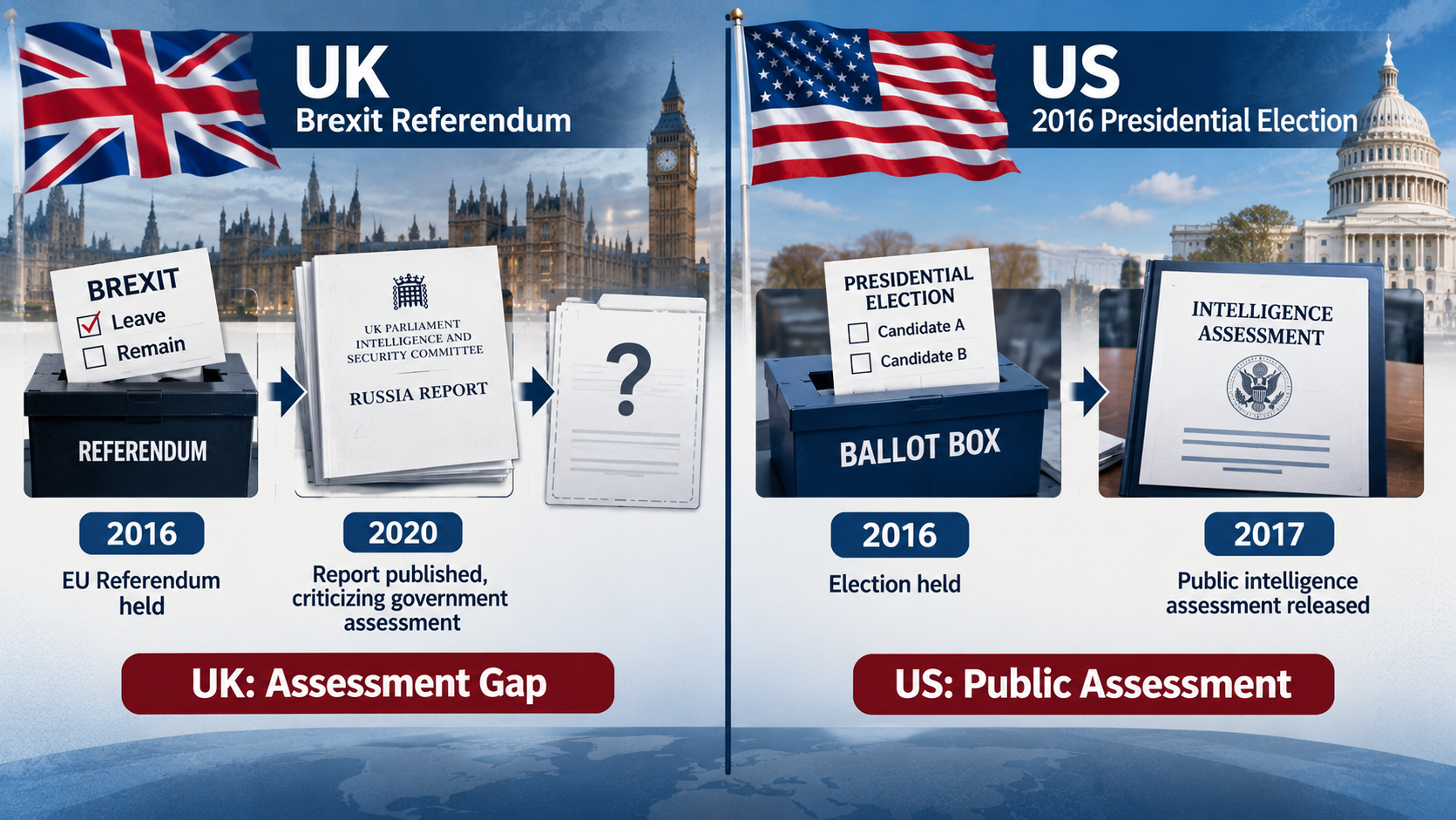
Because Americans faced a closely related question during their own 2016 presidential election.
US intelligence agencies assessed Russian activities targeting the American election, including cyber operations and efforts to influence the political environment.
The American intelligence community released a public assessment in January 2017, shortly after the election. It did not assess whether Russian activities changed the election result. (US Senate Select Committee on Intelligence)
The UK’s 2020 Russia report specifically contrasted that American response with Britain’s failure to provide a comparable post-referendum assessment of possible Russian interference in Brexit. (ISC Russia Report)
The cases are not identical, and findings about Russian activity in one country cannot automatically establish what happened in another.
Still, the comparison reveals a shared democratic challenge.
Foreign influence operations can exploit public divisions without directly altering votes. They can also make citizens question which information, political messages, and institutions they should trust.
For Americans, the British story offers another example of why the response to alleged interference matters almost as much as the interference itself.
A government needs to investigate threats seriously without treating every disputed election outcome as illegitimate.
And it needs to explain its conclusions clearly enough for the public to distinguish evidence from political accusation.
What Happens Next—and What Evidence Would Settle the Debate?
The next major question is whether Britain’s government will make the evidence behind Burnham’s statement public.
As of October 12, 2026, Burnham has not publicly identified who provided his assessment, disclosed the underlying intelligence, or shown that Russian activity changed the referendum outcome. (Reuters)
The government’s acknowledgment is politically significant, but it is not yet a complete public accounting of what happened.
Several developments would help clarify the situation.
An official intelligence assessment could explain the type of Russian activity identified, the evidence connecting it to Moscow, and the confidence officials place in those findings.
A parliamentary examination could also establish whether the government has addressed the investigative shortcomings identified in 2020.
Equally important would be a clear explanation of what remains unknown—particularly the distinction between attempts to influence voters and any measurable effect on the result.
There is no reason to assume that every underlying intelligence detail can be released. Governments sometimes withhold sources and methods for national security reasons.
But an appropriately limited public explanation could still help voters understand what authorities know and how they reached their conclusions.
Meanwhile, Burnham’s separate effort to reconsider Britain’s relationship with the EU will continue to face its own political and negotiating hurdles.
Those decisions should be evaluated on their present merits rather than on an unproven claim about how the 2016 referendum would otherwise have ended.
Bottom Line: What This Story Really Means
British Prime Minister Andy Burnham has publicly acknowledged Russian interference in the 2016 Brexit referendum, marking a significant change from the more cautious position of previous British governments.
But his statement has not established that Russia changed the referendum result.
The difference matters.
A foreign government attempting to influence voters is a serious threat to democratic independence, regardless of whether the effort succeeds. Yet proving that interference occurred is a different task from proving it caused a particular electoral outcome.
Britain’s 2020 parliamentary Russia report criticized the absence of a supplied post-referendum intelligence assessment. Burnham’s new acknowledgment suggests the government now has a firmer conclusion about interference, but the supporting evidence has not been publicly detailed.
For Britain, the immediate challenge is transparency and accountability.
For Americans and other democracies, the broader lesson is that protecting elections means doing more than safeguarding ballot boxes. It also means understanding who may be trying to influence voters, how those operations work, and what the evidence actually shows.
The essential question is no longer only whether Russia tried to interfere. It is how much Britain can establish publicly about what happened—and what remains impossible to prove.
Russia Brexit Interference: Key Questions Explained
Q. Did Britain officially confirm Russian interference in the 2016 Brexit referendum?
Prime Minister Andy Burnham publicly said on October 11, 2026, that Russian interference had occurred. However, he did not release the intelligence supporting that statement.
Q. Did Russia make Britain vote to leave the European Union?
That has not been established. Evidence of an attempt to influence a referendum does not automatically prove the effort changed its outcome.
Q. What did the 2020 UK Russia report conclude about Brexit?
The parliamentary Intelligence and Security Committee criticized the absence of a post-referendum assessment provided to it. It did not establish that Russia changed the referendum result.
Q. How many people voted for Brexit in 2016?
A total of 17,410,742 people voted to leave the EU, compared with 16,141,241 who voted to remain. Leave won 51.9% of valid votes.
Q. Was the Brexit voting system hacked?
No public evidence cited in Burnham’s announcement established that ballot totals were hacked or altered. The controversy primarily concerns attempts to influence political opinion.
Q. How could Russia have tried to influence British voters?
Earlier research examined Russian state-backed media coverage, suspicious social media activity, and other possible influence tactics. The precise operations supporting Burnham’s 2026 assessment have not been publicly detailed.
Q. Why did Britain take so long to acknowledge interference?
The 2020 parliamentary report identified gaps in the assessment of the threat. Burnham says he received a clear answer after entering office in July 2026, but the public does not yet know the full basis for that answer.
Q. Can Britain reverse Brexit because of Russian interference?
Not automatically. Britain left the EU in 2020. Any future return to membership would require separate political decisions and an EU accession process.
Q. Why is Brexit being discussed again in 2026?
Burnham’s government has opened discussion about closer relations with the European Union, while his statement on Russian interference has renewed attention to the original referendum.
Q. What should people watch for next?
The most important developments would be the release of additional intelligence findings, parliamentary scrutiny of those findings, and any formal policy proposals concerning Britain’s relationship with the EU.
Did this help make the story clearer? 🙂
WIN keeps unpacking the “why” behind the news—clearly and simply!
Sources
October 2026 Statement and Government Position
Reuters — UK PM Burnham Says Russia Interfered in 2016 Brexit Vote
Associated Press — UK Prime Minister Says Russian Interference in Brexit Is Clear
ITV News — Burnham Says It Is Clear Russia Interfered in Brexit Referendum
UK Government — Prime Minister Andy Burnham Biography
Reuters — Burnham to Tell Parliament UK Needs to Consider New Deal With EU
Parliamentary Investigation and Intelligence Background
UK Intelligence and Security Committee — Russia Report, July 2020 (Accessible Text Reproduction)
UK Government — Official Response to the 2020 Russia Report
US Senate Select Committee on Intelligence — 2017 US Intelligence Community Assessment
Referendum Results and Brexit’s Legal Status
UK Electoral Commission — Official 2016 EU Referendum Result
Council of the European Union — Brexit Withdrawal Agreement and Exit Process
EUR-Lex — Treaty on European Union, Article 49: EU Membership Applications