Why Are France’s Yellow Vests Back? How Student Protests Became a National Crisis

Didn’t France already go through the Yellow Vest protests years ago?
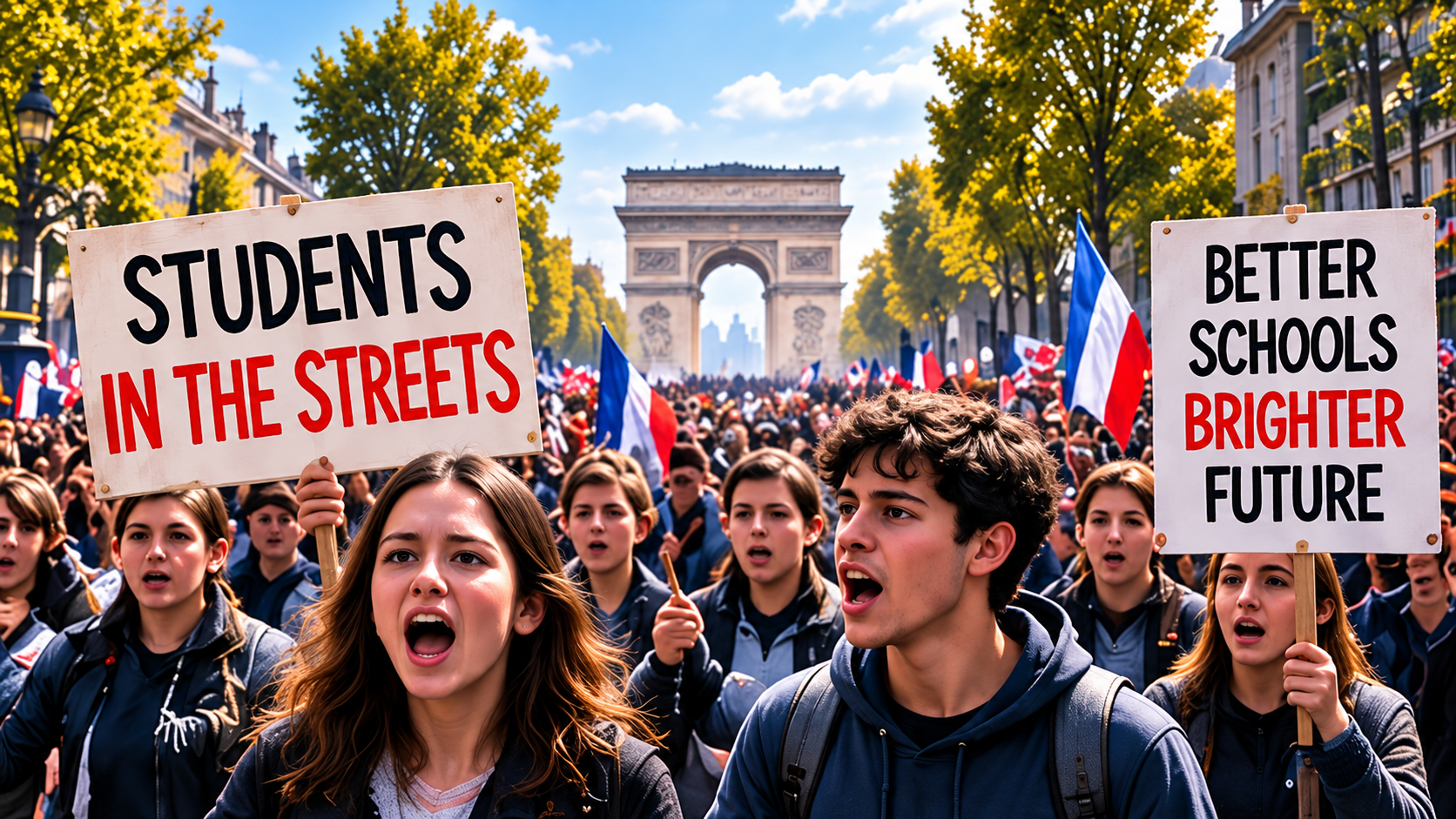
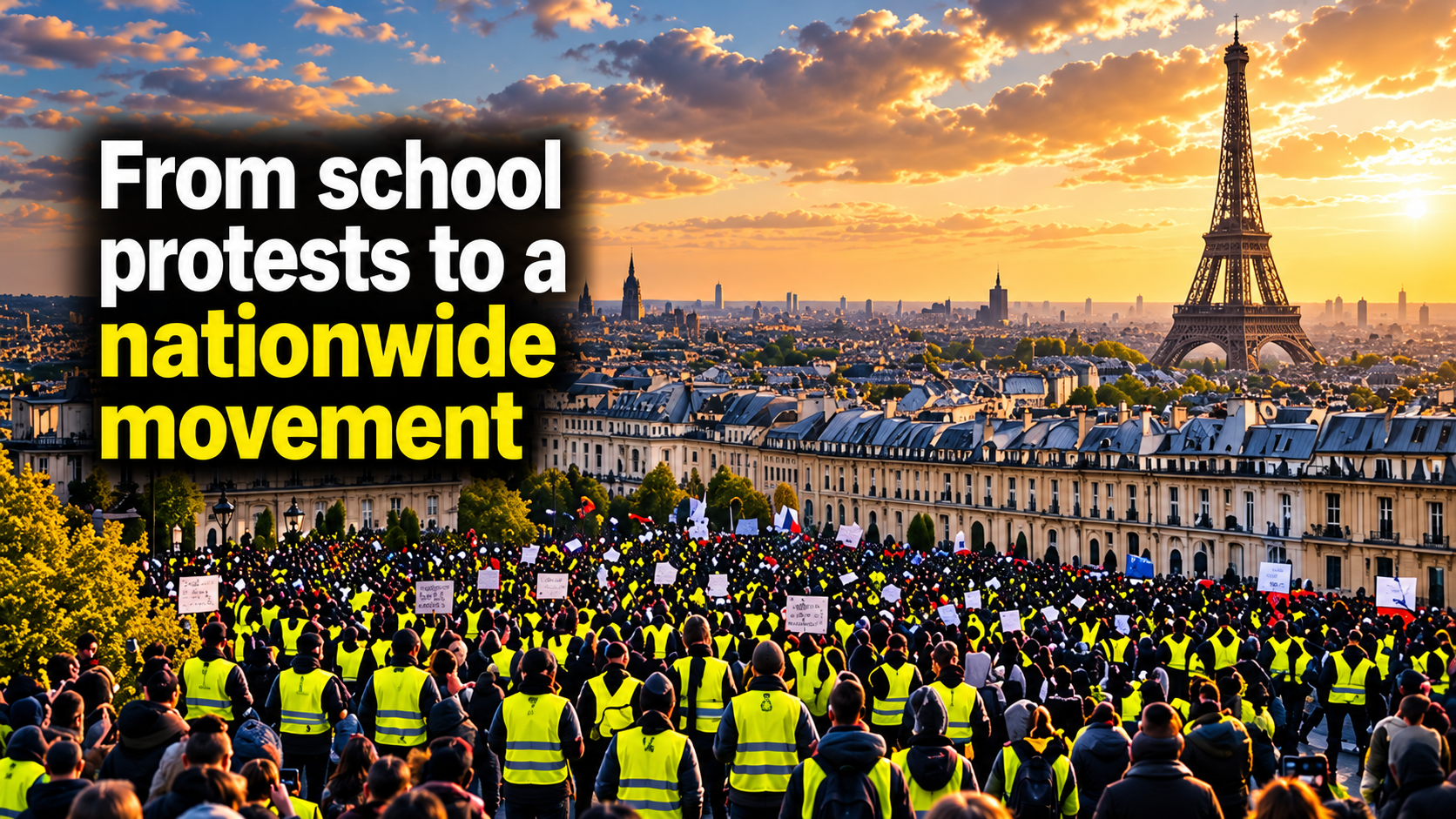
It did. Yet on October 17, 2026, hundreds of thousands of people returned to the streets across France. Some wore the same high-visibility yellow vests that became a symbol of public anger in 2018. This time, though, the story began in an unexpected place: high schools.
Students had been demanding teachers, workable classrooms, and a fairer path into higher education. Their complaints found common ground with people struggling to pay for fuel and other necessities—and with workers worried about wages, pensions, and public services. The result was not simply a replay of the old Yellow Vest movement, but a much broader coalition of grievances. (Reuters · AP)
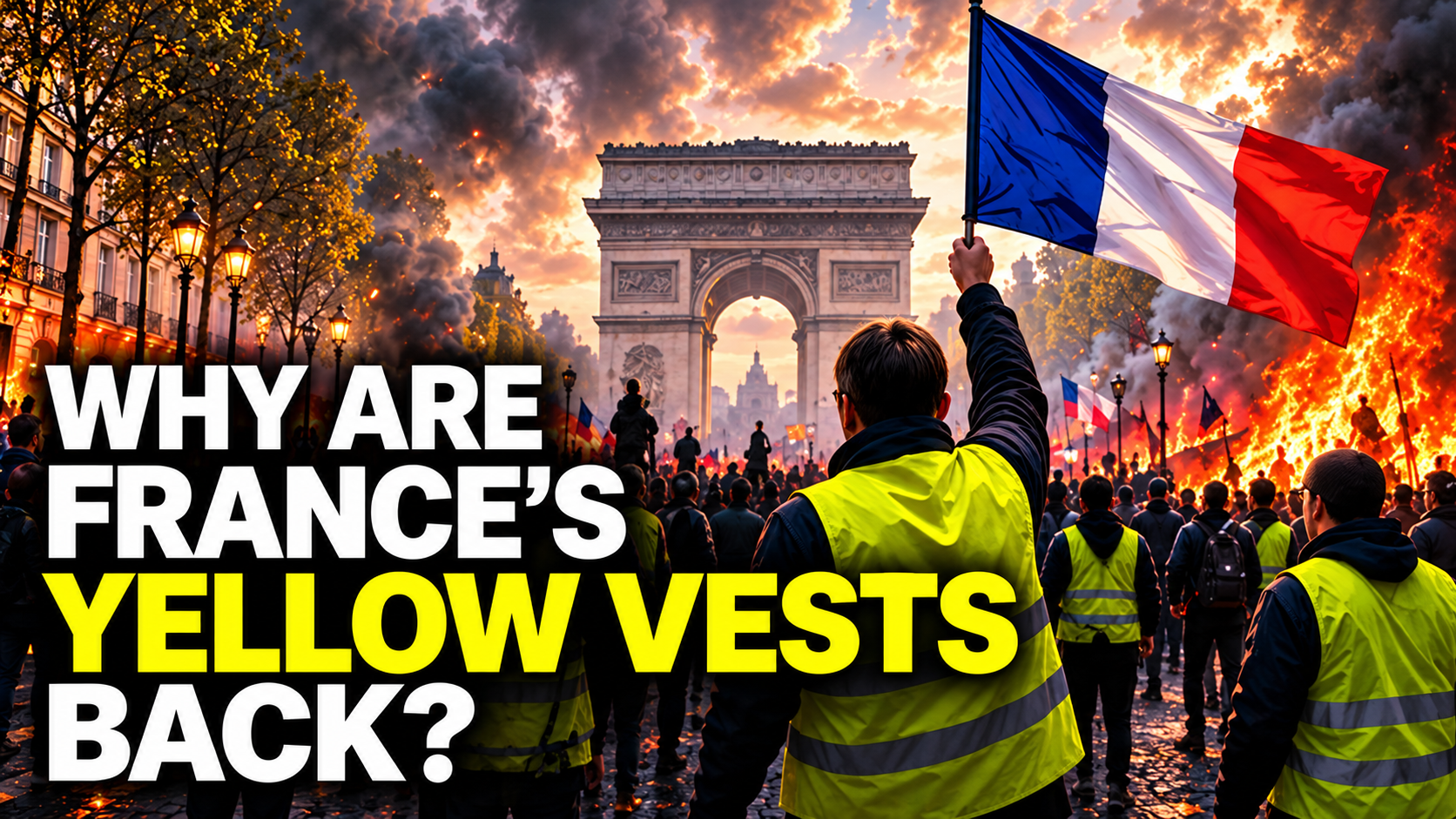
※ Images in this article are AI-generated illustrations created to help explain the story. They are not actual photographs, and depictions of people, places, or events may differ slightly from reality.
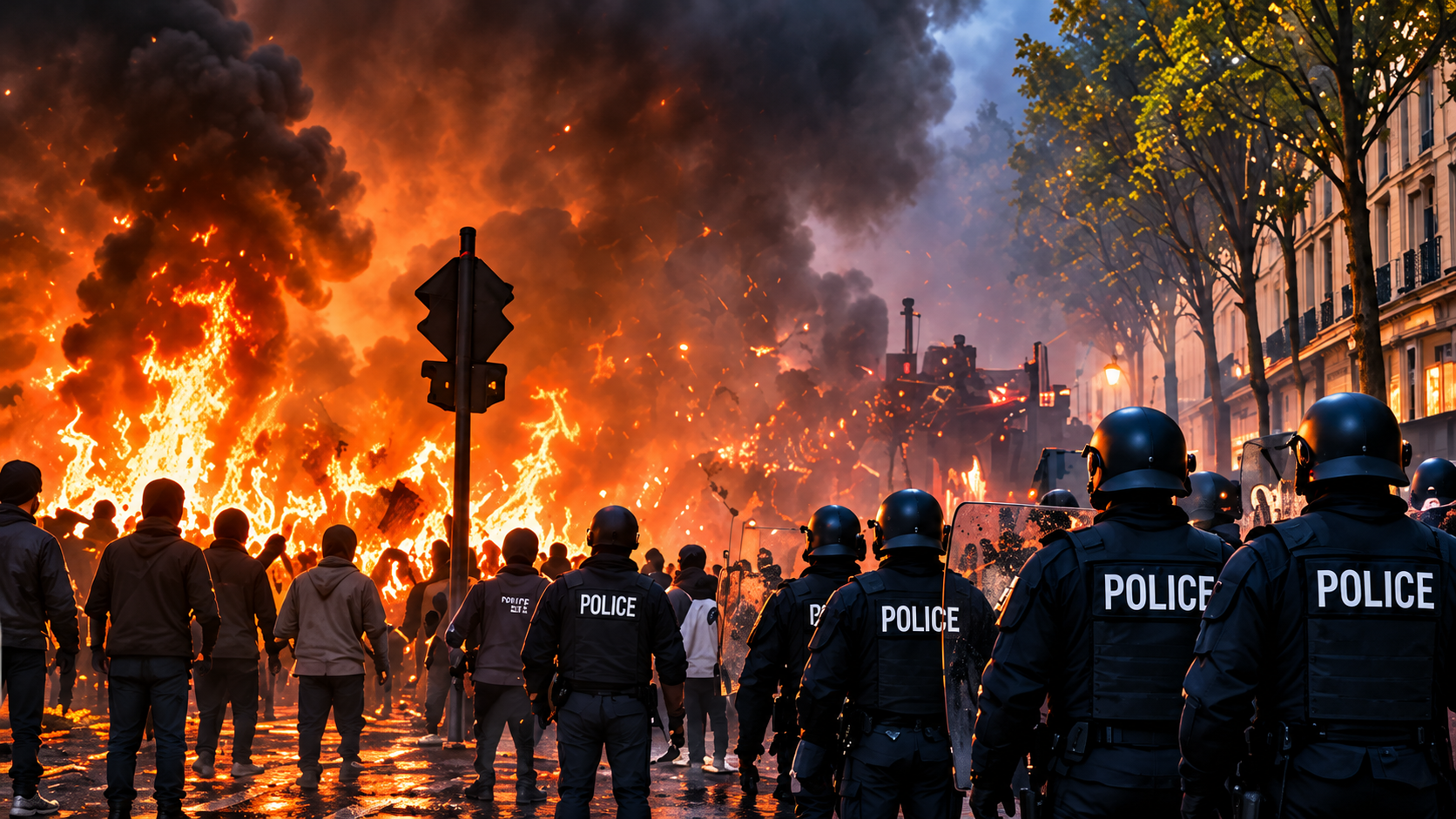
The marches also brought scenes of serious violence, including fires, looting, and clashes with police. That makes it especially important to distinguish the reasons people demonstrated from the actions of those who attacked buildings or businesses.
What Happened on October 17—and How Many People Marched?
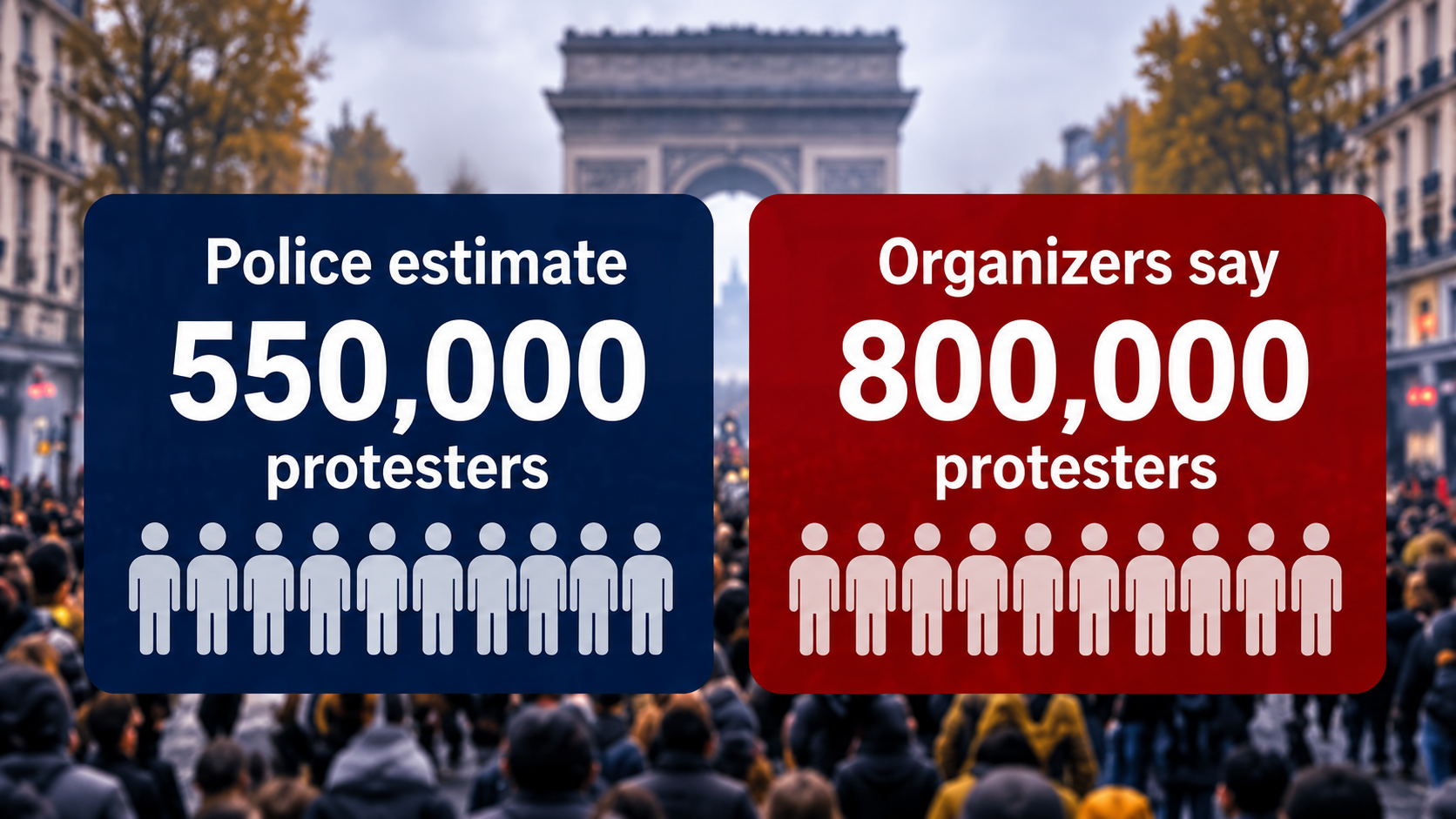
France’s October 17 demonstrations drew an estimated 550,000 people according to the Interior Ministry, while organizers put turnout at about 800,000. The competing figures reflect different counting methods and sources; they should not be presented as a single confirmed total. Around 110 marches and rallies took place across the country, with about 110,000 participants in Paris according to the ministry. (TF1 Info/AFP · AP)
People marched in Paris and other cities against rising living costs and deteriorating public services, while many students pressed their own education demands. Much of the mobilization was peaceful. But clashes, arson, and looting were also reported in several cities, including attacks on public buildings. (Reuters)
Reporting on October 18 put the number of people detained or arrested nationwide at roughly 1,800, substantially higher than some early counts published while events were still unfolding. The later figure describes police action amid the unrest—not the number of people found guilty of a crime. (AP · Reuters)
How Did a School Protest Turn Into a Nationwide Movement?
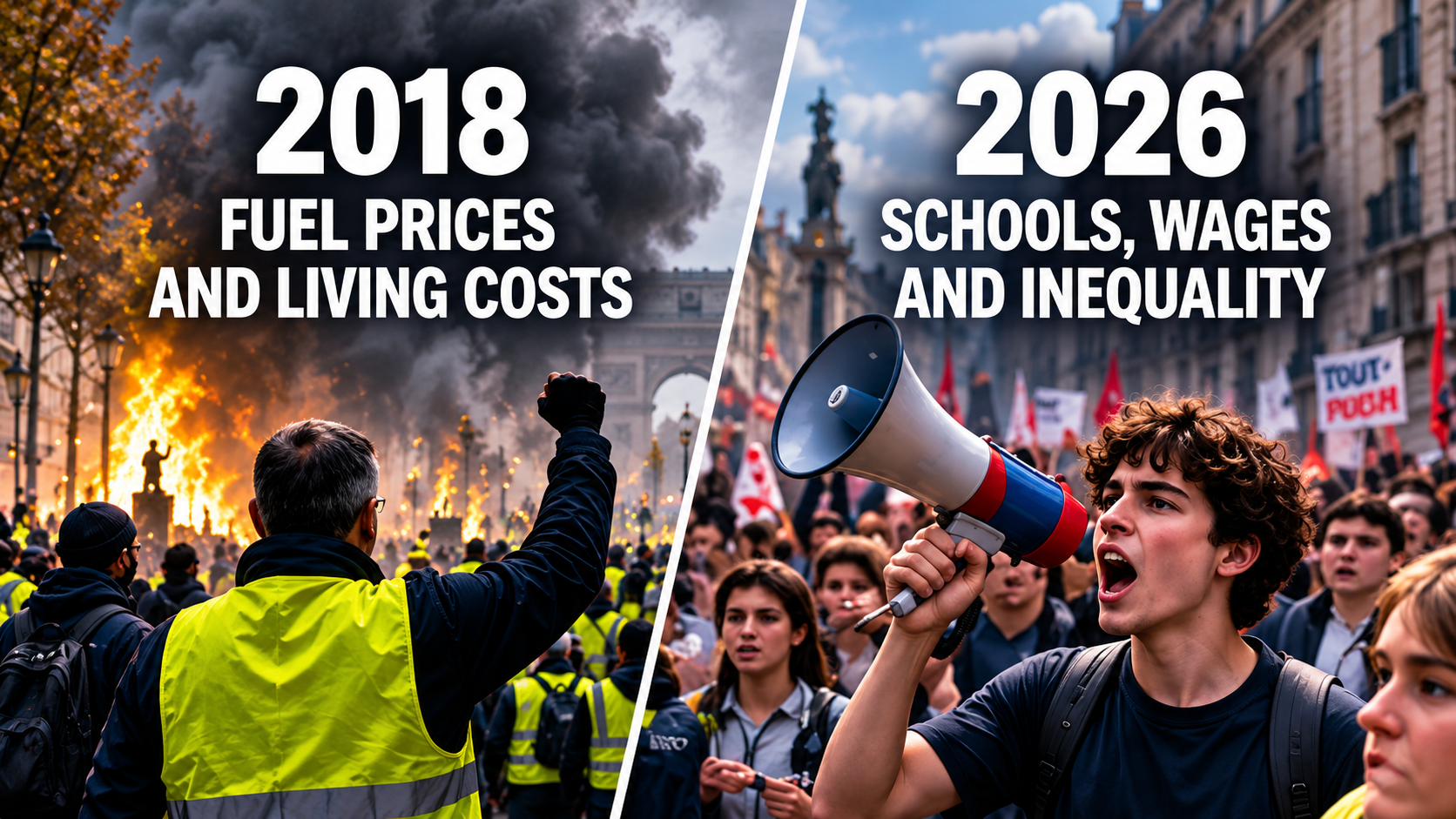
The latest protest wave began in mid-September with high school students criticizing deteriorating conditions at schools, particularly around the Paris suburbs. Complaints about missing teachers, overcrowded classes, and aging buildings spread to other schools and cities. (AP · Le Monde)
There was also frustration with Parcoursup, France’s online system for applying to higher education. Students argue that it can deepen inequalities in access to desirable university programs. Unlike the U.S. college application process, Parcoursup is a nationwide admissions platform; it has become a symbol in a larger debate over who gets educational opportunity. (Le Monde)
The demands were concrete, but the underlying concern was bigger: If public education is supposed to create opportunity, why do some young people feel the system is becoming less fair? That question reached families, teachers, and workers who were already questioning the quality of public services they rely on.
Who Are the Yellow Vests, and Why Did They Reappear?
The Yellow Vests—or gilets jaunes in French—emerged in November 2018. Their name came from the fluorescent safety vests that French drivers were required to keep in their vehicles. A proposed increase in fuel taxes became a rallying point for people who depended on cars, especially outside major cities. (Reuters via Euronews)
Their anger soon extended beyond fuel taxes to wages, purchasing power, inequality, and a feeling that decisions were being made by political elites who did not understand everyday life. President Emmanuel Macron’s government eventually dropped planned fuel-tax increases, but the original grievances never entirely disappeared. (Reuters via Euronews · Reuters)
| Question | 2018 Yellow Vests | October 2026 protests |
|---|---|---|
| What sparked the movement? | Proposed fuel-tax increases | School conditions and broader cost-of-living anger |
| Who became prominent? | Drivers and grassroots anti-tax demonstrators | Students, unions, Yellow Vest veterans, and other groups |
| What tied grievances together? | Household purchasing power and perceived unfairness | Affordability, public services, and inequality |
The yellow vest has returned as a familiar symbol of protest, but it does not mean one centrally organized 2018 movement has simply reconvened. Different groups have rallied around overlapping complaints, and some former Yellow Vest activists have joined or supported them. (Reuters · Euronews)
Why Did Students, Workers, and Yellow Vest Activists Join Forces?
They joined because different problems were pointing toward a similar complaint: everyday needs were becoming harder to meet while public services felt increasingly strained.
High school students wanted better classrooms and staffing. Labor groups, including the CGT, called for higher wages and pensions, lower prices, and stronger public services. Yellow Vest participants brought years of experience mobilizing around fuel prices and purchasing power. These demands are not identical, but they reinforce one another. (ITV News/AP · Reuters)
Imagine a family looking at a larger fuel bill while a teenager is missing lessons because a teacher is absent. One problem is a household expense; the other is a public-service failure. Together, they can create the feeling that people are paying more but getting less. That is an explanation for the coalition’s appeal, not proof that every participant shares the same political program.
Has the French Government Responded to the Students’ Demands?

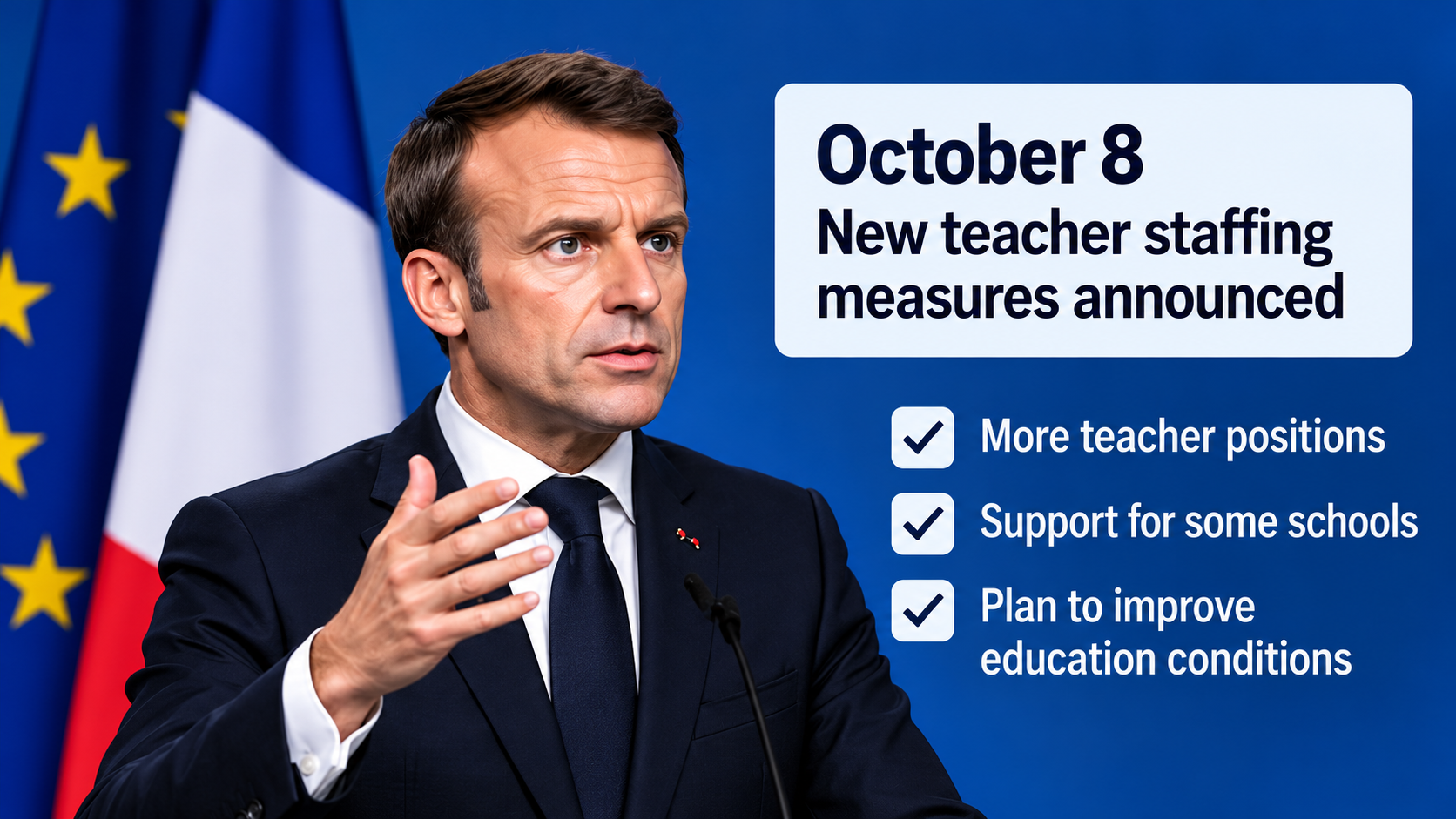
Yes. The French government had announced education measures before the huge October 17 demonstrations. On October 8, the Education Ministry said it was mobilizing more than 3,000 substitute teachers for schools in greatest need, authorizing additional hiring, and making changes intended to give students a stronger voice. (French Ministry of National Education)
That matters because the latest marches were not simply a response to government silence. The dispute is also about whether announced measures can improve students’ daily experience quickly enough—and whether education spending can satisfy broader demands in a financially constrained country. Announcing replacement staff is not the same as proving that every affected classroom now has a teacher. (French Ministry of National Education · Reuters)
The political challenge is larger than schools. Higher pensions, better pay, lower costs, and improved services can pull the government in different budgetary directions. Meeting one group’s demands may leave another unsatisfied.
Why Did Some Marches Turn Violent—and Does That Define the Movement?
No. Most people who took part were demonstrating rather than attacking property. Nevertheless, the violence was serious: fires and looting damaged businesses, and public buildings were attacked in several cities. In Limoges, a historic city hall suffered major fire damage. Police used crowd-control measures as clashes intensified. (AP · Reuters)
Prime Minister Sébastien Lecornu and other French officials blamed extremist groups and opportunistic criminals for much of the disorder. That is the government’s assessment, not a finding that every protest organizer or demonstrator was responsible. Reports of injuries linked to police crowd-control weapons have also raised questions about the proportionality of the response; individual incidents require investigation rather than instant conclusions. (Reuters · AP)
There are two separate questions: whether protesters’ grievances deserve a policy response, and whether specific people committed violence or used excessive force. Treating the entire movement as either peaceful or violent misses both.
Why Does This Matter Beyond France—and What Happens Next?
For Americans, the immediate effect is not that French street protests will automatically raise U.S. gas prices or change U.S. policy. The bigger relevance is political: France is a major European economy and U.S. ally, and prolonged unrest could complicate its government’s ability to make decisions on budgets and shared international priorities.
France also faces a presidential election in 2027. How the government responds to the students, the wider cost-of-living complaints, and the violence may shape public trust well before voters go to the polls. That is a potential political consequence, not a prediction of any election result. (Reuters · Reuters)
Three developments will tell us whether October 17 was a peak or the start of something longer:
- Schools: Do the announced staffing and consultation measures translate into visible improvements?
- Accountability: Are violent offenses investigated fairly, and are allegations of excessive police force independently examined?
- Political response: Can the government address affordability and public-service concerns without deepening budget or political divisions?
None of those answers was settled by the size of Saturday’s crowds alone.
Bottom Line: What This Story Really Means
France’s Yellow Vests are back in the headlines because the grievances they once represented—high costs and a sense of unfairness—have found an unexpected connection with students angry about their schools.
The October 17 protests were a convergence, not a single-issue revolt. The scale of the marches demonstrated widespread frustration; the violence created a separate public-safety crisis. What happens next will depend on whether concrete improvements and credible investigations can address both without confusing one with the other.
France Yellow Vest Protests 2026: Key Questions Explained
Q. Were there really 800,000 protesters in France on October 17?
Organizers estimated about 800,000 participants, while the French Interior Ministry estimated about 550,000. Both figures are estimates, not a jointly verified total.
Q. What started France’s latest protest movement?
School students began mobilizing in September over missing teachers, overcrowded classrooms, poor facilities, and perceived inequality. Wider cost-of-living concerns then helped draw in other groups.
Q. Are the 2026 protests the same as the 2018 Yellow Vest movement?
No. Some veteran Yellow Vest activists and symbols returned, but the 2026 protests also involve a prominent student movement and labor groups with their own demands.
Q. What does “gilets jaunes” mean?
It means “yellow vests,” referring to the high-visibility safety vests that became the symbol of France’s grassroots protests in 2018.
Q. What is Parcoursup, and why are students upset about it?
Parcoursup is France’s nationwide higher-education application platform. Some students criticize the admissions process as unfair and part of a broader problem of unequal opportunity.
Q. Did Macron’s government offer any education reforms?
Yes. The Education Ministry announced staffing and student-participation measures on October 8, including plans involving more than 3,000 substitute teachers. Whether the changes adequately address students’ concerns remains contested.
Q. Does an arrest during a protest mean someone was convicted?
No. Arrests or detentions are police actions, not criminal convictions. Reports of roughly 1,800 detentions or arrests by October 18 should not be described as 1,800 proven offenders.
Q. Could these protests affect the 2027 French presidential election?
They could influence the debate over public services, living costs, and the government’s response to unrest. Their effect on the election remains uncertain.
Did this help make the story clearer? 🙂 WIN keeps unpacking the “why” behind the news—clearly and simply!
Sources
October 17 Demonstrations and Aftermath
Associated Press — Clashes, fires and looting as protesters joined students (October 17, 2026)
Associated Press — Police arrest 1,800 after violent clashes (October 18, 2026)
Reuters — France faces the aftermath of its worst unrest in years (October 18, 2026)
TF1 Info/AFP — Government and organizer turnout estimates (October 17, 2026)
Student Demands and Government Response
French Ministry of National Education — Building solutions with high school students (October 2026)
AP — What to know about France’s high school student protests (October 2026)
Le Monde — Why French high schoolers are protesting (October 5, 2026)
Yellow Vest History and Political Context
Reuters — Students, unions, and Yellow Vests prepare to protest (October 17, 2026)
Reuters — Not just a case of déjà vu in France (October 8, 2026)