Why Is the Supreme Court Reviewing a 158-Year-Old Ban on Making Liquor at Home?

You can brew beer in your kitchen. You can make wine at home, too. So why could making a small batch of whiskey in your garage expose you to federal criminal penalties?
The answer goes back to 1868, when Congress was trying to stop alcohol producers from avoiding federal taxes.
But there’s a bigger question: Does the government’s power to collect taxes also give it the authority to prohibit an activity inside someone’s home?
On October 19, 2026, the U.S. Supreme Court agreed to hear a case challenging that long-standing restriction. The case, Department of Justice v. McNutt, could reshape how federal courts interpret the constitutional limits of Congress’s taxing power. (U.S. Supreme Court · Reuters)
※ Images in this article are AI-generated illustrations created to help explain the story. They are not actual photographs, and depictions of people, places, or events may differ slightly from reality.
The justices have not ruled that homemade whiskey is legal. They have only agreed to review the dispute.
And understanding why the rules for homemade beer and homemade whiskey are so different is the best place to begin.
Why Can Americans Make Beer at Home but Not Whiskey?
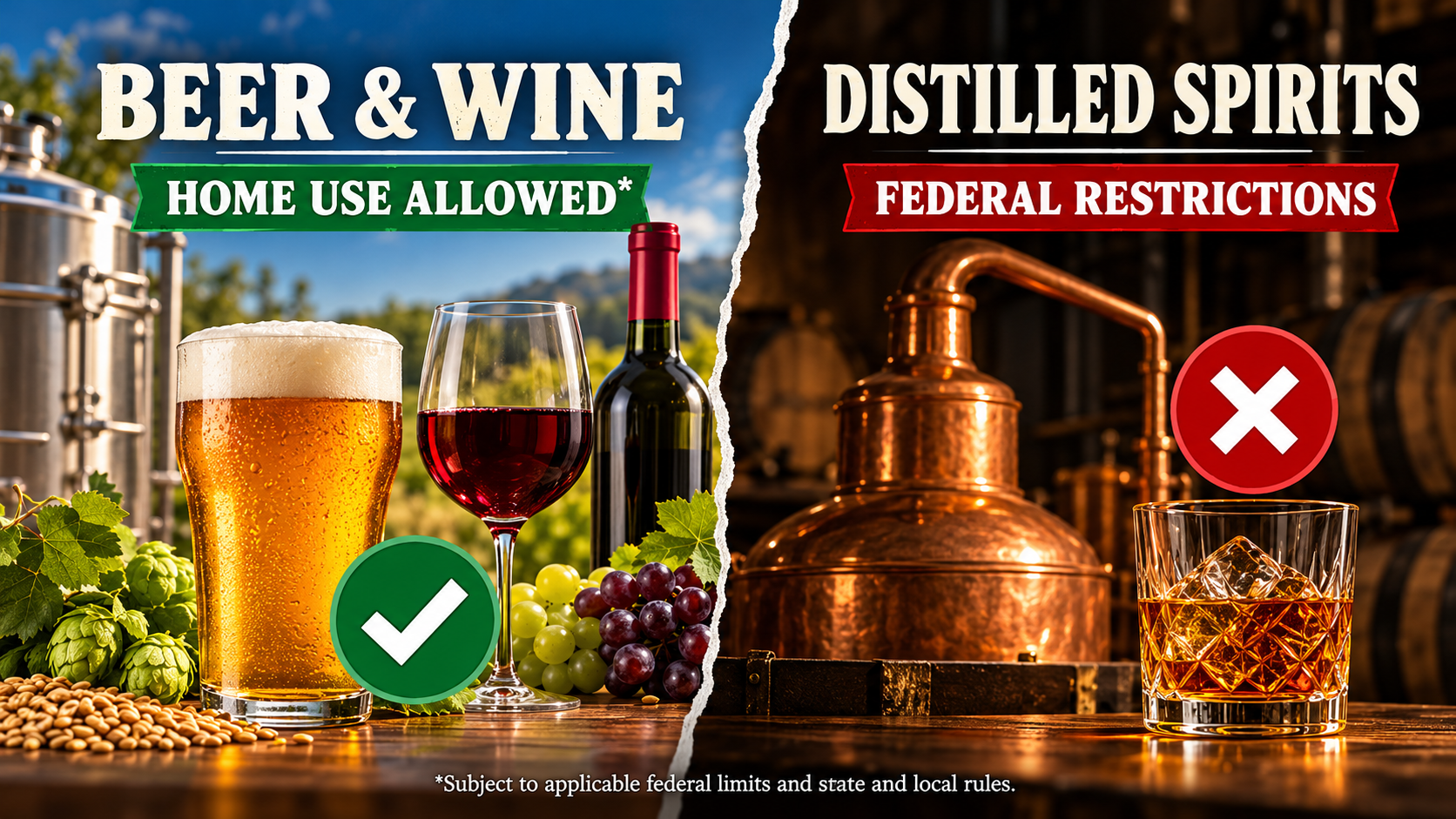
Federal law treats home brewing and home distilling differently because beer and wine have personal-use exemptions that distilled spirits do not.
Americans of legal drinking age may generally produce beer or wine at home for personal or family use under federal law, subject to applicable limits and state and local rules.
But making distilled spirits for drinking is another matter. Federal regulations do not provide a comparable personal-use exemption for homemade whiskey, vodka, rum, or similar products. (TTB)
The difference begins with how these drinks are produced.
| Beverage | Main production method | Federal home-production rule |
|---|---|---|
| Beer | Fermentation | Allowed for personal use under applicable conditions |
| Wine | Fermentation | Allowed for personal use under applicable conditions |
| Whiskey | Fermentation followed by distillation | Home beverage production prohibited under general federal rules |
| Vodka and rum | Distillation | Home beverage production prohibited under general federal rules |
Fermentation uses yeast to turn sugar into alcohol. Distillation is a separate process that separates and concentrates alcohol from a fermented mixture.
This distinction matters because federal law regulates distilled spirits production through a system of registered facilities, inspections, recordkeeping, and taxes.
The Alcohol and Tobacco Tax and Trade Bureau, known as the TTB, says producing beverage spirits generally requires prior federal approval and a qualified distilled spirits plant.
And a regular home does not qualify as an authorized production location under the restriction at the center of the Supreme Court case. (TTB)
That means the federal prohibition is not limited to people selling homemade liquor.
Distilling spirits at home for personal consumption can also violate federal law.
Which raises an obvious question: Why did Congress draw such a strict line in the first place?
Why Did Congress Ban Home Distilling Back in 1868?
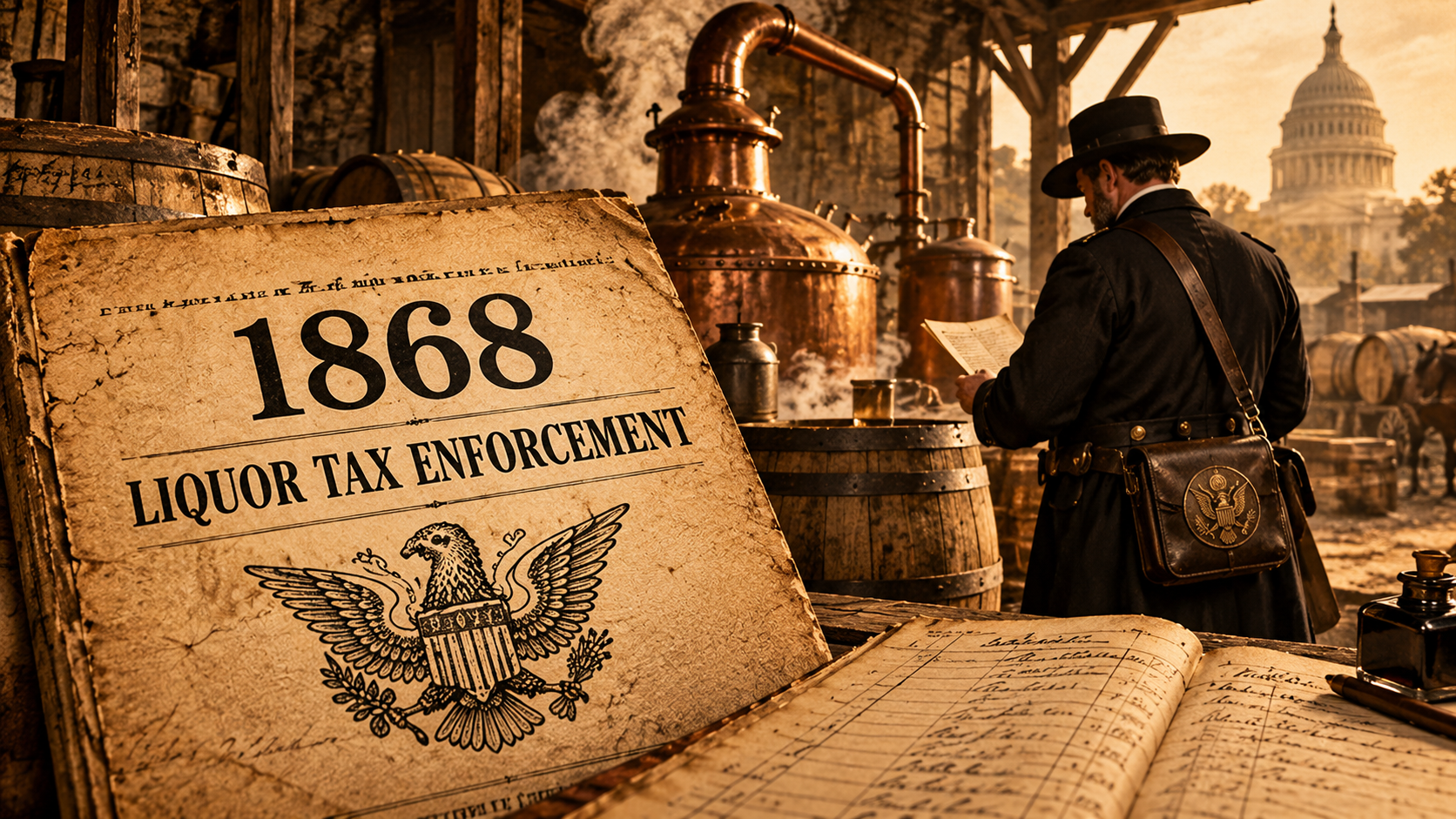
The 1868 home-distilling restriction was part of a federal effort to stop widespread evasion of liquor taxes after the Civil War.
The law was enacted during Reconstruction, when the federal government was dealing with the financial and political consequences of the war.
Alcohol taxes had long been a source of federal revenue. But collecting those taxes was difficult when spirits could be produced in places that government inspectors could not easily monitor.
Congress responded with legislation that regulated where distilled spirits could be manufactured.
One provision prohibited distilling operations in homes and related residential spaces. The modern version appears in Section 5178(a)(1)(B) of the Internal Revenue Code. (U.S. Code)
The provision does not stop at the kitchen.
It also restricts distilled spirits plants from operating in sheds, yards, or enclosures connected with homes, subject to statutory exceptions.
The government’s reasoning was closely connected to tax enforcement: a registered distillery operating in a dedicated facility could be inspected and monitored more easily than a still concealed inside a private residence.
That arrangement was intended to help officials track production and collect the excise taxes owed on spirits. (Sixth Circuit opinion)
How serious are the penalties?
Federal law does not treat unauthorized distilling as merely a minor regulatory violation.
Under 26 U.S.C. § 5601, certain distilling offenses are felonies carrying potential penalties of up to five years in prison, a fine of up to $10,000, or both, for each offense.
One specifically listed offense involves distilling on prohibited premises. (TTB)
Those are statutory maximum penalties, not automatic sentences for everyone accused of making spirits at home.
The striking part is that the restriction survived long after the conditions that originally produced it had changed.
That brings us to the central constitutional dispute.
Can Congress Use Its Taxing Power to Ban Something at Home?
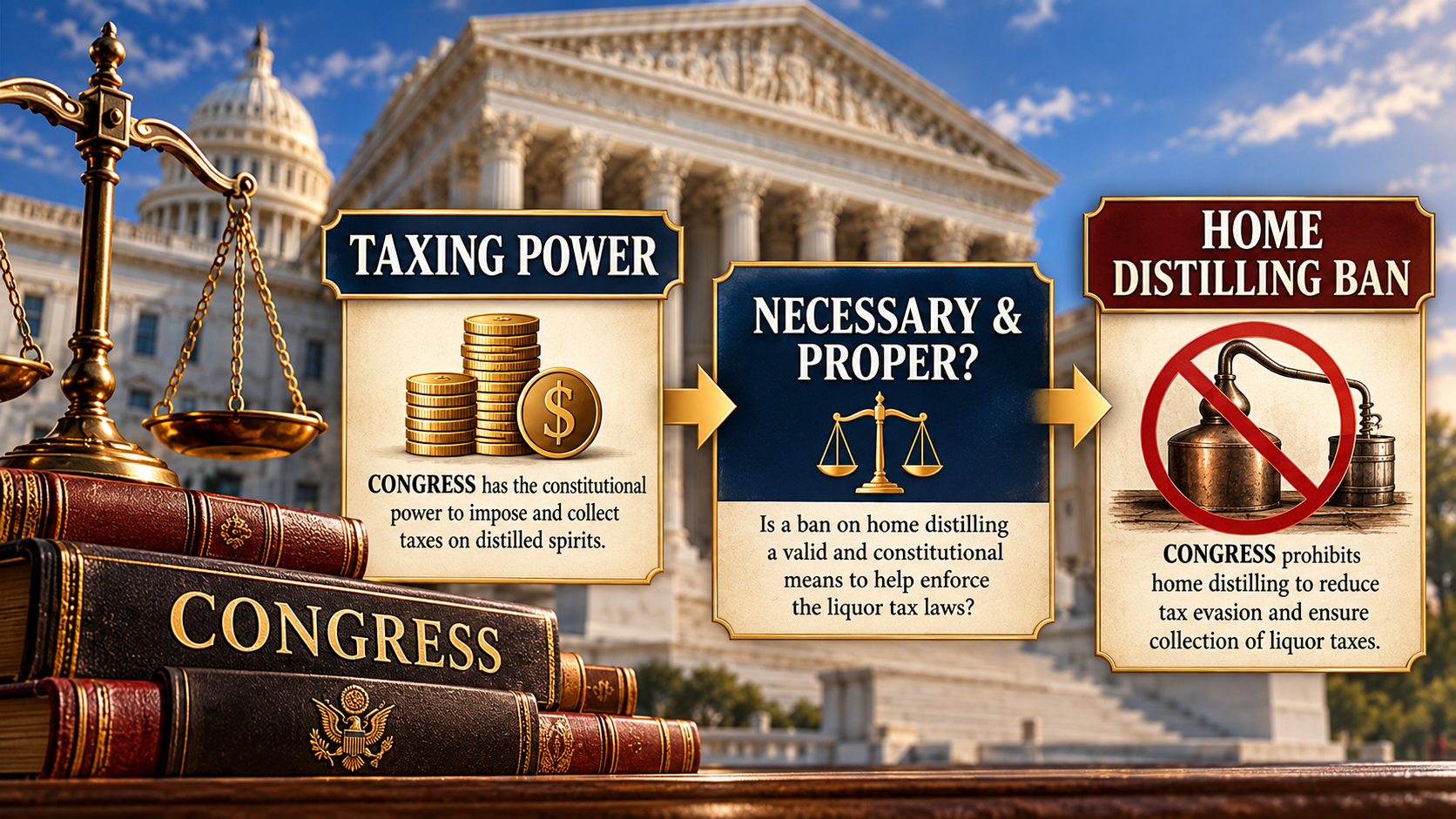
Congress unquestionably has the constitutional authority to impose federal taxes on distilled spirits. The dispute is whether banning distillation in private homes is a permissible way to enforce those taxes.
Article I of the Constitution gives Congress the power to impose and collect taxes, including excise taxes on certain goods.
An excise tax is a tax imposed on a particular product or activity. Alcohol is one familiar example.
But Congress also relies on another constitutional provision: the Necessary and Proper Clause.
That clause allows Congress to enact laws needed to carry out its constitutionally assigned powers, within constitutional limits.
The disagreement is over how far that supporting authority extends.
Consider two different rules:
- A law requiring distillers to register, report their production, and pay alcohol taxes.
- A law prohibiting distillation at someone’s home even when the alcohol would be made only for personal use.
The first directly creates a system for collecting taxes.
The second prohibits an activity as a means of supporting that system.
The government argues that restricting the location of distilleries is a legitimate tax-enforcement tool.
The challengers contend that a tax power cannot be stretched into an open-ended authority to criminalize private activities that Congress could otherwise tax or regulate differently.
The Fifth Circuit’s April 2026 decision sided with the challengers, concluding that the home-distilling restriction was not sufficiently connected to the collection of federal tax revenue. (Fifth Circuit)
This is not principally a case about whether drinking whiskey is constitutionally protected.
It is about the limits of federal power: when does a law designed to collect taxes become an impermissible prohibition?
That question helps explain why a dispute over homemade liquor has reached the nation’s highest court.
How Did the Home Distilling Dispute Reach the Supreme Court?
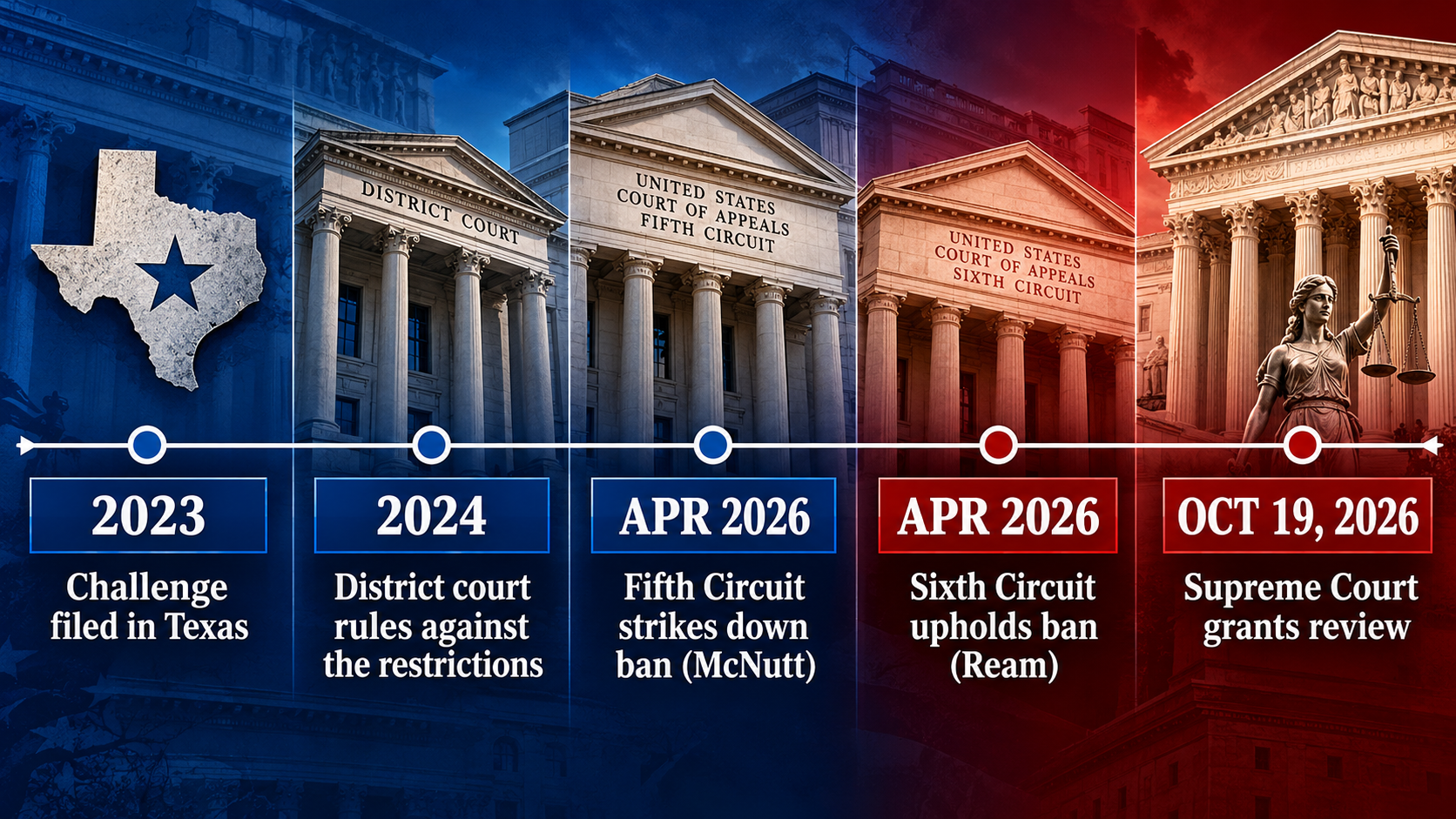
The Supreme Court took up the issue after two federal appeals courts reached conflicting constitutional conclusions about the same home-distilling restriction.
One dispute was brought by Scott McNutt, other individual hobbyists, and the Hobby Distillers Association, an organization seeking to legalize at-home distillation.
The plaintiffs wanted to produce spirits for personal use but faced federal prohibitions and potential penalties.
They challenged the government’s authority to enforce the residential distilling restriction.
A separate lawsuit in Ohio raised the same basic constitutional issue.
The sequence explains why the Supreme Court is stepping in.
| Date | What happened |
|---|---|
| December 2023 | Home-distilling advocates filed their federal challenge in Texas. |
| July 2024 | A federal district court in Texas ruled against the challenged restrictions. |
| April 10, 2026 | The Fifth Circuit upheld the constitutional challenge in McNutt. |
| April 21, 2026 | The Sixth Circuit upheld the home-distilling restriction in the separate Ream case. |
| August 2026 | The Justice Department petitioned the Supreme Court to review the Fifth Circuit decision. |
| October 19, 2026 | The Supreme Court granted review in Department of Justice v. McNutt. |
These developments are documented in the Supreme Court docket, the Fifth Circuit opinion, and the Sixth Circuit opinion.
This kind of disagreement is often called a circuit split.
Federal appeals courts operate in different regions of the country. When they interpret the same federal law or constitutional principle differently, the resulting uncertainty can become a reason for Supreme Court review.
The October 19 order means the justices agreed to consider the federal government’s appeal.
It does not mean they have already decided which appeals court was right.
Why Did Two Federal Appeals Courts Reach Opposite Conclusions?
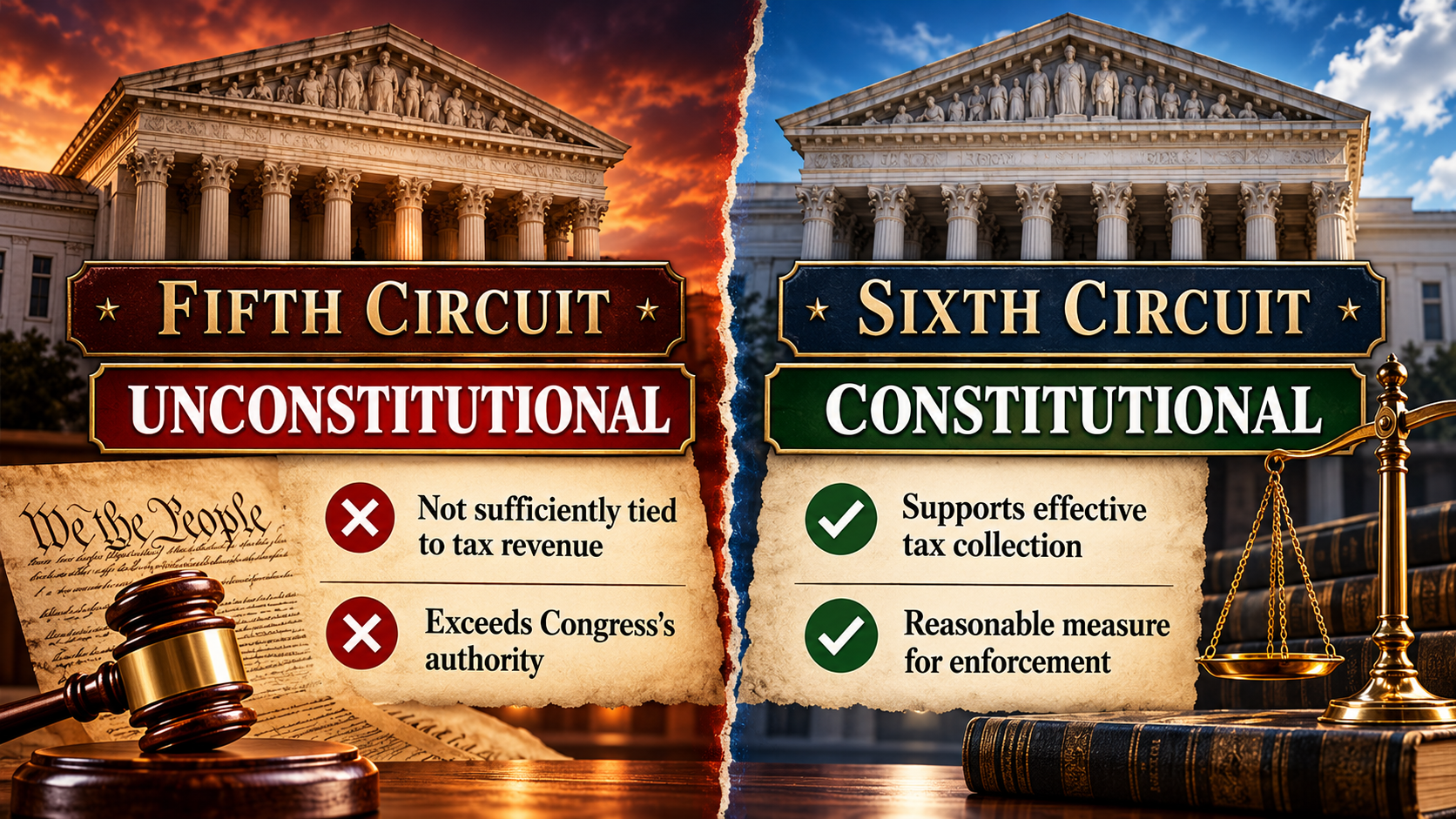
The Fifth Circuit concluded that the residential distilling ban went beyond Congress’s constitutional powers. The Sixth Circuit concluded that the ban was a valid way to enforce federal liquor taxes.
Both courts considered Congress’s taxing authority and the Necessary and Proper Clause.
But they disagreed about the constitutional connection between collecting taxes and prohibiting a particular place of production.
| Key issue | Fifth Circuit | Sixth Circuit |
|---|---|---|
| Decision | Home-distilling restriction unconstitutional | Home-distilling restriction constitutional |
| View of the tax connection | The location ban is not sufficiently tied to collecting revenue | The restriction supports effective tax collection |
| View of federal authority | Congress cannot use tax enforcement to justify an excessive prohibition | Congress may adopt reasonable measures to protect tax collection |
| Result | Sided with home-distilling challengers | Sided with the federal government |
The Fifth Circuit reasoned that prohibiting home distilling does not itself collect a tax. It instead prevents the production of a taxable product at a particular location.
The court warned against interpreting Congress’s taxing power so broadly that it could justify criminal restrictions on many other activities inside people’s homes. (Fifth Circuit)
The Sixth Circuit saw the relationship differently.
It emphasized the historical difficulty of detecting untaxed alcohol production and the practical challenges of inspecting private residences.
For that court, limiting distillation to regulated facilities was a reasonable means of helping the government collect taxes. (Sixth Circuit)
Why is the political alignment surprising?
There is an unusual political detail in this dispute.
The Trump administration is defending the federal restriction, while more than a dozen Republican-led states have supported the challenge.
That combination illustrates how disputes over federal authority do not always follow familiar partisan divisions. (Reuters)
The federal government wants to preserve a longstanding tax-enforcement mechanism.
The states supporting the challengers are concerned about the constitutional limits on federal regulation and the division of authority between Washington and the states.
The disagreement is therefore larger than a fight over whiskey.
It concerns how much freedom Congress has to choose enforcement methods when exercising powers expressly granted by the Constitution.
Would a Supreme Court Ruling Make Homemade Whiskey Legal?
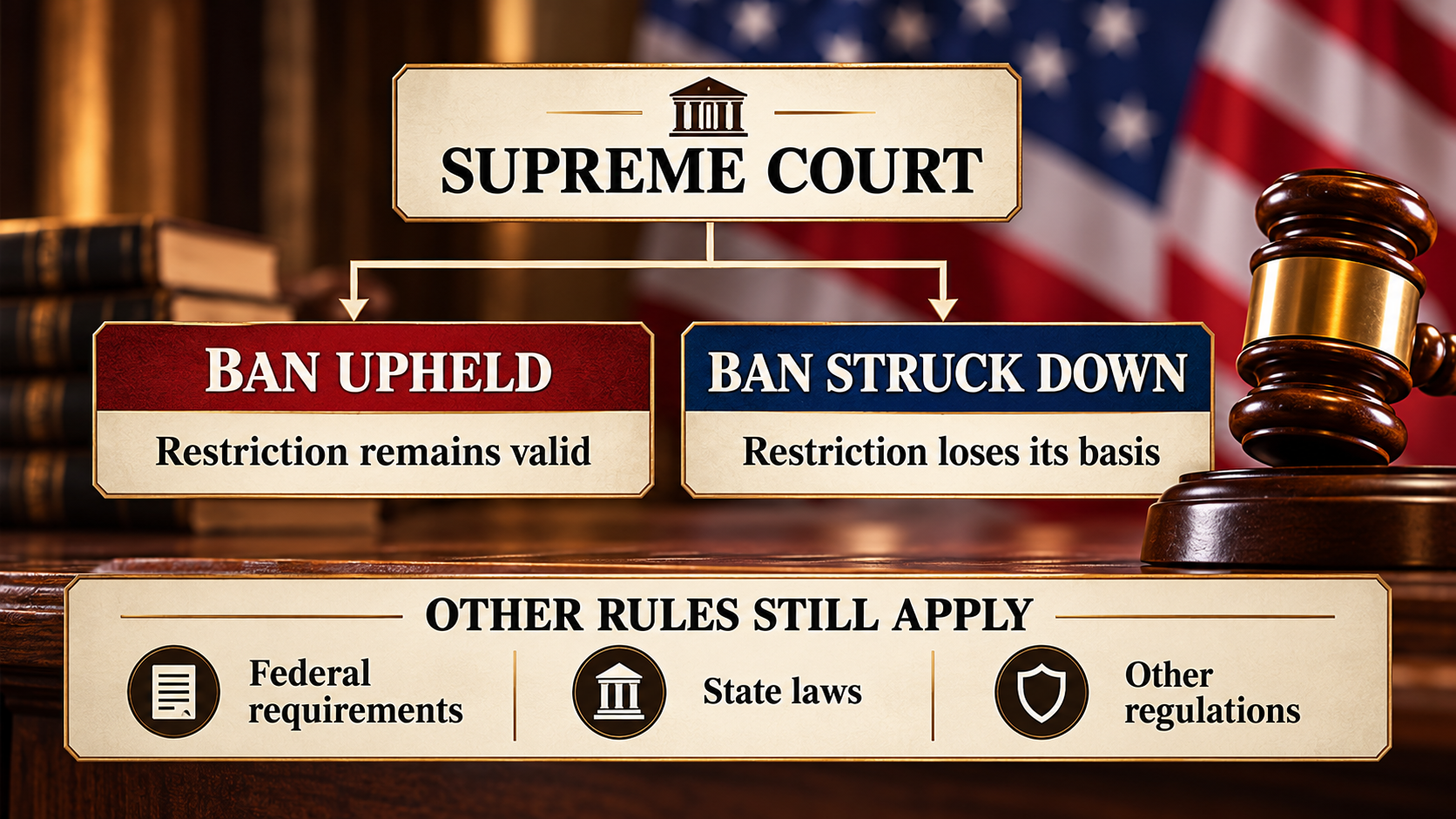
Not necessarily. Even if the Supreme Court strikes down the challenged home-distilling restriction, other federal alcohol laws and state regulations would still matter.
The justices are reviewing a specific constitutional question involving federal restrictions on the location of distilling operations.
They are not being asked to create an unrestricted national right to manufacture liquor at home.
The possible outcomes can be understood in three broad categories.
| Possible outcome | What it could mean |
|---|---|
| The Court upholds the restriction | The challenged federal residential-location prohibition remains valid. |
| The Court strikes it down | That restriction loses its constitutional basis, subject to the Court’s precise ruling and remedy. |
| The Court issues a narrower decision | The Court may resolve the dispute without settling every question about home distilling. |
Even a victory for the challengers would not necessarily remove requirements involving registration, permits, taxes, other federal offenses, or state and local rules.
Under current TTB guidance, distilled spirits production is generally permitted only at federally qualified facilities. (TTB)
Would a state be able to keep its own restrictions?
Yes. Federal and state alcohol laws are separate legal systems.
A decision invalidating one federal restriction would not automatically erase state-level requirements or prohibitions.
Likewise, a state rule allowing a particular activity does not automatically exempt someone from applicable federal law.
That distinction is important for anyone who sees a future headline claiming that homemade whiskey has become legal.
The actual answer would depend on the wording and scope of the Supreme Court’s decision, the remaining federal laws, and the rules in the person’s state.
When Will the Supreme Court Decide, and What Should Americans Watch?
As of October 20, 2026, the Supreme Court has agreed to hear the case but has not issued a final ruling or announced a decision date.
The Court must still consider the parties’ legal arguments before resolving the dispute.
A decision could come during the current Supreme Court term, which ordinarily concludes with decisions issued by late June, but that timing is not guaranteed. (U.S. Supreme Court · AP)
For people interested in making spirits at home, the practical question is whether the federal residential-location restriction will survive.
For constitutional lawyers and policymakers, the larger question is how the justices define the relationship between an enumerated federal power and the regulations Congress uses to enforce it.
A broad ruling could influence legal arguments in other cases concerning federal regulatory authority.
A narrow ruling might focus on the unusually long history of alcohol taxation and the particular features of distilled spirits production.
Neither result should be assumed before the justices decide.
And until the legal position is clarified, the Court’s decision to hear the appeal should not be treated as permission to begin home distilling.
Bottom Line: What This Story Really Means
The Supreme Court is reviewing a home-distilling restriction that dates to 1868 because two federal appeals courts disagree about whether Congress had the constitutional authority to impose it.
Americans may generally make beer and wine at home under federal personal-use rules, but those exemptions do not extend to distilled spirits such as whiskey and vodka.
The difference traces back to a system designed to prevent liquor-tax evasion by controlling where spirits can be produced.
The central issue is not simply whether people should be allowed to make their own whiskey. It is whether Congress can use its power to collect taxes to justify prohibiting an activity in private homes.
Even if the challengers ultimately prevail, other federal and state restrictions could remain.
The story began with a 19th-century tax law. Its outcome could help clarify the constitutional limits of federal regulation in the 21st century.
Supreme Court Home Distilling Ban: Key Questions Explained
Q. Is it currently legal to make whiskey at home in the United States?
As a general rule, federal law prohibits producing distilled spirits at home for beverage use. The Supreme Court’s decision to review the restriction has not made home distilling broadly legal.
Q. Why can Americans make beer or wine at home but not whiskey?
Federal law provides personal-use exemptions for beer and wine production but not for distilled spirits. Whiskey production involves distillation, which is subject to a separate regulatory system.
Q. What is the 1868 home-distilling ban?
It is a federal restriction originating in 1868 that prohibits distilled spirits production facilities from operating in homes and certain connected residential spaces. The modern provision appears in 26 U.S.C. § 5178(a)(1)(B).
Q. Can someone go to prison for illegally distilling alcohol at home?
Yes. Certain federal distilling offenses can carry penalties of up to five years in prison and a $10,000 fine, or both, for each offense. Actual charges and penalties depend on the conduct and applicable law.
Q. Is owning a distillation still itself illegal?
Not necessarily. Federal rules allow certain equipment to be owned and used for lawful purposes, such as distilling water or some nonalcoholic materials. Producing beverage spirits is subject to different restrictions, and state laws may also apply.
Q. Which Supreme Court case is challenging the restriction?
The case is Department of Justice v. McNutt, Supreme Court docket No. 26-204. It concerns a constitutional challenge brought by hobby distillers and an association advocating for home distilling.
Q. Why did the Fifth and Sixth Circuits disagree?
The Fifth Circuit found that the residential distilling restriction exceeded Congress’s constitutional authority. The Sixth Circuit concluded that the prohibition was a permissible method of enforcing federal alcohol taxes.
Q. If the Supreme Court overturns the ban, will home distilling immediately become legal everywhere?
No. Overturning the challenged restriction would not necessarily eliminate separate federal requirements or state and local laws regulating alcohol production.
Q. Has the Supreme Court already struck down the 1868 law?
No. On October 19, 2026, the Court agreed to review the case. That decision was a grant of review, not a final ruling on the law’s constitutionality.
Did this help make the story clearer? 🙂
WIN keeps unpacking the “why” behind the news—clearly and simply!
Sources
Supreme Court Review and October 2026 Developments
U.S. Supreme Court — Department of Justice v. McNutt, Docket No. 26-204
Federal Alcohol Rules and Legal Requirements
Alcohol and Tobacco Tax and Trade Bureau — Home Distilling and Federal Penalties
Alcohol and Tobacco Tax and Trade Bureau — Distilled Spirits FAQs
26 U.S.C. § 5178 — Premises of Distilled Spirits Plants
Conflicting Federal Appeals Court Decisions
U.S. Court of Appeals for the Fifth Circuit — McNutt v. Department of Justice, April 10, 2026