Why Are Republicans Turning on Pete Hegseth—and Could He Really Be Impeached?

Why would a Republican congressman try to impeach the defense secretary appointed by a Republican president?
That’s the unusual question surrounding Pete Hegseth, one of President Donald Trump’s most prominent Cabinet members.
After Republicans suffered sweeping losses in the November 3 midterm elections, criticism of Hegseth intensified over the prolonged U.S. war with Iran. Republican Rep. Thomas Massie is preparing another attempt to force an impeachment vote, while other lawmakers are questioning the Pentagon’s leadership and its strategy for ending the conflict.
But two things make the situation more complicated.
Trump is publicly defending Hegseth. And impeachment would not automatically remove him from office—even if the House voted for it.
On November 5, Hegseth released a defiant video defending the war and rejecting impeachment efforts. The dispute is now about more than one Cabinet secretary’s future. It raises questions about who controls America’s military decisions and how Congress can hold the executive branch accountable. (Reuters · ABC News)
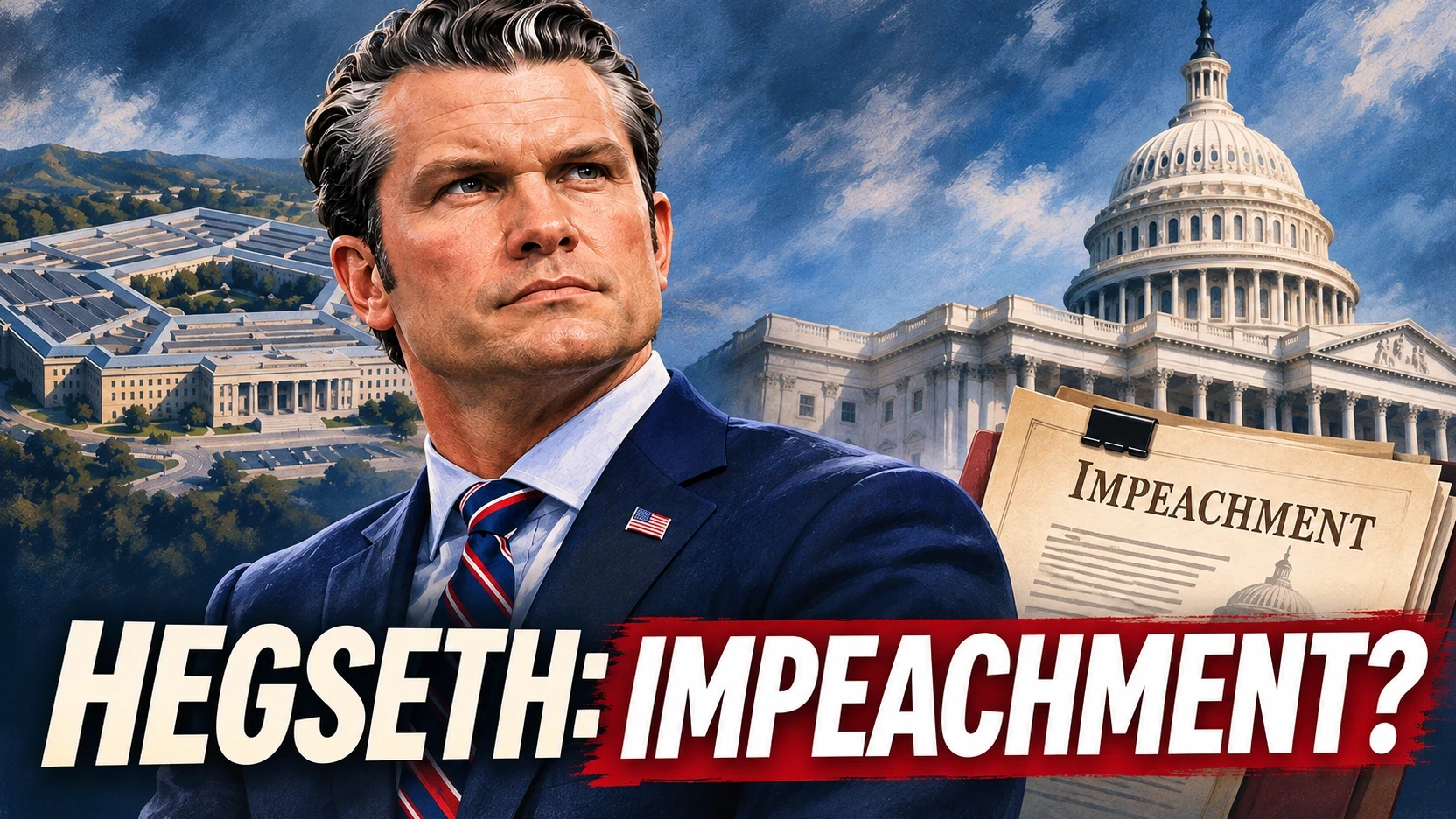
※ Images in this article are AI-generated illustrations created to help explain the story. They are not actual photographs, and depictions of people, places, or events may differ slightly from reality.
Why Is the Iran War Splitting Republicans?
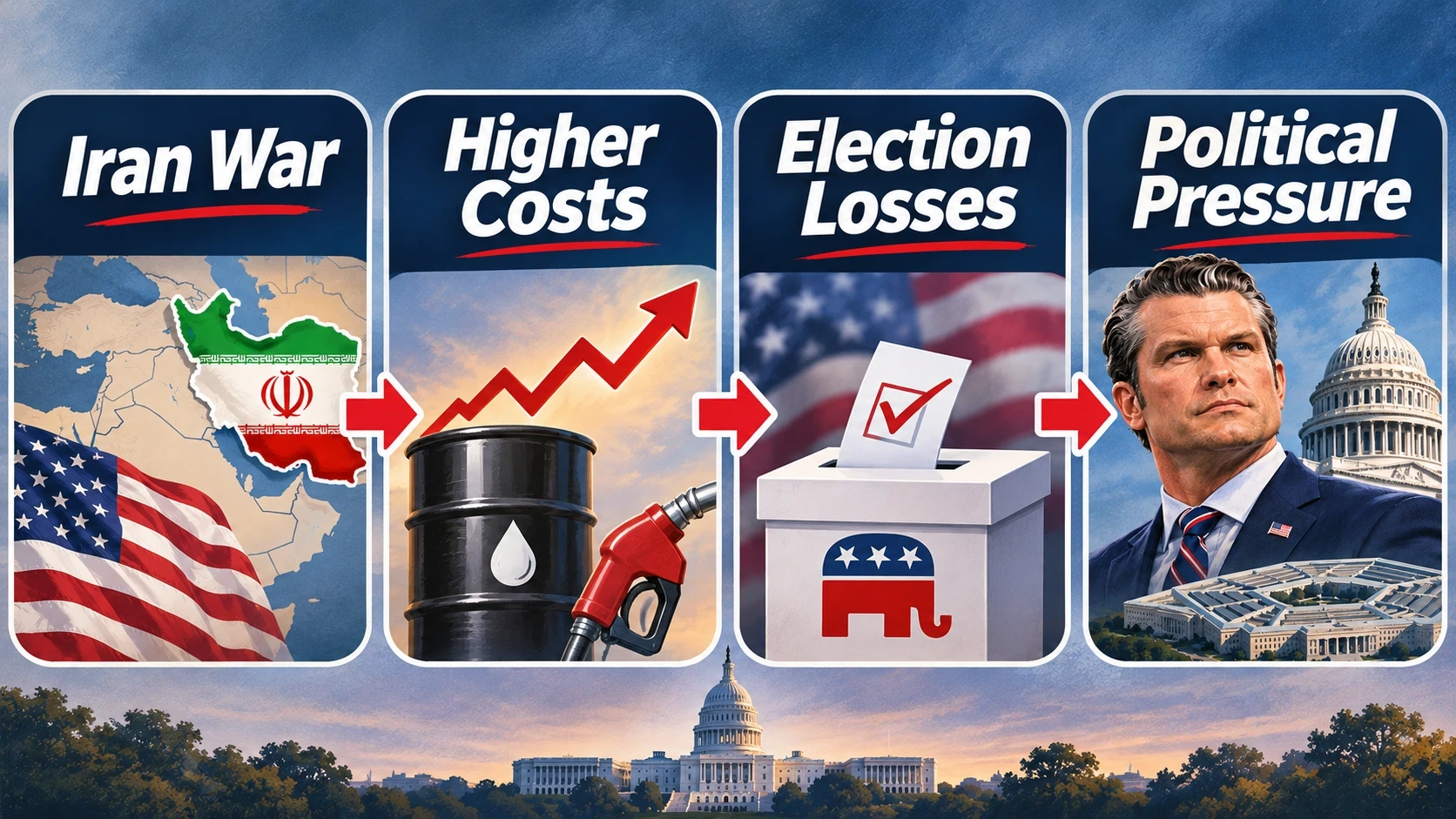
The central disagreement is over the Iran war—and whether Hegseth helped steer the Trump administration into a conflict without a workable exit strategy.
The United States and Israel launched strikes against Iran on February 28, 2026. The conflict developed into a prolonged confrontation, disrupting energy markets and contributing to frustration among American voters. (FactCheck.org · AP)
Vice President JD Vance publicly blamed the war for the Republicans’ midterm defeat. Other party figures have questioned whether the administration underestimated the conflict’s duration and political consequences. (Reuters)
That does not mean every Republican agrees the war was a mistake.
Some still support the administration’s military objectives while criticizing Hegseth’s handling of the campaign or his relationships with Congress. Others are more concerned about the president’s broader strategy.
The political argument can be understood through three separate questions:
| Question | Why Republicans disagree |
|---|---|
| Was military action against Iran necessary? | Lawmakers disagree about the threat posed by Iran and the justification for intervention. |
| Has the war been managed effectively? | Critics question the duration, costs, objectives, and exit strategy. |
| Who should be held responsible? | Some focus on Hegseth’s advice and management, while the final decision to use military force rests with the president. |
The third question is especially sensitive.
Hegseth serves as the president’s top civilian defense official. He helps execute military policy, oversees the Pentagon, and advises the president.
Yet Trump remains commander in chief.
Criticizing Hegseth’s management is not the same as establishing that he alone caused the war or its political consequences.
What Is Thomas Massie Actually Accusing Hegseth Of?
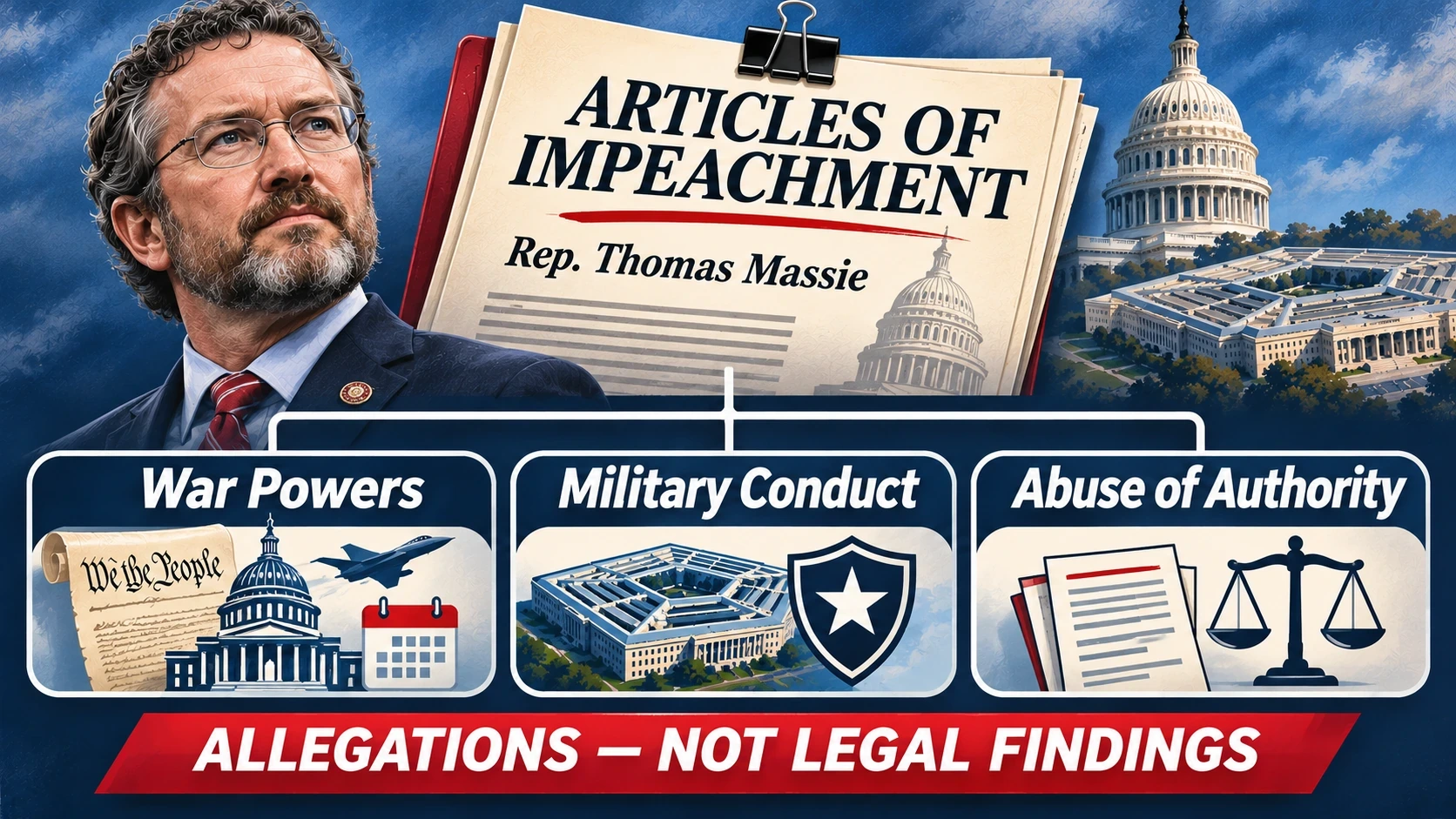
Massie is alleging far more than poor political judgment. His impeachment effort accuses Hegseth of abusing his office and violating constitutional or statutory limits on military authority.
On September 15, Massie, a Kentucky Republican, introduced eight articles of impeachment against the defense secretary.
Three specifically challenge the conduct of the Iran war under the War Powers Resolution of 1973.
The remaining allegations involve other military operations, the treatment of civilians, strikes against suspected drug traffickers, actions involving Venezuela and Yemen, and alleged retaliation against protected speech. (Rep. Thomas Massie)
These are allegations in proposed impeachment articles—not findings that Hegseth has committed a crime or violated the Constitution.
The September effort stalled before lawmakers left Washington for the elections. Massie subsequently said he intended to renew the effort when Congress returned.
Here is the sequence:
| Date | Development |
|---|---|
| February 28, 2026 | The United States and Israel launch strikes against Iran. |
| September 15, 2026 | Massie introduces eight articles of impeachment against Hegseth. |
| November 3, 2026 | Republicans suffer major midterm election losses. |
| November 5, 2026 | Hegseth publicly rejects impeachment threats, and Trump reiterates his support. |
| Week of November 9, 2026 | Massie intends to pursue a House vote, although the outcome is uncertain. |
(FactCheck.org · Rep. Thomas Massie · ABC News)
The upcoming confrontation is particularly unusual because the main Republican sponsor is challenging the defense secretary of a president from his own party.
Still, Massie’s position should not be confused with unanimous Republican support for impeachment. Other Republicans who have criticized Hegseth have not necessarily endorsed removing him through that process.
Why Does the War Powers Resolution Matter So Much?
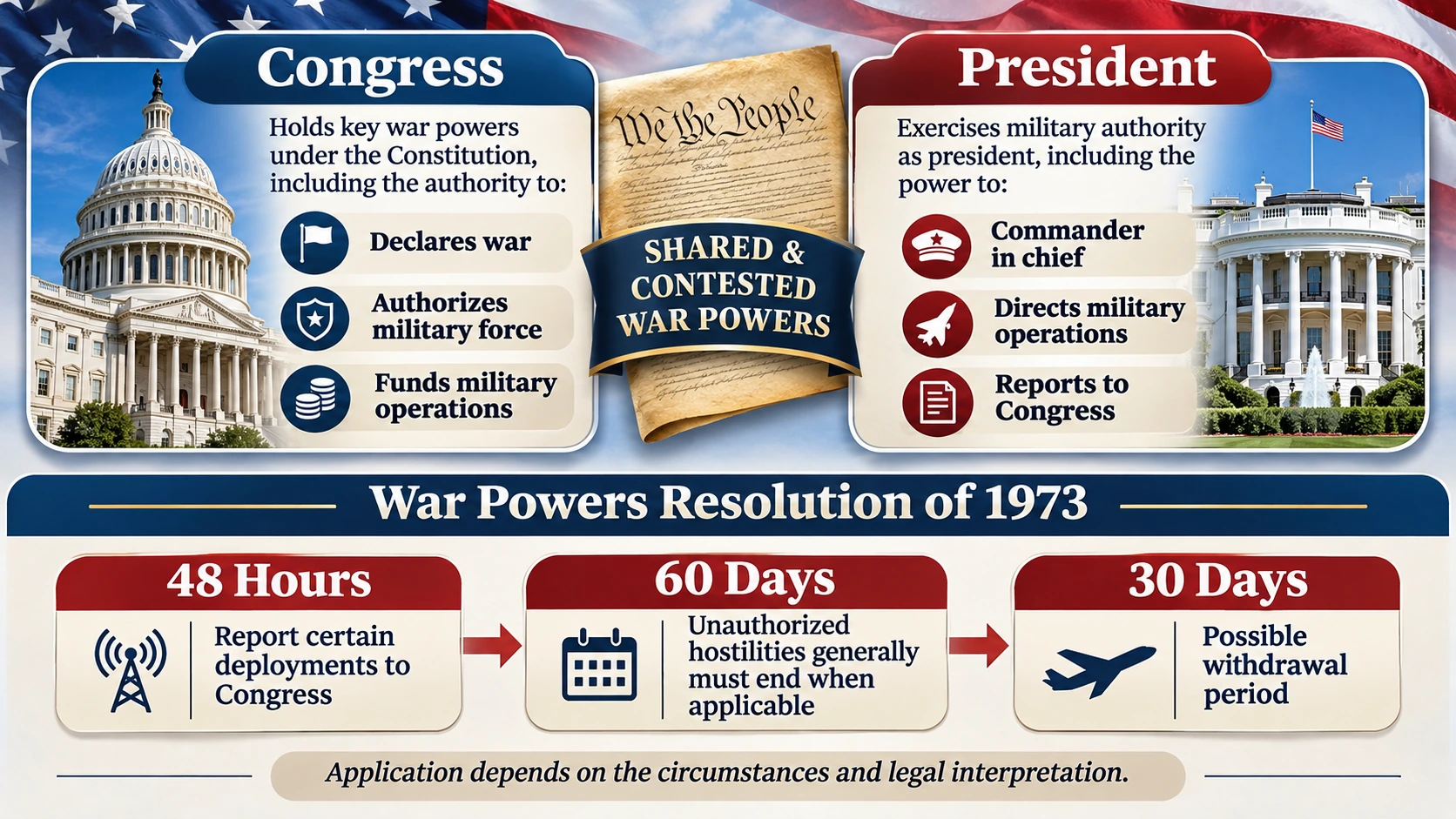
The War Powers Resolution is central because it establishes congressional reporting and withdrawal requirements for certain military hostilities undertaken without congressional authorization.
The Constitution divides military authority between Congress and the president.
Congress has the power to declare war and authorize military action through legislation. The president serves as commander in chief and directs the armed forces.
The 1973 law was designed to address the tension between those two responsibilities, particularly after the experience of the Vietnam War.
Under its general framework, the executive branch must report certain military deployments to Congress within 48 hours. When the relevant statutory conditions apply, unauthorized hostilities generally must end within 60 days, with a possible additional 30-day withdrawal period. (CBS News)
That sounds straightforward. In practice, disputes arise over whether an operation meets the statute’s definition of hostilities, what authorization exists, and how the deadlines apply.
The Trump administration has argued that its initial military operation against Iran ended in early May. Massie argues that continued hostilities breached the law’s limits. (CBS News)
This creates two separate disputes.
First, the legal question: Did the military campaign exceed the authority available to the administration under federal law and the Constitution?
Second, the accountability question: What responsibility should fall on the defense secretary for carrying out the administration’s military policy?
An impeachment resolution is one way Congress can address alleged misconduct by a federal official. But introducing such a resolution does not itself establish that a violation occurred.
Why Is Trump Still Defending Hegseth?
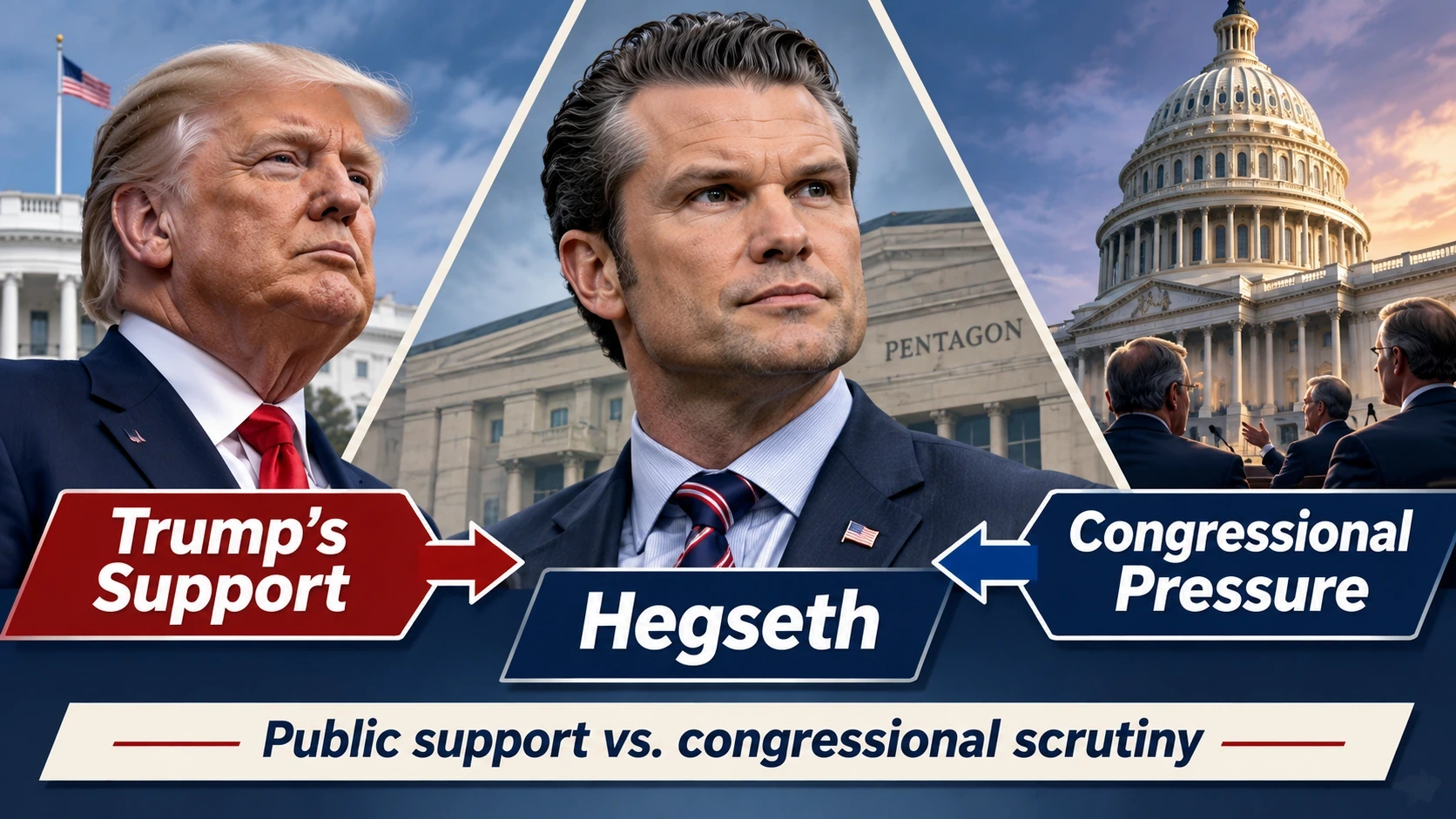
Trump has continued to express confidence in Hegseth, even while acknowledging that he has heard complaints about the defense secretary.
In a November 5 interview with ABC News, Trump said he had “every intention” of keeping Hegseth.
The president also criticized Massie and defended Hegseth’s performance. (ABC News)
There are several possible political calculations behind that position.
Removing Hegseth could be interpreted as an acknowledgment that the administration’s handling of the war requires a major change. Keeping him allows Trump to defend the administration’s record and avoid an immediate Cabinet vacancy.
Those are possible implications of the decision, not confirmed explanations of Trump’s private thinking.
At the same time, reports indicate Trump has privately sought advisers’ views on whether Hegseth should remain. That leaves room for the president’s position to change. (CBS News)
Hegseth, meanwhile, is presenting the controversy as a political attack.
In his November 5 video, he rejected the impeachment allegations as partisan maneuvering, defended efforts to reshape the Pentagon, and described the Iran campaign as necessary to prevent Iran from obtaining a nuclear weapon.
The Pentagon has also maintained that Hegseth intends to serve through the end of Trump’s term. (Reuters · ABC News)
But continued presidential support does not settle the congressional dispute.
House Oversight Committee Chairman James Comer, another Kentucky Republican, said on November 6 that lawmakers had significant questions about Hegseth and the administration’s strategy for ending the Iran war. Comer did not commit to supporting impeachment and said replacing the secretary was Trump’s decision. (Washington Examiner)
That distinction illustrates the growing split: A Republican can criticize Hegseth’s leadership without agreeing that impeachment is the proper response.
Could Congress Actually Remove a Defense Secretary?
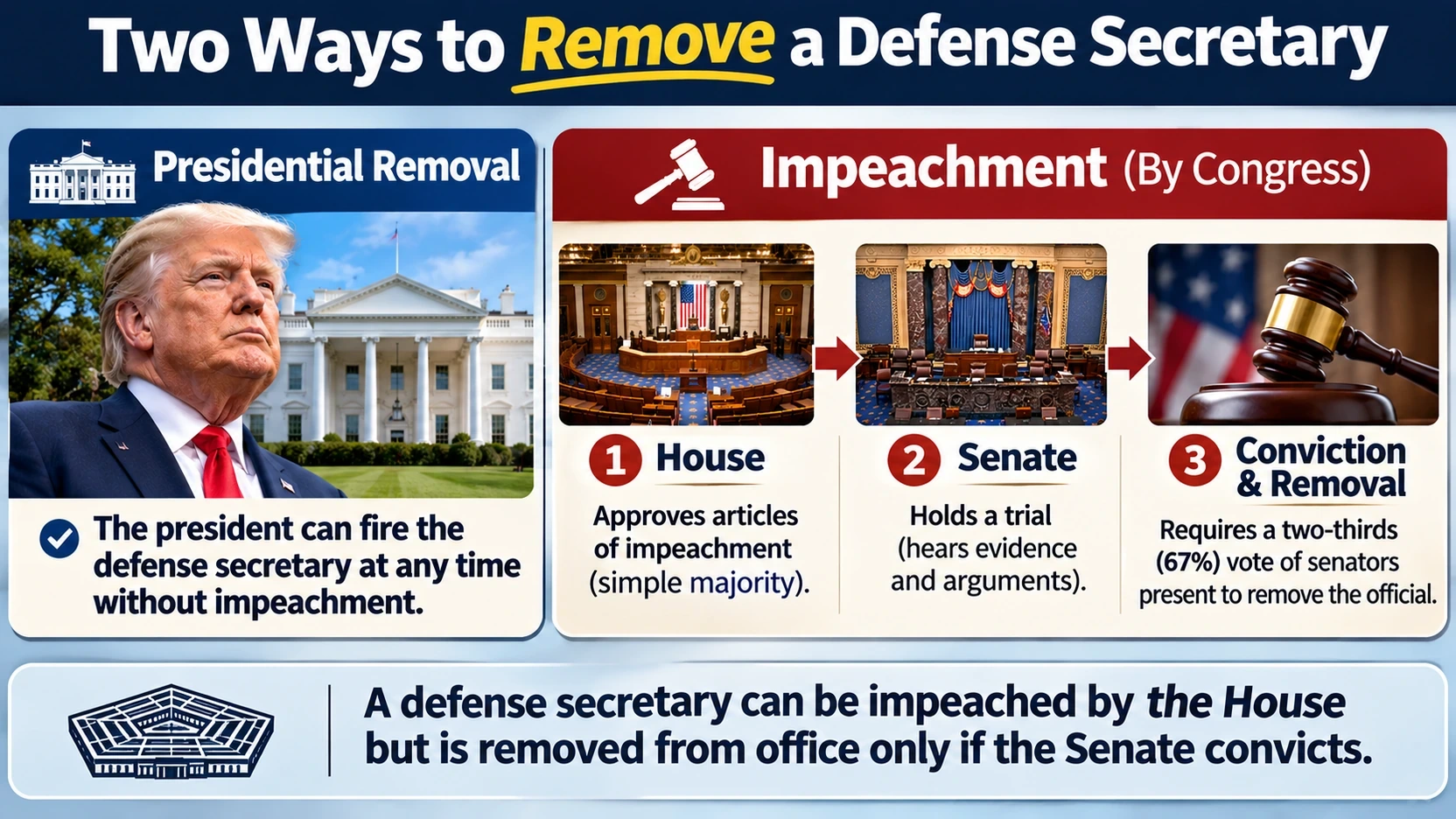
Yes. A defense secretary can be removed through impeachment and conviction—but the process is much harder than a single House vote.
Under the Constitution, Cabinet secretaries are among the federal civil officers who can be impeached.
The House of Representatives can approve articles of impeachment by a simple majority. The Senate then conducts a trial, and conviction requires a two-thirds vote of senators present. (U.S. Senate)
This is different from the president deciding to dismiss a Cabinet secretary.
| Route | Who decides? | What happens? |
|---|---|---|
| Presidential dismissal | President | The secretary can be removed without an impeachment trial. |
| House impeachment | Simple majority of the House | Formal impeachment charges are approved, but removal is not automatic. |
| Senate conviction | Two-thirds of senators present | The official is convicted in the impeachment trial and removed from office. |
A defense secretary can be impeached without being removed.
That is the most important distinction for understanding the headlines about Hegseth.
A House vote next week, if one occurs, would be an impeachment vote—not necessarily the end of his tenure.
And there is another timing issue.
Although Democrats won control of both chambers in the November 2026 elections, the newly elected members do not take their seats until January 2027. (NPR)
A vote held before then would take place in the outgoing Congress, where Republicans still hold the majority. Massie would therefore need enough support from his fellow Republicans and other members to prevail.
Once the new Congress convenes, Democrats will have greater power to conduct investigations and pursue legislation. But even a Democratic-controlled Senate would still need the constitutionally required two-thirds majority to convict in an impeachment trial.
That makes removal through impeachment a much higher hurdle than obtaining a House majority alone.
What Happens Next—and Why Does the Defense Budget Matter?
Hegseth faces three immediate tests: whether the House considers Massie’s impeachment resolution, whether Republican criticism continues to grow, and whether the Pentagon can secure the military funding it is requesting.
The administration is seeking a defense spending package of approximately $1.5 trillion. Hegseth has argued that increased military funding is necessary to meet national security challenges, including those connected to Iran.
Congress, however, controls federal appropriations. Lawmakers can scrutinize and modify spending proposals, and a request from the Pentagon is not an approved budget. (Reuters)
That creates a practical problem for a politically embattled defense secretary.
Even if Hegseth survives an impeachment effort, he still needs working relationships with lawmakers to advance the administration’s military priorities.
The next developments worth watching are:
- The week of November 9: Whether Massie succeeds in bringing an impeachment resolution to a House vote and how Republicans respond.
- The administration’s response: Whether Trump maintains his public support or decides that a leadership change would help stabilize the Pentagon.
- The defense budget: Whether congressional negotiations move toward funding agreements or become another point of confrontation.
- January 2027: How the incoming Democratic-controlled Congress uses its oversight and legislative powers.
The November 6 remarks by Democratic leader Hakeem Jeffries also show that the opposition’s next steps have not been fully settled. Jeffries called for Hegseth’s departure but stopped short of committing his party to impeachment proceedings. (NPR)
For Americans watching the Iran war, the distinction matters.
Replacing a defense secretary would change the Pentagon’s leadership. It would not, by itself, end military operations or settle the wider dispute over presidential war powers.
Bottom Line: What This Story Really Means
Pete Hegseth is facing impeachment pressure because the prolonged Iran war has intensified disputes over military leadership, presidential authority, congressional oversight, and the political cost of the conflict.
Republican Rep. Thomas Massie has made formal impeachment allegations, but criticism of Hegseth within the Republican Party does not amount to a unified demand for his removal.
Trump continues to defend his defense secretary, even as other Republicans question his performance and the administration’s strategy.
The central distinction is between political pressure, impeachment, and removal from office. They are three different things.
The coming House session could determine whether Hegseth becomes formally impeached. It would not necessarily determine whether he loses his job.
Hegseth Impeachment: Key Questions Explained
Q. Has Pete Hegseth already been impeached?
No. As of November 7, 2026, Hegseth is facing proposed impeachment proceedings. Republican Rep. Thomas Massie intends to pursue a House vote, but the articles have not been approved by the House.
Q. Who introduced the impeachment articles against Hegseth?
Republican Rep. Thomas Massie of Kentucky introduced eight articles on September 15, 2026. The allegations focus on the Iran war and several other military and administrative actions.
Q. Why are Republicans criticizing their own defense secretary?
Some Republicans believe the administration’s handling of the prolonged Iran war contributed to voter dissatisfaction and the party’s midterm election losses. They also question the Pentagon’s leadership, congressional relationships, and plans for ending the conflict.
Q. What is the War Powers Resolution of 1973?
It is a federal law intended to limit certain military hostilities undertaken without congressional authorization. Its framework includes reporting requirements and, when applicable, a 60-day termination period with a possible 30-day withdrawal period.
Q. Does impeachment mean Hegseth would immediately lose his job?
No. A House majority can impeach him, but removal through impeachment requires conviction by two-thirds of senators present at a Senate trial.
Q. Can President Trump fire Hegseth without impeachment?
Yes. The president can dismiss the defense secretary without requiring Congress to conduct an impeachment trial. Choosing and confirming a successor involves a separate process.
Q. Does Trump still support Pete Hegseth?
Yes, publicly. On November 5, Trump said he intended to retain Hegseth, although news reports also indicate that he had privately consulted advisers about the secretary’s future.
Q. Why does the November 2026 midterm election matter?
Democrats won control of both chambers, but the newly elected Congress does not take office until January 2027. That means the political balance during a possible November impeachment vote differs from the balance that will exist in the next Congress.
Q. Would removing Hegseth end the Iran war?
No. Replacing the defense secretary would change military leadership, but decisions about continuing or ending U.S. military operations involve the president, Congress, and the applicable legal authorities.
Did this help make the story clearer? 🙂
WIN keeps unpacking the “why” behind the news—clearly and simply!
Sources
Impeachment Allegations and Congressional Proceedings
Representative Thomas Massie — Official September 15, 2026, Impeachment Announcement
ABC News — Trump Says He Intends to Keep Hegseth as Impeachment Vote Approaches
CBS News — Republican Lawmaker Introduces Hegseth Impeachment Articles Over Iran War
Hegseth’s Response and Political Fallout
Reuters — Hegseth Vows to Defend His Pentagon Leadership and the Iran War, November 5, 2026
Reuters — Vice President Vance Criticizes the Iran War After Republican Election Defeat
Washington Examiner — House Oversight Chairman James Comer Questions Hegseth’s Leadership
NPR — Hakeem Jeffries Calls for Hegseth’s Removal but Stops Short of Supporting Impeachment
Constitutional Authority and Impeachment Rules
U.S. Senate — The Senate’s Constitutional Role in Impeachment
USA.gov — How Federal Impeachment Works
FactCheck.org — Disagreement Over Constitutional War Powers and the Iran Conflict
Keep Reading
If Congress wants to stop the Iran war, what powers does it have?
The Hegseth impeachment dispute raises a separate question about Congress’s ability to restrict military operations when the president and lawmakers disagree over authorization.
Congress Voted on Trump’s Iran War Powers Again—What Can a War Powers Resolution Actually Do?